Category: Business

  • Circle Joins Canton Network as Super Validator Unlocking Private USDC Settlement

    Circle Joins Canton Network as Super Validator Unlocking Private USDC Settlement

    Circle has joined the Canton Network as a Super Validator, adding a new system for private $USDC-based payment. The move strengthens Circle’s position in both governance and structure within the network. It also aligns with the launch of USDCx, a $USDC-backed stablecoin intended for institutional use. The roll out will be the first time a $USDC-backed asset runs with institutional-grade privacy and cross-application integration on a public layer-one network.

  • Dogecoin Soars 28% in Active Addresses: Are Bulls Active?

    Dogecoin Soars 28% in Active Addresses: Are Bulls Active?

    Dogecoin has been trading negatively today, but its network activity has surged notably over the past week amid increased participation from investors.

    While the surge in network activity has come at a time when the market continues to show mixed price actions, the metric signals renewed interest in the largest meme token by market capitalization, sparking discussions across the crypto market.

    Dogecoin active addresses hit 73,000

    On Tuesday, March 31, popular crypto analyst Ali Martinez shared data from Santiment, revealing that active addresses on Dogecoin have surged from around 57,000 to 73,000 within a week.

    According to the analyst, the surge marks a notable 28% increase in Dogecoin’s active addresses over the last seven days.

    Dogecoin $DOGE active addresses surged 28% in the past week, rising from 57,000 to 73,000. pic.twitter.com/dHAB37u0V4

    — Ali Charts (@alicharts) March 31, 2026

    With this surge in Dogecoin network activity, it appears that a growing number of users are actively using the blockchain, either by sending, receiving or trading $DOGE tokens.

    While the surge in network activity could be bullish for Dogecoin, it is not entirely a key indicator for a potential price rally, as it could also have been triggered by a surge of activities from bearish traders.

    As such, market analysts believe that growth in network activity like this can sometimes precede increased volatility, or possibly price growth.

    Dogecoin drops 2%

    Despite the surge in Dogecoin network activity, the trend has yet to impact the asset’s trading price, as data from CoinMarketCap shows Dogecoin trading in the red zone.

    Amid a broad crypto market downturn, Dogecoin has also pulled off weak price moves over the last day, with its price trading at $0.09126 as of writing time.

    The data revealed that its current price level marks a decent decline of 1.64% over the last 24 hours.

  • Is the Bitcoin Network Really in Danger? Experts Gathered to Find an Answer

    Is the Bitcoin Network Really in Danger? Experts Gathered to Find an Answer

    The cryptocurrency markets are abuzz with the question, “Is Bitcoin in danger?” following recent major breakthroughs in quantum computing technology. A panel featuring Tom Dunleavy, Andrew Parish, and Tillman Holloway discussed whether quantum computers could break Bitcoin’s underlying encryption methods (ECDSA) and the potential impact on the markets.

    The focus of the debate is that quantum computers have processing power millions of times greater than traditional computers. According to experts, if a quantum computer with sufficient power were developed, the private keys of Bitcoin wallets could theoretically be compromised.

    Tom Dunleavy argued that while the current situation has created a climate of panic, the Bitcoin network is resilient enough to evolve against such threats. Dunleavy suggested that the network could transition to “Quantum Resistant Encryption” methods.

    Related News Satoshi Nakamoto’s Comments from Years Ago on the Quantum Threat to Bitcoin Have Come to Light

    Andrew Parish drew attention to market psychology rather than technological risk. He stated that such news creates uncertainty among institutional investors and triggers short-term volatility. Reminding that quantum breakthroughs threaten not only Bitcoin but the entire global banking system, Parish argued that Bitcoin is one of the systems that can provide the fastest solution to this problem.

    Tillman Holloway approached the subject from a more technical perspective, sharing his predictions on how Bitcoin mining difficulty and network security will transform in the quantum age. Holloway stated that the quantum threat is not a risk that will materialize overnight, but the community should be prepared now.

    The panelists agreed that claims that Bitcoin is “ruined” are exaggerated. Rather than quantum computers completely destroying Bitcoin, they believe it will force an update to the technology (soft-fork or hard-fork).

    *This is not investment advice.

  • Uniblock Raises $5.2M to Unify Blockchain Infrastructure

    Uniblock Raises $5.2M to Unify Blockchain Infrastructure

    In brief

    • Uniblock has raised $5.2 million in new funding, bringing total capital to $7.5 million, with investors including SBI, AllianceDAO, Blockchain Founders Fund, NGC Ventures, Alchemy, and MoonPay.
    • The platform manages infrastructure across more than 300 blockchains through 55 data partners with patented auto-routing technology.
    • 3,000 projects and 4,000 developers use the service, including Plume Network, Stellar Blockchain, and Apechain.

    Blockchain infrastructure provider Uniblock has raised $5.2 million to operate a “managed infrastructure layer” across more than 300 blockchains, addressing a routing and failover problem that CEO Kevin Callahan said “should be solved once, not rebuilt by every team.”

    The funding round, which brings total capital raised to $7.5 million, included participation from SBI, AllianceDAO, CoinSwitch, Blockchain Founders Fund, Hustle Fund, AAF Management, NGC Ventures, and strategic investors Alchemy and MoonPay, according to a company announcement shared with Decrypt.

    The platform provides access to over 3,000 APIs through a single connection, with patented auto-routing handling provider selection, failover, and data normalization across 55 data partners.

    Named customers running production workloads include Plume Network, Stellar Blockchain, Hypernative, Oku Trade, nReach, and Apechain, with Plume and Apechain operating Uniblock as their managed RPC infrastructure through ecosystem partnerships. The company reports 3,000 projects and 4,000 developers currently using the platform, which launched AI-native developer tools including an MCP server, LLM-optimized documentation, and agent skills for Cursor, GitHub Copilot and other AI coding environments.

    “We’re watching two shifts happen at once. Fortune 500 companies are bringing production workloads to blockchain, and AI agents are starting to read and write chain data autonomously,” Callahan said in the announcement, which noted mainstream adoption signals including Stripe’s $1.1 billion acquisition of Bridge for stablecoins and prediction market odds appearing on legacy media broadcasts.

    Uniblocks fundraise comes amid broader industry efforts to address multi-chain infrastructure challenges, with the Ethereum Foundation backing an “Economic Zone” initiative in February to solve fragmentation issues across the ecosystem’s growing number of Layer-2 networks.

    Daily Debrief Newsletter

    Start every day with the top news stories right now, plus original features, a podcast, videos and more.

  • Clarity Act ‘not a gatekeeper’ for crypto innovation, WisdomTree exec says

    Clarity Act ‘not a gatekeeper’ for crypto innovation, WisdomTree exec says

    WisdomTree does not see pending U.S. crypto legislation as a prerequisite for innovation, even as policymakers debate new rules for digital assets.

    “I don’t [think] it would inhibit anything that we’re trying to do,” said Will Peck, the firm’s head of digital assets, referring to the proposed Clarity Act. “We don’t view it as a gatekeeper.”

    The Clarity Act, which is pending approval from Congress, aims to establish clearer jurisdiction between the Securities and Exchange Commission (SEC) and the Commodity Futures Trading Commission (CFTC), while setting rules for how digital assets are classified and regulated. Supporters say it could reduce uncertainty that has slowed institutional adoption.

    Peck’s believes much of the framework already exists. “The SEC has all the tools… to foster good tokenized security markets, good tokenized fund markets,” he said.

    That perspective reflects WisdomTree’s approach. The asset manager has been building in crypto and tokenization for years, earlier than many traditional peers. It offers a spot bitcoin exchange-traded fund (ETF) in the U.S. and a broader suite of crypto exchange-traded products in Europe, where competition has been less intense and innovation started earlier.

    More recently, the firm has focused on tokenized real-world assets. WisdomTree operates one of the larger tokenized money market funds, a product category that has grown as investors look for yield on-chain. Peck said the fund has already found “good product market fit.”

    The company also secured a form of SEC relief that allows the fund to trade continuously. “This holy grail of… instant settlement is actually happening now with this product,” Peck said.

    In practice, that means institutional investors can move between U.S. dollars, stablecoins like USDC and the fund itself at any time, rather than waiting for end-of-day processing. The model points to how traditional financial products could evolve on blockchain rails.

    WisdomTree’s broader goal is to bring more regulated investment products on-chain. Peck said the firm wants to expand beyond money market funds into other tokenized instruments, including exchange-traded funds and yield-generating products. Over time, that could allow investors to access familiar assets directly from digital wallets, without relying on traditional brokerage accounts.

    The firm is also betting that demand will persist regardless of market cycles. “It has not affected us at all,” Peck said of recent crypto price volatility, describing activity as “all systems go.”

    While Peck said the Clarity Act would be “constructive for the industry,” he suggested it is not the main driver of progress. Instead, firms like WisdomTree are moving ahead using existing regulatory pathways.

  • Ripple Quietly Announced a Major Partnership Today

    Ripple Quietly Announced a Major Partnership Today

    A significant collaboration aimed at expanding the use of blockchain and stablecoins in global payment infrastructure has been announced. Ripple Labs and Convera have announced a strategic partnership to improve cross-border payments.

    According to today’s announcement, the two companies aim to offer faster and more reliable international payment solutions using stablecoin and blockchain infrastructure. Convera, formerly known as Western Union Business Solutions, is a global fintech company that processes transactions in over 140 currencies across nearly 200 countries and regions.

    Convera CEO Patrick Gauthier stated that with the increasing adoption of digital assets, the company closely monitors its customers’ needs, arguing that Ripple’s position in the crypto space made this collaboration a natural choice.

    Related News Satoshi Nakamoto’s Comments from Years Ago on the Quantum Threat to Bitcoin Have Come to Light

    Under the partnership, Convera’s global payments network, foreign exchange (FX) expertise, and customer experience will be combined with Ripple’s liquidity, consensus, and digital asset infrastructure. This aims to enable faster and lower-cost cross-border transfers, particularly in regions where traditional payment channels are limited.

    The collaboration is built on a model called the “stablecoin sandwich.” In this model, payments are initiated and completed using fiat currency, while regulated stablecoins are used in the middle of the transaction process.

    *This is not investment advice.

  • Google Quantum Paper Boosts Odds of Bitcoin ‘Q-Day’ by 2032, Researchers Warn

    Google Quantum Paper Boosts Odds of Bitcoin ‘Q-Day’ by 2032, Researchers Warn

    In brief

    • Google said that future quantum machines may crack elliptic curve cryptography with fewer resources than previously thought.
    • Researchers have urged a transition to post-quantum cryptography as timelines tighten.
    • Experts warned of both real risks and rising fear-driven narratives around “Q-Day”.

    Google researchers warned Tuesday that advances in the field of quantum computing could threaten the cryptographic systems underpinning cryptocurrencies and other digital infrastructure sooner than expected.

    It has demonstrated that future quantum computers may be able to break elliptic curve cryptography—a cornerstone of modern digital security—using fewer qubits and computational steps than previously believed.

    “We want to raise awareness on this issue and are providing the cryptocurrency community with recommendations to improve security and stability before this is possible, including transitioning blockchains to post-quantum cryptography (PQC), which is resistant to quantum attacks,” Google researchers said in a blog.

    Elliptic curve cryptography, particularly ECDSA over the secp256k1 curve, underpins the security of major blockchain networks, digital wallets and vast swathes of internet infrastructure. If quantum systems reach the scale needed to exploit these vulnerabilities, an event often referred to as “Q-Day,” then encrypted data, financial systems and identities could be exposed.

    A quantum “breakthrough”?

    Quantum computers operate differently from classical machines. They use quantum bits, or qubits, which can exist in multiple states simultaneously. Algorithms such as Shor’s algorithm theoretically allow sufficiently powerful quantum systems to solve the elliptic curve discrete logarithm problem (ECDLP), which secures cryptographic keys today. Until now, estimates of the resources required suggested such attacks were still far off.

    The report also outlines mitigation strategies, emphasizing that post-quantum cryptography is already well understood and deployable, though difficult to implement at scale. Transitioning blockchain systems, rotating keys, and avoiding reuse or exposure of public keys are among the recommended steps.

    Justin Drake, a Bitcoin security researcher, described the findings as a “breakthrough” in a tweet. “My confidence in q-day by 2032 has shot up significantly,” he said, adding that “there’s at least a 10% chance that by 2032 a quantum computer recovers a secp256k1 ECDSA private key from an exposed public key” by that date.

    “While a cryptographically-relevant quantum computer (CRQC) before 2030 still feels unlikely, now is undoubtedly the time to start preparing,” he added.

    Quantum computers and Bitcoin

    The debate around quantum risk is increasingly marked by tension between technical caution and what some researchers describe as “FUD” (fear, uncertainty and doubt). While the new results reduce theoretical barriers, building a fault-tolerant quantum computer capable of executing these attacks remains an enormous engineering challenge.

    Shiv Shankar, CEO of Boundless, told Decrypt the rising concern should be viewed in context. “The risk is going up but this was expected. As we get closer and closer to a target date for full migration to PQC, the confidence in that timeline generally goes up. There’s no cause for panic. The smartest and most brilliant minds in the world are active on this problem,” he said.

    He added it’s also not a blockchain-specific issue. “If quantum computers actually recover a set private key within this timeline, the whole of the internet is at risk, and that means there is a larger piece at stake. I think it’s actually quite exciting. It also means the entire internet as we know it gets upgraded which puts zero knowledge front and center of this conversation,” he said.

    Analysts at Bitfinex told Decrypt the risk should be understood as a long-term engineering challenge rather than an immediate existential crisis.

    “Quantum computing represents a genuine engineering challenge for the cryptocurrency industry, but it is far from an existential threat in the current form,” they said.

    Bitcoin and other protocols’ cryptographic foundations “were always understood to have a finite shelf life,” they said, adding that, “the current debate is not a surprise to anyone who has been paying attention. What matters is that the industry is already moving.”

    The analysts said Justin Drake’s warning should be taken seriously but not interpreted as imminent danger. “Drake’s framing is measured and worth taking seriously,” they said, calling a 10% probability of Q-Day by 2032 “a call to act with appropriate urgency.” Even faced with an uncertain timeline, they added that they “would broadly agree with the sentiment that now is the time to prepare.”

    Daily Debrief Newsletter

    Start every day with the top news stories right now, plus original features, a podcast, videos and more.

  • Keep a Close Eye on Bitcoin Tomorrow: Rare Option Data Detected

    Keep a Close Eye on Bitcoin Tomorrow: Rare Option Data Detected

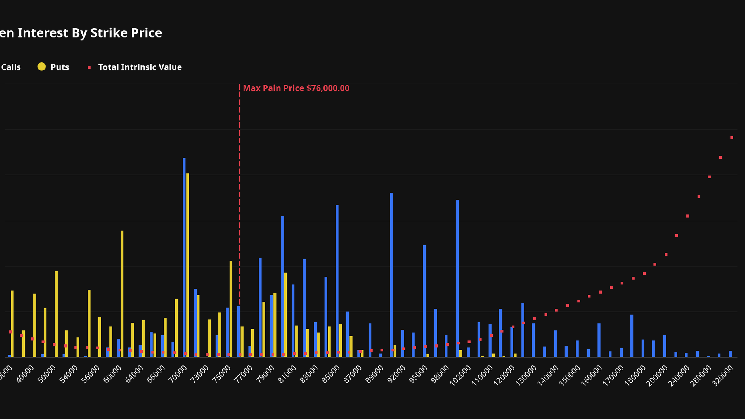
    Cryptocurrency analytics company GreeksLive has issued a notable warning regarding the Bitcoin options market.

    According to the company’s assessment, options trading accounted for approximately 30% of total trading volume today, with this concentration largely focused on the “Block Condor” strategy, which expires tomorrow.

    The analysis stated that the total nominal size of these transactions exceeded 7,000 BTC, and that investors were positioned to expect the Bitcoin price to surpass $68,000 tomorrow. GreeksLive noted that block transactions of this scale have been relatively rare recently.

    Related News 15 Altcoins See a Boom in Trading Volume in South Korea – Here’s the List

    The company also added that while the option premiums paid were not high, such aggressive positions in contracts with a maturity of only about 20 hours could be considered a “bold move.” The statement noted that in such cases, large block transactions should be closely monitored, as high-volume positions generally indicate strong market expectations.

    The term “Block Condor” represents a combination of two concepts in the options market. While “block trading” refers to large-volume transactions, typically carried out by institutional investors, “condor” is known as an options strategy built on the expectation that the price will remain within a specific range. This strategy is usually constructed with four different option contracts and aims to provide investors with returns in scenarios where the price does not rise excessively or fall sharply.

    *This is not investment advice.

  • Binance TR Continues its Social Media Campaign with a Reward of 880 TL!

    Binance TR Continues its Social Media Campaign with a Reward of 880 TL!

    Cryptocurrency exchange Binance TR is offering its users the chance to win a prize of 880 TL as part of its Great Spring Campaign event.

    To participate in the event, users need to like and retweet Binance TR’s first Big Spring Campaign post on X, and additionally, express their cryptocurrency wish for the new year in the comments.

    The cryptocurrency wishes submitted by participating users will be reviewed by 3 judges, and the owners of the 100 most creative responses will receive a cryptocurrency prize of 880 TL.

    After completing the above steps, users also need to fill out the participation form on the official Binance TR website.

    The event started on March 16th and will continue until April 9th. Results will be announced on the Binance TR Telegram channel within 30 business days of the event’s end. Winners must use their gift vouchers within 30 days.

    *This is not investment advice.

  • New US Rule Seeks to Open $8T Retirement Market to Crypto

    New US Rule Seeks to Open $8T Retirement Market to Crypto

    In brief

    • The proposal implements President Trump’s order last year to expand 401(k) access to alternative assets.
    • Few retirement plans offer alternatives, and even fewer hold them, the Labor Department said.
    • The rule clears a legal path but leaves operational hurdles and unresolved questions about demand, Decrypt was told.

    The U.S. Department of Labor has released a proposed rule that would give 401(k) fiduciaries a safe harbor when considering alternative investments, including funds that invest in cryptocurrencies and other digital assets.

    Under the proposal, fiduciaries that undergo review for performance, fees, liquidity, valuation, benchmarking, and complexity would get a safe harbor if they follow that process. It was released for public inspection through the Federal Register on Monday and is scheduled for formal publication by Tuesday.

    The proposed rule carries out a directive from President Donald Trump in August last year to expand access to alternative assets in 401(k) plans, including investment vehicles with exposure to crypto.

    Americans held roughly $10.1 trillion in 401(k) plans as of the end of 2025, part of a broader $14.2 trillion defined contribution market, according to data from the Investment Company Institute.

    Drawing on older data, the Labor Department pegs the participant-directed market at $8.8 trillion across roughly 721,000 plans.

    Only 4% of defined contribution plans offered alternative investments last year, with just 0.1% of assets allocated to them, per data cited in the proposal.

    Safe harbor, hard choices

    The proposal follows the Labor Department’s decision last May to rescind Biden-era guidance that had urged fiduciaries to exercise “extreme care” before adding crypto to 401(k) menus, a standard the agency said went beyond what the federal law governing retirement plans requires.

    “Retirement funds are the holy grail for bitcoin enthusiasts looking for new investors: oceans of cash, tax-advantaged,” Andrew M. Bailey, Senior Fellow at the Bitcoin Policy Institute, told Decrypt.

    But retirement plans carry a built-in tension, Bailey noted.

    “Their horizons—decades, not months or years, make them well-suited for long-term investment in new technologies,” he said. “Their approach to risk and tight regulations pulls them in the opposite direction.”

    While risk aversion could “steer retirees away,” rule changes “that empower savers to make their own choices” would be welcome, he said.

    Once the rules are settled, the harder question is whether savers will actually bite, Bailey opined.

    “A secondary effect to watch is equity-based investment vehicles for bitcoin, like Strategy’s preferred stock offerings,” Bailey said. Whether direct 401(k) exposure would cannibalize demand for such products or prove complementary remains an open question, he noted.

    The proposal places digital assets “on the same playing field” as other alternative investments, Joshua Chu, lawyer, lecturer, and co-chair of the Hong Kong Web3 Association, told Decrypt.

    “If a fiduciary can document a robust process on fees, liquidity, valuation and complexity, they now have a clear safe harbor roadmap instead of a regulatory minefield,” he said.

    With it, retirement savers can get “a taste of alternative-asset alpha without the plan sponsor hiding under the desk every time Bitcoin sneezes,” he added.

    Still, fiduciaries would need to build “daily pricing, liquidity, and risk controls” for crypto inside 401(k) wrappers before any of it reaches a retiree’s account, he added.

    The proposal could put U.S. retirees ahead of most Asian savers in accessing regulated crypto exposure, Chu noted, citing how Hong Kong’s pension system and China’s trading ban still keep digital assets out of retirement accounts.

    Daily Debrief Newsletter

    Start every day with the top news stories right now, plus original features, a podcast, videos and more.