Category: Business

  • What Lies Ahead for Ethereum in the Coming Days? Key Levels Revealed

    What Lies Ahead for Ethereum in the Coming Days? Key Levels Revealed

    Cryptocurrency analytics company MakroVision has shared its latest technical analysis of Ethereum. According to the company’s analysis, Ethereum managed to retest the $2,130 level, continuing its short-term recovery process for some time.

    However, strong selling pressure encountered after reaching this level made it difficult for the price to maintain its position above this region.

    MacroVision notes that while a short-term recovery is technically still valid in the current market structure, momentum has weakened recently. The analysis adds that the failure of attempts to break above $2,130 indicates continued selling pressure on upward movements. This situation, it is stated, makes price movements more delicate in the short term.

    Highlighting key technical levels, the company notes that the $2,130 range is a critical threshold for Ethereum. If the price manages to hold above this level, a new upward attempt could be on the horizon, with $2,400 emerging as the next significant resistance. It’s worth noting that this region was strongly rejected during the last upward attempt.

    However, there are warnings that if Ethereum clearly falls below the $2,130 level, the current recovery could weaken and the market outlook could deteriorate again. According to MacroVision, this scenario increases the risk that the recent upward movement will remain merely a technical reaction rather than a lasting trend reversal.

    *This is not investment advice.

  • Banks Took $434 Billion From Americans Last Year — Is it Time for Bitcoin?

    Banks Took $434 Billion From Americans Last Year — Is it Time for Bitcoin?

    Banks Took $434 Billion From Americans Last Year — Is it Time for Bitcoin?

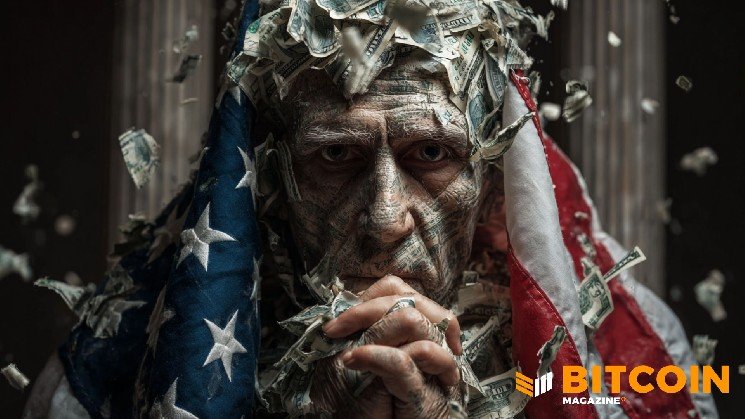
    Banks extracted hundreds of billions from American savers last year — and the scale of it shows a deep structural issue in America’s financial system. Bitcoin might help.

    In 2025, U.S. banks generated roughly $434 billion in net interest income, or about $1,670 per adult, according to research from River.

    The mechanism is straightforward: banks take customer deposits, lend or invest those funds at higher rates, and return only a fraction of the yield to depositors. With most savings accounts offering close to zero interest, that spread compounds into one of the most reliable profit engines in the economy.

    At the same time, inflation has remained persistently above the Federal Reserve’s stated 2% target for years. In real terms, that means savers are losing purchasing power annually. When your bank pays 0.1% but inflation runs several percentage points higher, the result is not just stagnation — it’s erosion. Quietly, consistently, and at scale.

    This dynamic helps explain why alternative systems — particularly Bitcoin — continue to resonate. For many, the issue is no longer just access to financial services, but whether those services are aligned with their long-term interests at all.

    Yet the frustration isn’t limited to legacy banking. The fintech sector, once positioned as a corrective force after the 2008 financial crisis, is now facing its own identity crisis, Bitcoin might help.

    Tricking users to gamble with their money

    Over the past decade, companies like Robinhood, Coinbase, and Cash App lowered barriers to entry, onboarding millions of new users into investing, payments, and digital assets. For the first time, financial tools that were once reserved for the wealthy became widely accessible.

    But according to River CEO Alex Leishman, that mission has drifted. What began as democratization has, in many cases, turned into monetization of user behavior. Investment platforms now promote memecoins, leveraged derivatives, and even sports betting-style features. The interface may look like a brokerage account, but the incentives increasingly resemble a casino.

    The distinction matters. Data consistently shows that most retail participants lose money in high-frequency trading environments. Futures markets see the vast majority of traders underperform.

    Options trading often results in repeated losses for the average user. And in jurisdictions where sports betting has expanded, personal bankruptcy rates have climbed in the years that follow.

    This convergence — finance, gaming, and gambling — has been driven by a simple motive: engagement. The more often users trade, bet, or speculate, the more revenue platforms generate.

    Push notifications, streaks, instant settlement, and social features all reinforce short-term behavior. Over time, the line between investing and entertainment becomes difficult to distinguish, according to River and Leishman.

    Leishman’s critique is not that risk-taking should be eliminated, but that it should be transparent. Casinos don’t present themselves as wealth-building tools. Increasingly, financial apps do.

    It’s time for bitcoin

    Bitcoin, in contrast, sits outside this framework. Bitcoin does not promise yield, nor does it rely on user engagement to sustain itself. Its value proposition is narrower but more rigid: a fixed supply, a decentralized network, and the ability to self-custody without reliance on intermediaries.

    Despite more than a decade of growth, ownership remains relatively low — less than one-fifth of American adults. That suggests two things at once: adoption is still early, and the gap between existing financial systems and viable alternatives remains wide.

    The broader question now is directional. The original promise of fintech was to expand access and improve outcomes. In many ways, it succeeded. But access alone is not enough if the underlying products leave users worse off.

    Banks continue to extract value through interest rate spreads. Bitcoin doesn’t. Fintech platforms increasingly optimize for activity over outcomes. And users — more informed, but also more exposed — are left navigating a system that often rewards participation more than prudence.

    The opportunity, as Leishman frames it, is to realign incentives: build tools (like bitcoin) that prioritize long-term wealth creation over short-term revenue, and offer products that founders would trust their own families to use.

    This post Banks Took $434 Billion From Americans Last Year — Is it Time for Bitcoin? first appeared on Bitcoin Magazine and is written by Micah Zimmerman.

  • Analyst Who Predicted the Major Gold Rally Analyzes the Bitcoin-Gold Chart: Shares His Predictions – “Not BTC, But Two Altcoins…”

    Analyst Who Predicted the Major Gold Rally Analyzes the Bitcoin-Gold Chart: Shares His Predictions – “Not BTC, But Two Altcoins…”

    Renowned technical analyst Francis Hunt, a guest on Michaël van de Poppe’s show, made striking statements about the future of the global financial system and Bitcoin’s place within it. Known for his predictions regarding gold and debt crises, Hunt shared his technical and macroeconomic analyses, which are of particular interest to Bitcoin investors.

    Francis Hunt, while evaluating Bitcoin’s ($BTC) recent performance, drew attention to the asset’s decline in value against gold. According to Hunt, Bitcoin has begun to lose its “exponential growth” characteristic seen in past cycles.

    Hunt argues that Bitcoin’s market capitalization can be misleading. He notes that in the early years, the low circulating supply allowed small capital inflows to create massive price movements, but as the asset grew, maintaining this momentum became more difficult.

    The analyst claimed that “real and big money” is flowing into gold instead of Bitcoin. He stated that giant economies like China are closing their trade deficits with gold, and that Bitcoin has not yet achieved reserve asset status at the state level.

    Hunt, noting that Bitcoin’s chart against gold ($BTC/GOLD) is weakening, believes the risk-return ratio is currently unfavorable for Bitcoin. He warned investors by asking, “Is it worth risking a drop to zero for Bitcoin to potentially rise from $70,000 to $120,000?”

    Hunt, cautious about Bitcoin, noted that there are technically stronger assets in the cryptocurrency market. He specifically pointed out that the resilience shown by assets like Tron (TRX) and Binance Coin (BNB) during a bear market is technically interesting, arguing that these assets could emerge as key digital payment tools in the event of a potential collapse of the banking system.

    *This is not investment advice.

  • Wall Street’s Crypto Ties Deepen as NYSE Taps Securitize for Tokenized Securities

    Wall Street’s Crypto Ties Deepen as NYSE Taps Securitize for Tokenized Securities

    In brief

    • The New York Stock Exchange said that it’s working with Securitize on developing systems that will allow tokenized securities to trade round-the-clock.
    • The companies are collaborating on standards that will shape tokenized securities on a platform affiliated with the largest stock exchange by market capitalization.
    • Securitize CEO Carlos Domingo has advocated for “native” securities, which embody the rights of traditional counterparts while existing solely on-chain.

    The New York Stock Exchange said Tuesday that it’s collaborating with Securitize, the BlackRock-backed tokenization specialist, on a program aimed at accelerating Wall Street’s shift toward trading infrastructure underpinned by digital assets.

    As part of the arrangement, the world’s largest stock exchange by market capitalization will work with Securitize on developing standards for tokens that represent real-world assets like stocks and bonds, as well as exchange-traded funds, according to a joint press release.

    Securitize is also slated to serve as the first digital transfer agent for NYSE’s Digital Trading Platform, the companies said. That will enable Securitize to create “blockchain-native securities” on the NYSE-affiliated platform, which is designed to facilitate round-the-clock trading.

    The collaboration comes as the latest sign that giants in traditional finance are growing serious about perceived opportunities with blockchain-based trading infrastructure. Last year, SEC Chair Paul Atkins unveiled Project Crypto, describing it as an agency-wide initiative to develop rules and regulations that “enable America’s financial markets to move on-chain.”

    Last week, Nasdaq gained approval from the watchdog for a pilot program involving tokenized securities. The system is expected to keep trading and settlement within traditional market rails through coordination with a subsidiary of Depository Trust & Clearing Corporation.

    As experimentation with tokenization intensified last year, Securitize CEO Carlos Domingo told Decrypt that the only way to truly represent securities on-chain is through “native” tokenization. That means a token representing a stock, for example, would carry the same rights as its traditional counterpart, including the ability to vote or receive dividends.

    Transfer agents typically record ownership of securities in “book-entry” form using centralized databases. Securitize uses a black-chain based system for that instead, including BlackRock’s $2 billion tokenized money-market fund BUIDL, which primarily exists on Ethereum.

    “We are proud to support NYSE in helping design the foundational transfer agent infrastructure,” Domingo said in a statement. “This is about building tokenization in a way that works within real market structure, with the protections, controls, and operational integrity.”

    Last month, World Liberty Financial, the DeFi project backed by U.S. President Donald Trump, tapped Securitize for issuing tokens tied to the development of a luxury Maldivian resort.

    In October, the firm backed by the world’s largest asset manager unveiled plans to list on the Nasdaq at a $1.25 billion valuation. Before the president was elected on a pro-crypto platform, BlackRock led a $47 million strategic funding round for Securitize in 2024

    Daily Debrief Newsletter

    Start every day with the top news stories right now, plus original features, a podcast, videos and more.

  • JUST IN: It Is Reported That a 30-Day Ceasefire Will Be Declared Between Iran and the U.S. – A 15-Point Draft Agreement Has Emerged

    JUST IN: It Is Reported That a 30-Day Ceasefire Will Be Declared Between Iran and the U.S. – A 15-Point Draft Agreement Has Emerged

    According to Israel-based Channel 12 television, a one-month ceasefire with Iran is being planned as part of diplomatic contacts between the US and regional actors.

    The report stated that the ceasefire would be announced within the framework of a mechanism being worked on by US officials Wittkov and Jared Kushner. During the ceasefire, the parties would continue negotiations for a comprehensive agreement, with a particular focus on a 15-point plan.

    Details of the 15-point plan have also been leaked to regional media sources. According to these sources, the draft agreement includes the complete elimination of Iran’s current nuclear capabilities and a permanent abandonment of Tehran’s pursuit of nuclear weapons. The plan also stipulates the cessation of any nuclear enrichment activities on Iranian soil and the surrender of enriched uranium to the International Atomic Energy Agency (IAEA). The decommissioning and destruction of critical nuclear facilities such as Natanz, Isfahan, and Fordow are also among the points.

    The draft text emphasizes that Iran must provide the IAEA with full access to all information and facilities, while also stipulating that the country abandon its proxy force strategy in the region and cease funding and arms support to militia groups. Furthermore, maintaining the uninterrupted openness of the Strait of Hormuz is highlighted as a crucial aspect of regional security.

    The agreement reportedly plans to postpone the final decision on the ballistic missile program, while allowing existing systems to be used solely for defensive purposes. In return, incentives such as the lifting of all sanctions against Iran and support for the development of a civilian nuclear program in Bushehr are also on the table. Furthermore, the plan automatically eliminates the threat of reimposition of sanctions.

    *This is not investment advice.

  • Experienced Analyst Marcus Thielen: “Volatility in Bitcoin Could Increase Starting Friday”

    Experienced Analyst Marcus Thielen: “Volatility in Bitcoin Could Increase Starting Friday”

    In the episode of The Wolf Of All Streets, experts Marcus Thielen (10X Research), Andrew Parish, and Tillman Holloway discussed the future of cryptocurrencies, regulatory compliance, and the role of artificial intelligence in financial markets.

    Market analyst Marcus Thielen noted that Bitcoin has exhibited unusually low volatility in recent weeks. He stated that those wishing to sell have largely withdrawn from the market, and predicted that activity could increase after Friday as options expire.

    It was also added that the slowdown in this pace in March, following the large cash outflows in February, limited the downside risks.

    The latest developments in the Clarity Act, a focal point of the debate, have been heavily criticized by participants. It has been argued that the current draft prioritizes facilitating bank adoption of the technology rather than providing yield to users. Experts argue this could make it more difficult for individual investors to generate passive income through stablecoins, while allowing banks to expand their margins using this technology.

    Andrew Parish stated that we are experiencing a moment where traditional finance and the crypto world are becoming indistinguishable. The collaboration between giants like BlackRock and crypto-focused firms like Securitize, the tokenization of assets, and the rise of 24/7 trading markets were presented as evidence that Wall Street is rapidly adopting the “good parts” of crypto.

    *This is not investment advice.

  • Meta partners with Arm to develop new CPUs for AI deployments

    Meta partners with Arm to develop new CPUs for AI deployments

    Meta said Tuesday it is partnering with Arm to develop a new class of CPUs designed to support growing AI workloads and general-purpose computing across its expanding data center footprint.

    The first product, called the Arm AGI CPU, is being positioned as a more efficient alternative to legacy server processors for AI-optimized infrastructure.

    Meta said the chip is meant to improve performance per rack and support large gigawatt-scale AI deployments, which the company sees as central to its push toward more advanced AI systems. The Arm AGI CPU will work alongside Meta’s custom MTIA silicon, adding another layer to the company’s broader effort to build a diversified hardware stack for training and inference.

    The announcement adds to Meta’s recent flurry of infrastructure deals. In February, Meta signed a long-term agreement with AMD for up to 6 gigawatts of Instinct GPUs, and earlier this month Reuters reported that Meta laid out a roadmap for four new in-house AI chips as it scales its data centers.

    Reuters reported that the AGI CPU is Arm’s first major in-house data center chip effort, marking a notable departure from its traditional model of licensing designs to partners. Reuters also said Meta is the lead design partner, that TSMC is manufacturing the chip on a 3-nanometer process, and that volume production is expected in the second half of 2026.

    Arm said the AGI CPU is built for the agentic AI era, where CPUs are increasingly responsible for orchestrating accelerators, memory, storage, networking, and large numbers of distributed AI tasks. In its reference configuration, Arm says a standard air-cooled rack can hold 30 blades and deliver 8,160 cores, while a liquid-cooled design with Supermicro can scale to more than 45,000 cores per rack.

    Arm also claims the chip can deliver more than twice the performance per rack of current x86 systems and says that could translate into as much as $10 billion in capital expenditure savings per gigawatt of AI data center capacity.

    Arm said the AGI CPU will be available to other customers beyond Meta, with OpenAI, Cloudflare, SAP, SK Telecom, Cerebras, and others already named as launch partners. Meta also said it plans to release its board and rack designs for the CPU through the Open Compute Project later this year, which could help speed adoption across data center builders.

    As of Tuesday afternoon, Meta shares were trading around $595.20, down 1.5% on the day, while Arm shares were near $135.20, down 1.2% on the day.

    Disclosure: This article was edited by Estefano Gomez. For more information on how we create and review content, see our Editorial Policy.

  • Today’s Top Story: The Clarity Act Has Been Amended as Banks Wanted—What Does This Mean?

    Today’s Top Story: The Clarity Act Has Been Amended as Banks Wanted—What Does This Mean?

    While regulatory efforts for the cryptocurrency market in the US continue unabated, a new draft prepared under the “Clarity Act” has brought a notable change to the forefront.

    According to the revised text, stablecoin users will be prohibited from earning yields simply for holding their assets. The draft aims to prevent the awarding of rewards tied to stablecoin balances, a step reportedly taken to prevent the formation of a structure similar to a banking system.

    It is stated that the regulation in question is particularly influenced by pressure from the traditional finance and banking sector. Coming at a time when discussions about the use case and economic role of stablecoins are intensifying, this step has raised significant questions about the future of the sector. While the draft prohibits returns directly tied to holding balances, rewards based on specific activities are not entirely excluded, although the framework regarding this is not yet clear.

    The developments also resonated in the markets. Analyst Joao Wedson noted a decline in the share performance of Circle, the company behind USDC, following the regulatory discussions. According to Wedson, the increasing limitations on stablecoin returns within the regulatory framework directly impact one of the most significant incentives for large-scale adoption of these assets.

    However, Wedson stated that these regulations would not eliminate stablecoins but would reshape their roles. He noted that stablecoins remain a fundamental liquidity layer in the crypto market, citing the systemic impact of the TerraUSD collapse in 2022 to highlight the sector’s vulnerability.

    According to experts, the relationship between crypto assets and governments will remain inherently tense.

    *This is not investment advice.