Category: Business

  • Turkey’s Cryptocurrency Taxation Bill Postponed Until Tomorrow

    Turkey’s Cryptocurrency Taxation Bill Postponed Until Tomorrow

    According to breaking news, the bill, which also determines the critical cryptocurrency taxation process, has been postponed until tomorrow in the Turkish Grand National Assembly due to the lack of a sufficient majority.

    The discussions will begin tomorrow at 2 PM (UTC+3).

    More details coming soon…

    *This is not investment advice.

  • Crypto finance is beginning to look at lot more traditional, Aave and Ethena founders say

    Crypto finance is beginning to look at lot more traditional, Aave and Ethena founders say

    Crypto finance is only now beginning to provide an environment that matches traditional finance: ways to earn steadier, more predictable returns — similar to bonds or savings products, according to Aave Labs founder Stani Kulechov and Ethena CEO Guy Young.

    “Most fixed income is like the distribution of risk in different formats … basically just slicing and dicing and distributing risk,” Young said during a panel at Digital Asset Summit (DAS) in New York. “This piece of DeFi was probably the least featured two years ago.”

    Until recently, crypto users mostly traded tokens or borrowed against them, often chasing high, unpredictable yields. New tools make it possible to lock in returns, even in a market known for big swings.

    “What you’re doing with Pendle is providing a fixed-to-floating rate swap,” Young said, referring to a system that lets users choose between more stable or more variable returns — similar to choosing between fixed or adjustable interest rates.

    That’s not easy in crypto. “It’s very difficult to know three months out what the market is actually going to look like,” he said.

    Kulechov said Aave has helped support this shift by providing deep pools of capital that other projects can tap into. “Aave is sort of acting as a liquidity sink,” he said, helping “bootstrap a lot of the new coming products in DeFi.”

    For now, much of the money being made still depends on trading rather than traditional lending. “A lot of DeFi yield … is largely still based on … leverage,” Kulechov said.

    Over time, that could change as more real-world assets move onchain, a process known as tokenization.

    “A lot of the yields and a lot of the economics will come from the traditional finance,” he said.

    Read more: Ethena-backed suiUSDe stablecoin goes live on Sui with $10 million yield vault launch

  • US Critical Institution CFTC Launches New Bullish Initiative for Cryptocurrencies! Here Are the Details

    US Critical Institution CFTC Launches New Bullish Initiative for Cryptocurrencies! Here Are the Details

    Bitcoin (BTC) and altcoins continue to hold strong despite the ongoing conflict between the US and Iran.

    As the five-day deadline given by US President Donald Trump to Iran awaits to determine whether the next move will be an uptrend or a downtrend, a move in favor of cryptocurrencies has come from the US.

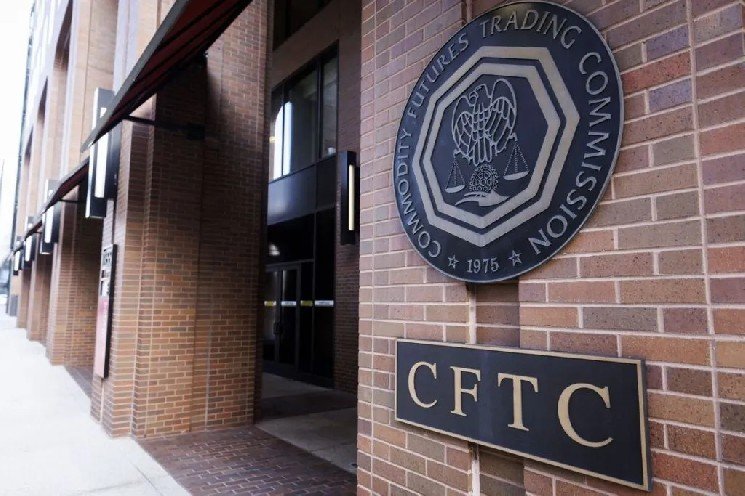
    Accordingly, Michael Selig, Chairman of the US Commodity Futures Trading Commission (CFTC), announced today the establishment of an “Innovation Task Force.”

    The task force aims to establish regulatory standards for innovative companies developing new products and technologies in the U.S. derivatives market.

    The Innovation Task Force will create regulatory frameworks for several designated areas: “1) Cryptocurrency and blockchain technology, 2) Artificial intelligence and autonomous systems, 3) Prediction markets and event contracts.”

    CFTC Chair Selig stated, “By creating a clear regulatory environment for companies driving innovation in new areas of finance, we can encourage responsible innovation and ensure that U.S. market participants don’t fall behind.”

    The Innovation Task Force will be chaired by Michael J. Passalacqua, special advisor to President Selig.

    The Innovation Task Force will work with the U.S. Securities and Exchange Commission (SEC) and the CFTC on innovation.

    While the CFTC is taking steps in favor of cryptocurrencies, the SEC, another major US financial regulator, also clarified in guidance published last week that crypto assets like Bitcoin are commodities, not securities. It was also stated that 16 altcoins, including Ethereum (ETH), are not securities.

    *This is not investment advice.

  • OKX Rolls Out Round the Clock Trading for Mag Seven Stocks Using Crypto Collateral

    OKX Rolls Out Round the Clock Trading for Mag Seven Stocks Using Crypto Collateral

    In brief

    • The contracts track major U.S. stocks and indices but do not grant ownership, functioning as synthetic exposure products.
    • Traders can post Bitcoin, Ethereum and yield-bearing crypto assets as collateral under a unified margin system.
    • The launch comes as exchanges race to offer real-world asset exposure to retail traders outside traditional brokerage systems.

    OKX has launched more than 20 equity perpetual swap contracts, offering users across Asia, the CIS region, Latin America, and Türkiye exposure to trade major global stocks around the clock using crypto as collateral.

    The launch includes the full “Magnificent 7”—Nvidia, Tesla, Apple, Alphabet, Microsoft, Amazon, and Meta, according to a statement shared with Decrypt.

    It also covers crypto-linked firms such as Strategy, Coinbase, Robinhood, and Circle, as well as technology stocks Palantir, Intel, Micron, and SanDisk, and the S&P 500 tracker SPY.

    The equity perp launch is framed as the first phase of a broader rollout, with OKX planning to expand its range of equity contracts and tokenized real-world asset exposure in the coming months.

    It’s OKX’s latest push into real-world assets, as crypto exchanges increasingly compete to offer traditional market exposure to retail investors who face hurdles accessing U.S. equities through conventional brokerages in many parts of the world.

    All contracts are denominated in USDT and offer up to 5x leverage, allowing traders to respond to earnings releases, macroeconomic developments, and market-moving events even when traditional equity markets are closed, the statement said.

    Unlike tokenized equities that represent actual shares, equity perpetual swaps are derivatives that track price movements without granting ownership, placing them closer to synthetic exposure products already offered by other exchanges.

    “I think these instruments will command a good following from momentum-driven retail investors,” Peter Chung, head of research at Presto Labs, told Decrypt. “Crypto exchanges are far more accessible venues for retail investors in many jurisdictions around the world.”

    “On traditional rails, these names are often beyond their reach due to various hurdles,” he added.

    Asked how the product differs from those offered at rival platforms, including Binance, an OKX spokesperson told Decrypt its offering is differentiated by its “unified trading account.”

    The spokesperson said the platform allows users to stake assets and use them as collateral for equity perpetual positions, with those assets continuing to generate yield while positions remain open.

    A unified trading account allows users to deploy a range of crypto assets, including Bitcoin, Ethereum, USDT, and staked holdings, as collateral across positions.

    “This is one step towards bringing a broader range of real-world assets into our platform,” the spokesperson said when asked about the choice of perpetual swaps over tokenized equities representing actual shares.

    “We will keep expanding our infrastructure to support exposure to global equities while allowing traders to use their crypto portfolios for this,” they said.

    The rollout follows OKX’s high-profile tie-up with Intercontinental Exchange, the New York Stock Exchange’s parent company, which invested in OKX earlier this month at a $25 billion valuation. 

    The deal is also expected to enable OKX users to trade tokenized stocks and derivatives listed on the NYSE starting in the second half of the year. 

    OKX’s native token, OKB, is trading at $85, up 0.3% in the last day, and down 11.7% in the last 7 days, according to CoinGecko data.

    Daily Debrief Newsletter

    Start every day with the top news stories right now, plus original features, a podcast, videos and more.

  • Top Analyst Reveals the Level That Will Launch the Real Bullish Move for Bitcoin (BTC)!

    Top Analyst Reveals the Level That Will Launch the Real Bullish Move for Bitcoin (BTC)!

    Bitcoin ($BTC) continues its struggle to rise above $70,000 as the US-Iran conflict continues at full speed.

    At this point, the market is awaiting the end of the five-day deadline given by US President Donald Trump to Iran. Yesterday, Trump announced a five-day pause in operations targeting Iran’s energy infrastructure.

    At this point, analysts predict that Bitcoin’s direction will depend on events that occur at the end of this period, while one senior analyst pointed to the $75,000 level for $BTC to enter an upward trend.

    Speaking to CoinDesk, FxPro’s chief market analyst, Alex Kuptsikevich, stated that while Bitcoin may continue to recover amid geopolitical uncertainty, a sustained move above $75,000 is necessary for a full-fledged bull market.

    While the upward movement is encouraging for bulls, according to the analyst, the real test for $BTC will be around $75,000.

    This level is very critical for Bitcoin and has been a significant turning point at least twice in the last 12 months. During the March-April 2025 decline, Bitcoin lost its downward momentum around $75,000, and the rally in early 2024 also encountered resistance here. Furthermore, $75,000 corresponds to retracement levels according to the important Fibonacci pattern.

    At this point, the Fxpro analyst believes that Bitcoin needs to break above $75,000 to confirm its transition to a bull market.

    “While Bitcoin may not immediately benefit from the upward momentum and increase its gains, its ability to remain at current high levels indicates confidence among bulls. They are gradually developing a more optimistic outlook.”

    However, it would be too early to say the downtrend is over until prices break above $75,000, where the March turning points and the 61.8% Fibonacci retracement level resulting from the January-February decline are concentrated.

    *This is not investment advice.

  • Geopolitical Developments Continue to Influence Bitcoin Price! Here Are the Latest Analyses

    Geopolitical Developments Continue to Influence Bitcoin Price! Here Are the Latest Analyses

    Recent analyses published regarding cryptocurrency markets have once again brought the impact of geopolitical developments on Bitcoin’s price to the forefront. According to a report shared by liquidity provider and market maker Wintermute, developments in the Middle East and volatility in energy markets, in particular, could be decisive for Bitcoin.

    The report predicted that if maritime traffic in the Strait of Hormuz returns to normal and oil prices stabilize at around $100 per barrel, Bitcoin could test the resistance zone between $74,000 and $76,000. Analysts note that this scenario could contribute to a renewed increase in risk appetite in the markets.

    Conversely, it was stated that Bitcoin prices could retreat if restrictions on shipping in the region continue or if a new conflict risk emerges. In this case, it is estimated that BTC could fall back to the mid-$60,000 level.

    According to experts, energy prices and geopolitical risks are increasingly impacting not only traditional markets but also crypto assets. Especially during periods of global uncertainty, investors’ approach to risky assets plays a decisive role in price movements.

    Wintermute analysts emphasize that Bitcoin’s direction in the coming period will be shaped by a combination of macroeconomic data, energy market dynamics, and geopolitical developments. Therefore, investors should closely monitor not only technical indicators but also global developments.

    *This is not investment advice.

  • Resolv Offers Hacker 10% Bounty to Return Funds After USR Exploit

    Resolv Offers Hacker 10% Bounty to Return Funds After USR Exploit

    Resolv offered the attacker behind its $80mn stablecoin exploit a 10% settlement incentive to return stolen funds following the collapse of its native token, company representatives announced.

    The decentralized finance protocol said it would allow the exploiter to retain roughly 10% of the extracted funds if 90%, estimated at $25mn in Ether, is returned within 72 hours. The offer comes as the protocol continues to stabilize after the attack triggered a sharp depeg in the stablecoin and forced a halt to operations, according to a public message.

    The incident involved a smart contract vulnerability, but the exploit was executed with clear malicious intent resulting in the creation of unbacked assets and potential secondary market impact, the protocol team noted.

    Negotiation window opens

    The attacker must cease all activity involving the exploited funds and transfer remaining assets to a designated recovery address within the strict deadline. Failure to comply would trigger severe escalation measures including coordination with exchanges and infrastructure providers to freeze assets, public disclosure of wallet activity and direct engagement with law enforcement and blockchain analytics firms, Resolv warned.

    The team also left open the possibility of treating the incident as a white hat event if the attacker engages in good faith. This signals a willingness to resolve the situation without legal action if the extracted funds are returned promptly.

    Private key compromised

    The settlement offer follows an exploit in which an attacker gained control of a privileged private key that allowed the minting of unbacked tokens and flooded the market with excess supply. The token plunged as low as $0.05 before partially recovering to around $0.28, remaining well below its intended $1 peg as liquidity pools were completely overwhelmed by the sudden surge in supply.

    Resolv has since paused core protocol functions, burned a portion of attacker-linked tokens and begun coordinating intensive recovery efforts while emphasizing that its underlying collateral was not directly compromised.

  • Balancer Labs Winds Down Months After $128M DeFi Exploit

    Balancer Labs Winds Down Months After $128M DeFi Exploit

    In brief

    • Balancer Labs is winding down after a $128 million exploit left the company facing legal exposure and no sustainable revenue.
    • The protocol will continue under a DAO, foundation, and service-provider structure, with staff potentially moving to a new operating entity.
    • Experts say the shutdown reflects deeper issues with older DeFi governance and token incentive models that are losing traction.

    Balancer Labs has decided to call it quits six months after its namesake protocol suffered a major security breach that founders say caused reputational damage and triggered a sell-off in the Balancer token.

    The protocol, created to build and manage a DeFi platform for token swaps and liquidity pools, was hit by an exploit in November last year, after an attacker drained $128 million across six blockchains in just 30 minutes from Balancer V2’s Vault contract.

    The “exploit created real and ongoing legal exposure,” co-founder Fernando Martinelli wrote in a statement on Monday,  adding that Balancer Labs was left without “any sources of revenue.” 

    “Maintaining a corporate entity that carries the liability of past security incidents, while the protocol itself needs to move forward unburdened, is not responsible stewardship,” Martinelli added.

    Balancer no longer needs a traditional company above it, and its DAO, Foundation, and service-provider structure should carry the protocol forward, with key staff set to move into a new operating arm if governance approves, he added.

    The hack worked by exploiting a small pricing error in Balancer’s older V2 stable pools, where the system inconsistently rounded numbers during swap calculations, according to an analysis by blockchain security firm BlockSec.

    “Beyond the immediate financial impact, the incident led to three lasting pressures: unrecovered funds, ongoing legal and operational exposure, and a significant erosion of user trust,” Brian Wong, senior audit engineer at BlockSec, told Decrypt

    Transitioning to a DAO governance model could help “isolate legal risk, reduce fixed operational overhead, and shift governance and accountability more directly to the community,” Wong added.

    “I believe Balancer still has a chance to turn things around and prove to token holders who stay that there can be product market fit and sustainability,” Martinelli said.

    Balancing act

    The wind-down points to both the longer-running weaknesses in Balancer’s token and governance model and the pressure the November hack put on the protocol’s ability to sustain itself, observers told Decrypt.

    Balancer’s decision “exposes structural failure” that points to how it has “capitulated to a broken model where emissions faded, governance weakened, value capture stayed shallow,” Dominick John, analyst at Zeus Research, told Decrypt.

    While streamlining its operations could be the right call, it comes as a “late-stage patch,” he said, adding that older DeFi models built around token rewards and incentive-driven growth are being “phased out.”

    The shutdown also appears to be Balancer’s way of finding “a quick way to escape legal risks” after the November 2025 hack, Ryan Yoon, senior analyst at Tiger Research, told Decrypt.

    It gives Balancer a way to use the DAO transition to drop veBAL, its escrow governance model, which Yoon suggested had become part of the protocol’s broader structural problems.

    The next test is whether Balancer’s smaller team can “actually fix governance,” Yoon said, by keeping governance aligned, security intact, and the treasury stable enough to carry the protocol forward, areas John said are “critical to keeping Balancer relevant.”

    Daily Debrief Newsletter

    Start every day with the top news stories right now, plus original features, a podcast, videos and more.
  • Australian Pension Fund Weighs Crypto Access Amid Market Volatility

    Australian Pension Fund Weighs Crypto Access Amid Market Volatility

    In brief

    • Hostplus CIO Sam Sicilia says the retirement fund is eyeing a potential launch as early as next financial year.
    • The fund is looking beyond Bitcoin at a wider range of digital assets, including tokenized exposure to areas like music rights.
    • It comes as AMP Super, the first Australian fund to back crypto, exited most of its Bitcoin futures position ahead of this year’s market decline.

    Crypto is inching closer to Australia’s retirement system, with one of the country’s largest super funds now actively exploring how to offer it to members.

    Australian industry superannuation fund Hostplus is exploring whether to open a path into Bitcoin and other digital assets for its members, according to a Bloomberg report.

    This move would put the $105 billion (A$150 billion) retirement giant among a small group of global pension funds willing to take on crypto exposure.

    “As soon as one super fund breaks ranks on crypto assets, I’d say there’s a high probability the rest follow,” Jason Titman, CEO of Australian crypto exchange Swyftx, told Decrypt. “Around a quarter of Australians want their super funds to offer digital assets, and that number is likely to increase when the market is regulated.”

    The fund’s CIO, Sam Sicilia, told Bloomberg the plan is focused on Choiceplus, a self-directed window that lets members manage a slice of their own retirement savings, currently about 1% of the fund’s total book. 

    “There’s certainly a demand from some of our members who write in and say, ‘Why can’t I have access to cryptocurrency?’” he said.

    A launch could come as early as next financial year, pending regulatory approval and internal product design work, Sicilia said. 

    Hostplus, which serves nearly two million members with an average age in the mid-to-late 30s, is still reviewing consumer protections and product design.

    Sicilia said the fund’s view of crypto has evolved considerably since an earlier assessment roughly a decade ago, and that the current review covers not just Bitcoin but a broader universe of digital assets, including potential tokenized exposure to areas such as music rights.

    Kraken Australia managing director Jonathon Miller told Decrypt the move, if implemented, is a “positive step forward for the sector.” 

    “We have come a long way in the last decade, and for many Australians, digital assets are increasingly viewed as a legitimate long-term investment; however, access to them, outside of SMSFs, has remained limited,” he said. 

    “Expanding availability through platforms like Choiceplus gives investors more flexibility in how they build and diversify their portfolios,” Miller said, adding that “more choice” and “easier access” would benefit “both consumers and the broader market”.

    Still, volatility remains a key barrier as AMP Super, one of the few funds to experiment with crypto, recently cut its Bitcoin futures exposure to around 0.02% after a sharp downturn wiped out roughly $700 billion from the market earlier this year. 

    “We’ve had essentially no exposure during most of the recent sell-off,” AMP Super head of portfolio design Stuart Eliot told Investment Magazine last month.

    The position dates back to May 2024, when AMP Super added Bitcoin futures via its dynamic allocation strategy.

    On Myriad, a prediction market owned by Decrypt’s parent company Dastan, market sentiment leans toward upside, with users seeing a 50.7% likelihood of Bitcoin reaching $84,000 rather than falling to $55,000.

    The world’s largest crypto currently sits at $70,599, up 3.6% on the day, according to CoinGecko data.

    Daily Debrief Newsletter

    Start every day with the top news stories right now, plus original features, a podcast, videos and more.