Category: Business

  • UK Imposes Moratorium on Political Donations in Cryptocurrency

    UK Imposes Moratorium on Political Donations in Cryptocurrency

    In brief

    • The UK government has imposed an immediate moratorium on all crypto donations to political parties, following the Rycroft review into foreign electoral interference.
    • Parties have 30 days to return crypto donations once legislation passes, with criminal penalties thereafter.
    • Overseas donations from British expats will also be capped at £100,000 annually.

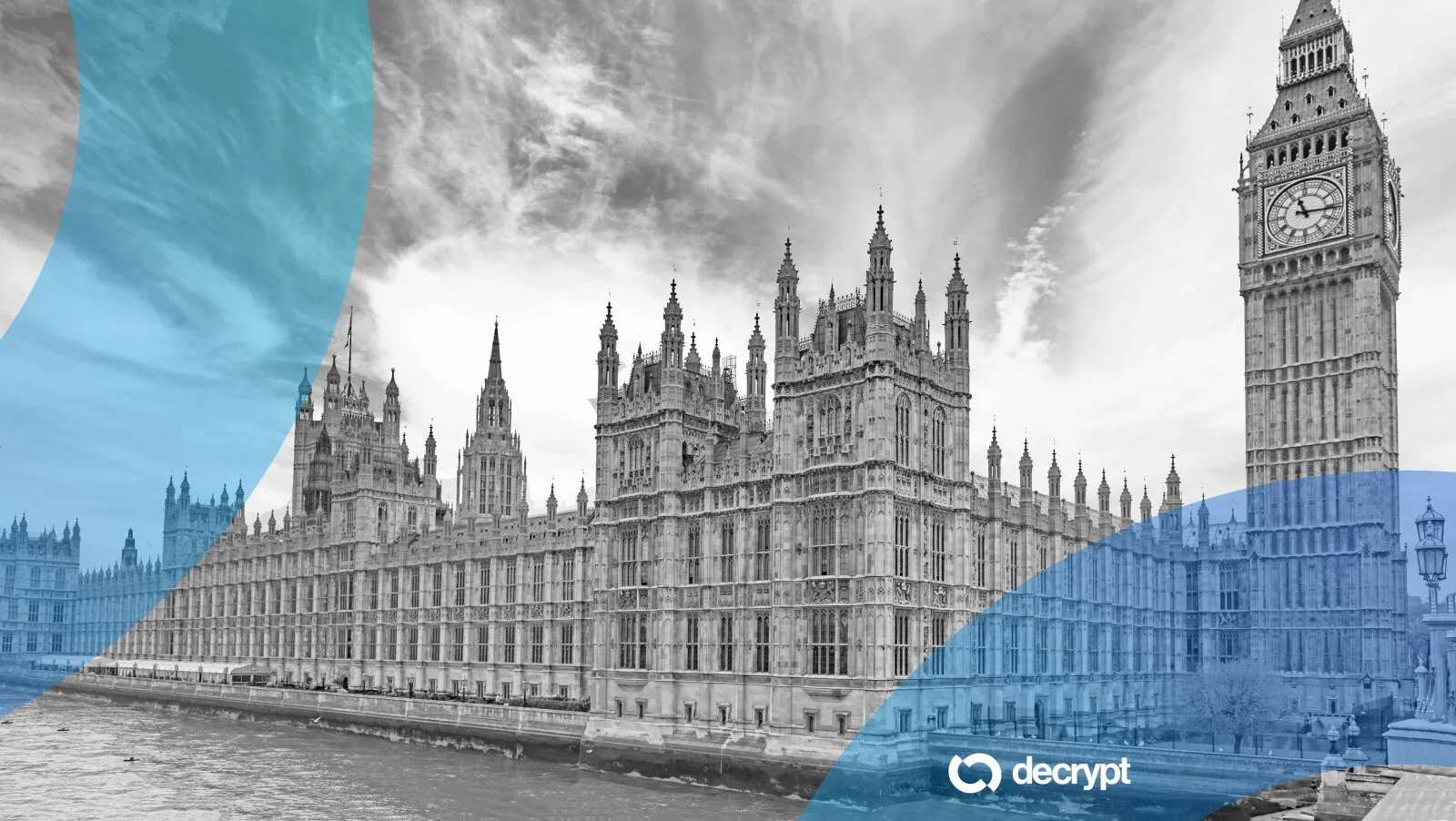
    UK Prime Minister Keir Starmer has announced an immediate moratorium on cryptocurrency donations to UK political parties following an independent review into countering foreign financial influence in British politics, according to the Press Association.

    The ban, triggered by the government-commissioned Rycroft review, covers donations of any size, and will be applied retrospectively to all cryptocurrency donations received from today. Parties will have 30 days to return any crypto received once legislation is passed, after which criminal penalties apply. The review also recommended that overseas donations from UK citizens living abroad and still on the electoral register be capped at £100,000 per year.

    The rules are being written into the Representation of the People Bill currently going through Parliament.

    To date, the only major political party in the country to accept donations in crypto is Reform UK. Reports indicate that the party received the UK’s first-ever crypto donation in October 2025, though no declaration has been made to the Electoral Commission.

    Reform UK leader Nigel Farage has positioned himself as a “champion” for cryptocurrency, calling for lower capital gains taxes on crypto and for the establishment of a national Bitcoin reserve.

    Members of Reform UK reportedly walked out of Parliament during the announcement of the ban, during which Starmer aimed a pointed barb at Farage, suggesting that there is “only one party leader who has shown he will say anything, no matter how divisive, if he is paid to do so.”

    Philip Rycroft, the former senior civil servant who authored the review, stopped short of calling for a permanent ban on crypto donations. In the review, he wrote that a moratorium “should not be seen as a prelude to an outright and permanent ban,” but as an “interlude” to allow the regulatory environment to catch up with cryptoassets, and gather together the expertise to allow for the “safe use of cryptoassets in the political process.”

    Daily Debrief Newsletter

    Start every day with the top news stories right now, plus original features, a podcast, videos and more.
  • NASA Pivots Artemis Program Toward Building Permanent Base on the Moon

    NASA Pivots Artemis Program Toward Building Permanent Base on the Moon

    In brief

    • NASA is shifting its Artemis strategy toward building a permanent base on the Moon.
    • Administrator Jared Isaacman says the lunar surface will serve as a testing ground for Mars missions.
    • The agency expects to invest about $20 billion over seven years to build the base through dozens of missions.

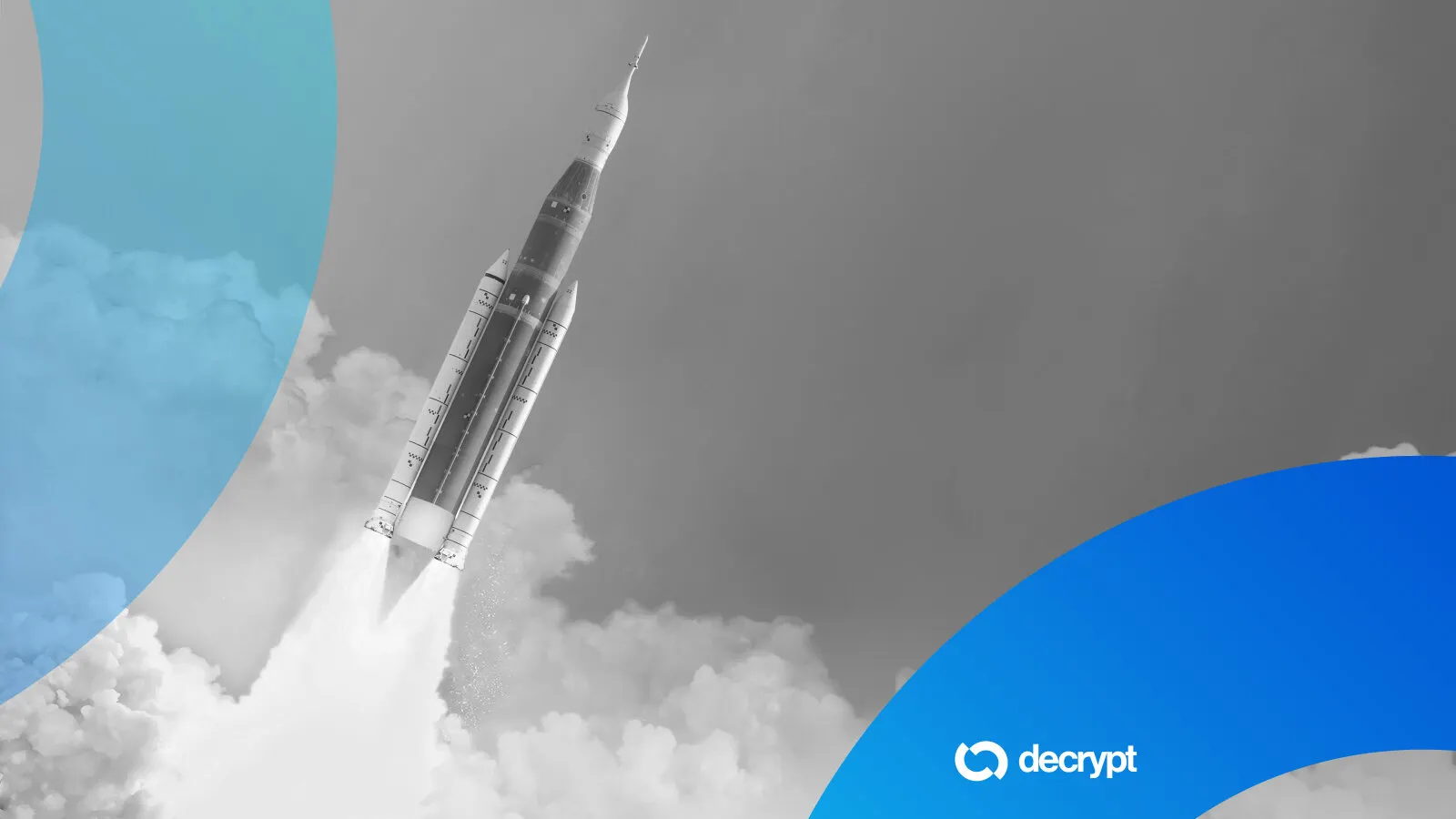
    NASA is shifting the focus of its Artemis Moon program toward building a permanent base on the lunar surface.

    The agency said on Tuesday the change reflects a broader strategy to establish a sustained human presence on the Moon as a “foundation for an enduring lunar base and the next step toward Mars.”

    During a presentation at the NASA “Ignition” event in Washington, D.C., NASA Administrator Jared Isaacman said the space agency is placing greater emphasis on surface operations to support technology testing, scientific research, and preparation for Mars missions.

    “Shifting NASA workforce priority to the surface has advantages for safety, technology demonstration, and science,” Isaacman said. “The surface is really the proving ground for future Mars initiatives.”

    Under the revised plan, NASA will pause development of the orbiting Gateway station and redirect funding and engineering resources toward lunar surface infrastructure. However, Isaacman said the move “does not preclude revisiting the orbital outpost in the future.”

    Three phases

    In phase one, the agency will shift from infrequent lunar missions to a repeatable approach using the Commercial Lunar Payload Services program and the Lunar Terrain Vehicle initiative. Robotic landings will deliver rovers, instruments, and technology demonstrations to test mobility, power systems, communications, navigation, and other surface operations.

    “We will dramatically expand lunar landings through the CLPS and LTV programs, delivering rovers, instruments, and technology payloads,” Isaacman said. Phase one, he added, is about “moving from infrequent, bespoke efforts to a templated approach that will generate significant learning through experimentation.”

    In phase two, NASA plans to deploy semi-habitable infrastructure and routine logistics to support regular astronaut operations on the Moon.

    Canada, Italy, and Japan will contribute to building the lunar base, including the Japan Aerospace Exploration Agency’s pressurized rover, Italy’s multi-purpose habitation module, and Canada’s Lunar Utility Vehicle.

    In phase three, NASA will deliver heavier infrastructure needed to sustain a long-term human presence on the Moon as cargo-capable landing systems come online, the agency said.

    “The moon base will not appear overnight,” Isaacman said. “We will invest approximately $20 billion over the next seven years and build it through dozens of missions, working together with commercial and international partners toward a deliberate and achievable plan.”

    Beyond its Moon operation, NASA said it plans to launch Space Reactor-1 Freedom, a nuclear-powered spacecraft, to Mars by 2028. The mission aims to test nuclear electric propulsion, which officials say is needed to transport heavy cargo to deep-space destinations where solar power is limited.

    NASA’s announcement comes as a new space race ramps up, with companies such as Elon Musk’s SpaceX pursuing their own missions to the Moon and Mars.

    Last year, Musk said the company planned to launch its massive Starship rocket to Mars by the end of 2026, carrying Tesla’s Optimus humanoid robots.

    The shift also alters NASA’s upcoming flight plans. Artemis III, originally scheduled for 2024, is now planned for 2027. Artemis IV, which would follow in 2028, is billed as “humanity’s return to the lunar surface” and would launch with a crewed lunar landing.

    After Artemis V, NASA said it plans to transition to sending crews to the Moon twice a year.

    “The goal is not just to reach the Moon, but to stay,” the White House wrote on X, adding that America “will never give up the Moon again.”

    NASA did not immediately respond to Decrypt’s Request for comment.

    Daily Debrief Newsletter

    Start every day with the top news stories right now, plus original features, a podcast, videos and more.
  • CoinDesk 20 performance update: Stellar (XLM) gains 6% as all constituents rise

    CoinDesk 20 performance update: Stellar (XLM) gains 6% as all constituents rise

    CoinDesk Indices presents its daily market update, highlighting the performance of leaders and laggards in the CoinDesk 20 Index.

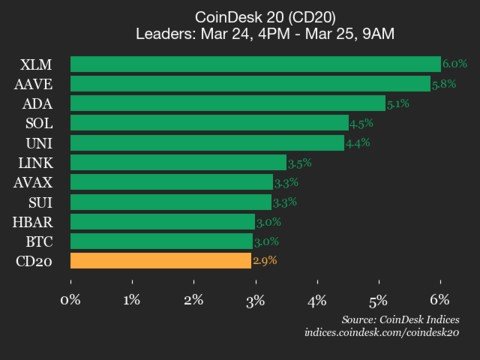
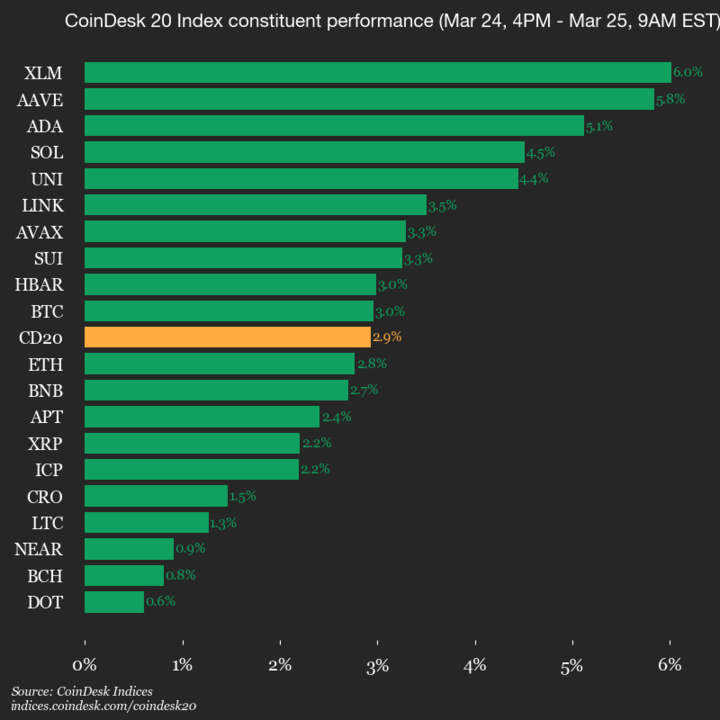
    The CoinDesk 20 is currently trading at 2063.87, up 2.9% (+58.76) since yesterday’s close.

    All 20 assets are trading higher.

    Leaders: XLM (+6.0%) and AAVE (+5.8%).

    Laggards: DOT (+0.6%) and BCH (+0.8%).

    The CoinDesk 20 is a broad-based index traded on multiple platforms in several regions globally.

  • Bitcoin Exchange Coinbase Announces New Listing! Here Are the Details

    Bitcoin Exchange Coinbase Announces New Listing! Here Are the Details

    US-based cryptocurrency exchange Coinbase is preparing to add a new digital asset to its platform. According to a statement from Coinbase Markets, the exchange’s trading arm, the cryptocurrency called Perle (PRL) will be listed on the spot market starting March 25th.

    The announcement emphasized that the launch of PRL token trading would depend on liquidity conditions. Accordingly, if sufficient market depth and trading volume are achieved, the PRL-USD trading pair is planned to be activated later that same day.

    The new listing is seen as part of Coinbase’s strategy to increase the variety of assets offered to its users. The exchange typically follows a phased approach to adding new assets, first testing the technical infrastructure and liquidity conditions. This approach aims to limit potential price volatility and support a healthier market formation.

    Experts point out that listings on major exchanges can have a significant impact on the price and trading volume of the relevant crypto assets. Listings on platforms with a large global user base, in particular, can increase project visibility and attract new investors.

    On the other hand, Coinbase advised users to conduct thorough research on the relevant asset and consider market risks before making a transaction. PRL’s performance will largely depend on market conditions and investor interest.

    *This is not investment advice.

  • Circle Stock Dives as Rival Tether Secures Big Four Audit, Crypto Bill Threatens Stablecoin Yield

    Circle Stock Dives as Rival Tether Secures Big Four Audit, Crypto Bill Threatens Stablecoin Yield

    In brief

    • Circle’s CRCL shares dropped 20% on Tuesday following a recent surge in value for the firm’s stock.
    • Stablecoin giant Tether announced a long-awaited agreement for an audit from a “Big Four” accounting firm.
    • Lawmakers are reviewing compromise language to the Clarity Act market structure bill that could impact stablecoin yield.

    Stablecoin issuer Circle saw its stock take a 20% dive Tuesday following a double shot of potentially concerning news for the firm behind the prominent USDC stablecoin.

    As of the close of trading, CRCL changed hands for $101.24, falling just over 20% on the day—and it’s ticking down further in after-hours trading thus far, as of this writing. Shares of the closely aligned crypto exchange Coinbase also fell nearly 10% on the day, finishing at $181.04.

    Early Tuesday, stablecoin rival Tether—issuer of the largest stablecoin by market cap, USDT—said that it had agreed to undergo a full audit by an unnamed “Big Four” accounting firm, one of the last potential hurdles to compliance with the U.S. GENIUS Act. That could make Tether a bigger domestic threat to Circle in the future.

    Circle’s share price may also have been impacted by the latest developments with another piece of legislation, the proposed Clarity Act market structure bill that’s still being revised by lawmakers. Crypto lobbyists reviewed compromise language regarding stablecoin yield on Monday, with the banking lobby currently reviewing to see if they’ll get onboard with the version of the language put together by Senators Alsobrooks and Tillis and the White House.

    Speculation over the reported Clarity Act draft has echoed across social media as crypto industry players grapple with the potential impacts if restrictions on stablecoin yield make it into the final version of the bill—and it’s ultimately passed.

    At the time of writing, Coinbase has been offering 3.5% rewards for USDC balances held on its premium Coinbase One platform. The company just ended its USDC rewards program for free exchange users in December. At the time, it had been advertising 4.5% rewards for Coinbase One users, but has since adjusted its rewards rate.

    Coinbase competitor Kraken has been offering up to 5% rewards on USDC balances held on its platform. And Binance, the largest centralized crypto exchange by volume, pays users 5.63% on USDC balances held in its wallets. Binance used to offer its own stablecoin, BUSD, but stopped minting new tokens after its issuing partner Paxos ran afoul of New York regulators, who alleged the firm hadn’t done enough due diligence.

    Analysts have otherwise been optimistic about Circle. The company’s shares have gained 170% since early February, far outpacing other crypto stocks and the struggling broader stock market.

    Just last week, Clear Street analyst Owen Lau raised the firm’s price target for CRCL to $152 after noting that Mastercard’s $1.8 billion acquisition of BVNK, a stablecoin payments infrastructure firm, was bullish for the space.

    The CRCL surge had also been driven by a blowout earnings report. Circle announced 72% growth in its USDC stablecoin to $75.3 billion and 77% revenue growth to $770 million in the fourth quarter of 2025, triggering a 35% single-day gain that rippled across crypto markets.

    A higher-for-longer interest-rate outlook, reinforced by geopolitical tensions and rising oil prices, had also boosted Circle’s earnings prospects, since the company earns substantial interest on reserves backing its USDC stablecoin.

    At the time of writing, there’s more than $78 billion worth of USDC tokens in circulation, and an equivalent worth of cash or cash-like investments being held by its issuer to back those stablecoins.

    Daily Debrief Newsletter

    Start every day with the top news stories right now, plus original features, a podcast, videos and more.

  • OpenAI to Shut Down Sora Video App, Derailing $1 Billion Deal with Disney

    OpenAI to Shut Down Sora Video App, Derailing $1 Billion Deal with Disney

    In brief

    • OpenAI says it will shut down the Sora AI video-generation app and API.
    • Sora evolved from a text‑to‑video tool tied to ChatGPT into a full‑blown social video platform.
    • The shutdown also appears to end a reported $1 billion Disney investment tied to licensing major characters.

    OpenAI will shut down Sora, its AI video-generation platform that allowed users to create short videos from text prompts, as it pivots to “world simulation research to advance robotics,” the company told Decrypt on Tuesday.

    The decision to end its standalone generative video product appears to also disrupt a planned entertainment partnership with Disney tied to the app.

    “As we continue to focus on our roadmap to AGI and the compute needed to deliver agentic AI capabilities, we’re making the tough decision to discontinue supporting Sora as a consumer app and API offerings,” the company added.

    No changes will be made to the AI Image Generator inside ChatGPT, OpenAI confirmed.

    OpenAI said it will share more information soon, including timelines for shutting down the app and its API and details on how users can preserve their work.

    The fallout from OpenAI’s announcement has been swift.

    A proposed $1 billion investment from Disney connected to Sora is no longer moving forward after OpenAI announced it would shut down the app, according to a report by Deadline.

    OpenAI first introduced Sora in February 2024 as a text‑to‑video model that could turn written prompts into short clips.

    The company later expanded the technology with Sora 2, a more advanced model released alongside a standalone Sora mobile app.

    “When we released Sora, our goal was to teach AI to understand and simulate the physical world in motion,” the company said. “We will continue to prioritize longer-term world simulation research, especially as it pertains to robotics and helping people solve problems that require real-world interaction.

    While OpenAI’s entry into video generation was highly anticipated, it became a consistent money drain for the company, reportedly costing about $15 million per day.

    The Sora iOS app introduced a social-style video feed where users could generate and share AI-created clips.

    It also included “cameos,” a feature that allowed users to insert themselves into AI-generated scenes after recording a short video to capture their likeness and voice.

    Sora quickly drew scrutiny as it became widely available.

    Legal experts warned the system could recreate recognizable characters and copyrighted franchises, raising intellectual property concerns.

    Researchers also warned that Sora could be used to spread misinformation, noting that the system produced realistic-looking news footage depicting events that never happened, including of OpenAI CEO Sam Altman wearing a cat suit.

    Critics also argued that tools like Sora, designed to generate and distribute low-quality synthetic media, also known as AI slop, could flood the internet.

    In December, OpenAI and Disney announced a three-year agreement that would have allowed the company to license roughly 250 Disney characters from franchises including Frozen, Star Wars, and Marvel for use in AI-generated videos.

    “This agreement shows how AI companies and creative leaders can work together responsibly to promote innovation that benefits society, respect the importance of creativity, and help works reach vast new audiences,” Altman said in a statement at the time.

    Disney said it respects OpenAI’s decision to exit the video-generation business and will continue exploring other ways to work with generative AI.

    “We appreciate the constructive collaboration between our teams and what we learned from it, and we will continue to engage with AI platforms to find new ways to meet fans where they are while responsibly embracing new technologies that respect IP and the rights of creators,” a Disney spokesperson reportedly said.

    Editor’s note: Adds comments from OpenAI

    Daily Debrief Newsletter

    Start every day with the top news stories right now, plus original features, a podcast, videos and more.

  • Monument Bank to tokenized 250 million pounds of retail deposits in UK first

    Monument Bank to tokenized 250 million pounds of retail deposits in UK first

    Monument Bank said it plans to tokenise up to 250 million pounds ($335 million) of retail customer deposits on the Midnight network in what it described as the first such move by a U.K.-regulated bank on a public blockchain.

    The London-based challenger bank said the deposits will remain interest-bearing, fully backed by Monument and redeemable one-for-one in pounds sterling. They will also remain covered by the U.K.’s Financial Services Compensation Scheme.

    The move marks is a step in the push to bring tokenized financial products into regulated banking. While banks in the U.K. and elsewhere have explored tokenized deposits, most work to date has focused on institutional use or closed networks.

    Monument is pitching this effort at retail customers, starting with clients with investable assets between 50,000 pounds and 5 million pounds, the so-called mass-affluent, according to asset manager St. James’s Place.

    Monument, which says it has more than 100,000 customers and about 7 billion pounds in deposits, said the first phase will mirror savings balances on Midnight’s privacy-focused blockchain.

    Later phases are meant to add tokenized investment products such as private market and commodity funds, followed by lending against those holdings inside the Monument app.

    Midnight Foundation, which was developed by Shielded Technologies, a company linked to Cardano creator Input Output, is providing the blockchain infrastructure.

    Monument said the system is designed so transaction data remains visible only to the bank and its customers, while operating within existing U.K. banking protections and compliance rules.

    The announcement also points to a wider play. Monument said affiliate Monument Technology plans to offer tokenized deposit functionality through its Banking-as-a-Service platform. That could allow other institutions to adopt the same model.

  • Bitcoin Exchange Binance Announces Listing of This Altcoin on its Futures Trading Platform! Here Are the Details

    Bitcoin Exchange Binance Announces Listing of This Altcoin on its Futures Trading Platform! Here Are the Details

    Binance, continuing to increase its product diversity in cryptocurrency derivatives markets, has announced that it will offer yet another new futures contract to its users.

    According to the announcement from the exchange, the BSBUSDT perpetual futures contract will be launched on the Binance Futures platform on March 25, 2026, at 2:45 PM.

    The new contract aims to offer investors more trading options and improve the trading experience on the platform. The BSBUSDT contract will provide leverage up to 10x. The underlying asset of the contract is $BSB, the native token of the Block Street project.

    Block Street is described as a project aiming to provide a unified liquidity layer for on-chain capital markets. The infrastructure developed within this framework is said to aim at enabling more efficient liquidity flow between different financial instruments.

    The new futures contract will use $USDT as the settlement asset. The minimum transaction amount is set at 1 $BSB, while the minimum transaction value is 5 $USDT. The price increment is stated as 0.00001, and the funding rate will range between +2% and -2%. Funding payments will be made every four hours.

    The contract, which can be traded 24/7 on the platform, also stands out with its multi-asset mode support. Binance emphasizes that users should carefully evaluate the risks before trading, reminding them that high-leverage trading carries significant risks.

    *This is not investment advice.

  • CFTC Unveils Innovation Task Force Focused on Crypto, AI and Prediction Markets

    CFTC Unveils Innovation Task Force Focused on Crypto, AI and Prediction Markets

    In brief

    • The CFTC introduced an Innovation Task Force designed to help create a clear regulatory framework for derivatives markets in crypto, AI, and prediction markets.
    • The task force is the latest endeavor from the regulator that aims to support innovation while making America the home for the “future of finance.”
    • The task force will coordinate with other federal agencies like the SEC and its own Crypto Task Force.

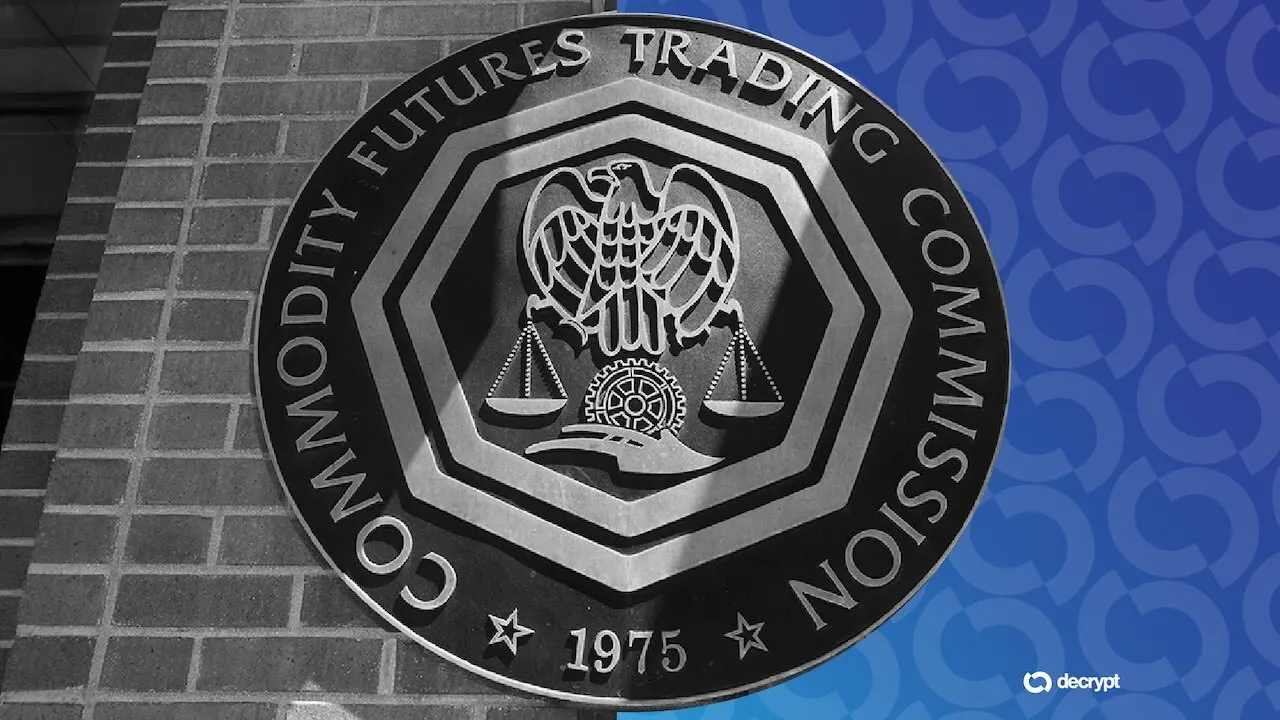
    The United States Commodity Futures Trading Commission (CFTC) wants to create clear rules within U.S. derivatives markets for those building with new technologies, and has unveiled a new task force to help do so. 

    The newly established CFTC Innovation Task Force will work alongside the Commission to develop those frameworks specifically for builders in crypto and blockchain, artificial intelligence and autonomous systems, and prediction markets

    “By establishing a clear regulatory framework for innovators building on the new frontier of finance, we can foster responsible innovation at home and ensure American market participants are not left on the sidelines,” said CFTC Chairman Michael Selig, in a statement. 

    The task force will be led by Selig’s senior advisor, Michael J. Passalacqua, and said it will coordinate with agencies like the SEC and the SEC’s Crypto Task Force on innovation initiatives. 

    “Under Chairman Selig, the Innovation Task Force (ITF) will provide clarity to builders by advancing the CFTC’s innovation agenda across crypto, AI, and prediction markets,” Passalacqua posted on X

    The regulator has been busy in March, particularly as it relates to its relationship with prediction markets and their rapid growth. Under Selig’s leadership, it recently published a letter that guided registered exchanges on compliance and product requirements for event contracts, those used on prediction market platforms like Kalshi and Polymarket. 

    The CFTC is also inviting public comment about whether or not it needs to amend or write new rules on prediction market oversight.

    Those moves come amid intensifying scrutiny around prediction markets, highlighted by a push by Democratic lawmakers and concerns over insider trading and event contracts tied to things like terrorism and war. 

    To that end, both Kalshi and Polymarket made public moves on Monday to address insider trading on their platforms. For Kalshi, that meant adding preemptive screening for politicians and individuals working in sports and ensuring they cannot trade on markets related to them. 

    Similarly, Polymarket took steps to clarify its rules around insider trading as it enhanced its market integrity terms. 

    The regulator has remained adamant that it is the governing body for prediction markets, with Chairman Selig recently saying to those that challenge the CFTC over jurisdiction—including states—that his agency would “see you in court.” 

    The remark comes as states begin to challenge prediction markets over their offerings, like in Arizona, where the state filed charges against Kalshi for allegedly running an illegal gambling operation. Also last week, Nevada secured a temporary ban against Kalshi, blocking the startup from offering sports, politics, and entertainment event contracts in the state for at least 14 days.

    Earlier this month, the CFTC signed a memorandum of understanding (MOU) with Major League Baseball, which will see the parties work together to limit markets that may pose “integrity risk.” 

    Beyond prediction markets, the CFTC made a major ruling last week that gives self-custodial wallet Phantom the ability to offer its users access to derivatives markets without registering as a broker. 

    Daily Debrief Newsletter

    Start every day with the top news stories right now, plus original features, a podcast, videos and more.
  • Russian Hacker Jailed for 81 Months Over $9M Ransomware Attacks

    Russian Hacker Jailed for 81 Months Over $9M Ransomware Attacks

    In brief

    • A U.S. court has sentenced Russian citizen Aleksei Volkov to 81 months in prison for his role in ransomware attacks causing over $9 million in actual losses.
    • Volkov operated as an “initial access broker,” finding vulnerabilities and selling unauthorized access to ransomware groups who then encrypted victims’ data.
    • The 26-year-old must pay $9.2 million in restitution to victims and forfeit equipment used in the crimes.

    A court in the Southern District of Indiana sentenced Russian citizen Aleksei Volkov, 26, to 81 months in prison Monday for assisting major cybercrime groups including the Yanluowang ransomware group in attacks that caused over $9 million in actual losses and over $24 million in intended losses across the United States.

    Volkov, of St. Petersburg, Russia, operated as an “initial access broker”—a specialist who gains unauthorized access to corporate networks and sells that access to other threat actors, according to court documents. His buyers used the access to deploy ransomware that encrypted victims’ data, then demanded cryptocurrency payments—”sometimes in the tens of millions of dollars”—in exchange for restoring access and not publishing stolen data on leak sites.

    On November 25, 2025, Volkov pleaded guilty to four counts from the Southern District of Indiana indictment—unlawful transfer of a means of identification, trafficking in access information, access device fraud, and aggravated identity theft—plus two counts from the Eastern District of Pennsylvania indictment for conspiracy to commit computer fraud and conspiracy to commit money laundering. Police in Rome, Italy, had arrested Volkov before his extradition to the United States.

    As part of his plea agreement, Volkov admitted that he and co-conspirators “demanded tens of millions of dollars in ransom and received millions,” with Volkov receiving a share of cryptocurrency ransom payments. The court ordered him to pay full restitution including almost $9.2 million to known victims and to forfeit equipment used in his crimes.

    Ransomware and crypto

    Ransomware, often leveraging cryptocurrency for payment, remains a challenge for the crypto space. Per Chainalysis’ 2026 Crypto Crime Report, on-chain ransomware payments totaled $820 million in 2025, down 8% year-on-year, while claimed attacks increased by 50% and the median ransom payment grew 368% year-over-year to nearly $60,000.

    In recent months, ransomware developers have turned to blockchain smart contracts as a distribution channel, including the DeadLock ransomware strain that leverages Polygon smart contracts for proxy server address rotation and distribution, and EtherHiding, which targets BNB Smart Chain and Ethereum smart contracts.

    Daily Debrief Newsletter

    Start every day with the top news stories right now, plus original features, a podcast, videos and more.