Category: Business

  • New York sues Kalshi, alleges it offers a gambling platform ‘plain and simple’

    New York sues Kalshi, alleges it offers a gambling platform ‘plain and simple’

    James’ office described Kalshi’s event contracts as bets and said the platform takes wagers on professional and college sports, elections and culture. The lawsuit alleges Kalshi allows users aged 18 to 20 to wager and lists markets involving New York college teams, both prohibited for licensed sportsbooks in the state.

    “New York’s gambling ⁠laws protect children from underage betting and help combat gambling addiction,” James said in the statement. “No matter what they call themselves, prediction markets like ​Kalshi are gambling platforms, plain and simple.”

    The World Cup helped boost Kalshi’s numbers, adding 3 million during the course of the tournament, according to CNBC. That’s more than double the 2 million the firm said it had at the start of May.

    According to the attorney general’s statement, the lawsuit follows an October cease-and-desist order from the New York State Gaming Commission.

    A federal judge denied Kalshi’s bid to block state regulators on July 7 and rejected an injunction pending appeal on July 27.

    CoinDesk approached Kalshi for comment outside of regular U.S. office hours, and had not heard back by publication time.

  • Critical Day in the Crypto Market: A $10.5 Billion Option Surge in Bitcoin and Ethereum! What Are Investors Expecting?

    Critical Day in the Crypto Market: A $10.5 Billion Option Surge in Bitcoin and Ethereum! What Are Investors Expecting?

    The leading cryptocurrency, Bitcoin, is struggling to find direction around the $64,000 level amid ongoing uncertainty surrounding US monetary policy and geopolitical risks in the Middle East.

    As $BTC continues to move within a narrow range, attention in the cryptocurrency markets has turned to the high-volume option contracts expiring today.

    These options are particularly significant because they fall on the last Friday of both the week and the month.

    According to weekly data, approximately $9.7 billion worth of crypto options will expire on the Deribit derivatives exchange on July 31.

    According to Deribit data, $9.69 billion worth of Bitcoin and $830 million worth of Ethereum options will expire.

    Accordingly, the Put/Call ratio for $BTC options is 0.28, while the maximum loss point is $64,000 and the intrinsic value is $9.69 billion.

    Looking at Ethereum, $ETH options have a Put/Call ratio of 0.63, a maximum stop-loss point of $1,850, and a nominal value of $830 million.

    What Do Options Mean for Bitcoin and Ethereum?

    The put/call ratio is 0.28 for Bitcoin and 0.63 for Ethereum, indicating that investors are generally betting on higher returns and expecting an upward trend.

    For $BTC, this indicates that the majority of investors are positioned for prices to rise, or that bullish expectations are more dominant. A low ratio like 0.28 points to an optimistic (bullish) market outlook.

    In contrast, while call options still dominate for $ETH, this indicates that investors are more cautious compared to Bitcoin. However, according to experts, the put/call ratio and the expiration of options are not considered the sole determining factors of price direction. Macroeconomic developments and investor sentiment also continue to be decisive in pricing.

    *This is not investment advice.

  • $38M in Bitcoin Drained by Coldcard Key Flaw Its Maker Thinks AI Found

    $38M in Bitcoin Drained by Coldcard Key Flaw Its Maker Thinks AI Found

    In brief

    • Coinkite says a build error meant seeds on its Coldcard hardware wallets were drawn from a software fallback instead of the hardware generator.
    • It believes an attacker used AI on its open-source code, and says its own AI review weeks earlier found nothing.
    • Every current model is affected to some degree, and updating the firmware does not repair a seed already created.

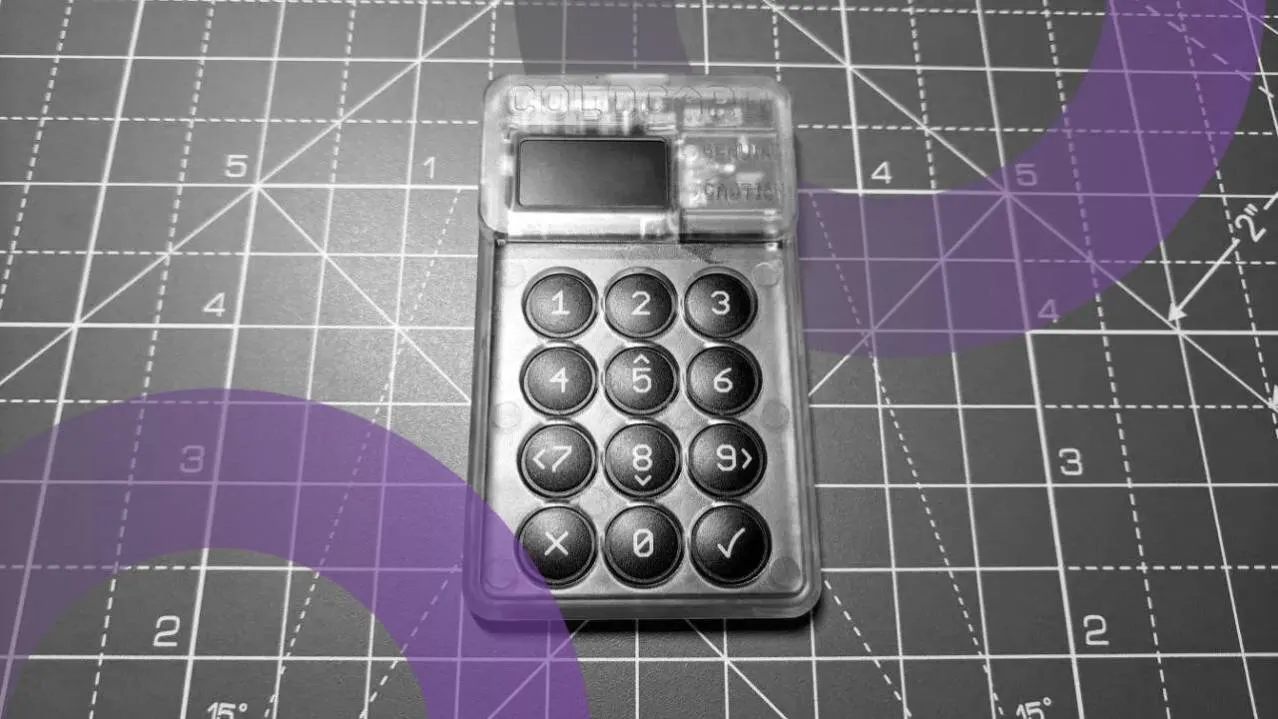
    Coinkite believes an attacker used AI to find a flaw that has cost owners of its Coldcard hardware wallets tens of millions of dollars in Bitcoin, and says its own AI review of the same code weeks earlier turned up nothing. 

    The hardware wallet manufacturer published an advisory for its Mk3 and a technical breakdown on Thursday, after learning that seeds generated by its devices were far more guessable than intended.

    The losses to the flaw, which was exploited early Friday, are estimated at 594 BTC, around $38 million. Funds were drained from roughly 500 wallets inside 25 minutes, with 562 BTC since consolidated into a single address.

    Coinkite said it has to assume “someone used AI to review previous versions of our firmware” in order to uncover the flaw. The firm said it had run one of the best available models over its own code a few weeks earlier, and the model “did not find this bug or anything serious.” Attackers and defenders have the same tools, it wrote, but this time “it did not help us, and only helped the bad guys.”

    What went wrong

    Coldcard’s firmware calls a function to fetch randomness, and two implementations of it sat in the codebase with identical signatures: the hardware generator Coinkite wrote, and a software fallback inherited from MicroPython. A preprocessor guard checked only whether a setting was defined, without testing its value, so the build completed against the fallback without complaint. Seed generation had been drawing on it since a March 2021 migration.

    Every current model is affected to some degree. Coinkite estimates the effective search space for an Mk3 seed at about 40 bits, against the 128 a seed is meant to have. Extra entropy from the secure elements on the Mk4, Q and Mk5 lifts theirs to roughly 72 bits, which the company says materially improves the position without reaching the target. Tapsigner, Opendime and Satscard use different code and are unaffected.

    What owners must do

    Coinkite has shipped an emergency hotfix, version 5.6.0 for the Mk4 and Mk5 and 1.5.0Q for the Q. Updating does not repair a seed already created on affected firmware. Owners need a new seed generated on patched hardware, and the company recommends a strong BIP-39 passphrase, at least 99 dice rolls, or both. Mk3 owners, whose model is out of support, are pointed to a separate migration path.

    A seed created on an affected Coldcard stays weak after being restored to another brand’s device, a point rival hardware wallet manufacturer Trezor made while telling its own users their funds are safe. Block, which published an independent analysis on Friday, said none of its products are affected, and its hardware lead Max Guise urged anyone exposed to move funds as soon as they safely can.

    Daily Debrief Newsletter

    Start every day with the top news stories right now, plus original features, a podcast, videos and more.

  • XRP Price Nears Key Breakout Zone as Short Liquidation Cluster Builds Above $1.10

    XRP Price Nears Key Breakout Zone as Short Liquidation Cluster Builds Above $1.10

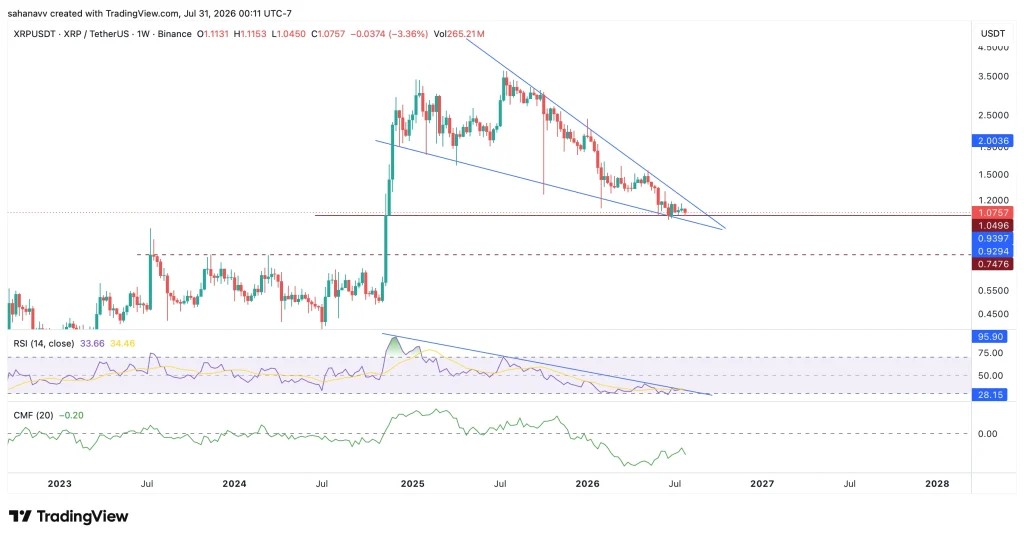
    The $XRP price traded around $1.07 on Thursday, continuing to consolidate below a key descending trendline that has capped price action for months. The token remains stuck between a crucial support zone and overhead resistance, with the narrowing range signaling that a decisive move could be on the horizon.

    While the broader trend has remained weak, traders are closely watching the $1.10 resistance level, as a breakout above it could shift market sentiment and open the door to further upside. Conversely, losing nearby support could expose $XRP to another leg lower.

    $XRP Technical Analysis: Weekly Chart Nears a Critical Turning Point

    $XRP continued to trade within a descending triangle on the weekly timeframe, with the price hovering around $1.07. The token has consistently formed lower highs since its rejection from the yearly peak, while buyers have defended the $1.04-$1.05 support zone, keeping the broader consolidation intact.

    The immediate resistance lies between $1.10 and $1.12, where the descending trendline intersects with a previous support-turned-resistance zone. A weekly close above this range could invalidate the recent sequence of lower highs and pave the way for a move toward $1.20, while a break below $1.04 could expose $XRP to the next support near $0.93.

    The RSI is hovering near 33, indicating that bearish momentum remains dominant, although selling pressure has eased compared with earlier declines. Meanwhile, the CMF remains below the zero line, suggesting capital outflows still outweigh inflows despite signs of stabilization. Together, these indicators point to weakening bearish momentum, but they have yet to confirm a sustained bullish reversal.

    $XRP Derivatives Data Signals Cautious Optimism

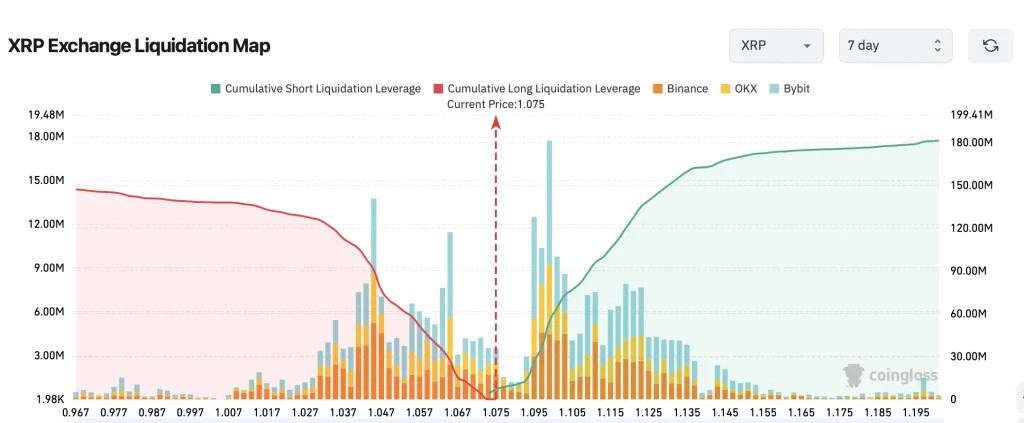
    Beyond the price chart, $XRP’s derivatives data points to a market waiting for a catalyst. CoinGlass’ liquidation heatmap shows a significant cluster of short liquidations stacked above the $1.10-$1.12 resistance zone. If buyers manage to push the token above this level, forced short liquidations could amplify buying pressure and accelerate $XRP’s move toward the next resistance levels.

    On the downside, long liquidation pockets are concentrated around $1.04 and below. A breakdown beneath this support could trigger another round of long liquidations, potentially extending $XRP’s decline toward the $0.93 support zone.

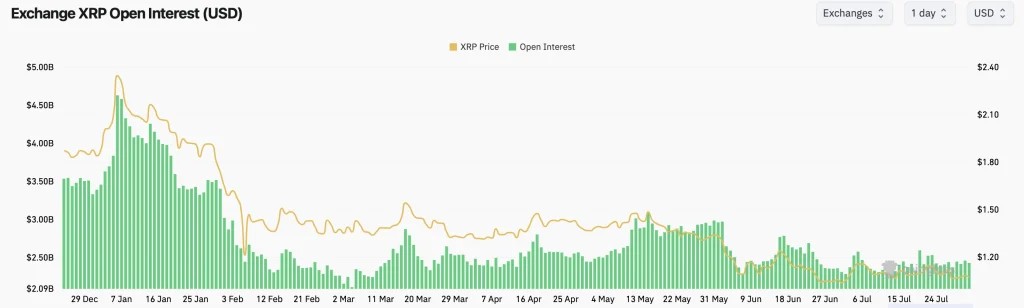
    Meanwhile, Open Interest (OI) has stabilized after declining sharply from its earlier highs, suggesting leveraged positions have cooled. While the recent uptick in OI indicates traders are gradually returning to the market, it remains well below previous peak levels. A sustained increase in both $XRP’s price and Open Interest would indicate fresh capital entering the market, strengthening the case for a bullish breakout. Conversely, a price rally without a meaningful rise in OI could suggest the move is driven primarily by short covering rather than new buying interest.

    Together, the liquidation heatmap and Open Interest data suggest traders are positioning for higher volatility, with the $1.10-$1.12 resistance zone likely to determine $XRP’s next directional move.

    $XRP Price Outlook: Can Price Rise Above $1.2?

    $XRP price remains at a critical technical juncture, with price continuing to consolidate below a key descending trendline while holding above the $1.04 support zone. Although momentum indicators suggest selling pressure is easing, bulls still need to reclaim $1.10-$1.12 to confirm a shift in market structure.

    A decisive breakout above this resistance, supported by rising volume and Open Interest, could trigger a short squeeze and open the door for a move toward $1.20 in the near term. If buying momentum strengthens further, $XRP could extend its rally toward the $1.45 resistance level.

    On the downside, failure to hold the $1.04 support could invalidate the bullish setup and expose $XRP to the next support at $0.93. A deeper sell-off could see the token revisit the $0.75 zone if bearish momentum accelerates.

    For now, the $1.10-$1.12 resistance and $1.04 support remain the key levels to watch, as a breakout from this range is likely to determine $XRP’s next major move.

  • Ripple will unlock 1 billion XRP tomorrow

    Ripple will unlock 1 billion XRP tomorrow

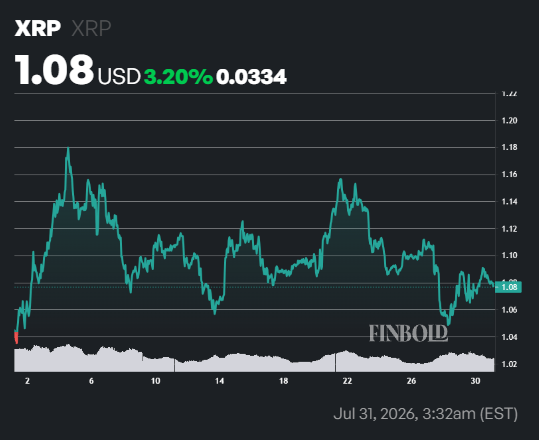
    Ripple is getting ready to unlock 1 billion $XRP from escrow tomorrow, August 1, worth about $1.08 billion based on the $XRP price of $1.08 at the time of writing.

    The upcoming unlock is part of Ripple’s long-standing escrow schedule, according to which the company typically unlocks 1 billion $XRP on the first day of each month.

    With the token’s circulating supply currently at about 62.52 billion $XRP, the new release will increase it by roughly 1.6%, although Ripple is likely to return a large portion of the unlocked tokens to escrow.

    How much $XRP will Ripple unlock tomorrow?

    Indeed, although the company unlocks 1 billion $XRP every month, it usually re-locks a large portion of the batch (between 60% and 80%) to a new escrow contract.

    So far, Ripple has re-locked on average 700 million $XRP every month in 2026, reducing the amount that went into circulation to just 300 million $XRP per month.

    At press time, roughly 32.44 billion $XRP is held in escrow, valued at approximately $34.72, according to data from XRPSCAN.

    What does the Ripple escrow mean for $XRP prices?

    As the upcoming release follows a strict schedule introduced in 2017, the market is unlikely to react in any meaningful way to what amounts to a routine event. Indeed, previous monthly escrows generated very little immediate volatility in $XRP’s price.

    $XRP’s performance this year is more dependent on broader cryptocurrency market trends, regulatory developments, and Bitcoin (BTC) moves.

    $XRP price 1-month. Source: Finbold

    A more important short-term catalyst has come in the shape of the U.S. CLARITY Act , which remains a major factor in every $XRP price prediction 2026, some of which see the cryptocurrency trading somewhere between $1.15 and $1.25 by next week’s voting date.

    Featured image via Shutterstock

  • Sticky Inflation and Strong Jobs Data Challenge Crypto’s Rate-Cut Narrative

    Sticky Inflation and Strong Jobs Data Challenge Crypto’s Rate-Cut Narrative

    The numbers keep refusing to cooperate with the narrative crypto traders want. The latest U.S. economic releases—weekly jobless claims at 197,000 for the week ending July 25, and June’s core PCE inflation reading of 3.3% year-over-year—signal that the labor market remains tight and price pressures are not fading fast. The data, covered in the original report, landed below the expected 200,000 claims and matched inflation forecasts, yet the combination leaves little room for the aggressive rate cuts that many digital-asset investors had penciled in for late 2026.

    Bitcoin and ether have spent the year so far responding decisively to every shift in Fed expectations. When soft data appeared, crypto jumped. When hawkish rhetoric returned, rallies stalled. This dynamic is not new, but it is becoming more unpredictable because the macro picture refuses to settle. Today’s print doesn’t collapse the soft-landing thesis, but it certainly keeps the pressure on markets that had started to anticipate easing as a near certainty.

    What the Data Actually Says

    Initial claims came in at 197,000, below the consensus 200,000, and the prior week’s reading was revised up only slightly to 188,000. That level of claims is low enough to suggest employers are still holding onto workers. No layoff wave is building. Meanwhile, the core personal consumption expenditures index—the Fed’s preferred inflation gauge—rose 3.3% year-over-year in June, in line with expectations but only a marginal improvement from 3.4% the previous month. The progress is slow.

    For crypto market structure, this matters because it directly shapes the cost of capital. If the Fed keeps rates elevated longer, the dollar remains strong and liquidity stays tighter. That environment historically doesn’t favor speculative assets that rely on cheap leverage. Yet the crypto market has not responded as a monolith this year. Some sectors have detached from the macro correlation entirely, while others remain tethered to it.

    The Fed Is Not in a Hurry, and That’s a Problem for Leverage

    The central bank’s communication has been consistent: it needs sustained evidence that inflation is moving toward 2% before cutting. A core PCE reading of 3.3% doesn’t offer that evidence. With the labor market still absorbing workers, there is no urgency. That leaves rate-sensitive crypto strategies—especially those relying on borrowed stablecoins or leveraged futures—exposed if the time horizon for cuts extends into 2027. We are already seeing a repricing across DeFi lending protocols where utilization rates reflect cautious positioning.

    At the same time, the regulatory backdrop adds another layer. While macro data dominates day-to-day price action, structural developments in Washington are creating parallel narratives. Major legislation working through the Senate could redefine how institutions interact with digital assets, potentially offsetting some of the macro headwinds if a clearer framework emerges. Still, bill text doesn’t move markets the way a CPI print does.

    Which Parts of Crypto Are Ignoring the Noise

    Not every token is suffering. Weekly gainers show that idiosyncratic catalysts still carry weight. Tokens like TON and SIREN posted notable rallies driven by network-specific news rather than macro flow. The divergence suggests that while macro sets the broad environment, on-chain and protocol-level developments can still overpower it for short stretches. This fragmentation is increasingly the story of 2026: a market where Bitcoin and ether trade like macro assets, but the rest of the space moves on its own clock.

    Real-world asset tokenization is another area that continues to expand regardless of Fed timing. A recent weekly roundup showed RWA totals crossing $20 billion on-chain, with major institutional deals closing. That growth is being driven by settlement efficiency and yield demand, not by rate-cut speculation. It’s a reminder that crypto’s infrastructure layer is maturing in ways that don’t require a dovish Fed to keep building.

    What Remains Uncertain

    The biggest open question isn’t whether inflation will decline further—it almost certainly will, but at an agonizing pace. The uncertainty is whether risk assets can sustain their current valuations if the market begins to price out cuts for the next 12 months. Crypto has already shown it can trade sideways for extended periods, but sentiment can shift quickly when the macro story changes. The next few PCE prints will be critical, and traders are now likely to return to>For now, the message is clear. The U.S. economy isn’t cooling fast enough to justify the kind of monetary loosening that had become the base case for many crypto participants. That doesn’t make the trade broken, but it does mean that positioning for a rapid pivot is riskier than it seemed a month ago. Attention now turns to the Fed’s next meeting and whether officials see this data as a temporary plateau or a sign that the final mile of inflation fighting will take longer than anyone hoped.

  • Coinbase Misses on Q2 Earnings as Crypto Trading Activity Slows

    Coinbase Misses on Q2 Earnings as Crypto Trading Activity Slows

    In brief

    • Coinbase reported $1.22 billion in second-quarter revenue, and a net loss of $359 million, against an expected $1.29 billion in earnings.
    • Subscription and services revenue totaled $555 million, or 48% of net revenue.
    • Coinbase said its crypto trading market share reached a record 10.3% during the quarter.

    Coinbase reported $1.22 billion in second-quarter revenue on Thursday, down 14% from the previous quarter, and a net loss of $359 million.

    Coinbase shares fell sharply in after-hours trading, losing roughly 5% of its stock price, after missing on earnings estimates for the quarter. The company was expected to bring in $1.29 billion in Q2.

    According to Coinbase, total crypto spot trading volume declined more than 20% from the previous quarter as crypto asset prices fell and market volatility reached multi-year lows. Transaction revenue totaled $599 million—lower than the expected $628 million.

    Subscription and services revenue totaled $555 million, representing 48% of net revenue. Coinbase said the figure was below its previously forecast range of $565 million to $645 million because certain USDC-related commercial agreements closed later than expected and lower crypto asset prices reduced staking revenue.

    Stablecoin revenue totaled $292 million. Average USDC held across Coinbase products reached a record $20 billion during the quarter, representing more than 30% of USDC in circulation at quarter-end. Coinbase also said 88% of net revenue came from sources other than Bitcoin spot trading, compared with 45% in the second quarter of 2020.

    Coinbase said its crypto trading market share reached a record 10.3% during the quarter, its third consecutive quarter of market share gains. The company said it gained share in both spot and derivatives trading.

    In a bright spot for the company, prediction markets contracts and revenue grew 106% from the previous quarter and exceeded a $100 million quarterly annualized net revenue run rate, according to Coinbase. Average Borrow/Lend balances increased by more than $1 billion from a year earlier to $1.49 billion. The company also said the conditions for its commercial agreement with Circle to renew in August automatically had been met.

    The earnings report follows a busy second quarter for Coinbase.

    In May, the company became the first U.S. crypto exchange cleared to offer customers access to offshore crypto perpetual futures through its Deribit subsidiary. In June, Coinbase launched Coinbase for Agents, a platform that lets AI agents trade crypto, make payments and manage portfolios on users’ behalf. Later that month, the company announced plans to launch tokenized stock trading, crypto and equities options, along with new lending and rewards products.

    Coinbase ended the quarter with $8.6 billion in cash and cash equivalents and $10 billion in total available resources. During the quarter, the company repurchased 814,000 Class A shares. Year to date, it has repurchased nearly 7 million shares for $1.2 billion, leaving about $2 billion remaining under its share repurchase authorization.

    For the third quarter, Coinbase said transaction revenue totaled approximately $130 million through July 26. The company expects subscription and services revenue between $500 million and $580 million and adjusted expenses between $980 million and $1.08 billion.

    Despite the weaker-than-expected earnings report, Coinbase CEO Brian Armstrong remained optimistic about the future of the company.

    “Coinbase is no longer a bet just on the price of Bitcoin,” he said during the earnings presentation. “All of financial services are getting updated by crypto technology, whether that’s trading or payments or lending. And Coinbase is the best-positioned company in the world to power this. And of course, this next frontier is going to be agentic finance, where we’re an early leader.”

    Daily Debrief Newsletter

    Start every day with the top news stories right now, plus original features, a podcast, videos and more.

  • Coinbase services push fails to offset Q2 trading slump

    Coinbase services push fails to offset Q2 trading slump

    Coinbase (NASDAQ: COIN) exchange posted $1.2 billion in second-quarter revenue for the period ended June 30, below the $1.3 billion analysts expected in an LSEG (LSE: LSEG) survey. Its loss reached $1.36 per share, far worse than the 17-cent loss Wall Street had penciled in. The company’s stock was immediately sold off following this news, resulting in more than a 7% decline after hours.

    The quarter was the company’s third straight miss on both sales and profit forecasts. Coinbase lost $359.5 million, compared with a $1.43 billion profit one year earlier. Earnings went from $5.14 per share last year to a $1.36 loss this time. Revenue also fell from $1.5 billion to $1.2 billion.

    Coinbase builds subscription products while weak trading keeps hurting revenue

    Bitcoin spent much of the second quarter stuck inside a narrow price band, as the market was healthier than it had been during the first quarter, but spot bitcoin ETFs faced a long run of withdrawals.

    Coinbase then saw reduced action in the two largest areas of its operations, as the company earned $599 million from transaction revenue and earned another $555 million through subscriptions and services.

    All of these figures fell below estimates and were lower compared to the previous year. The share of subscriptions remained larger compared to the total amount of revenues. For a number of years now, Coinbase has been seeking to reduce its dependency on trading commissions.

    Revenue from stablecoins totaled $292 million, a decrease of $17 million compared to the same quarter in 2025. The expectation from StreetAccount was for $327.2 million. The disappointment resulted from management’s continued emphasis on services such as $USDC, Coinbase One, Base, and others outside spot trading.

    Coinbase CEO Brian Armstrong said Coinbase reached a new record for its share of crypto trading and argued that the company can operate through any market. In the earnings release, he said, “Coinbase is no longer a bet just on the price of bitcoin.” Brian added, “All of financial services are getting updated by crypto, whether that’s trading or payments or lending,” and called Coinbase the best-placed company to supply that infrastructure.

    During the earnings call, Brian Jung of Jung Media asked why Coinbase appeared to be reconnecting with retail and crypto-native users after Brian appeared on Market Bubble and Cobie took control of the Base App.

    Coinbase’s Brian said, “Yeah, so we have lots of different groups that like to use Coinbase, and build on top of the Base Chain is even probably a broader group. And so, you know, we try to make an effort to connect with all of them. It’s really a pretty diverse group of people that use Coinbase, right? There’s the largest, like, GSIB banks in the world are building on our infrastructure.”

    Brian and Alesia detail how Coinbase plans to serve AI agents and grow $USDC

    Austin Hankwitz of Grit Capital asked whether AI agents would care about Coinbase’s reputation or simply choose the cheapest and fastest network. He noted that more than 90% of agent-driven stablecoin transaction volume settles on Base. Brian said price would matter, but not by itself. “AI agents are probably going to care about a similar set of things that humans would,” he said.

    As Brian put it, Base provides settlements for less than a cent within less than a second. Additionally, Brian noted that automated clients will require other factors, such as security, liquidity, legality, reliability, and uptime. He compared that choice with selecting Amazon’s (NASDAQ: AMZN) AWS for cloud infrastructure. “Trust will continue to be important in that world,” he said, adding that Coinbase plans to welcome AI agents as customers.

    Eric Pan of Ericnomics asked where Coinbase expects growth now that bitcoin-linked transaction revenue has fallen from more than half of company sales to 12%.

    Brian said, “At any given time in trading, there’s always something that’s up and something that’s down. That’s part of the Everything Exchange strategy. You’ve got to have all the shelves stocked so you have the inventory when that thing trends that week. And then on the non-trading fee side with subscription and services, we’ve seen good growth of that over the past years as well.”

    Coinbase wants enough products available so customers can trade whatever becomes popular at a given time. He said the wider menu should spread trading-fee income across more assets and products. Subscription and service fees, meanwhile, are meant to make company revenue easier to forecast.

    Chief Financial Officer Alesia Haas said paid Coinbase One memberships reached a record during the quarter, even as crypto trading volume fell. “We saw an all-time high in paid Coinbase One subscribers this quarter,” she said. Alesia said those members tend to use more of the platform’s products, giving Coinbase another way to increase customer activity without depending only on trading.

    Ken Worthing of JPMorgan Chase (NYSE: JPM) asked whether Coinbase’s deal with Hyperliquid gives large $USDC holders too much of the stablecoin’s economics.

    Alesia said institutions can hold $USDC on Coinbase and earn rewards, while retail users can do the same through Coinbase One. She said Hyperliquid was treated like any other customer, though its role in perpetual futures and market-making made the relationship important.

    Alesia said Coinbase was willing to share revenue because placing $USDC deeper inside Hyperliquid could increase liquidity, usage, and adoption across the wider network.

    Brian said the company would keep funding that push. He said $USDC already ranks first for stablecoin transaction volume and first among regulated stablecoins, but remains second to Tether by market value when less-regulated products are included.

  • Analyst Predicts Bitcoin Could Rally After 2026 US Midterm Elections

    Analyst Predicts Bitcoin Could Rally After 2026 US Midterm Elections

    • Bitcoin has historically entered bearish phases approximately one year prior to each US legislative election.
    • A Binance Research report notes that the asset dropped an average of 56% during completed midterm cycles since 2014.
    • Previous presidential elections showed a different behavior, with sharp rallies following candidates’ victories.

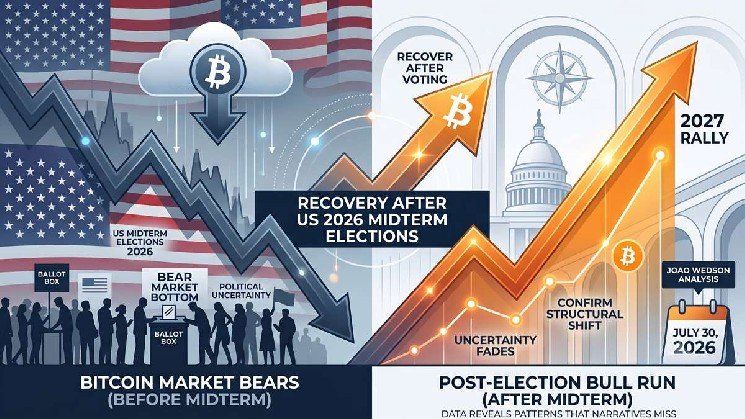
    Joao Wedson recently published an analysis asserting that the 2026 US midterm elections could mark the beginning of a Bitcoin price breakout. His analysis links market cycles to the US political calendar after recording repetitive patterns in previous periods.

    Bitcoin vs. U.S. Midterm Elections🇺🇸

    Bitcoin entered a bear market roughly one year before every U.S. midterm election.

    After the midterms, Bitcoin began a prolonged bull market.

    Every time a president won the election, Bitcoin rallied strongly. However, shortly after the… pic.twitter.com/cbxNfwInum

    — Joao Wedson (@joao_wedson) July 29, 2026

    Historical patterns in the US electoral calendar

    The correlation between cryptocurrency performance and political events shows that the asset tends to adjust its price before legislative votes. According to research shared by the Alphractal founder in a post on X, Bitcoin typically enters a bear cycle one year before midterm elections, only to begin a prolonged upward phase once the election process concludes.

    In certain historical cycles, the price bottom consolidated days before the vote, while in other cases it was recorded shortly after election day.

    On the other hand, presidential elections showed a different dynamic. The analyzed documentation points out that the asset has recorded marked increases following the confirmation of an election winner, approaching a cycle peak shortly after the presidential inauguration.

    As an example of this trend, the analyst cited XRP’s behavior. Following Donald Trump’s victory in the 2024 election, the token began an uptrend that culminated in a local peak on January 20, 2025, the date of the presidential inauguration.

    The data presented aligns with Binance Research findings published earlier this year. According to the firm’s report, Bitcoin experienced pricing difficulties during midterm election years, only to regain ground once political uncertainty faded.

    The Binance Research report details that the asset dropped an average close to 56% during completed midterm cycles since 2014. In contrast, during the year following those elections, the market recorded an average return of approximately 54%.

    Despite these historical comparisons, the analysis warns about the need to exercise caution when interpreting recent market readings. Wedson’s previous observations indicate that an isolated price rally does not, on its own, guarantee a structural shift in the trend.

    To confirm a cycle transition toward a bullish phase, the source points out that clear signals of capitulation, operational deleveraging, and the influx of new capital from short-term investors are required.

    Macroeconomic factors and current market scenario

    The macroeconomic context and the Federal Reserve’s monetary policy continue to exert influence over the digital market’s evolution. Three months out from the elections, Bitcoin’s price is hovering near $64,000. That amount represents a distance of nearly 50% from $126,000, the asset’s all-time high recorded in October 2025.

    CoinGecko data indicates that over the last 7 days, the pioneer cryptocurrency experienced a pullback of around 2.5%. However, the asset maintains a cumulative gain of nearly 8% over the past month.

    This behavior occurs in an environment where the US Federal Reserve decided to hold the benchmark interest rate in the 3.50% to 3.75% range. Global liquidity conditions and the performance of economic indicators in the months leading up to the vote will be decisive in validating whether history repeats itself.

    The next milestone for verifying these metrics will be the occurrence of the legislative elections in November 2026, at which point the market will observe whether the trend reversal projected by analysts consolidates.