Category: Business

  • Morning Minute: Bitcoin Passes $78k as Trump Extends Ceasefire Indefinitely

    Morning Minute: Bitcoin Passes $78k as Trump Extends Ceasefire Indefinitely

    Morning Minute is a daily newsletter written by Tyler Warner. The analysis and opinions expressed are his own and do not necessarily reflect those of Decrypt. And check out our new daily news show covering all of the top stories in 5 minutes or less, downloadable on Apple Pod or Spotify.

    GM!

    Today’s top news:

    • Crypto majors rally as Trump extends ceasefire indefinitely; BTC +2% at $78.3k
    • Coinbase quantum report says ETH and SOL more at risk than Bitcoin
    • Kalshi and Polymarket both tease perps launches on same day
    • New York’s AG sued Coinbase and Gemini over their prediction market products
    • USD AI’s CHIP token debuts and soars to $800M fdv

    📈 Bitcoin Hits 11-Week High as Trump Extends Iran Ceasefire Indefinitely

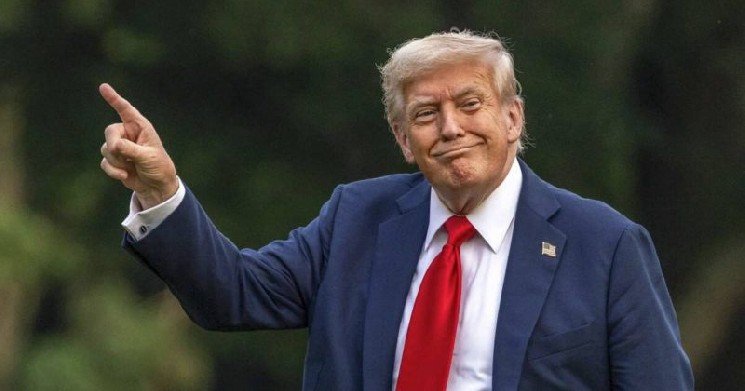
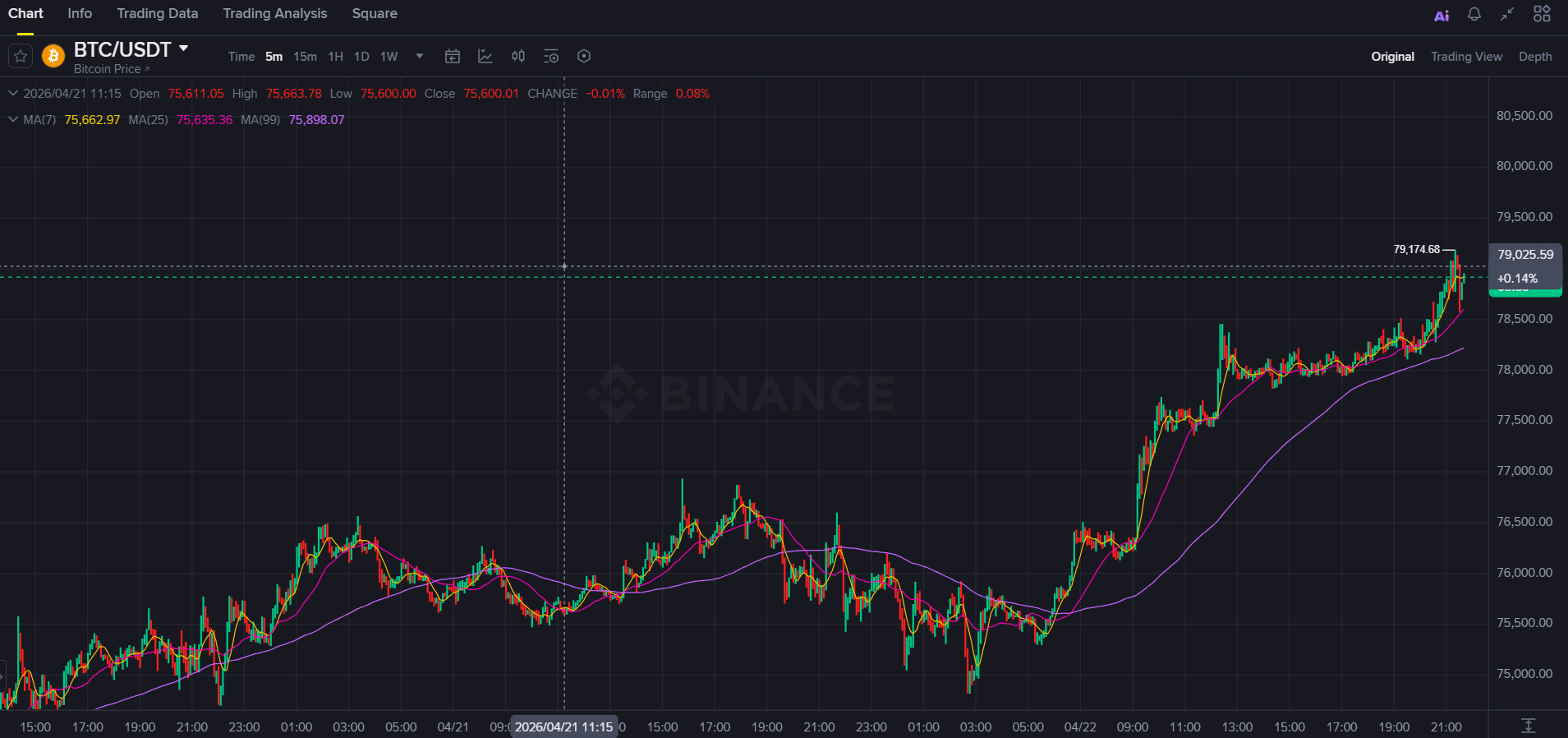
    Bitcoin climbed above $78,000 Wednesday morning, its highest level in 11 weeks, after President Trump announced he would extend the Iran ceasefire indefinitely, reversing his earlier statement that it would expire Wednesday.

    Trump cited Tehran’s government as “seriously fractured,” and said the extension would remain in place until Iran’s leadership submits a “unified proposal” to end the war. The announcement came after Iran refused to send negotiators to a second round of talks in Islamabad and reports surfaced that Vice President Vance’s planned trip to Pakistan had been put on hold.

    Markets reacted quickly. BTC was up roughly 2.2% over 24 hours and 5% on the week by Wednesday morning, with short sellers caught on the wrong side – approximately $240 million in leveraged shorts were liquidated. ETH was up 3% to $2,390 on a solid day of ETF inflows ($43M). Stock futures are opening green as well.

    On-chain signals are turning constructive for the first time in months. Bitcoin’s Net Unrealized Profit/Loss metric turned positive for the first time since early January, which analysts read as confirmation the bearish trend has ended. And whales are apparently accumulating at the fastest pace since July 2025.

    Strong momentum starting to build for crypto’s flagship asset…

    🏛️ Warsh Faces Senate Over Crypto Holdings, Fed Independence

    Kevin Warsh appeared before the Senate Banking Committee on Tuesday for his confirmation hearing as Trump’s nominee to replace Jerome Powell as Federal Reserve chair.

    The hearing covered three main areas: his relationship with Trump on interest rates, his broader monetary policy views, and his financial disclosures (which include stakes in Solana, Polymarket, Tenderly, and other crypto and DeFi funds).

    • On rates, Warsh said Trump “never asked me to predetermine, commit, fix, decide on any interest rate decision in any of our discussions, nor would I ever agree to do so.” He pushed back on suggestions he would simply cut rates on demand, calling himself an “independent actor” and saying he would “absolutely not” serve as anyone’s political instrument.
    • On inflation, he said the trajectory is “improving, but there’s more work to do.” He wants a smaller Fed balance sheet, less reliance on quantitative easing, and fewer post-FOMC press conferences – noting that “truth-seeking is more important than repetition.”

    Markets didn’t love it. The hawkish undertone sent crypto stocks lower. COIN fell 6%, HOOD 4.5%. BTC slid toward $75K.

    But 21Shares research strategist Matt Mena argued the read may be too short-term. Warsh has spent years publicly arguing the Fed keeps rates too high based on lagging data, and his direct exposure to digital assets — he views bitcoin as “the new gold for people under 40” — makes him the most crypto-friendly Fed Chair nominee in history.

    If he eases in H2 2026, analysts say that the liquidity environment could push BTC back toward $100K.

    ⚛️ Coinbase: Proof-of-Stake Has a Quantum Problem Bitcoin Doesn’t

    Coinbase’s Independent Advisory Board published a quantum risk report Tuesday with a finding that’s getting less attention than BIP-361 but arguably matters more. And the concern impacts Ethereum and Solana the most.

    Proof-of-stake chains like Ethereum and Solana use cryptographic signatures to secure consensus. A sufficiently powerful quantum computer running Shor’s algorithm could break those signature schemes.

    Unlike Bitcoin, where the quantum risk is primarily about exposed wallet public keys, PoS chains face an additional attack surface: the core consensus mechanism itself. Compromise one-third of Ethereum validators and the network can’t finalize transactions. Two-thirds and an attacker can rewrite chain history.

    Coinbase’s board said plainly: “the challenge for proof-of-stake isn’t just upgrading wallets; parts of the core consensus mechanism itself may need to be redesigned.” No current quantum computer can do this, yet. But the “harvest now, decrypt later” threat means the planning window is now, not when Q-Day arrives.

    📊 Kalshi and Polymarket Launch Perps

    Kalshi announced on Tuesday that it’s planning to launch perpetual futures across crypto and other assets. By afternoon, Polymarket announced the same, saying “We’ve priced the future – now you can actually trade it.”

    Incredible lockstep between these 2 prediction market giants, once again (even their announcement hype videos looked the same).

    Kalshi’s launch is codenamed “Timeless,” goes live April 27 in New York, and starts with BTC perpetuals using USD as collateral. Kalshi’s edge here is leveraging its CFTC licenses and a margin trading approval secured last month.

    Polymarket’s early-access waitlist is live at polymarket.com/perps, and they’re teasing perps across assets like BTC, NVDA, and gold with up to 10x leverage.

    Notably, this comes at a time when the CME and Hyperliquid are leaning into launching prediction markets. It appears the prediction markets are fighting back…

    🏴‍☠️ Scammers Are Charging Bitcoin for Hormuz Safe Passage

    Who had crypto getting tied up in a Strait of Hormuz scam on their bingo card?

    Greek maritime risk firm MARISKS warned Monday that unknown actors posing as Iranian authorities have been contacting shipping companies stranded west of the Strait of Hormuz, demanding Bitcoin or USDT in exchange for “transit clearance.”

    The fraudulent messages told ships that Iranian Security Services will assess your eligibility, then pay the fee in BTC or USDT, and your vessel can transit at a pre-agreed time.

    MARISKS said it believes at least one vessel paid the fraudulent fee—and then was fired on while attempting to transit anyway. The scam mirrors a real policy that Iran proposed back in March, that they’d charge BTC/USDT transit tolls of roughly $1 per barrel.

    🌎 Macro Crypto and Markets

    • Crypto majors are very green after Trump extended the Iran ceasefire indefinitely; BTC +2% at $78.3k; ETH +3% at $2,390; SOL +3% at $88; HYPE flat at $41
    • PENGU (+11%), M (+6%), and SKY (+5%) led top movers
    • Oil +4% at $90; Gold -1% at $4,760
    • Stock futures are green again, up 0.5%
    • A four-star admiral and head of US Indo-Pacific Command told the Senate on Tuesday that Bitcoin has significant potential as a national security asset
    • Tron founder Justin Sun filed a federal lawsuit against World Liberty Financial in California court Tuesday, alleging the Trump-backed project froze roughly $776 million worth of his WLFI tokens, stripped his voting rights, and threatened to burn his holdings after he declined to keep investing
    • New York AG Letitia James sued Coinbase and Gemini Tuesday over their prediction market products, calling them illegal gambling operations under state law
    • DoorDash will pay its delivery workers in stablecoins across 40+ countries using Stripe and Paradigm’s Tempo blockchain, which launched its public mainnet in March
    • Jefferies analyst Andrew Moss warned Tuesday that the $293M Kelp DAO exploit may prompt Wall Street firms to slow or pause their blockchain and tokenization plans as they reassess infrastructure risk

    Corporate Treasuries & ETFs

    Meme Coin Tracker

    • Meme leaders were green on the day; DOGE +3%, SHIB +2%, PEPE +3%, TRUMP +4%, BONK +5%, PENGU +11%, SPX +10%, FARTCOIN +2%
    • MAGA (+130%), Peace (+30%), Spike (+30%), and Cards (+30%) led notable movers
    • Meteora’s MET token jumped 30% to $100M

    💰 Token, Airdrop & Protocol Tracker

    • USD AI launched its CHIP token, which soared to $800M fdv in its debut
    • AAVE has now seen $15B in outflows since the KelpDAO exploit
    • MegaETH confirmed the 3 more apps are launching this week, meaning 9 of the 10 required to launch per their KPIs have launched (TGE coming after the 10th)

    🚚 What is happening in NFTs?

    • NFT leaders were very green with Bored Apes leading the weay; Punks +5% at 28.1 ETH, Pudgy +5% at 4.46 ETH, BAYC +16% at 9.14 ETH; Hypurr’s even at 386 HYPE
    • BAKC (+16%) and MAYC (+9%) led notable movers

    Daily Debrief Newsletter

    Start every day with the top news stories right now, plus original features, a podcast, videos and more.

  • Top Law Firm Admits to AI ‘Hallucinations’ in Bankruptcy Filing Tied to Alleged Scam Network

    Top Law Firm Admits to AI ‘Hallucinations’ in Bankruptcy Filing Tied to Alleged Scam Network

    In brief

    • Law firm Sullivan & Cromwell has admitted that a recent filing in a high-profile case included AI “hallucinations.”
    • The firm said AI output was not properly verified and included fabricated citations.
    • The case involves efforts by court-appointed liquidators to pursue claims linked to sanctioned outfit Prince Group.

    Law firm Sullivan & Cromwell has admitted to a U.S. bankruptcy court that a recent filing in a high-profile case contained errors generated by artificial intelligence, including fabricated citations.

    “We deeply regret that this has occurred,” Andrew Dietderich, the firm’s restructuring head, wrote to Judge Martin Glenn, saying the document included AI “hallucinations” that produced fictitious authorities and distorted existing ones.

    The disclosure came in a letter to the U.S. Bankruptcy Court for the Southern District of New York, where the firm represents court-appointed liquidators from the British Virgin Islands. The mistakes appeared in an April 9 motion and the firm said its rules on AI use were not followed during preparation.

    The case involves efforts by those liquidators to pursue claims tied to Prince Group and its owner, Chen Zhi. Prosecutors allege Chen directed scam compounds that targeted victims worldwide and have sought to recover billions of dollars in cryptocurrency they say is linked to the activity. He was detained earlier this year in Cambodia and later repatriated to China.

    Through Chapter 15 proceedings in the U.S., the liquidators are seeking recognition of their authority to act on behalf of creditors and alleged victims. Prince Group, incorporated in the British Virgin Islands, has been linked by U.S. authorities to large-scale fraud operations in Southeast Asia and sanctioned by the UK and U.S. governments.

    According to a corrected submission, the April filing misstated case law in multiple places and included citations that did not support the propositions attributed to them, while some appeared to have no basis at all. The firm withdrew the original motion and has filed a revised version.

    Lawyers for Prince Group and Chen at Boies Schiller Flexner initially identified the errors. They said language attributed to the U.S. Bankruptcy Code could not be found and that several authorities were mischaracterized or misidentified. In one instance, they said, a cited case referred to a different decision in another circuit.

    In a separate filing, defendants said at least 28 citations were erroneous, including quotations attributed to the court that do not exist. They argued the timing of the correction was prejudicial because the revised filing came after they had submitted objections, and asked the court to adjourn a scheduled hearing and hold a status conference.

    Sullivan & Cromwell said its policies require lawyers to complete training before using AI tools and to independently verify all output.

    “Before any Firm lawyer is granted access to generative AI tools, the lawyer must complete two required training modules, completion of which is tracked and verified. The training repeatedly emphasizes the risk of AI ‘hallucinations,’ including the fabrication of case citations, misinterpretation of authorities, and inaccurate quotations,” it said.

    “It instructs lawyers to ‘trust nothing and verify everything’ and makes clear that failure to independently verify AI-generated output constitutes a violation of Firm policy.”

    The firm said a broader review found additional minor drafting issues in other filings, which it attributed to human error rather than AI. It did not identify the lawyers who prepared the original motion.

    AI in the dock

    The incident adds to a growing list of AI-related missteps in legal practice as firms test tools designed to speed research and drafting. Courts have recently sanctioned or criticized lawyers for submitting filings with fabricated or inaccurate references produced by AI. In Australia, one lawyer was stripped of their ability to practise as a principal lawyer due to AI use last year.

    Law schools are beginning to require instruction on the technology, while senior judges have warned that misuse could affect the integrity of proceedings.

    Recent rulings have also addressed how AI fits within existing legal frameworks, including whether interactions with such tools are protected by privilege. At the same time, some courts are piloting AI systems to help manage heavy caseloads.

    Daily Debrief Newsletter

    Start every day with the top news stories right now, plus original features, a podcast, videos and more.
  • Bitcoin breaks Strategy’s STRC ex-dividend date slump for the first time in six months

    Bitcoin breaks Strategy’s STRC ex-dividend date slump for the first time in six months

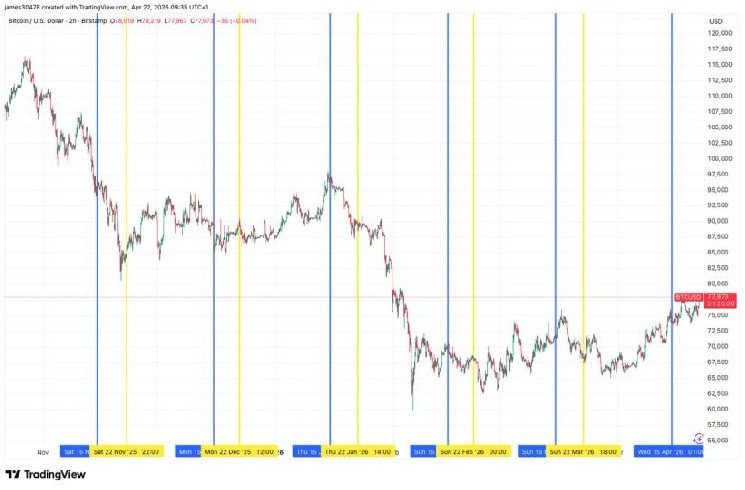
    Strategy’s (MSTR) perpetual preferred stock, STRC, is now one week past its April 15 ex-dividend date. With bitcoin now at $79,000 this marks the first time in six months that $BTC has risen in the week following the payout event.

    At the time of the ex-dividend date, bitcoin was around $75,000, highlighting continued strength in $BTC despite the typical post dividend adjustment in STRC. STRC over the past few months has served as an aggressive funding instrument for the company’s bitcoin purchases.

    Like most dividend paying securities, STRC declines on its ex-dividend date by approximately the value of the payout, since new buyers are no longer entitled to receive it.

    Following that drop, the shares tend to recover gradually, often taking about two weeks to move back toward their $100 par value. STRC is currently trading at $99.47.

    This recovery is important because once the stock returns to par, Strategy the largest publicly traded company holding bitcoin, can utilize its at the market (ATM) program, issuing new shares at and use the proceeds to buy additional bitcoin.

    Strategy shares are more than 9% higher on Wednesday at $178 at the time of writing, with the company likely tapping its common stock ATM program to fund additional bitcoin purchases.

    Strategy disclosed the third largest bitcoin purchase ever of 34,164 $BTC, while the price initially stayed within its $75,000 range.

    However, the bitcoin rally appears driven in part by positioning. Perpetual futures funding rates remain negative, meaning short sellers are paying long positions to hold their trades, a signal that bearish sentiment still dominates.

    As prices rise in that environment, shorts are forced to close positions, creating a short squeeze that accelerates gains.

    At the same time, a persistent Coinbase premium, where bitcoin trades slightly higher on the U.S. exchange than offshore platforms, points to steady spot demand.

  • A New Claim Has Emerged Regarding the Identity of Bitcoin (BTC) Founder Satoshi Nakamoto! “Actually, There Are Two People!”

    A New Claim Has Emerged Regarding the Identity of Bitcoin (BTC) Founder Satoshi Nakamoto! “Actually, There Are Two People!”

    While debates continue in the cryptocurrency world regarding the identity of Satoshi Nakamoto, a new claim has emerged.

    According to Decrypt, a new documentary claims that Satoshi Nakamoto was actually created by two cryptographers.

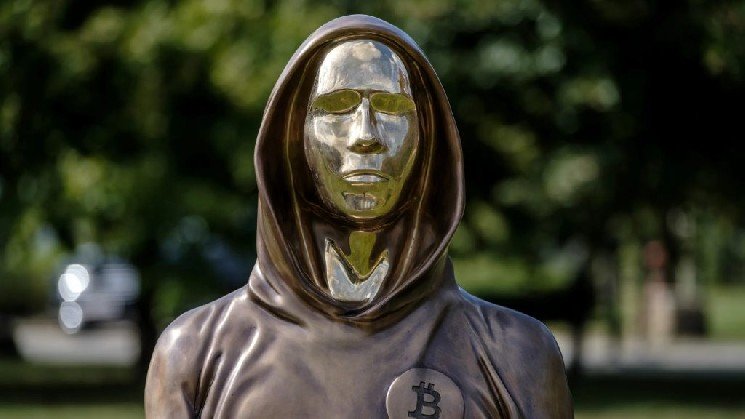
    A new documentary claims that Bitcoin (BTC) creator Satoshi Nakamoto is not a person, but a pseudonym used jointly by two cryptographers, Hal Finney and Len Sassaman.

    According to this documentary, following four years of extensive research, it is argued that Bitcoin was developed not by a single person, but through a partnership between two prominent figures.

    The documentary “Finding Satoshi,” released on April 22, claims that Finney wrote the Bitcoin code while Sassaman prepared the documentation, including nine pages of technical documentation.

    The documentary is said to be based on a four-year investigation by New York Times writer William D. Cohan and private investigator Tyler Maroney, and the data they gathered during that investigation.

    The documentary states that Hal Finney’s technical coding skills combined with Len Sassaman’s academic writing talent led to the creation of Bitcoin. Furthermore, researchers note that Satoshi’s active hours coincided with the American time zone, a data point to both names as Satoshi. Finally, Finney’s close friendship with Sassaman, as the recipient of the first transaction on the Bitcoin network, strengthens this theory.

    Len Sassaman died by suicide in 2011, shortly after Satoshi’s last public post, and Finney passed away in 2014 from complications of ALS.

    *This is not investment advice.

  • Justin Sun Sues Trump-Backed World Liberty Financial Over Frozen Tokens

    Justin Sun Sues Trump-Backed World Liberty Financial Over Frozen Tokens

    In brief

    • Tron founder Justin Sun filed suit Tuesday against World Liberty Financial in California federal court over frozen tokens and stripped governance rights.
    • Sun, World Liberty’s largest token holder after investing $75 million, says the project froze his wallet in September without justification and threatened to destroy his holdings.
    • Legal experts say the case could blow open questions about hidden admin controls in projects marketed as decentralized.

    Justin Sun is taking the Trump family’s crypto venture to federal court.

    The Tron founder filed suit Tuesday in California against World Liberty Financial, tweeting that the project froze his tokens, stripped his voting rights, and threatened to permanently destroy his holdings, without notice, cause, or recourse.

    “They have left me with no choice but to turn to the courts,” Sun tweeted, noting that he does not believe U.S. President Donald Trump “would condone these actions if he knew about them.”

    The case puts one of crypto’s most controversial investors on a collision course with one of the industry’s most politically connected projects.

    Sun became World Liberty’s single largest token holder after spending $75 million on WLFI in late 2024.

    Last September, World Liberty blacklisted his wallet after he appeared to move portions of his holdings, an action potentially prohibited under his investment terms, with Sun denying any intent to sell.

    “All I want is to be treated the same as every other early investor who received tokens—no better, no worse,” he said Tuesday.

    Decrypt has reached out to Sun and World Liberty Financial for comment.

    Months-long feud

    The dispute turned public earlier this month when Sun accused World Liberty of embedding a secret backdoor in the smart contract governing WLFI, allowing it to freeze any holder’s tokens without notice or recourse.

    He labeled World Liberty’s leadership “bad actors,” accusing the project of treating “the crypto community as a personal ATM,” while the firm dismissed his claims as baseless.

    Sun also opposed a new governance proposal imposing a two-year cliff and vesting schedule, saying frozen tokens prevent him from voting, as holders risk indefinite lock-ups if they don’t accept.

    Experts told Decrypt that the case turns on the gap between how World Liberty marketed WLFI and what its smart contracts actually permit.

    The defensibility weakens sharply “when a token is marketed as a decentralised ownership stake, but the contract grants an admin power to confiscate unilaterally,” Yuriy Brisov, Partner at Digital & Analogue Partners, told Decrypt. “Burying a function in bytecode is not disclosure.”

    “The standard under both U.S. and EU consumer-protection law is ‘clear and conspicuous’—the power has to appear in the materials a reasonable investor actually reads, in plain language, before purchase,” he added.

    Joshua Chu, lawyer and co-chair of the Hong Kong Web3 Association, told Decrypt that invoking AML and sanctions-type powers on-chain requires controls that are “transparent, rule-based and applied consistently, not selectively against a single controversial whale.”

    Chu said it will be important to establish “whether there was a genuine law-enforcement or policy-based rationale behind the freeze, or whether this was a case of centralized discretion being exercised inside something that is marketed as DeFi.”

    He added that WLFI is likely to hold its ground, saying, “I’d expect them to double down on a narrative that this was a contractual, risk-based compliance action, not arbitrary punishment.”

    Even Alex Chandra, a partner at IGNOS Law Alliance, told Decrypt the court will likely ask whether investors were treated fairly and equally, or whether governance rights could be “unilaterally altered after a triggering event.”

    “On paper, the same legal standards apply to WLFI as to any other issuer,” Brisov noted.

    The real exposure for World Liberty, he said, lies in three areas: private civil litigation, state attorneys general with consumer-fraud authority operating independently of federal politics—New York and California in particular—and non-U.S. regulators deciding whether the token can be marketed in their jurisdictions.

    WLFI token is currently trading at around $0.08, down nearly 76% from its September all-time high of $0.33, according to CoinGecko data.

    Daily Debrief Newsletter

    Start every day with the top news stories right now, plus original features, a podcast, videos and more.

  • PENGU Notches Double-Digit Gains as Bitcoin Hits $78K Amid $418M Liquidation Spree

    PENGU Notches Double-Digit Gains as Bitcoin Hits $78K Amid $418M Liquidation Spree

    In brief

    • Bitcoin hit $78,000 on Wednesday, triggering $418 million in liquidations over 24 hours, with shorts accounting for $254 million.
    • Altcoins including PENGU and Cosmos have posted gains alongside Bitcoin
    • Sentiment has flipped bullish amid crypto market recovery, with Myriad users assigning a 75% chance that Bitcoin retests $84,000 next.

    Bitcoin has been on a steady uptrend in April, with shallow pullbacks, allowing altcoins to extend their gains.

    Pudgy Penguins meme coin PENGU led altcoin gains, up 12.6% on the day, while Cosmos (ATOM), Aptos and Bitcoin Cash saw gains of over 5% over the past 24 hours.

    The altcoin surge comes as Bitcoin hovers around $78,000, up nearly 2% over the past 24 hours, according to CoinGecko data. If the bullish momentum persists, the leading crypto could revisit $80,000 for the first time in over two and a half months, analysts suggested.

    “What we’re seeing right now is a mix of both early rotation and mechanically driven upside,” Wenny Cai, founder of Anchored Finance, told Decrypt. “There is some genuine capital moving out along the risk curve as Bitcoin consolidates, particularly into higher-beta majors and select narratives. But the velocity of the move suggests that short covering and leverage are amplifying it.”

    As a result, almost $418 million in leveraged positions have been wiped out, with more than $286 million coming from bears or short sellers, suggesting these investors were caught off guard, per CoinGlass data.

    Investor sentiment has flipped bullish, with users on prediction market Myriad, owned by Decrypt’s parent company Dastan, assigning a 75% chance that Bitcoin’s next push could send it to $84,000. Those odds have increased from roughly 45% on April 1, underscoring increasing investor optimism amid the ongoing uptrend.

    Looking ahead

    Nevertheless, the bullish outlook remains uncertain. From a technical standpoint, a Schwab strategist identified $83,000 as a key resistance level, which is the average cost basis of Bitcoin ETP investors, according to a previous Decrypt report.

    Beyond that is $87,000, which is the 200-day simple moving average, a breakout above which usually signals a shift in the long-term trend, favoring bulls.

    “The $83,000 benchmark matters because it’s where a large cohort of spot ETP buyers are sitting at breakeven, and reclaiming it would be financially and psychologically significant for a huge pool of relatively recent institutional capital,”  Orkun Kılıç, co-founder and CEO of Chainway Labs, told Decrypt.

    However, until these key hurdles are overcome, the outlook remains uncertain. The parallels to the Middle East conflict are telling: just as that situation remains unresolved, so too does Bitcoin’s path above $83,000.

    Altcoins will become “fragile” if the leading crypto fails to overcome the ETP cost basis, Cai said. “Most of this rally is predicated on Bitcoin stability, not necessarily Bitcoin strength.”

    As a result, a rejection here would likely “tighten liquidity conditions across the market, and altcoins—being higher beta—would feel that disproportionately.”

    Investors should watch out for assets whose gains have “run ahead of fundamentals,” Cai explained, adding that these tokens could lead to a fast unwind of leveraged positions.

    While optimism surrounding Bitcoin remains strong, investors remain skeptical about altcoins, with Myriad users seeing just a 22% chance that an “altseason” kicks off before July.

    Daily Debrief Newsletter

    Start every day with the top news stories right now, plus original features, a podcast, videos and more.

  • Bitcoin breaks out of months-long range on Iran ceasefire extension

    Bitcoin breaks out of months-long range on Iran ceasefire extension

    Bitcoin just did something it hasn’t managed in months: it broke free.

    After spending nearly three months pinned between $65K and $75K, $BTC surged past $79K on Wednesday, riding a wave of geopolitical relief after President Trump extended the US ceasefire with Iran just hours before the two-week deal was set to expire. The timing was, as they say, not subtle.

    What happened

    The ceasefire extension removed what traders had been pricing in as an imminent risk. An expiring deal with Iran, left to lapse, would have injected fresh uncertainty into energy markets and the broader risk landscape. Instead, the renewal acted like a release valve.

    Bitcoin climbed 4.3% in 24 hours and 6.6% over the past week, pushing to levels not seen since early February. Ethereum followed closely, gaining 4.2% to reach $2,400. Solana rose 3.1% to $89, and $XRP held steady near $1.45.

    Traditional markets moved in lockstep. The S&P 500 and Nasdaq both posted gains Wednesday morning, confirming this wasn’t a crypto-specific phenomenon. Risk assets across the board got the green light.

    Here’s the thing: Bitcoin had been stuck in that $65K-$75K range since early February. That’s roughly 10 weeks of sideways price action, the kind of extended consolidation that tends to resolve violently in one direction or the other. This time, it resolved upward.

    The fear is still real

    Despite the breakout, the market’s emotional state tells a more cautious story. The Crypto Fear and Greed Index sits at 32, firmly in “Fear” territory. Last week it was at 23, which registers as “Extreme Fear.”

    In English: traders are less terrified than they were seven days ago, but they’re not exactly popping champagne. A move from “Extreme Fear” to regular “Fear” is improvement in the same way that going from a house fire to a kitchen fire is improvement. Progress, sure. Calm, not quite.

    That gap between price action and sentiment is worth watching. Historically, sustained rallies that begin while fear dominates tend to have legs. The logic is simple: when everyone is scared, fewer people are fully positioned. As the breakout continues, sidelined capital gets pulled in, creating a self-reinforcing move higher.

    Of course, the inverse is also true. If the breakout fails and $BTC slides back into its old range, the already-fearful market could tip into something uglier.

    Why geopolitics moved crypto

    There’s an ongoing debate about whether Bitcoin is a risk asset or a safe haven. Days like Wednesday make the answer pretty clear: it trades like a risk asset, at least on shorter timeframes.

    When the ceasefire extension removed a source of geopolitical tension, Bitcoin rallied alongside equities. It didn’t rally in advance as a hedge against conflict, which is what you’d expect from digital gold. It rallied after the tension dissipated, which is what you’d expect from a high-beta version of the Nasdaq.

    This isn’t a new dynamic, but it’s worth restating because the narrative shifts depending on who’s talking. Bitcoin can serve as a long-term store of value and simultaneously trade like a risk asset in the short term. Those two things aren’t mutually exclusive. They’re just confusing.

    The broader context matters too. Trump’s diplomatic posture toward Iran has been a source of market anxiety for weeks. The original two-week ceasefire was itself a surprise, and the extension doubles down on a de-escalation path that few observers expected. For markets that had been pricing in at least some probability of escalation, the reversal of that risk premium shows up directly in asset prices.

    DeFi, interestingly, hasn’t participated in the rally with the same enthusiasm. The top-performing category over seven days shows essentially flat returns, according to CoinGecko data. That suggests the current move is being driven by macro flows and spot Bitcoin demand rather than a broad-based rotation back into risk across all of crypto.

    What this means for investors

    The breakout above $75K is technically significant. That level served as the ceiling of Bitcoin’s range for weeks. Clearing it and pushing to $79K turns former resistance into potential support.

    Look, breakouts from extended ranges are one of the more reliable patterns in technical analysis. They aren’t guaranteed, but the longer an asset consolidates, the more energy tends to build. Three months of compression followed by a clean move higher is the kind of setup that trend followers pay attention to.

    The risk is that this rally is entirely geopolitically driven. If the Iran situation deteriorates, or if another macro shock emerges, the breakout could reverse quickly. Bitcoin’s correlation with traditional risk assets means it’s vulnerable to the same forces that move equities: interest rate expectations, trade policy, and yes, Middle Eastern diplomacy.

    Ethereum’s move to $2,400 is notable but less dramatic in context. ETH has underperformed $BTC for most of 2025, and a 4.2% daily gain doesn’t change that broader trend. Solana and $XRP gains were similarly modest relative to Bitcoin’s breakout.

    The Fear and Greed Index at 32 suggests there’s room for sentiment to improve, which could fuel further upside. But it also means the market is fragile. Fearful markets can turn on a dime if the catalyst for optimism evaporates.

    Bottom line: A diplomatic extension that almost didn’t happen gave Bitcoin the push it needed to escape a months-long trading range. The breakout to $79K is the most consequential price move since early February, but with fear still dominating sentiment and the rally tied to a geopolitical catalyst that could shift at any moment, this is a market that’s moving on borrowed confidence. The next few days will reveal whether this is the start of a new trend or just a brief vacation from consolidation.

  • Bitcoin breaks $79,000 as Trump says US-Iran talks could resume as early as Friday

    Bitcoin breaks $79,000 as Trump says US-Iran talks could resume as early as Friday

    Bitcoin broke above $79K on Wednesday morning as traders bet that a new round of US-Iran diplomacy could ease the geopolitical tensions that have battered markets for months.

    The move pushed prices to levels not seen since early February, before the Middle East situation spiraled.

    Peace talks over the Iran war are set to restart in Pakistan as soon as Friday, according to the New York Post, citing Donald Trump, who said Steve Witkoff will lead a new round of negotiations in Islamabad alongside Jared Kushner.

    Iran, however, has pushed back, saying it will not participate due to disagreements over US demands and continued military measures.

    The situation in the Strait of Hormuz continues to escalate, with recent US intervention against an Iranian tanker and reported Iranian attacks on ships. While Trump remains optimistic about securing a deal, he has also reiterated threats of military escalation if Iran refuses terms, as a temporary ceasefire nears its expiration.

    The backdrop traces back to February, when US-Iran tensions escalated sharply. Military strikes and the closure of the Strait of Hormuz sent crude prices soaring and risk assets tumbling.

    Bitcoin fell to around $60,000 as investors sought safety. The 32% recovery since those lows has been driven by a gradual thaw in diplomatic relations and the institutional money that follow.

    A ceasefire in early April marked the turning point, with ETF inflows picking up as traditional finance players concluded the worst had passed.

    Bitcoin’s recent rally reflects a bet that diplomacy holds. If talks stall or break down, the same institutional flows that drove prices higher could reverse fast.

    Monetary policy is now an added wildcard, with inflation still running hot and oil prices unsettled after the Hormuz tensions, complicating how markets react to global developments.

  • Market Giant GSR Makes New Bullish Move Regarding Bitcoin (BTC), Ethereum (ETH), and Solana (SOL)! Here Are the Details

    Market Giant GSR Makes New Bullish Move Regarding Bitcoin (BTC), Ethereum (ETH), and Solana (SOL)! Here Are the Details

    In a recent development, giant market maker GSR announced its official entry into the ETF space today by launching its first ETF.

    GSR’s GSR Crypto Core3 ETF has begun trading on Nasdaq under the ticker symbol BESO. The fund includes investments in Bitcoin ($BTC), Ethereum ($ETH), and Solana ($SOL).

    The GSR Crypto Core3 ETF will invest in $BTC, $ETH, and $SOL and accumulate staking rewards where applicable.

    According to the announcement, BESO is the first actively managed multi-asset cryptocurrency exchange-traded fund (ETF) in the US to offer staking capabilities.

    GSR CEO Andy Baehr said the following:

    “Core3 answers three questions that every crypto investor faces: what to own, how to generate returns while holding, and how to position yourself as markets evolve?”

    As cryptocurrencies become an increasingly important component of modern portfolios, Core3 provides exposure to the fundamental drivers of this asset class.

    GSR’s launch comes amidst rapid growth in the cryptocurrency ETF market. Since the approval of spot Bitcoin and Ethereum ETFs in 2024, ETF products have rapidly expanded, attracting traditional finance firms such as Morgan Stanley and Goldman Sachs.

    Baehr said that GSR’s move signals its expansion beyond market making into asset management and capital market services.

    *This is not investment advice.