Category: Business

  • Gensyn Network Debuts Delphi, a Permissionless AI Prediction Market Platform, on Mainnet

    Gensyn Network Debuts Delphi, a Permissionless AI Prediction Market Platform, on Mainnet

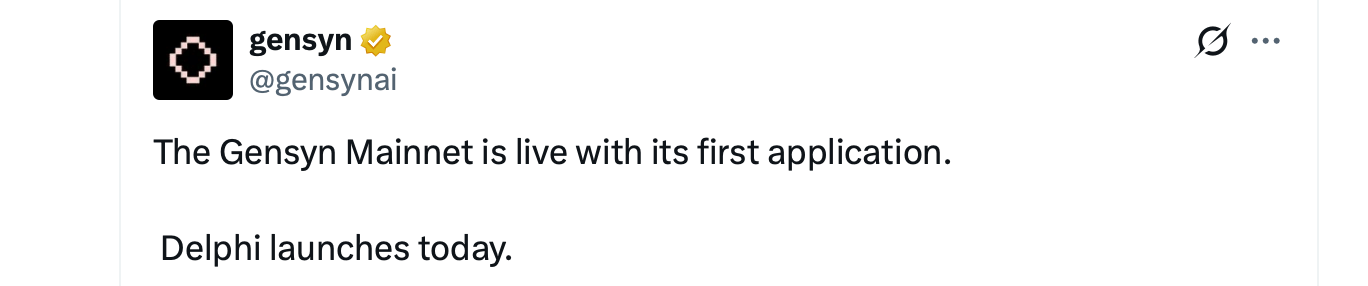
    Gensyn officially launched Delphi on its mainnet on Wednesday, making it the first application to go live on the decentralized compute network and introducing real economic value to a platform that processed millions in test volume during its trial run.

    Key Takeaways:

    • Gensyn launched Delphi on mainnet April 22, 2026, marking the network’s first live application with real economic value.
    • Delphi’s fee model burns 70% of protocol revenue and routes 29% to a Community Treasury, affecting AI token supply.
    • Market creators earn 1.5% of trading volume, with the $AI token generation event anticipated in the coming weeks.

    Gensyn’s Delphi Goes Live

    Delphi is a permissionless, AI-settled information markets platform. Anyone can create a market on any topic, from bitcoin price targets to sports outcomes to geopolitical events. Users buy and sell positions on outcomes, and artificial intelligence (AI) models handle settlement rather than traditional oracles.

    The platform uses a symmetrical Logarithmic Market Scoring Rule, or LMSR, as an automated market maker. Pricing adjusts in real time based on capital flows. No order books or counterparties are required, and liquidity is available from the first trade through settlement.
    Gensyn introduced Delphi on testnet in December 2025 as an “open market for machine intelligence,” initially focused on AI model performance benchmarks. Since then, the platform expanded to cover any resolvable question. One sports market on testnet drew more than 87,000 traders and recorded $4.88 million in volume. An Oscars market attracted more than 45,000 traders.

    Market creation is open to anyone. A user poses a question, defines binary or multi-outcome results, seeds initial liquidity, and selects one or more AI models to act as the settlement oracle. Creators write a resolution prompt that the model runs when the market closes. If no one settles the market within 24 hours of closing, it auto-settles, the creator forfeits their liquidity contribution, and traders are refunded.

    Gensyn also built an optional verifiable settlement layer called the Reproducible Execution Environment, or REE. Markets using REE generate a cryptographic receipt that allows independent verification of the AI’s computation. These markets are tagged “Verifiable” in the interface.

    The fee structure is set at approximately 2% of trading volume. Market creators receive 1.5% of that volume automatically upon settlement, typically paid in stablecoins. The remaining roughly 0.5% flows to the AI BuyBack Vault.

    From the vault, 70% of collected protocol fees are permanently burned, creating deflationary pressure on the AI token supply. Another 29% goes to a Community Treasury designated for development, grants, liquidity, and research. The remaining 1% covers vault executor rewards.

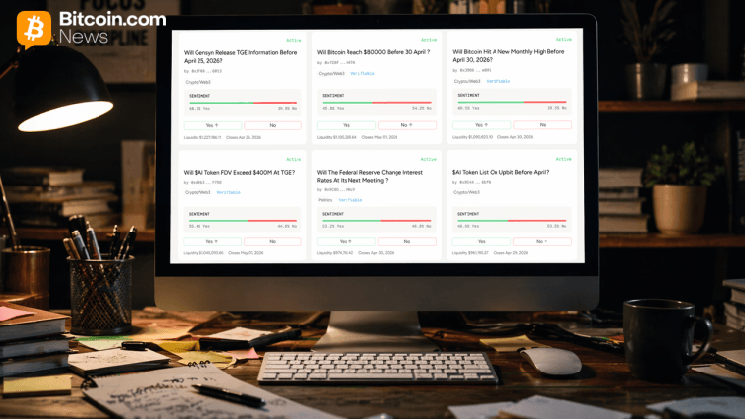
    The AI token generation event has not been announced, though markets on Delphi are already trading predictions tied to it. Testnet used valueless TEST tokens, and mainnet trading now involves real assets.

    Delphi is accessible at delphi.gensyn.ai. Active markets include crypto price targets for bitcoin and ether, Brent crude, sports outcomes, and current events. New markets are being added regularly by both the Gensyn team and the broader community.

    Gensyn is positioning Delphi as more than a prediction market. The platform is designed so AI models can participate directly as predictors, earning from accurate resolutions. That setup is meant to fund open-source AI development by creating direct financial incentives tied to model performance.

    The creator economy angle is also central to the design. Content creators or community organizers can build markets tied to their audiences, earn fees from trading volume, and monetize engagement without relying on advertising or platform intermediaries.

    Delphi enters a market that includes established players like Polymarket, though Gensyn’s AI-first settlement approach and verifiable execution layer set a different technical foundation. The mainnet launch puts real stakes behind an architecture that testnet numbers suggest users are willing to engage with at scale.
  • Elon Musk’s Tesla reports unchanged bitcoin holdings, books $173 million digital asset loss

    Elon Musk’s Tesla reports unchanged bitcoin holdings, books $173 million digital asset loss

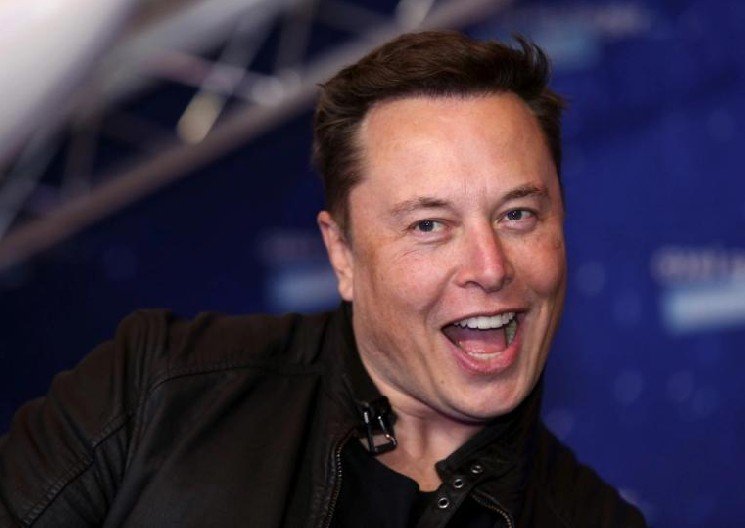
    Elon Musk’s Tesla’s (TSLA) bitcoin holdings were unchanged in the first quarter of 2026, with the company continuing to hold its 11,509 $BTC stockpile.

    The company booked an after-tax impairment loss of $173 million on its digital asset holdings, according to its first quarter earnings report.

    The value of that stash declined as bitcoin fell from around $90,000 at the start of the year to roughly $68,000 by the end of March.

    Tesla reported better-than-expected earnings but missed on revenue. For the first quarter, the firm reported revenue of $22.39 billion, slightly below than analyst estimates of $22.71 billion. Earnings per share came in at $0.41, higher than consensus forecast of $0.37.

    TSLA stock was trading 4% higher in after-hours trading.

    Tesla’s bitcoin journey

    Tesla initially bought bitcoin in February 2021, acquiring 43,200 $BTC for roughly $1.5 billion. About a month later, the company sold around 4,320 $BTC, roughly 10% of its position, to test market liquidity.

    By July 2022, amid the bear market, Tesla had cut its position to 9,720 $BTC. A small increase in January 2025 brought holdings to 11,509 $BTC, where they have remained since.

  • SpaceX Warns Investors Elon Musk’s Space-Based AI Data Centers May Not Pay Off

    SpaceX Warns Investors Elon Musk’s Space-Based AI Data Centers May Not Pay Off

    In brief

    • SpaceX says orbital AI data centers may not become commercially viable.
    • Elon Musk has called space-based AI computing “a no-brainer.”
    • The filing also warns that Starship delays could slow the company’s growth.

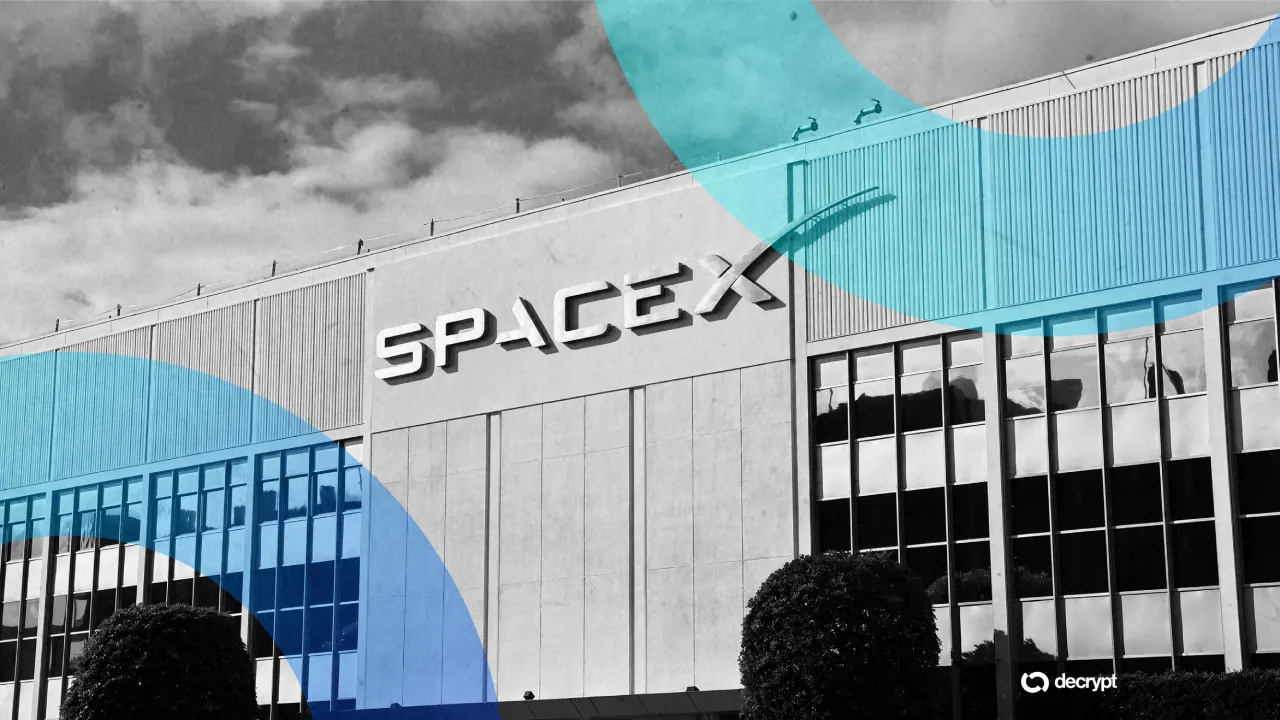
    SpaceX is warning investors that one of Elon Musk’s most ambitious artificial intelligence bets—putting data centers in orbit—may never become a viable business.

    According to a report by Reuters, in a newly disclosed section of its pre-IPO S-1 filing, SpaceX says its plans for orbital AI compute—along with broader efforts to industrialize space, the moon, and Mars—remain in early stages, involve significant technical complexity, and may not achieve commercial viability.

    “Our initiatives to develop orbital AI compute and in-orbit, lunar, and interplanetary industrialization are in early stages, involve significant technical complexity and unproven technologies, and may not achieve commercial viability,” the filing says.

    The disclosure comes as SpaceX prepares for what could be the largest IPO in history. The company is reportedly targeting a valuation of about $1.75 trillion and seeking to raise $75 billion in the coming months.

    In January, in a conversation with BlackRock CEO Larry Fink at the World Economic Forum in Davos, Musk called building AI data centers in space “a no-brainer” and said orbit could become “the lowest-cost place to put AI” within two to three years. In February, after announcing a merger between SpaceX and Musk’s AI company xAI, Musk said in a post on the SpaceX website, “space-based AI is obviously the only way to scale.”

    “Global electricity demand for AI simply cannot be met with terrestrial solutions, even in the near term, without imposing hardship on communities and the environment,” Musk wrote at the time. “In the long term, space-based AI is obviously the only way to scale. To harness even a millionth of our Sun’s energy would require over a million times more energy than our civilization currently uses.”

    While the concept appears straightforward, satellites equipped with AI chips could draw near-constant solar power in space while avoiding some of the land, energy, and cooling constraints facing Earth-based data centers. But turning that vision into reality is another matter.

    Space-based systems could offer continuous solar energy and the ability to radiate heat into space. However, the economics remain uncertain with launch costs, maintenance, radiation exposure, and space debris needing to be factored in.

    SpaceX acknowledged those risks in the filing, warning that orbital AI data centers would operate in “the harsh and unpredictable environment of space,” where systems could malfunction or fail.

    While the realities of space development offer major hurdles, SpaceX may still be better positioned than its rivals to pursue the idea, having already launched the Starlink satellite internet network into orbit, and developing Starship, the fully reusable rocket Musk says is essential to cutting launch costs enough to make large-scale orbital infrastructure possible.

    However, according to SpaceX’s filing, Starship itself includes its own risks. The rocket designed to carry much larger payloads than previous SpaceX vehicles has suffered testing failures and delays, and the company said further setbacks could limit its growth strategy.

    SpaceX did not immediately respond to Decrypt‘s request for comment.

    Daily Debrief Newsletter

    Start every day with the top news stories right now, plus original features, a podcast, videos and more.

  • Coinbase taps UK‑regulated tGBP in local‑currency stablecoin push

    Coinbase taps UK‑regulated tGBP in local‑currency stablecoin push

    Coinbase has listed FCA‑sandbox‑tested tGBP, letting users move pound‑pegged stablecoins across its app and exchange as it doubles down on local‑currency rails beyond USD.

    Coinbase is deepening its bet on non‑USD stablecoins, rolling out full support for the pound‑pegged tGBP stablecoin starting this year.

    According to the company’s announcement, users can now buy, sell, exchange, send, and receive tGBP through both the Coinbase App and Coinbase Exchange, bringing a regulated GBP token directly into the retail and institutional Coinbase stack.

    The issuer behind tGBP is BCP Technologies (also known as BCP Markets), a UK‑registered cryptoasset firm supervised by the Financial Conduct Authority.

    FCA records describe BCP as providing “the issuance and distribution of its own GBP denominated Stablecoin, tGBP, which aims to peg its value to the British Pound,” and note that the company participated in the regulator’s sandbox from 2021 through 2025 to test the product in a live environment.

    Coinspaid and other coverage of the launch emphasize that tGBP is fully backed 1:1 by reserves held in segregated accounts at a UK‑regulated financial institution, with BCP CEO Benoit Marzouk saying the token is designed to let clients “transfer pounds through blockchain technology without intermediaries and price volatility.” BCP says tGBP targets both retail and institutional users and is meant to function as a “reliable and efficient way to transact in GBP globally,” mirroring the model of dollar stablecoins but tied to sterling.

    For Coinbase, adding tGBP fits a broader push to diversify beyond USD rails. In its blog post on “GBP stablecoins unlocking the future of finance,” Coinbase argued that local‑currency stablecoins can streamline cross‑border payments, reduce FX friction, and support use cases like real‑world‑asset tokenization and programmable payouts directly in domestic currency, rather than forcing users through USD as the default bridge asset.

    The UK, meanwhile, is racing to put a formal regulatory perimeter around stablecoins, with the FCA selecting several firms to test stablecoin models in its expanded sandbox and positioning GBP tokens as future settlement instruments for both crypto‑native and traditional finance flows.

    By aligning with an FCA‑registered issuer that has already cleared a 14‑month review process and sandbox testing, Coinbase is effectively betting that tGBP — or something that looks a lot like it — will become a core building block of the UK’s on‑chain payments and trading infrastructure.

  • Here’s why CHIP crypto soared over 85% today

    $CHIP token surged over 85% on Wednesday becoming one of the best performing crypto assets of the day.

    The token shot up following its listing on Binance which introduces the token with a Seed Tag, flagging it as an early-stage, high-risk asset. The listing was accompanied by a trading campaign offering a 40 million $CHIP reward pool, which helped draw immediate attention from retail participants.

    Within the same 24-hour window, $CHIP also went live on KuCoin, BitMart, and SunCrypto, significantly expanding its availability. The rapid multi-exchange rollout injected strong liquidity into the market and made the token accessible to a wider pool of traders.

    Following these listings, $CHIP climbed to an all-time high near $0.11 before stabilizing. Trading activity surged sharply, with 24-hour volume crossing $1.4 billion. The figure stood at more than five times its market capitalization.

    The rally was further supported by the broader market’s growing interest in AI-linked crypto narratives. $CHIP is positioned within the emerging AI infrastructure segment, which has gained momentum as investors seek exposure to decentralized computing and data ecosystems.

    Despite the strong upside move, the token has shown signs of consolidation after its initial breakout, with analysts pointing to elevated volatility driven by speculative trading activity. The high volume-to-market-cap ratio suggests that short-term momentum remains the dominant force behind the price action.

    What is $CHIP crypto?

    $CHIP is the native token of the USD.AI ecosystem, a decentralized protocol focused on financing artificial intelligence infrastructure.

    The platform operates as a permissionless lending system where GPU operators can tokenize their hardware as collateral to access instant liquidity. This model allows participants to unlock capital from physical computing resources, bridging the gap between traditional hardware ownership and decentralized finance.

    The $CHIP token plays a central role within the ecosystem. It is used to facilitate lending and borrowing activities, incentivize network participants, and support the broader infrastructure needed to power AI workloads.

    By enabling hardware-backed financing and aligning incentives across participants, the protocol aims to support the growing demand for scalable and decentralized AI compute resources.

  • Eric Trump mocks Justin Sun’s lawsuit, and his $6M banana stunt

    Eric Trump mocks Justin Sun’s lawsuit, and his $6M banana stunt

    Eric Trump said Justin Sun’s lawsuit against World Liberty Financial is “ridiculous,” but not as ridiculous as the $6 million the TRON founder once spent on Maurizio Cattelan’s banana duct-taped to a wall.

    The only thing more ridiculous than this lawsuit is spending $6 million on a banana duct-taped to a wall. We are incredibly proud of the @worldlibertyfi team… https://t.co/ahfBKvCdwN

    — Eric Trump (@EricTrump) April 22, 2026

    The Trump son, who co-founded the DeFi project that is facing backlash over its governance and a controversial $75 million loan, mocked Sun and his iconic move after the entrepreneur said he had filed a federal lawsuit against the firm.

    The suit alleges that World Liberty wrongfully froze his $WLFI tokens and stripped him of governance rights through an opaque blacklist mechanism that he says undermines decentralization and transparency.

    The two were publicly close. Trump previously called Sun “a great friend” and said he was TRON’s “biggest fan.”

    In a statement responding to Sun’s legal action, Zach Witkoff, co‑founder and CEO of World Liberty, said he expects the lawsuit to be thrown out.

    Witkoff described the case as a meritless attempt to deflect from alleged misconduct and reaffirmed that the firm’s actions were taken to protect users.

    Justin Sun’s recent lawsuit against @worldlibertyfi is a desperate attempt to deflect attention from Sun’s own misconduct. His claims are entirely meritless, and World Liberty looks forward to getting the case thrown out promptly.

    He engaged in misconduct that required World…

    — Zach Witkoff (@ZachWitkoff) April 22, 2026

    Token concentration and family earnings

    Data shows just 10 wallets control roughly 76% of $WLFI’s voting power. The Trump family holds an estimated 22.5 billion $WLFI tokens and reportedly controls about 60% ownership of the venture.

    By December 2025, the family had reportedly earned $1 billion from the project.

    Sun was $WLFI’s largest outside investor, putting $75 million into the project. The trouble started in September 2025, when the $WLFI team blacklisted his wallet and froze approximately 540 million unlocked tokens.

    The stated reason was that on-chain transfers of around $9 million in $WLFI to exchanges looked like early selling. Sun maintained the transfers were minor test transactions.

    The governance proposal

    On April 15, 2026, World Liberty published a governance proposal affecting over 62 billion tokens. Under the proposal, holders who don’t “affirmatively accept” the new terms, including mandatory burns of 10% of advisor tokens, would have their holdings locked indefinitely.

    Early purchaser tokens would face a two-year cliff followed by two years of vesting. Holders who don’t opt in would have their tokens frozen in perpetuity. Sun, whose tokens were already frozen, couldn’t even vote on it.

    $WLFI hit $0.46 in September 2025, around the time Sun’s wallet was first blacklisted. By April 2026, it had fallen to an all-time low near $0.076, a decline of more than 83%.

    The token changed hands at $0.08 at press time, per CoinGecko.

    The blacklist function

    Sun’s legal filing also points to what he calls a concealed blacklist function embedded in $WLFI’s smart contracts. This mechanism allegedly allows the project team to freeze or restrict any token holder’s assets without notifying the holder.

    The TRON founder said that undermines the project’s claims of decentralization, transparency, and fair governance, and violates the core principles of user control in DeFi systems.

    Sun, whose net worth is estimated at $10.9 billion by Bloomberg Billionaires Index, said he tried in good faith to resolve the situation without litigation.

  • UK watchdog leads first crackdown on illegal crypto trading in London

    UK watchdog leads first crackdown on illegal crypto trading in London

    The UK Financial Conduct Authority has led its first coordinated operation against illegal peer to peer crypto trading, targeting eight London premises suspected of operating without registration and issuing cease and desist letters at each site.

    The watchdog said evidence gathered during the inspections is supporting several ongoing criminal investigations.

    The FCA carried out the operation with HM Revenue & Customs and the South West Regional Organised Crime Unit under the UK’s money laundering and terrorist financing rules. The regulator said there are currently no FCA registered peer to peer crypto traders or platforms operating in the UK, meaning any such activity requires scrutiny and may be unlawful.

    Steve Smart, the FCA’s executive director of enforcement and market oversight, said unregistered peer to peer crypto traders in the UK are operating illegally and pose a financial crime risk. Police officials involved in the operation said these traders can provide a route for criminals to move, disguise, and spend illicit funds.

    In February, the FCA moved against HTX over allegedly illegal crypto promotions in the UK, marking its first enforcement action against a crypto firm for unlawful marketing under the current regime.

    The latest action also comes just a week after the FCA launched a consultation on the next phase of UK crypto regulation, including rules for trading platforms, dealing, staking, and safeguarding cryptoassets, ahead of a broader framework due to take effect in October 2027.

  • GSR Launches Actively Managed Bitcoin, Ethereum and Solana Basket ETF on Nasdaq

    GSR Launches Actively Managed Bitcoin, Ethereum and Solana Basket ETF on Nasdaq

    In brief

    • GSR rolled out a new actively managed multi-asset ETF that trades on the Nasdaq exchange as BESO.
    • The fund will rebalance weekly positions of Bitcoin, Ethereum, and Solana, with staking rewards for investors.
    • BESO is designed to suit both institutional and retail investors looking for crypto exposure.

    Crypto market maker GSR launched its first exchange-traded fund (ETF)—the GSR Crypto Core3 ETF—on Wednesday, and it’s now live for trading on the Nasdaq. 

    The fund, which trades under the ticker BESO, will offer investors actively managed exposure to Bitcoin, Ethereum, and Solana, as well as staking rewards from its ETH and SOL holdings. The fund will operate with a 1% management fee. 

    “GSR has spent over a decade building efficient crypto markets, and with Core3, we are extending that expertise into a product accessible to a broader range of investors,” said GSR CEO Xin Song, in a statement. “Our ETF strategy reflects our deep understanding of how this asset class is evolving.”

    The firm said the product has been built using its substantial experience in the crypto ecosystem “across trading, liquidity, and risk expertise,” allowing it to create an ETF that is suitable for both retail and institutional investors. GSR will rebalance its portfolio weekly based on “research-driven signals,” as it seeks the best rate of return. 

    “Core3 answers the three questions every crypto investor faces: what to own, how to earn yield while you hold, and how to be positioned as markets evolve,” said GSR’s Managing Director of Asset Management Andy Baehr, in a statement. 

    “As crypto becomes an increasingly important component of modern portfolios, Core3 provides exposure to the asset class’s primary drivers—Bitcoin’s macro influence and the continued growth and adoption of blockchain technology.”

    The firm’s launch is likely the beginning of a trend, according to Bloomberg ETF analyst James Seyffart.

    “I expect basket ETFs (active or passive) to be one of the fastest-growing categories in crypto ETFs over the next couple years,” he posted on X. “This one will attempt to outperform an equal weighted ‘index’ of BTC, ETH & SOL.” 

    The trio have each jumped more than 3% in the last 24 hours as the broader crypto market gains. Bitcoin was recently trading at $79,130—up nearly 11% in the last month. Meanwhile, Ethereum and Solana are changing hands around $2,400 and $88.31, up 10% and down 3.1% over the same timeframe, respectively. 

    Daily Debrief Newsletter

    Start every day with the top news stories right now, plus original features, a podcast, videos and more.

  • ‘Axie Infinity’ Gaming Network Ronin Sets Date for Ethereum Layer-2 Migration

    ‘Axie Infinity’ Gaming Network Ronin Sets Date for Ethereum Layer-2 Migration

    In brief

    • The Ronin blockchain will migrate to Ethereum layer-2 on May 12 after four years as a sidechain.
    • RON token inflation will drop dramatically from over 20% to less than 1%.
    • Ronin’s token is down nearly 98% from peak, reflecting flagging momentum across the crypto gaming industry.

    Ronin, the gaming-focused blockchain that powers games like Axie Infinity and Pixels, will migrate to become a true Ethereum layer-2 scaling network on May 12, marking a fundamental shift after four years operating as an Ethereum sidechain.

    The migration will trigger at block 55,577,490, transitioning Ronin to the OP Stack, Ethereum layer-2 infrastructure that powers millions of transactions daily across other scaling networks. Users should prepare for approximately 10 hours of mainnet downtime between 11 a.m. and 9 p.m. ET during the transition, Ronin developers said, with games potentially unavailable during that span.

    The economic restructuring is sweeping. RON token inflation will plummet from over 20% to less than 1%, while marketplace fees flowing to the Treasury jump 2.5x from 0.5% to 1.25%. Additionally, 90 million RON tokens previously allocated for staking will be redirected to the Ronin treasury.

    A new “proof of distribution” system launching with the migration will automate RON rewards for developers, replacing manual allocation processes as the network reestablishes itself within Ethereum’s ecosystem.

    The timing reflects mounting pressure on standalone gaming chains to leverage established infrastructure rather than maintain costly independent networks. Ronin processed billions of dollars worth of NFT trading volume during Axie Infinity’s 2021-2022 peak, but sustaining that infrastructure has proven challenging as the crypto gaming market declined.

    Ronin launched in 2021 specifically to handle Axie Infinity’s transaction demands when Ethereum’s mainnet fees made gaming economically unfeasible. The sidechain solution enabled the play-to-earn phenomenon that attracted millions of daily users and generated unprecedented trading volumes for blockchain gaming.

    Now, Ronin developer Sky Mavis says that advances in layer-2 technology offer the same benefits—low costs and high throughput—while inheriting Ethereum’s security guarantees.

    While the RON token is up about 11% over the last week to a recent price of $0.097, it’s had a brutal fall over the last couple of years as crypto gaming momentum largely disappeared. RON has fallen by nearly 81% in the last year, per data from CoinGecko, and is now down about 98% from a peak price of $4.45 set in March 2024.

    The tokens of top games on Ronin have also cratered, with Axie Infinity’s AXS token down over 99% from its November 2021 peak, and Pixels’ PIXEL token down just as much from its own March 2024 high. But that’s not an issue isolated to Ronin or its games, with other major gaming tokens like Immutable (IMX) and Gala Games (GALA) also down at least 98% from their respective peaks.

    Numerous prominent crypto games shut down over the course of 2025, often with developers citing a lack of funding and player interest to continue operations. That trend has continued into 2026 with the recent closure of games like Forgotten Runiverse on Ronin and Xociety on Sui.

    Industry experts told Decrypt in late 2025 that the wave of crypto game closures centered on the disappearance of venture capital funding amid flagging blockchain gaming momentum, driving many projects to either pivot their focus or shut down their games entirely. That downward swing has only persisted into this year, so far.

    Daily Debrief Newsletter

    Start every day with the top news stories right now, plus original features, a podcast, videos and more.

  • Russia Advances Sweeping Crypto Bill With Provisions for ‘Circumventing Sanctions’

    Russia Advances Sweeping Crypto Bill With Provisions for ‘Circumventing Sanctions’

    In brief

    • Russia’s State Duma passed comprehensive crypto regulation in its first reading.
    • The bill classifies cryptocurrency as property, enabling legal protection in court proceedings.
    • Cross-border crypto transactions are permitted; domestic payments remain prohibited.

    Russia’s State Duma passed a comprehensive crypto regulation bill in its first reading, establishing the country’s first formal framework for digital asset regulation while maintaining restrictions on domestic cryptocurrency payments.

    Per reports in local media, the legislation would classify cryptocurrency as property, enabling legal protection in court proceedings including bankruptcy and divorce cases. Non-qualified investors would face annual purchase limits of 300,000 rubles (around $3,900), while professional participants would encounter no such restrictions.

    Kaplan Panesh, deputy chairman of the State Duma Committee on Budget and Taxes, noted that while the ruble remains Russia’s sole legal settlement currency, the bill creates an exception for cryptocurrency use in foreign trade. “This allows Russian companies to use cryptocurrency to pay foreign counterparties, circumventing sanctions restrictions,” Panesh said.

    The Bank of Russia would serve as the licensing authority for crypto market participants under the proposed framework. The legislation is expected to take effect July 1, 2026, pending second and third readings in the State Duma, Federation Council approval, and presidential signature.

    The bill’s provisions for cross-border crypto transactions could provide Russian companies an alternative payment mechanism outside traditional banking systems that Western nations have restricted since Russia’s invasion of Ukraine. The legislation explicitly permits cryptocurrency settlements with foreign partners while maintaining domestic payment prohibitions, creating a regulatory pathway for international trade that circumvents conventional financial channels.

    Tuesday’s State Duma vote represents Russia’s most comprehensive attempt to formalize digital asset regulation, balancing cryptocurrency integration with state control over domestic monetary policy.

    Russia and crypto

    Russia’s crypto landscape continues to evolve in the face of the geopolitical upheaval sparked by its invasion of Ukraine, and the resulting sanctions imposed on the country.

    Russia banned cryptocurrency payments in 2020 while permitting digital asset ownership. The country has since opened limited pathways for institutional use and cross-border transactions amid Western sanctions following its invasion of Ukraine.

    A September 2025 report from blockchain forensics firm Elliptic found that one Russia-linked network was connected to at least $8 billion in stablecoin transactions over an 18-month period, specializing in “sanctions evasion as a service.”

    By January, transactions in ruble-pegged stablecoin A7A5 had topped $100 billion, while the 2026 TRM Crypto Crime Report found that A7A5 and its associated wallet network handled approximately $70 billion in sanctions-related flows in 2025.

    In February, the EU moved to ban all crypto transactions with entities based in Russia, in response to the relaunching of sanctioned Russian crypto providers under different names—as in the case of shuttered Russian exchange Garantex, which reemerged last year as Grinex.

    Earlier this month, Grinex halted trading after alleging a $13 million exploit by what it termed “Western special services.”

    Daily Debrief Newsletter

    Start every day with the top news stories right now, plus original features, a podcast, videos and more.