Category: Business

  • Bitcoin Price Slides but Holds Up Better Than Stocks as Oil Shock Continues

    Bitcoin Price Slides but Holds Up Better Than Stocks as Oil Shock Continues

    In brief

    • Oil prices are climbing back toward $100 a barrel as tensions around the Strait of Hormuz escalate.
    • Bitcoin remains range-bound after months of deleveraging earlier this year.
    • Analysts say this week’s flash PMI data could shape expectations for interest rates and risk assets.

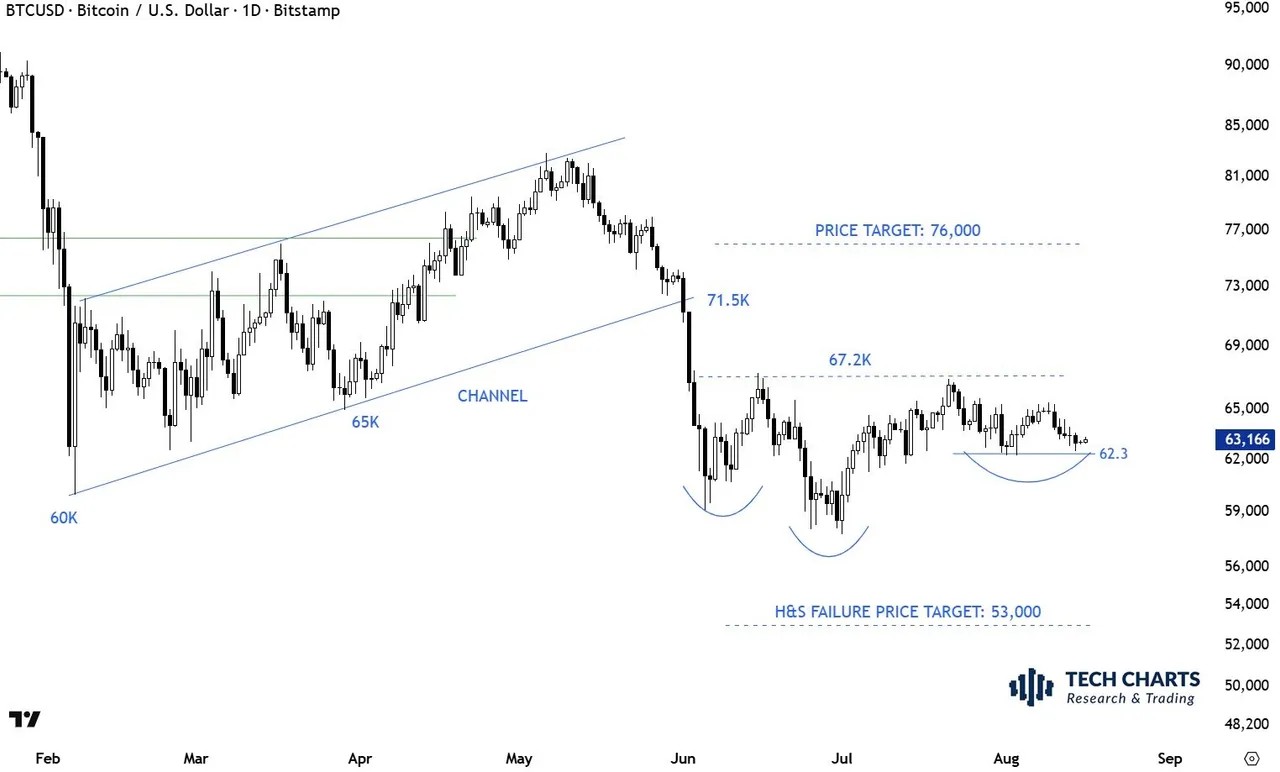
    Bitcoin has fallen over the past week, but its declines have been less severe than the broader equity drawdown since the Iran conflict began on February 28.

    The world’s largest crypto traded around $68,000 on Sunday, down roughly 2% over the past 24 hours and about 6% over the past seven days, according to CoinGecko data

    The move comes as the Iran war entered its fourth week, pushing crude prices higher and contributing to a broader pullback in risk assets by Friday.

    That geopolitical backdrop worsened over the weekend after U.S. President Donald Trump gave Iran a 48-hour ultimatum to fully reopen the Strait of Hormuz or face U.S. strikes on Iranian power plants, prompting Tehran to threaten to completely shut the vital oil shipping route and target U.S.-linked energy infrastructure across the region.

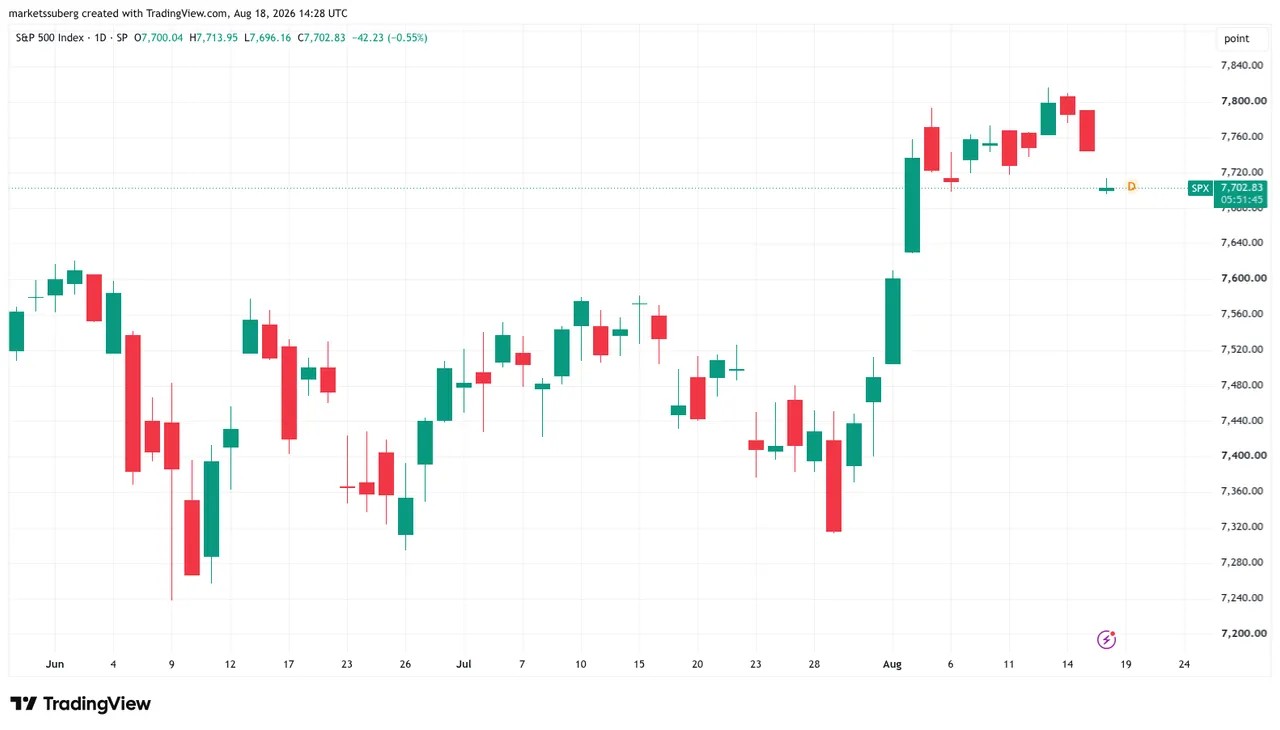
    U.S. stocks have fallen for four consecutive weeks, with the S&P 500 last week breaking below its 200-day moving average, a key technical level closely watched by institutional investors, for the first time since March of last year.

    Both the S&P 500 and the Nasdaq are down about 4% to 5% this month, according to Google Finance data.

    Energy has been the only major sector to rise during the period as oil prices begin climbing back toward $100 a barrel.

    Still, Bitcoin’s monthly decline has been more modest than the drop in equities, posting a loss of just 0.2%, a shift some market participants attribute to earlier deleveraging in the crypto market and continued institutional participation.

    “After undergoing several rounds of deleveraging in recent months, Bitcoin has materially outperformed traditional assets on a risk-adjusted basis since the start of the Iran war,” John O’Loghlen, managing director for APAC at Coinbase, told Decrypt

    He added that as oil becomes “an active transmission channel for global inflation,” the firm is seeing rising institutional inflows into crypto assets and U.S. Bitcoin ETFs.

    “There are early signs the crypto market might now be past peak pessimism,” O’Loghlen said. “However, stronger participation will be required for a more durable rally.”

    While macro conditions are driving broader market sentiment, experts say the crypto market itself is flashing signs of resilience rather than heavy distribution.

    “The crypto market is in a steady consolidation phase, with clear signs of institutional strength and accumulation,” Nischal Shetty, founder of WazirX, told Decrypt

    He added that Bitcoin has been holding support near the lower end of its recent range while facing resistance near recent highs, signalling buyers remain active despite macro uncertainty.

    A mid-March ChainCheck report from VanEck found that long-term holder selling has slowed, with transfer volume declining across older coins, a sign that experienced investors are reducing distribution pressure.

    Analysts say the next move for Bitcoin will likely depend on macroeconomic data in the coming week, including flash PMI readings from major economies and further moves in oil prices, which are increasingly shaping expectations for inflation and interest rates.

    Daily Debrief Newsletter

    Start every day with the top news stories right now, plus original features, a podcast, videos and more.

  • Aster DEX Launches Stage 6 Buyback Reserve for ASTER

    Aster DEX Launches Stage 6 Buyback Reserve for ASTER

    Aster DEX has launched its Stage 6 strategic buyback program to help stabilize the $ASTER token amid ongoing market ups and downs. The program executes token repurchases from a dedicated strategic wallet.

    🚨JUST IN: $ASTER DEX ACTIVATES STAGE 6 BUYBACK RESERVE FOR $ASTER

    Aster DEX (@Aster_DEX) has launched its Stage 6 strategic buyback program.

    The move aims to support $ASTER amid current market conditions. Repurchases are being executed from a designated strategic wallet.

    The… pic.twitter.com/gPaJcR5vV8

    — BSCN (@BSCNews) March 23, 2026

    Moreover, all transactions are fully on-chain and publicly visible, demonstrating Aster’s commitment to transparency. This approach allows the community to track the program in real time and boosts confidence in the platform’s strategy.

    Aster Stage 6 Buyback Program Explained

    The Stage 6 buyback program began on February 4, 2026. It allocates up to 80% of daily platform fees for $ASTER token repurchases. Specifically, 40% of fees are used automatically, while the remaining 40% can adjust based on market conditions.

    By reducing the circulating supply, the buybacks aim to support $ASTER’s price and create value for holders. Furthermore, the on-chain verification ensures transparency, which strengthens investor trust. Therefore, this strategy combines both market support and accountability.

    Community Response to Buybacks

    The Stage 6 program has received a mostly positive response from the community. Many users praised the visibility of all transactions, which allows them to follow each buyback closely. In addition, they see the program as a clear sign of Aster’s confidence in $ASTER.

    However, some community members have questioned whether the buybacks will significantly affect $ASTER’s price. While buybacks can influence market perception, the actual impact depends on the size of purchases compared to total token supply. Even so, most holders view the program as a proactive step that could help stabilize the token over time.

    How Buybacks Reflect Broader Crypto Trends

    Aster DEX’s Stage 6 program fits within a larger trend of crypto projects using buybacks to manage token economics. Similar to stock repurchases in traditional markets, buybacks reduce supply and can support token prices.

    Importantly, Aster combines automatic and flexible repurchases. This dual approach allows the platform to respond to market changes while maintaining consistent support. Consequently, the program balances steady action with adaptability, which is critical during volatile periods.

    Benefits and Outlook for $ASTER Holders

    For $ASTER holders, Stage 6 buybacks signal Aster’s ongoing commitment to supporting token value. Reduced supply may help maintain price levels, while on-chain transparency lets investors track progress and evaluate execution.

    Although immediate price moves may vary, the program strengthens $ASTER’s long-term stability. Looking forward, Aster will continue executing buybacks efficiently while monitoring market reactions. By combining predictable actions with flexible strategies, the platform reinforces trust and confidence among its community.

    Ultimately, Aster’s Stage 6 buyback program highlights how crypto projects can actively manage tokens, maintain transparency, and navigate market volatility. With clear strategies and open communication, Aster demonstrates a strong commitment to both its holders and long-term token health.

  • After $SIREN’s $1.2B Surge, Pi Community Asks: Is Pi Next to Explode on Binance? 

    After $SIREN’s $1.2B Surge, Pi Community Asks: Is Pi Next to Explode on Binance? 

    • Pi Network gains traction across major exchanges, but Binance listing delay keeps investors questioning its future growth and mainstream adoption potential.

    • Despite strong community support and 86% Binance poll backing, Pi price remains weak near $0.19, showing consolidation rather than a breakout trend.

    • Pi community remains divided as some see Binance listing as a catalyst, while others believe long-term value depends on ecosystem growth, not exchanges.

    The Pi Network rumour mill never really stops. But this week it is spinning faster than usual, and there is an actual reason for it.

    A token called SIREN just blew past a $1.2 billion market cap almost immediately after getting listed on Binance-linked platforms, according to CoinGecko data. That one data point was all it took. Within hours, Pi community accounts were doing what they always do: connecting dots, making comparisons, and asking the same question they have been asking for two years now.

    Why is Binance still not listing Pi?

    It is a fair question. PiNews360, one of the more followed accounts in the Pi community, put it plainly this week. Pi has tens of millions of users spread across nearly every country on earth. Its ecosystem is growing. Its migration numbers are climbing. At some point, the argument goes, Pi simply becomes too large and too liquid for the world’s biggest crypto exchange to keep looking the other way.

    What has changed in recent months is that Pi is no longer sitting on the sidelines of the broader market. It is already trading on OKX, Bitget, MEXC, Gate.io, Bybit and HTX. Most recently, Kraken quietly rolled out PI perpetual futures.

    Binance Poll Still Shapes Expectations

    The current excitement is rooted in past developments. Nearly a year ago, Pi secured around 86% support in a Binance community poll, signaling strong retail demand for a listing.

    Despite this overwhelming backing, Binance has yet to take the next step. The delay continues to keep the community in a wait-and-watch mode, with expectations building over time rather than fading.

    Price Struggles Despite Growing Hype

    While discussions around listings are heating up, Pi’s price action remains under pressure. The token is currently trading near the $0.19 mark, stabilizing after a period of volatility and a steep decline from its earlier highs close to $3.

    With a market cap of around $1.84 billion and a circulating supply of 9.81 billion tokens, Pi has struggled to maintain upward momentum. Daily trading volumes remain modest, and recent price movements suggest consolidation rather than a breakout.

    Community Split on Binance’s Importance

    The debate within the community remains divided. Some usersbelieve a Binance listing could act as a major catalyst, potentially driving a strong price surge and wider adoption. Others take a different stance, arguing that Pi’s value will come from its internal ecosystem rather than reliance on centralized exchanges.

  • Kalshi Raises $1 Billion to Double Valuation to $22 Billion: Reports

    Kalshi Raises $1 Billion to Double Valuation to $22 Billion: Reports

    In brief

    • Kalshi has raised $1 billion in a new funding round led by Coatue Management, valuing the prediction market at $22 billion.
    • The raise doubles Kalshi’s valuation from its December round, which was led by Paradigm and included Ark Invest, Andreessen Horowitz, and Sequoia.
    • Rival Polymarket was valued at $9 billion in October 2025 following a $2 billion investment from Intercontinental Exchange.

    Prediction market giant Kalshi has raised a $1 billion round and, with it, clinched a $22 billion valuation, a person familiar with the matter told Decrypt. The news was originally reported by The Wall Street Journal.

    The deal has roughly doubled Kalshi’s valuation from its last round in December, when investors valued the business at $11 billion. That round was led by Paradigm and included investments from Cathie Wood’s Ark Invest, and venture capital giants Andreessen Horowitz and Sequoia Capital.

    This new funding round was led by Coatue Management, the source said. Kalshi declined to comment when asked to confirm the news by Decrypt.

    Money has been flowing into the industry at a blistering pace. A buzzy Certuity report from last summer estimated that prediction markets could reach $95.5 billion by 2035, with a compound annual growth rate of 46.8%.

    Kalshi was founded and launched in June 2021, but the company was stymied by an attempt by the Commodities and Futures Trading Commission to block its election contracts in September 2023.

    The prediction markets startup took the matter to court and got a favorable district court ruling in September 2024, but the CFTC appealed, leaving Kalshi waiting to see if the ruling would hold. The regulator voluntarily dismissed its appeal in May 2025, effectively giving Kalshi the green light to offer election contracts.

    Since then, its fundraising trajectory has accelerated sharply over the past year. In June 2025, the company raised $185 million at a $2 billion valuation in a Series C round led by Paradigm, with participation from Sequoia, Multicoin, and others—catapulting it to unicorn status.

    By October, Kalshi had raised an additional $300 million at a $5 billion valuation, with Sequoia, Andreessen Horowitz, Paradigm, and others participating, as the company announced plans to expand into more than 140 countries. The jump up to an $11 billion valuation was announced in December, thanks to an additional $1 billion investment.

    Its competitor, Polymarket, saw its own valuation reach $9 billion in October 2025 as Intercontinental Exchange, the New York Stock Exchange’s parent company, completed a $2 billion investment. The news came alongside Polymarket CEO Shane Coplan being dubbed the youngest “self-made billionaire” according to a Bloomberg report at the time.

    Decrypt reporter André Beganski contributed to this report.

    Daily Debrief Newsletter

    Start every day with the top news stories right now, plus original features, a podcast, videos and more.

  • Crypto Market Review: Did Shiba Inu (SHIB) Finally Hit Price Top? Bitcoin’s Catastrophic Tumbling Might Not Be Over, Can XRP Realistically Lose $1?

    Crypto Market Review: Did Shiba Inu (SHIB) Finally Hit Price Top? Bitcoin’s Catastrophic Tumbling Might Not Be Over, Can XRP Realistically Lose $1?

    Exhaustion rather than recovery is a great way to characterize the current state of the cryptocurrency market. The back-and-forth that we are witnessing nowadays is draining liquidity, pushing retails away and making institutional investors choose more stable assets. Unfortunately, the market could not find a footing that would allow it to recover in a proper fashion.

    Shiba Inu’s momentum cannot be maintained

    With $SHIB continuously failing to reach higher highs or maintain any significant bullish momentum, recent price action clearly demonstrates the continuation of the larger downtrend. In theory, it is hard to overlook the situation.

    Article image

    $SHIB is still well below important moving averages, such as the 50 EMA, which is still serving as dynamic resistance. It is clear that sellers are still in charge, because every attempt to regain this level has been turned down. Descending triangles and weak consolidation phases, which usually resolve to the downside when they appear within a bearish trend, are what define the structure itself.

    Volumes are unhealthy

    Additionally unhelpful is volume behavior. Although there have been sporadic increases during brief recoveries, overall participation seems erratic and lacks the expansion usually necessary for a trend reversal. Rather than being true accumulation phases, rallies resemble relief bounces.

    From a wider angle, the case for a fresh push higher is considerably undermined by $SHIB’s incapacity to overcome even fundamental resistance levels. Short-term moving averages are typically swiftly recovered by assets that are still in a strong uptrend following corrections. Conversely, $SHIB is spending long stretches of time below them, which is indicative of ongoing selling pressure and weak demand.

    This makes it plausible that, at least for the current cycle, the price top has already been reached. It implies that, unless there is a significant change in market conditions or a spike in demand, upside potential may remain constrained, even though it does not necessarily imply a total collapse.

    Investors ought to think about the bigger picture as well. Sentiment and liquidity cycles have a significant impact on meme assets like $SHIB. The price usually follows when both start to decline. As of right now, neither participation metrics nor technical structure point to a significant reversal forming.

    Will Bitcoin recover?

    Concerns about Bitcoin’s current market structure persist as recent price movement indicates that the current downward trend may not be over.

    The asset is still under constant selling pressure after losing important support levels and failing to sustain upward momentum. Technical indicators point to ongoing weakness rather than a confirmed recovery.

    From a structural perspective, Bitcoin is steadily trading below significant moving averages, such as the 50 and 200-day levels, which are currently sloping lower. A strong bearish regime, in which rallies are sold into rather than prolonged, is usually reflected in this alignment. Short-lived attempts at recovery in recent times have created lower highs and strengthened the overall downward trend.

    Article image

    Persistent market pressure is also actively driving the asset down. Selling volume has accompanied every bounce, indicating that market players are taking advantage of strength to sell rather than build. This behavior is in line with distribution phases, in which the bid side’s liquidity progressively disappears.

    This view is further supported by volume dynamics. Although there have been spikes during abrupt changes, overall participation does not demonstrate the kind of consistent inflows required to buck the trend. Rather than being driven by organic demand, the market seems reactive, driven more by short-term positioning and liquidations.

    Nevertheless, there is some balance in the situation. Zones that previously served as support for Bitcoin are getting closer, which may draw opportunistic buyers hoping for a comeback. Furthermore, people’s mood is growing more cautious, which has historically led to short-term relief rallies.

    Any possible recovery is still contingent, though. Bitcoin would need to recover important resistance levels and hold above them with significant volume confirmation in order for a significant reversal to occur. In the absence of that, the current structure favors prolonged consolidation, or at most, further declines.

    $XRP‘s price drop is not simple

    Although $XRP’s current market structure allows for more declines, a more nuanced perspective is needed to determine whether it can actually fall below the $1 level.

    Although a decline toward $1 is not yet the worst-case scenario, it is undoubtedly possible given the overall bearish trend. Technically speaking, $XRP is still in a prolonged downward trend, with price action continuously forming lower highs and faltering below important moving averages. The 50 EMA still serves as dynamic resistance, thwarting attempts to move higher and bolstering bearish control.

    More significantly, $XRP has been using an upward trendline as short-term support. This stage is crucial. The structure changes from a weak consolidation to a continuation of the downtrend if that trendline breaks decisively. Lower support zones would be the next logical targets in that case, and psychologically significant levels like $1 begin to take center stage.

    $XRP might tumble even lower

    Theoretically, there is a way for $XRP to lose $1. Round numbers are not respected by markets as hard floors unless there is a high level of demand. $XRP may test much lower levels if selling pressure continues, liquidity declines and overall market sentiment deteriorates. This is more likely if the market as a whole, and Bitcoin, continue to decline.

    But context counts. Buyers are likely to intervene forcefully before the price reaches the $1 level, because it is not only psychologically significant but also historically significant for $XRP. Furthermore, despite recent volatility, on-chain activity and network usage still offer a baseline level of demand that may mitigate or slow downward movements.

    $XRP is not currently in a free fall. It is in a delicate, strained structure that could collapse in either direction based on the state of the market as a whole. The likelihood of a move toward $1 would rise with a prolonged breakdown below current support levels, but this would probably require a combination of technical failure and external market weakness.

    To put it briefly, losing $1 is not inevitable, but it is also not out of the question. The likelihood is largely dependent on $XRP’s ability to maintain its current support structure.

  • COZ awards 936 NEO to four projects in Proof of Working 2.2

    COZ awards 936 NEO to four projects in Proof of Working 2.2

    COZ has distributed 936 $NEO across four ecosystem projects in its Proof of Working 2.2 report, published on March 17. The round marks the largest single distribution in the relaunched series, up from 440 $NEO in round 2.0 and 446 $NEO in round 2.1. The weekly program rewards independent contributors for publicly delivered work in the Neo ecosystem. COZ staff members are not eligible for awards.

    Four primary projects emerged as beneficiaries of the third round of the Proof of Working program.

    Funded projects

    HushNetwork (aboimpinto), a returning recipient from round 2.1, is building a decentralized social network focused on privacy and data ownership. According to the report, the project stabilized its alpha chat messaging flow, advanced posting functionality, and completed end-to-end workflow and UI polishing for its NEP-17 token forge tool (a feature aimed at enabling one-click token creation for communities and crowdfunding).

    Neo Analytics (ethArek) is a public dashboard that translates Neo N3 on-chain activity into a daily-updated view using transparent, deterministic classification rules. This round’s work included the addition of dark mode, migration from raw RPC calls to the Dora SDK, USD swap backfill, and oracle transaction detection.

    Typescript NeoFS SDK (Merl / AxLabs) implemented gRPC-js support and developed a protoc generator plugin in the core package. NeoFS is Neo’s distributed, decentralized object storage network, and the SDK provides TypeScript tooling for developers working with the service.

    Neo N3 AI Assistant (Fireche) is an AI-powered tool designed to enable secure wallet management and smart operations through natural language conversation.

    On-chain verification

    COZ published a transaction hash for the distribution, verifiable on the Dora mainnet explorer. The report does not break down how the 936 $NEO total was allocated among the four recipients.

    The full report can be found at the link below:
    https://coz.io/blog/proof-of-working-2-2/

  • Crypto ETF Options Now Trade Like Gold and Silver As the Last Cap Falls

    Crypto ETF Options Now Trade Like Gold and Silver As the Last Cap Falls

    NYSE Arca and NYSE American have scrapped the 25,000-contract position and exercise limits on options tied to spot Bitcoin ($BTC) and Ether (ETH) ETFs. This makes them the last major US options exchanges to complete the transition.

    The SEC waived its standard 30-day review period on both filings, allowing the changes to take effect immediately.

    What Changed and Why It Matters for Crypto ETF Options

    The rule changes cover options on 11 crypto ETF products, including BlackRock’s iShares Bitcoin Trust (IBIT), Fidelity’s Wise Origin Bitcoin Fund (FBTC), ARK 21Shares Bitcoin ETF (ARKB), and Grayscale’s Bitcoin and Ethereum trusts.

    The filings also remove restrictions that prevented these products from trading as FLEX options, which allow customizable strike prices and expiration dates for institutional use.

    Position limits will now follow each exchange’s standard framework, based on trading volume and shares outstanding. Options on large, liquid ETFs can qualify for limits of 250,000 contracts or more under those rules.

    The 25,000-contract cap was introduced as a precaution when crypto ETF options first launched in November 2024. Bloomberg senior ETF analyst Eric Balchunas noted at the time that IBIT generated nearly $1.9 billion in notional exposure on its first day of options trading despite the constraint.

    $1.9b is unheard of for Day One. For context, $BITO did $363m and that’s been around for four years. And also this is with 25,000 contract position limits. That said, $1.9b isn’t quite big dog level yet tho, eg $GLD did $5b today, but give it a few more days/weeks. https://t.co/nAr2rracjb

    — Eric Balchunas (@EricBalchunas) November 19, 2024

    How Every US Exchange Aligned on Crypto ETF Options

    Nasdaq ISE and Nasdaq PHLX filed to lift their caps in January 2026. MIAX followed the same month. MEMX filed in February. Cboe filed in March. With NYSE Arca and NYSE American now in, the transition is complete.

    The SEC noted the proposals raise no novel regulatory concerns, pointing to identical changes already operative at rival exchanges. Comment periods remain open until April 13, but the rules are effective now.

    Separately, Nasdaq ISE has a pending proposal to raise IBIT-specific position limits to 1 million contracts, which the SEC is still reviewing. If approved, that would bring IBIT closer to parity with the largest equity ETFs in the country.

    What This Unlocks for Institutional Crypto Derivatives

    Removing position caps enables more efficient hedging strategies, basis trades, and overlay programs for institutional desks. Access to FLEX options allows institutions to negotiate bespoke contract terms for structured products, a feature that was already standard for comparable commodity ETFs like the SPDR Gold Trust (GLD) and iShares Silver Trust (SLV).

    The practical effect is that crypto ETF derivatives now operate under the same infrastructure framework that has supported gold and silver options for over a decade.

    For institutional participants who previously faced constraints not imposed on any other commodity class, the playing field is now level.

    The shift arrives during a period of heightened macro volatility driven by the US-Iran war, surging oil prices, and fading Fed rate cut expectations.

    With $BTC ETFs holding nearly $91 billion in net assets and institutional flows increasingly driving crypto price discovery, removing artificial options caps gives large allocators the tools to manage risk at the same scale they already use for precious metals and equity indices.

    Bitcoin ETF Net Assets.

    Bitcoin ETF Net Assets. Source: SoSoValue

    Whether this translates into higher options volume and deeper liquidity for crypto ETFs will become visible in Q2 2026 trading data. The infrastructure is now in place. The capital allocation question follows.

  • These Must Be Watched in Altcoins in the New Week

    As the cryptocurrency market enters a new week, analysts continue to share projects that investors should keep an eye on. Analyst The DeFi Investor has published a watchlist featuring altcoins and projects expected to see significant developments in the coming days.

    According to the analyst’s list, one of the most notable developments of the week will be from the forecasting platform Polymarket. The project is expected to make a major announcement on March 23rd, which is considered critical to the platform’s growth strategy.

    In the DeFi ecosystem, Morpho stands out. The project is reportedly preparing to launch a new DeFi product targeting fixed-rate lending markets.

    On the other hand, the launch date for the BP token, part of the Backpack ecosystem, has been announced as March 26th. Another notable development on the same date will be the launch of a new trading competition for the HOME token, a perpetual trading product that utilizes the Hyperliquid infrastructure of the DeFi App.

    The Base ecosystem is also under close scrutiny by investors. The recent official establishment of the Base Foundation in the Cayman Islands is interpreted as a development that strengthens the possibility of an airdrop.

    The Resolv project, which recently experienced a security issue, was also included in the list. According to the analyst, details regarding the project’s recovery plan following the exploit are expected to be announced in the coming days.

    Aave, one of the established projects in DeFi, has given signals regarding new lending products. The innovative lending products developed on the platform called “Tempo” are expected to be introduced soon.

    In addition, Daniele Sesta’s project ANON is preparing to announce a new launchpad for AI-focused agents and a comprehensive token update next week.

    Finally, the token generation event (TGE) for the USDai project, which is linked to the CHIP token, is scheduled to take place this month.

    *This is not investment advice.

  • Activity on the Coinbase Premium Index: What Does It Mean for Bitcoin?

    Activity on the Coinbase Premium Index: What Does It Mean for Bitcoin?

    Axel Adler, an analyst at the cryptocurrency analysis platform CryptoQuant, stated that although there are signs of recovery in the Coinbase Premium Index, a key indicator of investor demand in the US, a strong bullish momentum in the market has not yet been confirmed.

    According to Adler’s analysis shared on the X platform, the Coinbase Premium Index recovered from its previous negative territory to neutral-weak levels during February-March 2026. This negative territory previously indicated a significant weakening in US investor demand. However, the index has not yet permanently moved into positive territory. Currently at -0.0195%, the indicator has remained negative for three consecutive days. This suggests that widespread buying appetite originating from the US has not yet materialized, and market sentiment remains cautious.

    On the other hand, Adler also pointed to a notable development in the stablecoin market. He stated that the total market capitalization of USDT and USDC had rebounded from -$8.1 billion to +$4.5 billion, signaling renewed growth and indicating that liquidity was beginning to return to the market. However, he added that inflows to exchanges were still below normal levels, approximately 0.68 times.

    *This is not investment advice.

  • White House AI Proposal Seeks to Override State Laws, Avoid New Regulator

    White House AI Proposal Seeks to Override State Laws, Avoid New Regulator

    In brief

    • The White House proposed federal AI standards while preserving key state enforcement powers.
    • The framework aims to avoid creating a new AI regulator, relying instead on existing agencies and courts.
    • The plan also focuses on child safety, free speech, infrastructure, and copyright disputes.

    The White House on Friday released a sweeping national policy framework for artificial intelligence, outlining recommendations to Congress that would set national standards for AI while relying on existing federal agencies—rather than creating a new regulator.

    The proposal comes as states move ahead with their own AI laws, which the Trump administration has criticized as a burdensome “patchwork” of requirements for companies.

    “The Trump Administration is committed to winning the AI race to usher in a new era of human flourishing, economic competitiveness, and national security for the American people,” the White House said in a statement. “Achieving these goals requires a commonsense national policy framework that both enables American industry to innovate and thrive and ensures that all Americans benefit from this technological revolution.”

    The framework urges Congress to set national AI rules that address child safety, innovation, free speech, and intellectual property, while preempting state laws it views as burdensome. It also says those federal standards should not override states’ existing authority to enforce laws on issues like fraud, consumer protection, and child sexual abuse material.

    While some praised the framework for urging Congress to pass federal regulations, advocacy groups including the Electronic Frontier Foundation questioned the details.

    “The framework proposes a few ideas that would be disastrous, such as barring states from enacting protections for their residents, imposing age-verification requirements on AI platforms and services, and creating a new federal publicity right,” EFF Legal Director Corynne McSherry told Decrypt. “Given the high level of the framework, the devil will be in the details.”

    The Center for Democracy and Technology said the proposal includes “some sound statements of principles,” but does not resolve competing priorities.

    “Its usefulness to lawmakers is limited by its internal contradictions and failure to grapple with key tensions between various approaches to important topics like kids’ online safety,” CDT Vice President of Policy Samir Jain said in a statement shared with Decrypt.

    Jain also said the framework contradicted the White House’s own position on government influence over AI platforms.

    “It rightly says that the government should not coerce AI companies to ban or alter content based on ‘partisan or ideological agendas,’ yet the administration’s ‘woke AI’ executive order does exactly that,” he said.

    The framework follows earlier efforts by the Trump administration to curb state-level AI regulation. In November, a draft executive order outlined steps to challenge state laws and restrict funding to those that enacted laws that were seen as contradictory to the order.

    Despite the administration’s attempts to set a federal standard, states have continued to pass their own measures. In October, California enacted SB 243, which would require AI companion chatbots to identify themselves and restrict certain interactions with minors while imposing disclosure rules on large developers.

    The White House’s framework also said parents should be given more control over how children interact with AI systems, and that Congress should enact better protections against abuse.

    “The administration is calling on Congress to give parents tools to effectively do that, such as account controls to protect their children’s privacy and manage their device use,” the White House said. “The administration also believes that AI platforms likely to be accessed by minors should implement features to reduce potential sexual exploitation of children or encouragement of self-harm.”

    The administration also said that while it views AI training on copyrighted material as lawful, it believes courts should decide the issue, adding that Congress “should not take any actions that would impact the judiciary’s resolution of whether training on copyrighted material constitutes fair use.”

    The proposal also calls for a federal law to protect individuals from unauthorized AI-generated deepfakes, expanding on a bipartisan law signed by Trump last year that made non-consensual intimate images and deepfake porn a federal crime. The new framework, however, comes with exceptions for parody, satire, news reporting, and “other expressive works protected by the First Amendment.”

    The plan ties AI policy to infrastructure and economic goals, including faster permitting for data centers and ensuring residential electricity costs do not rise as a result of AI infrastructure buildout under a proposed “Ratepayer Protection Pledge.” It also calls for expanded use of on-site and behind-the-meter power generation to support data center development and improve grid reliability, along with incentives to expand AI adoption and access to federal datasets.

    Consumer advocacy group Public Citizen called the proposal “a national framework to protect Big Tech at the expense of everyday Americans.”

    “It is an extraordinary payback to the Big Tech companies that have lined up to throw pocket change at Trump’s inauguration, and for his ballroom, and for the Melania movie, and to settle bad faith lawsuits and more,” co-president Robert Weissman said in a statement shared with Decrypt.

    Weissman said the focus on preempting state laws could leave gaps in oversight, arguing that without new federal standards, limiting state action would reduce regulation. He pointed to ongoing state efforts addressing issues such as deepfakes, AI companions, and algorithmic decision-making.

    “This is a disgraceful proposal that, happily, will be dead on arrival in Congress,” Weissman said. “It does, however, show yet again that Donald Trump aligns his interests with the biggest corporations and the billionaire class, not those of the American people.”

    Editor’s note: This story was updated after publication to include comment from the Electronic Frontier Foundation.

    Daily Debrief Newsletter

    Start every day with the top news stories right now, plus original features, a podcast, videos and more.