Category: Business

  • Polymarket updates fee structure and offers up to 30% referral rewards

    Polymarket updates fee structure and offers up to 30% referral rewards

    Blockchain-based prediction market platform Polymarket has rolled out a referral program that lets users monetize their network by earning a cut of trading fees.

    Direct referrals generate 30% in rewards, while indirect referrals bring in 10%, with unlimited upside. All earnings are calculated in real time and deposited directly into the user’s account balance.

    We’re excited to announce we’re expanding the release of Polymarket’s Referral Program from private beta to all traders with >$10k in volume

    You will now be eligible for rewards proportionate to the trading volume of all new users you refer

    Get started:https://t.co/uJhBnhMJub

    — Polymarket (@Polymarket) March 23, 2026

    According to the team, users can launch multiple referral campaigns, each with a unique link, to track which sources drive the most engagement. Links can be shared across social media, websites, or private channels, and referrals are automatically tracked upon sign-up.

    Users who try to game the referral program through deceptive practices, policy violations, or abusive behavior will be permanently suspended and lose eligibility for any future referral earnings, the team has warned.

    Polymarket is also updating its fee structure, according to the project’s documentation.

    Effective March 30, taker fees will expand from just two market categories (crypto and sports) to nine, covering politics, finance, economics, technology, culture, weather, and more.

    Fees will follow a standardized formula based on trade size and price, with peak effective rates reaching up to 1.8%. As before, fees will be lowest near extreme probabilities and highest near the midpoint.

    Polymarket built its dominance on a deliberately frictionless model, charging zero fees across nearly all categories, which drew millions of users and billions of dollars in wagers.

    During the 2024 US presidential election, more than $3.3 billion in bets flowed through the platform.

    The company is said to be considering a fresh raise at a valuation nearing $20 billion, as rival Kalshi also eyes a comparable figure. At the same time, both firms are dealing with increasing regulatory scrutiny at the state level.

    Disclosure: This article was edited by Vivian Nguyen. For more information on how we create and review content, see our Editorial Policy.

  • Arrest Made in Violent Kidnapping of Ledger Founder for Crypto Ransom: Report

    Arrest Made in Violent Kidnapping of Ledger Founder for Crypto Ransom: Report

    In brief

    • A suspect was arrested in Spain for their alleged role in the kidnapping of Ledger co-founder David Balland and his wife last January.
    • The individual is believed to be the last remaining suspect to be apprehended in the case.
    • Balland and his wife were kidnapped from their home last year and held for around 24 hours before being rescued.

    An individual suspected to have participated in the kidnapping of Ledger co-founder David Balland in France last year has been arrested in Spain, according to a local news report from Le Parisien.

    The apprehended individual is believed to be the final outstanding perpetrator from the January 2025 attack, according to the report. 

    “The French authorities identified and arrested all members of the criminal organization, with the exception of one of them, who left the country to seek refuge in our country and avoid his arrest,” the Spanish Civil Guard said in a statement. 

    The individual, who was not named, was located in Spain and eventually arrested last week in the municipality of Benalmadena. The arrest of the individual was facilitated with the use of a large police presence, the report says, “due to their dangerousness and the possibility that the criminal organization to which they belonged might try to free them.”

    Balland and his wife were kidnapped from their home in Cher, France last January and held captive for around 24 hours, with ransom demands of 10 million Euros worth of crypto—about $11.6 million—according to the Spanish Civil Guard. 

    One of Balland’s fingers was cut off during that time and mailed to his associates, Le Parisien reported at the time, citing unnamed sources. The pair were soon after liberated by law enforcement and the other kidnappers were arrested. 

    In June, police in Morocco arrested French-Moroccan national Badiss Mohamed Amide Bajjou, who was alleged to be the mastermind behind Balland’s abduction and other crypto-related kidnappings in France.

    Wrench attacks, or physical attacks in attempts to coerce crypto from victims, have been on the rise in the last year, jumping 75% year-over-year, according to data from security firm CertiK.

    France has been particularly troubled, responsible for 16 of the 23 wrench attacks that have been publicly reported this year, according to a database compiled by crypto security researcher and Casa CTO, Jameson Lopp. 

    Earlier this year, six individuals were arrested for kidnapping a magistrate and seeking a crypto ransom. Plus, the CEO of Binance France was the target of a home invasion, but was unharmed and the alleged perpetrators were arrested.

    Daily Debrief Newsletter

    Start every day with the top news stories right now, plus original features, a podcast, videos and more.


  • Michael Intrator: GPU technology’s adaptability beyond crypto, the monetization of AI through inference, and why GPU lifespan misconceptions are misleading | All-In Podcast

    Michael Intrator: GPU technology’s adaptability beyond crypto, the monetization of AI through inference, and why GPU lifespan misconceptions are misleading | All-In Podcast

    Key takeaways

    • The transition from crypto to other GPU applications demonstrates the technology’s adaptability.
    • Initial GPU investments were crucial for scaling and learning in tech operations.
    • Scaling laws in computing are essential for developing transformative AI models.
    • Inference is a key economic driver in AI, monetizing the investment in artificial intelligence.
    • CoreWeave plays a pivotal role in deploying Nvidia’s new architecture at scale.
    • The GPU depreciation debate is influenced by traders with short positions, not market realities.
    • Clients’ long-term contracts indicate GPUs retain value beyond short-term depreciation claims.
    • GPUs have a longer commercial viability than typically assumed, challenging common misconceptions.
    • The demand for AI infrastructure is fostering market competition and profitability.
    • Innovative financing structures are crucial for managing cash flow in compute resource contracts.
    • The adaptability of GPU technology allows for diverse applications beyond its original crypto focus.
    • Long-term investments in GPUs provide invaluable operational insights and business growth opportunities.
    • Effective scaling is critical for decommoditizing computing and advancing AI model deployment.

    Guest intro

    Michael Intrator is co-founder, Chairman, President, and Chief Executive Officer of CoreWeave, Inc., a specialized cloud infrastructure company powering demanding AI workloads. Previously, he co-founded and served as CEO of Hudson Ridge Asset Management, a natural gas hedge fund, and as Principal Portfolio Manager at Natsource Asset Management, where he invested in global environmental markets and energy products. Under his leadership, CoreWeave has scaled into one of the world’s fastest-growing AI cloud platforms, partnering with Nvidia, OpenAI, and Microsoft.

    The versatility of GPU technology

    • We immediately moved from crypto to cgi rendering and we built projects that would allow folks that were trying to animate and render images… and then we moved to batch computing and started to look at medical research and different ways of using the compute to be able to drive science.

      — Michael Intrator

    • The transition from crypto to other applications illustrates the versatility of GPU technology.
    • GPU technology’s adaptability is a response to market volatility and the exploration of diverse use cases.
    • The evolution of GPU applications reflects changing market demands.
    • The transition from crypto to other applications of GPU computing illustrates the versatility of the technology.

      — Michael Intrator

    • Understanding the evolution of GPU applications is crucial for grasping market dynamics.
    • GPU technology’s adaptability showcases its potential beyond crypto.
    • The shift in GPU applications highlights the technology’s role in various industries.

    Strategic investments and scaling

    • I kinda feel like buying those initial gpus was the tuition we paid to learn how to run this business.

      — Michael Intrator

    • Initial investments in GPUs were a learning experience for scaling the business.
    • Strategic investments in technology are vital for gaining operational knowledge.
    • Scaling laws in computing are crucial for delivering transformative models.
    • What became very clear to us very very early on was that the scaling laws were going to drive… computing decommoditizes at scale.

      — Michael Intrator

    • Understanding scaling laws is essential for AI model development.
    • Effective scaling impacts how AI models are developed and deployed.
    • Scaling laws play a fundamental role in computing and AI infrastructure.

    Monetization and AI infrastructure

    • I always think of inference as the monetization yeah of the investment in artificial intelligence so when when when we see our compute being used to stand up the massive scale of inference that’s hitting our compute every day…

      — Michael Intrator

    • Inference is the monetization of AI investments.
    • Understanding inference is crucial for grasping AI’s economic implications.
    • CoreWeave is at the forefront of deploying Nvidia’s new architecture at scale.
    • So really you know we are we are the tip of the spear in bringing the new architecture out of nvidia into into commercial production at scale.

      — Michael Intrator

    • Nvidia’s architecture is significant in AI infrastructure.
    • CoreWeave’s role highlights the importance of Nvidia’s technology in AI deployment.
    • The deployment of new architectures is crucial for advancing AI infrastructure.

    The GPU depreciation debate

    • So my take on the GPU depreciation debate yeah is that it’s nonsense right it’s a debate that is being brought to the forefront by some traders that have a short position in the stock and they’re trying to talk down…

      — Michael Intrator

    • The GPU depreciation debate is driven by traders with short positions.
    • Market commentary often does not reflect the reality of GPU usage.
    • Clients typically purchase compute resources for five to six years.
    • Our clients come into us and they buy compute for five years for six years our average contract is five years…

      — Michael Intrator

    • GPUs retain value beyond short-term depreciation claims.
    • Understanding contract lengths is crucial for grasping GPU lifespan.
    • The debate around GPU depreciation often overlooks long-term usage.

    The lifespan of GPUs

    • The concept that a gpu is no longer relevant or commercially viable after sixteen more eighteen months or two years yeah that’s farcical it just it just doesn’t make sense.

      — Michael Intrator

    • GPUs remain commercially viable for longer than typically assumed.
    • Common misconceptions about GPU obsolescence are challenged.
    • The ongoing utility of older technology is highlighted.
    • Understanding GPU lifespan is crucial for tech industry assumptions.
    • The relevance of GPUs extends beyond initial expectations.
    • The commercial viability of GPUs is often underestimated.
    • Older technology continues to have utility in various applications.

    Demand and competition in AI infrastructure

    • The fact that we are attracting competitors the means that the business is healthy and there’s a lot of people trying to deliver this service because the need for this infrastructure…

      — Michael Intrator

    • Demand for AI infrastructure drives market competition.
    • The competitive nature of the AI infrastructure market is highlighted.
    • Profitability is impacted by the demand for AI infrastructure.
    • Market dynamics are influenced by the need for AI infrastructure.
    • The AI infrastructure market is characterized by competition and growth.
    • Understanding market dynamics is crucial for grasping AI infrastructure trends.
    • The demand for infrastructure fosters innovation and competition.

    Innovative financing structures

    • What I do is I create something it’s not a particularly creative name it’s called the box… the box governs cash flow and it has a waterfall of cash flow that comes into it and goes out of it.

      — Michael Intrator

    • The financing structure for compute resources involves a ‘box’ that governs cash flow.
    • Innovative financing models are crucial for managing compute resource contracts.
    • Cash flow management is essential for large-scale compute resources.
    • Understanding financing structures is key to grasping compute resource management.
    • The ‘box’ model provides a unique financial mechanism for compute resources.
    • Effective cash flow management is crucial for tech infrastructure financing.
    • Innovative financial mechanisms are vital for compute resource management.

    Disclosure: This article was edited by Editorial Team. For more information on how we create and review content, see our Editorial Policy.

  • Keone Hon: Monad’s successful blockchain launch, the importance of decentralization for user trust, and why outdated token gating strategies hinder growth | Empire

    Keone Hon: Monad’s successful blockchain launch, the importance of decentralization for user trust, and why outdated token gating strategies hinder growth | Empire

    Key takeaways

    • Monad’s blockchain launch was successful, with fast transaction processing and positive user feedback.
    • Strategic decisions, such as avoiding a pre-deposit campaign, set Monad apart from other blockchains.
    • Monad was the first project to conduct a token sale on Coinbase’s new platform, enhancing its visibility.
    • Exchanges play a crucial role as facilitators in the crypto ecosystem, integrating with networks to enable trading.
    • Decentralization is vital for the growth and adoption of blockchain technologies.
    • The Coinbase token sale attracted over 85,000 participants, showcasing strong interest in Monad’s token.
    • Gating tokens on specific chains is seen as an outdated strategy that limits user access.
    • Attempting to control token movement is ineffective in a decentralized environment.
    • Adapting to market dynamics is more effective than resisting them in the crypto space.
    • TVL growth should be driven by organic demand for sustainable ecosystem development.
    • Monad’s approach to token distribution emphasizes accessibility and user engagement.
    • The importance of decentralization underscores the broader adoption of blockchain systems.
    • Strategic adaptability is crucial for navigating the rapidly evolving crypto market.
    • Organic demand is essential for meaningful TVL growth in blockchain ecosystems.
    • Monad’s successful token sale on Coinbase highlights its innovative approach to market engagement.

    Guest intro

    Keone Hon is the co-founder and CEO of Monad Labs, the company behind the high-performance parallel EVM blockchain Monad. Previously, he led a quantitative trading team at Jump Trading for eight years and served as a quantitative developer at Jump Crypto, focusing on blockchain research and DeFi infrastructure. He holds master’s degrees in computer science and finance from MIT.

    Monad’s strategic launch decisions

    • Monad chose not to have an ecosystem-wide pre-deposit campaign, a strategy popular with new blockchains.
    • The decision to not have a ecosystem wide pre deposit campaign which have been really popular with a lot of new blockchains

      — Keone Hon

    • This strategic choice differentiates Monad from other blockchain projects.
    • Monad’s approach reflects a thoughtful strategy in launching its blockchain.
    • The decision highlights Monad’s focus on long-term success over short-term gains.
    • Monad’s unique launch strategy aims to build a sustainable ecosystem.
    • Monad being the first project to do a token sale on coinbase’s new platform

      — Keone Hon

    • Conducting the first token sale on Coinbase’s new platform was a pioneering move.
    • This decision enhances Monad’s visibility and credibility in the crypto market.
    • Monad’s strategic choices aim to foster genuine user engagement and interest.
    • The approach reflects a commitment to building a robust and accessible blockchain ecosystem.

    The role of exchanges in the crypto ecosystem

    • Exchanges function as businesses that integrate with existing networks to facilitate trading.
    • Any exchange is kind of just like a business… it’s just a participant in the network.

      — Keone Hon

    • Exchanges accept deposits and credit users’ accounts internally.
    • They evaluate withdrawal requests and send tokens out as needed.
    • Exchanges act as facilitators rather than creators within the crypto space.
    • Their role is crucial for enabling seamless trading and user interactions.
    • Understanding exchanges’ operations is key to navigating the crypto ecosystem.
    • Exchanges’ integration with networks is vital for the liquidity and functionality of digital assets.

    Importance of decentralization in blockchain adoption

    • Decentralization is crucial for the growth of crypto and blockchain adoption.
    • From a decentralization perspective, it’s really important for growing crypto.

      — Keone Hon

    • Decentralization enhances user trust and engagement with blockchain systems.
    • It allows for the development of new systems that attract more users.
    • Decentralized systems offer more transparency and security for users.
    • The decentralized nature of blockchain fosters innovation and collaboration.
    • Decentralization is a driving force behind the broader adoption of blockchain technologies.
    • Emphasizing decentralization can lead to more sustainable and robust blockchain ecosystems.

    Token sale success and community engagement

    • The Coinbase token sale successfully engaged over 85,000 participants.
    • Over 85,000 people participated in the Coinbase token sale.

      — Keone Hon

    • This indicates strong interest in the Monad token and its ecosystem.
    • The token sale provided everyday people access to the Monad token ahead of the public mainnet.
    • Successful token sales are crucial for building a vibrant and engaged community.
    • Community engagement is a key factor in the success of blockchain projects.
    • The token sale’s success reflects Monad’s effective market engagement strategy.
    • Engaging a large number of participants demonstrates the project’s appeal and potential.

    Critique of outdated token distribution strategies

    • Gating tokens on specific chains is an outdated strategy that limits access.
    • It’s not a good strategy because… you’d gate your token.

      — Keone Hon

    • This approach restricts user access and limits token liquidity.
    • Accessibility is crucial for the widespread adoption of digital assets.
    • Monad emphasizes open access to its tokens across different platforms.
    • Outdated strategies can hinder the growth and adoption of blockchain projects.
    • Emphasizing accessibility can enhance user engagement and ecosystem development.
    • Monad’s approach to token distribution reflects a modern and user-centric strategy.

    Challenges of controlling token movement

    • Trying to control token movement is ineffective and counterproductive.
    • The Monad Foundation does not control what people do with their tokens.

      — Keone Hon

    • In a decentralized environment, token movement cannot be easily controlled.
    • Users can acquire tokens and bridge them to other blockchains.
    • Decentralization allows for the free movement and trading of tokens.
    • Attempts to control token usage can undermine the principles of blockchain technology.
    • Embracing decentralization enhances the flexibility and adaptability of blockchain ecosystems.
    • Monad’s approach reflects an understanding of the decentralized nature of crypto assets.

    Adapting to market dynamics in crypto

    • It’s better to adapt to market dynamics rather than resist them.
    • You don’t want to try to fight the current… why not list with Binance?

      — Keone Hon

    • Flexibility is crucial for navigating the rapidly changing crypto market.
    • Adapting to market trends can enhance a project’s success and growth.
    • Resistance to market dynamics can hinder a project’s potential and innovation.
    • Monad’s strategy emphasizes responsiveness to market changes and opportunities.
    • Embracing market dynamics allows for strategic partnerships and collaborations.
    • Monad’s adaptability reflects a forward-thinking approach to blockchain development.

    Organic demand and sustainable TVL growth

    • TVL growth should be driven by organic demand rather than artificial inflation.
    • TVL growth is really meaningful only when it is driven by organic demand.

      — Keone Hon

    • Genuine user demand is essential for sustainable ecosystem development.
    • Artificially inflating TVL can lead to unsustainable growth and instability.
    • Monad aims to earn TVL over time through end-user demand.
    • Organic demand reflects the real value and utility of a blockchain ecosystem.
    • Sustainable growth is crucial for the long-term success of blockchain projects.
    • Monad’s focus on organic demand underscores its commitment to building a robust ecosystem.

    Disclosure: This article was edited by Editorial Team. For more information on how we create and review content, see our Editorial Policy.

  • Anthony Scaramucci: “Bitcoin Is Heading Down a Path No One Would Want to Accept” – Analyst’s Target: $1 Million

    Anthony Scaramucci: “Bitcoin Is Heading Down a Path No One Would Want to Accept” – Analyst’s Target: $1 Million

    Anthony Scaramucci, a well-known figure in the cryptocurrency world, made striking statements about the future of Bitcoin and digital assets during a program he participated in.

    Scaramucci notes that the current pullback looks frightening but is consistent with historical cycles, and he believes the market is near its bottom.

    Scaramucci described the sell-off that followed Bitcoin’s break above $100,000 as a “self-fulfilling prophecy.” He noted that many early whales believed in the four-year cycle and began profit-taking upon seeing the six-figure numbers, adding that these sales were offset by institutional buying. He further stated that the decline could have been much deeper if it weren’t for giants like BlackRock and Fidelity stepping onto the scene.

    Despite short-term fluctuations, Scaramucci maintains his long-term optimism, predicting that Bitcoin could reach a value of between $2 million and $3 million within the next decade (around 2032).

    Scaramucci argued that when the “fear and greed” index in the market falls to extremely low levels, such as 5, it usually signals periods of great profit.

    Scaramucci, making a bold prediction about the future of projects in the sector, claimed that out of approximately 25,000 coins in the market, 24,900 will eventually disappear. However, he foresees that those that survive this “cleanup” (such as Bitcoin, Ethereum, and Solana) will grow massively through tokenization of real-world assets and institutional adoption.

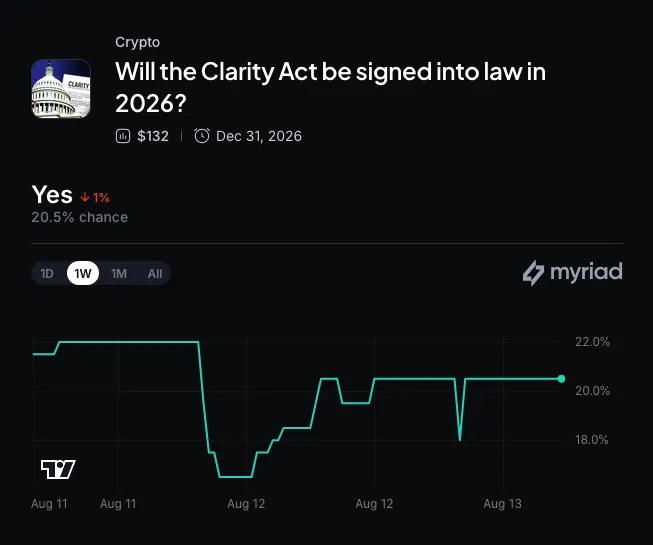
    Referring to regulations in the US, Scaramucci said he expects the “Clarity Act” to be passed soon.

    *This is not investment advice.

  • Solana Foundation targets institutions with new privacy framework

    Solana Foundation targets institutions with new privacy framework

    The Solana Foundation is making a new pitch to large institutions: privacy as a customizable feature, not a trade-off.

    In a report released on Monday by the foundation, Privacy on Solana: A Full-Spectrum Approach for the Modern Enterprise,” the organization argued that the next phase of crypto adoption will depend less on transparency alone and more on giving companies control over what they reveal — and to whom.

    The framing marks a shift from crypto’s early ethos. Public blockchains have traditionally emphasized openness, where transactions are visible and traceable, even if users are represented only by wallet addresses. The report acknowledged that this “pseudonymity” model, while foundational, falls short for many real-world use cases. Financial institutions, for example, may need to prove transactions occurred without exposing counterparties, while companies processing payroll must avoid broadcasting employee salaries.

    Underlying the pitch is a technical claim: that Solana’s speed makes advanced privacy techniques practical. The team argued that the network’s high throughput and low latency allow these methods to run at near-web speeds, opening the door to use cases such as encrypted order books or private credit risk calculations.

    But rather than offering a single solution for privacy, the foundation presented privacy as a spectrum composed of four distinct modes: pseudonymity, confidentiality, anonymity and fully private systems.

    At the base level, pseudonymity keeps identities obscured behind wallet addresses while leaving transaction data visible. Moving along the spectrum, confidentiality allows participants to be known while encrypting sensitive information like balances and transfer amounts.

    Anonymity flips that dynamic, hiding the identities of participants while allowing transaction data to remain visible. At the far end are fully private systems, where both identities and transaction data are shielded through techniques like zero-knowledge proofs and multiparty computation.

    The message is that no single privacy model fits all. “For enterprises, privacy is a spectrum, not a switch,” the report said.

    What Solana is trying to do is bring all of these privacy options into one system. Instead of choosing just one approach, companies can mix and match tools — like hiding transaction amounts, proving something is valid without revealing details, or controlling who can access certain data — depending on what they need.

    In practice, that could mean executing trades without revealing order size, sharing risk data across banks without exposing individual balance sheets, or allowing users to prove compliance without disclosing personal information.

    The report leans heavily on the idea that privacy and regulation can coexist. The team pointed to mechanisms like “auditor keys,” which enable designated parties to decrypt transactions when required. Other systems would allow wallets to demonstrate compliance status without revealing identity. These features are framed as a response to growing regulatory scrutiny, particularly around anti-money laundering rules and financial surveillance.

    “Privacy is a market requirement,” the report said. “Customers expect it and applications require it. On Solana, you choose your privacy level, from encrypted balances to zero-knowledge anonymity to multiparty confidential computing. Each level maps to a compliance path, and each is composable with the broader ecosystem.”

    Read more: Solana Foundation’s Liu: Focus on finance, not gaming ‘misadventures’

  • Senators Reveal Bipartisan Bill to Outlaw Sports Prediction Markets

    Senators Reveal Bipartisan Bill to Outlaw Sports Prediction Markets

    In brief

    • Adam Schiff and John Curtis plan to introduce a bipartisan bill banning sports-related prediction markets.
    • The proposal targets platforms like Kalshi and Polymarket, arguing many of their offerings are unlicensed sports bets.
    • The move escalates a broader fight between states, federal regulators, and prediction market firms over regulation.

    A bipartisan duo of U.S. senators plan to introduce legislation Monday that would ban American prediction markets from offering sports-related wagers.

    The proposed bill, from Adam Schiff (D-CA) and John Curtis (R-UT), would prohibit prediction market platforms like Polymarket and Kalshi from offering sports markets that they allege constitute unlicensed sports betting by another name. News of the impending bill was first reported by the Wall Street Journal.

    “Too many young people in Utah are getting exposed to addictive sports betting and casino-style gaming contracts that belong under state control, not under federal regulators,” Curtis said, in a statement.

    The senators said the legislation would prohibit any CFTC registered entity from listing a contract resembling a sports bet or casino-style game, and also “reinforce Congress’ original intent that the Commodity Exchange Act does not permit sports gambling.”

    “The bill will reaffirm existing tribal and state government authority to regulate sports betting, limit online gambling, or in some cases continue to prohibit all forms of gambling,” David Bean, chair of the Indian Gaming Association, said in a statement shared with Decrypt.

    “We look forward to working with leaders in Congress to hold these platforms accountable to protect consumers, sports integrity, and tribal and state sovereignty,” he added.

    In the last year, a growing number of states have sued the nation’s top prediction market platforms, arguing their sports-related markets should comply with state gambling laws. The platforms have pushed back, arguing that because the sports-related wagers are tied to event contracts, they should instead be regulated at the federal level by the CFTC. 

    A number of judges have not been convinced by that argument. On Friday, Nevada became the first state to successfully ban a prediction market platform, Kalshi—at least temporarily—as the state’s lawsuit against the company proceeds to trial. 

    Last week, Arizona filed criminal charges against Kalshi, for allegedly operating an illegal gambling service and allowing unlicensed election wagering.

    A Kalshi spokesperson told Decrypt that today’s proposed bill would push activity offshore and protect the “monopoly” of U.S. casinos.

    “It’s clear this bill is motivated by casino interests that are threatened by competition,” the spokesperson said. “They’re more worried about protecting their monopolies than protecting consumers.”

    Over 80% of Kalshi’s lifetime trading volume comes from sports-focused markets, according to data from Dune.

    The Trump CFTC has aggressively taken the side of prediction market platforms in the ongoing jurisdictional dispute over sports wagers, which is likely to ultimately be decided by the Supreme Court. CFTC Chair Mike Selig has pledged to put the agency’s resources behind companies fighting against state regulators.

    So far, the states that have challenged the CFTC’s legal interpretation run the political spectrum, from Democratic mainstay Massachusetts to deep-red Tennessee. Last month, Utah’s Republican Governor, Spencer Cox, condemned the Trump CFTC’s approach to prediction markets, arguing the platforms are “destroying the lives of families and countless Americans, especially young men.”

    On Friday, Rep. Alexandria Ocasio-Cortez (D-NY), the prominent progressive lawmaker, added her voice to the growing chorus of prediction market skeptics.

    “I know as a politician these companies are going to spend a billion dollars against me for saying it but… pervasive gambling is not good for society,” she said. “It turns life into a casino, traps people in addiction and debt, surges domestic violence, and fosters manipulation.”

    Editor’s note: This story was updated after publication to include comment from the Indian Gaming Association.

    Daily Debrief Newsletter

    Start every day with the top news stories right now, plus original features, a podcast, videos and more.

  • European Bitcoin Treasury H100 Aims to Triple BTC Stash by Acquiring Two Firms

    European Bitcoin Treasury H100 Aims to Triple BTC Stash by Acquiring Two Firms

    In brief

    • H100 Group plans to acquire Norwegian companies Moonshot AS and Never Say Die AS to more than triple its Bitcoin holdings from 1,051 to 3,500 BTC.
    • The all-stock transaction would position H100 as Europe’s second-largest listed Bitcoin treasury firm.
    • Bitcoin hit a new high above $126,000 last October, but has fallen to recently trade above $70,000.

    Sweden’s H100 Group has signed a letter of intent to acquire two Norwegian Bitcoin treasury companies in an all-stock transaction that would more than triple its holdings to approximately 3,500 BTC—currently valued around $245 million—positioning the firm among Europe’s largest public Bitcoin treasuries.

    The company announced that it signed a letter of intent to acquire Moonshot AS and Never Say Die AS through a share-based deal that would add roughly 2,450 Bitcoin to its current reserve of 1,051 BTC. The transaction involves H100 issuing new shares in exchange for all shares of the Norwegian companies, with no cash component.

    The acquisition would elevate H100 to 27th globally among public Bitcoin treasury companies, as of today, based on data from Bitcoin Treasuries, making it Europe’s second-largest listed Bitcoin treasury firm. That would put it just behind Germany’s Bitcoin Group SE with 3,605 BTC.

    H100 framed the consolidation as part of its strategy to enhance institutional presence, boost liquidity, and expand market relevance in the European crypto market. The all-share structure allows existing shareholders to maintain bitcoin exposure while scaling the combined entity’s holdings.

    “We see strong industrial logic in this acquisition. Scale, credibility and access to capital markets are increasingly important in the Bitcoin space, and this transaction would significantly strengthen H100 in all these areas,” said Chairman Sander Andersen, in a statement. “The transaction represents a continuation of H100’s existing strategy and an execution of the company’s capital markets and M&A strategy to build scale through Bitcoin-based transactions.”

    H100 and the target companies hope to sign definitive agreements before April 22, and complete the deal ahead of the company’s next annual general meeting on May 21.

    H100 began its Bitcoin treasury in May 2025. A wave of Bitcoin treasury companies emerged last year as the price of the leading cryptocurrency surged to new heights, peaking in October just above $126,000. It has since fallen sharply, recently trading just above $70,000.

    Strategy (formerly MicroStrategy), which pioneered the treasury model and began buying BTC back in 2020, remains the largest publicly traded Bitcoin holder by far, with 762,099 BTC—over $53 billion worth of the cryptocurrency. On Monday, the firm revealed plans to raise a further $44 billion to continue buying Bitcoin.

    Daily Debrief Newsletter

    Start every day with the top news stories right now, plus original features, a podcast, videos and more.
  • Andy Yen: AI knows you better than you know yourself, privacy is a fundamental human right, and the unsustainable nature of AI subscription models | Bankless

    Andy Yen: AI knows you better than you know yourself, privacy is a fundamental human right, and the unsustainable nature of AI subscription models | Bankless

    Key takeaways

    • AI’s capability to understand and predict human behavior poses ethical concerns about privacy and autonomy.
    • The average person’s digital privacy is increasingly compromised due to advancing technologies.
    • AI accelerates intimate data collection, enhancing existing business models.
    • Tech companies record and analyze user interactions with AI tools, raising privacy concerns.
    • Information shared with AI can become part of its training data, risking inadvertent disclosure.
    • AI tools like ChatGPT may know users better than their closest relationships, impacting privacy.
    • The market cap of top AI companies rivals that of many countries, suggesting significant influence.
    • Subscription models for AI services may not be sustainable due to high operational costs.
    • Current AI business models often prioritize profit over user privacy.
    • AI technology costs are expected to decrease exponentially, affecting future development.
    • There are no technical or legal barriers preventing full encryption for user data.
    • Privacy is a fundamental human right and should not be considered a luxury.
    • Many crypto foundations were created for fraudulent purposes rather than social benefit.
    • The gap between open source and proprietary AI models is narrowing, making open source a viable option.
    • Trust in crypto systems requires trust in both the technology and the people behind it.

    Guest intro

    Andy Yen is the founder and CEO of Proton, the privacy-focused tech company behind encrypted email service Proton Mail. Prior to founding Proton in 2014, he worked as a particle physicist at CERN, where he co-developed the infrastructure for secure, end-to-end encrypted communication inspired by large-scale computing challenges. His commitment to user privacy stems from experiences like Edward Snowden’s revelations and concerns over authoritarian surveillance.

    The implications of AI’s growing influence

    • AI has the potential to understand users better than they know themselves. “AI could know you better than you know yourself.” – Andy Yen
    • AI can exploit personal weaknesses, raising ethical concerns. “AI will actually be able to exploit the weaknesses of your personality.” – Andy Yen
    • The average person’s digital privacy is increasingly compromised. “The average person is quite compromised in terms of digital privacy today.” – Andy Yen
    • AI accelerates existing business models by enabling more intimate data collection. “AI is simply an extension of a trend that’s been going on for fifty years.” – Andy Yen
    • Tech companies record and analyze every conversation users have with AI tools. “Tech companies can see it because they are recording and analyzing every conversation.” – Andy Yen
    • AI tools retain user data to improve services and target ads. “They’re actually looking at this information to improve these programs.” – Andy Yen
    • Information shared with AI models can become part of their training data. “The information you give it becomes part of its brain.” – Andy Yen
    • Once information is shared with AI, it is difficult to retract. “Once you put it out there, you cannot really take it back.” – Andy Yen

    The power dynamics of AI and tech companies

    • AI companies’ market capitalization exceeds that of many countries. “These companies have gotten so big that they are more powerful than governments.” – Andy Yen
    • The subscription model for AI services may not be sustainable. “I don’t see how it’s possible to sustain that level of capex from a subscription model.” – Andy Yen
    • Current AI business models prioritize profit over user privacy. “These are profit-driven companies that care only about profit.” – Andy Yen
    • The cost of AI technology is expected to decrease exponentially. “The cost of AI is going to go down probably exponentially with time.” – Andy Yen
    • There are no technical or legal barriers preventing full encryption for user data. “There’s no technical limitation that prevents them from doing what we’re doing.” – Andy Yen
    • The aggressive data practices of companies are driven by capitalism. “Capitalism drives them to make the highest possible profits.” – Andy Yen
    • Loomo’s approach ensures user conversations remain private. “We don’t keep a record of any of your conversations.” – Andy Yen
    • Google’s business model creates a misalignment of incentives that undermines privacy. “You’re not actually Google’s customer; you’re the product.” – Andy Yen

    The challenges of privacy and encryption

    • Privacy is a modern-day digital civil liberty and a fundamental human right. “Privacy is our last defense against surveillance capitalism.” – Andy Yen
    • The mandatory scanning of tech companies has been removed in Europe, a win for privacy. “The mandatory part has been removed, which is a huge win for Europe.” – Andy Yen
    • There should be a modern digital bill of rights that enshrines the right to encrypt data. “Every citizen should always have the ability to encrypt their data.” – Andy Yen
    • Legislation regarding privacy needs to be strengthened and informed by tech-savvy individuals. “We need a new generation of legislators who are more tech native.” – Andy Yen
    • Governments can inadvertently worsen privacy legislation due to a lack of understanding. “You could actually make it worse.” – Andy Yen
    • Backdoors in technology do not exist in a way that only allows good actors access. “I’ve never seen a backdoor that only left the good guys in.” – Andy Yen
    • Mass surveillance undermines the presumption of innocence, crucial for democracy. “Mass surveillance is essentially saying everybody is under surveillance by default.” – Andy Yen

    The role of crypto in financial freedom

    • Financial transactions should be peer-to-peer and private. “Financial transactions should be peer to peer and should be private.” – Andy Yen
    • Venezuela’s high Bitcoin adoption is due to extreme inflation and government control. “Venezuela is one of the countries with the highest Bitcoin adoption.” – Andy Yen
    • Financial freedom is essential for actual freedom, and banning crypto is akin to banning cash. “There is no difference between freedom and financial freedom.” – Andy Yen
    • The ratio of legitimate to illegitimate uses of crypto is skewed towards illegitimacy. “The ratio between legitimate and illegitimate uses is incorrect.” – Andy Yen
    • Illegitimate uses and scams in crypto may constitute around 40% of the ecosystem. “It’s probably 40%, a substantial part of the ecosystem.” – Andy Yen
    • The crypto community must address illicit activities to achieve mainstream acceptance. “Crypto will have a limit to its influence if we don’t tackle that problem.” – Andy Yen
    • Creating a hostile environment for illicit actors is essential for crypto’s reputation. “It’s about creating an environment hostile to bad actors.” – Andy Yen

    The importance of email and digital identity

    • Email will remain a crucial aspect of digital identity for the foreseeable future. “Email is not just communication; it’s your digital identity.” – Andy Yen
    • Switching from Gmail to ProtonMail is about opting out of Google’s data collection. “Switching to ProtonMail is erasing your identity from Google.” – Andy Yen
    • Transferring your data to a more trusted provider can enhance privacy. “It’s easy now; a couple of clicks and you’re done.” – Andy Yen
    • Using different aliases for online accounts can reduce spam and protect identity. “Spin up a different alias in Proton to use a fake alias.” – Andy Yen
    • Locking down your email and identity is crucial to prevent hacks in crypto. “We have a lot of email accounts that get hacked in crypto.” – Andy Yen

    The influence of big tech on privacy and regulation

    • Big tech companies may engage in anti-competitive practices that threaten privacy-focused companies. “Big tech could engage in anti-competitive practices to wipe out privacy companies.” – Andy Yen
    • The lack of regulation allows big tech to potentially control government and democracy. “Big tech controls our government and our democracy.” – Andy Yen
    • Consumer choices play a crucial role in steering the economic and political future. “The most powerful force in capitalism is the individual consumer.” – Andy Yen
    • Crypto could potentially capture 30% of the overall finance market. “Crypto could go from less than a percent to 30% of finance overall.” – Andy Yen
    • The success of privacy-focused services depends on creating a competitive user experience. “We need a user experience that is a viable replacement for traditional finance.” – Andy Yen

    Disclosure: This article was edited by Editorial Team. For more information on how we create and review content, see our Editorial Policy.

  • Corey Frayer: Crypto loses its identity when mimicking traditional finance, SEC’s independence is crucial for regulation, and compliance can create competitive advantages | Bankless

    Corey Frayer: Crypto loses its identity when mimicking traditional finance, SEC’s independence is crucial for regulation, and compliance can create competitive advantages | Bankless

    Key takeaways

    • Crypto loses its distinct identity when it begins to mimic traditional financial systems.
    • If crypto projects function like banks or securities exchanges, they must comply with existing laws.
    • The current state of crypto resembles traditional finance but often resists regulation.
    • The SEC’s enforcement division operates independently from the chair’s direct involvement in investigations.
    • Gary Gensler’s knowledge of crypto is a significant asset for the SEC’s approach to the industry.
    • The crypto industry perceives the SEC’s office hours as a trap due to fears of future enforcement actions.
    • The distinction between an asset being sold as a security and the asset itself being a security is crucial.
    • Engaging platforms to comply with securities laws can create a competitive advantage in the crypto trading space.
    • Vertical integration in crypto exchanges poses significant risks to financial regulation.
    • Crypto’s fundamental value lies in enabling peer-to-peer transactions without intermediaries.
    • Introducing intermediaries into crypto undermines its decentralized ethos.
    • The crypto industry needs to start centralized to eventually achieve decentralization.
    • The SEC’s approach under Gary Gensler has stifled the potential growth of the crypto industry.
    • The crypto market poses a threat to the integrity of established securities laws if not treated equally.
    • Crypto startups should be treated like other startups in terms of capital raising.

    Guest intro

    Corey Frayer is Director of Investor Protection at the Consumer Federation of America, where he leads efforts to advocate for policies protecting investors and promoting market integrity. Most recently, he served as Senior Adviser to SEC Chair Gary Gensler, focusing on financial stability and crypto asset markets, where he shaped the agency’s approach to securities law and digital assets. Prior to his SEC tenure, Frayer held key positions on Capitol Hill, including as a senior staffer on the Senate Banking Committee advising Chairman Sherrod Brown on financial regulation and consumer protection.

    Crypto’s integration into traditional finance

    • Crypto loses its distinct technological identity when it starts mimicking traditional financial systems.

      — Corey Frayer

    • When crypto starts coming into the traditional space and doing the traditional activities to me it loses the protection of the argument that this is a distinct technology built for peer to peer transactions.

      — Corey Frayer

    • If crypto projects aim to operate like banks or securities exchanges, they must adhere to existing laws.
    • If you’re gonna build a bank if you’re gonna build a securities exchange if you’re gonna raise money the way the Howey Test lies out there are laws for that everyone has to follow the same laws.

      — Corey Frayer

    • The current state of crypto resembles traditional finance but resists regulation.
    • I take issue with the way that it has become something that looks a lot more like the traditional financial system but doesn’t want to be treated like the traditional financial system.

      — Corey Frayer

    • There is a misconception that the SEC under Gensler is pro-traditional finance.
    • I think there’s a perception that the Gensler SEC or myself was very pro traditional industry.

      — Corey Frayer

    SEC’s regulatory approach and independence

    • The SEC’s enforcement division operates independently from the chair’s direct involvement in ongoing investigations.
    • I did not have access to the investigations as they were ongoing… there’s a ton of independence in the enforcement division.

      — Corey Frayer

    • Gary Gensler’s knowledge of crypto is a significant asset for the SEC’s approach to the industry.
    • He actually was informed about crypto… to understand our industry is going to be the greatest asset.

      — Corey Frayer

    • The narrative in the crypto industry suggests that Gary Gensler is leveraging his position to gain political capital at the expense of the crypto sector.
    • The narrative which was allowed to reverberate without being unchecked was that Gary Gensler is upon maybe even a bishop or a knight of Elizabeth Warren who has a very anti crypto political stance and Gary Gensler is using this as an opportunity to ascend his political capital inside of the world of politics.

      — Corey Frayer

    • The crypto industry has largely been isolated from opposing viewpoints, leading to unchecked narratives about regulatory intentions.
    • We basically never talked to anyone on the other side of the aisle… the narrative which was allowed to reverberate without being unchecked.

      — Corey Frayer

    Securities law and crypto assets

    • The distinction between an asset being sold as a security and the asset itself being a security is crucial in understanding investment contracts.
    • Being offered and sold as a security doesn’t mean the asset itself is a security… the concept of an investment contract is that you can offer and sell something as a securities arrangement.

      — Corey Frayer

    • The SEC established precedent that crypto assets could be offered and sold as securities under certain conditions.
    • Crypto assets could be offered and sold as securities… established some precedent that at a minimum according you know to the eyes of the court.

      — Corey Frayer

    • Focusing regulatory efforts on centralized platforms is more productive than targeting individual tokens.
    • We felt that playing mac whack a mole with you know 10,000 tokens wasn’t gonna be a productive use of our resources.

      — Corey Frayer

    Compliance and competitive advantage

    • Engaging platforms to comply with securities laws can create a competitive advantage in the crypto trading space.
    • Our theory here was that if you could get someone to come in and comply with the securities laws they would have a competitive advantage of being the safe place to trade crypto because they were disclosing they were following industry standard rules.

      — Corey Frayer

    • Having multiple financial services under one platform creates conflicts of interest that violate foundational securities law.
    • The red line is essentially having all these businesses together in one platform not having those conflicts of interest is a foundational rule in securities law.

      — Corey Frayer

    • Vertical integration in crypto exchanges poses significant risks to financial regulation.
    • You don’t want these businesses with tons of different exposures like you want people to be in their particular verticals and that way one failure doesn’t cascade across the entire system you don’t want conflicts of interest that give an exchange an advantage over the customers trading on the exchange.

      — Corey Frayer

    • The structure of FTX was a classic failing business model.
    • We had raised an we all had serious concerns about FTX purely because of the structure like that is a classic failing business model.

      — Corey Frayer

    Peer-to-peer transactions and decentralization

    • Crypto’s fundamental value lies in enabling peer-to-peer transactions without intermediaries.
    • What crypto solved for is peer to peer transactions not relying on an intermediary and that is why the technology exists so no one would have to rely on an intermediary like that is fundamental to the ethos.

      — Corey Frayer

    • Introducing intermediaries into crypto undermines its decentralized ethos and necessitates compliance with traditional financial regulations.
    • I get very unsympathetic to the crypto industry when they start introducing intermediaries to this process… if you’re gonna show up here and be an intermediary… you have clearly entered traditional financial territory and you have to follow those rules.

      — Corey Frayer

    • The crypto industry needs to start centralized to eventually achieve decentralization.
    • In order to build some of the more expressive financial infrastructure beyond some of the base primitives like just Bitcoin and Ethereum in order to do more things to make crypto more useful and have better assets and a more flourishing financial system we need to have start ups that raise money and start centralized and with a long term goal of becoming decentralized.

      — Corey Frayer

    • The collapse of FTX significantly impacted traditional financial firms’ willingness to engage with crypto.
    • The reason that didn’t come to fruition is because before we executed on that plan… FTX collapsed and all the traditional financial firms didn’t wanna have anything to do with crypto after that it was toxic.

      — Corey Frayer

    Regulatory challenges and the SEC’s role

    • The SEC’s approach under Gary Gensler has stifled the potential growth of the crypto industry.
    • We were being treated as an industry that had no values no morals no aspirations and was just trying to do what you were saying which is have our cake and eat it too… we were nipped in the bud by Gary Gensler.

      — Corey Frayer

    • If the crypto world had remained focused on electronic peer-to-peer transactions, regulatory scrutiny from the SEC might have been avoided.
    • If the crypto world had stayed in the space of electronic peer to peer transactions I don’t think the SEC would ever have gotten involved in it.

      — Corey Frayer

    • The crypto market poses a threat to the integrity of established securities laws if not treated equally.
    • If you take two things that are economically identical if you have something being offered and sold as a security and you have a biotech firm selling securities and you don’t treat the crypto market the same way you are undermining the securities laws…

      — Corey Frayer

    • The economic reality of business practices in crypto must be treated the same as any other financial instrument.
    • It is incumbent upon financial regulators regardless of the technology to treat your economic the economic reality of of your business practices the same as any other identical economic instrument.

      — Corey Frayer

    Crypto startups and investor protection

    • Crypto startups should be treated like other startups in terms of capital raising.
    • I don’t see a reason to treat crypto startups any differently than other startups again when they’re doing the same economic activity.

      — Corey Frayer

    • The SEC’s role is to ensure issuers follow laws rather than make investment decisions for investors.
    • You do not want the securities and exchange commission to be making decisions on behalf of investors… what you want to do is make sure that issuers of securities follow the laws that congress has set forth.

      — Corey Frayer

    • The orderly functioning of the securities marketplace is crucial for investor protection.
    • The orderly functioning of that marketplace is really important the stability of that marketplace is important disclosure is really important fair dealing eliminating conflicts of interest attempting to eliminate unfair information asymmetry insider trading for example going after fraud that is the kind of investor protection that you want the SEC involved in.

      — Corey Frayer

    • Peer-to-peer transactions are fundamentally what crypto was designed to facilitate.
    • That’s the thing that crypto was set up to do and I would agree with you there a 100% that that is the thing that crypto is set up to do.

      — Corey Frayer

    DeFi and centralized actors

    • Decentralized finance (DeFi) aims to perform financial functions without intermediaries.
    • What if you can actually get to a point where you can in an intermediary less way you can do all of the functions or many of the functions in finance.

      — Corey Frayer

    • The definition of DeFi is nuanced and depends on the presence of centralized actors.
    • I would say that it depends a lot on how you’re defining DeFi… if you have something where genuinely there’s sort of this immaculate conception of a protocol that allows for trading of nonsecurity crypto assets in a truly intermediary less way then yeah, I think by definition that falls outside the securities laws.

      — Corey Frayer

    • Centralized actors in DeFi platforms create obligations to comply with securities laws.
    • If you’re trading securities on that platform and I can identify a centralized actor then I don’t think that’s DeFi and I think it clearly has an obligation to comply with the law.

      — Corey Frayer

    • The SEC’s actions against Uniswap represent an attack on open source and DeFi.
    • We felt like this was an attack on open source this was an attack on on DeFi and this is maybe beyond the SEC’s jurisdiction.

      — Corey Frayer

    Uniswap and regulatory challenges

    • Uniswap has achieved significant trading volume, making it a success story in the DeFi space.
    • 4,000,000,000,000 in trading volume on Uniswap like it’s a success story coming out of America.

      — Corey Frayer

    • The distinction between good and bad actors in crypto is often unclear until after events unfold.
    • We never know as regulators at the outset who the good guys are and who the bad guys are… a lot of people loved Alex Mashinsky and when you know we were looking into him we got a lot of hate when we were looking into FTX we got you know angry letters from congress saying like how dare you this is a huge boom for America…

      — Corey Frayer

    • Uniswap’s code allows users to verify its non-custodial nature, distinguishing it from centralized entities like FTX.
    • You can know who is good in advance when it comes to Uniswap because we can look at the code and know that it is completely sovereign for the individual who is using it which is not true for FTX…

      — Corey Frayer

    • Uniswap’s claim of decentralization is misleading because it can still be identified and served subpoenas.
    • I take issue with defining Uniswap as decentralized… we can identify the people… they are a company.

      — Corey Frayer

    Philosophical differences in regulation

    • There is a philosophical difference regarding the facilitation and control of exchanges in the context of securities laws.
    • I think we have a a philosophical difference about what it means to facilitate or be involved with or own or control an exchange.

      — Corey Frayer

    • Uniswap Labs is not operating the Uniswap exchange, which is a significant distinction in terms of accountability under securities laws.
    • They are not operating that application and they are just perhaps they are facilitating on the front end.

      — Corey Frayer

    • Mantle is not just another blockchain; it is an ecosystem designed for builders seeking real distribution and users.
    • Mantle is not just another blockchain it is an ecosystem built for builders who want real distribution and real users.

      — Corey Frayer

    • Projects on Mantle can access Bybit, which provides exposure to over 70 million verified users.
    • Projects on Mantle have access to tap directly into Bybit one of the largest exchanges globally giving teams exposure to more than 70,000,000 verified users.

      — Corey Frayer

    Outdated regulations and SEC’s capacity

    • The SEC’s regulations from the 1930s may not be suitable for today’s decentralized finance landscape.
    • The SEC can look at something that has no counterparties that has no intermediaries and say maybe the SEC regulations from the nineteen thirties don’t quite fit this paradigm of the internet.

      — Corey Frayer

    • The SEC lacks the capacity to audit every platform’s code effectively without additional congressional support.
    • The SEC is not going to have the capacity unless congress gives it at some point the capacity to go through every platform code and you know figure out whether or not it could be exploited.

      — Corey Frayer

    • The SEC’s limited budget and resources hinder its ability to effectively oversee the vast securities marketplace.
    • The SEC oversees a $125,000,000,000,000 securities marketplace… and it has a $2,000,000,000 budget every year… you have an enormous task at that agency with a very small amount of resources.

      — Corey Frayer

    • The DAO concept is fundamentally flawed as a decentralized model.
    • I think the DAO concept is fundamentally flawed as a you know quote unquote decentralized.

      — Corey Frayer

    Broader implications of DeFi and DAOs

    • Decentralized finance (DeFi) may not pose a significant threat to the broader financial services industry or securities laws.
    • I’m not sure I would see DeFi as a threat to the broader financial services industry to the securities laws in such a way that it would need to be a priority of the SEC.

      — Corey Frayer

    • The governance of decentralized autonomous organizations (DAOs) still holds individuals accountable, regardless of how decentralized they appear.
    • You can identify the people who control a DAO who govern a DAO and those folks no matter how broadly distributed they are are accountable to that.

      — Corey Frayer

    • Comparing Uniswap to Google highlights the transformative impact of DeFi on trading, akin to how Google revolutionized internet search.
    • It’s basically a trading verb on all of the assets you know that can exist in crypto which is like basically all assets and so they’ve kind of like revolutionized trading the way Google revolutionized the internet and search.

      — Corey Frayer

    • Corey believes that while there are bad actors in crypto, the presence of good projects is beneficial for both the US and the world.
    • I actually think that’s a net good for not only the US but for the world… the projects that have done more good than bad in crypto… do you think that’s net beneficial?

      — Corey Frayer

    Fair regulatory treatment and the Howey Test

    • Crypto should not receive preferential treatment in regulation compared to traditional financial industries.
    • I think it is not fair to give crypto a leg up over other industries or over other financial regulations because it’s new in some way… the crypto industry make arguments for deregulation that look identical to the traditional industry.

      — Corey Frayer

    • The Howey test’s application to various assets may be overly broad, potentially classifying many non-traditional items as securities.
    • If your definition of a security turns dollars and game items and loyalty points and Pokemon cards and NFTs… into a security doesn’t it seem like you’ve stretched the Howey Test a bit too far?

      — Corey Frayer

    • The SEC evaluates whether an asset is a security based on how it is offered and sold, not just the asset itself.
    • The SEC under the Howey Test looks at a totality of circumstances right and so what what that means is it’s not about the asset itself it’s about how it’s distributed.

      — Corey Frayer

    • Relying solely on the Torres decision in Ripple is unfair, as there are many legal interpretations regarding what constitutes a security.
    • I think it’s unfair to rely just on the Torres decision in in Ripple because there were a lot of decisions that did not fall out that way.

      — Corey Frayer

    Economic analysis and legal definitions

    • The economic analysis behind a security is more important than a strict definition.
    • The whole point of the Howey Test is you if you write down in black and white what is and is not a security you’re writing a road map to getting around securities laws… the reason it’s a broad description is so that you cannot do an end run around securities laws.

      — Corey Frayer

    • Creating strict definitions for securities could lead to increased fraud and undermine the securities market.
    • You’re gonna break the whole securities market you’re gonna invite a whole lot of fraud but… the reason that the securities laws have stood the test of time is that they take this definitional approach.

      — Corey Frayer

    • Defining legal terms in legislation is inherently complex and subjective.
    • It is philosophically very hard to write into law exactly what you mean and you don’t want to miss things that you mean to capture and you don’t want to capture things that you mean to exclude.

      — Corey Frayer

    • The Howey Test remains a relevant framework for identifying securities.
    • I think Howey has stood the test of time as a great white way to identify what is and is not a security.

      — Corey Frayer

    SEC’s motives and Uniswap’s alignment

    • The SEC has ulterior motives that hinder the growth and potential of the crypto industry.
    • The SEC from our cryptos from the crypto perspective seemed to have ulterior motives which is why I invoked Elizabeth Warren and the whole anti crypto army at the very beginning of this podcast.

      — Corey Frayer

    • Uniswap has created fair and orderly markets that align with the SEC’s interests more effectively than the SEC itself.
    • Uniswap for example has created fair and orderly markets which is 100% aligned with the interests of the SEC and even more spicier somebody like Eric Voorhees would say Uniswap as an application has achieved the SEC’s mandate in a far better far more scalable mechanism than the SEC would ever be able to produce.

      — Corey Frayer

    • Regulation does not inherently harm an industry; it can actually strengthen it.
    • I would argue that in fact it makes it stronger… in a world where crypto follows the law and investors get the same protections that they would in other parts of the marketplace, it gains trust and and it grows.

      — Corey Frayer

    • We cannot identify bad actors in the crypto space until regulations are applied fairly.
    • We never know who the bad actors are until they show themselves… you don’t know until you have applied the regulations fairly and you have looked closely at everyone in the business.

      — Corey Frayer

    Market trust and the SEC’s approach

    • Failing to regulate financial markets erodes trust, which is essential for market stability.
    • There are consequences to failing to regulate the financial markets and one of those consequences is eroding trust and that trust is what markets are built on.

      — Corey Frayer

    • The SEC under Gary Gensler has taken a ‘bad cop’ approach to regulating the crypto industry.
    • I think we started out genuinely trying to work with the industry… it came down to us drawing a line in the sand on having conflicts of interest.

      — Corey Frayer

    • Even without fraud, Sam Bankman-Fried’s company was destined to fail.
    • I will say even if Sam Bankman Fried had not engaged in the fraud he did his company was destined to fail and destined to harm a lot of people along with it.

      — Corey Frayer

    • Crypto risks losing its distinctiveness when it engages in traditional financial activities.
    • When crypto starts coming into the traditional space and doing the traditional activities to me it loses the protection of the argument that this is a distinct technology built for peer to peer transactions.

      — Corey Frayer

    Private currencies and centralized entities

    • Private currencies have historically not worked out well.
    • I think it’s a really bad idea… we have experience with private currencies it never works out well.

      — Corey Frayer

    • Centralized entities like Circle and Tether contradict the decentralized ethos of crypto.
    • They are a company that holds a whole bunch of financial assets they are by definition centralized.

      — Corey Frayer

    • The Genius Act is not a good idea as it treats economically identical assets differently.
    • No I don’t think the Genius Act was a good idea I don’t think you wanna treat economically identical assets differently.

      — Corey Frayer

    • Credit card companies will likely start processing stablecoin transactions without consumer protections.
    • I guarantee you we are gonna start to see credit card companies saying well actually these transactions on the back end are stablecoin transactions so you don’t get the benefit of consumer protections anymore.

      — Corey Frayer

    Bankruptcy law and political influence

    • The accounting treatment of crypto assets in bankruptcy is complex and varies significantly from traditional assets.
    • There were a lot of outstanding questions about the kind of liabilities that a public company would have that we believed investors in that public company should be aware of… the industry didn’t like it… it’s usually asking for favorable guidance.

      — Corey Frayer

    • Banks could have implemented capital rules to accommodate crypto without affecting their balance sheets.
    • If the bank regulators felt that they had a handle on this situation and wanted crypto at the banks they could have put capital rules out that meant that the on sheet balance… didn’t affect the capital standing of the banks.

      — Corey Frayer

    • The ambiguity in bankruptcy law for crypto will continue to lead to conflicting decisions.
    • We were proved right about this ambiguity in the bankruptcy law in crypto winner when we got tons of conflicting bankruptcy decisions about was it governed by the contract was it governed by the activity itself.

      — Corey Frayer

    • The crypto industry did not significantly influence the 2024 election.
    • I don’t think it’s credible that this one industry had that much influence over the election… it’s really hard to make the argument that it was crypto sentiment that affected any part of that election.

      — Corey Frayer

    Political actions and regulatory consequences

    • The crypto industry’s political actions were not focused on promoting pro-crypto candidates.
    • They ran the same republican ads… they weren’t running pro crypto ads they never used the word crypto.

      — Corey Frayer

    • The silence from the crypto industry regarding presidential corruption is harmful to its credibility.
    • I think the silence from most corners of the industry around it in exchange for getting legislation or regulatory favors is ultimately harmful to the industry.

      — Corey Frayer

    • Corruption will be a significant theme in the next election, impacting the perception of crypto.
    • I think there’s a very good chance that the next election might be impacted not by the crypto of it all but the amount of corruption that crypto has allowed the president to get away with.

      — Corey Frayer

    • The current regulatory approach under the new administration is a step in the wrong direction.
    • I think it’s absolutely the wrong direction… I would stand behind the validity of every one of them and the integrity of every one of them.

      — Corey Frayer

    SEC guidance and market uncertainty

    • The current SEC guidance lacks the force of law and is easily reversible, which creates uncertainty for the crypto industry.
    • Atkins has done everything by guidance there are no rules that have been established through the APA process which means that none of them hold the force of law.

      — Corey Frayer

    • A new SEC administration could lead to chaos and legal challenges in the crypto market.
    • In a new SEC that wants to enforce the securities laws equally across the entire market is one a little bit of chaos and two a big challenge in court.

      — Corey Frayer

    • The SEC’s current actions are harming the integrity of the institution and will have broader consequences for the market.
    • I think what the SEC is doing now through these actions through these unprecedented actions is harming the integrity of that institution and I think that’s gonna have broader consequences for the market than even just crypto.

      — Corey Frayer

    • There should be stronger advocacy for regulation and enforcement not just in crypto but across the entire financial system.
    • Obviously I would be I think a a stronger advocate for regulation in the space for enforcement and it wouldn’t just be in the crypto space.

      — Corey Frayer

    Ethereum’s regulatory status and centralization risks

    • Ethereum has characteristics that could classify it as a security at certain times.
    • I think some of the things that have harmed the argument that eth is unable to be offered and sold as security… is my opinion that there are at a minimum been times at which eth was offered and sold as security.

      — Corey Frayer

    • The transition from proof of work to proof of stake has introduced centralization risks in Ethereum’s validation process.
    • Now you have these centralized players that can buy up a lot of eth and be a larger part of the validation process and some people are financially locked out of the validation process.

      — Corey Frayer

    • The SEC chair cannot engage in open dialogue without risking market movement and legal repercussions.
    • It is much easier for me to have an open conversation with you guys now that I’m outside of the agency because so much of what you do there is potentially market moving information… it is really really hard to while you’re in that seat like I would have never been able to do something like this while I was at the SEC.

      — Corey Frayer

    • Independent regulators should avoid engaging in public conversations that could compromise their responsibilities.
    • I don’t think it’s actually something you really want independent regulators to be to be doing.

      — Corey Frayer

    Disclosure: This article was edited by Editorial Team. For more information on how we create and review content, see our Editorial Policy.