Category: Business

  • BitMine Buys $49 Million in Ethereum as Tom Lee Hails Early Robinhood Chain Demand

    BitMine Buys $49 Million in Ethereum as Tom Lee Hails Early Robinhood Chain Demand

    In brief

    • BitMine added $49 million worth of Ethereum in the last week, bumping its total holdings to nearly 4.8% of the circulating token supply.
    • Chairman Tom Lee said that ETH has showcased its product-market fit thanks to the success of Robinhood’s layer-2 network, Robinhood Chain.
    • BitMine’s stash is now worth more than $10.1 billion as ETH trades around $1,780.

    Publicly traded Ethereum treasury firm BitMine Immersion Technologies added another $49 million worth of ETH to its stash last week, acquiring 27,801 ETH. 

    The firm now holds 5,770,038 ETH, nearly 4.8% of the token’s circulating supply, valued around $10.1 billion as Ethereum trades around $1,780 on Monday. 

    BitMine’s latest purchase comes amid a strong week for the underlying Ethereum network, according to its chairman Tom Lee, who pointed to the strong public debut for Robinhood’s Ethereum layer-2 network, Robinhood Chain. (Disclaimer: Tom Lee is an investor in Dastan, the parent company of Decrypt). 

    “One of the biggest crypto success stories in 2026 is the breakaway success of the Robinhood Chain L2 mainnet on July 1, built on Arbitrum,” said Lee in a statement.

    “Already, dollar volumes have exceeded $1 billion, and Robinhood Chain now has more trading volume than any other decentralized exchange (DEX), demonstrating the outstanding utility and product market fit for Ethereum, which is the underlying chain,” he added. 

    DEX volumes on the chain in the last week have surpassed $3 billion according to data from DeFi Llama, but it still trails more established networks like Ethereum and Solana, which have registered $7.27 billion and $12.34 billion worth of DEX volume over the same time period, respectively. 

    Robinhood Chain, which finalizes on Ethereum and uses ETH as its native gas token, has blossomed in the early going, creating small fortunes for some early meme coin traders on the blockchain—like one individual who turned $85 into more than $2 million in paper gains.

    “Robinhood’s 27 million users are paying crypto fees denominated in ETH,” said Lee. “In other words, everyday users are starting to see ETH as money,” he added. 

    While the mobile brokerage may boast millions of users, data gathered by Token Terminal points to just 788,000 active addresses on Robinhood Chain thus far. 

    Despite the activity, ETH has dropped around 2% in the last 24 hours and has only gained around 1.3% in the last week of trading. That marks significant outperformance of shares in BitMine (BMNR), though, which have dipped 5.7% in the last five trading days. 

    BitMine shares are trading around $14.65 shortly after the opening bell on Monday, down more than 2.2% since trading began. 

    Daily Debrief Newsletter

    Start every day with the top news stories right now, plus original features, a podcast, videos and more.
  • Bitcoin panic-selling may be ending as sellers’ profit margins disappear

    Bitcoin panic-selling may be ending as sellers’ profit margins disappear

    Dessislava Ianeva, an analyst at Nexo, made a similar point in an email to CoinDesk.

    “ETF flows confirm it from another angle. The past ten days split between inflow and outflow, netting slightly positive,” Ianeva said.

    “Glassnode data shows spot selling pressure has faded. June’s net selling averaged nearly 2,000 $BTC a day; July’s has slowed to just 53 $BTC a day, the calmest month of 2026 outside April.”

    The relative calm, however, may not indicate a rapid turnaround.

    The price recovery from the year’s low of $57,700, hit earlier this month, is largely driven by derivatives traders and not spot buyers, according to Alex Kuptsikevich, FxPro’s chief market analyst.

    “Demand for Bitcoin is recovering rapidly, though the growth is currently being driven mainly by retail traders in the speculative futures market. At the same time, the situation in the spot market remains less positive,” he said.

    Without a strong return of buy-side liquidity, prices could remain in a sideways trend for months to come, he said.

    Caution is understandable ahead of macroeconomic data that may influence interest-rate decisions and the appetite for risk.

    U.S. CPI for June is scheduled for release Tuesday and Fed Chair Kevin Warsh’s first Congressional testimony is due this week. These events could influence the market trajectory and make, or break, the recovery.

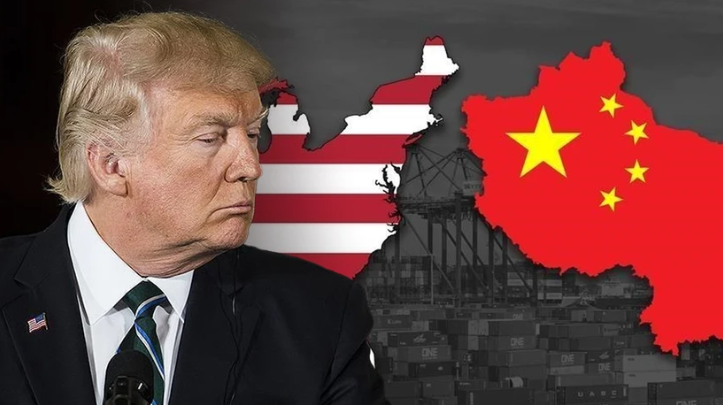
  • President Donald Trump Sends China-Related Crypto Message: Hints at US Clarity Act, a Bullish Cryptocurrency Law!

    President Donald Trump Sends China-Related Crypto Message: Hints at US Clarity Act, a Bullish Cryptocurrency Law!

    Uncertainty continues in the Clarity Act process, one of the most important legislative bills aimed at regulating cryptocurrencies in the US.

    At this point, the passage of the Clarity Act, also known as the Transparency Act, is eagerly awaited, and US President Donald Trump has also called for its enactment.

    At this point, Donald Trump, in a post on Truth Social, pointed out that many countries, including China, were trying to get their hands on this “important financial event.”

    He added that the US is currently in a leading position, but it should not allow China to win in either the AI or cryptocurrency sectors.

    “…China and many other countries want to completely and entirely seize control of these major financial phenomena and artificial intelligence.”

    We are currently ahead in artificial intelligence, but they are also competing fiercely.

    Don’t let China win in both areas.”

    With Trump making a critical call regarding the CLARITY Act, according to CryptoInAmerica host Eleanor Terrett, the next four weeks, coinciding with the reconvening of the US Senate, are seen as a critical turning point for the passage of the CLARITY Act this year.

    Terrett stated that the market views the period before the August congressional recess as the last realistic opportunity this year to pass the cryptocurrency market structure bill.

    However, the bill needs 60 votes to pass the entire Senate, making the cooperation of the Democrats essential.

    In this context, a revised version of the bill incorporating the proposals of the Senate Banking and Agriculture Committees is expected to be released this week. According to Terrett, this will determine the progress of negotiations and how to proceed on the remaining points of contention.

    The biggest problem remains the ethical issue, as the White House has yet to reach an agreement on conflict of interest measures regarding President Trump’s cryptocurrency businesses. Democrats and some Republicans are demanding stricter ethical guidelines for the president’s crypto ventures.

    *This is not investment advice.

  • Jito proposes token-centric model, pledging JTX revenue to JTO buybacks and burns

    Jito proposes token-centric model, pledging JTX revenue to JTO buybacks and burns

    Jito has published JIP-38, a governance proposal that would formally designate the protocol as a token-centric network, under which all major network revenues will flow to the DAO and be governed by $JTO token holders.

    The only exception is 20% of JTX platform fees, which will continue to be reinvested in JTX development, according to the proposal posted on July 13.

    JIP-38 is now live.

    Value should live with the Network. This proposal formally establishes Jito as a token-centric network, committing 100% of the Jito DAO’s revenue share from @JTX_trade to programmatic buyback and burns of $JTO for at least 1 year from JTX launch.

    — Jito (@jito_sol) July 13, 2026

    The plan would commit 100% of the DAO’s JTX revenue share to open-market $JTO buybacks and permanent token burns for a minimum of one year through Q4 2027.

    As noted, buybacks would be executed automatically through a Rev Splitter mechanism overseen by the Dev Council, while governance documentation would be updated to reflect the network’s token-centric policy.

    JIP-38 also outlines governance and implementation measures including updating official governance documentation to reflect Jito’s token-centric model, progressively automating the Rev Splitter, and completing existing revenue allocation mandates before conducting a comprehensive review of all protocol fee streams in Q4 2027.

    That review will evaluate the effectiveness of buybacks, growth incentives, and other capital deployment strategies, after which $JTO holders will determine the network’s next long-term revenue allocation framework through governance voting.

    According to the proposal, this framework is intended to ensure that the value generated by the network accrues to the token rather than external corporate entities.

    $JTO surged as much as 8% shortly after the team unveiled JIP-38, per CoinGecko.

  • Strategy Pads Cash Reserves to $3 Billion, Skipping Bitcoin Buy for Third Week

    Strategy Pads Cash Reserves to $3 Billion, Skipping Bitcoin Buy for Third Week

    In brief

    • Strategy lifted its cash reserves to $3 billion via common stock proceeds, skipping a Bitcoin buy for the third straight week.
    • Since July 22, the company has generated $215 million in proceeds from Bitcoin sales, less than half the amount of its latest fundraising.
    • At Bitcoin’s recent price, the firm’s stockpile stood around $11 billion underwater.

    Strategy’s Bitcoin-buying machine remained in neutral last week as the firm continued growing its cash reserves, forgoing acquisitions of the digital asset for a third straight week.

    The company raised $467 million during the period by issuing common stock, lifting the balance of its so-called USD Reserve to $3 billion, according to an announcement.

    Shares of Strategy were down 4% following the opening bell, changing hands around $90.80, according to Yahoo Finance. Although the firm’s stock price has tumbled 18% over the past month, it has steadied since hitting a 28-month low of $81.81 in late June.

    Strategy’s flagship preferred stock, Stretch (STRC), had edged down to $87.04, after approaching its highest point in nearly a week in pre-market trading. Since mid-May, the product that currently offers a 12% annual dividend has lingered below its $100 par value, while notching record lows.

    The company’s latest move underscored its commitment to ensuring that it can fulfill preferred stock dividend payments and debt interest obligations, padding its cash cushion to record levels following the adoption of a capital management framework weeks ago.

    In a note shared on Monday, Benchmark-StoneX Managing Director and Senior Research Analyst Mark Palmer shared that Strategy added around 18% to its cash reserves in a single move, providing the firm with more than 20 months’ worth of coverage for its annual dividend and interest obligations of $1.76 billion.

    “The entirety of the company’s capital markets activity during the week was channeled toward fortifying the balance sheet’s cash cushion,” he added.

    The framework marked a significant shift for Strategy, formalizing conditions under which the world’s largest corporate holder of Bitcoin could sell the digital asset. On Monday, the company’s stockpile of 843,775 Bitcoin was valued around $53 billion.

    Since Strategy reported its last Bitcoin purchase on July 22, the company has generated around $215 million in proceeds from selling the digital asset. Those funds were earmarked for dividends and debt, mirroring the intent of its latest fundraising efforts.

    Before Strategy formalized its new approach, some analysts voiced concerns that the company’s USD Reserve had worn too thin, intensifying scrutiny on the sustainability of “ballooning” costs tied to products such as Stretch that receive routine payouts.

    “Orange dots tell only part of the story,” Strategy co-founder and Executive Chairman Michael Saylor said in an X post on Sunday, hinting at the company’s shifting scope alongside a chart of the Bitcoin-buying firm’s recent purchases.

    The company’s willingness to tap Bitcoin as a source of liquidity for its cash reserves represented a reversal of Saylor’s buy-and-never-sell mantra, but some analysts say the shift toward “two-way capital allocation” is ultimately in the company’s best interest.

    On Monday, Bitcoin had fallen 2.3% over the past 24 hours to $62,600, according to CoinGecko. With an average purchase price of $75,476 per Bitcoin, that meant Strategy’s stockpile remained roughly $11 billion underwater.

    Daily Debrief Newsletter

    Start every day with the top news stories right now, plus original features, a podcast, videos and more.
  • Wall Street transfer agents lobby SEC, warning that third-party tokens pose risks to market integrity

    Wall Street transfer agents lobby SEC, warning that third-party tokens pose risks to market integrity

    “I’d encourage the Commission not to dismiss third-party stock tokens, but to treat them as what they are — a different class of financial instrument, with clear separation from real stocks.”

    Not everyone agrees

    Some market participants, however, say the STA’s proposal risks grouping together fundamentally different tokenization models.

    “The key is whether the tokens represent true stock ownership or just economic exposure,” Dinari CEO Gabe Otte told CoinDesk.

    He said many of the STA’s concerns are valid but apply primarily to synthetic tokenized products. He pointed to the SEC’s January statement, which distinguishes custodial tokenized securities from synthetic structures, arguing that regulated custodial models should be evaluated separately.

    “Both issuer-sponsored and custodial models offer true stock ownership and these should be distinguished from synthetic models for the benefit of the end investor,” Otte said.

    Alan Konevsky, CEO of digital securities platform tZERO, agreed that issuer-sponsored tokenization offers important advantages by preserving the direct relationship between companies and investors. But he argued the market is likely to support multiple compliant approaches.

    “Innovation is accelerating, and we expect multiple compliant, non-misleading, economically and technologically meaningful models to emerge as the market matures,” Konevsky said.

    Eli Cohen, chief legal officer at tokenization platform Centrifuge that focuses on bringing funds onchain, said the letter reflects transfer agents’ concerns that issuer-sponsored tokenization could lose ground if third-party models become more widely adopted.

  • Bank of Thailand Flags Abnormal Stablecoin Trades in ‘Grey Economy’ Crackdown

    Bank of Thailand Flags Abnormal Stablecoin Trades in ‘Grey Economy’ Crackdown

    In brief

    • The Bank of Thailand is using data analytics to scan for abnormally high-volume trades in stablecoins, especially Tether’s USDT, as part of a crackdown on illicit finance.
    • Governor Vitai Ratanakorn said early reviews flagged transactions that appear designed to evade disclosure rules or bypass normal transfers; the SEC, which regulates digital assets, will decide on any follow-up.
    • The screening sits within a wider sweep targeting large cash deposits and withdrawals, gold trading, and online-gambling “mule” accounts.

    Thailand’s central bank has turned data-analytics tools on the country’s stablecoin market, scanning high-volume trades for signs of illicit money as part of a widening crackdown on the shadow economy.

    Bank of Thailand Governor Vitai Ratanakorn said the central bank has begun screening abnormally large stablecoin transactions, particularly in Tether’s USDT, and has already flagged some that appear designed to sidestep disclosure requirements or move funds outside normal banking channels, according to Thai outlet Thansettakij.

    Because the Securities and Exchange Commission, rather than the central bank, directly regulates digital assets in Thailand, the Bank of Thailand is coordinating with the SEC, which holds the authority to act on the findings. USDT is the largest stablecoin and the most widely used trading pair on crypto exchanges, according to CoinGecko data.

    A wider net

    The stablecoin screening is one strand of a broad campaign against what Thai officials call the “grey economy,” an effort the governor cast as a long haul requiring several measures running in parallel rather than any quick fix. Since April, banks have had to check the purpose of cash withdrawals of 5 million baht (about $150,000) or more, a rule the central bank says cut large cash withdrawals by roughly 35%. From the fourth quarter, depositors bringing in 5 million baht or more in cash may have to declare where it came from.

    Regulators are also tightening controls on high-value banknote exchanges and gold trading, where officials noticed buyers ordering gold through an app in the morning and collecting it from shops in the afternoon. Suspicious activity is now reported to Thailand’s Anti-Money Laundering Office, and monthly gold withdrawals have fallen from about 4,000 kilograms to around 700. Banks have separately closed thousands of “mule” accounts linked to online gambling.

    Crypto in Thailand

    Thailand has become a hotspot for crypto-enabled crime, and its agencies have been chasing it aggressively. Thai police recently traced a romance-scam laundering network in which a single wallet moved more than $122.5 million in 10 months through cross-chain swaps, as part of Interpol’s Operation First Light. In recent months, investigators have also widened a mining probe into a $300 million Chinese laundering network and seized $8.6 million in illegal mining rigs powering scam compounds.

    At the same time, the country is courting legitimate crypto: the SEC’s three-year plan pushes tokenization and crypto ETFs, and the central bank says it is working to develop a baht-backed stablecoin as part of a broader financial-infrastructure overhaul.

    Daily Debrief Newsletter

    Start every day with the top news stories right now, plus original features, a podcast, videos and more.

  • Top 10 Crypto Presales to Watch in 2026: Why MemeToro $MT Leads the Crypto Presale List in July

    Top 10 Crypto Presales to Watch in 2026: Why MemeToro $MT Leads the Crypto Presale List in July

    Crypto presales have become far more competitive in 2026. Investors are no longer buying projects based only on marketing campaigns. Product development, security audits, token utility, staking, and ecosystem growth now play a much bigger role when evaluating new opportunities.

    July has produced several standout projects across AI, gaming, infrastructure, and memecoins. Here are ten crypto presales attracting attention and why each has entered discussions around the best crypto presale opportunities of the year.

    MemeToro ($MT)

    MemeToro combines AI automation with a growing Web3 ecosystem on $BNB Chain.

    Instead of functioning as a standalone meme token, the platform centers on AI-assisted no-code token creation, allowing users to generate and launch new memecoins based on emerging online narratives.

    Alongside the launchpad, the roadmap includes prediction markets, SocialFi features, staking, and behavioral finance tools.

    The project is currently in Stage 4, having raised $66,670.37, with 82.52% of the current funding round completed. The token is priced at $0.00171, increasing to $0.00190 in the next stage.

    Little Pepe (LILPEPE)

    Little Pepe has become one of the largest fundraising stories of 2026.

    Built as an Ethereum Layer-2 project, it has already raised more than $28.19 million while approaching the final stages of its presale. One of its biggest selling points is a structured vesting model featuring an audited three-month cliff followed by gradual monthly unlocks.

    That approach is designed to reduce immediate selling pressure after exchange listings.

    Maxi Doge ($MAXI)

    Maxi Doge has attracted attention through staking rather than AI.

    Its ecosystem offers a 76% APY staking program, with almost 10 billion tokens already locked by participants. The project also uses permanent 0% buy and sell taxes, making it attractive to active decentralized exchange traders looking for lower transaction costs.

    The combination of staking incentives and tax-free trading has helped the presale approach the $4 million fundraising milestone.

    AlphaPepe (ALPE)

    AlphaPepe is positioning itself around AI-powered trading infrastructure.

    The project has raised more than $1.94 million while preparing to launch AlphaSwap, its AI-assisted decentralized exchange. Early exchange partnerships and growing retail participation have helped build momentum ahead of the platform rollout.

    Its focus differs from traditional meme projects by combining AI with decentralized trading tools.

    Ionix AI Chain (IONIX)

    Ionix AI Chain targets blockchain infrastructure.

    Instead of building consumer applications, the project is developing a dedicated Layer-1 designed for decentralized AI processing. Its focus on AI infrastructure has attracted venture capital interest, making it one of the more technically focused presales currently available.

    Other Presales Worth Watching

    Several additional projects continue attracting attention across different sectors:

    • WienerAI combines meme branding with an AI-powered trading assistant.
    • PlayDoge introduces Play-to-Earn gaming inspired by classic virtual pets.
    • Base Dawgz focuses on multi-chain interoperability across Base, Ethereum, Solana, and Avalanche.
    • Shiba Shootout blends mobile gaming with community governance rewards.
    • Mega Dice expands GambleFi through Telegram-native casino applications.

    Each project targets a different audience, giving investors a wide range of options beyond traditional meme coins.

    Functional Overview of the MemeToro Token Launchpad

    The MemeToro platform provides a functional workspace for configuring, launching, and managing decentralized tokens within a unified interface. By operating on the $BNB Smart Chain, the application minimizes operational friction while maintaining a high degree of smart contract transparency.

    • Hands-Free Liquidity Provisions: Launch tokens with automatic decentralized exchange listings that require no manual team setup.
    • Monetize Project Volume: Route up to 1.2% of recurring transactional activity straight back to your wallet.
    • Equitable Public Access: Ensure balanced asset distribution from day one with built-in anti-whale launch limits.
    • Clear Portfolio Visualization: Monitor project health easily using advanced data tools that track live volume trends.

    Securing an allocation in the current $MT utility token presale is managed through a centralized web portal. Prospective buyers authenticate their identity using verified cryptographic wallets, finalize payment processing, and receive their corresponding asset balances directly.

    July Shows How Diverse Crypto Presales Have Become

    This year’s presale market includes AI platforms, gaming ecosystems, infrastructure projects, trading protocols, and meme-focused communities. That variety reflects how much the sector has matured beyond simple token launches.

    Projects like Little Pepe, Maxi Doge, AlphaPepe, and Ionix AI Chain each address different market segments. MemeToro stands out by bringing together AI-powered token creation, prediction markets, staking, and SocialFi within one ecosystem.

    As investors continue researching the best crypto presale, July has become one of the busiest months of the year for new blockchain projects.

    More Information on MemeToro ($MT) Presale Here:

    Website: https://memetoro.com/

    X: https://x.com/memetoro_mt

    Telegram: https://t.me/memetoro_mt

  • MemeToro vs Pump.fun: Which Fair-Launch Memecoin Platform Actually Protects Traders? $MT Deep Dive

    MemeToro vs Pump.fun: Which Fair-Launch Memecoin Platform Actually Protects Traders? $MT Deep Dive

    Launching a memecoin has never been easier. Platforms now allow almost anyone to create a token within minutes, helping thousands of new projects appear every week. But easier launches have also created new problems, including bot activity, recycled developer wallets, and pump-and-dump schemes.

    That is why many traders have started looking beyond simple launch tools. MemeToro ($MT) and Pump.fun both target the memecoin market, but they approach fair launches very differently.

    Pump.fun Made Launches Easy, But Risks Still Remain

    Pump.fun changed the memecoin landscape by making token creation accessible to everyone. More recently, it strengthened its infrastructure by integrating the Vyper trading terminal directly into its ecosystem, creating a more complete trading experience for users.

    The platform has also matured considerably since its early days.

    Many experienced traders who survived the initial speculative period have adapted their strategies, leading to stronger profitability among active on-chain participants. Even so, analysts continue pointing out that creating a token quickly does not automatically create a fair launch.

    Automated liquidity locks reduce some risks, but they cannot stop coordinated bot activity or prevent recycled developer wallets from participating in launches.

    As one market analyst recently noted:

    “Platforms like Pump.fun haven’t eliminated risk; they have just democratized token generation. The infrastructure is superior on Solana, but traders must remember that viral narratives are noise until confirmed by sustainable on-chain depth.”

    For many investors, that means looking beyond launch speed and focusing more on how projects attempt to improve launch quality.

    How MemeToro Approaches Fair Launches

    MemeToro ($MT) takes a broader AI-first approach rather than acting as only a token creation website.

    The platform is also being developed alongside the growing $BNB Chain AI ecosystem, where new infrastructure focuses on reducing front-running while supporting autonomous blockchain applications.

    Instead of asking users to manually monitor market trends, MemeToro ($MT) organizes public information into practical insights before launch decisions are made.

    Technical Overview of MemeToro AI Agent: How it Works

    The MemeToro ($MT) AI Agent is an automated asset-creation tool that manages the end-to-end development of trend-based cryptocurrency tokens.

    Core System Functions:

    • Real-Time Data Analysis: Scans continuous feeds of global news and digital communities to identify rising cultural topics.
    • Automated Creative Output: Generates all essential visual and structural assets, including logos, marketing banners, and the core token concept.
    • Pre-Launch Verification: Displays a comprehensive preview of the generated materials and token mechanics for user evaluation prior to the official launch.
    • Fair-Launch Deployment: Deploys the completed token instantly to the public market without pre-allocations or team advantages.

    The infrastructure is powered by the $MT token, which is currently available during the active presale phases.

    Currently in Stage 4, the project has already raised $66,670.37, reaching 82.52% of its $80,785.59 funding target.

    The current token price is $0.00171, while the next stage increases automatically to $0.00190.

    Fair Launches Depend on More Than Speed

    Creating a token in minutes is no longer enough to stand out.

    As AI becomes more involved in blockchain applications, traders are beginning to evaluate how launch platforms handle transparency, automation, and long-term ecosystem participation. MemeToro ($MT) combines launch tools with AI-powered trend analysis, staking, and prediction markets, giving users additional ways to interact after a token goes live rather than focusing only on deployment.

    That broader ecosystem reflects how many newer blockchain projects are trying to build beyond the launch itself.

    Different Platforms for Different Goals

    Pump.fun remains one of the most recognizable names in memecoin creation and continues attracting significant activity across Solana.

    MemeToro ($MT) is targeting a different direction by combining AI-assisted launches with a wider ecosystem built around $BNB Chain. Whether one approach ultimately proves stronger will depend on adoption, continued product development, and user participation.

    As the memecoin market evolves, investors increasingly appear to value platforms that offer more than simply creating another token.

    More Information on MemeToro ($MT) Presale Here:

    Website: https://memetoro.com/

    X: https://x.com/memetoro_mt

    Telegram: https://t.me/memetoro_mt

  • Michael Saylor Changes Strategy: Strategy Didn’t Buy Bitcoin This Week! Here’s Where He Invested!

    Michael Saylor Changes Strategy: Strategy Didn’t Buy Bitcoin This Week! Here’s Where He Invested!

    Strategy, the largest institutional Bitcoin investor, has paused its Bitcoin strategy. While the giant company sold a significant amount of $BTC last week, it hasn’t made any sales this week, but it hasn’t made any new $BTC purchases either.

    According to Strategy founder Michael Saylor, Strategy sold $466.7 million worth of MSTR shares but did not purchase any Bitcoin.

    According to a July 13 SEC filing, Strategy sold 4.82 million shares of MSTR between July 6 and July 12 for net proceeds of $466.7 million.

    The company did not make any Bitcoin purchases during the week and kept its holdings stable at 843,775 $BTC as of 12/07/2026.

    At this point, Strategy increased its USD reserves by $450 million, raising its total reserves to $3.0 billion.

    “Strategy has increased its USD reserves by $450 million. As of 7/12/2026, we hold 843,775 $BTC in our $BTC reserves and have $3.0 billion in our USD reserves.”

    Especially in the face of recent Bitcoin declines and risks, Strategy and Saylor, which have been focusing on cash reserves to calm the markets, announced their Digital Credit Capital Plan in June. This plan stipulated that the company would hold reserves sufficient to cover at least 12 months of dividend payments.

    As you may recall, the company also announced that it sold 3588 $BTC to increase its USD reserves.

    *This is not investment advice.