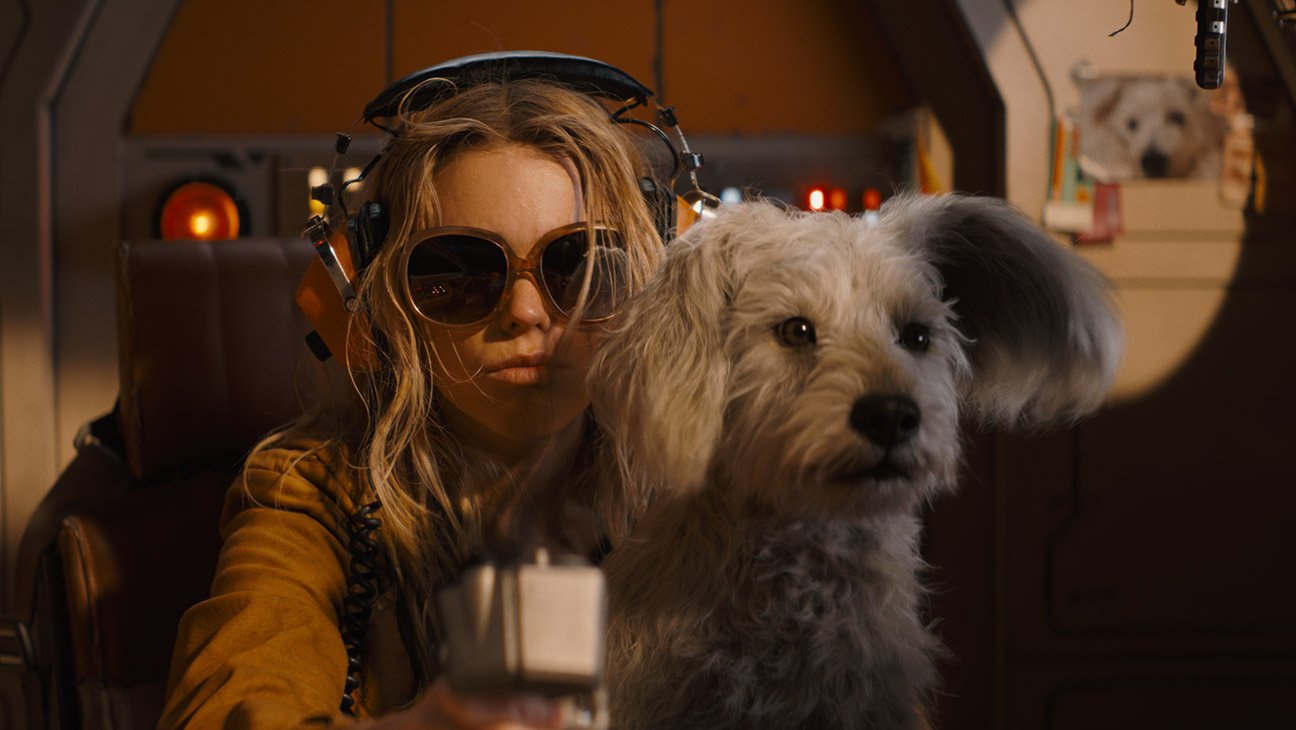
Usually, test scores go up, up, and away. But this March, the scores for Supergirl actually went down when DC Studios held a bakeoff, testing competing cuts from filmmaker Craig Gillespie and from the studio, run by James Gunn and Peter Safran.
It was a moment of extreme disappointment for those involved, as the stakes were high, particularly for DC. Supergirl would be a key test for the Warner Bros. division as its first feature not written and directed by Gunn, following last year’s inaugural outing, Superman.
It needed to work to prove the studio could expand beyond projects directed by Gunn, the A-list filmmaker behind the Guardians of the Galaxy movies, Peacemaker and The Suicide Squad — and the very public face of the brand.
Months later, the Supergirl outcome is now well known. The movie, starring Milly Alcock as the title character and budgeted in the $180 million range, crashed and burned on its opening weekend, grossing just $37.1 million, even lower than the reviled, DC-centric bomb, 2024’s Joker: Folie a Deux, which opened to $37.6 million and was not made by Gunn and Safran.
And while one failure need not be an indictment of a slate, and there have been all sort of think pieces as to why the movie failed – was Alcock right for the role? Was Gillespie right for the take? Are audiences tired of superheroes? Was opening the movie in late June a mistake? Was the budget too high? — the fate of Supergirl may have been seeded early on.
Gunn and Gillespie had creative differences over the direction of the movie, numerous sources tell The Hollywood Reporter, and the film never found its footing in the post-production process. The test scores, which are counted on a scale out of 100 points, never escaped the 60s, according to multiple insiders. Another insider said the movie’s top score was 70.
“’They were not creatively aligned’ is the polite way of describing things,” said one insider.
Other insiders dispute this characterization, saying Gunn, Safran and Gillespie had the normal amount of healthy friction any filmmaker and studio have as part of the process of making a movie better. And multiple sources say the duo respect the filmmaking chops of Gillespie, known for guiding Margot Robbie to an Oscar nomination for I, Tonya.
Filming wrapped in May 2025, and as early as the fall of that year, the studio and Gillespie knew the movie wasn’t working. After a December test screening proved to be just okay, the studio decided to take matters into its own hands and took charge of the post-production to make its own cut. Gunn also enlisted writer Jeremy Slater, who previously wrote an unmade feature based on DC superhero team The Authority, to help with the post-production process.
The extent of Slater’s involvement is unclear, although it seems he helped write scenes for a nine-day shoot of additional photography. Original screenwriter Ana Nogueira remained involved in the post-production process as well. One issue at play was the climactic fight, which was reconfigured.
Other issues with the movie are unclear, but it is known that music was a key friction point. From his first Guardians of the Galaxy movie on, Gunn established himself as the master of the movie soundtrack and the all-important needle drop, earning praise for finding the right song and dropping it at the right time. Gillespie also has a reputation for melding music to movies, as seen in Cruella, his 2021 movie that cast Disney villainess Cruella de Vil as a punk rock rebel in London’s fashion scene.
The movie had a least four test screenings, according to sources, with screenings held in December 2025 as well as February and March of this year. And while social media users and critics are dunking on the movie’s use of a cover of the Jimmy Eat World song “The Middle,” the big needle drop in the final set piece at the February screening was a cover version of Cyndi Lauper’s “Girls Just Want to Have Fun.” That song choice came from Gunn, but it ultimately was abandoned for the Jimmy Eat World cover, also a Gunn choice.
The movie employed two editors. There was Tatiana S. Riegel, Gillespie’s longtime post partner who edited his Lars and the Real Girl, I, Tonya, and Cruella. And there was Fred Raskin, Gunn’s longtime cutter who worked on all the Guardians of the Galaxy movies and Gunn’s DC series Peacemaker. (Raskin is also Quentin Tarantino’s go-to editor.) He was brought on later in the process and proved a key instrument in the studio’s slowly heavying hand.
There were signs that things were getting better. Deep into winter, test scores improved and hit the low 70s. However, rather than continue to tinker away on that cut, the studio decided to force a bakeoff by creating two cuts, one by Gillespie and one by the studio.
It is unclear what major differences emerged, but one source says Gillespie’s version was 11 minutes longer and featured more of the villain, Krem, played by Matthias Schoenaerts. When the two competing versions tested, the scores surprisingly dropped significantly, although the studio’s inched out ahead of Gillespie’s…but by only two points, according to sources. Gillespie’s version scored strongly on song choices, pacing and villain. Eking out a win, even a middling one, the studio chose its cut as the one to go into theaters. A studio insider says the differences were not particularly pronounced.
Studio insiders paint the back-and-forth process as routine, but others, including one franchise filmmaker who spoke anonymously for this story but was not involved in Supergirl, held the opposite view.
“It happens more than you think, but it’s not normal,” said the filmmaker of the bakeoff. “If a studio is going to put money into the test process, it means they feel strongly about certain things.”
The movie was never tested again. (As a point of comparison, the canceled Batgirl and the box office disappointment Shazam! Fury of the Gods tested in the in the 60s, like most of Supergirl’s tests.). And from that point on, if Gillespie believed strongly that something should be in the movie, he had to advocate for it, said one source.
“While Supergirl didn’t meet our box office expectations, it’s just one component of a broader, long-term strategy at DC Studios that we remain confident in,” Safran to the New York Times, marking a rare time a studio chief commented on a bomb on opening weekend.
And in many ways, the strategy remains intact. Despite the setback, Gunn, and Safran will continue to guide the ship. It is unclear when the the duo’s contracts are up, but sources believe it is either the end of 2026 of the end of 2027. By then, DC Studios will have released not only Clayface, the modestly budgeted horror movie centered on the Batman villain, but also Man of Tomorrow, which Gunn is currently directing and which is slated to open July 9, 2027. The Batman: Part II, from Matt Reeves, is also in production and has an Oct. 1, 2027 date, but stands separate from the DCU.
And Gunn will continue to exercise his ideas, especially his penchant for spotlighting lesser known side characters. A Superman spinoff focusing on Jimmy Olsen, played by scene-stealing Skyler Gisondo, is getting a comedic take with mockumentary series DC Crime that will shoot in this fall.
There is also a series focused on Mr. Terrific, played by Superman breakout Edi Gathegi, that is in active development with Allan Heinberg (The Sandman) writing the pilot.
But Supergirl’s failure does put a scrutinizing spotlight on Gunn, who has positioned himself as the face of the company as no other studio head has before, thanks to his prodigious output on social media and comments in the press about quality control.
Other studio heads, such as Marvel’s Kevin Feige or Warners’ Pam Abdy, are known to get vigorously involved in the post-production process. But none are filmmakers making their own movies while also running, or co-running, a major studio division. There is almost no modern precedent (Steven Speilberg runs Amblin, a production company, not a studio arm. Rob Reiner was a partner at Castle Rock, a large scale entity that was run by Alan Horn. More recently, Frozen filmmaker Jennifer Lee ran Walt Disney Animation Studios until 2024 before stepping back to refocus on directing.)
The challenge for Gunn, and thus DC Studios, is to navigate the fine line of being filmmaker friendly while also trusting his strong artistic point of view that has guided him all his career.
DC Studios, however, has other challenges looming larger than Supergirl’s failure or the villainy of Brainiac. There are the anxieties of David Ellison’s Paramount’s upcoming acquisition of Warners.
And perhaps the biggest challenge ahead for Gunn and Safran may be guiding a superhero studio right as superhero movies are no longer a a bulletproof genre for moviegoers
“Gen Z does not care about superhero movies,” noted one studio head. “That genre belongs to millennials.”
Leave a Reply