When two-time Emmy-winning editor Laura Zempel was cutting the second season of Netflix’s acclaimed limited anthology series Beef, she found inspiration in everything, from neo-noir cinema to her love of dogs.
“Michael Mann is a huge influence on this season,” she reveals, specifically citing his Oscar-nominated film The Insider as a marker for how she approached the edit that has now earned her an Emmy nomination. It’s one of 16 nods Beef received this year; season one won eight.
As with the first season, Beef mixes humor with theatrics, but it’s not a “hard comedy,” says Zempel. “You can’t cut it like Veep. If you try to cut Beef that way, it falls apart because you lose the tension.”
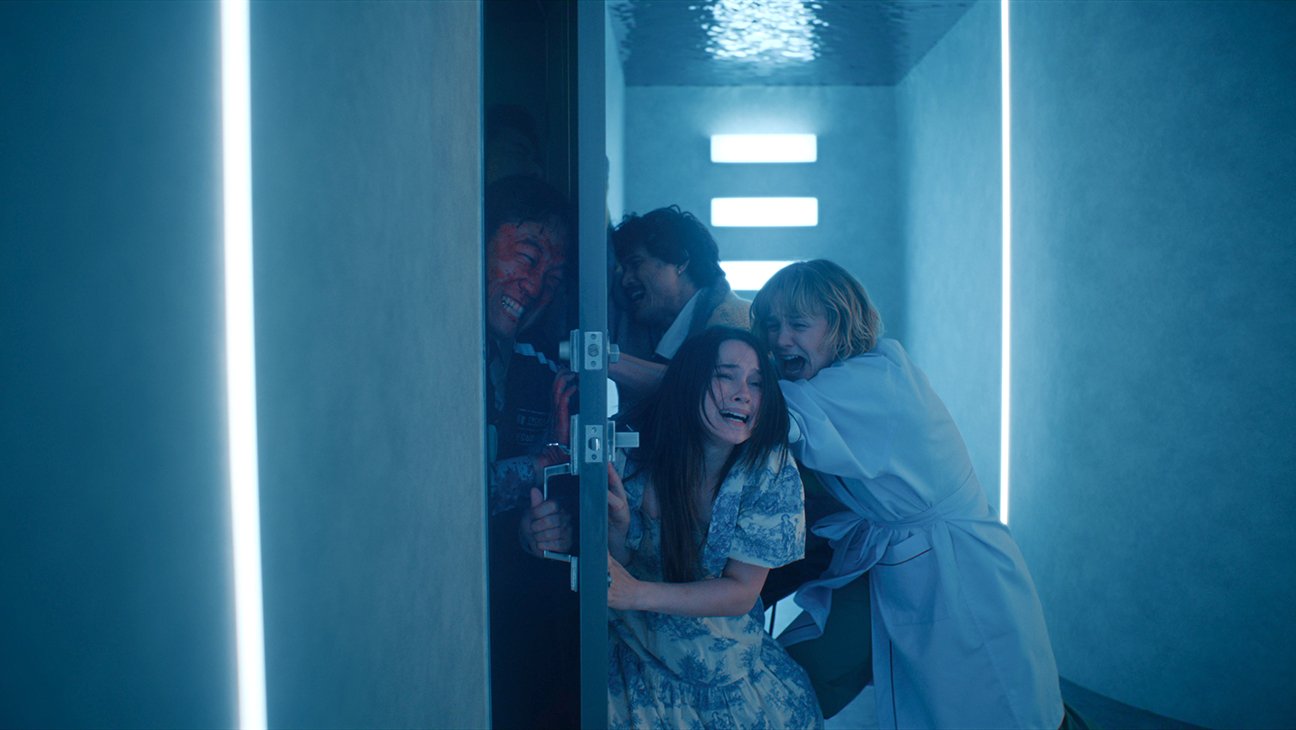
Beef‘s second season sees Charles Melton and Cailee Spaeny play a young couple working at a lavish country club in Montecito, California. But the newly engaged pair’s worlds implode after they become embroiled in the marital breakdown of their bosses, played by Oscar Isaac and Carey Mulligan.
A scene that exemplifies Beef‘s characteristic tension involves Isaac’s manager character, Joshua, and Spaeny’s resort worker, Ashley, chatting by a beverage cart. It’s a slower-paced, cat-and-mouse interaction where “the main thing that needs to come across is threat,” says Zempel.
“You need to feel scared for Ashley because Josh is pushing her so hard. Sonny and Jake are so particular about that,” she adds, referencing showrunner Lee Sung Jin and executive producer Jake Schreier. “Every scene has a perspective character, and they design the scene around them.” It’s something Zempel credits with creating a deeper connection with the audience.
“The shot sizes reflect that, so we’re closer on the perspective character. We’ll see the other person’s coverage over our perspective character’s shoulder, whereas the reverse on our perspective character will be clean,” she explains. “I’m always keeping in mind whose scene it is and if that changes. The scene starts as Josh’s scene, but once he walks away, it becomes Ashley’s, and the audience has to take in what the hell just happened.”
One of Zempel’s favorite sequences was the season finale’s fight scene in a Korean spa. It’s a oner, so it couldn’t be cut. As a result, she leaned into the action and the audio. “I am very proud that people don’t realize it was a oner,” she says. “Sonny and Jake’s direction with the sound design was, ‘This is not John Wick.’ These people are bad at fighting so the thuds are funny. The little breaths, the cloth grabs and punches were all deliberate. It’s realistic and clumsy.”
Although the editor initially cuts without music, Finneas O’Connell’s synthy score, a shift from season one’s “more percussive” soundtrack, had “more jagged edges” and felt “more handmade,” which influenced future passes, Zempel says, adding that it makes the second season feel “refined” and “more mature,” complementing the country club “poshness.”
Similarly, Zempel’s love of dogs influenced her approach to scenes featuring Burberry, the dachshund owned by Mulligan’s and Isaac’s feuding characters.
“Jones, who plays Burberry, is the most talented dog actor I have ever seen,” she says with a laugh. “He’s so darn cute in his little sweaters, and a bit of a scene-stealer.
“Lilly Wild, my co-editor on the hospital episode where Burberry’s left alone in the house, is also a dog person, and so is Sonny,” she continues. “If there is a different rhythm to the dog scenes, it might be because our office is full of dog lovers. We may have given Jones a spotlight.”
This story first appeared in an August stand-alone issue of The Hollywood Reporter magazine. To receive the magazine, click here to subscribe.
Leave a Reply