Author: rb809rb

  • Bitcoin Price Rebounds as Trump Calls Off Iran Strikes and Hints at a Deal

    Bitcoin Price Rebounds as Trump Calls Off Iran Strikes and Hints at a Deal

    Bitcoin’s price is on the move today, prompted by the latest developments on the US-Iran war front, but this time in the opposite direction.

    After it slipped to another multi-week low yesterday evening, the cryptocurrency has rebounded by approximately $1,500 and now sits at around $63,500. The reason for this is the major de-escalation announced by the POTUS hours ago.

    US President Trump announced on his social media platform, Truth Social, that although his country’s military remains “locked and loaded” to continue attacking Iran, they were asked by the Middle Eastern country and other nations in the region to pause the strikes for now.

    He added that those countries are working on a new deal that would include the “immediate, complete and total opening of the Hormuz Strait, and an end to Iran’s nuclear threat.”

    “Based on this request, I have agreed, for the future benefit of the WORLD and, likewise, the survival of a successful and prosperous Iran, to cancel the attack, subject to being able to rapidly make a DEAL. The Country of Israel joins me in this commitment. Get to work, everybody, and get it DONE.”

    As mentioned above, $BTC reacted immediately with a notable rebound. It had dipped to an 18-day low at $62,200 yesterday evening as the tension between the two had increased once again, with new planned strikes. In addition, there are other factors, such as ETF exodus and technical indicators, that suggested the cryptocurrency could face another leg down soon.

    For now, though, the war developments appear to have the most significant impact on bitcoin’s price moves, and essentially every de-escalation brings back hope to the market. The actual impact is likely to be experienced on Monday morning, as it has happened numerous times in the past several weeks.

    BTCUSD Aug 2. Source: TradingView
  • Nicole Kidman and Sandra Bullock Surprise Fans at ‘Practical Magic’ Screening in Hollywood Forever Cemetery for L.A.’s Cinespia

    Nicole Kidman and Sandra Bullock Surprise Fans at ‘Practical Magic’ Screening in Hollywood Forever Cemetery for L.A.’s Cinespia

    Sandra Bullock and Nicole Kidman made a surprise appearance at a screening of “Practical Magic” on Saturday night in L.A.

    Attendees came to the place, the Hollywood Forever Cemetery, for magic — and many, many Midnight Margaritas — but few expected an appearance by the Owens sisters themselves to introduce the 1998 cult classic.

    “Thank you so much for coming out tonight. Perfect movie to show in a cemetery,” Bullock, who stars as Sally Owens, said over the crowd’s roar of enthusiasm. “We should also thank the spirits that are floating around us as well because you’re on their seats.”

    Kidman, who plays Gilly, added: “Thank you for all your support for getting this 2nd film made that’s coming to you.”

    Then, Bullock introduced the “next generation” of Owens sisters: Joey King and Maisie Williams, who play Sally’s adult daughters in Warner Bros.’ sure-to-be-spellbinding sequel, in theaters Sept. 11. The duo sauntered on the screen with margaritas in hand. 

    “To the coven,” Kidman said, proposing that the crowd — clad in all types of 90s witchy attire, from flowy black robes and pointy hats “Practical Magic” t-shirts — raise their glasses. 

    “Maisie and I are so excited to be joining the coven as Kylie and Antonia,” King told the crowd. “We really hope you enjoy the new movie as much as we did making it.”

    “Practical Magic 2,” directed by Susanne Bier, “returns to a world steeped in moonlit mischief and powerful ancestral magic, as the Owens sisters must confront the dark curse that threatens to unravel their family once and for all in a must-see cinematic event of fun, magic and mayhem.”

    The new movie follows 28 years later, as Sally bakes cakes and avoids men, while Gilly attracts men named Chad on Tinder. But the Owens family’s 300-year-old curse carries one generation forward, striking Sally daughter Kylie’s and her lover (Xolo Maridueña), who gets hit by a car while bicycling with several bouquets of roses. Kylie is determined to reverse the curse by any means necessary, forcing Sally and Gillian to band together to keep her away from the darkness and break the spell for good. Lee Pace also stars in the film, with Stockard Channing and Dianne Wiest returning and Frances and Jet Owens, Sally and Gilly’s aunts. 

    Akiva Goldsman and Georgia Pritchett wrote the script for the sequel, which is based on the 2021 novel “The Book of Magic” by Alice Hoffman, the fourth in her “Practical Magic” book series. Denise DiNovi, Bullock and Kidman produced the Warner Bros. film. Andrew Kosove, Broderick Johnson, Donald Sabourin and Hoffman serve as executive producers.

    The special “Practical Magic” screening was part of Cinespia‘s annual lineup of exhibitions at the Hollywood Forever Cemetery. The outdoor screening series, which is celebrating its 25th anniversary, has “The Mummy,” a double feature of Mia Goth’s “X” and “Pearl,” “Coming to America” and a 40th anniversary showing of “Labyrinth” scheduled for the month of August. Cinespia is presented by Amazon MGM Studios and Prime Video.

  • ‘Hacks’ Stars Hannah Einbinder and Paul W. Downs on the Legacy of ‘Hacks’ and Which Character Needs a Spinoff First

    ‘Hacks’ Stars Hannah Einbinder and Paul W. Downs on the Legacy of ‘Hacks’ and Which Character Needs a Spinoff First

    Hannah Einbinder says working with Gillian Anderson on the new film “Teenage Sex and Death at Camp Miasma” has actually given her a new perspective on the end of “Hacks” and its legacy.

    “Doing all this press with Gillian for the movie, she talks about ‘X-Files’ constantly,” Einbinder tells Variety‘s Awards Circuit Podcast. “She’s asked about it constantly. It’s made me feel like, ‘oh, I’m gonna talk about “Hacks” for the rest of my life!’ I’m so happy that will always be something that I can come back to and meditate on and express gratitude for. When you are a part of something that has a deeply connected base of people who love it, that stays.”

    Meanwhile, given how many photo shoots and events Paul W. Downs and his “Hacks” co-star Megan Stalter seem to show up at, why isn’t there a Jimmy and Kayla spinoff in the works?

    “I would love for it to happen, and I have said this: You know we had a very specific plan for the way we wanted to end the story in the finale,” he says. “It’s such it’s so much pressure to deliver a satisfying ending … so, even to the last minute, even though we had this plan for a long time, we were like, ‘Should we stretch it out? Should we do two half seasons?’ But in the end, I’m so happy we stuck to our guns, and it resonated with people the way that it did. And because of that, I don’t I don’t want anything else to come after. I want that to be the last thing people remember.”

    When grilled about “Jimmy and Kayla,” he adds, “getting to play these characters and having these characters evolve as much as they have over the five seasons has been so gratifying that it’s terrifying to think there won’t be more between the two of us. But I think it would have to be something different.”

    OK … we’re getting somewhere. So what might a “Hacks” spinoff look like? “There’s so many characters in the show that if we could do a universe, I want to see Mayor Jo in her first election. I want to see Marty coming to to Vegas in the ’70s.”

    Einbinder likes the Mayor Jo idea. “‘Better Call Saul’ vibes,” she says. “Her just being a fucking absolute criminal. Are you kidding? I’m in the freaking seats with the popcorn on that one.”

    Give it time. Maybe we’ll wear them down! But for now, we’ve got Downs and Einbinder on this week’s Awards Circuit Podcast, where they talk more about the “Hacks” ending and what they’ve got in store next. Plus, they take the 10 Questions quiz!

    But first, on the Roundtable, Variety TV critic Aramide Tinubu joins us to give some of her summer TV picks and hot takes on the Emmy noms. Listen below!

    He might be a bit biased, but Downs raves about Einbinder’s part in the upcoming slasher film “Teenage Sex and Death at Camp Miasma,” which opens August 7. “I’ll give you the review,” he says. “This is a pull quote now from Variety. Absolutely beautiful, absolutely terrifying and absolutely funny. And Hannah is a revelation. She is such a star. I’m not even kidding. The stuff that she does, her range being on display yet again in this is really impressive.”

    As for Downs, Lucia Aniello and Jen Statsky, the trio has a number of projects in the works — including one in development with Kaley Cuoco — although she’s busy on something else right now, so schedules will have to align for their project. And then the trio also has another project they’re working on for HBO.

    “I can say it’s a it’s a limited series,” he says. “It’s an hourlong limited. I can say that. So it’s a slight tone shift, but there’s definitely going to be humor.”

    Einbinder says she’d be game to join them again for this next project. “I told Paul, Jen and Lucia that I want to be their non-problematic Rob Schneider. I just want to pop up in everything they do forever.”

    Meanwhile, Einbinder says she’s still thinking a lot about her time on “Hacks,” and how she found a video that she recorded for herself in Season 1. Now it feels like a bit of a time capsule: “It was in my trailer, and the sound is pretty muffled, and it’s kind of a shitty video, but I just was kind of reflecting, like kind of a diary, and one of the things that I said was ‘I think these people are going to mean so much to me.’”

    Einbinder’s come a long way in those six years since “Hacks” first became a reality. “Most nights when I get into bed and feel the relief of making it back to my bed at the end of a long day, I go, ‘wow.’ I just am filled with gratitude. This experience has made so much possible for me in every conceivable way. On an emotional level, obviously we have a very strong bond. When I was auditioning for Ava initially, I was opening for other comics on the road. That went away because of COVID, and the job I had before that was working at a coffee shop, and that also went away. I was just really, ‘I actually don’t know what I’m gonna do.’ And so just on every level, [this success] has never been lost on me.”


    10 QUESTIONS WITH HANNAH EINBINDER and PAUL W. DOWNS:

    1. Childhood nickname: Einbinder: “‘Pud,’ short for ‘Pudding.’ My parents called me that.” Downs: “‘Chubb.’ I think it came from my love of pasta and pizza. I think it honestly came from my love of Swiss Miss. I would take Swiss Miss packets with half and half, and I would make like a sludge that I would drink. It was my version of child cocaine, I guess.”

    2. Something you loved as a kid but can’t believe you were into it now: Downs: “I used to kind of collect these, they were basically little figurines that were like a dragon or an Excalibur or a wizard, and they were on amethyst. They were sold at a kiosk at the Rockaway Town Square Mall, and I was into these bizarre — I don’t know what that is. Fantasy figurines. They were also very like Sedona. You know, they were very like hippie figurines. I can’t believe I was so into that” Einbinder: “I have done so much inner child work that I have love and affection for the things that I maybe was into. I took baton. I had a baton unit. I was very into baton at one time. I did baton classes. I learned from a stripper named Heather. Thank you, Heather. She taught baton on the side. She was like, ‘I do flaming baton at my where I dance,’ and we were like, ‘We want to come see you dance, Heather!’ And she was like, ‘It’s not for kids.’”

    3. Go-to Karaoke or sing-in-the-shower song: Einbinder: “‘What’s Up,’ by 4 Non Blondes.” Downs: “‘All I Wanna Do’ by Sheryl Crow. It’s a real crowd pleaser.”

    4. Give me an alternate title for your show: [Not asked]

    5. What’s your secret talent?: Downs: “I can give a good massage.” Einbinder: “I can create a bubble ring underwater. Or a smoke ring. I can do that too. But that’s featured in the show ‘Hacks.’”

    6. Favorite ice cream flavor: Downs: “As a kid, I loved strawberry. Now I want like a like a dark chocolate double fudge chunk.” Einbinder: “Mint chip.”

    7. The one item you couldn’t live without: Einbinder: “Cell phone.” Downs: “I was gonna say toothpaste. You really want toothpaste.”

    8. What TV show in all of history do you wish you were a cast member of?: Einbinder: “‘Sopranos,’ ‘Mad Men.’” Downs: “Some of my favorite shows like ‘Arrested Development’ or ‘Succession’ or ‘Fleabag,’ I don’t know that I want to be on those shows. I think I want to be on ‘Friends.’ I think I would have had a blast.”

    9. Fictional character you most admire: [Not asked]

    10. Your favorite piece of advice: Einbinder: “‘Faster and funnier.’” Downs: “I’ve uttered those words. You know what else I uttered recently, and I’m taking a great piece of advice that Maya Angelou gave to Oprah, which is when someone tells you who they are, believe them the first time. I think that’s a really good piece of advice.”

    Variety’s “Awards Circuit” podcast, hosted by Clayton Davis, Jazz Tangcay, Emily Longeretta and Michael Schneider, who also produces, is your one-stop source for lively conversations about the best in film and television. Each episode, “Awards Circuit” features interviews with top film and TV talent and creatives, discussions and debates about awards races and industry headlines, and much more. Subscribe via Apple Podcasts, Stitcher, Spotify or anywhere you download podcasts.

  • Michael Saylor: “We Never Said We’d Never Sell Bitcoin”

    Michael Saylor: “We Never Said We’d Never Sell Bitcoin”

    Strategy Chairman Michael Saylor said the company had never made a commitment to never sell its Bitcoins, but expected to remain a net Bitcoin buyer in the long term.

    Saylor’s statement came after reports that Strategy had received new authorization allowing it to sell up to $5 billion worth of Bitcoin. Responding to these claims, Saylor stated that the sales authorization was not new and had been announced on June 29th as part of the company’s capital management framework.

    Saylor stated, “Old news is being presented as new. Strategy announced this authorization on June 29th as part of its capital management framework. This arrangement permits the sale of $BTC for the stated purposes but does not compel the company to sell. No new authorization has been announced, and we expect to continue to be a net Bitcoin buyer over time.”

    Related News Michael Saylor Announced That the Bitcoin Update He Opposed Is Now Impossible to Pass

    Saylor stated that Strategy’s Bitcoin monetization program does not require the company to sell its $BTC holdings, and noted that the company has never officially adopted a “$BTC will never be sold” policy.

    *This is not investment advice.

  • A New Wave Has Begun at Coldcard, One of the Largest Bitcoin Wallet Hacks in Recent Times—The Losses Are Mounting

    A New Wave Has Begun at Coldcard, One of the Largest Bitcoin Wallet Hacks in Recent Times—The Losses Are Mounting

    Galaxy Research announced the detection of a third wave of attacks believed to target addresses created on Coldcard devices. The latest wave reportedly resulted in the withdrawal of 207.7294 $BTC, bringing the total loss to 1,367.05 $BTC, or approximately $88.6 million, across 4,585 addresses.

    According to the research firm, the first two waves of attacks exhibited largely similar on-chain behavior. Both waves saw funds being transferred to a small number of shared collection addresses, P2WPKH addresses being used, and wallets originating from different derivation paths being targeted. The approximately 27-hour interval between the two waves and the similarities in transaction structures suggest that the attacks may have been carried out by the same person or group.

    However, Galaxy Research emphasized that there were differences between the first two waves in terms of transaction fees and “replace-by-fee” signals, therefore it could not be definitively proven that the same attacker was involved.

    The Third Wave May Point to a Different Attacker

    According to Galaxy Research, the third wave of attacks differs from the previous two in almost every measurable behavioral characteristic. Instead of using shared collection addresses in the first attacks, the third wave was found to have created a separate target address for each victim.

    It was stated that the Bitcoins stolen in the third wave were held in P2WSH addresses instead of P2WPKH addresses, and that an average of 6.37 victim addresses were aggregated in each dump. In the first wave of the attack, each transaction targeted only a single victim address. It was also stated that the third wave only scanned addresses in the default derivation path.

    Researchers noted that these changes could stem from the same attacker re-engineering their tools to make on-chain tracing more difficult. However, it was also noted that it is possible a second attacker targeting the same vulnerable key pool emerged after information about the Coldcard vulnerability was made public.

    Galaxy Research reported that on-chain data did not allow for a definitive distinction between these two scenarios. The company stated that while it was certain each attack wave was managed by a single operator, it could not be definitively said that all three waves were linked to the same attacker.

    Related News Michael Saylor: “We Never Said We’d Never Sell Bitcoin”

    Bitcoins in Attacker Addresses Have Not Yet Moved

    According to Galaxy Research’s calculations, the attackers control a total of 1,366.3865 $BTC. It is stated that not all of the final attacker addresses to which these Bitcoins, worth approximately $88.6 million, were transferred have yet spent them on the chain.

    Graph showing the total amount of Bitcoin lost in the attacks. Source: Galaxy Research

    Block-by-block analysis revealed that addresses were dumped en masse during attack waves. The absence of any dumping operations in intermediate blocks within each wave that could be attributed to the attackers indicated that the operations were sent to the network in groups, not continuously.

    It was noted that the losses were mostly concentrated in wallets with balances below 1 $BTC in terms of address count, but addresses with larger balances were decisive in terms of total value. Galaxy Research assessed that this distribution resembled individual users’ own custodial wallets rather than institutional custodial services.

    The study also indicated that the vulnerable Coldcard software was released on March 17, 2021, around block 674,951 of the Bitcoin network. Galaxy Research stated that none of the Bitcoins identified as stolen in the first three waves of attacks were created before this block.

    *This is not investment advice.

  • Can SOON crypto sustain its 14% daily gain? If not, what’s next?

    Can SOON crypto sustain its 14% daily gain? If not, what’s next?

    $SOON [$SOON] crypto gained 14% over 24 hours, outperforming a broader market where Bitcoin [BTC] and Ethereum [ETH] traded lower.

    The rally appeared largely leverage-driven, with perpetual traders supplying much of the buying pressure. However, uneven positioning and retail dominance left the move vulnerable to a reversal.

    Why is $SOON price rising?

    Data from CoinGlass shows perpetual market traders on the top cryptocurrency exchanges Binance and OKX have played the key role in driving the surge.

    A Long/Short Ratio above 1 indicates a long bias, while a reading below 1 favors shorts.

    At press time, the ratio stood near 1.5 on Binance and 1.3 on OKX. Both readings reflected stronger bullish positioning among traders on these exchanges.

    Source: CoinGlass

    Together, Binance and OKX accounted for $13.56 million in $SOON’s perpetual Trading Volume. They also held the two largest Open Interest positions, collectively valued at $34.05 million.

    However, the aggregate Long/Short Ratio across centralized exchanges stood at 0.96, indicating a slightly broader short bias.

    Do Funding Rates support $SOON crypto?

    Although aggregate positioning leaned slightly bearish, $SOON’s positive Funding Rate showed that long traders were paying shorts.

    This suggested that bullish traders were willing to pay periodic fees to maintain their leveraged positions.

    Source: CoinGlass

    However, the reading did not prove that most of $SOON’s $41.82 million Open Interest represented long contracts. Further increases in Open Interest and Funding Rates could leave the market vulnerable to an overleveraged unwind.

    On top of that, Spot demand supported the rally over the previous 48 hours. Net buying reached $97,920, while total buying stood near $1.84 million during the same period.

    Retail dominance leaves $SOON’s rally exposed

    The rally’s sustainability hinges on who dominates between whales—who control large capital and tend to hold for much longer—and retail investors, who are quick to sell.

    Data confirms retail traders have driven much of the $SOON rally over the past 24 hours, as the whale-retail delta fell significantly to -0.039, which points to this group holding heavy control over the market.

    Source: CoinGlass

    The risk here, however, is this group may sell at the slightest opportunity, flipping long positions to short and triggering significant liquidations across the market. Overall, while the market leans bullish, traders should approach it with caution.


    Final Summary

    • $SOON’s 14% climb was powered largely by leveraged perpetual traders on Binance and OKX, which together hold the two largest open interest positions at a combined $34.05 million.
    • Retail investors now dominate the rally, with the whale-retail delta at -0.039, leaving the move vulnerable to a quick sell-off.
  • XRP Scam Ring Arrested After Stealing $9M From 71 Investors

    XRP Scam Ring Arrested After Stealing $9M From 71 Investors

    Fake $XRP Platform Vanished After Collecting Investor Funds

    The Seoul Metropolitan Police Agency announced July 30 that investigators had apprehended three people accused of operating a fraudulent $XRP investment platform, according to Korean newspaper Chosun. Authorities allege the group collected approximately 3.4 million $XRP from 71 investors between Oct. 16 and Oct. 23 before closing the website and disappearing.

    The suspects allegedly promoted Fxrpntwork.com through portal blogs, online articles, and Youtube videos while promising guaranteed principal and monthly returns between 1.5% and 1.8%. Investors were instructed to move $XRP from South Korean exchanges through overseas platforms before transferring the assets into wallets controlled by the group.

    Seoul police warned prospective cryptocurrency investors to verify official sources carefully before transferring assets to unfamiliar wallets or unverified platforms:

    “Do not be misled by unverified information on YouTube or other platforms. Verify official sources before investing.”

    Investigators arrested two 29-year-old suspects and plan to refer the case against a 34-year-old alleged accomplice to prosecutors while pursuing another 29-year-old suspect abroad. Police obtained an Interpol Red Notice for the overseas suspect and continued examining additional participants accused of building and promoting the fraudulent website.

    Fraudsters Copied Flare and FXRP Branding

    The alleged operators used the names Flare Network and FXRP to make their platform appear connected to legitimate blockchain infrastructure. Flare’s official FAssets system is designed to represent assets such as $XRP on the Flare network through overcollateralized mechanisms, allowing those tokens to participate in decentralized applications.

    Ripple has warned that cryptocurrency impersonation schemes frequently copy trusted names, logos, videos, websites, and executive identities to create false credibility. Interpol has also identified financial fraud as an increasingly organized cross-border threat, with criminal networks using digital platforms and rapid transfers to move proceeds across jurisdictions before authorities can intervene.

    Guaranteed Returns Remain a Common Crypto Fraud Signal

    Impersonation scams involving $XRP have increasingly relied on counterfeit promotions, fabricated endorsements, and promises that victims will receive more tokens after sending funds.

    Warnings about expanding $XRP impersonation schemes have emphasized that legitimate companies do not request cryptocurrency transfers through unsolicited promotions, particularly when scammers combine familiar branding with urgent instructions or guaranteed returns. A fraud case involving fake “no-risk” cryptocurrency returns further illustrates how guaranteed-profit claims can be used to attract victims.

    FBI data on billions of dollars in cryptocurrency scam losses shows that cryptocurrency investment fraud continues producing substantial losses across borders, often through fake dashboards and fabricated account balances. An international cryptocurrency scam crackdown resulting in 276 arrests also targeted networks accused of moving victims’ assets through layered wallets, exchanges, and overseas financial channels.

    South Korean investigators froze 17.3 billion won in virtual assets shortly after detecting the alleged scheme, although approximately 10 billion won moved during the investigation. Wallet analysis later identified 27.3 billion won in transfers connected to the addresses, prompting authorities to examine whether additional victims and accomplices remain unidentified.

  • XRP $1 Support Under Pressure as August Begins: What Happens Next?

    XRP $1 Support Under Pressure as August Begins: What Happens Next?

    $XRP‘s range trading continues as price chugs near the crucial $1 support. $XRP held above the $1.02 support for all of July, a feat that remained significant and saw it close the month in the green, gaining 2.18%.

    $XRP faced choppy price action in July, albeit price held above the important level of $1. The price tested support in the range between $1.02 and $1.06 during the month, making this a crucial zone to watch. However, as August begins, bears seem to be testing this crucial price zone, seeking to break it.

    The price of $XRP is currently $1.06, performing multiple tests in the $1.05 and $1.06 range within the last 24 hours.

    card

    $XRP recorded its first green month since April when it closed July up 2.18%. The $1.02 support is now being watched, with a decline potentially testing $1.00, a strong support for $XRP price. The positive sign is that $XRP has held above $1.00 so far in 2026. Resistance levels are at the weekly MA 200 and 50 at $1.80 and $1.21, respectively.

    Key XRPL features to land in August

    August may be a noteworthy month for $XRP Ledger upgrades, with five amendments set to arrive in the week ahead.

    According to Jazzi Cooper, RippleX head of product, the upcoming release of xrpld 3.3.0 includes five amendments. These are Confidential MPT, which brings native privacy to Multi-Purpose Tokens (MPTs) on $XRP Ledger; Batch, which enables up to eight transactions across different accounts to execute atomically in a single ledger.

    Permission Delegation allows institutions to delegate narrowly scoped transaction permissions without handing over full signing authority; Sponsored Fees and Reserves allow a sponsor such as a bank, issuer, or platform to pay $XRP transaction fees and account reserves on behalf of another account. Dynamic MPT allows issuers of Multi-Purpose Tokens to define, at issuance, exactly which properties may be updated over time.

    According to Cooper, the xrpld 3.3.0 release is currently anticipated for next week.

  • Paramount Pitches Judge On November Start Of WBD Merger Antitrust Trial, While State AGs & WGA Propose April

    Paramount Pitches Judge On November Start Of WBD Merger Antitrust Trial, While State AGs & WGA Propose April

    Paramount wants a trial to start in November in the antitrust lawsuit brought by a dozen state attorneys general and the Writers Guild America. Not surprisingly, the state AGs and the guild want an April start to the proceedings.

    The sides outlined their proposals ina joint filing Friday, with the ultimate decision on scheduling left to the federal judge in the case, Araceli Martinez-Olguin.

    “The parties have discussed the trial schedule, but they have not reached agreement,” the parties wrote.

    The trial dates are hugely important for the transaction, and even Paramount’s proposed date likely will cost the company hundreds of millions. After September 30, Paramount will be on the hook for about $7 million for every day that the transaction doesn’t close, under an agreement with WBD that was a sweetener to the deal.

    A Paramount spokesperson said, “Our request for a November trial date is more than sufficient to give both sides the time they need to conduct discovery, gather evidence, and prepare for trial. Plaintiffs’ request to delay proceedings until April is nothing more than a stonewalling tactic that goes well beyond the timelines sought in similar prior proceedings and ignores the substantial evidence plaintiffs have already received in this matter. Delay will also harm the many individuals outside this courtroom who will be denied the expanded content offerings and industry stability that a combined Paramount-WBD promises to bring.”

    California Attorney General Rob Bonta, who is leading 12 states in the lawsuit, said in a statement, “Our challenge to the unlawful Warner Bros./Paramount merger is a clean-cut antitrust challenge through and through: it’s about protecting the vibrancy of an industry, the pockets of consumers, and the quality of films and television programs that take center stage in many of our lives. This challenge deserves careful and thorough review and today my office and attorneys general across the country asked the court for a trial date next spring. We are eager to continue to make our case and look forward to a final determination of the schedule by the court.”

    Last week, Paramount said it would not close the merger until June 1, 2027, or until days after the legal issues are resolved, and indicated it wanted to go directly to trial. Its announcement came just days after the judge granted the state AGs a temporary restraining order that prohibited the transaction from closing for 14 days, an order that was later extended to 28 days.

    The company spokeswoman said a trial “on the merits is the best and most direct way for us to prove what we’ve said from the start — this transaction is lawful, pro-competitive, and raises no antitrust concerns.”

    In the filing Friday, Paramount proposed a 12-day trial starting November 4 that would encompass the cases brought by the states and the WGA.

    Paramount also noted that the later date would give the judge “much less time to decide” the case by June, the outside date it had set for the merger to close, as well as time for the company to appeal.

    Among other things, they noted that the DOJ’s antitrust case seeking to block AT&T’s merger with Time Warner went to trial on March 19, 2018, four months after the federal government brought the case. Makan Delrahim, who is Paramount’s chief legal officer, was then the chief of the DOJ’s antitrust division; on the other side was attorney Daniel Petrocelli, representing Time Warner, and now representing WBD in this case.

    The company also noted that Bonta had last week favored a January trial start, but now was proposing a date four months later.

    “Given the stakes of this case, there is no basis and no time to delay for the sake of delay, particularly when delay significantly prejudices Defendants and the Hollywood ecosystem more broadly,” Paramount’s legal team wrote in the filing.

    The company also argued that Paramount and the WGA will have had sufficient time for discovery.

    Paramount’s legal team wrote, “State Plaintiffs had six-plus months before they filed their complaint to conduct unilateral discovery regarding the proposed transaction. State Plaintiffs also had the benefit of waivers granted by Defendants to enable the U.S. Department of Justice (DOJ) to share with State Plaintiffs all information and materials that Defendants produced to the DOJ. In sum, the discovery that State Plaintiffs received many months ago includes over two million documents from more than 80 of Defendants’ employees.”

    The company’s legal team noted that the later date would require them to refile merger materials with the Justice Department, which has already cleared the transaction, and that it would leave the creative community in a period of uncertainty, as Paramount plans to boost production to 30 films per year.

    The state AGs and WGA proposed a start of April 5, 2027, lasting at least 12-15 days, with each plaintiff presenting their cases sequentially.

    The state plaintiffs wrote that extensive discovery is needed, including of “the definition of the relevant product and geographic markets, the nature and scope of harm in those markets, whether expansion by other firms will prevent harm in those markets, and whether the merger will produce verifiable, merger-specific efficiencies sufficient to outweigh harm in those markets.”

    They pointed specifically to areas like Paramount’s assertion that the merger will generate billions in synergies, “a claim that Plaintiff States are entitled to test in discovery, including discovery of Defendants’ integration plans for their merged company.”

    The states noted that Paramount’s document productions “largely cut off” before the merger agreement was signed in February, leaving the plaintiffs with few internal documents about post-closing plans.

    The state AGs wrote, “Defendants’ pre-complaint productions also do nothing to address the need for discovery from third party customers and competitors. Importantly, no depositions of percipient fact witnesses from Defendants or third parties have occurred.”

    The states also contended that their schedule was “reasonable,” claiming that the 402 days from the signing of the merger agreement on February 27 to the proposed trial date “moves this case to trial more rapidly than virtually every merger case in recent history.” The AT&T-Time Warner trial started 513 days after the merger deal was signed, they noted, as opposed to when the DOJ lawsuit was filed. The state AGs also wrote that an April trial would still leave the judge with time to decide the case by June.

    The state AGs also called Paramount’s proposed schedule “one-sided,” arguing, “Their extraordinarily truncated schedule unfairly favors Defendants because they (1) have information Plaintiff States need to prove their case and (2) do not bear the burden of persuasion.”

  • US embassies issue alerts after Trump vows to hit Iran ‘hard’

    US embassies issue alerts after Trump vows to hit Iran ‘hard’

    NewsFeed

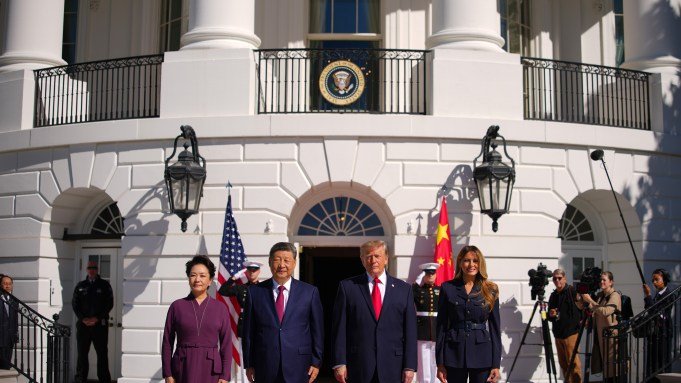
    US embassies in the Middle East have warned of a possible escalation after President Trump said the US ‘will be hitting Iran hard’, however as Al Jazeera’s Mike Hanna reports there are no clear signs a strike is imminent.