Author: rb809rb

  • NVIDIA starts offering a 12GB version of the 5070 for laptops

    NVIDIA is releasing a new variant of its 5070 GPU for laptops. Nestled in a blog post about the latest version of its Game Ready Drivers, the company notes its partners will soon start selling 5070 laptops with 12GB of VRAM, alongside the 8GB model that NVIDIA has offered since the launch of the 50-series.

    “Demand for GeForce RTX remains strong, and memory supply is contrastrained. In order to maximize memory availability, we are releasing the GeForce RTX 5070 Laptop GPU 12GB configuration with 24Gb G7 memory. This gives our partners access to an additional pool of memory to complement the 16Gb G7 supply that currently ships with most GeForce GPUs,” NVIDIA said.

    The first 12GB 5070-equipped laptops are slated to start shipping sometime in June, with manufacturers like ASUS, Lenovo and MSI likely to offer the video card as an option in some of their models. NVIDIA has yet to confirm pricing, but outlets like NotebookCheck are reporting that 12GB 5070 laptops could cost as much as their 5070 Ti counterparts. Right now, a 5070 Ti-equipped PC like the Acer Predator Helios Neo 16S AI can set you back as much $2,650, depending on the amount of RAM on offer. New 12GB 5070 laptops likely won’t cost as much, given manufacturers will probably configure them with less RAM.

    NVIDIA has yet to share the full spec list for the 12GB 5070, but as the company notes, it’s using 24Gb G7 memory, instead of 16GB G7 memory, for the new model. The two memory types are made using different manufacturing processes. The former uses 3GB memory modules, while the latter uses 2GB ones. Either way the company is tapping into a different supply of memory that, in recent months, Samsung and Micron have managed to produce more consistently at scale. That said, unless NVIDIA has redesigned the 5070 to equip it with a wider 192-bit bus interface, which seems unlikely in this case, the new model won’t be able to access that additional memory as fast as the 5070 Ti and other models above it in NVIDIA’s stack. For most games that shouldn’t matter too much, but it does mean the new model isn’t quite the upgrade it seems if you just look at the amount of raw VRAM.


  • Ostium launches decentralized execution layer with Jump as hedging partner

    Ostium launches decentralized execution layer with Jump as hedging partner

    Ostium Labs launched a real time decentralized execution layer designed to bring institutional grade execution for traditional market exposure onchain, with Jump serving as one of its hedging partners alongside prime brokers and other major institutions.

    The upgrade changes how Ostium manages risk, moving away from a model where its public liquidity pool absorbed all net directional exposure.

    The protocol said it has processed more than $50 billion in cumulative trading volume, generated nearly $35 million in protocol revenue, served more than 26,000 traders, and handled nearly one million trades.

    Ostium is positioning the new system as a transparent, self custodial alternative to the CFD market, which it estimates at about $10 trillion in monthly volume.

    Under the new architecture, a separate capital pool programmatically hedges net exposure offchain through institutional partners, while settling once daily against a buffer layer that sits above the public liquidity pool.

    The liquidity pool now functions as an intraday lending layer, allowing the protocol to scale open interest more closely with liquidity in the underlying markets.

    The company said the system uses a translation layer between smart contracts and institutional messaging protocols, with sub 100 millisecond latency across each step.

    Ostium CTO Marco Antonio Ribeiro said the infrastructure was built over four months by 15 of the company’s 20 engineers, describing it as the first time onchain flow has been programmatically hedged through traditional market participants.

    The launch expands Ostium’s push to offer wallet based exposure to stocks, commodities, indices, ETFs, and FX without requiring users to give up custody of their funds.

    Ostium’s own site describes these products as synthetic perpetual exposure, meaning traders gain price exposure to assets such as the S&P 500 or gold without owning or redeeming the underlying asset.

    The upgrade follows Ostium’s $20 million Series A in December, co-led by General Catalyst and Jump Crypto, after the company said it had already reached about $25 billion in cumulative volume and that more than 95% of open interest was tied to traditional markets.

    Ostium CEO Kaledora Kiernan Linn framed the launch as a broader attempt to do for global markets what stablecoins did for the dollar, making a widely demanded financial product more accessible, programmable, and transparent. The upgrade is now live, with trading available through Ostium’s app.

  • Three Experienced Experts: “The Next 10 Weeks Will Determine Bitcoin’s Fate”

    Three Experienced Experts: “The Next 10 Weeks Will Determine Bitcoin’s Fate”

    The cryptocurrency market has entered a crucial turning point for the future trajectory of Bitcoin (BTC). Industry experts Andrew Parish and James Butterfill predict that Bitcoin’s performance over the next 10 weeks will determine whether this market cycle peaks or whether it will surge to record highs with a new wave of institutional adoption.

    James Butterfill points out that the interest in Bitcoin is driven by the enormous liquidity created by spot ETFs (Exchange Traded Funds). The speed at which institutional investors are entering the market is particularly different from previous cycles. According to Butterfill, the continuity of these fund inflows over the next 10 weeks will be the biggest indicator of whether the price will test the $100,000 barrier.

    Related News U.S. President Donald Trump: “Iran Told Us They Are in Collapse”

    Andrew Parish, another participant in the discussion, shifted the focus to macroeconomics. Referring to the impact of the Fed’s interest rate decisions and global liquidity conditions on Bitcoin, Parish warned, “The market is currently at a equilibrium point. Inflation data and employment reports coming in the next 10 weeks will either fully boost risk appetite or lead to a sharp correction.”

    James Butterfill stated that Bitcoin has proven its worth as a “store of value,” but that short-term volatility is inevitable. Parish, meanwhile, emphasized that investors should avoid emotional decisions, saying, “These 10 weeks could be a period where ‘weak hands’ are eliminated and the foundations of a real bull run are laid.”

    *This is not investment advice.

  • ‘Lady Champagne,’ ‘Hunky Jesus’ and ‘Barbara Forever’ Selected for Milestone Frameline Festival

    ‘Lady Champagne,’ ‘Hunky Jesus’ and ‘Barbara Forever’ Selected for Milestone Frameline Festival

    Frameline, San Francisco’s prominent LGBTQ+ film festival, will present a milestone 50th edition when it unspools next month from June 17-27. To mark the occasion, Frameline has zeroed in on three selections for its opening night, centerpiece and Pride kickoff films.

    Launching the 2026 edition on opening night at San Francisco’s Castro Theatre will be D’Arcy Drollinger’s Lady Champagne, which Drollinger wrote, directed and stars in as a sequel to Shit & Champagne. Framed for murder and thrown into “lady prison”, exotic dancer Champagne
    White stages a grand escape using her arsenal of disguises, one-liners and dance moves to take down a sinister perfume empire in the “dragsploitation” slapstick comedy. The project, filmed entirely in San Francisco, co-stars Matthew Martin and features appearances by drag performers Alaska Thunderfuck, Varla Jean Merman, Jackie Beat, Peaches Christ, Nicki Jizz and others.

    Then on June 25, Frameline50 will present Brydie O’Connor’s Barbara Forever at Castro Theatre, a documentary that explores the life, work and legacy of lesbian filmmaker Barbara Hammer. It will be a full circle moment of sorts as Hammer — known for works like 1974’s Dyketactics, 1992’s Nitrate Kisses and 2008’s A Horse Is Not a Metaphor — screened films at the fest and received a Frameline Award in 2000.

    Lady Champagne

    Courtesy of Frameline

    Barbara Forever

    Courtesy of Frameline

    The third selection revealed today is Jennifer M. Kroot’s Hunky Jesus, which will screen at the Castro Theatre on June 26. Serving as the Pride kickoff film, Hunky Jesus lives up to its title by focusing a lens on the titular competition mounted every Easter Sunday by the Sisters of Perpetual Indulgence, San Francisco’s satirical drag nuns. The doc is narrated by George Takei and features Sister Roma and Honey Mahogany.

    “San Francisco doesn’t just watch films, we make them, break them open and remake them in our own image. These three films are San Francisco stories about the artists, the activists, the drag queens, the dykes and the queers who built this city’s culture and dared to put it on screen,” said Allegra Madsen, Frameline’s executive eirector. “That Frameline gets to open its 50th year with them, at the Castro, feels less like coincidence and more like destiny. Fifty years in, Frameline is still history in the making.”

    Frameline will be launch a festival hub at the Castro’s Hamburger Mary’s location on May 14, and it will stay open through June 14. It will reopen again from June 18-26 during select hours amid the fest. Frameline50 is presented by official fest partners Alaska Airlines, Amazon, Comcast NBCUniversal, Gilead and Hilton San Francisco Union Square and Parc 55 Hotel and PACT Studio. The fest’s full program will be revealed on May 13.

    More information on ticketing and the festival in general can be found here.

    Hunky Jesus

    Courtesy of Frameline

  • Taylor Swift Says Fans Can Take Things to an “Extreme Place” When Trying to Decipher Who Her Songs Are About

    Taylor Swift Says Fans Can Take Things to an “Extreme Place” When Trying to Decipher Who Her Songs Are About

    Taylor Swift may be prone to leaving Easter eggs for her fans, but she admits that fans can go to extreme places when trying to decipher her songs and that extensive decoding is still “weird” for her.

    While sitting down with the New York Times for being featured on their 30 Greatest Living American Songwriters list released Tuesday, the singer-songwriter reflected on how the inspiration behind her songwriting has become an obsession for fans.

    “There’s corners of my fanbase who are gonna take things to a really extreme place,” Swift said. “There’s nothing I can do about that. There’s people who are gonna try to, like, do detective work, figure out the details — who is that about? What is this?” 

    “When it gets a little bit weird for me is when people act like it’s a paternity test,” she said. “Like, ‘This song’s about that person.’ Because I’m like, ‘That dude didn’t write the song, I did.’ But that’s part of it,” she added.

    Swift has never publicly identified the subjects of her songs (apart from giving the “Tay” Easter egg in the liner notes of her Speak Now album for her song “Back to December” to note that it was about her ex-boyfriend Taylor Lautner) but that hasn’t stopped fans from trying to put two and two together.

    In the weeks ahead of the release of her album The Tortured Poets Department, fans initially speculated it would be about her breakup with ex-boyfriend actor Joe Alwyn given how similar the album’s title is to the WhatsApp group chat “Tortured Man Club,” which Alwyn said he’s part of with Andrew Scott and Paul Mescal. A track on the album, “So Long, London,” also seem to hint at a breakup and the British actor.

    After the album’s release, fans also pointed to lyrics that seemed to reference her reported relationship with 1975 frontman Matt Healy. Other people fans have theorized Swift’s songs are about are John Mayer for Swift’s “Dear John” song, Harry Styles for the 1989 album and Jake Gyllenhaal for “All Too Well.”

    Despite the intense analysis, Swift expressed the importance of abiding by her own “perception” when writing the song.

    “You have to hold tight to your perception of your art and your relationship with it, and then you kind of have to [mimes blowing it out] there it goes. Hope you like it. And if you don’t now, hope you do in five years, and if you never do, then I was doing it for me anyway.”

    In the Times profile, Swift also opened up about her songwriting process and the origins of some of her most iconic singles including “Love Story.” Other songwriters on the list include Stevie Wonder, Jay-Z, Dolly Parton, Diane Warren and more.

  • The Athletic: How Reed Sheppard earned the Rockets’ trust

    The Athletic: How Reed Sheppard earned the Rockets’ trust

    Reed Sheppard elevated his game in Year 2 and finished sixth in Sixth Man of the Year voting.

    Editor’s Note: Read more NBA coverage from The Athletic here. The views on this page do not necessarily reflect the views of the NBA or its teams. 

    ***

    For Reed Sheppard, basketball has provided lifelong lessons in self-trust.

    And one night earlier this season, it took Sheppard four minutes and 33 seconds to show that the faith he has always had in himself would produce different results in Year 2 than during his challenging rookie season.

    In an NBA Cup game against the Golden State Warriors in San Francisco the night after Thanksgiving, playing without future Hall of Famer Kevin Durant and center Steven Adams, the Rockets found themselves trailing by 10 in the third quarter.

    That’s when Sheppard showed the impact of that confidence.

    Sheppard hit a floater to cut the deficit to eight. Then, after swiping the ball from Stephen Curry, he drained a 3. It was an eye-opening sequence, especially as the Rockets had needed Sheppard to enter Year 2 trusting himself and his shot. They needed him not to think.

    “The biggest difference this year,” ESPN analyst Tim Legler said after Sheppard got the Rockets within five points, “is that he is anticipating the next action coming his way. … Most of it was an afterthought a year ago.”

    Sheppard grabbed three rebounds, hit another fadeaway and threw down a dunk to tie the score with 20 seconds left in the third. The Rockets would pull out a 104-100 win, with Sheppard scoring a career-high 31 points with nine rebounds and five assists.

    It was one of the first examples of Sheppard’s evolution, growth that the Rockets not only anticipated, but also desperately needed. In 22 regular-season games with at least 30 minutes of playing time, he’s averaged 19.5 points with 3.5 rebounds, 2.1 steals and five assists per game. The Rockets had a 9-3 record when Sheppard scored at least 20 points.

    It was a far cry from Sheppard’s rookie season, which was sprinkled with inconsistent playing time, DNPs and scoring droughts. He played more than 20 minutes only five times. Some fans questioned whether Houston made the right decision in drafting him third overall. Yet he hesitated to lean into one of his best skills: shooting.

    “It was tough. It was different. I wasn’t used to anything like that,” Sheppard told The Athletic. 

    But the difficulties of that season showed Sheppard his growth opportunities. He didn’t want to prove his doubters wrong; he wanted to prove himself right.

    “I think a lot of it is just trust in yourself. I’ve played basketball my whole life, and I’ve been in moments that you dream of as a little kid,” Sheppard said. “So, now that I’m here, it’s like just have fun, trust in yourself and trust the work that you put in.

    After acquiring Durant in the offseason, expectations for the Rockets were high. But before the season started, point guard Fred VanVleet was ruled out after tearing his ACL.

    And suddenly, those big expectations landed — at least in part — on Sheppard’s shoulders.

    For most of the season, Sheppard was able to handle the load. He played in all 82 games, starting 21. His 3-point shooting, that skill he knew could help Houston, improved in terms of percentage (33.8 in his rookie season to 39.4) and volume (2.7 attempts per game to 7.0). His scoring went from 4.4 points per game to 13.5. He was sixth in Sixth Man of the Year voting.

    But as Sheppard knows after a rough introduction to the postseason in his rookie season, the playoffs are a different beast. In the Rockets’ first-round playoff series with the Los Angeles Lakers this year, Sheppard has had to assume even more responsibility with Durant missing three of the series’ four games.

    Sheppard saw Game 3 slip from his hands when LeBron James poked the ball away in the waning moments of the fourth quarter, only to have James hit a 3 that would send the game to OT, where the Lakers would win.

    Through the first three games of the Lakers series, Sheppard was 12-of-45 (.267) from the field, which included a scoreless Game 2, a flashback to his rookie struggles. In Game 4, he had 17 points, as many as he had in Games 1 and 3, but Sheppard was more efficient, shooting 50 percent from the field and 4 of 7 from 3-point range. The Rockets will need more of sophomore season Sheppard in Game 5 on Wednesday in Los Angeles if Houston has any hope of continuing the series.

    Regardless of how this season ends, Sheppard, the son of two college hoop stars, has a solid support system — his parents.

    Jeff and Stacey (née Reed) met while playing basketball in Lexington, Ky. Jeff is a two-time national champion and 1998 Final Four Most Outstanding Player at the University of Kentucky. He played 18 games for the Atlanta Hawks in the 1998-99 season and then professionally in Italy. Stacey was a three-time All-SEC standout during her college days.

    Reed was a star player at North Laurel (Ky.) High School with expectations and pressure to perform at an incredibly high level for his school, community and his friends. After gaining national attention, he then took a step and played in the SEC at Kentucky for legendary coach John Calipari.

    “The good thing is, he’s had wonderful training his whole life. The noise may not have been as loud as it was his rookie year,” Jeff Sheppard told The Athletic. “The stage may not have been as big as it was on the NBA stage, the talent definitely has never been as good, but there’s always been noise in Reed’s life because he’s the son of two Kentucky basketball players.”

    Since Reed’s transition to pro, Stacey spends time in Houston while Jeff tries to get to as many East Coast games as possible.

    Sheppard was Kentucky’s highest pick since Karl-Anthony Towns went first in 2015. Shai Gilgeous-Alexander, Devin Booker, Tyrese Maxey, Jamal Murray and Tyler Herro were All-Star guards drafted out of Kentucky during that time.

    There was a lot of curiosity surrounding Sheppard and what he could bring to Houston after he was selected with the third pick of the 2024 draft. He credited his parents for supporting him.

    “I’ve learned everything from them. They’ve been a huge part of my journey to get here on and off the court,” Reed said. “I went to the gym with my dad to work out.

    “I remember me and my mom traveling to all the travel ball games in different places and even talking basketball with her. I have just learned so much from them.”

    Being alongside Reed for the start of his career means Jeff has had a front-row seat to what comes with having a son in the NBA.

    “There’s a journey that parents of athletes go on,” Jeff said. “It’s some type of a journey. And it’s a thrill. But oftentimes it’s kind of like a roller coaster, wonderful highs, lots of lows, and sometimes you just gotta hold on and not try to throw up.

    “It’s a great journey, and I wouldn’t trade it for anything.”

    In 10 minutes of play across three games against the Warriors in the first round of last year’s playoffs, Sheppard was scoreless. He shot 0 of 3 and Houston was outscored by 26 when he played. The Rockets didn’t play him at all in the most important game of the season — Game 7. They lost 103-89.

    After the challenges of Sheppard’s rookie season, criticism grew.

    “There’s a lot of people talking and a lot of noise, both positive and negative in that arena,” Jeff said. “His journey prepared him for his rookie season in the NBA, but it always involved being able to play through victories and defeats, air balls and made shots and fouling out and not fouling out.

    “The challenge of not getting to play for the first time was different and unique. So now all of a sudden, a whole ‘nother set of mental and emotional challenges are bombarding him.”

    Then news came of VanVleet’s season-ending ACL injury.

    “He knew when Fred went down, that more opportunity was there, obviously, but so many times, I think we just overanalyze different situations,” Jeff said. “When I think about Reed and his thought process … and we all overanalyze.

    He’s a 21-year-old kid that’s living his dream and loving the opportunity to play basketball and going out there and trying to learn and develop and go win a ball game. As simple as that sounds, that’s where he is.”

    But with no VanVleet, the Rockets needed to speed up Sheppard’s development, and he had to tap into what he knew he had within. There was increased pressure from fans and media.

    “I’m not on social media, so I don’t read all of the comments,” Jeff said. “I’m not oblivious to articles that are written about him by any means, but I also don’t get consumed with it. The story is either how great you are or how terrible you were. It’s usually not in the middle. It’s always that extreme.

    “There’s nothing we can do about how stories are written. They’re either written about the person that has this phenomenal finish, or sometimes this devastating loss.”

    Sheppard ignored what was being said and focused on the main thing. He spent most of his offseason in Houston getting ready for his second season. He worked with athletic trainer Brady Welsh, now the strength coach at Vanderbilt, and mental performance coach Jonathan Roche, who has been with Sheppard since his junior year of high school. Through Roche, Sheppard learned to shift his mindset to help him get back to the joy of basketball.

    Support not only came from Sheppard’s inner circle, but from the Rockets organization. He also spent his summer with assistant coach Cam Hodges working on his game and getting stronger in the weight room.

    He was learning, regrouping and, most importantly, moving forward.

    On March 22, Sheppard came up big once again. After a rally by the Miami Heat to take a lead, he hit a floater with 12.7 seconds left to give Houston a 3-point lead to help the Rockets eventually win 123-122.

    Sheppard had 23 points, 14 assists, and no turnovers in 37 minutes. With that performance, he became the youngest player in Rockets history with at least 20 points, 10 assists and no turnovers in a game (21 years, 170 days).

    “We put it in his hands a ton,” Rockets coach Ime Udoka said after the game. “You know, they went zone a lot, so he’s gonna get some of those open looks, but also delivered the ball well.

    “And so, it’s kind of picking the zone apart, making the right reads when he got inside, and taking the shots that were there for him. You can see him kind of growing up right in front of your eyes.”

    Sheppard was showing growth for the Rockets at the right time.

    “I give credit to the team,” Jeff said. “We are spiritual people. We give God the highest praise, and so he leads this team that involves us as parents. You start piecing together all of these members of this team, and then thankfully, you start introducing veteran players that are on the Rockets right now that have made an incredible impact on our son, Jeff Green leading the way. What a veteran. What a man. What a positive influence.”

    Sheppard’s village also includes veteran teammates Aaron Holiday, Adams, VanVleet and Durant. The elder players have been sharing both on- and off-the-court advice and encouragement that both Reed and Jeff find to be incredibly meaningful.

    “He loves Fred,” Jeff said. “Fred has been a tremendous mentor, not just this season, but ever since he was drafted. Reed was really looking forward to playing with Fred.

    “KD’s words have been loud, but his example has been louder. It’s been really cool to see Reed’s development and how he is learning to continue to navigate through things as a young man.”

    But even with the good nights, the noise and expectations will always be there. And Sheppard has been preparing for it for quite some time.

    “I think sometimes it can be tough, but I think if you have people that you trust and that you love around you and stay true to yourself,” Sheppard said. “There’s a lot that goes on, but I think the biggest thing is just trying to stay humble.

    “Stay grateful for every opportunity and just really kind of sinking into that.”

    ***

    Shakeia Taylor is a staff writer for The Athletic covering the NBA. Before joining The Athletic, she worked as a sportswriter for the Chicago Tribune. Follow Shakeia on X @curlyfro.

  • The Athletic: An unlikely underdog has the Magic on the verge of a major upset

    The Athletic: An unlikely underdog has the Magic on the verge of a major upset

    Jamal Cain of the Orlando Magic dunks the ball during the game against the Detroit Pistons.

    Editor’s Note: Read more NBA coverage from The Athletic here. The views on this page do not necessarily reflect the views of the NBA or its teams. 

    There, between Games 3 and 4 of their first-round series against the Detroit Pistons, Jamal Cain asked Desmond Bane if Bane ever feels nervous during playoff games. Bane explained that he feels apprehensive, but his worries evaporate once the game begins.

    “I’m the opposite,” Cain recalled saying to Bane. “Before the game, I’m good. My mind’s good, my body’s good. But once I check into that game, I don’t know. It’s like something happens to my chest. It’s just because it’s playoff basketball, though.”

    Bane told Cain that everyone on the Magic roster believes in him, and advised Cain to try to remain confident and level-headed.

    That talk made a massive difference Monday night. Knowing that his teammates supported him, Cain played a pivotal role in Game 4 as the Magic upset the Pistons 94-88. Orlando needs only one more victory to advance to the Eastern Conference semifinals.

    The Pistons fall to 3-1 against the Magic

    Franz Wagner suffered an injury to his right calf midway through the third quarter, forcing Cain to serve as a primary defender on Pistons point guard extraordinaire Cade Cunningham. Cain not only helped to frustrate Cunningham, but he also scored eight points and collected nine rebounds, all of them crucial in an intense, sometimes frantic, game.

    With Orlando clinging to a precarious 78-76 lead in the fourth quarter, Cain delivered one of the most emphatic — and most consequential — dunks of the NBA postseason. Cain dribbled three-quarters of the length of the court, sped past Cunningham and elevated off two feet in the lane, slamming the ball with his right hand over hulking Pistons center Jalen Duren. Duren fell onto his backside, Magic fans within the announced crowd of 19,040 inside the Kia Center leapt off their seats and players on the Magic’s bench jumped up and down.

    The sequence changed the tenor of the game.

    Magic center Wendell Carter Jr. watched Cain’s dunk from several feet away. When the ball hurtled through the hoop, Carter yelled, along with the fans. “I don’t really think words can describe what I felt when he did that,” Carter said later.

    Cain’s performance resonated on so many levels. He grew up in Pontiac, Mich., a suburb of Detroit. When he and his grandfather would play the popular NBA 2K video game series, Cain would always be the Pistons, with a special focus on point guard Chauncey Billups.

    Now he’s facing the Pistons in the playoffs, attempting to eliminate the team he grew up watching after its 60-win season. His loved ones piled into Detroit’s Little Caesars Arena for Game 1 and Game 2 to watch him play.

    “I put some of my friends and family in a tough spot because they’ve been ride-or-die Pistons fans,” Cain said. “But it’s definitely a special moment, especially going back to Detroit and having my whole family come out to watch me play, especially in the playoffs. I mean, words can’t describe how I feel, honestly.”

    Cunningham finished the game with 25 points and six assists, but he made only seven of his 23 shot attempts and turned the ball over eight times.

    “They’re sending bodies at him,” Pistons backup center Isaiah Stewart said. “They’re trying to get the ball out of his hands in every way.”

    Cain contributed to some of those shooting struggles and also drew a pair of key Pistons offensive fouls. With Orlando ahead 87-85 with 4:10 remaining in the fourth quarter, he was guarding Cunningham when Caris LeVert set an illegal pick and sent him to the ground for Detroit’s 19th turnover of the night. With Orlando ahead 89-85 with 2:56 left in the game, Cain drew an offensive foul on Duren for another illegal pick, Detroit’s 20th turnover.

    It was a theme for the evening. The Magic scored 23 points off Pistons turnovers, and the Magic also compiled 16 second-chance points.

    Cain and his teammates will take a 3-1 series lead into Game 5 Wednesday night in Detroit.

    “We’ve put ourselves in position to try to get four (wins),” Magic coach Jamahl Mosley said. “But right now, it means nothing. We have the advantage, and now we’ve just got to make sure we try to keep that advantage.”

    The Magic are vying to become only the seventh No. 8 seed ever to eliminate a No. 1 seed in NBA first-round history. Since the league expanded its playoff format to include eight teams per conference in 1984, No. 8 seeds hold a 6-79 first-round series record, including the Phoenix Suns’ elimination in these playoffs at the hands of the Oklahoma City Thunder.

    “You know,” Magic forward Paolo Banchero said, “it’s first to four (wins), not first to three (wins). So like I say, great win here at the crib, protect the home court. But it’s not over. We’ve got to go do what we need to do.”

    It will be difficult. Orlando has played superior defense almost the entire series, but it has struggled to generate offense in the half court. On Monday, the Magic made only 33 percent of their field-goal attempts. As has so often been the case in recent years, 3-point shooting was their Achilles heel; they made only nine of their 35 tries from beyond the arc.

    Wagner’s injury is a worry. He said he started to feel discomfort in his right calf approximately one minute before he checked out of Monday’s game with 6:20 remaining in the third quarter. He did not return.

    The severity of the injury is unclear. Wagner said he will receive an MRI on Tuesday.

    “It just sucks to come out of the game,” he said. “The most important thing is that we got the win, and we’ll figure out the rest tomorrow.”

    Cain almost certainly will receive extended minutes if Wagner cannot play in Game 5.

    Bane’s talk may have crystallized Cain’s mindset, but the entire team has told him that he belongs in the NBA as a rotation player.

    “It helps a lot,” Cain said. “I don’t think no one can do this on their own.”

    ***

    Josh Robbins is a senior writer for The Athletic. He began covering the Washington Wizards in 2021 after spending more than a decade on the Orlando Magic beat for The Athletic and the Orlando Sentinel, where he worked for 18 years. His work has been honored by the Football Writers Association of America, the Green Eyeshade Awards and the Florida Society of News Editors. He served as president of the Professional Basketball Writers Association from 2014 to 2023. Josh is a native of the greater Washington, D.C., area. Follow Josh on X @JoshuaBRobbins

  • OpenAI Fell Short of Its Own Targets as Compute Costs Piled Up: Report

    OpenAI Fell Short of Its Own Targets as Compute Costs Piled Up: Report

    In brief

    • OpenAI missed internal targets for both weekly active users and annual revenue for ChatGPT, the Wall Street Journal reported Monday.
    • CFO Sarah Friar warned company leaders that OpenAI might not be able to pay for future computing contracts if revenue doesn’t grow fast enough.
    • Experts are divided on whether the stumbles signal a broader AI market correction or a temporary recalibration.

    OpenAI is facing a reckoning over the gap between its ambitions and its finances, experts told Decrypt, after the Wall Street Journal reported Monday that the company missed key internal targets for ChatGPT users and revenue while CFO Sarah Friar privately warned that ballooning compute costs could outpace the money coming in.

    Friar raised the alarm after the company fell short of its goal of reaching one billion weekly active users for ChatGPT by the end of last year, a milestone it never hit and never announced, unsettling some investors, the WSJ reported.

    “When the dust settles, I think companies will find out something they already knew—a lot of the work still depends on human judgment, collaboration, and contextual understanding that AI can’t yet replicate,” Alice Li, Investment Partner at Foresight Ventures, told Decrypt.

    Li sees the current pressure as an internal rebalancing within the tech sector, not a leading indicator of a broader macro downturn.

    OpenAI’s spending

    OpenAI has locked in roughly $600 billion in future data-center spending, accumulated through years of aggressive dealmaking under Altman’s thesis that compute scarcity was the true constraint on AI growth.

    Friar told other company leaders she is worried that revenue may not grow fast enough to cover those contracts, the report said.

    Board directors have reportedly grown more probing about the data-center deals and have questioned why Altman continues to pursue even more computing capacity despite the slowdown.

    Anthropic has quietly overtaken OpenAI on share trading platform Forge Global, where it now trades at roughly $1 trillion against OpenAI’s approximately $880 billion, according to Forge CEO Kelly Rodriques, the first time its rival has commanded a higher implied valuation.

    Markus Levin, co-founder of DePIN network XYO, told Decrypt that reading a market crash into these numbers misreads the underlying data.

    He noted that by the end of 2025, roughly 84% of the world’s working-age population had still not used generative AI tools, and only around 44.8 million people held paying AI subscriptions globally.

    “Conflating a slow, uneven adoption curve with an imminent market reckoning reflects a tunnel vision the data is pushing back against,” Levin said.

    The disruption, he pointed out, is real but narrowly concentrated, driven more by tech-sector over-hiring cycles and cost corrections than by automation sweeping through the broader economy.

    “A rational repricing phase is almost inevitable—market sentiment tends to move ahead of fundamentals, and expectations need to be recalibrated,” Li said.

    She frames current valuations as priced ahead of time rather than fundamentally broken, with fundamentals likely to catch up if capability development stays on track.

    Decrypt has reached out to OpenAI for comment.

    Pavel Bezhin, CFO at AI development company Napoleon IT, told Decrypt the pattern is familiar from prior technology cycles, and the outcome is not predetermined.

    “In human history, such breakthroughs have indeed often preceded crises and recessions, but they have never been their direct cause,” he said.

    Bezhin pointed to the dot-com crash as the relevant lesson: economic systems built on outdated models fail to adapt, and it is that failure, not the technology itself, that triggers collapse.

    “If global financial institutions have learned the right lessons from the dot-com crash, discussions about recession and systemic collapse will remain nothing more than cautionary tales,” he added.

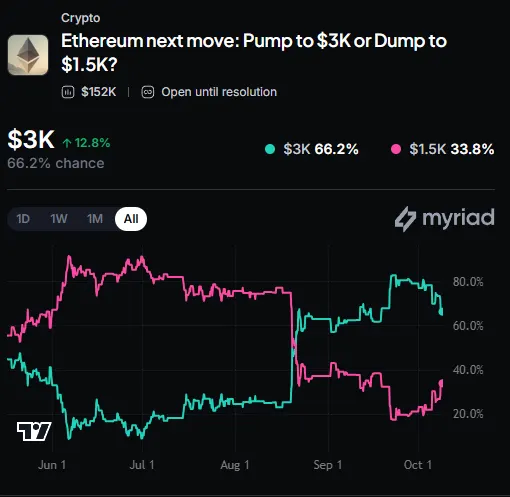
    OpenAI’s IPO ambitions are caught in the middle of all this, with Altman pushing for a public listing by year-end, while Friar has privately cautioned that the company’s internal controls are not yet built for the reporting standards public markets demand. On prediction market Myriad, owned by Decrypt‘s parent company Dastan, users place a 64% chance on Anthropic carrying out its IPO before OpenAI.

    Away from the boardroom, Altman spent last week apologizing to the community of Tumbler Ridge, British Columbia, after OpenAI acknowledged it had banned a ChatGPT account tied to the suspect in a February mass shooting that killed eight people without ever notifying law enforcement.

    Daily Debrief Newsletter

    Start every day with the top news stories right now, plus original features, a podcast, videos and more.

  • ‘A Prophet’ Producer Marco Cherqui Sets French Crime Drama ‘La Petite’ With ‘Vendetta’ Writer, ‘Call My Agent!’ Director (EXCLUSIVE)

    ‘A Prophet’ Producer Marco Cherqui Sets French Crime Drama ‘La Petite’ With ‘Vendetta’ Writer, ‘Call My Agent!’ Director (EXCLUSIVE)

    Veteran French producer Marco Cherqui, best known for Jacques Audiard’s Oscar-nominated film “A Prophet,” will next produce “La Petite,” a four-part drama commissioned by France 2.

    Set to shoot in six weeks, the series will be directed by Antoine Garceau (Call My Agent!) and written by Emmanuelle Michaud (“Vendetta,” “La Terre et le sang”). It stars Pauline Parigot as a police detective investigating the brutal murder of a young woman in Northern France.

    Producing through his Paris-based banner CPB Films – now part of Incognita Films, headed by Édouard de Vésinne — Cherqui said the show sits “in a similar vein” to socially grounded true-crime dramas such as Laetitia and “L’Affaire Laura Stern,” tackling violence against women while reflecting broader societal tensions.

    In “La Petite,” two families in a provincial town raise their children with the expectation that they will one day become a couple. As teenagers, they begin a romance, but the young woman ultimately rejects this imposed future to live freely. The young man cannot accept the breakup, and after his accidental death, his grieving mother refuses to believe it was an accident and seeks someone to blame.

    The story unfolds through a murder investigation into the young woman’s death, revealing a tragic chain of events “shaped by obsession, grief and the cost of a woman asserting her independence,” says Cherqui. The producer added that the show will “blend emotional storytelling with a restrained thriller structure.”

    CPB Films is also developing a second season of “A Prophet,” reteaming with Italian director Enrico Maria Artale. Inspired by Audiard’s drama and created by two of its writers, Abdel Raouf Dafri and Nicolas Peufaillit, the first season of the drama premiered at Venice last year and aired on Canal+ in France and was sold by Studiocanal in major territories. The series unfolds in contemporary France and follows Malik (Mamadou Sidibé), a young African immigrant, trying to survive in a French prison, where he meets Massoud (Sami Bouajila), a powerful businessman. 

  • YouTube TV Launches Customized Multiview Across the Full Channel Lineup

    YouTube TV Launches Customized Multiview Across the Full Channel Lineup

    After years in development, YouTube TV is finally rolling out a customizable multiview feature for subscribers, letting you view up to four channels on one screen.

    Previously, YouTube TV‘s multiview, first introduced in March 2023, was limited to a limited list of sports and news channels, or a lineup of feeds for special events like Coachella.

    Now, customers on the main YouTube TV plan or one of the recently introduced genre plans will be able to build a multiview with any of the networks available as part of their subscription, including add-ons such as NFL Sunday Ticket. The base YouTube TV plan, priced at $82.99 per month, include more than 100 channels, including local feeds of ABC, CBS, Fox and NBC.

    YouTube TV also made a few design updates: Users now create their multiview in a new staging area, and select from content sorted into categories such as “Recommended,” “Sports” and “News.”

    “Today, we’re officially launching fully customizable multiview on @YouTubeTV,” he wrote on X. “Our @youtube teams made one of our most popular features even better. The new multiview builder gives you full control to mix and match live streams (including add-ons like @nfl Sunday Ticket), and build the personalized viewing experience you’ve been asking for.”

    According to YouTube, instead of stitching together multiple channels on the end-user device side, YouTube TV handles all the processing of putting together a multiview on the server side. That lets the service deliver the multiview streaming experience without the need for any specialized hardware in a customer’s home.