Author: rb809rb

  • Verizon: We’ve Told Some Concerned Customers Their Landline Is Staying

    Verizon: We’ve Told Some Concerned Customers Their Landline Is Staying

    Verizon is once again urging the Federal Communications Commission to approve the carrier’s plan to retire copper-based landlines in nine US states. But this time, the company says it’s clearly notified which concerned customers will retain their landlines, and which won’t. 

    In the Friday letter to the FCC, Verizon says it’s even resorted to “individual outreach” when the copper retirement proposal has sparked opposition and concern from affected residents and communities. “Verizon government affairs and policy team members are calling each identified customer in these states who expressed concern about the discontinuance in this (FCC) docket or to Verizon,” the carrier wrote.

    The letter arrives two weeks after the Commission paused the company’s copper retirement plan for the US states, including Arizona, Delaware, New Jersey, New Mexico, Ohio, Rhode Island, South Carolina, Utah, and Virginia. The FCC merely said “the Commission requires additional time to complete its review.” But intense opposition from affected customers and municipalities likely played a role. A key concern is that Verizon’s replacement option to use cellular coverage will saddle rural and remote areas with spotty service, a downgrade from the aging, but reliable copper networks.  

    Prior to the pause, Verizon had told the FCC that the old-school copper networks will remain in place for areas where its replacement solution falls short of Commission standards. Verizon also clarified that not every customer who received a notice about the copper retirement plan would lose their traditional landline service. 

    Friday’s letter indicates that the carrier has already personally told some affected customers not to worry. This includes reaching out to residents who filed comments to the FCC protesting the copper phase-out. 

    “Among the identified customers that we have contacted so far who commented in the FCC docket, Verizon was able to determine that the Application did not apply to roughly 43 percent and informed those customers accordingly,” the company wrote. “For the subset of the remaining roughly 57 percent of commenters that Verizon was able to reach, Verizon representatives addressed the concerns identified in the record and any others raised during the call, including providing detailed information about the reliability and functionality of Verizon’s Voice Connect solution,” which uses a wireless signal. 

    The letter adds that Verizon sent a notification to “all copper POTS (Plain old telephone service) customers who do not have access to an adequate replacement option identified by the Application, and this letter confirms that they will stay connected to Verizon’s POTS network today just as they always have been.”

    In addition, Verizon says it’s preparing to hold a meeting in Virginia next month “to provide further information about the discontinuance process,” weeks after US Rep. Ben Cline (R-Virginia) sent his own letter to the FCC, noting “large portions of my district remain cellular dead zones, where the mobile wireless devices offered as a substitute are unreliable or do not work at all.” 

    Recommended by Our Editors

    For customers who will lose their landlines, Verizon is indicating there’s a chance it could keep the copper network in place if the carrier’s review shows the replacement solution coming up short. “If a customer transitions to a replacement service but it is determined within one month of the transition through a Verizon professional review that the Commission approved replacement service is unavailable at the location, Verizon will restore the customer’s service over copper facilities and maintain that service until an adequate replacement solution is identified and available,” the carrier said. 

    Still, some affected consumers continue to file comments to the FCC, urging intervention. “If Verizon discontinues copper wire phone lines, our family will not have access to emergency services if the power goes out, which happens frequently. There is NO cell service on our property,” wrote one user.

    Verizon has also filed a proposal with the FCC to retire copper networks across 9 other US states, including California, Michigan and New York. It looks like the Commission already automatically greenlit the company’s plan to retire the copper networks in 13 other US states including Alabama, Florida, Georgia, Iowa, Mississippi, Tennessee and Texas. The company wants to remove the copper lines, citing their cost and how most consumers have moved on from using them.

    About Our Expert

  • Travis Barker reveals surgery after mysterious hospital photos with Kourtney Kardashian and Alabama Barker

    Travis Barker reveals surgery after mysterious hospital photos with Kourtney Kardashian and Alabama Barker

    Travis Barker had fans wondering what was going on after sharing photos from a hospital bed this week, offering no explanation. All fans knew was that he had two important women in his life by his side. 

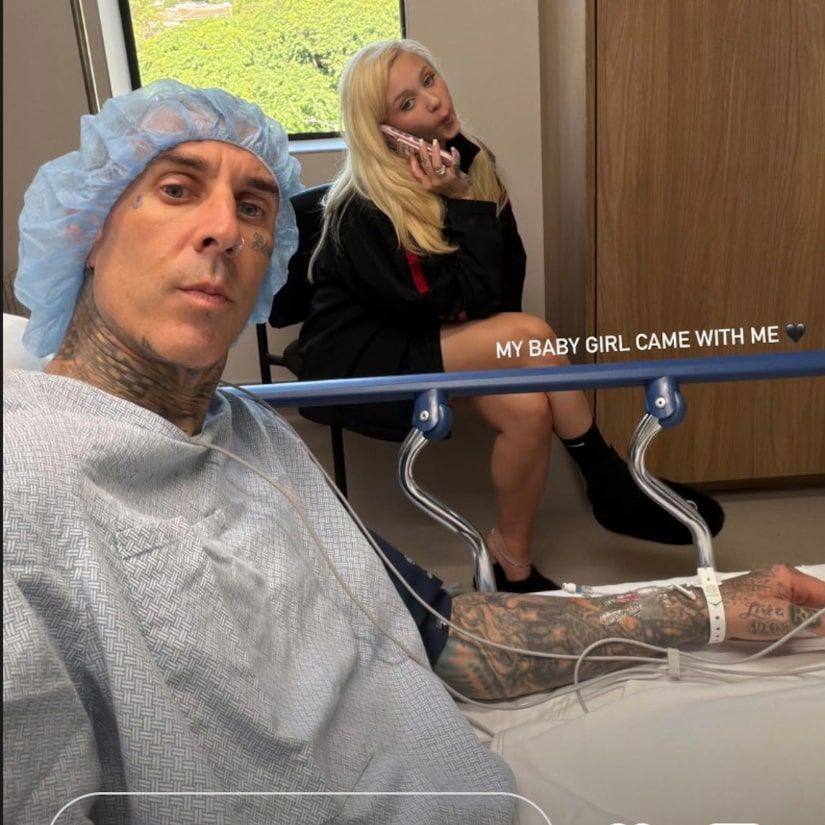
    Alabama made sure to support her dad© @travisbarker
    Alabama made sure to support her dad

    On Tuesday, October 6, the Blink-182 drummer posted two photos to his Instagram Stories showing him in a hospital gown and surgical cap. In one, his daughter Alabama Barker sat beside him, with Travis writing, “MY BABY GIRL CAME WITH ME.”

    Alabama is one of the two children Barker shares with his ex-wife Shanna Moakler, along with their son Landon. 

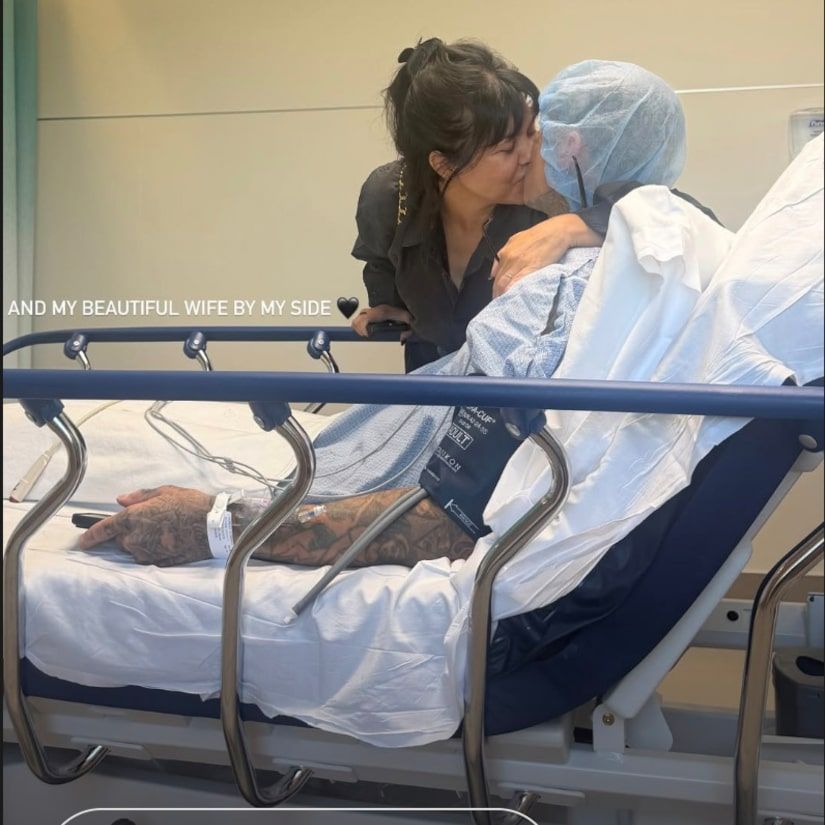
    Kourtney was by side bedside© @travisbarker
    Kourtney was by side bedside

     In another, his wife, Kourtney Kardashian, leaned over to kiss him as he lay on the hospital bed. “AND MY BEAUTIFUL WIFE BY MY SIDE,” he wrote.

    There was no explanation for why he was in the hospital, what procedure he was having, or whether something serious had happened.

     The photos naturally left fans wondering what was going on, especially since Barker appeared to be preparing for some kind of procedure. After the surgery, he let fans know it was nothing super major. 

    You may also like

    Continue reading

    Why he needed surgery

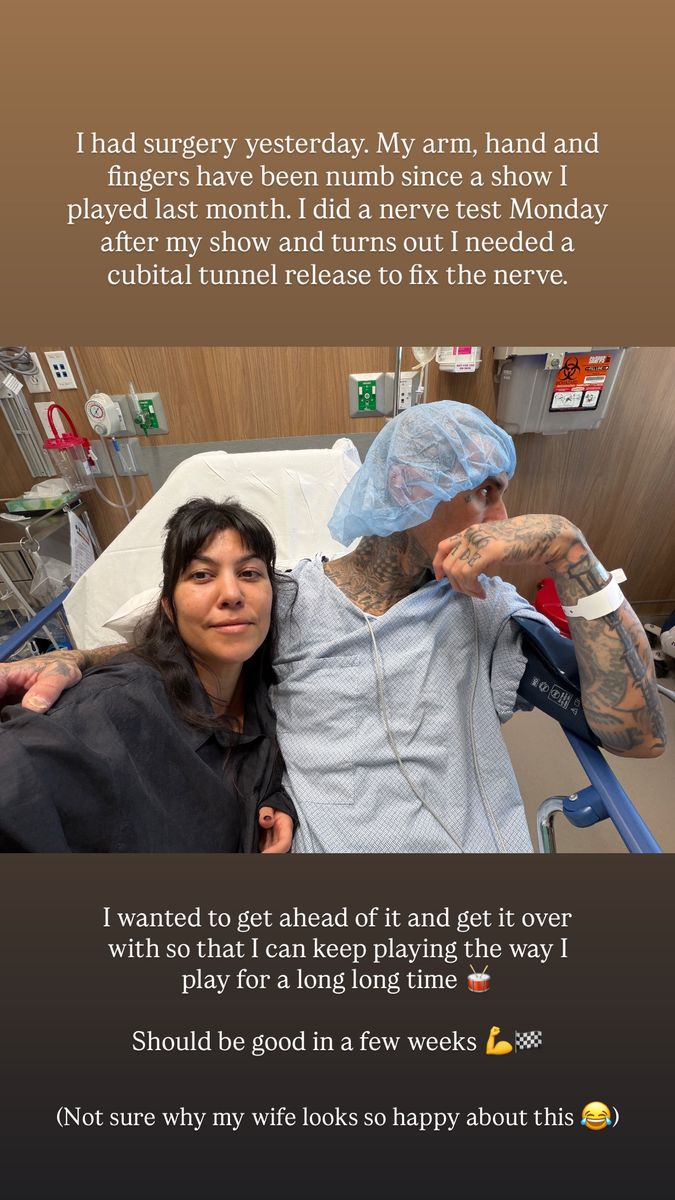
    The drummer couldn't help but quip about Kourtney's smiles© @travisbarker
    The drummer couldn’t help but quip about Kourtney’s smiles

    On Wednesday, October 7, Barker revealed that he had undergone surgery after dealing with numbness in his arm, hand, and fingers.

    “I had surgery yesterday,” he wrote on Instagram Stories. “My arm, hand and fingers have been numb since a show I played last month.”

    Barker said he underwent a nerve test Monday after his show and learned that he needed a cubital tunnel release to fix the nerve.

    Cubital tunnel syndrome involves compression or irritation of the ulnar nerve around the elbow and can cause numbness or tingling in the hand and fingers, per Mayo Clinic.

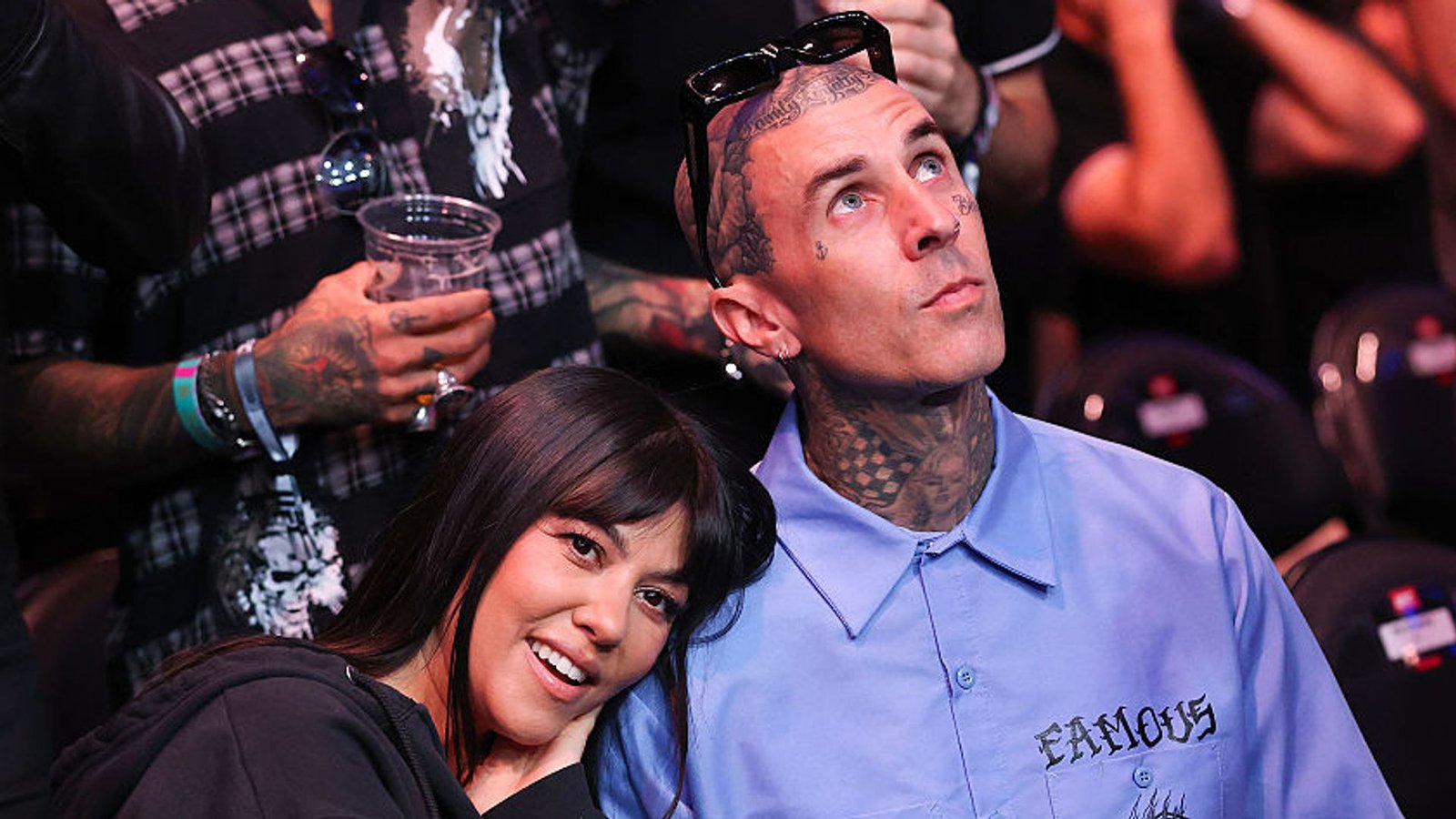
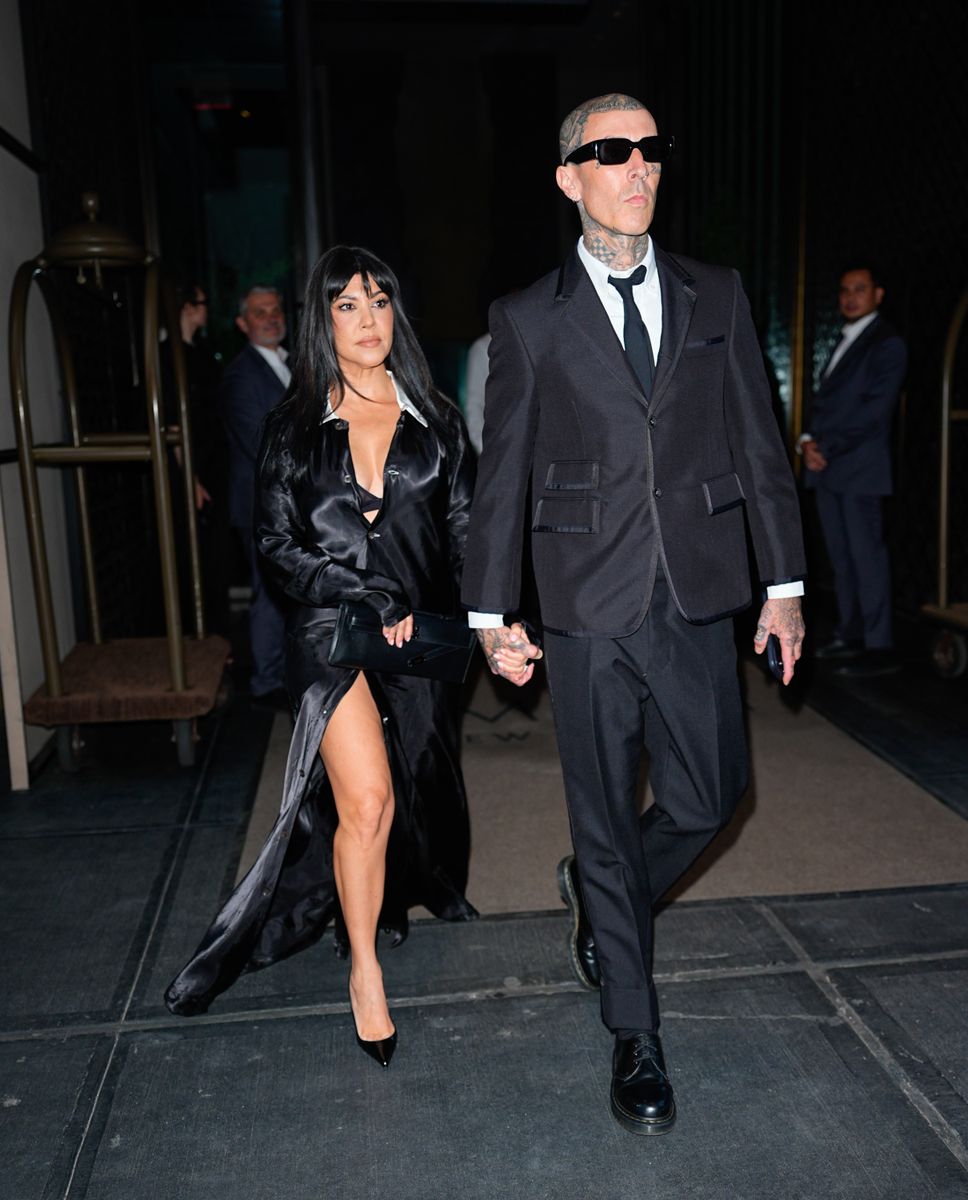
    Kourtney Kardashian and Travis Barker are seen on June 13, 2026 in New York City© XNY/Star Max
    Kourtney and Travis are every bit a power couple

    Kardashian and Barker have gone through plenty of highs and lows together. And while she’s clearly a supportive wife, Barker couldn’t resist making a joke about her expression. “Not sure why my wife looks so happy about this,” he wrote over the photo of Kourtney smiling beside him.

    The couple has been there for each other through serious personal and health challenges. In 2023, she underwent emergency fetal surgery while pregnant with the couple’s son Rocky.

    He credited Kourtney for helping him get through his fear of flying© GC Images
    He credited Kourtney for helping him get through his fear of flying

    More recently, Barker opened up about how falling in love with Kourtney helped him confront some of the trauma he carried after surviving a 2008 plane crash. He credited their relationship with giving him hope and helping him eventually overcome his fear of flying. 

    Barker’s history with his hands 

    Barker hasn’t said that years of drumming caused his condition, but the issue is particularly notable for someone whose career depends on his hands.

    The drummer has already learned the hard way that keeping his body healthy is part of keeping his career going.

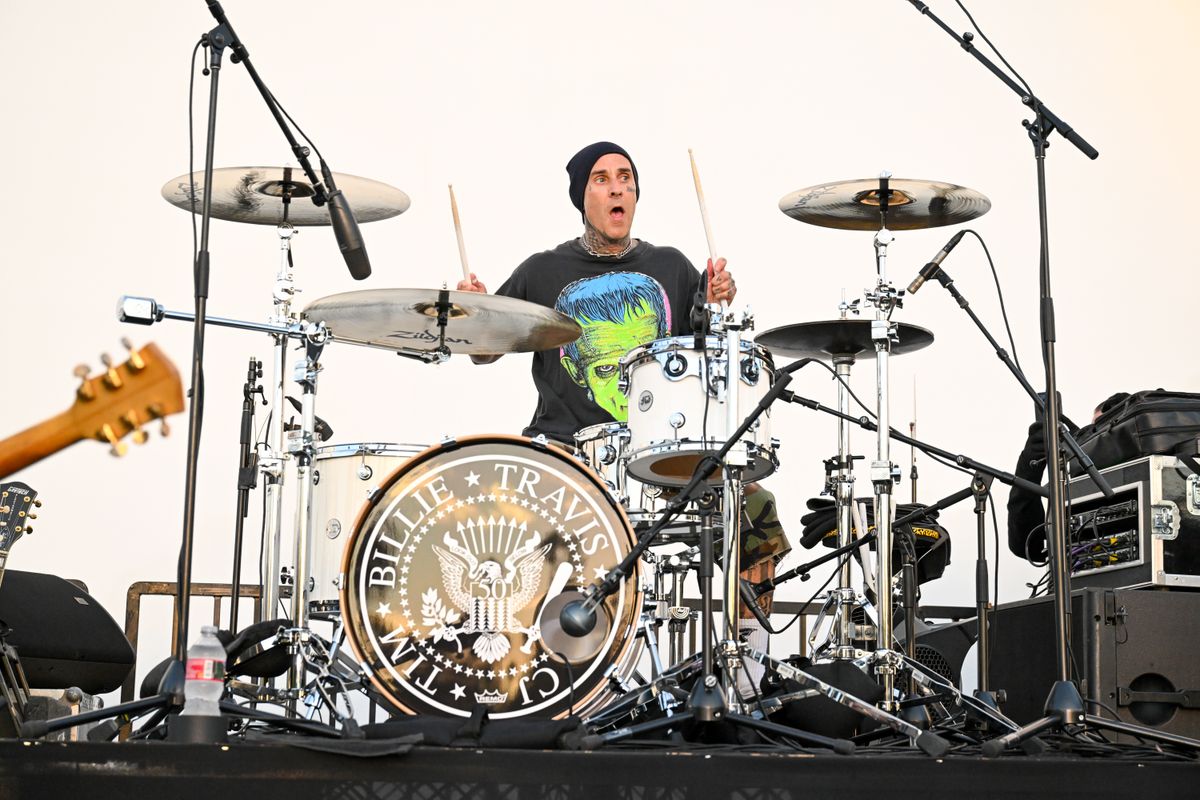
    Travis has spent decades using his hands doing what he loves© Getty
    Travis has spent decades using his hands doing what he loves

    In 2023, he injured his left ring finger during Blink-182 rehearsals, dislocating it and tearing the ligaments. The injury required surgery and forced the band to postpone the beginning of its reunion tour. 

    At the time, Barker explained why having the procedure was ultimately necessary. “It was a hard decision to make, but ultimately I couldn’t continue to play the drums without it,” he said after the surgery. 

    More than three years later, he’s once again making sure an injury doesn’t keep him from doing what he loves. “I wanted to get ahead of it and get it over with so that I can keep playing the way I play for a long, long time,” Barker wrote, offering a timeline for his recovery, “Should be good in a few weeks.”

    He’s no stranger to the long road back

    Barker is used to having to recover, going through the worst experience in 2008© The State
    Barker is used to having to recover, going through the worst experience in 2008

    Barker’s decision to deal with the problem now also fits into a much bigger part of his story –  recovery.

    The drummer survived a devastating 2008 plane crash that killed four people and left him with severe burns. He underwent numerous surgeries and spent years dealing with the physical and emotional aftermath.

    He’s also faced other serious health issues over the years, including a 2022 hospitalization for severe pancreatitis. 

    But even through those setbacks, Barker has continued performing, touring, and pushing his body to keep up with the life he’s built around music.

  • See Inside Jake Johnson’s Pasadena Home (With Creative Studio) as Actor Lists Property for $3.29M

    See Inside Jake Johnson’s Pasadena Home (With Creative Studio) as Actor Lists Property for $3.29M

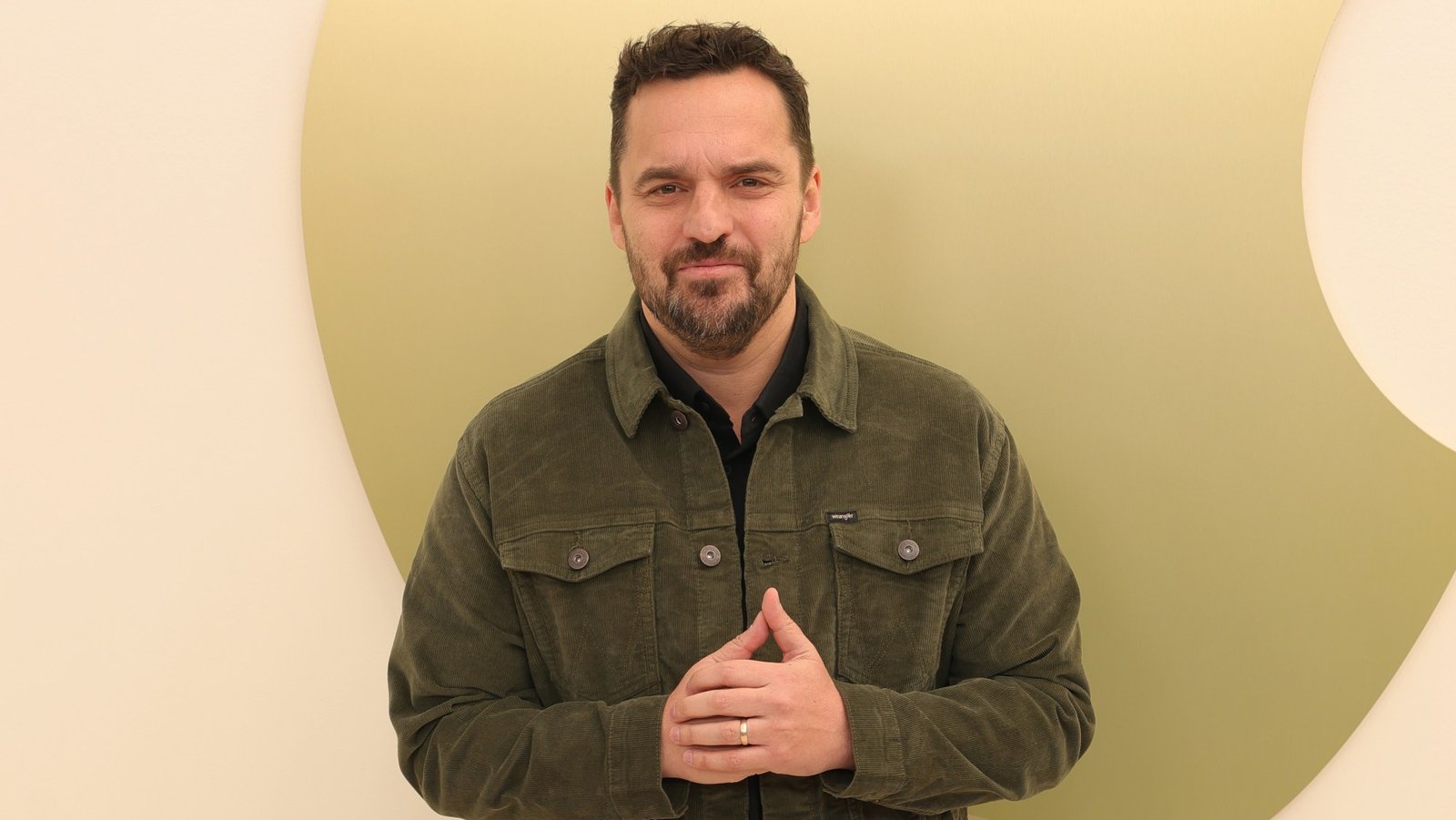
    Jake Johnson has been making a ton of moves lately in his acting career, segueing from one high profile project to the next. The beloved New Girl actor has starred in back to back projects like The Dink, Maximum Pleasure Guaranteed, Give it Up and The Sun Never Sets. And he’s got a voice role in the upcoming animated pic Wildwood.

    Now, he’s actually set to make a literal move in his life.

    The veteran actor has just teamed with Coldwell Banker to list his home in Pasadena, Calif. for $3,295,000. Thomas Atamian of Coldwell Banker Realty in La Canada Flintridge, Calif. has the listing on the property, which is located at 663 West California Blvd. It spans approximately 3,153-square feet with four bedrooms and four bathrooms.

    “Set behind private gates and surrounded by park-like grounds, this home offers an amazing sense of privacy and tranquility,” said Atamian of Coldwell Banker, which provided the details and images to The Hollywood Reporter. “Its design creates a seamless flow between indoor and outdoor living, while two additional detached structures provide the flexibility to accommodate everything from working at home to creative pursuits and wellness.”

    The house got a remodel and refresh in 2004 courtesy of architect Aleks Istanbullu. Some details: It features hardwood floors throughout with warm wood accents, large windows, sliding glass doors, a pool and outdoor areas for lounging, dining and entertaining. The open-concept living and dining spread offer views of the grounds outside, and there are two additional detached structures that provide versatility.

    In a 2023 interview with The Hollywood Reporter, Johnson explained that he used one of those structures as a sort of creative escape to work on his projects. Another is a type of wellness escape with an adjoining sunroom. Per Coldwell, the home provides “distinctive architecture, sophisticated interiors, resort-like grounds and extraordinary privacy.”

    See for yourself below.

    A look at the yard outside Jake Johnson’s home in Pasadena, Calif.

    Photographer: Hillary Campbell/Courtesy of Coldwell Banker

    A look at the sun room at Jake Johnson’s home in Pasadena, Calif.

    Photographer: Hillary Campbell/Courtesy of Coldwell Banker

    A look at the wellness escape at Jake Johnson’s home in Pasadena, Calif.

    Photographer: Hillary Campbell/Courtesy of Coldwell Banker

    A look at the primary walk-in closet inside Jake Johnson’s home in Pasadena, Calif.

    Photographer: Hillary Campbell/Courtesy of Coldwell Banker

    A look at the primary suite inside Jake Johnson’s home in Pasadena, Calif.

    Photographer: Hillary Campbell/Courtesy of Coldwell Banker

    A look at the primary bathroom inside Jake Johnson’s home in Pasadena, Calif.

    Photographer: Hillary Campbell/Courtesy of Coldwell Banker

    A look at the pool and yard outside Jake Johnson’s home in Pasadena, Calif.

    Photographer: Hillary Campbell/Courtesy of Coldwell Banker

    A look at the living room and dining room inside Jake Johnson’s home in Pasadena, Calif.

    Photographer: Hillary Campbell/Courtesy of Coldwell Banker

    A look at the kitchen inside Jake Johnson’s home in Pasadena, Calif.

    Photographer: Hillary Campbell/Courtesy of Coldwell Banker

    A look at a hallway inside Jake Johnson’s home in Pasadena, Calif.

    Photographer: Hillary Campbell/Courtesy of Coldwell Banker

    A look inside the guest bedroom of Jake Johnson’s home in Pasadena, Calif.

    Photographer: Hillary Campbell/Courtesy of Coldwell Banker

    A look inside the dining area and kitchen of Jake Johnson’s home in Pasadena, Calif.

    Photographer: Hillary Campbell/Courtesy of Coldwell Banker

  • Demi Moore almost lost ‘St. Elmo’s Fire’ role to Madonna when she was dealing with addiction

    Demi Moore almost lost ‘St. Elmo’s Fire’ role to Madonna when she was dealing with addiction

    Demi Moore could have had a very different role in St. Elmo’s Fire – or no role at all. The Oscar-nominated actress was almost fired from the 1985 film just days before production began after showing up drunk and high to a costume fitting. According to one of the film’s co-writers, director Joel Schumacher was already considering replacing her with Madonna.

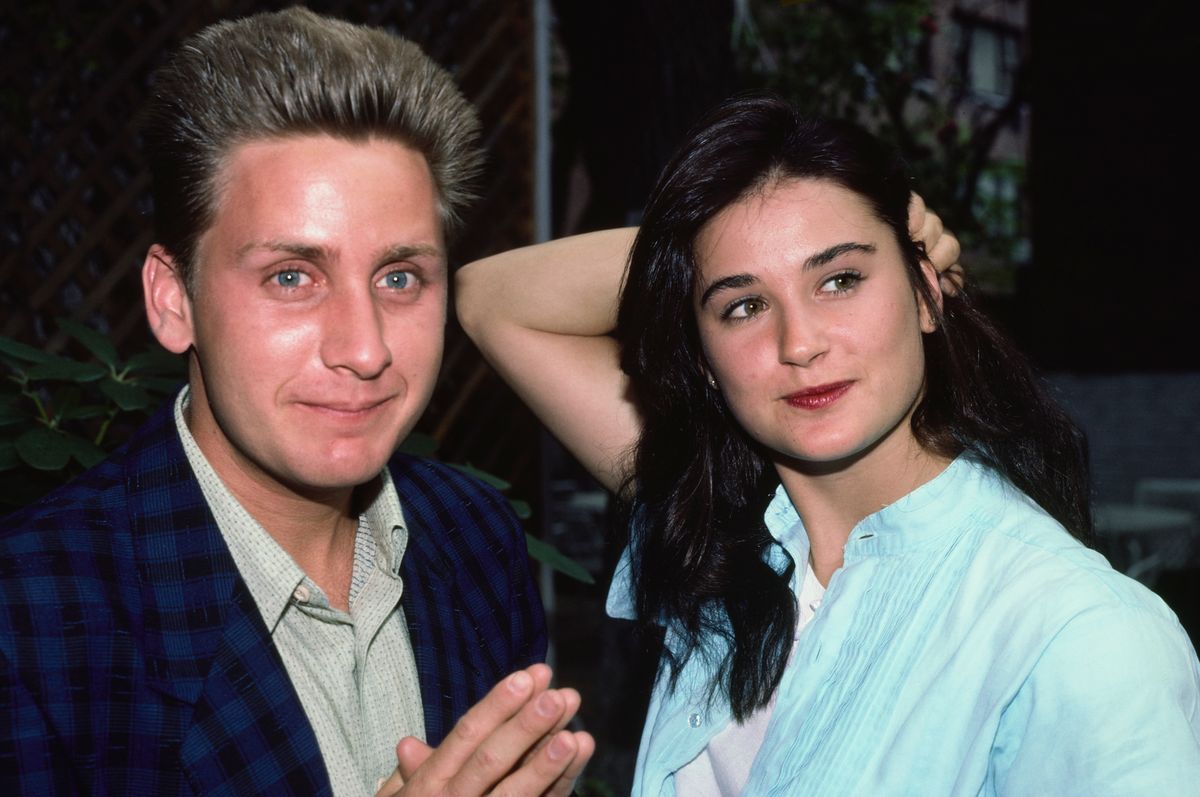
    Emilio Estevez and Demi Moore pictured during a promotional event for 'St Elmo's Fire' in New York, 1985. © Getty
    Emilio Estevez and Demi Moore pictured during a promotional event for ‘St Elmo’s Fire’ in New York, 1985.

    Carl Kurlander, who co-wrote the coming-of-age drama, shared the behind-the-scenes drama during an appearance on Reality Life with Kate Casey.  The role in question was Jules, a young woman whose glamorous exterior hides a serious cocaine problem.

     At the time, Moore was just 22 and still trying to find her footing in Hollywood, and according to Kurlander, she came close to losing it. Moore later admitted she was dealing with a cocaine addiction, adding another layer of irony to the role. “Demi was truly living the life of Jules when we met her,” Kurlander said. 

    Moore allegedly showed up to a fitting drunk and high, and costume designer Susan Becker understandably went narc mode and alerted Schumacher. The fitting took place about 10 days to two weeks before filming, so he had to make a quick decision. 

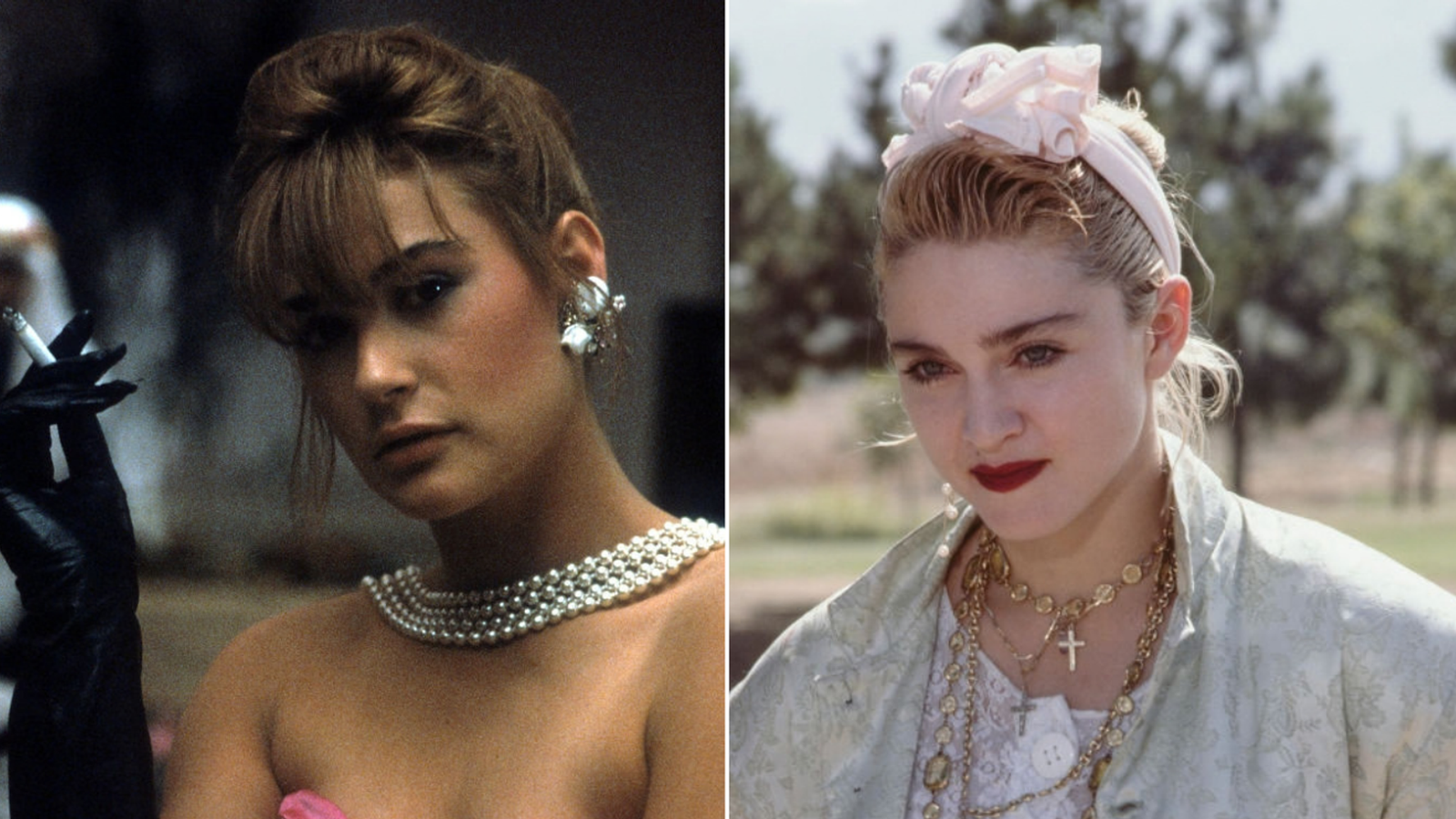
    Demi Moore in 1984© Getty
    Demi Moore in 1984

    Schumacher had dealt with addiction himself, so he met with Moore alongside producer Lauren Shuler Donner. The director did not sugarcoat anything: “Joel told me that he told her, ‘Go kill yourself on someone else’s movie,’” Kurlander said.

    You may also like

    Continue reading

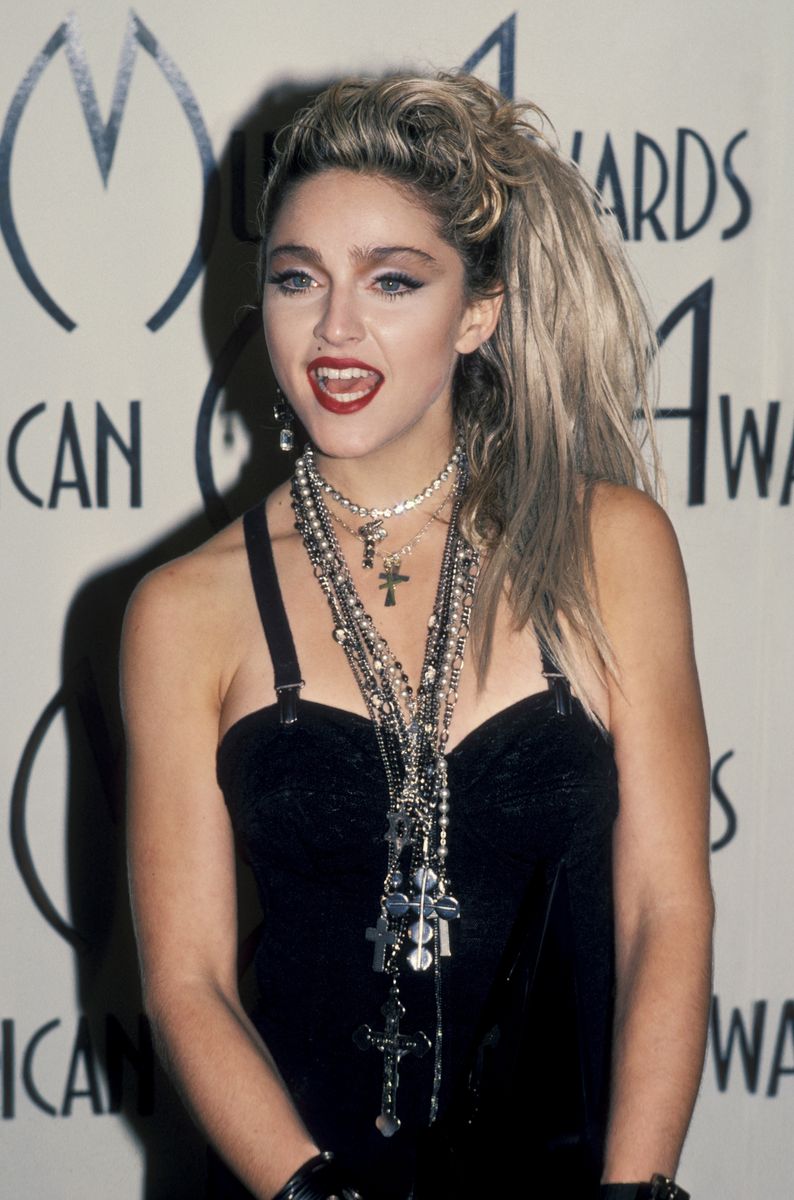
    Madonna in 1985© Getty
    Madonna in 1985

    Shuler Donner helped give Moore another chance and worked with Schumacher on a plan that would allow the actress to stay if she could get sober before filming. “Lauren Shuler Donner, God bless her, worked out a plan with Joel, saying, ‘Look, if you can clean yourself up in 10 days, you can be in this movie,’” Kurlander recalled.

    Schumacher wasn’t totally confident she would get her act together, and he had already met Madonna. At the time, he saw something special in the future pop superstar. “Joel had met Madonna. And he came back, and he said, ‘This girl is going to be the biggest star in the world. I could just feel it,’” Kurlander recalled. “And Joel was all ready to offer the part to Madonna.”

    But Moore locked in and attended Alcoholics Anonymous meetings, and they even paid for her to have a sober companion throughout the shoot. By the time the cast sat down for the table read, Kurlander could see that something had changed. “She clearly had more than just cleaned up,” he said.

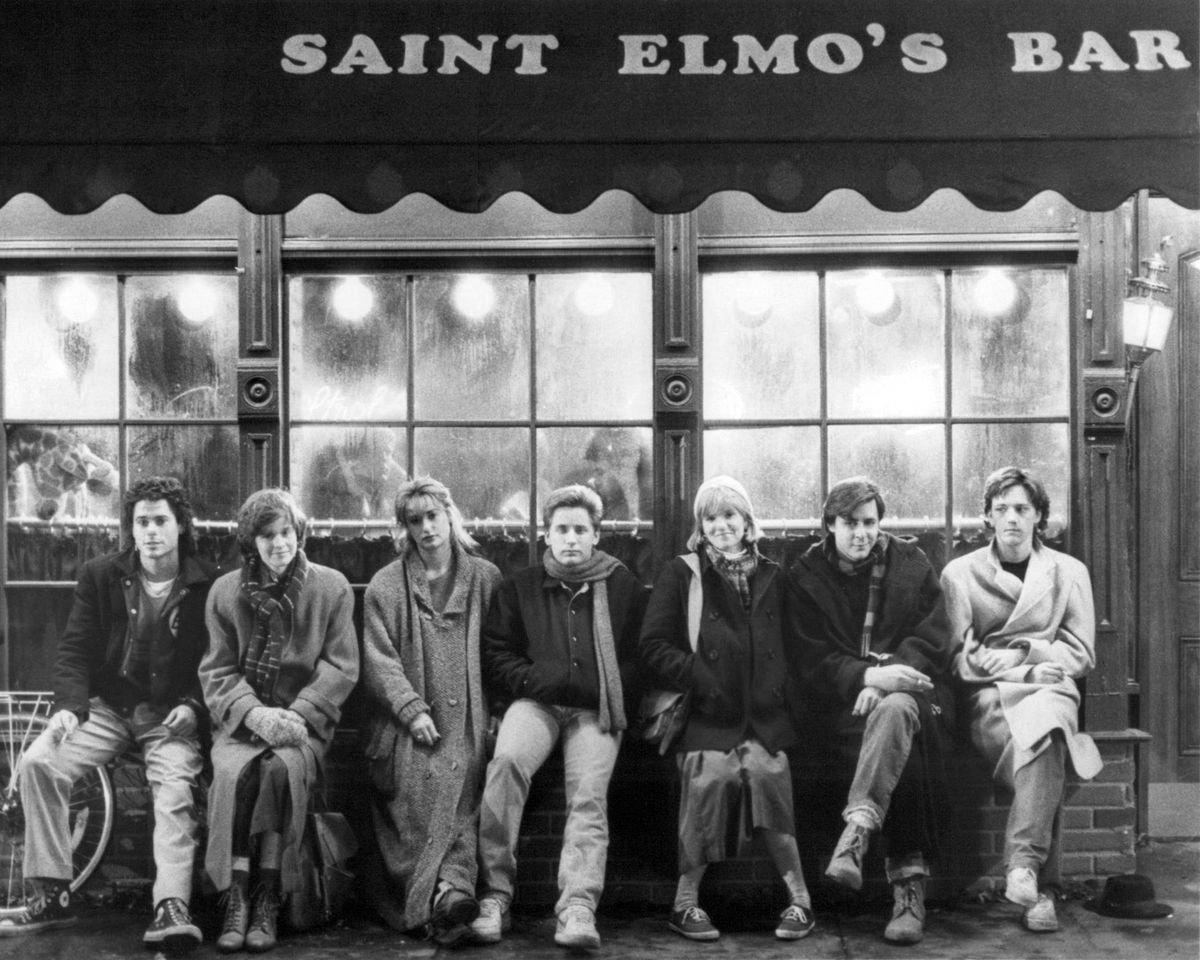
    The cast of 'St. Elmo's Fire', directed by Joel Schumacher, 1985. Left to right: Rob Lowe, Ally Sheedy, Demi Moore, Emilio Estevez, Mare Winningham, Judd Nelson, and Andrew McCarthy. © Getty
    The cast of ‘St. Elmo’s Fire’, directed by Joel Schumacher, 1985. Left to right: Rob Lowe, Ally Sheedy, Demi Moore, Emilio Estevez, Mare Winningham, Judd Nelson, and Andrew McCarthy.

    Moore has been open about just how difficult that period of her life was. In her 2019 memoir, Inside Out, she wrote about how her cocaine use had escalated into a dependency by the mid-1980s. But the fear of losing the film unlocked something inside of her. 

    The film would become one of the defining titles associated with the Brat Pack, with Moore starring alongside Rob Lowe, Emilio Estevez, Ally Sheedy, Judd Nelson and Andrew McCarthy.

    She reflected on that mindset in McCarthy’s 2024 documentary Brats, which revisited the actors and cultural impact of the era. “I was so fearful of failing, fearful of losing, and so desperate to fit in, belong,” Moore said. “My need to please was definitely on high alert.”

    She also made it clear that she understood Schumacher and the production could have moved on without her. “They could have easily just found someone else,” Moore said in the documentary. “Because it’s not like I had any box-office draw. You know, we were all just beginning. I didn’t have anything to really warrant him sticking by me.”

    At the time St. Elmo’s Fire came along, Moore was still a relative newcomer compared with some of her co-stars. She had spent two years on General Hospital and appeared in films including Blame It on Rio. A July 1985 Los Angeles Times profile described Jules as her biggest movie role to date.

    Demi in 1986© Getty
    Demi in 1986

    In Inside Out, Moore admitted that saving her career was a bigger motivator than getting sober for herself. “If I’d had to give up the movie and go through the program to get sober for myself, I doubt I would have done it,” she wrote. “I just didn’t value myself enough for that.”

    “But with the film at stake, and this enormous support from Craig Baumgarten, Joel Schumacher, and his colleagues, who I didn’t want to let down, I had something much bigger than me to fight for. And so I did,” she continued. 

    Moore went on to maintain her sobriety for nearly two decades before experiencing a relapse in 2012. She later sought treatment again and has continued to speak candidly about her relationship with drugs and alcohol.

    Demi Moore is now the sober Oscar winning queen we know and love © Getty
    Demi Moore is now the sober Oscar winning queen we know and love

    During a 2025 appearance on WTF with Marc Maron, Moore explained why she initially resisted entering treatment. Because her mother struggled with alcoholism, she had convinced herself that a program focused on alcohol did not apply to her own drug use.

    “I was like, ‘No, no. You don’t understand. That’s my mother. I’m a drug addict,’” she recalled.

    Moore has also spoken about how recovery changed the way she handles difficult emotions. In an interview with The New York Times, she reflected on what happens when someone tries to numb themselves rather than confront what they are feeling.

    “I think what I know now is when you’re numbing yourself out, your discernment for things isn’t the same,” she said. “Drugs and alcohol just aren’t a right fit for me,” she added.

  • FCC Chairman Declines To Say Whether Broadcast Outlets Should Be Allowed To Air Live Execution, But It’s Doubtful Networks Would Show It Anyway

    FCC Chairman Declines To Say Whether Broadcast Outlets Should Be Allowed To Air Live Execution, But It’s Doubtful Networks Would Show It Anyway

    UPDATED, with Trump comment: The Pentagon announcement that it plans to livestream the execution of the Fort Hood shooter in December has generated an outcry from public officials and religious figures, including the president of the U.S. Conference of Catholic Bishops.

    None of the networks have yet to comment publicly on whether they would air such an event, and there is substantial doubt that they would do so. It undoubtedly would get news coverage surrounding the stream of the execution, which Defense Secretary Pete Hegseth has made clear he wants to be public.

    On Friday, FCC Chairman Brendan Carr was asked on CNBC if the execution is “something you would allow on broadcast if they wanted to.”

    “Ultimately we’re going to defer to Secretary Hegseth and his decisions on how to move forward with this,” Carr said.

    A Pentagon spokesperson said that the Dec. 3 execution of Maj. Nidal Malik Hasan would be live streamed and that “details will follow.” Hasan was convicted of killing 13 people and injuring dozens of others in shooting rampage at the Fort Hood military base in 2009.

    A livestream falls outside of the FCC’s regulatory power, but the Pentagon feed is something that, absent restrictions, broadcasters could pick up. The FCC’s obscenity, indecency and profanity guidelines do not directly address executions, but under his tenure, Carr has launched investigations of networks on the grounds that they may not be meeting their public interest obligations. FCC guidance earlier this year emphasized, among other things, that stations must air programming that is “responsive to the needs of their local communities.”

    “My understanding is it’s not on broadcast TV, so I don’t think there’s a role for the FCC one way or the other there,” Carr said on CNBC. “But I trust Secretary Hegseth. I mean, he’s implementing the laws and regulations that are relevant to the Department of War, and I think he’s doing a great job, and I trust that he’s making the right call on these issues.”

    The execution by firing squad is planned for 1 p.m. on that day and will take place at Fort Hood, Hegseth said.

    “It hasn’t been since World War II that we have done that, and I kind of like the mentality that we had in World War II,” Hegseth told Real America’s Voice, a pro-Trump network, in an interview this week.

    “We will make sure that people are able to watch it, that it is public, because people need to understand there are serious consequences for these types of things,” Hegseth said.

    Asked by a reporter whether he approved the livestream plan, President Donald Trump said, “Absolutely.”

    There has been a tradition of state executions allowing a handful of journalists to witness executions, including in Texas, but with a prohibition on photos and video. It’s possible that Hasan’s legal team will try to block those plans as well.

    The announcement was condemned by some lawmakers on both sides of the aisle, as well as Archbishop Paul S. Coakley, president of the U.S. Conference of Catholic Bishops, called the plans for a livestream “a barbaric promotion of a culture of death” and said that it “must be reconsidered.”

    “The public execution even of one who has done grave harm will only further undermine the moral fabric of our nation and be a blight on the conscience of its people,” Coakley said.

    Networks have been cautious about any airing of a public death, issuing viewer advisories or having general policies against airing the moment of death. YouTube also has a policy prohibiting “violent or gory content intended to shock or disgust viewers,” but has exceptions for educational, documentary, scientific or artistic content, “including content that is in the public interest.” A YouTube spokesperson did not immediately return a request for comment.

    Another issue will be in how children will be restricted from a livestream. The U.S. Army Corrections System guidelines on military executions does not allow anyone under 18 to be a witness to such an event.

    There have been cases of media outlets seeking permission to record or film executions. In 1991, KQED-TV sued for access to the execution of Robert Alton Harris, but a federal judge ruled that effort, siding with prison officials’ concerns over the impact on inmates, per the Los Angeles Times.

  • Trump’s Iran pledge underpins crypto gains as bitcoin bears face liquidation pressure

    Trump’s Iran pledge underpins crypto gains as bitcoin bears face liquidation pressure

    Bitcoin $BTC$82,486.39 held near $82,600 after President Donald Trump said he would not strike Iran before the U.S. midterm elections, pulling the largest cryptocurrency off Thursday’s low of roughly $80,400 and turning the liquidation pressure onto bearish traders.

    Ether ETH$2,502.21 slipped 2% over 24 hours to about $2,500, still nursing the worst of Thursday’s flush, when ether bets were wiped out at six times bitcoin’s rate relative to its market value.

    SOL was the laggard among the major coins, losing nearly 4% over the same period to around $110, while XRP and HYPE were little changed. The broader CoinDesk 20 index slipped about 2%.

    Thursday’s dip tested a level traders watch for the medium-term trend.

    “At the peak of its decline on Thursday, Bitcoin fell to $80.4K, touching its lowest level in the past three weeks and its 50-day moving average, where the balance shifted in favour of buyers,” Alex Kuptsikevich, the chief market analyst at FxPro, said in an email to CoinDesk.

  • Identical twin sisters married identical twin brothers but kept it secret for four years

    Identical twin sisters married identical twin brothers but kept it secret for four years

    Identical twins are always up to some crazy stuff so it’s no surprise when you bring two sets together that something magical can happen.

    While some identical twins focus on training up their bodies in different ways to see who benefits more, or undergoing different diets, some are more focused on finding love.

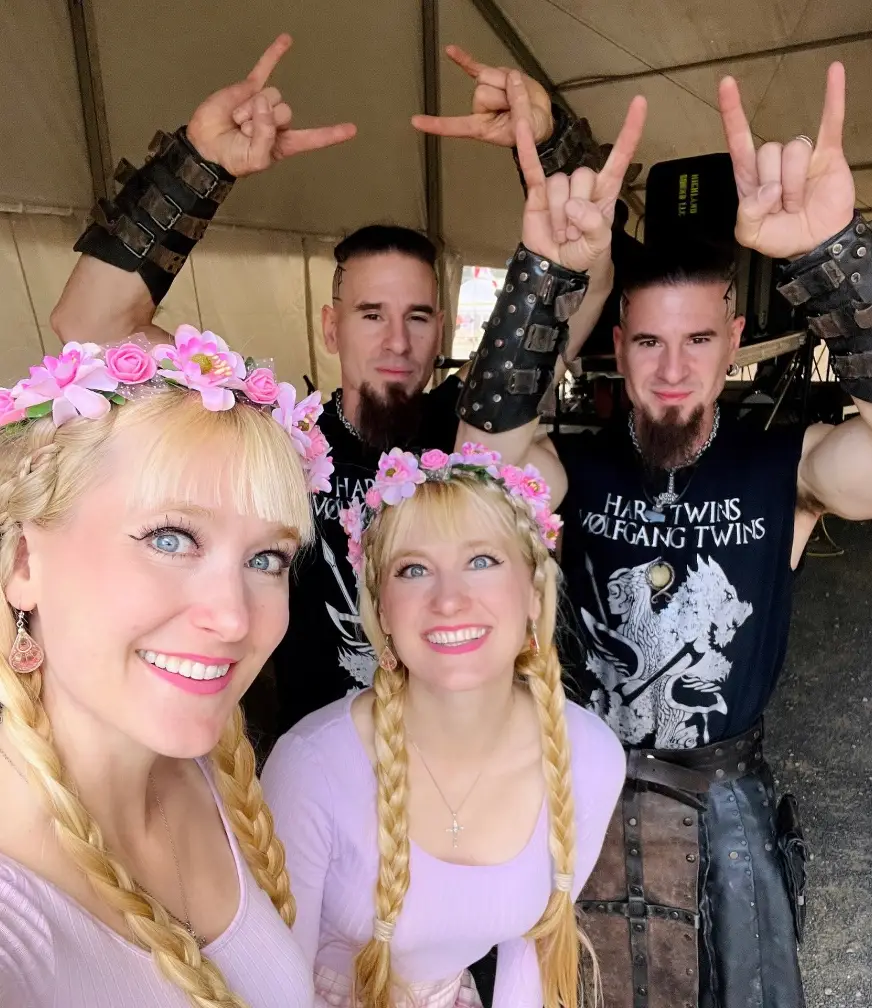
    And that’s exactly what happened when Camille and Kennerly Kitt, best known as The Harp Twins, met fellow selfsame siblings Dromil and Dromal Volfgang back in 2019.

    Both sets of twins are big on social media and known for their musical talents but it was only earlier this year that they actually confirmed they had gotten married, despite the nuptials taking place all the way back in 2022.

    The sisters were already masters of the harp strings but they quickly pulled on the heart strings of the two brothers, who waited in line to meet them at a concert, before presenting them with a drawing of them both.

    Camille told Today: “It’s one of those things where when you know, you know.”

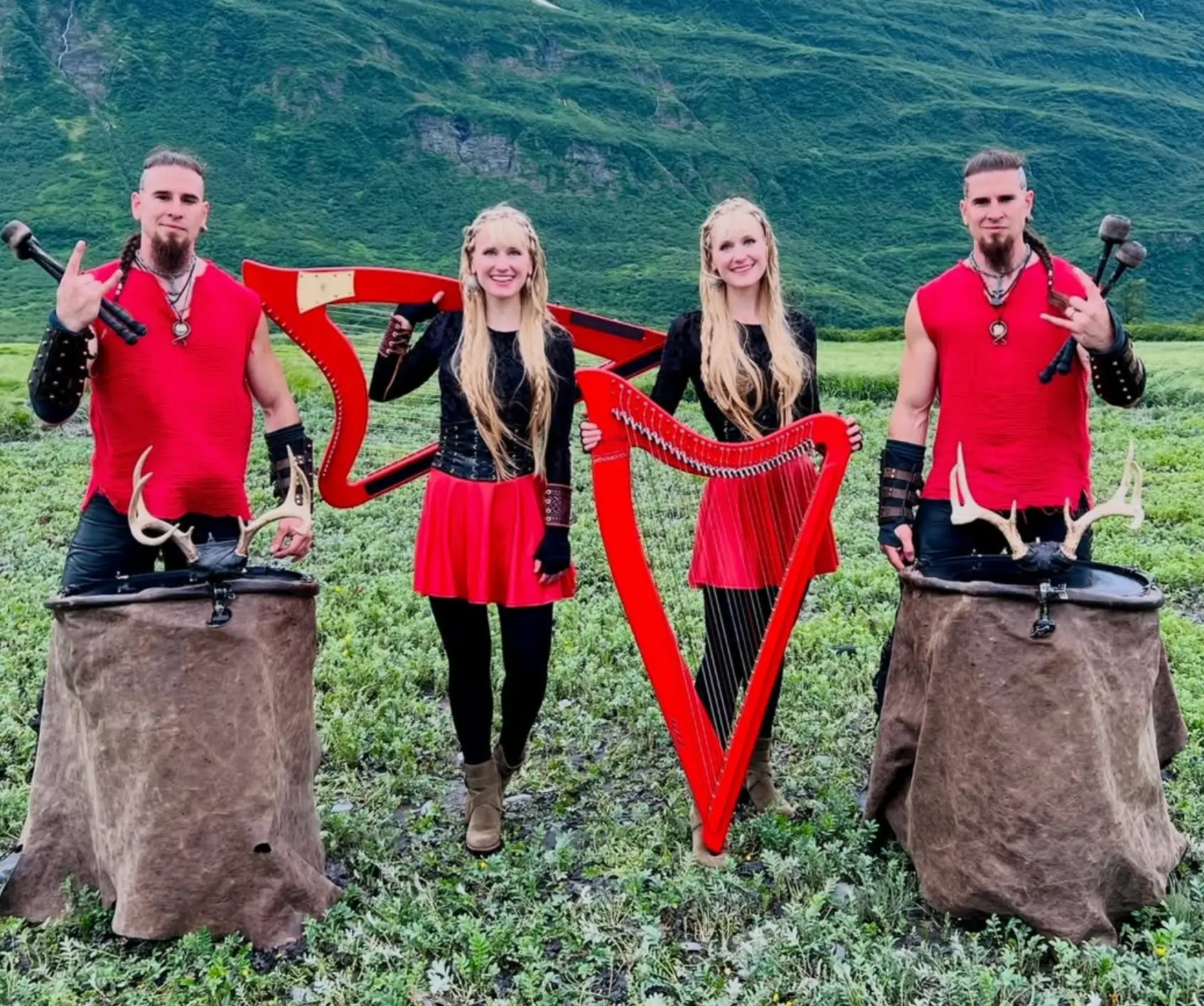
    After the four of them became close and slowly gravitated towards one or the other, things became romantic, with the drum-playing Volfgang twins joining the Kitt’s on their tour, leaving construction behind so they could build a new life together.

    They all perform Viking-esque music together (Instagram/volfgangtwins)

    They all perform Viking-esque music together (Instagram/volfgangtwins)

    Eventually, Camille married Dromil, while Kennerly married Dromal and they all celebrated four years of marriage together earlier this year.

    Kennerly said: “You just naturally gravitate toward someone and their soul.”

    Sticking with doing thing in pairs, the two couples married on February 22, 2022 at 2.22pm, but they kept the marriage ceremony a secret for several years, with only close family and friends in attendance.

    They knew that their marriage would attract a lot of attention, not just because they have a huge amount of followers on social media, and they wanted to avoid the questions that naturally arise when two sets of twins marry each other.

    They first met at a concert (Instagram/Harptwins)

    They first met at a concert (Instagram/Harptwins)

    “Some people are like, ‘That’s weird,’” Dromal says. “We’re like, ‘Well, maybe you’re weird.’”

    Speaking about the relationship with his brother, Dromil said that ‘no matter what’, they’ve always ‘had each other’s backs’ and they’re only likely to get closer now they’ve welcomed two more into their family.

    He added: “There’s a natural tendency of non-twins to not understand or approve of a really close relationship.”

    However, there’s no doubting it’s a little strange to both be proposed to at the same moment using identical rings, but clearly they were on board with it.

    “We’re all best friends,” Kennerly concluded, “So we have our twin and our spouse and their twin. It’s just really the best of all worlds.”

    As long as there aren’t any mix ups should kids come into the question, everything should turn out alright.

  • Biohacker Kate Tolo tests techno tampon to track nighttime female erections in ‘world first’

    Biohacker Kate Tolo tests techno tampon to track nighttime female erections in ‘world first’

    A biohacker known for having a ‘top one percent vagina’ has published the results of her latest study – documenting the nighttime female erection.

    If you haven’t heard of Kate Tolo before, you’ll more than likely be aware of her boyfriend, Bryan Johnson, aka the man who transfused blood from his teenage son, documented the ‘de-ageing of his penis’ and poured millions into his goal of never dying.

    Tolo herself is also a keen biohacker, sharing intimate details about her body in hopes of further understanding our medical knowledge of endometriosis.

    And now Tolo has shared the results of her investigation into overnight arousal in women, collecting data via a device she refers to as a ‘techno tampon’.

    So what did she find?

    Biohacker Kate Tolo aims to become the 'most measured' woman (Kate Tolo/Bryan Johnson)

    Biohacker Kate Tolo aims to become the ‘most measured’ woman (Kate Tolo/Bryan Johnson)

    Nighttime erection data, sexual dysfunction and heart health

    For most people, erections are something traditionally believed to be a biologically male-exclusive experience, however this is not the case at all.

    Recent studies have revealed that the clitoris not only contains tens of thousands of nerve endings but also the same erectile tissue as the penis. MRI studies have also revealed that the clitoris engorges by around 50 to 300 percent when aroused, which certainly sounds like a type of erection.

    So why could measuring the female erection be important?

    Erectile dysfunction in men is known to be a precursor to heart disease known as atherosclerosis, a condition where fat builds up in the arteries. However, this has never been tested on women.

    Nighttime measurement of penile blood flow can also help understand whether or not erectile dysfunction is physical or psychological. If erections are recorded during REM sleep, it proves that the blood vessels and nerves are working as they should, meaning the issues are more than likely psychological. Again, these studies are yet to be replicated in women.

    Tolo also shares her research on social media (Kate Tolo/Bryan Johnson)

    Tolo also shares her research on social media (Kate Tolo/Bryan Johnson)

    “I’ve tracked my nighttime erections for years,” Johnson explained. “It’s a tier 1 longevity marker [and] one of the best signals I’ve found for vascular health.”

    However, Johnson notes that his data is ‘only useful for half the population’, with the couple hoping the results of Tolo’s research will determine whether or not the same applies to women.

    “If nighttime genital blood flow predicts heart disease in women the way erectile function does in men, this is one of the most important measurements we’re looking at,” he added.

    “Men’s nighttime erections have been studied extensively for decades… Women’s are barely measured.”

    While some of Johnson and Tolo’s health experiments are more than a little left-field, measuring erection tracking data with your son or publishing the details of your vaginal microbiome to the world aren’t activities which most people engage in, you can’t deny that Tolo’s work isn’t revolutionary.

    As the 30-year-old points out in her research data, studies surrounding female nighttime erections haven’t evolved since 1975.

    While Johnson can measure how many times he unconsciously stands to attention with a £207 ($275) publicly available smart sensor which connects to his phone via Bluetooth, Tolo’s tracking method is a little more complex.

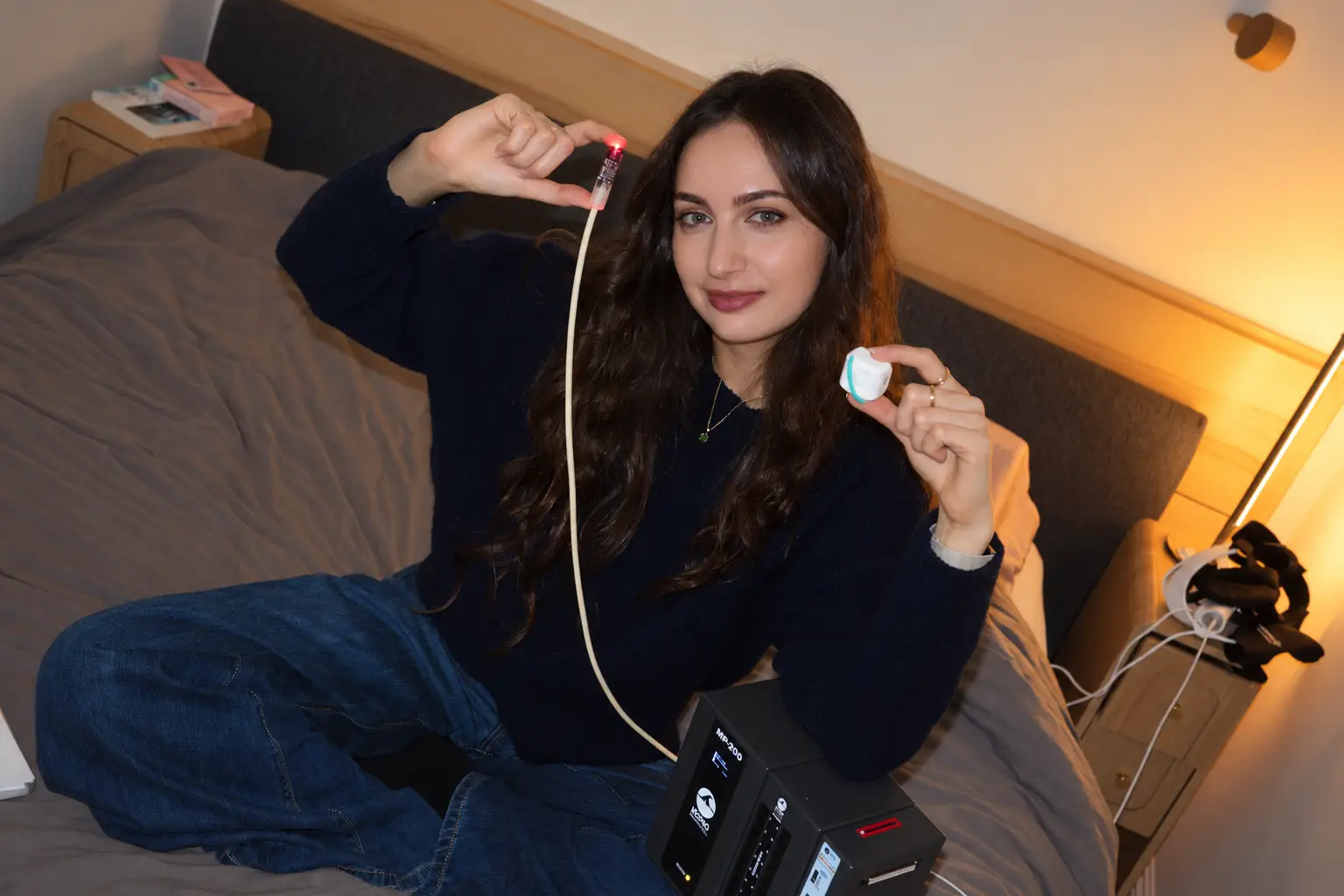
    Kate Tolo and her 'techno tampon' (Kate Tolo/Bryan Johnson)

    Kate Tolo and her ‘techno tampon’ (Kate Tolo/Bryan Johnson)

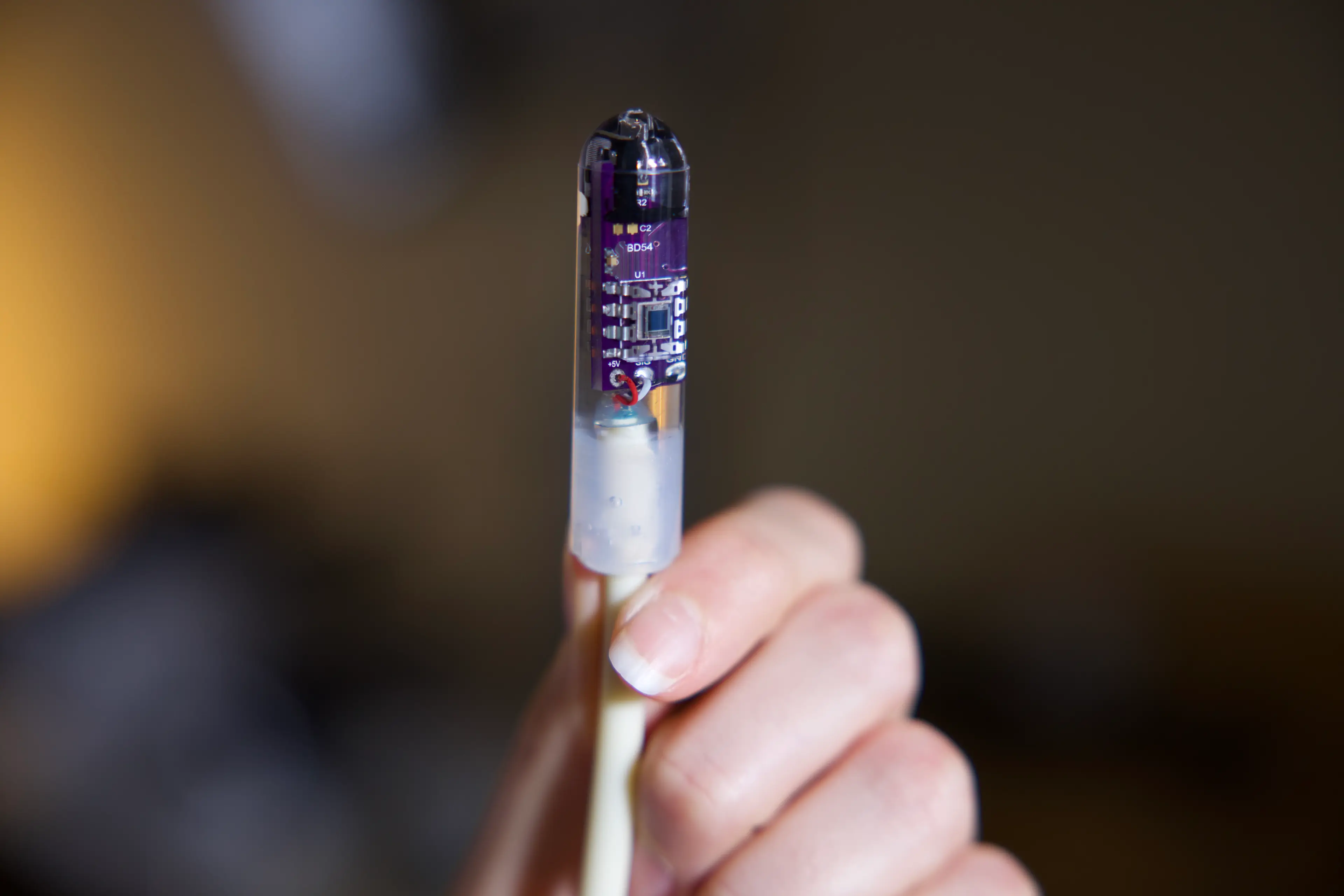
    Designed in 1975, the device has not been updated in the decades since (Kate Tolo/Bryan Johnson)

    Designed in 1975, the device has not been updated in the decades since (Kate Tolo/Bryan Johnson)

    In order to conduct the experiment, she had to use a 5cm internal probe, which hasn’t been updated since it was invented over five decades ago, which is taped to her leg and hooked up to lab equipment via a laptop. The laptop also has to stay on overnight otherwise the data is lost.

    Price-wise, Tolo’s device costs around £11,881 ($15,723.68) and isn’t available on the high street.

    “Men’s nighttime erections have been studied extensively for decades… Women’s are barely measured,” Tolo said.

    “If the data turns out to matter the way it matters for men, someone should build the device.”

    If Tolo’s research revolutionises our understanding of women’s sexual health, I promise to never laugh at Johnson’s more bizarre studies ever again.

  • Satoshi-Era Bitcoin Worth $8.3 Million Moves After 16 Years

    Satoshi-Era Bitcoin Worth $8.3 Million Moves After 16 Years

    In brief

    • A batch of 100.02 BTC mined in July 2010 moved on October 7 for the first time in 16 years, worth about $8.3 million at roughly $83,000 per Bitcoin.
    • The coins were split into 10 BTC and 90.02 BTC outputs sent to two new addresses, both unspent as of Thursday, and nothing onchain identifies the owner or shows a sale.
    • The move follows a run of dormant-wallet activity, including six wallets that shifted 553.59 BTC between August 16 and 26.

    A batch of 100.02 Bitcoin mined in July 2010, from a period commonly known as the Satoshi-era, moved on Wednesday for the first time in 16 years.

    At roughly $83,000 per coin, the stash was worth about $8.3 million when it left. Based on Bitbo’s highest registered price of BTC in 2010, the stash was worth around $29 when it was mined.

    Myriad: How low will Bitcoin go? Click to make your prediction.
    Myriad: How low will Bitcoin go? Click to make your prediction.

    The transaction was confirmed at 18:52 UTC in block 970,379—one of the batches of transactions that Bitcoin’s network stamps onto its public ledger roughly every 10 minutes. It split the coins between two new addresses, an address being the string of characters that works like an account number: 10 BTC went to one and 90.02 BTC to the other.

    The holder paid a fee of 1,467 satoshis—a satoshi is one hundred-millionth of a bitcoin—which came to about $1.22 for moving $8.3 million. Both destinations are modern bc1q addresses, a format that did not exist when the coins were mined. Nothing in the transaction identifies the owner, and moving coins between addresses is not the same as selling them.

    Both pieces were mined within days of each other: 50.02 BTC in block 70,522 on July 26, 2010, and 50 BTC in block 70,748 on July 28. The two payouts were merged into a single transaction on July 30, 2010, landing in the address that just moved them.

    Nobody knew it back then, but 2010 turned out to be a special year for Bitcoin. A Florida programmer named Laszlo Hanyecz had paid 10,000 BTC for two pizzas, a bill of about $41. Today, the stash has grown more than a millionfold since.

    BitcoinBTC · USD

    $83,238−4.11%

    Oct 2Oct 4Oct 6Oct 7Oct 9

    $86.7k$84.7k$82.7k$80.7k

    24h HighHigh$83,398

    24h LowLow$80,427

    VolVol$1.6B

    Market projectionsOdds by Myriad

    →

    The mining reward has been cut in half four times since, most recently to 3.125 BTC in the April 2024 halving, a scheduled event that repeats roughly every four years. A block mined today pays one-sixteenth of what those two blocks did.

    The address itself has not been idle: it sent out 100 BTC twice on August 8, 2015, 100 BTC in December 2017 and 249 BTC in March 2018. Those were other coins—Bitcoin tracks money as individual chunks, a bit like bills, so an address can spend some while others sit untouched. Galaxy tracks the coins rather than the address, and says these particular coins had not moved since 2010.

    Coins from Bitcoin’s first years are called Satoshi-era, after the network’s pseudonymous creator, Satoshi Nakamoto, and they have been waking up in clusters. In February 2025, a 50 BTC batch valued at $0.10 per coin when mined moved after about 15 years, by then worth roughly $5 million. The holder skipped a test transaction—a small trial transfer people usually send first to make sure the destination works.

    In August, 49.97 BTC first received in July 2011, when Bitcoin traded under $15, moved after about 15 years and went on to a wallet that Arkham, a blockchain analytics platform, labeled as FalconX, a prime broker serving trading firms. The label alone does not confirm a sale.

    Between August 16 and 26, six wallets dormant since 2011, 2012 or 2014 moved 553.59 BTC, about $40 million. Two carried tags tied to a New York lawsuit that asks a court to declare 39,069 dormant addresses abandoned property.

    As of Thursday, the 10 BTC and 90.02 BTC were still sitting in their new addresses, with nothing sent onward. So, Bitcoin holders, you can breathe: this whale is not dumping their coins—yet.

    Daily Debrief Newsletter

    Start every day with the top news stories right now, plus original features, a podcast, videos and more.

  • Margherita Ferrari on Working With Paolo Sorrentino on Directorial Debut ‘Föa — Once Upon a Future’: ‘He Helped Me Pursue and Protect My Vision’

    Margherita Ferrari on Working With Paolo Sorrentino on Directorial Debut ‘Föa — Once Upon a Future’: ‘He Helped Me Pursue and Protect My Vision’

    Debuting Italian director Margherita Ferrari is at the Busan International Film Festival with “Föa – Once Upon a Future,” an innovative coming-of-age drama that also marks Paolo Sorrentino‘s debut as a producer.

    Set in Genoa during the tragic days in July 2001 when the G8 summit led to deathly clashes between protesters and police, “Once Upon a Future” tells the story of Nicole, an 18-year-old girl who is eight months pregnant and takes three protesters into her home. Using a fable-like tone, the film provides a fresh perspective on the G8 violence that became a watershed moment in the anti-globalization movement.

    “’Föa’ begins with a wound that history never quite managed to close,” Sorrentino said in a statement to Variety. “Margherita Ferrari turns the memory of Genoa into something intimate and dreamlike, where the past quietly returns to question the future.”

    “Föa – Once Upon a Future,” which stars emerging talents Gaia Ravina, Clara Tramontano, Iker Urgoiti and Gabriele Falsetta, was co-produced by Sorrentino′s production company Numero 10, with The Apartment and PiperFilm. PiperPlay is handling international sales.

    “At a time when imagination needs to be protected, supporting new authors and their singular visions feels more important than ever,” Sorrentino continued. “I am particularly proud that Numero 10 begins this journey with a film told through such a powerful female gaze — a story that reminds us that even after the future seems to have disappeared, it may still be waiting for us.”

    The film started as Ferrari’s graduation short at Rome’s Centro Sperimentale film school, after which she had the opportunity to pitch the expanded project to Sorrentino. Below, Ferrari speaks to Variety about what sparked “Once Upon a Future” creatively and its fortuitous production journey.

    How did the “Föa – Once Upon a Future” story germinate?

    On July 20, 2001, I was only 4. I remember the windows and the typical green shutters of our living room in Genoa had to be closed because outside there was smoke and noise. So, even though it was summer and sweltering inside, we had to barricade ourselves in, staying in the dark. Shut away. That image came back to me during the pandemic. I had sought out that same feeling — of solitude, isolation and even powerlessness — while something much bigger than me and all of us, something powerfully collective, was happening outside. On a more personal level, I’ve always felt a certain disillusionment regarding the limits of my own power; how little impact I can actually have on the world or on contemporary reality. It’s a feeling that hits me every time I speak about this subject.

    Tell me more.

    I know I’m not just talking about me. I see this reflected in so many of my peers, and perhaps in people in general, who are experiencing the world as it is today. So there is that, combined with the lingering wound of those days and all the traces they left behind. Speaking as someone from Genoa, I felt a desire to tell a story that, even though it’s set in 2001, is really about the future and about today. How do you do that? Usually, fairy tales are set in the distant past. Yet they’re actually meant to speak to the present. So, that’s more or less how it all came about.

    Starting with the title, “Föa – Once Upon a Future,” this film is a fable of sorts. Talk to me about this narrative choice, which is unusual in dealing with historical fact.

    The Genoese term “Föa” actually means “story,” in the sense of a made-up story, a little tale or a fable. That aspect interested us [myself and my co-writers] partly because we wanted to blend history with a capital H, the kind you study in books, with a fictional tale about a character who doesn’t exist. It also suggests that to tell the truth about reality, you somehow need invention and metaphors, and therefore cinema and fables too. We also wanted to approach this historical event from a more emotional, dreamlike perspective, focusing on the almost unconscious traces that were left within us by those days. This applies even to those, like us, who experienced the aftermath of the Genoa G8 events. In a way, we always felt like we were inside Nicole’s womb, so to speak. The child Nicole is carrying in the film would be 25 or 26 years old today. In a sense, he has been carrying the same question we have, which is: “What will the future awaiting us actually be like?”

    I’d like to add that I hope this film offers more than just the questions that are raised by those events. I hope it allows the audience to imagine that things might turn out a bit better. It’s like in fairy tales, I always envisioned a moment of relief at the end, a breath of fresh air that leaves room for that possibility.

    What was it like to have Paolo Sorrentino as your producer?

    Paolo was very involved during both the initial writing phase and the editing process. But not on set. He treaded lightly in that phase. He just stopped by once to say hello. I tried to get him involved, but he didn’t want to. Basically, he was very keen on not being intrusive and to respect the boundaries of the set. I view that gesture as an act of great tenderness on his part. Even though I’ve always loved getting his advice, it never scared me, I find Paolo to be very patient. I think he had often already thought out certain solutions before we did. But he waited for me, or for me and the editor, to get there on our own, to reach the direction in which the film needed to go. He helped me pursue and protect my vision all the way to the end, while supporting my work as a director through every single phase. It was a beautiful creative process from the start. It also helped me grow, helped me bring the film to the screen and become the person I am today. That’s more or less how it went.

    Courtesy PiperPlay