Author: rb809rb

  • Gemini Reports $19B Liquidated in Crypto Market in 24 Hours

    Gemini Reports $19B Liquidated in Crypto Market in 24 Hours

    Market Pulse

    In the wake of this liquidation event, the market exhibits significant volatility, with mixed signals emerging across various cryptocurrencies. As traders react to the liquidations, many are adjusting their positions or adopting more conservative strategies to mitigate risk. The current market sentiment reflects a cautious approach, with many participants looking for clarity amid confusion.

    Gemini is a cryptocurrency exchange and custodian, offering a secure platform for digital asset trading. The revelation of significant liquidations comes as traders increasingly scrutinize market movements and the underlying factors contributing to volatility, particularly in a regulatory landscape that remains uncertain.

    What Comes Next

    Traders should keep a close eye on support and resistance levels as the market digests the implications of these liquidations. Heightened volatility may continue, and the potential for further liquidations looms, impacting overall market confidence. As traders reassess their strategies, the focus will likely be on upcoming economic indicators and potential regulatory developments that could influence market direction.

    This article is for informational purposes only and does not constitute financial advice.

  • I Tested the iPhone 18 Pro Camera for a Week, and Its Best Feature Isn’t What Apple Is Telling You

    I Tested the iPhone 18 Pro Camera for a Week, and Its Best Feature Isn’t What Apple Is Telling You

    You can believe the hype about the iPhone 18 Pro camera. After extensive testing, I can confirm without a doubt that it’s the best camera Apple has ever put in a smartphone.

    Sure, I think some of its features are a little overrated: Variable aperture is situationally useful but not a game-changer, and Reference Image is too esoteric for most casual snappers. But I’m blown away by Apple’s arguably undersung analog-inspired Styles filters—I’ve never used a digital camera that mimics film so well, and that includes the Film Simulation-powered Fuji X100VI.

    Whether you’re considering an upgrade or simply curious if the new glass and processing live up to the promise, here is a deep dive into how every new feature, sensor, and control performs in the real world.

    Is the iPhone 18 Pro Camera Upgrade Worth It?

    PCMag Logo

    Is the iPhone 18 Pro Camera Upgrade Worth It?


    Hardware: A Brighter Main Lens Improves the Triple Rear Camera System

    Before I get started, note that, as in past years, the iPhone 18 Pro is available in two sizes. The standard iPhone 18 Pro has a 6.3-inch screen, and the iPhone 18 Pro Max comes in at 6.9 inches. There are a couple of technical differences inside; for instance, the Pro Max uses a different modem type and has a longer-lasting battery than the Pro, but the camera and performance are identical between the two. I used the 18 Pro Max for testing and the images you see in this article.

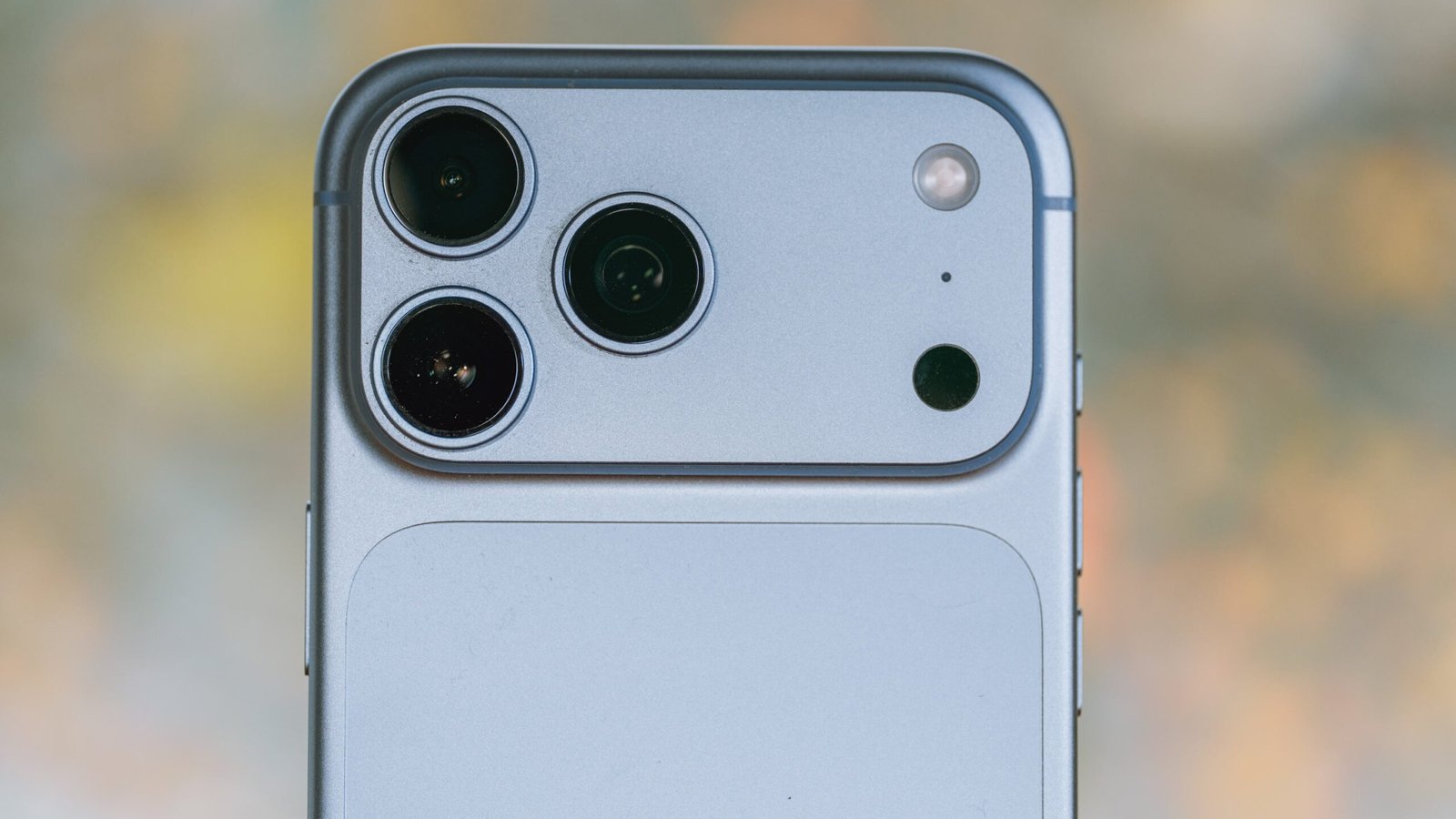
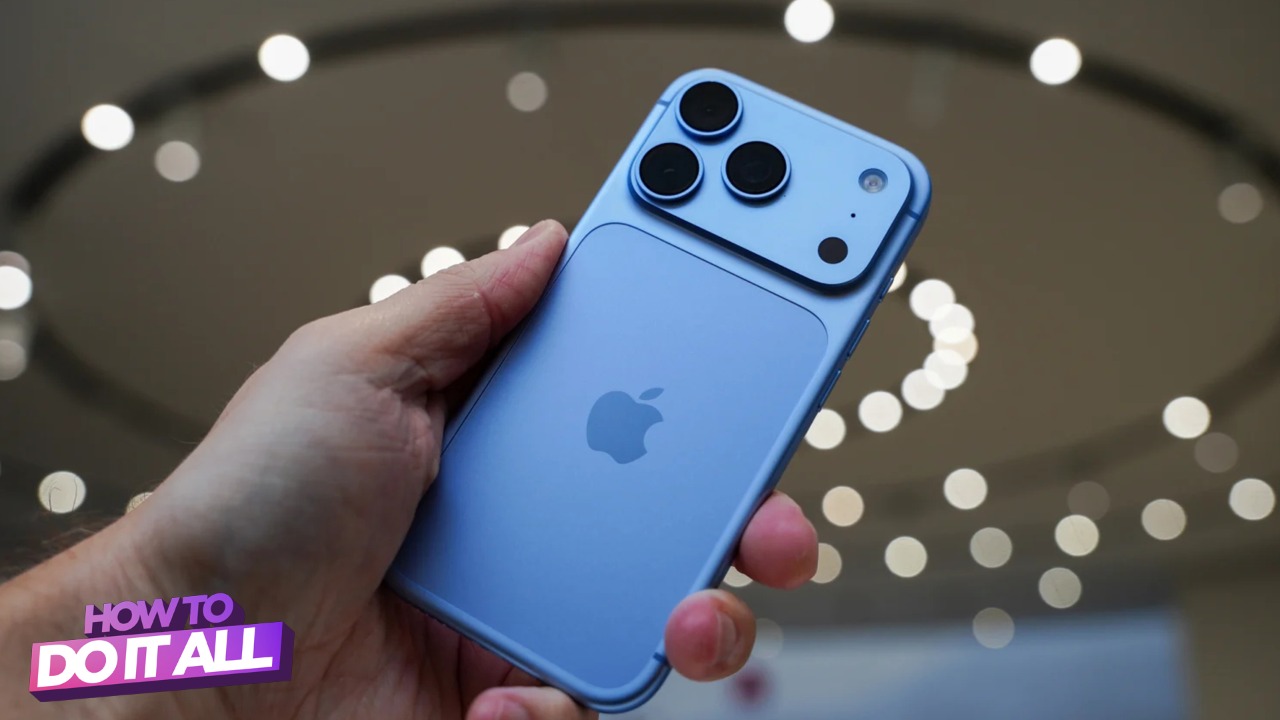
    a photo of the iphone 18 pro from the back side

    Apple iPhone 18 Pro Max

    Like iPhone Pro models dating back to the 11 Pro, the iPhone 18 Pro has a triple-camera arrangement on the rear, plus a front camera for selfies and video chats. The system has evolved over time, and while the 18 Pro maintains the same mix of ultra-wide (13mm, 0.5x), wide-angle (24mm, 1x), and telephoto (100mm, 4x) lenses as the 17 Pro, the 18 Pro’s primary 1x camera gets a new lens this year. The 18 Pro’s 24mm f/1.48 lens is about 50% brighter than the 17 Pro’s 24mm f/1.78, plus it adds an aperture to support f/1.8, f/2.8, and f/4.

    iPhone 18 Pro, focal length comparison showing conservatory at 13mm, 24mm, and 100mm

    From left to right, the same scene captured with the 13mm, 24mm, and 100mm lenses (Credit: Jim Fisher)

    The 13mm (0.5x) lens is familiar if you’ve used any recent iPhone; it’s been on standard and Pro models since the iPhone 11 and is handy to have onboard for architecture, interiors, and other scenes where the main lens is a little too claustrophobic. It’s one of the features that makes the iPhone a more capable pocket camera than a dedicated compact. Premium options like the perpetually sold-out Canon PowerShot G7 X Mark III start at 24mm, and even specialty vlogging cameras like the Insta360 Luna Ultra start at 20mm. The iPhone 18 Pro captures an appreciably wider view than both.

    iPhone 18 Pro selfie camera example showing standard and portrait effects

    The front selfie camera can take images with sharp backgrounds (left) or a portrait bokeh effect (right) (Credit: Jim Fisher)

    Going in the other direction, the 4x (100mm) telephoto comes in handy when you want to isolate a subject from the background for a portrait or get a closer view of a scene. The 100mm lens isn’t the longest that Apple has ever put in a phone; it used a 5x (120mm) lens in the 15 and 16 Pro, which could be a little too tight for interiors. The 4x lens is a good compromise; it’s great for portraits and catching images of kids or pets at play. It falls short if you’re trying to get photos of animals in the wild or field sports from the stands, but that’s true of the vast majority of smartphone camera systems.


    Aperture Control: Useful, But Short of Revolutionary

    Apple is making a big deal about the aperture; it’s a new feature, after all. It’s not as big a deal as you may think, though, and for casual snaps, I’m of the opinion that it’s best to let the phone do the driving and pick an f-stop automatically. The Camera app defaults to f/1.8 in most lighting conditions, capturing images with tack-sharp detail and adding a bit of background blur for portraits and close-ups, and it opens up to f/1.48 in dim light. There is a slight difference in detail at different f-stops. Take a look at the following pixel-level crops from the center of a 48MP image below (view the image in a new window or download it to see it at full size), and you’ll note that the texture is just slightly softer at f/1.48 and f/4.0 than it is at f1/.8 and f/2.8.

    Apple iPhone 18 Pro f-stop comparison

    The difference in sharpness at each f-stop is subtle enough that you need to view an image at full resolution to tell them apart, but close examination shows the lens is ideally sharp at f/1.8 and f/2.8, and a teensy bit softer at f/1.48 and f/4.0 (Credit: Jim Fisher)

    Manual aperture control is available for experts. It’s worthwhile to use f/2.8 to get a clearer background behind a subject in close-up situations. At f/4.0, you’ll be able to capture images that render bright points of light as four-point sunstars. These are created because the small aperture scatters light particles as they pass through the lens to the sensor, which is also why textures are a smidgen softer at f/4.0 compared with f/1.8 and f/2.8.

    iPhone 18 Pro, bokeh comparison

    You won’t see it in every photo, but if you put a subject close to the lens the background is softer at f/1.48 than it is at narrower apertures (Credit: Jim Fisher)

    You can also close down the aperture to get longer exposures for scenes that blur motion. For landscapes, you can use long exposures to smooth out running water, and if you’re more of an urban photographer, you can use it to blur pedestrians or moving vehicles while rendering buildings and objects in sharp focus. But even at f/4.0, the iPhone is limited in how much light it can cut out—for instance, on a sunny day, you’re looking at 1/60-second as the longest exposure you can take without overexposing an image. That’s simply not enough to blur moving subjects. You’ll have more freedom to take longer exposures in shade, twilight, or for nighttime cityscapes.

    iPhone 18 Pro sample image, pagoda with running water

    In bright light the longest shutter speed I can manage at f/4 without overexposing is 1/60-second; that’s not long enough to smooth out the flowing water in this scene (Credit: Jim Fisher)

    I’m somewhat surprised, and a little disappointed, that Apple hasn’t yet rolled out a computational feature to make long daytime exposures feasible. Standalone cameras from OM System include a computational tool called Live ND that stacks multiple short exposures for long exposures that would normally require a physical filter over the lens. If you want to take these types of images with the iPhone 18 Pro, you’ll want to add a neutral density filter, an accessory that uses darkened glass to reduce the amount of light reaching the sensor. This isn’t a huge hurdle because there are plenty of ND filters available for the iPhone from trusted brands like Moment. Even so, you’ll have to make an effort to buy one and attach it to your phone. A computational long exposure feature would be more convenient, so hopefully Apple is working on one.


    48MP Quad Bayer Sensors and Fusion Capture: The Math Behind the Zoom

    Do you need to get in tighter? Apple backs each lens with a Quad Bayer 48MP sensor, which sounds like overkill for a smartphone system, but it adds a great trick: digital zoom that reduces the maximum pixel count without sacrificing picture quality. The Quad Bayer system lets you choose among using every pixel for 48MP (at 8-bit JPG, 10-bit HEIF, or 12-bit ProRaw DNG quality), cutting resolution to 12MP for smaller file sizes and improved low-light noise control (in the same formats), or using Apple’s Fusion system.

    iPhone 18 Pro, large tree with ultra-wide lens

    I used the 0.5x (13mm) lens and Ethereal Style for this image of a large, characterful tree (Credit: Jim Fisher)

    Fusion photos combine one 48MP and one 12MP exposure into a 24MP photo, balancing detail, file size, and low-light performance. I think most creators and everyday iPhone users will want to use the Fusion setting. There’s only one big downside, at least for pros and shutterbugs: Fusion only works for JPG or HEIF formats, and is not available with ProRaw. And there’s not much trade-off: You get smaller file sizes, and 24MP is still plenty for social media and decently sized prints.

    iPhone 18 Pro, 4x telephoto example image

    I used the 4x zoom and Quiet+Film style to capture this autumn gourd display (Credit: Jim Fisher)

    One note: Regardless of whether you use 24MP or 48MP, the cameras will drop to a lower resolution at certain levels of digital zoom. The 24MP Fusion snaps dip to 12MP from 2x to 3.9x, and from 8x to 40x, and 48MP snaps scale down as soon as you start to zoom in between the focal lengths of the three prime lenses—for example, a 1.2x (28mm) snap comes in at 35MP, and a 1.5x (35mm) is 24MP. It’s not something that really matters, but if you’re scratching your head as to why some photos have fewer pixels than others, there’s your answer (you can check the pixel count, focal length, and other metadata by tapping the encircled lowercase “i” icon in the Photos app).

    iPhone 18 Pro, 2x digital zoom example image

    I used the 2x digital zoom to capture this scene (Credit: Jim Fisher)

    Despite changes in pixel count, I consider the digital zoom lossless up to around 8x (200mm). Photos snapped at 8x look great on the screen, without any apparent loss of clarity. You’ll notice a drop off in fidelity at longer focal lengths. The iPhone 18 Pro supports up to 40x (1,000mm) digital zoom, but at that point, it’s magnifying such a small area of the image that the results are more like impressionist paintings than photos. It’s also tricky to hold the phone steady when you reach the extreme of the digital zoom, as the narrow angle magnifies the effects of shaking hands.

    Example of upscaled image using ChatGTP

    The iPhone doesn’t have on-device upscaling, but if you want to get more detail from its digital zoom you can always send a photo to a generative AI engine like ChatGPT (Credit: Jim Fisher/Open AI/PCMag)

    Other brands deliver sharper, clearer results when pushing digital zoom to its extreme, but use generative AI to get there, a road that Apple has chosen not to go down. You can snap a clearer picture of the moon or a backyard critter with the Google Pixel 11 Pro or Samsung Galaxy S26 Ultra, since both use AI to add detail that the lens cannot see. But at best, these phones make good guesses, and at worst, hallucinate reality. If you want to upscale an iPhone photo with AI, you can always run an image through ChatGPT or another service.


    Camera App: Packed With Pro Features, But a Bit Overcrowded

    The built-in Camera app supports several capture modes for pictures (I’ll get into video further down the page): Photos, Reference, Portrait, Spatial, and Pano. If that sounds like a lot of options, it’s because it is—the iPhone does a lot. Apple goes a little overboard with the segmentation. Portrait and Spatial images are both available from within the main Photos tab, so it seems weird that they have their own tabs in the interface.

    iPhone 18 Pro sample image, tulip tree shot with 13mm from a low angle

    I used the 13mm lens and Quiet+Film Style for this image (Credit: Jim Fisher)

    The sections may be segmented, but the interface is thankfully consistent across the different modes. The app shows a view from the active lens at the center of the screen. When holding the phone vertically, touch controls appear above and below the image and shift to the sides when you rotate the camera to landscape. To keep things consistent, I’m going to refer to the controls as you see them when holding the phone vertically.

    iPhone 18 Pro sample images, triptych of wall fountain, one image with a sunstar

    I grabbed images of this wall fountain from a few different angles, including one that shows the sunstar effect (Credit: Jim Fisher)

    The bottom panel includes a large, circular touch shutter at the center. A flexible touch icon is to its left; it switches between a script-font “f” and a flower icon depending on the scene. The “f” enables Portrait mode, the long-running setting that uses depth mapping to blur backgrounds. The flower is for Macro mode, which the phone automatically switches to when you get within a few inches of a subject.

    iPhone 18 Pro, macro flower images

    The iPhone automatically changes over to its macro-capable 13mm lens when you get close to a subject, and shows a flower icon in the camera app to alert you of the change (Credit: Jim Fisher)

    There’s a six-dot icon to the right of the shutter; you can tap it to open the manual Pro Controls menu, or swipe up from the bottom to open the same menu. There are more than a dozen options, including exposure control (Aperture, Exposure +/-, Flash, Shutter Speed, White Balance), computational features (Depth, Live, Night Mode), and others (Aspect, Format, Focus, Histogram, Styles, Timer). If you find yourself using any of these frequently, you can add them to a quick access bar at the top of the screen. It’s a thoughtful, flexible system for creators who want more control than a one-button camera provides.

    Apple iPhone 18 Pro camera interface

    The familiar Camera app gets some upgrades, including configurable Pro Controls that you can access from a pop-up menu or add to the Camera app’s top bar (Credit: Apple/PCMag)

    Some of the iPhone 18 Pro’s physical buttons also work in the Camera app. You can choose to map the Action button to open the app, plus both Volume buttons and the Camera Control work as shutter releases when pressed. Camera Control also serves as a touch-sensitive slider bar for EV (brightness), Depth (the amount of blur in Portrait mode), Zoom (either continuous or stepped between 0.5x, 1x, 2x, 4x, and 8x), Styles, and Tone.

    iPhone 18 Pro sample image, garden fountain

    I used the 13mm lens and the Quiet+Film style for this image (Credit: Jim Fisher)

    I like the idea of the Camera Control button, but I think that Apple needs to do some more work to make it a useful control surface. I found myself using it most often to adjust EV, either to bring an exposure down for a moody look or to brighten a scene when photographing a subject against a backlight. On a standalone camera, I’d use a physical control dial to set EV, and the touch-sensitive Camera Control button is a decent enough substitute, at least in theory. In practice? It’s a little finicky to use; it’s too easy to overshoot, making a scene too bright or too dark. Making subtle adjustments with the Camera Control is tough.

    iPhone 18 Pro sample image, reflection in postal truck mirror

    Quiet+Film pairs well with early morning light; I used it for this image shot with the 24mm lens at f/1.48 and appreciate the softened background that the bright lens captures (Credit: Jim Fisher)

    Apple also upgraded the iPhone’s autofocus system. As with previous models, you’ll still just tap on the screen to select a subject and focus on it. The 18 Pro adds a Focus Tracking feature. Just double-tap on an object, person, or pet, and the camera will lock onto it for focus, even if it (or the camera) moves. Focus Tracking works very well and is handy for taking photos of kids or pets at play, plus is very easy and intuitive to use. The phone shows a “Focus Tracking” banner when the feature is engaged. The banner includes an “X” icon to cancel tracking and return to the standard focus mode.


    Special Capture Modes: Reference Image, Live, Night, Portrait, Spatial, and Pano Explained

    The iPhone 18 Pro includes a new feature called Reference Image that saves an original, unalterable version of a photo along with one that you can edit. The idea is that third parties can check how much an image has been edited versus what the lens saw. It’s a great idea in concept since AI images are everywhere, and having proof that a camera captured a photo is good news if you catch a shot of a big news event, need to document an accident for insurance purposes, or simply want to enter a picture in a photo contest.

    iPhone 18 Pro, goat statue with Portrait effect

    I used the Portrait feature to give this image the same shallow depth of field you’d get with a full-frame camera using an f/1.4 lens (Credit: Jim Fisher)

    However, Reference Image comes with some big caveats: It only works with the primary lens, must be enabled in the Settings > Camera menu, and only embeds the digitally signed original image in photos taken from within the Reference tab. That’s limiting, as you can’t change between lenses, adjust the aspect ratio, or use Night Mode with Reference images. Those are enough hoops to jump through that everyday photographers aren’t likely to use the feature, as doing so really takes intent and forethought. It’s my hope that Apple adds Reference Image to every lens with the next iPhone and makes the feature work transparently.


    Reference Image shows the image as the lens captured it, before processing. For this example I adjusted exposure, applied the Quiet+Film style, and used Clean Up to remove some background clutter
    (Credit: Jim Fisher/Apple/PCMag)

    Reference Image is a nascent feature, but the iPhone 18 Pro’s computational modes have been around for generations. Live mode takes a short video clip along with your image, Portrait adds background blur to snaps and lets you adjust the strength of the blur and lighting after capture, and Night Mode merges a series of short exposures into one image so you can get brighter, sharper pictures in dark rooms and on neon-lit city streets. Pano captures ultra-wide panoramas in-camera just by sweeping the phone from left to right.

    iPhone 18 Pro low light example images

    The iPhone used Night Mode and an f/1.48 aperture for these images, both captured in a dark room lit only by a TV screen (Credit: JIm Fisher)

    If you’re an infrequent upgrader, Spatial may be new to you, as it was introduced with the iPhone 16. Spatial photos use the same depth mapping that the phone uses for Portrait capture to add a modest perspective shift 3D effect. The photo shifts slightly as you tilt the screen during playback, similar to a lenticular print, and it includes a 3D effect if you’re one of the half-dozen people in the world who use a Vision Pro headset to browse your photo albums. Spatial effects are automatically captured when you take a photo, and you can view them by tapping the hexagonal icon that’s above or to the right of an image in the Photos app.


    Spatial photos play back with a 3D effect, perspective shifts as you tilt your phone
    (Credit: Jim Fisher)

    The Spatial view crops into a photo to work, though. That’s where the Spatial tab comes in handy—it shows you the exact framing you’ll get for a Spatial image. It feels a little half-baked, as you can only take photos in landscape mode with the main lens in the dedicated Spatial mode, and you can’t use advanced features like Portrait or Night Mode in conjunction. That’s a weird flex on Apple’s part because a Spatial view is available for pictures captured from the Photo tab regardless of which lens or aspect ratio you used, including those shot in Night Mode or with Portrait effects applied.


    Styles: The Secret Sauce That Makes iPhone Snaps Stand Out

    Apple introduced Styles way back in the iPhone 13 and has built on the feature with each subsequent generation. Styles are essentially filters designed to give your photos a signature look without editing, a trend that’s not just in phones, but also in standalone cameras. I think Apple may have cracked the secret recipe for achieving real analog film effects with the iPhone 18 Pro, beating stalwart brands like Fujifilm and Nikon. The 18 Pro brings the biggest upgrade to Styles since its introduction, with additional effects that mimic film grain and halation, plus soft skin and glow filters for creators chasing a more modern look.

    iPhone 18 Pro comparison image showing Natural vs Natural+Film effects

    This scene really shows off the difference of an image without texture applied (left) and one with the Film texture and halation effects (right); both versions of the photo use the Natural style (Credit: Jim Fisher)

    The iPhone 18 Pro asks you to choose a style when you set up the phone from a list of seven options (Amber, Bright, Cool Rose, Gold, Neutral, Rose Gold, Standard). Choosing a Style here doesn’t lock you in—the Camera app has another nine options (Cozy, Dramatic, Ethereal, Luminous, Muted B&W, Natural, Quiet, Stark B&W, Vibrant), and you can freely choose between any of them. Additionally, you choose any texture effect (Film, Glow, Soft Skin) for any Style, or turn the texture effect off. Texture effects come with a slider adjustment so you can dial in their intensity, and you can choose whether or not to add grain to Film looks. Even better, you’re not locked into a Style once you’ve taken a photo—the iPhone lets you freely edit the image and try out different Styles in its Photos app.

    iPhone 18 Pro, Styles effects compared

    Styles can change the color, tones, and texture of an image; for this scene I shot the image with Quiet+Film (left), and changed it to Amber+Glow (center) and Dramatic+Film (right) in the Photos app (Credit: Jim Fisher)

    Each named effect captures photos with a different color tone—pick Standard, Natural, or Neutral for a faithful rendering; Cool for bluer tones; or Amber or Rose for a warmer finish. Options like Ethereal and Luminous render images with brighter tones and open shadows, and Dramatic and Stark crunch the black levels and ramp up contrast.

    iPhone 18 Pro sample images, tall grass with Glow effect

    These photos felt like something out of Terrence Malick’s Days of Heaven, so I used the Quiet+Glow Style to give them a bright, surreal look (Credit: Jim Fisher)

    The Soft Skin effect smooths out wrinkles and blemishes, a good choice for portraits and social media posts where you want to look like you spent some time applying concealer before your photo shoot. Glow accentuates flare and pumps up the luminance of brighter parts of an image. Film gives images an analog look and adds halation effects, a type of flare that shows up as an orangish halo around bright points of light, it’s most noticeable in areas of high contrast like sunlight peeking through leaves. There’s also a film grain effect you can use alongside any of the other effects, or turn it off if you prefer a clean, digital look.

    iPhone 18 Pro sample image, utility shed with red door

    The Dramatic+Film Style gives this scene a contrasty, saturated look that reminds me of slide film (Credit: Jim Fisher)

    I tried a bunch of different Styles and found that Quiet+Film with grain enabled best suits my vibe. It renders colors warmly, with some punch, and really shows off the halation effect—it’s the closest I’ve seen any digital camera get to the look of Kodak Gold, which was the dominant consumer film stock of my youth. For black and white, I love the Stark look for contrasty scenes, and tweaked the settings of Muted B&W+Glow for lower light and other settings where I wanted to lift shadow detail—I got the best results when I turned off its Glow effect in favor of the Film look and turned grain on.

    iPhone 18 Pro, Stark B&W Style example images

    Some things look better in black and white; I used the Stark B&W+Film Style for these images (Credit: Jim Fisher)

    But that’s just me—you may hate the rough, imperfect look of the Film effects and prefer to shoot everything with a Soft Skin or Glow effect, or simply turn off the effects and just use Styles to change color tones. The beauty of Styles is that they’re entirely configurable to taste, so you can find a recipe that matches your eye and preferred editing style. And since you can freely change Styles and edit images after capture, you’re free to experiment with different effects and color tones to find the look that best matches your tastes. To me, the improvements to Styles are the reason to step up from the iPhone 17 Pro’s camera, and make the 18 Pro the best choice for photographers who’ve gone a few years since an upgrade.

    iPhone 18 Pro, triptych of flowers

    These images were all captured with the main lens and Quiet+Film Style (Credit: Jim Fisher)

    Styles are available exclusively for JPG and HEIF photos—they don’t work with ProRaw. If you want to get film looks from Raw images, you’ll want to edit your snaps with a mobile app like VSCO or a desktop preset pack like the RNI All Films 5 Pro for Lightroom Classic. When I use a dedicated camera, I almost always use Raw capture because of the editing flexibility the format provides, but the iPhone’s HEIF format and image editing tools deliver a similar level of malleability, and having access to Styles is enough to convince me that, for most people and use cases, HEIF makes more sense. That said, I wouldn’t mind at all if Apple added a paired Raw+HEIF capture option to its Camera app. Third-party camera apps like Adobe Project Indigo support paired capture, so it’s not beyond the phone’s technical capabilities, especially when you factor in the power of its A20 processor.

    Recommended by Our Editors

    Apple iPhone 18 Pro Clean Up example image

    I used Clean Up to remove the oscillating fan from the background of this image (Credit: Jim Fisher)

    You don’t have to use ProRaw to edit photos, though. The 10-bit HEIF format offers plenty of leeway for changes to exposure, white balance, contrast, saturation, and so on. The Photos app has a full suite of editing tools that make it easy to tweak a picture that didn’t come out quite right, plus it includes a few Generative AI tools, all of which run on the device. You can use Clean Up to remove distracting objects (I took out the oscillating fan from the background of the preceding image of my cat, Aubergine), Extend to get a wider shot than the lens captured, and Reframe to shift the perspective of an image for a more flattering portrait. It’s up to you as to which, if any, of these tools you find ethically acceptable to use. I tend to lean into documentary style with my photography and avoid using generative AI, but I won’t fault others who embrace it.


    Video Formats: HEVC for the Masses, ProRes for Experts

    For video, the iPhone records at up to 4K60 with any of its lenses, and can go down to 24fps if you want a cinematic cadence. The main lens supports higher frame rates, up to 4K120 and 1080p240, which are useful for slow motion. The other lenses top out at 60fps. The phone uses HEVC (H.265) compression by default, a popular choice for consumer cameras thanks to its balance of picture quality, file sizes, and broad support for editing and playback.


    Standard 4K24 HDR video
    (Credit: Jim Fisher)

    Experts can choose to switch to ProRes, a format that records more color data and doesn’t compress footage as aggressively as HEVC. On the iPhone 18 Pro, go to Settings > Camera and partition off some storage if you want to record ProRes to internal memory; it’s a quick and painless process. The iPhone lets you save ProRes video at up to 4K30 to internal storage; you’ll need to use an external USB-C SSD for higher frame rates. ProRes recording is available with HDR, Apple Log, or Apple Log2 color only.

    iPhone 18 Pro ProRes storage settings screen

    You need to set up a dedicated partition to record ProRes video internally, but thankfully it’s easy to do and reversible (Credit: Apple/PCMag)

    Professionals will appreciate ProRes for its superior color sampling to HEVC, and will want to use a Log profile to coax the most pleasing footage out of the iPhone. Log provides a neutral starting point for color correction and bypasses the sharpening and other processing tricks baked into Apple’s other ready-to-share color profiles. The iPhone Camera app requires you to use ProRes for Log, but it’s not the only option. If you switch to Apple’s Final Cut Camera recording app (a free download), you’ll unlock additional recording options, including HEVC with Log color and every level of ProRes (LT, 422, HQ, Raw, and Raw HQ).


    Video Modes: 4K Recording Plus Cinematic, Slo-Mo, and Time-Lapse Modes

    The Camera app has four video tabs: Cinematic, Slo-Mo, Time-Lapse, and Video. Controls are laid out similarly to Photo mode, with the record button, lens selection, and Pro Controls menus at the bottom (or the side if you’re recording in widescreen), and the customizable Pro Controls quick access menu at the top (or the opposite side). Most of the modes are self-explanatory: Slo-Mo uses the main lens to record at 4K120 or 1080p120, so you can slow the footage down to 24 or 30fps playback and still get smooth motion. Time-Lapse takes a series of images and combines them into a 4K video that compresses time; it works with any lens. Video, well, it records movies at up to 4K60 with any lens, and also lets you record 4K120 with the main lens without slow-motion effects applied (you can slow high frame rate footage down when editing video on the phone or on your laptop if you’d like).


    4K120 HDR Slo-Mo played back at 30fps
    (Credit: Jim Fisher)

    Cinematic takes a little explaining. It uses the iPhone’s depth-mapping tools to add a shallow-depth-of-field effect to movies, similar to what the phone does in Portrait mode for stills. The effect doesn’t work well with every scene, and is only available with the main lens, but if you’re a fan of the shallow focus effects that you see in movies like Army of the Dead or TV shows like House of the Dragon, it’s worth checking out. The iPhone 18 Pro is the first device to let you record in Cinematic mode and turn the effect on or off when editing, so there’s no drawback to giving it a try.


    Comparison showing all built-in video filters
    (Credit: Jim Fisher)

    Styles aren’t available for movies, but the iPhone has Filters that let you change the look of footage in the Photos editing app. You can switch between a natural look (Original), three saturated finishes (Vivid, Vivid Cool, Vivid Warm), high-contrast profiles (Dramatic, Dramatic Cool, Dramatic Warm), or three black-and-white filters (Mono, Silvertone, Noir). If you want more control over color and tone, you can use a Log or Log2 profile, either in the Camera app or in Final Cut Camera.


    What’s Still Missing: Ergonomics, Long Exposure, and Xenon Dreams

    I’m used to carrying big, interchangeable-lens cameras every day, and there are things I miss about using a real camera when I grab a phone instead. Ergonomics is the big sticking point for me. The 18 Pro’s buttons are good enough substitutes for a shutter release, but I truly missed having a proper control wheel for exposure adjustment. The Camera Control Button just doesn’t work for me.

    iPhone 18 Pro sample image, train car with graffiti

    I used the 4x (100mm) lens to flatten the perspective of this photo, captured with the Amber+Film Style (Credit: Jim Fisher)

    Likewise, I find it difficult to hold a phone perfectly level and perpendicular to a subject. Even with the help of an on-screen grid, it’s challenging to line up architectural shots and get properly straight, level lines. The phone is super-light and far thinner than a camera, so it’s too easy to hold it a little off-kilter. There is a cottage industry of add-on grips for the iPhone, and I plan on looking at some of those options to see if they’re enough to overcome this hurdle.

    iPhone 18 Pro sample image, neighborhood sandwich shop storefront

    I like the punchy, surreal colors that the Dramatic+Film Style gives this photo (Credit: Jim Fisher)

    I think Apple should add a long-exposure mode, especially now that it has introduced a variable aperture. OM System has a computational ND filter effect that works very well in its standalone cameras, and I’d love to see the iPhone add something similar. The variable aperture is a nice addition, but as it stands, you still need to use ND filters to get seconds-long exposures in daylight.

    iPhone 18 Pro sample image, old bank building in black-and-white

    The Stark B&W+Film Style works well for this photo, captured with the 24mm (1x) lens (Credit: Jim Fisher)

    And this is a pipe dream, but a Xenon flash would be a great addition, especially since the direct flash look is back in vogue to the point where vintage digital point-and-shoots like the Fujifilm X20 are hot-ticket items with young creators. A Xenon flash freezes motion in ways that the iPhone’s LED light simply can’t, but it relies on capacitors that are a little too large to fit into most smartphones. Apple is all about incredibly thin hardware, but maybe there’s room for one of Cupertino’s engineers to whip up an add-on case with a proper grip, flash, filter mount, and control dial.

    iPhone 18 Pro sample image, wall fountain

    I did my best to keep the phone level, parallel, perpindicular, and parallel for this scene; architectural images can be a struggle to get with any smartphone camera, even with the aid of grid lines and an on-screen bubble level (Credit: Jim Fisher)

    I don’t have gripes about the iPhone 18 Pro’s sensors and lenses: They deliver great results, but they no longer qualify as bleeding-edge. Looking ahead, I think Apple would be wise to consider moving to a Lofic image sensor. Lofic chips are a relatively new concept; they’re able to preserve more highlight and shadow detail than most sensors because they have two “buckets” for light to go into—the brightest parts of a scene go into a virtual overflow container instead of clipping into nothing as they would with a basic BSI CMOS sensor.

    iPhone 18 Pro sample image, bird of paradise in bloom

    I’m a sucker for birds of paradise; I shot this one with the main lens and the Quiet+Film Style (Credit: Jim Fisher)

    We’ve seen Lofic in a few consumer devices this year, the Leica Leitzphone, the Xiaomi 17 Ultra, and the DJI Osmo Pocket 4P, all of which have a real leg up over competitors for dynamic range. They approach 17 stops for Log video, a figure we’ve only seen on the highest-end cinema cameras previously. It’s my hope that Lofic sensors come to more devices and get to the iPhone sooner rather than later.


    Verdict: Should You Buy the iPhone 18 Pro for the Camera?

    The decision to buy the iPhone 18 Pro ultimately comes down to two factors: what phone is currently in your pocket, and how much you value Apple’s software rendering over pure hardware specs.

    If you have a 17 Pro, you can comfortably sit this generation out. The brighter main lens and variable aperture are welcome additions for extreme edge cases, but they don’t radically transform day-to-day snapshots. The one major exception is if you are deeply invested in street or documentary photography—in that case, the new Film, Glow, and Soft Skin Styles might just justify a trade-in.

    On the other hand, if you’re upgrading from an iPhone 13 or older—as a massive portion of users currently are—the jump in performance is staggering. You aren’t just gaining a faster sensor; you’re stepping into a completely different era of smartphone photography defined by 48MP Quad Bayer resolution, Lossless Fusion zoom, and far superior dynamic range. Both family photographers and shutterbugs who use an iPhone as their primary camera will enjoy a vastly upgraded experience with the 18 Pro.

    Ultimately, the iPhone 18 Pro may still lack the tactile ergonomics of a dedicated camera body, but as an always-in-your-pocket shooter, it sets a new high mark.

    About Our Expert

  • Ends Sunday: What Are the Best VPN and Online Privacy Tools? Tell Us Your Thoughts

    Ends Sunday: What Are the Best VPN and Online Privacy Tools? Tell Us Your Thoughts

    Take the PCMag VPN Survey Now


    Take other PCMag surveys. Each completed survey is a chance to win a $250 Amazon gift card.


    OFFICIAL SWEEPSTAKES RULES

    NO PURCHASE NECESSARY TO ENTER OR WIN. A PURCHASE WILL NOT INCREASE YOUR CHANCES OF WINNING. VOID WHERE PROHIBITED. Readers’ Choice Sweepstakes (the “Sweepstakes”) is governed by these official rules (the “Sweepstakes Rules”). The Sweepstakes begins on July 9, 2026, at 12:00 AM ET and ends on Oct. 11, 2026, at 11:59 PM ET (the “Sweepstakes Period”).

    SPONSOR: Ziff Davis, LLC, with an address of 360 Park Ave. South, Floor 17, New York, NY 10010 (the “Sponsor”).

    ELIGIBILITY: This Sweepstakes is open to individuals who are eighteen (18) years of age or older at the time of entry who are legal residents of the fifty (50) United States of America or the District of Columbia. By entering the Sweepstakes as described in these Sweepstakes Rules, entrants represent and warrant that they are complying with these Sweepstakes Rules (including, without limitation, all eligibility requirements), and that they agree to abide by and be bound by all the rules and terms and conditions stated herein and all decisions of Sponsor, which shall be final and binding.

    All previous winners of any sweepstakes sponsored by Sponsor during the nine (9) month period prior to the Selection Date are not eligible to enter. Any individuals (including, but not limited to, employees, consultants, independent contractors and interns) who have, within the past six (6) months, held employment with or performed services for Sponsor or any organizations affiliated with the sponsorship, fulfillment, administration, prize support, advertisement or promotion of the Sweepstakes (“Employees”) are not eligible to enter or win. Immediate Family Members and Household Members are also not eligible to enter or win. “Immediate Family Members” means parents, step-parents, legal guardians, children, step-children, siblings, step-siblings, or spouses of an Employee. “Household Members” means those individuals who share the same residence with an Employee at least three (3) months a year.

    HOW TO ENTER: There are two methods to enter the Sweepstakes: (1) fill out the online survey, or (2) enter by mail.

    1. Survey Entry: To enter the Sweepstakes through the online survey, go to the survey page and complete the current survey during the Sweepstakes Period.

    2. Mail Entry: To enter the Sweepstakes by mail, on a 3″ x 5″ card, print your first and last name, street address, city, state, zip code, phone number, and email address. Mail your completed entry to:

    Readers’ Choice Sweepstakes – VPNs 2026
    c/o E. Griffith
    624 Elm St. Ext.
    Ithaca, NY 14850-8786

    Mail Entries must be postmarked by Oct. 12, 2026, and received by Oct. 20, 2026.

    Only one (1) entry per person is permitted, regardless of the entry method used. Subsequent attempts made by the same individual to submit multiple entries may result in the disqualification of the entrant.

    Only contributions submitted during the Sweepstakes Period will be eligible for entry into the Sweepstakes. No other methods of entry will be accepted. All entries become the property of Sponsor and will not be returned. Entries are limited to individuals only; commercial enterprises and business entities are not eligible. Use of a false account will disqualify an entry. Sponsor is not responsible for entries not received due to difficulty accessing the internet, service outage or delays, computer difficulties, and other technological problems.

    Entries are subject to any applicable restrictions or eligibility requirements listed herein. Entries will be deemed to have been made by the authorized account holder of the email or telephone phone number submitted at the time of entry and qualification. Multiple participants are not permitted to share the same email address. Should multiple users of the same e-mail account or mobile phone number, as applicable, enter the Sweepstakes and a dispute thereafter arises regarding the identity of the entrant, the Authorized Account Holder of said e-mail account or mobile phone account at the time of entry will be considered the entrant. “Authorized Account Holder” is defined as the natural person who is assigned an e-mail address or mobile phone number by an Internet access provider, online service provider, telephone service provider or other organization that is responsible for assigned e-mail addresses, phone numbers or the domain associated with the submitted e-mail address. Proof of submission of an entry shall not be deemed proof of receipt by the website administrator for online entries. When applicable, the website administrator’s computer will be deemed the official time-keeping device for the Sweepstakes promotion. Entries will be disqualified if found to be incomplete and/or if Sponsor determines, in its sole discretion, that multiple entries were submitted by the same entrant in violation of the Sweepstakes Rules.

    Entries that are late, lost, stolen, mutilated, tampered with, illegible, incomplete, mechanically reproduced, inaccurate, postage-due, forged, irregular in any way or otherwise not in compliance with these Official Rules will be disqualified. All entries become the property of the Sponsor and will not be acknowledged or returned.

    WINNER SELECTION AND NOTIFICATION: Sponsor shall select the prize winner(s) (collectively, the “Winner”) on or about Oct. 30, 2026, (“Selection Date”) by random drawing or from among all eligible entries. The Winner will be notified via email to the contact information provided in the entry. Notification of the Winner shall be deemed to have occurred immediately upon sending of the notification by Sponsor. Selected winner(s) will be required to respond (as directed) to the notification within seven (7) days of attempted notification. The only entries that will be considered eligible entries are entries received by Sponsor within the Sweepstakes Period. The odds of winning depend on the number of eligible entries received. The Sponsor reserves the right, in its sole discretion, to choose an alternative winner in the event that a possible winner has been disqualified or is deemed ineligible for any reason.

    PRIZE: One (1) winner will receive the following prize (collectively, the “Prize”):

    One (1) $250 Amazon.com gift code via email, valued at approximately two hundred fifty dollars ($250).

    No more than the stated number of prize(s) will be awarded, and all prize(s) listed above will be awarded. Actual retail value of the Prize may vary due to market conditions. The difference in value of the Prize as stated above and value at time of notification of the Winner, if any, will not be awarded. No cash or prize substitution is permitted, except at the discretion of Sponsor. The Prize is non-transferable. If the Prize cannot be awarded due to circumstances beyond the control of Sponsor, a substitute Prize of equal or greater retail value will be awarded; provided, however, that if a Prize is awarded but remains unclaimed or is forfeited by the Winner, the Prize may not be re-awarded, in Sponsor’s sole discretion. In the event that more than the stated number of prize(s) becomes available for any reason, Sponsor reserves the right to award only the stated number of prize(s) by a random drawing among all legitimate, un-awarded, eligible prize claims.

    ACCEPTANCE AND DELIVERY OF THE PRIZE: The Winner will be required to verify his or her address and may be required to execute the following document(s) before a notary public and return them within seven (7) days (or a shorter time if required by exigencies) of receipt of such documents: an affidavit of eligibility, a liability release, and (where imposing such condition is legal) a publicity release covering eligibility, liability, advertising, publicity and media appearance issues (collectively, the “Prize Claim Documents”). If an entrant is unable to verify the information submitted with their entry, the entrant will automatically be disqualified and their prize, if any, will be forfeited. The Prize will not be awarded until all such properly executed and notarized Prize Claim Documents are returned to Sponsor. Prize(s) won by an eligible entrant who is a minor in his or her state of residence will be awarded to minor’s parent or legal guardian, who must sign and return all required Prize Claim Documents. In the event the Prize Claim Documents are not returned within the specified period, an alternate Winner may be selected by Sponsor for such Prize. The Prize will be shipped to the Winner within 7 days of Sponsor’s receipt of a signed Affidavit and Release from the Winner. The Winner is responsible for all taxes and fees related to the Prize received, if any.

    OTHER RULES: This sweepstakes is subject to all applicable laws and is void where prohibited. All submissions by entrants in connection with the sweepstakes become the sole property of the sponsor and will not be acknowledged or returned. Winner assumes all liability for any injuries or damage caused or claimed to be caused by participation in this sweepstakes or by the use or misuse of any prize.

    By entering the sweepstakes, each winner grants the SPONSOR permission to use his or her name, city, state/province, e-mail address and, to the extent submitted as part of the sweepstakes entry, his or her photograph, voice, and/or likeness for advertising, publicity or other purposes OR ON A WINNER’S LIST, IF APPLICABLE, IN ANY and all MEDIA WHETHER NOW KNOWN OR HEREINAFTER DEVELOPED, worldwide, without additional consent OR compensation, except where prohibited by law. By submitting an entry, entrants also grant the Sponsor a perpetual, fully-paid, irrevocable, non-exclusive license to reproduce, prepare derivative works of, distribute, display, exhibit, transmit, broadcast, televise, digitize, perform and otherwise use and permit others to use, and throughout the world, their entry materials in any manner, form, or format now known or hereinafter created, including on the internet, and for any purpose, including, but not limited to, advertising or promotion of the Sweepstakes, the Sponsor and/or its products and services, without further consent from or compensation to the entrant. By entering the Sweepstakes, entrants consent to receive notification of future promotions, advertisements or solicitations by or from Sponsor and/or Sponsor’s parent companies, affiliates, subsidiaries, and business partners, via email or other means of communication.

    If, in the Sponsor’s opinion, there is any suspected or actual evidence of fraud, electronic or non-electronic tampering or unauthorized intervention with any portion of this Sweepstakes, or if fraud or technical difficulties of any sort (e.g., computer viruses, bugs) compromise the integrity of the Sweepstakes, the Sponsor reserves the right to void suspect entries and/or terminate the Sweepstakes and award the Prize in its sole discretion. Any attempt to deliberately damage the Sponsor’s website(s) or undermine the legitimate operation of the Sweepstakes may be in violation of U.S. criminal and civil laws and will result in disqualification from participation in the Sweepstakes. Should such an attempt be made, the Sponsor reserves the right to seek remedies and damages (including attorney’s fees) to the fullest extent of the law, including pursuing criminal prosecution.

    DISCLAIMER: EXCLUDING ONLY APPLICABLE MANUFACTURERS’ WARRANTIES, THE PRIZE IS PROVIDED TO THE WINNER ON AN “AS IS” BASIS, WITHOUT FURTHER WARRANTY OF ANY KIND. SPONSOR HEREBY DISCLAIMS ALL FURTHER WARRANTIES, EXPRESS, IMPLIED, OR STATUTORY INCLUDING BUT NOT LIMITED TO, THE IMPLIED WARRANTIES OF MERCHANTABILITY OR FITNESS FOR A PARTICULAR PURPOSE WITH RESPECT TO THE PRIZE.

    LIMITATION OF LIABILITY: BY ENTERING THE SWEEPSTAKES, ENTRANTS, ON BEHALF OF THEMSELVES AND THEIR HEIRS, EXECUTORS, ASSIGNS AND REPRESENTATIVES, RELEASE AND HOLD THE SPONSOR its PARENT COMPANIES, SUBSIDIARIES, AFFILIATED COMPANIES, UNITS AND DIVISIONS, AND THE CURRENT AND FORMER OFFICERS, DIRECTORS, EMPLOYEES, SHAREHOLDERS, AGENTS, SUCCESSORS AND ASSIGNS OF EACH OF THE FOREGOING, AND ALL THOSE ACTING UNDER THE AUTHORITY OF THE FOREGOING, OR ANY OF THEM (INCLUDING, BUT NOT LIMITED TO, ADVERTISING AND PROMOTIONAL AGENCIES AND PRIZE SUPPLIERS) (EACH A “RELEASED PARTY”), HARMLESS FROM AND AGAINST ANY AND ALL CLAIMS, ACTIONS, INJURY, LOSS, DAMAGES, LIABILITIES AND OBLIGATIONS OF ANY KIND WHATSOEVER (COLLECTIVELY, THE “CLAIMS”) WHETHER KNOWN OR UNKNOWN, SUSPECTED OR UNSUSPECTED, WHICH ENTRANT EVER HAD, NOW HAVE, OR HEREAFTER CAN, SHALL OR MAY HAVE, AGAINST THE RELEASED PARTIES (OR ANY OF THEM), INCLUDING, BUT NOT LIMITED TO, CLAIMS ARISING FROM OR RELATED TO THE SWEEPSTAKES OR ENTRANT’S PARTICIPATION IN THE SWEEPSTAKES (INCLUDING, WITHOUT LIMITATION, CLAIMS FOR LIBEL, DEFAMATION, INVASION OF PRIVACY, VIOLATION OF THE RIGHT OF PUBLICITY, COMMERCIAL APPROPRIATION OF NAME AND LIKENESS, INFRINGEMENT OF COPYRIGHT OR VIOLATION OF ANY OTHER PERSONAL OR PROPRIETARY RIGHT), AND THE RECEIPT, OWNERSHIP, USE, MISUSE, TRANSFER, SALE OR OTHER DISPOSITION OF THE PRIZE (INCLUDING, WITHOUT LIMITATION, CLAIMS FOR PERSONAL INJURY, DEATH, AND/OR PROPERTY DAMAGE). All matters relating to the interpretation and application of these Sweepstakes Rules shall be decided by Sponsor in its sole discretion.

    DISPUTES: If, for any reason (including infection by computer virus, bugs, tampering, unauthorized intervention, fraud, technical failures, or any other causes beyond the control of the Sponsor which corrupt or affect the administration, security, fairness, integrity, or proper conduct of this Sweepstakes), the Sweepstakes is not capable of being conducted as described in these Sweepstakes Rules, Sponsor shall have the right, in its sole discretion, to disqualify any individual who tampers with the entry process, and/or to cancel, terminate, modify or suspend the Sweepstakes. The Sponsor assumes no responsibility for any error, omission, interruption, deletion, defect, delay in operation or transmission, communications line failure, theft or destruction or unauthorized access to, or alteration of, entries. The Sponsor is not responsible for any problems or technical malfunction of any telephone network or lines, computer online systems, servers, providers, computer equipment, software, or failure of any e-mail or entry to be received by Sponsor on account of technical problems or traffic congestion on the Internet or at any website, or any combination thereof, including, without limitation, any injury or damage to any entrant’s or any other person’s computer related to or resulting from participating or downloading any materials in this Sweepstakes. Because of the unique nature and scope of the Sweepstakes, Sponsor reserves the right, in addition to those other rights reserved herein, to modify any date(s) or deadline(s) set forth in these Sweepstakes Rules or otherwise governing the Sweepstakes, and any such changes will be posted here in the Sweepstakes Rules. Any attempt by any person to deliberately undermine the legitimate operation of the Sweepstakes may be a violation of criminal and civil law, and, should such an attempt be made, Sponsor reserves the right to seek damages to the fullest extent permitted by law. Sponsor’s failure to enforce any term of these Sweepstakes Rules shall not constitute a waiver of any provision.

    As a condition of participating in the Sweepstakes, entrant agrees that any and all disputes that cannot be resolved between entrant and Sponsor, and causes of action arising out of or connected with the Sweepstakes or these Sweepstakes Rules, shall be resolved individually, without resort to any form of class action, exclusively before a court of competent jurisdiction located in New York, New York, and entrant irrevocably consents to the jurisdiction of the federal and state courts located in New York, New York with respect to any such dispute, cause of action, or other matter. All disputes will be governed and controlled by the laws of the State of New York (without regard for its conflicts-of-laws principles). Further, in any such dispute, under no circumstances will entrant be permitted to obtain awards for, and hereby irrevocably waives all rights to claim, punitive, incidental, or consequential damages, or any other damages, including attorneys’ fees, other than entrant’s actual out-of-pocket expenses (i.e., costs incurred directly in connection with entrant’s participation in the Sweepstakes), and entrant further irrevocably waives all rights to have damages multiplied or increased, if any. EACH PARTY EXPRESSLY WAIVES ANY RIGHT TO A TRIAL BY JURY. All federal, state, and local laws and regulations apply.

    PRIVACY: Information collected from entrants in connection with the Sweepstakes is subject to Sponsor’s privacy policy, which may be found here.

    SOCIAL MEDIA PROMOTION: Although the Sweepstakes may be featured on Twitter, Facebook, and/or other social media platforms, the Sweepstakes is in no way sponsored, endorsed, administered by, or in association with Twitter, Facebook, and/or such other social media platforms and you agree that Twitter, Facebook, and all other social media platforms are not liable in any way for any claims, damages or losses associated with the Sweepstakes.

    WINNER(S) LIST: For a list of name(s) of prizewinner(s), after the Selection Date, please send a stamped, self-addressed No. 10/standard business envelope to Ziff Davis, LLC, Attn: Legal Department, 360 Park Ave South, Floor 17, New York, NY 10010 (VT residents may omit return postage).

    BY ENTERING, YOU AGREE THAT YOU HAVE READ AND AGREE TO ALL OF THESE SWEEPSTAKES RULES.

    PCMag Readers' Choice: How Our Surveys Help You Find the Best Products

    PCMag Logo

    PCMag Readers’ Choice: How Our Surveys Help You Find the Best Products


  • Joaquina opens up about her Venezuelan roots, heartbreak and signature red cat-eye

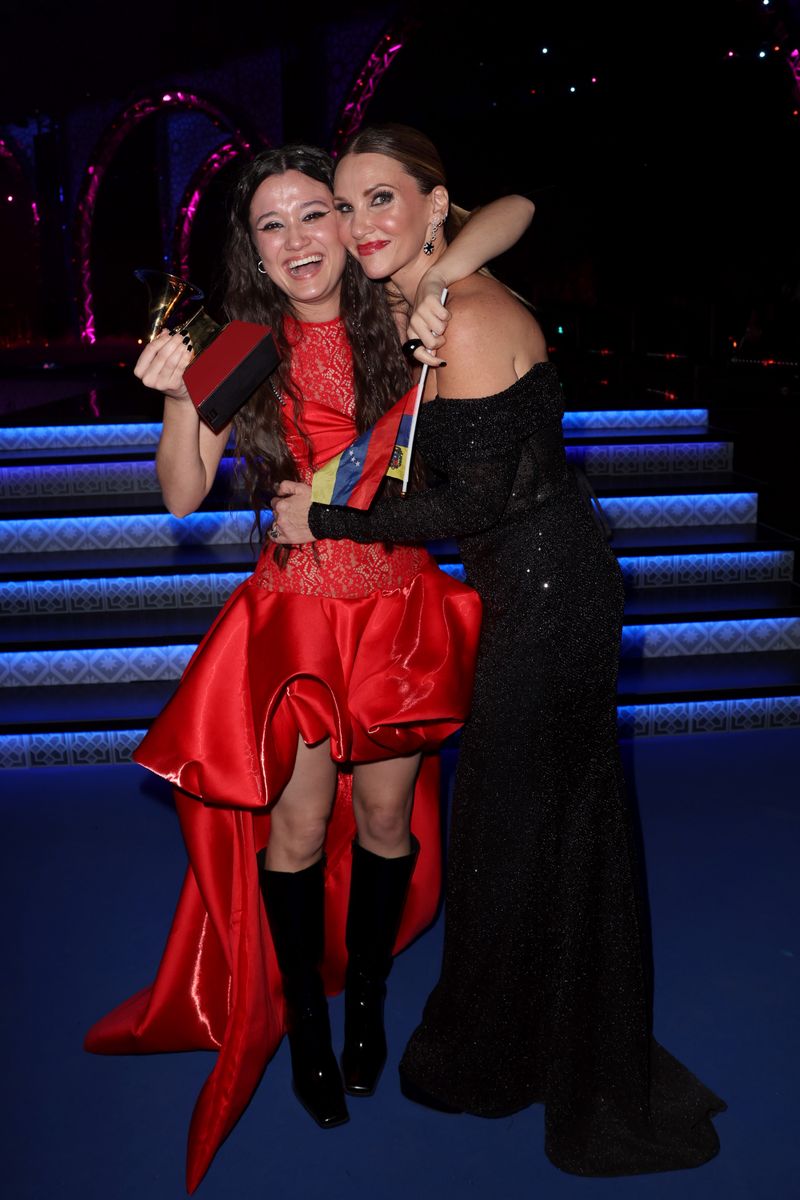
    Joaquina, the youngest-ever winner of the Latin Grammy Award for Best New Artist, may be known for her emotional songwriting and signature red cat-eye, but the Venezuelan singer-songwriter says both came from a very personal place.

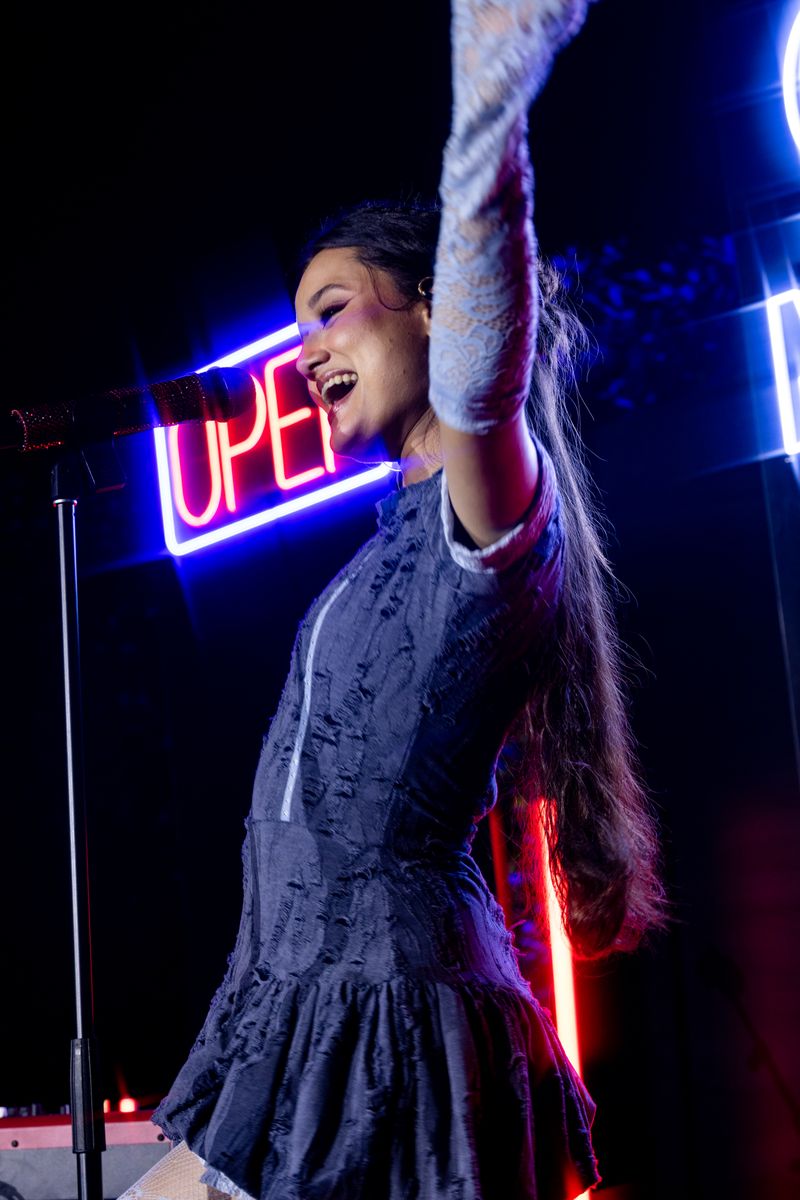
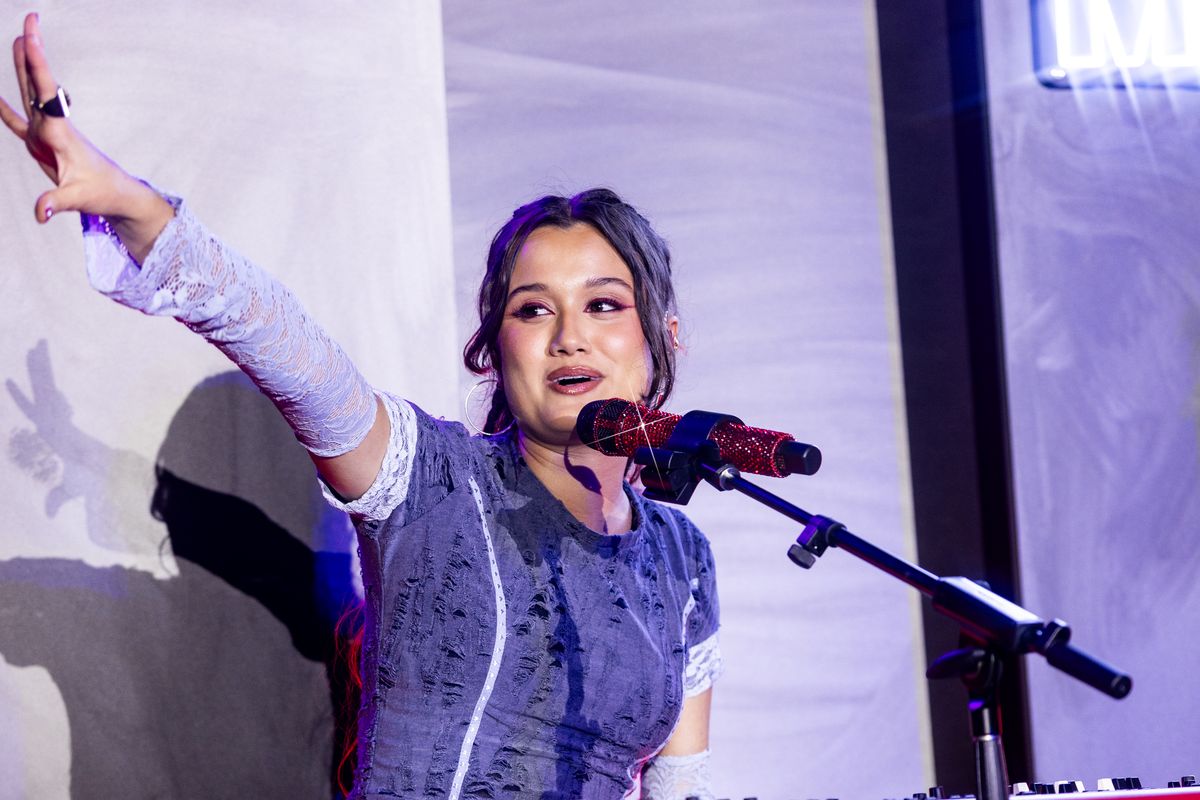
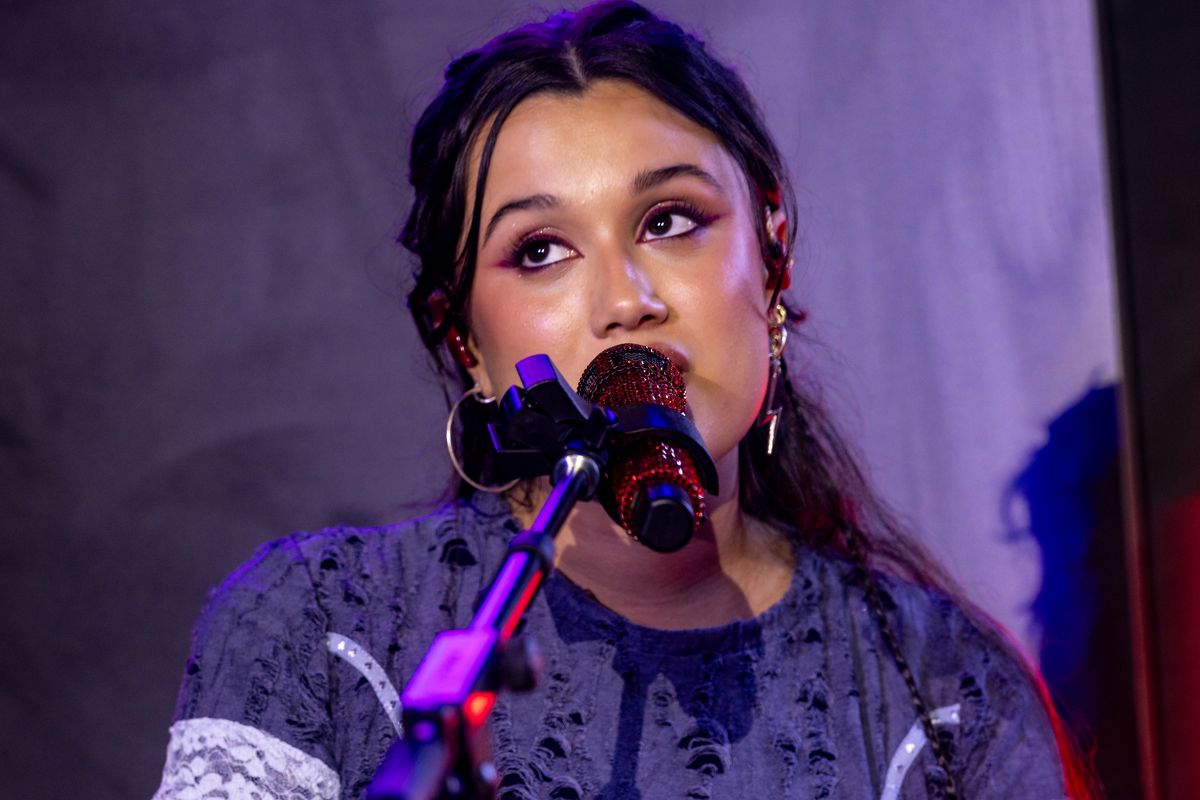
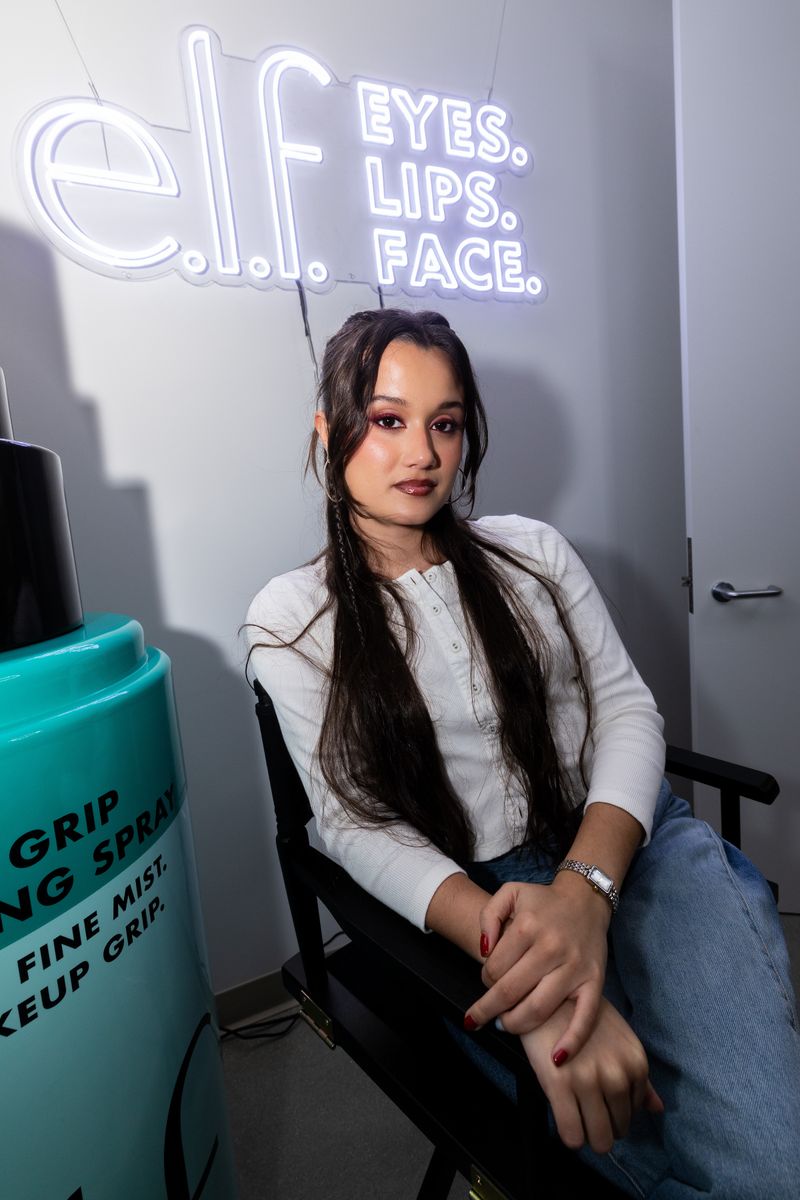
    Joaquina performs “Ya no estoy” for the first time at the e.l.f. Mirror Mix event© JESSICA ALBANO
    Joaquina performs “Ya no estoy” for the first time at the e.l.f. Mirror Mix event

    With the help of CROING Creative and Digital Agency, the 22-year-old artist is entering a new chapter with “Ya no estoy,” her collaboration with e.l.f. Cosmetics for the brand’s Mirror Mix album, while also taking on a new role as one of the brand’s ambassadors. 

    For Joaquina, the partnership makes sense because music and makeup have been intertwined in her life for years. “I’ve always dreamt of working with a makeup brand,” she said during an interview with HOLA! at the Genius and e.l.f. event in Los Angeles. 

    She explained that she started making music around 13 or 14, which was also when she began discovering how much she loved makeup. “When it comes to expression, those two things go hand in hand for me.” 

    And while Mirror Mix is a brand project, Joaquina said she never felt like she was simply recording a song for a campaign, and the brand gave her creative freedom to write about whatever she was experiencing, and “Ya no estoy” was actually a song she had already started for the album she is currently making.

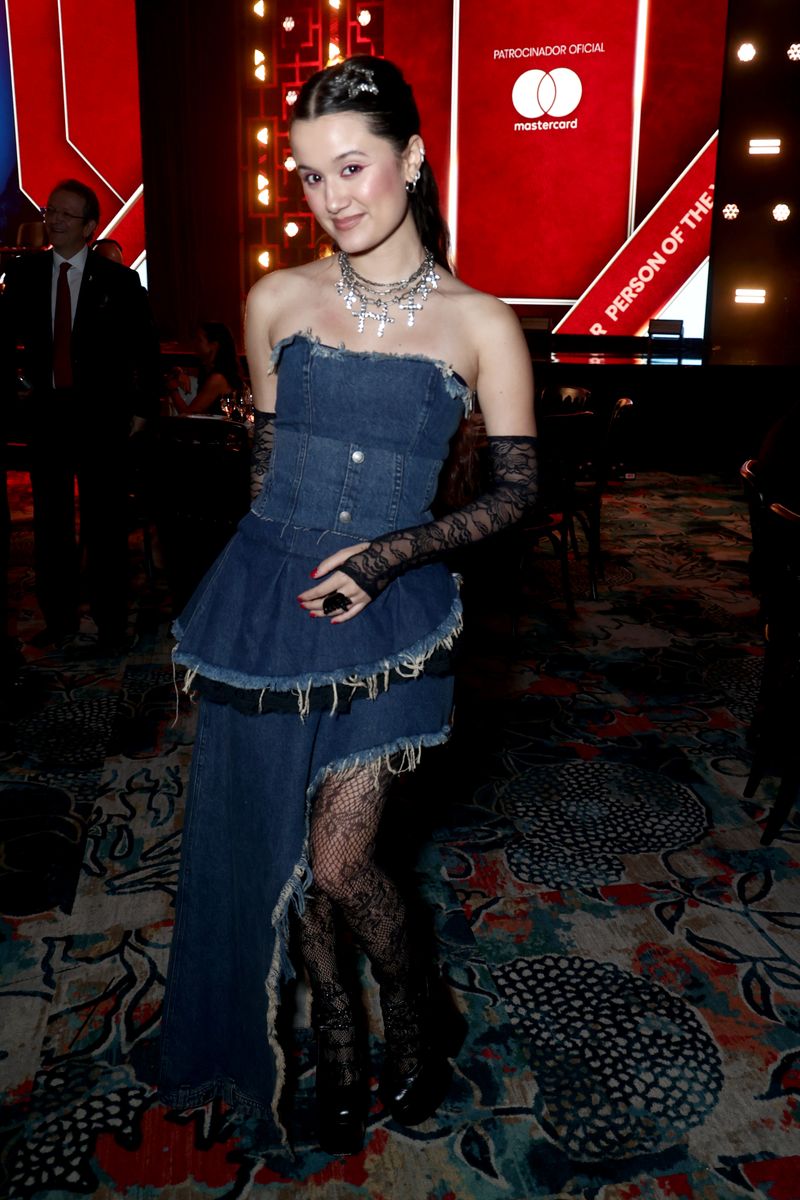
    Joaquina© Jessica Albano
    Joaquina

    “I finished it, and I recorded it, and they loved it,” she said. “It just feels crazy, and I feel like the luckiest girl on the planet to be able to have an opportunity.”  

    The song ultimately became something much more personal than a typical brand collaboration. On “Ya no estoy,” Joaquina sings about choosing herself after losing herself in a relationship, with the song exploring independence, self-love, and learning to be comfortable alone. 

    Joaquina had to learn that love isn’t supposed to be everything

    “Ya no estoy” feels personal because Joaquina wasn’t writing about some abstract idea of independence; she was writing from experience.

    Joaquina© JESSICA ALBANO
    Joaquina

    The singer said one of the biggest lessons she’s taken from a past relationship is that building your entire life around another person can ultimately hurt both people involved.

    “I feel like something that I’ve learned through that process is that sometimes when you build your life around the idea of love or the idea of someone, it just ends up hurting you and the other person more than anything,” she said.  

    While she thought the phrase “you have to love yourself before you can fully love someone else” sounded cliché, she realized it had some weight.

     “I never thought that it was true until I felt so unhappy and felt like everything around me was crumbling just because this relationship was over,” she said. “I think that love should be an addition to your life and not the sole purpose of it,” she said.

    Now, Joaquina is learning how to be her own company and work through her insecurities before she gives that part of herself to someone else again. Which is something most women probably can’t say they figured out by 22 years old.

    She doesn’t leave her Venezuelan roots behind

    Joaquina holds on to both of her identities © Getty
    Joaquina holds on to both of her identities

    If there’s one thing Joaquina won’t separate from her music and identity- it’s Venezuela. She was born into a Venezuelan family and has lived in Miami since she was 6. 

    Growing up, she said her home remained deeply Venezuelan even as she built a life in the United States. Her parents played Venezuelan music, cooked Venezuelan food, and insisted that Joaquina and her sister speak Spanish so they wouldn’t lose their accents. 

    “Now that I look back, I’m really grateful that they did that,” she said.  “I just feel so lucky that I’m bilingual,” she said, calling it “such a privilege” that has opened doors for her.

    Joaquina© JESSICA ALBANO
    Joaquina

    That upbringing left her with a complicated relationship with belonging. Joaquina said that as she’s gotten older, she’s sometimes felt “not American enough” and other times “not Venezuelan enough.”

    Instead of choosing one side, however, she’s learned to let both exist. “These two loves, they don’t – they coexist in my heart,” she said. “They don’t have to compete.”  

    That bicultural identity is also intentionally present in “Ya no estoy.” The song incorporates the Venezuelan cuatro, while the lyrics and story reflect her experience of figuring out who she is and what she wants on her own terms.

    You may also like

    Continue reading

    The red cat-eye started in her mom’s bathroom

    Joaquina and her mom Camila Canabal © Rodrigo Varela
    Joaquina and her mom Camila Canabal

    Before Joaquina had a signature beauty look, she had a teenage girl’s free time, her mother’s makeup, and YouTube.

    Her relationship with makeup started at home. Joaquina said her mother is “a makeup freak just like me,” and she grew up watching her get ready and seeing how much she enjoyed the process.  

    Then the pandemic happened, and Joaquina was 15, stuck at home, attending school online and, as she described it, going through an insecure period where she felt like she didn’t quite fit in.

    So she started experimenting. “I was literally like scavenging my mom’s makeup, like old makeup, you know, stealing stuff,” she joked.

    Her red cat-eye is now her signature look© JESSICA ALBANO
    Her red cat-eye is now her signature look

    She spent hours watching YouTube makeup tutorials and practicing on herself. That is essentially how she taught herself to do makeup, and eventually how she landed on the look that would become almost synonymous with her.

    Joaquina remembered finding a colorful palette in her mom’s bathroom with red, orange, and blue shadows. Because she has large eyelids and wanted to emphasize her eyes, she started playing around with cat-eye shapes. After trying black and purple, she landed on red. “I just really liked it,” she said. “So I’ve just kept doing it since then.” 

    The look has since become part of her identity, with fans recreating the red cat-eye and even wearing it to her shows. 

    She still considers herself an “up-and-coming” artist

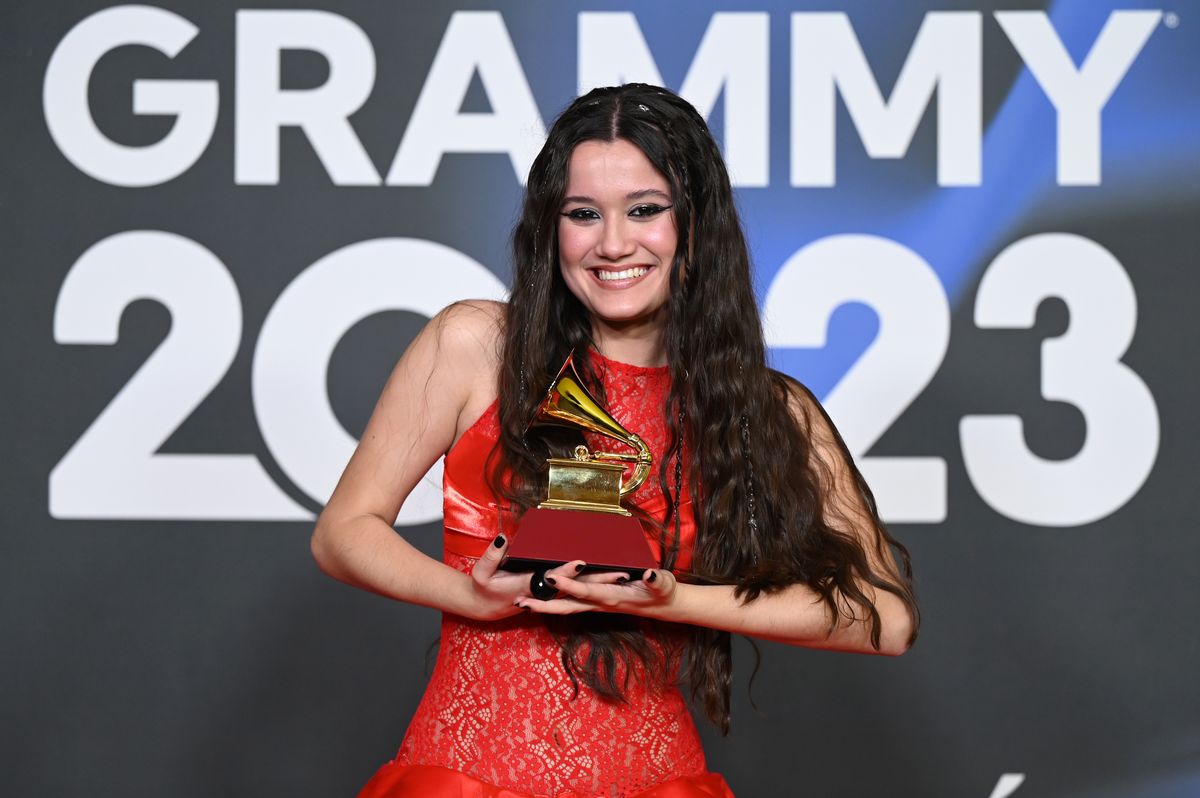
     Joaquina became the youngest-ever winner of the Latin Grammy Award for Best New Artist in 2023 when she was 19© Getty
    Joaquina became the youngest-ever winner of the Latin Grammy Award for Best New Artist in 2023 when she was 19

    Joaquina is a Latin GRAMMY winner and eight-time nominee, has performed with Gustavo Dudamel and the New York Philharmonic at Radio City Music Hall, and has built a growing international fan base. However, she still describes herself as someone just getting started.
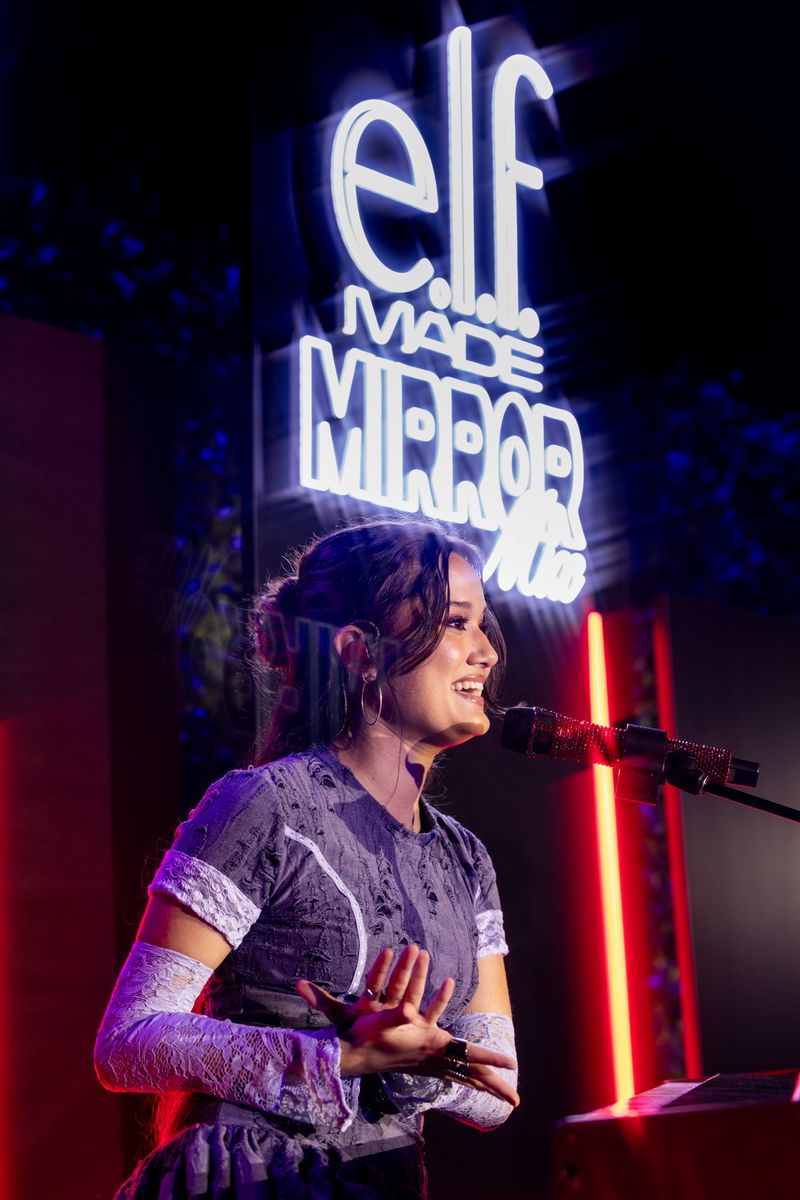
    When asked when the world might stop calling her an “up-and-coming” artist, she basically shrugged. “Girl, I don’t know,” she said.

    She knows she’s accomplished a lot, and she’s proud of her accomplishments, but none of those things, she explained, guarantee that you’ve reached the moment you’ve been waiting for. “You can have all the accolades in the world, but it really just takes like a shift, and sometimes it’s longer, sometimes it might be a song,” she said.  

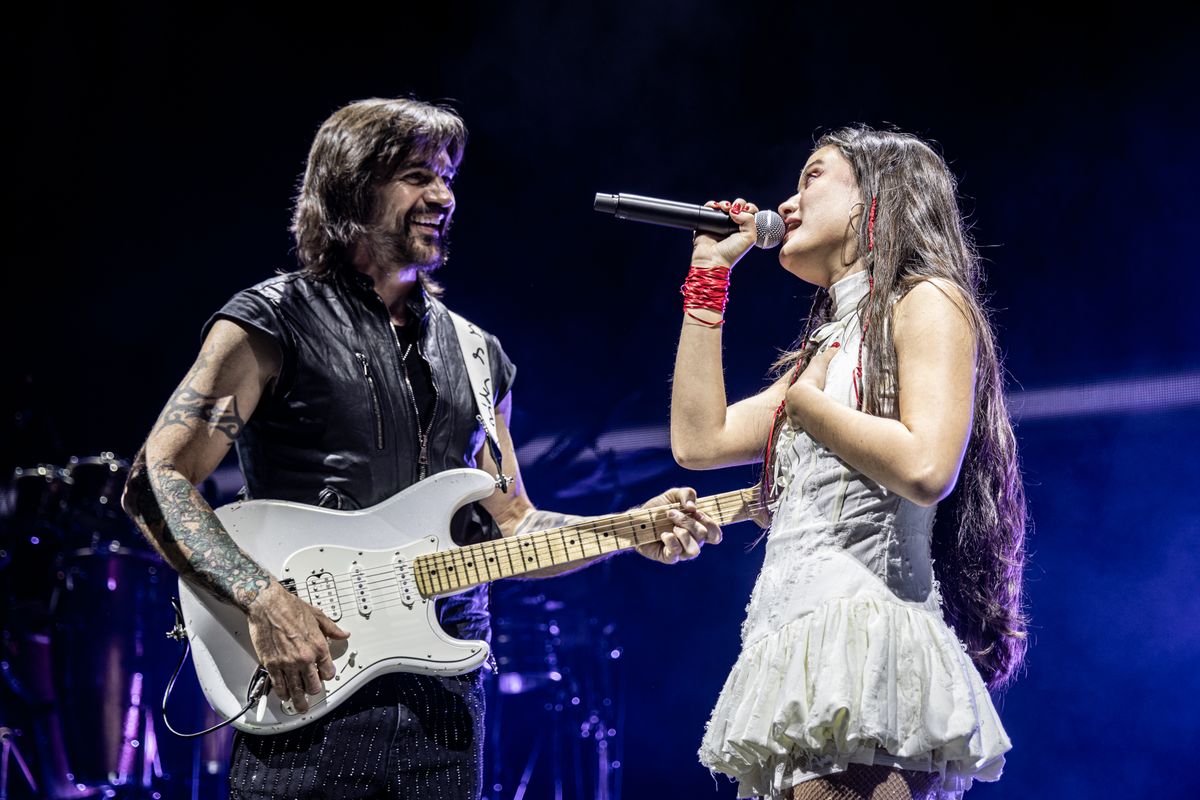
    Juanes and Joaquina perform during Juanes North America Tour in January 2026© John Parra
    Juanes and Joaquina perform during Juanes North America Tour in January 2026

    That’s why she’s focused less on collecting achievements and more on making music that actually sticks. “I think that my focus is to just like make really good albums,” she said.
    She wants to build a community around her music so that when the bigger spotlight eventually arrives, she’ll have something meaningful to show for it. “I know my potential, and I know the music that I’m making,” she said. “I feel like people literally have not seen not even like 1/5 of what I know I can offer.”  

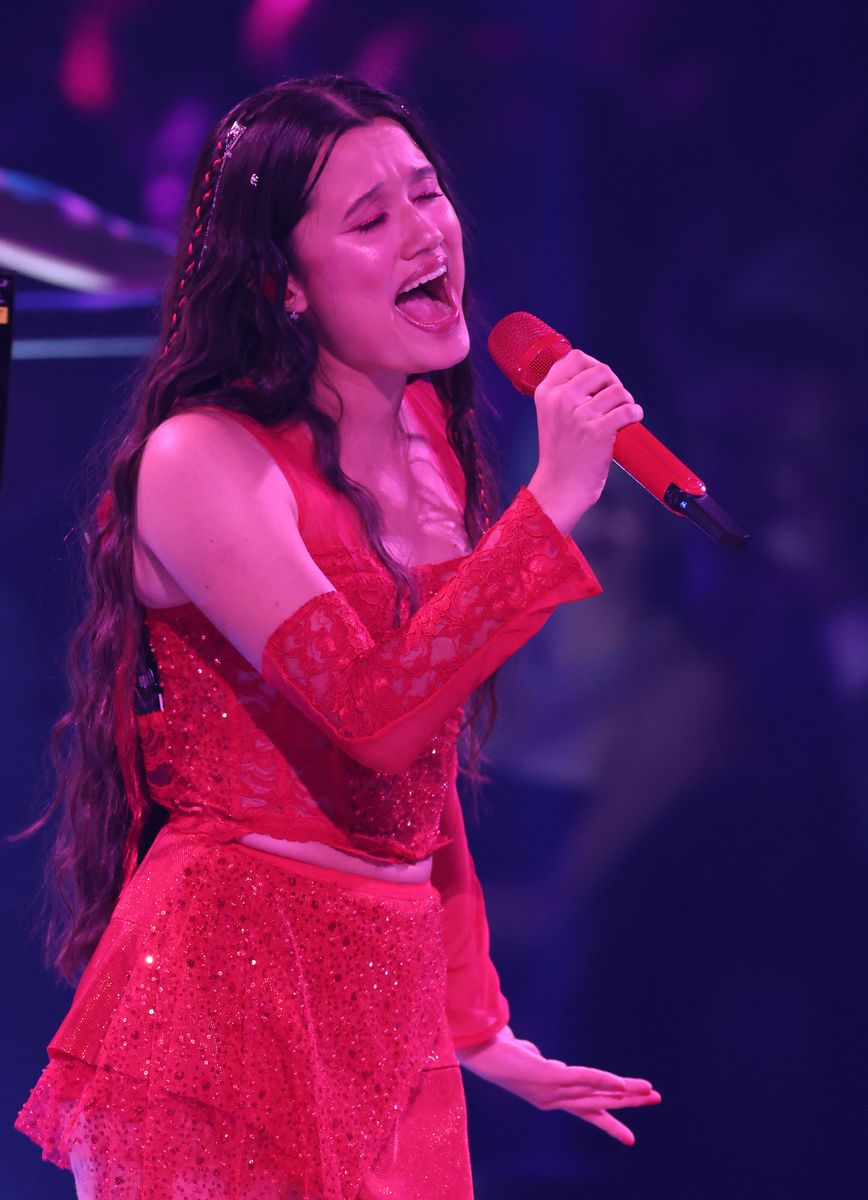
    Jaoquina performed on the Latin GRAMMY Awards stage in 2025© Getty
    Jaoquina performed on the Latin GRAMMY Awards stage in 2025
  • Why Silver Lake’s Hottest New Hotel Took So Long to Open (Blame Katy Perry)

    Why Silver Lake’s Hottest New Hotel Took So Long to Open (Blame Katy Perry)

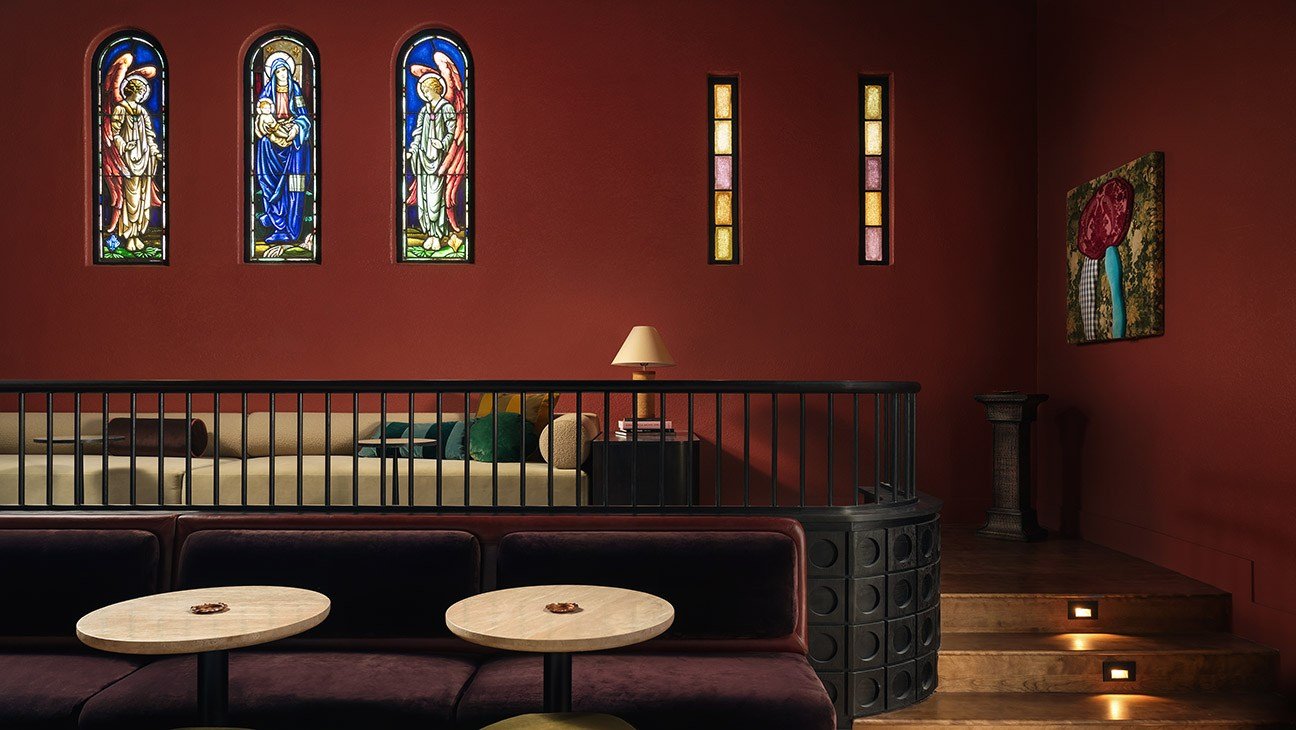
    In a town where projected release dates are often missed, this is one for the record books. Hotel Lucile, a boutique hotel inside a renovated church in Silver Lake, had set a soft opening for late 2024, which was pushed to spring 2025 and then again to 2026. On Sept. 14, the 25-room property finally welcomed its first guests, marking the end of an epic, 15-year struggle to bring the 1931 property back to life. The church’s stained glass remains, as does a towering cross atop the building. The nave, meanwhile, has been reborn as a New American French restaurant, Sous Sous, with floor-to-vaulted-ceiling curtains and a hulking, marble bar.

    It’s a welcome addition to a hip neighborhood long in need of a designer hotel, and location scouts for Netflix’s Nobody Wants This and HBO’s I Love LA — which both regularly shoot nearby — are likely lining up to be first inside. (The hotel’s GM, Anthony Gutierrez, won’t name names but says they’ve had multiple inquiries.) Still, anyone who lives nearby and has watched the project unfold has the same question: What took so long?

    The hotel’s journey from crumbling Presbyterian church to Silver Lake hotspot is more interesting, a soap opera that involves government red tape, some nuns and Katy Perry. Of the long road, Jennifer Armbruster, president of the hotel group Casetta, the project’s developer, explains with a laugh: “The deal structure of the church, combined with COVID, combined with some permitting issues, a new city council — just all of that.”

    Hotel Lucile’s origin story begins in 2011, when celebrated restaurateur Dana Hollister announced plans to turn the former Pilgrim Church into a boutique hotel. It was a good idea, but well ahead of its time. (Seco, a natural wine bar whose fans include Kaia Gerber and Olivia Rodrigo, wouldn’t open across the street for another 14 years, shortly after Erewhon moved in down the block.) And Hollister reportedly spent years fighting the city for permits to sell alcohol and allow dancing.

    The Hotel Lucile, formerly the Bethany Presbyterian Church, built in 1931.

    Chase Daniel

    At the same time, Hollister was also engaged in a lengthy courtroom battle with Perry and the Roman Catholic Archdiocese of Los Angeles over the rights to another property, a Los Feliz convent the singer hoped to turn into a private home. Hollister lost that fight in 2017 and sold her stake in the hotel project to cover millions in damages. In 2018, Casetta stepped in, taking over the church’s lease for what one broker estimates might have been north of $4.5 million. Right partner, poor timing. By the time the architectural plans were finished, COVID hit, and Hotel Lucile was further delayed.

    Rooms at the Hotel Lucile, available from $500 a night.

    Chase Daniel

    The Lucile’s plunge pool and patio, in what was once a playground.

    Chase Daniel

    The church — on the corner of Lucile Avenue and Griffith Park Boulevard — has a rich Hollywood history, having once served as the home to the groundbreaking Asian American theater company the East West Players. What made the building worth saving was also what made the project so challenging. Rehabbing historic church pillars and archways — the grand entrance that’s been an anchor of the corner — required a specialized restoration expert. After years of neglect, the once-rotating, 12-foot cross was barely attached and was nearly removed following heavy rains earlier this year.

    Oysters on the half shell at Sous Sous, the new restaurant in the nave.

    Patrick Michael Chin

    The setbacks were costly. But the finished product is impressive. A sense of drama abounds at the hotel, which was designed by Venice-based studio Electric Bowery. The church’s center has been reborn as a 96-seat restaurant with lush velvet booths, the seasonal menu courtesy of De La Nonna chef Patrick Costa. (Local artist Janel Foo designed custom stained glass coasters inspired by the sanctuary.) The former choir loft serves as a private bar with a martini cart, while the church’s onetime playground is now home to a plunge pool and patio. In a nod to the building’s religious origins, the do-not-disturb signs read “Solitude.”

    Creating a sense of place was paramount and befits a property that aims to once again be part of Silver Lake’s fabric. Gutierrez likens the vibe to “your eclectic neighbor that has all this fabulous art up in almost contradictory ways but coming together in a really well-designed space,” he says, which makes sense. “We want to be good neighbors.” Amen.

    This story appeared in the Oct. 7 issue of The Hollywood Reporter magazine. Click here to subscribe.

  • Shakira surprises fans by speaking Catalan: Star reveals that’s how she communicates with her sons

    Shakira surprises fans by speaking Catalan: Star reveals that’s how she communicates with her sons

    Shakira may have left Barcelona behind, but one part of her life in Catalonia has followed her all the way to Miami. The Colombian superstar surprised Spanish television viewers during her October 8 appearance on La Revuelta when she effortlessly switched between Spanish and Catalan while chatting with host David Broncano.

    What started as a casual conversation quickly turned into one of the interview’s funniest moments. Shakira revealed that she still speaks Catalan with her two sons, Milan and Sasha, whom she shares with former FC Barcelona footballer Gerard Piqué.

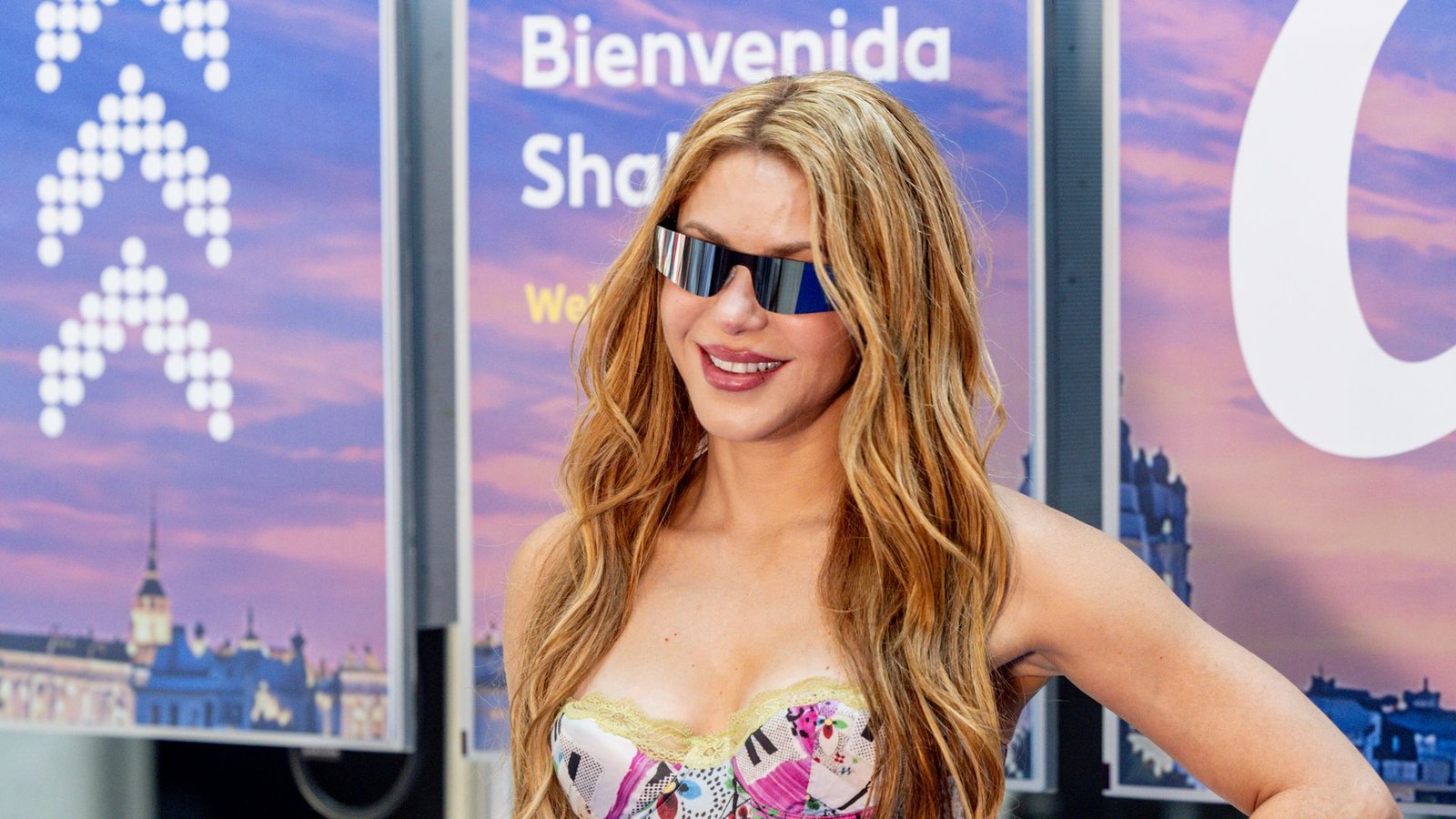
    The Colombian artist has arrived in Madrid to begin a stay of almost a month, with 12 concerts scheduled at the Shakira Stadium.© Europa Press via Getty Images
    The Colombian artist has arrived in Madrid to begin a stay of almost a month, with 12 concerts scheduled at the Shakira Stadium.

    She admitted that she uses the language more frequently in Miami than she did while living in Catalonia. “I speak more Catalan in Miami than when I lived in Catalonia,” Shakira confessed, explaining that the language has become something of a secret communication tool in her household. 

    Shakira speaks Catalan on La Revuelta and surprises David Broncano

    The unexpected language lesson began when Shakira casually used a popular Catalan expression during her interview. “De puta mare, como dicen en Catalunya,” she said, using a colloquial phrase that roughly translates to “freaking awesome.”

    Broncano immediately noticed. “Do you speak Catalan?” he asked.

    Shakira confirmed that she does, explaining that her connection to the language remains strong because of her children. “I speak Catalan with my children. Yes, they are Catalan,” the singer explained.

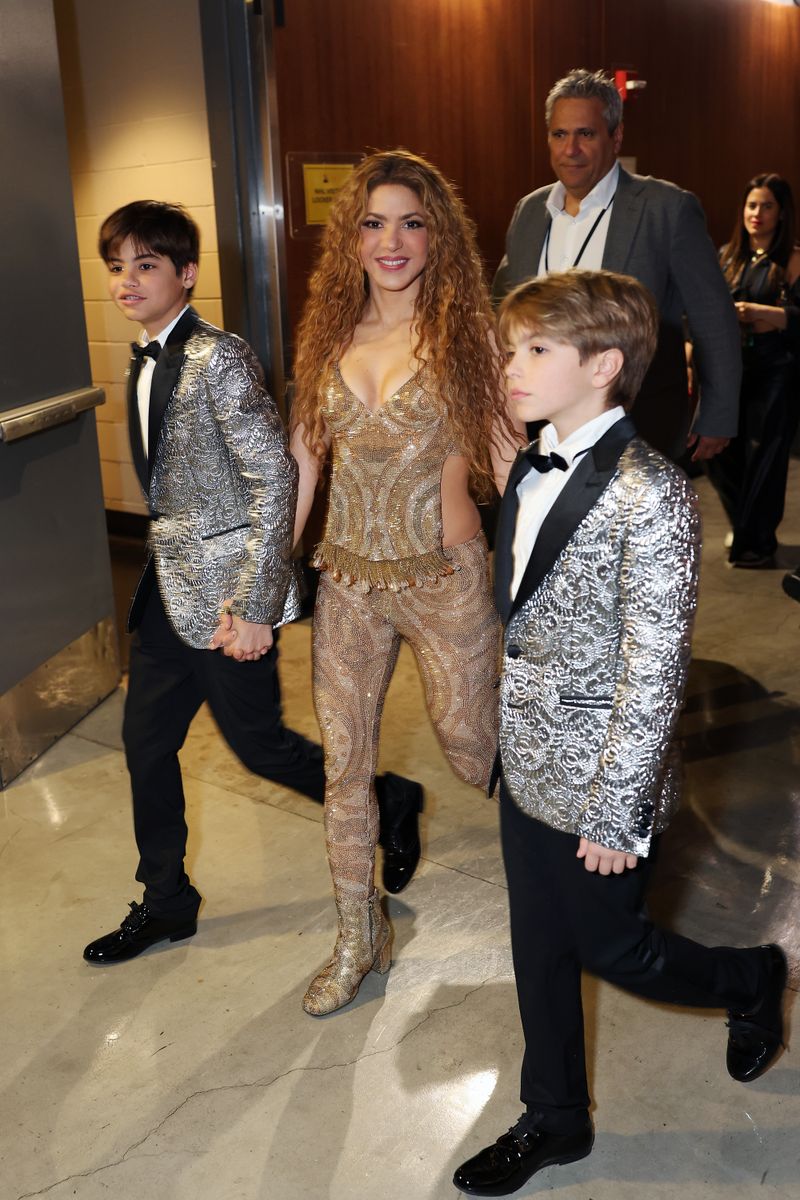
    Shakira with her sons Milan and Sasha at the 67th edition of the Grammys
© Matt Winkelmeyer
    Shakira with her sons Milan and Sasha at the 67th edition of the Grammys

    Why Shakira speaks Catalan with Milan and Sasha in Miami

    For Shakira, Catalan is more than a reminder of her years in Barcelona. It also serves a surprisingly practical purpose. The singer revealed that her children sometimes switch to Catalan when they want to communicate without their friends understanding the conversation. “I speak Catalan with them in Miami. When they don’t want their friends to understand them, they speak Catalan to me,” she explained.

    Although Milan and Sasha have grown up surrounded by multiple languages, Shakira clarified that English is their primary language when speaking to each other. “They speak a lot of English with each other. I try to speak in Spanish with them and in Catalan when I don’t want other people to understand me,” she said. 

     Sasha Piqué Mebarak, Shakira, and Milan Piqué Mebarak are seen onstage during the world premiere of Zootopia 2 at El Capitan Theatre on November 13, 2025 in Los Angeles, California. (Photo by Jesse Grant/Getty Images for Disney)© Getty Images for Disney
    Sasha Pique Mebarak, Shakira, and Milan Pique Mebarak

    Shakira shows off her Catalan with several expressions

    Shakira didn’t stop at explaining how she uses the language. She also demonstrated her Catalan skills by sharing a few familiar expressions. Among the phrases she used were “Però què fas, tio!” which means “But what are you doing, dude?”

    “Milan, parlem després,” which means “Milan, let’s talk later,” and “Hem de parlar d’això,” which means “We need to talk about this.”

    And while she is internationally recognized for performing in Spanish and English, her ability to converse in Catalan reflects another aspect of her multilingual life.

    David Broncano jokes about Gerard Piqué during the Catalan conversation

    Just when the conversation seemed to be turning into an informal Catalan lesson, Broncano introduced an unexpected twist.

    Shakira appeared surprised when the television host responded to her in Catalan. Curious about how someone from Jaén had learned the language, she asked whether he had once dated a Catalan woman.

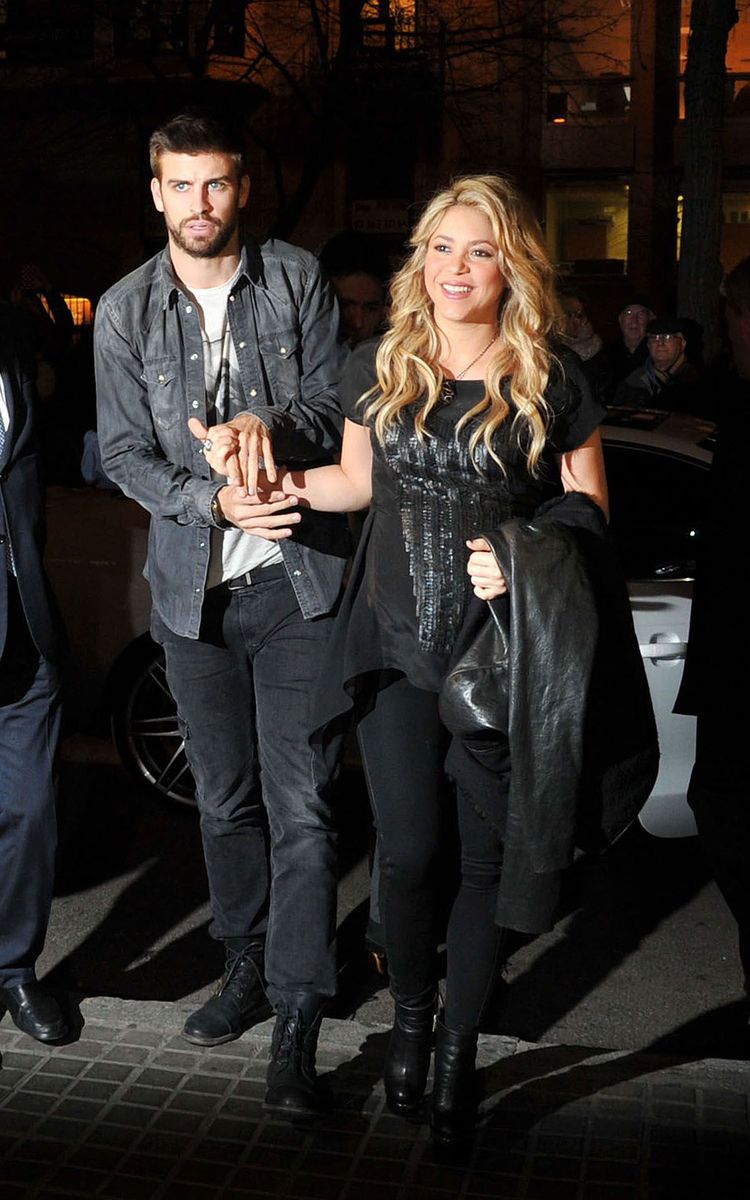
    Shakira and Gerard Pique in Barcelona, Spain. © Europa Press via Getty Images
    Shakira and Barcelona footballer Gerard Pique

    Broncano confirmed that he had and immediately turned the coincidence into a joke. “In fact, the same thing has happened to both of us,” he replied, apparently alluding to their past relationships with Catalan partners.

    The exchange was particularly amusing given Shakira’s highly publicized breakup with Piqué, which inspired some of her most talked-about music.

    Shakira’s Barcelona years continue to influence her family life

    Shakira’s relationship with Catalonia extends well beyond her former romance with Gerard Piqué. The singer spent years living in Barcelona, where her sons Milan and Sasha were raised during their early childhood. Both children began their education in Catalonia before the family relocated to Miami in 2023.

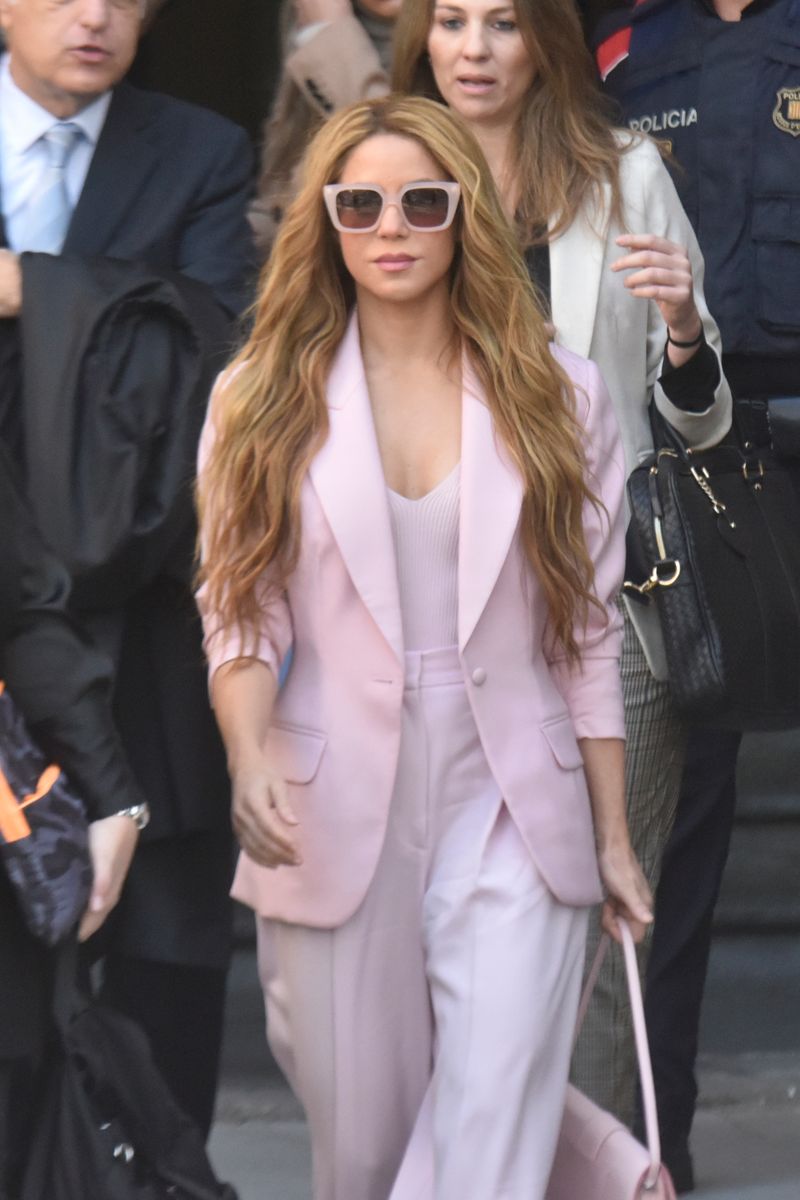
    Shakira in Barcelona, Catalonia, Spain. © Europa Press via Getty Images
    Shakira in Barcelona, Catalonia, Spain.

    Their move marked a significant new chapter for Shakira, who has since balanced motherhood with her international music career. Still, the singer’s comments on La Revuelta suggest that the language and cultural influences from those years remain part of her children’s lives.

  • Ryan Reynolds goes hard on Justin Baldoni in explosive unsealed texts

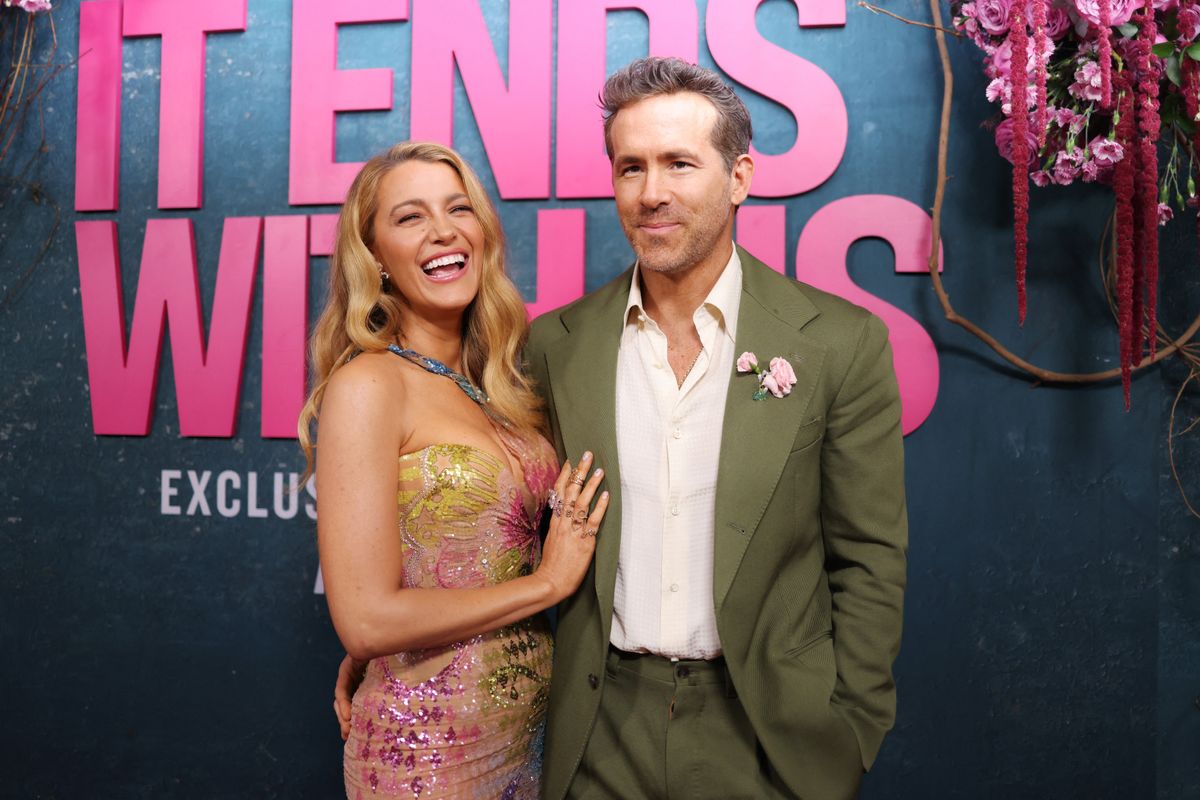
    Ryan Reynolds did not hold back when discussing Justin Baldoni behind closed doors. Newly unsealed text messages from Blake Lively‘s legal battle with her It Ends With Us co-star and director reveal just how strongly the Deadpool actor felt about Baldoni as his wife faced intense public criticism during the film’s August 2024 release.

    In messages exchanged with It Ends With Us author Colleen Hoover, Reynolds called Baldoni a “predator and sociopath” while criticizing the public narrative surrounding Lively.

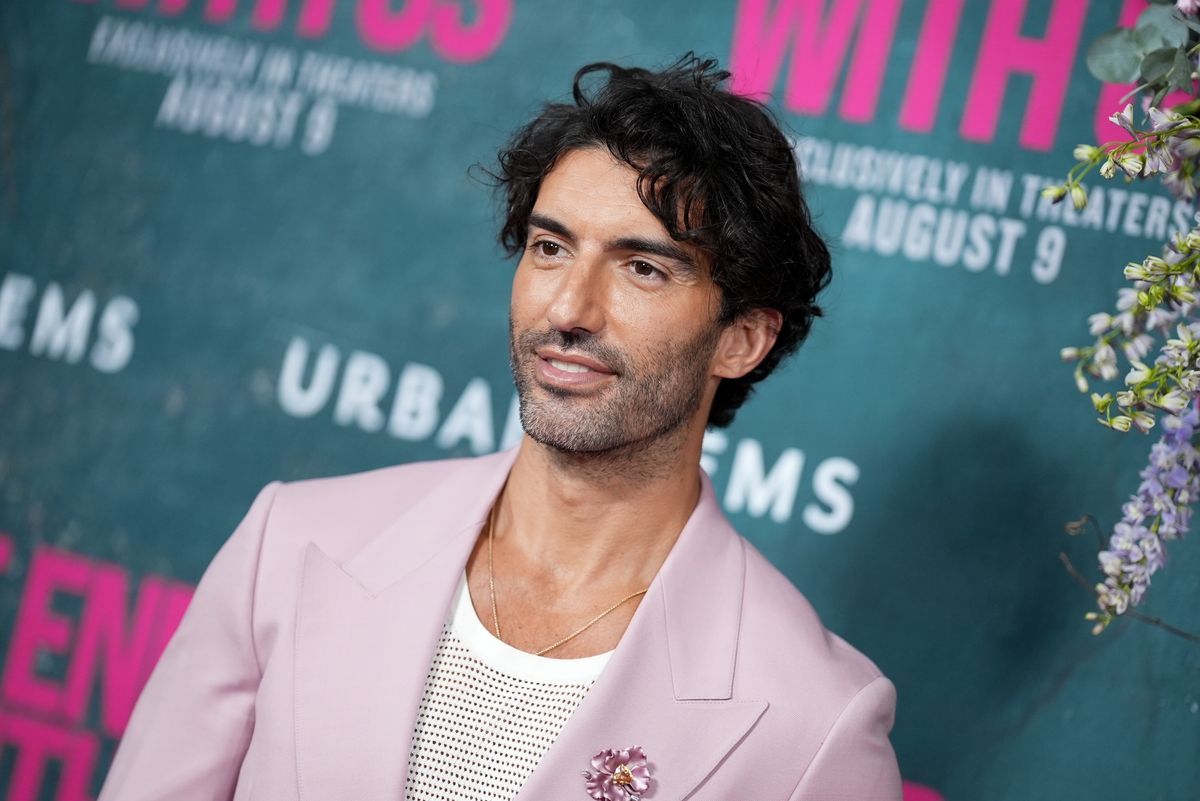
     Justin Baldoni arrives at New York Federal Courthouse for his trial against Blake Lively on February 11, 2026 in New York City. 
© GC Images
    Justin Baldoni arrives at New York Federal Courthouse for his trial against Blake Lively

    The private conversations, reported by Page Six on October 9, 2026, offer another revealing look at the Hollywood dispute that dominated entertainment headlines before Lively and Baldoni reached a settlement in May 2026.

    You may also like

    Continue reading

    And Reynolds’ comments about Baldoni were only part of the story.

    Ryan Reynolds Calls Justin Baldoni a ‘Predator and Sociopath’ in Private Texts

    According to the newly disclosed court documents, Reynolds exchanged messages with Hoover on August 10, 2024, as speculation about tension behind the scenes of It Ends With Us intensified.

    In one particularly pointed message, Reynolds expressed disbelief that Lively was facing public criticism while Baldoni was attracting less scrutiny.

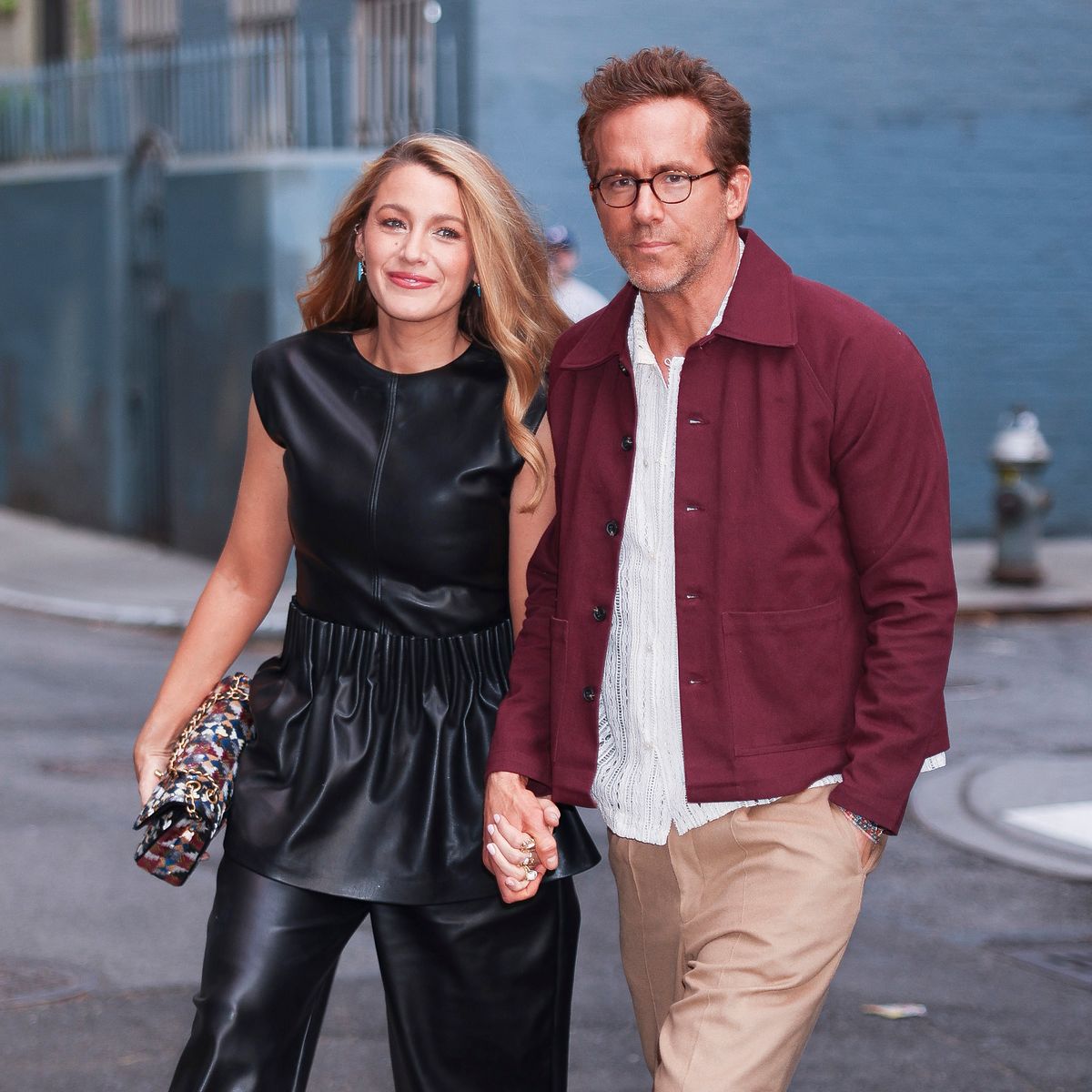
    NEW YORK, NEW YORK - APRIL 29: Blake Lively and Ryan Reynolds seen in Greenwich Village on April 29, 2025 in New York City. (Photo by Aeon/GC Images) © Getty
    Blake Lively and Ryan Reynolds

    He described Baldoni as a “predator and sociopath” and questioned why the narrative had focused on blaming a woman. The actor also expressed confidence that more information about the production would eventually become public. “It’s amazing to me how low people still go,” Reynolds wrote, adding that he believed people would eventually speak on the record.

    The messages show that Reynolds was already deeply frustrated by the situation months before Lively formally accused Baldoni of sexual harassment and retaliation in December 2024.

    Ryan Reynolds Mocks Justin Baldoni’s Crisis PR Team

    One of the more striking revelations involves Reynolds’ sarcastic interpretation of Baldoni’s public relations strategy.

    In his conversation with Hoover, Reynolds suggested that Baldoni’s crisis communications advisers were encouraging the director to maintain a carefully crafted public image while handling negative attention behind the scenes.

    Judge dismisses Justin Baldoni’s $400M countersuit against Blake Lively and Ryan Reynolds© CHARLY TRIBALLEAU
    Judge dismisses Justin Baldoni’s $400M countersuit against Blake Lively and Ryan Reynolds

    Reynolds imagined a conversation in which the team instructed Baldoni to continue discussing domestic violence, praising Lively and presenting himself as a thoughtful advocate.

    He then wrote an imaginary response from Baldoni: “Justin: Namaste. Let’s get this bitch.” According to the court documents cited by Page Six, Hoover reacted with laughter.

    The exchange reflected Reynolds’ belief that Baldoni’s public messaging did not align with what Reynolds believed was happening behind the scenes. Baldoni disputed the allegations against him. 

    Colleen Hoover Responds to Ryan Reynolds’ Messages About Justin Baldoni

    Hoover, whose bestselling novel inspired the film, also shared her frustration with the online reaction. In the newly revealed conversation, the author suggested that some of the loudest critics were young social media users who might eventually regret their comments.

    She also expressed relief that public attention appeared to be shifting away from Lively and toward Baldoni. Reynolds responded that he was surprised by the number of girls participating in the criticism, although he believed some observers already understood the situation.

    Their exchange came during a particularly complicated promotional period for It Ends With Us.

    Judge Dismisses Justin Baldoni’s $400M Countersuit Against Blake Lively and Ryan Reynolds© John Nacion
    Judge Dismisses Justin Baldoni’s $400M Countersuit Against Blake Lively and Ryan Reynolds

    The film performed strongly at the box office, but its publicity campaign attracted controversy over how its subject matter was being discussed.

    Lively faced criticism for encouraging moviegoers to wear floral outfits to screenings and for promoting her business ventures during interviews connected to a film centered on domestic abuse. At the same time, speculation grew about why Baldoni appeared separately from several cast members during promotional events.

    The newly disclosed texts suggest that Reynolds and Hoover viewed the backlash through a very different lens from many of the film’s online critics. 

    Ryan Reynolds Also Pressured Sony Pictures to Defend Blake Lively

    The messages to Hoover were not the only private communications involving Reynolds that have attracted attention.

    Additional court documents reported by Page Six reveal that Reynolds contacted talent agent Warren Zavala on August 17, 2024, urging Sony Pictures to publicly support Lively. Reynolds reportedly believed the studio was failing to adequately defend his wife against damaging publicity.

    He described Sony’s response as “unforgivable” and argued that the company needed to take stronger action. “Sony needs to step up for real,” Reynolds wrote. “ENOUGH IS ENOUGH.”

    According to the messages, Reynolds had even drafted a proposed statement for the studio, although Sony did not release his version.

    Justin Baldoni gains the support of Joe Rogan — says 'everyone is scared' of Blake Lively and Ryan Reynolds© GrosbyGroup
    Justin Baldoni gains the support of Joe Rogan — says ‘everyone is scared’ of Blake Lively and Ryan Reynolds

    He wanted the company to acknowledge what he believed was a coordinated reputational attack on Lively.

    Sony eventually issued a public statement supporting the actress in December 2024, after her allegations against Baldoni became public.

    What Happened in Blake Lively and Justin Baldoni’s Lawsuit?

    The dispute began publicly in December 2024, when Lively accused Baldoni of sexual harassment and retaliation related to their work on It Ends With Us.

    Baldoni denied the allegations and subsequently pursued a $400 million lawsuit against Lively, Reynolds, and others, accusing them of defamation and other wrongdoing. That lawsuit was dismissed in June 2025.

    In April 2026, a federal judge dismissed much of Lively’s case, including her sexual harassment claims, while allowing certain retaliation-related claims to proceed.

    Blake Lively and Justin Baldoni are seen on the set of "It Ends with Us" on January 12, 2024 in Jersey City, New Jersey.  (Photo by Jose Perez/Bauer-Griffin/GC Images)© Jose Perez/Bauer-Griffin
    Blake Lively and Justin Baldoni are seen on the set of “It Ends with Us”

    The ruling did not establish that all of the alleged conduct had or had not occurred. Some claims were dismissed because of the legal requirements governing Lively’s working relationship and the claims she brought.

    The parties ultimately reached a confidential settlement in May 2026, shortly before the scheduled trial.

    A joint statement from the parties acknowledged concerns about the production and emphasized the importance of workplaces free from misconduct.

    The agreement ended the litigation without a trial determining the remaining disputed allegations. 

    How Has Justin Baldoni Responded Since the Settlement?

    Baldoni has also addressed the emotional toll of the legal dispute.

    In July 2026, he and his wife, Emily Baldoni, shared a video discussing the difficult period their family had experienced. The director said they had deliberately avoided speaking publicly for an extended period while allowing the legal process to unfold.

    Blake Lively and Justin Baldoni are seen on the set of 'It Ends with Us' on January 12, 2024, in Jersey City, New Jersey. © GC Images
    Blake Lively and Justin Baldoni are seen on the set of ‘It Ends with Us’

    The couple expressed gratitude for their supporters while also describing the pain and perceived injustice they had experienced.

    Baldoni maintained that he wanted the legal system to address the allegations rather than continue arguing publicly.

  • DOJ Launches Investigation Of Networks For Suspending TV Pool Amid Trump’s Ban On CNN

    DOJ Launches Investigation Of Networks For Suspending TV Pool Amid Trump’s Ban On CNN

    The Justice Department has launched an investigation into whether the five major networks violated antitrust laws when they suspended participation in the White House TV pool in protest of Donald Trump‘s ban on CNN.

    Emily Covington, a spokesperson for the Justice Department, said in a statement, “Members of the television press pool have boycotted covering White House events. Group boycotts among commercial competitors can violate the Sherman Act. The Antitrust Division is simply investigating to determine whether these news organizations have violated the antitrust laws.” The New York Times first reported on the investigation.

    After Trump announced his ban on CNN, Politico and MS NOW from the White House grounds on Sept. 18, CNN also was restricted from the TV pool. As part of a long-running arrangement, CNN, CBS News, ABC News, NBC News and Fox News rotate pool duty providing technical, video and reporting coverage of the president, with feeds then distributed to other networks and news organizations. The pool is necessary because of the space limitations of areas of the White House, like the Oval Office, or on Air Force One.

    After the CNN freeze out, the other members of the TV pool jointly announced on Sept. 21 that they would refrain from their rotation turn, a move made to protest the White House effort to block the news network.

    “The public has a vital interest in receiving accurate, independent information about its government. No administration should restrict a news organization because it objects to its reporting,” the five networks said in a statement at the time.

    The suspension lasted for about four days, but it came during the White House visit of Chinese President Xi Jinping. The suspension of the TV pool meant that there was much less video coverage of major ceremonies and other events surrounding his visit. Trump later complained that CNN and MS NOW did not cover Xi’s visit, without mentioning his efforts to ban the two outlets from the White House grounds.

    ABC confirmed that it has not received any notification of the investigation but it expects to. A CNN spokesperson declined to comment. Other networks in the pool did not immediately respond to a request for comment.

    The White House has continued to restrict CNN from certain assignments, including flying on Air Force One on presidential trip.

    After Trump’s ban on CNN, Politico and MS NOW from White House grounds, those three media outlets sued, claiming violations of their First Amendment and due process rights. A federal judge imposed a temporary restraining order, which last until Tuesday, that has forced the White House to renew access to dozens of reporters. The judge, Timothy Kelly, is expected to rule by then on whether to grant the news outlets a preliminary injunction, something that would prevent the White House from denying access on a longer term.

    The issue of access to the White House grounds is separate, yet related, to the issue of whether the administration can also freeze out members of the pool because the president does not approve of their editorial decisions. A different case, involving the Associated Press, is on appeal in the D.C. Circuit. The AP was barred from the White House pool because its style guidance did not adhere to Trump’s renaming of the Gulf of Mexico to the Gulf of America.

    Bruce Brown, president of the Reporters Committee for the Freedom of the Press, said in a statement that the investigation “appears to be a pretext for seeking records from the networks about how they are covering daily White House events during a media ban the president himself put in place. The decisions news organizations make about coverage are protected by the First Amendment, and summoning antitrust authority, on top of the retaliatory actions the White House has already taken to bar certain outlets, is another and even more brazen attempt to try to intimidate journalists.”

    The administration has been rebuffed in the federal courts in another effort to seek materials from media organizations as part of an antitrust investigation. Last year, a federal judge barred the Federal Trade Commission from issuing a civil investigative demand to Media Matters for America, the progressive watchdog group, as part of an antitrust investigation of an advertiser boycott of Elon Musk’s X.

    Media Matters later said that a settlement with the FTC required that the agency forgo issuing such a civil investigation demand. They also said that the “agreement — and the decisions Media Matters won in the district court and the court of appeals — offers a roadmap for other newsgathering and nonprofit organizations facing, or at risk of, government retaliation.” Three advertising holding companies, WPP, Dentsu and Publicis, also reached a settlement with the FTC.

  • Did Denzel Washington say he’s ‘never met anyone braver, smarter’ than Trump?

    Did Denzel Washington say he’s ‘never met anyone braver, smarter’ than Trump?

    Claim:

    Oscar-winning actor Denzel Washington said, “I’ve worked with a lot of people in my life, and I’ve never met anyone braver, smarter, or who cares more about America than Donald Trump. He’s a great friend and an even better president. I’m proud to be a steadfast supporter, and I’ll never apologize for it. God Bless America and our president.”

    Rating:

    Incorrect Attribution

    For at least several months, people have attributed a quote to Oscar-winning actor Denzel Washington in which he allegedly praised and pledged support for U.S. President Donald Trump.

    Snopes received website searches from readers looking for more information about the quote, which read as follows:

    I’ve worked with a lot of people in my life, and I’ve never met anyone braver, smarter, or who cares more about America than Donald Trump. He’s a great friend and an even better president. I’m proud to be a steadfast supporter, and I’ll never apologize for it. God Bless America and our president.

    Searches for Washington and Trump located users posting the rumor in quote memes, for example on Facebook, Threads (archived) and X (archived).

    (Redline News via Facebook)

    Some users’ comments indicated they believed Washington truly spoke out in favor of Trump, while others expressed skepticism that the actor would say such a thing.

    In sum, an extensive search for credible evidence turned up nothing at all, indicating Washington never said this. Also, we previously reported as similarly untrue that fellow Oscar winner Matthew McConaughey and musician Mick Jagger uttered the words after people reposted memes attributing the exact same quote to them.

    As such, we rate this claim as an incorrect attribution.

    Snopes emailed a representative for Washington for confirmation and will update this article if we receive further information.

    Digging into the rumor

    We performed an initial search for Washington and Trump on Bing, DuckDuckGo, Google and Yahoo. Those searches failed to locate any credible sources reporting that Washington praised Trump, either in the words displayed in the meme or in any similar manner.

    Likewise, searches of the news media outlets ABC News, CBS News, CNN, Fox News, MS NOW, NBC News, Newsmax and NewsNation found no reporting that Washington spoke favorably of Trump.

    If any actor of Washington’s prominence who had never publicly expressed such support in the past were to say the words attributed to them in the meme, national and international outlets covering entertainment and politics would have widely reported it. We found no such reporting.

    We reported in 2016 that, despite another rumor, Washington did not publicly announce his support for Trump. We also fact-checked a false rumor alleging the actor said that electing Trump saved the U.S. from becoming an “Orwellian police state.”

    People who create and repost misinformation often exploit the names of actors known for portraying tough, “he tells it like it is” leading men in movies, for example Clint Eastwood, Tom Selleck, Sam Elliott, Washington and others, to boost the credibility of their fabricated claims.

  • ‘Ray Gunn’ Review: Brad Bird’s Latest Animated Feature Is a Giddy Retro-Futurist Noir With More Energy Than Charm

    ‘Ray Gunn’ Review: Brad Bird’s Latest Animated Feature Is a Giddy Retro-Futurist Noir With More Energy Than Charm

    “Welcome to the future,” we hear several times in “Ray Gunn” — not that the brave new world it presents is all that welcoming. Or, for that matter, particularly brave or new. The good news is we finally have flying cars and superpowered jetpacks; in other respects, though, we haven’t come a long way at all. Co-existence with extraterrestrials has seen humans revert to old habits of prejudice and apartheid; crime and corruption are rampant as ever; pop-up ads now irksomely manifest as holograms in your personal space. Still, at least the future looks good. The fifth animated feature from Brad Bird is a handsome return to the retro-futurism he previously practiced in “The Incredibles” and his live-action oddity “Tomorrowland”: in this case, a vision of an impossible 21st-century metropolis as might have been dreamed in 1939.

    The world-building — indeed, even just the building-building — is the principal ongoing thrill of “Ray Gun,” as it zips restlessly between gorgeous Art Deco skyscrapers, smokily lit Old Hollywood nightclubs and vividly kitsch rent-a-rooms, all rendered in chic, clashing scarlets and lilacs and burgundies, in vehicles that may be futuristically engineered, but have the luxurious, elongated curves of pre-WWII automobiles. Like “Blade Runner,” Bird’s film sits in the genre-melding realm of sci-fi noir; unlike “Blade Runner,” with its seamy, rain-sodden transformation of Los Angeles, this lighter, brighter detective story is not willing to sacrifice much gleam.

    And fair enough: “Ray Gunn” is a caper first and foremost, with all its gumshoe antics safely in the PG-rated zone, though one suspects many of today’s kids may be entirely bewildered by it. (After all, Robert Zemeckis’ peerless “Who Framed Roger Rabbit?” — the original and best repurposing of noir tropes for family entertainment, and a clear creative touchstone here — is now very nearly as old as the 1940s classics it was spoofing.) Bird’s mystery zigs and zags breathlessly as it probes multiple murders connected to a femme fatale-styled starlet in the imaginary city of Metropia; it’s consistently nifty, even when it feels less than original.

    But it it’s never quite as funny as it should be, while its characters — in particular the eponymous hero, a smooth-talking P.I. voiced by Sam Rockwell — want for texture and soul. Audiences should happily speed along with them on their adventures, but after a fairly long two hours in their company, we don’t feel terribly attached to them. These aren’t fatal shortfalls: There are more than enough visual and sonic delights here to compensate. But they are surprising ones from Bird, whose animated work has been marked by zingy, non-snarky but adult-favoring wit and carefully seeded personal stakes.

    In “Ray Gunn,” the titular pun — the protagonist’s name, but also his preferred weapon — is typical of the script’s quippery, getting more nods and smiles than outright giggles. The only character dynamic worth a damn, meanwhile, is that between Ray and his weary partner Eye-Ra (Tom Waits, the film’s most inspired casting coup, yielding its most affecting voice performance), who run a down-at-heel “discreet investigations” business from a creaky office being gradually stripped bare by repo men. Business is bad for Ray, in part because Eye-Ra is an alien cyclops, and human-alien collaboration is frowned upon in this world. (We never learn how the two species came to occupy the same planet, but the law regarding their separation is entrenched: Eye-Ra is barred from human hospitals, while aliens can only enter certain clubs as serving staff.)

    It’s a heavy racial allegory to throw into an otherwise breezy enterprise, and the tone hiccups here and there as a result. With more than a nod to the identity politics that underpinned last year’s “KPop Demon Hunters,” however, it does eventually figure into the principal storyline — which, after a couple too many introductory false starts, kicks off when Ray is hired by Arnold (Bobby Cannavale), the lunkhead fourth husband of tempestuous pop megastar Venus Nova (Scarlett Johansson) — to spy on her, though his motivations, of course, aren’t entirely what they seem. When people start showing up inconveniently dead and she’s thrust into scandal on the eve of her new album launch, Ray finds himself effectively babysitting her whilst carrying out his own snooping. But she’s a hard woman to pin down, in multiple senses; the more he knows about her, the less he knows about her, and naturally something sparks between them.

    It’s an odd, perhaps youth-pandering detail that Venus, with her wasp-waisted silhouette and Veronica Lake hairdo, isn’t a Hollywood siren but a Dua Lipa-style electropop artist. (Her original songs are in fact written by Grammy winner Kimbra, of “Somebody That I Used to Know” fame, and they aren’t much in dialogue with Michael Giacchino’s wonderfully busy, brassy score, which makes no secret of its preferred era.) Nova’s particular brand of celebrity doesn’t really fit the film’s 2039-by-way-of-1939 mission statement, though it does allow Johansson a standout torch number in a more anti-period-appropriate vein — when Venus shows her true colors. Turns out she, like Bird, wants everything old to be new again, or everything new to be old again, or whatever the case may be.

    She has a suitable partner on that front in the analog-inclined, trenchcoat-sporting Ray, but his image, too, doesn’t entirely add up: Rockwell voices him with jaded slyness, but he has the unlined face and swooshy hair of a Disney prince, rather than any stubbly Bogart gruffness. It’s just one reason why we can’t altogether warm to him — and why he doesn’t light up the center of Bird’s beautifully rendered dark-pastel dystopia. Rather like the man himself, “Ray Gunn” has slick, boundless energy and resourcefulness to spare, but that doesn’t quite amount to charm.