Author: rb809rb

  • OKB nears $100 resistance as volume and network activity rise

    OKB nears $100 resistance as volume and network activity rise

    $OKB showed renewed bullish momentum as network activity and trading volume strengthened its breakout setup.

    The token traded near $93.17 after gaining 5.9% in 24 hours. Daily trading volume surged 63% to $45.14 million.

    The volume increase suggested stronger market participation as $OKB approached a major resistance level.

    Network activity also supported the bullish outlook. Active Addresses climbed to 103, their highest level this month. That signaled increased on-chain participation alongside $OKB’s latest price move.

    Source: CryptoQuant

    Can $OKB break above $100?

    On the daily chart, $OKB traded within a bullish flag after recovering from its June lows. The token approached $100, a psychological level that aligned with the pattern’s upper resistance.

    A decisive breakout above $100 could confirm the broader recovery’s continuation.

    $OKB also traded above its 20-day, 50-day, 100-day, and 200-day EMAs. Holding above those Moving Averages kept the medium-term structure tilted toward the bulls.

    However, Stochastic RSI rose toward elevated levels and stood near 66.67. The reading showed that buyers had control. It also raised the chance of short-term consolidation.

    Source: TradingView

    Is volume supporting $OKB’s rally?

    $OKB’s latest move came with a sharp increase in volatility.

    The Daily Volatility metric climbed to roughly 1.9%, its highest level since late June.

    Historically, higher volatility coincided with larger $OKB price swings. That made the $100 test particularly important.

    Source: Santiment

    Meanwhile, daily trading volume reached $45.14 million after a 63% increase. A sustained volume increase during a breakout would strengthen the case that buyers absorbed available selling pressure.

    A daily close above $100 could confirm the bullish flag breakout. Rejection could send $OKB toward its EMA support cluster near $85 to $87.

    Source: Santiment

    Final Summary

    • $OKB Active Addresses reached 103, their highest reading this month, supporting the token’s bullish setup.
    • A daily close above $100 could confirm an $OKB bullish flag breakout, while $85 to $87 remains key support.
  • Whitney Houston Gets Her Own Barbie, Recreating Iconic ‘I Wanna Dance With Somebody’ Look

    Whitney Houston Gets Her Own Barbie, Recreating Iconic ‘I Wanna Dance With Somebody’ Look

    If you purchase an independently reviewed product or service through a link on our website, Variety may receive an affiliate commission.

    Whitney Houston is ready to dance with somebody — in Barbieland.

    Mattel is honoring the late pop icon with a new Barbie Signature doll inspired by Houston’s colorful look from the 1987 music video for “I Wanna Dance With Somebody (Who Loves Me).” The $60 collectible launches Aug. 8 at Target stores and online at Amazon, Walmart, Target and Mattel Creations.

    Whitney Houston Barbie Doll 'I Wanna Dance With Somebody': Shop Online

    The doll recreates Houston’s instantly recognizable ensemble from the video, complete with a purple tank dress, colorful drop earrings and bright eye makeup. Naturally, she also comes performance-ready with her own microphone stand.

    Houston’s estate worked closely with Mattel on the collectible. Pat Houston, executor of the Estate of Whitney E. Houston and president of the Whitney E. Houston Legacy Foundation, collaborated with the Barbie design team alongside Primary Wave Music, weighing in on everything from the doll’s wardrobe to the singer’s signature glam.

    The Whitney Houston Barbie will make its official debut Saturday at the fifth annual Legacy of Love Gala in Atlanta, an event hosted by the Whitney E. Houston Legacy Foundation. Its arrival comes as Houston’s estate continues to celebrate more than four decades since the singer first emerged as one of pop music’s most formidable voices.

    Released as the lead single from Houston’s sophomore album, “Whitney,” “I Wanna Dance With Somebody” became one of the singer’s defining hits and earned her the Grammy for best female pop vocal performance in 1988. The album itself made history as the first by a female artist to debut at No. 1 on the Billboard 200, while the song was part of Houston’s still-unmatched run of seven consecutive No. 1 singles.

    The new release joins Barbie Signature’s growing roster of dolls modeled after musicians and cultural icons, which has previously included Tina Turner, Stevie Nicks, Gloria Estefan and Mariah Carey.

    Shop the Whitney Houston Barbie here.

  • Vance says US ‘destroyed’ Iran’s nuclear programme

    Vance says US ‘destroyed’ Iran’s nuclear programme

    NewsFeed

    US Vice President JD Vance claims Washington has “destroyed” Iran’s nuclear programme and degraded its military, as Tehran demands US compensation and an end to the naval blockade before reopening the Strait of Hormuz.

  • Trikon Taps IBVM to Bring Bitcoin Security to AI-Driven Web3

    Trikon Taps IBVM to Bring Bitcoin Security to AI-Driven Web3

    Trikon, a renowned Web3 infrastructure entity, has partnered with IBVM, the earliest Bitcoin-based zero-knowledge layer 2 ecosystem. The partnership is set to combine AI-led consumer experience infrastructure and blockchain-powered security. As per Trikon’s official announcement, the development attempts to merge a modular blockchain framework with crypto capital within an inclusive Web3 tech framework. Additionally, Trikon will pay significant attention to its AI-driven operating network to deliver chainless, agent-led, and gasless interactions for dApps.

    We’re excited to partner with @IBVMCHAIN, Bitcoin’s native ZK Layer 2, bringing the most battle-tested capital in crypto into the modular Web3 stack.

    Trikon’s AI-native OS handles the UX layer chainless, gasless, agent-driven. IBVM handles the trust layer: ZK-verified,… pic.twitter.com/x29k2GKmTf

    — Trikon (@0xTrikon) August 8, 2026

    Trikon and IBVM Partnership Combines Bitcoin Security with AI-Driven UX

    In partnership with IBVM, Trikon is poised to assist builders in developing streamlined dApps without any compromise on the security properties linked with Bitcoin. In this respect, the AI-native OS of Trikon focuses on streamlining the way consumers interact with diverse blockchain apps by decreasing technical complications that are normally linked to wallets, individual networks, and gas fees. Additionally, the platform’s agent-powered architecture is set to allow automated interactions, letting AI-native agents handle specific blockchain activities on behalf of consumers.

    Apart from that, IBVM will advance this client-facing infrastructure by serving as a verification and security layer. In the form of a Bitcoin-native ZK L2, the platform leverages zero-knowledge technology for the verification of computations and transfers while using Bitcoin as the security foundation thereof. The approach attempts to support more scalability while also retaining a complete link to the established security architecture of Bitcoin.

    Simultaneously, the joint effort underscores the wider shift toward modular chain architectures, where diverse protocols and ecosystems specialize in particular functions instead of attempting to deliver each component within one chain. In line with the proposed framework, Trikon can focus on AI-led interactions and application usability, whereas IBVM addresses verification, security, and settlement requirements.

    Driving Web3 Trust and Usability for Scalable Web3 Infrastructure

    According to Trikon, the collaboration also signifies the rising role played by AI agents within the Web3 infrastructure. Amid the growing complexity of dApps, AI-led interfaces could increase the accessibility of blockchain functionality by abstracting technical procedures from users. Overall, by merging a Bitcoin-secured ZK model with the AI-led interaction layer, both entities endeavour to deal with trust and usability amid scaling dApps.

  • ‘I Rarely Wake Up Dreaming’ Review: An Affecting Trans Relationship Drama Brings Fresh Perspective to the War in Ukraine

    ‘I Rarely Wake Up Dreaming’ Review: An Affecting Trans Relationship Drama Brings Fresh Perspective to the War in Ukraine

    Russia’s 2022 invasion of Ukraine has prompted a wealth of urgent nonfiction filmmaking documenting the harsh realities of life under siege, but comparatively little dramatic storytelling — a space that the new German-Ukrainian production “I Rarely Wake Up Dreaming” occupies with bold formal imagination and a commitment to illuminating lives neglected in wider views of the conflict. A timely collaboration between German director Isabelle Stever and her wife, Ukrainian screenwriter Anna Melikova, the film is an intimate, bracingly intersectional relationship drama centered on a queer Kyiv couple whose attempts to flee to safety are complicated by local prejudice: a reminder that selective discrimination can still endure within a collectively persecuted population.

    Premiering in the main competition at Locarno, this is a warmer, more humane work than Stever’s last film, the coolly provocative 2022 incest drama “Grand Jeté.” If that film could travel, even securing U.S. distribution with Altered Innocence, there’s no reason to think “I Rarely Wake Up Dreaming” — with its topical subject matter and emotional accessibility, plus the imprimatur of producer Tom Tykwer — won’t gain wider exposure still. Paris-based outfit Outplay Films, which specializes in LGBTQ-themed titles, picked up the film for international sales shortly before its Locarno premiere; queer-oriented distributors and programmers will take particular interest in a work that would stand out for its candid depiction of transgender marriage even without its complicating wartime context.

    What Stever’s latest shares with “Grand Jeté” is a crisp aesthetic rigor that some viewers may find distancing despite the immediacy of the drama, though it has ample sensory rewards. The director and DP Volodymyr Usyk (who shot the celebrated 2024 wartime doc “Songs of Slow Burning Earth”) rarely permit us a close, unobstructed view of their principal characters, Olya (Tania Myronyshena) and Oleh (Markus Bright), often shooting them from afar in slivered, reflective surfaces, over another person’s shoulder or through staggered doorways. Actually seeing these lives takes patience and some concentration; in the unforgiving world of the film, many choose not to.

    It opens on a conversation — viewed through a boxy apartment window at night, and later revisited on the other side of the glass — that finds Olya and Oleh’s longtime relationship at breaking point. “I entered a heterosexual relationship against my will,” Olya seethes to her partner. “You promised me you’d stay the same person.” Gradually, their history emerges: They met and got together as women in Kyiv’s small but throbbing queer scene, before Oleh came out as a trans man.

    That hasn’t weakened their bond; indeed, Olya even proposed marriage to him, to the surprise and delight of her conservative suburban family, who take it as given that their new in-law is cisgender. (Children are expected in short order; Olya tends to swerve the subject.) But Oleh’s transition did more or less coincide with the Russian invasion, which has severely hindered his ability to live freely and openly at a time when men are expected to serve their country in the armed forces.

    Medical certification of Oleh’s gender dysphoria cuts little ice with the military, who exercise institutional transphobia while taking him at his word regarding his identity. The couple’s plans to cross the border are thus mired in an absurdist tangle of administrative contradictions, and through the prism of Oleh’s impossible bind — in the eyes of the law, he’s at once recognized and rejected as the man he’s fought to be — Melikova’s script thoughtfully addresses how masculinity is defined and confined in the national psyche.

    Both non-professionals who bring a degree of lived experience to their characterizations, Myronyshena and Bright underplay effectively, communicating through finely expressive gestures and mirrored body language, and bringing an in-the-moment rawness to their frankly intimate, occasionally confrontational dialogue. “I Rarely Wake Up Dreaming” isn’t fashioned as a performance showcase, however: The actors often feel another dynamic element in Stever’s complex mise-en-scène, sometimes tellingly cramped in Usyk’s tight, stylized compositions, or muted in Andreas Hildebrandt’s hauntingly sparse sound design, which is given no score to contend with. There are passages of bravura technique here: One dazzling tracking shot spans the crowded, kinetic turmoil of the border in wartime, flooded with the red and blue lights of state authorities — visually redolent of neon-streaked queer club nights from the couple’s recent past, but a whole life away.

    A third-act development that again redefines the couple’s place in heteronormative society is somewhat rushed, leaning too heavily into melodrama to be wholly convincing. But it’s moving just the same, underlining the filmmakers’ interest in unorthodox found-family structures, and their foregrounding of minorities whose rights are often the first to be disregarded in times of national crisis. As the conflict in Ukraine trudges on, Stever’s stark, surprising film is a reminder that we’ve barely skimmed the surface of the country’s war stories.

  • Satyajit Ray’s ‘Goopy Gyne Bagha Byne’ Making to be Chronicled in Srijit Mukherji’s ‘Maharaja Tomare Selam’

    Satyajit Ray’s ‘Goopy Gyne Bagha Byne’ Making to be Chronicled in Srijit Mukherji’s ‘Maharaja Tomare Selam’

    Indian National Award-winning filmmaker Srijit Mukherji is bringing to screen the making of Satyajit Ray‘s “Goopy Gyne Bagha Byne,” one of Indian cinema’s most celebrated classics, in a new film titled “Maharaja Tomare Selam.”

    Jeetu Kamal, Ritwik Bhowmik, Rudranil Ghosh, Satakshi Nandy, Sairity Banerjee and Arijit Dutta star in the film, produced by Hoichoi Studios and Friends Communication in association with Piyali Films Pvt. Ltd, the original producer of “Goopy Gyne Bagha Byne.”

    “Maharaja Tomare Selam,” which is also the title of a song in “Goopy Gyne Bagha Byne,” centers on Ray himself – the pressures he faced and the choices he made against the backdrop of a politically charged Kolkata – as he willed “Goopy Gyne Bagha Byne” into existence. Principal photography will commence in January 2027.

    Released on May 8, 1969, “Goopy Gyne Bagha Byne” followed two inept village musicians, played by Tapen Chatterjee and Rabi Ghosh, who are banished from their homes and granted magical powers by the King of Ghosts, which they use to avert a war between two rival kingdoms. Beneath the fantasy, the film carried social and political undertones around class and the role of art, a thread Ray sharpened into direct satire of authoritarian rule with his 1980 sequel, “Hirak Rajar Deshe.” His son, Sandip Ray, closed out the trilogy with “Goopy Bagha Phire Elo” in 1992.

    Ray built a body of work over more than three decades that includes “Pather Panchali” and “Charulata” among its landmarks. In 1992, weeks before his death, he received an honorary Academy Award for lifetime achievement, becoming the first Indian filmmaker so honored.

    “I am just trying to tell the incredible true story of how one of the greatest classics of Indian cinema, ‘Goopy Gyne Bagha Byne,’ was conceived and made,” Mukherji said.

    Mukherji’s own credits include “Chotushkone,” for which he won the Indian National Film Award for best director, along with “Jaatishwar” and “Baishe Srabon.” He is known for his engagement with Bengali culture and storytelling, and with “Maharaja Tomare Selam,” he takes on a pivotal episode in the country’s film history.

    “Maharaja Tomare Selam” joins a run of Bengali films that have turned the camera on Ray’s own legacy. Anik Dutta’s “Aparajito” dramatized the making of “Pather Panchali,” with Kamal playing a character modeled on Ray, while Kaushik Ganguly’s “Apur Panchali” traced the later life of Subir Banerjee, the child actor who played Apu in that film. Mukherji’s debut feature “Autograph” is an homage to Ray’s “Nayak.”

  • ‘Ketticè’ Review: An Amusing, Original Portrait of Adolescent Ennui Against a Backdrop of Adult Cluelessness

    ‘Ketticè’ Review: An Amusing, Original Portrait of Adolescent Ennui Against a Backdrop of Adult Cluelessness

    Monica Bellucci’s sneer is a thing of wonder, so why have so few directors used it properly? When allowed full rein to her sense of irony, as given her by Giovanni Tortorici in “Ketticè,” Bellucci has few equals in her ability to project self-aware drama queen with just the right dose of camp icon. Hers is a supporting role, as the quasi-caricatured bourgeois mother of a far more authentically drawn teenager, but the young writer-director deliberately sets genuine adolescent nihilism off against the stereotyped adult world, rejuvenating a time-tested formula with the story of an aimless rich kid that feels anything but aimless.

    As proven with his terrific debut “Diciannove,” Tortorici masters the directionless depths of the under-20 set, and while some may protest the shallow depiction of working-class kids as opposed to their better-off peers, few will gainsay his thoroughgoing feel for character and mood as conveyed via camera angles and space.

    The evocative voice of Lebanese singer Oumeima El Khalil accompanies a panoramic view of Palermo, her song’s dissociation from the locale and its simultaneous, unexpected suitability working in ways akin to the soundtracks of Luca Guadagnino, Tortorici’s mentor and producer. It’s 2012, Facebook is as indispensable as an iPhone 5, and Giulio (Salvatore Gallina) is on the verge of failing most of his subjects. In the first of several amusing slow-mo pans, the camera moves from fed-up teacher (Davide Cirri) across to bored witless students, continuing its sluggish progress outside the building and into the carpark, resisting normal speed until Giulio starts the ignition and “You Spin Me Right Round” pours forth from the radio.

    This kind of playful yet expressive use of visual language is what makes “Ketticè” such a fun watch: When Giulio gets in his car right after kissing his girlfriend Elena (Ida Poerio), the camera sits on the floor to make the 16-year-old look like a big man, but after receiving a break-up text, the viewpoint switches to eye-level and returns him to normal teen-size. Not that he’s heartbroken, though the new angle makes it easier to see how he forces out a tear, takes a selfie, and posts it on Facebook.
     
    The only real hardship Giulio faces is figuring out what he wants to do when he grows up. He lives with his parents, Vittoria (Bellucci) and Antonio (Tommaso Cristiano Wirz), in the family’s historic palazzo, and attends a private school where small classes make for tight-knit camaraderie but don’t guarantee that any learning sinks in. Neither do his grandmother’s attempts to impart culture, observed in a hilarious dinner table scene during which Vittoria launches acidic barbs at her impervious mother-in-law (Stefania Raffadali) while passive Antonio lets it all wash over him.
     
    As bored at home as he is in school, Giulio becomes fascinated by Ketty, aka Ketticè (Rachele Testagrossa), a girl from the wrong side of the tracks with a reputation for provoking catfights. Confident, street-smart and far removed from his world of privilege, Ketty knows where to score the best weed in town, and thanks to Giulio’s generous allowance, the two head to Palermo’s Bonagia district where he drops €20 a day buying smokes from a guy dealing in a square presided over by a statue of Padre Pio. It’s hard to say whether Giulio becomes more dependent on the pot or the feeling of very mild danger he gets from hanging out with a girl whose hard-edged reputation is an attention magnet, but either way, everyone’s beginning to notice.

    There’s an obvious contrast between Giulio’s world and Ketty’s. In his circle, where it’s not unusual for a 14-year-old to have their own car, the antics of the lower classes are a spectator sport, shared across Facebook posts and then forgotten. They’re protected by their parents’ money, whereas Ketty has no prospects apart from more bitch-slap fights with girls whose cheap makeup and nail extensions are their most distinguishing features. Whether deliberate or not, scenes with Ketty’s regular crowd have a built-in sniggering element not felt with the private school kids who don’t need to posture or defend themselves. We certainly laugh with Vittoria’s exasperated outbursts, but Bellucci’s deliciously ironic flamboyance means we don’t laugh at her in the way we do when Ketty’s hard-ass rivals seek revenge.

    All too often when directors seek to get inside an adolescent’s world, the results unintentionally highlight the psychological distance between filmmaker and subject, but both here and in “Diciannove,” Tortorici understands that endless ennui isn’t the same thing as permanent emptiness, and angst isn’t the most interesting thing about a teen. Clearly he listens: to his actors (many of whom are first-timers), to younger generations around him, to the honest memories of his own youth. “Ketticè” shows how he’s also confidently playing more with the grammar of cinema, putting it to use according to character and mood, and in so doing solidifying the promise of his debut.
      

  • Judge Clarifies That Reporter Catherine Herridge Doesn’t Have To Pay $800-Per-Day Contempt Fines As She Pursues Supreme Court Appeal

    Judge Clarifies That Reporter Catherine Herridge Doesn’t Have To Pay $800-Per-Day Contempt Fines As She Pursues Supreme Court Appeal

    A federal judge clarified that reporter Catherine Herridge doesn’t have to pay an $800-per-day contempt fine as she appeals to the Supreme Court.

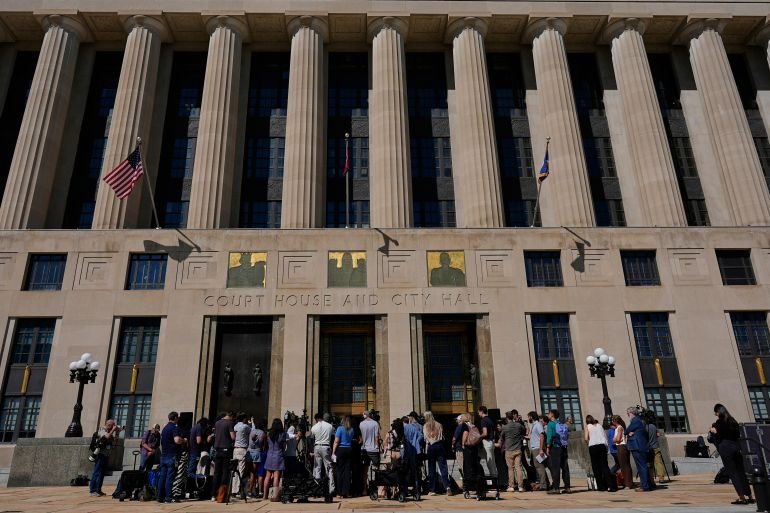
    The judge, Christopher Cooper, had imposed the fine. She had been found in civil contempt after she declined to reveal the source for her 2017 Fox News stories that reported on a federal investigation of Yanping Chen, a naturalized U.S. citizen who founded the University of Management and Technology in Virginia. 

    Last month, Supreme Court declined Catherine Herridge’s emergency effort to block the fines. But Cooper issued a minute order on Friday, writing that he intended to put the fines on hold “Through the denial of any timely-filed certiorari petition or the completion of Supreme Court proceedings should such a petition be granted.” Cooper also ordered the return of any fine payments Herridge has made.

    The stories had to do with Chen’s affiliations with the Chinese military. The FBI investigation examined statements she made on immigration forms about her work in China in the 1980s. Chen was not charged, but sued the federal government, claiming that someone leaked information about her to Herridge and Fox in violation of the Privacy Act.

  • ‘Asphalt Guerrilla’ Blends Fact, Fiction, AI and a Story About Filmmaking to Hold Up a Mirror to Our Time

    ‘Asphalt Guerrilla’ Blends Fact, Fiction, AI and a Story About Filmmaking to Hold Up a Mirror to Our Time

    Real history, fiction and AI blend together for a look at a former radical far-left underground armed organization in Portugal in the new film from auteur Edgar Pêra (Telepathic Letters, Manual of Evasion LX94), Asphalt Guerrilla (Guerrilha no Asfalto). The movie marks the Portuguese writer-director’s return to the Locarno Film Festival in Switzerland, where it will world premiere in the Out of Competition program during its 79th edition on Monday, Aug. 10.

    The militant group that the film revisits is the FP-25, short for Forças Populares 25 de Abril, or Popular Forces 25th of April, which was active between 1980 and 1987. It carried out dozens of bombings, shootings and bank robberies. The film is based on the eponymous book by Manuel Ricardo de Sousa, a member who ended up being lynched by a mob in the aftermath of a bank robbery.

    But there is also a meta level to the movie. “It’s also about trying to make a film that ought to be shot in a guerrilla mode, with no compromises with the system,” notes the Locarno website.

    A synopsis teases the mind-bending quality of the movie by describing it as “a fictional film rooted in reality about a utopian time in Portuguese democracy.” And it continues: “Set in the early ’80s, it begins with a quiet student who becomes involved in a radical organization and ends up being shot and lynched by the mob in the aftermath of a bank robbery. Throughout the film, we witness the sometimes comical, sometimes tragic problems of these ‘asphalt guerrillas’ fighting against the system; at the same time, the director of the film quits the organization in order to fight to make films in a guerrilla mode.”

    ‘Asphalt Guerrilla,’ courtesy of Bando à Parte

    Pêra wrote the screenplay with Rodrigo Areias, and the voices of Pêra and Albano Jerónimo feature in Asphalt Guerrilla. Jorge Quintela is the cinematographer, while João Mora is the editor. The cast features Miguel Moreira, Maria Leite, Ivo Arroja, Jerónimo, Bernardo Santo Tirso and Luke Eberl.

    Pêra talked to THR about Asphalt Guerrilla, what inspired it and what it says about his latest take on the use of AI in filmmaking.

    “There are many films in this film,” Pêra highlights. “The very beginning was this book, which I read in the ’90s and basically shows a very amateurish group of guerrilla men or terrorists, depending on your point of view, but it gradually transforms into a film about my own guerrilla [film] scene, mainly because my friend and producer Rodrigo Areias made me do it.”

    Indeed, Pêra started making an underground name for himself in the mid-1980s with his avant-garde style as a “neuro-punk” filmmaker associated with DIY counterculture and the Portuguese music scene.

    “I would never pitch a film about me, including an autobiography, but I really understood that Rodrigo proposed it,” he tells THR. “I told him that I wanted the film to be about the future, not about the past, not about the ’80s and the problems we had back then in Portugal, but about this society and the state of cinema.”

    If you are watching the film and can’t quite tell which parts are real and which ones are fictional, Pêra won’t mind. “This fusion, or blur, of fiction and reality is something that I like, but it’s also something that I must fight against,” he explains. “So the film is also a mirror of what’s happening, where you sometimes don’t really know what’s real.”

    ‘Asphalt Guerrilla,’ courtesy of Bando à Parte

    Does he really feel like a film guerilla? “Actually, when I was in my 30s, there was this producer who called me the Sniper,” Pêra tells THR. “I think he said that with respect. I think I have that respect from other filmmakers of my country because I never tried to do anything that was not myself.”

    As the filmmaker did in his 2024 Locarno film Telepathic Letters (Cartas Telepáticas), Asphalt Guerrilla uses AI images. “I always try to leave some clues for what is AI-made,” he highlights. “But there are moments where, to show the danger of AI, you have to behave like a dangerous AI, which is why this film has moments [referencing] what worries me most, news becoming fabricated. And actually, the worst part is that AI also gets the most fun part of creating, such as [people] asking AI to write prompts.” Concludes Pêra: “So I try to fight all of that and create my own prompts and create my own algorithm. If you leave things to the YouTube algorithm, you know what you get.”

    Added the auteur: “You have to make at least a playlist so that you’re not invaded by this ultra commercial thing. That’s my fight inside of AI to create some images that are original in the way that they are recombinations of things that already exist. That’s what every artist does.”

    How does that fit into Pêra’s early neuro-punk days? “I was always interested in the effects of cinema on the minds of people and how the mind works,” he tells THR. “Neuro-punk was meant to say that we have to fight things with ideas, not with violence. So, cameras are weapons. Make films, not violence.”

    ‘Asphalt Guerrilla,’ courtesy of Bando à Parte

    The auteur didn’t necessarily know how timely his film would feel in a time full of wars, a rise in political and other radicalism and, of course, AI when he first started conceiving it. “I think it’s not a coincidence. It’s a synchronicity,” he offers. “But even when we think times are okay, we have lots of things that worry us. Now, we are in the worst of times, as they say. But even in the best of times, there’s still exploitation, people dying and all that. So yes, I think it’s a timely moment to go to the roots of the problems and not only focus on radicalism. I think radicalism is a symptom; it’s not the problem.”

    He sees the underlying issue this way: “Radicalism is a symptom of the decay of our system. I’m not an expert, but I feel that it’s not the radicalist we have to fight because that means [we are] becoming another radical. So that’s a trap. Instead, let’s talk about what makes our planet worse.”

    Pêra is working on another movie, which will keep speaking out about worries he has. It’s called The Spiral of Fear, and it’s about “big tech and what media says about the masters and all that.”

  • No, Brian Eno Is Not Behind the Film Soundtrack for ‘At Night.’ Experimental Musician Elvin Brandhi Is.

    No, Brian Eno Is Not Behind the Film Soundtrack for ‘At Night.’ Experimental Musician Elvin Brandhi Is.

    In At Night, British filmmaker and artist Beatrice Gibson’s first feature-length film, the nightly sights and sounds of Paris interweave with the stories and conversations of six women – from hopes, dreams and sexual desires to worries about the future.

    Rhythm and mood are key elements that make the experimental and “autofictional” movie, which world-premieres on Saturday, Aug. 8, in the Filmmakers of the Present competition program of the 79th edition of the Locarno Film Festival, a special kind of cinematic ride. Just ask Locarno’s artistic director, Giona A. Nazzaro. In a chat with THR, he described the movie as “this nocturnal, ambient film where you can almost hear music that makes you think of Brian Eno. If At Night were a record, it could be music for lonely people at night.”

    Written and directed by Gibson, At Night features cinematography by her long-time collaborator Ben Rivers and editing by Liyo Gong. But the music doesn’t come courtesy of Brian Eno. No, it is the creation of Elvin Brandhi.

    If you don’t follow experimental music, here are some basics to know about her. Elvin Brandhi is the pseudonym of Freya Edmondes, an improvising voice and sound artist who was born in Wales, but has become a citizen of the world. Her music features unusual beats created from field recordings, her own voice, tape, vinyl and instruments. She is also part of all sorts of music collaborations, including father/daughter “noise-improv berserkers” Yeah You, Pollution Opera with Nadah El Shazly, the duo Avril Spleen with Joseph Jadam, the band PFL with Peter Kutin and Lukas König, and the project Bahk with Daniel Blumberg.

    At Night, which features an array of Gibson’s non-professional actor friends and influences as they discuss and explore such topics as sexuality, money, motherhood and mental health, is the musical artist’s first-ever feature film soundtrack. And it seems fitting that she collaborated with Gibson on this film that press notes call “a love letter to friendships, relationships, and the quiet yet poignant stories women share together but rarely to an audience.”

    Brandhi took time out of her busy schedule to talk to THR about the creation of the soundtrack for At Night, her other music work and whether we may be able to hear more from her on future cinematic journeys.

    The artist confirms that the work on At Night marks a new step for her. “It’s the first time I’ve done a soundtrack for a feature film,” she tells THR. “I did a couple of short films with friends, and I make my own music video-type thing. So I consider myself more of an audiovisual artist. I think in both realms, but this was obviously very different. I’ve worked with Daniel Blumberg a little bit, hanging out with him a lot in the process of The Brutalist and then the Anne Lee film, [The Testament of Ann Lee]. I was doing quite a lot of vocal stuff, also with [avant-garde improvisational vocalists] Phil Minton and Maggie Nicols. And Daniel has been creating this nice bridge between the experimental scene in London and Hollywood cinema.” 

    ‘At Night,’ courtesy of Night Films

    Courtesy of Night Films Ltd.

    So, this must be a good time for Brandhi to get her first feature film soundtrack under her belt, you may wonder. “It was probably helpful for me to get involved in the experience of how to make a soundtrack,” she confirms, but notes that it required a different focus from her usual work. “It was quite a unique experience, and I had to adjust a little bit how I think about composing. A lot of my music is quite in your face and trying to be as present as possible. But with a soundtrack, you have to almost make it sneak in from the sides, or be somehow invisible, coming out of the background.” 

    Given that Brandhi works a lot with field recordings, how did the Paris setting of At Night play to her passions? “What was really nice about this film was that the metro is such a big center of the narrative, and that’s already quite a noisy place,” she tells THR. “It has a lot of the kind of frequencies and ambient noise and things that I might feel like field recording and be inspired by anyway. So it was this perfect entry point for coming into that film world.”

    Gibson and Brandhi have all sorts of connections but made their acquaintance by coincidence. “I met Beatrice for the first time at [the experimental music festival] Borealis [in Bergen, Norway], but only very briefly,” the music artist recalls. “We were in the same taxi going somewhere, and I was playing, and she was screening something. I think she knew of my music, and then a common friend, Leonardo Ruvolo, from Alcamo in Sicily, put us in contact because I also did his residency, and she’s living in Palermo [in Sicily] now, so there were various coincidences.”

    And the women quickly got along. “When we started working together, we became very good friends immediately,” Brandhi shares. “And working on At Night was a very intimate and special process.”

    But what was this process like, and how early did Brandhi start crafting music for the film? “Beatrice wanted to have as much sound as possible before even starting to shoot. So I did get sent a first draft of the script, but that did get changed as the film went through different shifts,” she recalls. “We spent a week going through ideas before any shoot. I sent her some drafts of things that might work. And she had one reference of a song that she really liked, which was actually from a collaboration I have that is called Insin [with Palestinian producer/MC Bashar Suleiman]. The track is called ‘Kidney Spears,’ which is a little bit more dreamy. I’m also singing in that. So I tried to send her other things within that kind of dynamic.”

    When Gibson started shooting in Paris, Brandhi also came to the French capital. “I was taking some recordings when they were going into the metro,” the musician tells THR. “And there was originally even a scene of me performing in Paris in the film.”

    ‘At Night,’ courtesy of Night Films

    Courtesy of Night Films Ltd.

    All in all, the soundtrack came together in an ongoing collaboration. “There were some core themes that we developed, and then little bits that needed a very specific kind of mood or dynamic,” she says. The collaboration also included editor Liyo Gong. “She is really amazing,” says Brandhi. “She’s also a DJ, so she has a very strong sense of the musicality in film and in how she edits.”

    Crystabel Riley also contributed, drum sounds, to the soundtrack. “I asked her if she would contribute some drumming that I could weave into different parts of it,” Brandhi recalls. “She was actually involved in the film, doing some of the makeup, because she’s a makeup artist as well as a musician.”

    Fans of the artist’s work may get to hear more from her in feature movies in the future. “I definitely would like to,” Brandhi tells THR. “I would be really up for it; it was really interesting entering the story and composing from a different perspective.” She adds: “I saw her playing live for the first time last year, and I was just so blown away because she’s such an incredible performer, and her stage energy is so engaging. There’s this warmth and tension as well. It feels very urgent. I was just watching her and felt the state of mind of the women in the film echoing in her performance.”

    Concludes Brandhi: “It was really special for me and Bea that she was part of it.”

    The creative mentions that she has also worked with video herself, and being involved with At Night inspired her to return to more of it. “In the lockdown, I did a lot more filming and editing stuff, so I feel that this soundtrack world is also a nice potential way to get back into the editing of my own film material,” she shares.

    Not that Brandhi doesn’t have all sorts of music stuff in the works. Including an album with Berlin-based Kenyan musician KMRU under their name A|||oy, which will be released on KMRU’s label offnot. “He is associated a bit more with ambient music. But we have so much in common and are both fans of each other’s music, even though it might seem like we have quite contrasting dynamics,” she tells THR. “There’s a strong similarity in the way we work with field recordings and sounds, textures and spaces.” Concludes Brandhi: “We’ve been collaborating for three years now, and we have an album coming out that we made between a couple of residencies, one at [Swedish electroacoustic music and sound art center] EMS in Stockholm, and then one in [Max Richter and his partner Yulia Mahr’s] Richter Mahr studio in Oxfordshire. We just listened to the test pressing, and it was really exciting. We’re both singing, and it’s completely different from both of our works.”