Author: rb809rb

  • ‘The Marching Band’ Review: Brothers From Opposite Worlds Are United by Music in a Finely Tuned French Crowdpleaser

    ‘The Marching Band’ Review: Brothers From Opposite Worlds Are United by Music in a Finely Tuned French Crowdpleaser

    “The Marching Band” blasts through more story in its first 12 minutes than many films now manage in two hours. In those first 720 seconds we meet Thibaut (Benjamin Lavernhe), a well-heeled classical music conductor in Paris, who discovers that he will need to find a blood marrow transplant as he has leukemia; he learns that his sister is not a match, as he was adopted; he then discovers a biological brother, Jimmy (Pierre Lottin), who was not adopted and still lives in a disadvantaged working-class community in the north of France; he asks his new-found brother to help him, and Jimmy accepts.

    That concision is evident in an almost brutally economical edit and in sharp, precise writing which provides narrative elements and deftly sketches character before moving busily on. Just as a marching band keeps time with its feet, so “The Marching Band” strides on, hitting the requisite notes and paying attention to the melody, sure, but especially making sure to hold the beat and keep the show on the road. This attention to rhythm helps director Emmanuel Courcol‘s film to stay true as it navigates some rather rocky terrain, for it is at once a mismatched buddy movie, a socially conscious crowdpleaser in the vein of, say, “The Full Monty,” and a sophisticated psychological drama à la française.

    That the film mostly pulls this off is testament to its formal precision and to a central pairing of actors, in Lavernhe and Lottin, who manage to find subtlety where broad strokes would seem to be called for. More than two years after its Cannes premiere, “The Marching Band” opens theatrically in the U.S. this week through Greenwich Entertainment.

    Once the film has dispatched its initial premise — the leukemia storyline is essentially a MacGuffin, and soon disappears for a sizable stretch — it can get down to the business of developing a bond between the characters, and establishing its (gentle) social critique. Jimmy, who works as a cook in a canteen, has a musical gift, which throws into sharp relief the different chances both men have been given in life. A scene in which this terse, withdrawn young man is revealed to have perfect pitch is typical of “The Marching Band’s” best qualities in its appealing first hour or so: Thibaut asks his brother to identify the sounds of a honking car or a barking dog, and Jimmy shyly names the correct chords. That pertness should be unbearable, but the scene is written in a minor key and performed by both actors to match, favouring eye contact and murmurs; the sheer brevity prevents it from becoming gloopy or crass.

    The casting of Lavernhe and Lottin is particularly inspired, as the two performers bring an affect to these characters that mimics the story’s dynamic. Lavernhe, credited as “Benjamin Lavernhe de la Comédie-Française,” comes from a background in classical theatre, and performs his role with worldly elegance; Lottin, meanwhile, is a veteran of the popular comedy franchise “Les Tuche”, centering on a working-class family from the north of France. These sensibilities come together in the film’s tight dialogue, as when the two men meet and Thibaut introduces himself: “My name is Thibaut Desormeaux, and two weeks ago I learned I have leukemia…” Jimmy: “Ah, shit.” Thibaut: “Yes.”

    Lottin is particularly intelligent in articulating Jimmy’s shame at his lack of means and achievement, inflected with pride and a lightly worn resentment that comes out in bursts of passive-aggressive joshing; meanwhile, Lavernhe deftly portrays the well-meaning and likable Thibaut as, conversely, insufficiently ashamed of his good fortune, at least early on: This smooth Parisian bobo does not even perceive how he flaunts his wealth and education.

    In parallel, “The Marching Band” depicts a working-class community struggling with poverty and unemployment, for whom the musical collective — in which Jimmy plays the trombone, alongside his on-off girlfriend Sabrina (Sarah Suco) — has become a lifeline. Thibaut becomes involved, but will he be able to save the band from ruin? Here, the film closely mirrors the 1996 British comedy “Brassed Off,” making it a dead cert that we’ll eventually get a barn-burning finale showing the federating power of music in adversity.

    Revealing how that comes about would enter spoiler territory, but saying that it happens at all is germane, as it shows that the film finally falls victim to formula. In these pre-ordained moments — a surfeit of montages, an artificial falling-out between the brothers, the occasional dip into the saccharine — “The Marching Band” becomes a touch pleased with itself. The formula works (and the film has the domestic box-office receipts to prove it), but it detracts somewhat from the project’s smarts elsewhere.

    In a well-presented technical package, plaudits should go to editor Guerric Catala for a cut that attempts to shun sentiment, and to Christel Birot for costumes that smartly outline both character and class differences via the means of double denim or a freshly pressed felted overshirt. The music department, as well as Courcol’s lively directing and writing, must be commended for scenes of the brass ensemble playing and rehearsing, in a constantly dynamic interaction with dialogue. The zippy soundtrack, much like the film itself, veers between surprisingly choice cuts (the aching “I Remember Clifford” by Lee Morgan) and rabble-rousing crowdpleasers (Dalida, or the overture from “Aida”). Ravel’s “Bolero,” which repeats the same phrase over and over again but with tonal differences each time, also features.
  • Solana is undergoing a four-phase update to double block production speed! Here are the details

    Solana is undergoing a four-phase update to double block production speed! Here are the details

    The Solana network is preparing to roll out a comprehensive upgrade plan aimed at increasing block production speed. According to information reported by BeInCrypto, the network aims to reduce its current 400-millisecond block production interval to 200 milliseconds. Following the completion of the four-phase upgrade, Solana is planned to produce a new block approximately every 0.2 seconds.

    This change is considered a significant step towards increasing Solana’s transaction capacity and overall network performance. Shortening block production time can lead to faster transaction processing and an improved user experience on the network. Faster block production, especially during periods of high transaction volume, can help the network meet demand.

    The first phase of the upgrade is planned to be activated with epoch number 1020. In the Solana network, epochs represent periods covering a specific number of slots, playing a crucial role in protocol updates and changes to network parameters.

    All four planned changes have already been integrated into the Agave validator software developed by Anza, the client for the Solana network. Instead of being rolled out all at once, the updates will be implemented gradually. This will allow developers to monitor the impact of each phase on the network before moving on to the next change.

    Following the successful implementation of all stages, Solana’s block production time will be reduced from 400 milliseconds to 200 milliseconds. This means the network’s current speed will be approximately doubled.

    The update, implemented in line with Solana’s scalability and high processing capacity goals, aims to improve the network’s performance while enhancing its decentralization and security features. Developers are opting for a phased approach to the upgrade, allowing for controlled handling of potential technical issues.

    *This is not investment advice.

  • DOJ Charges Five Iran-Based Hackers in HBO Breach Involving $6M Bitcoin Demand

    DOJ Charges Five Iran-Based Hackers in HBO Breach Involving $6M Bitcoin Demand

    The U.S. Department of Justice has expanded its case against members of the Iran-based Mabna Institute, adding charges against eight individuals and linking five of them to the 2017 hack of HBO that included a ransom demand of roughly $6 million in Bitcoin. The new indictments bring the total number of defendants in the broader cyber-espionage case to 17.

    Details of the HBO Hack and Indictment

    According to the DOJ, Behzad Mesri was previously indicted separately for allegedly hacking HBO’s systems, stealing internal data, and demanding a Bitcoin ransom of about $6 million. The latest charges allege that five of the newly charged defendants directly participated in that operation alongside Mesri. The Mabna Institute is accused of conducting cyberattacks against U.S. and international universities, companies, and government agencies on behalf of Iran’s Islamic Revolutionary Guard Corps (IRGC) and other entities.

    Broader Context of Iranian Cyber Operations

    The Mabna Institute has been linked to a series of intrusions dating back to at least 2013, targeting over 300 universities in the U.S. and abroad. The group’s activities have been characterized by U.S. officials as systematic theft of intellectual property and sensitive data. The new charges underscore the ongoing threat posed by state-sponsored hacking groups and the increasing use of cryptocurrency in ransom demands.

    Implications for Cybersecurity and Crypto Regulation

    This case highlights the intersection of cybercrime and digital currencies, as Bitcoin’s pseudonymous nature has made it a preferred payment method for ransomware attacks. The DOJ’s actions signal a continued effort to hold state-sponsored hackers accountable, even when they operate from jurisdictions with limited extradition treaties. For businesses and institutions, the case serves as a reminder of the persistent risks of cyber intrusion and the importance of robust security measures.

    Conclusion

    The expanded indictments against the Mabna Institute members mark a significant step in U.S. efforts to combat state-sponsored cybercrime. By linking the HBO hack to a broader campaign of intrusions, the DOJ is reinforcing its commitment to pursuing justice across borders. As the legal proceedings unfold, the case is likely to draw further attention to the challenges of prosecuting international cybercriminals and the role of cryptocurrency in modern extortion schemes.

    FAQs

    Q1: What is the Mabna Institute?
    The Mabna Institute is an Iran-based group accused by U.S. authorities of conducting cyberattacks on behalf of Iran’s Islamic Revolutionary Guard Corps (IRGC). It has been linked to intrusions targeting universities, companies, and government agencies worldwide.

    Q2: What was the HBO hack about?
    In 2017, hackers breached HBO’s systems, stole internal data, and demanded a ransom of approximately $6 million in Bitcoin. The DOJ alleges that Behzad Mesri and five other newly charged defendants were involved in this operation.

    Q3: How many people have been charged in connection with the Mabna Institute?
    With the latest charges, a total of 17 individuals have been indicted in connection with the Mabna Institute’s alleged hacking activities. The new charges add eight defendants, five of whom are linked to the HBO hack.

  • Amazon MGM Studios Unveils Teaser for Kunal Kemmu’s ‘Vibe’ (EXCLUSIVE)

    Amazon MGM Studios Unveils Teaser for Kunal Kemmu’s ‘Vibe’ (EXCLUSIVE)

    Amazon MGM Studios has released the teaser for “Vibe,” an action comedy written and directed by Kunal Kemmu that follows two ordinary friends who unexpectedly become the country’s last line of defense.

    The teaser introduces Hardik (Kemmu) and Bugs (Sparsh Shrivastava), a pair of accidental heroes who are neither trained nor willing for the job but end up tasked with protecting the nation once it comes under threat. Preity G Zinta plays a commanding figure who pulls the two deeper into the danger, a character presented as composed, confident and several steps ahead of everyone around her.

    The footage mixes high-speed chases and explosive action with comedic beats, framing a story built around chaos, mismatched heroism and rising stakes as the mission unfolds.

    Kemmu produces “Vibe” alongside Chirag Nihalani under their banner Drongo Films. Founded by Kemmu and Nihalani, the company has positioned itself around backing stories described as authentic and character-driven, aiming to balance creative ambition with commercial appeal.

    The cast also includes debutant Vanshika Dhir in a lead role, with Dinesh Lal Yadav and Yashpal Sharma appearing in supporting parts.

    “Vibe” marks another theatrical bet for Amazon MGM Studios, which produces and acquires films for cinema release as well as content exclusively for Prime Video and the MGM+ pay television network. Amazon MGM Studios and Colour Yellow have also set “Nayyi Navelli,” an Indian fantasy family entertainer starring Yami Gautam Dhar, for release in cinemas this October, timed to the Dussehra festival period.

    “Vibe” opens in theaters Sept. 18.

    Watch the “Vibe” teaser here:

  • Ripple backs an RLUSD credit fund amid XRP’s best week in months

    Ripple backs an RLUSD credit fund amid XRP’s best week in months

    Ripple is backing a new institutional credit fund that will lend its $RLUSD stablecoin to fintech and payments companies on the $XRP Ledger, alongside lending platform Clearpool and credit manager Cicada Partners.

    The fund will provide working-capital loans denominated in $RLUSD, per a release shared with CoinDesk, with Cicada sourcing borrowers, setting loan terms and monitoring credit risk. Clearpool is building the infrastructure used to create and manage the lending pools, while Ripple provides capital as an investor alongside other institutions.

    Neither the size of the fund nor Ripple’s commitment was disclosed.

    None of it is live on the $XRP Ledger’s main network yet, however. Clearpool is testing the integration on a development network, and the two ledger features underpinning the product, a lending protocol known as XLS-66 and single asset vaults under XLS-65, are still going through the network’s amendment voting process, as CoinDesk earlier reported.

    Those two do the work the fund needs. The lending protocol handles issuing and repaying loans directly on the ledger. The vault system pools money from several lenders under a manager who decides where it goes, which in this case is Cicada.

  • MANTRA token plunges 18% to record low as blockchain halts after exploit

    MANTRA token plunges 18% to record low as blockchain halts after exploit

    “We have identified the vulnerability and are proceeding to prepare a patched release,” the team said.

    MANTRA’s network operators, known as validators, remain offline while developers prepare and test the fix. Restarting the blockchain will require coordination with the wider group of operators that verify transactions and keep the network running.

    The project is also tracing fund movements and working with exchanges while it assesses the damage. It has not disclosed which software was exploited, how the attack worked or whether any assets were lost.

    “Our assessment of the full impact is ongoing and we are not yet in a position to confirm the complete scope,” MANTRA said.

    The outage affects the chain’s public endpoints, validators, bridge operations and MANTRA-managed links used to communicate with other blockchains.

    The incident follows a difficult period for the project. MANTRA’s former OM token collapsed more than 90% in April 2025 in a bizarre sell-off, wiping out more than $5 billion in market value.

    Inveniam Capital Partners, which invested $20 million in MANTRA last year, said in June it planned to acquire the project. The deal is expected to close in the third quarter.

  • Neon Sets Early Premium-Format Release for Na Hong-jin’s ‘Hope’ (Exclusive)

    Neon Sets Early Premium-Format Release for Na Hong-jin’s ‘Hope’ (Exclusive)

    Neon is giving Korean action maestro Na Hong-jin‘s gritty monster epic Hope an early theatrical launch on premium screens across the U.S. 

    The distributor revealed Thursday that it will hold large-format screenings of Hope on Sept. 7 at 175 premium locations ahead of its wide release on Sept. 9. The one-night event, with showtimes at 6:30 p.m., spans six formats — Dolby Cinema, 4DX, ScreenX, Barco HDR, D-Box and Dolby Atmos — at theaters in New York, Los Angeles, Chicago, San Francisco, Dallas and elsewhere. The launch strategy is reminiscent of Neon’s rollout last year of Osgood Perkins’ The Monkey, which used advance premium-format screenings to build word of mouth on the way to the film’s strong $40 million theatrical performance.

    One of the buzziest films to emerge from this year’s Cannes Film Festival, Hope’s visceral spectacle certainly seems to warrant the premium-format splash. 

    Describing the film as “a superbly sustained pedal-to-the-metal experience that’s almost dizzying in its bravura,” The Hollywood Reporter‘s chief film critic hailed Hope as a “rip-roaring sci-fi creature feature” that “has instant cult classic written all over it.”

    Set in the fictional border town of Hope Harbor near the Korean Demilitarized Zone (DMZ), the film follows put-upon police chief Bum-seok (Hwang Jung-min) and his bad-ass female deputy Sung-ae (Squid Game‘s Hoyeon) as they frantically hunt an enormous mystery creature that has begun rampaging through their village. A band of local hunters, led by the charismatic Sung-ki (Zo In-sung), joins the chase and tracks the beast into a nearby forest — only to become its prey. What begins as a series of understandable misjudgments soon spirals into tragedy on a cosmic scale.

    Hope is Na’s first feature in roughly a decade. The writer-director has become a favorite of both arthouse fans and action aficionados thanks to his trio of stunning genre movies, the brutal crime thrillers The Chaser and The Yellow Sea and the 2016 horror sensation The Wailing. He reunites here to stunning effect with his Wailing cinematographer, Hong Kyung-pyo, a revered figure in the Korean industry whose other credits include Bong Joon Ho’s Parasite and Lee Chang-dong’s Burning. Hope‘s score is by Michael Abels, the composer behind Jordan Peele’s Get Out and Nope. The film’s Korean ensemble is rounded out by surprising supporting characters played by Michael Fassbender, Alicia Vikander, Taylor Russell and Cameron Britton. 

    Hope opened at home in South Korea on July 15 and has earned $35 million, becoming the country’s third-biggest domestic release this year. 

    Na conceived Hope as the first chapter of a potential franchise — and, so far, international distributors appear on board. The film’s main backer and sales agent, Plus M pre-sold the title to roughly 200 territories out of Cannes, a record for a Korean film, with the deals reportedly recouping nearly half of the movie’s net production budget ahead of release.

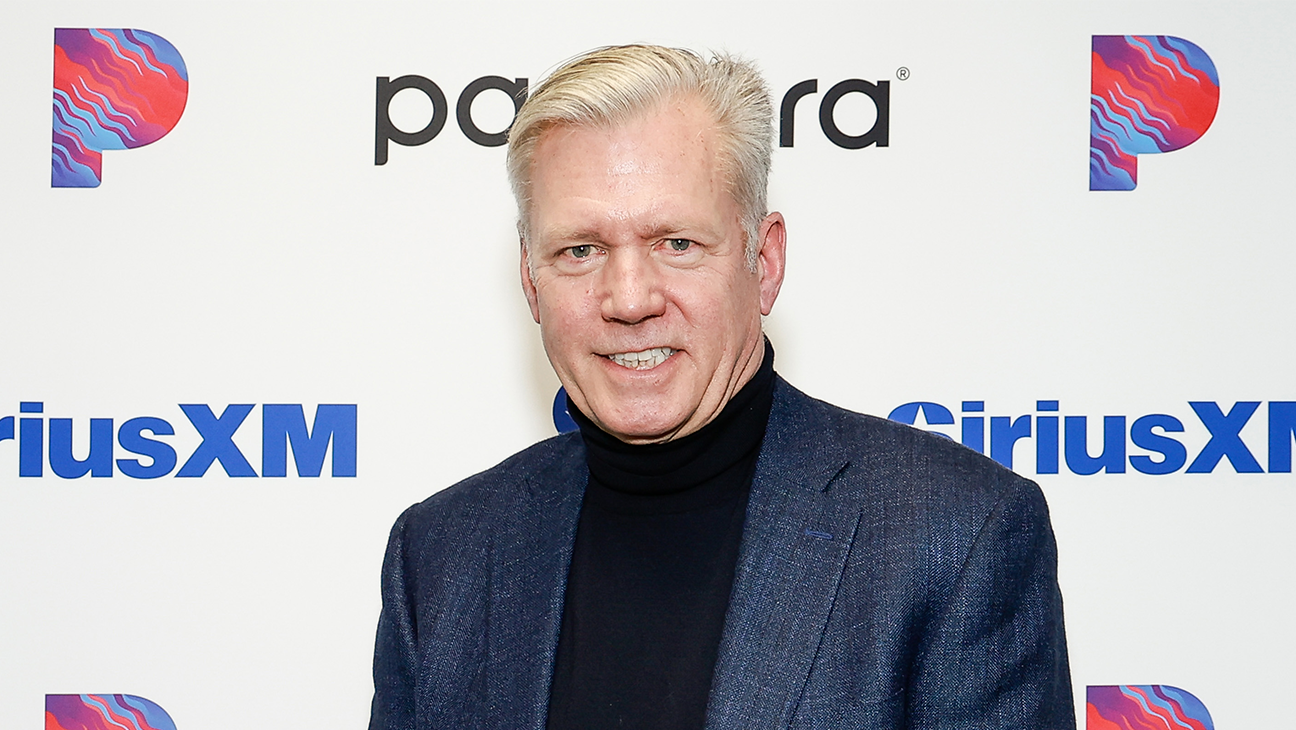
  • Chris Hansen Didn’t Watch ‘Primetime’ Screening Because “A24 Wanted Me to Sign Away My Rights”

    Chris Hansen Didn’t Watch ‘Primetime’ Screening Because “A24 Wanted Me to Sign Away My Rights”

    Chris Hansen said he didn’t watch an early screening of Robert Pattinson‘s Primetime because he claimed that “A24 wanted me to sign away my rights.”

    During an interview on Fox News’ Jesse Watters Primetime Thursday evening, the former To Catch a Predator host said he went to the indie production studio and distributor’s office earlier in the day for a private screening of the film, but ended up leaving without seeing it.

    “The lawyers at A24 wanted me to sign away my rights to my name, image and brand, essentially, as well as any potential legal rights that would come out of the movie,” Hansen alleged. “I couldn’t sign that, so they didn’t show me the film. I went all the way over there. … But who’s going to sign something like that?”

    He added that it was a “very restrictive agreement” and that he “had never seen anything quite like it.”

    The Hollywood Reporter learned that Hansen was asked to sign a standard NDA a week in advance that all preview audiences must sign in order to watch an unreleased A24 film. It’s mostly to prevent spoilers and protect the studio’s IP. 

    Hansen noted to Jesse Watters that his “lawyers had already seen” the NDA before he arrived at A24’s offices.

    When asked by the host what A24 might be worried about, the veteran journalist replied, “I don’t know! I haven’t seen the film. If you look at the trailer, obviously it’s a very dramatized version. They had told me that it’s fictionalized in many aspects. I know other people have seen it who didn’t sign an NDA, and yet they wanted me to sign it.”

    Primetime, which stars Pattinson as the Dateline NBC correspondent, chronicles the intense production, ethical dilemmas and media sensationalism behind To Catch a Predator, which ran from 2004 to 2007.

    During an interview with podcaster Annie Elise last week, Hansen questioned “Hollywood’s motive” behind the movie directed by Lance Oppenheim, but refused to judge the film until he’s seen it.

    “A couple months ago, they came and said, ‘Hey look, we’re doing this, we’d like you to have some sort of consideration in terms of helping us with this,’” he said. However, Hansen noted that the film was already made before “they” reached out to him.

    “As a reporter, it’s sort of silly for me to talk about something that I haven’t seen yet,” he added. “My suspicion is that they used my name because it helps in a commercial enterprise.”

    Primetime, also starring Merritt Wever, Skyler Gisondo, Phoebe Bridgers, Matthew Maher and Bokeem Woodbine, hits theaters on Sept. 25.

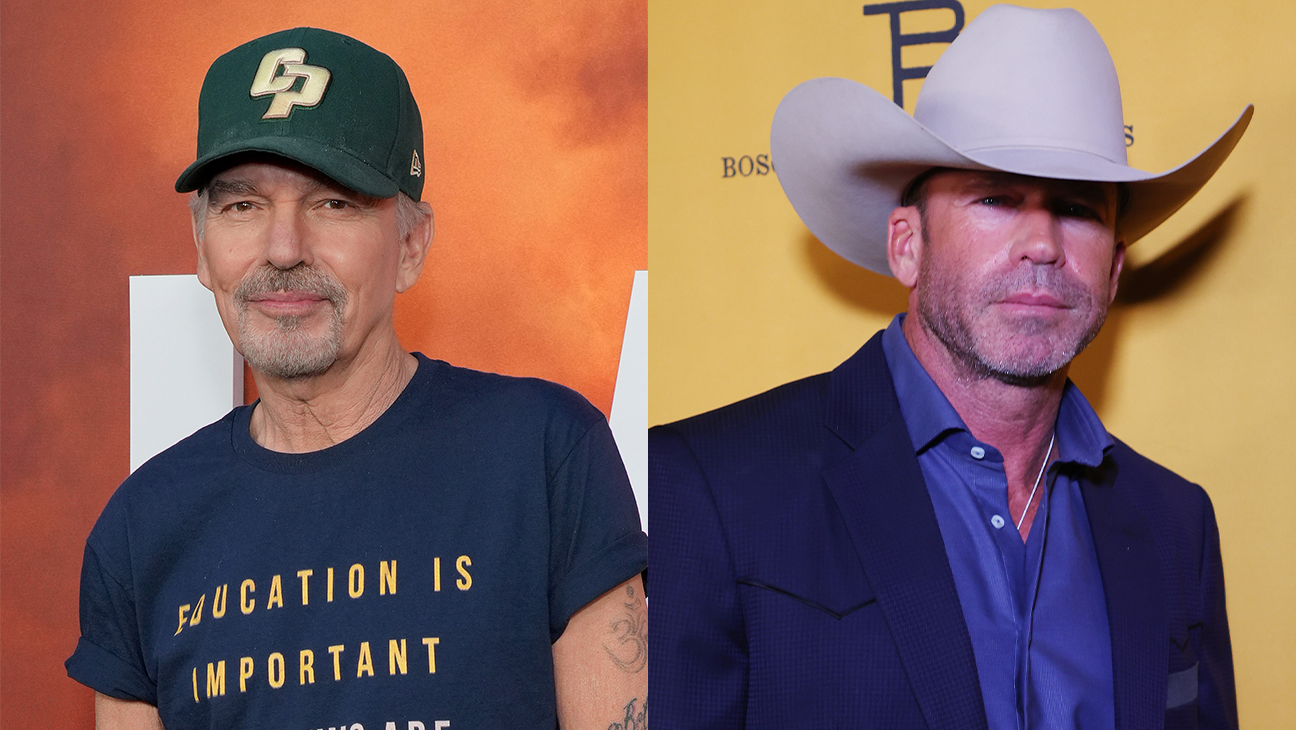
  • Billy Bob Thornton Says “Holly­wood Wasn’t Nice” to Taylor Sheridan, But That “Texas Accepted” Him

    Billy Bob Thornton Says “Holly­wood Wasn’t Nice” to Taylor Sheridan, But That “Texas Accepted” Him

    Billy Bob Thornton is opening up about how he feels Texas embraced prolific TV creator Taylor Sheridan unlike Los Angeles.

    During a recent interview with Town & Country for a cover story about Sheridan, the Landman star said, “Holly­wood wasn’t nice to Taylor. There’s something about being an outsider that drives you.”

    Prior to building his television empire, which includes hit shows from Yellowstone and Mayor of Kingstown to Landman and Special Ops: Lioness, Sheridan was a struggling actor living in L.A.

    “I was homeless twice,” he said. “I lived in my car. Sometimes I’d go to Ojai, just somewhere where I could safely sleep. I did that for six months.” Despite the challenges, Sheridan said he “chose to sleep in my car” rather than giving up on his dream.

    However, after spending roughly two decades as a working actor, appearing on shows like Sons of Anarchy and Veronica Mars, his dream slightly changed when he pivoted to screenwriting — ultimately changing his life.

    Sheridan told The Hollywood Reporter during a 2023 cover story, “Hollywood will tell you what you’re supposed to do if you listen. If you’re banging your head against the wall for 20 years trying to be an actor, maybe you shouldn’t be an actor. But the first thing I ever wrote [the pilot for Mayor of Kingstown in 2011] got me meetings at every major network, at every agency. I had multiple people trying to buy it.”

    Once he gathered enough money from his early hits, such as Yellowstone, Sheridan decided to return to Texas, where he spent most of his childhood. He started buying up land and now owns more than 250,000 acres of ranchland across Texas, which includes his Four Sixes (6666) Ranch and Bosque Ranch.

    Thornton told Town & Country, “I think the ranch community in Texas accepted Taylor 100 percent because he’s not phoning it in. He doesn’t go to the tourist cowboy shop and get an outfit. This is the real thing.”

    Sheridan now spends most of his time in Texas, as he often invites castmembers to come to his ranch for meetings rather than going back to L.A. The ranching empire he’s built has also given him a creative edge, influencing the stories he writes that audiences love.

    “When I lived in Los Angeles, everything I saw was the same and I didn’t learn anything in my day-to-day life,” Sheridan previously told THR. “Here, I get to experience so much. I heard 25 iconic pieces of dialogue today. Most of my great lines I heard someone else say, or some version of it. I’m banking story all the time.”

  • Binance launches Agent OS and MCP trading server

    Binance launches Agent OS and MCP trading server

    Binance launched Binance Agent OS and its Model Context Protocol Server on Aug. 20, giving compatible artificial intelligence applications controlled access to market data and trading functions.

    The developer platform combines Binance APIs, Wallet Agentic Hub, x402, Skill Hub and MCP support. Binance said the broader system is intended to reduce the need for developers to build separate connections for each crypto function.

    Its Binance MCP Server acts as the connection layer between supported AI clients and the exchange. Users can authorize compatible applications without storing Binance API keys locally, according to the company’s announcement.

    Availability depends on the user’s location, account status and access to individual Binance products. The launch does not make every Binance function available through every AI application.

    Binance Agent OS combines five developer components

    Agent OS brings several existing and new developer services into one platform. Binance APIs provide access to trading, market, wallet and blockchain functions, while Wallet Agentic Hub supports wallet interactions controlled through user permissions.

    Meet Agent OS – a new way to build, deploy and use AI agents on Binance.

    Bring Binance market intelligence, payment, on-chain, data and trading capabilities directly into your AI workflow.

    Build. Analyze. Trade. With AI. 🫡

    Experience it ↠ https://t.co/O4E5Dmg42K pic.twitter.com/1JIkcaP4Ot

    — Binance (@binance) August 20, 2026

    Binance x402 provides payment and settlement tools for transactions initiated by software agents. Skill Hub gives developers a directory of modular functions covering trading, wallets, market information and blockchain activity.

    The MCP Server provides a standardized method for compatible AI clients to discover and call those functions. MCP is an open protocol for connecting AI models with external services, data sources and software tools.

    Binance lists Claude, Claude Code, Codex, ChatGPT and VS Code as compatible applications. This means those clients can connect to the server when they support the required MCP setup. It does not mean that Binance controls or operates those applications.

    As previously reported, Coinbase also gave AI agents the ability to spend and trade crypto through wallets equipped with programmable controls. The launches show exchanges competing to become the execution layer for AI applications.

    The MCP Server supports trading but blocks withdrawals

    Public market information does not require authentication. An AI client can retrieve tickers, order books, candlestick data and funding rates without receiving access to a Binance account.

    Authorized account functions include balance checks and internal transfers. Users can also grant access to supported spot, margin and Convert products. The system covers USDⓈ M and COIN M futures where the account and region are eligible.

    Binance said agents cannot withdraw crypto to external addresses through the MCP Server. They also cannot move assets from a main Binance account into the dedicated Agentic subaccount.

    Users must fund that subaccount themselves. The separation limits the assets available to an authorized agent, although it does not remove trading losses, faulty instructions or the risks associated with granting software transactional permissions.

    The company advises users to review order and transfer details before confirming them. Scopes should also be limited to functions required for the intended task.

    In related coverage, Base introduced a similar architecture that keeps transaction approval under the user’s control while allowing AI applications to prepare wallet actions.

    Developers can connect through one MCP endpoint

    Developers and users can connect a compatible client to Binance through its published MCP endpoint. They must then create and fund an Agentic subaccount before authorizing account related actions.

    The subaccount can receive an optional read only view of the main account. Trading and transfers remain confined to the funds and permissions assigned to the Agentic environment.

    Binance has not announced a deadline for adding more applications or functions. The company said Agent OS provides a foundation for expanding wallet capabilities, developer tools and agent skills over time. Such additions remain forward looking until Binance publishes product details.

    The platform also includes Binance x402 as agent payment infrastructure. The protocol uses the HTTP 402 payment status to support automated payments between applications. As crypto.news reported, the standard has gained support from major cloud and payment companies.

    Binance has published technical setup instructions through its developer documentation. Users must still check regional product restrictions and review every permission before making funds available.