Author: rb809rb

  • Judge Plans October Hearing In ABC’s First Amendment Lawsuit Against FCC, Says It Will Be Sooner If Agency Takes Action On Licenses

    Judge Plans October Hearing In ABC’s First Amendment Lawsuit Against FCC, Says It Will Be Sooner If Agency Takes Action On Licenses

    UPDATED with hearing date and FCC comment: A federal judge had ordered a hearing in ABC‘s First Amendment lawsuit against the FCC for sometime during the week of October 5.

    But U.S. District Judge Loren L. AliKhan signaled that there would a hearing sooner than that if the FCC took action on its review of ABC station licenses.

    The network is seeking a temporary restraining order to halt the FCC’s early renewal proceedings for broadcast licenses for the network’s eight owned stations. ABC claims in its lawsuit that the FCC’s regulatory action is Trump administration retaliation over its content, including late-night host Jimmy Kimmel and ABC News reporting.

    The FCC has yet to take action, but in its lawsuit ABC suggested that the agency was close to issuing a hearing designation order, which would put the license renewals up to an administrative judicial process. The network said that such an action would in and of itself be punitive, as it will bog down the station renewals for an extended period of uncertainty.

    The judge wrote in her order that if the FCC were to issue such a hearing designation order, she would hold a hearing on the TRO the next business day.

    The judge also set a briefing schedule for next month, with the FCC’s defense due September 3, ABC’s reply on September 17 and the agency’s response by September 24.

    The judge’s schedule aligns with that proposed by the FCC; ABC had requested a hearing as soon as Friday. But given the judge’s order, the FCC may hold off on any action as it would face an earlier hearing and as it seeks to dismiss the lawsuit.

    An FCC spokesperson said, “We are pleased that the judge has now rejected Disney’s meritless attempt to rush into court.  The court also sided with the FCC over Disney on the schedule going forward and has declined Disney’s request for an immediate injunction.  The FCC will continue to follow the facts and the law wherever they lead.”

    PREVIOUSLY, August 20 AM: ABC is proposing a hearing as soon as Friday on its request for a temporary restraining order in its First Amendment lawsuit against the FCC, while the agency signaled that it plans to challenge the litigation as premature.

    The plans were laid out Thursday on in a joint status report from the parties, as requested by the federal judge in the case, Loren L. AliKhan.

    The network sued the FCC on Tuesday, claiming that the agency’s order for an early renewal of its eight station broadcast licenses was highly unusual and part of a pattern of using regulatory threat to retaliate on content and news coverage the Trump administration disfavors. In the immediate term, they are asking for a temporary restraining order to halt the renewal proceedings, characterizing them as a threat that chills the network’s free speech rights.

    In the filing, ABC’s legal team proposed a hearing for Friday or next week, on Aug. 24 and 25, and the FCC said that its lawyers would be available on those dates.

    In the meantime, the FCC’s lawyers, calling ABC’s schedule “highly expedited,” proposed a briefing schedule for next month, and also wrote that they planned to file a motion to dismiss. They argued that the D.C. Circuit Court of Appeals, not the district court, had jurisdiction, and that the network had to allow the regulatory process to play out.

    The agency’s legal team claimed that the network was trying to “circumvent an administrative proceeding followed by judicial review in a court of appeals.”

    They wrote, “Although framed as a First Amendment retaliation claim, Plaintiffs’ chief concern appears to be the Commission’s exercise of its statutory authority to ensure that broadcast licensees operate in the public interest, and its conduct of an administrative process that could include (but has not yet been determined to require) a hearing on Plaintiffs’ license qualifications and, depending on the results of any such hearing, hypothetical future license revocations.”

    In its lawsuit, ABC’s legal team indicated that they were taking action in anticipation of the FCC designating the license renewals for an administrative hearing, a potentially lengthy process that only added to the uncertainty of whether the stations’ licenses would be revoked.

    In the latest filing, its legal team wrote that they have “raised a textbook First Amendment retaliation claim. Courts in this District have already recognized that such claims belong in federal court, not before the very agency accused of engaging in First Amendment retaliation.”

    The network’s legal team argued that they have already “documented the irreparable harm [ABC is] suffering, and Defendants’ proposed solution would further exacerbate those harms.”

    The network also referred to the potential of the FCC designating the license renewal for a hearing as “sanctions.” The FCC said that it would give the court 48 hours notice before doing so.

    “Defendants effectively seek permission to impose draconian sanctions with only 48 hours’ notice, while continuing to hang the threat of those sanctions over Plaintiffs’ heads and remaining free to engage in other forms of retaliation,” the network’s lawyers wrote in the filing.

    The FCC said that a hearing designation order would not be a “sanction,” but “would simply set in place a further administrative process in which Plaintiffs would have the opportunity to make their case.”

  • Sacramento’s Mad Legislative Dash To Fix Tax Credits SNAFU, Get Post-Production Incentive Passed, Or Not

    Sacramento’s Mad Legislative Dash To Fix Tax Credits SNAFU, Get Post-Production Incentive Passed, Or Not

    EXCLUSIVE: With a very hard out of less than two weeks, state legislators in Sacramento are either going to be Scrooge or Santa with California’s film and TV tax incentives for the near-moribund L.A. industry.  

    It’s a mixed result right now with a lot of good intentions, a lot of cooks in the kitchen and the legislative session ending on August 31. In the past few hours alone, with studios and indies panicked about effectively losing lucrative annual $750 million industry incentives by 2030, a mission to fix the mega-measure that’s already signed into law and caps out business and corporate tax credits over $5 million went from launch to being stuck on the legislative tarmac.

    A deal was in place Thursday morning that would have carved out an exception for independent productions and some studio/streamer productions. In fact, with an anticipated backlash from Silcon Valley, the deal looked so done the MPA late last night circulated a talking points one-pager on it to stakeholders and media outlets. However, as the final language was being put in place by Assemblymember Rick Chavez Zbur’s office today, legislative leadership told the Hollywood Democrat they were now taking a “different approach,” I hear.

    A move that pulled the plug, hard.

    There are no definitive details on what that new approach is, or whether it could end as a fast-tracked trailer bill, a policy carve-out or something else. But sources tell me there were “indications” from Gov. Gavin Newsom’s “team” that Zbur’s proposal wasn’t what they had in mind.

    Officially, probable 2028 POTUS candidate Newsom’s office did not have anything to say about any deal or the end of any deal on SB 122. Insiders privately are referring to the effort to fix the harms of SB 122 as a “work in progress.”

    As elections for City Hall and a new governor heat up, that process may not land so well in SoCal.

    Wildfire-ravaged City of Angels also has seen production flight from the home of Hollywood and around 50,000 film and TV jobs lost in the past four years. Even without projected big cutbacks from a merged Paramount and Warner Bros Discovery or a red state relocation by David Ellison if California Attorney General Rob Bonta and others don’t back down on their antitrust lawsuit, that blast radius has wiped out vendors and delivered a blow to the tax base.

    RELATED: Don’t Believe Paramount’s Hype: California AG Rob Bonta Claims David Ellison Muddying WBD Merger Waters With Misinformation & Side Deals; “We Intend To Win” – Guest Column

    Amidst all that, Zbur, whose District 51 spans all the way from Glendale to Santa Monica, says he is keeping up the fight against SB 122 with that August 31 drop-dead date front and center.

    “We’re working very hard with the governor, legislative leadership and our partners in the Senate, and I’m optimistic that we are very close to reaching a solution that helps address the impact of SB 122 on California’s Film and Television Jobs Program,” the two-term member told Deadline today.

    While staying mum about what went down earlier today and acknowledging the harsh calendar, Zbur — a lawyer in a past life — offered optimism that the legislative tax credits snafu could be fixed in the next week.

    “Our priority throughout these negotiations has been protecting the thousands of workers and small businesses that depend on this iconic industry and preserving the progress we’ve made to bring production and good-paying jobs back to California,” he said. “There are still details being worked through, but I’m encouraged by where the conversations are and hopeful we can reach an agreement very soon.”

    Filming in L.A.

    Besides the limits of SB 122, which was enacted in June but has seen pushback from the likes of Tinseltown unions and CAA boss Bryan Lourd, there’s also the long-desired effort to enact a wide-ranging post-production tax credits program.

    Offering a 35% incentive aimed at stiffening up jobs here and enticing post-production to relocate to the Golden State, AB 2319 is racing toward a vote in the state Senate by next week once the bill is in final shape.

    All of which means what ends up on outgoing Gov. Newsom’s desk to be signed or vetoed by September 30 could prove an inflection or infection point for the entertainment sector.

    Rick Chavez Zbur and Nick Schultz

    California Assemblymembers Rick Chavez Zbur and Nick Schultz

    Getty/Courtesy

    “The next seven days are critical,” declared Assemblyman Nick Schultz, who is one of the primary pols behind the post-production tax credits legislation along with Sen. Ben Allen.

    “We’re literally in the period of speak now and forever hold your peace,” added the Democratic rep of studio-heavy District 44. “There’s no more time to wait. Now is the time for Hollywood to activate and be as loud as they possibly can to get this thing passed.”

    If everything goes to schedule, under the rules of the California Legislature, once final amendments are added to the bill, it has to sit “in print” for 72 hours. Then the legislation can head to a Senate floor vote – where it certainly has the votes, I hear.

    RELATED: Editors Guild Offers Praise & Warning For California Post-Production Incentives Initiative

    Earlier this year, state representatives talked about the post-production credit reaching up to $100 million in allocated incentives across VFX, scoring, mixing and more. That sky-high number is now more realistically envisioned at around $35 million for the first year.

    Yet, as close as the post-production credit might be to being added to the incentives program administered by the California Film Commission, the reality is there is still no actual funding in place for it.

    The borderline-baroque $352 billion state budget is so tightly wound with its zero-deficit demands that money for such a new credit is nowhere to be seen, no matter how hard Hollywood has advocated for it and, truth be told, desperately needs it to turn the job losses around.

    RELATED: List Of Hollywood & Media Layoffs From Paramount To Warner Bros Discovery To CNN & More

    “We are gratified that the Senate Appropriations Committee overwhelmingly voted in favor of a standalone post-production tax credit, and we are pushing hard for its broad bipartisan support in the Senate floor vote,” Editors Guild Local 700 president F. Hudson Miller states. “We need to make sure that AB 2319 is passed and also that it is fully funded.”

    Like a true seasoned politician, the union leader went on to say: “Additionally, we are calling on lawmakers to defend the Film and TV Tax Credit Program 4.0, which would be devastated by the recently imposed caps on tax credits. All three moves are vital and essential to keeping film and TV jobs, and their positive economic effect, from leaving California.”

    Said Schultz about the finances of the post-production flex: “Certainly, we would rather be in the spot where we have some funding and we’re going back to secure the rest of it. But versus like having absolutely nothing and having to go back fresh next year asking for some initial funding, we’re going to be going through this process of advocating and hopefully negotiating with the governor’s office between January and June of next year.” 

    Present deadlines in hand, a lot of this will end up with the next governor.

    To that, Deadline reached out to both the campaigns of Steve Hilton and Xavier Becerra for comment on both the efforts to undo the tax credits cap and the ambitions for a post-comprehensive production credit. Neither the Republican and ex-Fox News host nor the Democrat and ex-Biden Cabinet secretary replied.

    We will update if and when we do hear from them.

  • Streaming Ratings: ‘Masters of the Universe’ Powers to No. 1 Debut

    Streaming Ratings: ‘Masters of the Universe’ Powers to No. 1 Debut

    After an underwhelming box-office take in movie theaters, Masters of the Universe found a softer landing in its streaming debut.

    The movie based on the 1980s cartoon series and toys scored the No. 1 overall ranking in Nielsen’s streaming ratings for July 20-26, its first week of streaming. It debuted July 22 on Prime Video, less than weeks after its theatrical premiere; it has made a little under $114 million worldwide at the box office against a $170 million budget. Masters of the Universe scored 1.17 billion minutes of watch time for the week and was one of just two titles to cross the billion-minute threshold.

    The other was The Big Bang Theory, which had 1.12 billion minutes of viewing time on HBO Max. The comedy scored an all-time high in viewing time for the second straight week, beating the previous frame’s 1.08 billion minutes.

    The top two original titles for the week were Will Ferrell’s Netflix comedy The Hawk (944 million minutes) and Prime Video’s action comedy Ride or Die (922 million), starring Octavia Spencer and Hannah Waddingham. The Hawk declined slightly week to week, while Ride or Die ticked up by about 6 percent.

    The debut of King of the Hill‘s 15th season pushed the animated series back onto the charts with 658 million minutes of watch time, 70 percent of which (about 461 million minutes) came from the new batch of episodes. Netflix’s Ransom Canyon (751 million minutes) also returned to the rankings with the premiere of its second season.

    Netflix’s Kevin Hart comedy 72 Hours placed second behind Masters of the Universe on the movies top 10 with a solid 791 million minutes for its premiere week.

    Nielsen’s streaming ratings cover viewing on TV sets only and don’t include minutes watched on computers or mobile devices. The ratings only measure U.S. audiences. The top streaming titles for July 20-26, 2026, are below.

  • Dave Bautista Officially Cast as Kratos in ‘God of War’ Series

    Dave Bautista Officially Cast as Kratos in ‘God of War’ Series

    Prime Video‘s God of War series has found a new lead actor to replace the injured Ryan Hurst.

    Dave Bautista will on the role of Kratos in the series, which is based on the long-running video game franchise. Hurst (The Odyssey, Sons of Anarchy) was originally cast in the role but had to step aside after tearing a bicep while performing a stunt on set.

    Prime Video confirmed Bautista’s casting after initial reports in early August that the actor was in talks to take over the role.

    Bautista is a known quantity to both viewers — via Marvel’s Guardians of the Galaxy films, Glass Onion: A Knives Out Mystery and Dune Part Two, plus his time as a WWE star — and Amazon MGM Studios, which is producing God of War with Sony Pictures Television. Bautista has appeared in Amazon MGM’s two My Spy movies and The Wrecking Crew and has roles in the studio’s forthcoming features Highlander and Road House 2.

    With Bautista now officially on board, the goal is to get God of War back into production in Vancouver in the fall. The show’s cast also includes Callum Vinson, Mandy Patinkin, Ed Skrein, Max Parker, Ólafur Darri Ólafsson, Teresa Palmer, Alastair Duncan, Jeff Gulka and Danny Woodburn.

    The series will follow Kratos and his son, Atreus, as they “embark on a journey to spread the ashes of their wife and mother, Faye,” per the show’s logline. “Through their adventures, Kratos tries to teach his son to be a better god, while Atreus tries to teach his father how to be a better human.” The series will be based primarily on the two most recent installments of the game franchise, which introduced Atreus.

    Ronald D. Moore (For All Mankind, Outlander), who has an overall deal at Sony, is the showrunner and executive produces with Maril Davis, Cory Barlog, Naren Shankar, Matthew Graham, Asad Qizilbash, Jeff Ketcham, Hermen Hulst, Roy Lee, and Brad Van Arragon. Joe Menosky, Marc Bernardin, Tania Lotia, and Ben McGinnis are co-EPs. Frederick E.O. Toye is set to direct the first two episodes. Sony and Amazon MGM are producing God of War with PlayStation Productions and Moore’s Tall Ship Productions.

    Bautista is repped by WME and Jackoway Austen.

    Aug. 20, 3:18 p.m. Updated throughout with confirmation of Bautista’s casting.

    This story was initially published on Aug. 3, 2026.

  • Dave Bautista Officially Set as Kratos in ‘God of War’ TV Series

    Dave Bautista Officially Set as Kratos in ‘God of War’ TV Series

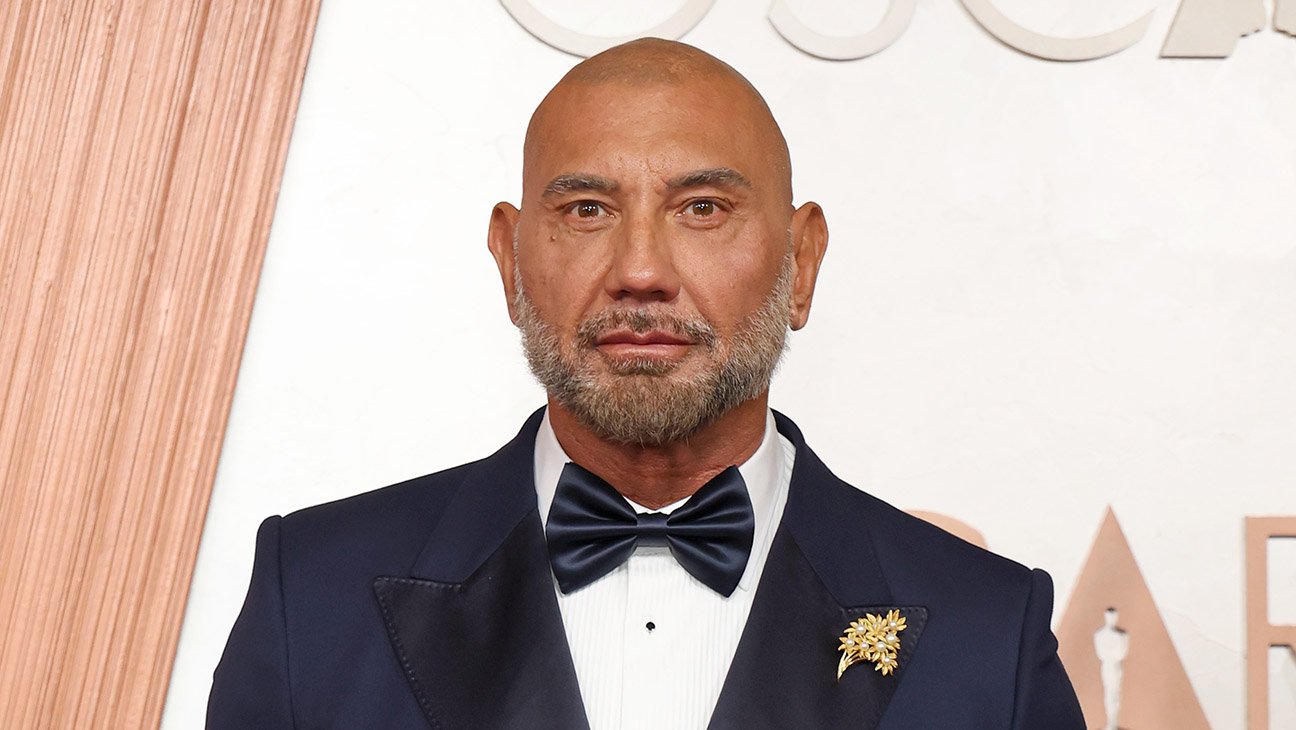
    Dave Bautista is officially taking up the mantle of the “God of War.” Variety has learned that the actor is now set to lead the Amazon Prime Video TV series based on the video game franchise in the role of Kratos.

    It was originally reported earlier this month that Bautista was in talks to play the role after Ryan Hurst, who was announced as Kratos in January 2026, suffered a torn bicep onset that required surgery and would have delayed restarting production into 2027. It was announced shortly thereafter that Amazon and Sony, which is co-producing, were recasting the part.

    Prime Video has given the “God of War” show a two-season order, with the two seasons set to shoot back-to-back. Filming originally began in Vancouver back in February. With Bautista now locked in as Kratos, production is expected to resume in the coming weeks. All scenes featuring Hurst will now have to be reshot.

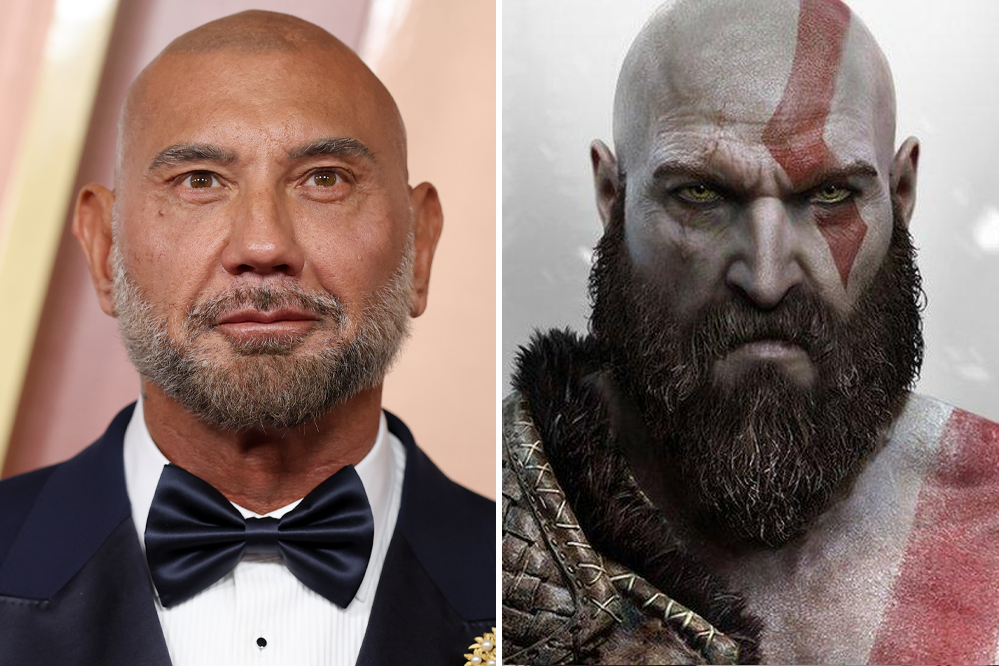
    As Variety previously reported, there are few better suited for the role of Kratos than Bautista. Aside from the fact he is an accomplished actor, he is one of few in Hollywood who could step into the role on short notice in the physical shape it requires. Kratos is known for his incredibly muscular physique in the games, and Bautista has been in remarkable shape throughout his career. Thus, he does not need months of prep time to prepare for the role.

    He is repped by WME and Jackoway Austen Tyerman.

    The series will pick up with the story of the two most recent “God of War” games, in which Kratos must raise his ten-year old son Atreus while battling gods of the Norse pantheon. Per the logline, “Father and son Kratos and Atreus embark on a journey to spread the ashes of their wife and mother, Faye. Through their adventures, Kratos tries to teach his son to be a better god, while Atreus tries to teach his father how to be a better human.”

    Callum Vinson remains attached to play Kratos’ son Atreus. Additional cast members include Max Parker as Heimdall, Ólafur Darri Ólafsson as Thor, Mandy Patinkin as Odin, Alastair Duncan as Mimir, Danny Woodburn and Jeff Gulka as as brothers Brok and Sindri, and Ed Skrein as Baldur.

    Ronald D. Moore is the writer, executive producer, and showrunner on “God of War” under his Tall Ship Productions banner.

    Frederick E.O. Toye will direct the first two episodes of “God of War.” Maril Davis of Tall Ship also executive produces alongside Cory Barlog, Naren Shankar, Matthew Graham, Asad Qizilbash, Jeff Ketcham, Hermen Hulst, Roy Lee, and Brad Van Arragon. Joe Menosky, Marc Bernardin, Tania Lotia, and Ben McGinnis serve as co-executive producers on the series. The series is co-produced by Sony Pictures Television and Amazon MGM Studios in association with PlayStation Productions and Tall Ship Productions.

  • L.A. Mayoral Candidate Nithya Raman Says Legality of Paramount-Warner Bros. Merger “Should Be Decided in Court”

    L.A. Mayoral Candidate Nithya Raman Says Legality of Paramount-Warner Bros. Merger “Should Be Decided in Court”

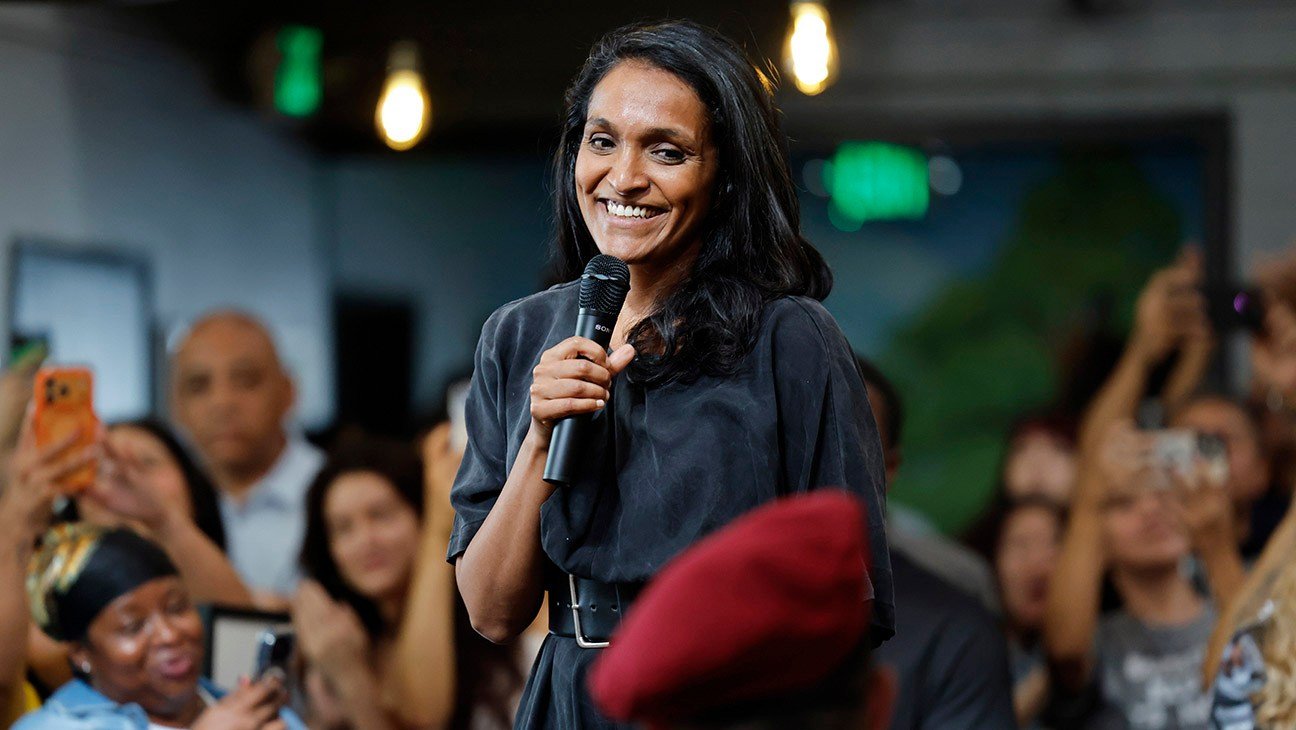
    Los Angeles mayoral candidate Nithya Raman is sticking by her position that the legality of the Paramount–Warner Bros. Discovery merger should be decided in court.

    The sitting L.A. councilmember reiterated her support for California Attorney General Rob Bonta‘s antitrust suit to block the $111 billion deal in a statement to The Hollywood Reporter on Thursday.

    “Los Angeles’ film industry is already in crisis. The Paramount–Warner Bros. Discovery merger would deepen it, costing an estimated 4,500 film and television jobs, more than 10,000 jobs regionwide, and billions of dollars in economic activity, according to a new County report,“ Raman said. “This is a bad deal for entertainment workers and a bad deal for Los Angeles. That’s why I support Attorney General Rob Bonta’s antitrust lawsuit and stand with the workers fighting this merger.“

    The Councilmember added, “Paramount’s threat to leave California unless the lawsuit is dropped is an attempt to strong-arm our state. Serious questions about this merger’s legality should be decided in court, not through corporate threats.”

    Raman‘s statement arrived on the same day that sitting Mayor Karen Bass held a press conference calling for a hasty resolution to the standoff between Bonta and Paramount Skydance. “It is time for all parties to come to the table. The continued uncertainty is not good for workers, not good for productions and not good for the future of this industry,“ Bass said.

    The sitting mayor added that any solution must include enforceable commitments to keep Paramount and Warner Bros. based in L.A. and to retain jobs, film and TV shoots and investment in California.

    In saying so, Bass followed the lead of movie theater trade group Cinema United and the unions the Directors Guild of America and IATSE, which also have recently asked the parties in the lawsuit to come together quickly and hash out their differences to avoid any further industry disruption.

    Raman and Bass are set to go toe-to-toe in the general election in November. While Bass has gained the support of some Hollywood crew unions and industry figures like J.J. Abrams and Samuel L. Jackson, Raman — whose husband Vali Chandrasekaran was a writer-producer on 30 Rock and Modern Family — has her own deep bench of Hollywood supporters, especially amongst writers and comedians.

    The mayoral candidates‘ statements on the Paramount-Warner Bros. Discovery deal arrived just one day after the L.A. Department of Economic Opportunity and CVL Economics released a report detailing how thousands of jobs are at risk as a result of the proposed merger.

  • Tensions Flare as CME, Kalshi Execs Clash Over Prediction Markets in DC

    Tensions Flare as CME, Kalshi Execs Clash Over Prediction Markets in DC

    In brief

    • CME Group Chairman Terry Duffy and Kalshi co-founder Luana Lopes Lara clashed during a CFTC roundtable in Washington, D.C.
    • Duffy singled out Kalshi while questioning whether prediction markets face the same regulatory scrutiny as established exchanges.
    • The clash comes amid a fight between federal and state regulators over prediction markets.

    A CFTC roundtable on prediction markets turned heated Thursday when CME Group Chairman Terry Duffy and Kalshi co-founder Luana Lopes Lara traded insults over market manipulation and regulation.

    The confrontation unfolded during a Commodity Futures Trading Commission meeting in Washington, D.C., as executives from traditional finance, crypto, and prediction markets debated how event contracts should be regulated.

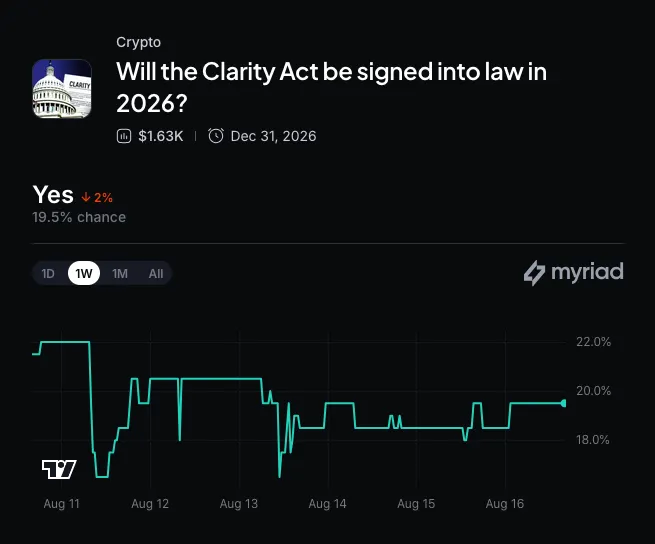
    Myriad: Will the Clarity Act be signed into law in 2026? Click to make your prediction.
    Myriad: Will the Clarity Act be signed into law in 2026? Click to make your prediction.

    Duffy, whose CME Group operates the world’s largest futures exchange by volume, said he was “a lot concerned” about prediction markets and argued that some contracts are susceptible to manipulation.

    “We’re not a bunch of carnival barkers at a circus,” Duffy said. “We are running the most envious markets in the world in the United States of America.”

    Duffy then took aim at the types of contracts Kalshi offers, mocking one in particular.

    “There’s another really economic contract that has been massively important for the United States. That’s a Nathan’s hot dog eating contest,” Duffy said sarcastically.

    He also questioned why Kalshi could offer a compute prediction market while CME’s proposed compute contracts remained under review.

    After Kalshi was called out by name, Lara challenged Duffy on CME’s own history.

    “I just wanted to respond since we were called by name here,” Lara said. “I would actually have to ask Terry: Has CME ever had any issues with any market manipulation, any issues ever in its history?”

    “If you’d like to have a debate, I’m happy to have a debate with you,” Duffy replied.

    “I’m just asking a simple answer to a question,” Lara said.

    “I have more people in my regulatory department than you have in your whole company,” Duffy said, referring to the size of CME Group’s operation compared to Kalshi.

    “Maybe you should learn a bit about efficiency then,” Lara fired back.

    “Well, maybe you should learn about credible markets,” Duffy replied, before moderator Walt Lukken stepped in.

    Lara then argued that the problems Duffy raised were not unique to prediction markets.

    “Every market has risk and every nascent market will have risks as well, and there have been issues in every single traditional market and every single exchange here, onshore and offshore,” she said. “And I think the point of having regulation is that you find these issues, you address these issues, and there’s a way to address them in a correct way.”

    DraftKings CEO Jason Robins later urged participants to stop attacking each other’s businesses.

    “I would just ask everybody, both in this hearing and then also in future communications, to try to refrain from taking shots at each other’s business models or decisions you may not 100% agree with,” Robins said. “That doesn’t advance the discussion.”

    Prediction Markets Face Regulatory Fight

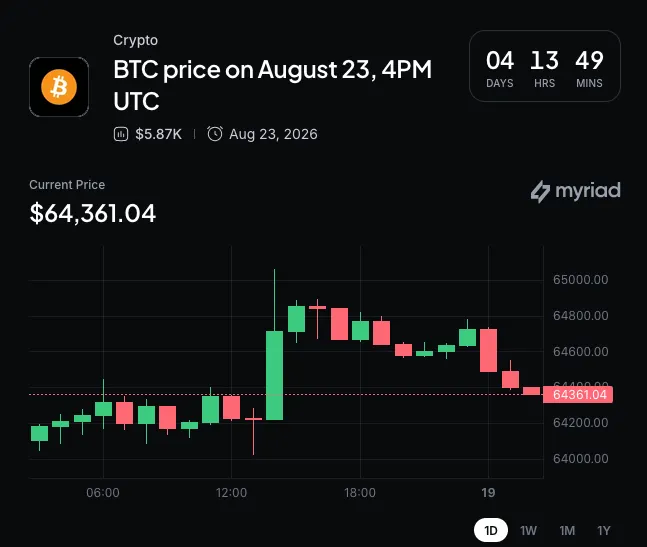
    Prediction markets allow their users to wager on the outcome of virtually any event through futures contracts that settle for $1, with the price of the contract implying the odds of the event. For instance, on Myriad—a prediction market operated by Decrypt’s parent company Dastan, the event contract for “Bitcoin highs in August” is priced at 59 cents on the $75K outcome, implying users believe there’s a 59% chance Bitcoin reaches $75,000 before the end of the month.

    Myriad: Bitcoin next price move? Click to make your prediction.
    Myriad: Bitcoin next price move? Click to make your prediction.

    Prediction market platforms that operate in the United States, like Polymarket and Kalshi, have become the focus of a fight between federal regulators and states over whether contracts tied to sports, elections, and other real-world events are federally regulated derivatives or gambling products subject to state law.

    CFTC Chair Selig has defended the agency’s jurisdiction over federally regulated prediction markets, warning states challenging that authority in February.

    “We will see you in court,” Selig said in a video posted to X. The agency has since taken legal action against states seeking to regulate event contracts under their gambling laws.

    In June, the CFTC proposed restrictions on certain contracts involving war or assassination and some sports proposition bets considered particularly susceptible to manipulation.

    Earlier this month, nine Democratic senators urged Selig to prohibit wildfire event contracts, warning they could create incentives for arson, insider trading, and disaster profiteering.

    Kalshi has faced legal setbacks in several states. Last week, a Washington judge ordered the company to stop offering contracts on sports, elections, politics, and other events in the state, finding it likely violated state gambling and consumer protection laws. Two days earlier, the CFTC ordered Kalshi to keep trading amid a separate dispute over New York’s attempt to block its contracts.

    Daily Debrief Newsletter

    Start every day with the top news stories right now, plus original features, a podcast, videos and more.

  • Prime Video Unveils Landmark $2 Billion-Plus Investment in Latin American Entertainment

    Prime Video Unveils Landmark $2 Billion-Plus Investment in Latin American Entertainment

    Prime Video has unveiled a landmark $2 billion-plus investment plan in Latin American entertainment spanning 2027 to 2030 in a concerted bid to increase viewership and engagement.

    The move comes in what is considered the second fastest growing region for streaming in the world, with Netflix the clear frontrunner.

    At an inaugural showcase event in Mexico City led by top execs, the streaming giant announced a massive commitment that entails doubling its original local programming by 2030, expanding its live sports coverage, digital stores and local creative infrastructure across Mexico, Brazil, Argentina, Colombia and Chile.

    It also plans to grow third-party streaming subscriptions, rentals and purchases to six new territories – Costa Rica, Dominican Republic, Guatemala, Paraguay, Peru and Argentina – which will not require a Prime membership to purchase or subscribe.

    Furthermore, it is also investing in behind-the-camera crew training via programs like “Brasil no Set” and a new physical/post-production skills initiative with Mexico’s SAE Institute.

    “What’s happening in Latin America right now is extraordinary — the talent, the stories, the audiences. Today we’re matching that energy with more than $2 billion through 2030 across original and licensed programming and sports. What excites me most is the breadth; this isn’t a bet on one country or one genre. It’s an investment in the entire region, across every way fans engage with Prime Video. This region deserves this level of ambition and we’re delivering it,” said Kelly Day, VP of International, Prime Video.

    The company plans more than 25 new titles in 2027 alone, including scripted series, films, unscripted and reality formats while in live sports programming, it has expanded its NBA coverage, bolstered its Brazilian football rights and clinched a flagship four-year deal for 38 home matches of the Mexico National Team starting in September.

    “Our job is to find stories that are undeniably local and make them undeniably universal,” said Javiera Balmaceda, head of international originals for Latin America, Canada, and Australia, Prime Video & Amazon MGM Studios. “This slate — from a forbidden love story on the polo fields of Punta del Este to an unsolved crime that still divides Brazil — is proof that when you trust Latin American storytellers with ambition and resources, the world pays attention.” Among its recent bets was its most ambitious show to date, the Chilean limited series “The House of the Spirits,” directed by Francisca Alegria, Fernanda Urrejola and Andres Wood.

    In Mexico, an alliance with By Invitation Only and leading acting schools brought together aspiring talent for a professional development workshop, giving participants the opportunity to perform directly for casting directors and agents. Scholarships were also provided to students from low-income backgrounds.

    “We’re not just producing programming in Latin America, we’re investing in talent and creative partnerships that will help shape the future of Latin American storytelling,” said Tomás Tejero, regional lead, Latin America & Canada, Prime Video. “What we announced today goes beyond what audiences see on screen. It reflects a broader vision for the region and our long-term investment in everything that happens behind it.”

    Upcoming 2026 releases include Argentina Original movie “Barreda,” the third season of “Betty La Fea: Más Fea Que Nunca,” both premiering Aug. 28; docuseries “Los Tinelli S2,” premiering Sept. 30; “El Juicio,” a Mexican thriller inspired by true stories, starring Eugenio Derbez and Pedro Alonso, premiering Sept. 11; Brazil Original docuseries “Marília Mendonça: Sentimento Louco,” premiering Oct. 16; as well as “LOL: Last One Laughing” Argentina S3, hosted by Marcelo Tinelli and “Lo Único que te pido,” a Chilean movie, both premiering later this year.  

  • Justin Sun scores partial court win in World Liberty Financial lawsuit

    Justin Sun scores partial court win in World Liberty Financial lawsuit

    Justin Sun said Thursday that a federal judge rejected an effort by World Liberty Financial to move all of his claims into private arbitration, marking the latest development in his legal dispute with the crypto project.

    Sun said in a post on X that his individual claims will remain in open court following a hearing in California federal court. He said the judge also rejected World Liberty’s argument that all claims connected to his companies must be arbitrated.

    The parties were instead ordered to meet and determine which company related claims should remain in court and which should proceed through arbitration, according to Sun.

    The case, Sun et al v. World Liberty Financial LLC, was filed in April in the US District Court for the Northern District of California and is assigned to Judge James Donato.

    Sun sued World Liberty after investing $45 million in the project, alleging fraud and accusing the company of using mechanisms in its smart contracts to freeze his $WLFI tokens. World Liberty has disputed Sun’s allegations and separately accused him of damaging the company through a public campaign against it.

    In his Thursday post, Sun said World Liberty had sought to move the dispute behind closed doors and argued that token holders should be able to see how the project handles its investors.

    Sun also repeated allegations from his complaint that World Liberty secretly embedded functionality allowing it to freeze, restrict or burn $WLFI tokens and later used those controls against his holdings.

    World Liberty’s risk disclosures state that it can block or freeze wallet addresses and associated tokens when it determines they are linked to illegal activity or violations of its terms. The company has previously said Sun agreed to its freezing authority under an agreement governing his tokens.

    Sun’s lawsuit seeks hundreds of millions of dollars in damages. He previously obtained an order preventing World Liberty from permanently burning, reallocating or otherwise disposing of the tokens involved in the dispute, according to his account of the litigation.

    Sun also raised concerns Thursday about World Liberty’s USD1 stablecoin and the company’s financial position, though those claims remain allegations and have not been established by the court.

    The broader dispute remains unresolved. World Liberty has denied wrongdoing and has separately sued Sun in Florida for defamation, accusing him of conducting a campaign to damage the company’s reputation and $WLFI token. Sun has denied those allegations.

  • CFTC chair says agency will move forward on crypto regulation if CLARITY fails

    CFTC chair says agency will move forward on crypto regulation if CLARITY fails

    Michael Selig, who chairs the US Commodity Futures Trading Commission (CFTC), signaled that the agency would not be idle while Congress continued to debate provisions in a cryptocurrency market structure bill.

    In prepared remarks for the inaugural meeting of the CFTC’s Innovation Advisory Committee on Thursday, Selig said that the commission would move forward on crypto regulations even in the absence of the Digital Asset Market Clarity (CLARITY) Act being passed by lawmakers, adding it would “help [Donald Trump] deliver if Congress will not.” According to the chair, he had already directed staff to allow registered and non-registered entities to offer “crypto asset trading on a leveraged or margined basis” and explore developer protections.

    “We’re going to give CLARITY its breathing room for a vote, but if the Democrats cannot support a bipartisan work product, which reflects compromises from both sides of the aisle, and ultimately send a fair version of the bill to the President’s desk, then rest assured, I will direct CFTC staff to move swiftly to propose these new rules for the industry,” said Selig.

    The market structure bill is effectively paused until the US Senate returns to session in September, when Majority Leader John Thune is expected to hold a cloture vote on the legislation. CLARITY would need 60 votes to pass the chamber and return to the House of Representatives, whereupon it could go to Trump’s desk for final approval or a veto.

    Selig’s remarks came just a day after the CFTC chair stood alongside Trump and other crypto industry leaders at a White House meeting. The president urged Congress to pass a “fair version” of CLARITY to keep the country “ahead of China.”

    Many Democrats in Congress have been calling for stronger ethics provision in the market structure bill specifically to address the Trump family’s crypto investments, which netted the president $1.4 billion in 2025. Although Trump said on Wednesday that a “lot of Democrats” approved of CLARITY, it’s unclear whether enough lawmakers will support the bill to meet the 60-vote threshold to pass the Senate.

    The CFTC chair’s agenda echoed that of the US Securities and Exchange Commission (SEC), which on Tuesday released proposed rules for digital asset regulation. The securities regulator said the rules could provide crypto companies with a safe harbor policy from tokens being treated as “investment contracts” and certain exemptions for issuers.

    CFTC still lacks a full panel of commissioners

    Selig spoke alongside Innovation Advisory Committee Chair Walt Lukken and the body’s Designated Federal Officer Michael Passalacqua on Thursday. As the only Senate-confirmed commissioner at the CFTC in a leadership panel expected to consist of a bipartisan group of five members, Selig has been solely responsible for directing the agency’s agenda since December.

    The CFTC committee also discussed issues related to artificial intelligence and prediction markets on Thursday. Under Selig, the agency has claimed that it has “exclusive jurisdiction” over prediction markets due to event contracts on the platforms being considered “swaps.” The chair has directed the commission to file lawsuits against state-level authorities challenging this position in cases involving companies like Kalshi and Polymarket.