Author: rb809rb

  • ‘Stranger Things: Tales From ’85’ Review: Odessa A’zion Is the Rare Bright Spot in Netflix’s Dull and Unambitious Animated Spinoff

    By my count, there are exactly two and a half good reasons to watch Netflix’s animated spinoff, Stranger Things: Tales From ’85.

    One: You are a child, by which I mean a literal child and not an adult who’s whimsically childlike at heart. You’ve heard good things about Stranger Things, but Mom and Dad have deemed you too young for its TV-14 rating. The slightly mellower Tales From ’85, with its TV-PG rating, could be enough to sate your curiosity for now.

    Stranger Things: Tales From ’85’

    The Bottom Line

    At least the graphics are prettier.

    Airdate: Thursday, April 23 (Netflix)
    Cast: Brooklyn Davey Norstedt, Jolie Hoang-Rappaport, Luca Diaz, Elisha “EJ” Williams as Lucas, Braxton Quinney, Ben Plessala, Brett Gipson, Odessa A’zion, Jeremy Jordan, Janeane Garofalo
    Developed by: Eric Robles, Jennifer Muro, based on Stranger Things, created by Matt Duffer and Ross Duffer

    Two: You’re a Stranger Things fan who expresses your devotion through fanatical completionism — you will not rest until you’ve consumed every last scrap of footage or word of dialogue this universe has to offer. In that case, go with God. Nothing I’m about to say here will matter to you anyway.

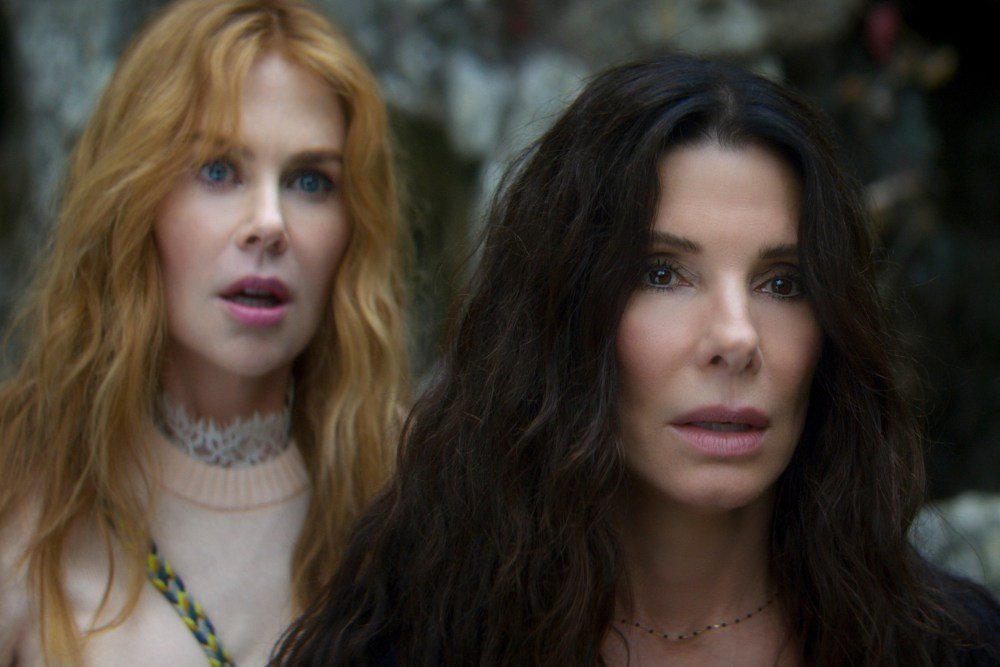
    The half-reason is Odessa A’zion’s Nikki. Burly, brash and topped with a strawberry-pink mohawk, the new character is just fresh and charming enough that it seems a shame Original Flavor Stranger Things didn’t dream her up in time to give her a live-action counterpart. But unless you already fit into categories one or two, even she’s not quite enough to justify sitting through a series that otherwise just feels like more of the same, only less.

    As the new story, developed by Jennifer Muro and showrunner Eric Robles, opens in early 1985 — that’s between seasons two and three, for those as bad as Mike’s dad is at keeping track of ages and timelines — our young heroes are still riding high off their recent victory. Having closed the gates to the Upside Down for good, or so they believe, they have happily returned to ordinary kid lives stuffed with junk food, Dungeons & Dragons and awkward tween flirting.

    What we know that they don’t, of course, is that they’ve still got years’ worth of battles left to fight. This idyllic winter break is just that: a break, and a short-lived one at that. Once people around Hawkins start getting snatched by sentient, otherworldly vines, middle school buds Mike, Will, Dustin, Lucas, Max and El are all back on the case — this time with a bit of additional help from Nikki, daughter of the new substitute science teacher (Janeane Garofalo as Mrs. Baxter).

    Tales From ’85 indicates very little interest in rocking the Stranger Things boat, narratively or tonally or any other-ly. Even the shift in medium from live-action to animation seems rooted more in a desire to return the story to its stronger early seasons, when the kids still looked and acted like, well, kids, than to shake things up. (That the crisp, polished, colorful cartoon version is actually much prettier than the murky CG of later seasons is a nice bonus, though.) Otherwise, it’s all business as usual.

    So while the monsters are never-before-seen creations, they more or less amount to Demogorgons cross-pollinated with Audrey II. When the characters get embroiled in interpersonal drama, they’re only rehashing arguments we’ve seen before. Although Nikki, who has a knack for DIY mechanical engineering, is able to furnish the gang with new gadgets, their plans pretty much always come down to almost getting eaten by some enormous otherworldly creature before being rescued at the last possible millisecond by El’s telekinesis.

    Speaking of El, the character remains so dramatically overpowered that the only real tension across the season’s 10 half-hour episodes comes from wondering what new excuse the show will come up with to incapacitate her long enough that she can swoop in for that “surprise” save. It’s not the only persistent narrative issue to follow Stranger Things into Tales From ’85, but like Mike’s overbearing protectiveness of El or Dustin’s obnoxiously arrogant genius, it’s one that felt easier to forgive in live-action, when the young actors’ superb individual performances and crackling collective chemistry often papered over shortcomings in the script.

    By contrast, the all-new voice cast for Tales From ’85 is stuck trying to duplicate the performances that came before, though only Braxton Quinney, who plays Dustin, and sometimes Jolie Hoang-Rappaport, who plays Max, are true soundalikes. Were these actors (including Luca Diaz as Mike, Elisha Williams as Lucas, Ben Plessala as Will and Brooklyn Davey Norstedt as El) granted space to make these characters their own, the discrepancies might not be a problem. But the series dares not let their performances dig very deep, lest they turn up anything inconveniently contradictory.

    These versions of the characters might go through the motions of a joke Max might crack or a declaration (“Friends help friends”) El might make, and in flashes it almost feels like enough. But lacking the nuance and naturalism that once made them so lovable, these pale imitations quickly grow tiresome, then irritating. It doesn’t seem a coincidence that the only true bright spot in this ensemble is Nikki. As a new girl who figures not at all in seasons three through five, she’s allowed to evolve or grow her relationships in ways that the more familiar faces cannot, lest they break from established canon.

    In Nikki, Tales From ’85 offers a taste of the potential this project could have had were it not so determined to play by the rulebook. Instead — for better if you’re an executive jealously protecting your golden goose IP, maybe, but mostly for worse if you’re anyone else — it plays things as safe as a brand extension can. I suspect viewers content to settle for a diet version of Stranger Things, whether because they’re too little for the real thing or too fanatical to pass it over, will find little to object to in the spinoff’s faithful if watered-down recreation of the original’s appeal. But I can’t imagine most of them finding much to adore about it, either.

  • Kim Kardashian’s Paris Robbery Getting Four-Part Docuseries ‘Kim, the Diamond, and the Grandpa Robbers’

    Kim Kardashian‘s robbery at gunpoint in an apartment during the 2016 Paris Fashion Week is getting the docuseries treatment.

    “Kim, the Diamond and the Grandpa Robbers,” is a four-part series from Pernel Media (“Missed Call,” “The Au Pair’”) for Canal+ Originals. As per the description, the series “pulls back the curtain on one of the decade’s boldest celebrity heists, drawing on rare and exclusive access to those at its centre – including members of the gang and the lawyers who defended them.”

    Despite having endorsed much of her life being put on screen (“Keeping Up With the Kardashians” ran from 2007-2021 and was soon followed by “The Kardashians”), Kim is not involved in this series, Variety understands.

    The heist — which sparked headlines around the world and posed major questions about the dangers of online exposure — saw five masked men posing as police officers storm Kardashian’s Parisian apartment, bound the reality star at gunpoint with duct tape and plastic cable ties and lock her in the bathroom. They fled with an estimated $6 million in stolen jewelry, including a 20-carat diamond ring, gifted by her then-husband Kanye West, that she had been showing off on social media just hours earlier. 12 people were eventually tried in early 2025, with eight defendants convicted and two acquitted. The suspects in court were nicknamed the “Grandpa Robbers” by the press as they were all of or near senior age.

    According to the filmmakers behind “Kim, the Diamond and the Grandpa Robbers,” the story “reveals a clash between two worlds: a hyper-visible global celebrity and a group of veteran criminals attempting one final score.”

    As they note, the crime was not a “chaotic, opportunistic robbery, but a carefully planned operation shaped by insider knowledge.” However, it quickly spiralled out of control due a central paradox: the robbers understood the value of the diamond, but not the scale of the world surrounding it. “In targeting one of the most visible figures in modern culture, they triggered a global event that transcended the crime itself becoming amplified, distorted, and consumed in real time,” the description reads.

    “With roots in France and one of the most famous names in the world, this premium pop crime series sits very much within the DNA of the international productions that we at Pernel Media love to put together — combining strong storytelling with projects designed to travel,” said Samuel Kissous, founder of Pernel Media and executive producer.

    Added executive producer Fabrice Frank: “What makes this project unique is the access and the perspective — hearing directly from those involved allows us to move beyond the story the world thinks it understands and build a much more immersive, character driven account. It’s about reconstructing the story in a way that feels both authentic and cinematic.”

    “Kim, the Diamond and the Grandpa Robbers” is produced by Pernel Media for Canal+ Originals. Executive producers are Kissous and Frank, with Clément Roquigny as creative producer. It’s being directed by Agnès Buthion. An international version is in production, with delivery scheduled for early 2027.

  • FTX sold its Cursor stake for $200,000 in 2023. It would be worth $3 billion today

    FTX sold its Cursor stake for $200,000 in 2023. It would be worth $3 billion today

    A 5% stake in AI coding startup Cursor that FTX’s bankruptcy estate sold for $200,000 in April 2023 would be worth about $3 billion today, following SpaceX’s agreement this week to acquire the company at a $60 billion valuation.

    SpaceX said Monday it has the right to buy Cursor later this year for $60 billion or to pay $10 billion if the full acquisition does not proceed. The deal is founder Elon Musk’s move to close the gap with OpenAI and Anthropic on AI coding tools, an area where he recently said xAI, the Musk-run AI company that merged with SpaceX, is behind competitors.

    SpaceX is holding off on immediate acquisition because of its planned initial public offering targeting a $2 trillion valuation, with the $10 billion serving as a breakup fee.

    The crypto angle sits in the cap table. In April 2022, Alameda Research, the trading firm founded by Sam Bankman-Fried and run alongside FTX, invested $200,000 in Anysphere, the company that builds Cursor.

    That investment bought roughly 5% of the company at a $4 million valuation. One year later FTX had collapsed, Alameda and FTX were in bankruptcy, and the court-appointed estate sold the Cursor stake for the same $200,000 Alameda had paid.

    The stake is worth $3 billion at SpaceX’s $60 billion price tag, meaning the gap between what the FTX estate received and what the position would fetch today is roughly a 15,000x return. It was instead realized by whoever bought it from the bankruptcy rather than the creditors the estate was supposed to be maximizing recovery for.

    The timing cuts awkwardly for FTX’s bankruptcy administration.

    Bankman-Fried, currently serving a 25-year federal sentence, has spent the past year arguing from prison that FTX’s estate destroyed billions in value by liquidating assets too quickly during the bankruptcy, and that customers could have been made more than whole if the process had held positions instead of selling them into what turned out to be the bottom of crypto prices.

    In February, he shared a projection suggesting FTX’s net asset value would have reached $78 billion if the estate had held assets through the subsequent recovery rather than selling in 2023 and 2024.

    Cursor launched its AI coding product in early 2023, the same year the estate sold the stake, and the company’s trajectory from that launch to its current valuation three years later is among the steepest in software startup history.

    FTX customers have since been made whole in dollar terms under the bankruptcy’s distribution plan, receiving back their claim values plus interest. What they did not receive is the upside from what those assets became between the bankruptcy filing and now, which in the case of the Cursor stake alone represents about $3 billion of forgone recovery against $200,000 realized.

    Bankman-Fried’s parents have publicly advocated for a pardon, appearing on CNN in March arguing that FTX customers were ultimately repaid and that the case against their son should be revisited. The Cursor number is likely to feature prominently in the family’s continued campaign, and in Bankman-Fried’s own letters from prison, as the single clearest example of the kind of value he claims the estate destroyed through forced selling.

  • Bitcoin’s bull score index just left bear territory. There’s a warning attached.

    A key indicator tracking the overall health of the bitcoin market has just flashed a neutral signal for the first time since prices peaked above $126,000, signaling that the bear market may have ended.

    But here’s the catch: The neutral reading on the indicator turned out to be a false signal a few years ago.

    That indicator is CryptoQuant’s Bitcoin Bull Score Index, a composite metric that measures the health of the bitcoin market by analyzing ten key on-chain indicators, including blockchain activity, investor profitability, and liquidity.

    It has climbed to 50 for the first time since the downtrend from $126,000 began. That number means exactly half of the index’s underlying indicators are now bullish, while the rest remain bearish. In other words, the indicator has flipped from bearish to neutral, confirming the end of the bear market, as first suggested by BTC’s price bounce from nearly $60,000 to $78,000.

    For an index that has been stuck in bear territory throughout this cycle, reaching neutral is a genuine milestone. Note that readings below 40 signal a structural bear market, while readings above 60 indicate a strong, sustainable uptrend.

    But history has a warning

    CryptoQuant’s analyst pointed to a relevant historical precedent: March 2022, when the index rose to 50, signaling the end of the bear market at the time.

    Similar to today, prices had rebounded from around $35,000 to nearly $48,000 in the weeks leading up to the signal. That price action led many market participants to believe the bear market, which began near $70,000 in November 2021, had ended.

    But guess what, prices more than halved to under $20,000 in the following months. In other words, the bear market deepened.

    “First time in this bear market that the Bull Score Index enters neutral zone (50). In March 2022, the Bull Score entered neutral territory for about a week, and then the price resumed its decline,” Julio Moreno, head of research at CryptoQuant, said.

    A turn, not a trend

    The bull score index hitting neutral is meaningful data, showcasing a real improvement in on-chain conditions rather than just price action.

    However, the March 2022 precedent is a reminder that transitional phases can go either way, especially given that positioning in derivatives currently indicates a lack of conviction in the price recovery.

    “Front-end vols around 40 vol remain subdued relative to realized, skew still favours downside protection, and term structure is only modestly upward sloping. Positioning continues to point to range-bound conditions rather than a sustained breakout,” Singapore-based QCP Capital, one of the largest digital asset trading firms, said in a market note.

  • Cardano builder seeks smaller funding slice of $46.8 million for scaling and Bitcoin DeFi

    Cardano builder seeks smaller funding slice of $46.8 million for scaling and Bitcoin DeFi

    Input Output, the private engineering company that built and continues to develop the Cardano blockchain, is seeking about half the funding it requested last year from the project’s community treasury.

    The company submitted nine proposals totaling $46.8 million for 2026 on Tuesday, down from $97.5 million in 2025. Several of the proposals focus on scaling Cardano to increase its transaction processing capacity and expanding into Bitcoin DeFi.

    Cardano, like most major blockchains, maintains a shared pool of money funded by network fees, which community representatives vote to allocate toward development work. Input Output historically has been the largest recipient because it employs most of the engineers building the underlying software.

    The reduced ask is the first concrete step in a plan to phase out that dependency. Input Output said it now aims to shrink its annual request each year until the company can sustain itself on its own revenue, with community funds going instead to a broader set of smaller engineering groups.

    By the end of 2026, Input Output expects smaller, more specialized teams to take on most of the work it currently does in-house, including firms such as VacuumLabs and Midgard Labs that focus on specific layers of the Cardano software.

    Scaling and bitcoin DeFi

    The nine proposals group into two themes. The larger funds a consensus upgrade called Leios, which Input Output claims will increase Cardano’s transaction processing capacity by 10 to 65 times, targeting more than 1,000 transactions per second.

    For context, that would move Cardano from a relatively slower chain to one competitive with Solana and the fastest Ethereum layer-2 networks on throughput alone. Leios is scheduled for a test release in June and full deployment by year-end.

    The second flagship proposal funds a system called Pogun, which aims to bring Bitcoin-based decentralized finance to Cardano. In practice, it would let bitcoin holders borrow and earn yield on their holdings through Cardano without giving custody to a centralized intermediary. Pogun’s lending component is targeted for public release in the second quarter.

    Smaller proposals cover performance improvements to Cardano’s smart contract engine, security testing infrastructure, developer tools, and expanded API services.

    Each proposal names specific delivery leads and ties funding to delivery milestones rather than releasing money upfront. Imagine paying a contractor in stages as different parts of a house are completed, instead of handing over the full budget at the start of construction.

    Voting opens Tuesday and runs through May 24. The decisions are made by roughly 1,000 elected delegates known as DReps, who represent ADA holders much as proxy representatives do in a publicly traded company. Charles Hoskinson, the founder of Input Output, is scheduled to release a video this week making the case directly to those delegates.

    The vote will test whether Cardano’s governance, which has expanded significantly over the past two years, treats Input Output like any other grant applicant or continues to approve its requests largely on a basis of deference.

    Last year’s $97.5 million proposal passed, but in the interim the Cardano Foundation has taken over the project’s grant-funding arm, and Intersect, the governance organization running this vote, has assumed stewardship of core Cardano software. Both shifts mean alternatives to Input Output now exist in a way they did not when previous votes went through.

    Meanwhile, Input Output also cited progress in the ecosystem in its release. A new Cardano stablecoin, USDCx, reached 14.6 million tokens in circulation within weeks of its launch. Total assets deposited on Cardano, a common measure of a network’s usage, rose from $137.5 million to $142.7 million over the same period.

    Whether the full slate passes, gets partially funded, or is reshaped entirely by DReps will signal how much the Cardano community’s thinking has shifted now that the tools to fund development without Input Output exist.

  • When Will the Fed Cut Interest Rates? Leading Economists Share Their Forecasts

    Expectations regarding the Fed’s interest rate reduction process are being postponed again due to inflationary pressures created by the war in the Middle East.

    According to a recent survey of economists by Reuters, the Fed is expected to wait at least six more months before cutting interest rates this year.

    The war, which has lasted for about two months, has drastically increased energy prices, reigniting already high inflation. Rising fuel costs have driven consumer confidence to record lows, largely erasing expectations of an early interest rate cut that had been priced into the markets.

    Related News BREAKING: Tesla Releases Earnings Report – Did It Sell Bitcoin?

    Even the most dovish members of the Fed are now arguing that inflation remains “disturbingly high,” weakening the likelihood of a rapid easing of monetary policy. In a survey conducted between April 17-21, 56 out of 103 economists predicted that the policy rate would remain stable between 3.50% and 3.75% until the end of September. This represents a significant decline compared to the nearly 70% expectation in the late March survey for “at least one rate cut by September.”

    Nevertheless, most economists still expect at least one interest rate cut by the end of the year. The median forecast is for a single rate cut, consistent with the Fed’s “dot plot” projections released last month. However, nearly a third of those surveyed now believe there will be no rate cuts this year; this figure has almost doubled compared to the previous survey.

    *This is not investment advice.

  • Elsa Pataky on SkyShowtime’s ‘The Tribute,’ Starring and Executive Producing, and How Chris Hemsworth Ended Up in Her Spanish Thriller Series

    Elsa Pataky on SkyShowtime’s ‘The Tribute,’ Starring and Executive Producing, and How Chris Hemsworth Ended Up in Her Spanish Thriller Series

    An 80th birthday sounds like a happy occasion. But things are much more complicated in the case of the powerful Spanish Novak family at the center of The Tribute (El Homenaje), the new SkyShowtime Spanish original series premiering today, Thursday. 

    The family thriller, from the creative minds behind Shades (Matices), which was a hit for the European streaming joint venture of Paramount and Comcast that is available in more than 20 markets, will debut four episodes, followed by the remaining four episodes a week later, on April 30. Shades stars Eusebio Poncela, in his final fiction role before his death, Miriam Giovanelli, Juana Acosta, Enrique Arce, Raúl Prieto, Luis Tosar, Luisa Mayol, and Elsa Pataky also feature in The Tribute, which tells a different story with different characters. They are joined in The Tribute by the likes of Manu Ríos, Álvaro Rico, Ángela Molina, Georgina Amorós and Óscar de la Fuente

    Pataky also serves as an executive producer on the series, which was directed by Sergio Cánovas, who is also an executive producer. The series was written by Javier Naya and Martín Suárez and created by them together with Cánovas.

    The Tribute tells the story of Adolfo Novak, portrayed by Poncela, the “patriarch of one of the most powerful families in the country, who gathers his family and close friends to celebrate his 80th birthday,” reads a show synopsis. “Behind the toasts and smiles lie decades of secrets, betrayals, blind loyalties and a strong desire for revenge. The evening will end up blowing up and revealing a truth that, when it finally comes to light, will be much more unexpected and surprising than any previous suspicion.” 

    SkyShowtime chief content officer Kai Finke has touted the original series’ “magnificent cast and gripping storyline.” The Tribute was produced by Secuoya Studios and Stellarmedia in association with SkyShowtime and in collaboration with Prime Video, which has second-window rights to the show.

    Pataky, known for her role as Elena Neves in the Fast & Furious franchise and her work in such movies as Furiosa: A Mad Max Saga, talked to THR, in a video call from Madrid, about The Tribute, her roles on and off screen and how a surprising cameo of her real-life family came about.

    Thank you for the wild ride of a show! I feel that everybody who thinks that their family is difficult may come out of watching the series with a slightly different view. Can you tell me a bit about what was so appealing to you about The Tribute?

    Yeah, what an amazing family! What attracted me to this project was the psychology of every character and how [it shows that] we are basically victims of our circumstances, of what happened, especially in our childhood, all those experiences that you have with your parents and with your brothers and sisters. What is interesting about this family is that they are all competing.

    I don’t think it’s really about power and how much money they have. It’s about love. They’re competing for that love that they never had. [That also] influences your mental health … and your relationships. So it was really, really complicated, and interesting at the same time, to tell a story that involves so many feelings and sensations.

    Tell us a bit about your character, Stella Novak. She is very intelligent, very focused, very driven, but also has all sorts of issues with her mother. It is quite a different character from your role in Shades. How was it for you to dive into this new character with a lot of the same members of the creative team that you worked with on Shades?

    It was great because the team felt like a family. We love working together. We wanted to do something together again when [Shades] was done. [Sergio Cánovas] came up with the idea for a series with the same actors, but with a different story. The difficulty was to create a story that would attract all of us. They put us all together again, and they imagined something so that everyone would be happy and say, “Oh, I love my character.” Instead of saying: “Oh, I want his character. Her character is so much better!” But I think the creator knew us so well that he could develop a story that each of us was happy with.

    Eusebio Poncela and Elsa Pataky (right) in ‘The Tribute.’

    Courtesy of SkyShowtime

    Stella gives up, in a way. She wants to … just forget about everything and forget about her family. But she also feels that she needs to just find peace with herself. She comes [at it] with great intentions — to be forgiven for something she thinks her sister was really angry about, because Stella feels that she abandoned her. She abandoned the whole family and is trying to come back for a good reason. And then it becomes so complicated, even with good intentions, because of the circumstances of the family and the unconditional love Stella has for her Dad. She ends up doing things because she feels that she has to protect the family in a way, so that everything ends up in a good place. But she still has those big wounds.

    ‘The Tribute,’ courtesy of SkyShowtime

    Courtesy of SkyShowtime

    You not only act in The Tribute, but you also executive-produced the series. How do you like the producer’s work, and how did you end up in that role?

    I was talking to Sergio, the director, when we finished Shades, and I told him that this was something that I really wanted to do. I was trying to put together some projects and trying to get the rights to books. He said, “You will be an amazing producer. Why don’t we do this one together, so that you have that experience?” We’re real friends.

    And it was great. It was very natural. You see things from the other side, including all the problems. So, you learn a lot. It’s great. I love that role. It’s something that I’m really interested in and that I enjoyed a lot on this project.

    Did your acting experience help in your role as an executive producer?

    It’s different. When I was really in a scene [as an actress], the director kept me [focused] there. But I remember one moment that was really interesting, when I put my producer’s hat on. It was a scene in which one of the actresses had to punch somebody. I could see that the actors were suffering. The director said this is not working. And I was like: “No, this is going to work. We’re going to make it happen.”

    So I stepped in. The actress was really scared, because she has not done action movies. So, she was really scared to just hurt the other person. So, I came in with all this energy: “This is how you have to do it. And this is the reaction [move] that she has to do when she gets punched.” So I threw a punch for her and showed the physical reaction to make [it look and feel] real. It was great, because nobody there had done an action movie, and I’ve done it. I felt proud of myself, because it was a producer’s moment when nobody could do anything, and I had to get in and make it happen.

    Eusebio Poncela and Luis Tosar (right) in ‘The Tribute,’ courtesy of SkyShowtime

    Courtesy of SkyShowtime

    There is a scene with you and your real-life family in a cameo, which I’m not going to completely spoil for readers. I was rubbing my eyes because I thought I recognized this Thor frame of this man on screen and a young man, who I hear is your son. How did that cameo with your husband Chris Hemsworth and one of your sons come about?

    As a producer, you always like the cheapest way to do something. We knew that we had to shoot in Australia. The director said we had to shut down [the production in Spain], and we were not going to pay for everybody to go to Australia. I said: “No problem, we’ll do it. I’ll get my husband, I’ll get my kids, and get my brother behind the camera.” We shot it very simply, with one camera. Of course, Chris was there, and it was close to my house. It’s a little surprise. And it’s so unexpected.

    The Tribute is only premiering now, but given the fun the creative team had on Shades, could we see another series from this team?

    We’ve actually been talking about it, because we do have such a good relationship. And I think that energy is something that you can see. When you have the opportunity to work with the same people that you love and you have such a beautiful experience with, for sure you [want to do more]. We’re trying to just get the director and the writers to do another one.

  • 4 takeaways: Dominant 3rd quarter, Cade Cunningham carry Pistons in Game 2 victory

    The Detroit Pistons defeat the Orlando Magic 98-83 in Game 2 to even the series at 1-1

    • Download the NBA App

    Twelve minutes came, 12 minutes went. Then 24.

    And still Detroit seemed not to be meeting the challenge presented to it three days earlier when the Orlando Magic took Game 1 of the teams’ first-round Eastern Conference series.

    On the Pistons’ floor, no less, swiftly ending in a few hours the No. 1 seed’s homecourt advantage that had taken nearly seven months to secure.

    One quarter into Game 2, there was no obvious clapback, Detroit leading by a modest 25-21. The only thing folks knew for sure was that points were coming at a premium this night.

    Two quarters in, it was tied 46-46. If anything, the Magic were starting to think they could hang and steal another game. Detroit’s fans had to wonder if their guys were capable of playing well, winning and making a statement all at the same time.

    Their coach apparently was, too. Even though J.B. Bickerstaff wouldn’t pull back the curtain on the team’s halftime demeanor, center Isaiah Stewart did.

    “J.B. had some words in the locker room,” Stewart said. “I think that lit a fire under us even more, to just separate ourselves. He don’t want to hear any more ‘my bads.’ He don’t want to hear any mistakes. Just go out there and do your jobs.”

    The Pistons’ response came as if pent-up. They blitzed the Magic to start the third quarter, pumped their lead to 27 points and comfortably nursed it to the end.

    That was “Deeee-troit basss-ketball!” with an emphasis on the D.

    Cade Cunningham, Jalen Duren and the rest snapped a home playoff losing streak stretching 11 games back to 2008 and, more important, got this to 1-1 heading to Game 3 Saturday at Orlando’s Kia Center (1 p.m. ET, NBC/Peacock).

    Here are four takeaways from the Pistons’ leveling of the series:


    1. Come for the 30, stay for the 3

    When the Pistons’ real response to Game 1 finally came, it boomed through Little Caesars Arena. They opened the third quarter with an 11-0 run, gave up a 3-pointer to Desmond Bane, then stacked the game’s next 19 points for 76-49 lead.

    Had this been water polo, Detroit’s guys would have been standing in the ankle-deep end of the pool firing the ball at Orlando’s goal, while the besieged Magic were frantically paddling just to keep their heads above water.

    That 27-point lead was the game’s biggest. But the Pistons’ gaudy work on the offensive end overshadowed their grit and disruption at the other. When you outscore someone 30-3, that “3” can rattle and nag the opposition as much as or more than the “30.”

    After scoring 46 through the first 24 minutes, Orlando used up 7:40 just to get Bane’s lonely three. Detroit limiting their guests to 29.4% shooting (5-for-17) and eventually 16 points in the third was what goes on the resume now, but the Pistons’ defensive work overall – holding Orlando to 32.5% success (26-for-80) (8-for-32 from the arc), dominating the glass 57-42 and blocking 11 shots – was what restored their homecourt advantage in the now best-of-five affair.

    “Man, we just played defense,” Bickerstaff said. “It was that simple. When we play defense the way we’re capable of, it triggers everything for us.”

    Orlando players sounded as if they simply missed a lot of shots they liked and normally would make. The Pistons disagreed, convinced they steered the Magic toward looks they wouldn’t have preferred. Springing seven turnovers and causing so much anxiety with the scoring runs can do that to an opponent, “speeding” them up as folks say.

    “Our defense is based on physicality,” Bickerstaff added. “If we’re not physical, we’re not doing our job. To hold that team to 83 points was unbelievable.”


    2. Nicknames get bestowed for less

    A glimpse of Cunningham’s bio on Basketball-Reference.com claims he variously is known as “MotorCade,” “Deuce,” “Smooth Operator” and “Cade Icewood.”

    Meh, not a keeper in the bunch, frankly.

    So why not this: “Nightmare.” That’s what his coach talked about in the minutes after the Pistons’ All-NBA point guard haunted Orlando from tipoff nearly to the final horn.

    Cade Cunningham joins Isiah Thomas in franchise history to record multiple Playoff games with 25+ points and 10+ assists

    “He’s him,” Bickerstaff said. “And he understands that. To have the size, agility, touch, speed, patience that he has, he’s a matchup nightmare for people.

    “It takes multiple bodies to stop him. And then even that, because he can get to his spot and shoot his middy [mid-range shot], it’s hard to get to him.”

    At 6-foot-6 and 220 pounds, Cunningham is bigger, stronger or both compared to every guard on Orlando’s roster. He plays slow until he plays fast, with bursts that separate him from defenders of all shapes and sizes. Meanwhile his long arms and quick hands suit the Pistons’ defensive profile fine.

    In the pivotal third quarter, Cunningham scored only five points but passed for seven assists to unleash his teammates. Six Detroit players scored five points or more in the period to just one for the Magic.

    Center Jalen Duren didn’t respond loudly from a low-impact opener but it wasn’t for the point guard’s lack of trying, and Duren at least was better.

    Cunningham finished with 27 points, six rebounds and 11 assists, too effective to be undone by seven turnovers or his 1-for-6 from the arc (he was 10-for-13 inside it).

    Stewart talked about Cunningham’s effect on each team when he’s on his game.

    “For us, it uplifts us. Makes us go with him,” the big man said. “For the other team, it’s just a problem. They have to figure [it] out. They change their coverages and stuff, which helps free us up and allow us to make plays.”


    3. Reversion or mere step back for Magic?

    Trying to make definitive assessments about Orlando these days is like sticking a thermometer in somebody’s mouth without noticing they one foot in an ice bucket and the other in an oven.

    That fatal 12 minutes after halftime and the 83 points the Magic scored – a season low – brought back memories of the group that gagged away game No. 82 to Boston’s scrubs and got slapped down by the Sixers in their first Play-In game. The crew that shredded Charlotte last Friday and stole Game 1 of this series Sunday revised a lot of 2025-26 history in a hurry, as if the Magic of deep talent and legit expectations was back.

    Which Orlando team is in play now? Maybe it’s one that rationalizes away what happened Wednesday, consoling itself about “getting one” in Detroit when two would have been so much better. Or maybe it’s the team that outscored the Pistons 67-60 in the other three quarters and didn’t slump their shoulders on the way out of town.

    “We just got a little disorganized offensively,” Paolo Banchero said, “And they started to speed us up with ball pressure. I think it was more us not being on the same page to start the quarter and they took advantage of that.”

    Banchero reminded reporters of the Magic’s past two postseasons, when they dropped the first two games on the road in Round 1, then went home for a reset. In 2024, they fired back vs. Cleveland, a home-dominant series that went seven games. Last spring, they at least defended their court in Game 3 en route to losing in five to Boston.


    4. Sticking late with the starters

    A case could have been made in either direction: With Detroit ahead by 16 points heading down to the final three minutes, Bickerstaff might have wanted to sit his major contributors, lest an awkward step or nasty spill irrevocably changed what’s left of the series. The same could have been said for Orlando, which at that point was scratching for a comeback that never got the score closer than 14.

    And yet, there they were, starters or top reserves battling nearly to the end. Orlando’s Jamahl Mosley was the first to blink – show discretion? – by pulling his guys en masse with 2:57 to go. Bickerstaff waited until only 45 seconds remained.

    It was a pebble-grained game of chicken at that point, with the Pistons determined not to let Orlando gain confidence or get rhythm that might carry over to Game 3 and the Magic saving as much face as possible by defending the home team down to 14 points in the fourth.

    The gamesmanship bodes well for what’s still to come.

    * * *

    Steve Aschburner has written about the NBA since 1980. You can e-mail him here, find his archive here and follow him on X.  

  • Democrats up in Virginia, but US voters may pay price for redistricting war

    Democrats up in Virginia, but US voters may pay price for redistricting war

    Washington, DC – The latest battle in United States congressional redistricting has been decided, with voters in Virginia approving redrawing the state’s electoral map.

    The result of Tuesday’s referendum on Virginia redistricting is widely expected to benefit Democrats in their fight to retake control of the slimly Republican-controlled US House of Representatives in the midterm vote in November.

    Recommended Stories

    list of 4 itemsend of list

    While redistricting is typically conducted every 10 years, following the US Census count of the country’s population, the election season has seen an unprecedented flurry of states moving to redraw their legislative maps early, initially spurred by pressure on US President Donald Trump to urge his fellow Republicans in Texas to do the same.

    Democrats may be up at the moment, but several scenarios – including a redistricting push in Florida – could soon spoil those gains.

    Experts, meanwhile, warn of the long-term implications of the election season’s norm-busting political manoeuvres, which they say could transform how and when electoral maps are drawn for years to come.

    “Virginia’s unorthodox redistricting isn’t just a map redraw, it’s a mid-decade power play in a national arms race,” Rina Shah, a political adviser and strategist, told Al Jazeera.

    “In a cycle defined by retaliation over reform, this sets a precedent: when one side bends the rules, the other follows, until courts or voters draw the final line.”

    Democrats gain – for now

    Trump has not been timid about his desire to redraw state congressional maps to benefit his Republican Party.

    In July 2025, he confirmed the plan to reporters: “Texas would be the biggest one,” he said. “Just a very simple redrawing, we pick up five seats.”

    By August, Texas’s Republican-controlled State House had passed a new map favouring Republicans, setting the party on course to secure five more seats in the US House of Representatives compared to the earlier map.

    The move was soon followed by changes in Missouri, whose new maps are expected to net Republicans one additional seat, while redistricting in North Carolina and Ohio is expected to give the party two to three new Republican-dominated districts.

    Democrats in several states responded in kind, pushing for redistricting in California and Utah that resulted in about six new Democrat-dominated districts. Virginia’s victory largely neutralised Republican gains, adding between two and four seats for Democrats.

    “This could shift Virginia from a 6-5 split to something like 10-1 Democratic,” political adviser Shah said, referring to Virginia’s 11 congressional districts and noting this would result in “delivering up to four net seats and dramatically tightening the fight for House control in the 2026 midterms”.

    This comes as Republicans are already expected to face a punishing election season, with wariness over the US-Israeli war in Iran and the stubbornly high cost of living in the US.

    Democratic control of either chamber of Congress – or of both – would give the party the ability to largely curtail Trump’s agenda in the final two years of his presidency.

    As of Wednesday, Sabato’s Crystal Ball, a midterm predictor published by the University of Virginia’s Center for Politics, rated 217 Congressional districts across the country as leaning towards Democrats, with 205 leaning towards Republicans and 13 rated toss-ups.

    Good for Democrats, ‘terrible’ for democracy

    In the short term, Democrats are “winning” from the redistricting battle, according to Samuel Wang, a professor of neuroscience at Princeton University who runs the Princeton Gerrymandering Project.

    “But from a non-partisan good government standpoint, it’s just a terrible event,” Wang told Al Jazeera.

    He explained the “incredible” flurry of redistricting in recent months opens the possibility of a new age of heightened gerrymandering, the process by which congressional boundaries are drawn to benefit one political group.

    Prior to this election cycle, there had been just three instances of mid-decade redistricting over the last five decades. Wang described the recent spurt as a “complete busting of norms”.

    “It’s bad in the sense of reducing competition. Gerrymandering on both sides, basically, removes voters from the equation everywhere it happens,” he said.

    Top Democrats have largely argued their hands were forced in mirroring the Republican strategy, rather than yield to the opposing party ahead of a consequential election.

    “We fought back,” Hakeem Jeffries, the top Democrat in the House, told the Associated Press after Virginia’s vote. “When they go low, we hit back hard.”

    But some Democrats have echoed concerns over the new precedent being set.

    John Fetterman, a Democrat from Pennsylvania who has regularly sided with Republicans, told Newsmax on Wednesday, “Whether it’s a red state or whether it’s a blue state, our democracy is degraded.”

    Attention turns to Florida

    To be sure, while opportunities for further redistricting are diminishing following the vote in Virginia, the final congressional maps ahead of the midterms may not yet be set.

    The Virginia vote now shifts pressure on Republicans in Florida, where Governor Ron DeSantis is set to hold a special legislative session on April 28 to discuss possible redistricting.

    A new map could add up to five Republican-dominated congressional districts in the state, but could be scuttled by strict language in Florida’s constitution related to the process.

    Democrat Jeffries, in a statement on Wednesday, vowed to surge resources to the state to take down Republican incumbents if the map is redrawn. “Maximum warfare, everywhere, all the time,” he pledged.

    Several challenges to Virginia’s redistricting ballot measure are also currently being heard before the state’s Supreme Court, which could hinder the implementation of the new map.

    Trump on Wednesday decried the Virginia vote as “rigged”, without providing any evidence to back up the claim.

    Meanwhile, a case pending before the US Supreme Court could beckon in another slate of redistricting in the US South.

    In Louisiana v Callais, the justices will determine whether the creation of two Black-majority congressional districts is in line with the Voting Rights Act, which seeks to assure minority representation in states with a history of racist election policies.

    A ruling could open the door to redrawing maps in several states that would have previously been banned due to so-called “racial gerrymandering”, a process of drawing congressional lines based on racial makeup to dilute the electoral power of a minority group.

    A pathway to reform?

    A handful of states have created independent commissions to oversee redistricting, in an effort to assure the process remains non-partisan.

    But the vast majority rely on their state legislatures to draw the maps, which can lead to outsized influence over the party in control, barring legal challenges. That largely remains true whether redistricting is conducted every decade or, as the current election season could portend, more frequently.

    But amid the current cavalcade of congressional map changes, Princeton’s Wang, who is himself running in the Democratic primary for Congress in New Jersey’s 12th district, sees a rare opportunity for federal reform.

    That could take the form of Congress creating independent commissions to oversee redistricting.

    “Now that mid-decade redistricting is backfiring on Republicans, it creates the possibility that both parties can see clearly that gerrymandering is a zero-sum game,” Wang said.

    “It opens a path for possible bipartisan action.”

  • Flamingo Finance airs support dispute with NGD and NF in open letter

    Flamingo Finance airs support dispute with NGD and NF in open letter

    Flamingo Finance has published an open letter alleging that Neo Global Development and the Neo Foundation failed to deliver promised assets and operational support during the platform’s most challenging stretches to date. The Flamingo maintainers argue that Neo’s flagship DeFi dApp has been left structurally dependent on two entities that have refused to act on calls for help. The article catalogs grievances the team says it raised internally through late 2025 before escalating the dispute publicly.

    The dependency Flamingo describes

    Flamingo states that it does not hold the keys to its own smart contracts, and that contract-upgrade authority rests with NGD and the NF. That arrangement follows NGD’s earlier handoff of operational responsibility to the MyMingo team in 2021, which did not receive control over the contracts but has been maintaining the platform ever since.

    According to the post, once the public dispute between Neo co-founders Erik Zhang and Da Hongfei escalated at the end of 2025, the response rate from NGD and the NF changed. Flamingo noted, “Expected support became inconsistent. Breaking changes were introduced. Execution slowed or stopped.”

    The letter situates its grievances against a set of 2025 events that Flamingo says compounded the pressure on the platform: Binance’s April assignment of a Monitoring Tag to FLM, FLM’s delisting from Binance spot trading on Nov. 12, the final shutdown of Neo Legacy MainNet on Oct. 31, and the public conflict between Zhang and Da that became visible in late December.

    The FLM crisis response Flamingo rejected

    Regarding the Binance Monitoring Tag, Flamingo states that one response proposed by NGD was to mint a large amount of new FLM and allocate it to market makers.

    The Flamingo team refused the proposal because it would harm the broader FLM token holders and community. They said, “Flamingo made clear it was prepared to walk away rather than accept a path that diluted the very community it was supposed to protect.”

    Instead, according to the letter, Flamingo injected private capital into the platform: approximately 103,000 $USDT and 20 million FLM (valued at roughly US $300,000 at the time). The post does not identify the source of the private capital.

    Flamingo also disclosed a platform loan of approximately 813,000 FUSD outstanding, collateralized by roughly $138,000 in FLM, $80,000 in NEO, and $180,000 in $GAS. FUSD is the platform’s native overcollateralized stablecoin backed by various NEP-17 assets such as bNEO, $GAS, and FLM, among others.

    Alleged unfulfilled commitments

    The core of the letter is a set of three disbursements Flamingo says it expected to receive from NGD and the NF but that, according to the post, never arrived:

    • Approximately 100,000 $USDT is tied to what Flamingo describes as the bridge hack fallout
    • Neo Legacy-related assets described as approximately 20 $BTC and approximately 600,000 $USDT, said to have been discussed as support for the platform
    • Approximately 100,000 $USDT representing proceeds from the NF’s sale of ONT and WING received as Poly Network compensation

    Flamingo characterizes each as discussed or as part of its understanding, rather than as signed commitments. On the Neo Legacy assets, the open letter states, “Neo Legacy is now shut down. The assets never came to Flamingo. The community has no transparent explanation.”

    The references to Poly Network fallout trace to the August 2024 exploit, the third Poly Network attack Flamingo navigated. In September 2024, NGD relaunched the cross-chain bridge and took on maintenance responsibility.

    Bridge control and operational issues

    Flamingo says the bridge’s ongoing operational issues stem from the same dependency problem. The letter identifies wrapped ETH, $BTC, $USDT, USDC, BNB, and CAKE on Neo N3 as the affected assets and states that bridge liquidity isn’t consistently maintained within the contracts, requiring manual intervention.

    When NGD or the NF doesn’t top up the contracts that hold the aforementioned underlying assets, users end up trapped with wrapped assets they cannot redeem. Flamingo goes on to say that these issues pertaining to un-backed wrapped assets occur weekly, or even more often.

    The letter also flags that bNEO, Neo’s smart contract-based staking protocol, is expected to stop producing $GAS unless contract upgrades are implemented, which Flamingo says are outside its control. Flamingo reliance on $GAS income from bNEO means this further exposes platform health.

    The road ahead

    Flamingo closes the letter by reiterating the dependency framing and issuing a direct call to action from NGD and the NF, the parties with the power to effect change. The post states, “Flamingo does not hold the keys, does not control the contracts, and does not have unilateral power to make changes.”

    Flamingo concludes, “Unless NGD and NF act, hope will not be enough. Contracts will not update themselves, support will not appear on its own, and users will continue to bear the cost of inaction.”

    The full post can be read at the link below:
    https://flamingofinance.medium.com/the-questions-the-flamingo-community-deserves-answered-ddcecc317d3d