OKX may restrict account functions and funds for 15 days or longer when cryptocurrency deposits trigger enhanced anti-money laundering reviews, CEO Star Xu said on Sept. 2.
Xu issued the warning after responding to a user whose transfer from a sports betting platform reportedly triggered an OKX risk review. The executive said funds sent from high risk addresses can result in stricter checks, with the length of a review depending on the circumstances.
Accounts confirmed to be connected to high risk or illegal activity may have their services terminated, according to Xu. His statement did not identify the user, betting platform, deposited asset or amount involved.
Xu also warned about funds originating from escrow transactions conducted through Telegram groups, Huiwang and related platforms. Such channels can create elevated source of funds risks, although a transfer from a flagged address alone does not prove that an account holder committed a crime.
OKX reviews may restrict funds beyond 15 days
Xu said an OKX risk review may continue for 15 days or longer. During that period, the exchange may restrict access to funds and some account functions while its compliance team examines the transaction history.
The statement did not establish 15 days as a fixed minimum or maximum. Xu said the duration would depend on the facts of each case, meaning reviews may conclude sooner or continue beyond that period.
Crypto exchanges use blockchain monitoring tools to assess whether deposited assets have interacted with addresses associated with scams, hacks, sanctions, darknet markets or other flagged services. They may also request transaction records and evidence explaining how a customer obtained the assets.
Blockchain screening works by tracing transaction paths and assigning risk labels to wallets. Those labels can help exchanges prioritize reviews, but they do not independently establish ownership, criminal intent or legal liability. Assets can pass through several unrelated wallets before reaching an exchange.
Xu did not disclose which blockchain analytics providers OKX uses or what risk score triggers a restriction. The exchange also has not published a detailed appeals process specific to the case that prompted his response.
OKX CEO identifies higher risk funding channels
Xu specifically cited Telegram escrow transactions and Huiwang variants as examples of channels that may expose users to elevated source of funds risks. Telegram itself is a messaging platform, but private groups can be used to arrange informal trades without the customer verification controls found on regulated exchanges.
Escrow arrangements can also make a transfer harder to document. The address sending cryptocurrency to an OKX customer may belong to an intermediary rather than the original buyer or seller, creating gaps in the transaction record.
Xu used the name Huiwang, which is commonly associated with Huione, a Cambodia based group operating payment and online marketplace services. Different spellings and successor brands have appeared in public reporting, making it important not to treat every similarly named platform or address as automatically connected.
The U.S. Treasury’s Financial Crimes Enforcement Network took action against Huione Group in October 2025. FinCEN’s final rule identified the company as a foreign financial institution of primary money laundering concern and cut it off from the U.S. financial system.
FinCEN said Huione Group laundered at least $4 billion in illicit proceeds between August 2021 and January 2025. The agency attributed at least $37 million to North Korean cyber heists, $36 million to virtual currency investment scams and $300 million to other cyber scams.
Those amounts are U.S. government findings concerning Huione Group. Xu did not say that every transaction involving Huiwang or its variants contains criminal proceeds. He described them as channels carrying higher source of funds risk.
Previous U.S. case placed pressure on OKX compliance
OKX’s warning comes after the exchange faced a major U.S. enforcement case over its earlier compliance controls. In February 2025, its operating company pleaded guilty to operating an unlicensed money transmitting business in the United States.
The company agreed to pay more than $500 million in penalties and forfeiture. U.S. prosecutors said OKX had served American customers despite formally restricting the market and had failed to maintain an adequate anti-money laundering program for part of the relevant period.
The enforcement action helps explain the exchange’s stricter approach to customer screening. U.S. registered crypto businesses must maintain compliance programs, retain transaction records, file required reports and screen customers against sanctions and criminal risk indicators.
A detailed review of federal rules governing cryptocurrency exchanges explains that custodial exchanges and hosted wallet providers can fall under FinCEN’s money services business framework. Covered companies face anti-money laundering, recordkeeping and suspicious activity reporting duties.
These requirements do not mean an exchange must permanently seize every deposit that receives a high risk label. Exchanges must assess available information, apply their terms and comply with legally binding orders. The appropriate response can vary by jurisdiction and transaction.
Users may need to document their source of funds
Xu advised customers not to use OKX accounts for money laundering, fraud, illegal fund transfers or other unlawful conduct. Users receiving assets from betting sites, private markets or informal trading groups may face requests to document where the funds originated.
Useful records can include withdrawal receipts, platform account statements, transaction hashes, communications with counterparties and proof showing how the underlying funds were earned. Complete records do not guarantee that an exchange will release funds, but they can help compliance teams evaluate a transaction.
Customers should also check whether the sending platform is legal in their jurisdiction and whether OKX permits transfers from it. A betting platform can be licensed in one country and prohibited in another, while an exchange may apply stricter internal policies than the law requires.
Xu did not announce a new policy, product restriction or blanket ban on deposits from sports betting services. His statement explained how OKX may respond when a transaction activates its existing risk controls.
No regulator announced an investigation connected to the unidentified user’s case. OKX also did not disclose whether the review had concluded or whether the account remained restricted.
The next confirmed development would come from OKX resolving the review or releasing more detailed guidance about affected funding sources. Until then, Xu’s statement establishes that reviews can exceed 15 days and that confirmed illegal activity may result in the complete termination of services.
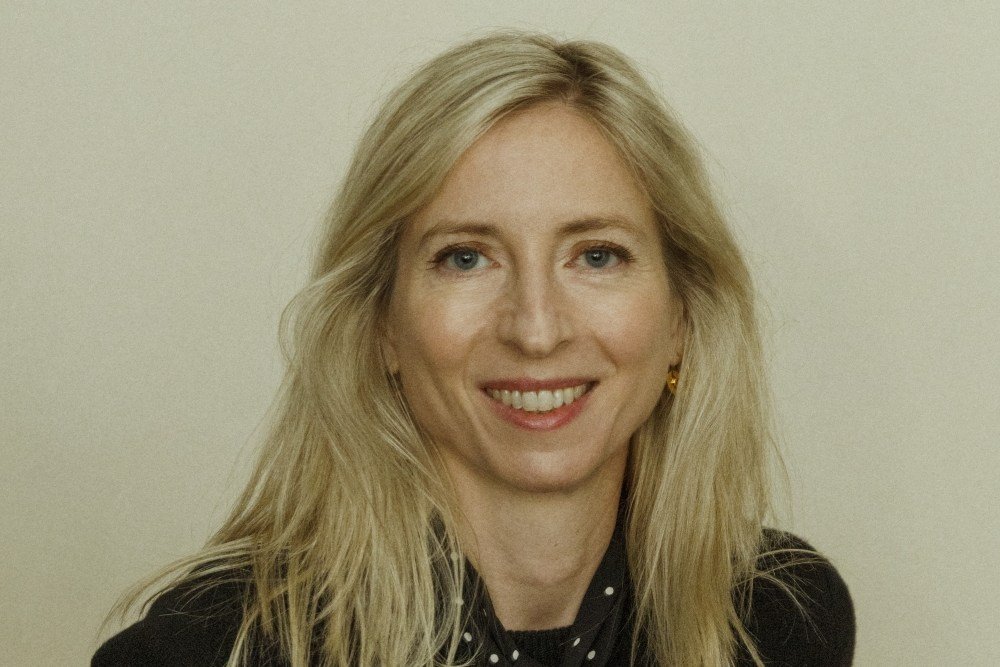
Ruben Östlund’s Plattform Produktion has joined “Toxic,” the forthcoming satirical workplace drama from “Club Zero” director Jessica Hausner, which is among the projects being pitched during the Venice Gap-Financing Market taking place Sept. 4 – 6.
The pan-European co-production is produced by Schubert (Austria), Essential Films (Germany), Société Parisienne de Production (France) and Plattform Produktion (Sweden). International sales will be repped by the Coproduction Office.
Told across four chapters, “Toxic” explores different aspects of the modern world of work. Through contemporary parables, it follows employees and employers within a capitalist system on the verge of outpacing itself. With a tone at times realistic, at others more absurd, it’s tied together by the human element that acts as the sand in the gears of a profit-driven world.
Working off a script co-written by Jessica Lind, Hausner said she was interested in exploring the many contradictions of capitalism, and the “mutual dependency” between workers and employers that’s fostering ever-growing economic gaps while leaving so many unfulfilled. “Is this system we work and live in the best system we can come up with?” she asked.
The question cuts to the very heart of a modern condition in which “our identities and the respect we command are often defined by our job and pay grade,” she said.
“Meaning in life is really created through the ideology of our society. As an individual, I don’t think one can find meaning all alone,” she said. “Meaning is created through others — through the eyes of my fellows in society. It is very much a question bound to the system we work in.”
Through its parallel storylines, the film explores how our understanding of self-realization in the workplace is evolving, contrasting exploitation and overwork with our desire to find meaning in our professional lives. Set within four different workplaces — an advertising agency; a waste disposal company; a nursing home; and an unprofitable retail chain — it examines how deeply people have internalized performance-driven pressures, and asks whether change is possible within a system rooted in profit and success.
Hausner’s last film, “Club Zero,” was set at a British boarding school where a nutrition teacher — played by Mia Wasikowska — pushed a gospel of mindful abstinence on her students, transforming them into a cult. In a glowing review out of Cannes, Variety’s Owen Gleiberman praised the “gripping and provocative” film as an “audaciously disturbing drama.”
Speaking to Variety from her home in Vienna, Hausner explained how “Toxic” is in conversation with her previous films.
“What is satisfying? What is it that really makes a life worth living? In my films, I always try to circle around these questions,” she said. “Not only on an individual level. I’m always interested in the societal level. Why am I made to think or to believe something? This is what I try to focus on in all my films. The way we are being manipulated, in a subtle, everyday-like way, by the society we live in.”
But what happens when society is in flux? Across Europe, the director noted, governments are mulling whether the continent’s work-life balance needs to be reconsidered. “The social system is becoming less affordable. This is an economic problem,” she said. “Many countries in Europe have to shift their social expenses from social care into building more weapons.”
Meanwhile, inequality is growing, and work itself, as Hausner put it, “no longer pays off, neither financially nor in terms of fulfilment.”
As “Toxic” illustrates, that leaves societies with many difficult questions and no easy answers — least of all from the tech barons and free-market evangelists who push capitalism as the miracle cure to all that ails us.
“If we knew a better solution, we would probably already be heading there,” said Hausner. “But it’s not at all obvious what the next step is.”
It didn’t take long for politics to take the spotlight at this year’s Venice Film Festival jury press conference. Amid the wars raging in Gaza and Ukraine, as well as the unrest in the United States, jury president Maggie Gyllenhaal was asked whether cinema should be political.
“OK,” Gyllenhaal said with a laugh. “May as well get into it.”
The filmmaker, who recently directed “The Bride,” directly addressed the question by sharing her belief that movies are “fundamentally, unavoidably political.”
“Look, we could say, how are we possibly here talking about movies right now when the world is in a state of emergency?” she said. “To me, the answer has something to do with empathy. I think that film allows an opening into an opportunity to find empathy inside of ourselves.”
She added that every subject or filmmaker should have the ability to be heard. “I think we can challenge ourselves to hear stories about the most corrupt, most perverse people because it opens up the opportunity to find empathy for those people,” she says. “I am here open. I am here curious.”
Gyllenhaal was also probed about the lack of female directors in this year’s competition lineup. Only one film up for the Golden Lion — the drama “Woman Unknown” by Danish-Egyptian director May El-Toukhysolely — was solely directed by a women.
“I guess it’s finally become clear that men make better movies than women do,” Gyllenhaal deadpanned.
Venice artistic director Alberto Barbera interjected, saying that “Naza,” a documentary from “No Other Land” filmmakers Yuval Abraham and Rachel Szor, was added to the competition lineup shortly before the festival.
Gyllenhall returned to the question, saying, “I will answer you seriously. There’s a systemic problem. It’s harder for women to get films financed.”
She wondered aloud: “Could it be possible that women, having had a different experience of being alive in the world, want to make movies about are not always deemed high art? Who decide what’s good? Who decides what is valuable?”
Gyllenhall also noted it’s “important to consider” that she was asked to be head of the competition jury. Gyllenhaal heads a seven-member jury that includes Tunisian helmer Kaouther Ben Hania, Hong Kong filmmaker Johnnie To, Afghan director Shahrbanoo Sadat, French filmmaker Xavier Giannoli, British composer Daniel Blumberg and Italian film scholar Francesco Casetti. Gyllenhaal represented the jury at the conference, while her fellow members sat in the audience.
The traditional opening jury press conference took place after some uncertainty over whether Venice would hold it at all. The festival considered scrapping the event because of “scheduling issues,” but some perceived the move as a way to shield jury members from being quizzed about politics. After facing backlash, the festival reinstated the jury presser, explaining the programming conflicts had been solved.
The debate surrounding the press conference came amid heightened political tensions on the international festival circuit, where actors, directors and jury members have increasingly been pressed to address wars, Gaza, U.S. politics and the rise of the far right. The conversation around politics escalated at the Berlin Film Festival earlier this year after jury president Wim Wenders said filmmakers should “stay out of politics” while fielding questions about Israel and Palestine. His remarks triggered fierce criticism and prompted Berlin artistic director Tricia Tuttle to publicly defend artists’ right to decide whether or not to speak on political issues.
Venice itself is opening against a particularly charged backdrop. An open letter issued by the Venice4Palestine collective and signed by figures including Nobel Prize-winning writer Annie Ernaux, Roger Waters, Isabel Coixet and Matteo Garrone has called on the festival to take “concrete action” in support of Palestine. The group has also asked Venice to fly the Palestinian flag throughout the festival.
The subject carries particular resonance for Ben Hania, whose Gaza drama “The Voice of Hind Rajab” premiered in competition at Venice last year and won the Silver Lion after receiving a 22-minute standing ovation.
Barbera has himself described this year’s selection as the festival’s most political in recent years, pointing to films dealing with war, Palestine, immigration, climate change, mounting social tensions and shrinking freedoms.
“Monetary policy should not mechanically react to a jump in headline inflation,” James E. Thorne, chief market strategist at wealth management firm Wellington-Altus, wrote on X. An oil shock, he argued, is “a growth shock dressed up as inflation,” and tightening into it would be “policy error masquerading as prudence.”
Mark Zandi, chief economist at Moody’s Analytics, made the same point. In a July 28, 2026 interview with CNN, he said: “Monetary policy 101 says when there is a supply shock, don’t respond. Follow the script. It’s worked pretty well … Bottom line: I don’t think they should raise rates.”
That does not mean the Fed will stay on hold on Sept. 16. The odds of a hike are rising, currently at 68%, according to the CME’s FedWatch tool. It does mean the case an increase is weaker than the tape implies. Until that decision lands on Sept. 16, another leg higher in oil can keep pressure on risk assets, including crypto. Stay alert.
Read more: For analysis of today’s activity in altcoins and derivatives, see Crypto Markets Today . For a comprehensive list of events this week, see CoinDesk’s “Crypto Week Ahead.”
What’s trending
U.S. pounds Iran, Tehran strikes back at bases in biggest exchange since July (Reuters): Asian and European stocks fell after renewed U.S. airstrikes pushed oil prices back to levels unseen since July, compounding the economic impact of a global selloff in bonds as disrupted energy supplies fuel inflation worldwide.
Solana, ether, xrp, lead majors slide as Iran strikes drive a broad risk selloff (CoinDesk): The selling that followed U.S. airstrikes on Iran did not land evenly. Solana and tron each shed more than 3% over the past 24 hours while bitcoin gave up roughly 1%. $XRP dropped nearly 2%.
$XRP ETFs pull in $170 million over eleven days. Goldman tops institutional holders (CoinDesk): U.S. spot $XRP exchange-traded funds have taken in fresh money for 11 straight trading sessions. The funds pulled in another $14.38 million on Tuesday, lifting cumulative net inflows to about $1.68 billion.
Bitcoin withstands $90 oil and rising yields while gold slides. A firm dollar is the catch. (CoinDesk): The headwinds hitting bitcoin aren’t landing, even as they inflict damage on traditional assets. That relative strength, however, may still be challenged by a resilient Dollar Index. Futures tied to WTI oil have topped $90 and are up nearly 9% for the week.
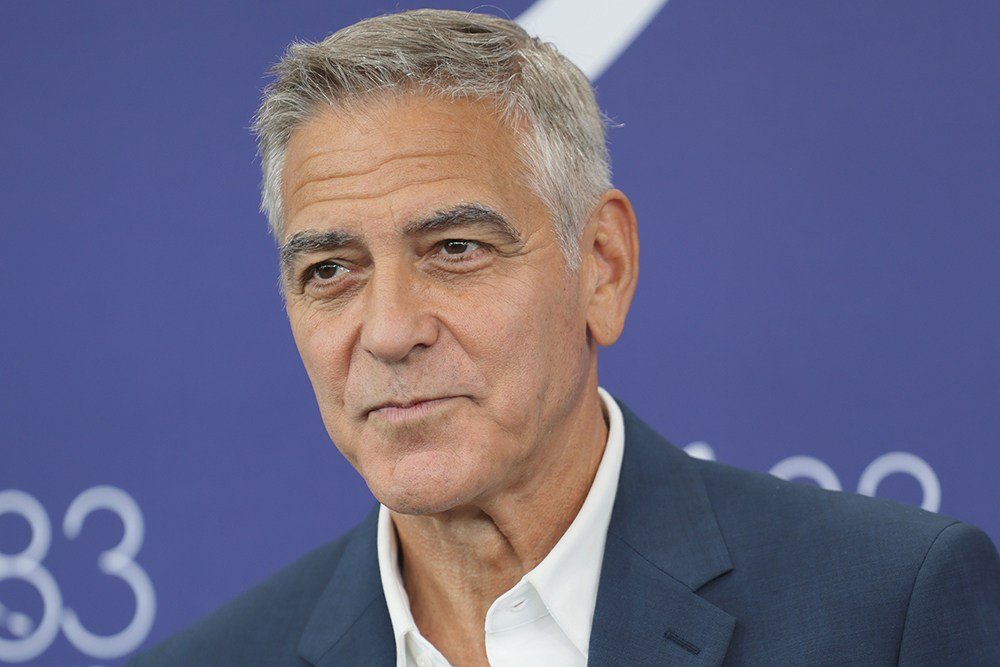
George Clooney attended last year’s Venice Film Festival with “Jay Kelly,” a comedic drama in which he portrayed an aging A-lister who travels to Italy to receive a life achievement award. Now the actor is getting a real Venetian tribute, accepting the Golden Lion for Lifetime Achievement Award on the festival’s opening day.
Before his big honor, Clooney sat for a press conference on Wednesday morning and addressed a range of topics, including the fraught state of politics in America, the rise of artificial intelligence and Paramount’s ongoing attempt to merge with Warner Bros. He also defended Mark Ruffalo, who was accused by Paramount of “antisemitic tropes” after the Marvel star attacked the deal over its potential consequences for Hollywood and accused the Ellison family of being complicit in the “genocide” against Palestinians. David Ellison is the CEO of Paramount Skydance.
“I support Mark Ruffalo’s ability to speak freely,” Clooney said. “It’s ridiculous. We’re not going to ban speech. I believe in free speech even when I completely disagree with it. That’s important. In fact, it’s part of how democracy works.”
Clooney called the pending merger “a complicated thing” and suggested he “doesn’t know how it works out.”
“I don’t see how the merger financially ends up making sense for the people who are trying to do it. We’ll see. I worry when a big company swallows up another company,” he said. “I always worry whenever big companies are consolidating because it means a lot of people are going to lose their jobs.”
On the topic of AI, Clooney predicted that it’s “going to be a very big part of this industry” and worries that “it’s going to hurt us in a lot of ways.” He expressed a concerned about the complications that AI will pose for actors, cracking that “I would like to avoid being in a tampon commercial 20 years after I’m dead.”
Clooney was also probed about the state of journalism, having directed 2005’s “Good Night, and Good Luck,” a drama about the conflict between the veteran CBS reporter Edward R. Murrow and Senator Joseph McCarthy. Clooney also earning a Tony nomination for his Broadway debut in “Good Night, and Good Luck,” a play based on his film.
“The state of journalism is in question. The richest people in the world are owning the Washington Post and Twitter, and that is a concern,” he said, referring to Jeff Bezos and Elon Musk. Yet Clooney remains optimistic. “There’s a lot of room for great journalists. I do believe that information will find it’s way out.”
Clooney has a long history with the Venice Film Festival, having first attended with 1998’s Steven Soderbergh’s ”Out of Sight” and returning many times over the years with movies such as 2005’s “Good Night, and Good Luck,” 2007’s “Michael Clayton,” 2013’s “Gravity,” 2017’s “Suburbicon,” 2024’s “Wolfs” and 2025’s “Jay Kelly.” Clooney was a particularly welcomed presence at this year’s press conference after he missed the press conference for “Jay Kelly” because he was diagnosed with a sinus infection.
Clooney joked that he’s been getting nostalgic has he prepares to receive a career honor.
“I’m 65 years old — everything is melancholy,” he said. “You brush your teeth and you’re like, ‘My teeth used to be so much better…’”
One of Hollywood’s biggest stars, Clooney’s influence spans television and film, starting with his breakout role on “ER” and continuing with films such as “Syriana,” “O Brother Where Art Thou,” “Up in the Air” and the “Oceans” trilogy. Although he’s directed several films, Clooney says he’s stepped back as a filmmaker to focus on acting.
“The reason is because I have two 9-year-old kids — in order to spend time with them,” Clooney said. “If I act in a movie, it’s three months. When I direct a movie, it’s a year. And I cant do that anymore. I can’t pull the kids out of school anymore. I’m happy to doing this, being an actor again. It’s fun. I’m a character actor now.”
Clooney teased that he’s excited for one upcoming project — a new “Oceans” heist with Brad Pitt and Matt Damon. “I would do anything with them,” he said. “As soon as we get our schedules to work, we’re going to film.”
Two Thai businessmen sued leading stablecoin issuer Tether over its freeze of 42.4 million $USDT, alleging the firm blocked the tokens months before U.S. authorities obtained a seizure warrant.
Nutthawat Rukthammachalern and Natthawat Kasamvilas said in an Aug. 31 complaint filed in the U.S. District Court for the Southern District of New York that Tether froze 42.4 million $USDT across 10 Ethereum addresses on Oct. 30, 2025.
They allege Tether acted on an informal request from a U.S. law enforcement agent, with no warrant or other legal process issued until Feb. 19, according to the complaint.
CoinDesk has reached out to Tether for comment but hasn’t heard back at the time of writing.
The plaintiffs said they acquired the $USDT through secondary-market business transactions and had no direct relationship with Tether.
They want the court to order Tether to remove the addresses from its blacklist and prevent it from destroying the frozen tokens and issuing replacements to a government-controlled wallet before a final forfeiture ruling.
The lawsuit also seeks damages and the return of interest or other income Tether earned from reserves backing the frozen $USDT. Its claims include conversion, trespass to chattels and unjust enrichment.
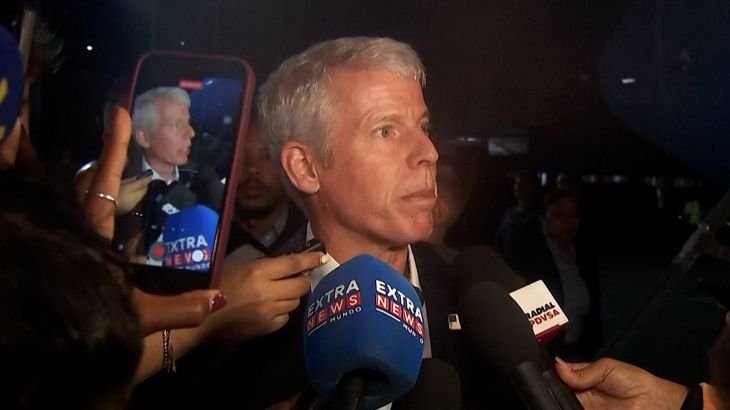
US Energy Secretary Chris Wright has arrived in La Guaira for the signing of a deal that will see the US seize effective control of a large portion of Venezuela’s oil reserves. While Wright praised the agreement, critics have likened it to deals imposed by colonial powers.
Remixpoint, a publicly traded cryptocurrency in Japan, announced it has sold all of its altcoin holdings to diversify its investment portfolio. The company stated that it will focus its future investments and operations solely on Bitcoin ($BTC).
According to an announcement made by Remixpoint on September 2nd, the company decided to reduce the assets in its portfolio and focus on a single digital asset. As part of this, all of its Ethereum ($ETH), Solana ($SOL), $XRP, and Dogecoin ($DOGE) holdings were divested.
The company reportedly held approximately 14.92 Bitcoin as of the end of August. The total value of these Bitcoins was estimated at approximately $1.026 million. Remixpoint also held approximately $68,400 worth of Ethereum staking and approximately $118,500 worth of Solana staking assets.
The assets sold by the company included 901 $ETH, 13,920 $SOL, 1.19 million $XRP, and 2.8 million $DOGE. Remixpoint generated approximately $5.5 million in revenue from these sales, resulting in a profit of approximately $736,800.
Remixpoint’s decision to completely close its altcoin positions signals a significant shift in the company’s digital asset strategy. Instead of investing in numerous crypto assets, the company has chosen to place Bitcoin at the center of its portfolio.
This single-asset strategy for Bitcoin also parallels the $BTC treasury approach recently seen among institutional companies. Bitcoin’s limited supply, high liquidity, and increasing adoption by institutional investors are influencing companies to consider $BTC as a long-term reserve asset.
No information has been shared regarding whether Remixpoint will reposition itself in altcoins as part of its new strategy. According to the company’s current plan, Bitcoin will remain the focus of its investment and operational activities from now on.
Remixpoint’s decision represents a shift away from diversified investments in the altcoin market towards a more concentrated digital asset strategy. Whether the company will increase its Bitcoin reserves in the future will be closely watched by the market.
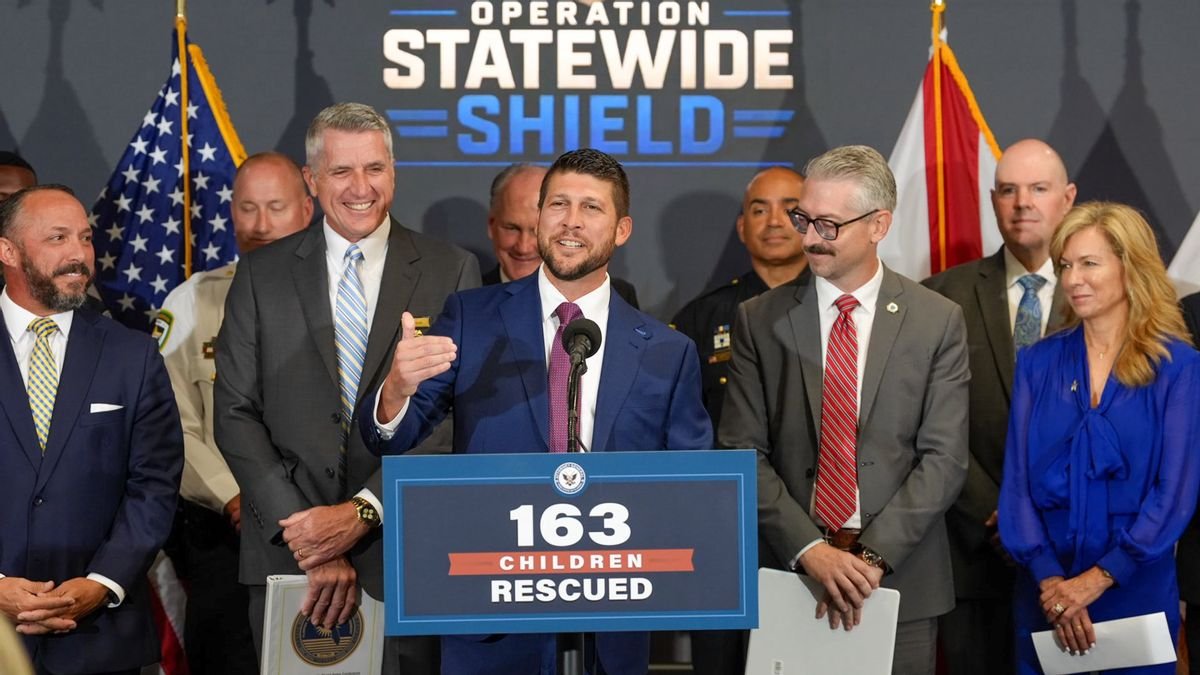
The claim that authorities in Florida rescued 163 missing children is still under investigation pending the release of more detailed information.
The offices of Florida Attorney General James Uthmeier and Florida Department of Law Enforcement Commissioner Mark Glass said on Aug. 25, 2026, their agencies had made “46 recoveries by the Tampa Bay region, 41 by Miami, 32 by Jacksonville, 21 by Orlando, 12 by Fort Myers, 8 by Pensacola, and 3 by Tallahassee.”
They said victims’ ages ranged from 2 months to 17 years. “Many recovered children had experienced various levels of abuse, neglect, exploitation, or exposure to other criminal activity, including human trafficking,” Uthmeier’s statement read.
Florida prosecutor Rita Peters said the mix of children included runaways, indicating the authorities had not just targeted a single trafficking ring. Uthmeier announced three arrests had been made and more would come.
Some posts about the operation claimed the children were recovered from underground cages. There was no evidence this was the case.
Snopes will update this report if additional information surfaces. We have reached out to the FDLE seeking, specifically, the exact number of children who were trafficked, the number of children who were abused and sexually abused, the number of children abducted by one parent over custody battles, the number of runaways and whether further arrests were made in the days since the announcement. We await responses to these questions.
In August 2026, a claim spread that 163 missing children had been recovered in a statewide law enforcement operation in Florida.
The rumor appeared onFacebookand X. One post on X said the rescued children were “in underground cages with duct tape over their mouths from a human trafficking ring in Florida” (archived):
Several Snopes readers emailed, seeking to confirm the veracity of the claim.
It is true that the state’s Attorney General James Uthmeier and Department of Law Enforcement Commissioner Mark Glass announced on Aug. 25, 2026, their agencies and others had cooperated in a statewide operation to rescue 163 missing children. They said three men had been arrested and more arrests were in the works. They said many of these children had been victims of abuse and trafficking, but did not specify how many. While we await more details, the claim will remain unrated.
Uthmeier’s office declined to comment further.
“Circumstances surrounding the recoveries in this operation include but are not limited to various levels of abuse, neglect, exploitation, or exposure to other types of criminal activity,” a spokesperson for FDLE said in an email. “There was no one singular trafficking organization identified as a main perpetrator, and most cases were unrelated to one another.”
We sent follow-up questions seeking, specifically, the exact number of children who were trafficked, the number of children who were abused and sexually abused, the number of children abducted by one parent over custody battles, the number of runaways and whether further arrests had been made in the days since the announcement.
We also asked why the task force would recover 163 children across the state in such a short period of time instead of tackling cases progressively, as children are reported missing. We will update this story should we receive a response.
On Aug. 25, Uthmeier and Glass spoke to reporters to announce the massive rescue operation:
“We are honored to announce that we have rescued 163 missing children in just a five-day operation,” Uthmeier said at the 5:21 mark. “This is incredible.”
Uthmeier added many of them had been abused, without specifying how many. “It won’t surprise you that many have suffered great abuses. Many appear to have been trafficked, neglected, exploited, and abused.”
“These children were a mix, as you’ve heard, of endangered, at-risk, and juvenile runaway cases,” Special Counsel to the Attorney General Rita Peters, who Uthmeier said was prosecuting the case, said during the news conference (at 20:15).
Peters then explained the distinction was less important than it seemed, as runaways often become exploited by adults who take advantage of their situation:
Victimization of a child rarely begins with an abduction. It begins with a child who has left home or or has been pushed out of one, who has no money and nowhere to sleep, and who often meets an adult offering food, shelter, and much needed attention. These children often leave because being on the street is better than being with their abusive parent or their guardians who sell them on a daily basis.
In the statement published on Uthmeier’s website, his office said the victims’ ages ranged from 2 months to 17 years. During the news conference, Uthmeier also said three men had been arrested on various counts, including, per his office’s statement, lewd and lascivious acts with a minor, lewd and lascivious battery on a victim 12 to 16 years old, and interference in a child custody case. In other words, there was no indication the operation targeted one specific child trafficking ring.
Authorities did not give any indication the children had been found in underground cages with their mouths duct-taped, as some social media posts claimed.
The attorney general’s statement said the operation took the Florida task force to “Alabama, California, Ohio, New York, North Carolina, Puerto Rico, and Tennessee. Outside of the US included Brazil, Canada, Colombia, Dominica, Finland, Ghana, Guatemala, Italy, Jamaica, Mexico, Spain, and Taiwan.” We inquired about the international aspect of this operation in our email to the FDLE.
The trial was to determine the fate of the Warner Bros empire, with the opposing sides presenting vastly different arguments. The government embraced the market as it has been, while the merging companies pointed to a future marked by disruption.
Studio veterans were anxious to get the deal done and cash out, while plenty more who stayed were wary of a culture clash with the new owners. Inside and outside of the company, suspicions abounded about the role of Donald Trump and his animus toward CNN driving the court challenge.
That was the picture eight years ago, when the government sued to block the $85 billion merger of AT&T and Time Warner. The six-week 2018 trial of U.S. vs. AT&T was a showdown billed as a momentous battle between the government and a corporate powerhouse. In 2026, as Paramount jousts with state attorneys general suing on antitrust grounds to stop the $110 billion acquisition of Warner Bros Discovery, the parallels are striking.
There are, at the same time, some substantial differences between the Justice Department’s AT&T-Time Warner litigation and the state attorney generals’ lawsuit against the Paramount-WBD deal. AT&T-Time Warner was a vertical transaction and Paramount-WBD is a horizontal one, for starters. A vertical deal, which hasn’t been blocked in the media business for decades, is more difficult to prove as anticompetitive than a horizontal one.
Both cases, though, highlight just how important one asset is in a fast-changing media environment: time.
AT&T and Time Warner won their case resoundingly in 2018, as the judge concluded the government had just not shown the transaction would substantially lessen competition. But the litigation cost the two companies precious time as rivals were building out their streaming platforms. In the end, AT&T cited its deal-related debt burden, at a time of soaring production costs, in opting to exit the entertainment business. (A similarly disastrous takeover of DirecTV cemented the decision, after both mergers cost AT&T shareholders tens of billions of dollars.) In April 2022, a bit less than four years after the Time Warner merger’s close, AT&T spun off the newly named WarnerMedia into a venture with Discovery.
Blair Levin, policy analyst at New Street Research, told Deadline via email that the time AT&T lost during the legal quagmire ultimately turned out to be a devastating blow. “While the Trump DOJ had a weak case against AT&T’s purchase (the real cause of which was not traditional Republican antitrust metrics but rather Trump’s anger at CNN), the government was able to delay the deal which was costly to AT&T and diminished the value of the asset,” he said. In the Paramount-WBD case, the states “have a stronger case thank the DOJ against AT&T as it is a horizontal, not a vertical case,” he added.
Levin also put a spotlight on the $7 million a day ticking fee for WBD shareholders that Paramount has to start paying next month and potentially billions more in other costs that could emerge as the parties inch towards the trial next spring. “The litigation is costly to Paramount both because of the ticking fee and the ability of the studios and other assets to engage in deal making while no one is certain who will be in charge when the deals go into production,” he notes.
One of the key figures from the AT&T-Time Warner trial is also a prominent player in the Paramount case: Makan Delrahim, the company’s chief legal officer. In 2018, he was the antitrust chief in the Justice Department, and he pushed back at the time on repeated claims of Trump administration influence.
Another familiar face is AT&T’s lead attorney, Dan Petrocelli. He is now representing Warner Bros Discovery and is expected to play a supporting role in any trial.
The judge in the 2018 case, Richard Leon, was a colorful figure with a penchant for exclamation points, strict rules for gallery decorum (no crossed legs, as all spectators were warned to keep two feet on the floor). He also demonstrated an apparent affinity for Turner Classic Movies, as he more than once asked about its post-merger future. “If there ever were an antitrust case where the parties had a dramatically different assessment of the current state of the relevant market and a fundamentally different vision of its future development, this is the one,” he wrote in one early ruling. “Small wonder it had to go to trial!”
Here are some lessons from U.S. vs. AT&T, and why the case matters for Paramount-WBD:
Getty
Remember, It’s An Antitrust Trial
In his opinion, Judge Leon called the trial an “epic battle,” and it certainly seemed so at the time.
A Paramount-WBD trial may inspire visions of dramatic showdowns with CEOs on the stand, but journalists’ hopes of such moments quickly come crashing down in the reality of what is at hand: Antitrust trials are dominated by arguments about relevant markets, economic models and their inputs and dueling expert witnesses. They are almost always bench trials, decided by a single judge without the involvement of a jury. Yes, there can be moments where top executives are confronted with embarrassing emails, but most of the time they are wonkish and full of arcane details.
That said, Leon did inject some moments of drama, primarily in the way that he announced his decision. Rather than just drop it in the docket, he scheduled a date and time for the announcement, gathered all the parties and the press in the courtroom, and forbid anyone from leaving until he was finished reading portions of his opinion. The 100 or so people packed into the courtroom and dozens more waiting just outside reacted with a frenzy to the news that the deal would close, reshaping Hollywood a bit less than two decades after Time Warner’s ill-fated marriage with AOL.
The Future Factor
Leon concluded that the government had just failed to show that the AT&T-Time Warner merger would substantially lessen competition. And he devoted considerable portions of his opinion to taking down the government’s chief expert witness and his economic models – which perhaps stands as a warning to the state AGs as they prepare to make their case against Paramount.
The judge also acknowledged the fast-changing landscape, noting that in the face of declining video subscriptions and TV ad revenues and the rise of streaming and social media.In seeking to combine, AT&T and Time Warner “concluded that both companies could stop ‘chasing taillights’ and catch up with the competition,” he wrote.
One of Paramount’s big arguments nowadays for the WBD merger is that a bulked-up combined entity would create a more robust competitor to Netflix, Amazon and Disney, especially in the streaming world.
Among other things, Paramount argues that streaming and theatrical can’t be completely separated from theatrical, and that the merger will create a “virtuous cycle: more theatrical content will drive engagement on the combined streaming platform, a larger subscriber base will generate revenue to fund more theatrical content, and the merged firm will become a stronger competitor to the technology companies atop the streaming market.”
The states’ lawsuit doesn’t challenge the merger’s impact on the recently established market of streaming. Rather, it alleges competitive harm in three traditional markets: wide-release theatrical film distribution; anticipated big-budget blockbusters; and cable television channel licensing.
The cable market is where there is some overlap between the cases against AT&T and Paramount. Back in 2018, the government argued the combination of AT&T’s distribution and Time Warner’s content would give them more leverage, forcing rivals like Comcast and Charter to pay more in distribution fees for “must have” channels like CNN, TNT and HBO – or even withholding them altogether. In a nod to the future, the government also argued that the combined company would have the power to slow the transition to streaming.
The state AGs argue that Paramount will control more than 50 channels, including the most “in-demand” programming, like NCAA March Madness and Major League Baseball, giving it “enormous bargaining power” that will leave distributors with “little choice but to accept onerous terms.”
Paramount maintains that the channels are complementary of each another, not competitive, and argues that cord-cutting is reducing demand. “In this environment, every programmer’s bargaining position is diminishing because the underlying asset (pay television subscribers) on which affiliate fees are calculated is eroding annually,” the company’s legal team wrote in a filing earlier this summer.
“Much like in AT&T-Time Warner, defendants are likely to make sweeping arguments about how rapid changes in content business models create benefits across entertainment ecosystems,” said Diana Moss, vice president and director of competition policy at the Progressive Policy Institute. “If a judge gives credence to these arguments, as occurred in AT&T-Time Warner, the states might have a uphill battle defending the claim that the merger is anticompetitive, say, specifically in film markets. Even the unwinding of AT&T-Time Warner to revert to separate ownership and focus on content could be invoked to support the ‘efficiencies’ argument.”
Companies often point to efficiencies like streamlined operations and lower expenses in their defense of mergers. In his decision in AT&T, Leon took that into account.
Yet in the one ruling in the Paramount case so far, U.S. District Judge Araceli Martinez-Olguin splashed some cold water on Paramount’s invocation of the streaming landscape. She wrote in a footnote that she “cannot accept” the Paramount argument that the transaction will produce efficiencies in streaming. She wrote that courts “have expressly and repeatedly rejected the defense that a challenged merger will result in economic efficiencies ancillary to competition in the relevant market.”
The Other Major Merger
As the AT&T-Time Warner trial was playing out, the Justice Department was reviewing another massive merger: Disney’s $71.3 billion acquisition of most of 21st Century Fox, including its film and TV studio along with several cable networks and a large stake in Hulu.
Just weeks after the judge’s AT&T decision, the DOJ approved that deal. Unlike the Time Warner transaction, Disney-Fox was a horizontal merger that put one of the remaining legacy film studios, 20th Century Fox, under Disney control and effectively off the industry map. The state AGs call Disney-Fox a cautionary tale, noting that it resulted in the loss of 4,000 Fox employees, reducing production and film output.
Paramount dismisses the Disney-Fox merger impact as “irrelevant” in light of “a broader market trend that existing firms can, do, and likely would expand output in response to another competitor’s output reduction.” Paramount has pointed to the near doubling of its release count since the 2025 merger with Skydance, while also heralding its commitment for Paramount-WBD to distribute at least 30 theatrical films per year.
Paramount likely will challenge the state AGs’ market definitions as well as their claims that the combined market shares of the combined company in key markets – in this case around 30% – make it presumptively illegal. In this case, courts have considered other factors, such as low barriers to entry, Paramount contends. That’s why, when it comes to theatrical, Paramount’s legal team has emphasized the unexpected success of movies in the marketplace, including Focus Features’ Obsession.
They wrote that “the indisputable evidence shows that rival film production and distribution companies can and would expand their theatrical film slates if the merged firm were – contrary to its own economic incentives, to reduce output or try to increase prices for theatrical films. These low barriers to expansion would leave the merged firm with nothing to gain from reducing theatrical output or trying to increase prices to theaters.”
Martinez-Olguin, though, wrote in her opinion granting a temporary restraining order that Paramount still had not shown that the merger “would not substantially lessen competition.” That does not mean that she was convinced the merger was illegal — only that there were disputes over the facts of the market effects and that the lawsuit “at least demonstrates that serious questions going to the merits remain.”
CNN’s Role
From the moment the Justice Department sued to block the AT&T-Time Warner merger, there was suspicion that the motive was CNN, which critics said was being targeted for its unfavorable coverage of the Trump administration.
The DOJ denied this, but that didn’t stop AT&T from seeking a court order to compel the DOJ to produce information on potential White House influence. Judge Leon, though, refused to go down that route before the trial even started.
Donald Trump and anchor Kaitlan Collins spar at a CNN Town Hall in 2023
CNN
This time around, Paramount’s David Ellison has claimed that CNN is also behind the opposition, writing in a New York Times op-ed that the “issue is whether I can be trusted as a steward” of the network. Particularly among Democrats, there are concerns that Ellison will move the network to the right, and his repeated overtures to the GOP and Trump (dinners in his honor in Washington; trips to Mar-a-Lago; seats at UFC matches, which stream exclusively on Paramount+) have only increased suspicion. In contrast to AT&T-Time Warner, a merger proposed before he had even won a first term, Trump has been more overt this time in his desire for changes at CNN.
One idea floated by backers of the Paramount-WBD deal, among them TKO Group CEO Ari Emanuel: an independent committee set up to oversee the network to ensure the independence of its news operations. The setup has been implemented before. A special committee was set up in 2007 to oversee editorial integrity at the Wall Street Journal, as Rupert Murdoch’s News Corp was looking to acquire the news outlet from the Bancroft family trust. The committee to this day has to grant approval for the appointments of an editor-in-chief and editorial page editor.
Despite that precedent, California Attorney General Rob Bonta, who is leading the state AG lawsuit, signaled that such a condition would not be sufficient with Paramount-WBD. He denies that the plaintiffs’ complaint is rooted in concerns about CNN, and he insists that any settlement will require robust “structural” remedies, like the sale of assets to alleviate the impact on competition concerns.
Ticking Clock
When it comes to antitrust trials, the real drama can often be the ticking of the clock.
The fact that the AT&T-Time Warner merger was waylaid for 20 months due to the antitrust trial may not have been the only reason for its ultimate failure, but the protracted limbo state certainly didn’t help.
The delay hampered the launch of streaming flagship HBO Max. Like NBCUniversal and Disney, WarnerMedia had finally decided to enter the costly direct-to-consumer streaming market after a decade of ceding it to Netflix, Amazon and Hulu. In part due to the lawsuit, HBO Max was the only major new service to have to postpone its debut. It finally hit app stores in the spring of Covid-marred 2020, becoming the last in a multibillion-dollar burst of new entrants like Apple TV, Disney+ and Peacock coming to market over a seven-month span.
As mired as AT&T-Time Warner got in litigation, Leon’s decision that the trial should start in March 2018, just four months after the suit was filed, was a light-speed pace compared with the Paramount case. He was mindful of the June 21 expiration of the merger agreement, which carried a $500 million breakup fee.
Judge Martinez-Olguin, on the other hand, was not swayed by Paramount’s call for a trial on a similarly accelerated timeline, but her trial start date of March 2, with a shorter projected length of 12 days, still leaves some room to render an opinion before the June 4 merger expiration date.
The stakes, though, are much higher. Paramount would face a $7 billion breakup fee and has agreed to pay WBD shareholders a ticking fee of roughly $7 million for every day the deal is not closed after September 30.