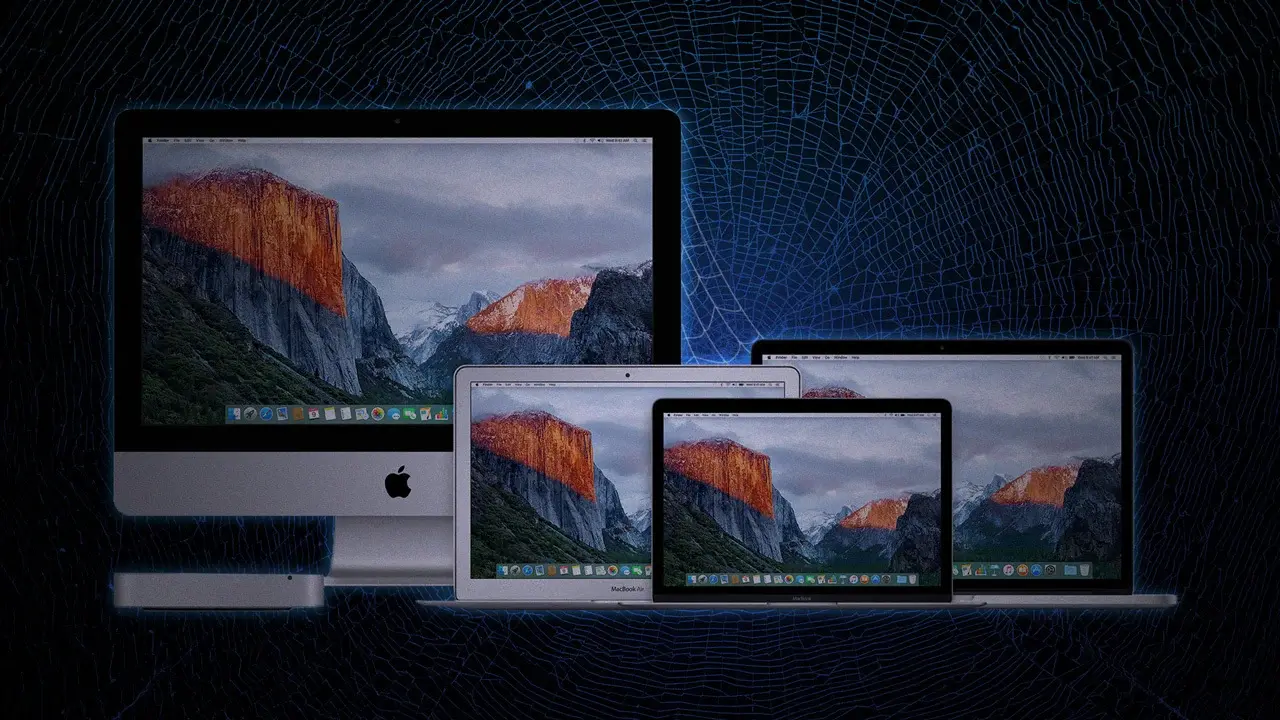
If you’re still using an Intel-powered Mac, here’s another bit of bad news. After dropping support for its own software on these PCs with macOS Golden Gate, Apple has now informed Mac App Store developers that they can also stop releasing updates for Intel Macs.
“We’re reaching out to let you know that universal macOS apps on the Mac App Store that require macOS 13 or later can now remove support for Intel-based Mac computers,” Apple writes in an email sent to developers, obtained by 9to5Mac. “By removing support for Intel-based Mac computers, you can simplify your development and optimize your download and on-device size.”
With this change, developers can focus on releasing apps optimized just for Apple’s M-series chips. Previously, developers who wanted to list their apps on the Mac App Store had to build versions that supported Intel processors as well.
“To remove Intel support, update your app build settings to ‘arm64’ only. Then rebuild and submit your app to the Mac App Store,” Apple adds.
Despite the phase-out, Intel Mac owners need not worry about losing access to their favorite apps. Even if a developer decides to stop releasing updates, users will be able to access the last version of the app that supports Intel processors.
Recommended by Our Editors
Apple first adopted Intel chips for Mac computers under Steve Jobs in 2005; the company began moving away from them with the introduction of its in-house M-series chips in 2020. Apple silicon has now reached its sixth generation.
MacOS 27, meanwhile, is still in beta. Apple’s latest Mac operating system is expected to become available on all compatible devices later this month. We’ll likely get a solid date at next week’s “Surprise and Shine” event.
About Our Expert
Experience
Jibin is a tech news writer based out of Ahmedabad, India. Previously, he served as the editor of iGeeksBlog and is a self-proclaimed tech enthusiast who loves breaking down complex information for a broader audience.
Dollywood unveiled a series of upcoming exhibits, experiences and park expansions on Wednesday that it said will pay tribute to its late founder Dolly Parton, as well as carry forward plans the late singer already had in the works for her beloved Tennessee theme park.
The theme park announced the news during a press conference on Wednesday afternoon that kicked off with a video tribute to Parton and ended with Heidi Parton Kin and Friends’ rendition of “9 to 5.” Shortly after, Parks & Resorts President Eugene Naughton took to the stage, where he revealed a new partnership with the city of Sevierville, Tennessee, and a number of key park expansions, which the dreamer-in-chief had approved.
“The curtain on this first act has fallen, and now time has come to start to talk about the journey forward, the next steps that we need to do,” Naughton said. “Because Dolly would be telling us to get back to work. She knew what she wanted Dollywood to be. She always wanted this to be a place of fun and togetherness, and most of all, as our love letter showed, she taught us here at Dollywood how to dream big.”
Naughton revealed the city of Sevierville will install, over the next couple of days, “In Dolly’s Footsteps,” a walkable tribute that lets fans trace her footsteps through the city, visiting and learning the stories of around 11 various locations, such as the Pines Theater, that held personal meaning to the life of the Grammy winner. Naughton also confirmed that the “I Will Always Love You” tribute banners inside the park raised around The Dolly Parton Experience, which last week was the site of a moment of silence held by fans as they remembered the singer, actress, and philanthropist, will remain.
The multimedia walkthrough that opened in 2024, with distinct zones moving through Parton’s life from Sevier County to global stardom in her own words, will also receive a new portal into its park zone that will extend the experience onto the show street. Inside, aspects of the experience, such as “Precious Memories” and the “I Will Always Love You” room, will also expand to celebrate the life of the late singer.
Within “Precious Memories,” a new video — narrated by Parton’s family sharing their best moments with the singer — will eventually be added to the current lineup of six videos, which sees Parton narrate stories of her family. For the Songteller experience, the park plans to add a new grand finale to the “I Will Always Love You” room.
Beyond the experience, the park announced the arrival of a new character in the Wildwood Grove area, as part of its plans to carry the singer’s spirit and care for children, which Naughton called “the most important thing to Dolly.”
Known as the Dream Maker, the character will embody Parton’s “great passion for dreaming big and telling stories” and allow younger guests to “learn some of the foundational things that Dolly talked about her whole life.” The area will also get a new Tribute Center, which will allow people to privately and publicly share memories of the singer. Public messages “will be used in a unique way within our storyline in the park,” he said.
The centerpiece of the park’s upcoming work is tied to the park’s Chapel, and unveiled alongside concept art and video of the coming expansion — one of the biggest looks at the plans for the church to date. In tribute to Dr. Robert F. Thomas, the Methodist minister and mountain doctor who birthed Parton in her family’s one-room cabin, the area will now feature a cascading mountainside waterfall outside the chapel’s front steps, with the chapel also receiving new stained-glass windows commissioned to reflect the Bible verse: “For everything there is a season, and a time for every matter under heaven.”
A special reflection and a sculpted guitar will also exist in the space. “I hope this will turn out to be the place on property that will give a chance for people to reflect on the impact that Dolly’s had on you,” Naughton told press.
Wednesday’s announcements were a mix of new and previously planned updates to the park, most of which Naughton confirmed should open around March 2027.
“The last seven days have been filled with a lot of grief, and that comes with feeling the loss of a loved one,” he said. “I know that we have all cried. I know I have spent a lot of time sharing with people on the midway their thoughts and feelings and the impact that Dolly had. But now it’s time to look at how we’re going to honor her on property moving forward.”
As for how future endeavors within the park will move forward without Parton to sign off on the vision and execution, Naughton confirmed she had rubber-stamped plans through 2036.
“She gave us the gift of time to be able to prepare what was going to eventually be happening here,” he said while taking press questions. “Her love of music and her love specifically of live music, the chance to bring those stories to life on the stages here will always be a really big part of who we are as a complex. We talked all the time about our future. She really didn’t get much into daily operations. That wasn’t her thing, but she really lit up when we talked about the future. So we have plans all the way through 2036 that she laid emphasis on for us as a leadership team, and I’m really confident in that.”
The Dollywood head also confirmed that key elements of the company’s previously announced half-billion-dollar investment strategy around the property’s five new resorts were also approved by the late singer. “Resort three, four, and five, and the outdoor resort, all planned on stories that Dolly already has approved,” he said. “She was really special with that for us, so I’m confident we’re not only going to be the same, but if she were looking right down here on me, she’d be kicking my rear if I didn’t say we’re going to get better every day.”
Following the announcement of Parton’s death last Wednesday at the age of 80 following a brief battle with cancer, Dollywood remained open as a “place of joy, hope and togetherness” in the spirit of her work ethic in an environment that could honor her spirit “with laughter, music and shared dreams,” according to an announcement by the park, which also encouraged fans to donate to Parton’s Imagination Library.
“The greatest privilege of my life has been helping Dolly bring her dreams to life at Dollywood,” Naughton said in a statement at the time. “Dolly’s heart was as vast as the mountains she cherished, and her compassion knew no bounds. She inspired generations to dream boldly and love deeply. While we grieve her loss, we are honored and committed to carry her light forward. Her legacy will continue to shine in every melody sung, every smile shared and every dream kindled within these gates.”
Within a day of the news of Parton’s passing, memorials both official and unofficial quickly appeared around the Pigeon Forge park. Outside, flowers and other items were left by fans near the entrance sign. Inside, guests left remembrances, including balloons, written messages, and butterflies — a personal symbol the late singer embraced — at a designated display in the park. The official memorial was erected in Dollywood’s welcome plaza, allowing park visitors and fans to not only reflect on her life, but honor her contributions and the joy she, her music and various ventures brought. Guests also congregated at the Chapel where they remembered the park’s dreamer-in-chief through service.
Naughton is unsure when or if that will come down. “I don’t really know how long it’s going to last because I don’t have all the answers and I don’t think anyone on our team really knows,” he said. “We want to give plenty of time to let people [to remember her] in a real special way.”
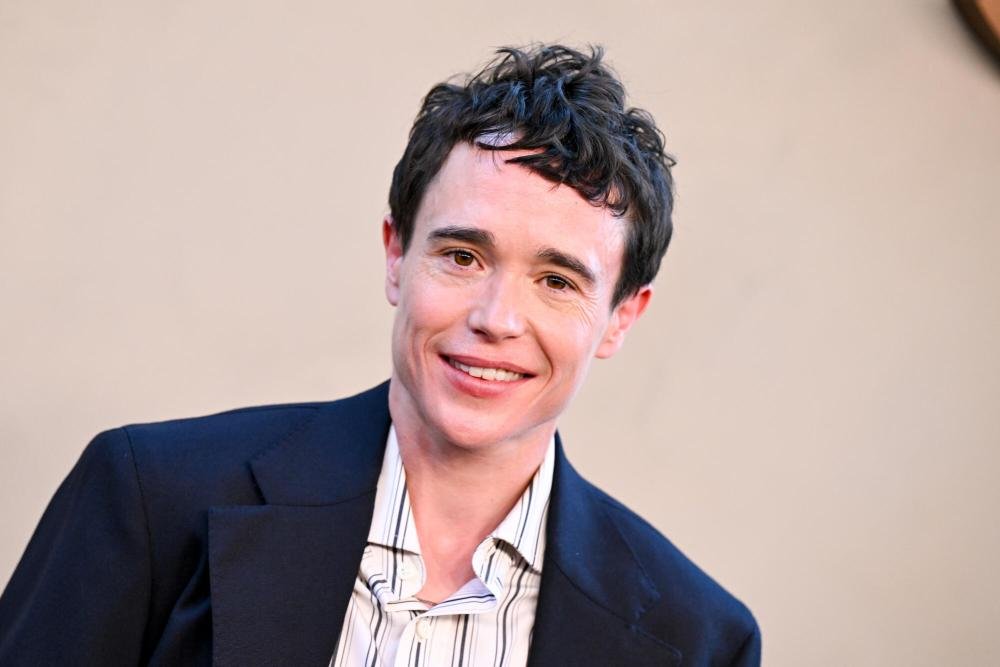
Elliot Page has never felt more comfortable on screen. Finding the right role, however, has proven to be more difficult. During his appearance on the “On Film… With Kevin McCarthy” podcast, Elliott revealed he hasn’t been able to find another great role after starring in “The Odyssey,” which hit theaters in July. The actor revealed he has no role currently lined up.
The “Umbrella Academy” actor, who came out as transgender in 2020, said he hopes to continue acting. Looking back at his experience filming Christopher Nolan‘s 2010 film “Inception,” Page recalled feeling uncomfortable in his own skin. But now that he’s embraced his true identity, he feels he’s in the perfect place to accomplish his “best work.”
“I had such a great time being in [“Inception”]. I had such a great time working with [writer-director Nolan], but I was also personally really uncomfortable,” the Oscar nominee shared. “Whereas a part like ‘Juno,’ I was able to feel more comfortable and embodied.”
While working on Nolan’s film, Page developed shingles after feeling out of place while working “in a cast full of cis men.” In his memoir, “Pageboy,” the actor shared the cast and crew were “delightful to work with,” but he still struggled to feel comfortable on set.
Page reunited with Nolan for “The Odyssey,” which he told McCarthy was a “cathartic” experience compared to working on “Inception.” On his last day filming Nolan’s epic, Page said it was an emotional day because it marked a full-circle moment.
“To come back now, as you can imagine, being more comfortable in yourself makes these sorts of projects more enjoyable,” Page said during the “X-Men: Days of Future Past” panel at New York City Comic Con in 2025 about “The Odyssey.” “To get to have a Chris Nolan experience again now meant so much to me selfishly.”
When Page’s casting as Sinon, the cousin of Odysseus (Matt Damon), was announced, the actor faced backlash online. Conservative commentator Ben Shapiro called the choice an “absolute puzzler,” noting that Page is “about 5’2 and 105 pounds soaking wet and has the voice of a woman. It doesn’t work.”
Whoopi Goldberg spoke out against Shapiro’s remark during an episode of “The View” in July, saying “A lot of conservatives who see this are going to feel the same way. That’s okay. But I don’t understand. Why go see the movie? If you don’t want to see it, don’t go see it. Why do you care who’s cast in it?”
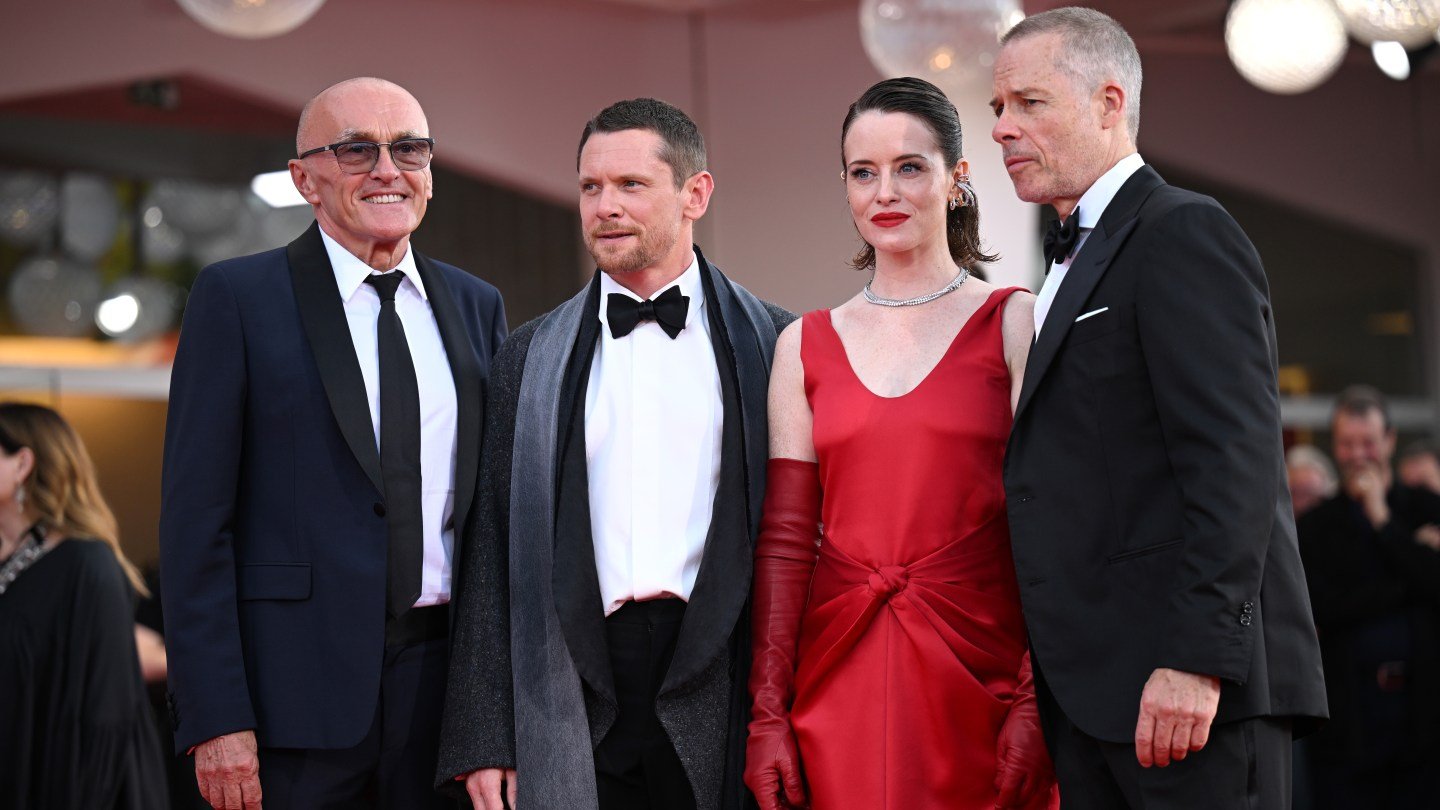
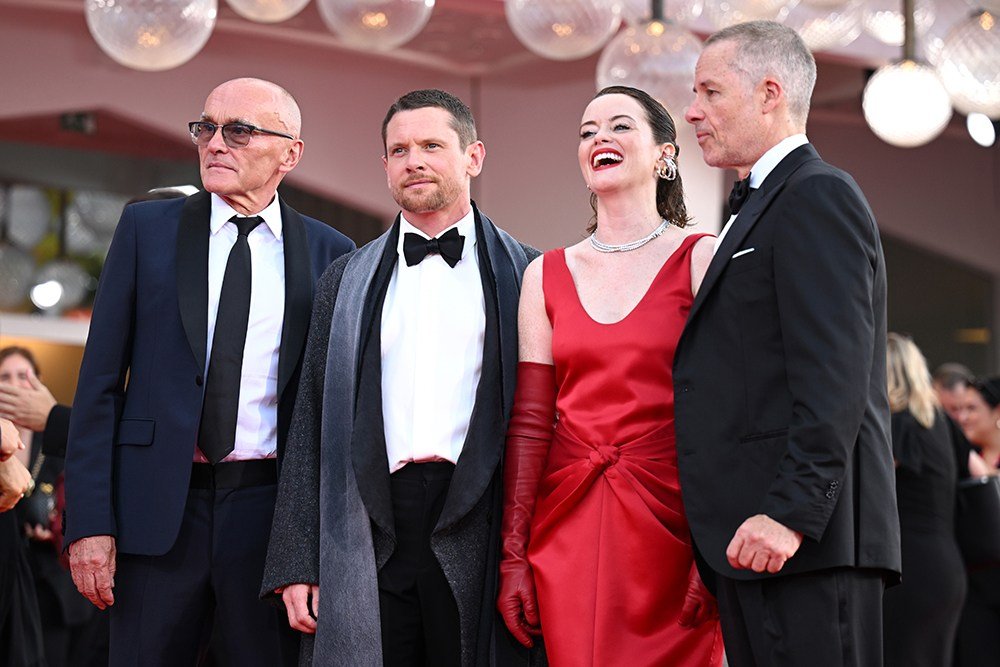
As the lights came up inside Venice’s Sala Grande, with stars Jack O’Connell, Guy Pearce and Claire Foy seated alongside their director, the black-tie crowd rose for a four-minute standing ovation in a warmly-received moment. After the cast exited, there was a bit of drama near the front of the theater as an unidentified man was suffering from a medical emergency and personnel were called in for help. As of press time, his condition was unclear.
Set in 1969, Ink chronicles Murdoch’s acquisition of the struggling British newspaper The Sun and his recruitment of editor Larry Lamb to reinvent it as a populist tabloid capable of overtaking the dominant Daily Mirror. Pearce plays Murdoch, with O’Connell as Lamb and Foy as Jules Davies. The film traces the creation of a formula built around sensationalism, celebrity, sex and an instinctive feel for readers’ baser instincts — an approach that would transform The Sun into Britain’s bestselling newspaper and presage many of the forces that later reshaped global media in the Murdoch model.
A still from Ink featuring Pearce and O’Connell. In his review, THR’s chief film critic David Rooney calls it an “irreverent and inventive recap” of what Murdoch created.
Courtesy of Netflix
Boyle’s film is adapted by James Graham from his acclaimed 2017 play of the same name. It also marks a surprising first for the Oscar-winning British filmmaker. Despite his lengthy career spanning Trainspotting, 28 Days Later, Slumdog Millionaire and last year’s 28 Years Later, Boyle had never previously brought a movie to Venice. He described the occasion as his “baptism” on the Lido, saying he was drawn to Graham’s account of how Murdoch and Lamb created a new breed of populist journalism decades before Fox News, social media and clickbait would fundamentally reshape the press and politics.
Speaking to reporters in Venice earlier Wednesday, Boyle and his cast addressed the film’s parallels with today’s divisive media environment. Boyle explained that he was careful, as with the stage version, not to “monsterize” Rupert Murdoch “because he represented at the time [a] breath of fresh air in what was a very rigid British society. It begins with something that’s fun and different, challenging a rigid order… It was important to us that the audience feels complicit.”
For her part, Foy said she savored diving into ’60s tabloid journalism as a “really intoxicating” plunge. “They had power at their fingertips. They knew what they wrote would be what people read and what people believed,” she said.
Pearce, who plays Murdoch, said he received some second-hand confirmation from the man himself that he gave a thumbs up to the casting choice. “I had some messaging with Elizabeth [Murdoch], his daughter, and she said ‘Dad’s very happy that you are playing him.’ But he hadn’t seen the film at that point,” Peace noted in today’s press conference.
Earlier in the evening, George Clooney brought the house down with a heartfelt speech as he accepted an honorary Golden Lion from his longtime friend Laura Dern during the festival’s opening ceremony. The Oscar winner took a walk down memory lane to detail how many artists and collaborators lifted him up on his journey while also taking aim at authoritarianism.
“Stories are always dangerous to people who peddle in fear. The people who are afraid of books and music and stories, they’re never the heroes in history. So yes, movies don’t stop wars. They don’t lower inflation. They don’t fix elections, but they do do something remarkable. They remind us that a stranger is never a stranger and that he might just be the hero in somebody else’s story,” he said. “And if we can still sit together in the dark and care about people that we have never met, I think maybe we’ll be OK.”
Ink is the first of the 21 films competing for this year’s Golden Lion to hit the screen. Other anticipated premieres coming in the next 10 days include Robert Pattinson thriller Primetime, Martin McDonagh’s Wild Horse Nine, Lee Chang-dong’s Possible Love, Florian Zeller’s Bunker and the Gaza documentary NAZA. A seven-member jury headed by Maggie Gyllenhaal will choose the winners, which will be revealed at Venice’s closing ceremony on Sept. 12.
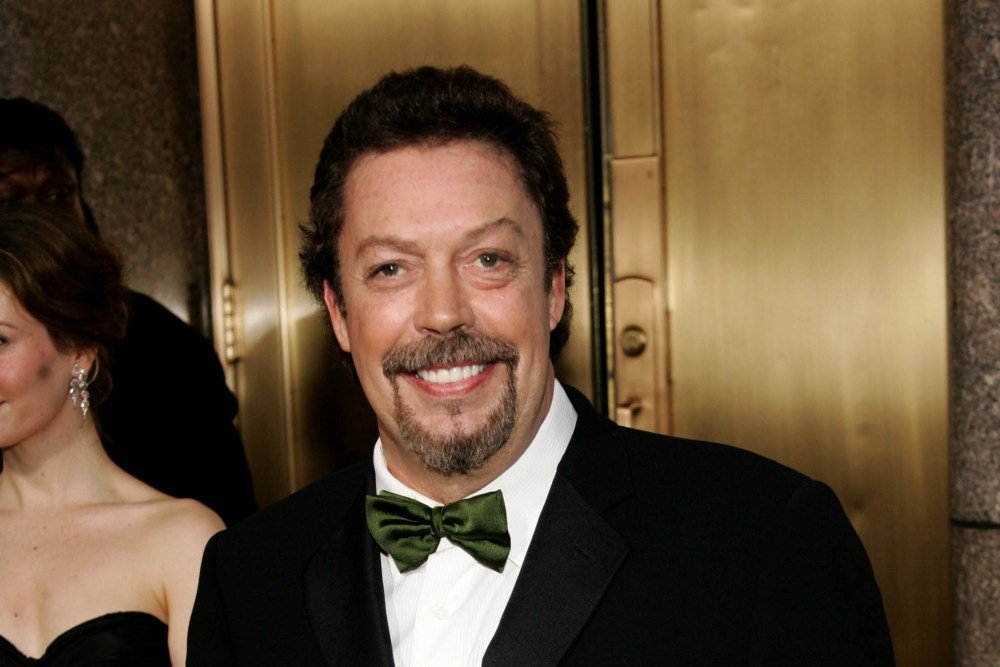
A cause of death has been confirmed for “Rocky Horror Picture Show” star Tim Curry, a week after his death at 80. The actor’s main cause of death was coronary artery disease, People magazine reported.
The Los Angeles County Department of Public Health also listed a history of stroke and kidney cancer as contributing factors.
The theater and film star had suffered a near-fatal stroke in 2012. Doctors discovered two blood clots in his brain and performed emergency surgery. Following the stroke, the left side of his body was paralyzed and he required the use of a wheelchair.
Curry was unable to speak for several weeks after the stroke. Although his voice returned the following year after rehabilitation, he focused mainly on voice acting for the remainder of his career.
The actor was transparent about his stroke and recovery. “I still can’t walk, which is why I’m in this silly chair, and that’s very limiting,” he said at a 50th anniversary screening of “Rocky Horror Picture Show” in September 2025. “So I won’t be singing and I won’t be dancing very soon. I still have real problems with my left leg.”
“I don’t fear death. I suspect that in the end I will welcome it,” he told Ben Mankiewicz last year. “I may well embrace it.”
The actor’s last credited role was in the 2024 horror film “Stream.” He was set to return in an expanded role in “Stream 2: Sudden Death,” which is in production with Fuzz on the Lens Productions. The film will be dedicated to Curry, who completed filming his scenes for the sequel, director Michael Leavy said.
“I had been very scared when I did not know what was happening to me, because I had no sense of whether tremendous pain was forthcoming,” Curry wrote in his 2025 memoir “Vagabond.” “But if death comes for me peacefully and I fade gently from light into dark oblivion, why would I be afraid of it? Sometimes, I rather think it would be a comfort.”
Venice Film Festival kicked off on Wednesday night with the splashy premiere of “Ink,” an explosive drama about the rise of Rupert Murdoch’s tabloid empire.
The film, which stars Jack O’Connell as The Sun editor Larry Lamb and Guy Pearce as media mogul Rupert Murdoch, was met with a nearly four-and-a-half minute ovation after the credits rolled. Festival director Alberto Barbera tried to keep up the clapping by telling the cast to move up on the stairs. They obliged, but only for a few moments. The ovation was cut short because stars O’Connell and Claire Foy started to walk back to their seats, collect their stuff and head for the exit.
Earlier, O’Connell, Pearce and Foy walked the red carpet with director Danny Boyle. It was so hot and humid on Lido that O’Connell took off his Dunhill coat and handed it to a publicist before blotting the sweat on his face and white shirt with paper towels.
Set in 1969 London, “Ink” follows a young Murdoch, who buys The Sun and transforms the struggling paper into a high-selling tabloid. O’Connell stars as “The Sun” editor Larry Lamb, Pearce portrays Murdoch, and Foy plays a fictional journalist named Jules Davies.
Of course, Murdoch became one of the most influential — and divisive — media figures in history. The 95-year-old Australian built an empire spanning television, sports and entertainment through the conglomerate Fox Corporation, which includes Fox News and Fox Sports, as well as newspapers such as Wall Street Journal and New York Post. During Wednesday morning’s press conference for “Ink,” Boyle noted the movie doesn’t “monsterize” Murdoch, which he says, “a lot of people do now.”
“He represented, at the time, a breath of fresh air in what was a very rigid British society,” Boyle said. “He offered a kind of freedom with a different voice.”
“Ink,” which was acquired by Netflix prior to the festival, is competing for the Golden Lion. After Venice, the streamer will bring the awards hopeful to North America for stops at Telluride and Toronto International Film Festival. “Ink” will debut in theaters on Dec. 11 before landing on Netflix on Jan. 8.
Venice is opening against a politically charged backdrop, and jury president Maggie Gyllenhaal spoke to tensions surrounding the wars in Gaza and Ukraine, as well as U.S. politics, at Wednesday morning’s press conference. She said she thinks movies are “fundamentally, unavoidably political,” adding that no subject should be off limits. “I think we can challenge ourselves to hear stories about the most corrupt, most perverse people because it opens up the opportunity to find empathy for those people.”
Gyllenhaal also spoke about lack of female directors in this year’s competition lineup. Only two films up for the Golden Lion — “Woman Unknown,” a drama by Danish-Egyptian filmmaker May El-Toukhysolely and “Naza,” a documentary co-helmed by “No Other Land” filmmakers Rachel Szor and Yuval Abraham, were directed by women.
“There’s a systemic problem,” she said. “It’s harder for women to get films financed.”
Hyperliquid’s native token, $HYPE, has been included in the portfolio of a US-based crypto index ETF for the first time. Added to Hashdex’s Nasdaq Crypto Index US ETF (NCIQ), $HYPE now holds a 3.4% weighting, making it the fifth largest asset in the ETF.
According to the latest index composition released by Hashdex, Bitcoin ($BTC) constitutes the largest portion of the portfolio with 74.6%. The fact that Bitcoin’s previous weighting was around 78% indicates that the share of $BTC has been reduced with the recent adjustment.
Ethereum (ETH) ranks second with 11.8%, while XRP has a weighting of 5.1%. Solana’s (SOL) share increased from 3.2% to 3.7%. $HYPE, with a weighting of 3.4%, is the fifth largest component of the ETF portfolio, right behind Solana.
$HYPE’s inclusion in NCIQ is considered a significant development for the token, particularly in terms of access to regulated investment products, especially those based in the US.
$HYPE is known as the native token of the decentralized cryptocurrency exchange Hyperliquid.
The delay is another sign of the cooling market for crypto IPOs after the industry entered 2026 expecting a wave of public listings following the successful debuts of Circle CRCL$88.88·At close and CoinDesk’s owner Bullish BLSH$32.64·At close last year. Weaker crypto prices and trading volumes, coupled with poor aftermarket performance from some newly listed digital-asset companies, have dampened investor appetite and prompted several high-profile firms, including asset manager Grayscale, Ethereum software developer Consensys and hardware wallet maker Ledger, to postpone their plans.
Payward confidentially filed a draft S-1 registration statement with the U.S. Securities and Exchange Commission (SEC) in November 2025 for a proposed offering of its common stock.
The filing came shortly after the company raised $800 million from investors at a $20 billion valuation, including a $200 million investment from Citadel Securities.
Since shelving the IPO, Payward has continued to expand beyond its core crypto exchange business, adding traditional and crypto derivatives, tokenized equities and payments infrastructure through a series of acquisitions and product launches.
The company reported adjusted revenue of $508 million for the second quarter, up 17% from a year earlier, while funded accounts rose 42% to 6.6 million. Assets on the platform stood at $40 billion.
During the production of Michael Mann’s Ferrari in Modena, Patrick Dempsey called down to chef Jessica Rosval at Casa Maria Luigia around midnight with one question: “What are we having for dinner?” Pizza followed, served by the pool. That collision of major celebrity, fast cars and delicious food makes Emilia-Romagna the ideal post-Venice pitstop for auto-film lovers.
Ferrari, Maserati and Lamborghini have home bases within roughly an hour’s drive of one another, and the films about their founders returned to the same cities and countryside. Mann’s Ferrari, which premiered at Venice in 2023, was filmed largely in Modena. Bobby Moresco shot parts of Lamborghini: The Man Behind the Legend around Bologna and Pieve di Cento, then returned to Bologna and Modena for Maserati: The Brothers, starring Al Pacino and Anthony Hopkins. Producer Andrea Iervolino connects all three films.
From Venezia Santa Lucia, a high-speed train reaches Bologna in about 90 minutes. Begin at the Fountain of Neptune, whose trident inspired the emblem Mario Maserati designed for the company, first used in 1926. Stay at I Portici Hotel Bologna, a short walk from Bologna Centrale, inside the historic Maccaferri Palace. Its Michelin-starred restaurant occupies the restored Eden Theater, an 1899 café-chantant with its intact Liberty-style frescoes.
The Automobili Lamborghini Museum in Sant’Agata Bolognese is about 40 minutes away. Its collection ranges from the Miura and Countach to contemporary hybrids, while VIP tours take visitors onto the production lines. Ferruccio Lamborghini grew up in nearby Renazzo, and Bologna and Pieve di Cento supplied locations for Moresco’s film.
In Modena, check into Casa Maria Luigia, Massimo Bottura and Lara Gilmore’s country house and a discreet base during the filming of Ferrari. Bottura says the movie’s stars stayed there and later shared photos of Adam Driver, Penélope Cruz and others at the property. His relationship with Ferrari began long before Hollywood arrived. As boys, he and his brother heard the cars at Modena’s circuit on the way to school and climbed a wall to watch. “If I pick Ferrari, it’s because I grew up with that,” he says.
Guests can play records from Bottura’s collection of thousands of albums, find snacks and desserts in the communal kitchen, take a Pasta Studio class ending in a shared lunch and explore the garage “toy chest.” The estate acetaia holds more than 1,400 barrels, while breakfast is designed to recall the Christmas mornings of Bottura’s childhood. “We call it casa because it’s home,” he says.
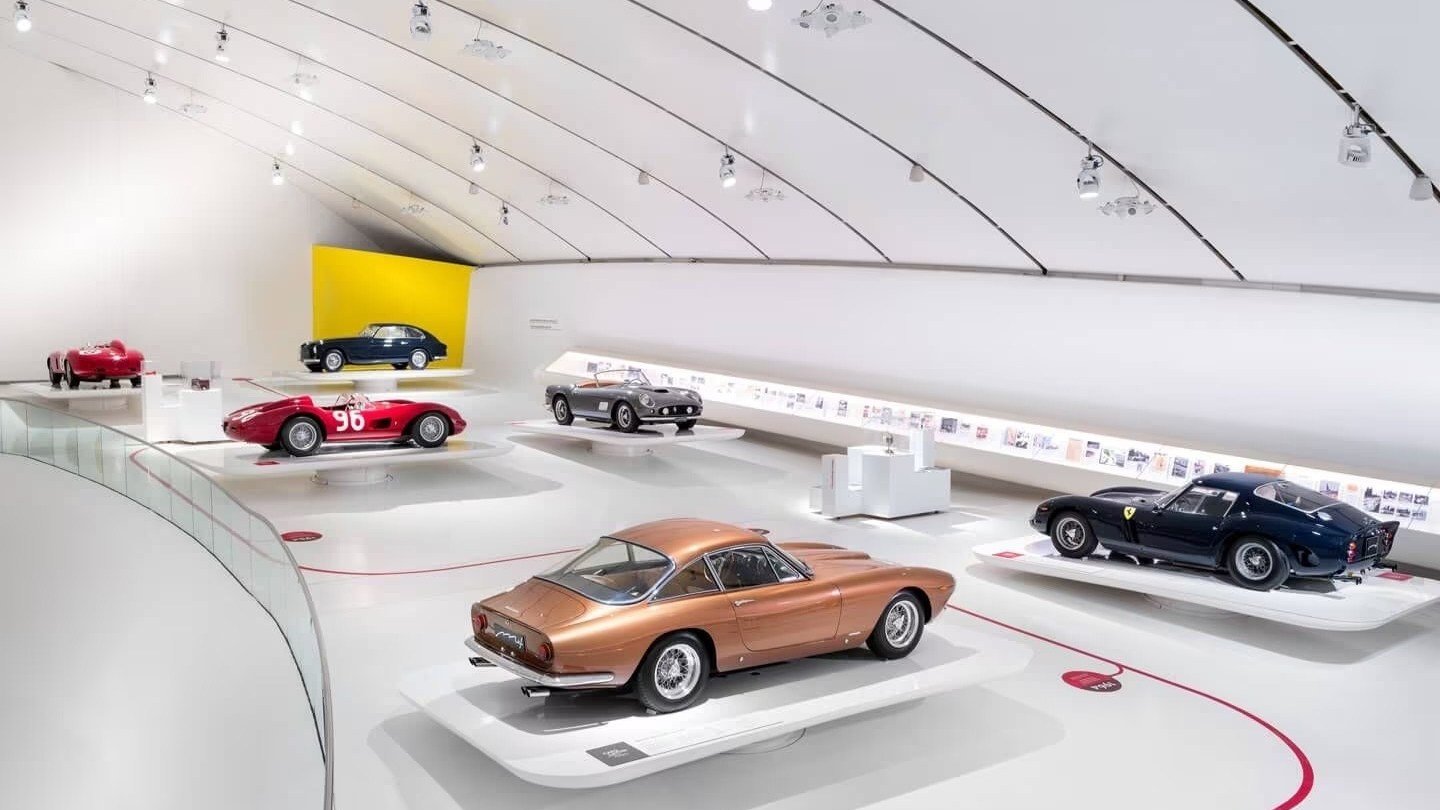
At the Museo Enzo Ferrari, The Greatest Hits — Music Legends and Their Ferraris brings together Herbert von Karajan’s 250 GT Lusso, Eric Clapton’s one-off SP12, J Balvin’s 512 TR and Swizz Beatz’s SF90 XX. It runs through Feb. 16, 2027.
The Umberto Panini Maserati Collection unites both obsessions on the Hombre dairy farm, where historic Trident cars share the grounds with Parmigiano Reggiano production. End in the Castelvetro hills at Cleto Chiarli, the family winery founded in 1860, for a tour and tasting devoted to the region’s Lambrusco.
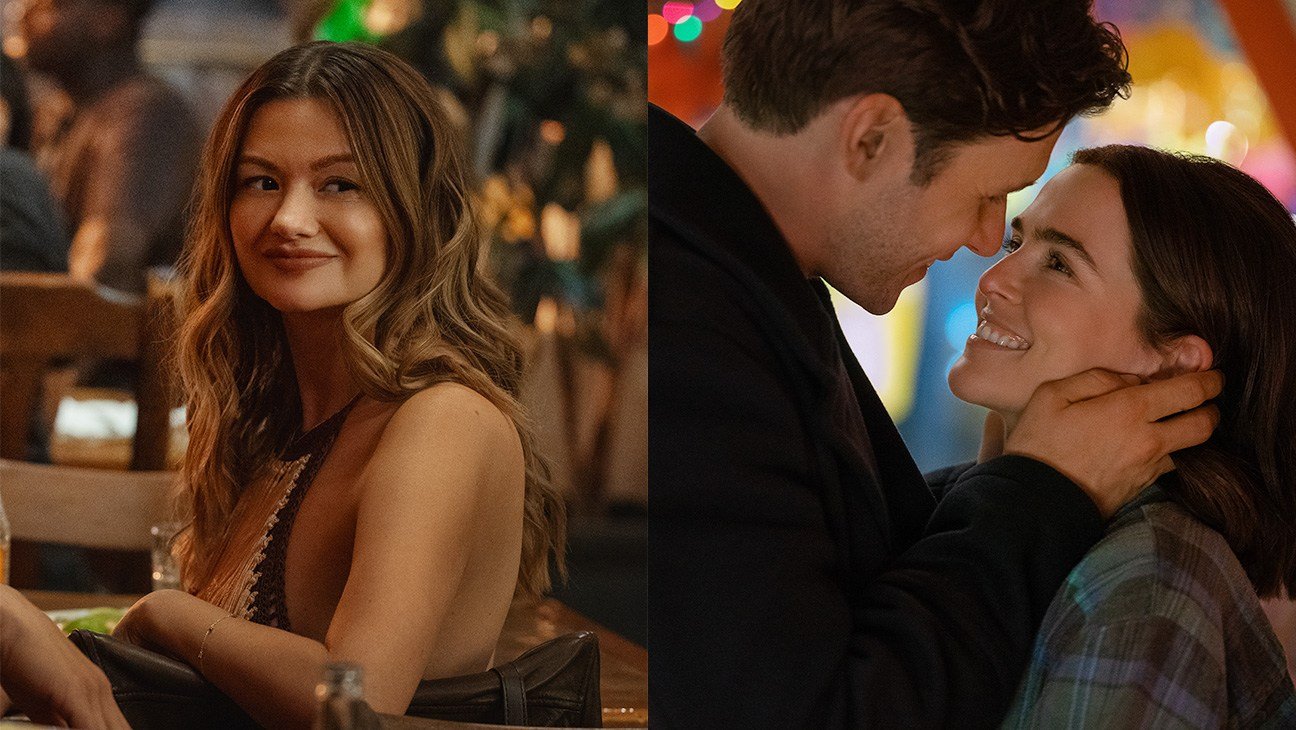
“It’s been a dream come true,” says Voicemails for Isabelledirector Leah McKendrick of her summer. In June, her film premiered on Netflix, causing a slew of social media posts showing people emotional over the romantic comedy and dancing along to Robyn’s “Dancing On My Own.”
McKendrick, who’d been working on the film for several years, always believed in the film but wasn’t expecting so many people to connect with her. Her producers were always confident the movie would defy the odds. And it did. Now, months after the film premiered, it’s still holding strong.
Despite her belief in the material, McKendrick always had a seed of doubt that people just wouldn’t get it. “There always is a little of that worry and it is a trust fall,” she tells The Hollywood Reporter on a recent Zoom. Thankfully, as evidenced by TikToks of fans crying as they watched the film, people did get it.
Below, McKendrick speaks with THR about the film’s success, how she’s dealt with the reactions and how validating it’s all been.
What has the response been like?
It’s everything that I hoped it would be and more. As you prepare to release a movie that’s so personal to you, you dare not dream this big because you want to keep the relationship to your work pure. You try not to put too much emphasis on outside reaction. If you can just find your people and your weirdos, that will be enough. This isn’t my first movie, and I feel like in my previous films, I managed to find that little core group of people, and that has always been enough for me. But to have a film that connects on this scale was a totally new experience. They tell you how hard it is to receive criticism, but nobody tells you how hard it is to receive praise.
What have people been saying?
[I got] so many DMs and so much love. Honestly, my favorite part is probably the dance going viral because that’s something that I very much manifested, it was not accidental. That was always the goal. We reverse engineered it to make it something that you could learn at home, something that was fun, something that two little girls could have made up in their bedroom. It’s actually not that easy, I will tell you. It looks easier than it is. It took me a long time to learn it.
Was there anything that surprised you of the reaction?
I didn’t know people were going to cry like that.
Really?
Yeah. I knew that I cried every time I saw it. Este [Haim] and Amanda [Yamate], my composers, were some of the first people that got brought in to see it that weren’t editing it and on set with us. I knew that it was very emotional for them. But again, I’m like, that’s because we’re all weirdos. These are the core people that are connected to the film because we’re making it together. We did do a test screening and a bunch of people were leaving the theater crying. All the videos, that trend that started, “Here’s me before watching Voicemails for Isabelle, and then here’s me after.” I did not expect that.
How did that feel?
I love to cry. I’m such a crybaby about everything. I’m an artist, so I cry when I’m writing my scripts. I cry when I’m shooting my films. I cry when I’m on screen. I’m just a crier. It seemed like America really needed to cry. The world really needed to cry. I got a lot of DMs of people saying that they had lost somebody and that they hadn’t cried about it until my movie and that the movie somehow offered some sort of release or catharsis. I don’t know what could be better than that.
This seems like a personal story. Is it validating that so many people felt the way they did about the movie?
I do believe that humans respond to specificity, even if it’s not their own experience. Humans respond to something that feels real and authentic, whether or not they can relate in their own life to that exact experience. I’ve found that as an audience member, I’m interested in people’s stories. Wherever they are in the world, whatever their upbringing is, I am fascinated by that and humans and whatever their journey is. I’m not interested in slop. I’m not interested in corporate advertising to me through a narrative filmmaking. I’m interested in human stories, so I think I learned that at some point along the line that the truer I was to myself, the truer it would feel to audiences.
But there is always that sneaking suspicion that no one is going to get it. There always is a little of that worry and it is a trust fall, I guess. The more people that join you in the fight — whether it be your producers, your studio executives, your actors, your HODs, your composers, everybody, the artists, musicians that gave me their songs — and hop on the ship, the stronger you feel. The more confident you feel. But it does just begin with me and my laptop getting weird in a corner and semi sure that no one is going to get it.