Taylor Swift is the most-streamed artist of all time on Spotify, the streaming service said on Thursday, as Spotify released new charts tracking its top all-time artists, albums and songs to commemorate the service officially turning 20 years old. Bad Bunny has Spotify’s most-streamed album of all time with 2022’s Un Verano Sin Ti, and The Weeknd has the most-streamed song with “Blinding Lights.”
Bad Bunny comes in second behind Swift on the artist chart, while Drake came in third, The Weeknd in fourth and Ariana Grande rounding out the Top 5. Ed Sheeran, Justin Bieber, Billie Eilish, Eminem and Kanye West take up slots six through 10. Some of those featured in the rest of the top 20 include Travis Scott, BTS, Bruno Mars, Rihanna, Kendrick Lamar and Future.
On the album side, below Un Verano Sin Ti, The Weeknd had two in the top five with Starboy and After Hours, which came in at second and fifth, respectively. Ed Sheeran’s ÷ came in third, while Olivia Rodrigo’s Sour came in fourth. On the whole top 20, The Weeknd had the most selections with three (Beauty Behind the Madness came in at 20th), while Drake, Swift, Post Malone and Bad Bunny all had two albums on the chart. Swift’s Lover was her top album, coming in at eighth.
And on the songs chart, Sheeran’s “Shape of You,” The Neighbourhood’s “Sweater Weather,” The Weeknd’s “Starboy” and Harry Styles’ “As It Was” made up the remainder of the top-5 after “Blinding Lights.”
While the numbers behind the charts account for 20 years of data, they for the most part reflect the most popular music from the late 2010s onward, appropriate given that’s when streaming became music’s dominant listening form. There were a couple of outliers, though, particularly on the songs chart. Despite coming out 26 years ago, Coldplay’s “Yellow” came in at 15th on the songs chart, by far the oldest song there. On the other end of the spectrum, Lady Gaga and Bruno Mars’ “Die With a Smile,” which is less than two years old, is already the 20th most-streamed song of all time on the platform.
Outside of music, Spotify also shared lists for audiobooks and podcasts, with A Court of Thorns and Roses and The Joe Rogan Experience topping those charts.
You’d be forgiven for thinking it’s twice the amount the rest of us get, considering his vibrant and varied year ahead, or, you know, the last 30 years or so. This is the man who has traversed more terrain than most of his peers, having starred in blockbuster action films (Mission Impossible III, Sherlock Holmes), box office darlings (Deadpool 2, Mowgli, Snow White and the Huntsman, The World’s End), and iconic movies from beloved auteurs (Alejandro González Iñárritu’s 21 Grams, Mike Leigh’s Vera Drake and Steven Spielberg’s War Horse, to name a few).
He’s no stranger to TV, either — in fact, you might know him as Terry Donovan, older brother to Liev Schreiber’s titular fixer in Showtime’s Ray Donovan, or more recently in Heartstopper, King & Conqueror and Supacell. The born-and-bred Londoner has done it all, and he’s truly thankful: “I’m not a big movie star, and I’m really proud to be an actor,” Marsan tells The Hollywood Reporter. “I love what I do.”
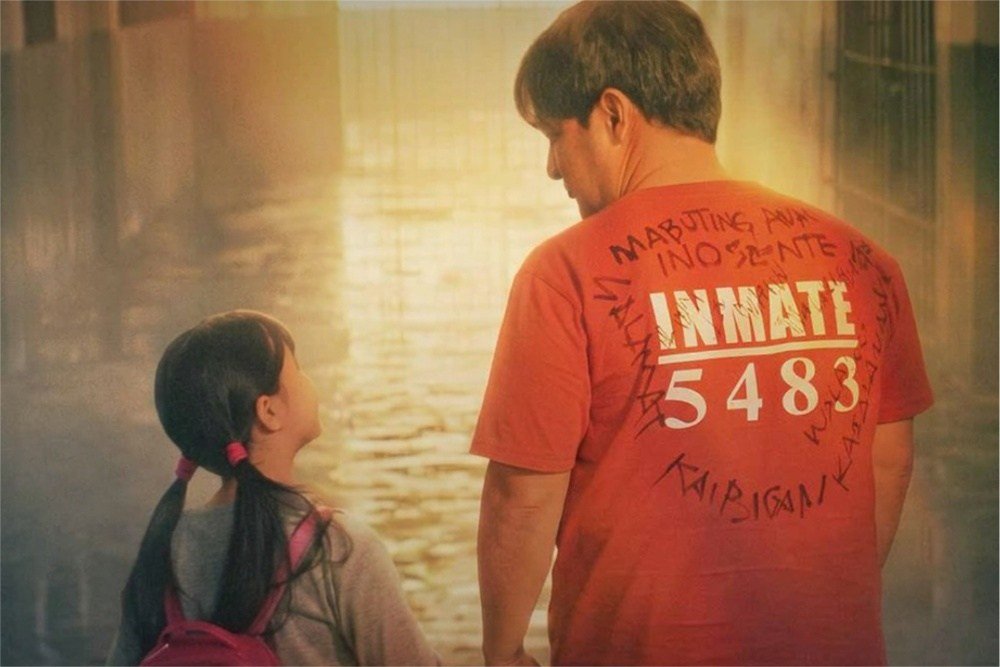
He’s catching us up ahead of the release of his next project, No Ordinary Heist, in theaters in the U.S. on Friday. Directed by Colin McIvor and co-written by McIvor with Aisling Corristine, the film earned its world premiere at the Santa Barbara Film Fest in February, before it aptly screened in Belfast and Dublin. “It was great to show the film in Belfast, because the film is such a homage to Belfast,” Marsan says. “It’s part of their recent heritage, you know?”
No Ordinary Heist is inspired by the true events of the 2004 Northern Bank robbery, when over £25 million (around $35 million in 2026) was stolen from the company’s Belfast headquarters in one of the largest bank robberies in British history. Marsan stars as branch manager Richard Murray, who is coerced, alongside lowly colleague Barry (Éanna Hardwicke), into helping the perpetrators while their respective family members are held hostage. The supporting cast includes Eva Birthistle, Michelle Fairley, Andrea Irvine and Patrick O’Kane.
“To be honest with you, films are always set within a certain cultural context, or geographical, ethnic [context], and with any good film, within 10 minutes, you’ll realize it’s a universal story,” Marsan says about the movie’s broad appeal. “This is a story about: What would you do in this situation, if your wife or mother was threatened with death? […] Would you be able to cooperate with someone you hated? Richard and Barry hate each other, and that’s a great premise for a film.”
He’s also got a slew of buzzy projects to come this year, including season three of The Rings of Power, DC’s Clayface, and Peter Gould’s Disinherited for FX. Taking a moment to catch his breath, one of Britain’s most prolific actors runs us through nailing that tricky Belfast accent in No Ordinary Heist, why filmmakers must balance being political without becoming didactic, and the thrill of being an actor’s actor: “I don’t even know who I am really. I don’t think any of us do.”
Eddie, how was the Northern Ireland premiere?
It was wonderful. It was great to show the film in Belfast, because the film is such a homage to Belfast, really. It makes Belfast look really cinematic and everybody loved it. It’s part of their recent heritage, you know? I was walking around Belfast in the daytime, [I] had a couple of hours to kill, and people came up and asked me what I was doing there. And I said I was there for the premiere of a film, and it’s about the Northern Bank robbery. And everybody had an opinion about what had happened, who did it, and where the money is. It’s like an urban myth.
Fascinating, because I know this premiered in Santa Barbara and at the Glasgow Film Festival as well. Have you noticed a difference in reaction with their respective audiences?
I wasn’t in Santa Barbara and I was working so I couldn’t be in Glasgow. But yeah, the Irish response has been fantastic. People have been very kind, very generous, and it’s gone down really well. It’s a lovely film. It’s a really good film.
How much did you know about the Northern Bank robbery before this?
I knew nothing about it. It just shows you how English-centric our news is. But it’s the biggest cash robbery in British and Irish history. When I read the script, I just realized how brilliant it was. I love the premise of the bank manager and the security guard being made to rob their own bank, and the high stakes because their wife or mother will be killed. But I also love the fact that they’ve got a history together. It’s a story, really. It’s a heist movie, but it’s really about two men overcoming their prejudices in many ways.
This is based on a true story and your character is loosely based off a man called Kevin McMullan. Did any research into him go into your prep?
The research that I did was based on whatever was in the script. The way I create a character is it’s all sensory data. I’m not a very literal person, or academic. So it’s all about images and sounds and smells and just trying to achieve what their character is trying to achieve. I mean, what was fascinating is a lot of people think it’s a political story, and they’re surprised that both characters are Catholic. But I never realized how much of a social hierarchy there is within the Catholic community of Northern Ireland, this kind of snobby Catholics [versus] working class Catholics. Richard Murray is a snobby Catholic, and Barry is a working-class Catholic. And I love that. I love that nuance. It’s not a film about a Protestant and a Catholic. It’s a film about class and money and inequality.
Did you find this was a bit of a learning experience for you?
Very much so! Every film, for me, is a learning experience. That’s one of the joys of being an actor for me. I never went to university, but I’ve had an amazing education for the last 35 years.
From left: Eddie Marsan and Éanna Hardwicke in ‘No Ordinary Heist.’
Courtesy of Wildcard
What immediately attracted you to Colin and Aisling’s script?
I love the opening sequence. I thought it was really well set up. I’m used to reading scripts, and I know the first 10 minutes are the most important. A script is kind of like a helter skelter ride where you go up really slowly, and then you reach the top, and then you swoop down. And it’s how you get up there, how you get to that point. I really admired Aisling and Colin’s writing. I thought it really set the story. You know exactly what these men are trying to achieve, the obstacles, and it’s really dramatic. Then I realized that I was going to be working with Éanna, and I’ve always been a big fan of his [since] he did The Sixth Commandment with Timothy Spall. Tim’s a good friend of mine, so I watch everything Tim does, and then I saw this young Irish actor play that part, and I thought it was amazing. So the idea of working with him was something that I wanted to do. I always want to work with good actors. They make me look better.
I suppose you’ve crossed paths with Michelle before?
No, I never have. She was fantastic. And Eva. Me and Aisling [were] sitting in the theater last night watching it and just realizing how brilliant they were. I mean, Michelle carries so much in the story, and she does it so beautifully. She’s an incredible actress.
Your Northern Irish accent was very impressive as well.
Oh, thank you very much. Yeah, I worked very hard on that. I have a voice coach, Liam Robinson, who I work with all the time. I kind of take him with me. I do lots of accents. Very rarely am I asked to play my own accent. I would hate to. I love doing different things all the time. I love becoming different people. I think I’d give up if people asked me just to be me, because to be honest with you, I don’t even know who I am really. I don’t think any of us do. When people say, “Be yourself,” you do an imitation of yourself, you know? Acting is an exercise in empathy.
As someone who has such a colorful career, what still challenges you?
One of the things that still challenges me is the technical aspect. The accent challenges me, the cultural understanding, the cultural context. I’m a great believer that any actor can do anything. There’s a school of thought that you need lived-in experience, and I don’t believe that. I’m almost offended by that. I believe any actor can do anything, but it’s not who does it — it’s how you do it. The challenge is to understand, to be humble, to admit your ignorance and to go in and clean out any prejudices you have, any generalizations. Go and ask people about the cultural context.
To go in with the accent, you have to be prepared to sound like an idiot on set. I keep the accent going all the time, and I sound like an idiot around Northern Irish people, but they’re very generous. You ask them for help. I’ve done Welsh with Welsh actors, Scottish with Scottish actors. I’ve been Ray Donovan for nine years, doing Boston. I do a lot of American accents. So the trick is: It’s not about you. You have to really be prepared to go in and say, “I need some help with this. Can you help me?” And people always help. If you’re going in with an arrogance, I think people resist it.
Do you feel like you had any generalizations or preconceptions heading into the making of No Ordinary Heist?
Yes, I did, because I didn’t realize both characters were Catholic. When I was reading it, first of all, I was surprised. When Colin explained it to me, I thought it was a brilliant, nuanced approach to the story, and it was more about class and money rather than about religious dogma. Lots of films post-Troubles are going over the same issues. And this was much more. This is much more about money, really. Barry is poor, broke, and he’s facing redundancy. Richard has to make everyone redundant, and a major corporation has taken over the Northern Bank, and the bank robbers come in and steal the money. So it’s all about who controls the money, really.
This is a film that will obviously have such a huge Irish and Northern Irish appeal, but hopefully abroader appeal too. What do you hope audiences take from it?
To be honest with you, films are always set within a certain cultural context, or geographical, ethnic [context]. And with any good film, within 10 minutes, you’ll realize it’s a universal story. This is a story about: What would you do in this situation, if your wife or mother was threatened with death if you didn’t steal 24 million pounds? What would you do, and how would you react? Would you be able to cooperate with someone that you hated? Richard and Barry hate each other, and that’s a great premise for a film. As an actor, it’s brilliant, because the audience is with you all the way. It’s very, very clear what they’re trying to achieve. It’s very, very clear what the obstacles are.
You’ve played a lot of antagonists. I know there are shades of gray with Richard Murray, and he’s got a tough job. But did you enjoy getting to be someone who isn’t the bad guy?
I never play good or evil people. I just play unhappy people in search of happiness. An artist’s job is to depict human nature and to depict human nature without judgment. So I never make a judgment on my characters. If I did, I’d be a bad actor, you know? I play lots of villains, but I never play them as villains, because villains don’t think they’re villains. They’re thinking they’re the heroes of the story. That’s the essence of their narcissism.
And often what makes them good villains is when we chip away that exterior and there is something human and relatable to them.
Yeah. We did that in Tyrannosaur. We studied all these case histories of all these abusive husbands and realize that they wanted to be loved. That’s more terrifying — to play someone who wants to be loved but he’s prepared to do terrible things in order to be loved. Because we all want to be loved.
With a resume as rich as yours, what kind of roles grab your attention when a script comes through?
Well, acting has never really been a performative thing for me. I’m not really a very performative person. It’s always been a means by which I can understand people, if I’m honest. So I love to play people in situations that initially seem to be alien to me, and then once I get under the skin, I realize that I can relate to them. I love to play people from different cultures, different backgrounds, different accents, because once you get past that, then you get to understand it from a more personal context. I like to bring my own experiences to it and use those experiences and place them in a different historical, cultural, or political context. I enjoy doing that because it reassures me. I come from a very diverse community, and one thing I realized in living in [the London borough] Tower Hamlets was that one of the joys of diversity is you discover commonality. I love discovering commonality, especially within my acting.
And you’re such a chameleon. This is partially a pretty political film, in the context. Do you think the movies we watch should be political?
Yes, I do. I do think films should be political. But the problem when people make political films is they become didactic. And I don’t like didactic films. I did a show a few years ago for the BBC called Ridley Road, which was about Jews in the 1960s taking on the fascists and the anti-Semites in London. And a friend of mine was a Jewish writer [on it] and there was a rise in anti-Semitism [at the time], and she said people were trying to win the argument on social media. You could never win an argument on social media. We all think we’re going to make the comeback with the perfect tweet or say the perfect thing that’s going to win an argument. You never do. And Sarah Solemani, she’s an actress and a writer, she lives in L.A., and she said to me, “But art is persuasion.” I love that. I mean, for instance, Sinners. I think Sinners is a great critique on white supremacy and the Black experience in the South through the context of vampires. But then that’s brilliantly persuasive, isn’t it? Because it’s so evocative.
What else have you enjoyed recently?
I thought Adolescence was amazing. I saw a film recently called Dragonfly by my friend Paul Andrew Williams. I thought it was an incredible performance by Andrea Riseborough and Brenda Blethyn. I don’t like films where you lose the authenticity of characters because you want to give a political message. What I loved about Mike Leigh’s Vera Drake is it’s a film about an abortionist and it’s a film that champions the right for women to choose, but it’s not didactic. It’s a very spiritual film in many ways, because it makes you have empathy for the abortionist. And I think that’s the best of what art should be.
So, in answer to your question, I think one of the problems with political discourse at the moment is that it’s very binary. There’s a great saying by the [Danish] physicist Niels Bohr that said for every great truth, the opposite is also true, and for every simple truth, the opposite is always false. On social media, which is where the main form of political discourse [is happening] at the moment, it’s people demanding that you adhere to their simple truths. I don’t think film can deal with simple truths. I think film and art has to deal with greater truths, which are always paradoxical, or else characters become two-dimensional.
Are you feeling optimistic about the future of British film and television and the stories that we’re telling?
It’s getting harder to make films now. It’s getting harder to make lower-budget films, films under five million, but creativity is like water. It finds a way through. I’m finding that what filmmakers are doing now, for instance, it’s like No Ordinary Heist. And I did a filmthat came out last year, All the Devils Are Here, and they’re beautiful films, but for under five million, all you can do is make a really good script. Because the script, the development, doesn’t cost that much money, really. It just takes time and patience to get that right. So I’m finding now that I’m playing major parts in really well-written films under five million. And I love it. I much prefer that to television, if I’m honest.
What do you enjoy about making films over TV?
Because the film is a limited amount of time — it’s 90 minutes — you feel like you’re creating a piece of art within itself. You feel like you’re creating a piece of art within itself. And I love TV. I’ve done TV. I’ve had a good living at TV. I’m very proud of Ray Donovan, I’m very proud of the way the characters developed. But there is a craft that I admire when somebody writes, directs and the whole crew get together and you do a film under 120 minutes. That’s my greatest pleasure.
What have you got coming out that you can talk about?
I have a film [that premiered] at SXSW called Campeón Gabacho and it’s made by Jonás Cuarón, a Mexican film. It’s a rich, a beautiful story about a young Mexican immigrant that comes into United States and he fights his way through to it, becomes a boxer. It’s his story about trying to build a life for himself in the U.S. I play the bookseller that he first meets when he comes into the U.S. It’s a great story about an immigrant, so with all this going on in the U.S. — with ICE and anti-immigration [policies] — it’s great to make a film about the immigrant story. That’s what I mean about it being persuasive, rather than didactic. Because anyone will go and see that film. And some people may have a very prejudicial idea of immigrants, and they may think that they have a fixed idea. What stories can do is they can become universal. You see it, you suddenly have empathy for that young man. That’s the persuasive nature of art.
You also have Clayface coming this year?
Yeah. And a show coming up for Sky, Prisoner, [this month]. I’m doing Rings of Power for Amazon coming out later this year, then I’m doing a show for FX called Disinherited, which is written and directed by Peter Gould. That’s been picked up by FX and Hulu, so hopefully we’re going to shoot that later this year.
How many hours do you have in a day, Eddie?
Well, it’s just like everybody [else]. Bus drivers work every day… I’m not a big movie star, and I’m really proud to be an actor, and as an actor, I love working. I love working with actors. I love working with crew. I love what I do, really. I enjoy it so much.
Can you think of a highlight for you over the last 20, 30 years of your career?
I think realizing how much people love Ray Donovan. People come up to me all over the world and talk about Ray Donovan. They love that family. I’ve never played a character that people loved before. People loved Terry. I usually play the bad guys. [Laughs.] And suddenly I was playing someone who people love, and people were very disappointed that I wasn’t Terry. Well, they’d hear me speak in the London accent and realize that I wasn’t as charismatic as Terry. You could see the disappointment in their eyes!
Academy Award-winning actress and activist Julianne Moore will receive Kering‘s Women in Motion award at this year’s Cannes Film Festival.
Launched in 2015 by Kering, an official partner of the Cannes Film Festival, the Women in Motion award celebrates female artists whose careers and commitment have advanced the role of women both in cinema and in society.
With the honor, Moore joins an esteemed lineup of past honorees, including Nicole Kidman, NBCUniversal Entertainment & Studios Chairman Donna Langley, Jane Fonda, Geena Davis and Susan Sarandon, Isabelle Huppert, Patty Jenkins, Gong Li, Salma Hayek Pinault, Viola Davis and Michelle Yeoh. Moore will be feted alongside the Emerging Talent Awardee, Italian filmmaker Margherita Spampinato, during the official Women In Motion Awards ceremony on May 17.
“Julianne Moore fully embodies the spirit of Women In Motion,” stated Kering chairman François-Henri Pinault, announcing her selection. “Through the consistency of her artistic choices, the depth and complexity she brings to her performances, and her longstanding dedication to advancing meaningful representation both on and off screen, she has helped redefine what it means to be a leading woman in cinema. Her career and her commitment clearly mirror the values Women In Motion has championed since its inception.”
The acclaimed actor has built a career defined by versatility and depth, with a wide-ranging filmography that includes “Still Alice”, “Far From Heaven,” “The Hours,” “The Kids Are All Right” and “Boogie Nights.” Most recently, Moore starred in Todd Haynes’ “May December,” for which she earned a Golden Globe nomination, Apple TV’s “Echo Valley,” Pedro Almodovar’s “The Room Next Door,” the Netflix limited series “Sirens” and the historical miniseries “Mary & George.” Coming up, Moore will star in Jesse Eisenberg’s untitled musical comedy for A24. Beyond the screen, Moore is a NY Times bestselling children’s author of the “Freckleface Strawberry” series and the founding chair of Everytown for Gun Safety’s Creative Council.
“I’m genuinely grateful for this recognition from Kering and the Festival de Cannes. Being part of Women In Motion’s legacy is incredibly meaningful to me,” Moore said in a statement. “I’ve always believed that visibility matters, that the stories we choose to tell can widen the space for women, and for a richer diversity of voices, both on screen and behind the camera. Continuing to work together to amplify female and diverse voices and to support the next generation of creators helps build a cinema that is more open, more representative, while driving real change.”
Iris Knobloch, president of the Festival de Cannes, said: “Julianne Moore does not use cinema to reassure. For forty years, she has chosen characters who destabilize, who suffer without resolution, who refuse easy sympathy and in doing so, she has claimed territory on screen that did not exist before she walked into it. The Women in Motion Award recognizes not only what she has achieved, but what she has made possible for every actress who comes after her.”
Likewise, Thierry Frémaux, general delegate of the Festival de Cannes, hailed Moore as “one of the greatest actresses of contemporary cinema.” With a best actress win at Cannes in 2014, Moore became the first American woman to receive top acting honors at the Berlin, Venice and Cannes film festivals, cementing her status as one of the most respected performers of her generation.
“Across an uncompromising and richly diverse filmography, she has built her work with remarkable intelligence and patience, delivering performances of rare emotional precision,” Frémaux said. “Working with some of the most important filmmakers of our time, she brings to each role a profound sensitivity, an extraordinary sense of nuance, and a fearless engagement with complex characters. Film after film, she has portrayed women in all their strength, contradictions, and freedom, leaving an indelible mark on the history of cinema.”
Each year, Women In Motion also recognizes a female director for her first feature film through its Emerging Talent Award. This year’s prize will be presented to Italian filmmaker Spampinato, whose debut feature “Gioia Mia” is said to “reflect the vitality and originality of a new generation of filmmakers shaping the future of cinema.” Spampinato was selected by her predecessor, Brazilian director Marianna Brennand, who received the honor last year.
“I am grateful and happy to receive the 2026 Women In Motion Emerging Talent Award, and it is a great honor to receive it from Marianna Brennand, a director I deeply admire,” Spampinato said. “This award moves me because it supports the creativity and freedom of new female voices in cinema and the arts around the world.”
Spampinato’s “Gioia Mia” debuted at the 78th Locarno Film Festival, where it won two Pardi in the Cineasti del Presente section. Following the Locarno Festival, ”Gioia Mia” has received more than 20 awards at both Italian and international festivals. The Emerging Talent Award will support her forthcoming second feature with a €50,000 grant.
“Like its title, ‘Gioia Mia’ felt like a jewel to me. Margherita is a flawless storyteller. She has such a unique, precise way of turning everyday moments into something magical,” Brennand noted. “I loved how much empathy she has for her characters. A tender bond between two people from different generations: a boy and his great-aunt unfolds through heartbreak and impossible love. But beneath the tenderness lies something heavier: the silent violence of a patriarchal world, carried in the body and soul of an older woman who was never allowed to fully exist. I’m really excited to see what Margherita does next.”
Hugo Selignac’s Chi-Fou-Mi Productions is set to make a feature film about the life of late celebrity chef Bernard Loiseau, who partly inspired the character of chef Auguste Gusteau in “Ratatouille.”
The untitled film will be written and directed by Thomas Lilti, the Cesar-nominated French director of the hit Canal+ series “Hippocrate,” which was initially a film and played at Cannes’ Critics Week. Lilti also directed a raft of popular French films including “The Country Doctor,” “First Year” and “A Real Job.”
Chi-Fou-Mi, a Mediawan banner, is producing the untitled feature with 31 Juin Films, in partnership with Loiseau’s family.
Loiseau was one of France’s most famous chefs in the 1980s and ’90s, credited for elevating French culture on the international stage and turning his Burgundy village of Saulieu into a world-renowned gastronomic destination. His restaurant, La Côte d’Or, received its third Michelin star in 1991. A pioneering businessman, Loiseau also became the first celebrity chef to have his restaurant listed the stock exchange. But despite all his achievements, Loiseau, who suffered from depression, died by suicide at age 52 in 2003.
“Since the beginning of my career, I have sought to portray work and to tell the stories of men and women confronting their vocation,” Lilti said in a statement. “With Bernard Loiseau, that question becomes even more intimate and that is what moves me so deeply about his story. Exploring his life means speaking about excellence, work, doubt, legitimacy and solitude.”
He continued, “It means trying to understand genius — in all its visionary power, but also in its deeply destructive dimension. By immersing myself, almost frantically, in his life and work, I am discovering a man who was deeply loved and deeply loving, whose tragic end reveals fractures that perhaps only fiction can truly approach.”
Bérangère Loiseau, chairwoman of Groupe Bernard Loiseau, said: “We are deeply moved that Thomas Lilti has shown such sensitivity to Bernard Loiseau’s story. Much like medicine, gastronomy is a passion that calls for complete dedication in the service of others and their happiness. The pursuit of excellence is constant: every gesture, every detail matters. That is exactly what drove Bernard Loiseau — love for others and for work well done.”
Chi-Fou-Mi will be at this year’s Cannes Film Festival with three films, including Jeanne Herry’s “Garance” in competition and Quentin Dupieux’s “Full Phil” starring Kristen Stewart and Woody Harrelson.
Digital asset investment firm Pantera Capital is urging London-listed Satsuma Technology (SATS) to liquidate its remaining bitcoin holdings and return cash to shareholders, marking a sharp turning point for a strategy that once drew strong investor enthusiasm, Bloomberg reported on Thursday.
Pantera’s DAT Opportunity Fund, which owns about 6.7% of the company, is among those pushing for a full wind-down of Satsuma’s roughly $50 million bitcoin position (646 $BTC) with SATS having lost 99% of its value since peaking at 14 pounds ($18.90) last June.
Satsuma acknowledged receiving requests for capital returns but did not disclose which investors were involved. Executive Chairman Ranald McGregor-Smith said the firm is reviewing options to address these demands while balancing the interests of all shareholders, according to Bloomberg.
In August 2025, Satsuma raised 164 million pounds ($221 million) through an oversubscribed convertible note backed by major crypto investors including Pantera, ParaFi, Kraken, and Digital Currency Group.
Bitcoin then surged past $126,000 before falling 50% to $60,000 by early February, eroding confidence in corporate treasury strategies tied heavily to digital assets.
The collapse in Satsuma’s share price has left its market value below that of its 646 $BTC holdings. Leadership turmoil has compounded the decline, with a director exiting in February and CEO Henry Elder stepping down in March.
SATS traded at 21 pence ($0.28) on Thursday, a drop of 12.5% on the day.
Neither Satsuma not Pantera immediately responded to CoinDesk’s request for comment.
A coalition of U.S. crypto companies and trade groups called on the Senate Banking Committee to proceed with a markup of the Clarity Act, a bill that would create a federal framework for crypto markets.
In a letter to Chairman Tim Scott, Ranking Member Elizabeth Warren Subcommittee Chairwoman Cynthia Lummis and Ranking Member Ruben Gallego, the group argued that action by government agencies alone cannot deliver stable rules.
The letter cites the risk of returning to “regulation by enforcement,” referring to a series of court cases brought by the Securities and Exchange Commission (SEC) and the Commodity Futures Trading Commission (CFTC) that defined policy under President Joe Biden.
More than 100 signatories are backing the effort. These include high-profile companies including Coinbase, Circle Internet, Kraken, Ripple, Andreessen Horowitz, Paradigm, Consensys, Anchorage Digital and Galaxy Digital alongside developer groups, state blockchain associations and university chapters of Stand With Crypto.
The coalition flagged six priorities for lawmakers to address. These include preserving consumer rewards tied to payment stablecoins, defining oversight roles for the SEC and CFTC, and protecting developers who build non-custodial tools.
It also called for disclosure rules that are easier to follow and a federal standard that avoids a patchwork of state laws.
Other major jurisdictions, such as the European Union, have already enacted comprehensive cryptocurrency frameworks, and the group warned that the absence of U.S. legislation risks pushing investment, jobs and development offshore.
“America needs clear, comprehensive rules for digital asset markets. It is a global race to the top, and it is important for the U.S. to lead,” Ji Hun Kim, CEO of the Crypto Council for Innovation, in an email.
“The Senate Banking Committee can build on years of bipartisan work and the GENIUS Act’s success by advancing legislation that delivers regulatory clarity, robust consumer protections, and strong safeguards for developers. A markup will move us closer to durable rules that ensure the U.S. sets the global standard for digital asset markets,” Kim said.
Kering’s Women in Motion Awards gala is coming together.
The starry gathering, which takes place during the Cannes Film Festival as an official event with attendance from festival leaders, jury members and others, is set for May 17. It will honor Oscar-winning actress Julianne Moore with a Women in Motion trophy, while Italian auteur Margherita Spampinato will receive an emerging talent award.
The Women in Motion Awards is a ceremony that launched in 2015. Each year, Kering singles out “female artists whose careers and commitment have advanced the role of women both in cinema and in society.” Recipients over the years have included Nicole Kidman, Donna Langley, Jane Fonda, Patty Jenkins, Geena Davis, Susan Sarandon, Viola Davis, Michelle Yeoh and Salma Hayek Pinault. Kering’s Women In Motion activities in Cannes also include live events like talks, podcast recordings and more.
“Julianne Moore fully embodies the spirit of Women in Motion. Through the consistency of her artistic choices, the depth and complexity she brings to her performances, and her longstanding dedication to advancing meaningful representation both on and off screen, she has helped redefine what it means to be a leading woman in cinema,” praised Kering chairman François-Henri Pinault.
Moore, a regular face at the Cannes Film Festival, won an Oscar for her work in Still Alice. Her other credits include Far From Heaven, The Hours, The Kids Are All Right, Boogie Nights, and more recently, May December, Echo Valley, The Room Next Door, Sirens and Mary & George. She next stars in Jesse Eisenberg’s untitled musical comedy for A24. She has received top acting honors at the Berlin, Venice and Cannes film festivals.
Moore said she’s “genuinely grateful” to be recognized by Kering. “Being part of Women In Motion’s legacy is incredibly meaningful to me. I’ve always believed that visibility matters, that the stories we choose to tell can widen the space for women, and for a richer diversity of voices, both on screen and behind the camera. Continuing to work together to amplify female and diverse voices and to support the next generation of creators helps build a cinema that is more open, more representative, while driving real change.”
Cannes Film Festival president Iris Knobloch said Moore “does not use cinema to reassure,” but rather “for 40 years, she has chosen characters who destabilize, who suffer without resolution, who refuse easy sympathy and in doing so, she has claimed territory on screen that did not exist before she walked into it.” Added general delegate Theirry Frémaux: “Julianne Moore is one of the great actresses of contemporary cinema. Across an uncompromising and richly diverse filmography, she has built her work with remarkable intelligence and patience, delivering performances of rare emotional precision. Working with some of the most important filmmakers of our time, she brings to each role a profound sensitivity, an extraordinary sense of nuance, and a fearless engagement with complex characters.”
Spampinato was selected for the emerging talent award by her predecessor, Brazilian filmmaker Marianna Brennand, who received it last year. The honor comes with a grant (50,000 euros) to support a second feature film project, and it comes to Spampinato for her debut Gioia Mia. The film, which premiered at the Locarno Film Festival where it won two prizes, tells the story of a young boy who discovers love, memory and mystery during an unexpected stay in a seaside Sicilian town.
Previously, Spampinato wrote and directed two short films, Tommasina and Segreti. “I am grateful and happy to receive the 2026 Women In Motion Emerging Talent Award,” she said. “It is a great honor to receive it from Marianna Brennand, a director I deeply admire. This award moves me because it supports the creativity and freedom of new female voices in cinema and the arts around the world.”
The firing of US Navy Secretary John Phelan is the latest in a shakeup of the American military during the war on Iran, now in its eighth week.
The Pentagon said Phelan would leave office immediately.
Recommended Stories
list of 3 itemsend of list
“On behalf of the Secretary of War and Deputy Secretary of War, we are grateful to Secretary Phelan for his service to the Department and the United States Navy,” said chief Pentagon spokesperson Sean Parnell. “We wish him well in his future endeavours”.
His firing comes at a critical moment, with US naval forces enforcing a blockade on Iranian ports and ships, and maintaining a heavy presence around the Strait of Hormuz, through which 20 percent of the world’s oil and gas passes during peacetime.
Although the Pentagon gave no official reason for the dismissal, reports indicate the decision was linked to internal disputes, including tensions with Defense Secretary Pete Hegseth.
Phelan’s removal is part of a broader pattern of dismissals and restructuring within the US military under President Donald Trump’s administration – including during the current war.
So, who is John Phelan, and what impact could his firing have on US military strategy?
Who is John Phelan?
As the US Navy’s top civilian official, Phelan had various responsibilities, including overseeing recruiting, mobilising and organising, as well as construction and repair of ships and military equipment.
He was appointed in 2024 as a political ally of Trump, despite having no prior military or defence leadership experience.
Before entering government, Phelan was a businessman and investment executive, as well as a major Republican donor and fundraiser — a background that is fairly common among Trump appointees and advisers. The US president’s two top diplomatic negotiators, for instance, are Steve Witkoff — a real estate businessman with no prior diplomatic experience – and Trump’s son-in-law, Jared Kushner.
According to the Reuters news agency, Phelan’s tenure quickly became controversial. He faced criticism for moving too slowly on shipbuilding reforms and for strained relationships with key Pentagon figures, including Hegseth and his deputy, Steve Feinberg.
rump with U.S. Marine Corps Lieutenant General Michael Borgschulte and Secretary of the Navy John Phelan (R) before the game between the Navy Midshipmen and the Army West Point Black Knights at M&T Bank Stadium [File: Tommy Gilligan/Imagn Images/Reuters]
In addition, Phelan was reportedly under an ethics investigation, which may have weakened his standing in the administration.
Navy Undersecretary Hung Cao, who was also reported to have a difficult relationship with Phelan, has become acting secretary. Fifty-four-year-old Cao is a 25-year Navy veteran who previously ran as a Republican candidate for the US Senate and House of Representatives in 2022 and 2024 respectively, but was unsuccessful on both occasions.
Democrats have criticised Phelan’s removal, calling it “troubling”.
“I am concerned it is yet another example of the instability and dysfunction that have come to define the Department of Defense under President Trump and Secretary Hegseth,” said Senator Jack Reed, the top Democrat on the Senate Armed Services Committee.
Who else has the Trump administration fired since the war with Iran began?
Phelan’s removal is the latest in a series of senior military leaders being fired or are leaving during the US-Israeli war on Iran, in addition to others since Trump was re-elected.
Among the most notable dismissals was Army Chief of Staff General Randy A. George, in the first week of April. George was appointed in 2023 under former US President Joe Biden.
According to reports, Hegseth also fired the head of the Army’s Transformation and Training Command, a unit concerned with modernising the army, and the Army’s chief of chaplains. The Pentagon has not confirmed their dismissal.
Why is Phelan’s dismissal significant?
The 62-year-old’s removal comes during a fragile ceasefire with Iran, as the US continues to move more naval assets into the region.
The Navy is central to enforcing Trump’s blockade of Iranian ports to restrict Iran’s oil exports and apply economic pressure on Tehran, as the US president looks eager to wrap up the war, which is deeply unpopular to many Americans.
However, there are no indications that Trump is willing to end the blockade or other naval operations in the Strait of Hormuz, as negotiations between Washington and Tehran have come to a standstill.
Tensions have escalated in recent days after the US military seized an Iranian container ship. The US claimed it was attempting to sail from the Arabian Sea through the Strait of Hormuz to the Iranian port of Bandar Abbas.
Tehran responded by describing the attack and hijack as an act of “piracy”.
Iran has since captured two cargo ships and fired at another.
The Oscar-nominated actor, director, producer and screenwriter was last in Venice in 2021 with her directorial debut “The Lost Daughter,” an adaptation of the Elena Ferrante novel of the same name starring Jessie Buckley, Olivia Colman, Dakota Johnson and Peter Sarsgaard, which won the fest’s best screenplay award.
Gyllenhaal more recently directed “The Bride!,” a feminist take on the “Frankenstein” myth starring Buckley, Christian Bale, Penélope Cruz, Sarsgaard, Annette Bening and Jake Gyllenhaal that recently released in the U.S.
Gyllenhaal is the third woman to head the Lido jury in the past five years, following Isabelle Huppert (2024), Julianne Moore (2022) and Cate Blanchett (2020).
“I am thrilled to accept the invitation to lead this year’s Venice Film Festival jury,” Gyllenhaal said in a statement. “Venice has always supported truthful, singular voices and I am honored to play a part in continuing that brave and necessary tradition. I will not be standing in judgement, but in curiosity, admiration and excitement.”
Commented Venice chief Alberto Barbera: “Maggie Gyllenhaal embodies an artistic path of uncommon consistency, constructed over time with intelligence and courage. An actress who is able to portray disturbing and multifaceted characters, she also reinvented herself as a director with ‘The Lost Daughter.’”
He continued, “Her perspective on cinema — both intellectual and visceral — has found further confirmation in the recent film ‘The Bride!,’ which consolidates her stature as an original filmmaker. Having her as the president of our jury means being able to rely on an authoritative and independent voice, animated by that authentic passion for arthouse cinema which has always represented the heart of the festival.”
In her illustrious acting career, Gyllenhaal broke out in 2002 with Steven Shainberg’s “Secretary” opposite James Spader, for which she won a National Board of Review award and earned Golden Globe and Independent Spirit Award nominations. She followed that with Laurie Collyer’s “Sherrybaby,” which earned her a second Golden Globe nomination. In 2009, she starred opposite Jeff Bridges in “Crazy Heart,” which earned her an Oscar nomination.
Gyllenhaal’s other notable film performances include “Donnie Darko,” “Mona Lisa Smile,” “Stranger Than Fiction,” “The Dark Knight,” “Nanny Mcphee Returns,” “Frank” and “The Kindergarten Teacher,” among others.
The 84th edition of Venice will run Sept. 2-12, with the festival’s lineup being announced July 23.
With the rise of AI performers such as Tilly Norwood and recent news of Doug Limon’s upcoming AI-generated feature “Bitcoin: Killing Satoshi,” an initiative aimed at giving filmmakers a way of celebrating human artistry behind and in front of the camera has now launched.
The Human Made Mark, which was first established last year, is set to appear as an ident before a verified film and as a certified Trust Mark in the end credits, indicating that a project has not been made with the help of AI. The idea behind the initiative is to give audiences the opportunity to make a decision in their viewing habits — much like the FairTrade label on food — and goes beyond studios adding their own un-independently verified disclaimer with regards to AI use.
For the official launch, the initiative’s founders William Grave and Eric Gruber traveled to the site of one of the world’s earliest human-made marks — the 29,000-year-old Pech Merle cave paintings in France.
“It has been a beautiful experience to come with my co-founder Eric to Pech Merle in France and officially celebrate the launch of our trust mark here,” said Grave. “Going back to our ancient past, it reminds us how creativity and expression is so innately human.”
Even before The Human Made Mark launch, it had gathered early supporters from film creatives, including Oscar-winning production designer Tamara Deverell, three time Oscar-nominated cinematographer Dan Laustsen and Oscar-winning costume designers Ruth E. Carter and Deborah L. Scott. Deverell said that the initiative’s “mission to help protect the human village on a film set is vital for the future of our industry.”
To gain certification, a producer, director or production company representative must submit evidence such as call sheets, behind the scenes photos, credit lists, a private viewing link for the team to review, and sign a legal declaration. The Human Made Mark bills itself as the first initiative of its kind to introduce this level of verification. The current model supports both live‑action and stop‑motion animation productions, with the ambition to expand certification to additional animation techniques in the future.
“We proudly set the bar high for certification, said Gruber. “The Human Made Mark is the Michelin Star of human craft. By doing so, we can create a premium for human made work, while inspiring the next generation of artists coming through. The future isn’t written yet. What we do now as filmmakers, industry stakeholders and as an audience, can change everything.”
Aanchal Kapoor, the lawyer who set up the contractual framework behind The Human Made Mark’s verification platform, described the project as a “pioneering use of law to protect the filmmaking industry” in the face of the threat posed by AI.
“In a climate of rising AI encroachment in creative professions, the industry is asking itself: How can the law protect artistic ecosystems?. As a lawyer and filmmaker myself, I believe the legal architecture of this verification scheme is defining a boundary across creative industries against AI which says, whilst it can be a tool used by a human artist; it cannot be at the cost of replacing a human artist,” she added.
The Human Made Mark also recently collaborated with Kodak Film to create a visual love letter to filmmakers that was released on Valentine’s Day across social platforms. The film — voiced by “Bridgerton” actor Ruby Barker — gained momentum, surpassing 200,000 views.
“When I was first approached by the Human Made Mark, I researched their work, their values and their vision and I was so thrilled to get involved with the project,” said Barker. “I feel it is so vital to stand our ground as artists and champion Human Made art. Film making has been such an important part of my life and without the countless Human artists I’ve encountered on my acting journey, who became friends and cherished colleagues, I wouldn’t be who I am today.”