Author: rb809rb

  • Cryptocurrency Investment Company Pantera Capital Issues Call for Bitcoin Sell by Another Company in Which It Holds Shares! Here Are the Details

    Cryptocurrency investment firm Pantera Capital is putting considerable pressure on Satsuma Technology, a Bitcoin-focused treasury company listed on the London Stock Exchange.

    According to Bloomberg, Pantera is requesting that the company sell its Bitcoin holdings, worth approximately $50 million, and distribute the proceeds to shareholders.

    Pantera Capital reportedly holds approximately 7% of Satsuma, and this request is considered to have an impact on the company’s strategic direction. Satsuma Technology CEO Ranald McGregor-Smith confirmed that some shareholders have similarly requested a capital return.

    This development suggests a potential shift in investor attitudes towards companies holding Bitcoin on their balance sheets. In particular, market fluctuations and the volatility of cryptocurrency values are causing some investors to act more cautiously. In this context, there may be an increased demand for profits to be realized and returned to investors.

    Analysts say how Satsuma responds to this call will be crucial for the company’s future strategy. While preserving Bitcoin assets supports long-term growth prospects, a decision to sell could boost shareholder satisfaction in the short term.

    This development reveals that institutional investors’ expectations regarding crypto asset management are changing, and companies may have to adapt to these expectations.

    *This is not investment advice.

  • Russell Brand Admits to “Exploitative” But “Consensual” Sex With 16-Year-Old Girl When He Was 30

    Russell Brand Admits to “Exploitative” But “Consensual” Sex With 16-Year-Old Girl When He Was 30

    Amid his ongoing legal battles over extensive rape and sexual assault claims, Russell Brand has confessed to having “exploitative,” consensual sex with a 16-year-old girl when he was 30.

    The disgraced actor and comedian, best known for his roles on Big Brother’s Big Mouth and in Forgetting Sarah Marshall, is currently awaiting trial over allegations from six women, who allege crimes dating from 1999 to 2009. He has pleaded not guilty to all of the charges, and his June trial was pushed back to this October just last month.

    This week, however, on YouTube’s The Megyn Kelly Show, hosted by the prominent right-wing podcaster, the now-50-year-old has admitted to sleeping with a 16-year-old when he was at the height of his fame.

    “The plain fact of it is, in Europe and in the United Kingdom, where I’m from, the age of consent is 16. And I did sleep with a 16-year-old when I was 30,” said Brand in the Wednesday episode. “But when I was 30, I was a very different person. I was a lot younger, and I was an immature 30-year-old.”

    “It is exploitative,” he said about the relationships. “Consensual sex with a lot of people, when there is a strong power differential, as there is when you are a famous man who has the ability to attract women that I had at that time, I think involves exploitation.”

    He added: “I recognize that my sexual conduct in the past was selfish. I did not apply enough consideration — barely any, I suppose, really — to how that sex was affecting other people.”

    Detectives began investigating in September 2023 after receiving a number of allegations, which followed reporting by Channel 4’s Dispatches and The Sunday Times. One of the women told Dispatches that Brand entered a relationship with her when he was 31 and she was 16. Their relationship lasted three months, she had said, and Brand had been “emotionally abusive and controlling.” Another claimed that Brand raped her in 2012 in his L.A. home, according to the Sunday Times.

    Those initial claims against him date between 2006 and 2013, when Brand was working on Big Brother’s Big MouthKings of Comedy and Big Brother’s Celebrity Hijack.

  • Dean Tavoularis, Production Designer on the ‘Godfather’ Films and ‘Apocalypse Now,’ Dies at 93

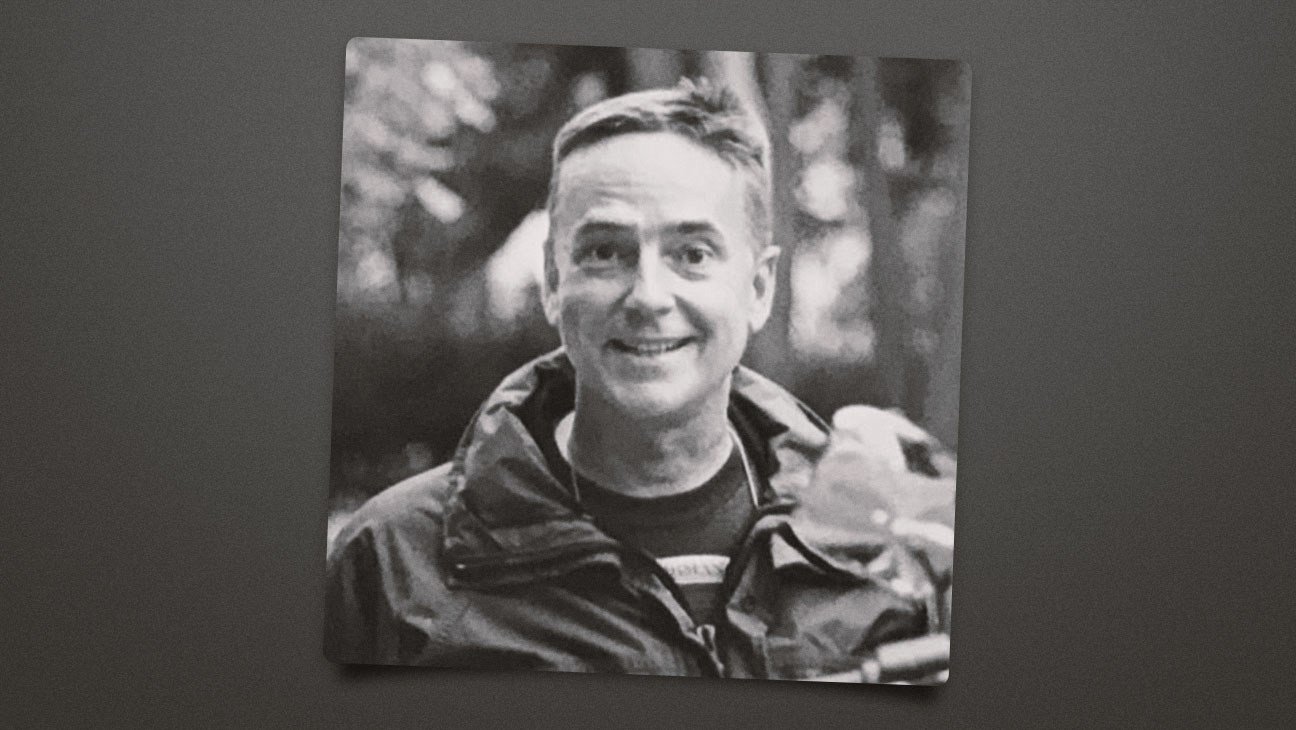
    Dean Tavoularis, the revered Oscar-winning production designer who collaborated with Francis Ford Coppola on 13 films, including all three Godfather movies, Apocalypse Now and One From the Heart, has died. He was 93.

    He died Wednesday night in Paris from natural causes, THR writer and film critic Jordan Mintzer reported. The two teamed on the 2022 book Conversations With Dean Tavoularis.

    Tavoularis received his Academy Award in the best art direction-set decoration category for The Godfather: Part II (1974) and also was nominated for his work on three other Coppola-directed films — Apocalypse Now (1979), Tucker: The Man and His Dream (1988) and The Godfather: Part III (1990) — plus William Friedkin‘s The Brink’s Job (1978).

    In his first movie as art director, Tavoularis came up with the bleak Dust Bowl look for Arthur Penn’s fabled Bonnie and Clyde (1967), the first of six best picture nominees on which he worked. Two of those — the first two Godfather films — took home the ultimate prize.

    Tavoularis also teamed with director Coppola on The Conversation (1974), The Outsiders (1983), Rumble Fish (1983), Peggy Sue Got Married (1986), Gardens of Stone (1987), New York Stories (1989) and Jack (1996).

    Talking about Coppola, “There are many partnerships in all different kinds of businesses that can always turn out badly, but sometimes it can turn out to be a collaboration. You see eye to eye; you feel supportive,” Tavoularis said in a 2018 interview. “When you’re doing a film, no matter how tough you are, no matter how strong you are, you need a feeling of support. And I always had that with Francis.”

    “Like all great collaborations,” Coppola said in 1997, “I began to depend on Dean. This grew into a natural and wordless collaboration, which provided so much comfort to me and added to the style of the films we worked on together.”

    He received the Lifetime Achievement Award from the Art Directors Guild in 2007.

    For The Godfather: Part II, Tavoularis transformed East Sixth Street between Avenues A and B in Lower Manhattan into Little Italy in 1918, complete with a dirt road and quaint, old-fashioned storefronts.

    There was nothing quaint about the making of Apocalypse Now, for which Tavoularis created a nightmarish jungle kingdom with a decaying temple — inspired by the ancient Angkor Wat in Cambodia — as its centerpiece. His scheduled 14-week stay in the Philippines wound up lasting two years. (In all, the movie took four years to finish.)

    “You never had the feeling at the end of the day that it is one day less and you were one day closer to completion,” he told the Los Angeles Times in 2012.

    And for the nostalgic (and pricey) love story One From the Heart (1981), who needed to trek to Las Vegas when you could have Tavoularis construct a multimillion-dollar, high-tech version of Sin City at Coppola’s American Zoetrope in San Francisco?

    Covering nine soundstages, his set included replicas of casinos and Fremont Street with loads of neon lights and a paved intersection, a residential neighborhood, a desert motel and a faux runway at McCarran International Airport.

    “I’ve bought a movie studio, which is like getting a theater. What the hell am I going to Las Vegas for?” Coppola told Rolling Stone in 1982. “Let’s build it inside the studio and totally control it and have the sets be on one stage, as on Saturday Night Live, and have the actors literally perform it like a play — ‘Ready, begin!’ — and do the whole movie as a performance and then go back and put the cameras in different places with the transitions, music, everything. There’d be nothin’ like it!”

    He continued, “Dean, in his mind, couldn’t get with the idea of creating the illusions of the movie with matte shots and trickery on that level. He wanted to build the fantasy — that’s what cost the extra 10 or so million dollars.”

    ‘One From the Heart’

    Columbia Pictures/courtesy Everett Collection

    Constantine Tavoularis was born on May 18, 1932, in Lowell, Massachusetts. When he was a kid, the family moved to Los Angeles, where his dad was in the coffee business.

    “We are Greek Americans, and one of [his father’s] clients was Fox studio, which was owned by [Greece native] Spyros Skouras,” Tavoularis said. “In the summer sometimes I would go with my dad and spend a day going around on his deliveries. We would drive back to the commissary, and you saw stage pieces and ladies dressed in their period gowns. It was a mysterious, magical paradise.”

    He studied architecture and painting at Otis College of Art and Design and joined Disney as an in-betweener in its animation department, where one of the first films he worked on was Lady and the Tramp (1955).

    He served under art director Robert Clatworthy on the live action Disney films Pollyanna (1960) and The Parent Trap (1961), then was Clatworthy’s assistant at Warner Bros. on Robert Mulligan’s Inside Daisy Clover (1965), set in Santa Monica in 1936.

    Despite Tavoularis’ lack of experience, Penn gave him a great opportunity on Bonnie and Clyde, and he delivered.

    “We made Bonnie and Clyde on a minuscule budget. It was barely more than a couple of million dollars,” Penn said. “But Dean Tavoularis and Theadora Van Runkle, who designed the costumes, created a whole era.”

    After working on Michelangelo Antonioni’s Death Valley-set Zabriskie Point (1970), he reteamed with Penn on Little Big Man (1970), a Western filmed in Montana and Calgary.

    Tavoularis first met Coppola while he was an assistant art director on the Marlon Brando-starring Candy (1968).

    He said that Paramount execs pushed for the director to make The Godfather (1972) in St. Louis. “Why St. Louis? I went over there and looked around; it was ridiculous. It wouldn’t have made the picture better; they only wanted to escape the New York unions,” he said. “Everything that Paramount wanted would have made this movie a flop. Everything that Francis fought against and fought for made The Godfather a screen classic.”

    ‘Apocalypse Now’

    United Artists/ Courtesy: Everett Collection

    For Apocalypse Now, Tavoularis went in search for helicopters and a river.

    “We went to the Pentagon, this huge mythical Pentagon building, but the Department of Army read the script and they said, ‘No.’ No helicopters from the United States,” he recalled. “So we started looking for helicopters elsewhere — and we needed a river. … I went to Thailand, Borneo, Jakarta, Malaysia — it was educational, and I still remember the weirdness of these trips. I ended up in the Philippines, and like a lot of war films finally did, the government co-operated and gave us helicopters, and they had the rivers. So we shot the film in the Philippines.”

    He once described the shoot as “living in the house of death that I was making.”

    Tavoularis’ other credits included Farewell, My Lovely (1975), Caleb Deschanel’s The Escape Artist (1982), Wim Wenders’ Hammett (1982), Shelf Life (1993), Philip Kaufman’s Rising Sun (1993), Warren Beatty’s Bulworth (1998), Nancy Meyers’ The Parent Trap (1998), Roman Polanski’s The Ninth Gate (1999) and Roman Coppola’s CQ (2001).

    After a decade away to paint, he returned to work for Polanski again on Carnage (2011), his final feature.

    In The Offer, Paramount+’s 2022 limited series about the making of The Godfather, Tavoularis was portrayed by Eric Balfour.

    Survivors include his second wife, French actress Aurore Clément, whom he met on the set of Apocalypse Now and then married in 1986 at Coppola’s home, and his daughters, Alison and Gina.

    (His wife’s scenes in the mesmerizing French plantation sequence of Apocalypse Now were cut from the original release but restored for the expanded redux version.)

    In an introduction to a 2007 exhibit that showcased Tavoularis’ career as a film designer and painter, writer Jean-Paul Scarpitta said the designer “attained a higher reality, that of poetry.”

    “In his art, he doesn’t dwell on magic, visual deception, optical illusion or unreality … His penetrating eyes allow him to watch and feel things deeply, which leads him to capture what others are not privy to see: the gimmicks, the artifices, the tricks, the element of life upon which the veil of illusion is cast,” Scarpitta wrote. “In his mind, there is a clear parallel between painting and cinema, in that he considers one and the other as different yet compatible means to create an illusory world that only exists in a dimension of its own.”

  • Mecas 2026 Returns to Las Palmas With 14 Projects and a More Targeted Selection

    Mecas 2026 Returns to Las Palmas With 14 Projects and a More Targeted Selection

    Mecas returns to Las Palmas this year with a lineup that reinforces its preference for auteur-driven projects moving across fiction, nonfiction and hybrid terrain.

    Held at the Las Palmas de Gran Canaria International Film Festival, the ninth edition brings together 14 titles from Europe, Africa and Latin America, split between eight projects in Cine Casi Hecho and six in Terrero Lab. MECAS stands for Mercado del Cine Casi Hecho — literally, a market for almost-finished films.

    A New Selection Logic

    The main change this year is in how Mecas selected its projects. Rather than running through a standard open call, the platform invited directors and producers who had taken part over the previous five editions to submit new work and recommend other projects they felt belonged there. According to the organizers, that approach yielded more than 70 submissions for Cine Casi Hecho.

    “It was not exactly a direct-invitation model,” says Lorena Morín, director of Mecas. The invitation, she explains, went to filmmakers who already knew the platform and, in some cases, had become part of what she calls the “Mecas family.”

    “We want to leave behind formulas that felt fresh in their moment but are now being repeated in many work-in-progress spaces,” says Morín. “We wanted to dare to launch ideas that may be less orthodox for a film market, but that excites us and reinforces the energy we want this event to transmit.”

    What emerges is a platform less interested in scale than in sharpening its own profile.

    Mecas continues to define itself as a space for films “without commercial vocation,” whose structure includes a €8,000 ($9,359) award for almost-finished projects and a €5,000 ($5,850) prize for films in development and the ISLA MECAS distinction for Canary Islands-linked work.

    “We are a ‘non-market market,’” says Morín.

    Projects Across Borders

    This year’s Cine Casi Hecho lineup moves between hybrid forms, personal stories and more overtly political propositions, from “Las Antigüedades,” “To the Future” and “La Belleza” to titles like “La Cuestión Criminal” and “Karl Marx, Luanda.”

    The official selection also underlines a strong analogue thread. Several projects are shot wholly or partly on 16mm, including “Las Antigüedades,” “La Belleza,” “Point and Shoot” and “Leandro Flores.” Three titles arrive as first features: “Point and Shoot,” “Karl Marx, Luanda” and “Leandro Flores.”

    “Mecas is looking for a cinema that escapes labels and industry pressures,” Morín says.

    She adds that the team became increasingly aware that growth can reduce the room to experiment. That led, in her words, to a decision to “shake ourselves up” and move away from what she sees as standard market behavior.

    The reset also shapes the balance of filmmakers in the 2026 lineup. Mecas includes directors with established international trajectories, notably Paz Fábrega and Nele Wohlatz, while also making room for newer voices and debut features. Fábrega’s “Agua fría de mar” won a Tiger Award at Rotterdam, while Wohlatz broke through with “The Future Perfect,” which won Locarno’s prize for best first feature.

    “The auteurs with trajectories who bring projects to us make a lot of sense in Mecas,” says Morín. “They are always looking for new ways to represent themselves, from honesty and without artifice.”

    At the same time, she says the team was not trying to impose a preset ratio between established names and newer ones. “We let ourselves be guided by what moved us most from within,” says Morín. “The selection turned out this way very organically.”

    That same internal logic appears in how she describes the projects themselves. “The projects reflect what Mecas embraces,” says Morín. “A cinema committed to the radicality of the gesture.” She points to films that challenge established forms and singles out “La Cuestión Criminal” as a project that, from fiction, proposes an alternative reality to what might otherwise have been approached through documentary.

    Latin America has a particularly strong presence in that frame. Argentina, Colombia, Costa Rica, Uruguay and Brazil are all represented in this year’s edition, and Morín argues that the region’s cinema continues to search for new forms of political engagement despite difficult production conditions. It is visible across both the almost-finished selection and Terrero Lab. For example, “Omágua Kambeba” arrives after winning two awards at Brasil CineMundi in 2025.

    On the local side, Terrero Lab remains Mecas’ clearest link to the Canary Islands production base. Conceived as an acceleration space for author-led projects tied to the islands, it again combines local work with invited projects arriving through Galicia’s Terra Lab and CineMundi. This year’s identified titles also include “La Mala Gent” and “Rua Barcelona.”

    Across the market itself, the April 29 Encuentro de Coproducción Isla Mecas is designed to connect Canary Islands producers and service companies with international firms, while the wider program will host meetings with distributors, sales agents, producers and festival programmers linked to TIFF, Cinéma du Réel, New York Film Festival, Rotterdam, L’Alternativa, Göteborg and Festival dei Popoli.

    What follows is a closer look at the projects taking part in MECAS 2026.

    Cine Casi Hecho

    “The Spoon” (“Der Löffel,” Nele Wohlatz, Germany)
    A young Taiwanese woman arrives at an alternative agricultural project in rural northern Germany and discovers a swastika engraved on her spoon. From there, the film unfolds through a series of episodes shaped by displacement, awkward encounters and the frictions of contemporary Germany. Wohlatz previously broke out with “The Future Perfect,” which won Locarno’s prize for best first feature.

    “Karl Marx, Luanda” (Kiluanji Kia Henda, Angola)
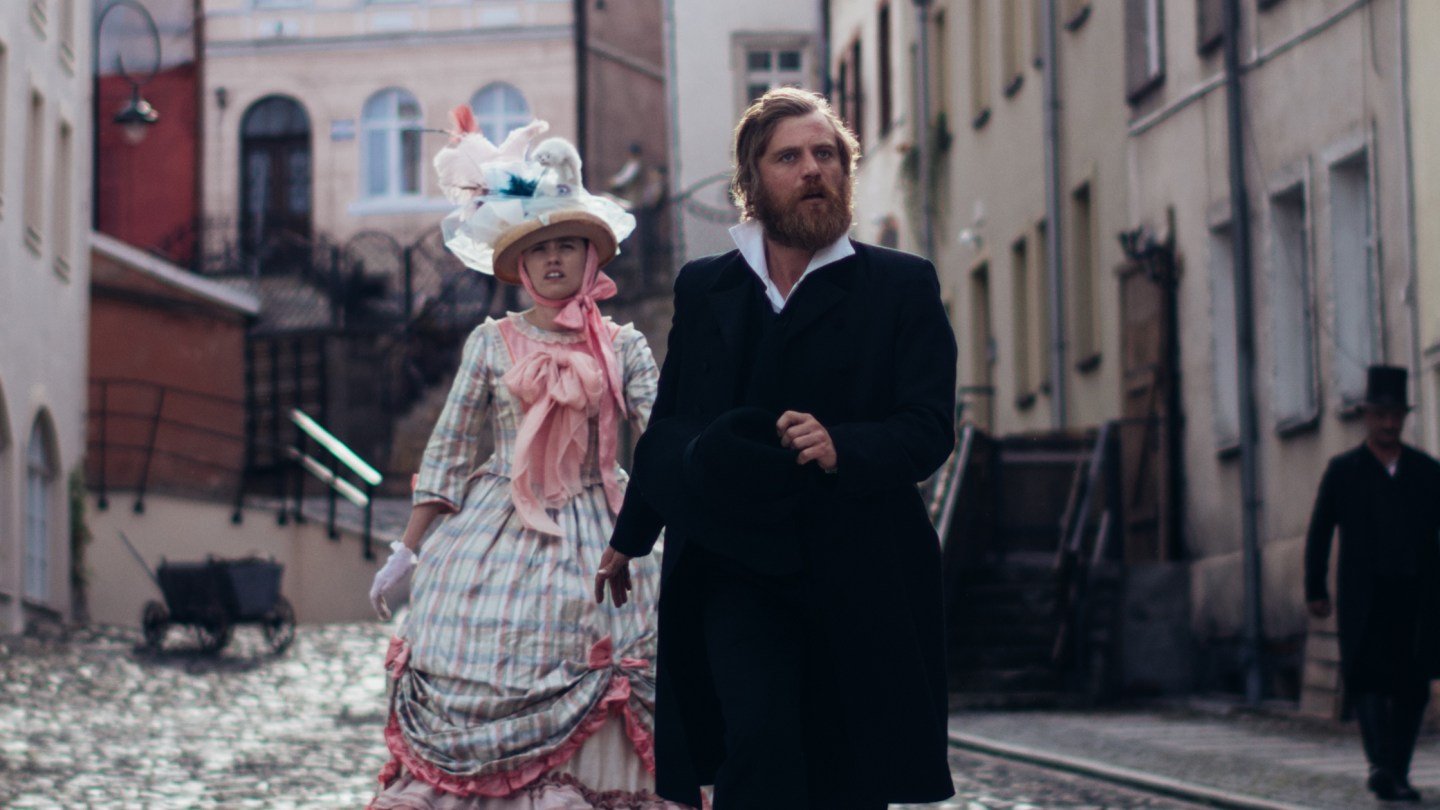
    In his first feature, Kiluanji Kia Henda imagines the return of Marxism to Angola through public debate, urban interventions and personal stories. The project brings together satire and documentary to move across memory, ideology and political contradiction. Kia Henda is a Luanda-based artist whose work spans photography, video and performance.

    “La Belleza” (Marina Lameiro, Spain)
    Blurring documentary and fiction, the film follows five figures bound by precariousness, desire and shared vulnerability. Through conversations, everyday gestures and speculative fabulation, it looks for forms of community and tenderness. Lameiro previously directed “Young & Beautiful.”

    “La Cuestión Criminal” (Matías Ítalo Scarvaci, Argentina-Chile)
    An actor, Marcelo Subiotto, and a group of citizens are secretly brought together to form a parallel jury deliberating alongside the official jury in a real criminal case. As the two processes move toward different verdicts, the film turns judgment itself into the center of the story. Scarvaci’s project “Hijas” won the Cine Casi Hecho prize in Las Palmas in 2024.

    “Las Antigüedades” (Manque La Banca, Argentina)
    Set between La Plata and Berlin, the film begins with the sale of a family home after the death of a grandmother and opens into a search for the director’s missing trans sister. Family memory, migration and absence drive the project’s movement between places and generations. Produced by Argentina’s Pionera Cine and Un Puma, whose credits include “Esquí” and “El auge del humano 3.”

    “Leandro Flores” (Mateo Kesselman, Spain-Argentina)
    This first feature explores death and vulnerability through the memories of a close-knit group of teenagers trying to absorb the loss of a charismatic friend. Rather than centering a single protagonist, the film builds from shared grief and collective remembrance. It previously passed through Gijón’s lab Semilleru and Galicia’s Ventura development program.

    “Point and Shoot” (Antonia Hollman, Colombia)
    Hollman’s first feature starts from a stark premise: “This is a film about the past. Everything has to die.” The project centers on memory, disappearance and ending.

    “To the Future” (“Al futuro,” Paz Fábrega, Costa Rica-Spain-Uruguay)
    Caught between childcare, financial pressure and creative impulse, a filmmaker turns the camera toward her own life and that of her children. The film moves across documentary and fiction as it asks how creativity survives motherhood and whether it can be passed on. Fábrega, backed here by Temporal Films, La Mayor and Edna Cinema, previously won a Tiger Award at Rotterdam for “Agua fría de mar.”

    Terrero Lab

    “La Mala Gent” (Amat Vallmajor del Pozo, Spain)
    Set in a Barcelona shaped by housing crisis, the film follows a delivery worker on the verge of eviction who must find her missing flatmate-landlord after she is abducted by a criminal group tied to the city’s property market. The premise brings together urban precariousness, conspiracy and genre mechanics. It is Vallmajor del Pozo’s second feature, after “Misión a Marte.”

    “Omágua Kambeba” (Adanilo, Brazil)
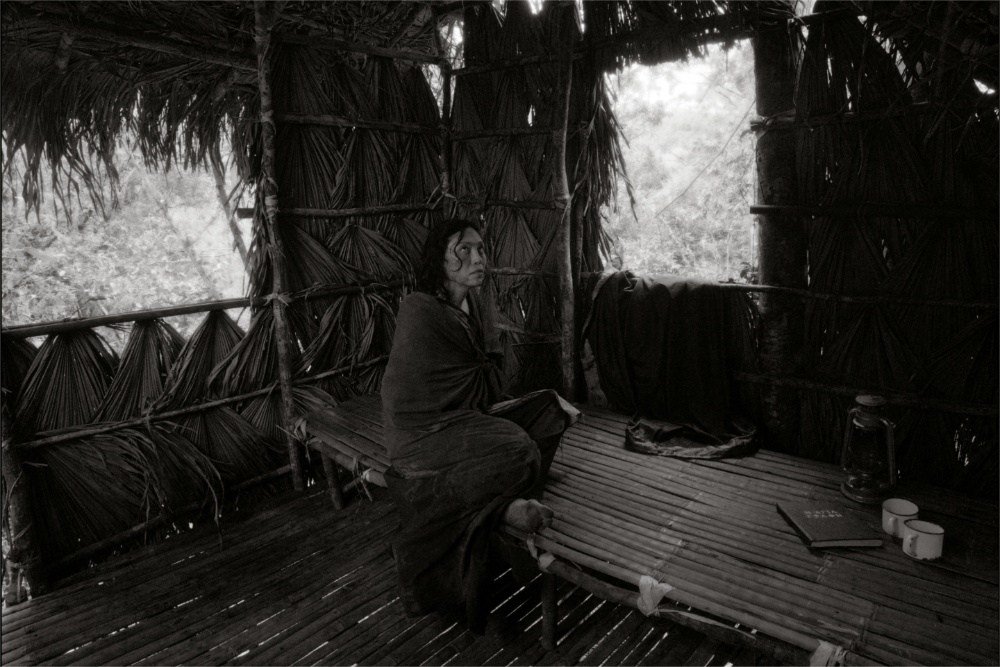
    Spanning 1542, 1988 and 2023, the film follows three generations of the Kambeba people resisting the long consequences of European invasion and dispossession. Its contemporary thread centers on Inha Kambeba as she represents Brazil in the World Archery Games. The project won two awards at Brazil CineMundi in 2025, including the Mecas prize.

    “Rua Barcelona” (Ángela Andrada, Spain)
    Set in A Coruña during the 2012 economic crisis, the film follows a 52-year-old woman whose routine is disrupted by the return of her niece from Australia after a family death. Grief opens the way to a reckoning with place, stasis and deferred desire. Andrada won the 2023 SGAE Julio Alejandro Screenwriting Prize for “Adeus, Berta,” co-written with Fernando Tato.

  • Diego Luna’s ‘Ashes’ Boarded by Luxbox Ahead of Premiere at Cannes in Special Screenings Section (EXCLUSIVE)

    Diego Luna’s ‘Ashes’ Boarded by Luxbox Ahead of Premiere at Cannes in Special Screenings Section (EXCLUSIVE)

    Luxbox has come on board to handle world sales on “Ashes” (Ceniza en la boca), directed by Diego Luna, which has its world premiere in the Special Screenings section at the Cannes Film Festival.

    The drama centers on Lucila. She leaves Mexico with her younger brother to reunite with their mother in Madrid, who left a few years earlier chasing a better future. When they finally arrive, the bitter, suffocating reality that awaits them proves far harsher than Lucila had imagined. Still, she is determined to make the most of this fragile new life.

    The film stars Anna Diaz and Adriana Paz, who shared the Cannes best actress award with Zoe Saldaña, Selena Gomez and Karla Sofía Gascón for “Emilia Pérez.” The screenplay is by Abia Castillo, Diego Rabasa and Luna, adapted from Brenda Navarro’s novel.

    Luna said, “This film is the result of a creative journey of independence and great freedom. Having Luxbox on this production team is a dream, we couldn’t be in better hands. Joining their catalog is a privilege for all of us working on ‘Ashes.’”

    Fiorella Moretti, CEO of Luxbox, said, “We’re thrilled to be joining Diego Luna and his team on this deeply moving film. What struck us most is the luminous presence of Lucila, a character who carries both fragility and strength, offering a rare and intimate perspective on migration within Europe. Adapted from Brenda Navarro’s remarkable novel, the film captures something profoundly human and often unseen, and we’re confident it will travel widely and connect with audiences around the world.”

    The DOP is Damian García, and the editor is Sofi Escudé. The art directors are Hania Robledo Richards and Asier Musitu, and costume design is by Gabriela Fernández.

    The production companies are La Corriente del Golfo, Animal de Luz Films, Inicia Films and Perro Azul. The producers are Inna Payan, Valérie Delpierre, Luis Salinas, Diego Rabasa and Luna. ICAA provided support.

  • Cryptocurrency Fear and Greed Index Enters ‘Greed’ Zone! What Does It Mean? Here Are the Details

    Cryptocurrency Fear and Greed Index Enters ‘Greed’ Zone! What Does It Mean? Here Are the Details

    The Fear and Greed Index, a key indicator measuring investor sentiment in the cryptocurrency market, continues its upward trend. According to data published by CoinMarketCap, the index rose to 61 in the latest measurement, a 4-point increase compared to the previous day. This level indicates that the markets have entered a “greed” zone.

    The index in question takes values between 0 and 100. A level of 0 signifies “extreme fear,” while a level of 100 indicates “extreme optimism.” The current value of 61 points shows that investors’ appetite for risk has increased and positive expectations in the markets are gaining strength. Analysts note that such increases generally parallel rising demand and price expectations.

    The index is calculated using multiple data sets. These include indicators such as the price movements of the top 10 crypto assets by market capitalization, overall market volatility, put/call ratios in derivative markets, and stablecoin supply ratio (SSR). CoinMarketCap’s own search data is also included to measure investor interest.

    Experts emphasize that while a rise in the index could be a positive signal for the market in the short term, excessive optimism can sometimes increase the risk of corrections. Therefore, investors should pay attention not only to sentiment indicators but also to other factors such as macroeconomic developments and technical analysis.

    Looking at the overall picture, it appears that optimism is regaining strength in the crypto market and investor confidence is gradually recovering.

    *This is not investment advice.

  • More than 90% of Web3 games failed after $15 billion boom as gamers never showed up: Caladan

    More than 90% of Web3 games failed after $15 billion boom as gamers never showed up: Caladan

    Web3 gaming burned through up to $15 billion chasing a token-driven future that gamers never bought into.

    Data from Caladan, a market-making and trading firm, shows roughly 93% of so-called GameFi projects are now effectively dead, with token values down about 95% from their 2022 peaks and funding to studios collapsing 93% by 2025.

    Investors and studios poured billions into tokens and non-fungible tokens (NFTs) before building blockchain-based games containing tradable properties. Then capital shifted into AI, asset tokenization and infrastructure, and more than 300 games shut down, turning Web3 gaming into a cautionary tale about chasing speculation over product-market fit.

    “Capital was destroyed at every layer simultaneously,” the report states, pointing to venture capital, retail $NFT buyers, gaming guilds and Telegram’s 300-million-user tap-to-earn wave as parallel casualties. Hamster Kombat alone lost 96% of its users within six months of launch. YGG, the flagship gaming-guild token, trades 99.6% below its November 2021 peak.

    Individual post-mortems are brutal. Pixelmon raised $70 million in a 2022 $NFT mint and, four years on, still has no public game. Ember Sword burned through $18 million over seven years of development before shutting down last May with no refunds. Gala Games is embroiled in a lawsuit alleging its co-founder diverted $130 million in tokens. Square Enix quietly wound down its Symbiogenesis experiment last July.

    Structural mismatch

    The failure wasn’t just a bad cycle or weak execution. The data indicate it was a structural mismatch between a model built around financial incentives and an audience that consistently signaled it wanted entertainment instead.

    At the heart of the boom was GameFi, the play-to-earn model that turned gameplay into a financial feedback loop.

    Players bought tokens or NFTs, earned rewards in those same assets, and cashed in as long as newcomers kept piling in. Once the inflows slowed, the math broke down. Token prices slumped, rewards thinned out, and users walked away — dragging entire in-game economies down with them.

    Axie Infinity, the sector’s one-time flagship, watched daily active users crater from roughly 2.7 million at the peak to around 5,500 today, according to DappRadar data.

    The demand side never caught up with the flood of capital. Even at the height of the mania, just 12% of gamers had tried a crypto game, according to a Coda Labs survey, cited by Caladan.

    Capital allocation made the problem worse. Studios raised tens or hundreds of millions of dollars before shipping viable products, removing the pressure to build games that could retain players.

    The most telling data point may be where the money went instead. Gaming commanded 62.5% of all Web3 venture investment in 2022; by 2025, its share had collapsed to single digits as AI, real-world-asset tokenization and layer-2 infrastructure absorbed the displaced capital.

    Even Animoca Brands, the sector’s most prolific backer, has cut gaming to roughly 25% of its portfolio and is pivoting to stablecoins, RWAs and AI.

    At the same time, development timelines stretched three to five years, while tokens traded in real time and demanded constant momentum. By the time many projects were ready to launch, their associated tokens had already collapsed.

    The result is a sector that expanded rapidly on speculative demand and contracted just as quickly when that demand faded. More than 300 blockchain games have shut down, according to DappRadar, and remaining investment has shifted away from titles toward infrastructure.

    What was once pitched as the future of gaming now looks more like a cautionary example of what happens when financial engineering runs ahead of product market fit.

  • Peacock May Turn Profit, Finally, Next Quarter

    Peacock May Turn Profit, Finally, Next Quarter

    NBCUniversal‘s streaming platform Peacock may finally turn a profit next quarter, Comcast co-CEO Mike Cavanugh signaled on Thursday. The June quarter would mark Peacock’s first-ever profit; the streamer was soft-launched in spring 2020 and hard-launched in summer 2020. Due to the COVID-19 pandemic, Peacock’s rollout, timed to the Summer Olympics, was stunted. Those 2020 summer games finally happened the following year.

    Comcast CFO Jason Armstrong told analysts on an earnings call that the streamer has seen a “meaningful inflection point with Peacock expected to approach profitability” in the near-term.

    Peacock lost $432 million in the first quarter of 2026, which measures January through March. The platform reached 46 million subscribers by March 31, 2026. Turning a profit out of what is the current quarter would be quite the swing.

    There is reason for the optimism. Peacock’s first quarter was marred by the recognition of half the NBA season costs consolidated into a three-month period (because half of Peacock’s games were scheduled from January 1-March 31). The second quarter will carry about half the hoops cost of the first — about 25 percent of Peacock’s NBA games came in Q4 2025 and a similar amount tip off in Q2 2026.

    Overall Q1 revenue at the streaming platform came to $2.0 billion, up from $1.2 billion in the year-ago period and $1.6 billion in the fourth quarter of 2025, driven by increased paid subscribers and higher average rates. Peacock had a hell of a February, dubbed “Legendary February” by NBCUniversal, with the Winter Olympics, Super Bowl LX and the NBA’s All-Star Weekend all consolidated into a few-week period. At the end of 2025, Peacock had 44 million subs.

    The first quarter of this year marked NBCU’s separation from Versant. At its most basic, NBCUniversal (under Comcast) keeps NBC, Bravo, Peacock and the studios. Versant got the cable leftovers and the digital assets.

  • John Carney on Landing “Inscrutable” Nick Jonas  for His Latest Music-Centric Movie ‘Power Ballad’

    John Carney on Landing “Inscrutable” Nick Jonas for His Latest Music-Centric Movie ‘Power Ballad’

    “I’m always on the lookout for interesting characters that suggest a world,” says John Carney, the director behind music-driven films like Once and Sing Street.

    Having dedicated himself to being a cinematic chronicler of music and the people who make it, Carney has carved out a unique in-between space as a storyteller. A self-professed “failed band guy,” he picked up a camera and focused it on his onetime creative passion. Carney is a musician’s filmmaker; a bard for the bards.

    After breaking out with indie Once, a movie about an Irish busker and a Czech immigrant pianist recording music together that landed an Oscar for best original song, he made movies about the second chances made possible by music (Begin Again), the triumph and torment of first bands (Sing Street) and the therapeutic prospects of a guitar (Flora and Son). Now, he is heading back to theaters with Power Ballad, out in a limited release on May 29 before expanding nationwide on June 5.

    The character that inspired Power Ballad was a 40-something dad in a Dublin suburb that the director happened to spot one day. He was wearing leather boots, carrying a guitar and semi-successfully loading his daughter into the backseat of the family car. Says Carney, “He had the walk of a rock star, but like a rock star for whom it hadn’t happened.”

    “He was just this guy who just kind of does what every writer is looking for, which is just throw a ton of questions at you that you need to answer,” Carney tells The Hollywood Reporter. “When did he say, ‘I’m okay with not being Bono?’”

    With this in mind, Carney, along with his co-writer Peter McDonald, created Rick, a onetime touring rocker who, on a stop in Dublin, met the love of his life, settling down with a wife and daughter and a new gig as the frontman to a modestly successful wedding band. Overall, Rick is content, if not fully satisfied with his life’s trajectory.

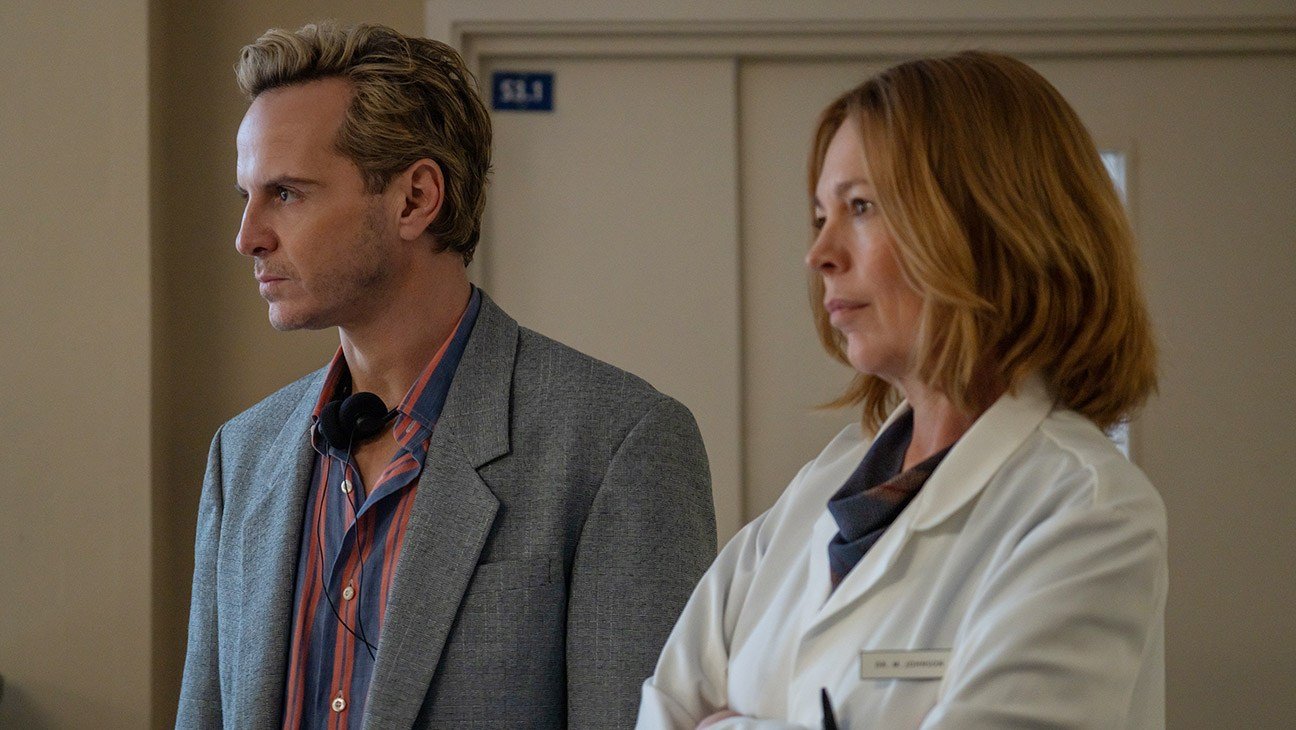
    Carney wanted to put Rick in conflict with a person who had the outward trappings of a life that Rick dreamed of for himself. Enter Danny, a massively popular former boy band-er having his own existential crisis, trying to figure out his next creative step as a solo artist. They come together during an alcohol-fueled jam session, after which Danny turns one of Rick’s songs into a chart topping hit, setting Rick on a quest to track down Danny and claim the credit he feels is deserved.

    The storytelling potential of Rick and Danny’s juxtaposing circumstances appealed to Carney. He says, “I thought it was really interesting to meet a younger version of yourself and to give that person advice and to tell them what you had learned. But, the funny thing is, the person that you’re talking to is doing better than you.”

    Early on, Paul Rudd was attached to play Rick. When looking for his Danny, Carney was aiming for a certain level of real-life musical bona fides. He explains, “Paul playing a singer in Ireland is already a slight push, but it’s one that the audience will allow. I can’t ask them to do it twice.”

    To Carney, it’s a hard to find an actor that can convincingly play a musician who has reached the most rarified spaces of musical success. “A film, which will remain nameless, came out and it had an actor playing a singer, and it was so bad. Clearly, this actor was acting out what it was like to be a boy-band guy. And he was a good actor! So, it wasn’t that,” the director says.

    Finding an actor who also happens to have spent a fair amount of time as an uber successul musician is a difficult task. But, with this ultra-specific remit, the ideal casting became clear.

    Nick Jonas has an inner working that’s going on all the time. He’s inscrutable,” says the director of the longtime singer-songwriter, whose acting credits include the Jumanji film franchise. “He brings a certain kind of mysterious, enigmatic reality and truth to the character that we really needed.”

    Even still, Carney was told it was a “bad idea” to cast Jonas, who came-of-age as one-third of the pop rock bank the Jonas Brothers. He explains, “A lot of people in Ireland did think that there’s something a little bit novelty about the Jonas Brothers. European audiences are a little bit more precious.” Others warned the director that Jonas’ presence could overshadow the film.

    By the time everyone was on set in Dublin, the filmmakers knew they had made the right casting choice. “Nick played this character really small. He didn’t come in going, ‘Hey, I’m the boy band guy!’ Then you realize that’s what those guys — those superstars, since they’ve been seven years old — have. It’s quiet,” Carney adds. “He wants to go and play golf and have a nice whiskey and talk about the part and go to bed early and call his daughter and his wife. That’s what being a massive boy band star is like, really.”

    Film critics at SXSW, where Power Ballad had its U.S. premiere this March, took note of Jonas’ performance. “You don’t have to be familiar with Jonas’ actual career as a pop star to be dazzled by Danny’s innate magnetism,” reads The Hollywood Reporter’s review.

    Watching Power Ballad, audience sympathies toggle back-and-forth between Rudd’s Rick and his quest for credit and Jonas’ Danny, with his desire for legitimacy. “Nobody is fully the person that they wanted to be in a way,” says the director, who pauses before adding, “Actually, except rock stars.”

    Check out Paul Rudd and Nick Jonas as Rick and Danny in the latest trailer for Power Ballad below.

  • Xiaomi’s New MiMo 2.5 Pro AI Can See, Hear, and Act—All in One Model

    Xiaomi’s New MiMo 2.5 Pro AI Can See, Hear, and Act—All in One Model

    In brief

    • Xiaomi unveiled MiMo-V2.5 and V2.5-Pro, combining text, image, audio, and video capabilities into a single multimodal AI model.
    • The Pro version rivals top frontier models in coding and agentic benchmarks, while significantly improving token efficiency and cost.
    • The new models mark Xiaomi’s rapid AI push, with open-source plans and aggressive iteration following strong adoption on platforms like OpenRouter.

    Xiaomi just launched a new AI model family. Again.

    A few weeks ago, the company dropped MiMo-V2-Pro—a trillion-parameter model that had been quietly circulating on OpenRouter under the alias “Hunter Alpha” before Xiaomi revealed its identity. It went from anonymous to top-tier overnight. We tested it, and it was impressive.

    Now Xiaomi is back with MiMo-V2.5 and MiMo-V2.5-Pro, a two-model family that adds something the previous generation never had in a single package: eyes, ears, and the ability to process video. Oh, and the company plans to open source the models in the near future.

    The V2-Pro was text-and-code only. Multimodal capability existed in its sibling model, MiMo-V2-Omni, but that was a separate product at lower benchmark scores. MiMo-V2.5 collapses all of that into one model—faster, more capable, and with native image, video, and audio understanding baked in from the start.

    That matters more than it might sound for regular users. For example, now you can upload a photo of your fridge and ask it to suggest dinner recipes. Drop in a video tutorial and get a step-by-step summary. Record a meeting and have it pull out action items. All in one place, without juggling separate tools and separate models with different pricing strategies.

    Xiaomi claims MiMo-V2.5-Pro represents “a major leap from MiMo-V2-Pro in general agentic capabilities, complex software engineering, and long-horizon tasks,” and says it now matches frontier models like Claude Opus 4.6 and GPT-5.4 across most coding and agent benchmarks. The numbers largely back that up—with some gaps still visible on harder reasoning tasks.

    The base and pro models serve different purposes. MiMo-V2.5-Pro is the heavy lifter. Xiaomi says it can “autonomously complete professional tasks involving 1,000+ tool calls, work that would take human experts days.” That’s for developers running complex, multi-step automated workflows. It runs at 60–80 tokens per second and costs $1.00 input / $3.00 output per million tokens.

    MiMo-V2.5 is the everyday version. Faster (100–150 tokens per second), cheaper ($0.40 input / $2.00 output), and supports all modalities—image, audio, and video that the Pro-only tier skips. Both models carry a 1M-token context window, meaning they can hold roughly 750,000 words in a single conversation.

    On SWE-bench Pro—a coding benchmark where models fix real bugs in actual startup codebases, scored as a pass rate out of 100—MiMo-V2.5-Pro resolves 57.2% of tasks. That’s near the top of the field; the average model manages around 25%. The story is similar on τ3-bench and ClawEval, where it lands within a few points of Claude Opus 4.6 and GPT-5.4. The gap opens up on Humanity’s Last Exam, a gauntlet of graduate-level problems across dozens of academic fields: MiMo scores 48.0% versus GPT-5.4’s 58.7—a 10-point deficit that’s hard to paper over..

    Where it genuinely stands out is token efficiency. Xiaomi says MiMo-V2.5-Pro uses 42% fewer tokens than Kimi K2.6 at equivalent benchmark scores, and MiMo-V2.5 uses nearly half the tokens of Muse Spark for similar results. For anyone running these at scale—developers processing thousands of requests daily—that difference is real money.

    On multimodal tasks, MiMo-V2.5 scores show results that put it on par with GPT/5.4 and Gemini 3.1 Pro, and are quite close to Opus 4.6 standards.

    Since December 2025, Xiaomi has completed three major model releases: First, it released its efficient MiMo-V2-Flash, then the V2-Pro/Omni/TTS trio in March, and now the V2.5 series today. The company committed at least $8.7 billion in AI investment over the next three years, announced by CEO Lei Jun the day after V2-Pro launched—and the release cadence suggests that the budget is already moving.

    Context also helps explain the speed. According to Digital Applied, as of early April, Xiaomi’s models accounted for roughly 21% of all traffic on OpenRouter—growing over 42% in the last 7 days. When your previous model becomes one of the most competitive models in the world’s largest AI routing platform, you have both the resources and the pressure to iterate fast.

    This was probably due to the boom of the agentic AI tool Hermes and its arrangement with Xiaomi, giving users free access to MiMo v2 Pro for a limited time. That timeframe is already closed, but the hype was enough to put Xiaomi in the game field.

    Those who want to use Hermes for free now can test the new Step 3.5 flash with the Nous API or use OpenRouter with free models but more limited usage.

    Token plan pricing also got a refresh. MiMo-V2.5 runs at a 1x credit rate; MiMo-V2.5-Pro at 2x. Xiaomi is no longer charging an extra multiplier for using the full 1 million-token context window, which makes long-document analysis noticeably cheaper. Existing users also get a full credit reset as a launch bonus.

    Xiaomi says the model is available in its AI Studio. We tried to access it there immediately after launch—no luck. It is, however, already live via the Xiaomi MiMo API, which is where most developers will actually use it.

    The company says it’s already training the next generation, with “deeper reasoning, tighter tool integration, and richer real-world grounding.” At the rate Xiaomi is moving, that announcement is probably closer than you’d expect.

    Daily Debrief Newsletter

    Start every day with the top news stories right now, plus original features, a podcast, videos and more.