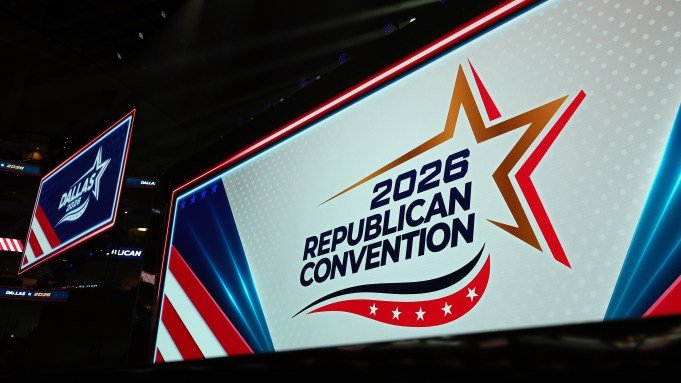
C-SPAN will provide gavel-to-gavel coverage of the 2026 Republican Convention starting on Wednesday in Dallas, while Fox News and NewsNation are planning special programming.
But most other news networks are taking a wait-and-see approach, planning coverage of the first-of-its-kind midterm gathering if news warrants.
While networks have reporters on the ground for the political event, some of the newsiest aspects of the event so far have been on GOP candidates in tight races who have opted to stay away amid the president’s sagging poll numbers.
Donald Trump will have a major presence at the event, and is scheduled to speak on both nights of the gathering. There is no debate over the political nature of his appearances — something that makes a difference in networks’ decisions on whether to carry speeches live. And as was the case in July, not all White House addresses get live carriage. When Trump gave an address on election security, ABC, NBC and CNN did not carry it live, amid concerns that he would veer into unfounded stolen election claims.
There’s also the football factor: The convention will go up against the start of the NFL season, with NBC airing the Patriots vs. the Seahawks on Wednesday evening and Netflix carrying the 49ers vs. the Rams on Thursday.
C-SPAN is billing itself as the only network to carry the convention in its entirety — from 3 p.m. ET to 11 p.m. ET — with uninterrupted coverage of speeches, but it will also feature reporters and political analysts before and after each day’s sessions. Greta Brawner, host and executive producer, will be in Washington, and host and on-site producer Kate Michel will be in Dallas.
As of now, in addition to C-SPAN, Fox News is planning extensive coverage, with The Story with Martha MacCallum, The Will Cain Show, Special Report with Bret Baier and The Ingraham Angle a mong those broadcasting live from the American Airlines Center. On both nights, Sean Hannity will host two hour versions of his show, from 9 p.m. ET to 11 p.m. ET, and FOX News @ Night with Trace Gallagher will go for 90 minutes on Thursday night starting at 11 p.m. ET. Fox Nation will offer live streams of the convention.
NewsNation will feature two-hour live coverage on Wednesday and Thursday nights, with Leland Vittert anchoring from 9 p.m. ET to 11 p.m. ET. Providing a counter to the GOP speakers will be James Talarico, the Democratic nominee for U.S. Senate in Texas, who will be interviewed by Vittert on Wednesday evening. Following the primetime coverage, Katie Pavlich will host a special edition of her show at 11 p.m. ET, live from inside the arena.
The midterm convention is breaking with a tradition of parties meeting once every four years for national gatherings, events that typically draw night-after-night coverage on national broadcast and cable networks even if the news value is questionable. They long have been slickly produced promotional weeks for presidential candidates, and even showcases for network personalities and promotion. This year, Democrats are not hosting their own midterm convention, so there will be no opportunity for a natural balance. In fact, as C-SPAN carries the GOP convention, on C-SPAN 2 it will be offering live and recorded events of Democratic candidates in key races in states like Maine, Georgia, North Carolina, Michigan, Ohio, Iowa and Texas.
Others on the roster of speakers include Vice President JD Vance, Treasury Secretary Scott Bessent, Attorney General Todd Blanche, Health and Human Services Secretary Robert Kennedy Jr., former Press Secretary Karoline Leavitt and Donald Trump Jr. Also scheduled as Mehmet Oz, administrator of the Centers for Medicare & Medicaid Services, and Scott Turner, secretary of Housing and Urban Development. House Speaker Mike Johnson will speak, but Senate Majority Leader John Thune is not on the roster. Ken Paxton, in a tight race with Talarico, is also on the lineup.
Blockchain Association CEO Summer Mersinger similarly said in a statement that Illinois would not be able to use any of the funds it is projected to raise during the litigation, so “the State loses very little by waiting. Everyone else loses a great deal by forging ahead.”
Much of Wednesday’s filing reiterates arguments that the crypto industry has already brought: That the Internet Tax Freedom Act and the U.S. Constitution both preempt Illinois’ state tax on digital asset transactions. It also argued that the state would be treating digital assets differently from other financial services.
“Illinois generally does not tax transactions or services involving financial assets, beyond taxing income and capital gains associated with those transactions or services, and sales in which financial assets (such as money) are used as a method of payment,” the filing said. “The State’s sales and use taxes do not otherwise reach activities involving intangible personal property, including most financial assets, and those laws expressly exempt money and precious metals.”
Mersinger also hinted that other states might try to copy Illinois if the state wins its case: “If this Act stands, Illinois will not be the last state to try it.”
Germany is preparing to end a tax break that lets private investors sell bitcoin BTC$79,395.64 and other cryptocurrencies without paying tax after holding them for more than a year.
A draft bill from the Federal Ministry of Finance, led by Vice Chancellor Lars Klingbeil, would make gains on crypto acquired after Dec. 31, 2026 taxable regardless of the holding period, according to a DTS report citing German newspaper Die Welt.
Crypto bought before that date would remain under the current rules. The proposal would also classify income from crypto lending and staking as capital income.
The change would bring bitcoin and ether ETH$2,501.38 under a tax system that treats gains more like returns from traditional investments. That’s Germany’s flat withholding tax regime, or Abgeltungsteuer, taxing gains 25% plus a 5.5% solidarity surcharge on the tax, an effective 26.375%, before any church tax.
NFTs, some stablecoins, security tokens and some tokens tied to real-world assets would remain outside the new regime, according to the report.
Short-term traders could benefit from the tax, as they’re currently taxed at an investor’s personal income rate, which has a 45% ceiling for the highest earners.
Why is toilet paper suddenly part of a trade fight, and what’s getting caught in the crossfire of this tit-for-tat US-Canada tariff war? Al Jazeera’s Yasmeen ElTahan explains.
There’s a wonderful montage of shots and scenes from across Bernardo Bertolucci’s storied 50-year directing career that dances through time, through eyes, faces, places and shifting themes, near the end of Luca Guadagnino’s unapologetically digressive labor-of-love documentary about the legendary Italian filmmaker, Joie de Vivre. That sequence, bursting with vitality, lushly textured visuals and provocative images, feels like a reward for staying the course with this sprawling two-part director’s cut, which runs an epic seven hours and 25 minutes. At its best, the film shows a similar spirit of curiosity and passion, but there’s a great 4-hour doc inside here trying to claw its way out.
What kind of life this extended conversation might have after its Venice premiere is an intriguing question, though the most obvious guess would be a streaming sale, broken into four or more parts. Museum film departments seem also likely to bite.
Joie de Vivre
The Bottom Line
Equal parts exhilarating and infuriating.
Venue: Venice Film Festival (Venice Open — Out of Competition) Director: Luca Guadagnino Writers: Luca Guadagnino, Carlo Antonelli
7 hours 25 minutes
No one will be able to drink in all this abundance of Lucalucci and come away unconvinced about Guadagnino’s profound esteem and affection for the man and his movies, even if he defies expectations by declining to make it a comprehensive survey. What, you would have needed 11 hours for that?
The choices about what to omit and what to include are sometimes genuinely puzzling. Guadagnino says at one point that part of his goal was to turn Gen Z audiences onto a director whose work seems somewhat to have fallen out of favor. But arguably the Bertolucci film that might have spoken the loudest to that generation, 2003’s The Dreamers — a Jules et Jim-like romantic triangle set against the 1968 Paris student riots — is dispensed with in a brief clip or two, sans commentary.
The same might be said of Stealing Beauty, which starred Liv Tyler as a 19-year-old American spending the summer at a Tuscan villa with the culturati friends of her poet mother, who has recently committed suicide. The 1996 film was widely eviscerated when it premiered in Cannes, but seems like a contender for rediscovery by young audiences, if only so they can blow a gasket over its pervy male gaze.
Guadagnino confesses his dislike of the film, which doesn’t even merit a clip, unlike Little Buddha, which probably has fewer defenders. But we get to hear at considerable length about Tragedy of a Ridiculous Man, a dirge of a kidnapping drama from 1981 that was barely even part of the cultural conversation when first released.
That’s part of a maddeningly protracted section near the start of Part Two in which Guadagnino resuscitates four films “lost to time.” Never mind that there could be good reason. The other three are 1998’s Besieged, discussed only in passing; Me and You, of interest primarily in that it was Bertolucci’s 2012 swan-song feature, a lightweight entry that precisely no one wants to revisit; and 1979’s La Luna, an Oedipal drama about a teenage boy and his opera diva mother, played by a fearless Jill Clayburgh. I could never get past her lip-synching to Il Trovatore, but of the four films, Luna might be the most deserving of reconsideration, having shot up in the estimation of many critics since its cool initial reception.
The impression that surfaces repeatedly is that Guadagnino’s sensibilities may ultimately be ill-suited for documentary, which unless it’s an impressionistic mood piece, requires ruthless pruning and hard choices that the director seems unwilling to make. That’s evident even from the eye-roller of a generic title, a cliché that reeks of preciousness. But it has nothing on the doozy of a subtitle: Notes, Thoughts, Words, Reflections, Faces, Visions, Around Bernardo Bertolucci and the Cinephilia of the 20th Century That Is No More. Girl, are you serious?!
The reluctance to make choices pertains also to some of the interviewees, though the majority deliver useful contributions — notably directors Martin Scorsese, David Cronenberg and the very droll James Gray.
But then there’s Francesca Manieri, Guadagnino’s collaborator on the terrific miniseries about teens on a U.S. military base in Northern Italy, We Are Who We Are. In Joie de Vivre, Manieri spends what feels like hours traipsing across a wintry hillside spouting gender studies academic-speak; every time the movie returns to her, which is a lot, my inner Thelma Schoonmaker was shrieking “CUT!” Removing that and, say, the 50 percent of Mark Cousins’ screen time that veers into windbaggery would possibly trim the film by an hour or more.
If it sounds like I’m being gratuitously mean here, my bad, but that’s because there’s so much that will be compelling, even thrilling at times, for Bertolucci admirers and it risks being smothered.
The doc skips in disappointing haste over head-turning early films The Grim Reaper and Before the Revolution, and the potent 1970 telemovie The Spider’s Stratagem. All three are superb introductions to Bertolucci in his establishing years as an important new voice — aptly described by Cousins as a “pathfinder.”
But who’s going to complain when that lets us arrive faster at his magnificent 1970 political drama, The Conformist, hands-down the most sensual film ever made about fascism? One bone to pick, though: a queer director who ignores the sizzling tango scene with Dominique Sanda and Stefania Sandrelli? Calling the pink police.
Guadagnino deserves credit for refusing to tiptoe around the controversy that has made Last Tango in Paris such a hot potato. Instead, in an extensive section on the 1972 cultural and commercial sensation, he shows the entirety of the infamous butter scene, a simulated rape that later became a major #MeToo talking point.
The doc is similarly unflinching in showing the horrific scene from 1900 in which Donald Sutherland’s sadistic fascist murders a young boy in a shockingly callous way, while Laura Betti as his equal in cruelty dissolves into blood-curdling cackles. Those scenes, as uncomfortable as they now are to rewatch, are far more likely to steer Bertolucci virgins toward his audacious filmography.
There’s a solid section, too, on The Last Emperor, the sumptuous historical epic that unfolds in Beijing’s Forbidden City, which won 9 Oscars including best picture and director in 1988. But I kept hoping in vain that Joan Chen might show up to talk about her experience on what became her international breakthrough, or the now retired John Lone, who might have had something to say about what a rare window of major Hollywood exposure the film represented for actors of East Asian descent at the time.
Actors are mostly absent, though Margot Robbie stops by to share her arthouse bona fides with recollections of the first time she saw 1900, and sure, why not? More essential input, however, comes from Debra Winger, gorgeous in her silver mane and sharp as a tack on The Sheltering Sky, the divisive Paul Bowles adaptation in which she starred opposite John Malkovich, about “the existential malaise of living.”
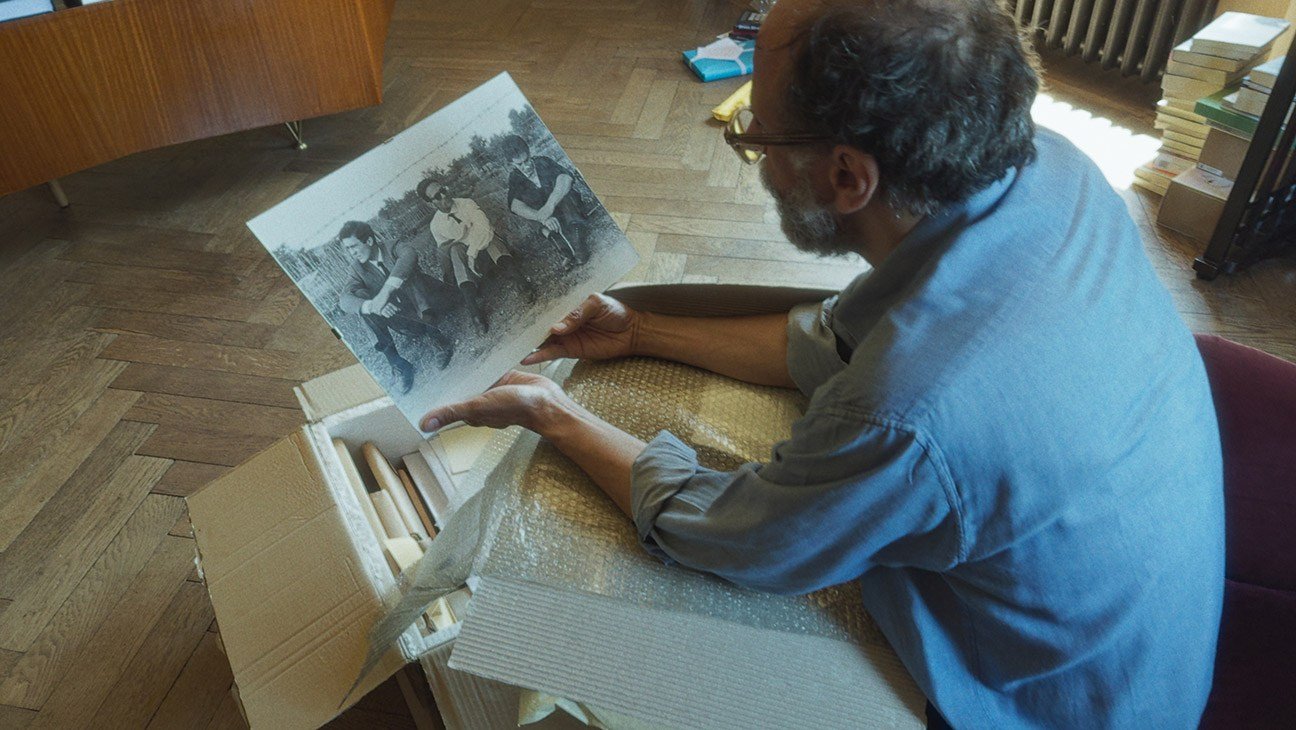
Guadagnino is understandably moved while exploring the trove of books and photographs and documents in the apartment in Rome’s Trastevere district where Bertolucci lived for the last 45 years of his life. If it looks at times like Guadagnino might be inserting himself a tad too forcefully into the picture, he pulls back quite early, even while engaging intensely with his interview subjects.
The wealth of clips here, unsurprisingly, is exceptional, and one of the most fascinating takeaways, for me at least, was Guadagnino’s skill at using exactly the right film snippets to address Bertolucci’s sexuality, something the late director never discussed publicly. But a degree of queerness was a subject of frequent speculation from critics and scholars, dissecting the robust strain running through much of his work of androgyny, sexual ambiguity, transgression, homoeroticism and carnal fluidity.
While no direct statements are made, Guadagnino’s extraordinary assortment of clips that touch on those themes — and I don’t just mean the young Robert De Niro and Gerard Depardieu comparing penises in 1900 — will have many newcomers to the Bertolucci canon concluding without doubt that he was queer.
Beyond that, admirers of Bertolucci’s work will find plenty to appreciate, though I would have been happier to see five or six one-hour episodes, each of them focusing on a major film, say, Before the Revolution, The Conformist, Last Tango in Paris, 1900 and The Last Emperor. Everyone should sit down to a 12-course banquet at least once in their life, but there’s also something to be said for a simple square meal.
At 3:45 a.m. on April 10, a man approached the fence outside of OpenAI CEO Sam Altman’s home and threw an incendiary device over it. The homemade Molotov cocktail bounced off the house, and no one was hurt, but Altman, one of the highest-profile CEOs in America, was alarmed enough to write about the incident in a post later that morning, led by a photo featuring his husband and baby son.
“Normally we try to be pretty private, but in this case I am sharing a photo in the hopes that it might dissuade the next person from throwing a Molotov cocktail at our house, no matter what they think about me,” he wrote, expounding on the role tech should play in society.
The Altman incident was a highly public moment involving a mogul, but it’s not an isolated one. Multiple CEOs in the entertainment business have faced specific threats. By Oct. 31, 2025, documented physical and cyberattacks targeting senior corporate executives had already doubled the previous year’s total, per the Security Executive Council, a research firm.
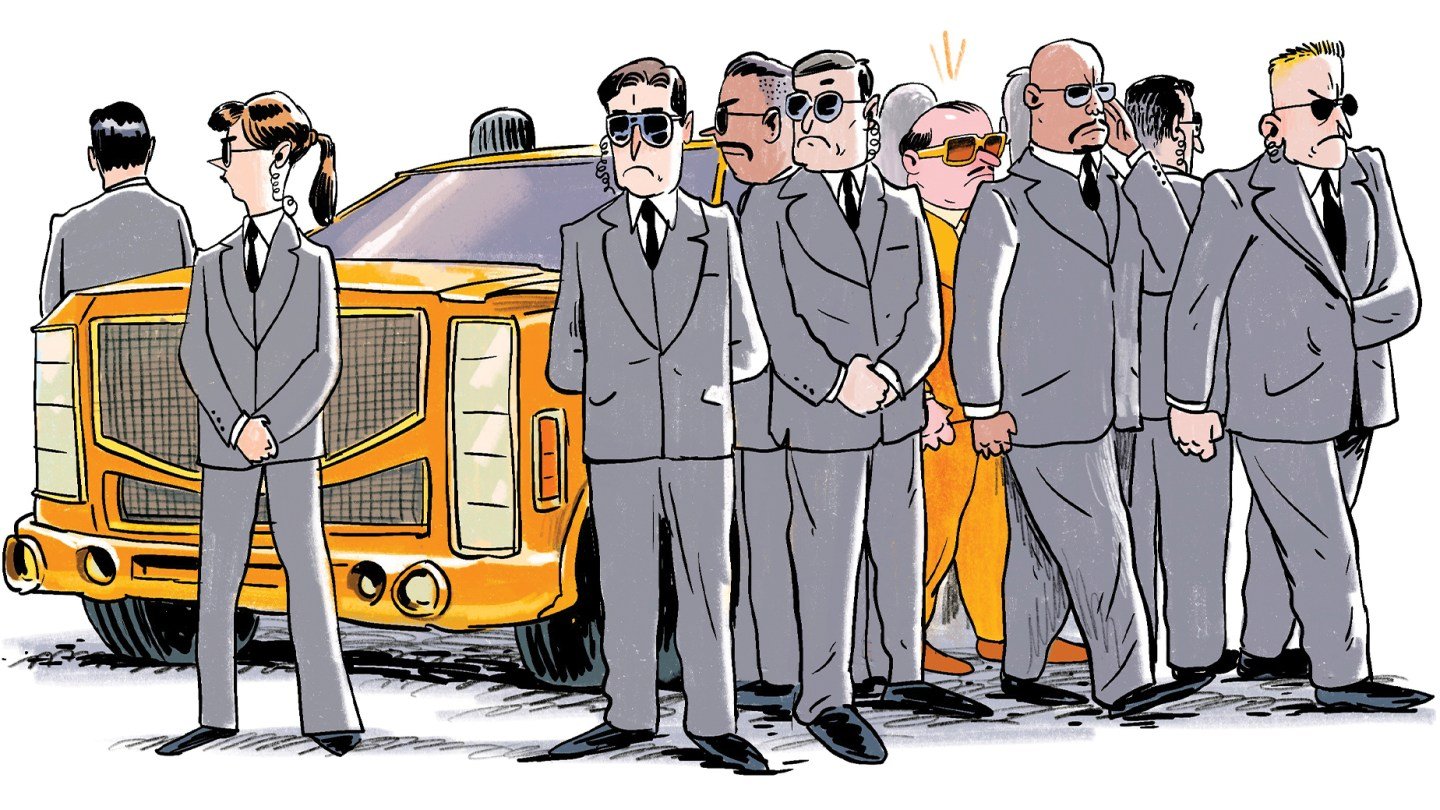
In fact, according to the security pros who spoke with The Hollywood Reporter, the threats facing corporate execs are at an all-time high. And companies in the entertainment, media and tech sectors are responding by spending substantially more on CEO security, by double — and in some cases triple — digits.
At Disney and Netflix, which each spent $1.8 million on security last year, costs rose more than 30 percent. At Amazon ($1.7 million), it was more than 50 percent; at Warner Bros. Discovery ($3.2 million), it was more than 200 percent, all in service of keeping leadership safe during a challenging, disruptive time for big business, and in a moment when resentment against wealthy elites keeps mounting.
“There’s a lot of anger directed at people leading these companies, and the threat vectors are coming from different places that we didn’t have, say, a decade ago,” says James Hamilton, the founder of consultancy Hamilton Security Group.
Basic economics like inflation are a factor in the rise, however: “It’s not just one [thing]. There are a bunch of reasons why security costs are rising,” says Jeff Zisner, the president and CEO of AEGIS Security & Investigations, citing a more active travel schedule for CEOs post-COVID, among other factors. “In addition, I think there’s been more targeting of executives by disgruntled former employees, angry customers or people who are negatively affected by those companies. It has escalated after the New York shooting [of UnitedHealthcare executive Brian Thompson].” (On Aug. 14, Luigi Mangione pleaded guilty to killing the CEO in December 2024.)
Indeed, the murder of Thompson was a turning point, “an event that significantly influenced public and corporate perceptions of executive-directed violence,” according to a report from The Security Executive Council. “For many executives, the event prompted reflection on their overall risk landscape and the potential vulnerabilities of their families and assets.”
The most high-profile execs face more scrutiny. That is true for Meta’s Mark Zuckerberg ($22.5 million) and Elon Musk, who have security details that rival some world leaders, but it’s also true for media execs who oversee news organizations in a highly polarized world, where the cancellation of a TV show or the shelving of a movie can activate an online army of haters.
Companies in the space acknowledged as much in corporate filings, with Fox noting in its explanation of security costs ($1.9 million) that “a core aspect of our business involves broadcasting extensive news coverage of elections, sociopolitical events and public controversies and related opinion programming, which sometimes produces strong reactions from viewers and critics.”
Disney pointed out the “unique security risks” facing Bob Iger (who passed the CEO torch to Josh D’Amaro in March), while Fox and Meta noted how Lachlan Murdoch and Zuckerberg are “synonymous” with their respective companies. “We believe that Mr. Zuckerberg’s role puts him in a unique position: He is synonymous with Meta and, as a result, negative sentiment regarding our company is directly associated with, and often transferred to, Mr. Zuckerberg,” the company said in a proxy filing in April.
“Fame is often a risk multiplier, requiring a different approach compared to protecting an executive with a limited public profile but operating in an industry with its own security risk factors,” says Sid Kosaraju, president at the risk management and security firm Crisis24.
That is true even for execs that aren’t tech titans: WBD’s board wrote in a filing earlier this year that “the Committee authorized a security program for Mr. Zaslav to address safety concerns due to specific threats to his safety arising directly as a result of Mr. Zaslav’s high profile position as our CEO. We believe these security measures are for the benefit of the Company and our stockholders because of the importance of Mr. Zaslav and his leadership to WBD and we believe that the scope and costs of these security programs are appropriate and necessary.”
Hamilton, the security expert, adds, “You can attribute anger at Mark [Zuckerberg] based on things Mark has done, okay, but then you have these individuals who are being threatened because of the position they occupy, which is the age-old ‘let’s blame the president for all the ills of America,’ Joe Biden or Trump can be blamed for a pothole that I just ran over because it’s convenient to blame the leader.”
To be certain, the rise in security costs is not limited to media and tech companies. According to a Sept. 1 report from Institutional Shareholder Services, “the number of companies disclosing CEO security benefits … has more than doubled since 2021, though the practice remains relatively uncommon among smaller firms.”
However, companies in the media, entertainment and tech space spend far more: ISS calculates the median value of CEO security costs at about $94,000 for companies in the S&P 500, but companies in media and tech spend millions on security, underscoring the risks they face.
In fact, the disclosed numbers probably undersell the cost of security to these companies. They often don’t include a car and driver or corporate jet use, for example, each of which is considered part of the security program, with many corporate boards requiring CEOs to use them. Numerous companies also do not reveal how much they spend on security while an executive is on company property, like at a studio lot or office, or on a business trip for a conference or film shoot, for example.
Instead, the disclosed costs typically reflect what it takes to secure executives outside of the office. The biggest driver, experts say, is people, like guards stationed outside homes or bodyguards who travel with the executive. “Protection, by its very nature, is an imposition into your private life,” says Hamilton, noting that the pool of highly qualified security personnel (think former Secret Service, FBI or military security) remains relatively small.
But a security program will also include such physical elements as alarm systems, cameras and fences, maybe even drones or armored windows in a home.
“The systems that you have for the offices and for the executives’ residences are generally more robust and more enterprise grade than you would otherwise see in a typical suburban home,” says Zisner. The programs may also feature software that scans the internet, social platforms and public databases for potential threats.
For major companies and corporate boards, however, they are costs worth incurring. “I think companies are approaching these situations now largely like an insurance policy, where it’s not guaranteed nothing’s going to happen,” Zisner says.
“Executive protection is an important part of business resilience, not a personal luxury,” adds Kosaraju. “If a CEO is incapacitated or otherwise compromised, that can have far-reaching, significant consequences. Boards are becoming increasingly attuned to this in their role of overseeing business continuity and enterprise value. Every dollar spent on a well-designed executive protection program is a dollar that reduces the probability of a materially larger impact.”
But as sharp as the increase in cost for CEO security was in 2025, experts predict that it will only go up from here, as the threats get more complex and as the political landscape remains driven by outrage. For CEOs, being frequent topics of conversation on social platforms and cable news won’t help, and growing wealth inequality across the world may only exacerbate the problem.
“This is going to be the reality for a long time, because the disparity in wealth is not getting more finite, it’s actually getting larger,” Hamilton adds. “Meaning the rich are getting a hell of a lot richer, and the poor are getting a hell of a lot poorer.”
This story appeared in the Sept. 9 issue of The Hollywood Reporter magazine. Click here to subscribe.
How to watch for free: The Napoli vs. Arsenal match will stream for free on Virgin Media Play. You can use a VPN like ExpressVPN, our pick for location spoofing, to connect to a server in Ireland and catch the action for free. In the US, you may be able to watch for free with a streaming trial from DirecTV, FuboTV, or YouTube TV.
Yesterday, the 2026-27 season of the UEFA Champions League kicked off with six closely contested games, and today, we’ll see the same number of games. Between the expanded format and midweek matches, tracking your favorite team’s run in the tournament can be a little hit-and-miss.
Here at PCMag, we’ll highlight the biggest games each week and provide you with the best ways to catch the action without paying a dime. Today’s blockbuster clash is Napoli vs. Arsenal, and below are all the details you need to enjoy the game live using a streaming service or VPN.
When Is the Napoli vs. Arsenal Match?
The UEFA Champions League match between Napoli and Arsenal will kick off at 3 p.m ET on Sept. 9 at the Stadio Diego Armando Maradona in Naples, Italy.
How to Watch Napoli vs. Arsenal UCL Game in the US
In the US, all 2026-27 UEFA Champions League games will stream live on Paramount+, with select high-profile games also airing on CBS and CBS Sports Network. If you’d like to follow the games in Spanish, you can launch TUDN, UniMas, Univision, and ViX — all of which will be streaming select games each match week.
How to Watch Napoli vs. Arsenal for Free
Select Champions League games will air for free on streaming platforms such as Tabii in Turkey, and on Virgin Media Play and RTE Player in Ireland.
For today’s Napoli vs. Arsenal game, you can check out Virgin Media Play. The platform is geo-restricted to users in Ireland, but you may be able to access it using a virtual private network (VPN). Our preferred service is Express VPN. With server locations around the world, ExpressVPN is a good choice for obfuscating your actual location and accessing region-locked content.
Follow these steps to stream the Napoli vs. Arsenal UCL game for free with a VPN.
Subscribe to a streaming-friendly VPN (like ExpressVPN).
Note: If asked for a postal code during sign-up, enter one matching your VPN server’s location to avoid disruptions.
The best VPN services that let you pick a preferred server location aren’t usually free. Many of these services, however, offer free trials for first-time users. If you can take advantage of that, you’ll be able to stream the Champions League game between Napoli and Arsenal for free.
Unlock Your Streaming Service’s Full Catalog
Arsenal FC: Predicted Lineup
Arsenal are coming off a big 2-1 victory against Premier League rivals Chelsea on Sunday. They haven’t lost a game this season, and many pundits believe they are the favorites to lift the PL trophy this year as well. The bigger challenge for the club, however, is the UEFA Champions League. The Gunners have never won the trophy in their long and decorated history. They came close to winning it last year; they were leading the final 1-0 at half-time, but they eventually let the game slip and ended up losing it on penalties.
They have a chance to go at it once again this year. Coach Mikel Arteta has retained the core of his PL-winning team and bolstered the side with summer signings like Christos Tzolis and Bruno Guimarães.
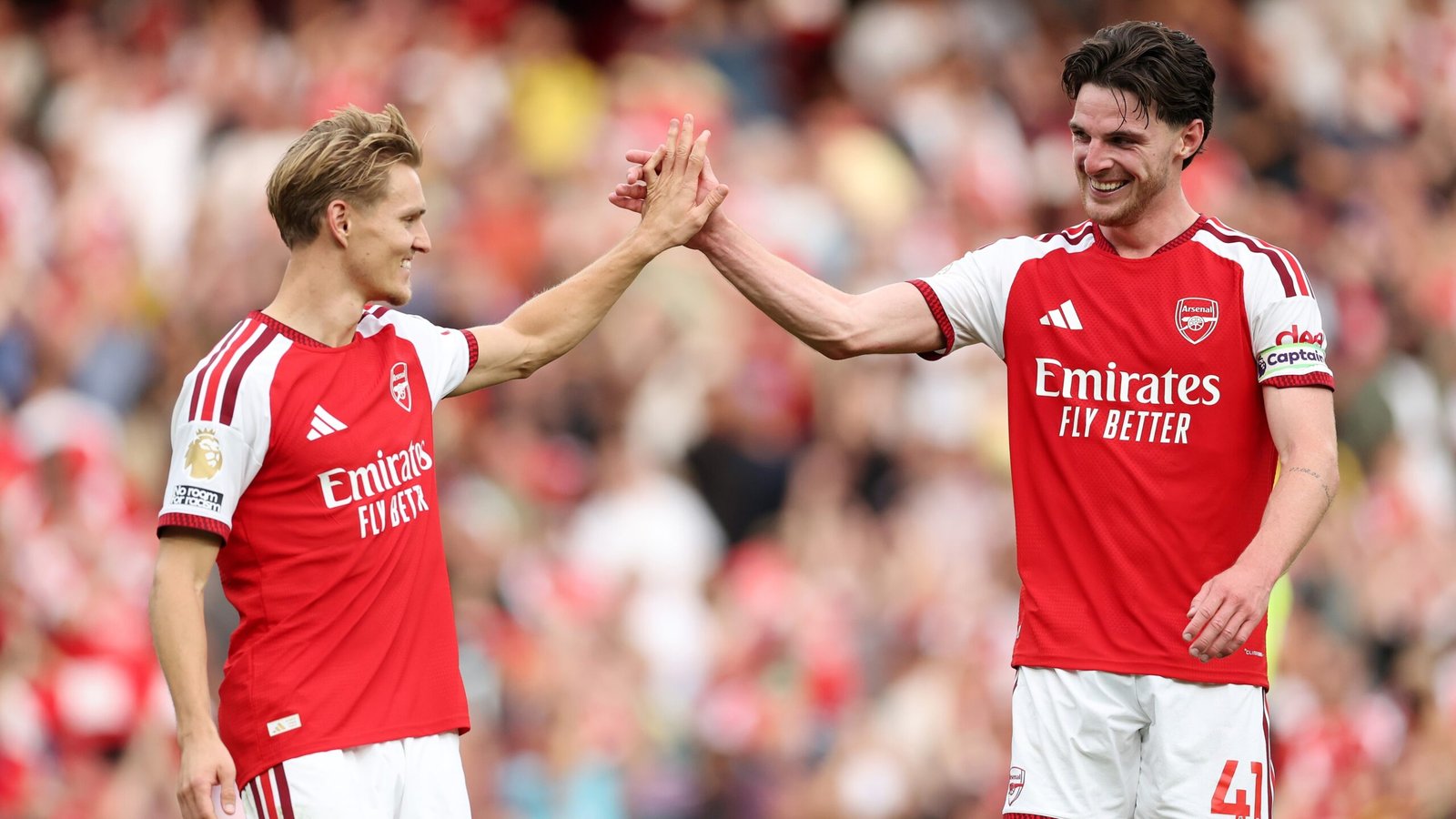
For the opening UCL encounter against Napoli, Arteta may keep the same players who started against Chelsea, with only a possible swap to bring in Viktor Gyökeres. Here’s what the lineup could look like: Raya, White, Gabriel, Konsa, Calafiori, Lewis-Skelly, Rice, Odegaard, Saka, Tzolis/Gyökeres, and Havertz.
Napoli SSC: Predicted Lineup
Napoli have had a terrible start to their Serie A season, losing two of their first three games. Their squad was boosted with the signing of Manchester City legend Kevin De Bruyne over the summer, but the Italian giants are yet to hand the midfield maestro his first start. The team’s UCL opener might be the perfect time to do so.
Against Inter last weekend, coach Massimiliano Allegri started with Meret, Di Lorenzo, Rrahmani, Marin, Spinazzola, Anguissa, Lobotka, Vergara, Politano, Hojlund, and Alisson Santos. It wouldn’t be too surprising if he benches either Anguissa or Vergara to bring in De Bruyne.
About Our Expert
Experience
Jibin is a tech news writer based out of Ahmedabad, India. Previously, he served as the editor of iGeeksBlog and is a self-proclaimed tech enthusiast who loves breaking down complex information for a broader audience.
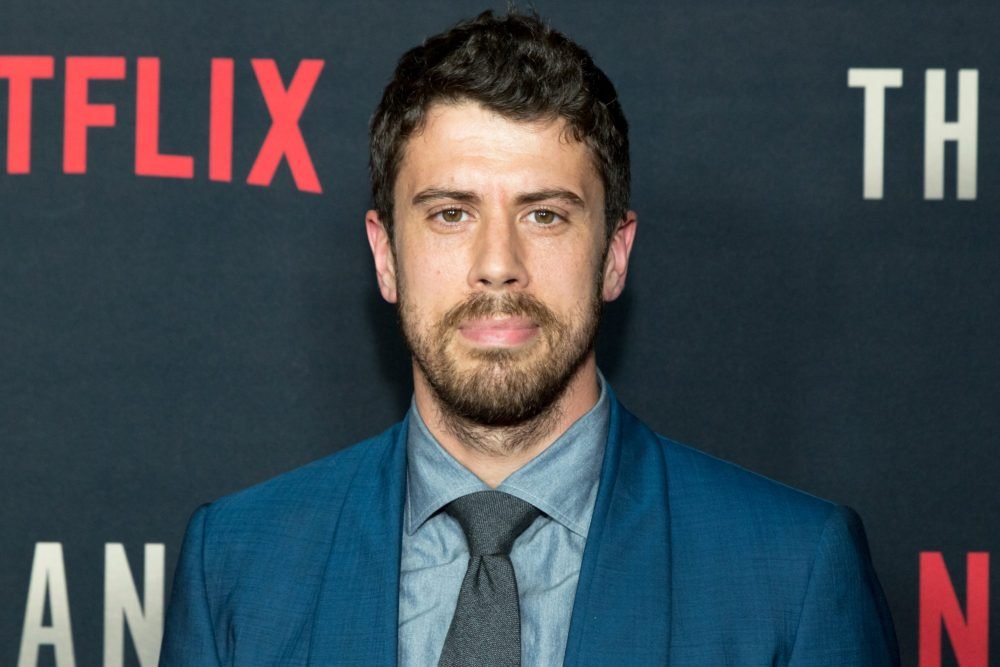
Toby Kebbell has joined the cast of Prime Video‘s upcoming U.K. crime thriller series “Dirty” from “Bridge of Spies” writer Matt Charman.
The British actor — who’ll next be seen playing Robert Chartoff in Amazon MGM Studio’s “I Play Rocky,” debuting this week at TIFF — joins the already announced Phoebe Dynevor and Samantha Morton in the ongoing series.
“Dirty” follows trainee detective Eva Bennett (Dynevor) who returns to Manchester and joins a new homicide investigation run by her fearsome estranged mother, the legendary detective chief inpector Lois Mercer (Morton). As they navigate their complicated relationship and long-buried truths resurface, Bennett starts to uncover Mercer’s crimes, forcing an impossible choice between justice and blood.
Kebbell is set to play Ashley Rutherford, a property magnate with a portfolio worth millions who stands by Mercer’s side as her partner in life and crimes. But Rutherford has set his sights even higher and wants to use his money and influence to seize control of the city’s corridors of power; the police, the government and beyond.
“Dirty,” which is set to go into production later this year, is produced by Binocular Productions in association with Amazon MGM Studios. Foz Allan serves as Executive Producer and the series is written by Charman.
Kebbell’s recent TV credits also include Apple TV’s “For All Mankind” and “Servant,” while elsewhere his TV has included the acclaimed “Black Mirror” episode “The Entire History of You.” On film, he most recently starred in the feature “Salvable,” with additional work including “Dead Man’s Shoes,” “Control,” “RocknRolla,” “War Horse,” “Dawn of the Planet of the Apes,” “Kong: Skull Island,” “The Female Brain” and “Warcraft.”
Kebbell is repped by Samira Higham at Independent Talent Group, Alissa Vradenburg at Untitled Entertainment, and Huy Nguyen and Steve Warren at Hansen, Jacobson, Teller, Hoberman, Newman, Warren, Richman, Rush, Kaller, Gellman, Meigs & Fox.
British actor and Doctor Whostar Noel Clarke has been charged with sex offences by London’s Metropolitan Police.
The British actor best known for playing Mickey Smith, boyfriend to Billie Piper’s Rose Tyler, on the BBC show from 2005 to 2010, was charged after a “file of evidence was submitted by detectives.”
Clarke, aged 50 and from Kensington, faces two charges of sexual assault, three charges of voyeurism and one charge of exposure. Voyeurism refers to when someone secretly watches, photographs or films another person without their consent for sexual gratification.
The offences, said the Met Police, are alleged to have taken place between 2007 and 2016 and relate to five women.
It comes five years after a Guardian exposé published claims from 20 women accusing Clarke of groping, sexual misconduct and bullying, as well as sources alleging they were “sexually harassed or inappropriately” touched on the set of Doctor Who.
The most recent charges confirmed this week follow an investigation by detectives which began in September 2025. A man, then in his 40s, was first arrested in connection with the investigation that same month.
Clarke will appear at Westminster Magistrates’ Court on Wednesday, Oct. 21.
“The women connected to these charges continue to receive support from specially trained officers,” said Detective Superintendent Mike Cagney, whose team is leading the investigation. “We urge anyone who has been a victim of sexual assault to contact police. The information you provide will be dealt with in the utmost sensitivity and we have trained investigators on hand to support you.”