It’s our favorite time of the year again! Amazon Prime Big Deal Days is still weeks away, but early robot vacuum and mop deals just couldn’t be contained. Amazon has already rolled out holiday-level price drops, letting you automate your floor cleaning before the sale rush begins. With smarter obstacle avoidance, self-emptying docks, and mopping pads that actually scrub, today’s cleaning bots deliver an instant quality-of-life upgrade.
Whether you need heavy suction for pet hair, a fully hands-free auto-wash dock, or a budget-friendly bot for daily sweeps, we’re tracking the best early discounts across Ecovacs, Eufy, and Roborock. I’ll be updating this list daily with the newest deals, so check out today’s top picks below, bookmark this guide, and check back as Prime Day nears.
Roborock Early Prime Day Deal
Roborock Qrevo CurvX Robot Vacuum and Mop
Dual spinning mops, auto mop lift, self-emptying/washing dock, smart mapping
The Roborock Qrevo CurvX takes hands-free floor cleaning to the next level by handling both heavy debris and dried floor spills. Its dual spinning mops lift automatically over carpets, while powerful suction pulls embedded dirt out of rugs and hard floors. Its self-cleaning dock empties dust, washes the mops with warm water, and dries them with heat, so you avoid nasty mildew odors.
PCMag expert Andrew Gebhart rated it “Excellent” for its “innovative self-lifting chassis, extendable brushes, and capable cleaning performance across a variety of floor surfaces,” in his in-depth review. Right now, you can get it for $799.99, which is a huge 47% off its retail value. Set your cleaning schedule in the app, let it map your home, and cross vacuuming off your weekly to-do list.
The Eufy C28 is built to keep tile and hardwood floors shining without demanding constant maintenance. It pairs solid suction power with rotating mop pads that press down firmly to scrub away sticky kitchen stains. Its smart navigation steers clear of stray cables and pet bowls, while its compact base station washes the mops and empties the onboard dustbin on its own. With easy voice control via Alexa or Google Assistant, keeping busy entryways clean takes little more than a quick spoken command. Get it now for $529.99, and save 34% on this cleaning powerhouse.
The Ecovacs Deebot T80S Omni offers full all-in-one automation at an approachable price. It uses precise LiDAR mapping to learn your home’s layout in minutes and smoothly plan efficient cleaning routes around furniture. Its Omni station drains dirty water, refills clean water, and empties collected dust into an enclosed bag that holds debris for weeks. Whether you’re dealing with daily pet shedding or dusty floorboards, it keeps high-traffic rooms tidy while you focus on other things.
The claim that an image shows U.S. President Donald Trump kissing White House aide Natalie Harp on a golf course remains under investigation.
The rumor stems from two versions of the image shared on social media in mid-September 2026. The higher-resolution version had telltale signs of artificial intelligence, such as hands with too many fingers, as well as a watermark confirming it was created or edited using OpenAI’s generative AI tools. The lower-resolution image did not have an OpenAI watermark and was too blurry for telltale anomalies to be apparent.
The White House declined to provide Snopes with legitimate photos of Trump and Harp golfing that could be compared to the images shared online. A spokesperson said the image was “clearly a fake.”
Hany Farid, co-founder of deepfake detection company GetReal, told Snopes the higher-resolution image was AI-generated and was clearly derived from the lower-quality version. While he said the lower-resolution version’s quality itself was “a bit of a red flag,” he said he considered its authenticity inconclusive.
Snopes will update this report if additional information surfaces.
In summer 2026, many people scrutinized White House aide Natalie Harp following newsreports of what appeared to be an unusually close relationship with U.S. President Donald Trump.
In September, following a Trump visit to Ireland during which he took time to golf at his Trump Organization-owned course, people started sharing multiple versions of an image that appeared to show Trump kissing Harp, whose back is turned toward the camera, while on the golf course.
For example, one X post (archived) shared a low-resolution version of the image. Another popular X post (archived) shared a higher resolution version with crisper colors.
Snopes could find no credible evidence or source supporting the authenticity of the image, but we were able to find multiple red flags indicating the higher-resolution version was generated or edited with artificial intelligence tools. The lower-resolution version did not have those same red flags, in part because of its poor quality. Therefore, we’ve left this claim unrated until more evidence comes to light.
Snopes reached out to Edwards by email to confirm the origin of the image of Trump kissing Harp. He responded:
My thumbnail team found the image online. We did not create or alter the underlying image, but we also did not independently verify its original source or that the woman pictured is Natalie Harp. Given that only the back of her head is visible, I don’t think her identity can be confirmed from this image alone.
Following this, Snopes used the thumbnail to conduct another reverse image search. While it failed to unearth any older versions of the image, the results (archived) included a wider shot of the subjects than any other we could find. That version, which included the “wtf” text on Edwards’ thumbnail, linked to the same Edwards video.
None of the reverse image searches turned up links to credible news sources or even less-credible tabloids sharing the image. Considering the reporting already scrutinizing Trump’s relationship with Harp, it’s unlikely, if the image were real, that not a single credible news source would report on it. The image also did not appear among photos kept by credible photo repositories, such as Getty Images and The Associated Press.
Although there was no photographer, date or location listed for any version of the image, the timing of its spread suggested it was likely meant to depict something that took place while Trump was visiting his golf course in Ireland on Sept. 13, an activity listed on his calendar as “Executive Time.” Photos of that golf course and Google Maps satellite view don’t show any trees, in contrast to the image of Trump and Harp kissing.
Snopes reached out to the White House by email to ask if any photos of Trump and/or Harp at the golf course over the weekend exist in order to compare what either was wearing in those images with what they supposedly wore in the image of the kiss. The White House did not send or confirm the requested images, but a White House official said the image shared online was “clearly a fake photo.”
While many of those who spread the photo presumed the woman was Harp, there’s no way to confirm that considering the subject’s face isn’t visible.
Some people online claimed the image was actually a 2017 photo of Trump exchanging a cheek-kiss with Norwegian golfer Suzann Pettersen as a greeting. This is false. That kiss was not actually on the golf course, Pettersen was in a different outfit than that of the woman in the recent image and Trump was also dressed differently, as shown in images capturing the moment from 2017.
AI evidence
A tool by OpenAI, the company behind ChatGPT, detected a watermark in the higher-resolution version image consistent with those generated or edited using the company’s AI tools. Moreover, the image depicts Harp holding her golf club with six fingers.
The lower-resolution version of the image was too blurry to clearly identify AI tells such as an excessive number of fingers on either person’s hands. While OpenAI’s tool didn’t identify a watermark within the lower-resolution image shared across X and Threads, the tool did detect OpenAI watermarks on the thumbnail for Edwards’ video.
Separately, Snopes tested what the tool would find on a real photo where a small portion had then been edited by AI. OpenAI’s tool detected the watermark on such an image, even when the photo was cropped to remove the part that had been edited.
Hany Farid, co-founder of deepfake detection company GetReal and a professor at Drexel University, told Snopes over email that “the high-resolution version was clearly derived from the lower-resolution version and has a SynthID watermark. As for the lower-resolution version, there is not a lot to go on here given the quality and resolution.”
“While there are no obvious visual anomalies, the low quality/resolution is a bit of a red flag. In particular, given the apparent narrow depth of focus, this does not appear to photographed with a mobile device and is more likely taken with a DSLR that would afford this type of narrow depth of focus,” Farid continued. “Assuming this to be the case, I would expect the image quality to be better. At this point, I’d say the authenticity is inconclusive.”
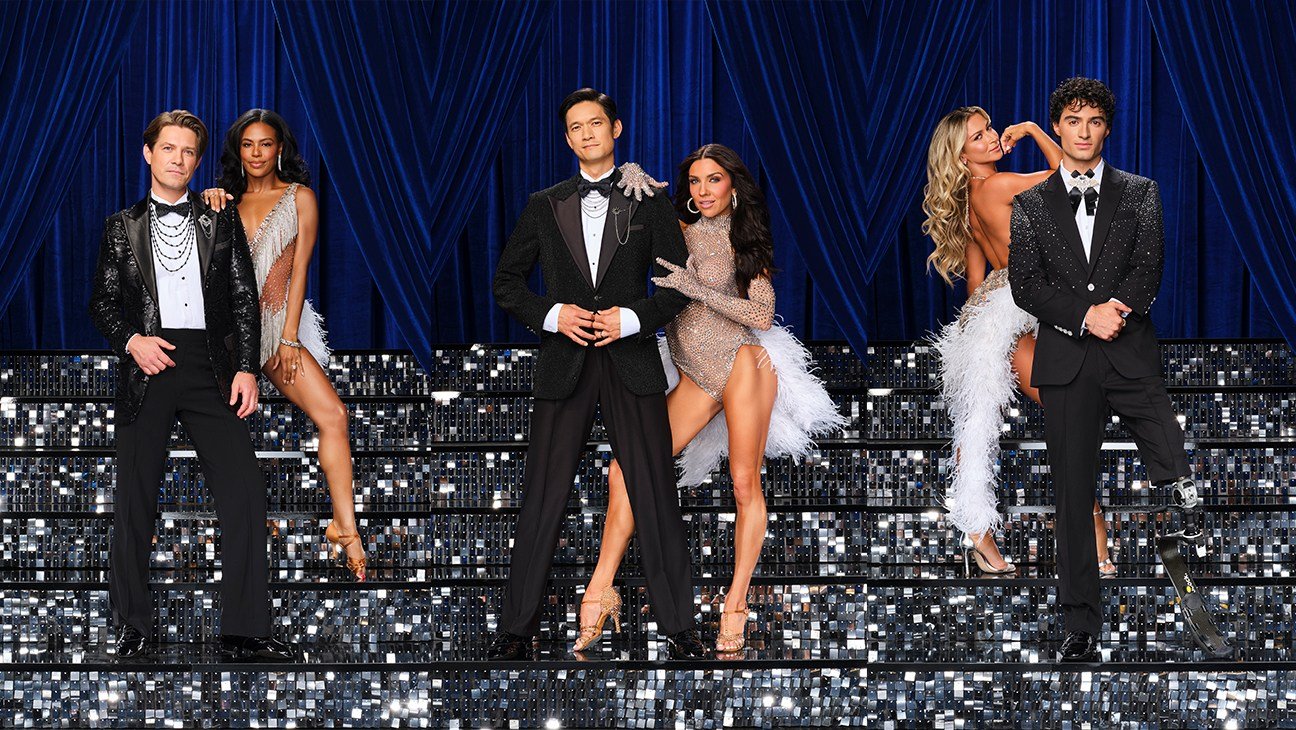
Dancing With the Stars is finally back for season 35, and the festivities for the new season have kicked off with a special two-night premiere.
As previously announced, the premiere episodes are split by gender, with the slate of eight male celebrities performing on Tuesday night, as the eight women celebrities will follow on Wednesday night. With a cast of 16 competing couples, the split premiere will ensure each celebrity and their professional dance partner get time to shine during the season 35 premiere.
Coming off a dynamic, Emmy-nominated 34th season, the cast is full of reality stars, Olympians and (ABC) television stars a plenty. For both nights, the celebrities will dance to a No. 1 song from the year they were born, and yes, someone will be eliminated.
Competing on Tuesday night is The Bachelorette alum Tyler Cameron; Paralympic gold medalist Ezra Frech; “Hanson” band member Taylor Hanson; Secret Lives of Mormon Wives‘ star Whitney Leavitt’s husband Conner Leavitt; Savannah Bananas baseball star Jackson Olson; Jimmy Kimmel Live! star Guillermo Rodriguez; Grey’s Anatomy actor Harry Shum Jr.; and influencer/comedian Connor Wood.
After the second dance of the night, performed by Tyler and Sharna Burgess, host Julianne Hough revealed that voting was down on ABC’s website, and that viewers should send in their votes via text. Alfonso Ribeiro announced after Conner’s performance that website voting was still down, and the show was only accepting votes via text for Tuesday night’s premiere.
During Tyler’s critiques, Derek Hough mistakenly called him Dylan. Despite the name mishap from the judge, Tyler was the early leader of the night, scoring a 17/30. However, Ezra took over that lead, earning the first two sevens from the judges, bringing his total to 20/30
The rest of the cast who will compete on Wednesday night includes The Fresh Prince of Bel-Air star Tatyana Ali; celebrity chef and Food Network host Giada De Laurentiis; The Rookie and Step Up star Jenna Dewan; Olympic gold medalist Amber Glenn; reality star (Love Island, The Traitors) Maura Higgins; Summer House star Ciara Miller; Love Thy Nader reality star Sarah Jane Nader; and 10 Things I Hate About You actress Julia Stiles.
The couple with the lowest combined total of judges’ scores and viewer votes is eliminated at the end of each DWTS episode. Live voting takes place during the East Coast airing of each show and ends shortly after the final performance is completed; that means if you’re a West Coast viewer and want to vote for your favorite couple, you must do so between 5 p.m. PT to roughly 7:45 p.m. PT, as voting ends after the final performance.
See the full list of scores for the first premiere episode of DWTS season 35, featuring only performances from the male celebrities, below.
Jackson Olson and Emma Slater: 15/30 Tyler Cameron and Sharna Burgess: 17/30 Conner Leavitt and Adele Zaikman: 12/30 Guillermo Rodriguez and Witney Carson: 10/30 Ezra Frech and Daniella Karagach: 20/30 Connor Wood and Rylee Arnold Taylor Hanson and Britt Stewart Harry Shum Jr. and Jenna Johnson
Season 35 of Dancing With the Stars premieres on Tuesday and Wednesday at 8 p.m., simulcasting across ABC and Disney+, and streaming the next day on Hulu. Check out all of The Hollywood Reporter‘s DWTS coverage here.
American Idol is packing up and making a big move across the United States.
ABC’s long-running music competition series is relocating from Los Angeles to the Atlanta area, producer Fremantle confirmed to The Hollywood Reporter on Tuesday.
American Idol‘s move is a hit to L.A.’s production landscape, especially in scripted television, a space that has seen episode counts shaved and overall orders cut over the past several years. The city saw a nearly 13 percent drop in shoot days from April to June compared to the same period last year and an 8 percent drop compared to the previous quarter, according to the latest report from permitting office FilmLA.
On the state level, California Gov. Gavin Newsom signed a bill last year that increased the cap on film and television tax incentives from $330 million to $750 million a year. But production advocates in state and local offices have countered that that’s the first step, not a cure all, to keep film and TV cameras rolling in Hollywood’s historic home.
Competition from other states, including Georgia, New York, New Jersey and New Mexico, as well as international markets (like Canada, the United Kingdom and Australia) has only increased on the incentives front.
The relocation of American Idol to Georgia is a coup for the state, given that the long-running broadcast series (season 24 had a 16-episode run) offers relative stability compared to one-off features that may shoot on-location. In late July, the Georgia film office disclosed 280 productions filmed in-state over the last fiscal year, including Warner Bros.’ Superman sequel, series like Will Trent and Chad Powers, as well as Tyler Perry Studios’ productions.
Georgia is one of the largest production hubs stateside, following California and New York, but has also seen spending from film and TV shoots decline in recent years after Marvel decamped to shoot its superhero fare in the U.K. In the second quarter of 2026, Georgia saw $405 million in production spending, down 40 percent year-over-year, per figures from industry tracker ProdPro. In the latest quarter, California, for comparison, saw $1.3 billion in production spending, up about 5 percent year-over-year.
Local officials have pledged to find ways to cut more red tape in L.A. and bolster incentives. Mayor Karen Bass said in July that she’s “doubling down” on the subsidy program by “fighting for an uncapped tax credit,” in addition to pushing for competition reality TV series to be eligible for incentives. “We’ll keep cutting red tape and slashing permit fees at the local level, because this industry is core to the history, culture and economic power of Los Angeles,” she added at the time.
NBC’s telecast of the 78th Emmy Awards hit 6.7 million viewers on Monday night, per Nielsen.
That total marks a 9% decrease from last year’s ceremony on CBS, which brought in 7.4 million viewers — the award show’s best performance since 2021.
It should be noted, though, that the 2025 ceremony took place on a Sunday, making it easier for viewers to sit down for a three-hour telecast. Compared to the most recent Monday night Emmys — televised by Fox in 2024 — NBC accomplished a 41% increase. But since that telecast, which hit only a meager 4.4 million viewers, was the first in Emmys history to air with fierce competition from an NFL playoff game, the most accurate comparison is perhaps to NBC’s own Monday night Emmys in 2022. In those terms, the network’s latest Emmy efforts made a 10% improvement, up from 5.9 million viewers.
Hosted by “Law & Order: Special Victims Unit” star Mariska Hargitay, the Emmys did air against an NFL game between the Kansas City Chiefs and the Denver Broncos. Even with that competition, it drew enough viewers to rank as the the most-watched non-sports, non-news Monday telecast of 2026, both overall and among adults age 18-49. Hargitay referenced the football game in a pre-recorded sketch featuring a cameo from Taylor Swift, musing that the pop star wouldn’t be able to attend the show because she’d be supporting her husband, Chiefs player Travis Kelce.
According to NBCUniversal, the Emmys generated 133 million social views, counted across Facebook, Instagram, X and YouTube. The company touts that that marks a 90% increase from 2025.
Is actor-turned-director Cody Fern’s debut, Closing Night, intended as a refraction of John Cassavetes’ Opening Night, the 1977 Gena Rowlands vehicle about an actress grappling with a debilitating personal crisis? Seems likely, though that would be just one of several instances of the filmmaker’s aim exceeding his reach. For at least half the movie’s running time, the desired style appears to be the heightened melodrama of Pedro Almodóvar’s tales of turbulent motherhood scarred by traumatic family secrets. But Fern lacks the firm grasp of tone to pull that off, or to smoothly navigate the eventual transition into anguish and sorrow.
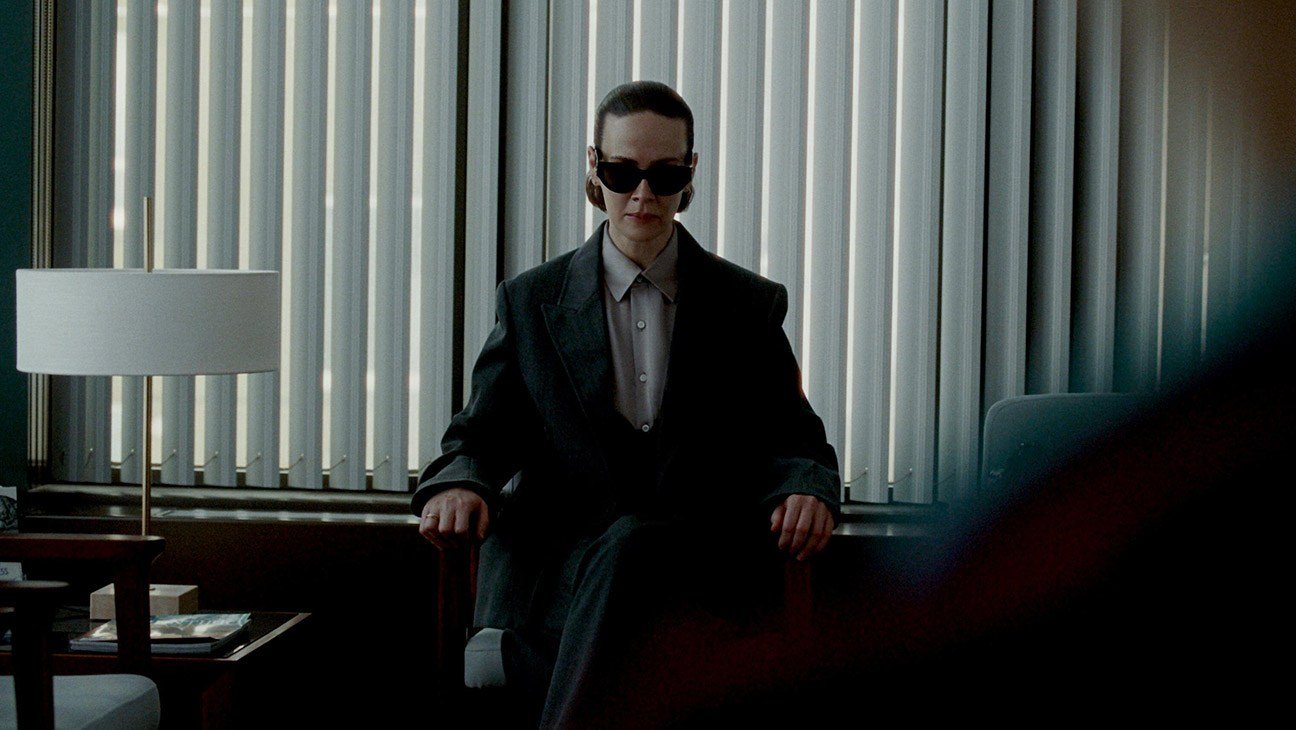
The other key influence — intentional or not — appears to be Ryan Murphy, with whom Fern has worked frequently as an actor. There’s a kinship in the arch tone, though sadly, none of the camp. Unless you count Sarah Paulson as celebrated star of stage and screen Sandra Vale, played with a death-stare severity that might be appropriate for her sadistic psycho-nurse in Murphy’s Ratched. All of which is to say that no matter how accomplished the cast, the self-conscious movie only really starts half-working once it gets out of its own way.
Closing Night
The Bottom Line
A soft-impact lurch from archness to angst.
Venue: Toronto International Film Festival (Special Presentations) Cast: Sarah Paulson, Naomi Watts, Dianne Wiest, Toby Wallace, Odessa A’zion Director: Cody Fern Screenwriters: Cody Fern, Devon Bostick
1 hour 55 minutes
Sandra is in rehearsals for her Broadway return in Brecht’s Mother Courage — and therein lies the first clue to her festering secret — but the seasoned pro is having uncharacteristic trouble remembering her lines and motivation. Nonetheless, she sends out formal invitations to her estranged family to attend the play’s opening.
Her jittery sister April (Naomi Watts) bristles at being “summoned” to a reunion after three decades of silence. But she can’t get there fast enough, concerned that her rudderless son Theo (Toby Wallace), who’s living in New York, should be kept away from his self-absorbed aunt. Before April can run interference, Theo drops a bombshell by revealing that he has already connected with the black-sheep diva. The scowling posters of Aunt Sandra all over town suggest that encounter was all but preordained.
April and Sandra’s tart-tongued, boozing mother Diane (Dianne Wiest, in brilliant form) takes a hard pass on the trip from their distant hometown, where she owns a shabby hair salon. But once April starts reporting back, the blowzy old woman — still pissed about Sandra sleeping with April’s boyfriend when she was 15 — hops on a plane.
The first big news to emerge is that Toby’s girlfriend Lucy (Odessa A’zion, wasted in a nothing role) is pregnant, a fact discovered by April when she’s snooping in their bathroom and finds a positive home pregnancy test. (She also randomly steals a hairbrush, the result of a klepto habit that doesn’t add much.) Then when Sandra starts slurring and scrambling her lines before collapsing on the stage, she receives a shattering diagnosis, which helps move along the thaw between her and April — though not so much with crotchety Diane. The biggest secret, however, pertains to Theo and the reason Sandra distanced herself from the family all those years ago. If you can’t guess what that is, seriously, wake up!
The script by Fern and fellow actor Devon Bostick takes a solemn turn in the final act, when Sandra resolves to take a drastic step and enlists April’s support to go through with it. Those developments become lugubrious, though not without affecting moments. But the leap from the seriocomedy of the early action to the sadness and self-recrimination of the concluding stretch is not something the filmmakers negotiate gracefully.
It’s also hard to feel too much for the characters when only Theo, his emotions bounced about among the women, and Diane, who amusingly specifies while making her travel plans that she wants a hotel room with a minibar, seem like real people.
While it’s always a pleasure to watch Paulson and Watts work, Fern forces them to work way too hard. (Certainly harder than they have to work on Murphy’s risibly awful legal soap, All’s Fair, in which performance integrity seems irrelevant.) Sandra and April are characters who might almost have been more at home in some kind of chewy Southern Gothic that didn’t have to rely so heavily on Diane to inject a bit of much-needed humor. That said, Watts does prompt a wicked smirk or two when April instantly appropriates Sandra’s misfortune as her own.
Ultimately though, whether it’s going for caustic dysfunctional family chaos or somber drama, any movie with this lineup of female talent ought to be a lot juicier.
When ¡HOLA! first talked with Carín León in June, his latest album MUDA was beginning to take shape as one of the most ambitious chapters of his career. Months later, the Hermosillo native has taken that transformation much further than anyone could have imagined.
Since our conversation, León has brought his genre-blending MUDA around the world, debuted in Japan, and made history in Las Vegas as the first Latin artist to headline Sphere. “This year, and all these years, have been full of a lot of very beautiful, very important moments. But June, with our trip to Japan and now with our residency at the Sphere, it’s been a very mind-blowing year for us and a very important one,” he told us during our catch-up session.
The milestones are impressive on their own, but together, they feel like a reflection of exactly what León told us MUDA was about—shedding an old version of yourself and refusing to stay inside the boundaries people expect you to.
“With all the happiness that we have and all the passion that we put into our work, it’s just the result of a lot of work that we’ve been doing for a lot of years. And we’re happy to live this, and we’re happy to keep doing the most unexpected and incredible stuff in our music… More than anything, it doesn’t feel like this is real. We always try to look for the incredible stuff, for the unbelievable stuff.”
Carín León
In August, the global ambassador of Música Mexicana made his Japanese festival debut at Summer Sonic in Osaka, taking the stage at The Mountain, the festival’s international stage, with the crowd, Japanese fans included, singing along.
The trip continued in Tokyo, where León made history as the first Mexican artist to headline a festival in the capital.
Then came Las Vegas
Just days later, León opened his seven-show residency at Sphere, and he is officially the first Latin artist to headline at the groundbreaking venue. His opening night sold out, with more than 17,000 fans filling the venue as he brought the Sonoran Desert to the Las Vegas Strip.
For León, the milestone carried more than just career bragging rights. To him, it’s “a lot of responsibility, a lot of honor, and a lot of joy to be representing Mexico in the most important venue in the world.”
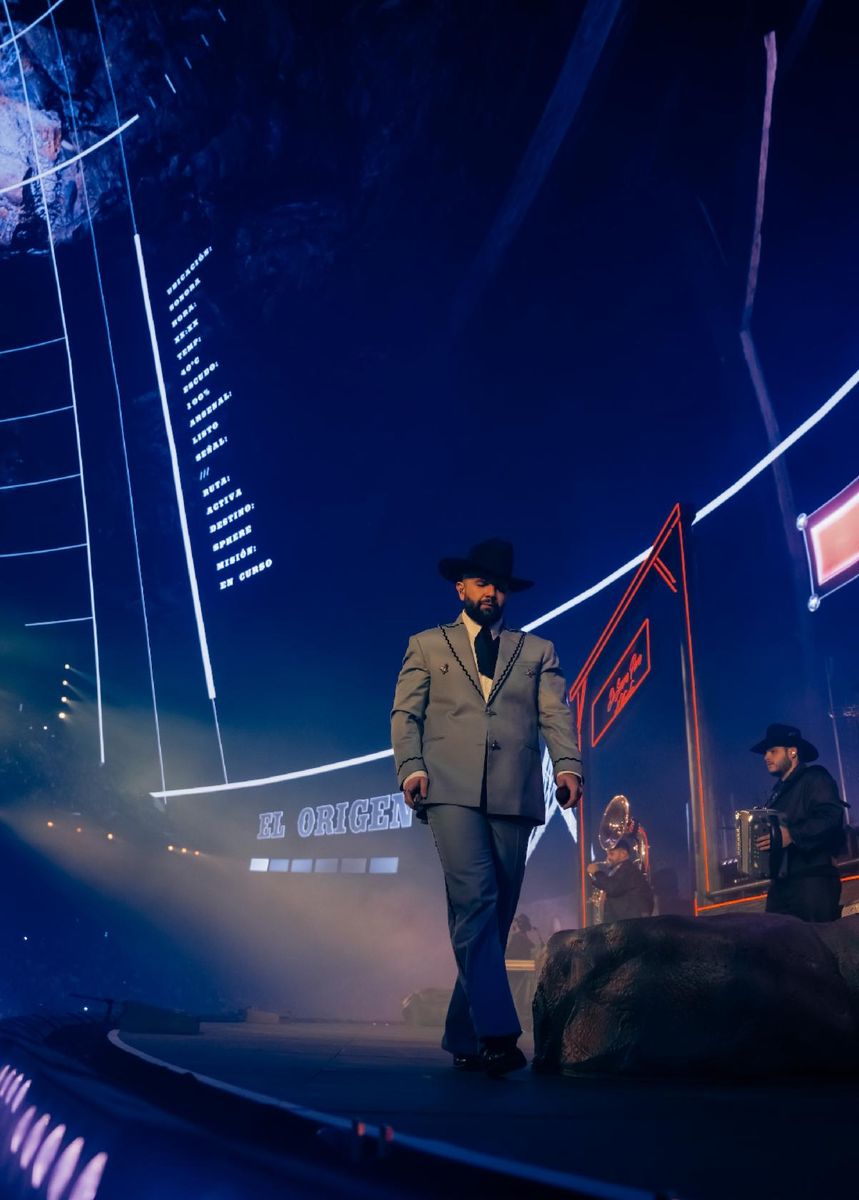
Even in Vegas, he keeps his roots on the stage. The residency leaned heavily into León’s Sonoran roots, with denim, boots, oversized cowboy buckles, and the signature cowboy hat that has become part of his identity. The MUDA production was reimagined specifically for the immersive space, using Sphere’s enormous LED screen and cutting-edge sound technology to create a visual experience unlike anything he had previously brought to a Spanish-language audience.
The goal goes beyond putting on a massive show. “We’re so happy that the people feel proud about being Mexican and about being from this part of the world,” he said. “You can see that people are having more than fun at a show. They feel like they are a part of something, and that’s the goal of the show.”
But the bigger the stage gets, the higher the stakes become. Just days into his residency, León had to postpone his September 10 performance at the last minute after he was unable to get from Hermosillo to Las Vegas. The announcement came after fans had already arrived at the 20,000-capacity venue, prompting boos and frustration from the crowd and social media.
Whether he is performing in a palenque in Mexico or stepping onto the stage at the Sphere, Carín has found a way to honor Hermosillo
León later explained that the first plane he was scheduled to take developed brake problems around 3 p.m., while a second aircraft experienced steering issues around 5 p.m. He said authorities ultimately would not allow them to fly.
“Every milestone opens another door. Every new place we get to perform becomes fuel.”
Carín León
The singer apologized to fans, acknowledging that many had spent money and time traveling to Las Vegas for the performance. “I sincerely apologize from the bottom of my heart and want to reaffirm our love for you. This isn’t a lack of commitment on our part,” he assured fans. “Things simply didn’t go as we had hoped, and I stand here feeling deeply embarrassed.”
For an artist whose latest album is literally about shedding skin and transforming, the moment offered a reminder that the bigger the career becomes, the more public the setbacks become, too.
It’s the kind of global expansion that makes our conversation with León months ago feel even more revealing. At the time, he described MUDA as the “biggest risk we’ve ever taken on an album.”
The project moves between salsa, blues, disco, Colombian folk traditions, cumbia, ska, Mexican mambo, quebradita, pop, rock, and regional Mexican music, refusing to sit neatly inside one genre. “We imagined our music with a more global sound and wanted to expand our culture by fusing it with more mainstream influences. We focused on the vibe and on seeing how far our music could go,” he told HOLA.
The answer to how far it can go keeps changing. “When I first started my career, my goals weren’t even close to what I’m achieving right now,” León said. “Every milestone opens another door. Every new place we get to perform becomes fuel. It makes me want to keep looking for opportunities, keep expanding my music, and keep expanding my culture.”
The heart of MUDA
The heart of MUDA, however, isn’t really about the venues or the numbers. It is about transformation. The album’s title references muda de piel—shedding skin—while also playing with the symbolism of León’s hometown of Hermosillo. That idea of shedding one version of yourself to make room for another comes up repeatedly when he talks about his life.
“This was one of the loneliest albums I’ve ever made,” he admitted. That wasn’t because he was working alone. León created the project alongside longtime collaborators, including Grammy and Latin Grammy-winning producer Edgar Barrera. Instead, the loneliness came from making something deeply personal without worrying as much about whether everyone else would understand it.
“I approached it selfishly,” León said. “I wanted the sound. I wanted the lyrics a certain way. This album is very personal.”
He had reached a point where success itself could make honest feedback harder to find. “When you reach a certain point in your career, everybody sweet-talks you. Honest criticism becomes harder to find,” he explained. “So I tried to keep this album for myself and trust my own ears and my own taste.”
Now, with more time between himself and the album, León says one of the biggest lessons has been trusting what feels authentic to him. “I think the big lesson for me is that I love romantic music. I love ballads. I love this kind of music, and it’s one of my favorite genres to do.”
The response to “Desde Que Te Tengo” only reinforced that instinct. “And now, with ‘Desde Que Te Tengo’ and seeing the hit that it became and the response from people, it just shows me that when you’re sincere with what you’re doing, it’s gonna happen.”
That instinct seems to be paying off. The same artist who once worried that moving too far away from traditional regional Mexican music could alienate his audience is now taking those sounds to Japan and one of the world’s most technologically advanced concert venues.
Transforming from insecure Oscar to superhero Carín
“When I step onto a stage, it’s like a superpower. Something changes. I know that’s my moment. I know I’m the one in control.”
Carín Leon
No one understands a transformation better than León himself. His birth name is Oscar Armando Díaz de León, while “Carín León” began, as he puts it, as a marketing decision.
Carin made history at the Sphere but had to issue a statement after postponing a show
“We wanted something more memorable and easier to remember,” he explained. “Carín comes from Oscar. León comes from one of my last names. It felt stronger graphically, and I’m a Leo too, so it has a lot to do with me.”
When he walks onto a stage in front of thousands of people, something shifts. “When I’m on stage, it’s almost magical. Oscar, as a person, is very insecure. I’m kind of shy in some aspects of my life,” he revealed.
For León, the relationship between Oscar and Carín has become essential to his art. When I asked him if overcoming some of those insecurities changed the way he made music, he responded, “Absolutely.”
“But when I step onto a stage, it’s like a superpower. Something changes. I know that’s my moment. I know I’m the one in control.”
There is still the Oscar behind Carín, the quieter person who grew up dreaming of music
“Every day you’re a different person. You’re constantly changing, and music changes too. Most of the music I write comes more from Oscar than from Carín,” he continued. “That connection between the human being and the alter ego is very interesting. I think it’s the winning formula. When you stay connected to the root of your feelings, it’s easier to transmit those emotions on stage.”
The duality between Oscar and Carin is something I witnessed in person. At his Palenque in Mexico, one of his favorite places to play, León started the night in a cowboy hat and suit, then ended in a T-shirt and baseball cap. Well, multiple baseball caps, because he kept throwing them out into the crowd for his fans. The change from traditional to a more casual, comfortable street look felt intentional.
“It actually goes back to what we’ve been talking about with alter egos,” he said when I asked about the changes. “As the show goes on, I start feeling more comfortable. The hat gets heavy after a couple of hours.”
“Sometimes I switch to a cap. Sometimes I change my boots for sneakers. I like showing another side of myself. I like showing a little more of Oscar through those changes,” the “Ay Lupita” singer explained.
And his fans are along for every part of the ride. Watching León interact with his audience is incredible. He makes eye contact with fans and gives them a nod to throw their hats onto the middle of the floor, where they’re collected so he can sign each one mid-performance.
“I love interacting with the audience. When I see a little girl or a little boy looking at me with excitement, I see myself as a kid,” he explained. “I remember what it felt like to meet an artist I admired.”
Carin León
At one point, he walked around the front row, taking selfies and serenading everyone. “Those moments can stay with people forever,” León added.
That same freedom has extended to his music. Even his dancing, which has become a signature part of his live shows, wasn’t planned. “I never thought, ‘At this concert, I’m going to start dancing,’” he said. “It’s just what I feel in the moment.”
Living in the moment is clearly what’s working, even as people try to guess his motives or goals with the genre. He isn’t trying to make regional Mexican music bigger; he’s becoming bigger alongside it while staying grounded and honoring where he came from, and the people who have always been there next to him.
His friends and musicians from Hermosillo remain part of his band, including his brother, Luis Díaz de León, who is an incredible guitar player. He still plays soccer with his friends on Mondays and has carne asadas on the weekends.
He still listens to the same music he did before the fame. “When you get to live your dream with the people you love, success takes on a completely different meaning,” he said.
The woman who has his heart
“She’s everything I’ve been looking for my whole life. A good person. A good friend. Someone who truly loves me.”
Carín Leon
That grounding has become particularly important as his career continues moving at a rapid pace. Aside from his friends and family, León has found a similar sense of peace with his partner Meylin Zúñiga.
After his album release in Mexico City, the couple experienced a terrifying elevator accident that left Zúñiga with a broken foot. When HOLA! eventually caught up with him after his interview on Good Morning America a month later, León’s relief was obvious. “She’s here with me, and she’s almost fully healed now,” he said. “Thanks to God, it wasn’t anything more serious.”
When the elevator incident happened, dramatic images showed León carrying her out of the venue. “Social media made it look much worse than it was,” he explained.
Still, he jumped in immediately to help, something he plans to do forever. “As a man, my father and my grandfather taught me that you’re there to protect the woman you love. I’m going to protect her for the rest of my days,” he says. For someone who has spent years protecting his personal life, León speaks about Zúñiga with surprising openness. After her injury, fans noticed he referred to her as his wife in his statement, sparking speculation about whether or not they had a secret wedding.
When I asked about his word choice, he said they’re still in planning mode. “I’m very happy with the life we’re building together,” he said. “It’s definitely in our plans. We just need to find the time. But when it happens, you’ll be one of the first to know.”
As for when he knew she was the one, he says, “Since the beginning of our relationship.” “She’s everything I’ve been looking for my whole life. A good person. A good friend. Someone who truly loves me,” León continued.
He gushed about her impact on his life, explaining, “She came into my life and took away some of the angry boy. Some of the frustration.” For years, León’s music explored heartbreak, frustration, longing, and complicated emotions. Today, he seems lighter. “She’s always happy,” he says. “And happiness is contagious.”
León isn’t slowing down. Looking toward 2027, he revealed that another album is already taking shape, one that will push even further into the intersection of country music and Regional Mexicano. “Another album is coming. This is our biggest approach to country music in Spanish, mixing country music with Regional Mexicano. We’re very proud of this project,” he said.
The project is being made with musicians and collaborators from Hermosillo, Sonora, and elsewhere in Mexico. “We’re doing it with all the love that we put into all of our stuff, with a lot of very talented people from Hermosillo, Sonora, and from other parts of Mexico.”
Plus, he’s returning to the Sphere. “We’re coming back to the Sphere in 2027,” León revealed. He has a three-show run on September 16, 17, and 18. “We’re coming to some very important festivals too. We’re gonna be on the road all 2027, so you’re gonna hear about Carín a lot, a lot more.”
“Dancing With the Stars” may have had too many voters than it could handle. After the second dance of the Sept. 15 Season 35 premiere, hosts Julianne Hough and Alfonso Ribeiro revealed that online voting is down and audiences could only vote via text.
Then, following the third number, the hosts revealed that all online votes that did go through would be thrown out and only texted votes would count for the first night. And just to complicate things a bit more, there are two different Connor/ers in this competition — so to vote for Conner Leavitt or Connor Wood, viewers need to text Conner L or Connor W.
This week’s premiere is split into two nights, with Tuesday night for the male celebrities — and one going home at the end of the episode — and Wednesday for the female celebrities and one of them being eliminated.
Here’s a breakdown of all the dances and scores from night one — we will continue to update as the night goes on:
Jackson Olson and Emma Slater — Cha-Cha to “Wannabe” by Spice Girls 15/30
Tyler Cameron and Sharna Burgess — Tango to “Are You Gonna Go My Way” by Lenny Kravitz 17/30
Conner Leavitt and Adele Zaikman — Salsa to “Whoomp! There It Is” by Tag Team 12/30
Guillermo Rodriguez and Witney Carson — Cha-Cha to “Mr. Big Stuff” by Jean Knight 10/30
Ezra Frech and Daniella Karagach — Tango to “Since U Been Gone” by Kelly Clarkson 20/30
Taylor Hanson and Britt Stewart — Quickstep to “Tell Her About It” by Billy Joel
Harry Shum Jr. and Jenna Johnson — Cha-Cha to “Let’s Groove” by Earth, Wind & Fire
Connor Wood and Rylee Arnold — Cha-Cha to “I Like It, I Love It” by Tim McGraw
Velodrome, a key player in the Ethereum ecosystem, has announced its upcoming merger with Aerodrome to establish Aero, a unified liquidity layer for Ethereum. This strategic move aims to enhance liquidity and streamline user experience within the network. As the announcement surfaced via a tweet from @VelodromeFi, it raises anticipation among traders and users about the upcoming changes and improvements in liquidity dynamics.
What Happened
The broader crypto market shows mixed signals, with Ethereum continuing to draw attention amid the announcement of the Velodrome and Aerodrome merger. This strategic partnership aims to consolidate liquidity, potentially reshaping how users interact with Ethereum’s offerings. The news has generated buzz on social media, as traders and enthusiasts look forward to what Aero will bring to the existing liquidity landscape. With no immediate price action reported, the focus shifts to the implications of this merger for Ethereum’s liquidity framework and user engagement.
Key Takeaways
Velodrome is merging with Aerodrome to form Aero, a new liquidity layer. The merger aims to enhance Ethereum’s liquidity infrastructure. The transition will also involve deprecating the Velodrome account. Users are encouraged to follow @aeroxyz for updates. This strategic move is expected to have significant implications for Ethereum’s ecosystem.
The Numbers
Currently, Ethereum’s market dynamics remain stable, with no drastic price fluctuations reported. The announcement of the Velodrome and Aerodrome merger has sparked interest among traders, who are keen to see how this will affect liquidity and trading volumes in the coming weeks. As the market awaits further developments, the focus remains on the potential enhancements Aero could bring to Ethereum’s liquidity and trading efficiency.
Ethereum serves as a decentralized platform for smart contracts and dApps, enabling various financial activities within the blockchain space. The merger of Velodrome and Aerodrome indicates a strategic move to improve liquidity provision, which is crucial for maintaining Ethereum’s competitive edge in the digital asset market.
What Traders Are Watching Next
Traders are closely watching the developments surrounding Aero’s launch and its impact on Ethereum’s liquidity. The market is likely to react positively if Aero effectively enhances Ethereum’s liquidity framework. Additionally, stakeholders should monitor how this merger will influence trading volumes and user engagement in the Ethereum ecosystem.
This article is for informational purposes only and does not constitute financial advice.
“The Julia Set” has emerged as one of the biggest surprises of the 2026 Toronto International Film Festival.
In her feature debut, writer-director Niki Byrne crafted a perfect showcase for the talents of “One Battle After Another” breakout Chase Infiniti. The latter has earned raves for her turn as a math genius stuck under the thumb of an abusive boyfriend (and an academic system designed to ignore and exploit her).
“Julia’s off-the-charts intelligence, which Infiniti embodies with exquisite conviction, changes the stakes of the movie; we’re rooting for her emotional salvation, but we’re also rooting for her to dazzle the universe with her talent,” wroteVariety’s Owen Gleiberman in his TIFF review.
Indeed, Infiniti’s wide-eyed portrait of a prodigy is equal parts inspired and frustrating. Julia is recruited by a study group drilling for the Putnam Test — a six-hour math competition for undergraduates considered the most prestigious in the world. When Julia’s teacher’s assistant Pascal (Christopher Briney) comes hard and fast with romantic feelings, we watch Infiniti’s Julia struggle to balance blossoming romance with the obligation she has to her extraordinary gifts.
Variety caught up with Byrne and Infiniti on the ground in Toronto this week, where the film premiered and is currently shopping for distribution
Niki, you’ve had an interesting trajectory. You were an aerial photographer and a licensed race car driver. How did we get to writer-director?
Niki Byrne: Everything I’ve done make sense in reverse. I came back to California from Europe in 2018 and started working in L.A. I was writing quite a bit at that point, and I knew I wanted to write and direct. I took Martin Scorsese’s master class, where he said if you’re going to be a director of any quality you must take acting classes. So, I did and found it super valuable. I’ve worked in almost every department on a film set and found acting incredibly difficult.
Why?
NB: When acting is done poorly, it’s the easiest job on set. When it’s done well, it’s by far the hardest. I wrote this movie during [COVID] lockdown and came out with this sort of weird confessional script and linked arms with [my producers] and we went on the hunt for our Julia. Then this one walked into a coffee shop in Koreatown.
Chase, how long ago was that?
Chase Infiniti: Three years ago. I was a month into shooting “Presumed Innocent.” And you did “One Battle After Another” between then and now, crazy. One of the things that struck me about this performance is how restrained your character is – even in the face of serious abuse and mistreatment from people and systems.
CI: Well, it was a gift getting to bring Niki’s work to the screen. I was instantly drawn to it because Julia is a wonderful human being. It felt like telling a very real story that feels central to growing up. I had a Pascal, of sorts, [in my own life]. Everyone has. I remember a point in time where I was about 18, trying to figure out who I was and scared to show the world my talent. It’s hard to allow yourself to do that.
I think a lot of people might say that math is the antithesis of artistic work. How much did you have to engage with actual math problems?
CI: I had to pull from my own experience and flip it in a way that worked for what Julia was going through. I am not a math genius! Math is not my forte. I picked something else in my life that I felt I performed strongly at. I used that to build my confidence with math in the movie.
And what was that thing you pulled from?
CI: I think I’m pretty good at my job. I thought about how I feel about performing in general, and used that to create Julia’s energy behind her math skills.
Another thing that struck me about this film is that it’s one of the clearest examples of “love bombing” I’ve ever seen. There’s a scene where Julia is Pascal a surprise dinner at this apartment, using a key he gave her, and reacts as though she’s robbing the place.
NB: There were a lot of tears on set that night. Of all the moments we shot, the crew was gently sobbing during that one. We did multiple takes, and he would come in and be so unkind to her, and then she’d break and we’d all be gutted.
It’s also an important red flag that Pascal is capable of some monstrous things. Chase, not only is your Julia very retreating about her talent – she’s a socioeconomic underdog at her school and a woman of color. How does that inform the character in relation to her wealthy white boyfriend?
CI: Julia is always doing the next best thing for herself, and also for Pascal. Unfortunately, women of color don’t have the luxury of thinking only about themselves. They’re thinking for everyone around them. This is especially [true] in an abusive relationship. Women of color are some of the most unprotected people in society.
I have to pivot and ask you about your newfound music video stardom. You were amazing in the Ateez video for “Bad.”
CI: I just absolutely love them so much. Niki has heard so much about it. The first time we met I told her she had to listen to them. I made her listen to “Ice on My Teeth.”
You know everyone’s going to want you to do a musical now that we’ve seen you sing and dance.
CI: I mean – I would love to sing and dance in a musical.