Author: rb809rb

  • This Montessori-Inspired Learning App for Kids Is on Sale for $60

    This Montessori-Inspired Learning App for Kids Is on Sale for $60

    TL;DR: Pok Pok is a Montessori-inspired app that gives kids ages 2 to 8 open-ended digital toys with no ads, no in-app purchases, and no meltdowns when playtime ends. A lifetime subscription is on sale for $59.99.

    Most children’s apps push ads and in-app purchases to young kids, and they rely on flashy overstimulation to hold attention. Pok Pok is a Montessori-inspired app that gives kids ages 2 to 8 a set of calm, open-ended educational toys instead, and a lifetime subscription is on sale for $59.99 (reg. $250).

    Pok Pok gives kids a set of open-ended digital toys with no levels, no scores, and no way to win or lose. Children learn by experimenting rather than competing, building skills in STEM, numbers, cause and effect, problem-solving, and language along the way. Because there are no menus or text to read, a two-year-old can open it up and explore without any help. Everything works offline too, so a long car ride or a flight stays covered.

    Your subscription includes the full catalog, from Space and Dinosaurs to Shapes and World Puzzle, with new toys and seasonal updates added regularly. One account works across up to 10 devices and includes a surprise physical gift.

    Right now, a Pok Pok Lifetime Subscription is only $59.99.

    Recommended by Our Editors

    Pok Pok

    Lifetime Subscription


    $59.99
    at StackSocial

    $250.00
    Save $190.01


    Get Deal

    Prices subject to change. PCMag editors select and review products independently. If you buy through StackSocial affiliate links, we may earn commissions, which help support our testing.

    About Our Expert

  • ‘Reacher’ Spinoff ‘Neagley’ Shows the Franchise Doesn’t Work Without Reacher: TV Review

    ‘Reacher’ Spinoff ‘Neagley’ Shows the Franchise Doesn’t Work Without Reacher: TV Review

    This may be the most obvious observation of all time, but it must be said: “Reacher” works because of Reacher. The hit Amazon Prime Video series, based on the novels by Lee Child and currently wrapping up its fourth season, is a vessel for star Alan Ritchson and his remarkable physique, which his drifter character puts to use by clobbering numerous bad guys across the United States in a variety of inventive ways. (Before Ritchson, the eponymous action hero was played in two movies by Tom Cruise, who may lack his successor’s bulk but made up for it in star power.) There’s a difference between formulaic pulp that’s disposable and the kind that’s a comforting delight, and on “Reacher,” that difference is Ritchson.

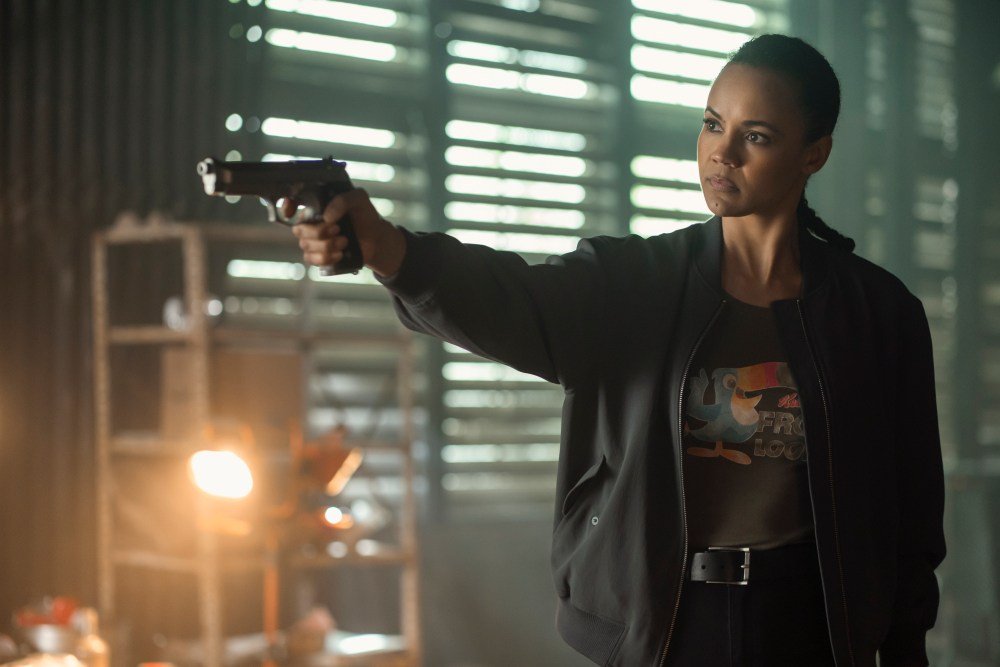
    All this to say is that Frances Neagley (Maria Sten, also of “Reacher”) is no Jack Reacher, and therefore the new spinoff “Neagley” is nowhere near as fun to watch as its flagship show. The most enjoyable scenes by far in the eight-episode season are the first few, when Reacher stops by to pass the baton to his ex-military comrade, now a private investigator in Chicago. Reacher helps Neagley foil a kidnapping attempt; then the two attend a Cubs game for some bestie bonding where Reacher’s mass and Neagley’s glower makes them stick out like sore thumbs. Cute!

    But then Reacher splits off for his next adventure and Neagley is left to shoulder an entire show on her own. Co-created by Nick Santora and Nicholas Wootton, “Neagley” begins with the heroine’s childhood friend Tommy Crane (Jhaleil Swaby) stripping naked and walking calmly in front of an L train. The mystery his death introduces proves flat and uninteresting, with none of the buzzy elements stuffed haphazardly into the plot — cults! Big Pharma! maimed penises! — executed with enough verve to inject any life into the proceedings. And while Sten performs capably in the (sporadic, perfunctory) action scenes, her taciturn protagonist declaring that “I don’t have trauma” can’t reverse psychology the viewer into genuine curiosity.

    That’s because Neagley is a collection of hard-surface, soft-heart tropes that never achieve independent momentum. Some shortcuts to emotional weight even feel counterproductive: in addition to Tommy, Neagley gets both an ailing father — an ex-cop who showed her the ropes — and a couple of mentees as loved ones with built-in stakes. But it’s hard to watch these thinly sketched relationships and not think of “Reacher,” which partly works because its hero is so free of roots or baggage. One of that show’s insights is that such exposition can get in the way of pure, brainless entertainment; it’s odd to watch a spinoff discard such inherited wisdom.

    Other details simply fail to inspire much intrigue. Neagley doesn’t like to be touched, a quirk that doesn’t become any more effective a hook for how often characters use the condition’s medical name (haphephobia — the more you know!) when discussing it. “Neagley” tries to pad out the investigation into Tommy’s death with a look at Neagley’s own past, but neither her backstory nor that of her reluctant partner Hudson (Greyston Holt), a Chicago PD detective attempting to distance himself from his criminal family, make much of an impact beyond filling space.

    Even Echo Canyon, the shady communal farm where Tommy spent his final days, is oddly banal for a messianic cult. “Neagley” sometimes flirts with comedy in the form of leader Lawrence Cole (Damon Herriman), a dime-store Manson who forces his followers to listen to his bad rock covers and unironically quotes Depeche Mode in declaring himself a “personal Jesus.” (Lawrence’s financial backer Pierce, played by Matthew Del Negro, gets his own chance to gnash his teeth when he informs a victim that “watching you die, I’m hard as a rock.”) But besides these flashes of fun, the show proves reluctant to lean into either camp or distinctive detail. Lawrence’s chief deputy Judith (Rebecca Liddiard) has awfully composed hair and makeup for a hippie who’s left polite society; street kid Keno (Jasper Jones), who Neagley recruits to infiltrate the farm, has an immaculate six-pack despite not having access to a hot shower, let alone a gym. The viewer remains acutely aware they’re watching professional actors impersonate vague stereotypes of cult members rather than an immersive take on the genre.

    In light of this ersatz feel, the constant invocations of Neagley’s military record for authenticity ring hollow. (When she reminds a scene partner that “I’ve been in combat” halfway through the season, it’s hard to resist shouting back: “We know!”) The rough outline of what happened to Tommy is apparent within a few episodes, and without that source of suspense, “Neagley” quickly loses steam. With “Reacher,” the show’s namesake has become a reason to watch in and of himself. That’s simply not the case here.

    All eight episodes of “Neagley” will premiere on Amazon Prime Video on Sept. 16.

  • Amsterdam Doc Fest IDFA to Celebrate Tatiana Huezo, Put Spotlight on William Greaves

    Amsterdam Doc Fest IDFA to Celebrate Tatiana Huezo, Put Spotlight on William Greaves

    Mexican-Salvadoran filmmaker Tatiana Huezo (Prayers for the Stolen, The Echo) will be the guest of honor at the 2026 International Documentary Film Festival Amsterdam (IDFA), which takes place Nov. 12-22. In addition to the Huezo retrospective, the doc fest on Tuesday also unveiled a spotlight on pioneering U.S. filmmaker, producer, editor and actor William Greaves.

    Plus, the festival said that it would wrap up its multi-year program “Dead Angle” with a focus on the theme Common Ground, following Borders in 2024 and Institutions in 2025.

    IDFA said that its 2026 edition will also feature Huezo’s personal top 10 film selection and a talk featuring the filmmaker. Born in El Salvador and raised in Mexico, she “has developed a distinctive body of work that moves between documentary and fiction, exploring how the violent consequences of organized crime and political turmoil shape the intimate lives of local families and communities,” fest organizers said. “Her cinema is rooted in close observation and shaped by a highly attentive visual and sonic language – allowing memories and experience to surface through atmosphere and deeply personal stories.”

    Huezo first gained international recognition with her feature-length debut The Tiniest Place (2011), a portrait of a remote Salvadoran village whose inhabitants carry the memory of a massacre during the country’s civil war. Her fiction debut, Prayers for the Stolen (2021), is a coming-of-age story about girls growing up in the mountains of Mexico under the threat of human trafficking by local drug cartels.

    The spotlight on Greaves (1926–2014) is designed to bring “a rediscovered voice in cinema back into view,” IDFA said. Across a formally inventive filmography shaped by sharp observation of social and political life, Greaves explored Black history and culture.”

    The spotlight program includes Once Upon a Time in Harlem (2026), capturing a 1972 reunion of key Harlem Renaissance figures in Duke Ellington’s apartment, completed posthumously by Greaves’ son and granddaughter David and Liani Greaves. Also featured are Symbiopsychotaxiplasm: Take One (1971), which turns a fiction shoot in Central Park into a self-reflexive study of a film crew in revolt, and a director’s cut of The Fight.

    About the Dead Angle: Common Ground focus, meanwhile, will be “exploring the many ways people come together – from extraordinary acts of solidarity and collective resistance to the everyday life of communities and quintessential function of public space,” IDFA highlighted. Among confirmed titles exploring solidarity in times of crisis are Everybody to Kenmure Street (2026) by Felipe Bustos Sierra, Shinsuke Ogawa’s The Battle Front for the Liberation of Japan – Summer in Sanrizuka (1968) and Barbara Kopple’s Oscar-winning American Dream (1990).

    Finally, IDFA DocLab returns this year with the exhibition of what the fest described as “a diverse lineup of interdisciplinary immersive art and anniversary highlights to be revealed in the coming weeks.”

  • Spotify Now Lets Parents Block Kids’ Music From Polluting Their Recommendations

    Spotify Now Lets Parents Block Kids’ Music From Polluting Their Recommendations

    Does Spotify think you absolutely love “Baby Shark” because your kids have listened to it hundreds of times — and as a result recommends similar stuff? If you’ve ever encountered this conundrum, here’s good news: Spotify is finally letting parents keep nursery rhymes, Disney princess songs and other kiddie tunes out of their own music recommendations.

    Starting Sept. 15, Spotify is giving parents the ability to exclude kids and family music from their recommendations, including the annual Wrapped marketing campaign. In promoting the new feature, the company is telling subscribers to “Keep your recommendations yours.”

    “Parents love using Spotify to play music for their families. But parents don’t always share the same taste as their young children,” the company noted (rather obviously) in announcing the feature.

    The new ability to toggle off kids and family music from influencing a Spotify user’s taste profile is rolling out globally on mobile to Free and Premium users. When you turn the setting off, “you can still search for, listen to, and build playlists of kids and family music — but those streams won’t affect what Spotify suggests for you,” per Spotify. “That means experiences like Discover Weekly, Daily Mix, and Wrapped more accurately reflect your taste.” The feature also applies retroactively, so kids’ music you’ve already listened to won’t be factored into your Wrapped top song or artist, for example.

    Kids and family music on Spotify includes the following, according to the company: animated and live-action film soundtracks; theme songs and music from family TV shows; music from family entertainment brands and characters; family-friendly covers of popular songs; nursery rhymes and lullabies; sing-along, educational and activity music; and novelty and parody tracks for families.

    The new feature is “the latest step in our ongoing efforts to give parents and guardians more control over how they and their kids listen,” according to Spotify.

    The company’s existing tools provide the ability to exclude specific tracks or playlists from your taste profile. Meanwhile, in 2024, Spotify first launched managed accounts, designed to let parents with kids 13 and under their own space to discover music while maintaining control over their listening environment. In addition, the company offers the stand-alone Spotify Kids app, available to Spotify Premium Family plan subscribers, which provides a walled-off experience for young children.

    Here’s how to toggle off kids and family music from your Spotify profile:

    • Navigate to “Settings and privacy” by tapping your profile picture in the top left corner of the app.
    • Select “Content and display.”
    • Switch off the toggle next to “Include kids and family music in taste profile.” (It may take up to 48 hours for the change to be reflected in personalized recommendations.)

    And here’s an image from Spotify’s publicity campaign about the new feature:

  • BlackRock Buys $1 Billion in Bitcoin

    BlackRock Buys $1 Billion in Bitcoin

    BlackRock has remained relentless in expanding its Bitcoin holdings as it continues to fortify its position as one of the largest Bitcoin-holding corporations.

    Amid its consistent Bitcoin accumulation, the latest data from Arkham Intelligence shows that BlackRock has seen steady demand for its Bitcoin investment product among institutional investors.

    BlackRock’s IBIT records steady capital influx

    Notably, the data shows that BlackRock has made a total Bitcoin purchase of about $1.08 billion over the last 20 days as its iShares Bitcoin Trust (IBIT) saw a large capital influx during the period.

    This reflects heightened demand for Bitcoin among institutional investors who have chosen to gain exposure to the asset through BlackRock.

    The data further showed that the Bitcoin buying activity from BlackRock occurred on seven days out of the last monthly ETF trading sessions.

    With over $1 billion now added to BlackRock’s Bitcoin stash, the firm now boasts a massive 785,900 BTC worth about $61 billion in its holdings.

    Grayscale sells Bitcoin

    Unlike BlackRock, Grayscale’s trading performance moved in the opposite direction over the same period, suggesting that investors are less convinced about its Bitcoin investment product.

    Notably, the data showed that the Grayscale Bitcoin Trust recorded about $254.7 million in net outflows over the same period as investors continued to move money out of the fund.

    This suggests that Grayscale and other major funds have continued to face heightened selling pressure amid unstable market conditions, while BlackRock continues to dominate with consistent Bitcoin accumulation.

  • Hawai’i Film Festival to Open With ‘The Navigator,’ Names ‘Drifter’ as Centerpiece (EXCLUSIVE)

    Hawai’i Film Festival to Open With ‘The Navigator,’ Names ‘Drifter’ as Centerpiece (EXCLUSIVE)

    The Hawai’i International Film Festival presented by Halekulani will open its 46th edition, HIFF46, with the world premiere of “The Navigator,” directed by Jordan Manley, at the historic Hawai’i Theatre Center.

    “The Navigator” is a made in Hawai’i documentary centered on Nainoa Thompson, who nearly half a century ago became the first Native Hawaiian in 600 years to sail from Hawai’i to Tahiti using no modern instruments. The documentary follows him on a 2,400-mile return voyage accompanied by a new generation of trainee wayfinders, drawing on wisdom instilled by master navigator Mau Piailug. The screening also marks HIFF’s first opening night held at the Hawai’i Theatre Center since the COVID-19 pandemic began.

    “It is a tremendous honor for HIFF to open our 46th Festival with the world premiere of ‘The Navigator,’ a film that could not be more deeply connected to Hawai’i and to who we are as a festival,” said Jean H. Lee, HIFF executive director. Lee added that Nainoa Thompson’s legacy “represents the reclamation and perpetuation of ancestral knowledge, a living connection across Oceania, and the responsibility to pass that knowledge to the next generation.”

    HIFF46’s centerpiece presentation is the Hawai’i premiere of “Drifter,” the feature directorial debut of actor and filmmaker Sung Kang, who also wrote, produced and stars in the film. Set against the drifting subculture, the story centers on a lone racetrack janitor carrying old wounds, who gets one shot at redemption behind the wheel if he can learn to trust those around him.

    The festival features 84 films in total, including 34 world premieres, six North American Premieres, 12 U.S. premieres and three international premieres, alongside selections from Cannes, Sundance, Berlin and Busan. The program also includes 86 short films; HIFF is the only Academy Award-qualifying film festival in the state of Hawai’i for short films.

    The festival’s 24 individual premiere titles include world premieres “Beyond the Smiles: Yani Tseng,” “Making the Line,” “Niu Forever,” “Orphan Myth,” “Sukiyaki” and “Protecting Kahoʻolawe: 50 Years of Aloha ʻĀina”; North American premieres “The House on the Moon,” “The Mage,” “Ugly Duckling Ms. Maeng” and “Will You Still Be My Friend?”; U.S. premieres “Big Little Things,” “Chura Vita,” “Fruit Gathering,” “Lomu,” “Los Vampires,” “Satoko Always,” “Sgt. Haane,” “Sukundimi Walks Before Me,” “We Are Born Good” and “You Are the Film”; and international premieres “2 Valid IDs,” “Guided by Horses” and “Shadow Work.”

    The lineup also brings in festival selections from Cannes, Sundance, Berlin and Busan, including “Josephine,” “Bedford Park,” “Take Me Home,” “All of a Sudden,” “Coward,” “Fatherland,” “La Bola Negra,” “Minotaur,” “The Station,” “9 Temples to Heaven” and “We Are Aliens,” alongside a studio slate featuring Netflix’s “Ink,” “14th” and “Possible Love”; A24’s “Club Kid” and “The Debut”; IFC Films’ “Tangles” and “Mouse”; Searchlight Pictures’ “Behemoth!” and “Wild Horse Nine”; Amazon MGM Studios’ “I Play Rocky”; and Neon’s “Once Upon a Time in Harlem” and “Clarissa.”

    Alongside its film program, HIFF46 presents the second annual HIFILM industry conference, featuring conversations with filmmaker Destin Daniel Cretton, “Romanticals” creator Jonah Feingold, producer Walter Hamada, Desert Eclipse CEO Jason Chen, actors Holt McCallany, Henry Ian Cusick, Alex Tarrant and Amy Hill, and writer-producer Dana Ledoux Miller, among others.

    “At its core, HIFF has always been about where we are,” said Anderson Le, HIFF artistic director. Le noted that the festival can present “an awards contender from Cannes or Sundance one night, a world premiere from Hawai’i the next, and then a new filmmaker from Korea, Japan, the Philippines, Taiwan, Hong Kong, Aotearoa or across Oceania – and they all belong in the same conversation.”

    The festival runs Oct. 21-Nov. 5 on Oahu and continues through Nov. 15 on Maui, Molokai, Lanai and the Big Island of Hawai’i.

  • Coinbase Announces! Critical Date Approaching for Bitcoin and Ethereum: $16.6 Billion at Risk!

    Coinbase Announces! Critical Date Approaching for Bitcoin and Ethereum: $16.6 Billion at Risk!

    Bitcoin, the leading cryptocurrency, is trading at $76,900 a day before the Fed’s September interest rate decision. While a cautious and downward trend prevails for $BTC, a new report has emerged from Coinbase.

    $16.6 Billion Worth of Options Approaching Expiration in the Crypto Market!

    While the market is monitoring the Fed and macroeconomic developments, the third-quarter options expiration date, which can affect prices, is also approaching.

    According to data shared by Coinbase Markets, there is approximately $16.6 billion in open positions in the Bitcoin and Ethereum options markets with days remaining until the expiration of third-quarter contracts.

    According to Coinbase Markets analysts, the significant weighting of call options over put options in both Bitcoin and Ethereum reflects investors’ expectations that prices could rise to higher levels.

    These options are expected to expire on September 25, 2026.

    $14.73 Billion Worth of Positions Held in Bitcoin Options!

    According to data shared by Coinbase Markets, the total in-depth value of Bitcoin options is approximately $14.73 billion, while the number of open contracts is around 186,000. The put/call ratio in Bitcoin is 0.52, indicating that long positions are stronger in the market.

    According to the data, the “maximum pain” price for Bitcoin is calculated at $72,000. The most concentrated call option positions are around $70,000. In addition, there are significant long-term open positions at the $85,000, $90,000, and $100,000 levels.

    Ethereum’s $3,000 Level Attracts Attention!

    In Ethereum options trading, the total in-depth value is approximately $1.92 billion, while the number of open contracts exceeds 756,000. The put/call ratio is stated as 0.57, and the maximum open price is around $2,200.

    The largest concentration of call options on Ethereum is observed at a strike price of $3,000, with approximately 43,000 contracts.

    The fact that call options outnumber put options in both ETH and $BTC suggests that investors are expecting higher price levels ahead of the third-quarter expiration. However, as option expiration approaches, volatility may increase, particularly around strike prices where large open positions exist.

    *This is not investment advice.

  • PYUSDx Platform Passes $100 Million

    PYUSDx Platform Passes $100 Million

    PayPal, M0 and MoonPay have launched PYUSDx, a platform that allows companies to issue custom stablecoins backed by PayPal USD ($PYUSD). The platform has already processed more than $100 million in volume since its launch.

    Saturn, Concrete, and Cap are the first projects using PYUSDx. They apply the same infrastructure to different products in credit, investments, and DeFi.

    • Saturn is a structured finance protocol focused on Bitcoin-backed digital credit. Its USDat stablecoin, issued through PYUSDx, is used for liquidity and settlements. Around $65 million of USDat is currently in circulation.
    • Concrete provides infrastructure for on-chain vaults and uses automated systems to manage DeFi strategies. Through PYUSDx, the company launched ConcUSD, a reward-bearing stablecoin that allows users to receive part of the returns generated by its strategies.
    • Cap operates a credit platform where depositors provide capital and institutional borrowers use it to generate returns. Part of Cap’s cUSD stablecoin was migrated to PYUSDx. The total circulating supply of cUSD is around $92 million.

    M0 provides stablecoin issuance technology, while MoonPay handles token issuance and distribution. PYUSDx combines both systems with PayPal’s $PYUSD infrastructure.

    Image: Magnific

  • US repeals pollution limits for fossil fuel power plants

    US repeals pollution limits for fossil fuel power plants

    The US Environmental Protection Agency is ending a rule that limits greenhouse gas emissions from coal and gas power plants. The Trump administration says the rollback of climate regulation will save companies ‘trillions’ of dollars.

  • Athletes share ‘what women in sport look like’ to rebut Sydney Sweeney ad

    Athletes share ‘what women in sport look like’ to rebut Sydney Sweeney ad

    Female athletes are pushing back against a sports-betting ad featuring actress Sydney Sweeney, which is being slammed for sexually objectifying women in sport.