Author: rb809rb

  • Warner Bros. Discovery’s Gerhard Zeiler to Recieve Directorate Award at This Year’s International Emmys

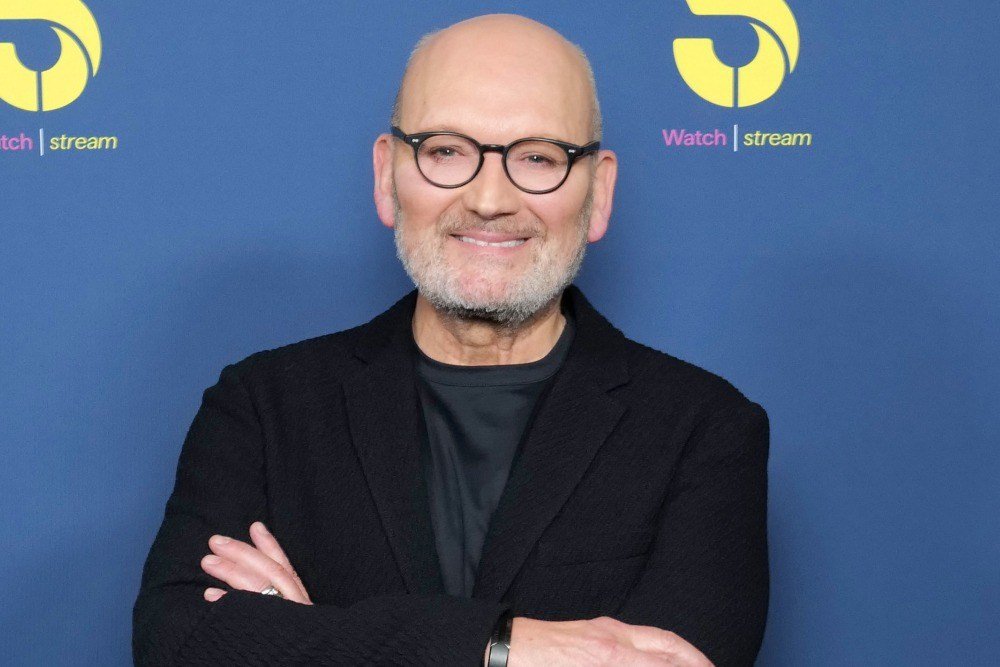
    Warner Bros. Discovery president of international Gerhard Zeiler has been tapped to receive the 2026 International Emmy Directorate Award. He joins Netflix chief content officer Bela Bajaria, who was previously announced as this year’s honoree for the org’s founders award. Zeiler and Bajaria will acceot their awards at the 54th International Emmy Awards Gala on Monday, Nov. 23, in New York.

    “Gerhard Zeiler has built and led some of the world’s most influential media businesses, helping shape the international television industry through periods of profound change,” said International Academy of Television Arts & Sciences president/CEO Bruce L. Paisner in a statement. “Throughout his career, his commercial acumen has been grounded in a deep appreciation for the creative talent and storytelling that define our business.”

    Per the International Emmys, the directorate award “is presented to organizations or individuals in management, administration, engineering, news, programming, and/or international relations for outstanding contributions over a period of time to the arts and sciences of international television.”

    Recent winners include Grupo Globo president João Roberto Marinho (2025), Gaumont CEO Sidonie Dumas (2024), Balaji Telefilms’ Ekta Kapoor (2023), CJ ENM’s Miky Lee (2022) and ZDF’s Thomas Bellut (2021).

    Zeiler first joined Time Warner’s Turner in 2012, expanding the company’s international operations, including its regional sports and pay-TV businesses. He was named WarnerMedia International presidnet in 2020, and as president of international for Warner Bros. Discovery, Zeiler has expanded HBO Max footprint to more than 130 countries in just over three years and helped oversee the integration of WarnerMedia and Discovery.

    Prior to Turner, he was CEO of RTL, and earlier in his career held senior leadership roles at Austria’s public broadcaster, ORF.

    “I am deeply honored to be recognized by the International Academy with the International Emmy Directorate Award,” Zeiler said in a statement. “My passion for media began before I can even remember, and from a young age I understood the power of television to bring people together and open a window into different cultures and ideas. The role of media in connecting the world requires a deep understanding of distinct cultures – global trends and local nuances alike – and I feel very fortunate to have had a career filled with learnings and perspectives across the world on what makes compelling television. This is an industry like no other, driven by passion, ambition, and the desire to create stories that audiences can connect with. I receive this recognition with great appreciation for the colleagues, partners and creative talent who have inspired that journey.”

  • Market Experts: “85 Percent of the Bear Market in Bitcoin and Altcoins Is Over”

    Market Experts: “85 Percent of the Bear Market in Bitcoin and Altcoins Is Over”

    The DeFi Report, a cryptocurrency and macroeconomics analysis company, announced in its latest assessment of Bitcoin and the overall cryptocurrency market that the bear market has now entered its final phase. The analysis stated that approximately 85% of the bear cycle is behind us, and the remaining 15%, which will determine the market’s fate, largely depends on global macroeconomic developments.

    According to the company’s on-chain cost base analysis, the leading cryptocurrency Bitcoin is exhibiting movements quite similar to previous cycle bases in terms of on-chain data. However, it was noted that spot and futures trading volumes have fallen to their lowest levels since the end of 2019, which was described as a clear indication of a “time-spread capitulation” process taking place on the chain. Furthermore, asset sales by miners, redirecting their energy capacity to AI firms, were also cited as factors increasing pressure on the market.

    The analysis stated that whether Bitcoin will fall to the “deep value” region of $55,000 and below will depend on macroeconomic liquidity conditions in the coming weeks. The fact that US 30-year Treasury yields have surpassed 5.2%, reaching a 20-year high, and the Fed’s move towards higher interest rates were highlighted as key factors putting pressure on risky assets.

    Another notable development in global markets was the covert liquidity measures implemented by the US Treasury Department and the Bank of Japan to strengthen the Yen. Analysts described this mechanism, which allows foreign institutions to provide liquidity by collateralizing US bonds instead of selling them, as “QE Light” (Quantitative Easing). The 15% increase in gold prices due to this covert liquidity injection and the impact of global risks suggests that investors are positioning themselves against inflationary pressures, and a similar liquidity flow could shift to Bitcoin in the future.

    Analysts evaluating technical levels and strategies consider the 200-week moving average, currently at $63,800, a critical threshold. If Bitcoin closes the month above the $68,700-$69,800 range, the scenario that the bottom has been reached will gain strength.

    *This is not investment advice.

  • 44 Billion SHIB in Hours: Shiba Inu May Head for Rebound

    44 Billion SHIB in Hours: Shiba Inu May Head for Rebound

    Shiba Inu has continued to trade on a downward trajectory amid prolonged broader market volatility. However, its exchange activity over the last 24 hours has provided a different signal.

    With its price still struggling to reclaim its recent high around the $0.000005 mark, the latest data from crypto analytics platform CryptoQuant has provided investors with a glimpse of hope for a possible price recovery soon.

    44 billion $SHIB in demand

    Per the data, the Shiba Inu exchange netflow has drawn attention amid the market downturn after projecting a negative balance of 44.1 billion $SHIB as of Thursday, August 13.

    While a netflow of 44 billion $SHIB may seem modest, its timing makes it significant as it shows a major divergence between the $SHIB trading price and its exchange activity.

    Notably, the metric shows that the amount of $SHIB tokens moved out of exchanges amid growing demand is significantly greater than the amount of $SHIB returned to exchanges for sell-off purposes over the last day.

    While the difference in both activities stands at -44 billion $SHIB, it means that the amount of $SHIB available for sale on exchanges has been reduced substantially, gradually cooling the intense sell pressure facing the Shiba Inu ecosystem.

    Where’s $SHIB headed?

    Although the Shiba Inu exchange flow provides a bullish outlook for $SHIB, the asset is still struggling to recover near its recent high, consistently trading in the red zone.

    However, analysts believe there is still a chance for a potential price reversal for $SHIB if investors remain resilient and it is able to sustain demand even amid such weak market conditions.

  • We found HTX’s reserves at Poloniex

    We found HTX’s reserves at Poloniex

    $HTX’s situation has appeared increasingly precarious as both the European Union Council and the United Kingdom’s Foreign, Commonwealth, & Development Office have chosen to sanction the exchange.

    Since then, it’s made some big changes to how it manages users’ reserves.

    Its June proof of reserves report was the first that acknowledged that it had moved huge swaths of its reserves to an undisclosed “ThirdParty.”

    $HTX moved $1.3 billion from reserves to undisclosed ‘ThirdParty’

    $HTX claims on its website that you can verify these balances by reaching out to the custodian; unfortunately, it doesn’t tell users who that custodian is. As a result, Protos has been unable to verify most of those balances.

    Further complicating this, TRM Labs, a blockchain intelligence firm, released a report in which it detailed how $HTX has begun churning through its wallets at a prodigious rate.

    Ari Redboard, the global head of policy for TRM, described this behavior as an attempt “to stay a step ahead of screening built on static lists.”

    TRM claims $HTX is rotating wallets to ‘stay ahead of screening’

    $HTX, for its part, previously claimed that this was totally normal cybersecurity behavior.

    Since then, Protos was able to track a substantial portion of $HTX’s staked ETH (stETH) through Poloniex addresses.

    Now, we can add that various other $HTX assets have also recently passed into Poloniex.

    Is Justin Sun mixing $HTX’s reserves with Poloniex?

    First, $HTX distributes a tool that used to enable people to gain greater insight into its reserves, even including which addresses the reserves were held in.

    We can use these past reports to determine where certain assets were claimed to be at a certain time and can use the blockchain transactions to follow some portion of the reserves as they move.

    Consider 0x18709e89bd403f470088abdacebe86cc60dda12e, which was an address that $HTX used to hold many of the Ethereum-based DeFi positions it maintained, for some reason.

    On May 30, immediately before we get the transition to ThirdParty, we can watch the Sun-advised wrapped BTC (WBTC) move from this $HTX address to 0xeB245796376912af7Fadd4986f73743feEA61e6E.

    These funds were then transferred to 0x8fCA4adE3a517133fF23ca55CdAea29C78C990b8, an address that Etherscan labels as Poloniex 7.

    These funds were then quickly sent to 0x29065a4C1f2F20d1E263930088890d6F49Fe715a, an address that Etherscan labels as Poloniex 10.

    Finally, this WBTC was sent to 0x176F3DAb24a159341c0509bB36B833E7fdd0a132, an address that Etherscan labels as Poloniex 9.

    This WBTC which came from $HTX, is still stored in this Poloniex address.

    The $HTX to Poloniex pattern repeats

    The May PoR for $HTX had a problem. It claimed that it had a bunch of STEAK-$USDC, but it was wrong; there was no STEAK-$USDC in that address on that date.

    However, there was a matching amount of Sky Savings USDS (sUSDS) in that address, suggesting that while $HTX failed to accurately label its own reserves — troubling on its face — it did have another position that represented that value.

    We start with approximately $200 million worth of sUSDS moving to 0x7fed2E5e06CF7B8918bB93158C4E990794da33b8.

    These funds are then sent onward to Poloniex 7.

    These were then forwarded in three transactions to Poloniex 10.

    Finally, these funds were forwarded to Poloniex 9.

    Similar patterns can also be observed for various Spark positions, some of which may have been since redeemed.

    These related-party transactions, involving many hundreds of millions of dollars worth of value, raise serious questions about the internal controls and management of both of these Sun-owned exchanges.

    They furthermore raise questions about Poloniex’s role in interacting with this repeatedly sanctioned entity.

    Protos reached out to $HTX with questions about these transfers, but it didn’t respond before publication.

  • Gaza mural for Burger King worker fired for shouting ‘Free Palestine’

    Gaza mural for Burger King worker fired for shouting ‘Free Palestine’

    Artists in Gaza painted a mural honouring former Burger King employee Arianna Hamilton, who was reportedly fired after saying “Free Palestine” to an Israeli-American customer at a drive-through window in Breinigsville, Pennsylvania.

  • Kennedy Center Board Votes To Return Donald Trump’s Name To Front Facade Of Complex, Again Approves Plan To Close For Two Years For Renovations

    Kennedy Center Board Votes To Return Donald Trump’s Name To Front Facade Of Complex, Again Approves Plan To Close For Two Years For Renovations

    The Kennedy Center board voted on Thursday to return Donald Trump‘s name to the front of the complex, amid a judge’s order that only Congress could change the official designation of the arts institution.

    The Trump-controlled board voted to add a phrase below the center’s official name, The John F. Kennedy Memorial Center for the Performing Arts, that reads, “Restored and Renovated by President Donald J. Trump,” according to Rep. Joyce Beatty (D-OH), an ex officio member of the board, and her attorneys. The board also voted to rename the physical site “the President Donald J. Trump Plaza,” her legal team said.

    The board voted to add Trump’s name to the center in December. But a federal judge ruled in May that only Congress could make such a change. The next month, a crew set up scaffolding to remove lettering with Trump’s name, but a tarp has concealed the remaining letter, with the original name of the complex, ever since. 

    Earlier on Thursday, the board approved a plan in which the main complex would be shuttered but a newer extension, called The Reach, would still offer limited programming and as a memorial to John F. Kennedy, according to a source familiar with the deliberations.

    The board will still have to submit its actions to U.S. District Judge Christopher Cooper, who previously ruled that the closure plan needed to consider other factors, including programming. Cooper wrote that the board was “derelict” and “based its decision on an insufficient, one-sided presentation of information and neglected to consider the full range of its statutory obligations and potential adverse consequences of closure on programming and memorial functions.” His ruling left open the possibility of closure, but only if the board conducted a more comprehensive analysis.

    The board considered two options, according to The Washington Post: The two-year closure plan, and another plan that would have left the main building partially open for four years but take longer and be costlier.

    Congress appropriated $257 million in last year’s One Big Beautiful Bill Act for Kennedy Center repairs and renovations. In February, Trump announced the plan to close the complex during the overhaul, and the board, in which he leads as chairman, endorsed the proposal the next month. But Beatty sued the center over the name change and the closure, arguing that it failed to fully account for the impact on programming, among other things. The plan also was approved amid declining attendance and a number of artists pulling out of shows after the name change. 

    In a statement after the board meeting, Beatty said, “This morning’s decision to close the Center and the surprise agenda item to put Donald Trump’s name back on the building was more of the same. This latest development is a transparent effort to circumvent the Court’s ruling, and flies in the face of the statutes that Congress passed. I will continue to fight for this treasured national monument.”

    Her legal team said that the board’s vote “appears to directly flout” the Kennedy Center statute, which prohibits “memorials or plaques in the nature of memorials” with limited exceptions.

    Her attorneys, Norm Eisen and Nathaniel Zelinsky, said in a statement that the vote was “more of the same, and a show of blatant disrespect to the courts. The court already ruled against the board when it bowed to Trump’s demands. Now, the defendants must answer for their actions—again—in court.”

    The center is appealing the judge’s ruling. In the meantime, Cooper has ordered a status update on the center’s plans for construction and future operations by next week, as well as on the purpose for the tarp at the front of the complex.

    A Kennedy Center spokesperson did not immediately return a request for comment. The New York Times first reported on the board votes.

    The center’s final large events ended in early July, the original target date for closure, but there have been smaller performances at The Reach, which opened in 2019 as a major expansion on the complex’s south side.

  • Save Up to $1,000 With a Trade-In on Samsung’s Incredible New Foldable Phones

    Save Up to $1,000 With a Trade-In on Samsung’s Incredible New Foldable Phones

    An advertiser paid for editorial consideration of this deal. Our experts vetted the deal based on our independent expertise. Because we determined that the deal will save you money, we covered it.

    It’s new phone season, and we’re dazzled by Samsung‘s latest trio of foldables. Instead of resting on its laurels, the company is pushing the envelope in multiple directions with the Galaxy Z Fold 8, Fold 8 Ultra, and Flip 8. The latest devices have new form factors, more powerful processors, wildly better battery life, and delightful screens. Samsung’s so confident that you’ll love them that it’s offering a huge trade-in deal on all three. You can get up to $1,000 off with an eligible device. Don’t have an old phone to swap? No stress, because there are Samsung gift certificates to give away as well. Read on for the details.

    Samsung Galaxy Z Fold 8

    5.5-inch display, 7.6-inch display, 256GB storage, 50MP, 50MP, 10MP cameras


    $899.99
    at Samsung

    $1,899.99
    Save $1,000.00


    Get Deal

    We were absolutely dazzled by the Galaxy Z Fold 8 in our review, giving the flagship phone an Editors’ Choice award and converting PCMag expert Kimberly Gedeon into a folding phone believer. She wrote that it “sets a new standard for book-style foldables,” solving all of the existing issues with the form factor and delivering exceptional performance, durability, and style. High points include the new 4:3 aspect ratio Dynamic AMOLED 2X display, which features a 1,848-by-2,448-pixel resolution when unfolded. It’s the best phone on the market for watching movies and TV shows, just for that. Battery life is also significantly improved, clocking in at almost 17 hours in our test, and the crease where you fold it is nearly invisible. You can get up to $1,000 back with an eligible trade-in at Samsung, or opt for a $200 Samsung e-certificate without trade-in.

    Samsung Galaxy Z Fold 8 Ultra

    6.5-inch display, 8-inch display, 256GB storage, 200MP, 50MP, 10MP cameras


    $1,099.99
    at Samsung

    $2,099.99
    Save $1,000.00


    Get Deal

    New to the Galaxy Z foldable line this year is the Fold 8 Ultra, which offers more traditional dimensions than the base Fold 8, resulting in a bigger overall screen that’s less optimized for video watching and more for productivity and other apps. We gave it an “Excellent” rating in our review, lauding its wickedly sharp and powerful cameras, exceptional performance, and longer-lasting battery. Unfolded, it measures 6.24 by 5.64 inches, giving you a tablet-class display that’s vibrant and colorful. It also uses the new Flex Titanium structure for better durability and a smoother fold. It benchmarked at the top of its class thanks to the Snapdragon 8 Elite Gen 5 processor, dominating resource-heavy games and multitasking with ease. The Z Fold 8 Ultra is eligible for the same trade-in deal as the Fold: up to $1,000 off the purchase price, or a $200 Samsung e-certificate without a trade-in.

    Samsung Galaxy Z Flip 8

    6.9-inch display, 4.1-inch display, 256GB storage, 50MP, 12MP, 10MP cameras


    $799.99
    at Samsung

    $1,199.99
    Save $400.00


    Get Deal

    For a more budget-conscious entry into the world of foldable phones, the Galaxy Z Flip 8 is a compact, portable device with a lot to recommend it. Unfolded, it resembles a standard cellphone, but flipping the almost undetectable hinge collapses it into a three-inch square. We gave it an “Excellent” rating in our review, with tester Eric Zeman calling it “Samsung’s most refined flip phone yet.” The big change over its predecessor is a lighter and thinner build that lets you use it more easily with one hand, but it also packs numerous improvements under the hood, most notably the Qualcomm Snapdragon 8 Elite Gen 5 for Galaxy CPU. We consider this chip the pinnacle of the mobile market, delivering buttery-smooth performance and plenty of useful on-device AI tools. The Flip 8 can be yours for up to $400 off with an applicable trade-in, or get you a $100 Samsung e-certificate without one.

    Want even more ways to save tons on tech? Our deals page is the destination for discounts.

    About Our Expert

  • Sally Field Recalls the Roles She Fought for the Hardest

    Sally Field Recalls the Roles She Fought for the Hardest

    Over the course of Sally Field‘s storied career, there have been opportunities to discover her character on set (like the ad-lib-heavy Mrs. Doubtfire) and those where it was all on the page (Tony Kushner’s Lincoln script). In Netflix’s, an adaptation of Shelby Van Pelt’s novel that’s sold more than 2 million copies, it was a little bit of both. “Lewis Pullman and I were improvising all the time,” Field says of her primary co-star … at least the one that’s not a CGI octopus. “That relationship was really created out of he and I playing with each other. You can kind of see it in the movie.”

    Her Emmy nom for the work isn’t just interesting because it’s her 10th (she has three wins), she’s also the first actress in nearly a decade to earn one for a TV movie. But for Field, who went from ABC’s The Flying Nun to an Oscar winner for Norma Rae early in her career, the medium is something she’s learned not to focus on.

    Is there some role or project you’re still itching to do that’s not being presented to you?

    My whole life, it’s been very difficult to find projects that I wanted to do. In the beginning, it was very difficult to find projects where they would even let me in the room to audition. I started in situation comedy television in 1964. In those days, they didn’t let you out. You lived and you died on that railroad track. You weren’t getting out. Even after I got to a place where [they’d let me audition], it has always been difficult to find films, characters, stories that I want to be part of me … that I would go, “OK, that’s it. This is the one.” It’s always taken me a long time. I never was an actor that was able to work back-to-back-to-back, doing one project after another. I just had to keep my head down, as they say.

    What were the conversations with your team like in those moments where you felt like you weren’t booking what you wanted?

    I didn’t think it was their responsibility. They would perhaps come across something that I might like, even if it wasn’t offered to me, maybe they would show it to me. But many times, the things that I finally, eventually did do, I found it. I came after it. Certainly Lincoln was one of them. I fight like crazy. You don’t get delivered things, and at least women don’t and certainly not older women. You don’t get a whole box of chocolate, so to speak, and say, “Hmm, which one do I want today?” It just doesn’t happen.

    Lewis Pullman and Field in the Netflix movie.

    Courtesy of Netflix

    Was Lincoln the role that you fought the hardest for?

    No, I fought hard for Sybil. That was a huge turning point. And I fought hard to get into this movie, Stay Hungry [1976]. That was the first [feature]. It was incredibly difficult to even get in the room. Nobody wanted me there. I could hear [director] Bob Rafelson in the back room yelling at Dianne Crittenden, the casting director, for even letting me sit in the waiting room because I was wasting his time. I had to use that anger as my fuel. It was a long haul to get to my movie career and then to find the things I wanted to do.

    You talk about this stigma of working in sitcoms at the beginning of your career. You went back to TV in 2006 with Brothers & Sisters — a time before a lot of other Oscar winners started working in both mediums. Did you feel that the iron curtain was lifting?

    I wanted to tell stories that were worth telling. I wanted to act. When I finally transitioned to film, I was able to find Norma Rae, Places in the Heart, Absence of Malice, Mrs. Doubtfire, Forrest Gump, Steel Magnolias and whatever they were. But the industry was changing at the same time. When Brothers & Sisters came along, it just struck me. Those five years, I’m proud of them. It’s about a woman who’s older, obviously, because she’d raised children. I understood that because I had raised sons. Also, I had a gay son who was just coming out or had just barely gotten his feet under him. I got to play a mother with a really great family and a great son [Matthew Rhys] who happened to be gay. And this was a very crucial time in our country when this was not done. I mean, Will & Grace had been done, but it was comedy and very broad.

    Matthew Rhys, the onscreen son from Brothers & Sisters who you just referenced, is nominated for two Emmys this year.

    Yes! Good for him. He deserves it.

    Do you keep in touch with him?

    I sure do.

    A very important scene in film history for me and several of my friends is you repeating the phrase “The whole time?” in response to learning your husband had been cross-dressing as the nanny in Mrs. Doubtfire. Would you mind telling me a little about filming that scene?

    That was me improvising. That whole sequence, we shot it at the end of the film. It was several days in that restaurant. But that moment, that is an ad-lib because the line was [supposed to be] very calm. “The whole time” was an improvisation. Robin [Williams] and I had created a relationship, a world where we improvised a lot. It allowed Mrs. Doubtfire to come alive because it was such a weird circumstance.

    I don’t know how much you think about how the work is going to be received commercially or critically while you’re making it, but I’d imagine that many people involved in Mrs. Doubtfire expected it to hit as big as it did. Did you feel that was the case?

    I think they thought it would be successful. Robin was at the height of just … brilliance. But I don’t think anyone saw it being as huge as it was. The script wasn’t what was on the page because of what Robin and I were allowed to do by [director] Chris Columbus. We did not want — and Robin felt this strongly, too — the mother to be the villain. We both felt that there were no villains in this divorce. Marriages don’t always last. Sometimes there are no bad guys. It’s time to move on. Without getting in the way of the comedy, it was a delicate dance to allow her to not be mean. She was hurt to lose her marriage, too, but he was impossible. Who could be married to this guy?

    Field with Robin Williams in 1993’s Mrs. Doubtfire

    20th Century Fox Film Corp/Courtesy Everett Collection

    Looking back at the whole of your career, what do you feel like the biggest risk you took was?

    Everything’s a risk. Otherwise, forget it. If it’s not a risk, then stay home. Easy is overrated.

    You and your Lincoln collaborators Tony Kushner and Steven Spielberg saw Oh, Mary! before it went to Broadway. Now that Cole Escola has ceded the role to a revolving door of famous actors, would you ever step back into Mary Todd Lincoln’s shoes?

    No, no, no. (Laughs.) Maya Rudolph [just did it], and I couldn’t be in her world. She’s never not great. And Cole is so dazzlingly talented. I think they tried to keep it from them, the three of us were in the audience when we saw it. I can be in awe of it, but I can’t do it.

    This story first appeared in an August stand-alone issue of The Hollywood Reporter magazine. To receive the magazine, click here to subscribe.

  • “We Don’t See This as Entertainment”: ‘THR Presents’ Q&A With Octavia Spencer on True Crime Docu-Series ‘Lost Women of Alaska’

    “We Don’t See This as Entertainment”: ‘THR Presents’ Q&A With Octavia Spencer on True Crime Docu-Series ‘Lost Women of Alaska’

    The murders of two Alaskan Native women, Kathleen Jo Henry and Veronica Abouchuk, at the hands of serial killer Brian Steven Smith, are centered in ID’s Lost Women of Alaska.

    The three-part series narrated and executive produced by Octavia Spencer lays out the vulnerabilities that allowed Smith, who is serving a 226-year sentence for the killings, to prey upon Henry, Abouchuk and countless other native women he and other men are suspected of harming, from remote terrain to racism and biases against sex workers.

    “Amplifying these stories is our duty,” said Spencer, who’s nominated for an Emmy for best narrator for her work on the series, during a taping of THR Presents powered by Investigation Discovery. “These women had lives, they have loved ones, and they are human. We are human.”

    Right from the beginning, the series lays out the disproportionate number of missing persons in Alaskaroughly 1,300, with only 100 being actively worked on. Were you aware of the situation in Alaska prior to this project?

    As a Black woman, I know that our stories here are not prioritized. So it was not shocking, sadly, to me, that these indigenous women were going missing at alarming rates. It’s a systemic failure within our culture to disregard people who are Black and brown. 

    The end of the third episode notes that Brian Steven Smith is still being investigated for possibly committing more crimes in Alaska and his native South Africa. Are there any new developments?

    Without having concrete evidence, these aren’t his first victims. He was too good at it and had his modus operandi. He went to Alaska because it was a broader playing field, of that I am sure. But the same way that they weren’t vigorously investigating the indigenous women, I can almost assure you that his victims [in South Africa] were Black and aren’t being as rigorously investigated either. 

    True crime, as a genre, has been critiqued as sensational. What sets Lost Women apart?

    We don’t see this as entertainment. I don’t watch true crime for entertainment. I watch it to gain knowledge, and if I’ve seen something, I want to be responsible and report it. Lost Women, for us, is one about being restorative of lives and voices and bringing some resolution, hopefully, to families. It’s not that we glamorize crime against women. I find it abhorrent. Lost Women is about empowering all women and young girls to be a part of a community that helps each other, that we see each other, that we report, and that we fight for laws that protect us. This is a passion of mine, but not for entertainment, for justice for these victims.

    This is your second narration Emmy nomination, both of which were for the Lost Women series. What does that mean to you?

    It’s wonderful because it amplifies the story of the Lost Women of Alaska. I always joke and say, “Is my voice the right one to be narrating their stories?” But visibility is something that I can give with my name. And the voice — I’m compelled to use it for good and to tell these women’s stories because they can no longer tell their own stories. So it’s very, very humbling. And it’s not for me. I see this as a nomination for The Lost Women of Alaska.

    Watch the full Q&A with Spencer in the video above.

  • Nara Smith Signs With CAA (EXCLUSIVE)

    Nara Smith, a popular influencer on TikTok and other platforms, has signed with CAA for representation.

    Smith is a South African and German model, content creator and entrepreneur. She is best known for posting videos on TikTok in which she cooks elaborate meals or recreates common snack foods from scratch while dressed in designer clothing and narrating in an especially soft tone of voice. She also makes videos about her life with her husband, Lucky Blue Smith, and their four children. She has 12.5 million followers on TikTok and 4.8 million followers on Instagram to date.

    On October 13, Smith will release her debut cookbook via HarperCollins. Titled “Homemade,” the book features 85 from-scratch recipes influenced by her multicultural upbringing. Per the publisher’s official description, “When she was diagnosed with an autoimmune disease and eczema, she found that she could manage her symptoms by cutting out most processed foods. She turned her scratch-cooking expertise in a new curated direction while sharing her cooking online with compelling and elevated content.” Smith will promote the book with a nine-city tour.

    As a model and influencer, Smith has worked with brands including Miu Miu, Marc Jacobs, Fendi, Calvin Klein and Aritzia. In 2024, she was named creator of the year by People.

    Smith is also beginning to cross over into television and film. She will soon make her acting debut in Amazon MGM’s culinary thriller film “Tyrant,” which is written and directed by David Weil and stars Julia Garner, Charlize Theron and Demi Moore. Smith will also appear in the upcoming season of “Project Runway.”

    Smith continues to be represented by Range Media Partners and Myman Greenspan.