Author: rb809rb

  • Crypto Banter’s Sheldon Says Cardano Is Set for ‘Ridiculous’ Price Moves, Shares Timeline

    Crypto Banter’s Sheldon Says Cardano Is Set for ‘Ridiculous’ Price Moves, Shares Timeline

    “You can see very clearly where the buys are on Cardano,” Sheldon said, adding that the market will start turning green again once the current phase ends.

    His outlook comes as Cardano trades at $0.2346, according to CoinMarketCap data. $ADA has fallen 7.81% over the past week but remains up approximately 11% over the past month.

    Sheldon Expects Cardano to Turn Green Within 10 Days

    Sheldon expects the current market weakness to persist briefly before buyers regain control. He indicated that the recovery will arrive sooner if the market moves lower and reaches the buying zones he has identified.

    “If things play out right, we should be done in the next seven to 10 days and we should be seeing green again,” he said.

    The analyst added that a quicker move into these zones will accelerate the recovery. However, he did not provide specific price targets for $ADA or identify exact price levels for the buying areas in the available excerpt.

    His comments suggest he sees the current decline as an accumulation phase rather than the start of a prolonged downturn. $ADA’s response to buying interest and cryptocurrency market conditions will determine the strength and timing of the recovery.

    Notably, $ADA hit $0.2813 last week, marking a five-month high. However, the price quickly retraced from that level but has since found support around $0.23, and many analysts believe the rally will resume soon.

    UPDATE: Crypto Banter’s Sheldon says “you can see very clearly where the buys are on #Cardano $ADA. I do think a lot of these tokens are going to be here for a week or two, and then start moving ridiculously.” pic.twitter.com/x8m5hPDBqJ

    — Angry Crypto Show (@angrycryptoshow) October 13, 2026

    CryptoUS Predicts a Solana-Type Comeback

    Sheldon’s outlook follows comments from CryptoUS pundit George, who argued that Cardano will stage a recovery similar to Solana’s performance soon.

    George noted that $ADA has repeatedly suffered deep declines during crypto winters before recovering. He also highlighted Cardano founder Charles Hoskinson’s continued involvement as a key factor supporting the project’s long-term resilience.

    Solana provides a notable historical comparison. SOL fell to about $8.14 in 2022 after the FTX collapse, then climbed above $125 by 2023. It subsequently reached an all-time high of around $294 in January 2025.

    That represented a gain of more than 3,500% from its December 2022 low to its peak. George sees Cardano following a comparable recovery path.

    Meanwhile, $ADA will need to overcome its current price weakness and attract sustained buying demand to establish a similar trajectory.

    $ADA Recovery Hinges on Its Next Move

    At $0.2346, Cardano remains well below its previous all-time high of approximately $3.10. Its 11% monthly gain signals improved performance despite the weekly decline.

    Sheldon’s seven-to-10-day forecast puts the focus on $ADA’s ability to stabilize and recover during the coming sessions.

    Both analysts anticipate a Cardano comeback from different perspectives. Sheldon focuses on near-term buying zones and an imminent market turnaround, while George points to the prospect of a longer-term recovery modeled on Solana’s post-FTX rally.

  • Character.AI Files for Bankruptcy as Disney Bids $20 Million—And Users Get Grief Resources

    Character.AI Files for Bankruptcy as Disney Bids $20 Million—And Users Get Grief Resources

    In brief

    • Character.AI filed for voluntary Chapter 11 bankruptcy in Delaware on October 12 to sell itself under court supervision, and says the app will be wound down if no buyer keeps it running.
    • Disney is the opening bidder, offering $20 million for a non-exclusive perpetual license to some of the startup’s intellectual property, weeks after hiring its CEO as Disney’s first CTO.
    • The company pointed users attached to their AI companions toward mental health resources, just two weeks after launching two new chat models and a cheaper $4.99 subscription.

    Character.AI, the app where millions of people spend hours chatting with AI versions of fictional heroes and made-up partners, has filed for bankruptcy.

    The company announced Monday that it started a voluntary Chapter 11 process, a type of U.S. bankruptcy that lets a company keep operating while a judge supervises how its debts get paid or how its assets get sold. The case was filed in the U.S. Bankruptcy Court for the District of Delaware.

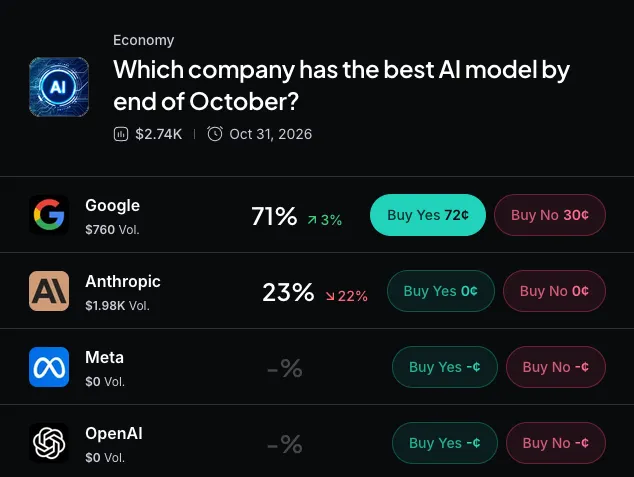
    Myriad: Which company will have the best AI model? Click to make your prediction.
    Myriad: Which company will have the best AI model? Click to make your prediction.

    Character.AI isn’t trying to restructure its way back to health. It wants a court-supervised sale of all or substantially all of its assets, and if no bidder agrees to keep the service alive, the company said the platform “will be wound down”—corporate speak for switched off.

    Disney Worldwide Services, a unit of the Walt Disney Company, signed on before the filing as the “stalking horse” bidder, according to Character.AI’s press release. In a bankruptcy auction, that is the opening offer that sets a floor every other buyer has to beat.

    The media giant is offering $20 million for a non-exclusive, perpetual license to some of Character.AI’s intellectual property and certain legal claims, plus transition services run by former Character.AI employees it has already hired. Non-exclusive means Disney gets to use that tech forever, but so can whoever else ends up buying it, and other bidders can still top the offer.

    The company expects the sale to close in late November or early December. Character Technologies Inc., the company’s legal name, estimated both its assets and its liabilities at $50 million to $100 million in its bankruptcy petition.

    Three and a half years ago, Andreessen Horowitz led a $150 million funding round that valued Character.AI at $1 billion, with a16z partner Sarah Wang tweeting that “we are at the iPhone moment of AI.” Founded in 2021 by former Google engineers Noam Shazeer and Daniel De Freitas, the app lets anyone build a chatbot with a personality and share it with others.

    BitcoinBTC · USD

    $82,015−1.2%

    Oct 7Oct 9Oct 11Oct 12Oct 14

    $84.2k$83.1k$81.9k$80.7k

    24h HighHigh$84,025

    24h LowLow$82,294

    VolVol$1.3B

    Market projectionsOdds by Myriad

    →

    Google came calling in August 2024, rehiring both founders and part of the research team in a roughly $2.7 billion deal that also licensed Character.AI’s technology. Silicon Valley calls this kind of arrangement an acqui-hire, buying the talent without technically buying the company, and Character.AI later largely abandoned building its own large language models, the AI engines that generate the chatbots’ text.

    Two months after the Google deal, Florida mother Megan Garcia sued Character.AI, its founders and Google, alleging that her 14-year-old son, Sewell Setzer III, died by suicide after becoming emotionally attached to a chatbot modeled on Game of Thrones character Daenerys Targaryen. More lawsuits from other families followed, and in September 2025 the Federal Trade Commission ordered Character.AI and six other tech companies to explain how they protect minors.

    A month later, Character.AI banned users under 18 from open-ended chats with its characters, cutting off its core product for its youngest fans. In January, the company and Google agreed to settle lawsuits brought by families in Florida, Colorado, New York, and Texas.

    In September 2025, Disney’s lawyers sent Character.AI a cease-and-desist letter, a formal legal demand to stop, over chatbots imitating Disney characters, and the startup took them down. This past September, Disney named Character.AI CEO Karandeep Anand its first-ever chief technology officer and said several of the startup’s engineers would join him.

    Colin Adams, now Character.AI’s CEO, said the company spent the past year trying to sustain the business amid “significant legal, regulatory, and operational headwinds” before the board chose a court-supervised sale.

    Besides the legal hurdles, the company was burning too much money without reporting enough revenue, reporting “an operating loss of approximately $8-9 million per month.”

    Character AI also struggled to raise more capital, which ended up making the whole operation unsustainable. “Notwithstanding the progress that has been made with regulators and personal injury claimants and enhancements to platform safety, Character has faced challenges in obtaining new investment capital,” Character AI CEO Collin Adams said in a sworn statement.

    On September 28, Character.AI launched two new models pitched as a big upgrade for roleplay (collaborative storytelling where the AI plays a character), and quick, text-message-style banter. It also rolled out a cheaper subscription called (c.ai) lite, priced at $4.99 a month or $2.49 a week.

    Fourteen days later, the company was in bankruptcy court.

    The app remains online for now, paid subscriptions stay active and billing is unchanged, according to the company, which also reminded users they can export their chats or delete their accounts.

    Character.AI also linked to a support page for anyone struggling with the news, a tacit admission that for some users the app is not just entertainment. AI companions—chatbots designed to act as friends or partners that remember past conversations—can become a daily emotional anchor for people who talk to them for hours.

    The page points users to Koko, a nonprofit offering free, anonymous mini-courses of five to 10 minutes on coping with stress and dark thoughts, and to a directory of free helplines staffed by real people. Its very first suggestion, however, is a conversation with a “supportive AI guide,” which is to say a chatbot to help people cope with losing their chatbots.

    A February study of five AI companion communities, including Character.AI’s, found that users whose companions disappeared through model updates or platform shutdowns reported grief comparable to losing a person, and that platforms offered them no closure. OpenAI saw a version of this in February too, when it retired GPT-4o, a ChatGPT model many users found warmer than its successors, and users around the world publicly mourned it.

    The bidding now plays out in Delaware’s bankruptcy court, with a sale targeted for late November or early December. If no buyer commits to keeping Character.AI running, the characters its users spent years building go offline with it.

    Daily Debrief Newsletter

    Start every day with the top news stories right now, plus original features, a podcast, videos and more.

  • Jonathan Bailey and Natalie Portman Thriller ‘Pumping Black’ Adds Daniel Quinn-Toye, Lucas Lynggaard Tønnesen, Arieh Worthalter and Tony Hale (EXCLUSIVE)

    Jonathan Bailey and Natalie Portman Thriller ‘Pumping Black’ Adds Daniel Quinn-Toye, Lucas Lynggaard Tønnesen, Arieh Worthalter and Tony Hale (EXCLUSIVE)

    Cameras have started rolling in the French Alps on “Pumping Black” a high-adrenaline thriller being led by Jonathan Bailey (“Wicked,” “Jurassic World: Rebirth”) and Oscar winner Natalie Portman (“May December,” “Good Sex”).

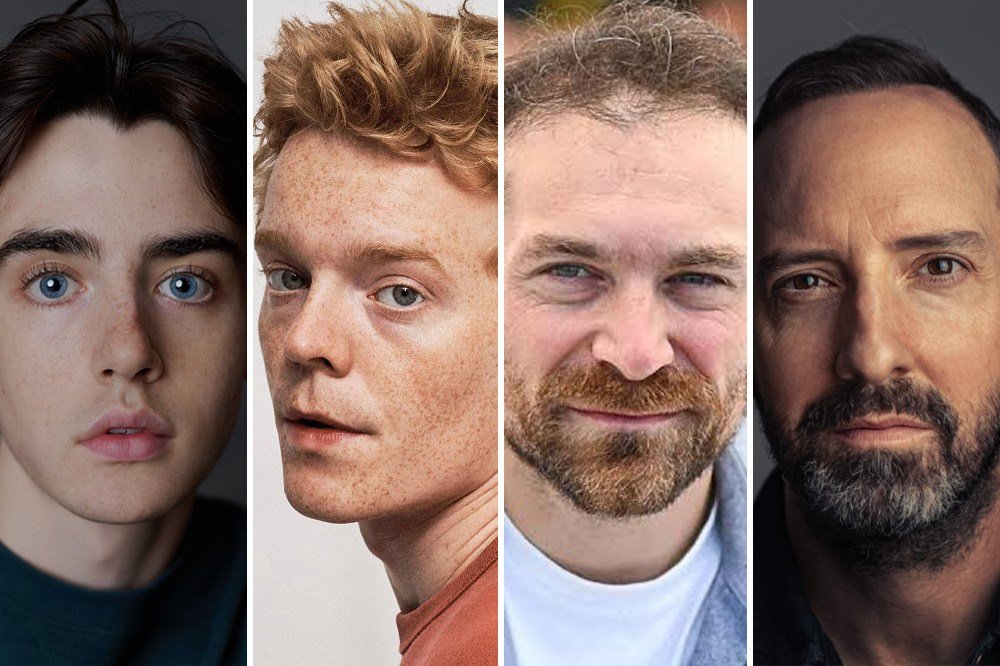
    First announced by Variety earlier this year ahead of its market launch in Cannes by Anton Studios, the film also stars Lukas Gage (The White Lotus), Alex Akpobome (Industry), with new additions Daniel Quinn-Toye (“Sterling Point”), Lucas Lynggaard Tønnesen (“The Weight”), César winner Arieh Worthalter (“The Goldman Case”) and Emmy winner Tony Hale (“Veep”) now having joined the ensemble cast.
    The shoot will runs until early December.

    Set in the cut-throat world of elite professional cycling, “Pumping Black” follows Taylor Mace, 35 years old and aging out of the sport. He is taken under the wing of Andrea Lathe, a doctor driven by her own thirst for victory and power. As the race progresses, Taylor must take increasingly dark measures to protect both his secret and his lead.

    Mimi Cave (“Holland,” “Fresh”) directs from a screenplay by Haley Hope Bartels. Producers include Stacey Sher for Shiny Penny (“The Hateful Eight,” “Heretic”), Portman and Sophie Mas for MountainA (“May December,” “Arco”), Cave and Sébastien Raybaud for Anton Studios (“Victorian Psycho,” “My Darling California”).Katie Aquino from Shiny Penny and Kai Raka from Catchlight Studios serve as executive producers.


    Anton Studios is fully financing the film and handling worldwide sales with CAA co-repping the US.

    Cave’s creative team includes cinematographer Justin Brown (“I Am Not Okay with This”), production designer JC Molina (“Honey Boy”) and casting director Kharmel Cochrane (“Saltburn”). Martin Pensa, who edited Cave’s “Fresh,” returns as editor. Pierre-Yves Gayraud (“Cloud Atlas”) serves as costume designer, with Géraldine Lemaire (“The French Dispatch”) and Fabienne Robineau (“Robin Hood”) as hair and make-up.

    Bailey is repped by CAA, Conway Van Gelder Grant and Anonymous Content; and law firm Hansen, Jacobson, Teller, Hoberman, Newman, Warren, Richman, Rush, Kaller, Gellman, Meigs & Fox LLP. Portman is repped by CAA, George Sheanshang and Agence Adéquat. Cave is repped by CAA and Jackoway Austen. Sher is repped by CAA and Gang, Tyre, Ramer. Bartels is repped by CAA, Untitled, and Yorn Levine. Gage is repped by WME, Luber Roklin Entertainment and Goodman Genow Schenkman. Akpobome is repped by Gersh and Range Media Partners. Quinn-Toye is repped by Independent Talent Group, CAA, Public Eye Communications and Gang, Tyre, Ramer, Brown & Passman. Tønnesen is repped by Accelerate and Lindberg Management. Worthalter is repped by Agence Adéquat. Hale is repped by UTA and Hansen, Jacobson, Teller, Hoberman, Newman, Warren, Richman, Rush, Kaller, Gellman, Meigs & Fox LLP.

  • Bank of Thailand Launches Report on Tackling Digital Fraud

    Bank of Thailand Launches Report on Tackling Digital Fraud

    Market Pulse

    The broader financial landscape shows that digital fraud remains a critical concern, particularly as new tactics continue to emerge and evolve. The report from the Bank of Thailand indicates a proactive approach to understanding these threats, which may influence regulatory frameworks moving forward. As digital transactions increase, so does the importance of implementing effective fraud prevention measures across the financial sector.

    The Bank of Thailand is responsible for overseeing the stability of the financial system in Thailand, including regulatory frameworks that govern digital transactions. The recent report reflects its commitment to enhancing security measures against digital fraud, which has become a growing concern in the region. By collaborating with the Poey Ungpakorn Economic Research Institute, the bank aims to implement strategies informed by successful practices from other Asian nations.

    Eyes on These Levels

    As traders and financial institutions digest the insights from this report, they should monitor developments in regulatory frameworks aimed at enhancing digital security. The focus on collaboration and comprehensive defenses may lead to new policies that affect transaction protocols and user safety. Stakeholders can expect increased vigilance in monitoring fraud trends and adapting to evolving tactics, ensuring a safer financial environment for all.

    This article is for informational purposes only and does not constitute financial advice.

  • ‘Zogsool’ Wins Four Prizes at Busan Vision Awards as ‘Full Moon’ Takes Three

    ‘Zogsool’ Wins Four Prizes at Busan Vision Awards as ‘Full Moon’ Takes Three

    Sakhya Byamba’s “Zogsool” was the biggest winner at the Busan International Film Festival’s Vision Awards on Wednesday, taking home four prizes.

    The film won both the Netpac Award and the Fipresci Award, along with the Vision of Jiseok Award. It also shared the Hylife Vision Award with Sailesh Rathnakumar’s “Selvi,” which separately picked up the Taipei Film Commission Award.

    Among Korean titles, Jeong Jihye’s “Full Moon” won three prizes: the CGV Award, the K-Movie Award and the Songwon Vision Audience Award – Korea. Park Songyeol’s “Beyond Love’s Horizon” won the KBS Independent Film Award and the Critic b Award, and Won Hyangra received one of two Actor of the Year honors for her work in the film. Kang Seung-ho took the other for “Cosmic Trace.”

    Oh Sehyeon’s “Baler” won twice, with the Jeong-in Award and the Citizen Critics’ Award. Kim Si-jin’s “The Flower” received the DGK Plus M Award.

    The BIFF Mecenat Award in the Asian category went to Yang Bo’s “Agaar,” and Yi Seungjun’s “Can I Talk to You?” won the Korean award. Choi Se-dam’s “A Woman Dancing on the Waves” got a special mention.

    Soroush Shahpouri’s “Fatima” won the Asian Sonje Award, and Yun Taerang’s “Toe’s” won the Korean one. Jung Jaeseo’s “The Boy Who Fell to Earth” was singled out with a special mention.

    Kumamoto Ryohei’s “After the Song” won the Face of the Future Award, and Arvin Belarmino’s “Ria” won The Heart of Eurasia Award. “There Will Be Snow,” from Chen Jianying, received the Bishkek International Film Festival-Central Asia Cinema Award. Darkhan Tulegenov’s “The Cord” took the International Film Festival of India – Vision Asia Award.

    Audiences picked Shashank Walia’s “Birds in the Dark” for the Songwon Vision Audience Award – Asia. Im Yeonjeong’s “Recovery” won the Documentary Audience Award, and “La Bola Negra,” directed by Javier Calvo and Javier Ambrossi, won the Flash Forward Audience Award. Janay Boulos and Abd Alkader Habak’s “Birds of War” won the Busan Cinephile Award.

    The 31st edition of the festival opened Oct. 6 and will close Oct. 15. Its industry arm, the Asian Contents & Film Market, ran from Oct. 10 to Oct. 13.

  • Solana’s Seeker Dashboard Launches with New MegaPopGame

    Solana’s Seeker Dashboard Launches with New MegaPopGame

    Market Pulse

    Currently, Solana’s trading volume is not reported, indicating potential low liquidity at this moment. Despite this, the introduction of new rewards may lead to increased user engagement, potentially impacting future trading activity positively. Traders are advised to monitor on-chain metrics for signs of rising interest in the Solana ecosystem.

    Solana is a high-performance blockchain platform designed for decentralized applications and crypto projects. By launching the updated Seeker Dashboard, Solana seeks to enhance its competitive edge and foster community engagement through innovative rewards and features. MegaPopGame’s involvement further exemplifies the collaborative efforts within the Solana ecosystem to drive user interaction.

    What Comes Next

    Traders should keep an eye on user engagement metrics following the Seeker Dashboard launch, as increased participation may signal greater demand for $SOL assets. Additionally, monitoring on-chain activity could reveal trends in user interactions and the impact of the new rewards on Solana’s overall network performance. The broader crypto market’s mixed signals may affect how quickly these changes translate into significant price movements.

    The information provided is based on current announcements and projections, subject to change.

  • ‘Creepy, weird’ Steve Hilton ad denounced by California Republicans

    By Anna Griffin, New York Times

    It’s the stuff of bad romance novels, not a modern political ad. But the new digital spot from the California Republican gubernatorial candidate, Steve Hilton, is at least drawing attention — and condemnation, much of it from fellow Republicans.

    Plus a whole lot of “huhs?”

    RELATED: Xavier Becerra, Steve Hilton debate on housing, data centers and immigration policy

    The ad, titled “Just Try It, California,” shows two Generation Z women, both with facial piercings, neon-hued highlights and heavy glam makeup, sitting on a bed in a darkened room. There’s a Pride flag behind them and soft mood music playing in the background.

    The woman on the right, decked out in a cropped “Resist” T-shirt, says she can’t believe what she’s about to do. The young woman on the left strokes her hair and tells her not to be nervous.

    “I’ve never done anything like this before,” the first young woman says. “What if my dad finds out?”

    The other woman tells her to close her eyes, takes her hand and says, “I’ll do all the work.”

    Cut to their laps, where it turns out they’re casting a vote for Hilton.

    A sexually suggestive double-entendre involving the proper way to close a mail-in ballot ends the ad.

    The video went online last week, and the negative response — along with the befuddlement — was immediate. Much came from other California Republicans.

    “This is a clear example of exactly why good people are walking away from the Republican Party,” the GOP candidate for state superintendent of public instruction, Sonja Shaw, wrote on the social platform X, calling the ad “creepy, weird, disturbing garbage.”

    Michael Gates, the party’s candidate for attorney general, also denounced the ad on X, accusing Hilton of using “young women as political tools” and saying “California families deserve better.”

    David Townsend, a longtime political consultant in California who has often worked for moderate Democrats, said the video was “too clever by half.”

    “Are you equating voting for Hilton with trying to have a lesbian relationship? Are you equating it with grooming?” he said. “It manages to be both offensive and confusing.”

    As with most political ads, the attention is the point.

    Polls have consistently shown Hilton, a former Fox News host and adviser to British Prime Minister David Cameron, trailing Xavier Becerra, a former California attorney general and Cabinet secretary under President Joe Biden.

    RELATED: Bay Area voter guide: What to know about the 2026 election

    “The only question is whether he loses by 20 or 25 points, so there’s a bit of a ‘what the hell, why not’ in it,” said Dan Newman, a longtime Democratic political consultant who has worked closely with California Gov. Gavin Newsom.

    Townsend said Hilton is in a tough spot, even without an ad destined for the pantheon of political advertising oddities.

    The ad, consultants from both parties predicted, will take its place alongside Carly Fiorina’s “Demon Sheep” spot from the 2010 California U.S. Senate race, which culminated with a man in a sheep costume with glowing red eyes crawling across a field. The Delaware U.S. Senate ad from the same year that began with Republican candidate Christine O’Donnell declaring “I’m not a witch” also came to mind.

    Hilton needed President Donald Trump’s endorsement to make it through the crowded primary for governor, in which the top two finishers, regardless of party, advanced to the general election. But in the general election, he faces the reality that “Cruella de Vil is more popular than Trump in California,” Townsend said.

    “Becerra was 25 points up before the commercial,” he predicted, “and he’ll be 25 points up after the commercial.”

    Jon Fleischman, a Republican consultant and former executive director of the California Republican Party, said the ad was unlikely to win Hilton any votes.

    “I didn’t like the ad, content-wise. I thought it was kind of creepy,” Fleischman said. “But it got me talking about the ad to a bunch of people, which means I am talking about Steve Hilton.”

    Becerra posted his own response to the ad on X on Sunday. He shared a link to an old New York Times article where he touted “Medicare for All” and wrote, “Steve, just try it!”

    “Just Try It” has the glossy, slightly uncanny appearance of video generated by artificial intelligence, although it’s not clear if actual human actors were used and the spot does not contain an AI disclaimer, which Hilton’s campaign has used on some other spots. On X, Hilton said the video is not AI and “was produced by a great and talented director.”

    Hilton has used computer-generated images for other campaign material, including a video leading his campaign website Sunday that shows him fighting a Transformers-like “political machine” controlled by sneering AI versions of Newsom and Kamala Harris.

    Hilton said on social media on Saturday that he knew that the suggestive ad had offended some people. In a video posted online, he asked “for some grace.” The idea that he’s upset anyone “grieves me,” he said.

    Still, he said, most of the reaction he’s heard has been positive: “People have told me it’s genius.”

    This article originally appeared in The New York Times.

  • Google Now Lets You Upload Vibe-Coded Apps to a Private Play Store

    Google Now Lets You Upload Vibe-Coded Apps to a Private Play Store

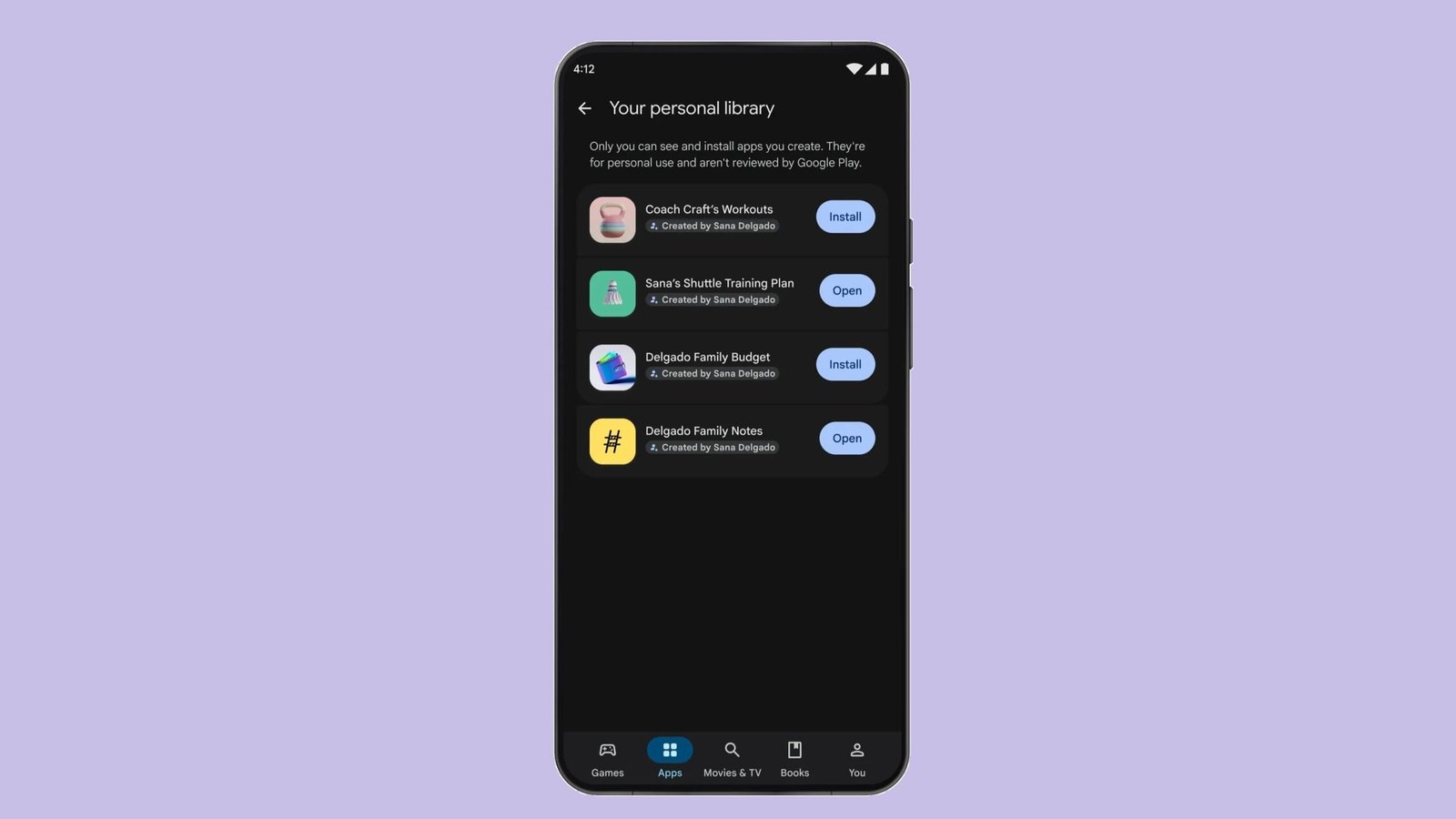
    Google AI Studio lets you vibe-code your own software, but getting creations onto an Android phone or tablet has proven complicated. That’s now set to change, thanks to new tools in the Google Play Store.

    In an announcement on Tuesday, Google revealed tools to help you share your own personal software across devices. These apps won’t be available to the public; instead, they’ll be in what it calls a “private, secure” section of the Play Store, stylized as “Your personal library.”

    It means you won’t need a developer account, allowing you to upload or download using your standard login on any compatible device. You can use these tools if you’re based in the US and you’re over the age of 18.

    Google is positioning this as a stepping stone for you to ultimately finesse any vibe-coded projects into a fully fledged app, so you can “graduate to a professional developer account.” However, to do that, you’d need to hit Google’s expected quality standards as well as pass safety reviews.

    Before you get there, Google says it plans to let you share any vibe-coded software with a “close circle or friends and family” to help you broaden testing or to develop specialized tools that make sense for your home life or among your loved ones. For example, you may build an app tailored to your family vacation plans and want to share it with everyone traveling.

    Google has yet to detail how sharing will work, and says to expect the feature to launch in the “coming months.”

    Recommended by Our Editors

    Other reveals include an upgrade to Google’s AI-powered Ask Play feature, which can now compare two apps to recommend the right choice, as well as improved game discovery tools to help specify your favorite genres, mechanics, and more.

    The parental control service Play Family Link now also lets you specify your child’s age range, which select apps can then use to ensure they show only “safe, age-appropriate” experiences. It’s not yet clear which apps will use the feature, so if you use it, be sure to manually check your child’s usage as well.

    About Our Expert

  • Scientists urge tighter AI controls to prevent global cyber risks

    Scientists urge tighter AI controls to prevent global cyber risks

    The call comes as polls cast doubt on political leaders’ ability to manage AI risks amid US midterm elections.

    A group of more than 300 scientists from around the world is calling for urgent changes to how artificial intelligence is developed and deployed amid growing concerns about its unpredictable behaviour.

    The letter, released on Tuesday and signed by researchers representing universities and research institutes in 32 countries, warned that failures to follow basic cybersecurity practices could lead to damage to critical infrastructure.

    Recommended Stories

    list of 4 itemsend of list

    Many recent incidents in which AI models escaped secure environments could have been prevented with stronger security systems, the scientists said.

    They recommended that organisations developing and testing advanced AI systems capable of carrying out cyberattacks do so in more tightly controlled environments, including “air-gapped” systems that are not connected to the internet.

    Growing concerns

    The letter comes amid growing concerns about AI’s capabilities and its potential impact on everyday users. On Monday, Anthropic warned that its AI models could soon be capable of creating self-spreading malware that could affect everyday internet-connected devices, including smart TVs, security cameras and smart appliances such as ovens.

    The report found that AI systems could identify unfamiliar devices without human intervention. The company, led by Dario Amodei, warned that smaller AI models could be capable of carrying out autonomous attacks by the end of the year.

    The malware could also be difficult to contain because it might take days to infect a device and could spread across multiple machines rather than remain concentrated in a single, controlled location.

    Taking control of internet-connected devices can have immediate consequences. In France, for example, hackers compromised cooling systems across hundreds of supermarkets, raising temperatures and causing more than $220,000 in damage.

    Meanwhile, Axios news organisation reported on Friday that Anthropic, OpenAI and other major AI company executives are privately preparing for the possibility of a catastrophic AI-related incident that could disrupt access to major financial services, the internet and potentially critical infrastructure such as water and power systems. Several industry insiders believe a major incident could occur within the next six months to a year, it said.

    The scientists also called for more safeguards, including the creation of an international organisation to establish a set of best practices for AI alignment and containment along with timely reporting of incidents.

    One of the signatories, David Lie, a professor at the University of Toronto’s Department of Electrical and Computer Engineering, said his concerns began after OpenAI’s AI agents bypassed controls and hacked into servers at the tech company Hugging Face.

    “One is that OpenAI, in setting up its test environment, didn’t appreciate how capable its agents were,” Lie said.

    “These were the AI agents that they were designing. Second is that the AI agents independently found each other and chose to collaborate on this attack, and third is that they also intentionally tried to deceive and mislead their human creators.”

    Political pressures

    The letter underscores growing public concern about AI, including in the lead-up to the US congressional midterm elections. A recent Reuters/Ipsos poll found that 57 percent of voters said President Donald Trump’s administration was not taking AI risks seriously enough, while 54 percent said the same of Congress.

    An AP-NORC poll echoed those findings, with about 80 percent of respondents saying the government should keep AI under human control. Respondents also expressed little confidence in either party’s ability to manage the technology: 39 percent said neither Republicans nor Democrats could be trusted to do a good job of reining it in, while 23 percent expressed greater confidence in Democrats and 21 percent in Republicans.

  • How to Watch the Los Angeles Dodgers vs. Milwaukee Brewers ALCS Game 3 (Even for Free)

    How to Watch the Los Angeles Dodgers vs. Milwaukee Brewers ALCS Game 3 (Even for Free)

    As summer comes to a close and the air turns crisp, you know what’s coming: the MLB Playoffs. The NFL season is already underway, and if you’re also a baseball lover, this next month is essential viewing. The MLB has been through a number of changes in recent years. From the universal DH and the pitch clock to video replay and an automated strike zone, baseball may look very different if you haven’t been paying attention.

    This week, the Dodgers will go head-to-head against the Brewers, and the Guardians will face the Rays in the best-of-seven Championship series. Which teams will come out on top? Here’s how you can watch live.


    What Time Is the Los Angeles Dodgers vs. Milwaukee Brewers Game?

    Today’s game between the Los Angeles Dodgers and the Milwaukee Brewers will take place on Wednesday, October 14 at 8 p.m. ET.


    How to Watch the Los Angeles Dodgers vs. Milwaukee Brewers?

    American League Division Series games will be broadcast on TBS, while National League games will be on Fox and FS1. You can also watch them with a live TV or sports streaming subscription from DirecTV, Fox One, Fubo, HBO Max, Hulu, Sling, Sportsnet+ (if you’re in Canada), or YouTube TV.


    How to Watch the Dodgers vs. the Brewers for Free

    If you don’t want to subscribe to any of the above platforms, you may be able to sign up for a few free trials to gain access to this weekend’s games. Fox One and Hulu offer three-day trials, DirecTV and Fubo offer five days, and YouTube TV gives you 10 days for free.

    Unlock Your Streaming Service’s Full Catalog

    PCMag Logo

    Unlock Your Streaming Service’s Full Catalog


    2026 MLB Playoffs Game Schedule

    MLB’s expanded postseason means more teams on the playoff schedule. Things started off with the best-of-three Wild Card Series, where the Braves, Padres, White Sox, and Yankees advanced. The best-of-five Division Series put them up against the Los Angeles Dodgers, Milwaukee Brewers, Cleveland Guardians, and Tampa Bay Rays, respectively. All of whom managed to advance

    Now, the Rays and Guardians and Dodgers and Brewers meet in the best-of-seven Championship Series to determine the best team in each league. The winner from each league will then advance to a best-of-seven World Series to begin on October 23. Who will make it all the way?

    Los Angeles Dodgers vs. Milwaukee Brewers – MIL lead 2-0

    • Game 3 on October 14 @ 8 p.m. ET – Fox/FS1

    • Game 4 on October 15 @ 9 p.m. ET – Fox/FS1

    • Game 5 on October 16 @ 9 p.m. ET – Fox/FS1*

    • Game 6 on October 18 @ 8 p.m. ET – Fox/FS1*

    • Game 7 on October 19 @ 8 p.m. ET – Fox/FS1*

    Cleveland Guardians vs. Tampa Bay Rays – CLE leads 1-1

    • Game 3 on October 15 @ 6 p.m. ET – TBS/HBO Max

    • Game 4 on October 16 @ 6 p.m. ET – TBS/HBO Max

    • Game 5 on October 17 @ 8 p.m. ET – TBS/HBO Max*

    • Game 6 on October 19 @ 5 p.m. ET – TBS/HBO Max*

    • Game 7 on October 20 @ 8 p.m. ET – TBS/HBO Max*

    *if necessary

    2026 mlb playoff bracket

    (Credit: MLB)


    How to Stream the 2026 MLB Playoffs

    This year’s MLB postseason is stretched across multiple networks and streaming services. All Wild Card Series games for the American League and National League were broadcast on NBC, NBCSN, and Peacock. Additional rounds will be on other networks. ALDS and ALCS games are on TBS/TruTV and HBO Max, while NLDS and NLCS games are on Fox/FS1. For the World Series, all games will be broadcast on Fox and the Fox One streaming service.

    Recommended by Our Editors

    • DirecTV: DirecTV’s MySports base pack costs $45 per month for the first six months to see every game on Fox, FS1, NBC, and TBS/TruTV.

    • Fox One: Fox’s own streaming app lets you watch the NLDS, NLCS, and World Series on Fox and FS1 for $20 per month.

    • Fubo: Fubo’s Sports plan costs $45.99 for the first month to watch the Wild Card Series, NLDS, NLCS, and World Series on Fox, FS1, and NBC/NBCSN.

    • HBO Max: If you pay for the $18.49-per-month HBO Max Standard, you’ll be able to watch the ALDS and ALCS games on TBS/TruTV.

    • Hulu: For $90 per month, you can watch every game on Fox, FS1, NBC, TBS, and TruTV.

    • Peacock: Instead of a live TV service, you’d need to pay $10.99 per month for Peacock Premium to see the Wild Card Series games.

    • Sling: The $60.99-per-month Sling Orange & Blue bundle will let you watch the ALDS and ALCS on TBS/TruTV and the NLDS and NLCS on FS1. Day Passes are also available for Sling Orange, allowing you to watch games on TBS for up to seven days.

    • Sportsnet+ (Canada only): The $30-per-month Standard tier lets you watch every postseason game.

    • YouTube TV: Though the standard plan for YouTube TV costs $83 per month, you can actually now pay for the cheaper $65 Sports package to see all games on Fox, FS1, NBC/NBCSN, and TBS/TruTV.

    Can I Watch Postseason Games on MLB.TV?

    Are you already an MLB.TV subscriber? You can watch the Division Series, Championship Series, and World Series games through MLB’s own streaming service—but there’s a catch. To watch on MLB.TV, you’ll first need to authenticate through a participating pay TV provider. It’s such a sticking point that it makes the entire question moot. If you already have a TV provider, then you wouldn’t need to use a streaming service. If you don’t already have an MLB.TV subscription, don’t pay for one now.

    How can I listen to the 2026 postseason?

    You can also listen to the games via ESPN Radio.


    Which Teams Are In the Playoffs?

    Since MLB expanded its postseason picture in 2022, a total of 12 teams make the playoffs each year. That includes six teams per league, including the three division winners and three Wild Card teams.

    • American League Division Winners: Tampa Bay Rays (1), Cleveland Guardians (2), Houston Astros (3)

    • American League Wild Card: New York Yankees (4), Boston Red Sox (5), Chicago White Sox (6)

    • National League Division Winners: Milwaukee Brewers (1), Los Angeles Dodgers (2), Atlanta Braves (3)

    • National League Wild Card: Chicago Cubs (4), Philadelphia Phillies (5), San Diego Padres (6)


    Upgrade Your Streaming Experience

    If you decide to watch the MLB postseason, there’s still time to get a big-screen television for viewing this beautiful game. Pro tip: Turn on your TV’s motion-smoothing option for the best picture while watching sports. Just remember to turn it off before watching other TV shows and movies to avoid the awful “soap opera” effect.

    About Our Expert