Author: rb809rb

  • 4 takeaways: Cavaliers stars struggle while Scottie Barnes and Collin Murray-Boyles thrive

    The Raptors close Game 4 on a 17-5 run to defeat the Cavaliers and tie their series at 2-2.

    • Download the NBA App

    It was a game in which nobody played well enough to win, until someone finally did.

    The Cleveland Cavaliers and Toronto Raptors endured missed shots and sloppy play for three quarters and at some point, Game 4 demanded composure and clutch play. And the Raptors stepped forward and offered it in the moment of truth.

    As a result, this best-of-seven series is tied at two games each.

    The Raptors responded after trailing by five points with 2 1/2 minutes left to give this series a refreshed outlook with a 93-89 victory. Yes, Toronto, a team that, until now, had no positive playoff answers for Cleveland since the LeBron James days.

    There’s still plenty to do before erasing that stigma, although winning a pair against Donovan Mitchell and James Harden represents a start. Furthermore, the Raptors won despite not bringing their A game; to be fair, neither did Cleveland.

    In the end, Scottie Barnes proved too much to handle and even better for Toronto, there’s a new problem that Cleveland must ultimately address: Collin Murray-Boyles, the Raptors rookie who’s outplaying all other big men.

    Here are the takeaways from Toronto’s four-point Game 4 win:


    1. Mitchell and Harden are thrilled to leave the country.

    To say it wasn’t a fulfilling trip to the North for Mitchell and Harden would be an understatement. For a second straight game in Toronto, the engine of the Cavs couldn’t muster much positive production. And when the Cavs’ starting backcourt has issues, the Cavs don’t stand much of a chance.

    Case in point — the last few minutes of Game 4. Clearly, the Cavs wanted the ball in their hands, and Toronto’s defense recognized as much. The Raptors began trapping them and ignoring the other Cavs, daring Mitchell and Harden to let someone else be the hero.

    This resulted in a key forced turnover by Jamal Shead in the final minute; Mitchell lost the ball as a result and the resulting free throws by Barnes after being fouled put Toronto up for good.

    “[Jamal] being able to make that read and having the clock awareness in that split second shows how smart he is,” said Raptors coach Darko Rajakovic.

    In the two games in Toronto, Mitchell shot 13-for-39 and Harden 11-for-27.

    Mitchell had only eight points in the first three quarters Sunday. Harden also seemed rattled at times Sunday, with seven turnovers compared to just six field goals; he has had more turnovers than field goals for two straight games. And down the stretch of Game 4, they took heavily contested shots; there would be no free looks for them.

    “They just didn’t fall,” said Mitchell.

    Other than a 3-pointer by Sam Merrill, and only because Harden frantically looked for someone with the shot clock winding down, nobody else on the Cavs had a key possession late. It’s a formula that usually works for Cleveland, and a sensible one as well given the reputations and proven results of those two stars, but Toronto was better prepared for it Sunday.

    “We’ve had leads and we’ve had opportunities to go up and we just didn’t do it,” Harden said. “It’s not like they’re doing something crazy.”


    2. Murray-Boyles is manning up

    A game that wasn’t pretty required someone to do the dirty work to help clean up. And what better job description for Murray-Boyles? He did much heavy lifting and earned a spot on the floor in a close game, because he factored in winning.

    Murray-Boyles’ best contribution was offensive rebounds. Five of his 10 rebounds were on the offensive end, and they kept possessions alive. This was crucial, because in a game of so many missed shots, the Raptors could use as many looks at the basket as possible.

    For a rookie in his first taste of the playoffs, Murray-Boyles is ignoring pressure and refusing to be intimidated by the scene. He’s outplaying Jarrett Allen and even Evan Mobley, a pair of Cleveland front-liners who bring far more experience and accomplishments.

    Therefore, his 15 points (by comparison, Mobley and Allen combined for 11 points), 10 rebounds and two steals, was exactly what Toronto needed in a game like this.

    “I’m just cherishing the moment,” he said. “It makes me smile, just being a part of this.”


    3. Beam Scottie up

    The medal for best-player-on-the-floor goes to Scottie Barnes. He played such a splendid all-around game and was seemingly everywhere the Cavs needed him to be.

    The performance he gave was standard for him.

    Barnes made shots, went to the free-throw line, delivered the ball when necessary, helped on the glass, helped on defense. An ace of all trades in Game 4.

    This is the best way for the Raptors to assume the lead in this series or even win it, to have Barnes stand out on a floor shared with Mitchell and Harden. With the Raptors getting mixed results from RJ Barrett and Brandon Ingram, his offense is crucial. And with the Raptors fairly undersized against the Cavs, his work in the post at both ends is needed.

    All told, Barnes was good for 23 points, nine rebounds, six assists and three blocks.

    In a game like this, those were winning numbers.


    4. Offense took a back seat

    Was Game 4 a case of cold shooting or better defense? Perhaps a bit of both, because the Cavs and Raptors conspired to dial back the offense to historical levels.

    Their combined 74 points represented the fewest first-half points in a playoff game in 10 years. The teams also combined to shoot 7-for-39 from deep for the half.

    It was rough all around and nobody was spared, All-Stars and role players.

    As the fourth quarter began, the Raptors sat on 60 points while the Cavs, with 57, couldn’t even muster that much.

    In these situations, possessions suddenly become crucial, because every point tends to matter that much more. And that’s how the Raptors came out ahead.

    Suddenly, it didn’t matter that Ingram once again was inefficient, needing 23 shots to score 23 points. Or that Shead, who was terrific defensively, missed five of his six shots. Or that Ja’Kobe Walter, the replacement for injured starting guard Immanuel Quickley, went 0-for-9.

    What matters is 2-2. That’s where the series stands right now, heading back to Cleveland for the pivotal Game 5 (Wednesday, TBD).

    “This seems like a typical playoff series, 4 vs. 5, tied 2-2,” said Cavs coach Kenny Atkinson. “They did what they were supposed to do. When you’re at home you’re supposed to win in the playoffs.”

    * * *

    Shaun Powell has covered the NBA since 1985. You can e-mail him at spowell@nba.com, find his archive here and follow him on X.

  • Star Jaz Sinclair Reacts to ‘Gen V’ Cancellation: ‘Thank You From the Bottom of My Heart’

    Star Jaz Sinclair Reacts to ‘Gen V’ Cancellation: ‘Thank You From the Bottom of My Heart’

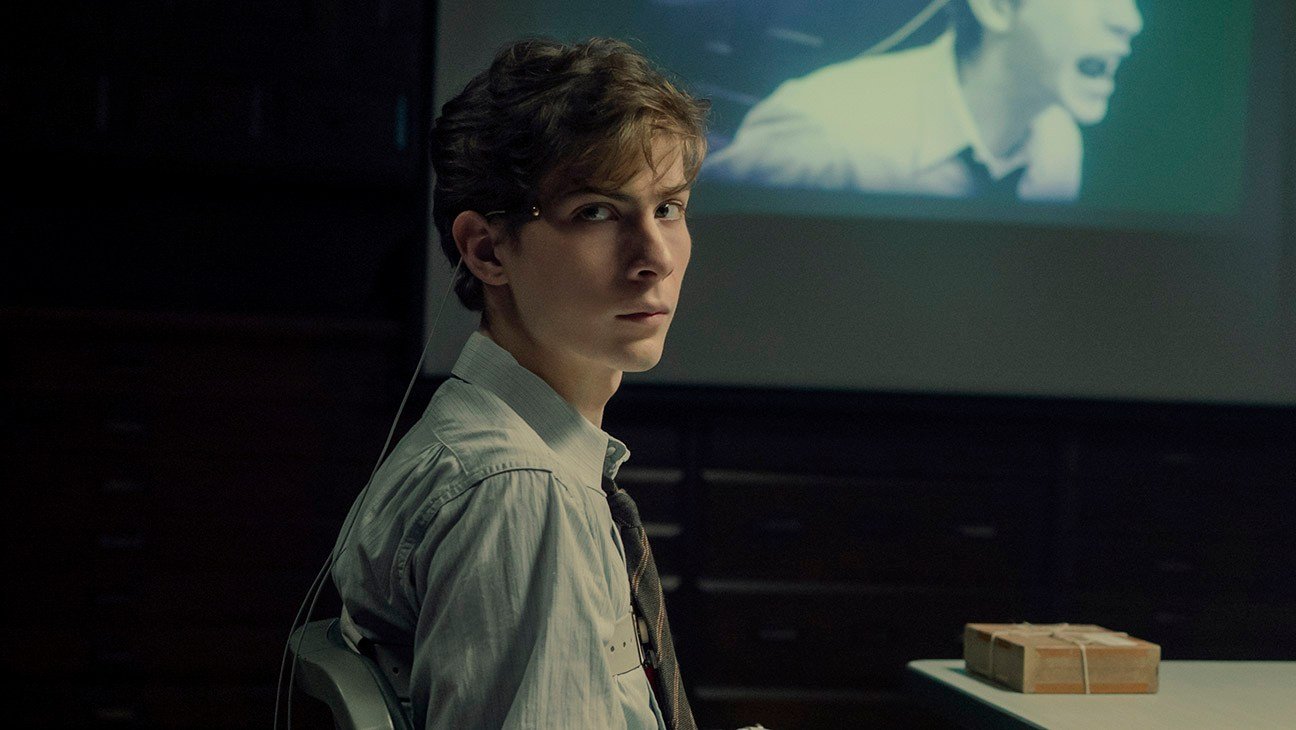
    Gen V” star Jaz Sinclair is expressing her gratitude for her fans and time on the show, following last week’s cancellation of the Prime Video spinoff of “The Boys.”

    Taking to her Instagram story, Sinclair wrote, “There’s so much I wanna (and will) say, but for today I just want to say thank you from the bottom of my heart. I’m so happy you’re here, and I’m so grateful for this incredible experience.”

    Sinclair stars in “Gen V” as Marie Moreau, a powerful hero who is able to control blood and manipulate muscular tissue. In the show, she’s determined to uncover the truth behind Godolkin University. Season 2 ended with Moreau joining the Starlighter resistance against Homelander (Antony Starr).

    “While we wish we could keep the party going another season at Godolkin, we’re committed to continuing the ‘Gen V’ characters’ stories in ‘The Boys’ Season 5 and other VCU projects on the horizon. You’ll see them again,” series executive producers Eric Kripke and Evan Goldberg said in a statement.

    “Gen V” originally premiered in 2023, with the second season airing between September and October 2025. According to an individual with knowledge of the situation, characters from “Gen V” will appear in upcoming episodes of the fifth and final season of “The Boys.”

    “Gen V” took place at Godolkin University School of Crimefighting, where young supes train for the chance to one day join The Seven. The cast of the series included Sinclair, Lizze Broadway, Maddie Phillips, London Thor, Derek Luh, Asa Germann, Sean Patrick Thomas and Hamish Linklater.

    With the parent show “The Boys” set to end with its current season, the prequel series “Vought Rising,” which will follow the exploits of Soldier Boy (Jensen Ackles) and Stormfront (Aya Cash) in the 1950s, is the only current in-universe production and is expected to premiere in 2027.

  • Will Ethereum Foundation’s latest $48.9M move fuel more selling pressure ahead?

    Will Ethereum Foundation’s latest $48.9M move fuel more selling pressure ahead?

    The Ethereum Foundation has been on an aggressive selling spree lately, raising concerns about over-dumping. The foundation currently holds over $215 million worth of $ETH.

    As previously reported by AMBCrypto, on 24 April, the foundation completed a sale of 10,000 $ETH worth $23.8 million. After a period of selling though, the team seems to have shifted strategy and is now turning to staked holdings.

    In fact, according to Arkham data, the foundation has begin unstaking its stack, withdrawing $48.9 million in $ETH. They deposited wstETH to the Lido unstETH contract to receive unstaked $ETH.

    This is the first unstaking since the foundation staked 22,517 $ETH, worth $46 million, in early March, signaling a shift in market strategy. Despite the unstaking and recent $AAVE crisis, $ETH staking services remain increasingly popular though.

    Source: Dune

    Currently, 39.2 million $ETH or 31.5% of the total supply is staked, with 23% staked through LIDO. With the number of stakers and the amount staked still holding steady, this is evidence that most market players trust the services.

    Especially now that the market is struggling to make any meaningful gains, earning yield is becoming another source of revenue.

    Ethereum market demand remains steady

    Interestingly, although the Ethereum Foundation has been selling, it has avoided using public exchanges to minimize pressure. In fact, the team has used OTC sales, with the latest sale being no exception.

    As a result of the approach, the market has seen little pressure, especially from rising supply on exchanges. On the contrary, supply has continued to decline on the charts.

    Source: Cryptoquant

    The Exchange Supply Ratio plummeted to 0.122 too – The lowest level since 2016. A declining ESR means that demand has been strong, with buyers effectively absorbing the hike in selling pressure.

    What do momentum indicators suggest?

    With $ETH flashing signs of sustained demand despite the recent crisis involving $ETH depositors on $AAVE, the momentum has been bullish.

    For starters, the altcoin’s Relative Strength Index (RSI) was holding above 50 at 55 at press time. Although the RSI formed a bearish crossover, it was still edging into the bullish zone – A sign that buyers may be active and effectively countering sellers.

    Source: Tradingview

    At the same time, the Momentum Shift indicator has remained positive throughout April, hinting at strong market demand. Often, when these indicators are set this way, they mean buyers are active and trying to push the prices up.

    Thus, if bulls manage to hold onto the market despite recent concerns, $ETH will make further gains on its price charts. In doing so, $ETH will flip $2.4K and eye a move above $2.5K.

    However, the Foundation’s sustained selling spree could affect this market structure. For instance, on 11 April, when they sold, $ETH dropped from $2.3K to $2.1K. Thus, if this trend persists, $ETH could breach the $2.3K support to $2,250.


    Final Summary

    • Ethereum Foundation unstaked $48.9 million in $ETH, raising further concerns about potential selling pressure.
    • Ethereum [$ETH] supply on exchanges fell to 2016 levels, reflecting strong market demand despite the recent staking crisis.
  • UXLINK and Decentralized Intelligence (DI) Form Strategic Alliance to Redefine AI-Powered Social Networking

    UXLINK and Decentralized Intelligence (DI) Form Strategic Alliance to Redefine AI-Powered Social Networking

    UXLINK announces the launch of a strategic partnership with Decentralized Intelligence (DI), paving the way for the eventual combination of AI and Web3. As part of this alliance, both companies will utilize UXLINK’s extensive social graph consisting of over 5 million users in conjunction with DI’s technical capabilities to integrate distributed computing technology and proprietary AI models into one seamless solution. Through this integration, both organizations expect to simplify block computer interactions and increase user personalization and participation in social activities.

    Strengthening the Web3 Social Infrastructure

    The primary value of the partnership between Decentralized Intelligence and UXLINK is based upon the technical ‘stack’ of Decentralized Intelligence. UXLINK will be able to use Decentralized Intelligence’s distributed compute and the DI Phone ecosystem. This development is important to UXLINK, since social platforms need tremendous amounts of processing power for managing real-time interactions, scoring reputations, and creating AI-assisted curated content without centralized control.

    UXLINK’s shift from legacy-cloud vendors to DI’s decentralized compute nodes increases the ability for UXLINK to be censorship-resistant and maintain data sovereignty. This is part of a larger trend among platforms dispelling themselves from the “walled gardens” which exist inside of Web2 monopolies.

    Crypto-Native AI Models and the X Agent

    Perhaps the most interesting thing about this announcement is how DI’s “crypto-native AI models” will integrate into its X Agent DEX Launchpad. Currently, “AI Agents” represent a significant theme in the market as they are either fully autonomous or semi-autonomous programs that can execute trades on-chain, engage social media, and create NFTs based on user activity.

    Using DI’s X Agent will allow UXLINK users to directly connect with Decentralized Exchanges (DEX) using social interfaces soon. A hypothetical case for this technology could involve an AI agent that analyzes social trends and sentiment to provide recommendations on liquidity and token exchanges. This would essentially turn social networks into a financial layer, often called SocialFi.

    Launchpads and Ecosystem

    Development alongside the technology, the collaboration is focused on the ICO launchpad. For example, UXLINK offers both a “Link to Earn” option as well as a “Link to Trade” option, and with the introduction of the Launchpad it creates an easy opportunity for new projects to have immediate access to UXLINK’s active user base.

    The DI/UXLINK group has a significant impact on how Web3’s project incubation is performed. Decentralized incubation is being launched using the group’s resources along with verified social data from projects within these communities. This helps to distribute the tokens more fairly, reducing the effect of bots and “sybil” attacks at launches. Data from CoinGecko reveals a rising interest in the SocialFi marketplace, as individuals increasingly seek to monetize their data directly through our launchpad.

    Conclusion

    This partnership is much more than just agreeing to support each other’s products; it represents a strategic merging of computation, intelligence, and social capital. In the world of Web3, as Mass Adoption happens, the winner will probably be the one who makes use of artificial intelligence (AI) to hide blockchain behind the scenes. With this partnership, UXLINK is positioning itself to be the main portal that allows people to create more intelligent and profitable relationships through social networks globally.

  • ‘Big Bang Theory’ Spinoff ‘Stuart Fails to Save the Universe’ Reveals First Look

    The world is falling apart in the first look at The Big Bang Theory spinoff series Stuart Fails to Save the Universe.

    Castmembers Kevin Sussman, Lauren Lapkus, Brian Posehn and John Ross Bowie took the stage at CCXP Mexico City to share tease their comedy that is set to begin streaming on HBO Max in July. Along with debuting images that can be seen above and below, the panel revealed that musician Danny Elfman will create an original theme song for the series.

    Stuart Fails to Save the Universe centers on Sussman as comic book store owner Stuart Bloom, who was introduced on the CBS comedy The Big Bang Theory when his pals Leonard (Johnny Galecki) and Sheldon (Jim Parsons) would visit the shop. The new program features Stuart doing his best to restore reality after he breaks a device that Sheldon and Leonard had built, which inadvertently causes a multiverse armageddon.

    Posehn told fans from the stage about the title character, “The fun is watching him fail every week.”

    “If at first you don’t succeed, try in another multiverse,” HBO Max’s Instagram account posted in a caption alongside the show’s stills.

    Joining his quest are his girlfriend, Denise (Lapkus); geologist buddy Bert (Posehn); and irritating quantum physicist Barry Kripke (Bowie). Their path will see them meet alternate-universe versions of characters from The Big Bang Theory, which signed off in 2019 after 12 seasons.

    Kevin Sussman (left), Lauren Lapkus, Brian Posehn and John Ross Bowie in Stuart Fails to Save the Universe.

    Colin Remas Brown/HBO Max

    Stuart Fails to Save the Universe counts Chuck Lorre, Zak Penn and Bill Prady as creators, writers and executive producers. The series hails from Chuck Lorre Productions in association with Warner Bros. Television. 

    The Big Bang Theory previously spawned fellow spinoff Young Sheldon, which signed off in 2024 after seven seasons. Young Sheldon offshoot Georgie & Mandy’s First Marriage is currently airing its second season on CBS.

    Lauren Lapkus (left), Kevin Sussman, John Ross Bowie and Brian Posehn in Stuart Fails to Save the Universe.

    Colin Remas Brown/HBO Max

  • ‘The Big Bang Theory’ Spinoff ‘Stuart Fails to Save the Universe’ Sets July Release Date on HBO Max

    ‘The Big Bang Theory’ Spinoff ‘Stuart Fails to Save the Universe’ Sets July Release Date on HBO Max


    “The Big Bang Theory” spinoff series, “Stuart Fails to Save the Universe,” will be available to stream on HBO Max, beginning in July.

    The show stars “Big Bang Theory” alums Kevin Sussman, Lauren Lapkus, Brian Posehn and John Ross Bowie, who made the announcement Sunday at the “Stuart Fails to Save the Universe” panel at CCXP Mexico City.

    The panel also revealed that the original theme music for the series will be created by Emmy and Grammy Award winner, Danny Elfman, best known for his work on various Tim Burton films such as “The Nightmare Before Christmas” and “Corpse Bride.”

    Per the logline, “comic book store owner Stuart Bloom is tasked with restoring reality after he breaks a device built by Sheldon and Leonard, accidentally bringing about a multiverse Armageddon. Stuart is aided in this quest by his girlfriend Denise, geologist friend Bert, and quantum physicist/all-around pain in the ass Barry Kripke. Along the way, they meet alternate-universe versions of characters we’ve come to know and love from ‘The Big Bang Theory.’ As the title implies, things don’t go well.”

    The show was originally announced as being in development back in April 2023 and is co-created by Chuck Lorre, Zak Penn, and Bill Prady.

    The series is produced by Chuck Lorre Productions in association with Warner Bros. Television, where Lorre is under an overall deal. Lorre, Penn, and Prady are also executive producers.

    “Stuart Fails to Save the Universe” is the fourth show in the “Big Bang” universe. Aside from the mothership show, which ran for 12 highly-rated seasons on CBS, the prequel “Young Sheldon” wrapped up its own seven-season run at the broadcast network in May 2024. A spinoff of that show, “Georgie & Mandy’s First Marriage”, starring Montana Jordan and Emily Osment, debuted on CBS in October 2024.

  • ‘Are We About to Die?’: Host Oz Pearlman Was Right Behind Trump When a Shooter Stormed the White House Correspondents’ Dinner

    ‘Are We About to Die?’: Host Oz Pearlman Was Right Behind Trump When a Shooter Stormed the White House Correspondents’ Dinner

    At the exact moment dozens of armed federal agents swarmed into the ballroom of the Washington Hilton, Oz Pearlman was revealing to Donald Trump the name of Karoline Leavitt’s unborn daughter.

    The mentalist was perhaps moments away from climbing inside the mind of the president on Saturday night when a 31-year-old teacher from Los Angeles stormed toward the White House Correspondents’ Dinner with two guns and fired at law enforcement. Nobody was killed, and the suspect is in custody.

    “My son was mostly concerned with whether he had an autographed Pokémon card from Donald Trump,” Pearlman tells Variety from the back of an Uber, moments after landing in New York from Washington, D.C. His usually peppy voice is hoarse. (“Long night,” he says.)

    Before the annual, bipartisan celebration began, Pearlman met Trump and the First Lady backstage, where Trump expressed enthusiasm for his act. This year’s White House Correspondents’ Dinner marked the first attended by Trump during either of his terms, and also the first to be headlined by a mentalist.

    “He shook my hand and told me he’s heard how great I am, and that he’s very excited and he’s staying for my show,” Pearlman says. “That was a big checkmark because that was never a sure thing. Right away, I texted my wife, ‘Great news. The show is gonna be awesome.’”

    Out in the ballroom, right after the Pledge of Allegiance kicked off the event, Pearlman immediately began working the room. “I didn’t take one bite of salad,” he says. “I got to work.” He eventually made his way up to the dais, impressing JD Vance with a couple of magic tricks. (Pearlman, who has become Hollywood’s favorite mentalist, is known to guess people’s ATM pins and predict the outcome of seemingly random events.)

    Vance encouraged Pearlman to perform for the POTUS, and CBS anchor Weijia Jiang helped bring the mentalist into Trump’s conversation with Press Sec. Leavitt and Melania Trump. Backstage, Leavitt had challenged Pearlman to guess the name of her baby, who is due next week. Wanting to save the trick for Trump, Pearlman finally began “piecing together” the name, and he is seen in news coverage writing down “Vivian” on a sheet of notebook paper. Just as Pearlman ripped out the page to show it to Leavitt, Melania and the president, a crisis consumed the ballroom of the D.C. hotel. 

    “You could see the reaction to the trick, where everybody was like, ‘Whoa!’ But at that exact same moment, we saw dozens of people with guns — a SWAT team and military — running into the center of the room as people started getting under their tables,” Pearlman recalls. He thought there was about to be an explosion, so he immediately dropped to the floor as two Secret Service agents “shoved” Trump to the ground.

    “He lands right next to me,” Pearlman says of the president. “We’re looking eye to eye from a foot apart, and I’m thinking, Oh no, are we about to die?” 

    That’s when he heard gunshots.

    Pearlman says Trump seemed “startled” that he was on the ground, but he was “very aware.” “I can’t tell you if he was scared,” Pearlman says. “I have to assume there was fear in all of us, because it was a very serious situation.” About two seconds later, the president was shuffled out of the room.

    “I was thinking, Did he get shot? Everything slowed down. I couldn’t figure out what happened,” Pearlman says. He began army-crawling toward the door backstage, where he stood for several minutes protected by federal agents. “There was no real communication,” he says. “We heard someone was dead, and then we heard there was a shooter, and then we heard they were trying to see if there were any other shooters.”

    Backstage, everyone was crying and shaking, Pearlman says. “Your body gets flooded with adrenaline. You’re in full fight-or-flight.” Still, the shooter didn’t stop the mentalist and his wife and manager, Elisa, from attending an after-party.

    “It was bittersweet,” Pearlman says of the evening. “The sweet thing is nothing really happened. Nobody was hurt. But the bitter part is that it was going to be an amazing night. I had some really unique and exceptional things planned that would have hit strong. I’m sad to not have had that moment, but given the circumstances, that’s a very secondary concern.”

    Pearlman declined to tease the tricks he had planned for the president, as Trump has promised to attend a rescheduled White House Correspondents’ Dinner to be set within the next 30 days. Pearlman says he has been invited back, and “if I can make myself available, I would love to be there.”

    For now, Pearlman is reading the “insane” internet conspiracy theories and laughing off the dark jokes on social media.

    “If I had been killed, people would forever have said, ‘Why didn’t you see that coming?’” Pearlman says. “Like, that’s the worst way for a mentalist to die, because the memes are just too good.”

  • Analyst Who Called Bitcoin’s Top Correctly Now Predicting The Bottom

    Analyst Who Called Bitcoin’s Top Correctly Now Predicting The Bottom

    Bitcoin has spent April staging a recovery from its March lows, briefly climbing back above $79,000. However, not everyone is convinced of the rebound, and some analysts believe the move is only a mid-bear-market rally before a deeper correction.

    One such analyst is one that previously predicted a coming peak in July 2025. Now, the same analyst is predicting how far the Bitcoin price still has to fall before it puts in a true bottom.

    Analyst Uses Previous Top Model To Predict Bitcoin Bottom

    Crypto analyst Killa made a cycle-top prediction of $121,362 back in June 2025. This call was made months before Bitcoin reached its all-time high of $126,100 in October 2025 and it was off by only about 3.9%. Now, using the same analytical framework that generated that call, Killa has turned the model toward the downside.

    The principle behind the projection is that each successive Bitcoin market cycle produces a smaller multiple relative to the prior cycle’s bottom, reflecting the maturation of the asset. His data across five cycles shows the high-to-bottom multiple declining from 15.50x in the first cycle to 7.64x, then 6.26x, and then 4.47x in Cycle 4, where Bitcoin peaked at $69,800 before bottoming at $15,600.

    Applying the same rate of reduction, Killa projects the current cycle’s multiple at 3.25x, dividing the $126,100 cycle top to arrive at a base bottom target of $38,800.

    To account for the 5% variance that offset his top prediction, he added in two upside scenarios of $40,740 and $42,680. Even at the top of that range, Bitcoin would still be well below the $60,000 level that some market participants have cited as the correction bottom.

    Bitcoin Price Chart. Source: @KillaXBT On X

    At the time of writing, Bitcoin is trading at $78,015, meaning a move to $42,680 would still require a drop of about 45%, while a further drop to $38,800 would be close to a 50% correction from current prices.

    BTCUSD currently trading at $78,004. Chart: TradingView

    Three Years Up, One Year Down

    Killa’s bottom projection finds support from a separate analysis by analyst CryptoBullet, who approached the question of a bottom from a symmetry standpoint.

    CryptoBullet’s weekly Bitcoin chart characterized the current cycle as a five-wave Elliott Wave advance beginning in late 2022, with Wave 5 completing around the $126,000 high in October 2025. The subsequent correction, labeled as a W-X-Y corrective structure in blue, projects a final Wave Y leg down below $50,000 to $45,000.

    Bitcoin Weekly Chart. Source: @CryptoBullet1 On X

    According to the analyst, three years of upward price action from the November 2022 bottom through the 2025 peak cannot reasonably be corrected in less than a year of decline. The current bear phase is shown extending into the second half of 2026 before the bottom structure can be completed.

    Featured image from Unsplash, chart from TradingView

  • Crypto News Today: Bitcoin Stabilizes at $78,000 Despite Geopolitical Stalemate

    Crypto News Today: Bitcoin Stabilizes at $78,000 Despite Geopolitical Stalemate

    Bitcoin price successfully reclaimed the $78,000 level within the last 24 hours. While broader sentiment remains cautious, major tokens suggest a robust underlying demand even in the face of international diplomatic friction.

    Crypto News Today

    As of April 26, 2026, the market is showing a clear “flight to quality.”

    • Bitcoin ($BTC): Trading at $78,000, up from the mid-$77k range seen earlier.
    • Ethereum ($ETH): Stabilizing at $2,330, tracking Bitcoin’s recovery closely.
    • Solana ($SOL): Holding firm at $86, despite being one of the more volatile assets in recent weeks.

    Geopolitical Impact on Digital Assets

    In the context of modern finance, “geopolitical impact” refers to how international conflicts and diplomatic negotiations influence investor behavior. While Bitcoin was once considered purely a risk-on asset, it is increasingly behaving like a neutral reserve. As noted by analysts, Bitcoin has managed to hold stability even as other cryptocurrencies face a “phase of indecision” caused by global uncertainty.

    US-Iran Tensions and the $344 Million Seizure

    The most significant driver of the crypto news today is the escalating financial pressure from the Trump administration on Tehran. In a major move, the U.S. Treasury recently froze approximately $344 million in cryptocurrency allegedly linked to Iranian financial lifelines.

    Secretary of the Treasury Scott Bessent confirmed that the agency is targeting multiple wallets to cut off financial avenues used to bypass international sanctions. This news has created a dual-effect:

    • Short-term Fear: Initial concerns over regulatory crackdowns on “unhosted” wallets.
    • Long-term Stability: A market realization that Bitcoin remains a transparent and trackable ledger, which may actually invite further institutional adoption under clear enforcement.

    Crypto Analysis: Resistance and Support Levels

    Despite the geopolitical stalemate, Bitcoin’s technical structure remains intact. The RSI (Relative Strength Index) is currently hovering slightly above 50, indicating that bullish momentum has not fully disappeared.

    • $BTC Key Resistance: The $84,000 zone remains the most relevant level for a major bullish breakout.
    • $BTC Immediate Support: $76,000 is the near-term barrier; staying above this level is crucial for maintaining the current recovery.

    World News Integration: The “Stalemate Premium”

    Traditional markets are currently pricing in a “stalemate premium” as the US and Iran remain at an impasse. While oil prices and the Nasdaq have seen fluctuations, $Bitcoin has capitalized on its status as a “borderless” asset. The cancellation of high-profile diplomatic trips has not triggered the massive sell-off many feared, largely because institutional Bitcoin ETFs continue to see consistent, albeit smaller, inflows.

    Crypto News Today April 26, 2026 Prices

  • Bitcoin Sees Renewed Demand From US Institutional Players — What’s Changing?

    Bitcoin Sees Renewed Demand From US Institutional Players — What’s Changing?

    According to an on-chain analyst, Bitcoin has been witnessing a shift in investor behavior in one of its major markets, the United States. This shift in its market dynamics, according to the market pundit, might be key to sustaining the flagship cryptocurrency’s ongoing rally.

    Coinbase Premium Flips Positive Following Prolonged Weakness

    In the 25th April post on X, Darkfost highlighted that the US institutional and professional investors are back in the Bitcoin market, with the price seemingly poised to climb further. The relevant indicator here is the Hourly Coinbase Premium metric.

    For context, this metric tracks the hourly price difference between Bitcoin on Coinbase and Binance to indicate whether institutional-driven demand is pushing prices higher, as opposed to retail-driven markets. Importantly, the version of the Coinbase Premium Index being analyzed is volume-weighted.

    This means that larger trades carry more influence in the calculation, helping to filter out market “noise.”

    Source: @Darkfost_Coc

    Darkfost noted that the Coinbase Premium Index is moderately positive. However, what’s notable about the shift is that this trend towards the positive has been ongoing since the beginning of April — and, interestingly, it started after a prolonged period spent in negative territory.

    In essence, this shift suggests that Bitcoin is trading at a higher price on Coinbase than on Binance. By extension, this trend often signals stronger institutional involvement, as Coinbase is typically preferred by US-based institutions and professional investors.

    This is because, while Binance remains one of the largest cryptocurrency exchanges globally, it is generally seen as more accessible to retail traders. Coinbase, on the other hand, has a reputation for catering to institutional clients and for offering regulatory clarity and infrastructure for large-scale investors. As such, Coinbase price premiums are often viewed as a means to gauge institutional sentiment.

    Coinbase Premium Could Sustain $BTC Bullish Momentum

    Darkfost further explained that this renewed buying pressure from US investors is coming at a critical time for the market. This is supported by historical data: rallies driven by institutional demand tend to be more stable than those driven mostly by retail speculation.

    However, since the Coinbase Premium Index has yet to fully switch to an uptrend, it is advisable to watch for clear signs rather than randomly get tangled in the fray. As such, Darkfost mentioned that, instead of merely Bitcoin’s price, he would also be watching for the index’s further upside.

    As of this writing, Bitcoin trades at $77,525, with CoinGecko data showing the premier cryptocurrency has barely moved on a daily basis.

    The price of $BTC on the daily timeframe | Source: BTCUSDT chart on TradingView