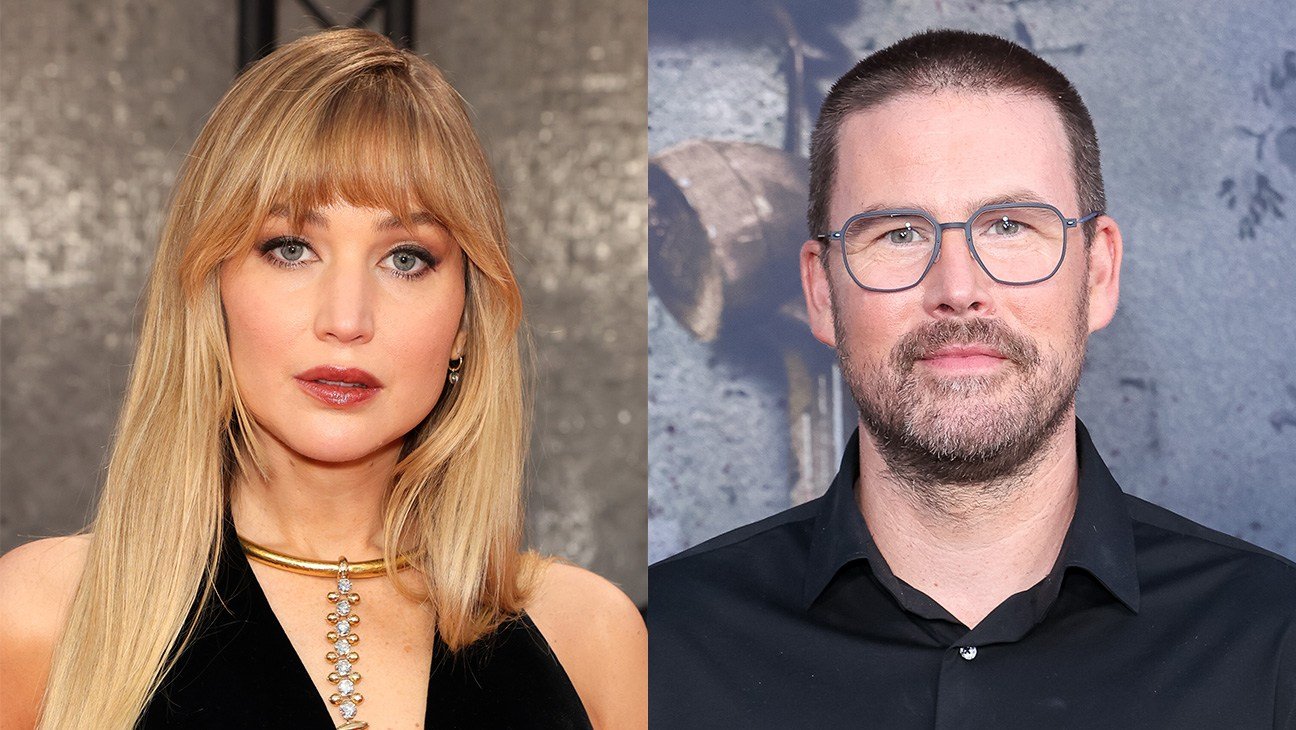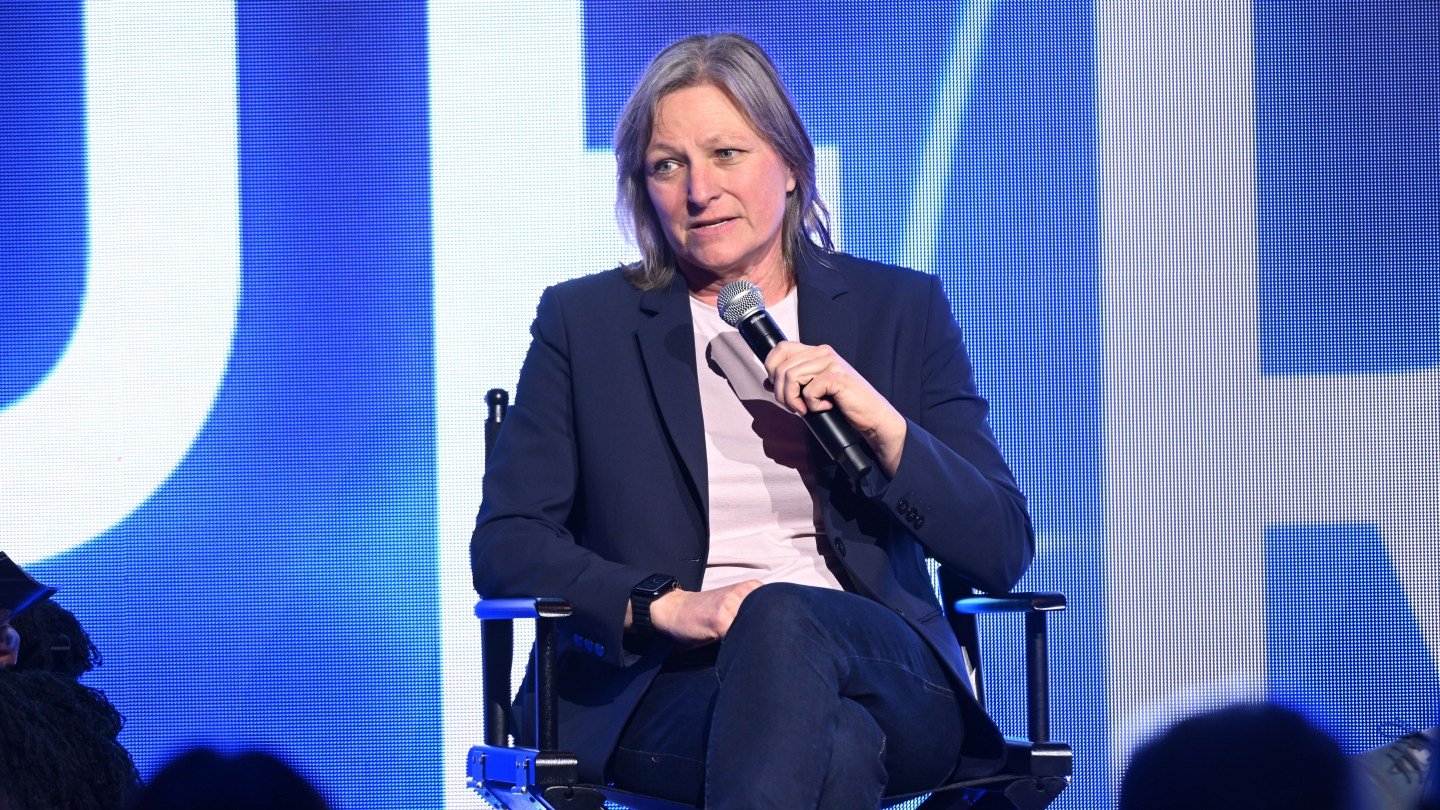
Stacey Sher and her Shiny Penny production banner have signed a first-look deal with MGM Television, Variety has learned.
Under the deal, acclaimed producer Sher will develop and produce TV series for the studio across all platforms.
“Stacey is a visionary producer with an extraordinary track record of bringing bold, culturally resonant stories to life across film and television,” said Lindsay Sloane, head of MGM Television. “Her ability to champion distinctive voices and deliver unforgettable storytelling has shaped some of the most iconic projects of the past three decades. We’re thrilled to partner with her and look forward to the incredible stories we’ll create together for our global audience.”
Sher is a two-time Academy Award nominee — first in 2001 for “Erin Brockovich” and again in 2013 for “Django Unchained.” She has also produced hit films like “Pulp Fiction,” “The Hateful Eight,” “Out of Sight,” “Garden State,” “Reality Bites,” “Get Shorty,” “Man on the Moon,” and “Gattaca.” Most recently, she produced the A24 horror film “Heretic” starring Hugh Grant. She is also producing the Amazon MGM Studios feature “Verity” starring Anne Hathaway, Dakota Johnson, and Josh Hartnett.
In television, Sher’s producing credits include “Mrs. America,” “Into the Badlands,” “Sweet/Vicious,” “Reno 911,” and “Skylanders Academy.”
Katie Aquino serves as creative executive of film and television at Shiny Penny. Most recently, Aquino was an associate producer on “Heretic” and “Verity,” and will executive produce Amazon MGM Studios’ reimagining of “Baby Boom.” She began her career at CAA in the television talent department before joining Shiny Penny in 2021.
Mythical, the company behind the “Good Mythical Morning” YouTube series, just celebrated its flagship show’s 3,000th episode. In an industry where creator longevity is perpetually in question, COO Jacob Moncrief and Deloitte principal Dennis Ortiz sat down with CAA’s Brent Weinstein at Variety’s Entertainment Marketing Summit presented by Deloitte for the Creator Brands in the Zeitgeist panel to explain how the company has not only survived three decades but grown its audience to its largest and most engaged point ever.
The company produces 240 episodes of “Good Mythical Morning” per year through a block-shooting system that compresses a month of content into a single week, freeing founders Rhett and Link to focus on the broader business. That business now includes a live touring operation that sold 40,000 seats last year, a membership platform, three New York Times bestselling books and a fourth on the way in June and a children’s book timed to the aging-up of their original fan base. “A lot of our fan base has been with us for 20 years,” Moncrief said. “Now they have kids.”
On brand partnerships, Moncrief explained how Mythical says no to a lot of deals. The ones that work, he said, start with a genuine personal connection. A partnership with Etsy, which won a Webby Award this week, grew out of Rhett and Link already buying their wives gifts on the platform. “Brands need to understand that they’re a guest in that community,” Moncrief said. “If they come in and try to overpower it, it’s not going to perform like they want.”
Ortiz noted that 33% of consumers feel a stronger personal connection to creators than to celebrities, a number that jumps to 52% among Gen Z. He also flagged that 43% of consumers now consider creator content on par with traditional television, with Gen Z more likely to define YouTube as TV than linear programming.
When it comes to quality, Moncrief clarified that more than 50% of Mythical’s watch time now comes from living room screens, and the company has invested accordingly in 4K production and sound. But the defining visual choice remains intentional and low-tech: keeping the hosts’ faces close to the camera. “That is the power of creator content,” he said. “The audience has that very one-on-one relationship with these hosts.”
A high-stakes national security meeting led by President Donald Trump is set to shape the next phase of the ongoing U.S.-Iran conflict. With ceasefire talks stalled and pressure mounting, markets are watching closely.
Investors are watching not just for geopolitical direction, but for immediate signals that could move oil, stocks, and especially Bitcoin.
Conflict Background: Talks Collapse as Pressure Builds
The current situation follows months of escalation, including major U.S.-Israeli strikes on Iranian infrastructure in March and April. A temporary ceasefire brought short-lived relief, but negotiations have repeatedly failed.
Iran’s Foreign Minister Abbas Araghchi recently exited talks in Pakistan, signaling another breakdown. Meanwhile, U.S. envoys Steve Witkoff and Jared Kushner also withdrew from further discussions. This reinforces concerns that diplomacy is losing momentum.
At the center of the dispute are key issues like uranium enrichment limits, sanctions relief, and long-term verification mechanisms. The U.S. has also maintained a naval blockade around the Strait of Hormuz, a critical route that carries roughly 20% of global oil supply.
Probable Outcome: Pressure Over Breakthrough
Based on current signals, today’s meeting is unlikely to produce a sudden peace deal. Instead, the most probable outcome is a continuation, or tightening of pressure on Iran.
The administration is expected to maintain a firm stance, possibly issuing new deadlines or reinforcing the blockade while leaving the door open for negotiations.
Meanwhile, a full military escalation appears less likely for now, as key objectives have already been achieved and political costs are rising.
A softer diplomatic reset remains possible but less likely given the current tone. Still, backchannel talks could influence the final messaging.
Bitcoin and Markets
The Iran conflict has become a major macro driver for Bitcoin and global markets in 2026. When ceasefire optimism rises, Bitcoin rallies. After an earlier ceasefire announcement, $BTC jumped to $72,700, triggering nearly $600 million in liquidations. A later extension pushed it even higher to $79,486.
But when talks fail, markets turn risk-off. Bitcoin dropped to around $71,600, while Ethereum and XRP also declined.
The key driver behind this volatility is oil. Crude prices surged to over $112 per barrel during peak tensions, fueling inflation fears and tightening financial conditions. When the ceasefire news hit, oil dropped sharply, by over 10%, easing pressure on markets and boosting crypto.
Three Market Scenarios
If today’s meeting results in a harder stance, such as tighter sanctions or renewed blockade enforcement, oil prices could spike again. That would likely trigger a risk-off move, pushing Bitcoin lower in the short term.
However, if there are signs of diplomatic progress or a new ceasefire framework, oil could fall, boosting risk appetite. In that scenario, Bitcoin could rally sharply, potentially revisiting recent highs.
A neutral or vague outcome may leave markets moving sideways, as investors wait for a clearer direction.
Bottom Line
Bullish projections suggest that a full resolution, including reopening the Strait of Hormuz, could send Bitcoin toward $90,000 or higher due to a wave of risk-on sentiment.
On the other hand, prolonged conflict and economic strain could drag $BTC back toward lower levels, with some estimates pointing as low as $32,000 in a worst-case scenario.
In sum, today’s meeting is unlikely to deliver a final resolution, but it will set the tone for what comes next. For markets, especially Bitcoin, the message matters more than the decision itself. As Bitcoin remains highly sensitive to geopolitics, today’s outcome could define its next major move.
Related: Bitcoin Price Prediction: Three Rejections At $79,400 In Eight Sessions As Fed Decision Looms
Curve founder Michael Egorov has proposed a market-based fix for about $700,000 of bad debt tied to LlamaLend, Curve’s lending platform.
“I propose a free-market based method of recovery with option-like payoff, working as an investment for everyone who wants to participate in the effort,” Egorov wrote in the governance post, adding that Curve DAO is “invited but not required.”
The loss from the bad debt sits in LlamaLend’s $CRV-long market, which lets users borrow Curve’s crvUSD stablecoin against $CRV, the protocol’s governance token. The trade works as a bet that $CRV will hold its value or rise. If $CRV falls too fast, the collateral may not be sold quickly enough to repay lenders in full.
That is exactly what happened after the Oct. 10 crash, after President Donald Trump announced tariffs on all Chinese goods via a post on Truth Social.
Rather than ask Curve’s DAO to cover the shortfall, Egorov wants to package the affected lender positions into a tokenized vault and let traders buy and sell them through a dedicated Curve pool.
The goal is to give trapped lenders a way out while letting outside buyers decide what the distressed claims are worth.
LlamaLend’s bad debt
The bad debt resulted from the crash, which saw more $19 billion in leveraged liquidations within hours, the largest single-day deleveraging on record.
Curve’s crvUSD minting markets held up during the sell-off, but LlamaLend did not fully escape the damage. Prices fell fast while gas costs rose, leading to a scenario where some liquidations could not happen in time.
Lenders in the $CRV-long market were left with deposits backed by about 70% of their stated value. The market is designed to reduce that risk through an automated market maker built into the lending system LLAMMA. Instead of selling a borrower’s collateral all at once when prices fall, LLAMMA converts the collateral in steps as the market moves.
“The providers of borrowable liquidity in this market were exposed to losses during liquidation protection,” Egorov wrote. As a result, he said, they “cannot withdraw their positions,” which are “currently around 70% backed.”
But during the Oct. 10 crash, the market moved too fast. Arbitrage traders, who help keep the system balanced by buying and selling across price gaps, could not keep up. Some lender positions ended up in a vault token that cannot be redeemed at full value today.
Egorov argued the token still has value because the loss is not open-ended. The distressed positions already hold crvUSD that was converted from $CRV, so further $CRV declines should not deepen the shortfall.
If $CRV rises above roughly $0.96, the conversion starts to reverse and the positions begin taking in $CRV collateral again. Full recovery would happen around $1.24.
“If $CRV price grows up, positions with bad debt will deliquidate,” Egorov wrote, meaning the system would start converting crvUSD back into $CRV collateral. “If, however, $CRV goes down, collateral is already converted to crvUSD, so the vault deposits will not be less backed.”
$CRV is at the time of writing trading near $0.23, well below both levels.
The proposed pool would use Curve’s Stableswap design, with a 1% swap fee and liquidity centered around 71% solvency rather than full value. That means the pool would not treat the distressed token as if it were worth one dollar on the dollar. It would price the token closer to the amount currently backing it.
For trapped depositors, the pool offers a choice. They can keep waiting for a $CRV recovery or sell their vault tokens at a discount and move on.
For buyers, the trade looks like a long-term bet on $CRV. They buy a claim that is partly backed today and could become worth more if $CRV recovers.
That makes the token have what Egorov called an “interesting option-like property,” on $CRV’s recovery, but with some backing already in place.
“ts fair price and price floor go up if $CRV price goes up, and does not go down if $CRV price goes down,” he wrote,
Liquidity providers in the new pool would earn swap fees and any $CRV incentives that Curve’s DAO chooses to allocate. Admin fees would partly accrue in the distressed vault token itself. Egorov has asked the DAO to keep those tokens rather than convert them, which would slowly move some of the bad debt onto Curve’s balance sheet through trading activity.
Solving bad debt in DeFi
The timing gives the proposal added weight. Earlier in the month, an attacker exploited Kelp DAO’s LayerZero bridge and released 116,500 unbacked rsETH worth about $292 million. The attacker then deposited that unbacked rsETH into Aave as collateral and borrowed real WETH against it.
Aave now faces up to $230 million in bad debt. The industry response has been a coordinated bailout through DeFi United, a recovery effort led by Aave service providers that raised about $160 million of the roughly $200 million needed so far, with contributions from Mantle, Aave DAO, EtherFi, Lido and Aave founder Stani Kulechov.
KelpDAO, one of the entities affected by the exploit, has committed 2,000 ETH to DeFi United, joining a group of major Ethereum-linked organizations. It’s currently unclear whether LayerZero is participating in the initiative.
Egorov is presenting Curve’s pool as a different model. Rather than pass the hat across the industry, Curve would build a market for distressed claims and let buyers decide the price.
“If this proves to be a successful pilot study,” Egorov wrote, it could be applied in “similar difficult situations” at Curve or other protocols.
Producer Stacey Sher is setting up shop at MGM Television.
The two-time Oscar nominee has signed a first-look deal with MGM TV, under which Sher and her Shiny Penny Productions will develop and produce series projects. Katie Aquino is creative executive for film and TV at Shiny Penny.
“Stacey is a visionary producer with an extraordinary track record of bringing bold, culturally resonant stories to life across film and television,” said MGM Television head Lindsay Sloane. “Her ability to champion distinctive voices and deliver unforgettable storytelling has shaped some of the most iconic projects of the past three decades. We’re thrilled to partner with her and look forward to the incredible stories we’ll create together for our global audience.”
Sher earned Oscar nominations for producing best picture nominees Django Unchained and Erin Brockovich. She’s also produced two other Quentin Tarantino films (Pulp Fiction and The Hateful Eight), along with Out of Sight, Get Shorty, the Aretha Franklin biopic Respect and A24’s Heretic. Up next is Amazon MGM’s Verity, an adaptation of the Colleen Hoover novel that stars Anne Hathaway and Dakota Johnson. Sher also executive produced the Oscar-winning documentary short Period. End of Sentence.
In television, Sher has produced Reno 911! (and its assorted spinoff and movie projects), Hulu’s Mrs. America, AMC’s Into the Badlands and the Netflix kids show Skylanders Academy, among other series.
MGM Television, part of Amazon MGM Studios, produces Netflix’s Wednesday, Hulu’s The Testaments (and its predecessor The Handmaid’s Tale), FX’s Fargo and MGM+’s From, among other series.
US authorities said on Sunday that the gunman accused of trying to storm the dinner was targeting Trump and members of his administration.
Recommended Stories
list of 3 itemsend of list
The suspect — who was armed with a shotgun, a handgun, and multiple knives — rushed a US Secret Service checkpoint at the Washington Hilton hotel and managed to shoot a law enforcement officer, although the suspect himself was not struck by gunfire.
The incident is seen as a major breach of security by football fans around the globe, millions of whom will follow their teams at the World Cup tournament, which the US will cohost June 11-19 with Canada and Mexico.
Here’s what fans and experts are saying about the incident and how it could affect their safety at the World Cup:
Will the Trump shooting impact World Cup security?
With the US hosting the majority – 78 of 104 – fixtures, it is expected to see an influx of five to 10 million football fans from around the world, many of whom have expressed concerns for their teams’, as well as their own, safety following the targeting of Trump.
“Their [US] own security service allowed a single person with a shotgun into the most secure building in the world, and missed every shot at him. How are the players going to be safe?” a fan wrote in a social media post.
Others questioned how fans and other members of the public will be safe during the tournament if the country’s president has come under attack.
This is not the first time Trump has been involved in an attempted assassination; he was injured in a shooting at a campaign rally in Pennsylvania in July 2024, and in September 2025, a suspect was convicted of plotting to kill Trump while he was playing golf in Florida a year earlier.
However, security analyst Massimiliano Montanari believes the shooting in the US capital will have “no impact” on security preparations for the World Cup.
“It’s undeniable that this shooting creates additional concerns, but with or without this shooting, the US Secret Service is keeping the highest level of attention on the president,” Montanari told Al Jazeera.
“The world is in a moment of immense pressure; several international turmoils are happening at this time, and the shooting will not change the perception of fans coming to the US,” he added.
“The US has very strong security and counterterrorism experience; I’m sure all necessary measures are in place.”
FIFA did not respond to Al Jazeera’s request for comment on World Cup security in the aftermath of the shooting in Washington.
How will Trump’s presence affect security and fan experience at the World Cup?
Fans critical of the US and its lax gun laws, which lead to hundreds of mass shootings across the country each year, say the latest security breach highlights the country’s failure to control gun violence.
Comments on social media ranged from fans questioning the US as a host to calling for the matches in the country to be cancelled altogether due to security risks.
Mass shootings are a common occurrence in the US. In 2026, the country has seen more than 126 incidents which have resulted in more than 3,100 deaths and 5,300 injuries so far, according to Gun Violence Archive, a non-profit research group.
Some critics also wondered if Trump’s likely presence at World Cup games will endanger fans and negatively impact their experience at the tournament.
“I presume Donald Trump will attend the World Cup at some point as the President of the host nation,” Kate Wilton, a social media user, noted in a post on X. “If he’s an assassination risk, surely him attending is a security risk to all those attending?”
US President Trump shares a close relationship with FIFA President Gianni Infantino and was present at the World Cup draw on December 5, 2025.
Later that month, Trump’s attendance at the US Open men’s tennis final delayed the start of the match, as hordes of tennis fans struggled to get through security checkpoints.
[Al Jazeera]
What does ICE presence at World Cup mean for fans?
The White House shooting also invoked a broader conversation regarding national security in the US, which has seen immigration-related crackdowns across various states.
The Trump administration’s push for mass deportation, as well as its efforts to tighten legal immigration pathways, have spurred concerns about whether the World Cup’s international audience might be targeted by US immigration authorities.
In February, US Immigration and Customs Enforcement (ICE) acting Director Todd Lyons confirmed to a committee in the House of Representatives that his agency would be on the ground for World Cup events. When questioned about visitor concerns, he declined to commit to pausing ICE operations at the matches.
“Fans should be treated as guests and clients of the event, not as a potential threat or as criminals,” Montanari, who heads the International Centre for Sport Security (ICSS), said of the border patrol agents’ presence.
He emphasised that any security officials on the ground must be deployed as discreetly as possible.
“Major global sporting events like the World Cup must remain sporting events and not security events,” he explained, adding that the elements of safety, security and service must work cohesively.
Montanari emphasised that at the previous World Cup in Qatar, where he is currently based, fans were not discriminated against for their nationalities or backgrounds, something that upcoming iterations of the event must emulate.
“I think at any World Cup, the key success factor will be the level of international or regional cooperation; no country can deliver a safe major sporting event without that.
“Securing an event is not just about securing venues, but protecting the overall community, and this involves strong partnership with the government, the business community, and civil society — a holistic effort everyone has to put together.
Last week, the American Civil Liberties Union (ACLU) and Amnesty International, along with more than 120 civil society groups, issued a “travel advisory” for foreigners attending the 2026 FIFA World Cup in the US due to the “deteriorating human rights situation in the US and the absence of meaningful action and concrete guarantees from FIFA, host cities, or the US government”.
The US Senate has taken the first steps towards reopening the Department of Homeland Security (DHS) – which has been partially shut down since mid-February after Democrats demanded immigration-enforcement policy changes following fatal shootings of two protesters by federal agents. The Senate approved a budget framework that would fund immigration enforcement agencies, despite opposition from the Democrats.
Meaghan Oppenheimer is following up “Tell Me Lies” with a new drama series currently in the works at Hulu.
Variety has learned that Oppenheimer is developing the series “Bastards” at the streamer, on which she will serve as writer and executive producer. 20th Television, where Oppenheimer is under an overall deal, is the studio. According to an individual with knowledge of the situation, Oppenheimer delivered the script for “Bastards” to an enthusiastic response just after “Tell Me Lies” wrapped, with Hulu and 20th TV now fast-tracking the project.
The logline for “Bastards” states, “After a world-famous artist is engulfed in a public scandal, her three adult children – each from a different father and each unraveling in their own way – are forced to move back into their childhood home to take care of the teenage sister they barely know. As old dynamics resurface and secrets come to light, the siblings must confront their inheritance of love, cruelty, and chaos.”
Oppenheimer is fresh off of the success of “Tell Me Lies,” which aired its third and final season at Hulu earlier this year. That show was based off the book of the same name by Carola Lovering. Starring Grace Van Patten and Jackson White, the show follows the relationship between two college students over the course of eight years. Per Disney, all three seasons of the show have been streamed for over 350 million hours across Hulu and Disney+ since it originally launched in 2022.
Aside from “Tell Me Lies,” Oppenheimer has written for shows like “Fear the Walking Dead” at AMC. As a creator, she was behind the Facebook Watch series “Queen America” starring Catherine Zeta Jones and Judith Light and wrote the ABC pilot “Broken” that starred Anna Paquin and Blair Underwood, with Bruna Papandrea and Reese Witherspoon executive producing. In film, she wrote the drama “We Are Your Friends” starring Zac Efron and Emily Ratajkowski.
Oppenheimer is repped CAA, Untitled Entertainment, and Yorn Levine Barnes.
The Directors Guild of America has extended the employment contract of Russell Hollander as national executive director through the end of 2029.
The extension comes about two weeks before the DGA is set to begin its collective bargaining process with the Alliance of Motion Picture and Television Producers on May 11. Hollander is a more than 25-year veteran of the guild who has been at the helm since 2017.
DGA president Christopher Nolan confirmed the contract extension for Hollander on Monday. Amid the massive swings in the entertainment and media landscape, the role that guilds play in protecting the interests and rights of artists could not be more vital.
“For nearly a decade as our National Executive Director, Russ has been a steward for the Guild and its members, seeing us through a period of tremendous upheaval in our industry,” Nolan said. “From the pandemic to the strikes and the global contraction in production, Russ has always prioritized and protected the interests of our members, working closely with me, past Guild Presidents, and our National Board. We are grateful for his continued service to our community.”
Hollander joined the DGA in 2001 in New York as assistant executive director.
“I’m honored by the Board’s continued confidence in my service to the membership, especially during times of incredible change,” Hollander said. “The beauty of our Guild is our defining, singular mission to advance the creative and economic rights of our members – and the secret to our longstanding success is the strong partnership between our elected leaders and our professional staff to fulfill that purpose. At a time when the rights of workers need strong champions, it is a privilege to dedicate myself to that purpose and to the members we serve.”
Payments platform Infinite announced the launch of Infinite Accounts, a product that combines traditional banking and stablecoin functionality. The accounts are issued through Erebor Bank, N.A., which provides the underlying infrastructure and is a member of the FDIC.
The new offering gives businesses access to dedicated bank accounts with unique routing numbers. These accounts support deposits, withdrawals, ACH transfers, and domestic and international wires. At the same time, they allow interaction with stablecoin networks through a single interface.
Infinite also supports minting and burning of stablecoins linked to fiat funds. The system handles routing between blockchain networks and traditional payment rails, while managing compliance and reconciliation processes in the background.
The company said the solution is aimed at platforms and developers. Through APIs, partners can embed financial services into their own products under their brand. This removes the need to build payment infrastructure or manage direct banking integrations.
Funds held in bank accounts may be eligible for FDIC insurance, while stablecoins are not insured and may carry additional risks.
Tria, a self-custodial neofinance app, has integrated Decibel to expand trading features inside its app. The update allows users to access perpetual contracts directly without moving funds or using external platforms.
The integration connects Decibel’s central limit order book to Tria’s interface. Users can place and settle trades while keeping full control of their assets. The system runs on the Aptos blockchain.
The move addresses fragmentation in digital asset markets. Tria combines trading, yield tools, cross-chain swaps, and card payments within one balance.
Tria reports more than 500,000 users across over 150 countries. The company is backed by investors, including Polychain and the Ethereum Foundation. The integration with Decibel went live on April 21, 2026.