Ryusuke Hamaguchi has often shown a fascination for the exchange of ideas as a form of process, negotiation and exploration, whether it’s the theater workshops in Drive My Car or the volatile town meetings with developers in Evil Does Not Exist. Conversation is action. Staff meetings and training sessions are a big part of the Japanese auteur’s All of a Sudden (Soudain), set primarily in a Paris elder-care facility run by a woman whose progressive treatment approach clashes with the realities of chronic understaffing and bottom-line-driven management.
The movie’s underlying question is whether individual care and compassion can survive the demographic decline of late-stage capitalism. As the concentration of wealth accelerates, for-profit sectors are paying less, inevitably leading to lower birth rates and labor shortages in the healthcare services required to handle an aging population.
All of a Sudden
The Bottom Line
A work of deeply affecting humanism.
Venue: Cannes Film Festival (Competition)
Cast: Virginie Efira, Tao Okamato, Kyozo Nagatsuka, Kodai Kurosaki, Jean-Charles Clichet, Marie Bunel, Romain Cottard
Director: Ryusuke Hamaguchi
Screenwriters: Ryusuke Hamaguchi, Léa Le Dimna, freely inspired by the book, When Life Suddenly Takes a Turn, by Makiko Miyano, Maho Isono
3 hours 16 minutes
If that sounds a bit dry, well, it is, especially when presented as a casual conversation between friends, complete with diagrams, graphs and bullet points on a whiteboard. But Hamaguchi has his own docu-style methodology, and for audiences with the patience to get through a leisurely paced and very talky first hour, All of a Sudden evolves into a moving affirmation of the basic human rights of respect and dignity. Whether it justifies the three-and-a-quarter-hour running time will be up for debate. But either way, the payoff is worth it.
Dementia movies have been multiplying in recent years, but this feels different in its gentle observation of cognitively impaired, aged patients and their responses to the dogged efforts of two women determined to bring comfort and even joy to those seniors’ twilight years. Anyone with experience of parents or relatives afflicted by similar illnesses will be profoundly touched by the film’s developments.
Marie-Lou Fontaine (Virginie Efira) is director of “The Garden of Freedom,” a care-home franchise branch on the outskirts of Paris. She has been given an unusual amount of latitude to run the facility following the tenets of a compassion-based system called “Humanitude.” But many staff members are resentful of that freedom, particularly outspoken senior nurse Sophie (Marie Bunel), whose employment there dates back to when it was a psychiatric hospital.
Sophie and others maintain that the amount of time and individual attention required to do daily patient rounds according to Marie-Lou’s guidelines is unrealistic, meaning morning-shift staff will be passing on unfinished work to their already overloaded afternoon colleagues — to say nothing of the mandatory training seminars held three times a year that deplete the ranks of those on duty. They also argue that the importance placed on “verticality,” coaxing the patients to walk each day, merely increases the risk of falls.
It’s to the script’s credit that the naysayers are not just intransigent opposers of change; instead, they are pragmatic professionals mindful of the limited resources available to them and wary of what they see as an inviable overhaul of the treatment program.
Tellingly, while Humanitude encourages carers to wear their own casual clothing and interact on a personal level with every patient, Sophie and other holdouts insist on sticking with nurses’ uniforms, going about their work with the brisk efficiency that was ingrained in their professional training.
While contemplating her battles on a tram, Marie-Lou sees a boy running along the side of the road, seemingly out of control. She gets off to make sure he’s OK and follows him to a park where she waits out a sudden downpour with him. When the nonverbal boy’s guardians track him down via a GPS app on their phones, she learns that his name is Tomoki (Kodai Kurosaki), and his autism makes him prone to unpredictable behavior.
The grateful strangers are Mari (Tao Okamoto), an experimental stage director, and Gorô (Kyozo Nagatsuka), Tomoki’s father and an actor in Mari’s solo performance piece.
At their invitation, Marie-Lou goes to see the production, a hospital-set reflection on the dismantling of asylums, offering a different perspective on the treatment of mental illness. Audience members are given percussion instruments with which to interact, and Tomoki at most performances becomes part of the show. “The impossible is impossible, but only until it becomes possible,” says Gorô, providing a capsule version of the film’s message of hope and perseverance.
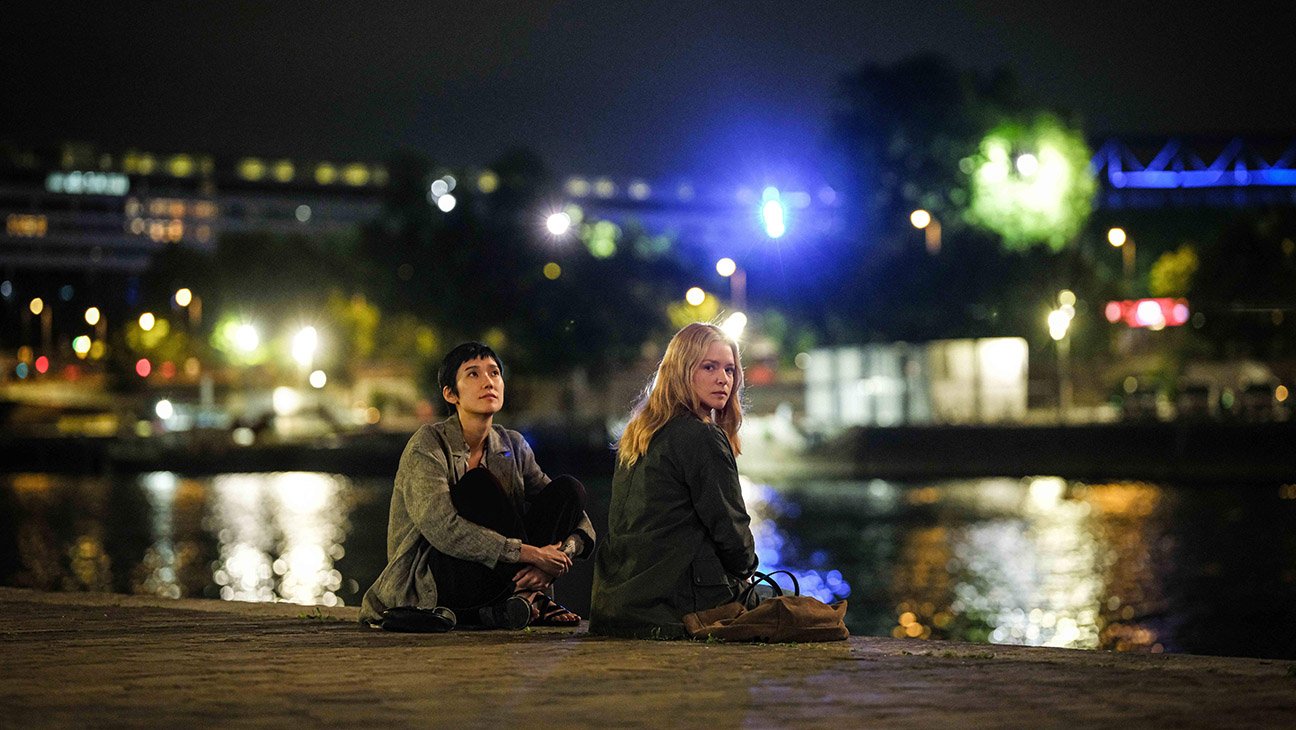
Recognzing some of the play’s themes from her own work, Marie-Lou stays behind to chat with Mari and the two women spend a long night together walking and talking, their friendship blossoming instantaneously. Marie-Lou is fluent in Japanese, having done her anthropology degree in Tokyo, while Mari, equally fluent in French, studied philosphy at the Sorbonne.
Their backgrounds reflect those of Makiko Miyano and Maho Isono, authors whose collected letters about illness and abrupt changes in health were published in the nonfiction book that loosely inspired Hamaguchi and Léa Le Dimna’s screenplay.
Marie-Lou shares her frustration with tensions at work, while Mari reveals with a matter-of-fact absence of self-pity that she has terminal cancer and her condition could drastically worsen at any time. Mari starts spending time at the care home, where Marie-Lou encourages her to involve staff and patients in simple trust exercises. The bond between the two women becomes almost spiritual, and the caregivers seem to absorb their positivity by osmosis.
Only a director as elegant as Hamaguchi could fold together a testament to the solace of female friendship, a painstakingly detailed workplace study, a consideration of compassion as a form of resistance and a soulful meditation on mortality.
As always with Hamaguchi, the film is dotted with luminous moments of human connection, whether it’s the simple pleasure for Marie-Lou of waking from a nap in the sun under a tree in the garden, sharing a cigarette with feisty patient Mireille (Évelyne Istria), or Marie-Lou’s détente with Sophie, whose respect among other nurses and assistants means that if she left, others would follow.
Efira has gone from strength to strength in the years since the Belgian actress emerged — her work in Rebecca Zlotowski’s Other People’s Children is especially notable — and her natural tenderness shines through here, even when moments of friction cause her to show a brittle side or lean toward burnout.
She’s well-paired with model-turned-actress Okamoto (widely seen in The Wolverine and in arcs on Westworld and Hannibal), whose tranquil countenance belies the ticking-clock awareness of her mortality. Marie-Lou accompanies her to Kyoto, where Mari plans to check into a hospice. (A scene in which they sit on a mountainside looking out over a sprawling view of the city below while eating pot noodles is lovely.)
But Marie-Lou convinces her to return to Paris and take up a live-in artist-in-residence position at the care home, giving a sense of purpose to whatever time she has left, even if her strength is depleted. Perhaps the warmest moment of satisfaction for Marie-Lou is when a colleague tells her that Mari’s workshops seem to be of even greater benefit to the staff than to the patients.
All of a Sudden is an odd but audacious film in the way it favors the thematic over the dramatic. Those not attuned to Hamaguchi’s wavelength may find it overstretched and desiccated. But if you can get on board with its leisurely pace, there’s transcendant beauty in its view that all lives are of value, no matter how diminished. As Marie-Lou puts it: “An inert hand is not a dead hand … there’s life until there’s not.”
Leave a Reply