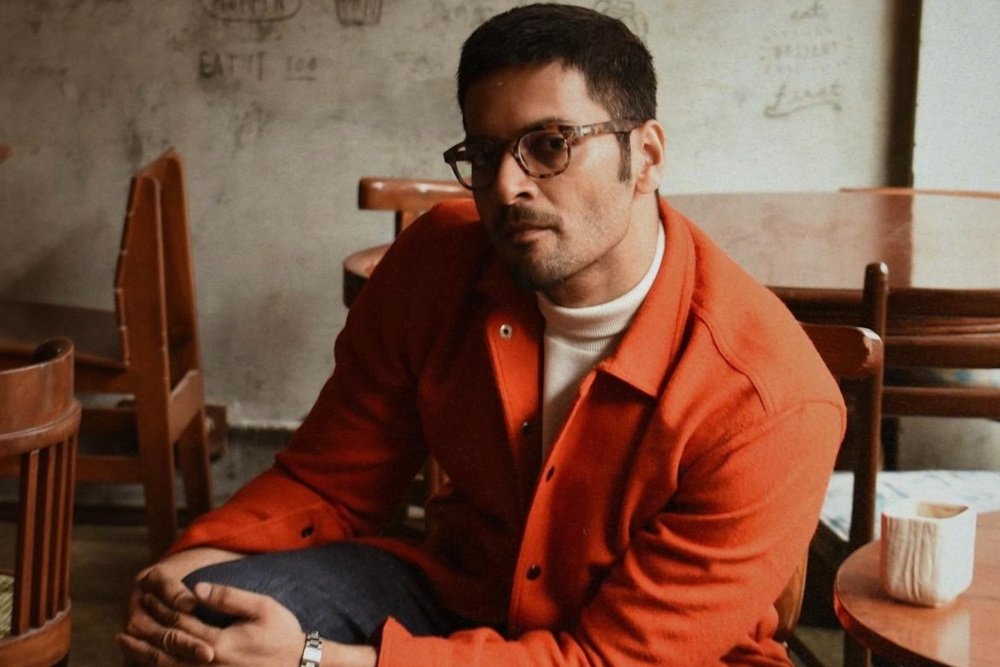
Ali Fazal has spent a decade and a half deliberately refusing to sit still. He credits his mother for it. Bombarded with world cinema from an early age, he came out of college convinced the industry was bigger than what he’d been shown, and he built a career designed to prove it.
“I have to entertain myself first. I don’t think that’s a great feat, but I get bored of doing the same things,” Fazal says.
He returns as Guddu Pandit in “Mirzapur: The Movie,” the theatrical continuation of the Prime Video crime drama that made him a household name. He points to “Peaky Blinders: The Immortal Man” as the closest reference point for what the franchise is attempting.
“I think this is the first time India’s doing something like this, so very excited and also, I mean, it’s an experiment, but hoping to pull off and see if people come into the theaters,” Fazal says.
The film does not carry Guddu through to where the series left him. Instead, it rewinds, which meant Fazal had to strip away seasons of accumulated hardening to find the character’s earlier self again.
“It was a bit of a memory washout that I had to deliberately do, because seasons almost behave like human memories,” he says. He calls the character, underneath the bodybuilder physique and gangster posturing, one of India’s “unloved men,” a common type he says the culture produces and then has to reckon with in its stories.
That reluctance to return to long-form storytelling nearly kept him away from “Raakh” too. The Prime Video investigative thriller, drawn from one of India’s most notorious real-life cases, follows Sub-Inspector Jayprakash, a working-class policeman who rose through the ranks on merit and finds himself consumed by a case that outgrows him. Fazal had been circling a collaboration with director Prosit Roy for years before the two finally aligned on a project.
“This story came at the right time because ‘Mirzapur: The Movie’ had gotten pushed, the shooting thing,” Fazal says. “So I was actually halfway prepping for that and kind of building up. So I got very scared when I heard this.”
He describes Jayprakash’s arc as tangled up with the character’s strained relationship with his father, a former police sergeant whose currency was deference to superiors, set against a son determined to earn his place honestly. A second season, Fazal says, is not confirmed, though he believes the makers left the story open enough to accommodate one.
“I think the makers are very excited. Amazon is very, very, very happy indeed, so I’m sure they will try and come back with one,” he says.
Between a hard-boiled procedural and a stylized crime saga sits the rest of Fazal’s résumé, which stretches through Indian mainstream cinema, independent film, and Hollywood credits including “Victoria & Abdul,” “Death on the Nile,” “Kandahar” and “Furious 7.”
He has also begun shaping which stories get made at all, through Pushing Buttons Studios, the production banner he runs with his wife, actor-producer Richa Chadha. Their debut production, “Girls Will Be Girls,” directed by Shuchi Talati, won the Sundance Film Festival’s audience award and a jury prize for its lead actor. Fazal points to gaps in the Indian industry’s infrastructure, from the near total absence of theatrical distribution for documentaries to how little independent filmmakers know about submitting to festivals in the first place.
Fazal’s near-term slate includes a cameo in the partition drama “Batwara,” produced by Aamir Khan and starring Sunny Deol and Preity Zinta, and a segment in Netflix’s “Lust Stories” directed by Shakun Batra. He is also set to shoot an as-yet-untitled English-language film in London early next year, which he describes as a corporate drama in the vein of “Glengarry Glen Ross” meets “Severance.”
He is careful, still, about what international collaboration with India actually requires going forward. Access built on personal connections, he argues, does not translate abroad, and the contracts governing Indian productions need to modernize to match.
“We have to start championing each other,” Fazal says, pointing to how fragmented the industry remains across languages and how rarely its independent filmmakers organize on shared ground.
Fazal doesn’t have a fix for any of it yet. But between two very different roles this year, a production company still finding its footing, and a stack of scripts he says are close to shoot-ready, he isn’t waiting around for one either.
Leave a Reply