SPOILER ALERT: This post contains spoilers for “Love of Your Life,” now streaming on Prime Video.
When Rachel Morrison read the script for “Love of Your Life,” it stuck with her.
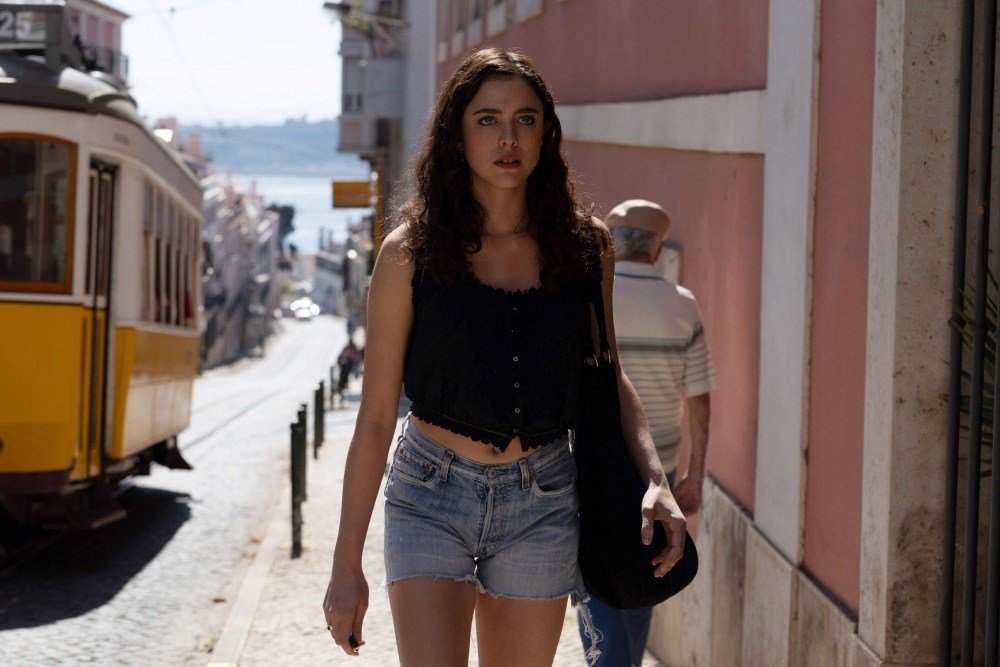
Penned by “Nyad” writer Julia Cox, the story follows Maya, a 20-something emergency room nurse living in Boston without much family to call her own. When she meets the nerdy but charming Charlie, the two start building a life together — until tragedy during the COVID-19 pandemic causes it to fall apart. Maya runs away from her pain by traveling the world, first to Portugal and then to London and Japan, but an unexpected romance forces her to confront her past and realize that there may be more than one love of her life.
Morrison, who has already had an illustrious career as a director of photography — she was the first woman to be nominated for the best cinematography Oscar for her work on 2017’s “Mudbound” — made her directorial debut two years ago with the sports drama “The Fire Inside.” For her follow-up, she’d been thinking about the intersection of love and loss.
“I obviously was drawn to the script, but didn’t immediately think, ‘This is my next project,’” Morrison tells Variety over Zoom. “It really was just, this is good writing and I want to talk about it with this writer.”
Morrison and Cox really connected. “There was a deep sense of mutual respect, but also, for this script that was incredibly well received and jumped off the page, she was not precious about it,” Morrison says. “The more I sat with it, the more it sort of got under my skin.”
The same was true for the film’s cast, an all-star ensemble led by Margaret Qualley as Maya and including Gabriel Basso as Charlie; Aaron Pierre as Felix, a handsome stranger she meets abroad; Patrick Schwarzenegger as her best friend Jason; and Catherine Keener in a scene-stealing performance as Charlie’s mother Ruth.
“We have leading actors playing supporting roles, and I think that’s because this really spoke to them,” Morrison says.
Below, the director speaks more with Variety about working with Qualley, putting the COVID-19 pandemic on screen and why they didn’t go with the obvious ending.
What was it about the script that struck you?
I think there were two prominent things. One is that it’s sadly rare to have features where particularly female characters are layered and complex and flawed and messy and aren’t sort of reduced to just a plot engine, but actually have a lot of nuance and growth to do within the script. And I thought that was really exciting to see a character who could make some really questionable decisions, but you’re still rooting for her.
And then I think the reason why I was interested in the cross-section between love and loss is because of how personal it is to me. I’m somebody who was shaped from some pretty significant early loss that really transformed who I became. And I went through the same kind of messy tumult that Maya’s character did, where you’re trying to make sense of your life after something so devastating, and you’re moving through the world without actually engaging in it. These guardrails come up because you don’t ever want to be hurt again, and it’s a real process to take those down. So I think I saw myself in Maya and in the script, and felt like I could be additive to it. The more I sat with it, the more I realized how personal it was and therefore how right I would be to tell it.
Tell me about finding your leading lady in Margaret Qualley.
Margaret had read the script — I mean, many actresses had read the script and kind of raised their hand. A few names stood out, Margaret’s in particular, where I knew she could be a real ally and partner in this. As somebody who’s going to have to anchor the entire thing, it’s critical that your actress wants to be there and really understands the film that you’re trying to make. We sat down and really talked about it, and it was clear we both wanted to make the same film. I’ve been a big fan of hers for a long time, and part of what I’m a fan of is this wild range she has. Her character choices are sometimes from one thing to the next, just these really bold characters. And I was excited that I don’t feel like in a feature sense, I’ve seen — maybe on “Maid” on TV — a really foot-on-the-ground, relatable performance that I knew she was capable of. And I was excited to see what the girl-next-door version could be.
How about the men in Maya’s life: Gabriel Basso, Aaron Pierre and Patrick Schwarzenegger?
The biggest goal was for there to be variation between them. Each character had specificity as scripted, and actually as we cast the roles, they started to inform each other. Aaron is maybe a little more stoic than his character is written, which then allowed Gabe [to have] this kinetic, golden retriever energy. And then, obviously, doing chemistry reads with Margaret and Patrick too, and making sure that each of their chemistry was palpable but unique unto itself. And certainly Gabe brought out a different quality in Margaret than Aaron did and Patrick did, and you can feel it throughout the film.
How has your career as a cinematographer informed your directing style?
First and foremost was the desire to shoot on real locations. People have different methodologies, but for me it was almost a non-starter. I really wanted to go to the spaces where this film existed, and not try to create them in a soundstage. And there are other directors who probably would skew towards the soundstage version, and so I commend Amazon MGM for actually letting me do it that way, because that’s not really how movies get made anymore. It’s actually really unusual to go to two cities, let alone four.
And then, I can’t turn off the DP in me, which I think is actually a real asset to my cinematographers because I’m scouting from the beginning. Even before the DP comes on, I’m looking at how the location interacts with light, how I can block a scene within a space to move the camera in such a way. So it’s sort of ingrained in how I visualize things, even probably from the page. And then [cinematographer] Todd [Banhazi], we had such a lovely collaboration. He’s amazing. But he kind of would light the world and then let me exist, which is how I like to work.

Margaret Qualley and Gabriel Basso in “Love of Your Life.”
©MGM/Courtesy Everett Collection
The COVID-19 pandemic is a central part of the story. How did you go about portraying that and addressing our collective trauma from it, given that it wasn’t that long ago? Not many films have attempted to put it on screen.
I think for us, the most important thing was to get it right. Because this isn’t just the pandemic, it’s the pandemic as experienced through a first responder. And so we did a lot of consulting, both myself and Margaret, with nurses and doctors and just the medical profession during that time and the different stages of it. And then the lasting effects of it, of course. But I think just looking for little things that we would all relate to, even like “Tiger King,” wiping down the groceries with Clorox. The goal was really to recreate it in a way that feels both like yesterday and also like a lifetime ago, but that everyone would fully relate to. And not make it sensationalized. I think that’s the thing about the whole movie — I’m always trying to make it the grounded, relatable version of itself and not the cinema version of itself. So it’s never the extreme, it’s always the recognizable.
Margaret has some very heavy emotional scenes. How did you work together to get her to that place?
Margaret had really great instincts. You have this character who spends a lot of the movie not actively grieving — it’s manifesting in these other ways, but she’s not actually releasing the emotion. Obviously, she’s feeling all the things and is traumatized, but she doesn’t quite know how to express it. On the day, there are things that happen always with good actors where they’re feeling the feel and there’s a reaction that isn’t even performative, it’s so from the body and the heart and the soul. So like, Margaret heaving trying to get the words out to Ruth on the phone, it was actually scripted that she got it all out and then lost it — but she couldn’t find the words. And I think she was right. It was a much more honest portrayal of what Maya would have been going through. I think my approach is you go in with a plan, but you’re always looking to pivot or react to what’s in front of you and not what you’d imagine. You have to be open to that, otherwise I think you can really stifle the process.
At the end of the film when Maya flees the airport, I expected her to run back to Jason, but she actually goes to visit Ruth. Tell me about the decision for her not to end up with him.
You just touched on the other thing that drew me to this script, which is that we’re taking these genres that have a set of expectations and completely subverting them. It was very much by design that the audience thinks she’s going back to Jason for a moment, and then realizes she’s going to Ruth. And that’s because this genre is set up for the happily ever after romantic ending. And I am just so profoundly grateful and thrilled that that’s not how this film ends and that it really is so much more about finding her way back to life and to herself. The hope is now she will be open to all the possibilities in front of her — and will probably find the right person again someday and maybe still have kids and all the things — but we’re not spelling it out or buttoning it up for people and know that just finding herself is enough.
Aaron Pierre and Margaret Qualley in “Love of Your Life.”
©MGM/Courtesy Everett Collection
“Love of Your Life” got a one-week theatrical release before dropping on Prime. Why was this important for you?
I mean, I’m somebody that came from a time when dramas were in theaters. I made this film knowing it was always destined for Prime, [but] I made it for the theatrical experience anyway. I don’t know that I would ever shoot something differently because of the platform, but I’ve definitely been encouraging anyone and everyone to see it in theaters while they can because I do think there’s something so immersive about that experience for a number of reasons. There’s something very special about an engaged audience sharing an emotional experience together too, which is something that we just don’t get that much anymore because most movies in theaters these days are horror or action. The idea of all having a good cry together is quite rare. But, thankfully, I think it plays very well on Prime, too. And one thing that we learned just through the testing process is that — shocker — men feel more comfortable emoting at home. And so, it may actually play better for the male gender to just, in the comfort and privacy of their own home, really let it go.
Any idea what your next film will be?
I’m interested in grounded sci-fi. I’m always looking for a device to hide the drama because I do want to make movies for the theater if possible. Because unless you’re Nolan or now maybe Coogler, we can’t get audiences to dramas anymore. I mean, even when you look at most of these films, like an “Arrival” or a “Blade Runner” or “Dune,” often they’re just simple [stories]. “Star Wars” is a father-son story, but it exists in space and therefore people are excited to go to the theater for the spectacle of it. So one bucket would be a big, world-building spectacle-y sci-fi drama. And I guess there’s another version where I make something smaller in the A24/Neon space where, by virtue of not making it for as much money, it gets a theatrical release because it can exist in a smaller space. But my goal right now would be to do something that’s undeniably theatrical and to do something that I haven’t done before. I’m always trying to push myself and challenge myself, hence the pivot from cinematography at the top of my game to starting completely over as a director. It’s to keep growing and evolving. So whatever’s least expected of me, that’s probably what I’ll do next.
This interview has been edited and condensed for length and clarity.
Leave a Reply