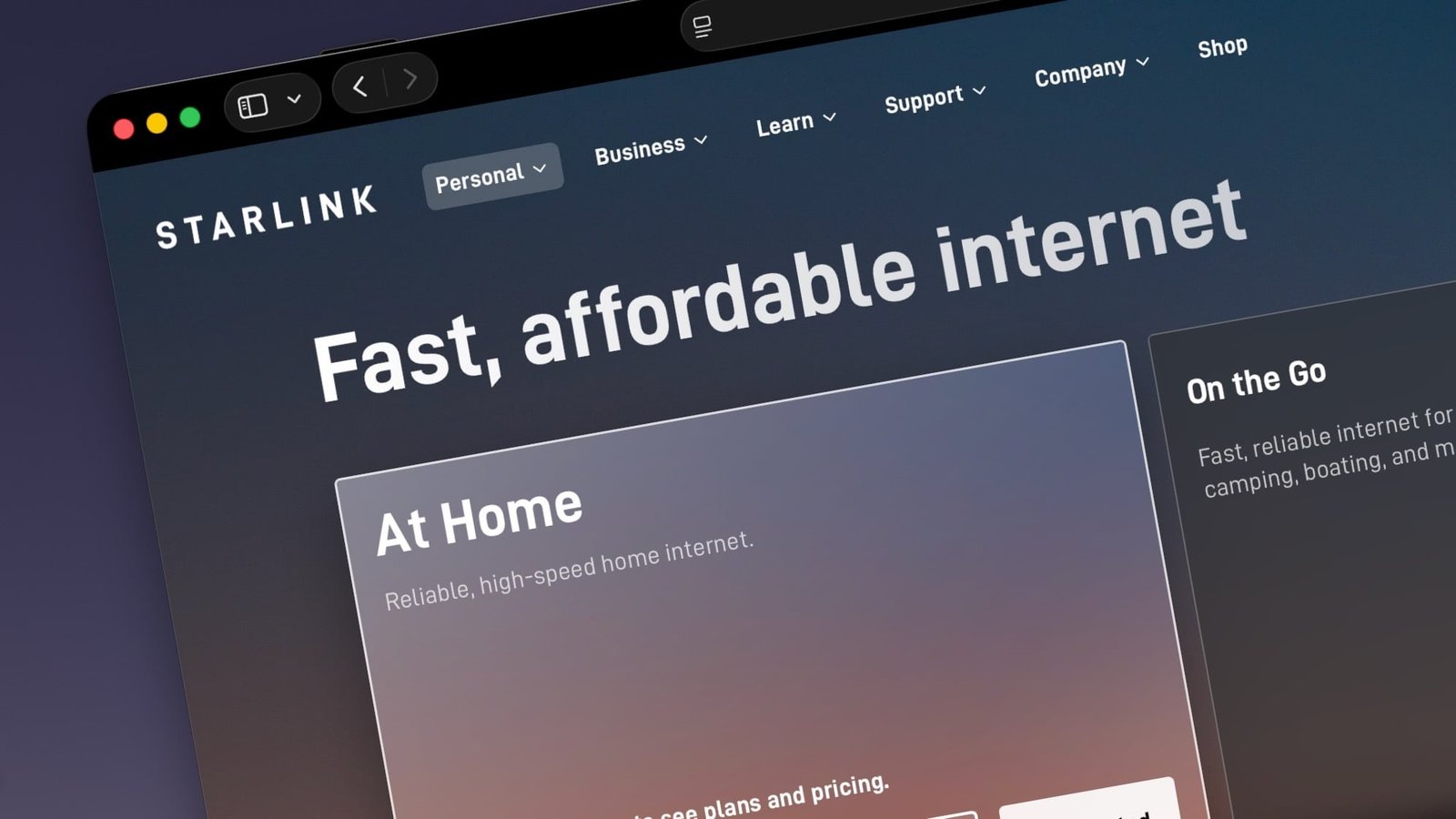
Starlink’s controversial dynamic pricing seems to have expanded from the Midwest to across the US, leading to a 10% to 20% price hike for affected subscribers on the Residential plans.
“ANOTHER price increase! Just went up to $130 in June, and now it’s going to $143 a month!!” wrote one Facebook user based in Texas.
This morning, numerous users on social media reported receiving an email from SpaceX about raising their rates, citing the need to manage supply-and-demand for the satellite internet service. “As more people in your area use Starlink, less network capacity is available and service pricing may change from time to time,” the company wrote.
However, the price hikes can be sizable. At the 20% increase, the Residential Max plan goes from $130 per month to $156 per month, or what amounts to paying an extra $312 over a year. In no surprise, the customer reaction has been harsh. “F#@& u and the price increases,” wrote one user on Reddit. “Tired of this price gouging.”
This Tweet is currently unavailable. It might be loading or has been removed.
Others wrote they plan on canceling their Starlink subscription and signing-up for another internet provider. “Mine is going up to $143. Thankfully they are running fiber lines so hopefully we’ll be good to leave soon,” wrote one user.
Some customers are also directing their anger to SpaceX’s CEO Elon Musk, currently estimated to be the world’s richest person. “Old Elon must be going broke and he’s trying to get all (the money) back from his long term customers!” wrote one user in a Starlink group on Facebook.
Users based in Virginia, Louisiana, North Carolina, Washington and Alaska have reported receiving the email about the price hike, suggesting the dynamic/surge pricing has gone nationwide. The official Starlink.com has also started to display the 20% rate hike for locations such as Portland, OR, Spokane WA, Murphy, NC, El Dorado, AR, and Lafayette, LA. Some others areas, including Toronto, Canada, show a 10% increase.

(Starlink.com)
Starlink first introduced the pricing scheme for the Residential plans last week, but only for certain locations in Kansas, Missouri and Nebraska. The rate changes can swing both ways: Some users were pleasantly surprised to see a 10% to 20% decrease, but others saw increases in the opposite direction. For the unlucky users, the new policy amounted to a second rate hike within a single year, after Starlink announced a $5 to $10 price increase back in May.
The other glaring issue is that SpaceX told affected users in Kansas and Missouri: “We will be reviewing prices on a regular basis, roughly quarterly, and you may see more frequent changes than we’ve made historically or compared to other providers.” The uncertainty has been causing some users based in remote and rural areas to fear that Starlink could raise their prices again when they have no high-speed alternatives. Others slammed SpaceX for allegedly holding users hostage, and questioned why the company couldn’t simply slow internet speeds or use a waitlist to manage the system’s capacity.
It seems another backlash is now unfolding due to the dynamic pricing expanding to more users, causing some to tweet at Musk on X/Twitter. “wtf is this price increase bro? I’m getting rid of Starlink as soon as I have another option,” wrote one user.
This Tweet is currently unavailable. It might be loading or has been removed.
SpaceX didn’t immediately respond to a request for comment. But in the company’s earlier email to users in Kansas and Missouri, it noted: “These won’t just be (price) increases: as we expand capacity, service pricing in your area may be lowered.”
Recommended by Our Editors
In some parts of the US, the company has also been offering a huge 30% and even 50% discount on the Residential plans for new customers. The locations include Boston, San Francisco, and New York City, areas where Starlink likely has excess network capacity. SpaceX has also been emailing eligible users, saying “Pricing applies for as long as your subscription remains active.”
The discount push could help Starlink attract new customers and even compete with traditional internet service providers. But the pricing for the satellite internet service has also started to become inconsistent across the country, making it entirely dependent on the user’s location. It’s also threatening to alienate existing subscribers hit with rate hikes
One Reddit user also told PCMag: “They are taking advantage of people in rural areas because they know we don’t have any other options. I have been using Starlink since the beginning of 2024.”
The same user plans on canceling their Starlink subscription, saying: “I’m just not going to have internet. Can’t afford it anymore. Not at $156 per month.” Three broadband experts also told PCMag they’ve never heard of an ISP implementing dynamic pricing on a regular basis.
About Our Expert

Michael Kan
Principal Reporter
Experience
I’ve been a journalist for over 15 years. I got my start as a schools and cities reporter in Kansas City and joined PCMag in 2017, where I cover satellite internet services, cybersecurity, PC hardware, and more. I’m currently based in San Francisco, but previously spent over five years in China, covering the country’s technology sector.
Since 2020, I’ve covered the launch and explosive growth of SpaceX’s Starlink satellite internet service, writing 600+ stories on availability and feature launches, but also the regulatory battles over the expansion of satellite constellations, fights with rival providers like AST SpaceMobile and Amazon, and the effort to expand into satellite-based mobile service. I’ve combed through FCC filings for the latest news and driven to remote corners of California to test Starlink’s cellular service.
I also cover cyber threats, from ransomware gangs to the emergence of AI-based malware. In 2024 and 2025, the FTC forced Avast to pay consumers $16.5 million for secretly harvesting and selling their personal information to third-party clients, as revealed in my joint investigation with Motherboard.
I also cover the PC graphics card market. Pandemic-era shortages led me to camp out in front of a Best Buy to get an RTX 3000. I’m now following how the AI-driven memory shortage is impacting the entire consumer electronics market. I’m always eager to learn more, so please jump in the comments with feedback and send me tips.
Leave a Reply