
In brief
- Bitcoin climbed above $72,000 Thursday after gaining nearly 15% since Monday.
- Analysts pointed to Treasury bond purchases, policy headlines, and a massive short squeeze as drivers of the rally.
- With much of the short squeeze exhausted, analysts are watching spot demand, technical levels, and Treasury yields.
Bitcoin’s rally above $72,000 wiped out billions of dollars in bearish bets, but analysts say it will need fresh buyers to keep climbing.
Bitcoin reached its highest price since June on Thursday after gaining nearly 15% since Monday, with more than $3 billion in crypto short positions liquidated. That’s the largest liquidation of short positions on Bitcoin since at least 2021. What’s more, spot Bitcoin ETFs pulled in $517 million Wednesday, their largest single-day inflow since May.
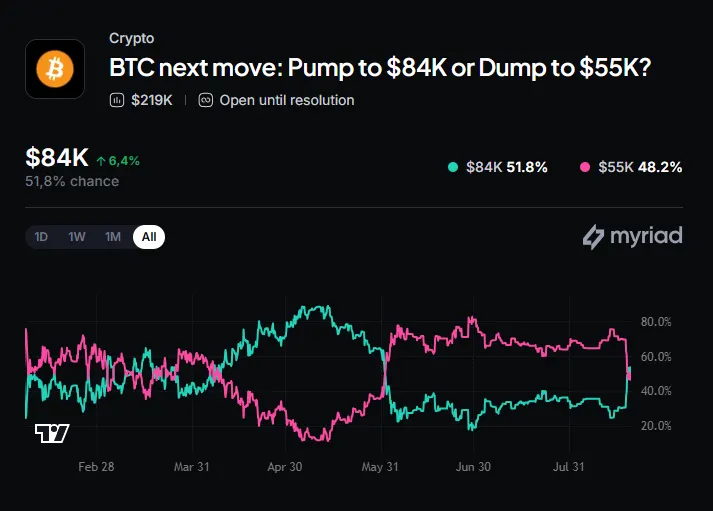
Julio Moreno, head of research at CryptoQuant, attributed the rally to the U.S. Treasury buying long-dated government bonds, which markets interpreted as increasing liquidity, and President Donald Trump suggesting that the U.S. government could purchase Bitcoin.
“The rally may be sustainable if spot demand growth continues after the initial impact of these macro events,” Moreno told Decrypt. “Officially we are still in a bear market, so a price pull back is possible, more so after this sudden increase.”
Moreno said he is watching Bitcoin’s 365-day moving average, currently around $83,000, along with CryptoQuant’s profit-and-loss index and bull score, neither of which has turned bullish.
“To confirm that a bull market has started, I’m watching CryptoQuant’s P&L Index, specifically if it crosses its 365-day moving average to the upside, which it has still not crossed,” Moreno said. “Moreover, CryptoQuant’s bull score continues in bearish mode, so I’m waiting for it to switch into bull territory.”
Nansen Senior Research Analyst Nicolai Sondergaard said Bitcoin’s technical picture has improved after reclaiming its 200-day simple moving average around $69,000. Bitcoin also sits about 8% above its 20- and 50-day moving averages, while its MACD, a momentum indicator used to track changes in price trends, has turned bullish.
“The key line is the 200-day SMA near $69,000 and holding above it keeps the breakout valid, while a close back below would signal a failed move,” Sondergaard told Decrypt. “Above, the recent high ~$72,824 is immediate resistance.”
However, Sondergaard warned that much of the rally was driven by liquidations rather than sustained buying, leaving Bitcoin vulnerable once the short squeeze runs out. Positioning remains mixed, he said, though whales and public figures on Hyperliquid are net long by $27.9 million and $33.9 million, respectively.
“The largest risk is that this was a short-squeeze spike, not fresh sustained buying,” he said. “Once forced covering exhausts, thin follow-through can reverse quickly.”
Sondergaard said trader positioning remains mixed and warned that “any reversal in that narrative or a broader risk-off move could stall the rally fast.”
Adam McCarthy, a researcher at crypto trading firm Lo:Tech, also attributed the move to the Treasury’s expanded buyback program and the short squeeze. More than half of Wednesday’s gain occurred within a single hour as traders were forced out of a one-sided short position, he said.
“The Treasury’s buyback expansion gave the market a reason to reprice, but more than half of Wednesday’s gain came in one hour when a one-sided short position was forced out,” McCarthy told Decrypt. “That fuel is spent, so the next leg has to be bought rather than squeezed.”
McCarthy said he is watching the 30-year Treasury yield, particularly whether it moves back toward 5.3%, and crypto funding rates for signs of sustained buying.
“In crypto, whether funding starts showing a real long premium, because that’s what actual buying looks like,” he said.
McCarthy warned that the short positions that helped drive Bitcoin higher have largely been cleared.
“The short base is largely cleared and nothing has replaced it, so the move that got us here can’t repeat,” McCarthy said. “And if dealers are short gamma at $70k as we think, the hedging that exaggerated the way up exaggerates the way down.”
Bitwise Research Analyst Ishmael Asad was more bullish, calling the rally the strongest indication yet that Bitcoin has bottomed. He pointed to the Treasury’s expanded bond buybacks, the SEC’s proposed Regulation Crypto Assets framework, and this week’s White House crypto summit as catalysts.
“After this steep leg up, I wouldn’t expect the rally to continue at the same pace from here,” Asad told Decrypt. “But I would take this move as the strongest confirmation we’ve seen yet that the bottom is in.”
Asad said much of the potential downside, including the failure to pass the Clarity Act this year and possible rate hikes, has already been priced in. Still, he said a return to a bull market would require additional catalysts.
“The market will likely move sideways or higher in the coming months as we look towards the next milestones, like a potential Senate vote on Clarity in September,” he said.
CoinShares Head of Research James Butterfill also expects conditions to remain favorable, but said Bitcoin is more likely to trade within a range than enter a sustained breakout.
“The rally is primarily a macro story rather than a crypto specific one,” Butterfill told Decrypt. According to Butterfill, recent inflation and employment data have weakened expectations for further Federal Reserve tightening, while large Bitcoin holders have stopped selling and begun accumulating again.
“We expect the constructive backdrop to persist, but we would characterize the market as range-bound for now rather than in a sustained breakout, as accumulation by large holders is not yet at a scale that would imply one,” he said.
Digital asset investment products have also attracted about $1.3 billion so far this week. Still, Butterfill expects Bitcoin to remain range-bound because accumulation by large holders is not yet strong enough to support a sustained breakout.
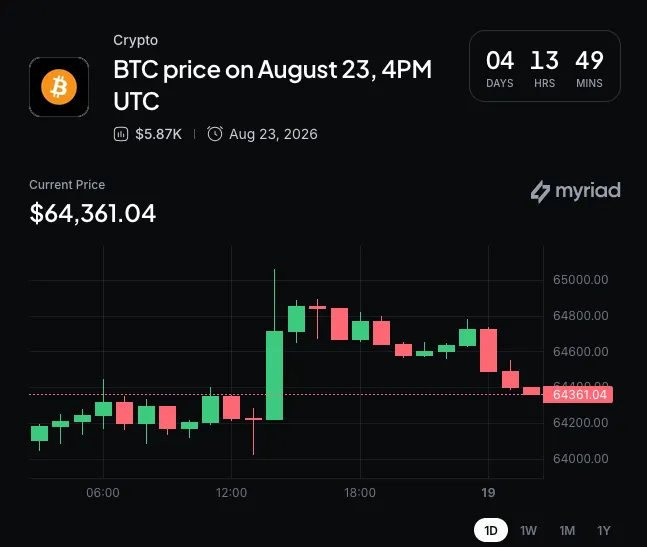
Bitcoin’s move above its 200-day moving average has improved the technical picture, Butterfill said, with $80,000 now a key level to watch.
“On the upside, the US $80,000 area remains the important boundary, and a decisive move through it would likely require clearer confirmation from the Federal Reserve that policy risks have shifted away from further tightening,” he said.
Monetary policy, he added, remains the biggest risk, noting that persistent inflation could force the Federal Reserve to keep policy tighter for longer, reversing the liquidity conditions supporting Bitcoin’s rally.
“With accumulation by large holders still modest in scale, the market lacks the depth of conviction that typically underpins a durable breakout,” Butterfill said.
Daily Debrief Newsletter
Start every day with the top news stories right now, plus original features, a podcast, videos and more.
Leave a Reply