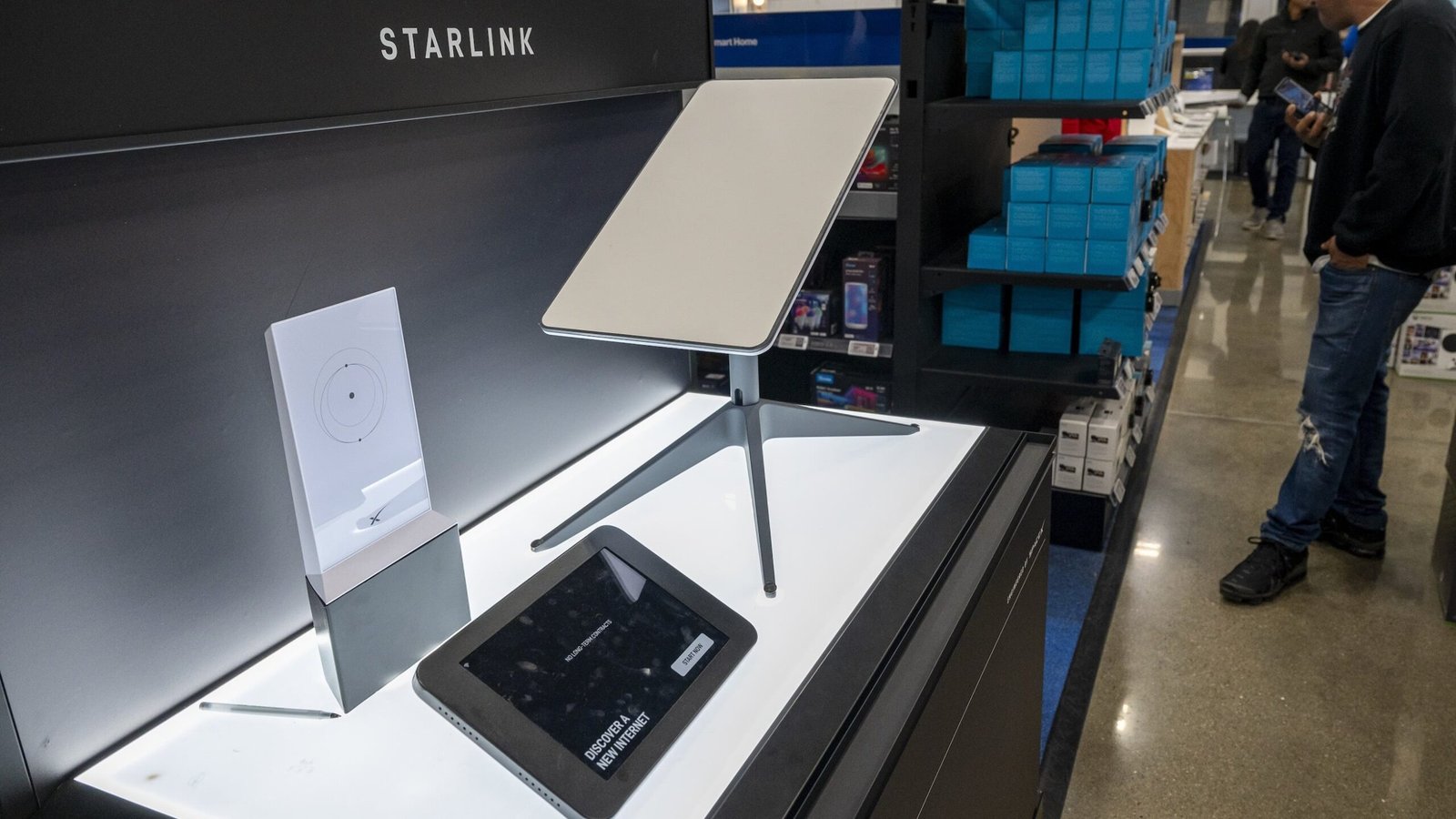
SpaceX’s plans for a Starlink store in California seem to be on hold. But there are signs that the company continues to expand the satellite internet system’s presence at other retail locations.
A year ago, we reported that SpaceX was hiring a “Starlink Store Manager” in Bakersfield, California, after filing for a business license to operate the store at a local shopping mall. But the license became “inactive” in June, according to an official at Bakersfield’s treasury department.
SpaceX also opened four physical Starlink locations at shopping centers in Nebraska and South Dakota late last year. But it looks like they have quietly closed up shop. Jeff Moore, Principal of Wave7 Research, told PCMag he visited the Gretna, Nebraska, location in August, but discovered it had been closed months earlier.
The official directories for the other three shopping centers don’t list SpaceX or Starlink either. “I’ve searched, and there are no Starlink stores,” Moore added.
SpaceX didn’t immediately respond to a request for comment. However, the company seems focused on promoting Starlink through existing retail stores. Moore’s research found that, starting in early 2025, the company steadily expanded Starlink’s presence at authorized Starlink retailers, including Best Buy, Home Depot, and even Nebraska Furniture Mart. That coincided with the appearance of Starlink billboards in cities such as Cleveland, Phoenix, and Kansas City.
This Tweet is currently unavailable. It might be loading or has been removed.
In-store displays have also been in flux. “We were seeing some Starlink [displays] in some Targets, but I think that has died,” he noted. However, the Starlink displays are especially prominent at Best Buy, according to Moore’s checks. In February, Boost Mobile also began selling Starlink at 120 stores, a number that has since expanded to 2,000 locations, he said.
This Tweet is currently unavailable. It might be loading or has been removed.
In addition, SpaceX’s recent job postings suggest the company wants to expand its retail presence even more. The company is hiring a new interior designer not only for its offices, factories, and campuses but also for “retail environments.” One of the chief responsibilities includes creating “retail standards and a scalable kit of parts for new retail locations.” Two other roles for business development managers call for scaling “the Starlink retail channel across United States and Canada markets.”
Recommended by Our Editors
Although the job postings seem to concern the dish-focused Starlink, Moore expects SpaceX to eventually develop its own retail footprint for Starlink Mobile, the company’s future mobile carrier business for the US that’ll compete with AT&T, T-Mobile, and Verizon.
“If they are serious about being a nationwide carrier, they will definitely need their own stores,” Moore added. “They’ll need to prototype a store, just to get their arms around it.” For perspective, the US has about 33,000 prepaid and postpaid carrier stores for rival networks, which are also used for their customer support.
About Our Expert

Michael Kan
Principal Reporter
Experience
I’ve been a journalist for over 15 years. I got my start as a schools and cities reporter in Kansas City and joined PCMag in 2017, where I cover satellite internet services, cybersecurity, PC hardware, and more. I’m currently based in San Francisco, but previously spent over five years in China, covering the country’s technology sector.
Since 2020, I’ve covered the launch and explosive growth of SpaceX’s Starlink satellite internet service, writing 600+ stories on availability and feature launches, but also the regulatory battles over the expansion of satellite constellations, fights with rival providers like AST SpaceMobile and Amazon, and the effort to expand into satellite-based mobile service. I’ve combed through FCC filings for the latest news and driven to remote corners of California to test Starlink’s cellular service.
I also cover cyber threats, from ransomware gangs to the emergence of AI-based malware. In 2024 and 2025, the FTC forced Avast to pay consumers $16.5 million for secretly harvesting and selling their personal information to third-party clients, as revealed in my joint investigation with Motherboard.
I also cover the PC graphics card market. Pandemic-era shortages led me to camp out in front of a Best Buy to get an RTX 3000. I’m now following how the AI-driven memory shortage is impacting the entire consumer electronics market. I’m always eager to learn more, so please jump in the comments with feedback and send me tips.
Leave a Reply