Tag: News – Al Jazeera

  • CNN sues Perplexity, alleging unlawful distribution of copyrighted content

    CNN sues Perplexity, alleging unlawful distribution of copyrighted content

    Perplexity unlawfully copied thousands of CNN stories, videos and images to power its products, CNN said in its lawsuit.

    United States news channel CNN has filed a lawsuit against Perplexity in New York federal court, alleging the AI search engine provider is unlawfully distributing its copyrighted content, marking the latest legal tussle between the AI firm and a news publisher.

    The complaint, filed on Thursday, said that Perplexity unlawfully copied thousands of CNN stories, videos and images to power its products and distribute “identical or substantially similar” competing content.

    Recommended Stories

    list of 4 itemsend of list

    “You can’t copyright facts,” Perplexity spokesperson Jesse Dwyer said in response to the lawsuit.

    CNN is asking for an unspecified amount of monetary damages and a court order blocking Perplexity from violating its intellectual property rights.

    “CNN’s lawsuit stands for the proposition that Perplexity, a company valued at tens of billions of dollars, should not be able to steal from entities that create the original content Perplexity exploits,” the Warner Bros-owned news company said in a statement.

    “By exploiting CNN’s reporting in this manner, Perplexity violates the protections afforded by copyright law and undermines the economic incentives that make original newsgathering possible,” CNN said in the complaint.

    Since the launch of OpenAI’s ChatGPT in 2022, news publishers and writers have worried about their content being repurposed to appear in the results of a chatbot query, triggering battles over copyright, compensation and ownership.

    CNN’s lawsuit is one of dozens of high-stakes US cases brought by copyright owners, including news outlets, authors and publishers, against tech companies over alleged misuse of their work to train large language models. Anthropic was the first AI company to settle one of these cases last year, agreeing to pay $1.5bn to resolve a class action lawsuit from a group of authors.

    The CNN suit is the latest in a series of legal challenges brought against Perplexity, which uses AI to scour websites and answer users’ queries, alleging the company has infringed copyrights and unlawfully scraped data to train its technology.

    Perplexity is also facing lawsuits from The New York Times, Reddit and Dow Jones, among others.

    Several news firms have now signed licensing deals and partnerships with Big Tech and generative AI companies to ensure that their models have access to verified sources of news, while also compensating publishers and linking back to original articles.

  • US and Iran reach tentative deal for 60-day truce extension, officials say

    US and Iran reach tentative deal for 60-day truce extension, officials say

    The memorandum of understanding, which would enable further negotiations, still requires Donald Trump’s final approval.

    The United States and Iran have reached a preliminary memorandum of understanding (MOU) to extend the ceasefire between the two countries for 60 days and start negotiations for permanently ending the war, according to officials.

    The US sources told Al Jazeera on Thursday that the framework still needs President Donald Trump’s final approval. If finalised, the agreement would be a major breakthrough after weeks of stalled diplomacy.

    Recommended Stories

    list of 3 itemsend of list

    But details of the tentative deal remain obscure. It is also unclear whether the 60-day extension represents a deadline for the negotiations. The ongoing truce is already open-ended.

    The MOU would come after sporadic skirmishes between the US and Iran in the Gulf that threatened to unravel the truce. The two sides traded limited attacks earlier on Thursday.

    Axios first reported the preliminary deal earlier on Thursday. The White House confirmed the report to Al Jazeera.

    According to Axios, the deal stipulates that vessel traffic would be “unrestricted” in the Strait of Hormuz, and that the US would lift its naval blockade on Iranian ports.

    Tehran has been claiming sovereignty over the strategic waterway, saying that the strait must be managed jointly by Iran and Oman because it goes through the two countries’ territorial waters.

    But the US has rejected any form of Iranian control, including a tolling system, in the Hormuz Strait.

    Earlier on Thursday, US Treasury Secretary Scott Bessent also threatened Oman — a close ally of Washington — with sanctions if it facilitates the imposition of fees on ships going through the strait.

    In addition to an agreement about the waterway, the reported memorandum also requires that Iran commit to not pursuing a nuclear weapon.

    But Tehran has already made that commitment publicly numerous times. Slain Supreme Leader Ali Khamenei, who was killed by the US and Israel on the first day of the war, February 28, had issued a religious decree against weapons of mass destruction.

    Iranian President Masoud Pezeshkian reiterated on Thursday that his country is “not looking for nuclear weapons”.

    “We do not engage in diplomacy with humiliation,” he was quoted as saying by Iran’s ISNA news agency.

    While the reported deal could resolve the Hormuz issue, other sticking points, including the continuation of US sanctions and the future of Iran’s uranium stockpile, would need to be addressed in further talks.

    Iran has insisted on its right to enrich uranium domestically, which is not prohibited under the Treaty on the Non-Proliferation of Nuclear Weapons (NPT). But Trump has stressed that the country’s entire nuclear programme must be dismantled.

    The US is also seeking limits on Iran’s missile and drone production, but Tehran has ruled out negotiations over its defence policies.

    Another issue is the raging war in Lebanon, where Israel has intensified its attacks, killing dozens of people over the past weeks and issuing forced displacement orders for two of the largest cities in the south of the country.

    The Iran-allied group Hezbollah has also stepped up its drone launches against invading Israeli forces.

    Israel bombed Beirut on Thursday for the first time in three weeks — the second attack on the Lebanese capital since the “ceasefire” reached in April.

    Iran has previously said that any truce must include Lebanon.

    Separately, the Lebanese government has been holding direct talks with Israel to end the war. The US has previously said that Lebanon was not part of the April truce while separately backing and hosting the Lebanon-Israel talks.

  • US inflation surges to three-year high amid tensions with Iran

    US inflation surges to three-year high amid tensions with Iran

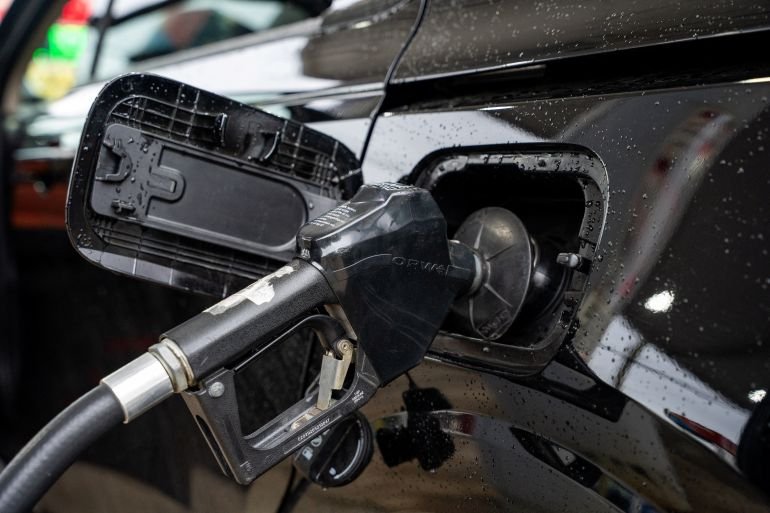
    Heightened petrol prices led the inflationary pressures with prices that have jumped 5.5 percent in April

    United States inflation jumped at its fastest pace in three years as the ongoing US-Israel war on Iran fuelled higher energy prices.

    Personal consumption expenditures — the US Federal Reserve’s preferred measure for assessing inflation — rose by 3.8 percent over the last year in April, following a 3.5 percent increase in March, according to the Department of Commerce’s Bureau of Economic Analysis report released on Thursday.

    Recommended Stories

    list of 4 itemsend of list

    On a month-over-month basis, the PCE (Personal Consumption Expenditures Price Index) rose by 0.4 percent in April following a 0.7 percent increase in March.

    Overall, goods prices ticked up by 0.7 percent. The biggest jump was at petrol pumps, with prices rising 5.5 percent as tensions with Iran strained global energy markets. The average price for a gallon of petrol (3.78 litres) is $4.42, up from $4.17 this time last month, and up from $2.98 per gallon on February 28, when the US and Israel struck Iran.

    Food prices also rose by 0.5 percent, marking the largest monthly price increase since November 2022.

    Housing and utility costs jumped by 0.6 percent as well. Consumer spending also increased by 0.5 percent following a 1 percent increase in March. More consumers are also tapping into their savings, with the savings rate falling by 2.6 percent last month.

    Federal Reserve pressures

    The rising inflation puts pressure on the Federal Reserve ahead of the central bank’s first policy meeting under new Chair Kevin Warsh, which is slated for June 16-17. The central bank tracks PCE  inflation as it tries to reach its 2 percent target.

    “The inflation picture is becoming increasingly uncomfortable for the Fed,” Olu Sonola, head of US economics at Fitch Ratings, told the Reuters news agency. “Price pressures are likely to persist over the next few months, and while the Fed cannot fix a supply shock, it cannot ignore one that is feeding into underlying inflation.”

    It is widely expected that the central bank will maintain the 3.50-3.75 percent range well into 2027. A recent JPMorgan Chase analysis suggested that rates will hold steady until mid-2027, when a rate hike rather than a cut is expected.

    That is reflected in the central bank’s minutes from its April 28-29 meeting, which showed policymakers leaning towards rate hikes.

    US markets are trending upward despite the report showing heightened inflation. The Nasdaq is up 0.6 percent and the S&P 500 is up 0.5 percent, while the Dow Jones Industrial Average is nearly flat — up by only 0.05 percent in midday trading.

    The White House did not respond to Al Jazeera’s request for comment.

  • WHO chief heads to ‘hardest hit’ Ituri as DRC’s 17th Ebola outbreak spreads

    WHO chief heads to ‘hardest hit’ Ituri as DRC’s 17th Ebola outbreak spreads

    The chief of the United Nations health agency is travelling to Ituri in the Democratic Republic of the Congo (DRC), which has been hit the “hardest” as authorities battle to contain the country’s 17th Ebola outbreak.

    “I want you to know that you are not alone,” Tedros Adhanom Ghebreyesus, Director-General of the World Health Organization (WHO), said in a lengthy and heartfelt message published on X on Thursday.

    Recommended Stories

    list of 3 itemsend of list

    Tedros also addressed health workers in the eastern province, where the first case was recorded and 90 percent of patients are being treated, hailing them as the “backbone of this response”.

    “I am coming to Bunia [the capital of Ituri province]. I will be there in person, alongside my colleagues, meeting your leaders, listening to your concerns, and doing everything in my power to help you,” Tedros said.

    His comments come as authorities in DRC rush to stop the spread of the disease. Latest government figures show 121 confirmed cases so far, including 17 confirmed deaths. Data also shows 246 suspected fatalities and 1,077 suspected cases. Authorities estimate the number of casualties to be higher.

    Most previous Ebola outbreaks in DRC were caused by a virus called Ebola Zaire, for which there are vaccines and treatments. This outbreak is caused by a different strain called Bundibugyo, for which there are currently no approved vaccines or treatments.

    On Thursday, the head of Africa Centres for Disease Control and Prevention (Africa CDC) said work is being done to develop a vaccine. “What we can tell you for sure, by the end of this year, 2026, Africa CDC will make sure that we have a vaccine and medicine against Bundibugyo,” Jean Kaseya told reporters.

    ‘Let health workers through’

    Separately, aid workers rushed supplies to Ituri on Thursday, the Associated Press reported.

    A cargo plane with aid donated by the European Union delivered masks, gloves, boots and medications – all of which are in short supply – to the northeastern town of Bunia at the heart of the outbreak. More EU aid is expected to arrive in batches over the next eight days, Jerome Kouachi, head of emergency operations at UNICEF in Congo, told AP.

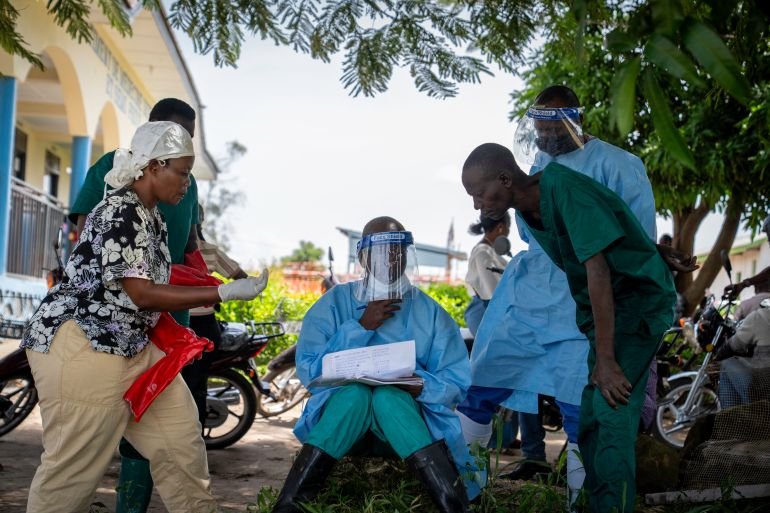
    Health workers with scant supplies have been struggling to contain the outbreak. In some areas, doctors have resorted to wearing expired medical masks while treating suspected patients. Dangers faced by health workers have been heightened by public anger at stringent medical protocols for dealing with victim’s bodies, as well as armed groups in a volatile region.

    The WHO’s Tedros made a direct appeal to the armed groups in eastern DRC which have vied for power for years: “Please, declare a ceasefire. Even briefly. Even just enough to let health workers through.” Medics have been struggling to implement health measures amid distrust of authorities by locals, and attacks on health centres.

    “The government is calling on the locals to respect health guidance because they can only win this battle when they work together with the people,” said Al Jazeera’s Chris Ocamringa, reporting from the capital, Kinshasa. The government is mobilising all resources available to curb the spread of the virus, including the release of $20m.

    The US announced on Thursday that it was allocating an additional $80m to help combat Ebola in DRC and neighbouring Uganda. With the new funding, total US aid amounts to $112m since the outbreak began, the State Department said in a press release.

    Eight cases in Uganda

    Regional countries are also on high alert, stepping up surveillance and preventative measures.

    On Thursday, the Africa CDC said it confirmed eight Ebola cases in Uganda, including one dead. Earlier, the country ordered the closure of borders for at least four weeks.

    Diana Atwine, permanent secretary at the Ugandan Health Ministry, said a growing number of cases among health workers had been confirmed, as they were most often the ones interacting with Ebola patients.

    In Kenya, two US officials told the Reuters news agency that local authorities had given written approval for the US to open a quarantine facility at an air force base in Laikipia for US citizens exposed to the outbreak.

    In a joint statement, the US, Canada and Mexico also announced public health travel measures for people arriving from African regions considered at greater risk from Ebola.

  • Neymar set to miss Brazil World Cup opener due to calf injury

    Neymar set to miss Brazil World Cup opener due to calf injury

    Neymar was injured playing for Santos in the Brazil domestic league, and is now confirmed to miss World Cup friendlies.

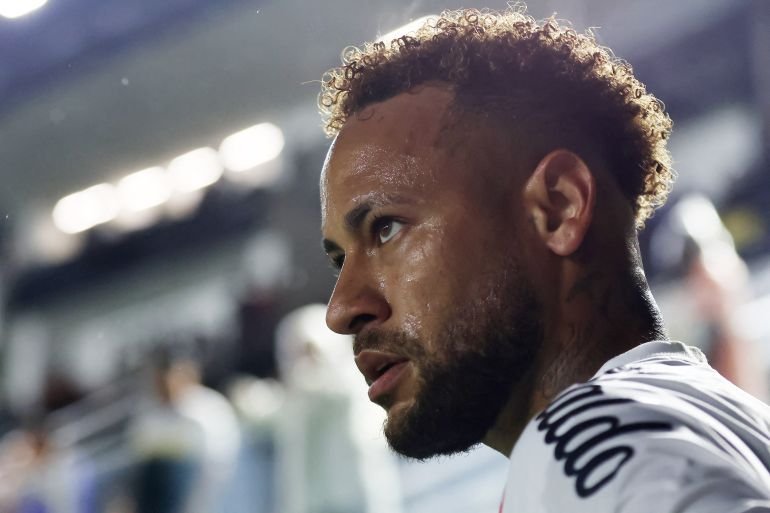
    Neymar has been ⁠ruled out of Brazil’s upcoming friendlies and is set to miss their World Cup opener after scans revealed a grade-two calf injury, the Brazilian Football Confederation (CBF) has confirmed.

    CBF doctor Rodrigo Lasmar delivered the blow on Thursday ahead of a players’ media conference, confirming the 34-year-old forward faces two to three more weeks on the sidelines.

    Recommended Stories

    list of 4 itemsend of list

    “Neymar reported for duty yesterday here ⁠at Granja Comary, underwent all the medical tests, which concluded with an MRI scan revealing a grade-two calf injury, not just swelling. He is expected to be cleared in two to three weeks,” Lasmar said.

    He did not say whether Neymar could be dropped from the squad.

    He had joined the team on ‌Tuesday but missed Wednesday’s first training session and was sent to a private clinic in Teresopolis for imaging tests after complaints of swelling in his right calf.

    According to Lasmar, the MRI showed not swelling, as previously reported, but a grade-two calf strain — a moderate injury involving a partial tear of the muscle fibres that requires rest and rehabilitation.

    The diagnosis differs from that presented by Santos prior to the squad announcement. The club’s doctor, Rodrigo ⁠Zogaib, stated that the problem was merely swelling, and that Neymar would ⁠arrive fit to begin training on Tuesday.

    Instead, Brazil’s all-time leading scorer will miss Sunday’s friendly against Panama at the Maracana, and the subsequent match against Egypt in Cleveland. He is also all but ruled out of Brazil’s World Cup ⁠opener against African champions Morocco on June 13 in New Jersey.

    Brazil are in Group C alongside Haiti and Scotland.

    Manager Carlo Ancelotti is already ⁠without defenders Gabriel Magalhaes and Marquinhos, as well as forward Gabriel ⁠Martinelli for Sunday’s fixture due to their involvement in this weekend’s Champions League final between Arsenal and Paris Saint-Germain.

    Neymar’s recall last week had generated widespread excitement after not featuring in Ancelotti’s plans during the Italian’s year in charge. ‌

    The forward, who has scored 79 goals in 128 international appearances, has endured years of injury troubles and an underwhelming return to Santos.

    In an interview with Reuters earlier this month, Ancelotti ‌said ‌that Neymar would receive no special treatment, and that his place in the squad would be strictly based on fitness and form, not sentiment.

    For now, Brazil must plan without him.

  • US, Mexico, Canada announce Ebola-related travel measures for World Cup

    World Cup hosts agree steps to counter Ebola threat after WHO declares public health emergency ​of international concern.

    The United States, ⁠Mexico and Canada ⁠have announced aligned public health travel measures for people coming from African regions at the greatest risk from Ebola as they aim to protect citizens and visitors during the World Cup, which begins next month.

    “The health and safety ⁠of every person in the region remains our highest priority as we welcome the world to North America,” they said in a joint statement on Thursday that did not detail the aligned measures.

    Recommended Stories

    list of 4 itemsend of list

    The World Health Organization on May 17 ‌declared an Ebola outbreak in the Democratic Republic of the Congo (DRC) a public health emergency of international concern and said there was a high risk it could spread to neighbouring countries.

    The decision has prompted governments to step up travel-related containment measures.

    Washington last week banned noncitizens who had travelled to the DRC, Uganda or South Sudan ⁠in recent weeks from entering the US. ⁠On Friday, the ban was extended by the US Centers for Disease Control and Prevention to green card holders who have been in those countries in the previous 21 days.

    Canada ⁠has banned residents from the DRC, Uganda and South Sudan from entering the country for 90 ⁠days. The ban started on Wednesday.

    Canadian citizens, permanent ⁠residents and other foreign nationals who have been in affected areas in recent weeks and do not have symptoms will have to quarantine for 21 days from Saturday, according ‌to a statement from Canada’s Public Health Agency.

    Mexican Health Secretary David Kershenovich on Monday outlined tighter Ebola screening measures at airports, urging the public ‌to ‌avoid travel to the DRC and asking arrivals from the country to observe a 21-day quarantine.

  • Gold Rush: Did CIA agent steal $40m in gold bars via work expenses?

    Gold Rush: Did CIA agent steal $40m in gold bars via work expenses?

    A former senior Central Intelligence Agency (CIA) official has been accused of criminal theft of public money after hundreds of gold bars worth more than $40m were found hidden in his home.

    David Rush, the former official, was arrested on May 19, according to a joint statement released by the CIA and Federal Bureau of Investigation (FBI).

    Following an internal investigation within the CIA, which identified potential violations of the law, they said, the agency’s director John Ratcliffe referred the case to the FBI.

    Rush is currently being held in jail, awaiting a detention hearing on Friday in federal court in Alexandria, Virginia.

    Who is David Rush?

    In an FBI affidavit filed on May 20, Rush is described as a “former senior executive service-level employee at a United States government agency” who had top secret clearance and access to classified information. It is unclear what position he held in the CIA.

    The affidavit asserts that from 2009 to May 2026, Rush knowingly embezzled valuables belonging to the US government.

    According to the affidavit, Rush enlisted in the US Navy in 1997. In 2004, he submitted a transcript from South Carolina’s Clemson University, on the basis of which the Navy commissioned him as an officer in the US Navy Reserves.

    In February 2015, Rush was honourably discharged from the Navy Reserves with the rank of lieutenant. There is no record of him serving in any branch of the US military after that date.

    But US government records indicate that after February 2015, Rush claimed 744 hours of military leave, most recently in September 2025. This military leave amounted to about $77,000 in compensation.

    On or around September last year, Rush told US government services that he was in the Navy Reserves, serving as a captain, which is a higher rank than lieutenant, the affidavit states.

    The affidavit further adds that Rush repeatedly lied about his education and military credentials in multiple US government job applications, claiming he had degrees from Clemson University and Rensselaer Polytechnic Institute, and that he was a navy pilot. Investigators found no records that Rush ever studied at those institutions, or was a pilot or test pilot.

    From November 2025 to March 2026, Rush requested and received a “significant quantity of foreign currency and tens of millions of dollars in gold bars for work-related expenses” from the US government, the affidavit states.

    When the CIA carried out its investigation, it “was unable to locate the gold bars or significant amounts of the foreign currency”, according to the court documents. Nor was it able to find “any record of Rush providing information to his employer regarding the disposition of the currency or gold bars that he received for work-related purposes”.

    On May 18, FBI officials searched Rush’s home and found about 303 gold bars, worth more than $40m. A single gold bar weighs about 1kg. They additionally found about $2m in US currency and 35 luxury watches, many of them Rolexes.

    Why are gold bars involved in all this?

    Most of the US government’s gold is held as official reserves, mainly by the US Treasury and the Federal Reserve. This is because gold is a durable, universally recognised store of value outside the banking system. Hence, it is useful in crises or wartime, when normal financial channels might break down.

    In some intelligence or military operations, however, gold can be used to make covert payments in environments where local banking is unreliable or where the US does not want a traceable wire or bank trail.

    This has fuelled long‑running theories that the CIA has used gold as a kind of “slush fund” for covert or even illegal activities.

    In their 2003 book, Gold Warriors: America’s Secret Recovery of Yamashita’s Gold, Sterling and Peggy Seagrave wrote that the CIA used billions of dollars worth of gold found hidden in Japanese tunnels in the Philippines during the second world war to fund operations against the Soviet Union.

    Have other governments used gold to make payments like this?

    Western countries have alleged that the Russian state-linked Wagner Group of mercenaries has used complex networks to smuggle gold.

    A British House of Commons Foreign Affairs Committee report published in 2023 found that the Russian Wagner Group of mercenaries has entered into agreements with countries in Africa to provide security and military support in exchange for access to countries’ mineral resources, such as gold.

    The UK report stated that the Wagner group enters such deals with countries including the Central African Republic, Mali and Sudan.

    The report alleged that this model generates significant “off‑the‑books” revenue for Moscow.

  • Iran says US must issue multiple-entry visas for its World Cup squad

    Iran says US must issue multiple-entry visas for its World Cup squad

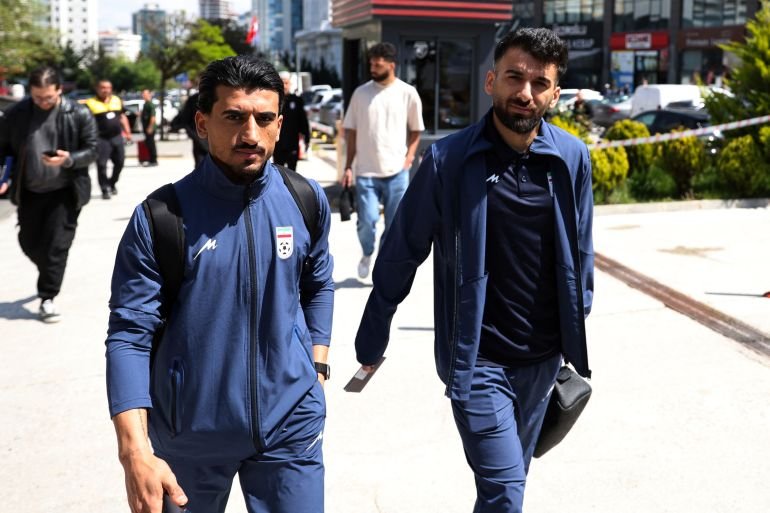
    Iran’s delegation will be based in Tijuana, Mexico, and will travel to the US for all three group stage matches.

    Iran’s delegation for the World Cup must be issued multiple-entry visas for their fixtures in the United States, a top official of the Iranian football federation (FFIRI) said two days after FIFA confirmed the relocation of the team’s base camp from the US to Mexico.

    FFIRI president Mehdi Taj said on Wednesday that he expects the US to issue visas for the World Cup squad and support staff for the tournament kicking off in three weeks.

    “The US should give all players multiple-entry visas as they would have to leave and re-enter the US many times,” Taj told local reporters in Mashhad, northeastern Iran.

    The Iranian squad has not been issued US visas yet.

    Several members attended visa appointments in Turkiye, where they have been training, last week.

    Players and staff who travelled to Turkiye from Iran applied for US visas, while those who had not applied for them before the start of the war on Iran in February also submitted their visa applications in person at the embassy.

    Meanwhile, the whole squad applied for Canadian visas in case Iran proceeded to the knockouts allocated to venues in Canada.

    The US and Israel launched attacks on Iran on February 28, leading to a regional conflict that has now lasted three months.

    Despite a ceasefire in place, the US carried out strikes on Iranian military sites on Wednesday and, in return, the Islamic Revolutionary Guard Corps (IRGC) launched an attack on an “American airbase” in the region.

    Iran’s team will open their World Cup campaign on June 15 against New Zealand in Los Angeles, California, where they will face Belgium six days later. Iran’s last Group G game is against Egypt in Seattle, in Washington state, on June 21.

    FIFA confirmed on Monday that Iran’s World Cup training base camp had been relocated from the US to Mexico upon the team’s request.

    Iran had originally selected a sports complex in Tucson in the US state of Arizona as their national team’s base during the World Cup, but later sought a change.

    When FIFA published the final list of team base camp locations this week, Iran were allocated Centro Xoloitzcuintle in Tijuana, Mexico, as their location of choice.

    Tijuana’s location directly across the US-Mexico border from San Diego could help with visa issues when the team needs to enter the country, according to Taj.

    He initially announced the camp’s move on Saturday, before FIFA made it official.

    “All team base camps for the countries participating in the World Cup must be approved by FIFA,” Taj said in a statement.

    “Fortunately, following the requests we submitted and the meetings we held with FIFA and World Cup officials in Istanbul, as well as the webinar meeting we had yesterday in Tehran with the respected FIFA ‌‌secretary general, our request to change the team’s base from the United States to Mexico was approved.”

    The World Cup, cohosted by the US, Canada and Mexico, runs from June 11 through July 19.

    INTERACTIVE-Football FIFA How teams are group World Cup 2026-1776670778

  • Why has Trump threatened to bomb Oman, amid Iran war escalation?

    Why has Trump threatened to bomb Oman, amid Iran war escalation?

    United States President Donald Trump has threatened longtime ally Oman with military force if it gets involved in the dispute over shipping access to the Strait of Hormuz, as Washington’s war on Iran once again risks engulfing the Middle East.

    Trump’s threat on Wednesday to “blow up” Oman came as Muscat reportedly held talks with Iran about overseeing passage through the Strait of Hormuz, a strategic waterway that handles more than 20 percent of the world’s global oil traffic.

    Recommended Stories

    list of 3 itemsend of list

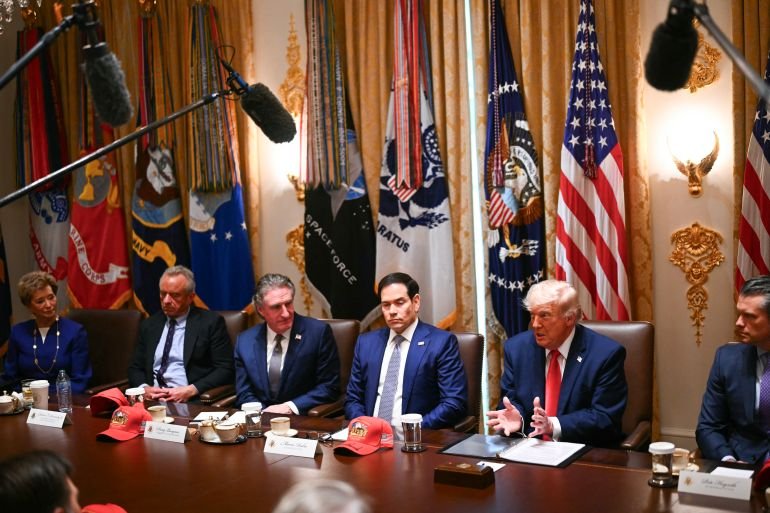
    “Nobody is going to control it,” Trump said of the strait during a cabinet meeting in Washington. “It’s international waters, and Oman will behave just like everybody else, or we will have to blow them up.”

    But, while Hormuz is an international strait, most of it is located solely in Iranian and Omani territorial waters – not international waters – with parts of its outlying areas reaching United Arab Emirates (UAE) territorial waters.

    Here is what we know.

    INTERACTIVE - IRGC releases map of control over Strait of Hormuz - May 5, 2026-1777975253

    Who has the right to control the Strait of Hormuz?

    As a natural waterway that is the only route for Gulf oil producers to ship exports to the open ocean, the strait has served as a free international maritime route for decades. Following the US-Israeli joint attacks on Iran on February 28, however, Tehran closed the waterway and began to assert sovereignty over it, including charging tolls of as much as $2m per ship at times.

    Under international maritime law, countries are not permitted to charge tolls to shipping passing through natural straits such as Hormuz, even where they are not in international waters. Countries can, however, provide services to shippers, such as insurance, maintenance and docking assistance.

    Shortly before Trump’s comment on Wednesday, Iran’s state television reported that Iran and the United States were close to agreeing on a memorandum of understanding (MOU) under which Tehran and Muscat would jointly control the strait. The proposal designates payments for passing vessels, framed as “fees for services” rather than “tolls”.

    While the Trump administration has called the claims of such an MoU “a complete fabrication”, analysts say his threat suggests that an understanding between Iran and Oman is precisely what the US president is trying to avoid.

    “What Washington wants to prevent is the normalisation of Iranian control over Hormuz, dressed in administrative and legal clothing and given Arab cover by a US ally,” Muhanad Seloom, non-resident senior fellow at the Middle East Council on Global Affairs, told Al Jazeera.

    “Threatening a small ally is also a message to the whole Gulf: Do not give Iran cover.”

    Did Trump really threaten Oman?

    At a cabinet meeting on Wednesday, a reporter asked Trump what he thought of the idea of Oman and Iran overseeing trade through the strategic waterway.

    When the US president replied by seemingly threatening to “blow up” the close ally, with which Washington has had relations for more than 200 years, there was initial speculation that he might have misspoken and said “Oman” instead of “Iran”.

    However, the US Department of State later shared the comment on social media, with a transcript of the quote that referred to Oman, a country of 5.3 million people.

    Oman has not publicly said anything suggesting it intends to join Iran in controlling the Strait of Hormuz.

    Iran’s Foreign Ministry spokesman ⁠Esmaeil Baghaei on Thursday expressed solidarity with Oman, saying Iran stands in solidarity with Oman after “US officials’ threats”.

    Critics called the threat reckless. Raed Jarrar, the advocacy director at the US-based rights group DAWN, likened the US president’s comments to those of a “mafia boss”.

    “The UN Charter prohibits the threat of force against any state, and that prohibition binds the United States exactly as it binds everyone else,” Jarrar told Al Jazeera.

    “Threatening to ‘blow up’ an Arab country because its waters happen to sit along an oil route Washington wants reopened is the same lawless logic that produced this war in February, and it is the clearest possible signal that any ceasefire this administration brokers will hold only until the next time the president loses his temper at a cabinet meeting.”

    Samir Puri, a visiting lecturer in war studies at King’s College in London, said Trump’s threat to Oman was “really surprising” and warned that it would “send shockwaves across the region”.

    “Oman has played a skilful regional hand in trying to stay apart from some of the conflicts and offering mediation support,” Puri told Al Jazeera, adding: “I can’t see how bombing Oman would necessarily change Iran’s calculus [on Hormuz].”

    How are US-Iran talks progressing?

    Trump’s comments come as negotiations for a long-term ceasefire with Iran have stalled, with repeated military flare-ups deepening mistrust between the two sides. Since a temporary ceasefire was announced on April 8, followed by direct talks in Islamabad on April 11 and 12 that collapsed, the two sides have exchanged a volley of proposals and counter-proposals for peace via mediator Pakistan. Meanwhile, Iran has continued to control shipping through the Strait of Hormuz, while US forces have enforced a corresponding blockade on Iranian ports.

    Neither the US nor Iran has announced that the ceasefire has collapsed.

    However, military flare-ups continue in the region.

    On Thursday, Iran’s semiofficial Tasnim news agency reported that four ships, one of them a United Kingdom tanker, had turned off their radars and attempted to pass the Strait of Hormuz. The Islamic Revolutionary Guard Corps (IRGC) responded by firing warning shots.

    The IRGC also said it struck a US airbase in response to an early morning attack by US forces on a site near the airport in Iran’s Bandar Abbas. The US described its attacks as “defensive”.

    Also on Thursday, the Kuwaiti military said air defences were “confronting hostile missile and drone attacks”. The IRGC did not specify the target of the attack, but reports suggest it was aimed at a US base.

    Trump has also recently sought to tie the peace negotiations to a commitment by regional allies, as well as Pakistan, to sign up to the Abraham Accords to normalise ties with Israel, something the UAE, Bahrain, Morocco and Sudan did during his first term in 2020. Experts say it is highly unlikely that Pakistan or Saudi Arabia would agree to do this without an agreement from Israel for the creation of a Palestinian state, something Israel has refused to do.

    What has Oman’s role been in the US-Iran war?

    Omani Foreign Minister Badr Albusaidi was a key mediator in US-Iran nuclear talks before the war on Iran began. Just before the US-Israeli joint attack on Tehran in February, Albusaidi had been meeting US officials, including Vice President JD Vance, to facilitate negotiations about the future of Tehran’s nuclear programme.

    During a meeting with Vance in Washington, DC, on February 27, the day before the war on Iran began, Albusaidi said the talks had resulted in “creative and constructive ideas and proposals”, leading to unprecedented progress.

    Hours later, however, Trump shockingly announced the US had attacked Iran because “he had a feeling” that Iran would strike first, claiming negotiations over its nuclear programme had stalled. Oman’s foreign minister pushed back on the characterisation that Iran was an “imminent threat” to the US, maintaining that “significant progress” had been made in the nuclear talks.

    Unlike other US allies in the Gulf, such as Qatar, Bahrain and the UAE, Oman does not host US forces. It was nevertheless dragged into the conflict when Iran launched a flurry of attacks on US military assets and energy infrastructure across the Gulf region in the early days of the war. The Duqm commercial port, located in Al Wusta governorate in central Oman, was struck by two drones on March 1. A fuel tank at the port was also hit in a drone attack two days later.

    At the time, Trump expressed solidarity with the Gulf country, saying: “Iran is hitting countries that had nothing to do with what is going on.”

    Why is Oman important for a permanent resolution of the US-Iran war?

    Seloom, from the Middle East Council on Global Affairs, said Oman is “one Gulf state that is simultaneously a US security partner and Iran’s most trusted Arab interlocutor”.

    “In peacetime, that ambiguity is an asset. In wartime, it becomes a liability, which is precisely the inversion now playing out,” he told Al Jazeera.

    The analyst argued that joint Iran-Oman control over Hormuz was “more posture than probability”. “Oman’s real interest is not co-owning Iran’s blockade; it is brokering the strait’s reopening,” he said.

    Still, according to Seloom, the prospect of Iran and Oman jointly shaping the future of the Strait of Hormuz alarms the US president for three reasons: “It would turn Iran’s grip on the chokepoint into a permanent post-war fact rather than a temporary act of war; it would set a precedent that littoral states [those bordering a large body of water] can metre and monetise an international waterway, eroding the freedom-of-navigation principle the United States underwrites worldwide; and it would hand Tehran a strategic win that outlasts any ceasefire.”

    Oman’s relevance on three counts – geographically, diplomatically and strategically – therefore thrusts it to the forefront of the conflict, as its scope evolves into a larger geopolitical struggle for control over one of the world’s most economically critical maritime chokepoints, experts say.
  • Germany’s Voeller urges players to avoid political statements at World Cup

    Germany’s Voeller urges players to avoid political statements at World Cup

    German players urged not to repeat protests in 2026 following mouth covering in pre-match photos at Qatar World Cup.

    Germany sporting director Rudi Voeller has urged members of the World Cup 2026 squad to avoid making political statements during this summer’s tournament.

    Speaking from Germany’s pre-World Cup camp in northern Bavaria, Voeller said players were not under a gag order but encouraged them to keep sport and politics “somewhat separate” while at the finals.

    Recommended Stories

    list of 4 itemsend of list

    Voeller said there would be no specialist media training ahead of the tournament in the United States, Canada and Mexico, unlike in the lead-up to the 2022 World Cup in Qatar.

    “If someone wishes to do so, they are welcome to do it in the run-up to the tournament,” Voeller said on Wednesday about players making political statements.

    “However, if it hasn’t happened until this point, it generally shouldn’t start happening now.”

    The 66-year-old hoped Germany learned from their experience four years ago in Qatar, where the team’s build-up to the tournament was dominated by discussion about a ban on political symbols.

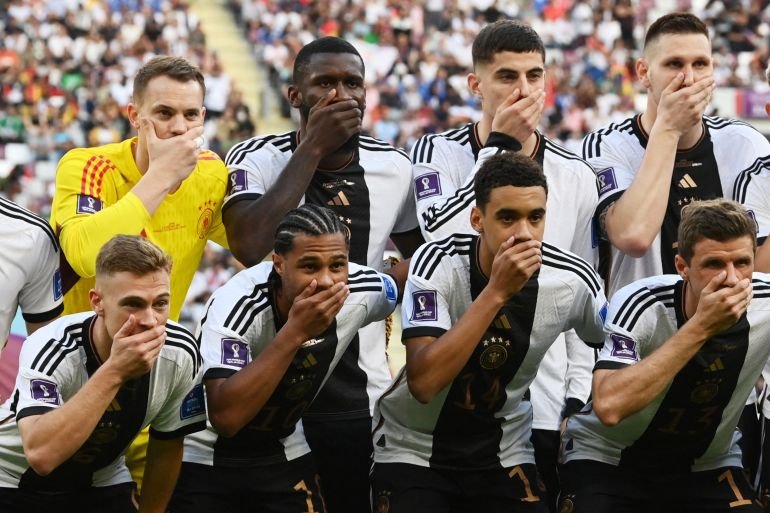
    In Qatar, the German players covered their mouths in their pre-match photo before their tournament opener against Japan, protesting against FIFA’s threat to sanction players for wearing “OneLove” armbands. Some commentators suggested it contributed to their poor showing at the tournament.

    “Every player is fully aware of the situation; after all, a significant number of the current squad members were also part of the team that went to Qatar,” said Voeller.

    “Naturally, we won’t see a repeat of what happened previously – namely, [players and officials] launching various campaigns or conducting interviews and reporting critically on certain issues immediately before a match.”

    Voeller said he would leave it up to the media to report on political issues.

    “You [the media] are free to do that. We’re not imposing any gag orders.”

    The former Germany striker, who won the World Cup in 1990, said he felt athletes taking political stands made little impact, pointing to the 1980 Moscow Olympics boycott by the United States and other nations.

    “We are here to play in a World Cup. That takes precedence; we are footballers, and our goal is to inspire the people … and perhaps offer them a distraction from their everyday worries,” said Voeller.

    “We would be well advised to simply look forward to the World Cup now. Despite all the unpleasant circumstances that may surround it, we should nonetheless strive to play good, attractive football and inspire the fans.

    “Even back then, during the 1980s Olympics, when the Americans, along with all the Western nations, decided not to attend the Games, I felt that was the wrong decision even at the time.”

    Germany face Finland in Mainz on Sunday in their final pre-tournament friendly on home soil.

    Coach Julian Nagelsmann said injured veteran goalkeeper Manuel Neuer would not be back in time to play this weekend but would feature at the World Cup.