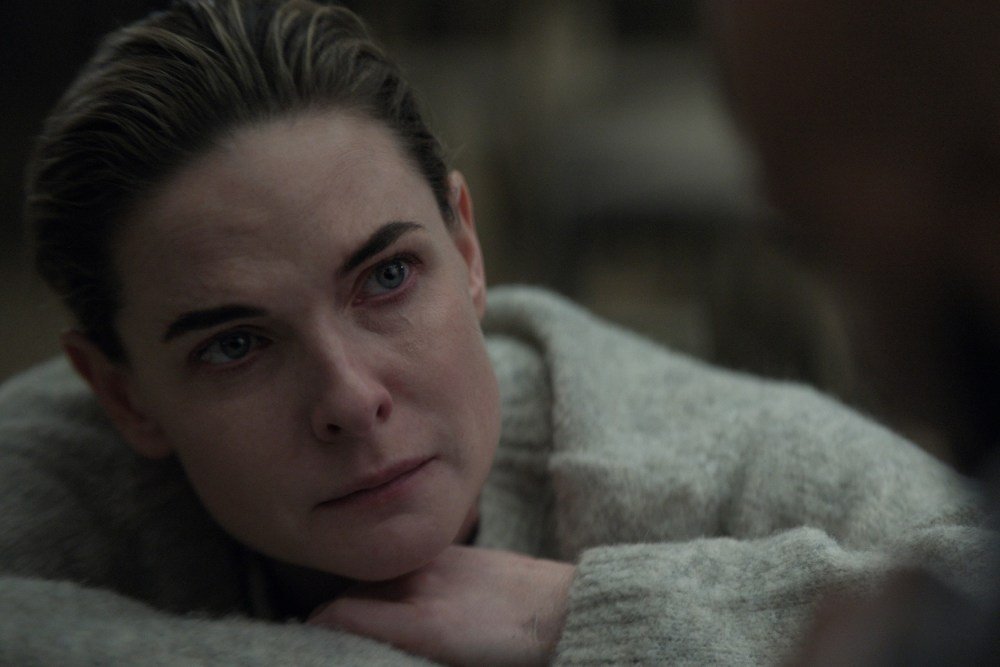
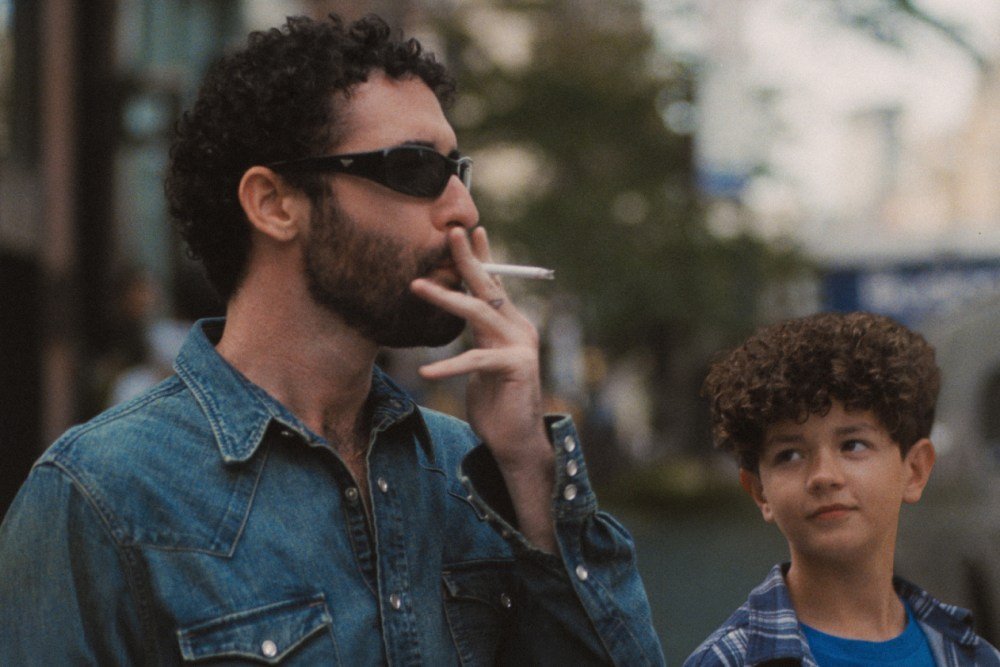
“Primetime,” a thriller starring Robert Pattinson as “To Catch a Predator” host Chris Hansen, made its debut at the Venice Film Festival on Saturday to an enthusiastic seven-minute ovation.
Venice went fully in for Pattinson’s immersive performance as Hansen, the “Dateline” journalist and host who sets out to make television history with “To Catch a Predator.” And one of the biggest fans in attendance? Pattinson’s partner Suki Waterhouse, who cheered perhaps loudest during the seven-minute standing ovation and leaned forward and kissed Pattinson on the lips as the crowd applauded his tour-de-force performance. (In Venice, actors are seated in the front row of the balcony and their partners must sit a row behind them.) As the ovation stretched into its sixth minute, the audience began chanting for director Lance Oppenheim and singer-songwriter Phoebe Bridgers, who makes her acting debut in the film. Skyler Gisondo and Merritt Wever also star.
Based on Luke Dittrich’s 2007 Esquire article “Tonight on Dateline This Man Will Die,” “Primetime” follows the production of the popular series, in which Hansen attempted to confront child sexual predators in complex sting operations.
Massive crowds outside the Palazzo del Cinema were chanting “Robert! Robert! Robert!” as they baked in the sun on a brutally hot Saturday afternoon. Pattinson, Gisando and Bridgers dutifully signed autographs and posed for tons of selfies with fans while Waterhouse made small talk with producers off to the side of the action. Pattinson dabbed the sweat off his forehead with napkins before posing for a cast photo. Former NBC chief Jeff Zucker, who appears in the movie as himself, also walked the red carpet, as did producer Ari Aster.
“Primetime” marks Oppenheim’s feature debut, having previously helmed acclaimed documentaries such as “Some Kind of Heaven” and HBO’s “Ren Faire.” A24 will release “Primetime” in theaters on Sept. 25.
Hansen has been vocal in his criticisms about “Primetime,” saying he wasn’t involved in the creative process and hadn’t seen the movie. He called Pattinson’s portrayal “overly dramatic” and questioned the studio’s “motive” in dramatizing the making of the hit reality series. Hansen has also stressed that “Primetime” isn’t a literal account of his career and that he wasn’t consulted during the making of the movie.
“He’s saying things I never said and doing things I never did, and that’s not who I am. I’m a nice guy, except when it comes to criminals and predators,” Hansen previously said. “I think people should remember that it is a work of fiction, only based on real-life events.”
At a press conference earlier on Saturday, Pattinson suggested that Hansen could come around once he sees the film. “Obviously, I hope he likes the movie,” Pattinson said. “There’s something electrifying about him. I would hope the amount of inspiration his character has given a lot of people for years is some kind of compliment.”
“Primetime” continues a banner year for Pattinson, who stars in such high-profile films as this spring’s indie hit “The Drama,” Christopher Nolan’s summer blockbuster “The Odyssey” and Denis Villeneuve’s upcoming tentpole “Dune: Part III.” And Pattinson’s schedule remains packed: He jetted to Lido from London, where he is currently filming “The Batman: Part II,” reprising his role as reclusive billionaire-turned-vigilante Bruce Wayne.
“When you get the momentum going, it’s strangely not that hard,” Pattinson said at the presser. Plus, he joked, “I just had a baby. I had no desire to go out at night. So suddenly I had twice as much time, which was helpful.”
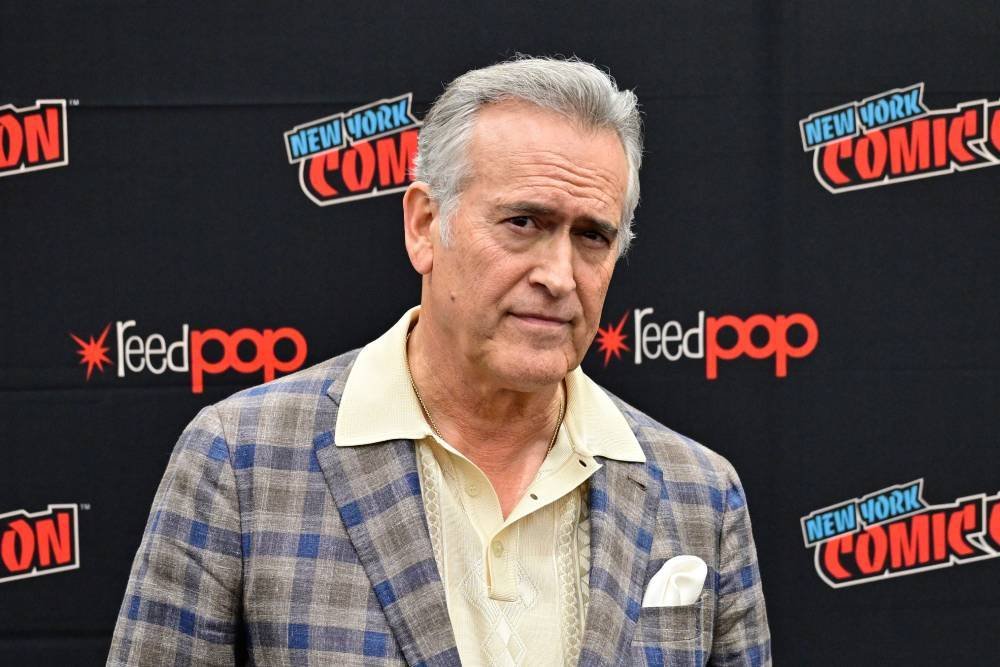
Back in March, Campbell revealed he had been diagnosed with a cancer that was “treatable but not curable.”
“These days, when someone is having a health issue, it’s referred to as an ‘opportunity,’ so let’s go with that — I’m having one of those,” he wrote on X in March. “It’s also called a type of cancer that’s ‘treatable’ not ‘curable.’ I apologize if that’s a shock – it was to me too.”
Campbell didn’t go into detail about what type of cancer he’d been diagnosed with, but wrote that “professionally, a few things will have to change. Appearances and cons and work in general need to take back seat to treatment. My plan is to get as well as I possibly can over the summer so that I can tour with my new movie ‘Ernie & Emma’ this fall.”
On Wednesday’s episode of “The Adam Carolla Show,” Campbell opened up more about his diagnosis and treatment while also discussing his new movie.
“I’m in a five-year prognosis,” he said. “With the type of cancer that I have, which I don’t want to get into, the current thing is a five-year deal.” When Carolla asked if that meant Campbell had five years to live, the actor replied “give or take.”
“It’s a fascinating thing that takes place because [cancer] messes with your head, too. I’ve decided though, pretty specifically, to live with it, not die from it,” he added. “You can go down a massive rabbit hole. The cancer rabbit hole is enormous. You can go into focus groups of 10,000 guys who have exactly what you have. I won’t touch it with a 10-foot pole.”
Campbell serves as director, writer, producer and lead actor in “Ernie & Emma,” in which he plays a widower scattering his late wife’s ashes, reflecting on their relationship together and confronting his grief.
“It’s a very fascinating time of having a movie about a guy who’s spreading his wife’s ashes, who died, made by a guy who’s dying,” he told Carolla.
Campbell, who starred as the chainsaw-wielding Ash Williams in director Sam Raimi’s original “Evil Dead” trilogy, executive produced this summer’s installment in the horror franchise, “Evil Dead Burn.” He’s also an EP on the next movie, 2028’s “Evil Dead Wrath.”
“I’m moving on. I got a movie to promote. And when I promote this movie, I have nothing. I’m free and clear when I promote this movie mentally,” Campbell said. “You have to make this decision of, ‘Well, OK, but do I have to stop everything that I’m doing because of this?’ Well, no.”
Swiss cinema is resonating domestically and abroad as homegrown films and international co-productions continue to entice local audiences and festival goers around the globe.
At Venice this year, Swiss titles and co-productions boasting high-profile talent unspool throughout the festival. Switzerland is also a country of focus at the Venice Production Bridge industry strand with seven projects taking part in the Gap-Financing Market and two in the Immersive Market.
“For a relatively small and multilingual market, the combination of domestic relevance and international reach is significant,” says Nicola Ruffo, director of promotional organization Swiss Films.
‘Who Is Still Alive’
Courtesy of First Hand Films
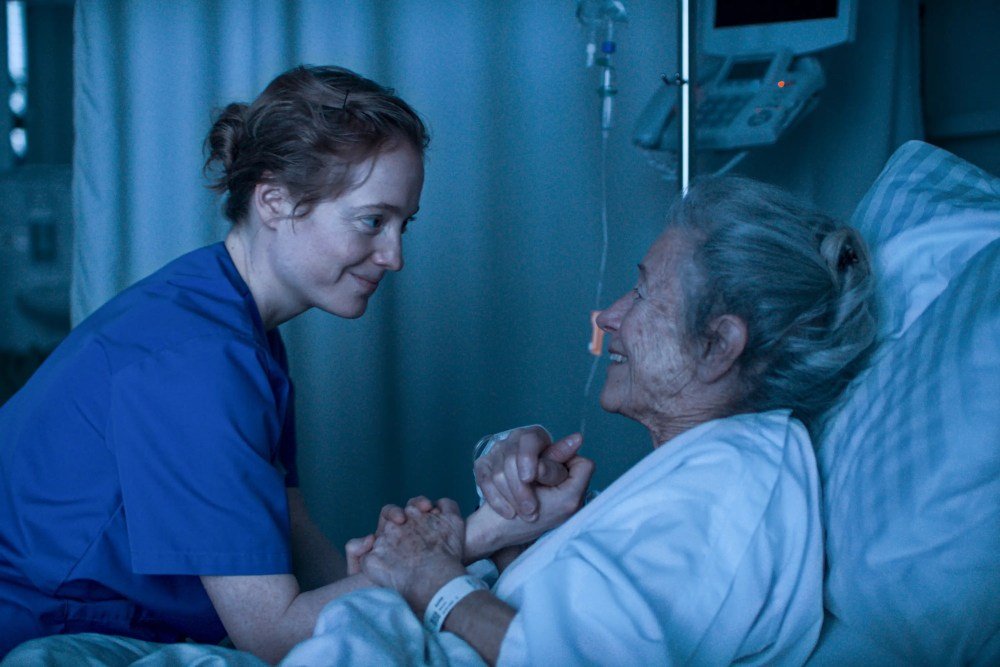
“Last year proved that there is a real appetite — fiction, documentaries, films from different linguistic regions and very different kinds of stories all found their audiences. Several of these films also traveled extremely well internationally. Petra Volpe’s ‘Late Shift,’ for example, was a box office success on the domestic market but also sold more than 670,000 tickets outside Switzerland by the end of 2025,” adds Ruffo.
Venice, Ruffo notes, has in recent years “become a very good snapshot of the vitality of Swiss cinema. We have Swiss films and co-productions appearing across very different parts of the festival. Last year there were the world premieres of ‘Memory of Princess Mumbi’ by Damien Hauser or this year’s Swiss Oscar-entry, ‘Who Is Still Alive,’ by Nicolas Wadimoff, who also received an award in Venice.”
‘The Indies’
Courtesy of Alina Film
Indeed, this year Pauline Julier and Nicolas Chapoulier’s historical drama “The Indies,” from Spain’s Lastor Media and Switzerland’s Alina Film, is competing in Giornate degli Autori, while Wim Wenders’ documentary “From Inside Out — The Architecture of Peter Zumthor,” about one of Switzerland’s most internationally renowned architects, premieres in Venice Open — Out of Competition. The film is produced by Wenders’ Road Movies and German-Swiss shareholding partner DCM group.
In addition, Geneva-based Sunny Independent Pictures is among the producers of Iranian filmmaker Ali Asgari’s main competition title “A Bit of Light,” which centers on a dejected doctor whose suicidal tendencies are checked by his family’s compassion.
The producers of Venezia Spotlight premiere title “Guria,” Levan Koguashvili’s feature about a stubborn, widowed hazelnut farmer looking to improve his prospects in a Georgian village left destitute by the collapse of the Soviet Union, include Zurich’s Cineworx Filmproduktion, while Gilles Jobin’s “Sunset Motel,” from Geneva’s Nadasdy Film and Cie Gilles Jobin, represents Switzerland in the Venice Immersive competition.
“What excites me is really the range,” Ruffo stresses. “It is difficult to reduce contemporary Swiss cinema to one aesthetic or a specific topic — and I think that is a strength.”
Indeed, this year’s Swiss selection at the Venice Production Bridge offers a glimpse of “what may be coming next,” he adds.
Among them are works by both up-and-coming and well-established filmmakers such as Flurin Giger, who is developing “A Year Without Summer,” Valentin Merz, who presents “Chocolat Amer,” Stéphanie Argerich with “Kyushu Moon,” Kaveh Bakhtiari, who is developing “The Smuggler,” and Ursula Meier with “Quiet Land.”
“These are very different filmmakers and projects, many of them working internationally from an early stage, which is precisely what makes the current generation interesting,” Ruffo notes. “There is also an interesting bridge between this emerging generation and established filmmakers who continue to reinvent themselves.“
Meier’s upcoming “Quiet Land,” for example, is a Swiss-French-Canadian project selected for the Venice Gap-Financing Market that’s set to shoot in North America. “Kyushu Moon,” another Gap-Financing Market title, will lens in Japan, while “The Smuggler” will film in Greece.
Ruffo points out that Switzerland is seeing “a continued stream of strong international co-productions” characterized by universal themes.
“Projects such as ‘Quiet Land’ bring together Switzerland, France and Canada; ‘The Smuggler’ connects Switzerland, Greece and France; and ‘A Year Without Summer’ is Swiss-German.
“At the same time, many of these films remain rooted in very specific places, communities and personal experiences. There is a recurring interest in questions of identity, belonging and how individuals navigate social and cultural boundaries.”
There is another development that Ruffo finds particularly interesting: “the move toward English-language filmmaking.” At the Venice Production Bridge, Swiss filmmakers Tim Fehlbaum (“September 5“), Ursula Meier and Michael Koch will come together at a panel to discuss precisely this question: What opportunities does work in English create for Swiss directors in terms of international casts, financing and audiences? And what does it mean for the identity of Swiss cinema?
‘Frank & Louis’
Credit: Rob Baker Ashton
“Michael Koch’s English-speaking debut ‘Erosion,’ with Peter Sarsgaard in the lead role, has entered post-production; Meier’s ‘Quiet Land’ will be shot next year. Petra Volpe received standing ovations in Sundance and just recently won the Locarno audience award for her first English-language film, ‘Frank & Louis’; Denis Rabaglia has a new film, ‘Butterfly Stroke,’ starring Judy Davis, also shot in English, to conquer the international festivals,” says Ruffo, who is not worried about a trend.
“I do not think becoming more international necessarily means becoming less Swiss. Switzerland has always been multilingual and culturally interconnected. Perhaps our filmmakers are simply taking that reality one step further: telling stories from a particular perspective without allowing language or national borders to define where those stories can travel.
“So, if I had to describe the direction in a few words, I might say: international, yet unmistakably Swiss. There is a confidence today in moving between languages, countries, formats and disciplines without feeling that this dilutes the identity of the work.”
Lav Diaz is developing a film about false prophets and a screen adaptation of José Rizal’s “Noli Me Tangere,” the Filipino auteur reveals, alongside details on “Let Us Through, Dear Ancestors” (“Makikiraan Po”), his Spanish colonization drama premiering in the Venice Open section of the Venice Film Festival.
Diaz tells Variety, “Right now, I’m working on a film that discourses on false ideologies and false prophets.” He is also developing a separate project drawing on the writing of “Noli Me Tangere,” the Rizal novel credited with helping inspire the Philippine Revolution of 1896.
Diaz shared those plans alongside a discussion of “Let Us Through, Dear Ancestors,” which marks a return to Venice for the director. He won the festival’s Golden Lion in 2016 for “The Woman Who Left.” He arrives with the film following “Magellan,” which stars Gael Garcia Bernal as the Portuguese explorer and premiered at the 2025 Cannes Film Festival.
“Let Us Through, Dear Ancestors” marks Diaz’s third excursion into a specific historical epoch, following “A Lullaby to the Sorrowful Mystery,” anchored in the Philippine Revolution of 1896. This time, Diaz reaches further back, to the late 16th century and early 17th century, when Spanish forces under Miguel Lopez de Legazpi consolidated colonial rule after Legazpi’s 1565 arrival in Cebu, 44 years after Magellan first landed in the archipelago. Chieftain Rajah Tupas resisted the Spanish for nearly a month before Legazpi bombarded local villages, forcing Tupas into a settlement.
“It is an essential part of my continuing studies and dissection of my people’s struggle, or simply trying to understand the history of the Philippines,” Diaz says.
The film centers on the forced labor used to build the Philippines’ colonial-era churches, structures Diaz argues are steeped in violence despite their standing today as celebrated cultural and religious landmarks. Under Spanish rule, able-bodied Malay men, from teenagers to adults, were required to perform 40 days of unpaid annual labor on roads, bridges, churches, forts, piers, plantations, haciendas and mines.
“Forgetful Filipinos must learn, must know, must understand, that these structures were built by forced labor, and that they didn’t appear in their midst by some cosmic manifestations — it’s blood, sweat, tears, and deaths of our ancestors,” Diaz says.
He adds that, based on historical accounts, around 30% of the male population perished under the forced-labor system.
Diaz extends that critique of institutional power to religion itself. “Religion is one of the worst forms of violence,“ he says. “Faith can be a form of eternal subjugation, especially for the weak. Oftentimes, it blurs all of rationality; it becomes the truth of existence.” He points to the Crusades and the Holocaust as historical examples, and cites present-day conflicts in Gaza, Ukraine, Afghanistan and Darfur as evidence of faith’s continuing entanglement with violence.
The film’s Filipino title — “Makikiraan Po” — comes from a phrase still used today by Filipino Malays passing through places believed to hold ancestral spirits. “I still do it, naturally, when I am entering a forest, a zone, when I am thinking of the unattainable,” Diaz says. “It is a connection, a relationship, with the ancient, with the primal, the pure.”
Diaz also traces the roots of the Philippines’ present-day class structure to the encomienda system, which King Philip II ordered Legazpi to impose in 1571. Under the system, indigenous communities lost ownership of their land while paying heavy tributes and performing forced labor for Spanish encomenderos. He says, “All the old rich families, landlords, hacienderos, political clans, big businesses, have their connection from the encomienda.”
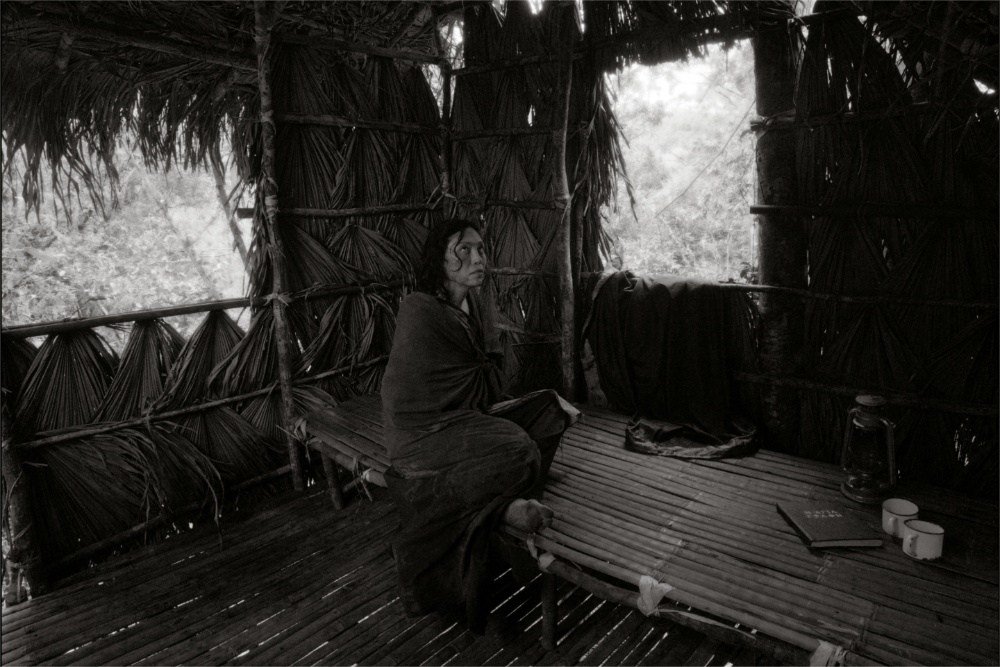
Diaz shot “Let Us Through, Dear Ancestors” in black and white in Sampaloc, Quezon Province, marking his fourth production in the town, following “Magellan,” “Phantosmia” and the upcoming “Kawalan.” He credits the area with restoring his health after tuberculosis burst his left lung following the editing of “Magellan,” and again after he was later afflicted with severe asthma and chronic obstructive pulmonary disease.
“The spirit of the place provides the best attributes I needed in my films on issues of truth, vision and transcendence,” he says.
Diaz cast filmmaker Isabel Sandoval, known for her own distinctive body of work, alongside longtime collaborators Ronnie Lazaro and Yul Servo. Sandoval plays the Babaylan, a traditional Malay healer who Diaz describes as a lasting bridge between Filipinos and their pre-Hispanic, pre-Islamic Malay heritage.
Diaz says, “She contributed majestic nuance in the whole vision of the Babaylan character, and I am truly grateful for her generosity.”
At 151 minutes, “Let Us Through, Dear Ancestors” runs shorter than many of the films Diaz is best known for, though he says his process didn’t change. “Nothing really changed with my praxis,” he says. “My principle has always been to work on the demands of the material at hand, to work around the conditions and situations. There’s never a fixed setup or framework. It’s just all hard work on the different aspects of the process really. The struggle to pursue a vision is the most important.”
He adds: “Cinema must have the responsibility to commit to the truth. There should be no compromise on that issue given the condition of the world right now. Cinema’s soul is the truth.”
“Let Us Through, Dear Ancestors” is produced by C’est Lovi Prods., Epicmedia Prods. and Sine Olivia Pilipinas, with Heretic handling world sales.
Pan-Arab distributor Mad Solutions and Egyptian multihyphenate Haitham Dabbour’s Irth platform dedicated to supporting standout writers across the Arab world announced a strategic partnership on Saturday at the Venice Film Festival that aims to boost quality content output from the region.
Under the pact, Mad Solutions and Irth will jointly “develop, package and support film, television and other entertainment projects from across the Arab world for regional and international markets,” they said in a statement.
The Irth platform initiative – that was officially launched during the 2025 Red Sea International Film Festival in Saudi Arabia – is the first collaborative writers’ room bringing together writers from Egypt and Saudi Arabia and beyond.
Cairo-based Mad Solutions, which was established in 2010 by its two co-founders, Alaa Karkouti and Maher Diab, comprises a network of specialized outfits that include Mad World, focussed on international sales of Arab films; Mad Distribution, which handles sales and distribution of Arab films across the Arab world; and Mad Celebrity, providing full talent management and representation for both on-and off-screen Arab talent.
MAD Solutions and Irth are now developing a pipeline spanning original Arabic projects, some of which are talent-driven, as well as third-party development and consultancy assignments. The first projects germinated from the partnership will be announced, they said.
The partnership announcement comes just as Mad Solutions marks a significant presence in Venice this year, with two films launching on the Lido. “Al Baraneya,” a rural Egyptian family’s story directed by Egypt’s Ashgan El-Hamus, screening in Venice Days, and Palestinian drama “Conversations with the Sea,” directed by Muayad Alayan, screening in the Venice Spotlight section.
MAD will also present its annual award at the Final Cut in Venice platform, which supports films from Africa and the Arab world through post-production and international industry opportunities.
Dabbour is a bestselling Egyptian author whoser novels include “Devoured by Seven Lean Cows” and “Moses Cross.” His screenwriting credits include Egypt’s El Gouna Film Festival prizewinner “Gunshot” and “The Tale of Ahl El Daye,” which in 2025 had its European bow in the Berlinale’s Generation section.
“Irth has always been about bringing strong writers and different Arab voices together and giving ideas the development they need,” Dabbour in a statement. “Mad’s regional and international reach gives us the opportunity to take that work further and open new possibilities for the projects and writers we work with.”
Commented Mad Solutions co-founders Alaa Karkouti and Maher Diab: “Development is a key part of Mad’s regional and international expansion, and Irth brings a strong creative infrastructure and a diverse network of Arab writers to that strategy. Together, we can originate projects while also offering filmmakers and producers the development support they need to strengthen existing ones.”
Movies developed and financed outside of the major studios and streamers have a massive hill to climb. It happens that Topic Studios, one such independent shop, has made it all the way up the Rockies — with some of the year’s buzziest films in tow.
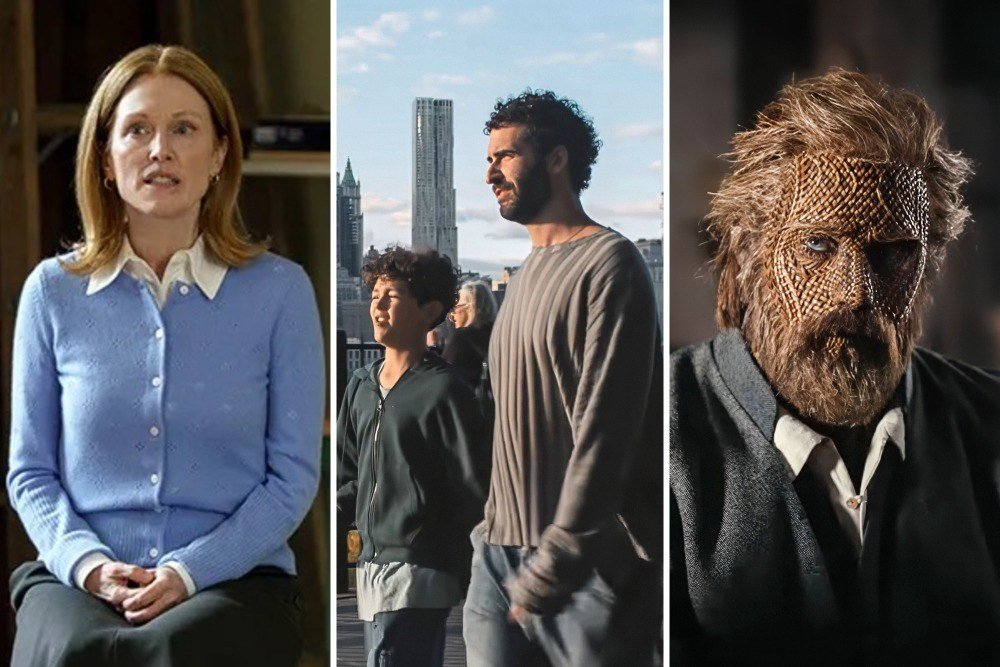
On the ground at this weekend’s Telluride Film Festival in Colorado, Topic will show Jesse Eisenberg’s anticipated follow-up to “A Real Pain,” the Julianne Moore and Paul Giamatti dramedy “The Debut.” The studio will also let Jordan Firstman’s “Club Kid” out of the gate for the second time after enchanting the Cannes Film Festival in May. In a month, Black Bear will release Topic’s “Wicker” after a successful bow at Sundance in January.
Founded in 2017, the company is a division of First Look Media and has been behind some of the most acclaimed projects of the past decade (including Pablo Larrain’s “Spencer,” Michael Angelo Covino’s “The Climb” and the Oscar-winning “Spotlight”). Variety caught up with Topic film and documentary head Ryan Heller to discuss the company’s secret sauce, surviving without M&A and what’s next.
Topic is on a roll. How did you get here?
Ryan Heller: We’ve worked hard over the last few years to identify things that we feel uniquely suited to make happen. In this post-COVID period, which we’re all still living in, we’re figuring out what new the behaviors look like and how movie culture has changed. We’ve leaned into things that resonate with us – on the filmmaker and story level. Things that have a communal aspect. We never take anyone showing up to a movie theater for granted, so we’ve tried to earn their trust.
How do you think movie culture has changed?
RH: It seems like audiences are showing up for specific movies now, instead of walking into theaters [looking to discover]. We approach the projects we take on by asking how we’re uniquely suited to help. That means projects that are independent as a feature, not a bug. Our responsibility is to figure out how to guide those things to market with a shot at getting the audience they deserve.
How would you define your palate for story?
RH: Distinctive and filmmaker-driven. Movies that may have to fight to be seen, but in execution can find a sizable audience. We want movies that drive conversation. We’re mostly developing or financing projects on the way to production or financing them through, and we gravitate toward writer-directors. We love that sort of intimacy.
There seems to be something confrontational about each of these movies, which isn’t necessarily a bad thing. “Splitsville” confronts the terrors of insecurity and marriage. “Club Kid” is about acknowledging self-destruction, in a way, and realizing that better decisions mean more happiness.
RH: I’m sure there’s truth to that, but it’s not intentional. The hardest thing for us is finding the projects. So, when we see something we fall for it’s the greatest thing. Some of what you’re saying is just inherent to what gets made in the independent system.
So what makes you “fall for” a project?
RH: I think we gravitate toward big laughs and big feelings. We love comedies that have the stakes of a drama. That’s why we love “Club Kid” so much. That script knocked us out. We all had expectations of what it was going to be, and every single person at Topic who read that script ended it in tears. And it was all earned. Getting to have a front row seat to how Jordan pulled that off at every stage of production while also acting in almost every scene was really special. It was a career highlight. The same goes for “The Debut” and “Wicker.” They really got us.
“The Debut” is the hottest ticket in Telluride this year, it seems.
RH: The expectations are hard to control. I don’t know that we think about them too much. We are truly over the moon excited for people to see this movie. We’ve been working on it since the release of “A Real Pain.” We’ll lean on our great partners at A24 to figure out how we how we get as many people to see the film as possible. We’re counting down the minutes to let this thing loose in front of audiences.
So you’ve got the hot hand. Are people talking to you about sales and mergers and acquisitions, or are you tuning that out?
RH: We love where we are, and we’ve built such great relationships with so many partners. We focus on being deliberate and going in on things finding ways to be self-reliant. What we’ve built is an internal capability to make a movie from start to finish. There’s a real value to companies like Topic supplying certain kinds of movies to distribution partners. They have different economics than we do. I think we’re part of a healthy ecosystem. We love where we are and want to keep doing it.
What’s next?
RH: We have some stuff we haven’t announced yet, but we’re in postproduction on a movie called “Scorn.” It’s from a writer-director named Sarah Bliss, who co-created the series “Search Party.” That’s a house favorite over here. She’s incredible, and it gave a chance to reteam with the incredible Adria Arjona, who we worked with on “Splitsville.” It’s a surprising and very modern take on the psychological erotic thriller. It goes to very unexpected places.
SPOILER ALERT: This post contains spoilers from “Troy,” the Season 3 finale of “Silo,” now streaming on Apple TV.
In the Season 3 finale of Apple TV’s “Silo,” an amnesia-stricken Juliette (Rebecca Ferguson) finally regains her memories just in time to declare war. But first, she confronts the disembodied voice behind The Algorithm, the malevolent force controlling the silos. With milliseconds to spare, her team of Silo 18 misfits and former leaders — herself included in both distinctions — managed to cap the safeguard, a pipe that would have flooded their silo with toxic gas and killed its nearly 10,000 residents for their insolence.
Courtesy of Apple TV
But viewers now know who is on the other end of that threat: Daniel Keene (Ashley Zukerman), the once-idealistic congressman who sought refuge in the newly opened silos when the bombs went off in the season’s penultimate episode last week. Now decades (centuries?) later, he is known as Troy, and he’s periodically awoken from a cryogenic slumber to make some cold-hearted decisions about what to do when silos go rogue and ask too many questions. He doesn’t recognize his own sister Charlotte (Jessica Brown Findlay), he commits genocide with a second thought and he doesn’t like being bested by Juliette.
But with the pipe capped, Daniel and Silo 18 are at a stand off. When Juliette, Shirley (Remmie Milner), Knox (Shane McRae), Camille (Alexandria Riley) and Deputy Murphy (Billy Postlethwaite) venture down to the sealed-off tunnel that connects all the silos, Daniel as the omni-present voice all but congratulates them on outsmarting The Algorithm. Knowing they are trapped inside, Daniel offers a truce to let them live in peace — until their rapidly dwindling resources run out, at least. Knowing that he almost certainly doesn’t mean it, Juliette accepts, and retreats her team to strategize. But one thing is clear: This is war.
Ferguson tells Variety that Juliette keeps her cool in that moment, “But I think she’s shit scared!” she says. “Sometimes it’s hard to come up with all the solutions because no one else is.”
How Juliette and company plan to fend off The Algorithm when they barely know anything about the purposes of the silos, the history of other failed rebellions or who they are even fighting will be the crux of the fourth and final season, which series creator Graham Yost confirms has already been shot and will pick up mere hours after the Season 3 finale. On Friday, Apple TV released a teaser of the show’s fourth and final season, and announced it will premiere on July 9, 2027.
Ahead of that final season, Ferguson and Yost break down the finale, the uncomfortable journey of Juliette the hero, whether viewers might see some of these other failed silo rebellions — and who might see the night sky by the end.
Rebecca, you spent two seasons with Juliette being this ascendant but reluctant leader. This season, she doesn’t have any memory of that. Reflecting on Season 3 as a whole, how was it clawing your way back to her sense of self?
Rebecca Ferguson: I think memory loss is an interesting one, because you’re not really aware of your being. So there is such a powerful underline of her character, this sort of fierce rebel constantly wanting to find out the truth, constantly aware of her surroundings, aware of everything. I sometimes feel she’s a bit like Jason Bourne — she clocks everything. It was fun playing it, because it’s challenging to do. But the fun moments were the moments where something happened, and we had to figure out, how important is this on a scale of one to 10? How much does it affect her, what is the memory storyline. We even had Shelley [Birse], one of the writers, break down just the memory bit, so it all made sense, because it’s difficult to hold everything.
Courtesy of Apple TV
But instinctively now, she gravitates toward being a leader. Even without her memories, she slowly assumes that position again by this finale.
Ferguson: Graham said it so well: She’s a leader with no power. She hasn’t chosen this, she never chooses to be the sheriff, she kind of accepts it because she’s looking for something. The ripple effects make her a leader, but I don’t think she would position herself as a leader even now. She is a truth finder.
Graham Yost: That’s all she cares about — finding out the truth and looking for, perhaps, freedom. One of the most fun things we came up with in the room were the fan girls [to show how people see Juliette as a leader]. We loved it because we knew it would make Rebecca uncomfortable.
Ferguson: Oh, I hated it!
Yost: It was just so cool to have the young women all dressed up like Juliette the leader. But another thing that just came to me is that in the writers’ room, we always talk about how Juliette has to learn something in every season. In Season 2, she has to learn how to work with someone because she has to rely on Solo [Steve Zahn], and then finds out that’s not even his name. She needs something, and she also needs to help him, and the fact that she steps up for him still makes me very emotional. But in Season 3, she has to find out who she is, and she has to rely on other people. That’s not easy for someone who’s a “I’m gonna pick up the wrench and fix it myself” kind of person. She has to rely on her friends to solve the big problem at the end of the season.
Ferguson: Without actually knowing who her friends are.
Yost: Exactly! But the successful capping of the safeguard at the end of the season, that was all done by other people and she had to rely on that.
How was it for you, Rebecca, to allow Juliette to let others step up for her?
Ferguson: I had difficulties. I sometimes merged into her on set. I would fight it. I’d be like, “But why wouldn’t she do that, Graham? Why would she let people do it? I wouldn’t just sit here waiting.” And then he’s like, “Well, what can you actually do here?” I don’t know but you write it because I can’t just sit around!
Even Juliette’s role this season is something she doesn’t really choose, but rather just goes along with when she is made mayor. She doesn’t quite know how to wear it, which is probably why she has completely shed it by the end of the season.
Ferguson: I had to put that bloody frock on, and I had little high-heeled shoes. I just remember being like, “This isn’t Juliette.” I started walking like me in high-heeled shoes, and I couldn’t do it. So, in some scenes, I would put my old boots on, so I could have the walk, because nothing in her body would change even if she lost her memories. But that juxtaposition is so great, having jewels in the frock.
Courtesy of Apple TV
War is declared by the end of the finale, but one soldier is gone. Bernard (Tim Robbins) was sent out to clean and dies moments later, for real this time. For longtime viewers, Tim’s exit is surreal. But what does the former embodiment of oppression’s death mean for those who came to like him?
Yost: He ends up being this inspiration to a number of people who just never believed he would be an inspiration. For us as writers, performers, it was important to see a character that we had really feared and hated, but now realize he was lied to as much as anyone. Initially he gave up, though. He was going to go out to clean, and when the pain got too much, he was going to kill himself, right? But as he says to Juliette, “You happened.” So now he’s had a reason to keep going, and then he gives his life to try and win. To let the good guys win.
What is the state of Silo 18 at the end of Season 3? You have Juliette and her faction, who, as she says at the end, need to take the battle to Silo 1. Is the rest of Silo 18 ready for a war?
Ferguson: Were we ever prepared?
That’s an incredibly vague tease for the future. But you’ve shot Season 4, correct?
Both: Yep!
More than previous seasons, this season felt like half the story. The first of a two-chapter ending, if you will. How much time will pass between Season 3 and Season 4?
Yost: Season 4 picks up, literally, three hours after the finale.
Courtesy of Apple TV
Moving forward, after their really beautiful walkie-talkie conversation, do you think Juliette is ready or even interested in acknowledging any feelings she has for Lukas (Avi Nash)?
I think there are so few people in her life that crack her, who can actually decode her. Walker [Harriet Walter] being No. 1. George was one, and Shirley kind of can, but is more a mate. But Lucas has a possibility of tapping into the vulnerability and seeing something. He’s the one who will push her further. He holds space for her, which is uncomfortable, but it’s also a safety net. It’s familiar, so someone she would lean to, and someone who’s very intelligent, who can help her solve big issues and problems throughout.
The moment when he finally goes outside and gets to look at the stars was a beautiful acknowledgment of their conversation before. It feels like Juliette would have done something similar had she been outside at night. If nothing else, they feel like kindred spirits in curiosity.
Ferguson: Hmm, can you imagine what a moment that would be? [Looks to Yost]
Yost: Wouldn’t that be great if Juliette went out to see the stars at night? Hmm…
Ferguson: Just pay attention. There’s a Season 4 coming.
So we can file that tease away for when Season 4 comes out. Throughout this season, Camille and her conversations with The Algorithm make mention of other rebellions. Graham, could we see those bits of history come into play in Season 4?
Yost: It would be interesting, wouldn’t it, Rebecca? [They both laugh.] Yeah, there’s stuff to come. There was a joke [in the writers’ room], about what was happening in the other silos, and the musical silos are 5678. Get it? We were really proud of that one! And there was a question of where all the plumbing goes. Of course, it is Silo 13. But to answer your question, yes, there is stuff coming about the other silos.
Ferguson: It will all make sense by the end of Season 4.
Yost: We hope. Unless we totally screwed the pooch.
Rebecca, you’ve already shot Season 4, so this might be a tough one. But coming out of Season 3 and looking to the end of this series, what did you want for Juliette as a character? What can fans hold onto that awaits her?
Ferguson: There’s something very lonely for Juliette in the beginning of Season 3 with the memory loss and not knowing people, to then gradually get to know them and understand that there are actually people out there who are trying to fight to bring her back. But there are also the powers that be who are gaining profit from her loss. It is a constant struggle for her, but here at the end, we get together. The group is together, she’s not lonely. There’s something about being united for her. But I think she’s shit scared. Sometimes it’s hard to come up with all the solutions because no one else is.
Yost: It was a huge Juliette moment for us that she’s talked to The Algorithm — they’ve gone down to the tunnel at the bottom of the silo and supposedly made a truce. But she says, they’re not going to stand by it, and we’re not. Basically, they now have the responsibility to not just to save themselves, but to save any other silos. If they can do this to any silo, we have that responsibility to stop them. [Looks at Ferguson] You’re the hero now.
Jordan Firstman is hoping to join an exclusive club: the Oscars. And he might have someone on his team that can help him do it.
“Club Kid,” Firstman’s directorial debut, arrived in Cannes’ Un Certain Regard section and drew a six-minute standing ovation before A24 acquired it for a reported $17 million. Suddenly, one of the internet’s more recognizable comic personalities — currently a regular on Rachel Sennott’s comedy series “I Love L.A.” — had a movie, a major distributor and a fall festival trajectory far more serious than anyone might have expected. It bowed at the Telluride Film Festival on Friday night with much anticipation for those who weren’t on the Croisette, and the film is ready to make its big splash on the circuit.
That’s the first awards story. The second may belong to one of his co-stars, Colleen Camp.
Firstman writes, directs and stars as Peter, a washed-up New York party promoter whose life on the dance floor screeches to a halt when the 10-year-old son (played by the exquisite British newcomer Reggie Absolom) he never knew existed turns up on his doorstep. The premise invites the easy shorthand — a gay “Big Daddy” — but Firstman uses it as a way into something more complete. It’s a study of responsibility, loneliness and the possibility that adulthood might begin long after you’ve stopped expecting it. The film works on three fronts with a touching script, naturalistic direction and a genuinely endearing lead turn.
A24’s fall strategy only heightens the opportunity. The company is running “Club Kid” through Telluride before heading to Toronto and New York ahead of a November release, which is the classic runway for a movie built to play as a crowd-pleaser rather than a critics’ curiosity.
This is where Camp comes in — the veteran embedded in the ensemble whom many still aren’t clocking as the film’s secret weapon.
At 73, Camp is a character actress-turned-social connector whose close friends include half the A-listers in town. By many estimates, she’s a significant reason Andrea Riseborough landed that shocking best actress nomination for “To Leslie.” Da’Vine Joy Randolph even thanked her by name from the Oscar stage while winning for “The Holdovers.” In recent years, Camp has become an influential operator on the circuit, with high-powered parties, star-studded dinners and taste-making events that have redirected more Oscar campaigns than anyone will admit on the record. Think Countess Luann from “The Real Housewives of New York,” but with real sway over the people at her table. She’s part of the reason a healthy share of today’s Oscar nominees and winners got there at all, which is exactly why it would be foolish to discount her now.
Adam Newport-Berra
But long before she was hosting the parties, Camp was working the sets. A Hollywood lifer whose credits run from “Apocalypse Now” to “Clue,” she has spent five decades inhabiting roles that make movies richer without turning into awards contenders. In fact, she has only two award nominations on her IMDb page — from the Razzie Awards — “The Seduction” (1982) and “Sliver” (1993). Wouldn’t it be heartwarming to see that rectified in a meaningful way?
In addition, she turns up twice in A24’s awards corridor, also appearing in Chris Rock’s “Misty Green,” which is just more visibility.
That could make “Club Kid” a particularly appealing vehicle, and one that awards pundits shouldn’t underestimate. The best comeback narratives aren’t manufactured. They tend to emerge when an actor with a real body of work lands a part that reminds everyone why they loved watching them in the first place. Camp’s turn here as a kooky neighbor who stumbles into an unexpected romance is exactly the kind of role that gets a room talking (and laughing).
The challenge here is scale, because she doesn’t have a ton of screen time. Not to mention, a scene stealer isn’t automatically an Oscar performance, especially in a supporting actress field expected to be overly crowded. A24 would have to convert the affection for Camp, and the film, into a sustained argument about the work, not merely leaning on nostalgia.
But nostalgia isn’t nothing. Voters love a rediscovery story, especially when it’s attached to a movie they actually enjoyed. “Club Kid” may offer the rare double with two generations of Hollywood recognition at once; Firstman is the new face arriving from the internet, and Camp, the veteran whose face the establishment already knows.
Within just 30 minutes of opening, the wait for “Sinners”” had already reached 60 minutes. “Hellraiser,” which made its Halloween Horror Nights debut, had a 50-minute wait, while “Killer Klowns From Outer Space,” “Evil Dead Burn” and “Killceañera: Music by Slash” were each at 30-minutes. “Ozzy Osbourne: Prince of Darkness” reached 35-minutes, and “Stranger Things 5” and “Dead, Deader, Deadest” sat at 25 minutes.
The scares extended beyond the haunted houses, with characters from this year’s lineup of horror roaming the park. Among them was a crazed, blood-soaked Nikki, from “Obsession.” She emerged from the crowds with the same unnerving affection she carried throughout the film, telling guests she loved them “so, so much” before slipping back into the masses in search of her next victim. Nikki doesn’t have a designated meeting location, instead roaming the park at random. Fans of the film will have to seek her out, or perhaps, Nikki will see vistors out!
The most crowded area could be found in the Lower Lot, where Universal paid homage to music legend Ozzy Osbourne. Ozzy’s Bar drew in an approximately hourlong wait by the end of the night, serving themed cocktails such as the Blizzard of Ozz-arita and the Ultimate Sin-ammon, as well as meals including a naan taco named Bark at the Naan.
His haunted house, “Ozzy Osbourne: Prince of Darkness,” featured different variants of the musician jumping out to scare visitors, ranging from mad-scientist Ozzy to a demon-esque bat carrying what seemed to be Ozzy’s head. The house also had a room dedicated to “Crazy Train,” where dead bodies sat along a train car while his famous song played in the background.
Also in the Lower Lot was the “Stranger Things 5” haunted house, where guests traveled past Castle Byers and into the Upside Down. Vecna frequently lunged out from hidden corners and windows while a Demogorgon nearby battled Karen Wheeler in her blood-soaked kitchen.
“Sinners,” meanwhile, transports guests into the world of Ryan Coogler’s Oscar-winning film in the Upper Lot. Opening with a performance by Sammie, the haunted house recreates Club Juke, where characters including Mary, Annie and Pearline run rampant.
Also on the Upper Lot was an area dedicated to Fortnite, which drew significant crowds along the walkway as guests stopped to take in the scares and pose in front of the game’s signature Battle Bus.
Halloween Horror Nights runs on select nights until Nov. 1.
“Wheel of Fortune” announcer Jim Thornton has been fired from the game show, producer Sony Pictures TV confirmed. “Following a thorough investigation, Jim Thornton’s employment with ‘Wheel of Fortune’ has been terminated, effective immediately,” the studio said in a statement.
According to insiders, Thornton won’t be heard on the show when it returns for a new season on September 14, as an interim announcer has revoiced all of Thornton’s parts on the shows. No permanent replacement has been announced.
Thornton’s firing came just hours after TMZ posted photos of what were allegedly him on an American Airlines plane with his laptop opened on “disturbing chat room” that appeared to be “images and texts that made it appear it was a chat room for pedophiles.” The up-close photos of the laptop’s screen showed lewd conversations about minors.
The alleged incident took place in May, when according to TMZ, a passenger informed a flight attendant about the chat screen on Thornton’s laptop. Authorities were waiting to question Thornton when his flight landed at LAX, and after they spoke to the Thornton he was given permission to leave.
Neither Thornton nor his lawyer have publicly addressed the allegations; an attorney who said they represented the announcer, Allison Hart, told TMZ that Thornton had “become active in suicide-prevention advocacy since losing a close family member to suicide two years ago and he has spent time visiting chat rooms offering support to individuals suffering from suicidal ideation.”
The announcer joined “Wheel” in 2010 after the death of the show’s previous announcer, Charlie O’Donnell, and has also worked as a substitute announcer on “The Price Is Right.” He’s also been the voice of “Celebrity Wheel of Fortune” on ABC.
Thornton’s other credits include “Celebrity Deathmatch,” where he voiced Johnny Gomez, and as an announcer on “The Cleveland Show” and “Tim & Eric Awesome Show, Great Job!” He’s also been heard on several video games and appeared as a commercial narrator in the 2001 animated film “Monsters, Inc.” He also voiced the 2011 Oscar-nominated short animated film “Let’s Pollute.”
Thornton has been a local media presence in Los Angeles for decades, having previously worked as an afternoon anchor on KNX 1070 Newsradio, which he first joined in 1985 as a traffic reporter with Metro Traffic. He also provided traffic reports on KCBS-TV.
His other broadcast credits include Westwood One Radio Networks, and he was the voice of L.A.’s KCOP-TV for four years. He has received an Edward R. Murrow award, Golden Mike awards and an Emmy.