Tag: Entertainment – Variety

  • John Turturro Has Waited 40 Years for an Oscar Nomination. ‘The Only Living Pickpocket in New York’ Makes the Case

    John Turturro Has Waited 40 Years for an Oscar Nomination. ‘The Only Living Pickpocket in New York’ Makes the Case

    Forty years into a career that has made him one of American cinema’s most recognizable character actors, John Turturro has a Cannes best actor prize, an enviable résumé and exactly zero Oscar mornings when his name was read aloud with the words “and the nominees are.”

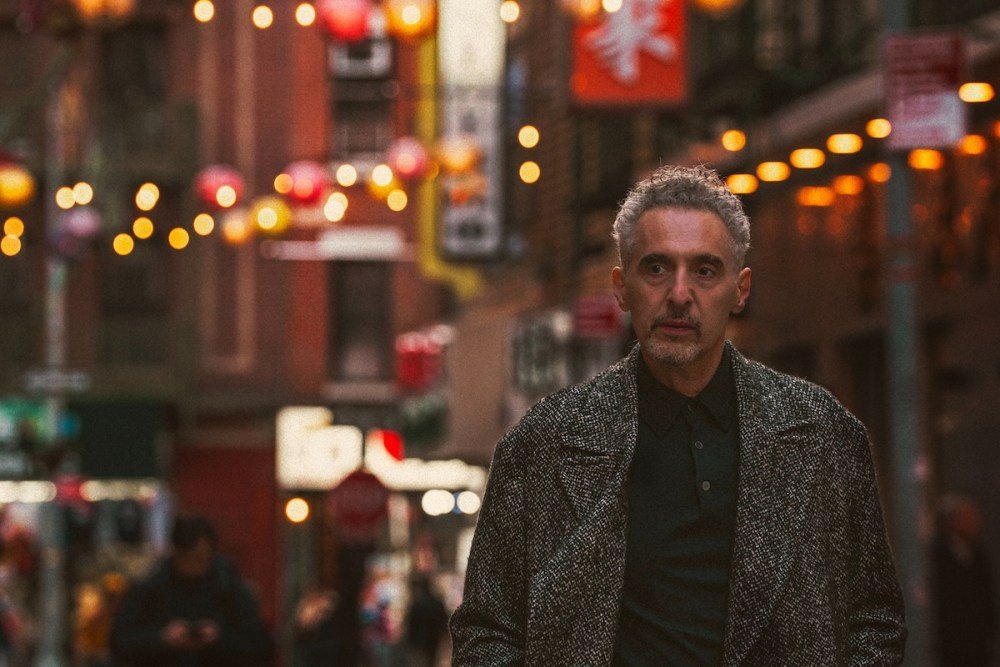
    Sony Pictures Classics is determined to end the drought with his work in the acclaimed “The Only Living Pickpocket in New York,” which premiered at Sundance last January and made its fall festival bow at Telluride this weekend, where the film and Turturro’s invigorating turn as an aging pickpocket are drawing acclaim.

    Turturro, 69, has been making the rounds in the Colorado mountains, attending Q&As and a Saturday night dinner hosted by Sony Pictures Classics, where writer-director Noah Segan mingled with press and industry attendees.

    Turturro has spent four decades operating in the space reserved for actors everyone recognizes and almost nobody thinks of as an Oscar nominee. He has worked with masters of cinema such as the Coen brothers, Spike Lee and Robert Redford and has appeared opposite everyone from Tom Hanks to Adam Sandler. He’s played gangsters, professors, detectives, eccentrics, husbands, fathers and men who seem to have wandered into the wrong movie and somehow made it better.

    And yet, the Academy has never invited him to the party.

    And it’s not like he hasn’t been close. Turturro won best actor at Cannes for the Coen brothers’ “Barton Fink” in 1991. Three years later, his combustible Herbie Stempel in Robert Redford’s “Quiz Show” collected Golden Globe and SAG Award nominations, the kind of precursor support that usually precedes an Oscar bid. But each time, the industry seemed to look elsewhere.

    The television world has been kinder. His weary defense attorney in “The Night Of,” HBO’s 2016 crime drama, drew Emmy, Golden Globe and SAG Award nominations. His tender, unraveling Irving Bailiff on “Severance,” Apple TV’s dystopian workplace thriller, has since earned him two Emmy nominations, the most recent lost to his own castmate Tramell Tillman in 2025.

    “The Only Living Pickpocket in New York” can change that.

    In a similar vein to Richard Jenkins’ first career nomination for the 2007 drama “The Visitor,” Turturro can be the overdue veteran to finally see his name in lights. Segan’s Sundance breakout, acquired by SPC for a fall release, gives Turturro something four decades of great supporting performances never could: a movie that he leads, one that lives and dies on him.

    He plays Harry Lehman, an analog thief operating in a city where the very concept of pickpocketing has become obsolete. Wallets increasingly contain less cash, phones have replaced maps and tickets and two-factor authentication has made the modern world almost aggressively hostile to the old-fashioned criminal. Harry is clinging to a disappearing profession while caring for his ailing wife, Rosie.

    While that metaphor is hardly subtle, it’s also part of its appeal. Harry is not simply a thief whose trade is dying; he’s a man confronting his own obsolescence.

    SPC calls it the finest performance of Turturro’s career. Distributor hyperbole is usually best treated as campaign copy. But here, it resonates. Turturro has never been an actor who needed to announce himself. He slips into other people’s scenes, finds the detail nobody else thought to play and then, almost imperceptibly, becomes the most interesting person in the room. The Academy has rewarded that instinct repeatedly, just not when Turturro has been the person standing at the center of the frame.

    As an awards campaign, the studio is following a familiar formula: a beloved, never-nominated veteran finally gets a leading role worthy of his gifts. But the strongest version of the pitch is not “Give John Turturro an Oscar.” It is “Look at what John Turturro has been doing all along.”

    The Academy has historically responded to overdue narratives, particularly when the performance provides a credible reason to act on the sentiment. Turturro has the résumé, the festival pedigree and the late-career showcase that can turn years of admiration into a voting impulse.

    “The Only Living Pickpocket in New York” is a movie about a man whose skills belong to another era, trying to prove they still have value. The meta-text is impossible to miss. Turturro’s awards case makes essentially the same argument about the actor himself.

    It also helps to have Steve Buscemi in the cast, who could mount his own first awards run for “Wild Horse Nine,” along with the best awards campaigner this side of the sun, Jamie Lee Curtis, who delivers a killer one-scene wonder.

    Like a lot of SPC films, neither the movie nor Turturro may seem the loudest voice in the room right now and plenty of pundits will write it off early, especially once precursors start rolling in. But as the studio has shown with titles like “The Father,” “Parallel Mothers” and “I’m Still Here,” the ground game and striking when it matters most, is what wins these campaigns.

    And Turturro may not even be the film’s only awards story. Segan, long a familiar face in front of the camera, wrote and directed “The Only Living Pickpocket in New York” himself and a spare, mournful original like this one is exactly the kind of writer-director calling card the original screenplay race tends to reward. It happens more than voters remember. “Frozen River,” another SPC sleeper, paired Melissa Leo’s lead nomination with a surprise original screenplay nod for writer-director Courtney Hunt and “Nebraska” did the same for Bruce Dern and scribe Bob Nelson. If the film connects with voters, Segan’s script could ride in alongside its star.

    The best actor field, notably, is shaping up to be incredibly crowded. Heading into the fall festivals, pundits had already penciled in the likes of Matt Damon (“The Odyssey”), Ryan Gosling (“Project Hail Mary”) and Sebastian Stan (“Fjord”), and Venice and Telluride added John Malkovich (“Wild Horse Nine”) and Andrew Scott (“Elsinore”) to the conversation. SPC will have to make noise without overselling a performance whose appeal lies in its subtlety. But if the campaign can persuade voters to see Harry not as a novelty but as the culmination of everything Turturro has spent a career doing, the narrative becomes difficult to ignore.

    Let’s see if this pickpocket can steal some hearts along the way.
  • Netflix Bets ‘Ink’ and Its Timely Rupert Murdoch Story Can Win Oscars for Danny Boyle and Guy Pearce

    Netflix Bets ‘Ink’ and Its Timely Rupert Murdoch Story Can Win Oscars for Danny Boyle and Guy Pearce

    Netflix wants the “ink” to dry on its Oscar prospects.

    Danny Boyle made his first trip to Venice with “Ink,” his adaptation of James Graham’s stage sensation, which opened the 83rd edition in competition before moving through Telluride and Toronto, with the streamer giving it a December theatrical release and a January streaming date.

    The early temperature is reading warm. “Ink” drew a four-minute standing ovation on opening night in Venice, and the reactions filtering out of Telluride have been buzzing across the mountains, the kind of enthusiasm and respect a Netflix campaign is built to amplify.

    The subject is an origin myth of modern media: Rupert Murdoch’s 1969 acquisition of a dying tabloid called The Sun and the rapid transformation that followed. Graham, adapting his own Tony-nominated play, approaches the story with the mechanics of a heist. Boyle supplies the velocity.

    The central question is not simply how Murdoch built a newspaper. It is how two men helped invent the modern attention economy that shapes all of our lives today.

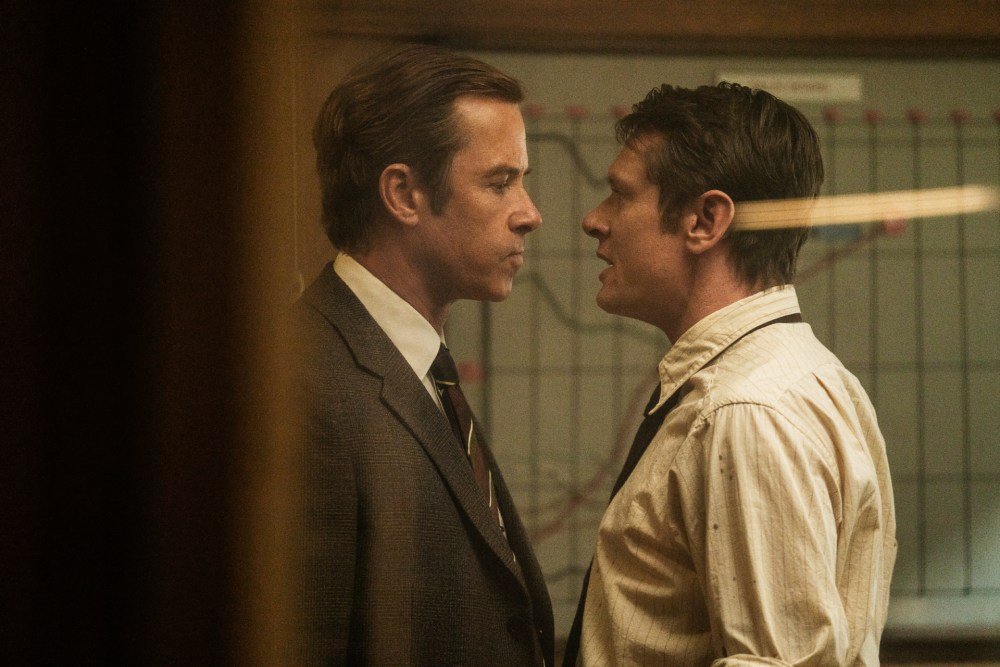
    Guy Pearce plays a brash, thirty-something Murdoch, an outsider with a chip on his shoulder and a plan for disrupting Fleet Street. Jack O’Connell plays editor Larry Lamb, the working-class newspaperman Murdoch pushes past every line the establishment believes cannot be crossed.

    Both actors have obvious awards narratives, but two very different categories to break into.

    Pearce arrives two years after his first Oscar nomination, a supporting actor bid for “The Brutalist,” which gives him the benefit of recent Academy recognition. And the role could hardly be more of the moment. Murdoch is a figure many hold responsible for the fractured, combustible information environment the U.S. is living through right now and there is a particular charge in watching an actor humanize the young man who lit the fuse. That timeliness is the kind of thing that fuels an Oscar campaign.

    O’Connell arrives with something different: momentum. Between “Sinners” and the “28 Years Later” films, he is coming off a stretch that has significantly raised his visibility. Being a hot commodity right now, and perhaps even a package deal with Pearce in voters’ minds, could give him a fighting shot in a very crowded best actor field.

    We have seen roles like Pearce’s cakewalk to nominations before, purely on the nature of the part, even when pundits wrote them off early. Look at the run of real-life figures who landed supporting bids: Jon Voight in “Ali” (2001), Matt Damon in “Invictus” (2009), Kenneth Branagh in “My Week with Marilyn” (2011), Christopher Plummer in “All the Money in the World” (2017), Sam Rockwell in “Vice” (2018), J.K. Simmons in “Being the Ricardos” (2021) and Jeremy Strong in “The Apprentice” (2024).

    Pearce may not have the most screen time, but he is memorable in every frame. O’Connell has the more obvious breakout narrative and, as the story’s beating heart, the showier dramatic arc.

    Two performances from one film can coexist comfortably in an awards campaign, but they can also create a strategic problem. The distributor must establish why both actors are essential without letting voters perceive one as stealing oxygen from the other.

    Guy Pearce as Rupert Murdoch and Jack O’Connell as Larry Lamb in “Ink”

    Netflix

    There is also a screenplay story here, and a recent precedent worth studying.

    Graham is adapting his own acclaimed play, which puts “Ink” in the adapted screenplay conversation and on a path that “One Night in Miami” walked in 2020. That film, too, launched at Venice and Kemp Powers turned his own stage work into an adapted screenplay nomination while the movie also landed an acting nod for Leslie Odom Jr. A playwright translating his own material, a festival launch and a performance the industry embraces: the template is right there.

    But Netflix will look to check even more boxes.

    Beyond the two actors, “Ink” is built to contend in the crafts. Its production design, by Carson McColl and Gareth Pugh, rebuilds a vanished Fleet Street. Fin Oates cuts the film with a fragmented, kinetic energy that recalls the associative style Hank Corwin brought to Adam McKay’s “The Big Short” and “Vice.” Johnnie Burn, the Oscar-winning sound designer of “The Zone of Interest,” lends the film one of the most decorated ears in the business. And composer Daniel Pemberton supplies an original score with the propulsion Boyle’s movies demand, capping a bombastic year that also includes “Project Hail Mary.”

    Netflix has the resources to make all of those cases.

    The larger question is whether the company has the bandwidth. Its fall slate is stacked, with “La Bola Negra,” “The Adventures of Cliff Booth,” “Possible Love,” “Gentle Monster” and “The Mosquito Bowl” all angling for the same oxygen. “Ink” will have to compete not only against rival distributors but against Netflix’s own contenders for screeners, headlines, events, Q & As and voter attention. The Venice-Telluride-Toronto sequence helps enormously, giving the movie the sort of early critical footprint that can turn an awards campaign into a sustained conversation.

    And Boyle’s presence adds another narrative. As the Oscar-winning filmmaker behind “Slumdog Millionaire,” he brings such a distinctive visual and kinetic signature that the fall circuit was an obvious place for the film to bow.

    The James Graham connection gives “Ink” a larger cultural context. His work has repeatedly mined the intersection of power, institutions and public life, from politics to journalism. “Ink” arrives in a media environment in which the questions surrounding Murdoch’s influence feel less like history than an origin story for the world audiences inhabit now.

    That resonance is the film’s best weapon, and the campaign will not have to manufacture it.

    “Ink” argues that we are all still living in the paper they printed.

  • Andy ‘The Butcher’ Williams, Musician and Wrestler, Dies After Match

    Andy ‘The Butcher’ Williams, Musician and Wrestler, Dies After Match

    Andy “The Butcher” Williams, a professional wrestler who played guitar with the bands Every Time I Die and Atomic Rule, died Saturday night after collapsing at the end of his match in Millvale, Pennsylvania. He was 48.

    Williams was rushed to the hospital but did not survive. The rest of the match was called off after the medical emergency.

    His most recent promoter All Elite Wrestling released a statement, saying “All Elite Wrestling is saddened to learn of the passing of Andy Williams, aka The Butcher. A trailblazing musician with ETID and Atomic Rule, Williams made a successful transition into the world of professional wrestling and was incredibly respected by his peers both in and out of the ring. Our condolences go out to Williams’ family, friends and fans.”

    Williams had been competing alongside his tag-team partner Jesse Guilmette, “The Blade” at Enjoy Wrestling’s Five Years event.

    The New York native co-founded the Buffalo, N.Y. metalcore band Every Time I Die in 1998, and the group released nine albums before splitting up in 2022. His new band Atomic Rule was set to tour the West Coast in November with GWAR, and earlier on Saturday he had posted, “Update of the work we’ve been putting in! So stoked to share all this with you! We feel like we’ve finally found our feet planted to this beautiful earth and now we’re running full speed!”

    He started wrestling on the independent circuit in 2015 at the age of 37, and joined All Elite Wrestling in 2019, performing as the Butcher. Williams and Guilmette’s contracts with All Elite expired in June, and they returned to independent wrestling.

  • ‘From Inside Out – The Architecture of Peter Zumthor’ Review: Wim Wenders’ Latest 3D Documentary Is an Architectural Marvel

    ‘From Inside Out – The Architecture of Peter Zumthor’ Review: Wim Wenders’ Latest 3D Documentary Is an Architectural Marvel

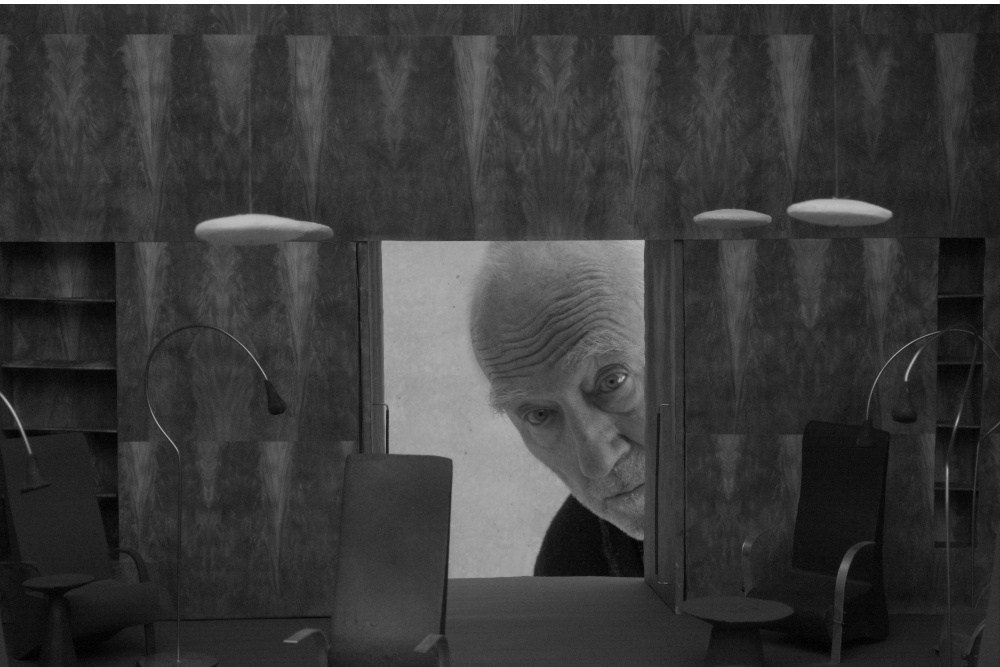
    The screen is usually a canvas, but it becomes a window to an enormous room in Wim Wenders’ latest 3D documentary, “From Inside Out – The Architecture of Peter Zumthor.” Within that room unfolds the tale of the Swiss architect of the title, told in occasionally laborious ways. It spends much of its two-hour runtime teaching you how to watch it, and like your average high school class, you might not see the value of its instruction until it eventually comes in handy. In that vein, Wenders presents some magnificent things in the film’s final third, sensations which emerge like Zumthor’s own views on the function of his buildings, which he ties to human experience, understood by its inhabitants gradually, and then all at once — from the inside out.

    Beginning with shots of concave corners and convex, monolithic surfaces, “From Inside Out” engenders curiosity before taking academic detours. These come courtesy of Zumthor himself, whom we first meet as a ghostly projection upon sleek, minimalist surfaces, emanating from the 1980s. Like the Holocaust survivors whose poetry populated the walls in Wenders’ “Anselm” — his 3D retrospective on the works of sculptor Anselm Kiefer — Zumthor’s words become inseparable from each room the camera explores, and each building the architect believes ought to feel at one with its surroundings.

    We eventually meet Zumthor in the present: an unassuming man in his eighties, whose descriptions of form, function and fluidity often repeat themselves, but whose sincerity and wisdom are hard to shake. As the film explores houses, museums and other Zumthor commissions, the architect’s use of light and natural materials becomes as important as the theoretical people he intends to fill each space — or, in the case of complicated restorations, the people who inhabited them decades ago. Wenders depicts these ghosts of past and future through dramatizations of curious travelers, whose whispering voiceover offers scattered thoughts on where they stand.

    There’s a tinge of humor, too, in Zumthor’s stubbornness when designing someone’s home, as the conceptual clashes with the preferential. However, the architect eventually gives way to use and function first, despite valuing the aesthetics at hand (not to mention, his collaborations with local artisans). It isn’t long before Wenders introduces the idea that Zumthor’s spaces are only as important as what goes inside them, when he first contrasts old and contemporary footage of museums he designed, each filled with deeply personal art installations — some of them about war.

    Zumthor himself doesn’t have the most interesting personal history — at least, not as far as this film is concerned — so Wenders’ exploration can come off as superficial at first. However, this ends up part and parcel of the structure. It echoes the feeling of approaching a marvelous building from afar, and entering its sterile lobby, before slowly discovering its mischievous secrets.

    Although some scenes and enactments can meander, they give way to a moving triptych of projects whose presentation feels, in a way, climactic. One is a home deeply personal to Zumthor. Another is a Nordic installation built in tribute to women killed in witch trials, which feels terrifying to walk through — a kind of infinitude accentuated by Franz Lustig’s 3D cinematography. And the third is arguably Zumthor’s magnum opus: his sprawling, amoebic construction housing the permanent collection at the Los Angeles County Museum of Art, whose planning and completion the doc depicts in detail.

    By the time the building is finished (and visited by a number of filmmakers, including Ava DuVernay and Werner Herzog), Wenders’ camera moves in tandem with Zumthor’s own abstract notions of the art pieces needing to feel horizontally equal, with none being granted more or less importance than any other. The sprawling gallery seems to have no beginning or end. Its bends extend endlessly, revealing pockets and side rooms with rough, exposed concrete contrasting the gilded grandeur of the pieces on display.

    It takes a while to realize this, or at least to internalize it, but the film’s own architecture is not dissimilar, with what feels like winding segues that add up to an experience of fluid expanse, of great wandering, and ultimately, of soulful appreciation. Certainly, no one is beholden to a film this demanding, but Wenders wields his 3D camera to craft a perfect marriage of subject and form, filling echoing spaces with art and stories much like Zumthor’s architecture does — until eventually, you leave with a new appreciation of the physical world, and your place within it.

  • ‘Woman Unknown’ Director May el-Toukhy Talks the Torment of World War II ‘Horizontal Collaborators’ and Venice’s Female Director Snub: ‘It’s a Structural Problem’

    ‘Woman Unknown’ Director May el-Toukhy Talks the Torment of World War II ‘Horizontal Collaborators’ and Venice’s Female Director Snub: ‘It’s a Structural Problem’

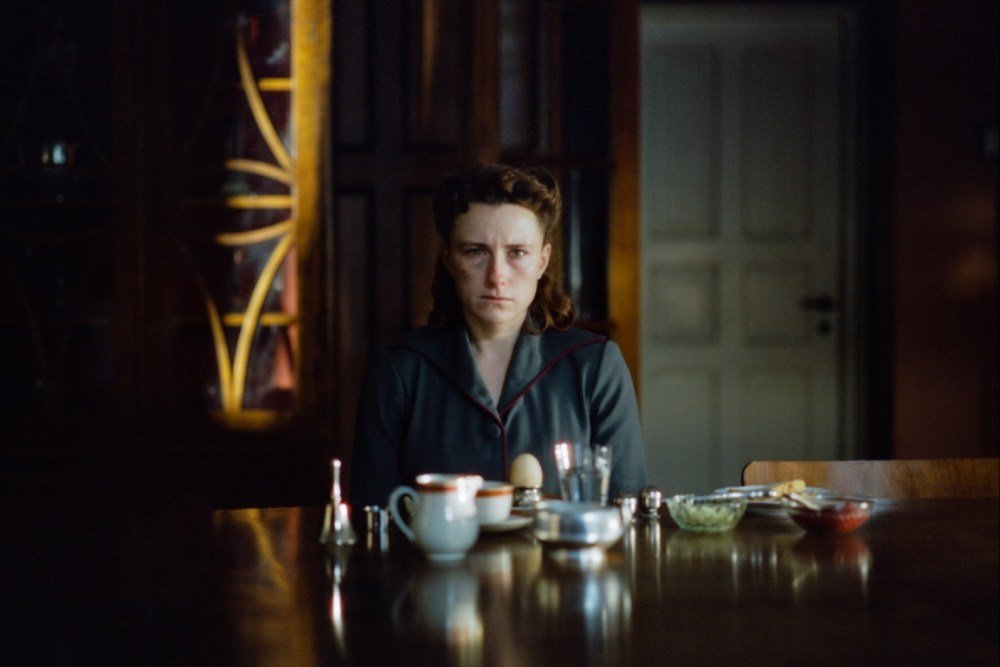
    In “Woman Unknown,” May el-Toukhy takes a closer look at women accused of having relationships with German soldiers during World War II.

    “When we started to build a story about a ‘horizontal collaborator,’ we realized that, during and after the war, the female body became part of national identity. But in Denmark, it wasn’t really explored.” 

    Initially, she wanted to make a film about the witch hunts after the Reformation in the 1500s. 

    “It was difficult to relate to the perpetrators because many of them were just maniac. And I’m interested in ambiguity,” she says. Then, she came across an old newspaper photo of a woman with a swastika painted on her back.

    “You can find very similar stories that are thousands of years old. The shaving of a woman’s hair or her public shaming for ‘sharing’ her body is a very old concept. Even today, it’s still happening in many armed conflicts.”

    Still, this suffering tends to be ignored by historians. The title of her film references that silence as well.

    “I was inspired by Belarusian writer Svetlana Alexievich who wrote ‘The Unwomanly Face of War.’ She gathered these testimonies from women who talked about having their periods in war zones, hiding in sheds, and giving birth. It’s rare to have such recollections of the female experience during or after the war,” says el-Toukhy.

    For Marie, a housemaid and a nanny, the future looks bright: she’s about to marry her wealthy employer. But in the weeks leading up to liberation in 1945, she must do her best to survive and ensure that her secrets don’t catch up with her. 

    “Our main character wants to remain unknown, but we haven’t told stories about these women either. When you see their photographs in the archives, they’re often labeled ‘unknown woman.’ Also because people didn’t care.”

    Ironically enough, “Women Unknown” has already made headlines because of Venice’s decision to include only one female director in the main competition. The festival later added documentary “Naza,” co-directed by Rachel Szor.

    “Obviously, I’m delighted to have been invited to this historic festival. But I would have loved to be in the company of more female directors in the competition. I do believe it’s a structural problem,” notes el-Toukhy.

    “We discussed how the idea of publicly shaming women is an old concept. Not having enough films by women is also an issue that goes way back. It’s reflected in the budgets we work with and the talent that wants to be involved. Even journalists talk about male directors differently than they talk about women. I’ve never heard a female director called a ‘genius’ – and I read many articles about male geniuses.”

    What’s the solution? 

    “Everyone has to chip in and be a part of it. I will now have a chance to discuss this issue through my film, which is rather aptly called ‘Woman Unknown’. I’m happy to do so, even though the circumstances surrounding me being in the main competition are what they are.” 

    “We have a lot of work to do in order to change that.”

    May el-Toukhy is interested in new solutions. As previously announced by Variety, she’s also part of the new Dogma 25 movement. You can find the full manifesto here.

    “It’s always healthy to disrupt your process as a filmmaker,” she says.

    “Dogma 25 is very much about how we make films. Even though I heard many yeses while making this film, I still feel like I had to run much faster. That that kind of sprint doesn’t necessarily benefit the result.”

    She adds: “The way we have to work is almost unbearable. You finish a film and you’re completely stressed out and exhausted. I could make another big European arthouse drama in the future – I’m not saying goodbye to that format. I just think we really need to rethink the way we make movies.”

    As in her previous films, el-Toukhy doesn’t care much for typically likable protagonists. In “Queen of Hearts,” she followed a woman who seduced her teenage stepson. In “Woman Unknown,” Marie makes questionable choices as her carefully built facade threatens to collapse.

    “It would be a betrayal to my sisters around the world if I only portrayed women as saints. It’s important that we tell stories about complex women in a nuanced way, just as we do with male characters. That rings truer to life.” 

    She wanted to stick to a female perspective throughout the story.

    “Early on, we made a rule that we would never reproduce the male experience of war. [Marie] goes out of the house, but the streets represent danger. People are celebrating and there’s euphoria, chaos and vigilantisms. Her safe space is at home, but then insecurity and danger move in. Suddenly, there’s no safe space anymore.”

    For the longest time, no one dared to criticize “the liberators” and their brutal methods. 

    “It would have been harder to tell this story 25 years ago when those generations were still alive. Some audience members will still be shocked or angry because their grandfather was part of the resistance movement, which became very strong in Denmark right up to the liberation. But not everyone should have been a part of it.” 

    “It’s important to have discussions about what actually happened so that we don’t recreate false narratives. It’s hard to change the direction you’re going in if you’re not looking back.”

  • Susan Sarandon Says She’s ‘Still Had Movies Taken Away Recently’ Over Palestine Support: ‘There Are Agencies That Are Telling People Not to Hire Me’

    Susan Sarandon Says She’s ‘Still Had Movies Taken Away Recently’ Over Palestine Support: ‘There Are Agencies That Are Telling People Not to Hire Me’

    Susan Sarandon said she’s “still had movies taken away recently” over her outspoken support of Palestine.

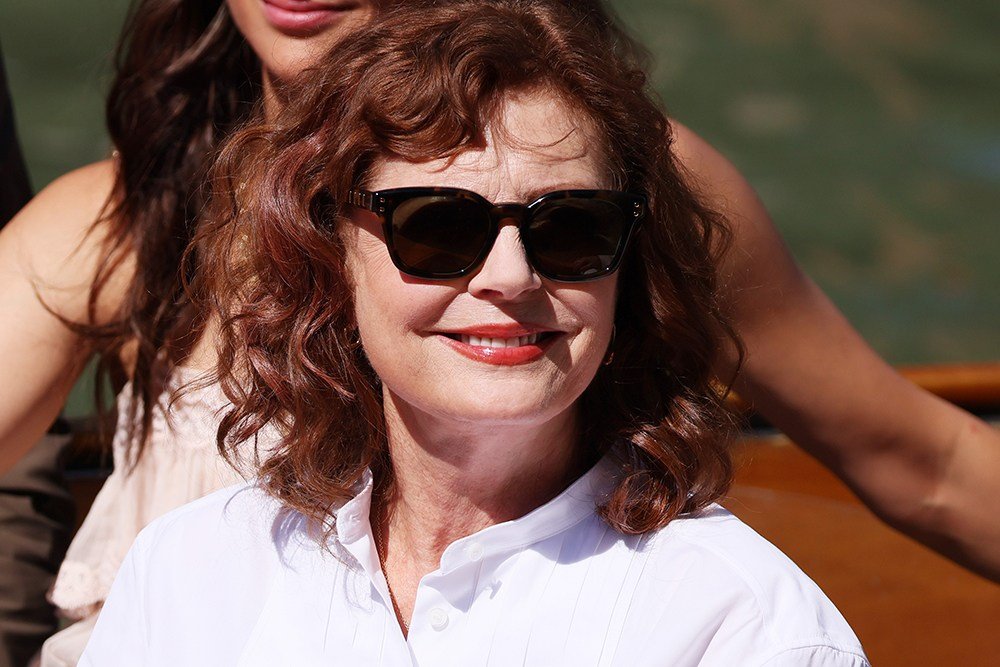
    At the Venice Film Festival press conference for her new film “The Echo Chamber” on Sunday, Sarandon was asked if she thinks the narrative is changing in Hollywood when it comes to the conflict in Gaza. In 2023, the Oscar winner was dropped by her agency UTA after comments she made at a pro-Palestinian rally and said earlier this year she felt she was shunned by the industry for calling for a ceasefire in Gaza.

    “I think that the narrative has completely changed in terms of historical relevance of Palestine and the ties of Zionists with America and our politics. That has been a major revelation for people. How much money the United States gives to Israel, nobody really understood that,” Sarandon began.

    “I’ve still had movies taken away recently because there are agencies that are telling people not to hire me still,” she continued. “But that’s the power structure. I think within the people, certainly internationally, I feel welcome.”

    “The Echo Chamber” hails from Italian director Andrea Pallaoro and filmed in Italy and Belgium. Sarandon stars in the romantic drama, which was Bernardo Bertolucci’s final screenplay, alongside Luca Marinelli and Alicia Vikander.

    Sarandon said that Pallaoro was told not to work with her but did so anyway. “I thank Andrea for that, because he doesn’t listen to the warnings,” she said.

    “There has been a change in terms of the general public, but there are still positions in my industry that are held by Zionists who have not relaxed their feelings towards me,” Sarandon concluded. “But I found my family, I found my people and I’m OK.”

  • Moonfish’ Director and Stars Lucy Liu and Morgan Spector Break Down Their Black-and-White Animated Film About Isolated Astronauts And Why It’s an Allegory for ‘The Current Human Condition’

    Moonfish’ Director and Stars Lucy Liu and Morgan Spector Break Down Their Black-and-White Animated Film About Isolated Astronauts And Why It’s an Allegory for ‘The Current Human Condition’

    For Lucy Liu, who has voiced memorable characters in everything from “Kung Fu Panda” to “Strange World,” being part of the independently made, black-and-white animated film “Moonfish” was all about lending her name and support to first-time filmmaker Daniel Zvereff.

    “These are the people that are not just the creatives, but the ones who are going to be the future,” Liu tells Variety. “I’m just fascinated by how people work and how things start when there’s not all this red tape.”

    Premiering at the Venice Film Festival on Sept. 6 after receiving a grant from Biennale College Cinema, “Moonfish” follows a pair of astronauts, voiced by Liu and “The Gilded Age” star Morgan Spector, as they embark on an isolating mission to the moon with a corporate quota to meet if they want to return home.

    “I really wanted to have the film take place in an environment that was an allegory to our current human condition we’re all experiencing right now, where society is very plugged in, but simultaneously we’re all growing a bit disconnected,” Zvereff says.

    Zvereff designed the 2D-animated film so that he could finish it completely on his own, if need be. Thankfully, as Zvereff worked over the course of nine months, he managed to bring on two animators, Hoss Wheeler and Devin Grover.

    “When I watch 2D-animated films, I feel like I’m being exposed to the subconscious of that artist,” Zvereff says of his approach.

    Liu adds, “It’s amazing what digital has done for the speed of animation but you can really feel the appreciation and the craftsmanship [here]. There is a tenderness and an imperfection that I appreciate.”

    Unlike Liu, Spector had never done an animated film before “Moonfish.” The trickiest part was getting into his character’s mental headspace as he goes “a little mad,” as Spector puts it.

    “This particular class of people has come to live on the moon, and they’ve evolved, essentially, as moon people. But they’ve also evolved as an underclass; they are the group of people without rights, assets or any real hope for the future,” Spector says of Zvereff’s worldbuilding.

    Liu, of course, also voices the talking fish that accompanies the pair (which Zvereff likens to how miners brought along canaries to know when they had to leave) amidst the mundanity of the corporate tasks at hand.

    “The future that Daniel’s imagining is one in which the relationship between human beings and their tools has been totally inverted. The corporation has merged with the computer in a sort of perfect authoritarian machine that uses human beings as fodder, basically,” Spector says. “It’s a vision of the world that feels continuous with the one we live in.”

    While the film explores isolation and loneliness in space, with the dialogue sparse and to-the-point, Zvereff realized during the writing process that it needed to ultimately be positive about the future of humanity.

    “That’s something that happens as an artist. When you’re making something, you’re taking in all these feelings you’re happening and running them through this prism,” he says. “And out comes this beautiful, unexpected light.”

  • Groundbreaking Roma Director Alina Șerban on ‘Pain,’ ‘Joy,’ of Historic, Venice-Bound ‘I Matter’: ‘I Managed to Do Something Impossible’

    Groundbreaking Roma Director Alina Șerban on ‘Pain,’ ‘Joy,’ of Historic, Venice-Bound ‘I Matter’: ‘I Managed to Do Something Impossible’

    Roma filmmaker Alina Șerban broke barriers long before she set foot on the red carpet this week at the Venice Film Festival, where her feature-length directorial debut, “I Matter,” world premieres in the Venice Spotlight section.

    Rising from an impoverished background to become a celebrated stage star in Romania, the actress and directing debutante has defied all odds to reach the starry heights of the Lido. Billed as the first feature from a female Roma director to screen at an A-list festival, “I Matter” marks the latest chapter in her life-long quest to reframe the narrative around her marginalized community. 

    Șerban, however, is taking it all in stride.

    “I’m nervous about the pressure of being ‘the first’ — all the firsts,” she tells Variety. “But I also have this immense relief, and the feeling of being grateful that I managed to pull through something almost impossible.”

    Inspired by Șerban’s own life, “I Matter” tells the story of a young Roma woman studying to be an actor. She’s faced with the threat of being kicked out of her orphanage and must suddenly embrace her identity and confront the reality of making it through life on her own. Based on the 2021 short of the same name, whose festival run included New Directors/New Films, it’s produced by microFILM, 2Pilots Filmproduction, Frakas Prods. and Lemming Film, with international sales handled by Pluto Film.

    For Șerban, the premiere is a capstone in what has already been a remarkable career. Raised in poverty in Bucharest, she was placed in a state-run orphanage at an early age before becoming the first member of her family to graduate from high school. After attending Bucharest’s Academy of Theatrical Arts and Cinematography, she was accepted into NYU’s Tisch School of the Arts, then later earned a master’s degree from the Royal Academy of Dramatic Art in London.

    When she returned to Romania, she mounted an acclaimed one-woman show about her life, focusing not only on the rampant discrimination she faced, but on her triumphs and joys. By her 30th birthday, Șerban had written and staged pioneering plays that championed a radical, feminist, Roma perspective — trying, she says, “to show the humanity of these people. Not to portray them as victims nor villains. Not to self-exoticize. But also to celebrate ourselves.”

    “I Matter” stars newcomer Denisa Farcaș, bringing both vulnerability and determination to a lead role that she invests with her own life experience, according to the director. Șerban describes working with Farcaș and her co-stars as a “collaborative process,” one in which the group delved deep into “what it means to be accepted” as Roma women while giving the young actors space to “express themselves — to feel that they also own the story.”

    This isn’t Șerban’s first visit to the Venice Film Festival; she attended in 2023 with the cast and crew of Goran Stolevski’s “Housekeeping for Beginners,” in which she had a supporting role. But this year’s experience will be something else entirely for the director. Nearly two dozen of the cast members of “I Matter” will be in attendance — including the 16 child performers who populated the film’s orphanage — while Roma band Mahala Rai Banda will serenade the red-carpet arrivals.

    “This is such a historical moment for me, and also for the Roma community,” Șerban says. “It’s a moment of celebration. And I want to look back and say I did everything in my power for the people in the team to [share this] moment. And also to put into the world a message of dignity, of celebration, of pain that needs to be seen.”

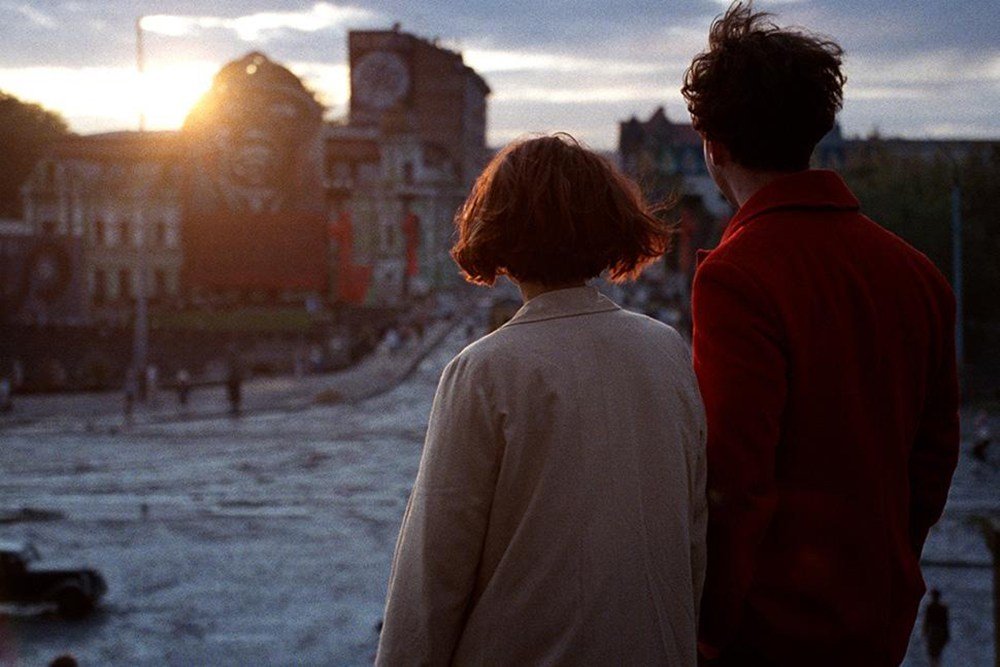
  • Are Russian Filmmakers Finally Coming in From the Cold?

    Are Russian Filmmakers Finally Coming in From the Cold?

    The Venice Film Festival found itself under fire in the weeks leading up to opening night over the inclusion of “DAU,” by Russian filmmaker Ilya Khrzhanovsky, in the main competition of its 83rd edition.

    In a joint statement released on Aug. 17, the Ukraine Ministries of Foreign Affairs and Culture and the Ukrainian Embassy in Italy criticized the prestigious fest for selecting what they claimed to be “a project linked to the Russian state and its networks of influence,” maintaining that the decision helped to “restore respectability” to Putin’s pariah state.

    The pushback was swift. In an Instagram post responding to the criticism, Venice artistic director Alberto Barbera insisted that “‘DAU’ is not a Russian film; it is not pro-Putin propaganda.” Meanwhile, Khrzhanovsky took to Facebook to refute allegations that the latest installment in his long-running project was backed by Russian financing or is “an instrument of Russian state cultural policy.”

    Speaking to Variety on the eve of the festival, the director doubled down, saying: “Since the war started, there was no question of what side I am on, because I am on the side of Ukraine.”

    Coming on the heels of a recent controversy surrounding the Venice Art Biennale’s decision to mount shows by Russian and Israeli artists, the “DAU” dust-up speaks to a larger question hanging over film festivals, cultural institutions and other events that, in the immediate aftermath of Russia’s full-scale invasion of Ukraine, largely heeded calls for a boycott of Russian cultural exports.

    As the war drags deeper into its fifth year, a rapprochement of sorts is underway. While relations with Moscow remain frosty for much of the world, Russian filmmakers are gradually coming in from the cold.

    In the past year alone, Russian-born directors have scooped prizes in Venice (Nastia Korkia’s “Short Summer”) and Cannes (Andrey Zvyagintsev’s “Minotaur”), while Khrzhanovsky is joined on the Lido by fellow exile Victor Kossakovsky, whose latest documentary, “Holly Wood Dust,” premieres out of competition. 

    Though the Oscar-nominated Kossakovsky (“Gunda”) and Khrzhanovsky both left Russia in the 2000s, a broader exodus began not long after Russian tanks rolled into Ukraine in February 2022. Whether fleeing in protest of the Kremlin’s war machine or out of fear of the brutal crackdown on dissent that quickly followed, many of Russian cinema’s most prominent voices left the country, forging exile communities from Tbilisi to Paris, from Berlin to L.A.

    “There are two Russias right now,” says two-time Oscar nominee Alexander Rodnyansky (“Leviathan”), in Venice with Kornél Mundruczó’s “Place to Be,” starring Ellen Burstyn and Taika Waititi. “Russia as the country with this regime controlling everything and censoring all the attempts to speak freely about what’s going on. And there is a Russia outside of the geographical borders.”

    That diaspora is experiencing exile in a variety of ways. The Kyiv-born Rodnyansky, who was sentenced in absentia to 8.5 years in prison by a Moscow court over his opposition to the war, remains determined to support dissenting voices and “make movies with Russian filmmakers, especially young ones, who I feel myself committed to help.” Now based in France, Zvyagintsev likewise remains a trenchant critic of a country he says he has “no intention” of returning to. Though filmed in Latvia, his Cannes Grand Prix-winning “Minotaur” is as scathing a portrait of Russian society under Putin as the director’s previous works.

    For other filmmakers, the westward flight has offered an opportunity for reinvention. Kantemir Balagov’s “Butterfly Jam,” which opened the Directors’ Fortnight section this year in Cannes, stars Barry Keoghan and Riley Keough and is set in an immigrant community in Newark. Director Kirill Sokolov likewise set off for Hollywood; his latest, the blood-soaked revenge farce “They Will Kill You,” stars Zazie Beetz and Patricia Arquette.

    Sokolov’s dark comedy “No Looking Back” was among the first films to bear the brunt of the anti-Russia backlash in 2022, when it was pulled from the Glasgow Film Festival over financing that came in part from the Putin regime. The “DAU” controversy in Venice was similarly driven by ties to Russian financiers who would later be sanctioned following the Ukraine invasion.

    But Khrzhanovsky stresses to Variety that their involvement in his decades-spanning project ended years ago; his Venice-bound film is a German production, co-produced with France and Sweden, and has received no Russian funding for seven years, according to the director. 

    As these and other Russian filmmakers set up new lives in exile, the financial ties that once bound them to Putin’s state have been cut. That, as much as their vocal opposition to the Ukraine war, arguably weakens the case for protest and will ease further reentry into the international film community. 

    “They’re shot in Europe. They’re financed in Europe,” says Laurent Danielou, of Paris-based Loco Films, who’s currently financing two features from émigré Russian directors. “They’re not Russian anymore.”

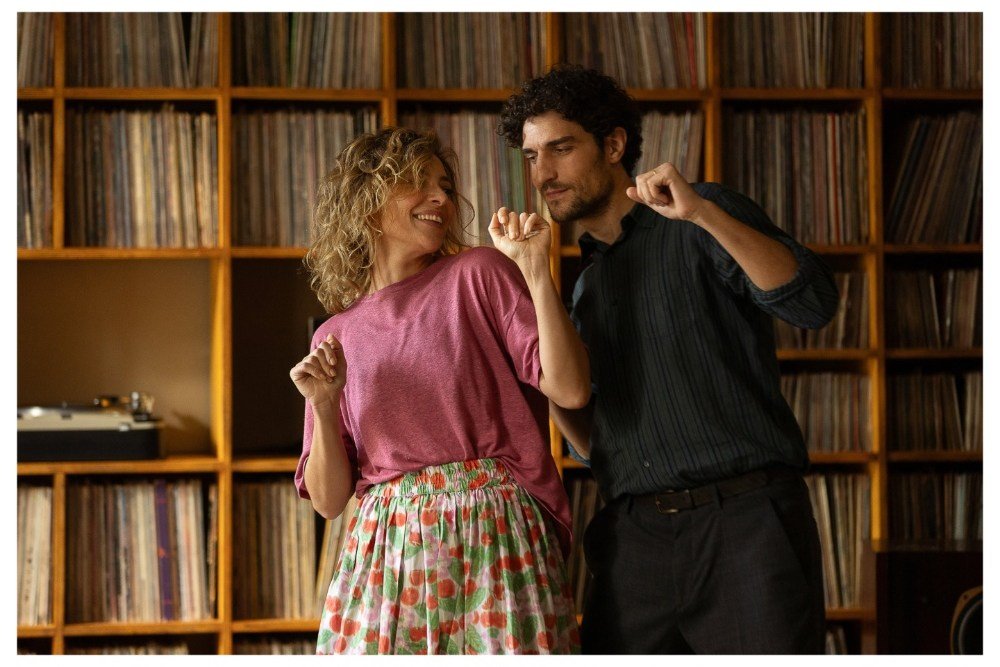
  • ‘It Will Happen Tonight’ Review: Louis Garrel and Jasmine Trinca Follow Each Other Through the Years In a Light and Predictable Romcom

    ‘It Will Happen Tonight’ Review: Louis Garrel and Jasmine Trinca Follow Each Other Through the Years In a Light and Predictable Romcom

    Not everything labeled “old-fashioned” needs to carry negative connotations. A handwritten letter, your grandma’s rice pudding, the cocktail — all nice old-fashioned things. But the moment Alberto Iglesias’ sweet music flows out of the speakers at the start of “It Will Happen Tonight,” “old-fashioned” starts veering perilously into dowdy territory. When the camera zooms out as a couple kiss by the sea, things are heading swiftly towards fusty, and that inexorable journey continues through a Bruce Springsteen concert, a cutesy fantasy group dance to The Rolling Stones’ “She’s a Rainbow,” and pretty much everything else in Nanni Moretti’s latest Venice competition entry.

    Though based on the short story collection “Hungry Heart” by Israeli novelist Eshkol Nevo, this is pure Moretti, turning on those moments in people’s lives when there’s a clear fork in the road and a path is chosen, whether right or wrong. Here eminently likeable Matteo (Louis Garrel) and Greta (Jasmine Trinca) casually meet when already attached to partners, think about each other for years, and wonder whether they’ve made the right life choices.

    Unlike Celine Song’s “Past Lives,” an adult film about “what might have been” whose emotional core lies in its intelligence and its refusal to sentimentalize, “It Will Happen Tonight” leans in heavily towards the kind of lightweight romance that, for better or worse, feels out of place in today’s film festival world. While for the home crowd this is likely to be one of Moretti’s most popular movies in a long time, it’s hard to gauge how it will be received elsewhere. After all, aren’t paper-thin intrusive mothers and old Viagra-joking fathers just a wee bit passé?

    Matteo’s Norwegian girlfriend Thea (Melina Åkerman) is pregnant and not keen on moving from Oslo to Rome, especially when his visiting mamma Agnese (Angela Finocchiaro) tells her she’s not fit to be a mother. Once Gregorio is born and the couple fly to Rome, Thea looks from the airport exit doors at Matteo’s family ignoring her and wisely decides to turn around, leaving the baby. Meanwhile in Mumbai, Greta’s boyfriend Carlo (Edoardo Purgatori) proposes in a very public way, but she can’t go through with it and instead calls daddy (Moretti himself) to get her out of there.

    Seven years later — yes, this is the kind of movie that jumps seven, and seven, and then three — Matteo’s playing tennis with his brother Antonio (Andrea Lattanzi) when in walks Greta, looking stunning in a white dress. She kicks off her heels and takes up a racket as the music swells, the slow-mo closeups begin, and for Matteo it’s love at first sight. The problem is, she’s getting married next door to Federico (Antonio De Matteo), with whom she has a daughter, Anna (Elena-Marie Cicone).

    This lovely vision in white won’t leave his mind, though he has no way of knowing who she is and besides, he’s got a dying father, Olivier (Hippolyte Girardot), to worry about. But the grim reaper can’t get him until father and son go to a Springsteen concert in San Sebastián, where randy Olivier has sex with the hotel receptionist (played for very poor laughs) and then, for reasons best known to Moretti, the stadium scenes linger through most of “Hungry Heart” and “Because the Night,” treating us to Garrel and Girardot swaying to the music and not much else. On the plane back to Rome, Olivier unsurprisingly gives up the ghost, preceded two seconds earlier by non-diegetic piano music superfluously clueing us in to what’s just about to happen.

    San Sebastián is also where Matteo gets another glimpse of Greta, in town because she’s got a part in a movie there. This is the most problematic scene in the film: She’s wearing convincing aging prosthetics for her role (which is why Matteo doesn’t recognize her at first), frantically searching for her daughter Anna, who’s wandered off. When the child is found, she’s whispering to a little girl covered in flies who appears to be Roma. Surely Moretti should have realized the offensiveness of showing a street child crawling with insects, her mother oblivious, as if this is normal for “such people.” While designed to convey the idea of Anna as a child with a troubled inner life, the sequence goes nowhere and is never explained, nor does it fit with her later depiction as a depressed adolescent.

    Seven years later, Matteo and Greta have a meet-cute in a café and he reveals his ongoing obsession. She’s got three kids, he’s married to Olivier’s former doctor Cristina (Elena Lietti), but despite her initial rejection of a tryst, the two embark on a passionate affair in his father’s old apartment, conveniently left empty all these years. Will they have the courage to leave their former lives and embrace the love they should have grabbed earlier? You’ll need to wait three more years to find out, but if you don’t already know where this is heading, you’ve not seen many movies.