Tag: Entertainment – Variety

  • Macklemore Says His Call to ‘Free Palestine’ Is Not a ‘Criticism’ of Jewish People: ‘None of Us Will Be Free Until We Are All Free’

    Macklemore Says His Call to ‘Free Palestine’ Is Not a ‘Criticism’ of Jewish People: ‘None of Us Will Be Free Until We Are All Free’

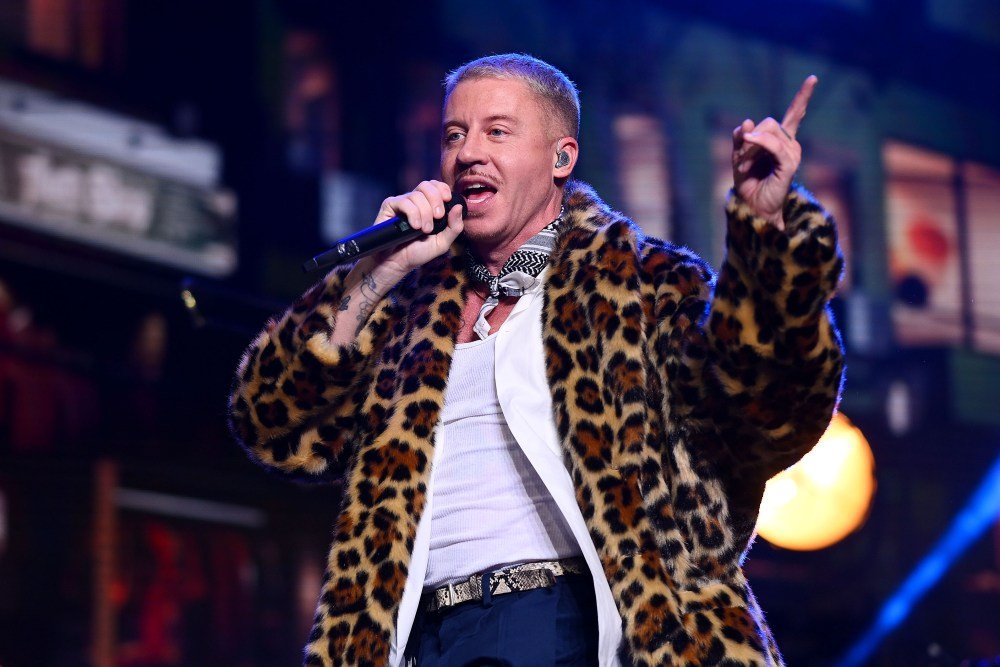
    Macklemore is speaking out about his call to “Free Palestine,” which the rapper made while opening for Ed Sheeran on Friday night at New Jersey’s MetLife Stadium.

    “To all of my Jewish brothers and sisters: criticism of Israel, criticism of apartheid, being against genocide in no way is a criticism of you,” Macklemore said on Saturday night (via Newsweek). “My message is for peace; love for all human beings to be treated with dignity, respect, and equality.”

    He added, “So I say free Palestine, I say free Lebanon, I say free Cuba, I say free Congo, free Sudan, I say free all people in America living in fear of this terrorist organization, ICE. None of us will be free until we are all free.”

    During his Friday night set, Macklemore told the audience that he wanted the people in Gaza and the West Bank to know that he had not forgotten them: “I believe that every human being walking on this earth deserves exactly the same freedom.” The statement caused the Israeli American Council to release a petition that demands that the four-time Grammy winner be removed from the rest of Sheeran’s Loop tour.

    The petition reads, “This was an Ed Sheeran concert – not a political rally, not a protest, and not an activist event. The issue is not whether Macklemore has the right to hold political views. The question is where the line should be drawn when an opening act uses a global concert platform to advance a one-sided political agenda.”

  • ‘Plaza Catedral’ Director Abner Benaim, Chile’s Daniela Vega and Alfredo Castro Board Fiction Series ‘School of the Americas’ (EXCLUSIVE)

    ‘Plaza Catedral’ Director Abner Benaim, Chile’s Daniela Vega and Alfredo Castro Board Fiction Series ‘School of the Americas’ (EXCLUSIVE)

    Panama’s Abner Benaim has boarded as a co-director of the fiction series “School of the Americas” (“Escuela de las Américas”), which will star two of Chile’s most internationally renowned thespians: Daniela Vega, who headed the Oscar-winning “A Fantastic Woman,) and Alfredo Castro, a Pablo Larrain regular who’s also starred in a slew of Latin American projects.

    The project has been selected for the Co-Production and Financing Forum at Madrid-based confab Iberseries & Platino Industria which takes place Sept. 29-Oct. 2.

    Benaim was an obvious addition to the project given its subject matter and setting. “School of the Americas” begins with an exhumation at the site of the 1983 El Jazmín massacre, which yields a graduation photograph of four commandos with their faces scratched out and a pendant stamped Fort Gulick, the U.S. military base in the Panama Canal Zone, site of the infamous U.S. Army School of the Americas.

    Panamanian-American human rights investigator Inés Vega recognizes the massacre’s signature: counterinsurgency doctrine taught at the School. When someone tries to kill her, the cold case turns personal. Tracking four graduates across three continents, she uncovers what the School really taught – and who is still protecting its legacy.

    Benaim joins co-director Oscar Godoy who also has close ties to Larraín, having been first AD on Larraín’s “The Count,” “The Club,” “Neruda,” “No” and “Tony Manero.” Godoy was recently second unit director on Fabula’s “Someone Has to Know,” which ranked among Netflix’s global top ten for non-English-language series.

    His feature “Ulysses” screened at a string of festivals, starting with the San Sebastián Film Fest and culminating at Chile’s Santiago Film Fest (Sanfic) where it won Best Chilean Film.

    Benaim, Panama’s most internationally renowned filmmaker, has represented his country three times at the Oscars, starting with his documentary “Invasion,” about the U.S. 1989 invasion of Panama, followed by “Yo No Me Llamo Rubén Blades” and “Plaza Catedral,” the latter making the Academy shortlist and earning Benaim a Premios Platino nomination for screenplay. His debut feature “Chance” remains the highest-grossing Panamanian film ever released.

    Its producers Seedling Media Productions (Panama) and La Panda Productions (U.S./Spain) are targeting 2028 for principal photography to begin, provided all the financing is in place.

    “The School of the Americas was a real school, located in the Panama Canal Zone; for half a century, it taught officers from across Latin America. We are not making a series about monsters — monsters are an alibi. We are making one about a curriculum: the fact that this was written down, graded and taught, and the men who graduated went home and became somebody’s father. Violence isn’t born. It’s taught,” said La Panda’s Guillermo Escalona, co-creator and executive producer alongside Brittany DeVries of Seedling Media.

    Escalona, a Spanish-American screenwriter-producer based in Los Angeles, co-founder of La Panda Productions, is the co-creator and co-writer, along with Rhayuela’s Federico Durán, of the late Colombian filmmaker Jaime Osorio Márquez’s posthumous feature “The Awakening.” The supernatural action thriller was completed by Durán and José Luis Rugeles (“Alias Maria” “Rebellion”) after the director’s death following which it world-premiered at the Guadalajara International Film Festival in April, with Latido Films handling sales.

    Based in Panama, Seedling Media Productions, founded in 2013 by DeVries, has a varied list of credits that include fiction and documentary features. Among them are crime thriller “Chacalería,” “I Really Love My Husband,” shot in Panama and premiered at SXSW in 2025 and documentaries “Dear Panamá,” “A World Without Orphans” and “Lost Kites,” winner of the Best Documentary Feature at the London Independent Film Awards.

    Currently, Seedling is producing “Against No One” (“Denuncia Contra Nadie”), a co-production with Guatemala supported by the Ibermedia Co-Production Fund. 

  • Festival Leaders Confront Growing Political Pressure at Lumiere Summit: ‘We Don’t Judge Artists by Their Passport’

    Festival Leaders Confront Growing Political Pressure at Lumiere Summit: ‘We Don’t Judge Artists by Their Passport’

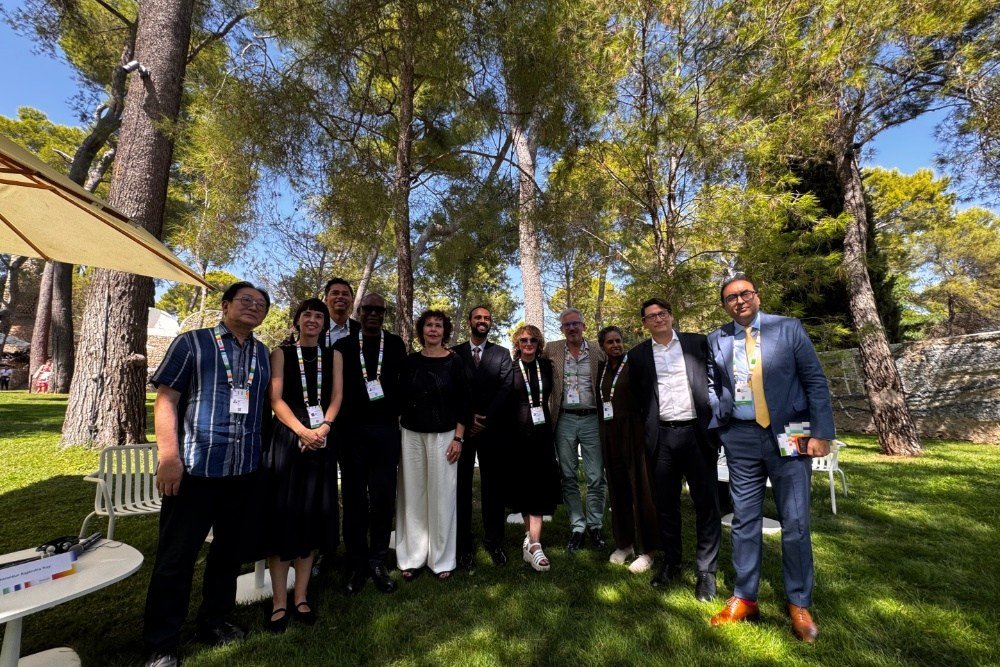
    Political pressure on film and television festivals emerged as a defining theme of a panel discussion Monday at the Lumière Summit in Saint-Paul-de-Vence, France, with Séries Mania general director Laurence Herszberg issuing the session’s most direct call for protection of programming autonomy.

    “We don’t judge artists by their passport, we judge them by their works,” Herszberg said.

    The panel, titled “Easy to Criticize, Impossible to Replace: Rethinking the Festival” and moderated by Rajendra Roy, chief curator of film at MoMA, brought together festival chiefs from Berlin, Cannes, Toronto, San Sebastián, Annecy, Mumbai, Durban, the Red Sea and South by Southwest. It covered three areas: audiences and community, how festivals relate to the media, and the mounting economic and political strains on festival leadership.

    Herszberg was direct on the political pressure facing her and her peers. “We feel more and more under pressure from different groups,” she said. “They might be politicians, they might be just people who disagree with the representation of some countries.” As general director of Séries Mania – a free-access festival with 1,500 seats – she said controlling who walks through the door is not possible. “We have to be protected, and we still have to go on and fight for the artists,” Herszberg said.

    Cameron Bailey, chief executive of the Toronto Film Festival, which launches its first formal market this year, echoed the sentiment. “Filmmakers are not their nations, and shouldn’t be treated as such by anyone,” Bailey said. He recalled joining TIFF as a programmer in 1990, “at a time when festivals felt like a completely free and open space.” Bailey pointed to TIFF’s Next Wave youth program – now 15 years old – as a long-term investment in building young audiences. “‘Obsession’ became one of the biggest sales at a film festival in a long, long time,” Bailey said, noting that Next Wave participants had championed the title. On the rationale for TIFF’s new market, Bailey said: “The market is also part of that ecosystem – I mean, a terrible way to put it would be that it’s the fertilizer of the ecosystem, but really, it’s what feeds” a constant supply of ambitious films.

    Berlinale festival director Tricia Tuttle, whose event drew 450,000 admissions last year, and was at the eye of a political storm, put audience development at the center of her contribution. “The answer for me to all of these challenges is to really think about audiences,” Tuttle said, adding that reaching people who are not yet passionate cinemagoers matters as much as serving those who are.

    Cannes president Iris Knobloch pointed to the breadth of her festival’s annual gathering – 40,000 accredited participants from 140 countries, with over 4,000 journalists in attendance. “For me, that is the real shining light on films and the talent all over the world,” Knobloch said.

    Faisal Baltyuor, chief executive of the Red Sea Film Foundation, said his organization’s last edition sold out every screening. “We have a lot of creative talents that need that boost to make it to the international stage,” Baltyuor said, noting that 11 films the Foundation supported appeared in Venice and eight were heading to Toronto.

    On the festival-press relationship, Peter Debruge – now director of the South by Southwest Film & TV Festival after a 20-year tenure at Variety, the last ten as chief critic – put the case for studio films serving discovery. “The studio-level films are the sizzle that brings the attention, the press, and the audiences to the discoveries,” Debruge said.

    Maialen Beloki, deputy director of San Sebastián, pointed to shrinking press resources as a structural problem. “Each year, media send less and less critics to the festival,” Beloki said. She added that the race to break news online carries its own cost. “We are losing our capacity to talk about the films with some time and with some respect,” Beloki said.

    Shivendra Singh Dungarpur, founding director of the Film Heritage Foundation and director of the MAMI Festival in Mumbai, said his screenings of restored films regularly attract between 1,000 and 1,400 people and that all MAMI events are free of charge. “I believe that a film festival has to be for everyone,” Dungarpur said. He described the MAMI Independent outreach initiative that partnered with a major cinema chain to bring independent films to cities across India ahead of the festival proper.

    Mickaël Marin, from the Annecy Animation Film Festival, said that since his appointment in 2018 he has worked to open Annecy to general audiences beyond its traditional professional base, including through a permanent exhibition space that opened last June. “We have a worldwide community of animation coming here in Annecy, from the school, from the student, up to the platform,” Marin said.

    Magdalene Reddy, director of the Durban FilmMart Institute, said the core challenge in Africa is not finding audiences but reaching them in the absence of sufficient cinema infrastructure. “For us, engaging with audiences is really going into the community,” Reddy said.

    When moderator Roy closed the session by asking whether festivals could survive without the American industry – demanding a yes or no – Reddy was the only panelist to answer no, while noting that her focus remains squarely on African content.

  • ‘Imperium’ Review: Sergei Loznitsa Brings Together Nearly Three Hours of Italian Footage From the Early 1970s Covering the Vastness of the USSR

    ‘Imperium’ Review: Sergei Loznitsa Brings Together Nearly Three Hours of Italian Footage From the Early 1970s Covering the Vastness of the USSR

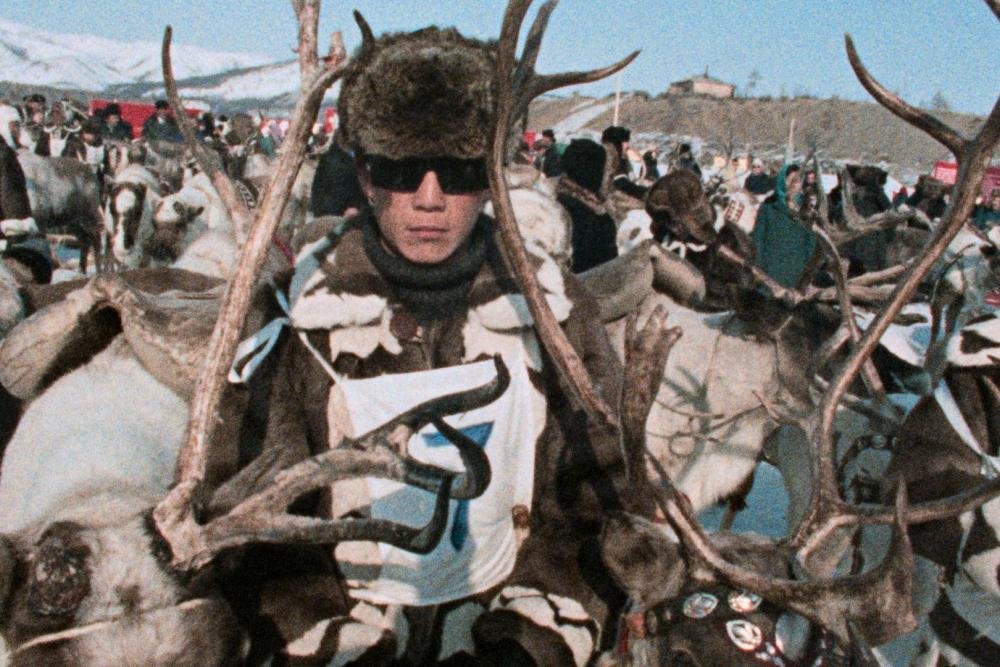
    In the early 1970s, Italian film crews spread out across the USSR, capturing a vast, multicultural empire few had ever seen in such diversity. From urban commuters to village fêtes, Baku trawlers to Siberian reindeer herders, the cameramen aimed to capture the Soviet polity at a time when Westerners had a gray, monolithic image of what lay behind the Iron Curtain. Granted official permission, they managed to resist any push towards propaganda, even finding ways to slyly critique a system that proclaimed regional autonomy but controlled everything from the Kremlin. While planned as a monumental, multi-chapter TV series, only a few episodes wound up being broadcast on Italian TV, just once, following which the endeavor lay forgotten in the archives. If ever there was a project for Sergei Loznitsa, this was it.

    In “Imperium,” working with 60 hours of 16mm, the master documentarian organizes this journey along geographic lines, starting in Moscow and heading east, then doubling back through “the Stans” and the Baltic republics until ending in what was then Leningrad. As with Loznitsa’s past films of this type, some snippets of conversation and music have been added, but otherwise the footage has simply been restored and edited together. What’s revealed is an immense state whose distinct regions still managed to hold onto unique traditions, notwithstanding an incessant centralized proclamation of unity.

    While “Imperium” can be engrossing, its nearly three-hour running time is felt more than in Loznitsa masterpieces like “Maidan” and “State Funeral.” Perhaps that’s because in those films, one feels the force of history pushing us forward, inexorably heading to a watershed moment whose impact continues to resonate across the decades. With “Imperium,” the motivation is clear yet the concept is more diffuse. It’s also a film which will likely resonate best with those of us old enough to recall how the Soviet Union was discussed in the West at the time, a decade before Ronald Reagan’s “Evil Empire” remark — which simply gave a reductivist Star Wars moniker to the anti-communist propaganda suffusing American-driven global discourse since the end of the Second World War. For Loznitsa, of course, his interest is inside the country rather than how it was perceived from abroad, though it will be impossible for most audiences to separate the two.

    The film kicks off with a classic parade in Red Square for the 24th Congress of the Central Committee of the Communist Party, with banners touting the same slogans from the previous forty years about production targets being met ahead of schedule. Next comes the GUM department store and window displays with tuxedos, shiny patent leather shoes and beaded handbags, making us wonder who in early 1970s Moscow was buying such luxury goods. Commercialized religion makes its first appearance with a lively trade in Christmas decorations, one of many reminders that despite an official policy of atheism, certain traditions were allowed to persist. (Vladimir Putin, of course, has done an even better job in harnessing religion to his oligarchic dictatorship.)

    From the capital the footage moves east, where consumer goods are far more difficult to obtain. In Suzdal, an old woman washes clothes in an ice hole; shots of Vladimir show a town seemingly unchanged from pre-Revolutionary days; further south, residents come out for a winter carnival whose roots must date long before Leninism arrived. As the cameramen spread east, local customs become stronger: Bactrian camel races near the Mongolian border, reindeer sleds in the Sakha Republic. It’s here in Siberia where the footage most forcefully critiques Soviet policy, as a group of young Caucasian Russians (in classic 1970s fashion) play guitar and sing Russian songs, the local Yakut population looking on from the sidelines, discontented observers of this not-so-subtle form of colonialism.

    The greatest takeaway from “Imperium” is just how stubbornly resistant centuries-old traditions were to the Soviet push towards uniformity. People still attended mosques in Bukhara and churches in Etchmiadzin, they held on to ways of life that had not been collectivized by Stalinist dictates. Today, however, rampant capitalism and the internet have changed Russia’s social landscape far more than anything Lenin or Brezhnev could have imagined, turning stubbornly multicultural populations that boldly resisted homogeneity into consumers looking West for their acquisitions.

    It’s interesting to imagine what might have happened had Italian TV screened the majority of these films upon release. A sense of what life was really like in the Soviet Union was hard to come by then — in the U.S., a 1977 National Geographic publication “Journey Across Russia: The Soviet Union Today” was the first populist corrective to the sense of a uniform society of collectivized proletariat.

    Italy, with its strong communist party, had a different problem, too often refusing to acknowledge Politburo abuses. An interesting companion piece to “Imperium” would be Federico Ferrone and Michele Manzolini’s 2013 documentary “The Train to Moscow: A Journey to Utopia,” also consisting of found footage but earlier, when a party supporter from Emilia Romagna discovered that life in the USSR wasn’t all solidarity and freedom. At the time, his Italian colleagues censored his revelations. All empires peddle utopias, but why do so many people believe them?

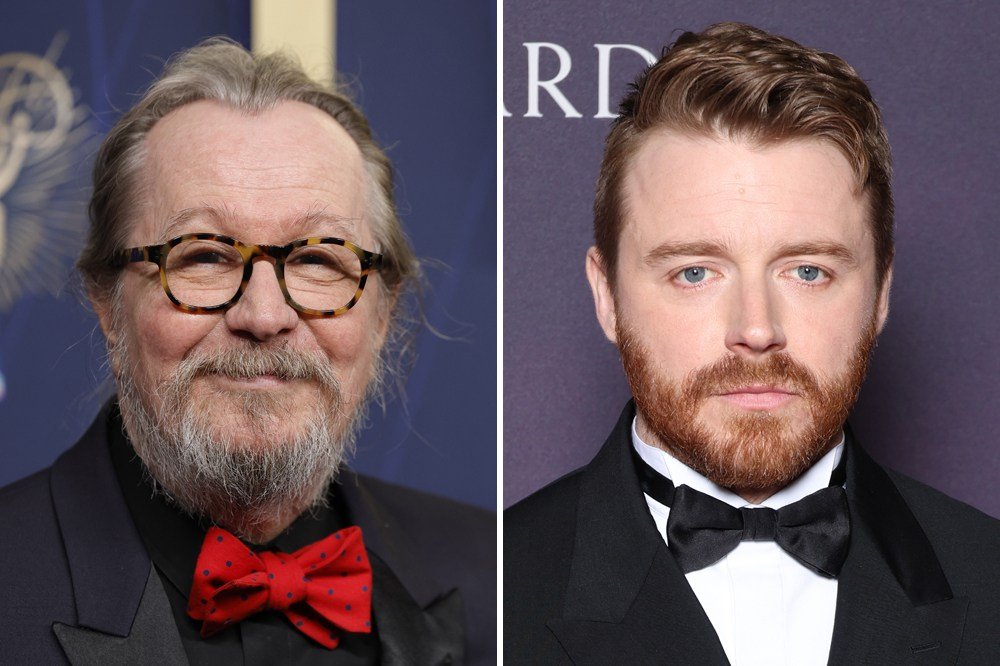
  • The Next James Bond Has Been Picked, Says Gary Oldman, Whose ‘Fingers Are Crossed’ for ‘Slow Horses’ Co-Star Jack Lowden

    The Next James Bond Has Been Picked, Says Gary Oldman, Whose ‘Fingers Are Crossed’ for ‘Slow Horses’ Co-Star Jack Lowden

    Gary Oldman‘s connection to the world of James Bond may be unknown, but the actor claims to have some key information about the casting of the next 007.

    According to the Oscar-winning acting icon, the hotly-disputed and widely-debated hunt to find the next superspy is over, and he’s hoping his “Slow Horses” co-star Jack Lowden is the name ready to be unveiled.

    “It’s been rumored that [Lowden] is on the shortlist,” Oldman said in an interview with Canada’s “The Morning Show.” “We’re going to find out pretty soon, aren’t we? Because they have picked him. They have made their choice, but they have not announced it yet. So my fingers are crossed for Jack.”

    Wild rumors have swirled for years over who is set step to step into the blood-splattered brogues of Daniel Craig, but with the next film set to go into production next year, speculation has ramped up considerably.

    While nothing has been confirmed as the casting is kept under arguably the tightest wrap of any film production, Callum Turner, Jacob Elordi, Aaron Taylor-Johnson, Harris Dickinson and Lowden have all been reported as among those in the final running. Variety wrote that there had been interest in Louis Partridge, while stage star Tom Francis had reportedly auditioned. Amazon MGM has repeatedly refused to discuss anything about who has or hasn’t been considered for the role.

    Denis Villeneuve is set to direct the next Bond film, which is being written by “Peaky Blinders” creator Steven Knight.

    Last month, Lowden’s wife Saoirse Ronan threw down the gauntlet to Bond producers about her being involved in the next film, telling Empire that she was “dead serious” about playing a Bond villain. “I think it would be really interesting, having a young female villain,” she said. “Especially for girls and women, to see someone who can just take all that pent-up anger and direct it somewhere, there’s something interesting in that dramatically. So I would love to do more of that.”

  • Belgian Royalty Series ‘King of Hearts’ Secures Key VRT Backing (EXCLUSIVE)

    Belgian Royalty Series ‘King of Hearts’ Secures Key VRT Backing (EXCLUSIVE)

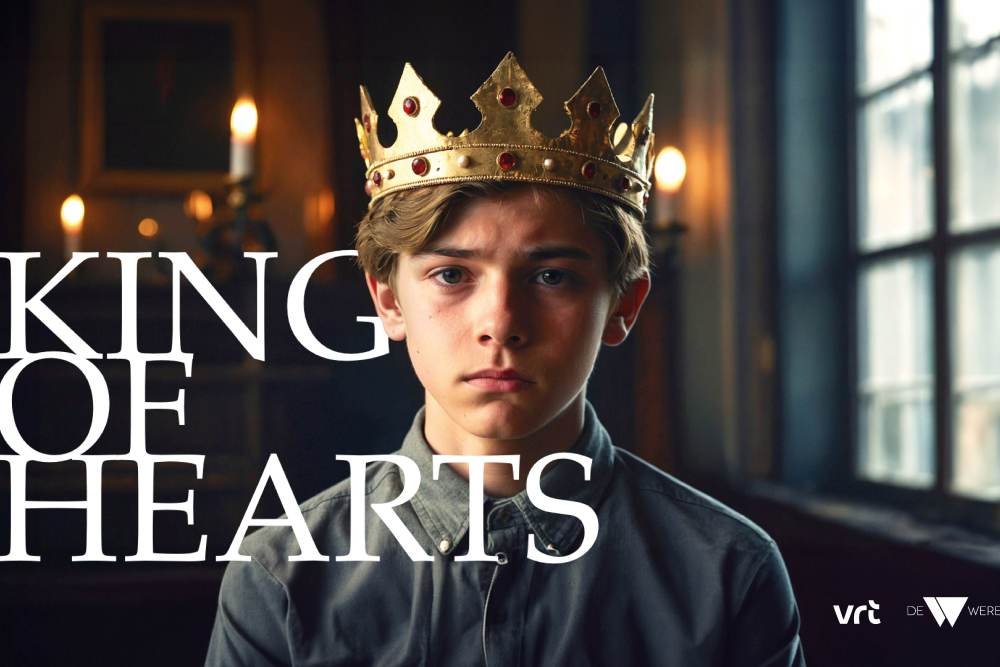
    Enterprising Flemish broadcaster VRT has boarded the historical coming-of-age drama series ‘King of Hearts’ from Giles Coulier, whose company, De Wereldvrede, is behind such hits as 2019 series “War of the Worlds” and Prix Europa winner, “Albatros.”

    As continental royalty series hit ratins and sales – think “Maxima” – “King of Hearts,” currently in development, has been selected to participate in the inaugural Euro-Atlantic Co-Pro Pitch program to be held at the Iberseries & Platino Industria confab in Madrid.

    Based on real events, the drama centers on Baudouin, introverted and insecure, who is made King before he is ready for the task. As Belgium descends into crisis and his family fractures around him, he is forced to confront the man and leader he wants to become. Under mounting pressure, he learns to make difficult choices, challenge his father’s influence and forge his own beliefs. But with power comes a darker temptation: to control others as he himself was once controlled.

    Later in life, he tries to protect his nephew Filip from the same painful path he went through. But he slowly realizes how hard it is to become a better man than the father who raised him.

    “We are thrilled we can once again work on a fiction series that sheds light on an important chapter in our recent history. As a public broadcaster, we believe it is essential to tell these stories, but always through emotionally compelling, surprising and strong storytelling,” said Elly Vervloet, VRT international drama expert.

    “’King of Hearts is the coming-of-age story of King Baudouin, who, as a young and unprepared prince, had to ascend the throne at a politically very delicate moment for our country and the whole world. We see him struggle to find his own voice, torn between power and responsibility, manipulated by people around him with their own agendas. We are thrilled that the producers and creators of De Wereldvrede approached us with this story, so that we can develop it further together into an ambitious and emotionally resonant series. We hope to bring some strong international partners on board to bring this fascinating story to audiences far beyond Belgium.”

    For producer Gilles De Schryver, who co-founded De Wereldvrede with Coulier in 2013, “King of Hearts” is by nature an international story. “It moves between Brussels, Leopoldville, Rome and Madrid, intertwining Belgium’s monarchy with Congolese independence, Cold War geopolitics and Catholic influence. It is designed as a high-value prestige drama with global story reach and appeal only an international co-production can deliver.”

    The project has secured script funding from the Flanders Audiovisual Fund (VAF), with a further VAF application pending.

    According to the partners, De Wereldvrede’s “mission is to produce high-quality fiction for an international market, with a strong emphasis on the creator’s vision and a bottom-up production approach.”

    The company broke through with the TV series “The Natives” (CANVAS), followed by Coulier’s feature film “Cargo,” which screened at numerous international festivals. Their short films have also earned recognition, including “Stephanie,” an official Cannes selection and winner of the Ensor for Best Short Film, and the series “Lockdown,” which won an award at Canneseries. “Roomies” (2022) received international acclaim.

    In 2024, the features “Holy Rosita” and “Julie Keeps Quiet” premiered internationally, earning numerous festival selections and awards. “Julie Keeps Quiet” premiered at Cannes Critics’ Week and was selected as Belgium’s official Oscar entry. Both films won five Ensor Awards.

    In October 2025, the second season of “Roomies,” by Kato De Boeck and Flo Van Deuren, premiered at Film Fest Gent to five-star reviews.

    Nathalie Teirlinck’s second feature, “Jonah Was Here,” is currently in post-production, while Pieter Van Hees’ latest film, “Alors on Danse,” is in advanced development and scheduled to shoot in summer 2027.

    De Wereldvrede is also developing several other projects, including the feature films “Harvest,” “The Right to Say Goodbye” and “Dirty Kids,” as well as the fiction series “Recidive” and “Beats of Love.”

    The 6th Iberseries & Platino Industria runs September 29 to October 2, 2026.

  • ‘Sumo: Spirit Weighs Nothing’ Review: A Handsome Ode to an Oft-Disrespected Sport

    ‘Sumo: Spirit Weighs Nothing’ Review: A Handsome Ode to an Oft-Disrespected Sport

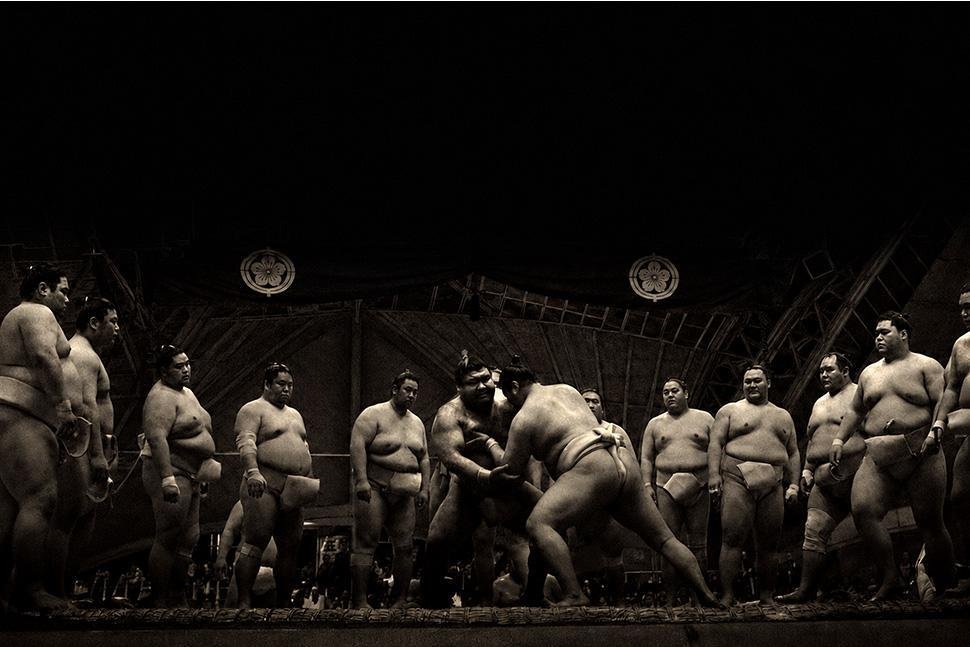
    The title of “Sumo: Spirit Weighs Nothing” is the closest that Erik Shirai‘s documentary comes to a joke at the expense of its subject: sumo wrestling, the Japanese sport largely known in the western world for the ample size and minimal clothing of its practitioners, and not an awful lot beyond that. In all other respects, however, this stately, artfully produced film aims to act as a corrective to such cheap, culturally insensitive perceptions. Examining as it does the motivations and ambitions of a number of sumo wrestlers, from grand masters to rising stars, through a solemnly respectful lens, the doc finds humanity and even beauty in what can all too easily be comically framed on screen.

    Indeed, the approach of Japanese-American docmaker Shirai (who previously probed a very different Japanese institution in his popular 2015 doc “The Birth of Saké”) is so respectful as to feel a touch sanitized: smoothed-out and simplified for the benefit of Western viewers, to whose perspective the film is mostly tailored. More unsavory aspects of the sport — including controversies over hazing and match-fixing, not to mention its ongoing exclusion of women from competition and ceremonies — are swept aside, while the compelling fact of its declining popularity in Japan is only passingly addressed. Only before the closing credits roll is it revealed how few yokozuna (the name given to men achieving the highest rank in sumo) this century have been homegrown, as Mongolia and the U.S. step into the breach.

    Shedding more light on such matters would provide a richer context for the film’s reverent celebration of sumo tradition, but many viewers will still find it an illuminating and exquisitely mounted study, ennobling the sport with the sheer, studied splendor of its imagery, captured alternately in atmospherically high-contrast monochrome and tea-stained sepia tones. Produced by ESPN Films, it will doubtless find a dedicated broadcast and streaming viewership following its premiere as the opening film of Venice’s audience-oriented Spotlight competition.

    Early on, the camera observes a group of rookie wrestlers, training at the Tokyo stable of 62-year-old Master Sakaigawa, as they collectively recite a pledge to the sport: “We shall uphold our responsibility and duty to to sumo; we shall uphold a strong heart, kindness and courage.” This is followed by a droll shot of trainees all putting their freshly laundered thongs out to dry: For all its earnestness, the film is not without offhand humor. In the house of Sakaigawa, we meet Hiradoumi, a 24-year-old upstart tipped for big things in the ring (or dohyō, to use its proper term), and a great hope for continued Japanese representation in the sport’s top tier. In the same stable, and younger still, is teenager Yonezawaryu, still learning the ropes, and battling doubts over his long-term commitment to sumo after witnessing firsthand the extreme, potentially fatal, physical toll it takes on the body.

    At the opposite end of the career scale is Mongolian-born Terunofuji, who at the time of filming was the only practicing yokozuna in sumo, a 10-time title winner considering retirement after 14 years in the sport, five of them at the very top. He is spoken of as a veteran, positively godly in status, though he’s only 33 years old. Age, however, doesn’t mean quite what it does to civilians in a realm where so much transformational strain is placed on the body, and Terunofuji’s is beginning to fail him. “By doing sumo, I’m cutting my lifespan by 10 to 20 years,” he frankly admits, before likening the travails of the professional wrestler to those of a soldier going to war. He’s now married with a son — it’s hard not to wonder if, at the end of his reign, he thinks it was all worth it.

    It’s one of a few questions that this handsome, sober documentary is too polite to ask. But it does convey the grand, challenging physicality of sumo, which to many of its students qualifies as an answer in itself. There’s also a thoughtful focus here on the pain and labor that goes into building and maintaining these extraordinary bodies — shot, by Shirai and fellow DP Hiroshi Hara, in awed chiaroscuro portraits that line up with the men’s view of themselves as warriors of a kind, leaving far behind many racist, cartoonish depictions of yore.

  • ‘Into the Breach’ Review: Star-Studded British Theater Doc Needs More Time to Serve Its Sprawling Subject Matter

    ‘Into the Breach’ Review: Star-Studded British Theater Doc Needs More Time to Serve Its Sprawling Subject Matter

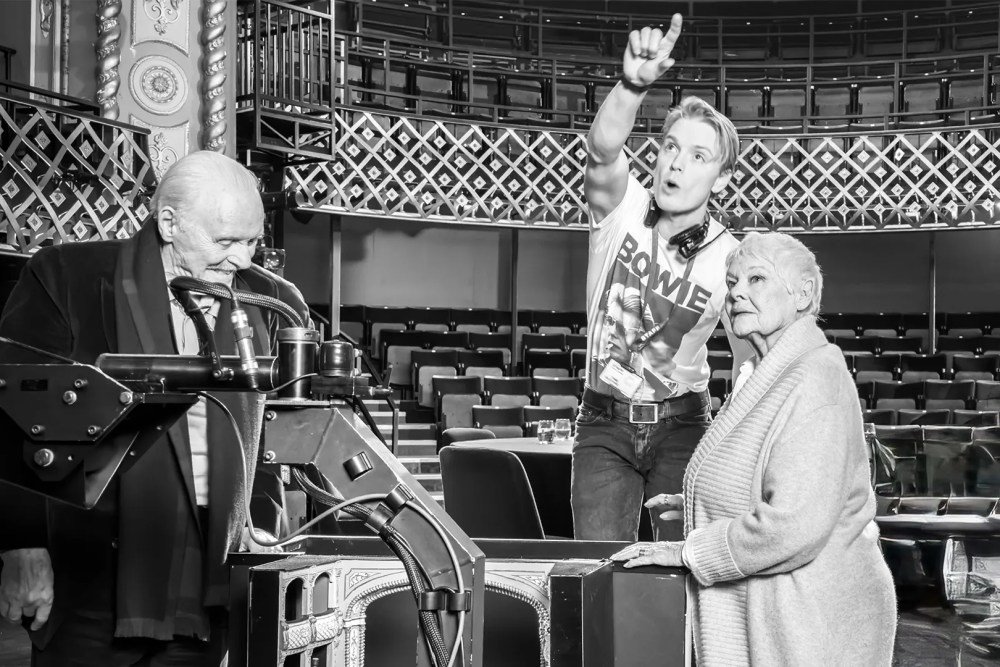
    The self-professed “story of a theatrical revolution and how it shaped a nation,” Freddie Fox’s documentary “Into the Breach” attempts to chronicle the impact that British theater has exerted on art, culture and politics over the last century. Assembling a roundtable of acting legends that includes Judi Dench, Anthony Hopkins, Gary Oldman and co-producer Kenneth Branagh, Fox injects anecdotes and insights into a history lesson written by Richard Fullerton that, for better or worse, invites more curiosity than it satisfies. Suffice it to say that these are performers who are not only full of great stories but know how to tell one. Yet the film’s obligation to historical detail renders slightly bland what could have been a tasty trip through 20th-century theater.

    Backtracking to the beginning of the 1900s, Fox catalogues the major players who defined, and in many cases changed, British theater: Lilian Baylis, Derek Jacobi, John Gielgud, Paul Robeson, Claire Bloom, Laurence Olivier, Joan Plowright, Richard Burton — the list is considerable. Baylis, a producer and manager, pioneered Shakespeare at the Old Vic theatre in Waterloo, the eventual site of London’s storied National Theatre. Among the performers who became famous on its stage were Gielgud (an eventual EGOT winner) and Olivier, as well as Michael Redgrave and Ralph Richardson. Later came theater director Peter Hall, impresario Andrew Lloyd Webber and performers such as Peter O’Toole, Helen Mirren and Stephen Rea.

    As Fox charts their accomplishments, the panel looks back at their professional and personal intersections with them, from compliments to rebuffs. As necessary as the broader context may be, it’s the personal stories, big and small, that resonate and reveal the most. Gielgud was arrested in 1953 for homosexuality at a time when it was illegal in Britain, and he feared that it would ruin his career; his transgression was reported by the press, and it took the support of his costar Sybil Thorndike to help him go out on stage that night. Rather than a rebuke, Gielgud received a standing ovation, highlighting the almost transcendent affection that some of these performers generated from their fans. Meanwhile, despite treating Hopkins with cheeky kindness early in the future Oscar winner’s stage career, Olivier earned a reputation for cruelty.

    Further, rivalries like the one between the British theater community’s two pillars, the National Theatre and the Royal Shakespeare Company, could probably provide enough material for a film on its own. While the National Theatre Company, founded by Olivier, focused heavily on classic material, the RSC, created by Peter Hall, took chances on a wide variety of challenging contemporary and even avant-garde material. Hall being named director of the National Theatre in 1973 was a devasting blow to Olivier, but the film moves on fairly quickly in order to ensure it covers what is, admittedly, a lot of material. Plowright’s adulation of her husband Olivier is sweetly affecting, but let’s hear more about the many young actors, themselves now household names, whom he dismissed or dressed down in their nascent years.

    Fox traces the community’s sociocultural impact with moderate efficacy — not just the introduction of plays like John Osborne’s “Look Back in Anger,” which marked a shift in focus on working-class characters, but the campaigning and promoting for gay rights by figures like Ian McKellen. Former prime minister John Major, for example, recounts how a meeting with McKellen over the issue permanently changed his perspective, leading to new legislation. (McKellen, on the other hand, remembers identifying that Major was the only straight person in the room where they met, even if his counterpart wasn’t aware.) Stephen Rea’s Irish acting troupe, meanwhile, explored the complexities of the Troubles in their work, spotlighting the conflict in new ways. And British theater was a receptive community for African American actor Paul Robeson to demonstrate his incomparable stage presence after he struggled to find work in the U.S.

    Extraordinarily, but perhaps unsurprisingly, many of the roundtable participants are able to recall meaty chunks of dialogue from plays they did decades before, and cheerfully deliver them here to the admiration of their colleagues — who in several cases were present to witness their original performances. Upon remembering Hopkins playing Lambert LaRue in “Pravda,” a role that reportedly helped him land the part of Hannibal Lecter in “The Silence of the Lambs,” Oldman says, “I knew I was in the presence of the one of the greatest performers of the 20th century.” With a laugh, Oldman also rhapsodizes about his acting heroes all being drunks, but the net result of the conversation is a thumbnail master class in inspiration and perspiration, about how these individuals became great actors.

    Though the film provides an overview of a century in this community and the cultural evolution of an art form, overall that’s all it can do given its single-serving running time. Give us a docuseries or an extended cut, please: There are so many different threads to follow – past or present — that, again, probably deserve their own films, or at least more of a direct focus. Thatcherism and its devastating effect on the theater community at the same time as the rise of Lloyd Webber-style spectacle certainly merits a more incisive look than it receives here. On top of the history itself, not simply sitting a camera in front of these acting legends — including some no longer around like Plowright — to hear as many stories as they would share about their life and work feels a bit like a missed opportunity. Ultimately, “Into the Breach” covers a topic of undeniable importance. But it doesn’t go into it deeply enough.

  • ‘You Can See Everything’ Review: Nathan Fielder’s Documentary About Elizabeth Holmes Is a Shameless, Fascinating, Reality-TV-Eats-Its-Tale Look at Entitled Duplicity

    ‘You Can See Everything’ Review: Nathan Fielder’s Documentary About Elizabeth Holmes Is a Shameless, Fascinating, Reality-TV-Eats-Its-Tale Look at Entitled Duplicity

    In a world where Lindsay Clancy can inspire an onslaught of sympathetic voyeuristic fascination, why not Elizabeth Holmes? Earlier tonight, the screening of an unannounced mystery movie at the Telluride Film Festival generated every bit as much pre-screening buzz as any of the big movies programmed here. And when the film was revealed to be “You Can See Everything,” a 174-minute documentary, co-directed by the cult comedian Nathan Fielder, about Elizabeth Holmes, the former CEO of Theranos who is now serving an 11-year prison sentence after being convicted of defrauding her investors, the sensation of “WTF? I’ve got to watch this!” did not subside as the movie went on. It only intensified.

    “You Can See Everything” is just about the furthest thing from a “pure” documentary you’ve seen. That’s part of its appeal — it’s a one-of-a-kind reality-TV-as-hangout-movie psychodrama circus. Yet it’s been made with a spirit of true inquiry, driven by Fielder’s acidly quizzical personality (as an onscreen interviewer, he’s got the most drop-dead deadpan since Steven Wright), and it gets its hooks in you.

    Fielder isn’t here to throw open the question of Elizabeth Holmes’ guilt. He wants to know what made her tick. But why, you may ask, is the comedian behind shows like “The Curse” and “The Rehearsal” making a three-hour movie about the woman who became America’s youngest self-made female billionaire by convincing the world that she’d created a revolutionary new means of blood testing? Holmes, after her conviction, stayed out of the public eye, but shortly before her prison sentence was set to begin she decided she wanted someone to document her last days of freedom. Maybe she wanted to have her say?

    Whatever the motivation, Fielder, who has often operated in a nether zone between fiction and reality, was looking for a project to collaborate on with Lance Oppenheim, a documentarian he’d become friendly with. And so, with the support of A24, and without quite knowing what they were after (or, by their own admission, what the hell they were doing), the two of them stepped into the breach. Thirty-five days before the start of Holmes’ prison sentence, in 2023, they brought a camera crew to the spacious wood-paneled beachside home in Del Mar where she was living with her partner, the California hotel heir Billy Evans, and their two children (including an infant daughter). Fielder was there to hang out, observe, and interview Holmes, trying to get inside her mind. That proved to be a weirder and wilder journey than anyone might have imagined.

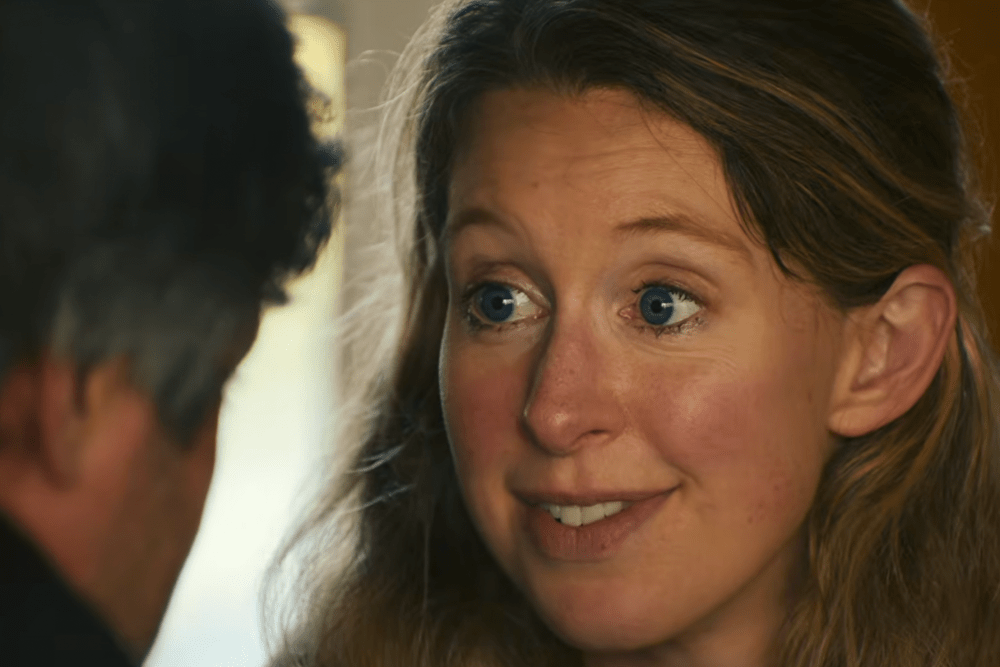
    The Elizabeth Holmes we see has a winsome soft presence, with a Cupid’s-bow grin and eyes that beam without blinking too much. She resembles the ’80s and ’90s actress Kim Greist, and has a manner that’s disarming in its gentleness. Yet when Fielder asks about the crimes she was convicted of, she pleads a strange kind of ignorance. She claims she did nothing wrong, and it’s clear she believes it. But how is that possible?

    In 2015, Holmes had become a celebrity entrepreneur, based on the $9 billion valuation of her health technology company, Theranos — a company that turned out to have been built on a complete scam. For a brief time, Holmes convinced the world that she’d developed a revolutionary device for blood testing that required very small volumes of blood, such as the amount you’d get from a pinprick. She convinced top-drawer investors (including Rupert Murdoch and Larry Ellison) to pour millions of dollars into the company. For credibility, she assembled a board of directors that included such ancient luminaries as George P. Shultz, Henry Kissinger, and James Mattis. There was only one problem: the “revolutionary” technology didn’t exist.

    Numerous experts, starting with the Stanford medical professor Phyllis Gardner, told Holmes that her idea wouldn’t work; you couldn’t mine voluminous amounts of data from just a few droplets of blood. But Holmes, along with her business partner, Ramesh “Sunny” Balwani (who was also her romantic partner), sold the deception anyway. For a short while they were quite “successful” at it, though in hindsight it’s clear that the castle in the air they built — all spun out of the trendy idea that medical science could be democratized — was destined to crash and burn. Because it was all made up! Holmes had spun the pinprick idea out of her own fear of needles. This was her fantasy, elevated into an invention that didn’t actually exist.

    So how can she defend herself now? What she tells Fielder, with an implacable conviction that suggests a belief in her own narrative that’s nothing short of monomaniacal, is that the device patented by Theranos, which she sold as “the iPod of health care,” could, in fact, host any blood test that existed. The only thing they hadn’t quite worked out was the chemistry that would go into the tests. In other words, the device was based on the projection of a technology that didn’t exist yet. But the more Holmes talks to Fielder, the more he teases out her unhinged rationale, which is: The device works fine! We just had to figure out that pesky chemistry stuff! The strange thing is that Holmes has such a corporate mindset that she treats the chemistry stuff…that hadn’t been invented yet…as just another glitchy small problem that could easily be solved. (Have the solution on my desk Monday morning!)

    She believes her version of reality. But Fielder, who is not taken in by any of this (his questions remain rigorous in their skepticism), at one point gives vent to his impish side by showing Elizabeth and Billy the famous Abbott and Costello routine “Who’s on First?” When it ends, he tries to get Holmes to explain what the joke is (that “Who” is the first baseman’s name, but the name sounds like a question — hence the routine’s glorious verbal slapstick). And she can’t do it; she can’t grasp the joke. It’s not just that she lacks a sense of humor (though frankly, she kind of does). It’s that she’s got the malignant narcissist’s need to have words mean only what she decrees them to mean. She can’t hear any other meaning. Hence: her device did “work,” and still does (it can run any test!). That’s why she and Bobby, years after her conviction, are still pitching Theranos to other investors (as if anyone would go near her). This is a highly rarefied level of delusional thinking.

    Holmes says to Fielder that she’s never told a lie in her life. Her whole vibe is “sincerity.” (Though it’s also one of passive-aggressive unbroken-eye-contact creepiness.) The lesson of her legal case isn’t just that she was found guilty of defrauding investors, but that her faulty device, had it been put on the market, would have hurt people. That’s why the real question “You Can See Everything” is asking isn’t: Is she guilty? Rather, it’s: What makes people like Elizabeth Holmes tick? (And how many of them are out there?) Fielder and Elizabeth and Bobby sit down to watch the 2022 Hulu miniseries “The Dropout,” which was based on the case, with Amanda Seyfried giving a pointed performance as Holmes. Holmes suggests that the series is a TV-movie crock. But is it?  

    The documentary’s first half ends with Holmes saying goodbye to her family and going off to the minimum-security Bryan Prison in Texas. The prison won’t allow anyone to interview her, so that’s more or less the last we’ll see of her. And we’ve pretty much gotten the skinny on her, which is that she has a brick wall standing between herself and the truth, and an indifference to the harm she might have caused, that borders on the sociopathic. So what is there left to discover?

    Plenty, it turns out. With Holmes out of the picture, Fielder needs someone to sustain her presence. So he calls Amanda Seyfried, who sits and watches the scene we’ve just seen of Holmes sitting and watching Seyfried portray her. Are you feeling the meta of it all? That sounds gimmicky, but as the documentary goes on, and Fielder creates transcripts of things that Holmes has spoken (including a phone chat he has with her in prison), who better to read the transcripts — to turn this reality into theater, and by doing so to turn it back into reality — than Amanda Seyfried? She gives an increasingly accurate performance as Holmes, getting inside her head, to the point that Seyfried starts to sympathize with her, at least when it comes to what a glowering aggro control freak Holmes’ partner Bobby is. As Bobby continues to make himself accessible to the filmmakers, exposing his dark side at every turn, I was afraid the movie might use him to create a kind of toxic excuse for what Holmes did.

    But part of the jaunty power of “You Can See Everything” is that the film never mounts an apologia for Elizabeth Holmes. Bobby may be repugnant in his cockiness, and in the way he takes control of Holmes’ image, allowing the iconic photograph of her making the “OK” sign to be used on billboards, tweeting out hostile tweets under her name, and striking a deal with the A24 executives — yes, there’s a meeting with them in the movie, at which point we’re either in meta heaven or hell — that will give him some of the profits from the movie. Does Holmes know about the deal? No. But she claims to want it that way. Her grand assertion is that she never cared about the money. And yet the money — the value of her company — became the very core of her identity. “You Can See Everything” overlaps reality, performance, deception, and mental illness, and by the end it brings you to the enigmatic space where every one of those things meet.

  • ‘The Inbetweeners’ Original Lead Cast Confirmed for Netflix Reunion Movie as Production Kicks Off in U.K.

    ‘The Inbetweeners’ Original Lead Cast Confirmed for Netflix Reunion Movie as Production Kicks Off in U.K.

    The original lead cast of cult Brit teen comedy series “The Inbetweeners” are officially back for the upcoming reunion movie at Netflix, which the streamer has confirmed is now in production.

    First reported last month, the new film has now been given the title “Inbetweeners 3,” following on from the hit show’s two record-breaking spin-off features.

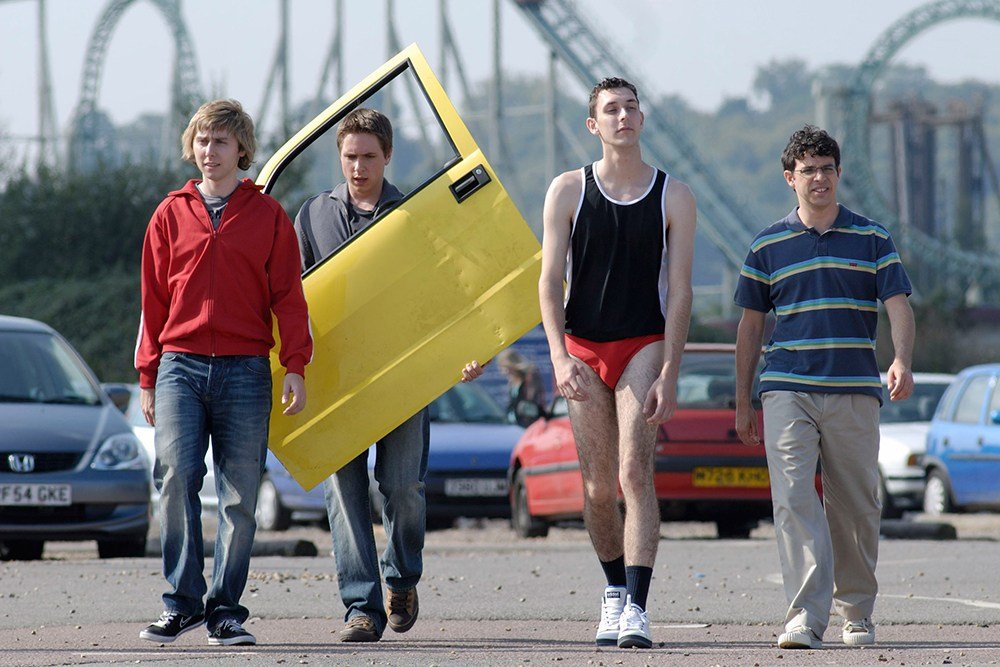
    Simon Bird, James Buckley, Blake Harrison and Joe Thomas will reprise their roles as Will McKenzie, Jay Cartwright, Neil Sutherland and Simon Cooper, with “The Inbetweeners” creators Damon Beesley and Iain Morris returning to write and direct the film.

    “It’s been super-fun hanging out with our friends again, and we’re going to work hard every week to ensure there are no problemos making this new film for humans,” said the directors.

    The film will be produced by Claire Jones alongside Banijay’s Patrick Holland and Fudge Park Production’s Mark Lesbirel. Caroline Levy, Caroline Leddy, Phil Gilbert, Suzanne Knight, Tom Jordan, Farhana Bhula, Morris and Beesley will serve as executive producers.

    Originally broadcast on E4 in the U.K. between 2008 and 2010, “The Inbetweeners” followed the misadventures of suburban teenager MacKenzie (Bird) and his friends Cooper (Thomas), Sutherland (Harrison) and Cartwright (Buckley) at the fictional Rudge Park Comprehensive as they navigated school life, friendship, male bonding, lad culture and failed sexual encounters. It was originally conceived as a more realistic counterpoint to fellow hit Brit teen show “Skins.”

    After three seasons, two hit movies followed, released in 2011 and 2014 respectively. The first set a record for the biggest opening weekend for a U.K. comedy at the time of its release while the sequel also broke box office records.

    The news comes less than a year after rights holders Banijay U.K. revealed that it had struck a deal with Morris and Beesley and their Fudge Park Productions that, at the time, they said “paves the way for the return of the hit comedy title.”