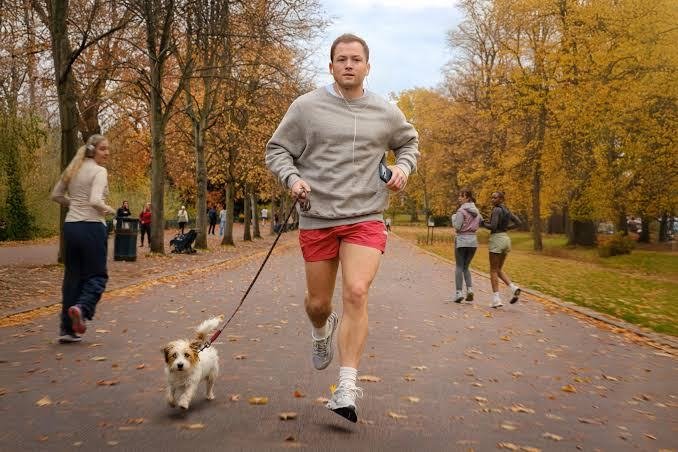
Just when the victim/villain discourse about sleeper smash “Obsession” was finally beginning to die down, along comes “Everybody Wants to Fuck Me” — another story of a young man’s desires getting violently over-satisfied — to start it all up again. Merging romantic comedy, body horror and gender-war satire as casually as its handsome, outwardly affable protagonist gets women into bed (and then, crucially, out of it), this limber first feature from British writer-director Jonathan Schey is alternately silly, nasty fun for much of its running time, carried by a performance of witty good sportsmanship from Taron Egerton, though it’s occasionally hobbled by sexual politics that are slightly less progressive than it seems to think.
Following a hot-ticket premiere at Toronto — where a queue snaking fully around two city blocks proved the value of that deliciously grabby title — “Everybody Wants to Fuck Me” has all the makings of a viral conversation piece once it gets out into the real world, though its genre bait-and-switch move may divide viewers, as the initial promise of a smart, relatable modern-romance study takes a hard-left turn into supernatural territory, complete with inflamed STI imagery to make David Cronenberg proud. (Hey, depending on who you’re talking to, that’s modern romance too.) But that harder-edged novelty should serve Schey’s film well in a market that’s less accommodating of old-school romcoms: As a debut, it’s especially slick and canny, heavily indebted to recent Scandi relationship comedies in its arch tone and playful style, and Schey could follow it down any number of plausible commercial paths.
It’s the poster for Agnès Varda’s feminist touchstone “Cléo from 5 to 7” on his bedroom wall that immediately raises questions about personable, clean-cut Adam (Egerton), and you can practically see them whirring through the mind of Liv (“How to Have Sex” star Mia McKenna-Bruce, in a too-brief cameo) when she wakes up in his bed one sunny Sunday morning. Great film, sure, but is he actually a fan? He might be: He’s urbane and intelligent, works as an associate in a private London gallery dedicated to showcasing female artists, and carries his things around a blue Mubi tote that will get a guffaw of recognition from any industry-adjacent audience.
But it could as easily be a performative signal, like the books by Ottessa Moshfegh and Edna O’Brien on his shelf or the adorably scruffy, heterochromic dog named Alana (yes, after Haim) that he walks every day in Victoria Park — accessories that advertise to women his sensitivity, his sophistication, his sharing of their interests. We’ve already seen that Adam is a smooth operator in that regard. In the film’s opening scene, he picks up Liv at a club by intervening when another man is pestering her, pretending to be her boyfriend to fend him off; it’s a nice-guy ploy that secures a one-night stand, though she’s baffled by his standoffishness in the cold light of day.
That’s just his routine, however. His WhatApp is a sea of young women similarly seduced and abandoned: The only member of the opposite sex he’ll go out with more than once is his lesbian bestie Emma (Charly Clive), who rolls her eyes at his exploits, but also, as a shacked-up woman with a baby on the way, vicariously lives through them a little. Significantly less forgiving, however, is Sofia (a scintillating Jessica Henwick), the cynical academic type he tries to pick up at the theater, and who calls him out on pretty much all his shit from the get-go, spitting out the script’s most immediately quotable line: “Men don’t actually like women — they just want women to like them.”
Against all odds, she invites Adam back to her place, where her take-control attitude both confuses and excites him, and the night gets blurrier from there. The next morning, she‘s the one who’s ghosted him, and from then on, nothing quite feels right, even though he’s suddenly sending out pheromones that appear to make him absolutely irresistible to women. Even by his promiscuous standards, his body count soars; simple eye contact, it seems, is enough to seal the deal. So why isn’t he having more fun? Why does it feel like he isn’t actually doing the work here? And what’s that purply welted rash forming down in his crotch? Schey deftly builds this uncanny turn of events by degrees, in such a way that we’re initially unsure if Adam is simply delusional, but also isn’t shy of exploring its most extreme possibilities for darkly farcical purposes. Suffice it to say that incest isn’t off the table.
Egerton’s initially cocksure, steadily more frantic performance does much to sell this absurd pivot, lending proceedings a recognizable human factor throughout: We all know men a bit like Adam, who aren’t the worst but are also pretty far from the best, who may not be overtly toxic themselves, but don’t recognize the toxicity inherent in their advantaged social status. “Everybody Wants to Fuck Me” allows us to feel a little sorry for him, while also relishing the spectacle of him being put through the wringer a bit — especially as the film’s grosser horror instincts take over.
It’s just a bit of a shame that Schey’s script winds up advocating for a pretty staid alternative to his behavior in Emma’s thoroughly domesticated monogamy and imminent parenthood: There are safe, fun, equitable ways to, well, be a horny little devil, and this lively, zesty, thoroughly enjoyable comedy could spend a little more time exploring the options and playing the field.
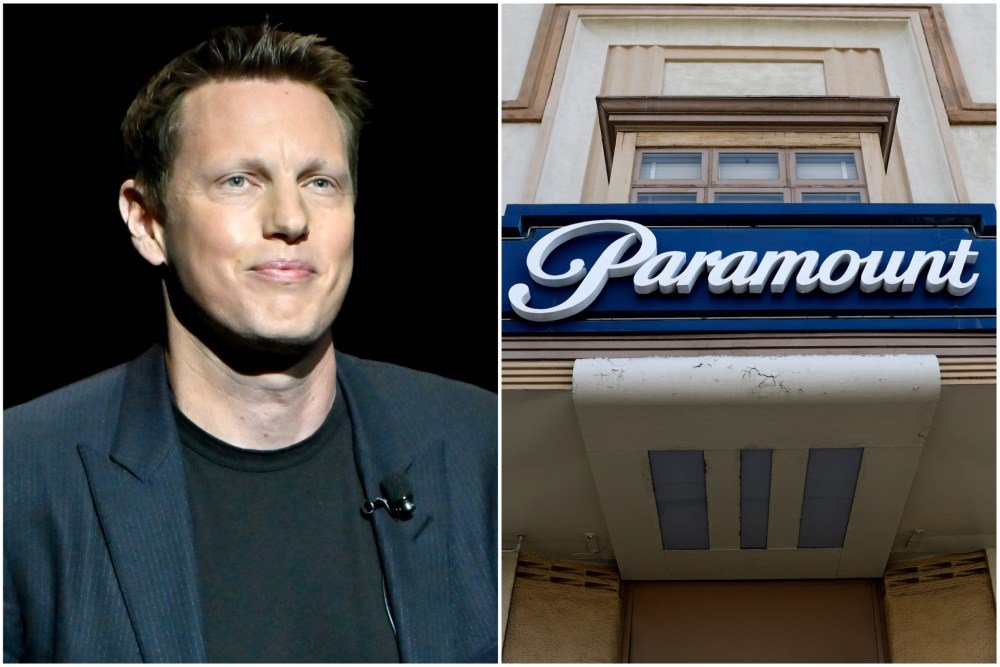
A leaked report from the Los Angeles Economic Development Corporation outlines devastating aftershocks that would follow if David Ellison pulled Paramount Skydance out of California.
A copy of the report published by Politico reads, “At a minimum, relocating Paramount’s headquarters and other operations out of California would result in losses of 2,750 and 5,550 job-years in California across all industries and losses of between $1.01 billion and $2.03 billion in economic output between October 1, 2026, and September 30, 2031.”
Reps for Paramount had no comment on the matter.
In August, news broke of Ellison’s plan to take Paramount Skydance out of the Golden State if California Attorney General Rob Bonta and a coalition of other state AGs did not come to the bargaining table and settle their lawsuit to stop the $111 billion merger between Paramount Skydance and Warner Bros. Ellison gave the AGs until Oct. 1, or he would start packing. The company is considering states such as Georgia, Texas and Tennessee.
The report went on to outline some big-picture stats for if and when Paramount Skydance completed the move: “Once Paramount completed the entire relocation of its headquarters and other operations out of California, the state would experience the permanent loss of approximately 28,990 to 57,980 full-time jobs statewide across all industries, and losses of between $10.6 billion and $21.2 billion annually in economic output.”
On Oct. 1, Paramount Skydance will have to start paying a “ticking fee” to Warner Bros. Discovery shareholders of $7 million a day until the deal closes. The trial between Ellison and the AGs is scheduled to start on March 2, meaning that without a settlement, Paramount is on the hook for about $1.3 billion to WBD shareholders.
In late August, progress toward a settlement seemed promising after Bonta and Ellison scheduled a meeting on Aug. 24. In a last-minute move, Bonta canceled the meeting, accusing the Paramount camp of leaking details of their discussions. Paramount denied the accusations, but Bonta did not relent, saying in a statement he won’t return to settlement talks until they put a “lid on their lying leaks.”
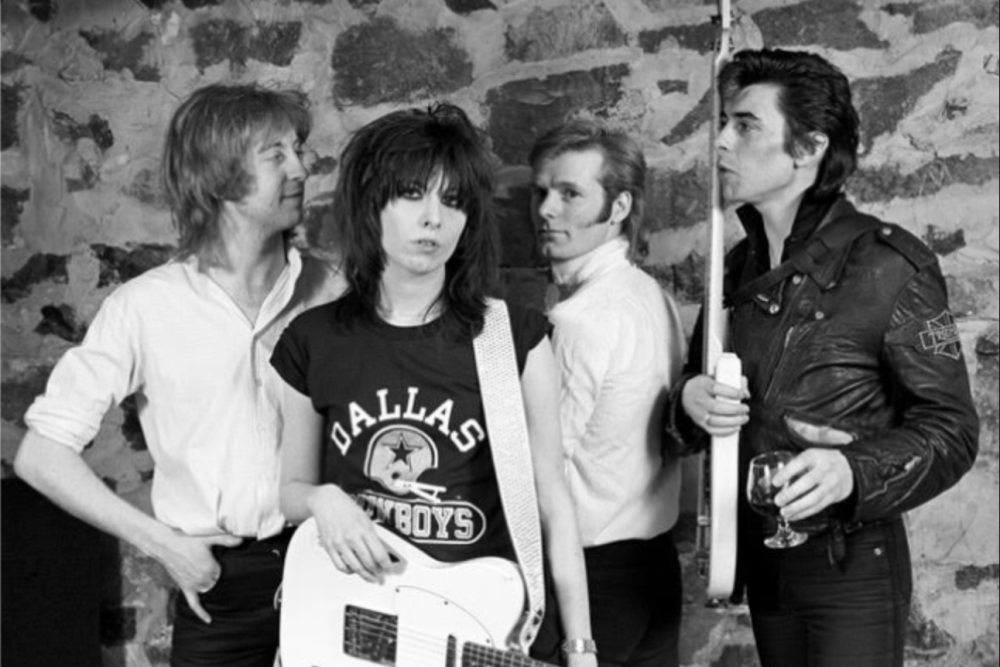
At this late date, what the Pretenders accomplished is no mystery achievement. But it’s also a story that has never been extensively chronicled on film until “The Pretenders,” a Joss Crowley-directed doc that premieres Sunday at the Toronto International Film Festival. The band released what might rightly be considered the best rock ‘n’ roll debut album of all time in Janauary 1980, and Crowley’s film covers the lead-up to that — Chrissie Hynde looking and acting like a biker chick in late ’70s Akron before moving to and finding her real gang in the U.K. — and the tumultuous few years that followed, with further masterpieces arriving alongside band dismisals and deaths. Although the focus is on the original lineup and the first five years, it brings us into the present day of Hynde, still one of the greatest to ever pick up a guitar.
As delightfully plain-spoken as Hynde is when you get her to sit down and talk, she can be to get into that chair, as a naturally camera-shy personality, so Crowley’s film is particularly useful in further immortalizing a subject who never wanted to be anything more than an ordinary musician, whether “rock goddess” was quickly and eternally thrust upon her or not.
Variety spoke with Crowley and the delightfully tart-as-ever Hynde in advance of the Toronto premiere.
Most of the time with modern music documentaries, it’s the artist or their company instigating the doc, and usually co-producing it. But it sounds like that’s not necessarily what happened this time because, Joss, you’ve talked about the difficulty in talking Chrissie into it.
Joss Crowley: I’ve been trying to work with Chrissie and tell the Pretenders’ story for over 10 years, and kept knocking at the door; didn’t get an answer. It was just a question of right time, right place, and Chrissie came round to the idea of meeting me. We sat down and talked about some of the docs I’ve made, and about other things, trying to find some mutual interests. I wasn’t really sure when I left that meeting how it had gone, but within about a week, we sat down and recorded our first interview, at the end of 2023.
Chrissie, you needed less than a week to think about it and get underway after that first meeting?
Chrissie Hynde: Well, we had to have a go and see how it would go, and I think I must have laid down some sort of ground rules, so I was willing to go into it — that it would be (visually focused on) archive footage, and really talk about the band and not focus too much on me, and it wouldn’t be about “women in rock” or any of that kind of thing. It would just be a story of the band. I was kind of keen to have it done because, as we all know, there’s documentaries on everything and everyone now. And in fact, someone else had already made a documentary on the Pretenders, which had nothing to do with me or my entire organization. I was starting to get calls from some of my old friends saying, “Oh, I’m gonna do your documentary on Tuesday.” And I’d be like, “We’re not doing a documentary!” This other team had gone in to people I know and made it sound like it was an official documentary. So I thought, “Well, if that’s happened once, that’s gonna happen again.” Either you want to do it and you want your story out, or you don’t, which I didn’t particularly, but if it’s going to be out, I’d rather know that it’s true.
Chrissie Hynde in ‘The Pretenders’
Courtesy TIFF
At the very end of the film, you’re heard talking a little bit about why you did it and you mention that you especially wanted to do it for James Honeyman-Scott [who suddenly died at the height of the band’s success in 1981], in some way.
Hynde: For me, a rock band is all about electric guitar, and I think he was one of the great guitar heroes. Over the years when I see lists of the greatest 100 rock guitar players, I never see Jimmy’s name. That’s all he was interested in, music and playing the guitar, and I thought he didn’t get his due and that would be important for him. He’s not here, so I thought I could do it for him.
It feels like the way the documentary turned out was kind a nice compromise in the end, since you didn’t want to be on-camera at all, but you were talked into being seen for the very last interview, so there’s a little bit but not a lot. You acquiesced a little bit.
Hynde: Yeah. I haven’t seen it, and I probably won’t. Someone said, “Oh, don’t say that! That sounds negative.” But I think a lot of people don’t like watching themself or listening to themself talk, and I don’t have to watch it, and there you go. It’s not negative. I mean, I’ve already lived through it, so I don’t think I wanna go through it all again.
I think so many people feel this way, and most people that I’ve ever had a conversation about it with do: they don’t like the sound of their speaking voice. I mean, I’ve had to get used to my singing voice because, you know, that’s kind of my shtick. But my speaking voice, when I hear it back, I’m always pretty horrified. And everyone I talk to feels the same way… People expect if you do it for a living, that you must like it, but that’s not necessarily true.
One of your quotes in here is, “I like being in a band, I just don’t like being observed. It’s a real problem.” A lot of people will relate to that, wanting to have a voice — figuratively — while not liking the attention that comes with it.
Hynde: I think so, because I think I represent just ordinary people, and that’s how I feel and that’s how I go through my life. You know, I get the public transport. I don’t live in a gated community. I’m just exactly the same way I always was, and I don’t want that taken away from me. I like hanging out. I’d rather sit on a doorstep and eat a slice of pizza than go to a fancy restaurant. I’ve always been like that, but I think most people are.
It has become more common in documentaries to have the subjects entirely off-screen. I was recently watching Paul McCartney’s Wings documentary, and his interviews in it are all audio-only, which is great most of the time. But at the same time you’re kind of like, “Well, just show him to me for 10 seconds.”
Hynde: Are you talking about “Man on the Run”? I loved that. In fact, I watched it sitting next to Paul when it was screening. He was singing along! I guess he’s so used to seeing himself. It was very moving for me to see Linda in the early days, even before I met her, and how cool and how beautiful she was… We’ve seen so many documentaries, it’s a matter of kind of getting away from the format. But, certainly, archive footage — we were lucky to have any for ours, because this was way before people had camera phones or were thinking much about taking photos.
Crowley: There was a big archive breakthrough when we found this cameraman, Andy Watt, who’s from Hereford, like the band really, and he joined the original band on tour about three months before Pete left and Jimmy died. [Bassist Pete Farndon was dismissed in1982 and died the following year; Honeyman-Scott died two days after Frandon’s firing.] He was able to document two weeks on the road in North America with the band, and that footage has never been seen. We found all 20 tapes of it, and they were in very poor condition and pretty much unusable, but fortunately we found a retired engineer who was able to bring them back to life. Another thing that really helped the device was doing the interviews with Stan, the old tour manager, who read his diaries aloud, and we could suddenly see Jimmy and Pete in and around the band in the period where we focused the story, which is those five years between the end of the ’70s and the early ’80s.
You start the movie with Stan Tippins, now an elder gent, reading these diaries for the camera. It seems like his participatino was really, no pun intended, a tipping point.
Hynde: I’d love to see that stuff, with the Stan diaries. All the time that we were with Stan, he often mentioned, “Now I’m gonna go write my diary,” but no one ever saw them. Joss and I had dinner with Stan and Lynne Honeyman-Scott, Jimmy’s sister, and (original drummer) Martin Chambers, and it never even occurred to me that Stan would be willing to be actually filmed, reading his diaries. I’m dying to see all that part, so maybe I will have to watch it at some point. Stan was so important in the early band. He was our scout leader or something. We were new at this, and he had been a singer in Mott the Hoople [prior to Ian Hunter]. We loved him, because was like having a farmer in a band. He would say things like, “I don’t know why you would wanna take drugs when you could have a nice, juicy pear.” I suppose you could say we were laughing behind his back, but he was the wise man of the operation.
When it came to your interviews, Chrissie, there ae some topics that are tricky or touchy, inevitably. It’s clear on camera when you are willing to get into something and when you aren’t. Joss asks you about Ray Davies, and you say, “I’d rather not get into it. There’s a lawsuit waiting to happen.” But it’s cool that we at least see you address not wanting to discuss something, whereas a lot of docs would just leave that out. And then, of course, you do get into a lot of tough stuff with the early ’80s with everything that happened with the band. Was it cathartic in any way to talk about the hard times of the band, or is it always just difficult?
Hynde: First of all, talking about, for example, Ray Davies — I mean, anything with him or with anyone in my family — I don’t think it’s right to talk about other people because it’s an invasion of their privacy. I’ve never done that, and I don’t think that’s a very dignified thing to do. If people ask me, “Oh, are your kids musical?” I say, “Well, if you ever meet them, you ask them. I don’t wanna talk about it.” Not because I don’t love them, but because this is kind of an invasion of their privacy. And I’ve never talked to any journalist and given a list of things that they’re not allowed to ask. Because if I don’t wanna talk about it, then I can say, “Let’s not talk about it.” But not for any other reason than that. Because certainly as a Kinks fan, I mean, who doesn’t wanna talk about Ray Davies? He’s fucking amazing. But I just don’t do that.
I can’t remember what Joss asked me about the grisly stuff in the ’80s, because I haven’t revisited that. But the other thing is, when you have a story that’s in public or when you become famous or whatever, your story isn’t that much more interesting than just an ordinary person’s. I mean, nobody hasn’t had bereavements and fuck-ups and disappointments and victories, and all these things that happen in a person’s life. I think there’s too much emphasis on the extraordinary life of celebrities.
You’ve been clear from the beginning of your career up till now that you never wanted to be a poster girl or an emblem or spokesperson for anything.
Hynde: Being in a rock band… I mean, who didn’t wanna be in a rock band? Did you wanna be in a rock band?
Of course.
Hynde: Are you now?
No, sadly.
Hynde: But you wanted to be. So, I’ve offered some music, and that’s all I’m offering. Everyone that I grew up with wanted to be in a rock band. That was my generation. We were all very ordinary kids. People didn’t get into bands to become celebrities. They just wanted to be in a band. I’ve never graduated beyond that initial interest in it.
Surely you’ve grown in a thousand ways since the band’s early days, but the film kind of presents you as somebody who sort of had either a certain idealism or just a basic attitude about certain things and stuck to it.
Hynde: I also had some great people that I’ve met in my life who were inspirational. Lemmy never changed. Lemmy was always the same. and that’s kind of been my motto. That’s why I don’t do fashion magazines. Well, there’s many reasons I don’t! But I always think, “Well, if you wouldn’t ask Lemmy to do it, don’t ask me.” Because he’s kind of, I suppose you could say, my style icon, if there is such a thing in the case of someone who was in Motörhead.
Neil Young’s another. He’s never changed. You might not have ever met him, but anyone who’s listened to his music, you have met him. He’s exactly what you think he’s going to be. Bob Dylan, I mean, ia obviously more of an enigma, because he’s a little bit more of a trickster and a comedian. But he offered the world all that music and I’m not sure that he got into it to be the spokesman of his generation, which was the mantle that he had to carry. And in the case of Willie Nelson, Neil Young, Bob… First name basis, did you get that? [Laughs.] Paul McCartney’s the best example because he was in the fucking Beatles, and yet he’s still doing exactly what he was doing. If his band hadn’t made it that big, I reckon if he was still in Liverpool and he got married and had some kids, he’d probably still be playing in a band in a local bar somewhere, because that’s what he likes.
Joss, is there any way to put in a nutshell what you wanted to capture about Chrissie in this film? And did it change at all as you spent so many hours with her?
Crowley: To answer the first question, it’s the story of the Pretenders, which I know is obviously very much about Chrissie, but also about the rest of the band. But with Chrissie, I because I spent so many hours with her, I just wanted to make sure her personality came across in the film. Because I think that’s what documentary does perhaps better than any other medium, is that it brings personality to the screen. And so if it felt awkward at times, that’s OK. When it was successful, great. When the band was successful, great. And everything in between, and when it was emotional and sad, it had to be there. We were talking about voices earlier on, and I’ve had to get used to hearing my voice a bit because it was important to hear questions that I put to Chrissie that she didn’t want to answer, or at least didn’t want to answer initially and then came round to answering later on. Because that, I think, tells you as much about Chrissie as a perfectly articulated answer. So that was something I guess I warmed up to, the idea of keeping my questions in, which I haven’t done in previous documentaries. That was a good way to unlocking a bit more about who Chrissie is.
The other question: in terms of hours, we would meet monthly, for a few hours…
Hynde: Seems like most of my life. No, Joss did prompt me, but mainly I just imagined a certain time, an event that happened, and I would just talk about it for an hour, and then have a few cups of tea and leave. And then he’d have to figure it out. Definitely the early sessions were much more like that, and as it evolved, it became a bit more interview-based, I suppose, and it had a different rhythm to it.
I didn’t want to ask my mates to sit down in front of a camera, because I find it uncomfortable, so I thought, “Well, why would I expect them to do it?” So I made a real point of just having talk over {i.e., audio-only interview]. But then you have to think about, if you’re on stage, what are you prepared to do? But then you also have to think about the audience: What do they want? And I’ve been in the audience as much as I’ve been on stage, if not more. I know the audience wants a certain thing. And [for a documentary] I know the audience wants to see people sitting down talking to camera. I know I want to see that.
Crowley: There were two things that Chrissie said to me early on in the process. She said, “Make it good, and make it different.” And I think we’ve achieved that. But you can’t make something different for the sake of it being different. It has to work for the story that the film tells. And Chrissie doesn’t like cameras. Chrissie doesn’t like having her photograph taken. It was really hard to find archive as well because lots of times cameramen or camera crews weren’t allowed access to the band. It was hard on a lot of levels. So the fact that I managed to to convince Chrissie to go on camera for the final interview, it just sort of works. I think it’s an achievement of the film and also a reflection of how much she doesn’t want to be on camera all the time.
You probably did get much more intimate stuff by allowing her to just speak into a microphone. And we get to luxuriate in the sound of her voice as she’s digging deep on some of that stuff…
Hynde: Oh, God, when you said “luxuriate in the sound of her voice,” I’m cringing.
You often say you don’t like to be a symbol of anything, but is anything you represent to the public that you kind of allow for yourself as being OK?
Hynde: Well, of course I like being a sex symbol, but…
Glad you brought that up, because that was something that struck me watching the movie — that to some people you were and are a sex symbol, and at the same time, there is Shirley Manson talking about how what you got out of it was loving seeing you be androgynous, so…
Hynde: I was being facetious! [About being a sex symbol.] I’m just, you know… I’m a man of the people.
One thing that hasn’t changed that you represent: being against rock turning completely consumerist. Every time I see a music star doing a product commercial, I think of your song “How Much Did You Get for Your Soul?”
Hynde: Yeah. They’re all at it, aren’t they? Well, you know, fuck ’em.
Joss, do you have a favorite moment in the movie?
Crowley: Favorite part of the production of making the film, I guess, was when Stan opened his diaries for the first time, and he found the first time he met Chrissie in rehearsals, because it was such a breakthrough for me. I think he summed up quite a lot about, about Chrissie and the band in a few words. Do you know the bit I’m talking about? I can’t remember exactly what he says, but it’s something like, “She has quite a lot of fun, but underneath she might be a bit nervous.”
Hynde: Oh, God, I hate to think what’s in those diaries. Fuck me. But we love Stan, so there you go.
Chrissie, we can’t ask you if you have a favorite moment in the movie…
Hynde: I saw my manager, Ian Grenfell, yesterday and I said, “Hey, is this gonna come across really negative if I say I haven’t watched it?” And he goes, “Don’t worry about it, because that horse has bolted. People already know [to expect] you haven’t watched it. And a lot of people do not watch their documentaries.” So I was relieved that I don’t have to tough it out… I’ve been very inspired in the last couple of days, seeing Noel and Liam (Gallagher, from Oasis) out there. They’ve got a documentary out and they’re on the front line going for it. But I just don’t have that kind of drive.
I’m sure you’ll be in Toronto, Joss. Are you going, Chrissie, or will you be avoiding the premiere?
Hynde: Yeah, I am going. And then Martin’s going. It’s gonna be me and Martin there on the red carpet, so that should be… Well, it won’t be a beauty contest.
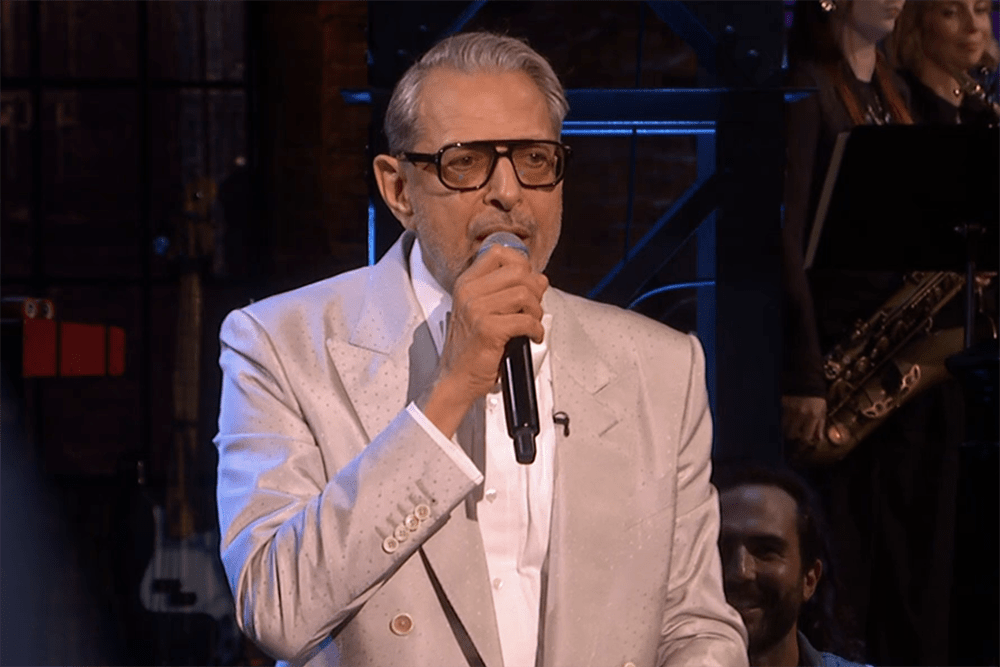
Jeff Goldblum kicked off his hosting duties on “Saturday Night Live U.K.” by employing his musical skills in a jazzy number about spending time in London.
“Can you believe this is Saturday night, first of all?” Goldblum asked the live audience after making his grand entrance. “And me, I’m hosting this gosh darn ‘SNL U.K.’ triumphant second season first episode! So, for the occasion, may we perform something we’ve just composed special for you tonight?”
The American actor, who has his own jazz band in addition to starring in franchises like “Wicked” and “Jurassic Park,” then took a seat behind the piano and began to sing a tune chock-full of U.K. references. “I’m hoping to be your precise cup of tea and that you’ll like me more than Nando’s or Marmite,” Goldblum sang. “Even if I still bomb, I will keep calm and carry on because I’m hosting from London tonight.”
Goldblum danced around the stage and even made a reference to his “Wicked” role, singing: “Despite a few wicked flaws, I am the Wizard of Oz!”
Musical guest CMAT then came out to help Goldblum with the lyrics, holding cue cards that read “Life Finds a Way,” in reference to his famous “Jurassic Park” line. “I don’t recognize it,” Goldblum said — but then the band begin to play the “Jurassic Park” theme and he remembered who he was. “I get it now, I can do it!”
“Life finds a way, when you’re live on Saturday,” he concluded with a big finish. “Like Sainsbury’s Local, we’re all feeling vocal. And I’m hosting right here, in London tonight!”
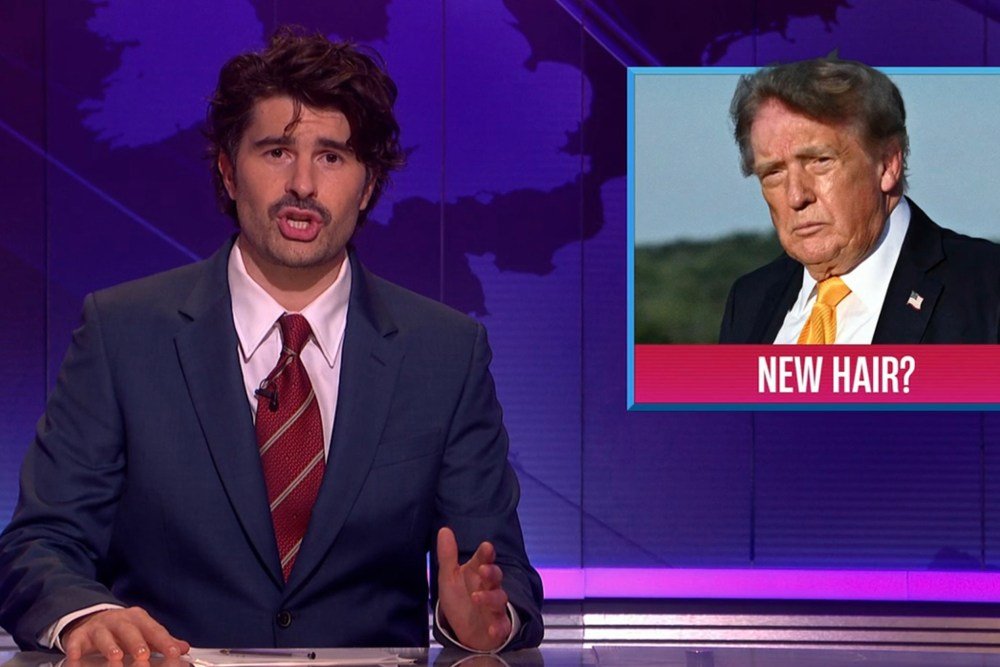
U.S. President Donald Trump’s new hairstyle was heavily mocked in “Saturday Night Live U.K.’s” Weekend Update segment.
“This week, President Trump stepped off Air Force One sporting a different hair color,” quipped co-anchor Ania Magliano. “He appears to be trialling a new shade of brown. Or, he’s shat his head.”
“People are questioning, does the carpet still match the drapes?” added Paddy Young. “I wouldn’t know, that’s between the president and the punchline that just a second ago was taken from me by our legal team. Thank you, legal team, it was almost funny.” It’s unclear whether this moment was a joke, or whether the legal department actually did intervene.
Elsewhere, Prince George’s first day at the prestigious Eton College was imbued with some dark humor. “How will he survive being stuck in a place famous for producing sexual abusers? By leaving it and going to Eton College,” Magliano said to “ooo”s from the audience.
Recent anti-migrant protests taking place in the U.K. were also under the microscope, including that of far-right activist Danny Tommo. “On Saturday, members of Tommo’s group Patriot Platform yelled obscenities, threw stones, spat and then said goodbye to their families and headed to the protest,” Magliano joked.
“Who is this Danny Tommo?” responded Young. “Before launching Patriot Platform he is reported to have tried his luck as both a bricklayer and a web designer. However, neither worked out as he had the physique of a web designer and a mind of a brick.”
The first episode of “SNL U.K.” Season 2 was hosted by Jeff Goldblum.
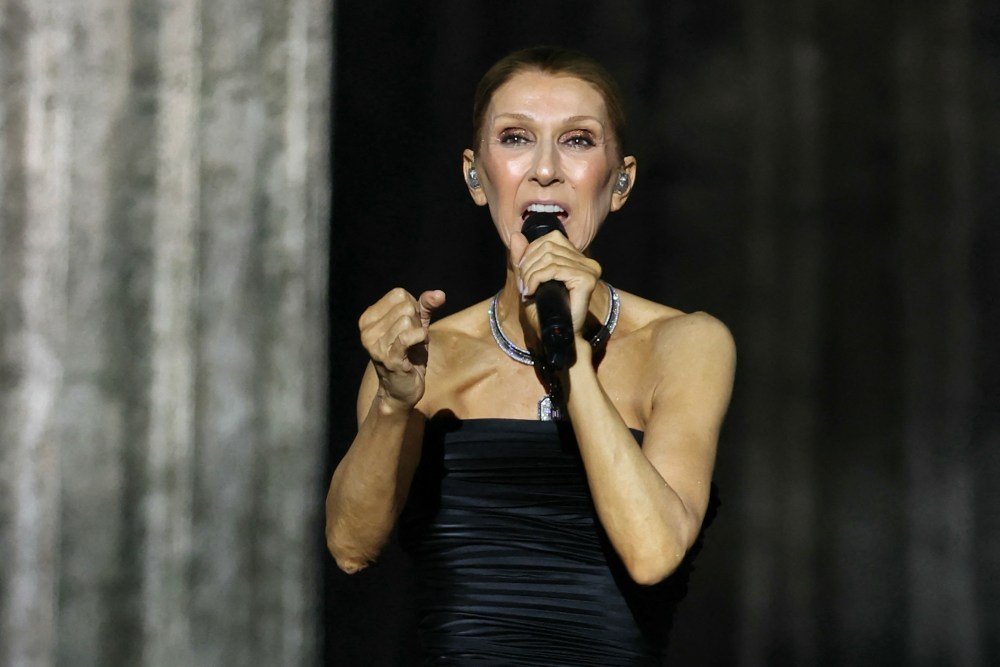
Celine Dion shed tears as she kicked off her eagerly anticipated 16-date residency tonight at Plenitude Arena on the outskirts of Paris, marking her first major series of live shows since stepping away from the spotlight in 2022.
“I had promised myself not to cry,” Dion told thousands of adoring fans in the opening moments of her show. “I don’t keep my promises. But I’m so happy to see you all. I missed you. I’m going to sing like you without crying.”
She later added, “Thank you so very much for coming. If it’s your first time in Paris, I hope you fall in love with it just like I did. Finally, it’s amazing we are all together. I made a promise to come back, to be back on stage. So here I am, singing for you and singing for me, singing live! Thank you so very much for your support, your patience and if I may say so, I am everything I am because you loved me.”
Speaking of the uphill battle she waged with her health, Dion said, “By living with it day in and day out, I’ve come to terms with it. And I’ve decided to make it my reason for living.”
She continued, “But look around here—all around you, right here in this room—we don’t know what the person next to us is going through. There are people going through hardships, grief, and sorrow. There are people radiating energy and joy. So let’s take that energy and share it. That’s what music is for. Tonight, we’ll sing, we’ll dance, and we’ll celebrate.”
Dion’s arrival in Paris two weeks ago has dominated headlines and sparked a frenzy on social media as well as in the streets of the French capital. The metro station near the concert venue has also been renamed Celine and has been decorated with some of her most famous lyrics. Fans from every corner of the world have been camping in front of the Royal Monceau hotel behind security barriers and have been singing her more popular songs every time she comes out. Clips of Dion engaging with fans, singing a cappella with them and making some dance moves in front of the Parisian palace have gone viral.
Not all of those hardcore fans will make it to the Paris concerts, however. Some may be turned away if they unknowingly bought fake tickets from the more than 200 fraudulent websites and social media accounts that popped up right when presale tickets went on sale in April, according to the Associated Press, which quoted Group-IB, a Singapore-based cybersecurity firm.
Her comeback isn’t just being eagerly anticipated by fans — it’s also being touted as a potential lifeline for France’s state coffers heading into 2027. French newspaper Liberation dedicated the cover of its weekend edition to Dion’s residency with a picture of the singer doing a prayerlike gesture, looking upward with a bright halo of light behind her and a headline that reads, “Celine Dion — is she going to save the 2027 budget?” Her Paris concerts could indeed generate €1 billion in economic impact for France, that’s four times more than what Beyoncé’s Paris concerts in June 2025 brought and roughly a fifth of what the entire Paris 2024 Olympics generated, according to French radio Europe 1.
More than 33,000 people are expected at the Plenitude Arena. As much as 60% of the set list is expected to be from her French repertoire, mainly songs penned and composed by Jean-Jacques Goldman, including “Pour que tu m’aimes encore” and “J’irai où tu iras.” She’s also teased that her first show will last over two hours in an informal chat with fans in front of her hotel and told them to wear comfortable shoes, as reported by France Info.
Rumors have been circulating about a potential surprise duo with Beyoncé who happens to be in the French capital with Jay-Z, who gave a concert in Paris two days ago.
An estimated nine million people signed up for advance tickets for the shows after Dion announced her concert comeback on her birthday, on March 30, during a glamorous bash (which she didn’t attend but delivered a message on video) in front of the Eiffel Tower, which was illuminated in tribute, with a choreographed light show set to Dion’s greatest hits.
Dion’s Paris concerts were originally scheduled for 2020 at Paris La Defense Arena as part of her Courage World Tour, but were postponed due to the pandemic and then delayed again due to her health issues. In 2022, Dion was diagnosed with Stiff Person Syndrome (SPS), a rare neurological and autoimmune disorder that causes muscular stiffness, inhibiting the ability to walk and sing. Her fans lost hope she would ever come back after seeing Dion struggle against this illness in the 2024 documentary “I Am: Celine Dion,” which was directed by Irene Taylor.
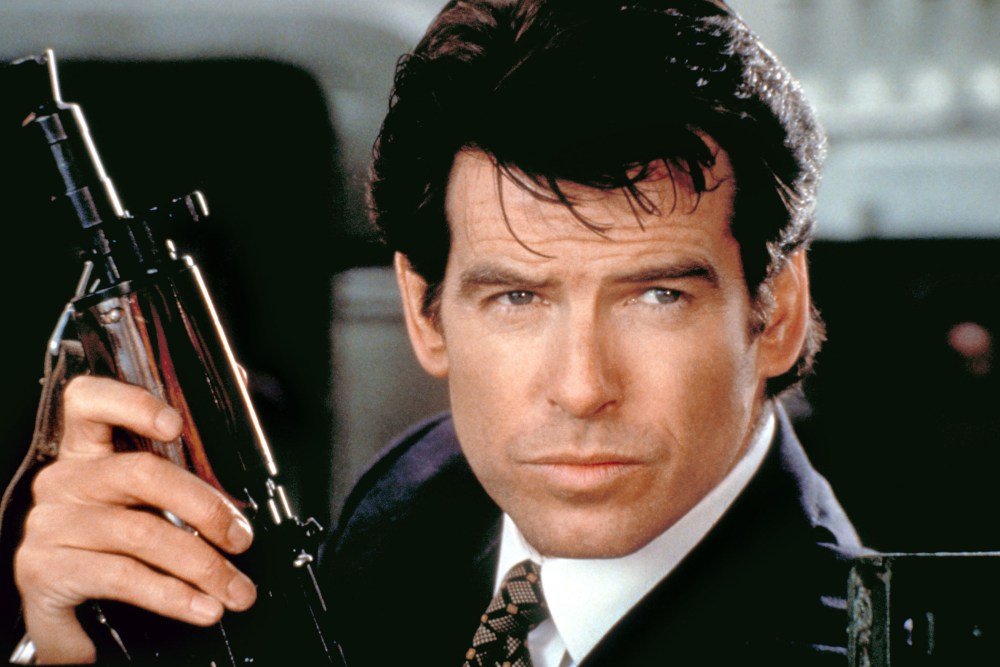
Ever since Denis Villeneuve’s forthcoming James Bond film was announced, the million-dollar question has been: Who will take on the role of the iconic spy? Now, former 007 Pierce Brosnan is offering his thoughts.
In a recent interview with The Times, the actor, who played the character in four films from 1995 to 2002, said that “there are lots of good hats in the ring” and “lots of great actors” being considered. “I see it. I follow it. They could probably just go left-field and pick someone that none of us know about.”
When it comes to names, Brosnan remained neutral: “I wouldn’t pick anyone,” he continued. “My wife told me not to say anything and I’ve said too much. Because once I say something it goes [everywhere] and I get hanged.”
Brosnan also explained that he hasn’t revisited his own Bond films since their release. “I have no desire to see myself in Bond,” he said. “I’m just a member of the audience now awaiting the next Bond and wishing him well.”
This isn’t the first time the actor has waded into the Bond waters — back in Aug. 2025, while speaking with the Radio Times, Brosnan joked that he’d return as a senior citizen Bond.
“I don’t think anyone wants to see a craggy, 72-year-old Bond, but if Villeneuve had something up his sleeve I would look at it in a heartbeat,” Brosnan said. “Why not? It’s great entertainment. It could be lots of laughs. Bald caps, prosthetics… who knows?”
Variety previously reported that Amazon MGM Studios enlisted casting director Nina Gold to find the new secret agent. Her credits include the Netflix series “The Crown,” five films in the Star Wars franchise, “Les Misérables,” “The Martian” and “Conclave.” In 2025, she was nominated for an Oscar for her work on “Hamnet.”
While the final casting for the film has not been confirmed, Callum Turner, Jacob Elordi, Aaron Taylor-Johnson, Harris Dickinson and Jack Lowden have all been reported as among those in the final running.
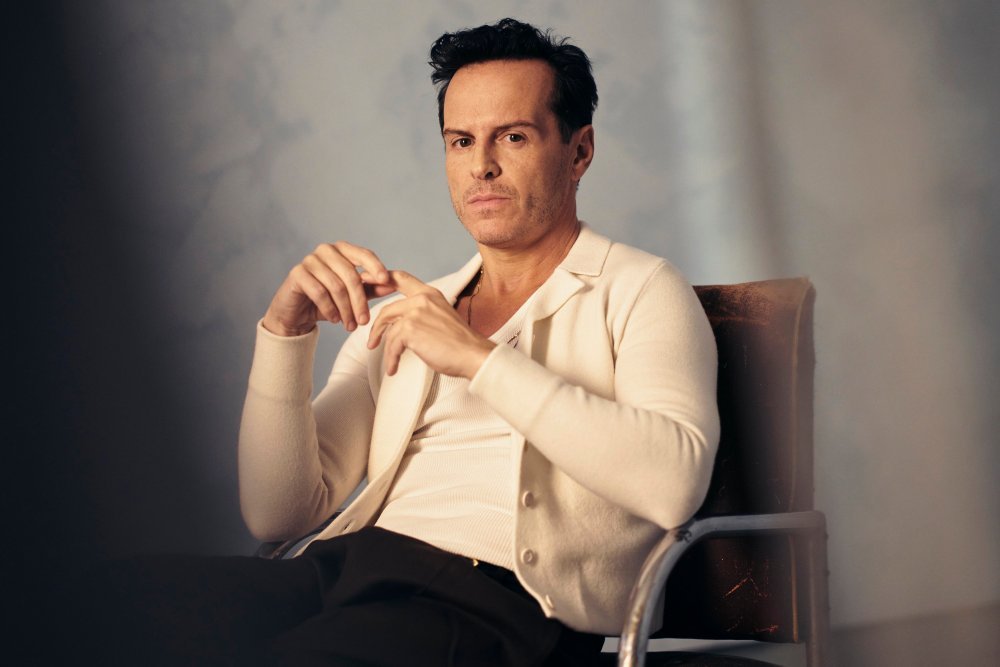
That is the big question concerning the Irish actor’s towering performance in “Elsinore,” which debuted in Telluride before playing the Toronto International Film Festival. Directed by Simon Stone, the film features Scott as Ian Charleson, a Scottish actor whose career has slowed down since featuring in “Chariots of Fire.” The year is 1989, and when Daniel Day-Lewis walks offstage during a production of “Hamlet” at London’s National Theater, Charleson sees it as an opportunity to show the world what he’s made of as an actor — even as his body is being ravaged by AIDS, and against the advice of his doctor (Olivia Colman), who warns him that the stress could further worsen his health.
As Variety’s Clayton Davis wrote, “The casting is too perfect to be accidental. Scott is himself a celebrated London Hamlet, here playing a man whose Hamlet was his last act of defiance. ‘Elsinore’ is, at its heart, a love letter to actors — to the craft as vocation, to the courage of standing in the light when the body is failing. And a milestone waits inside the role. No openly gay man has ever won the Oscar for best actor, and Scott could very well become the first.”
Scott was widely seen as “snubbed” for his embodiment of Richard Rodgers in “Blue Moon” and the haunted Adam in “All of Us Strangers.”
On Saturday, Sept. 12, Scott took the stage at the Royal Alexandra Theatre to roaring applause as part of TIFF’s “In Conversation” series to discuss his much-heralded turn in “Elsinore” and his storied career. The talk was moderated by Keith Bennie, TIFF’s vice president of public programming.
The talk began with Bennie asking Scott, 49, who was sporting a striking purple jumper, about the internet’s obsession with him.
“I don’t have the internet. I never see it,” he joked, before adding, “It’s actually wild: You never know what feral things people [will say].”
“Elsinore” is the first film Scott has ever produced, so he said it “took a huge amount of encouragement and support and vision from so many people” to bring it to fruition. It was also a very personal project for Scott, who is openly gay and has been acting in theater since the ‘90s, including his aforementioned turn as Hamlet in 2017.
“You go through stages with it, and the film is so incredibly personal for me, which is the reason why I chose to produce this one,” he explained. “It’s set in the theater and about the representation of gay actors in the ‘90s, and it’s about family. So many things that I really relate to.”
Scott made his acting debut as a teenager in “Korea,” an Irish film that premiered at TIFF in 1995. And it was a formative experience for him, since he was given a crash course in how to conduct himself on a film set by watching his co-star, screen veteran Donal Donnelly, who led with authority but treated people with dignity and respect.
“Depressing. No, it was extraordinary. I was 17, and it was the first film I’d ever made,” offered Scott. “I learned how to be on a set because [Donnelly] was incredibly kind and fun with everybody… He wasn’t in any way cruel or anything like that.”
When Scott was a child, he had a speech impediment, which, in a roundabout way, is how he “fell in love with acting.”
“When I was a kid, I had a speech impediment — I had a very strong sort of lisp— so I had to go to elocution lessons at seven or eight,” he shared. “It had a drama section to it where you could improvise in front of the other kids.” Performing poetry and monologues in front of a crowd, however small, “amplified something that was dormant” in him.
At one point during the talk, Bennie shared a scene of Scott’s priest acting alongside Phoebe Waller-Bridge in the second season of “Fleabag,” which became an internet sensation and earned his character the nickname “The Hot Priest.”
“If you had got a script that said, ‘The Hot Priest,’ you’d be like, ‘This is dodgy,’” joked Scott. “It was just called ‘The Priest’ and then the internet took over.”
Scott, however, was immensely proud of “The Hot Priest” craze in the sense that it helped ease some of his own anxieties about whether the audience would accept a gay actor in a role as a woman’s love interest.
“I guess there was a fear that I wouldn’t be able to get cast in those roles. That’s what everybody said,” he confessed. “But I knew, because when I did plays, that the people that were waiting at the stage door, they knew my sexuality and they did not care.”
He continued: “I feel very proud that that was quite a big moment because people were like, ‘The actor is gay. Whoa!’ And it is like this idea that the audience is stupid. We go to see ‘Batman,’ and it’s like, ‘Oh my god! He is not a bat?’”
And if you don’t like Scott in those types of roles, that’s on you.
“That’s just prejudice,” said Scott. “And we won’t cater to those people, or I’m certainly not going to.”
About an hour in, the talk swung back to “Elsinore,” a film — and performance — that people will be talking about throughout awards season.
“It’s about how we use our time, and he was enormously fun, attractive, beautiful, amazingly gifted actor,” Scott said of playing Charleson. “And the film is about the support that he got and the courage that he displayed. The reason I was so attracted to it, I think, is because it doesn’t end well for any of us, and quality of time is what he chose… I know what an Olympian, absolutely exhausting task that is [to play Hamlet]. I did it 150 times… The idea that he did it when he was so unwell, it always just gets me.”
Scott, who got choked up while discussing the film, also lamented how difficult it was for Charleson to act, or even exist, at a time when gay men, particularly those with HIV/AIDS, were being viciously discriminated against.
“There weren’t any gay actors — for no reason,” he remarked. “That was taken away from them.”
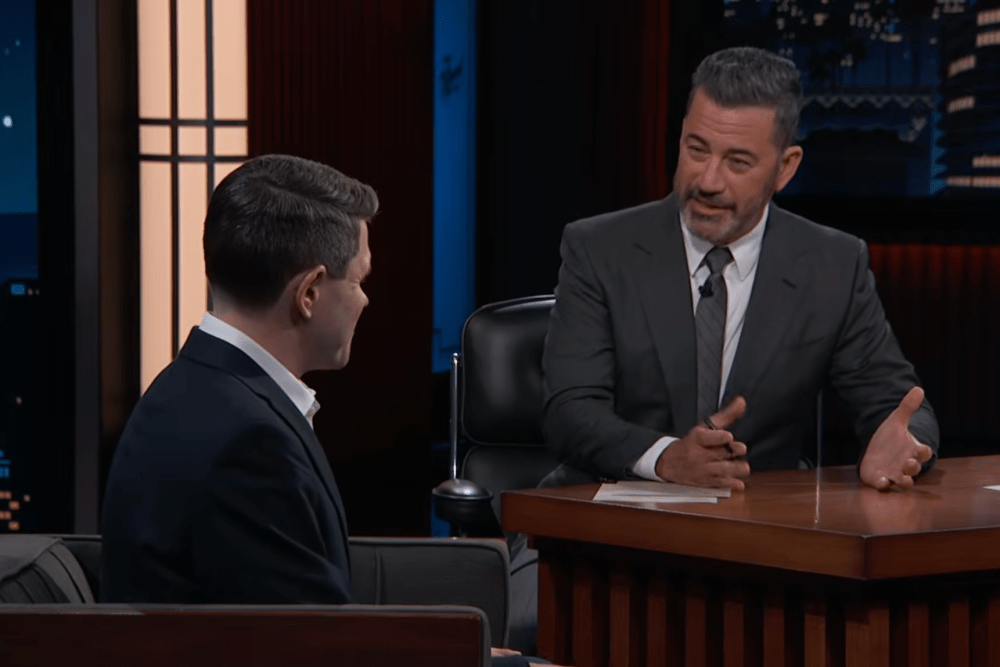
It was revealed during Wednesday night’s episode of “Jimmy Kimmel Live!” that the interview would not air on his ABC show because of threats from Donald Trump’s FCC against the network’s affiliate stations. “Out of consideration for our local stations, especially our ABC affiliates in Texas who would have to deal with this nonsense, my interview tomorrow with James Talarico will not air on television,” Kimmel said on air. “It will be posted on YouTube instead. It will not be on TV.”
This, of course, is not Kimmel’s first conflict with the FCC. Chairman Brendan Carr’s threatened ABC after the host’s comments about the assassination of Charlie Kirk in 2025, and the network later suspended him for nearly a week.
Talarico is no stranger to FCC feuds either. In February, the agency told “The Late Show With Stephen Colbert” that it couldn’t broadcast an interview with him. The segment was posted to the show’s YouTube Channel instead, where it reached more than 9 million views.
The pulled TV interview between Kimmel and Talarico started with the late night host asking the Texas senate candidate why Trump and the FCC are so scared of him. Talarico responded: “Well, they’re worried that we’re going to win this race in Texas. But we are the underdogs until the last vote is counted. We’re not just going up against the most corrupt politician in Texas. We’re going up against this entire corrupt system.”
Watch the full 20-minute interview in the video below.
Paramount’s lawyers filed a legal response to the states’ antitrust lawsuit against the Warner Bros. Discovery merger on Friday, sketching out arguments and defenses it may use at a trial next March.
Among other defenses, Paramount’s lawyers said they may claim that the coalition of 12 states lacks the authority to regulate the merger, “which is vested in the U.S. Department of Justice.” However, states do have the authority to bring claims alleging harms caused by conduct violative of federal antitrust law.
Paramount also noted that Cinema United, the trade group for theater chains, has called for a settlement.
“Day by day, the weak case against this Merger gets even weaker,” the company argued, adding that it also plans to challenge the states’ market definitions. “Plaintiffs’ case amounts to a series of attempted shortcuts and assumptions that collapse under scrutiny.”
California led the state coalition in suing to block the merger in July, arguing that the deal will create unlawful concentration in the basic cable market and in the wide-release and blockbuster theatrical markets. The DOJ had earlier approved the merger, issuing a memo laying out its reasoning for why the deal should be allowed to go forward.
States typically work with the DOJ in antitrust cases, but under the Trump administration California and several others have often charted their own course.
Paramount has repeatedly argued that the deal will be pro-competitive, and will result in more movies and TV shows.
In its answer to the complaint, the company denied the states’ allegations — a requisite formality to establish a legal controversy. The company also added a few pages of argument, alleging that the states’ case ignores the broader context of an industry in rapid transition to streaming.
“The way audiences consume content is changing rapidly. Streaming services now have greater viewership than movie theaters and cable television,” Paramount argues. “Plaintiffs’ case depends on ignoring this reality. It involves a series of gerrymandered markets based on cherry-picked data from the past. The alleged markets are not the product of sound economic analysis or current market realities. They have been invented for one purpose and one purpose only: to trigger a presumption — any presumption, no matter how weak — in the hopes the Court will look no further.”
The Writers Guild of America has filed its own lawsuit arguing that the merger will reduce the marketplace for writers’ work. That case is set to be heard alongside the states’ challenge at trial on March 2, 2027.
Meanwhile, a court will hold a two-day settlement conference in the antitrust case with the parties in late October. That’s a standard part of civil procedure and does not indicate whether a deal is in the offing.