Tag: Entertainment-Variety

  • Women’s Sports Media Joint Venture IX to Five Launches From TOGETHXR, Horizon Sports & Experiences (EXCLUSIVE)

    Women’s Sports Media Joint Venture IX to Five Launches From TOGETHXR, Horizon Sports & Experiences (EXCLUSIVE)

    IX to Five, a new joint venture “built to supercharge the business of women’s sports,” is launching from David Levy and Chris Weil’s global sports marketing agency Horizon Sports & Experiences and popular women’s sports media company TOGETHXR.

    Described as an offering “created in response to a clear and growing demand for authentic and engaging women’s sports content,” per the two companies, IX to Five “will focus on creating, developing, and commercializing women’s sports content through premium storytelling, unique intellectual properties, signature live experiences, and high-value brand partnerships.”

    IX to Five will launch with a programming slate featuring talent including StudBudz, professional basketball players Courtney Williams and Natisha Hiedeman, and Lily Shimbashi, founder of Sportsish, known for her fresh perspectives on sports and pop culture, with additional content offerings to be announced later this year.

    New joint venture IX to Five marks the second collaboration between TOGETHXR and HS&E, which preciously partnered in December at the annual early season basketball showcase Women’s Champions Classic. At the HS&E co-produced event at the Barclays Center, which was anchored by the University of Connecticut and featured Top 25 basketball teams, TOGETHXR recorded podcasts and additional content.

    “Women’s sports is a high-growth, big ROI business. We’re excited to team up with TOGETHXR, the leader in women’s sports media, to deepen our commitment and redefine the commercial and consumer opportunities in the category,” Horizon Sports & Experiences co-CEO and founder David Levy. “IX to Five was born out of the industry’s need for infrastructure and a year-round strategy to turn unprecedented momentum into sustained media and commercial impact. We are creating a scalable platform, which complements HS&E’s premium programming, for brands to invest in a more meaningful, authentic way and for fans to have more opportunities to engage with the athletes and content shaping culture.

    “Women’s sports doesn’t need more moments — it needs infrastructure that turns momentum into careers, culture, and commerce,” TOGETHXR executive chair Nancy Dubuc said. “TOGETHXR has helped move the space from ‘after hours’ attention to always-on storytelling, and this partnership with David and Horizon Sports & Experiences accelerates that shift — building a platform where athletes, creators, and brands grow together year-round.”

  • ‘Teenage Sex and Death at Camp Miasma’ Trailer: Hannah Einbinder and Gillian Anderson Get Tangled Up in a Meta Slasher

    ‘Teenage Sex and Death at Camp Miasma’ Trailer: Hannah Einbinder and Gillian Anderson Get Tangled Up in a Meta Slasher

    Mubi has released the trailer for “Teenage Sex and Death at Camp Miasma,” a gruesome meta-take on the slasher genre of yore. The film, starring Hannah Einbinder and Gillian Anderson, is set for theatrical release via the distributor on August 7. 

    Dubbed a “new kind of horror remake,” the trailer gives fans a peek into the highly stylized world created by director Jane Schoenbrun; “If it get’s too real,” Anderson’s voiceover says, “you can always turn it off.” Spooky!

    The film is set to follow a young director (Einbinder) enthusiastic about resurrecting the Camp Miasma slash franchise after “years of slapdash sequels and waning fandom,” the official logline reads. “But when she visits the original movie’s star, a now-reclusive actress shrouded in mystery, the two women fall into a blood-soaked world of desire, fear and delirium.”

    The film is the third from Schoenbrun, who wrote and directed “We’re All Going to the World’s Fair” in 2021 and “I Saw the TV Glow” in 2024. 

    In addition to Einbinder and Anderson, the film’s cast includes Amanda Fix, Arthur Conti, Eva Victor, Zach Cherry, Sarah Sherman, Patrick Fischler, Dylan Baker, Jasmin Savoy Brown, Quintessa Swindell, Kevin McDonald and Jack Haven. 

    Before she made her horror debut, Einbinder starred as Ava Daniels, a comedy writer, in four seasons of the hit Max Original series “Hacks.” In 2025, she won her first Emmy, for outstanding supporting actress in a comedy series, for the role. Best known for her roles in “The X-Files” and “Sex Education,” Gillian Anderson most recently appeared on Netflix’s “The Abandons.”

    Mubi financed while Plan B produced. “Teenage Sex and Death at Camp Miasma” will be released in North America, Latin America, U.K., Ireland, Germany, Austria, Benelux, Spain, Italy, Turkey, India, Australia and New Zealand.

    Watch the trailer below.

  • Ukrainian Filmmaker Sergei Loznitsa to Be Feted at Documentary Festival Visions du Réel

    Ukrainian Filmmaker Sergei Loznitsa to Be Feted at Documentary Festival Visions du Réel

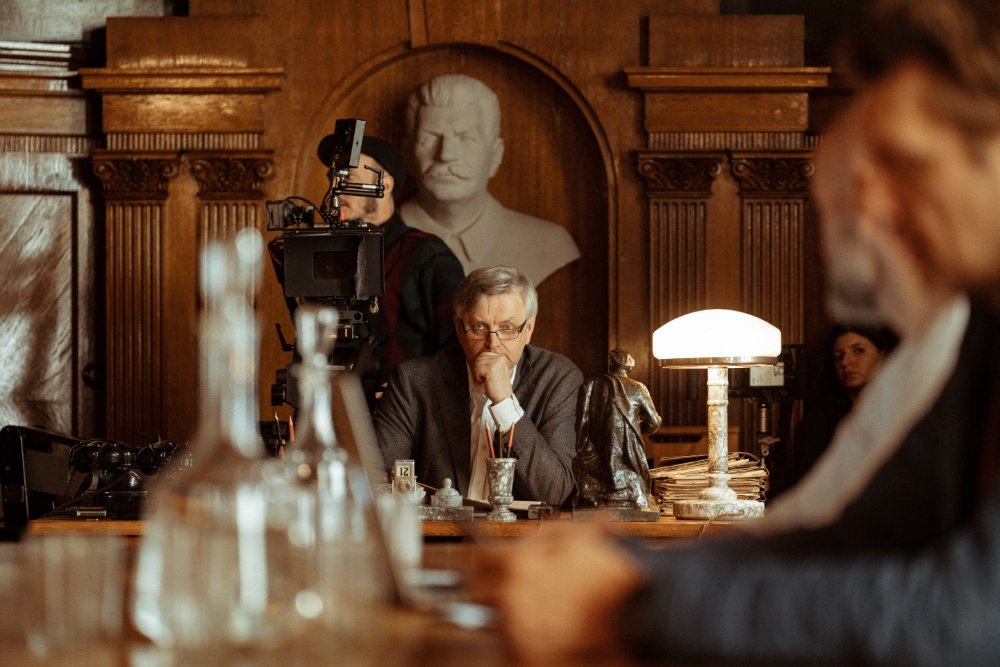
    Ukrainian filmmaker Sergei Loznitsa will be the Special Guest at the 57th edition of documentary film festival Visions du Réel, which runs April 17-26 in Nyon, Switzerland.

    Loznitsa will conduct a masterclass on April 18, and present a selected retrospective of his documentary work.

    Emilie Bujès, artistic director of Visions du Réel, said Loznitsa was “a master of contemporary montage cinema.”

    She added, “His work notably includes the meticulous re-examination of archives highlighting state violence and the stutter of history, as the images’ subtext is revealed with force and perseverance.

    “In both his documentary and fiction works, Sergei Loznitsa retraces decisive moments in 20th-century history and questions the structures of power and memory through cinema of great rigor and precision.”

    Among the films screening are three that look at the political situation in Ukraine over recent decades.

    In “Maidan” (2014), which was made in just four months and then presented in a special screening at Cannes, Loznitsa chronicles the demonstrations that triggered the Ukrainian Revolution.

    Also playing is “Donbass” (2018), whose script was based on amateur videos found on YouTube. The filmmaker depicts the takeover of the Donbass region by Russian-speaking militias who entered into conflict with the Ukrainian army.

    In “The Invasion” (2024), Loznitsa continues his Ukrainian chronicles with a film about his country’s struggle against the Russian invasion. Filmed over a period of two years, the film depicts the lives of civilians across the Ukrainian territory and captures the population’s resilience in the face of the Russian war of aggression.

    Also screening is “Austerlitz” (2016), which examines the trivialization of Holocaust memory and uses lingering black-and-white static shots to capture tourists visiting a former concentration camp turned memorial.

    Other films question “the processes that shape the creation of post-communist collective memory,” the festival said. “Blockade” (2005) was assembled solely from footage shot during the Siege of Leningrad, which ran from Sept. 8, 1941 to Jan. 27, 1944, and leaves the war off-screen, focusing on the day-to-day survival of the population. “The Event” (2015) revisits the August 1991 coup in Moscow. “Babi Yar. Context” (2021) unfolds without narration, recounting the largest massacre of Jews in World War II, which took place near Kyiv. The film was awarded L’Œil d’or’s Special Jury Prize at Cannes.

  • Oscars Final Voting 101: How to Fill Out Your Ballot and Navigate This Year’s Changes

    Dear Academy member,

    Final voting will soon open, and with it comes the annual Oscar rite of passage: Doing your civic duty for cinema, making tough artistic choices and trying desperately to remember who won last year.

    Now, the Academy introduced real updates meant to make voting cleaner, fairer and less confusing. The headline change is simple: Members are now formally required to demonstrate they’ve watched a film before voting for it in that category. That’s always been the expectation. What’s new is the technology enforcing it, plus a few ballot tweaks that will change how voting feels in practice.

    Only 50 films are recognized across all categories, matching last year and marking the lowest total since 2008. It was a profoundly top-heavy year. Whether that reflects shrinking viewing habits, an oversaturated landscape or simply an unusually dominant crop of contenders remains to be seen. Watching 50 movies is, and should always be, enjoyable, even if you’re not a fan by the end credits.

    Below is the plain-English guide to what’s new, what counts, what doesn’t, how best picture works (because it still confuses some of us who are bad at math) and how to be a top-of-your-game voter without turning the living room into a screening committee.

    Consider this your cheat sheet, or your Oscar voting “tech support” — with a gentle attempt to ensure you actually contact the official Academy tech support (which, yes, is open Monday through Friday), because I honestly cannot help you during the week.

    Getty

    FAQ’s for Final Oscar Voting

    Q: Is watching all the movies a brand-new rule?

    Not exactly. The Academy has always encouraged and asked members to vote only in categories where they’ve watched the nominees. What’s new for the 98th Oscars is that final voting now requires you to certify through the Academy Screening Room (ASR) that you’ve viewed the nominated films in that category before you’re eligible to vote. Same expectation, new “proof you did the homework” button.

    Q: Where do I have to watch them?

    Pretty much anywhere you’d normally watch during the season: theatrical releases, festivals, FYC screenings, guild screenings, or on ASR. The Academy isn’t grading your venue. It’s grading whether you marked it.

    Q: What do I have to watch to be eligible to vote in a category, and

    The simple version: watch all nominated films in that category — typically all five (and all 10 best picture nominees) to vote in those specific categories. But if you don’t watch one of the movies in your category, you can’t vote. So do your homework!

    Q: How do I get credit for watching a film?

    No ticket stubs required, no receipts needed and you don’t have to be an AMC Stubs member. It’s still the honor system, just with a checkbox and accountability.

    Ultimately, there are two ways it records your viewing:

    • Automatic: Watch the film in full on ASR and it can record automatically.
    • Manual: If you watched it anywhere else, you’ll need to MARK WATCHED on ASR (or the member site or Academy Members app).

    Q: OK, but how do I MARK WATCHED? Where is it?

    You can MARK WATCHED in three main places:

    • On the film’s detail page in ASR, the member site, or the Academy Members app.
    • By selecting the Eligibility button inside a category in ASR/member site/app, it shows what you still need and lets you mark films you’ve already seen elsewhere.
    • During voting on the voting site: if you’re locked out, select View Eligibility and you’ll be routed to the same Eligibility Notice to fix what’s missing.

    Q: I watched it, but the ballot won’t let me vote. Now what?

    Stop spiraling, dude! This is usually a logging issue, not a personal assault against you. Try these:

    • Click View Eligibility (or the category’s Eligibility button).
    • Use the Eligibility Notice to see what the system thinks is missing.
    • If you watched it elsewhere, MARK WATCHED.
    • Return to the ballot and try again.

    Also, reminder emails leading up to voting often include direct links to each category’s Eligibility Notice — the Academy is basically preemptively saying, “You don’t have to call tech support if you just look at your e-mails.”

    Q: Do clips, Bake Off videos or craft explainers count as watching?

    Nice try, but no. Helpful isn’t the same as watched. Bake-offs and explainer content are there to inform your vote, not replace the actual films. You still need to watch the nominated films in full to be eligible — yes, even for best original song, where the clip is extremely tempting as a shortcut.

    Q: So what are the Bake-offs for, then?

    Knowledge is power! They’re your cheat codes for context — especially in casting, makeup and hairstyling, sound and visual effects. You can see the in-person presentations that took place in Los Angeles, New York and London. You can watch virtually and find excerpts with interviews with the artists from the shortlisted films. Great for understanding craft. Not a substitute for watching.

    Q: What other resources can help me vote smarter?

    A few genuinely useful ones:

    • “Academy in Brief” explainer videos on voting and final eligibility requirements.
    • Scene at the Academy (behind-the-scenes content on contenders)
    • Peer-to-peer nominee interviews (notably for Production Design)
    • The Academy Reading Room (where all nominated screenplays are available)

    Think of these as your study guides for your final exam.

    Q: Do AMPAS membership screenings count toward my record?

    Not automatically. If you watched outside ASR — including membership screenings — the safest move is still to MARK WATCHED manually. Certain official voting events tied to required processes may be recorded, but if you don’t want surprises on ballot day, treat manual marking like flossing: annoying, but it prevents pain later.

    Q: What’s new about the ballot itself?
    Two noticeable changes:

    • All designated nominees’ names now appear directly on the ballot (craft teams included — as they should).
    • Name order follows legal billing/credit submissions, so don’t expect alphabetical order for people. Films, however, are listed alphabetically.

    Q: How does best picture voting work?

    Well, Variety put together a beautiful explainer video that puts it in the simplest terms we can (watch above). Best picture uses preferential voting (ranked choice):

    • Rank the best picture nominees in order.
    • If a film gets 50% plus one of first-place votes, it wins.
    • If not, the film with the fewest first-place votes is eliminated.
    • Those ballots move to the next highest-ranked choice still in contention.
    • Repeat until someone crosses the threshold.

    Rank all the movies, folks — and definitely more than one or two. Ranking additional titles does not weaken your No. 1. It keeps your ballot active in later rounds if your favorite is eliminated early.

    Q: How do the other categories work?

    The other 23 categories are plurality: Most votes wins. It’s the Academy’s version of, “Whoever has the biggest pile at the end takes it.”

    Q: Who counts the votes?

    PricewaterhouseCoopers tabulates the ballots, as it has for decades. The Academy does not count its own votes.

    Q: What does all this mean for winners?

    If members actually watch broadly, the ballot gets stronger and the outcomes get more informed. If members watch narrowly, the new eligibility rules can reshape who’s even voting in certain categories — which can lead to fewer steamrolls and more chaos.

    The best-case scenario: More viewing = better winners.

    The most entertaining scenario: The upsets = very fun TV.

    The honest answer is that both are possible. The best-case scenario is that more members see more films, strengthening the ballot. The slightly more fun scenario is that it also strengthens the Oscars’ favorite genre: The upset.

    Q: When does voting close?

    Final voting closes at 5 p.m. PT on March 5. Set a reminder if you must — though the Academy is sending out e-mails and texts every day until you vote.

    Q: So how do I stop all the e-mails and texts?

    Send in your ballot, silly.

    Q: Fine. How can I earn the respect of cinephiles and journalists everywhere?

    If you want the simplest route to honor and respect, be an excellent voter. How do you become an excellent voter? Follow these five steps.

    1. Watch all the movies. It’s the job.
    2. Don’t skip the shorts. That is where some extraordinary filmmakers are doing extraordinary work.
    3. Rank best picture like you mean it.
    4. In everything else, pick your winner. Plurality rules.
    5. If you haven’t seen the movie, skip it. Leave it to the people who did their homework.

    Cinema thanks you. The Academy thanks you. Take it seriously. We’re depending on you. Also, don’t hit “Reply All.”

    Sincerely,

    Cinephiles.

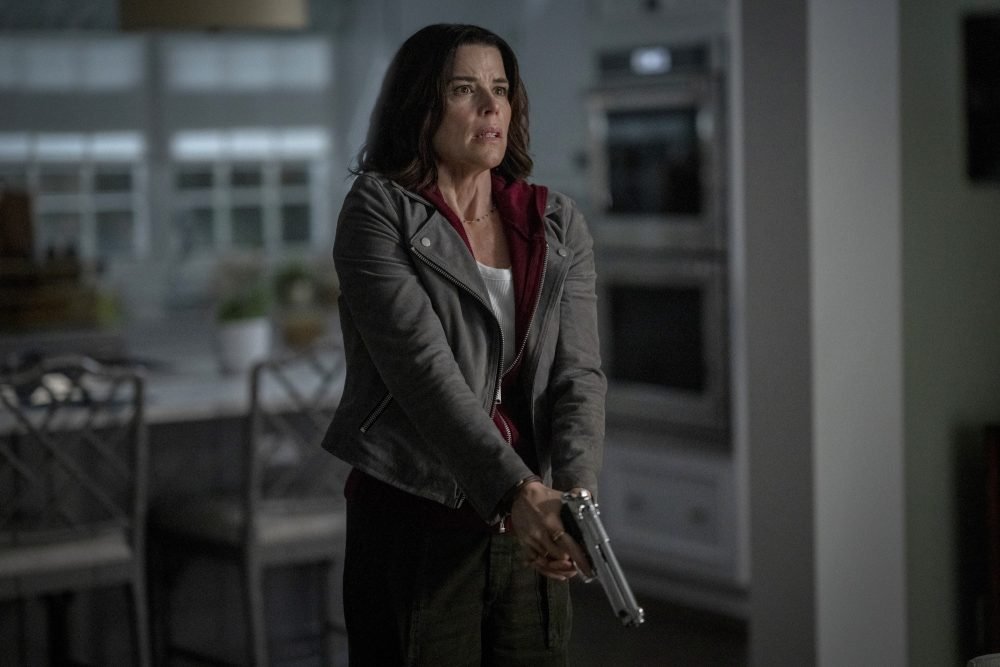
  • The Fall and Rise of ‘Scream 7’: A Fired Star, a $500K Script Rewrite and Neve Campbell’s $7 Million Salary

    The Fall and Rise of ‘Scream 7’: A Fired Star, a $500K Script Rewrite and Neve Campbell’s $7 Million Salary

    When Ghostface returns to the big screen, the knife-wielding masked murderer is primed to make a box office killing. “Scream 7,” the latest installment in the long-running horror franchise, is tracking a scary-good debut of $45 million to $50 million in North America. Those estimates would deliver a series-best kickoff, underscoring Paramount and Spyglass’ success in reviving a property that only 10 years ago was deader than one of the notorious slasher’s many victims.

    Yet the journey back to theaters has been tumultuous, with a dramatic firing and high-profile cast and creative exits that required a major revamp of the script — and prompted a vocal backlash from fans.

    In late 2023, Melissa Barrera, the star of 2022’s “Scream” reboot and 2023’s “Scream VI,” was fired from the seventh installment by Spyglass over social media messages the production company deemed antisemitic. After war broke out in Gaza that year, Barrera reshared a post accusing Israel of “genocide and ethnic cleansing” as well as a magazine article alleging the Israeli government was distorting “the Holocaust to boost the Israeli arms industry.”

    Shortly after Barrera’s axing, her on-screen sister Jenna Ortega, whose profile has skyrocketed since she and Barrera joined the “Scream” team, announced she wouldn’t return for “Scream 7.” She cited scheduling conflicts with her hit Netflix series “Wednesday.” Amid the turmoil, the film’s original director, Christopher Landon, left the project because he was getting death threats over Barrera’s firing, even though he didn’t make the decision to boot her.

    At a creative crossroads, “Scream” producers turned to franchise veteran Kevin Williamson to take over directing duties on the seventh film. He and Guy Busick, a writer on the prior two installments, co-wrote the screenplay — which needed a serious retooling given the exits of Ortega and Barrera, whose characters were the protagonists of “Scream VI” in lieu of Neve Campbell’s resilient heroine Sidney Prescott. Sources peg the cost of the rewrite at roughly $500,000, which they say isn’t a major expenditure for a franchise of this size.

    With the sixth film, Paramount executives were concerned about making a “Scream” movie without Campbell, who didn’t return over a salary dispute. However, the studio’s say in the matter was limited because Spyglass had the final ruling on creative decisions. Any fears were quelled when “Scream VI” earned $161 million at the global box office, the biggest haul since the first two installments.

    Without the red-hot Ortega on board for the sequel, though, Paramount and Spyglass knew they needed a killer marketing hook. Spyglass chief Gary Barber is known as one of Hollywood’s toughest dealmakers, but this time around, Campbell had more leverage to return. The actor was able to secure a nearly $7 million deal, a hefty raise and a major salary for the horror genre. Courteney Cox, who has appeared in every “Scream” film since the original 1996 slasher, was awarded a $2 million payday.

    “Neve Campbell is to ‘Scream’ what Jamie Lee Curtis is for the ‘Halloween’ franchise,” says Shawn Robbins, director of movie analytics at Fandango and founder of Box Office Theory. “She’s a big draw, especially for older generations who grew up with the original films.”

    Paramount and Spyglass are banking on nostalgia, as well as the enduring popularity of horror, to propel the slasher series to new box office heights. (The studio is tempering expectations by projecting a debut closer to $40 million; meanwhile, rivals and independent tracking services are predicting the initial figure could exceed $50 million.) That’s because production costs on “Scream 7” began to balloon as the film was delayed a year. The seventh chapter carries a $45 million budget, up from the sixth film’s $35 million price tag. One source notes that inflation, which has impacted everything from set construction to travel expenses, is partly responsible for the bigger budget.

    “Initially there was thought that the momentum from the two previous films could be lost. And there’s certainly a section of the audience that’s upset about who is not coming back,” says Robbins. “But now the pendulum is swinging. This is driving a lot of interest about how certain characters are coming back.”

    And this likely won’t be Ghostface’s final reign of terror. Insiders suggest plans are already in place for the killer’s lethal return in an eighth film. Tell the survivors to hide their families.

  • U.K. MPs Demand Answers From BBC Boss Tim Davie Over BAFTA Awards N-Word Slur Despite Delayed Broadcast

    U.K. MPs Demand Answers From BBC Boss Tim Davie Over BAFTA Awards N-Word Slur Despite Delayed Broadcast

    The chair of the U.K.’s parliamentary culture committee has written to the BBC to demand answers over the broadcast of the n-word during the BAFTAs on Sunday night.

    “I am writing regarding the BBC’s coverage of the BAFTA film awards on Sunday,” the head of the committee, Caroline Dinenage wrote to outgoing BBC director general Tim Davie. “As you know, the BBC’s broadcast included a racial slur made as a result of involuntary tics by a person with Tourette syndrome. I am seeking an explanation as to how the slur came to be broadcast in spite of a two-hour time delay.”

    “We have previously raised concerns with you about circumstances in which the BBC has allowed deeply offensive language to be aired, notably the broadcasting of antisemitic language during the BBC’s coverage of last year’s Glastonbury festival. This latest incident raises questions about the extent to which lessons have been learned and about the controls and systems you have in place to prevent such incidents.”

    Dinenage has asked Davie to answer a number of questions over the incident, including “What specific systems do you have in place to prevent the broadcasting of such language? Why did these systems fail in this case?” She also asked whether the broadcaster had learned any lessons from “previous incidents, including Glastonbury.”

    In response, a BBC spokesperson said: “The BBC has been reviewing what happened at BAFTA on Sunday evening. This was a serious mistake and the Director-General has instructed the Executive Complaints Unit (ECU) to complete a fast-tracked investigation and provide a full response to complainants.”

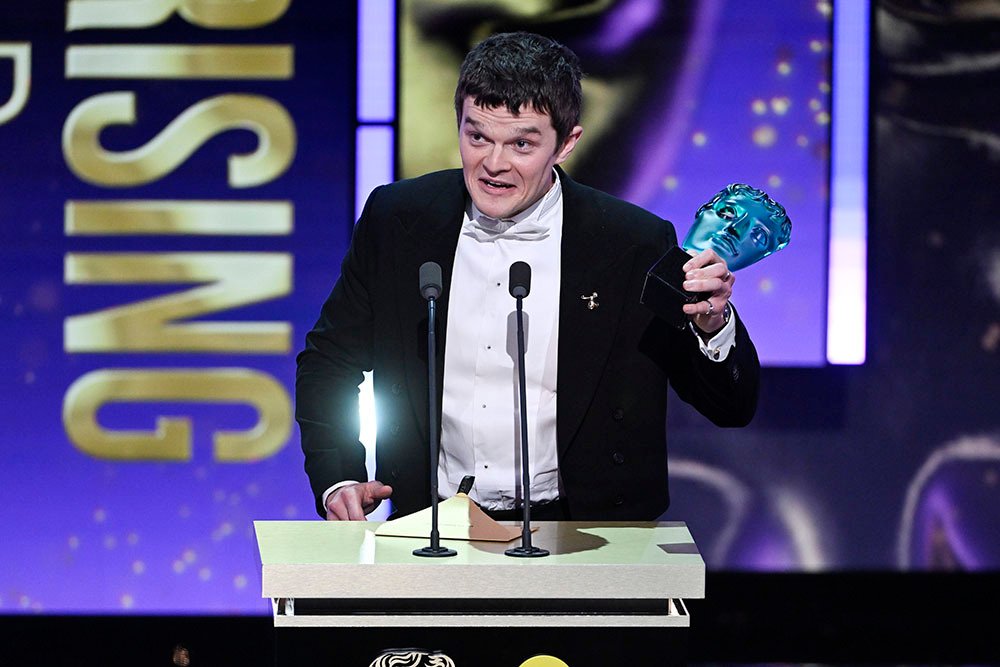
    The BBC has been widely criticized for not censoring a Tourette’s campaigner inadvertently shouting the n-word during the BAFTA Film Awards on Sunday night despite a two-hour delay between the ceremony and the broadcast.

    John Davidson, who has experienced tics and uncontrolled outbursts involving cursing since the age of 12, shouted the n-word when Michael B. Jordan and Delroy Lindo took to the stage to present the award for best visual effects.

    The ceremony took place two hours before the broadcast, in part to allow for controversial statements to be edited out. A reference to “Free Palestine” during one acceptance speech did not make it into the broadcast on BBC One.

    However the n-word slur can clearly be heard during a pause in Jordan and Lindo’s introduction to the nominees for best visual effects. The slur was still present on the BBC’s streaming service iPlayer on Monday morning.

    Sources told Variety the n-word was not cut from the broadcast because production team Penny Lane, who were in an editing truck, “do not hear” the shouting. However, this claim has been contradicted by execs from Warner Bros., who were in attendance to support BAFTA-nominated film “Sinners,” who said they raised the issue about broadcasting immediately with BAFTA.

    Davidson had a number of uncontrolled outbursts during the first half of the ceremony, shouting “shut the fuck up” and “fuck you” a number of times before reportedly removing himself midway through.
    “Sinners” production designer Hannah Bleacher indicated that she had heard the n-word three times during the night, including once directed at her, in a statement on X, which she posted after the ceremony.

    During the ceremony a source told Variety that Davidson was an invited guest and stressed that under no circumstances would he be removed or asked to leave.

    While there has been sympathy for Davidson, some anger has been directed at both BAFTA and the BBC for failing to censor or remove the Tourette’s campaigner’s outburst from the broadcast.

    In a statement given to BBC News, a spokesperson for the BBC said: “Some viewers may have heard strong and offensive language during the Bafta Film Awards 2026. This arose from involuntary verbal tics associated with Tourette’s syndrome, and was not intentional. We apologise for any offence caused by the language heard.”

    Last summer the BBC broke its own editorial guidelines by broadcasting harmful and antisemitic statements made by a performer at Glastonbury who went on a tirade abut a former record label boss he described as a “fucking Zionist” and “bald-headed cunt” and led the crowd in chanting “death to the IDF.”

    Despite the BBC staff being aware of there being a “high risk” of antisemitic statements and having the option to cut the live broadcast, it went out in full.

    BBC chair Samir Shah later called it “unquestionably an error of judgement.”

    The latest controversy could not come at a worse time for the BBC, which is currently having its Royal Charter — the authority under which it is governed — reviewed. Part of that review will include funding options. The corporation is currently funded largely via a de facto tax called a license fee, which is required from anyone who watches any form of iPlayer or live TV on any platform or device. Currently the license fee is £174.50 for watching live TV in color. Conviction results in a court fine of up to £1,000 and non-payment of the fine can result in jail time.

    The BBC is also embroiled in a multimillion-dollar lawsuit with President Donald Trump after the broadcaster was found to have doctored one of his speeches in a documentary about the Jan. 6 insurrection. The furore led to both Davie and the BBC’s head of news Deborah Turness resigning. Trump is suing the corporation in Florida.

  • MEP Capital Takes Majority Stake in BondIt Media, Launches $100 Million Credit Facility (EXCLUSIVE)

    MEP Capital Takes Majority Stake in BondIt Media, Launches $100 Million Credit Facility (EXCLUSIVE)

    MEP Capital Management, a New York-based private investment firm focused exclusively on the media and entertainment industry, has closed a majority stake acquisition in BondIt Media Capital, the independent film and television financier.

    The deal comes alongside a fresh $100 million credit facility that will underpin both BondIt’s existing lending business and its push into new areas including live entertainment, sports, and the creator economy.

    BondIt co-founders Matthew Helderman, who serves as CEO, and Luke Taylor, COO, will remain at the helm. MEP will contribute capital markets expertise and institutional support as the enlarged platform seeks to grow both at home and abroad.

    “BondIt has earned real trust in the independent film and television ecosystem by being consistent and pragmatic while building a track record of prudent underwriting across market cycles,” said Andrew Kotliar of MEP Capital. “With this growth equity investment and a new credit facility, BondIt’s core business is expected to scale rapidly while selectively expanding into adjacent opportunities across media and entertainment assets.”

    Helderman and Taylor said in a joint statement: “We built BondIt to be a reliable partner to creators – one that understands the realities of production, distribution, and execution. MEP shares our long-term view and bring complementary strengths that will help us expand capacity, grow internationally, and explore new opportunities with the same disciplined approach that has defined BondIt from the start.”

    The infusion of capital is designed to allow BondIt to pursue bigger, more complex deals – among them bonded productions and higher-budget TV series – without stepping back from the independent community that has been central to its business since its founding in 2013.

    Recent BondIt credits include “Embassy,” the television series starring Anna Kendrick and J.K. Simmons; “Vanished,” the Amazon MGM+ original with Kaley Cuoco and Sam Claflin; and the 2025 Elements Music & Arts Festival, headlined by deadmau5, Illenium, and Pretty Lights.

    The acquisition also opens the door to collaboration between three complementary platforms: BondIt, its sister company Buffalo 8 – home to a library of over 400 film and TV titles and more than 1,000 music scores and soundtracks – and MEP’s distribution affiliate West Side Pictures, whose holdings run to approximately 10,000 film and television titles. Together, the companies aim to offer independent creators a broader suite of financing and distribution solutions.

    Going forward, BondIt’s priorities include growing its core lending capacity, moving into bonded films and premium television, deepening its international footprint, and selectively branching into adjacent verticals where MEP has existing experience, among them music, live events, video games, YouTube, and sports media. Further acquisitions that complement the platform’s focus are also under consideration.

    The deal follows Accord Financial Corp.’s previously announced exit from BondIt, which stemmed from its 2017 investment in the company.

    Since its founding, BondIt has put more than $500 million to work across upwards of 450 film, television, and media projects. Its track record includes Oscar-nominated “Loving Vincent,” Emmy-winning “Street Gang: How We Got to Sesame Street” for HBO, Roland Emmerich’s war epic “Midway,” Kevin Smith’s “Clerks III,” and horror phenomenon “Terrifier 3.” Productions backed by the company have collectively taken in more than $1 billion at the global box office.

  • Duffer Brothers’ New Netflix Series ‘The Boroughs’ Reveals First-Look Images, Release Date

    Duffer Brothers’ New Netflix Series ‘The Boroughs’ Reveals First-Look Images, Release Date

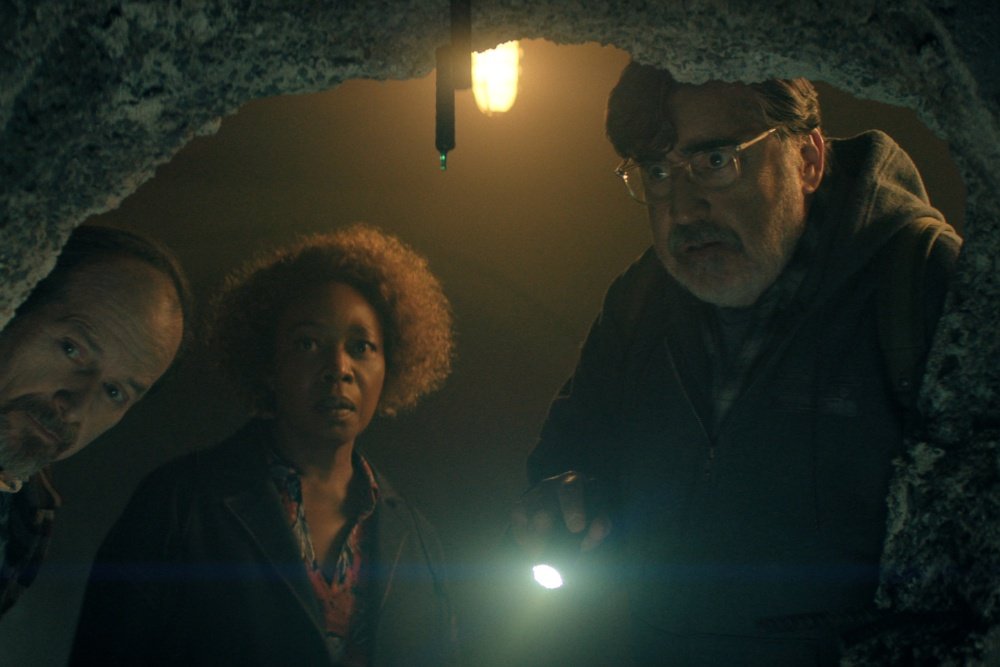
    Netflix have teased the first images from their upcoming mystery series “The Boroughs.”

    Exec produced by “Stranger Things” creators the Duffer Brothers, the 8-part series stars Alfred Molina, Geena Davis, Alfre Woodard, Denis O’Hare, Clarke Peters and Bill Pullman as a retirement community who uncover a dark secret after a grieving newcomer (Molina) joins their midst.

    Molina plays Sam Cooper, who is experiencing something of an existential crisis after recently losing his wife.

    The series, which was created by Jeffrey Addiss and Will Matthews (“The Lord of the Rings: The War of the Rohirrim”), will drop on May 21.

    The Duffer Brothers and Hilary Leavitt exec produce for Upside Down Pictures.

    Ben Taylor directs multiple episodes. He is also an EP. Augustine Frizzell and Kyle Patrick Alvarez also direct.

    “From the beginning, we knew we wanted The Boroughs to feel equal parts scary, mysterious, exciting and emotional. The challenge was to create a world that could hold all of these different tones at once. Which is why it was so fun to work with the Duffer Brothers – the masters of balancing heart and horror,” said Addiss and Matthews.

    “According to some very unofficial napkin math, our stars bring something like 350 years of craft to The Boroughs. We knew they would be great. We didn’t expect them to be so fun. They can make you laugh or cry with just a look. Makes it whole lot easier on us writers.”

    The Duffer Brothers said: “For years, we’ve wondered why no one has made a film like Ron Howard’s wonderful ‘Cocoon’ since, well, ‘Cocoon.’ Then, out of nowhere, Jeff and Will emailed us an idea for ‘The Boroughs:’ a story about retirees and monsters. They were adamant that — unlike so many stories about older characters — this wouldn’t treat aging as a punchline. Instead, it would treat its characters as real people facing real challenges… along with a few supernatural ones. It was exactly the show we’d been dreaming of.”

    “While the characters are a little older than the kids in ‘Stranger Things’ (they ride golf carts instead of bikes), the spirit is very much the same. At its core, this is a story about belonging and growing up — no matter your age — filled with adventure, wonder, comedy, scares, and tears. And most importantly, you’re going to fall in love with these characters.”

  • Digital Brand Architects Promotes Five in Talent Division, Including ‘The Home Edit’ Manager Alix Frank to EVP (EXCLUSIVE)

    Digital Brand Architects Promotes Five in Talent Division, Including ‘The Home Edit’ Manager Alix Frank to EVP (EXCLUSIVE)

    Digital Brand Architects has promoted five team members across its talent division based in Los Angeles and New York, including “The Home Edit” talent manager Alix Frank.

    Frank, who reps Clea Shearer and Joanna Teplin of “The Home Edit,” has been upped to executive vice president of talent at the Raina Penchansky-led company. Additionally, Ali Wald and Haley Walsh have been elevated to vice presidents of talent, while Sasha Mixon and Sophie Fox have been named directors of talent.

    Originally from Seattle, Washington, Frank relocated to Los Angeles in 2014 to join the company, where she led its expansion into the food and home space. She oversees a team of talent managers while personally representing a diverse roster of talent and New York Times bestselling authors, including The Home Edit, Dani Klarić, Olivia Tiedemann, Marco Zamora, and Lissie Mackintosh, among others. She has played a central role in building globally recognized brands, and campaigns, notably partnering DBA with South Beach Wine & Food Festival to launch FoodieCon, the festival’s first influencer-driven event. In 2018, she worked closely on the launch of DBA’s podcast network, Dear Media, advising on cross platform collaborations and growth in the audio space.

    Wald is now a vice president of talent at Digital Brand Architects. Her clients include Wishbone Kitchen, Brian Can’t Stop Eating, Brocc Your Body, The Grill Dads, Miles Chamley-Watson and Jov Khan among others. Wald has become known for her ability to bridge the divide between digital and traditional media, securing transformative deals in publishing, television, streaming, and podcasting that have helped cement her clients as household names.

    Also newly appointed vice president, Walsh reps a roster of creators, including beauty phenomenon Mikayla Nogueira, DJ Xandra Pohl, Bran Flakezz, Chelsea Parke, and others. She specializes in identifying emerging talent and nurturing long‑term success through thoughtful mentorship and tailored brand strategy, including co‑collaborations with Ole Henriksen, Glow Recipe, and ELF Cosmetics.

    Now a director of talent, Dweck is recognized for identifying breakout talent early, including Brigette & Danielle Pheloung, Kira Kirby, and Gia Duddy. In 2025, Sasha supported the execution of a seven-figure partnership with Microsoft Copilot while continuing to drive performance and portfolio growth across her talent roster. Her work includes securing ongoing collaborations with brands such as L’Oréal, Maybelline, Wella, Amazon, and Victoria’s Secret.

    Fox, also a new director of talent at DBA, has spent six years at the company creating client relationships with brands across Amazon, Sephora, L’Oreal and the P&G portfolios. Fox was featured in Business Insider’s 20 most influential TikTok talent managers and agents helping creators build businesses.

    “These promotions and strategic hires underscore our long-term vision for DBA – building a team that’s as ambitious and forward-thinking as the creators we represent,” DBA president Vanessa Flaherty said. “By cultivating talent from within and thoughtfully expanding our leadership, we’re positioned not only to support growth, but to define the next phase of the creator economy.”

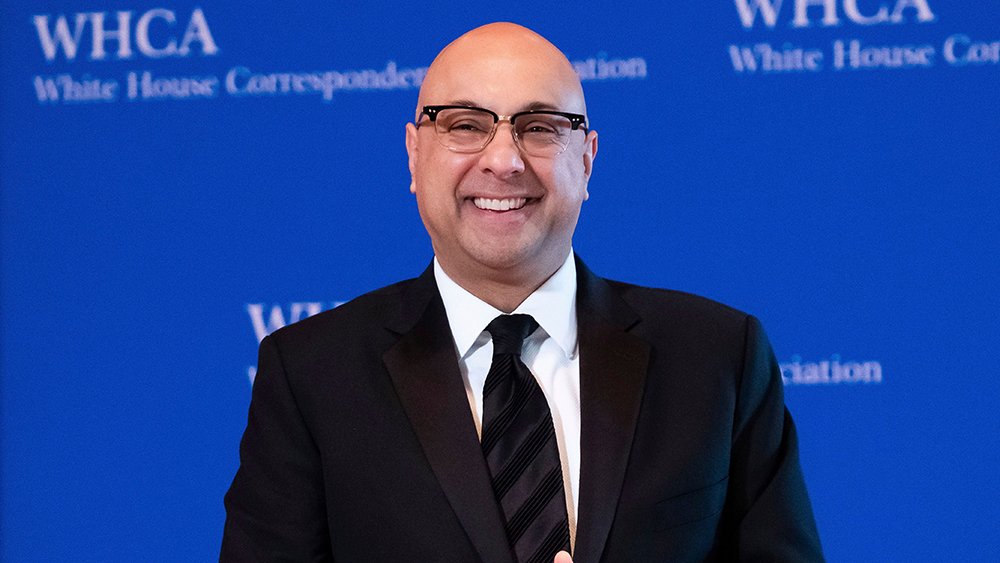
  • Ali Velshi to Pick Up MS NOW Election-Night Duties Previously Held by Steve Kornacki

    Ali Velshi to Pick Up MS NOW Election-Night Duties Previously Held by Steve Kornacki

    Ali Velshi is about to enter a club with very exclusive membership.

    When TV-news outlets contemplate how best to explain the results of the nation’s big elections to viewers, one key element is always an interactive board that shows polling and voting results in the most granular detail. The person assigned to that duty each year becomes an important part of the evening’s proceeding.

    At MS NOW, Velshi will pick up duties previously held by Steve Kornacki, and which are matched elsewhere by John King at CNN and Bill Hemmer at Fox News Channel. Kornacki left MS NOW last year as the network, once known as MSNBC, was preparing for a split from NBCUniversal. MS NOW, CNBC and other cable networks are now part of a separate company known as Versant ,and Kornacki opted to stick with NBC News and NBC Sports, where he often interprets data about football and horse racing.

    “I’ve had the privilege of learning from Ali for the last twenty-plus years in various newsrooms. One of his many gifts is his unique ability to take complex data and make it digestible,” said Rebecca Kutler, president of MS NOW, in a statement. “Ali will guide our audience through the real-time information that will determine the outcomes of the midterm and presidential elections. I’m thrilled Ali will bring his understanding of public opinion and voters to our election coverage in the years ahead.” 

    Velshi, a veteran of the cable-news wars, joined MS NOW in 2016 after stints at CNN and Al-Jazeera America. Since that time, he has led his own weekend program, teamed up with Stephanie Ruhle and served as a fill-in host for the network’s primetime shows. He has also traveled around the world, reporting from Ukraine and across Central and Eastern Europe, among other locales.

    “On big political nights, the numbers tell the story of participation, power, and choice. Voters decide elections, and the data lets us watch those decisions take shape in real time,” said Velshi, in a statement. “I’m grateful for the opportunity to guide viewers through primaries, election nights, and major political moments with context, transparency, and a focus on the facts.”