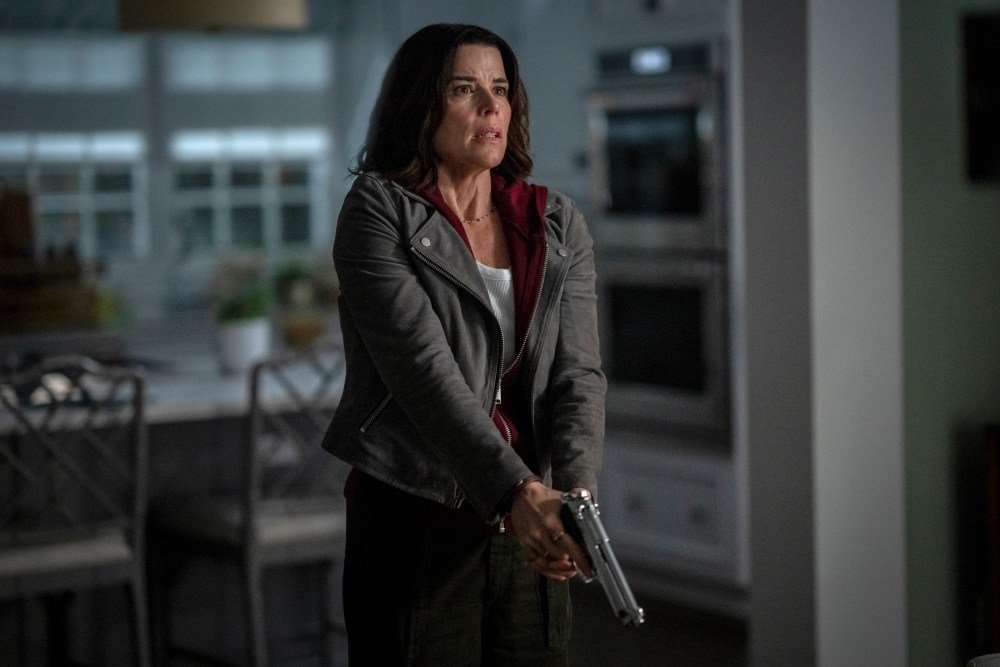
Neve Campbell recently told CBS Mornings that she “didn’t think I could live with myself” if she accepted the offer return for “Scream 6.”
“When I made that decision, I just didn’t think I could live with myself walking on set,” Campbell said. “I just didn’t feel right. I just knew that my value to this franchise was bigger than what had been offered. For me, I needed to make that choice.”
She added, “When I said goodbye to it, I thought that was it. I knew that there was a good chance that would be it.”
Campbell explained that although it was tough knowing that the “Scream 6” production team was “having their first day of shooting and I wasn’t there,” she ultimately knew she made the “right” decision to bow out of the film.
She added, “And when I spoke out about it, it wasn’t really to sort of rally everybody. It was really just my truth at the time, and the fact the people got behind me, I got lovely support, and that was nice. And I do feel that other people need to make those choices.”
Campbell, the longtime face of the “Scream” franchise, told Variety in 2022 that she would not be returning for the sixth installment because she felt “the offer that was presented to me did not equate to the value I have brought to the franchise.”
“Sadly, I won’t be making the next ‘Scream’ film,” Campbell said in a statement to Variety. “As a woman I have had to work extremely hard in my career to establish my value, especially when it comes to ‘Scream.’ I felt the offer that was presented to me did not equate to the value I have brought to the franchise. It’s been a very difficult decision to move on. To all my ‘Scream’ fans, I love you. You’ve always been so incredibly supportive to me. I’m forever grateful to you and to what this franchise has given me over the past 25 years.”
Campbell will return for “Scream 7” after her salary dispute, joining fellow original cast members David Arquette, Matthew Lillard and Courteney Cox. Kevin Williamson, who wrote the first “Scream,” serves as director.
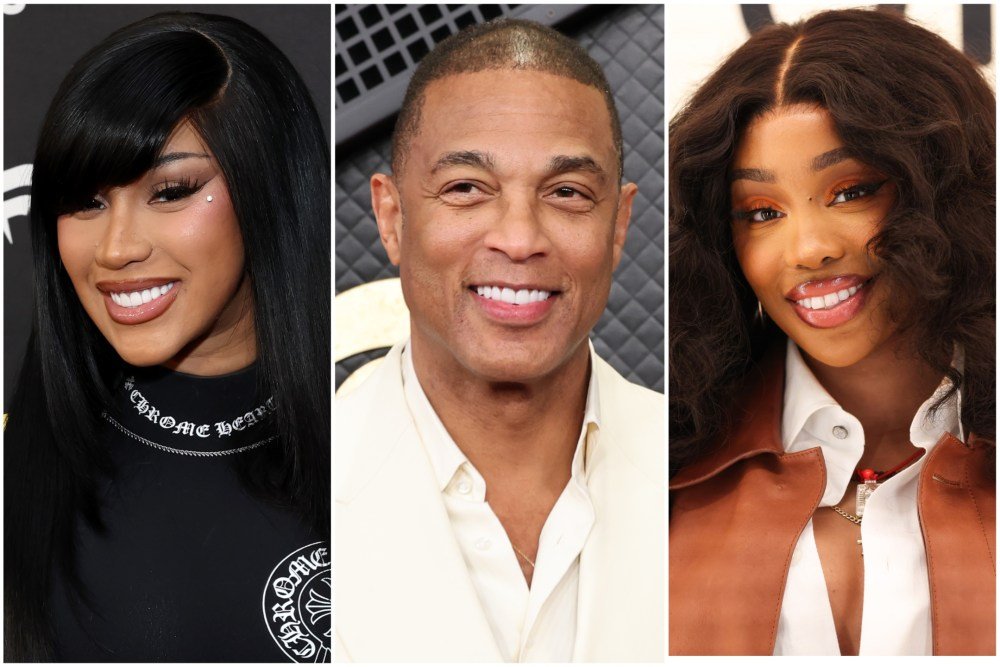
Cardi B, Don Lemon and SZA joined Michelle Obama and Kendrick Lamar as NAACP Image Award winners on night 2 of the virtual pre-show.
Cardi B won three Image Awards on Tuesday night, including outstanding female artist and outstanding album for her latest record “Am I the Drama?” Her track “ErrTime” won the prize for outstanding hip-hop/rap song. Before the ceremony, Cardi B had won just one Image Award, for serving as judge and executive producer of “Rhythm & Flow.”
Veteran journalist Don Lemon won two trophies for his eponymous talk show, “The Don Lemon Show”; Lemon’s news and talk series and Obama’s podcast “IMO,” which the former first lady co-hosts with her brother Craig Robinson, won four of the five awards presented for that medium.
Lamar, who was also a big winner on the first night of the three-part virtual ceremony, hosted by Angel “ThatChickAngel” Laketa Moore and Khleo Thomas. On Tuesday, Lamar also won prizes in two more categories — named outstanding male artist and sharing the music video/visual album award with SZA for their Grammy-winning hit song “Luther.”
Ryan Coogler’s “Sinners” won its first awards out of a massive 18 nominations, collecting the prizes for outstanding soundtrack and original score. The period vampire thriller is the most-nominated project at this year’s Image Awards, which will air live on Saturday, Feb. 28, at 8 p.m. ET/PT on BET and CBS. Deon Cole returns to host the show, broadcast from the Pasadena Civic Auditorium. The recently-wrapped Peacock series “Bel-Air” led the TV categories with seven nominations. The nominees for Entertainer of the Year, the show’s signature category, include Cynthia Erivo, Doechii, Lamar, Michael B. Jordan and Teyana Taylor.
Special honorees for this year’s NAACP Image Awards week include Viola Davis, who will be presented with the Chairman’s Award; Colman Domingo, the President’s Award honoree; A$AP Rocky, to be presented with the Vanguard Award for fashion; and Rev. Dr. Jamal-Harrison Bryant, who will receive the prestigious Mildred Bond Roxborough Social Justice Impact Award.
Watch the virtual pre-show in the video above. The full list of winners from night two can be found below:
Outstanding Music Video/Visual Album
“luther” – Kendrick Lamar & SZA (pgLang under exclusive license to Interscope Records)
Outstanding New Artist
Monaleo – “Who Did the Body?” (Columbia Records)
Outstanding Female Artist
Cardi B (Atlantic Records)
Outstanding Male Artist
Kendrick Lamar (pgLang under exclusive license to Interscope Records)
Outstanding Hip-Hop/Rap Song
“ErrTime” – Cardi B (Atlantic Records)
Outstanding Soundtrack/Compilation Album
“Sinners (Original Motion Picture Soundtrack)” (Proximity Media LLC, under exclusive license to Masterworks, a label of Sony Music Entertainment)
“Do it Again” – Kirk Franklin (Fo Yo Soul Recordings/Tribl Records)
Outstanding Gospel/Christian Album
“Tasha” – Tasha Cobbs Leonard (Motown Gospel)
Outstanding Duo, Group or Collaboration (Traditional)
803Fresh feat. Fantasia – “Boots on the Ground Remix” (Snake Eyez Music Group/Artist Partner Group)
Outstanding Duo, Group or Collaboration (Contemporary)
Chris Brown feat. Bryson Tiller & Usher – “It Depends (Remix)” (RCA Records/Chris Brown Entertainment)
Outstanding Original Score for TV/Film
“Sinners (Original Motion Picture Score)” (Proximity Media LLC, under exclusive license to Sony Classical, a label of Sony Music Entertainment)
Outstanding Album
“Am I The Drama?” – Cardi B (Atlantic Records)
Outstanding Podcast – Scripted/Limited Series/Short Form
“Interesting Things with JC” (Jim Connors LLC)
Outstanding Podcast – News and Information
“The Don Lemon Show” (Lemon Media Network)
Outstanding Podcast – Lifestyle/Self-Help
“IMO with Michelle Obama and Craig Robinson” (Higher Ground)
Outstanding Podcast – Arts, Sports and Entertainment
“IMO with Michelle Obama and Craig Robinson” (Higher Ground)
Outstanding Podcast – Society and Culture
“The Don Lemon Show” (Lemon Media Network)
Getty Images
Monday, February 23
The 57th NAACP Image Awards week kicked off Monday with former first lady Michelle Obama and rapper Kendrick Lamar winning two of the early prizes.
Obama’s latest book, “The Look” — which explored her style evolution from her time in the White House to life afterwards — won the award for outstanding literary work biography/autobiography. Meanwhile, Lamar’s electrifying Super Bowl halftime performance was named outstanding short-form series or special – reality/nonfiction/documentary. Both Obama and Lamar are repeat winners at the Image Awards: she won in the same category in 2019 for her memoir “Becoming,” while he has nine trophies from the NAACP, including two for his 2025 anthem “Not Like Us.”
The awards were announced during the first edition of a three-night virtual event, where winners will be revealed in the majority of the Image Awards’ more than 90 categories (across film, television and streaming, music, literature and podcasts). The pre-show ceremony, hosted by Angel “ThatChickAngel” Laketa Moore and Khleo Thomas, aired exclusively on YouTube and NAACP+ and focused primarily on the literary categories, as well as two digital content creator prizes. For the first time, the NAACP Image Awards got into gaming, with Berlin Edmond Jr., aka Berleezy, winning the top prize.
Watch the virtual pre-show ceremony in the video above. The full list of winners from night one can be found here:
Outstanding Literary Work – Biography/Autobiography
“The Look” – Michelle Obama (Crown)
Outstanding Literary Work – Non-Fiction
“A More Perfect Party: The Night Shirley Chisholm & Diahann Carroll Reshaped Politics” – Juanita Tolliver (Legacy Lit/Hachette Book Group)
Outstanding Literary Work – Instructional
“Who Better Than You?” – Will Packer (Penguin Random House)
Outstanding Literary Work – Journalism
“On Borrowed Time” – Anissa Durham (Online)
Outstanding Literary Work – Debut Author
Charles B. Fancher – “Red Clay” (Blackstone Publishing)
Outstanding Literary Work – Fiction
“Death of the Author” – Nnedi Okorafor (William Morrow)
Outstanding Literary Work – Poetry
“The Intentions of Thunder: New and Selected Poems” – Patricia Smith (Scribner)
Outstanding Literary Work – Children
“Yvonne Clark and Her Engineering Spark” – Allen R. Wells; Illustrated by DeAndra Hodge (Farrar Straus Giroux Books for Young Readers/Macmillan)
Outstanding Literary Work – Youth/Teens
“Nic Blake and the Remarkables: The Book of Anansi” – Angie Thomas (HarperCollins/Clarion Books)
Outstanding Literary Work – Graphic Novel
“Parable of the Talents: A Graphic Novel Adaptation” – Octavia E. Butler, adapted by Damien Duffy, illustrated by John Jennings and David Brame (Abrams ComicArts)
Outstanding Short-Form Series or Special – Reality/Nonfiction/Documentary
“The Apple Music Super Bowl LIX Halftime Show Starring Kendrick Lamar” (FOX)
Outstanding Digital Content Creator – Gaming/Tech
Berlin Edmond Jr. (@Berleezy)
Outstanding Digital Content Creator – Fitness/Wellness/Food
The Brazilian film “Gugu’s World” starts quite literally true to its title by showing the audience its lead character’s room, full of everything he loves. Director Allan Deberton crams much story and characterization in those opening frames. From Gugu’s soccer trophies to his colorful wardrobe to the glitter on his face, this 11-year-old is revealed fully and economically. A complete portrait in mere minutes. He’s shown dancing around and even wearing a cape. An endearing character to fall in love with instantly, thus setting up this charming film.
“Gugu’s World,” which won the jury prize for the Generation section at the Berlinale, is a generous character study of a queer pre-teen. Gugu (Yuri Gomes) lives with his grandmother Dilma (Teca Pereira), in a small house near the Araújo Lima reservoir. Their bond is strong as he lost his mother, Dilma’s daughter, when he was very young. She accepts him unconditionally and their time together is filled with playful joy. At school, he’s doing well and has two supportive girlfriends. He is also a star soccer player. Of course he has a nemesis: a boy named Francisco who’s not as good at soccer, and who keeps calling Gugu “a sissy” while goading him into confrontations. His father Batista (Lázaro Ramos) eyes him with disappointment and euphemistically calls him “a clown.”
André Araújo’s screenplay manages to flesh out all these interrelationships with sensitivity and nuance. The film finds space to tell the story of Gugu and Dilma’s special bond in scenes that feel natural. A highlight is their love of Cyndi Lauper’s “Time After Time,” which was a favorite of Gugu’s mother. When Dilma starts becoming frail, Gugu goes to great lengths to take care of her while keeping others from invading their space. Though different, the same tenderness shows in the father and son relationship. There’s hurt and shame standing between them, but also love that might lead to genuine appreciation of each other at any point.
However, above all Araújo splendidly comes up with an unforgettable cinema hero. In crafting Gugu he writes a wholly original character who also immediately feels familiar. The audience gets to know Gugu so well and fall in love with his courage, singularity and determination to protect his grandmother and their oasis of a life together. In Gomes, the filmmakers hit the jackpot. The young actor brings grit, grief and much exuberance to his performance. He is in almost every frame and holds the film together with a grounded and spontaneous performance that has none of the precociousness that mars many a young actor’s performance. Pereira matches him in warmth and their duet is a pleasure to watch.
Visually the film is as colorful as Gugu’s personality. Deberton, working with production designer Dayse Barreto and costume designer Gabriella Marra, fills the frame with vibrant colors — deep pink and blue, purple and yellow, to show the beauty and vivaciousness of Gugu’s world. He might be worried about his grandmother, frustrated with his dad, sometimes uncomfortable among his peers, but it’s clear he likes himself and knows he will persevere.
Therein lies the strength of this film. Not everything goes well, there’s tragedy and sadness but also a sense of infinite hope that permeates the proceedings. The first sentence the character utters at the beginning of the film is that “he’s going to save the world.” By the end of the film that seems entirely plausible, even believable. If Gugu doesn’t save the world, he will at least protect himself and his grandmother and make their life together as wonderful as can be. The film seems destined to play at many festivals, especially queer ones. However “Gugu’s World” is such a crowd pleaser that it deserves to be seen widely by audiences. They’ll be in for a real treat.
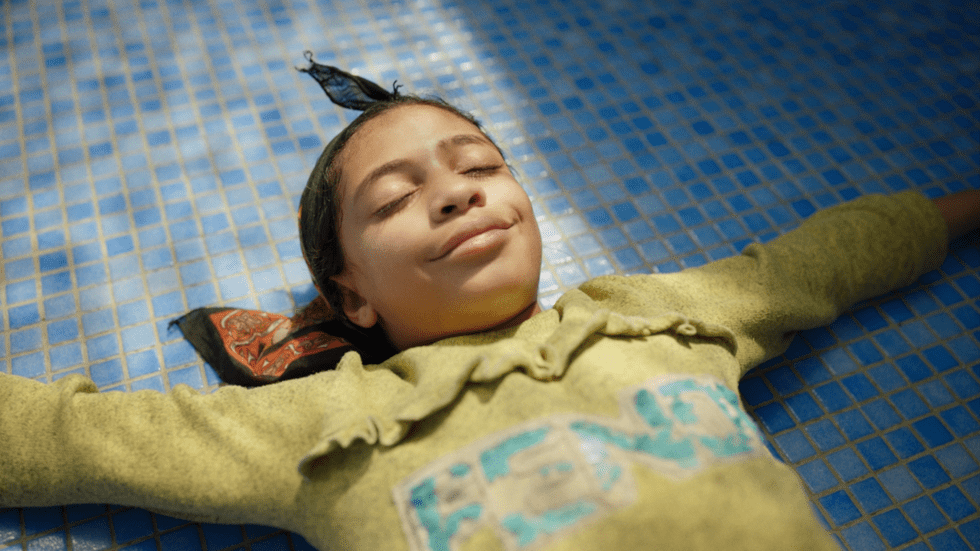
From the trifecta of prizes “Happy Birthday” earned during its Tribeca world premiere in 2025 to the multiple audience awards and other kudos it collected on the international festival circuit, plus, its selection as Egypt’s Oscar submission, the poignant drama is surely one of the best and most awarded foreign features still seeking U.S. distribution. Helmed and co-written by Sarah Goher, the first-ever Egyptian chosen as one of Variety’s 10 Directors to Watch, it illuminates disparities of wealth and class in contemporary Cairo through the affecting story of a resourceful 8-year-old maid whose devoted friendship with the daughter of the household she works for is frowned upon by her employers.
Goher, a screenwriter and producer making her feature debut, proves herself to be a director-writer of uncommon sensitivity. She draws a performance of astonishing depth from Doha Ramadan as Toha, the illiterate but street-smart young domestic who doesn’t yet understand her position in Egypt’s complex social hierarchy.
Smart, capable and quick-witted, Toha’s current joy comes from her relationship with Nelly (Khadija Ahmed), the spoiled granddaughter of her employer (Hanan Youssef), a tetchy, elderly diabetic. Toha helps to hide Nelly’s bed-wetting from her soon-to-be divorced mother Laila (Nelly Karim) and covers for her when she’s late or binging on ice cream. Meanwhile, Nelly enjoys having a friend of a similar age right in her own home and ignores her grandmother’s snide comments about Toha being a potential source of lice.
Now that Nelly’s father has left, financial worries cause the women to prepare to leave their modern home in an affluent gated community. Nelly’s ninth birthday celebration looks to be a casualty of the situation until Toha comes up with a clever plan to get Nelly the party of her dreams. But as the day progresses, Toha, who has no idea of when she was born and has never heard of birthday wishes, finds herself learning some hard lessons that leave the audience quietly devastated.
Goher’s carefully calibrated visuals in partnership with Seif El Din Khaled’s intimate cinematography perfectly establish the painful paradox of money and class. In the film’s opening moments, the two young girls in their pajamas and wildly curly hair play happily in a pink tent on the early morning of Nelly’s birthday. Sure, one has slightly darker skin and the other more delicate features, but they seem like equals. Then, after the adults come into the frame and Toha dresses in shapeless clothes and a headscarf, their social position and economic circumstances become much clearer. Nelly goes to school while Toha fetches and carries for the “Madames.”
Despite her menial work, Toha feels lucky. She hates the subsistence fishing that she would have to do if she lived with her family. Although she might not have her own bedroom at Nelly’s house, merely a couch in a living room, at least she has drawers in which to store her things, many of them Nelly’s castoffs. In contrast, at her mother’s ramshackle house the kids sleep where they can and must share all their clothes. No wonder, in her innocence, Toha tells Laila that she hopes she can stay with Laila and Nelly forever.
(Over)-confident in her ability to make things happen, Toha isn’t conscious of the class-prejudice her mismatched designer cast-offs and headscarf incite at the fancy boutique where she accompanies Laila. But the social boundaries she encounters there are also present in her employer’s household as well as at its very gates.
Unbeknownst to Toha, her employer arranges for Toha’s sister (Jomana Ibrahim) to pick her up so that she can’t participate in Nelly’s party, even though Toha believes that Nelly wants her there. As the sisters leave the complex, the gate guard insists on rummaging through the bags of food and clothing Laila has given them, even calling the house to make sure they had the right to take them. Fatme feels humiliated, but Toha is too busy plotting how to return from her rundown village near the Nile.
Ever enterprising, Toha does eventually make her way back to the party, but there, the ultimate dawning of her place outside of Nelly’s circle is heartbreaking. The sheer joy Goher has captured Ramadan experiencing earlier is replaced by confusion, pain and tears. Goher and her charismatic young star understand how to use cinema as a powerful empathy generator.
Paramount Skydance boss David Ellison will be in attendance at Donald Trump’s State of the Union address on Tuesday night. The news comes hours after his studio upped its bid for the entirety of Warner Bros. Discovery to $31 per share.
Sen. Lindsey Graham of South Carolina posted on X Tuesday afternoon that Ellison will be his guest at Trump’s address.
Reps for Paramount Skydance did not immediately respond to Variety‘s request for comment.
Warner Bros. Discovery said in a press release on Tuesday that the WBD board “had not made a determination” whether or not Paramount’s offer is “superior” to the deal currently in place with Netflix. If Paramount’s new bid is preferable, Netflix will “have four business days after such determination to negotiate with WBD and to propose any revisions to the Netflix transaction.”
Netflix’s deal is around $83 billion for just Warner Bros. studios and HBO Max. Paramount wants all of Warner Bros. Discovery, including its linear assets, for $112 billion. Since Netflix’s agreement is still in effect, the WBD board will continue to recommend the deal with the streaming giant, which will go to a shareholder vote on March 20.
Along with the increased purchasing power of $31 per share, Paramount’s latest offer also includes a ticking fee of 25 cents per quarter starting after Sept. 30, as well as a $7 billion breakup fee if the deal doesn’t clear regulatory scrutiny. Paramount also offered to pay the $2.8 billion fee for Warner Bros. if it terminates its merger with Netflix.
News of the new deal came at the end of a seven day negotaing window, during which Netflix allowed WBD to “seek clarity” on Paramount’s “best and final offer.”
Lesley Manville and Ciarán Hinds are such terrific actors that a lot of us would follow them anywhere. But in the wee drama “Midwinter Break,” these two pour their skills into playing a couple of fuddy-duddies — a homepsun Northern Irish married couple, Stella and Gerry, who have reached their early seventies and are so set in their dainty, placid ways that they’ve become like two old pieces of cozy matching furniture. They sit, they read, they have a drink, they have a meal, they exchange comforting pleasantries…and then another day is behind them. And another, much the same, lies ahead.
The whole design of the movie is to take these two out of their comfort zone, to dip beneath the stodgy surface contentment of their well-worn habits and touch the explosive emotions that the couple — or, at least, one of them — has been covering up.
At Christmastime, they’re at home, Gerry seated in the living room nursing an evening cocktail, when Stella asks if she can still tempt him; we wonder if she means something erotic, and when he turns her down, we really wonder. (Is the threadbare dimension of their marriage that the fire has gone out in the bedroom?) But no, she’s just talking about going to church. Stella and Gerry exist in a state that looks halfway between retirement heaven and a coma. The two have a son, who is grown, who they don’t see very much. They are also exiles: residents of Glasgow, Scotland, even though the film presents them as Irish to the core. There’s a reason they left their homeland behind.
In the middle of the night, Stella gets up and goes over to the computer, acting on a sudden inspiration. A bit later, after exchanging Christmas presents, she hands Gerry an envelope with a surprise gift inside: two plane tickets to Amsterdam, where she has arranged for them to have a four-day getaway. She wants to shake up their routine. But as soon as they arrive in that elegant Dutch city of bridges and hidden corners, it’s clear that it’s going to take more than a change of locale to do it.
The movie opens with a jarring flashback. We see the young Stella (Julie Lamberton), very pregnant, being rushed to a hospital after some kind of accident (she has blood on her arm). A cataclysm took place, but we’re not sure what, and our first thought is: Did she lose the baby? Is their son not their actual son?
As Stella and Gerry settle into their Amsterdam vacation, having breakfast at the hotel, visiting a fabled art museum, always lubricating the day with a pint, a glass of wine, a tumbler of Scotch (Gerry brings a bottle along with him in case he needs a quick refill), we register the depth of their connection. (In the bedroom, it turns out, the fire is still alive.) These two fit into each other’s lives as snugly as nesting dolls, to the point that they may have no surprises left, nothing new to discover.
Except that they do. Stella wants to visit a women’s housing facility that’s also a stately convent: a Catholic retreat nestled right in the middle of Amsterdam. A devout Catholic herself, she’s intensely interested in the women who live there. She tells Gerry, who has always been a secular man, that she wants to find a way to be more devout in her own life. And the reason for that is that she wants…more. More than what the two of them already have. This leaves Gerry flabbergasted. What’s the “more” that she could be talking about? He has no concept of it. He thinks their lives are perfect.
It all connects, of course, to that opening flashback. But what happened there is not, perhaps, what we suspect. Was it a miracle? Stella thinks it was. But the real point may not be about what did or didn’t happen. It’s about how two people in a marriage this close could be so cut from the same cloth and, at the same time, so different. Not because there’s some deep dark secret, but because people are…different. Gerry, we can see, drinks too much (he’s the definition of a happy “functional” alcoholic), and Stella has a problem with that, but the real problem isn’t the drinking. It’s the void Gerry is covering up. And Stella now wants to fill her own void with faith.
The director, Polly Findlay, presents all of this in a fluid and fastidious prestige-teleplay-of-the-week way. Adapting a 2017 novel by Bernard MacLaverty (the script is by MacLaverty and Nick Payne), she creates a generous space for her actors, who turn what might have been a rather staid movie — and still, at times, is — into a meticulous duet.
Manville has often played characters of magnetic will (just think of her domineering snob of a sister in “Phantom Thread,” her lusciously obnoxious tippling receptionist in “Another Year”), but in “Midwinter Break” she throws us for a while because her Stella, at first, seems the picture of dowdy devotion. But it turns out that she’s devoted to something deeper, a mystery she can no longer repress. Manville, in a nifty feat of acting, lets that unruly spirit poke through, even as she persists in trying to keep a polite lid on it. She shows us the spirituality of an ordinary woman. And Hinds, dolefully bearded, makes Gerry as comfy and trusting as an old sheepdog: a genuinely benevolent man, yet one who is starting to drown in his quiet complacency. “Midwinter Break” does nothing earth-shattering (it remains wee), but the movie touchingly colors in how it might be possible for two people to know each other too well and also not well enough.
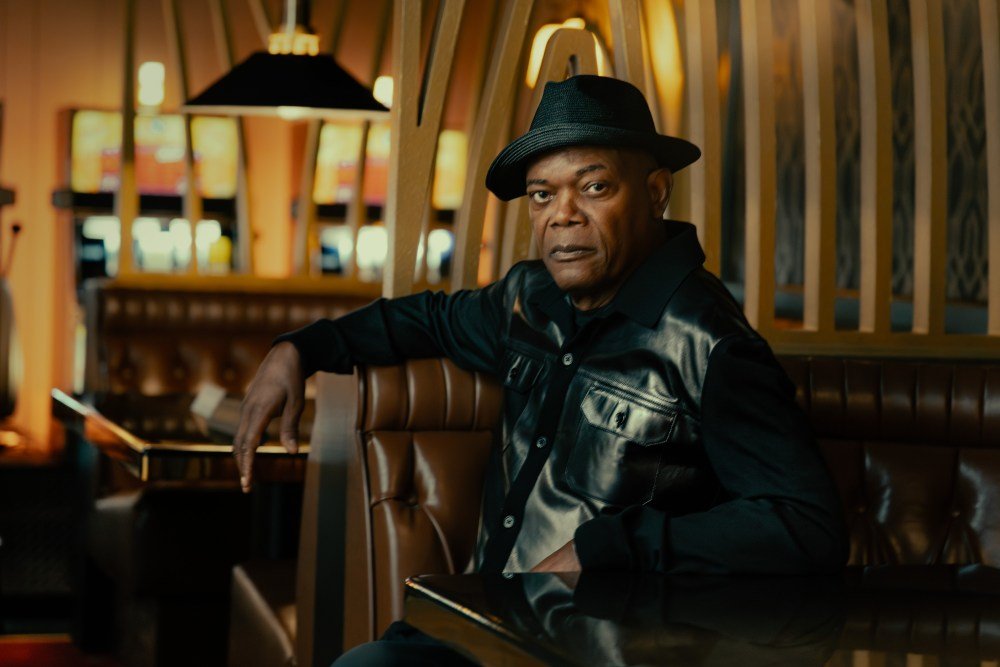
Samuel L. Jackson‘s long-gestating “Tulsa King” spinoff is finally moving forward — but with a new title and setting. Paramount+ announced Tuesday that “Frisco King” — formerly titled “NOLA King” — will start production next month in Ft. Worth, Texas.
“Tulsa King” creator Taylor Sheridan is now set to write all eight episodes of “Frisco King” Season 1, which comes from Paramount Television Studios and 101 Studios. News that Sheridan would write all of “Frisco King” comes seven months after Variety first broke the news that original “NOLA King” showrunner Dave Erickson had exited the spinoff.
“We are honored to have Taylor Sheridan write the first season of ‘Frisco King’ and bring to life Samuel L. Jackson’s iconic character,” said Paramount Television Studios prexy Matt Thunell. “Having him pen all episodes of the season with his singular voice will be a treat for fans of ‘Tulsa King’ and audiences around the world.”
Back when it was called “NOLA King,” the spinoff was to have been set in New Orleans. But with the title change also comes a setting change: “Frisco King” will mostly be set in Frisco, Texas. (According to insiders, the show will still briefly visit New Orleans, but the bulk of the story now takes place in Frisco.)
Jackson was introduced to “Tulsa King” viewers in Season 3 as Russell Lee Washington Jr., “who, after befriending Dwight Manfredi (Sylvester Stallone) during a ten-year stint in federal prison, is sent to Tulsa by New York’s Renzetti crime family to take Dwight out once and for all.” Instead, per the original logline, he’s “inspired by what Dwight created in Tulsa and impressed with the possibilities of second chances.”
Said Paramount+ head of originals Jane Wiseman: “Taylor Sheridan continues to build worlds that attract some of the most iconic talent working today, and ‘Frisco King’ is no exception. Having Samuel L. Jackson step into this universe is a testament to the scale and ambition of the storytelling Taylor is crafting. We’re thrilled to expand this storyline with such a powerhouse creative team and cast on Paramount+.”
Production was previously announced to begin in early 2026; now, the word is cameras will start rolling late March in Fort Worth.
Sheridan, Stallone and Jackson are all EPs on “Frisco King.” David C. Glasser, Ron Burkle, David Hutkin, Bob Yari, Christina Alexandra Voros, Michael Friedman, LaTanya Richardson Jackson and Keith Cox also executive produce.
Paramount+ noted that “Tulsa King” hit Nielsen’s top 10 streaming originals chart for eleven consecutive weeks in Fall 2025.
Jackson’s recent TV output includes the Apple TV limited series “The Last Days of Ptolemy Grey,” the Marvel-Disney+ show “Secret Invasion,” and Peacock’s “Fight Night: The Million Dollar Heist.” He also previously voiced the title character in the animated series “Afro Samurai.”
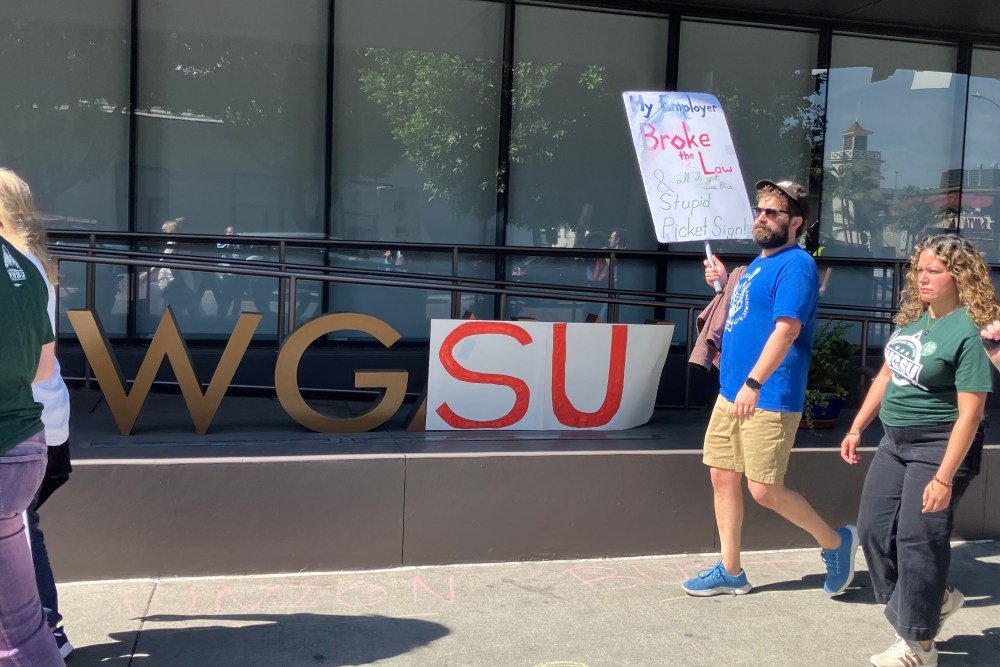
Management of the Writers Guild of America West met with the staff union on Sunday night as the two sides aimed to resolve the week-old staff strike.
But while there has been some movement on some issues, the staff union said that not enough progress has been made.
“Management is still not ready to meet the moment,” said Dylan Holmes, co-chair of the Writers Guild Staff Union bargaining committee, during picketing on Tuesday. “They do not want us to be on this picket line and are trying to figure out how to get us off of it. But they are still unwilling to bargain in good faith with us in order to get there.”
The WGSUwent on strike on Feb. 17, alleging that union leadership had failed to seriously address the staff’s concerns. The staff union — which includes about 100 guild employees — argues that wages are too low and that workers are subject to unfair promotion and discipline practices. Many WGAW employees make $50,000 to $80,000 a year, according to public data.
WGA management has denied the allegations of bad-faith bargaining and said it will continue to work with the staff to reach a resolution. The two sides met on Sunday night at the International Longshore and Warehouse Union hall in San Pedro, as WGAW management sought a “neutral” site.
Another meeting was expected as soon as Tuesday night.
If the strike persists much longer, it could impact the WGA Awards, which are scheduled for March 8 at the J.W. Marriott hotel in downtown Los Angeles. Staff members typically work at the event alongside an event production crew. If they are on strike, it might raise concerns among members about crossing a picket line.
A few dozen WGA members joined the staffers in picketing outside the union headquarters at Fairfax Avenue and 3rd Street on Tuesday morning.
“It’s very hypocritical and quite frankly embarrassing that a union that is always at the forefront of trying to get a good deal for its members won’t do the same for its own staff,” said writer Joe Russo, who was an assistant lot coordinator during the 2023 WGA strike. “I don’t think it’s a good look.”
The WGSU formed last April and is working to get its first contract. Last August, the union filed an unfair labor practices complaint accusing the WGA of firing a union staffer for union activity. At the picket on Tuesday, WGA workers and members carried signs holding Ellen Stutzman, the guild’s executive director, accountable for alleged ULPs.
“Come on y’all, this is embarrassing,” read one sign. Another: “Thought we were on the same team.”
The WGA is due to sit down with the Alliance of Motion Picture and Television Producers on March 16 to begin bargaining new contract on behalf of writers. The WGA has said that bargaining will go on even if the staff is on strike.
“I don’t love that we’d be basically negotiating on two fronts,” Russo said. “So it would be great to resolve this, get all our ducks in order, stop airing our dirty laundry and focus on a deal for members, because at the end of the day that will help staff too.”
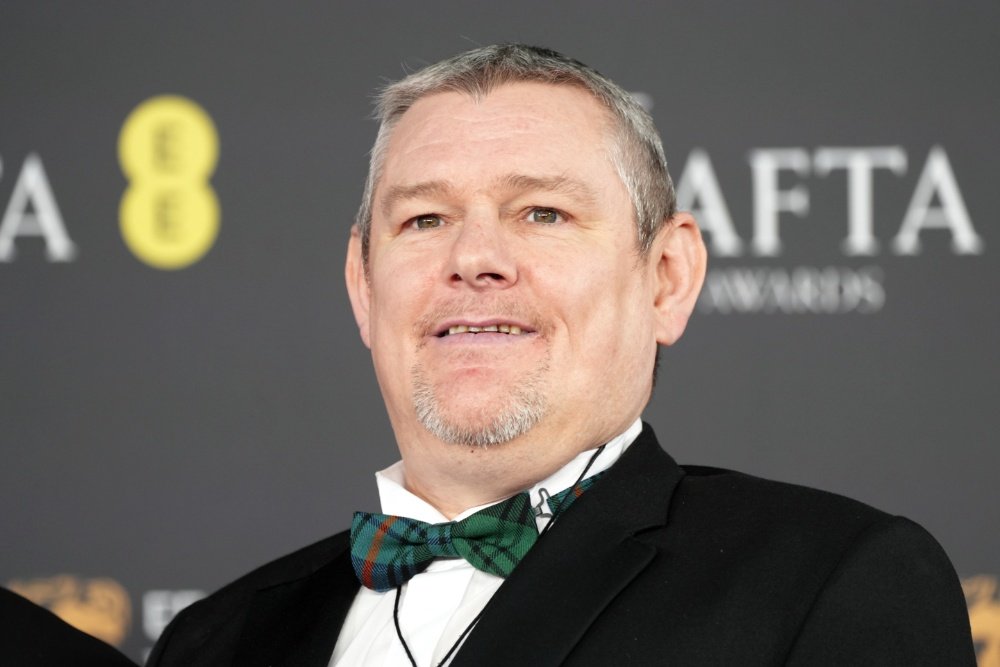
John Davidson, the Scottish Tourette’s syndrome activist and real-life inspiration for “I Swear,” was thrust into the spotlight at the 79th BAFTA Awards when his involuntary vocal tics disrupted the ceremony, including an outburst of racial slurs that occurred as “Sinners” stars Michael B. Jordan and Delroy Lindo presented an award. In an exclusive email interview with Variety, Davidson offers his perspective on what happened, including what precautions and guardrails he had expected the BBC and BAFTA to take before he attended the ceremony.
Since the fallout, Davidson’s team shares that he’s reached out to the studio handling “Sinners” in order to directly apologize to Jordan, Lindo and production designer Hannah Beacher.
Here he is, giving his account, in his own words.
LONDON, ENGLAND – FEBRUARY 22: Michael B. Jordan and Delroy Lindo present the Special Visual Effects Award on stage during the EE BAFTA Film Awards 2026 at The Royal Festival Hall on February 22, 2026 in London, England. (Photo by Stuart Wilson/BAFTA/Getty Images for BAFTA)
Getty Images for BAFTA
Many people’s only frame of reference for Tourette’s syndrome comes from stereotypes, particularly the idea that it’s “just swearing” or saying slurs for shock value. How do you describe the condition to someone starting from that place?
Very often, the media focuses on my particular type of Tourette’s, which is called coprolalia — the involuntary use of obscene or offensive language. This symptom affects 10% to 30% of people with the condition and is not a criterion for diagnosis. However, it is one of the hardest tics to manage and can be very distressing for those living with it. Many individuals report discrimination and isolation as a result.
I have been physically beaten to within an inch of my life with an iron bar after ticking a comment to a young woman whose boyfriend and accomplice ambushed me one evening.
The real challenge isn’t the tics themselves, but the misconceptions surrounding them. Understanding the full range of Tourette’s helps reduce stigma and supports everyone living with the condition.
When socially unacceptable words come out, the guilt and shame on the part of the person with the condition is often unbearable and causes enormous distress. I can’t begin to explain how upset and distraught I have been as the impact from Sunday sinks in.
In the moment before a vocal tic, do you know what’s coming, or does it only become clear after the fact?
Depending on the severity of the condition, people either have an ability to suppress what they are saying for short periods of time, or they don’t. Suppressing can be compared to taking a full bottle of Coca-Cola and shaking it each time you feel the need to tic. Before long, the pressure is so intense it has to be released, and it bursts out — and on occasion, that can lead to a tic attack.
For me personally, my brain works so fast and the tics have always been so aggressive that I have no idea when they are coming or what they will be. I have almost no ability to suppress, and when the situation is stressful, I have absolutely no choice but to tic — it simply bursts out of me like a gunshot.
When a tic involves a slur or taboo phrase, what’s the single most important thing you want people to understand about the distinction between intent and involuntary neurological response?
I want people to know and understand that my tics have absolutely nothing to do with what I think, feel or believe. It’s an involuntary neurological misfire. My tics are not an intention, not a choice and not a reflection of my values.
Those who have seen “I Swear” will understand this. My tics have said and done things over the years that have caused huge pain and upset — punching Dottie [my second mother] in the face is a prime example. Dottie is someone I love dearly. I would never, ever want to hurt her. I have even punched her in the face when she was driving at speed, almost causing a head-on collision.
Tourette’s can make my body or voice do things I don’t mean, and sometimes those tics land on the worst possible words. I want to be really clear that the intent behind them is zero. What you’re hearing is a symptom — not my character, not my thought, not my belief.
Tourette’s can feel spiteful and searches out the most upsetting tic for me personally and for those around me. What you hear me shouting is literally the last thing in the world I believe; it is the opposite of what I believe. The most offensive word that I ticked at the ceremony, for example, is a word I would never use and would completely condemn if I did not have Tourette’s.
I am often triggered by what I see and/or what I hear, and this part of the condition is called echolalia. For example, when the chair of BAFTA started speaking on Sunday, I shouted, “Boring.” On Sunday, Alan Cumming joked about his own sexuality and, when referencing Paddington Bear, said, “Maybe you would like to come home with me, Paddington. It wouldn’t be the first time I have taken a hairy Peruvian bear home with me.” This resulted in homophobic tics from me and led to a shout of “pedophile” that was likely triggered because Paddington Bear is a children’s character.
I would appreciate reports of the event explaining that I ticked perhaps 10 different offensive words on the night of the awards. The N-word was one of these, and I completely understand its significance in history and in the modern world, but most articles are giving the impression I shouted one single slur on Sunday.
What went into the decision to attend in person, and what conversations, if any, did you have with BAFTA or the BBC in advance about how to support you and other guests?
This was an awards ceremony that featured six nominations connected to a film that told the story of my life living with Tourette’s. This has been a three-year project for me, working with the writer, director, production and cast. I am also an active executive producer on the film. I had as much right to attend as anyone.
I also knew that as voting members, most people in the audience would have seen “I Swear” and would be well prepared, well educated and well informed about my condition.
After living with Tourette’s for almost 40 years, I was aware of how physically and mentally difficult it would be for me to attend. I also had a serious heart operation only five weeks ago. I put every ounce of energy and concentration into being able to attend.
I was thrilled to see that on the night, everyone — including some of the most well-respected and famous people from the film world — cheered at my name and applauded. I stood and waved to show my appreciation and acknowledged that this was a significant moment in my life, finally being accepted. It started as one of the most memorable experiences of my life.
StudioCanal were working closely with BAFTA, and BAFTA had made us all aware that any swearing would be edited out of the broadcast. I have made four documentaries with the BBC in the past, and feel that they should have been aware of what to expect from Tourette’s and worked harder to prevent anything that I said — which, after all, was some 40 rows back from the stage — from being included in the broadcast.
As I reflect on the auditorium, I remember there was a microphone just in front of me, and with hindsight I have to question whether this was wise, so close to where I was seated, knowing I would tic.
What was going through your mind in the moment you realized the room could clearly hear your tics?
Initially, my tics were noises and movements, but the more nervous I got, the more my tics ramped up. When my coprolalia tics came out, my stomach just dropped. As always, I felt a wave of shame and embarrassment hit me all at once. You want the floor to swallow you up. I wanted to disappear. I wanted to hide — just get away from all the eyes.
I was hoping people would understand. My mind was saying: These people have seen the film. They will know I can’t help this. They will know it’s not me. This is exactly why we are here. I was saying in my head, “Please don’t judge me. Please understand this isn’t who I am.”
I was trying to calm myself down, to breathe, but ultimately, I made the decision to leave to not cause any more upset. BAFTA found a private room with a monitor where I watched the rest of the awards.
The awards were, in all honesty, just a heightened version of my everyday life and are the reason why, for many periods in my life, I have been fearful of leaving the house — because I am so anxious and nervous about what I might tic and what people’s reaction might be.
You’ve spent years educating and campaigning around Tourette syndrome. Where have you seen real progress — and where does misunderstanding persist most stubbornly?
Sometimes you feel like you are making real progress in educating people on the condition, but there is so much more needed. Comments following the BAFTAs where people have said things like, “I need to stay inside,” “I wouldn’t say these things unless I thought them,” and “I am racist deep down” are deeply upsetting for me, and show there is still so much to do.
The negative responses only go to show the importance of people seeing the film and understanding more about an incredibly complex neurological condition. I had an expectation that the BBC would physically control the sound at the awards on Sunday. I was so far from the stage. From the lack of response from the early presenters to my tics, and with no one turning around to look at me, I assumed, like everyone else, that I could not be heard on the stage.
The only time I became aware that my tic had reached the stage was when Delroy and Michael B. Jordan appeared to look up from their role as presenters, and soon after that I decided to leave the auditorium.
Finally, is there any language you’d ask us to avoid — words like “outburst” or “uncontrollable” — in favor of something more accurate?
It’s important not to use the word “disability.” This is considered a “condition” by the Tourette’s community. I would prefer phrasing such as: “I have lived with the condition …”
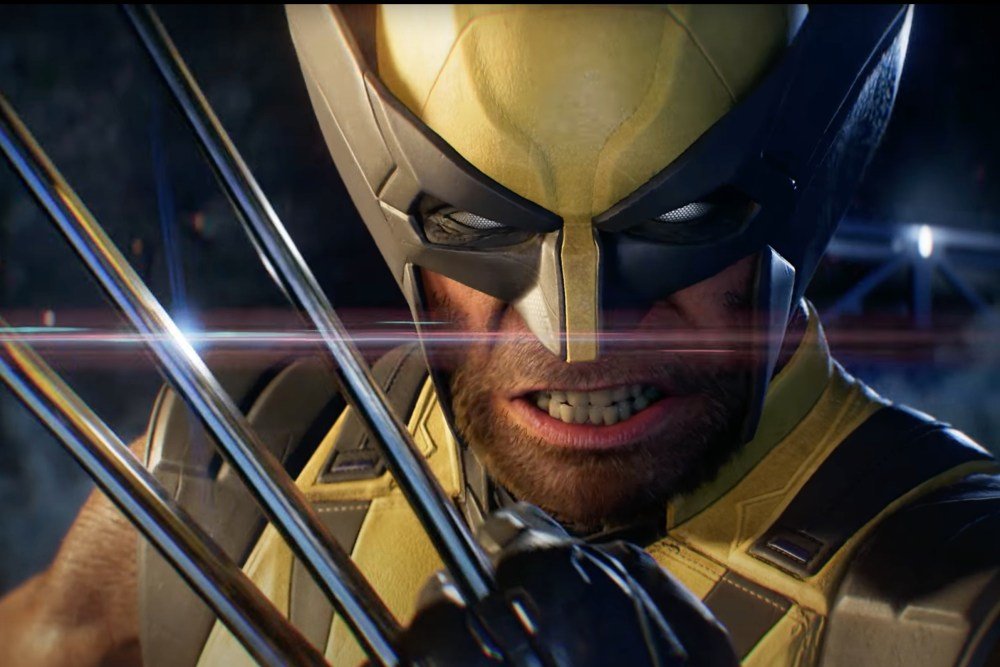
PlayStation’s highly anticipated “Wolverine” video game will launch on Sept. 15.
The titular character, Logan/Wolverine, will be played by Liam McIntyre. Per the studio, the game “intends to deliver the ultimate Wolverine fantasy, with fast, fluid, and ferocious combat; exhilarating, action-packed set pieces, and a gripping story that taps into the core tenets of one of the most compelling comic book characters of all-time.”
“Wolverine” was developed by Sony Interactive Entertainment’s Insomniac Games in partnership with Marvel Games and released its first trailer during PlayStation’s “State of Play” presentation in September 2025.
“We aim to deliver the ultimate Wolverine fantasy built on Insomniac staples like fast, fluid, and ferocious combat; exhilarating, action-packed set pieces; robust accessibility features; and a gripping story that taps into the core tenets of one of the most compelling comic book characters of all-time,” Insomniac Games senior community manager Aaron Jason Espinoza said in a PlayStation blog post first announcing the game. “We’re breaking new ground with Wolverine, yes, but our penchant for telling stories about heroes overcoming colossal odds is as strong as ever. We’re eager to explore Logan’s story with you and tap into his signature spin on heroism, which is much darker and more brutal than you might expect from Insomniac.”