Too much cinematic quirkiness tends to bring out the Lou Grant in me. To jog your memory, when Ed Asner’s character met Mary Tyler Moore for the first time on her classic sitcom, he told her, “You know what, you got spunk.” She hems and haws for a moment before he snarls, “I hate spunk!”
That’s how I felt watching Edd Benda and Stephen Helstad’s relentlessly quirky dark comedy receiving its world premiere at SXSW. You can tell that the filmmakers were going for a Coen Brothers vibe with this comically violent crime tale set in the Midwest (Wisconsin, specifically). With the exception of the central character played by Judy Greer, all the figures onscreen display the sort of eccentricities that are presumably meant to be either amusing or endearing but instead simply come across as odd.
Chili Finger
The Bottom Line
Unappetizing.
Venue: SXSW Film Festival (Narrative Spotlight) Cast: Judy Greer, Sean Astin, John Goodman, Bryan Cranston, Madeline Wise, Paul Stanko, Sarah Herrman, Sara Sevigny, Dann Florek Directors: Edd Benda, Stephen Helstad Screenwriter: Stephen Helstad
1 hour 40 minutes
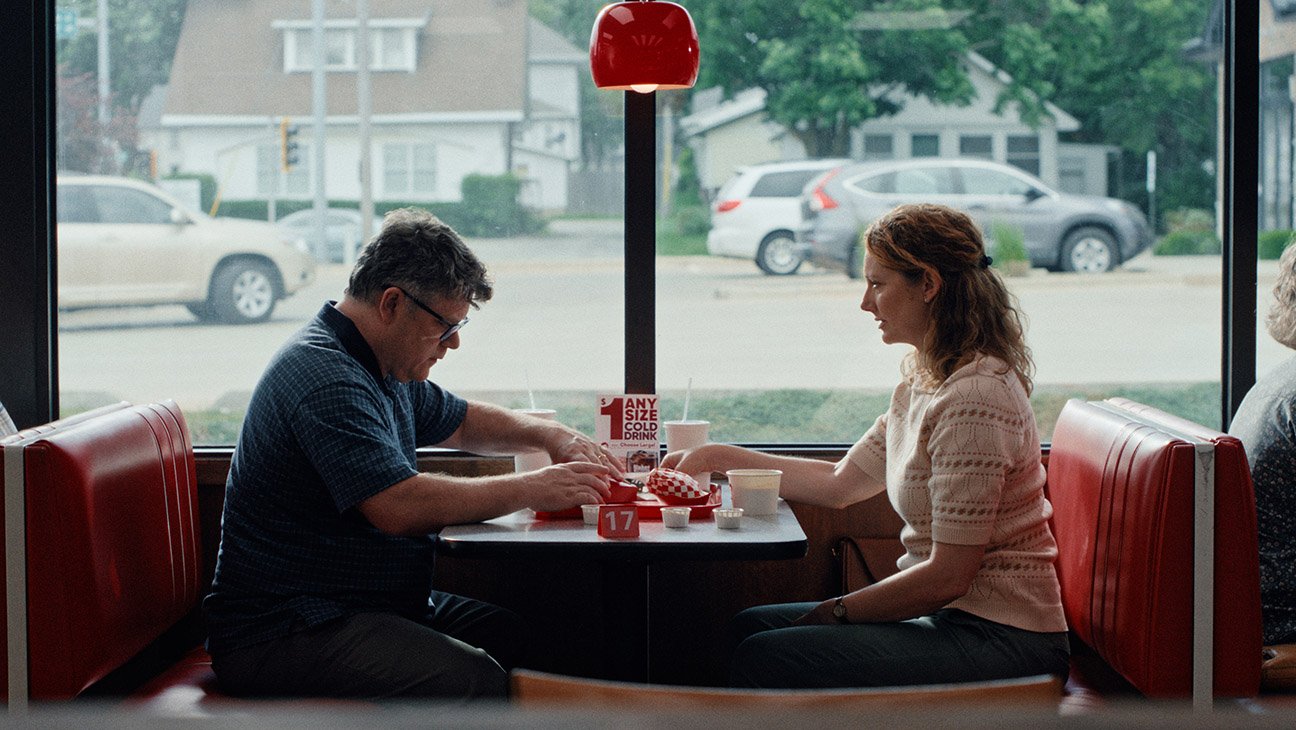
Inspired by a 2005 real-life incident in San Jose, Chili Finger lives up to its title with its storyline involving Jess (Greer), a small-town divorce lawyer struggling with empty nest syndrome after sending her daughter (Shaya Harris) off to college. Even worse, she and her sad-sack husband Ron (Sean Astin) are in such dire financial straits that they can’t even afford to visit her on Parents Weekend.
So it seems a divine gift, albeit a gross one, when she discovers, you guessed it, a severed human finger in the bowl of chili served to her at the fast-food restaurant the couple frequents. It doesn’t take long before Blake Jr. II (Madeline Wise), the daughter of the restaurant’s owner, to show up to take charge of the situation. She offers the couple restaurant coupons, which Ron, who all but lives for their food, is happy to accept. But Jess presses for more, finally receiving an offer of $10,000. And then Ron somehow blunders his way into getting the number jacked up to $100,000 in return for their silence.
That doesn’t sit well with the colorful Blake Jr. (John Goodman, in full tough-guy mode), who prides himself on the restaurant’s motto, “It’s not fast food, it’s good food!” He smells a rat and dispatches his gun-toting, ex-Marine buddy Dave (Bryan Cranston, sporting a handlebar moustache to signify kookiness) to get to the bottom of things.
The situation grows ever more convoluted as Dave sniffs around and eventually discovers that things aren’t as they initially appeared. Throughout the ensuing violent mayhem, Jess, along with an injured factory worker (Paul Stanko) who figures in the proceedings, desperately tries to keep things under control and fails miserably. By the end of the story, characters have been shot, pierced by arrows, gored by a deer, and nearly burned to death in a barn fire. You begin to wonder when someone is going to be thrown into a wood chipper.
The relatively unknown directors — who previously collaborated on a feature, Superior, and a documentary, The Kid’s Table — have somehow attracted a stellar cast for this comedy that strains for the outrageousness of its tabloid-inspired title. You can feel the performers working extra hard to put the material over — especially Goodman and Cranston, who have plenty of experience with this sort of off-kilter black humor but are here undone by the unfunny script. Goodman in particular plays it so darkly that his scenes have a jarring quality.
Astin sinks into his pathetic character with full commitment, but the running gag about Ron getting more upset about the possibility of being banned from the fast-food restaurant than anything else is hammered so relentlessly that the character just seems mentally challenged.
Only Greer, an undeclared national treasure, manages to rise above the material and deliver a fully dimensional, sympathetic portrait of a woman desperately trying to keep things together but finding herself caught up in circumstances way beyond her control. Adroitly balancing humor and pathos, her performance brings the only real human element to the overly contrived proceedings.
Parton made an appearance Friday night at the kickoff of Dollywood’s 2026 season in Pigeon Forge, where she opened up about how the grief of losing her husband of nearly six decades had taken a toll on her.
“I’ve been not touring, as you know,” the country music legend said during a keynote speech at the theme park. “I’ve had a few little health issues, and we’re taking good care of them.”
Parton also shared insight into what contributed to those health struggles.
“I just kind of got worn down and worn out, grieving over Carl and a lot of other little things going on,” she said. “I just got myself kind of where I needed to build myself back up spiritually, emotionally and physically.”
The Grammy winner added that now “all is good” and that the challenges “didn’t slow me down.”
Parton also explained that she has been busy working on her upcoming Broadway show set to debut later this year, as well as music projects including her song “Light of a Clear Blue Morning,” which featured collaborations with several artists.
“I’ve just been doing a lot of writing, a lot of thinking, a lot of praying and a lot of getting ready for a lot of new stuff coming up for the rest of this whole year,” she said. “So, be ready for me. I ain’t done, I ain’t near done.”
Pity the poor horror movie hero. Should they be fortunate enough to survive their unimaginably horrific ordeal with enough ingenuity and panache, odds are good the movie gods will only force them to endure it all over again, at higher intensity and to lower acclaim.
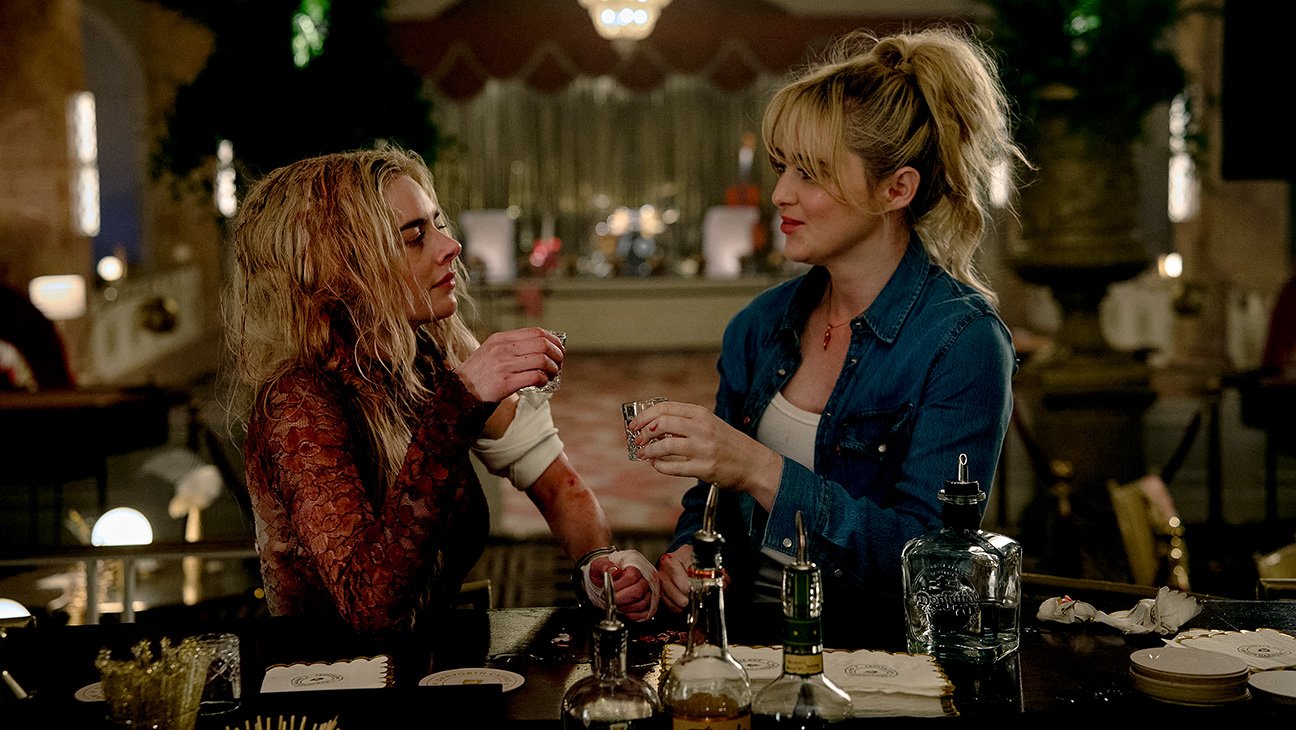
And so it is that Grace (Samara Weaving), who ended 2019’s Ready or Not the sole survivor of the wedding night from hell, barely gets a puff of her cigarette before she finds herself the unwilling participant of another most dangerous game. But though Ready or Not 2: Here I Come doubles down on everything that made the original work, the returns are diminishing. It’s a good enough time, but a downgrade from the last time.
Ready or Not 2: Here I Come
The Bottom Line
Less fun, but not no fun.
Venue: SXSW Film Festival (Headliner) Release date: Friday, March 20 Cast: Samara Weaving, Kathryn Newton, Sarah Michelle Gellar, Shawn Hatosy, Elijah Wood, Néstor Carbonell, David Cronenberg Directors: Matt Bettinelli-Olpin, Tyler Gillett Screenwriters: Guy Busick, R. Christopher Murphy
Rated R,
1 hour 48 minutes
Much of the pleasure of Ready or Not lay in its simplicity: It was no more and no less than an ultra-violent rendition of hide and seek, backed up by some pretty straightforward “deal with the devil” lore. What kicked it up to the next level was Weaving’s singular performance as a final girl, punctuated by shrieks so blood-curdling they sounded downright operatic, and some nice bits of character comedy in the margins, as most of the new in-laws hunting her proved to be not only evil but hilariously stupid.
Here I Come, which reunites directors Matt Bettinelli-Olpin and Tyler Gillett and writers Guy Busick and R. Christopher Murphy, offers more of everything. Where Grace was the sole target in Ready or Not, she’s joined this time by her similarly scrappy, similarly blond, similarly thematically named sister Faith (Kathryn Newton). Where the Le Domases had seemed a singularly devilish family, this film reveals they were just one of six ultra-wealthy Satan-worshipping clans scattered across the globe, and not even the most influential one.
That honor goes to the casino-owning Danforths, whose patriarch (David Cronenberg, in a brief but amusing cameo) wields enough power to call off entire wars with a single phone call. (At a time when it’s become horrifyingly clear how easy it is for one asshole billionaire to start a war, the idea that another could end it just as offhandedly is maybe the most plausible part of the whole movie.) But with the Le Domas lineage annihilated, the high seat of the council of Mr. Le Bail (a.k.a. Satan) is now up for grabs. The remaining families gather at the Danforths’ sprawling Connecticut estate to determine which one will be the first to kill Grace, and therefore to secure the throne.
The element of surprise has mostly worn off, even if Grace tells Faith that one never really gets used to people spontaneously combusting right in front of you. But the appeal is only somewhat worse for wear. Here I Come still may not have much to say about class struggle beyond “the 0.00000001% sure do suck,” but it’s still fun to watch them flail ineptly with their retrograde weapons, whine about their unrelatable problems (“At least sanitize it first,” one complains when he’s handed a sharp pen to sign his name in blood), or get killed off in inventively gruesome ways.
Weaving remains a ferociously magnetic lead, even if she gets less screaming to do this time. And if the character’s Chucks-and-bloodstained-gown look felt like a revelation in the first film, here it might as well be Peter Parker putting on his Spider-Man suit for the way the crowd at my SXSW premiere screening cheered.
Then there are the new additions to enjoy. Sarah Michelle Gellar and Shawn Hatosy (The Pitt) share a believable toxic sibling energy as the Danforth twins, Ursula and Titus, who’ve been training their whole lives for just this occasion. Francesca (Maia Jae), the daughter of a Spanish TV host (Néstor Carbonell), introduces personal vengeance into the mix as the jilted fiancée of Grace’s own late husband. And a viewing room where heirs are allowed to watch the game becomes the film’s comic highlight, with lesser siblings and children going from boisterously trash-talking one another to quaking in their boots as the possibility of losing the game, and thus dying out completely as a bloodline, becomes horrifyingly real.
But with new pleasures come new perils. One is the expansion of the lore, which grows so convoluted it necessitates the introduction of a whole new character to explain and re-explain the rules. While Elijah Wood, who as just recently seen in Yellowjackets and I Love LA excels at playing weird little guys, is ideally cast as Mr. Le Bail’s unflappable lawyer, he’s not a character so much as an exposition machine.
The other is the pressure to raise the stakes on a story that had seemed intense enough already. Through no fault of Newton’s, Faith functions less as a second protagonist than a prop to give Grace more emotional investment in the proceedings by saddling her with guilt over their estrangement or opportunities to nobly sacrifice herself. Meanwhile, in attempting to give Grace an even bigger, badder, darker villain to face this time, the film overshoots its mark, raising the specter of domestic violence in ways that feel just slightly too plausible to fit with the film’s otherwise cartoonish gore.
Here I Come still comes out ahead, in the end, delivering enough of the good stuff to keep a fan yelping and laughing and cheering throughout. But should its creators be eyeing a third gamble on this universe, it may be time for them to do what so many of the Danforths’ casinogoers surely wish they had: ponder the wisdom of quitting while they’re ahead.
“Zero part of me wants to do what I’m doing right now,” insists Jack (Jake Johnson) as he prepares to tell Wendy (Dakota Fanning), his girlfriend of two years, that he thinks they should take a six-month break. He believes she needs the space to figure out what she wants, even as she pleads that what she wants is him.
Oddly, he seems to mean it, or at least to believe he does. He really is happy with her; he really doesn’t have an ulterior motive; he really does intend to just sit around for the next six months, waiting to see if she returns.
The Sun Never Sets
The Bottom Line
On again and off again, on and on again.
Venue: SXSW Film Festival (Narrative Spotlight) Cast: Dakota Fanning, Jake Johnson, Cory Michael Smith, Debby Ryan, Anna Konkle, Lamorne Morris, Karley Sciortino Director-screenwriter: Joe Swanberg
1 hour 42 minutes
Why, then, he mounts this ultimatum anyway is one of the emotional mysteries of The Sun Never Sets. Mostly they’re fun ones, thanks to writer-director Joe Swanberg’s knack for naturalistic chemistry and eye for casual beauty. But just as listening to a friend dither over an on-again, off-again relationship gets old eventually, there’s a limit to how many times Jack and Wendy can flip and flop before the beats grow repetitive.
Initially, Jack’s edict has Wendy reeling. It’s true that she’d always thought she would get married and have kids, and that Jack, who’s a bit older, has made it clear he has no intention of getting remarried or having more kids. But she’s made her peace with the compromise, doting on Jack’s adorable children with his first wife (Anna Konkle) without a trace of resentment. Never mind that her best friend (Debby Ryan) announcing she’s pregnant sends Wendy screaming to herself in her car, overwhelmed to see everyone else moving on while she feels stuck in place.
But then Wendy runs into Chuck (Cory Michael Smith), the ex who got away. Suddenly, Jack’s out-of-the-blue demand looks like a blessing in disguise — especially since this Chuck claims he’s ready for commitment and a family, in contrast to the “scared little bitch” he freely admits he was three years ago. And suddenly, Jack is forced to confront the possibility that his little experiment might not go as planned.
From there, Wendy ping-pongs between the family-man boyfriend who’s not really her boyfriend at the moment, and the fuckboy former flame who’s no longer quite so former. The men oscillate between wooing her and disappointing her, sometimes to comic effect and sometimes to a more bittersweet one. At every turn, all three struggle to distinguish between what they want, what they want to want and what they don’t actually want but are just afraid of not having.
Swanberg’s loose approach to storytelling, in which he outlines a plot and then lets his cast improvise the lines, is perhaps the movie’s greatest asset. Even when the plot machinations feel engineered, as they tend to when characters change their minds as frequently and vehemently as these three do, the cast’s warm, comfortable chemistry — built through body language, shared looks and off-the-cuff remarks — keeps their feelings grounded in a believable spontaneity.
Johnson (whose previous collaborations with the filmmaker include the exceptionally astute Drinking Buddies) is particularly adept at this style of performance. He brings to Jack a playful self-awareness, which paradoxically makes him easier to buy as a real person: Where a fictional one might react to soap operatics like an argument in a bar bathroom with tears or screams, Jack starts laughing, able to see the absurdity of the situation for what it is. This sense of humor, in turn, makes him easier to root for even when he acts, every so often, like a petulant brat.
Fanning, who has rarely looked more radiant despite Wendy spending most of her time in sensible workwear and minimal makeup, has strong enough chemistry with both her leading men that we can see why she’s torn between them, as well as enough magnetism of her own that we want her to be happy even when her behavior tips toward self-sabotage. And Smith is effectively alluring as Chuck, though his is the least developed corner of this love triangle. He’s a hunky symbol for Wendy and Jack to fight about rather than a protagonist with his own legible motives and desires.
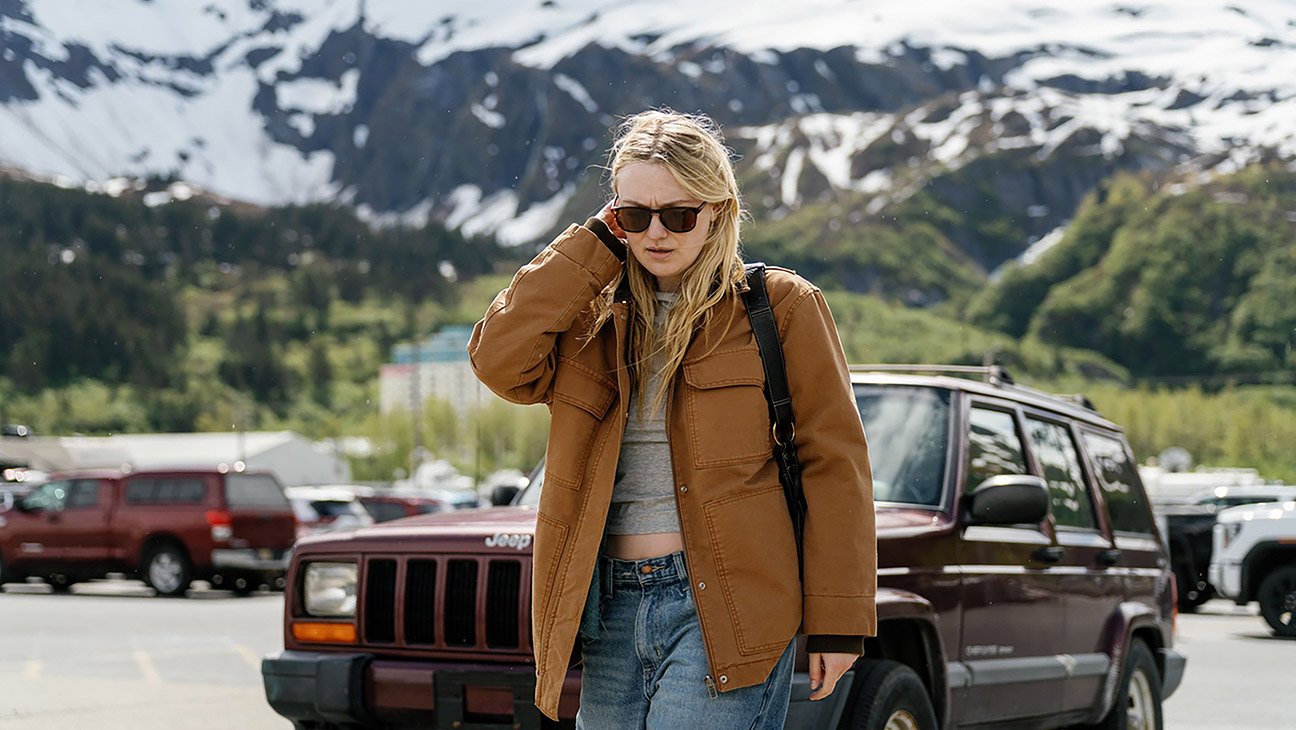
That all of this endless will-they-won’t-they is playing out against the natural splendor of Anchorage’s endless summer days (captured in 35mm by cinematographer Eon Mora) and gorgeously sunlit blond wood interiors (staged by production Aaron Bailey) makes it go down quite easily for a while. If nothing else, The Sun Never Sets mounts an excellent case for visiting Alaska and possibly looking for love there — even if slightly snobbish mainland transplant Jack does describe the local dating pool as “a bunch of goofy guys who smell like salmon.”
If the setting is beautiful and the characters vivid, however, the path that the film cuts through them ultimately proves too jerky and repetitive to take us anywhere truly illuminating. It’s true enough that our heart’s desires can be a puzzle even to ourselves, and that solving it can be the work of a lifetime. But there’s a difference between a character who doesn’t know what to make of themselves, and a film that doesn’t quite seem to know what to make of them either.
Is it a documentary? Is it improvised fiction? No, it is both! And it is called Whispers in May, the second feature film from Dongnan Chen (Singing in the Wilderness), which explores the transition from girlhood to womanhood through the eyes of three Chinese girls on a road trip.
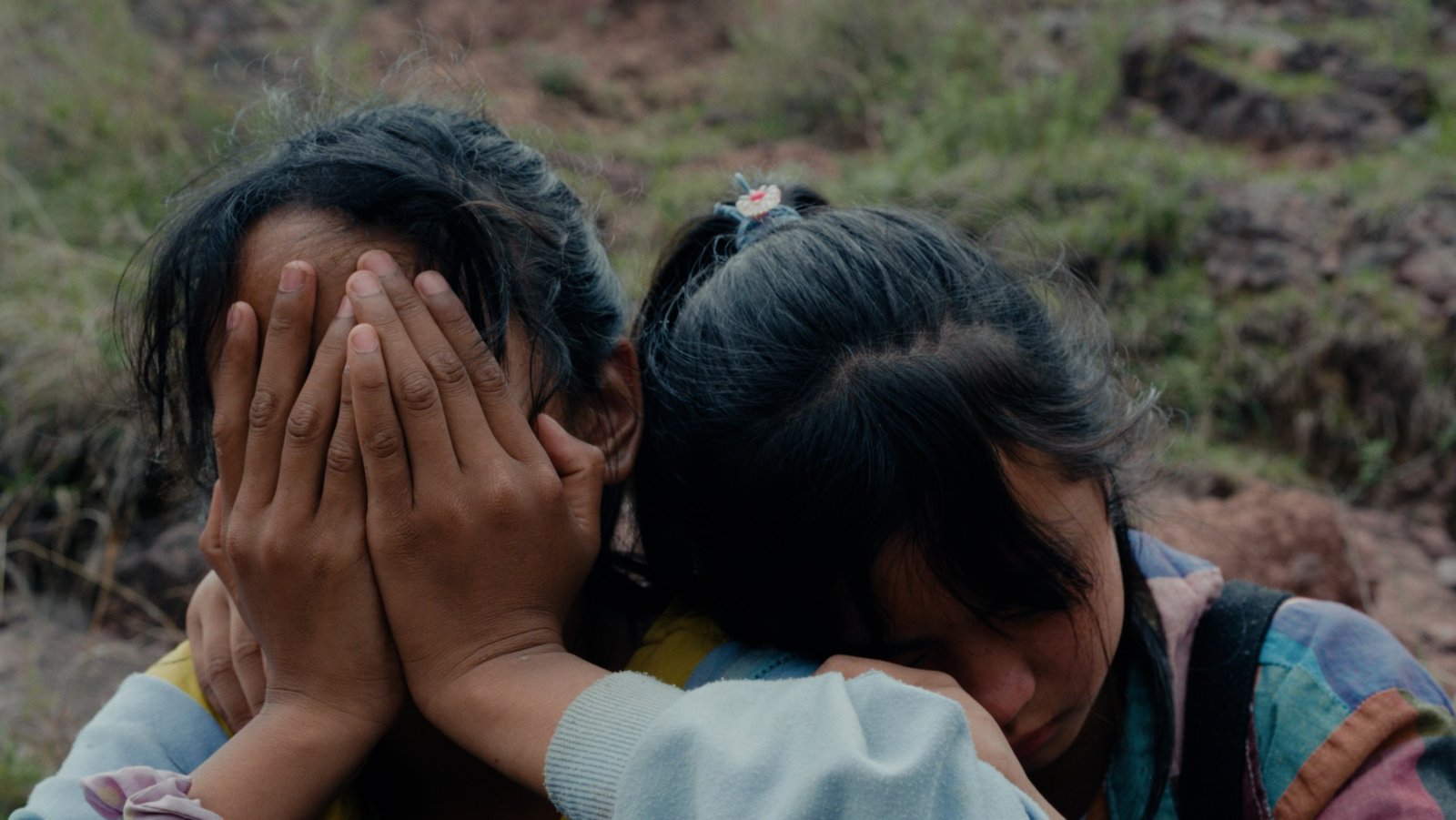
One of the three girls is Qihuo, who has a secret, namely that she has just had her first menstruation. That makes her ready for the traditional “Changing Skirt” coming-of-age ceremony. With her migrant worker parents away, she goes on a voyage with her two best friends to buy a skirt. Whispers in May blends documentary with an improvised fictional journey to follow them and take us to the edge of girlhood and womanhood.
Jia Zhao of Muyi Film produced the hybrid doc with Chen’s Tail Bite Tail Films in co-production with Malin Hüber for Her Film in Sweden and Heejung Oh for Seesaw Pictures in South Korea.
Chen met Qihuo on a trip to Liangshan. “At 14, she was at a point where childhood was starting to slip away,” she recalls. “The world was ready to name her – a woman, wife, and migrant worker – before she could choose her own course.”
That inspired Chen to make Whispers in May. The director talked to THR about the creative process behind the film, its hybrid form, “casting” the girls, and what she will do next.
‘Whispers in May’
Courtesy of Muyi Film/Tail Bite Tail Films
How did you find or “cast” the girls?
I initially traveled to the Liangshan Mountains for a commission on shorts centered on Nuosu women across generations. During the research, I got the chance to read essays written by local school children, and their voices were staggering. Some imagined a future where they might live and die unnoticed in a dim city basement, while others wildly dreamed of lines of suitors in luxury cars stretching from Liangshan all the way to Paris.
But one line felt like a quiet ache: “I’ve made many wishes, but none has ever come true.” That line belonged to Qihuo. When I met her, it was love at first sight, a feeling that’s hard to explain, but it’s how almost all my films begin. From that first day, Qihuo became a constant presence, calling us to ask where we were or if we’d eaten, eventually just following us around. And she discovered and pulled out my very first white hair!
As we talked more, I got to know she was temporarily in a “homeless” state. Her parents were away as migrant laborers, and the grandfather who had raised her recently passed away. She was drifting between the homes of different relatives, but would often sneak back to her grandfather’s old house. It was in this solitude she carried her menstruation secret. In her community, this triggers the Changing Skirt Ceremony, a rite of passage that signals she is no longer a child of her birth family and can be married off for a large dowry. This became a clock. I felt we were racing against time to do something.
Please tell me about how much mixed film forms: how much did you document in traditional documentary form and how much of the film is improvised or staged fiction?
I think of the film as a dream running parallel to reality. The documentary elements provide the soil: the rugged reality of the Liangshan Mountains, the absence of parents, and the gravity of the Changing Skirt Ceremony. But together with the girls, we grew flowers on that soil.
‘Whispers in May’
Courtesy of Muyi Film/Tail Bite Tail Films
Qihuo’s deepest wish was to leave home and see the world, so we chose the form of a road trip as an extension of their immediate environment. For the girls, the distinction between fiction and non-fiction doesn’t really make sense. I simply invited them to treat the film as a space where they could be the protagonists and co-creators of their own adventure.
The interesting thing is that once we stop thinking about the boundary between the two, the process becomes beautifully blurry. I can no longer clearly tell which moments were designed and which happened spontaneously. By letting the girls play themselves, I gradually felt we achieved something truer than facts. Ultimately, we all have a story like that, right? One that exists beyond the borders of our daily lives. Or, to look at it another way: we don’t have to just live the lives we are given; we can invent them as we go. I hope this film empowers these girls to realize that they can be the authors of their own adventures, both for this film and for the life beyond.
How did you and your team work with the kids? They have such great energy and charisma, but I assume you needed to collaborate and protect them?
To me, this production was always a playground rather than a set. The very origin of this film was the girls’ own agency to be on the road, so protecting their courage and curiosity was vital not just as an ethical responsibility, but also for the film to even exist.
We didn’t have a script, but we had a shared outline of possibilities at the start. And we watched clips together during the production to spark dialogues about where to go next. This allowed the film to breathe and follow their rhythm, so the filming became something we discovered together.
During this process, the girls truly revealed to me a fierce and quiet resistance of childhood. To see them on the road, moving away from a prescribed fate and toward an unknown horizon, showed cinema in its purest and most original form. It made me think about what we can achieve through the medium of film; it’s so powerful to extend the boundaries of a life. that
We also maintained a transparent dialogue with the parents and the school to build a foundation of formal trust, while holding a private, sacred space for the girls until they were ready to share on their own terms.
‘Whispers in May’
Courtesy of Muyi Film/Tail Bite Tail Films
I love how we see beautiful nature and how it feels like a contrast to society and its norms and expectations. How important was that for you?
In the wilderness, the landscape echoes the girls’ untamed energy. Nature nourishes them as they grow and is an extension of their inner landscape. It grants them a suspended freedom, where their laughter and sorrows aren’t muffled by noises or expectations. They aren’t subjects of a social category, but simply exist as themselves.
Yet this beauty carries weight. In Liangshan, the mountains are layer upon layer; the very thing that protects their innocence is also what isolates them. The construction scenes throughout the film signal this shifting reality, and the girls often wonder, “What is behind the mountains?” These mountains are more than physical barriers. They also carry the weight of local community norms and the grueling path toward a world they haven’t seen.
Is the myth of Coqotamat, which we hear about in the film, real? Where does it come from?
During filming, the girls would tell stories to each other at night, and Coqotamat was the one they shared most often. They heard about it from their grandparents and are truly terrified by it. It’s an oral tale passed down through generations, and because it’s not a written text, it breathes and changes. I later learned that many communities in Liangshan have different versions, though the core remains the same. It is their shared heritage, but also their shared imagination. So, we decided to embrace this fluidity and created our own version of the myth together.
While Coqotamat is a shape-shifter who wears the faces of a thousand women to lure children away and swallow them whole, the girls are running away from a fate that has been wearing the same face for generations. And in researching the Nuosu folklore [the Nuosu are an ethnic group in southern China], I was struck by how many of them are very similar to Western tales, like the Grimm Brothers’. There must be psychological reasons for this similarity across cultures, as fairy tales serve as a survival manual for little girls by encoding the dangers of the adult world. The Changing Skirt Ceremony is their version of the wolf in Little Red Riding Hood.
‘Whispers in May’
Courtesy of Muyi Film/Tail Bite Tail Films
Can you tell me how you chose the film’s title?
The film’s titles are different in three languages because the feeling of each language is so unique. The English title originates from the Nuosu title, ꉬꆪꂁꇐ (May, Hidden). We happened to make this film in May. It wasn’t really planned, yet it mirrors the last moments of childhood. And the transition to womanhood isn’t a loud explosion; it’s a quiet, drifting slip just before reality settles in.
My friend Arthur Jones helped with the English translation. After watching the film, he was grabbed by the gentle, small sounds – the wind through the mountain flowers and the girls’ voices. He felt that Whispers of May captured the essence of what was “hidden” but translated it into a sensory experience. For the Mandarin title, we used Spring Reverie (春日幻游).
Will we see more films from you? Do you have any new films in the works?
I’m in early development of a hybrid narrative feature about a woman who tries to preserve her hometown through a camera, only to find that the more she records, the more the real world dissolves into a mosaic of digital fragments.
Drawn from my experience over a decade in filming real people, the project explores the fragility of storytelling in an image-saturated world and the search for a truth that might exist beyond the frame.
If you purchase an independently reviewed product or service through a link on our website, The Hollywood Reporter may receive an affiliate commission.
Between rental services and marketplaces for pre-worn goods, the internet is hardly short on fashion retailers promising the best prices on coveted designer pieces. More often than not, though, the reality falls short: quality can be hit-or-miss, sizing runs thin, and the discounts rarely feel as compelling as advertised.
That’s where Rue La La comes in, and, refreshingly, it actually delivers on the promise.
The online shopping platform is home to thousands of discounted favorites, with some pieces priced up to 70 percent below their original retail tags. Everything is available through special members-only pricing that can make an already appealing deal feel even sweeter. But what exactly is Rue La La, and how did a small Boston-based business grow into one of the most beloved insider shopping destinations on the internet? Below, we break down how it works, how to join, and why fashion insiders quietly keep it bookmarked.
What Is Rue La La?
If you’ve never heard of Rue La La, consider this your stylish introduction. Founded in Boston in 2008, the platform began as a “flash-sale concept,” per the company, and has since evolved into one of the easiest ways to score meaningful discounts on designer brands.
At any given moment, the site is stocked with labels shoppers actually want to wear, think everyone from Tory Burch to Ted Baker, alongside heritage houses like Gucci and Louis Vuitton. The inventory rotates frequently, which means the selection rarely feels picked over. During one recent browse, we even spotted a classic Chanel quilted bag listed for under $10,000, a notable drop from the style’s typical $12,000 retail price.
The model is built around a members-only structure. While joining is completely free (more on that below), membership is required to access the deals. The company operates through what it calls “boutiques,” limited-time digital storefronts that spotlight specific brands or product categories. These sales are fleeting, and once the inventory is gone, the boutique closes.
In other words, hesitation is rarely rewarded. In the world of Rue La La, “finders keepers” is very real.
The upside of this fast-moving format is that the selection stays fresh. Rather than lingering for months, merchandise cycles through quickly, keeping the assortment aligned with what shoppers are actually looking for. Case in point: a sleek Alice + Olivia little black dress recently marked down to $179.99 from its original $465 price tag.
What Is Rue La La’s Membership Program, and How Does It Work?
Rue La La’s membership program is the only way to shop the platform, but despite the exclusivity of the concept, there’s no steep price of entry.
Membership is completely free.
Shoppers can sign up through the website or the brand’s app by entering an email address and confirming they’re at least 18 years old. Once registered, new members receive a 10 percent off code for their first purchase. From there, you’re officially in the club. The brand even offers an additional loyalty program where members can get free shipping for a year, invite-only sales, and other exclusive perks for only $30 (for the first year).
What’s Available on Rue La La?
Once inside, the sheer breadth of Rue La La’s inventory becomes clear. The platform carries fashion for men, women, and kids, alongside home décor, beauty, and lifestyle finds, making it something of a one-stop shop for elevated essentials.
The site itself is refreshingly intuitive. A clean navigation bar lets you browse by brand, category, or curated edit, while a dedicated clearance section offers even deeper markdowns on already-discounted pieces.
One feature worth bookmarking: “Today’s Fix.” The daily spotlight highlights a standout deal, often one of the best values currently on the site. Think of it as a small digital surprise, the kind that makes opening the homepage feel a bit like fashion advent calendar season.
And the inventory isn’t limited to clothing or accessories. Rue La La also offers travel experiences and luxury getaways at discounted rates. At the moment, for example, shoppers can find a stay at a Costa Rican lodge for up to 53 percent off, a reminder that the site’s definition of “lifestyle” goes well beyond the closet.
And if you’re ever worried about getting a dupe…not here. Rue La La takes the authenticity of a product very seriously, stating on their website, “Rue La La stands by the authenticity of every product sold on our site. Occasionally, we purchase merchandise from trusted independent suppliers, not directly from the brand owner. This includes pre-owned products.”
going fast
The Tranquilo Lodge Costa Rica
$924.00+ $1,980.00+ 53% off
Why Is Rue La La Worth It?
In short: yes, it’s worth it.
Rue La La is as thrilling for the seasoned sale-hunter as it is convenient for the everyday shopper who simply wants designer pieces without the designer markup. The constantly rotating inventory keeps things interesting, and the limited-time boutique format injects a little adrenaline into the browsing experience.
Shopping here doesn’t feel like ticking an errand off a list; it feels like discovering something.
The result is a retail experience that’s always new, rarely predictable, and surprisingly addictive. Think of it as a roulette wheel of designer deals: once you sit down at the table, it’s hard not to stay for just one more spin.
editor’s pick
Tod’s Leather Ballerina Flat
great deal
Spanx Brushed Full Zip Jacket
rare find
Louis Vuitton Brown Monogram Canvas Utility Crossbody (Authentic Pre-Loved)
“I know him,” Larry David conceded, when asked about his friendship with former President Barack Obama during a Friday SXSW panel. “Don’t look down on him because of that. We play golf together from time to time.”
More than a casual friendship, the duo are producing a forthcoming sketch comedy series (also starring David) for HBO about American history pegged to the country’s 250th anniversary. The show puts David in various famous scenarios throughout the county’s history. It’s a weird time to be celebrating the U.S., longtime David collaborator Jeff Schaffer noted during the event, but they seem proud of the work all the same — previewing a clip of David as a bit of a sexual predator in the famous VJ Day photo of the soldier kissing a dental assistant in Times Square.
“It’s sort of like throwing a birthday party for your friend that’s in rehab,” Schaffer said of America. “He’s fucked up. But I love him.” (The comedy scribe’s barbs were not reserved for the country, he also referred to HBO, in the process of being acquired by the Larry Ellison-backed Paramount along with the rest of Warner Bro. Discovery, as “the cool division of Oracle.”)
Their series, by the way, now has a title. It’s called Life, Larry and the Pursuit of Unhappiness: an Almost History of America. It’s essentially “Curb Your Enthusiasm in costumes,” the pair noted. And it premieres June 26.
But beyond the details of the project, which included news of cameos from the likes of Jon Hamm, Susie Essman, Lin-Manuel Miranda and many, many more, the highlight of the panel was unquestionably Schaffer interrogating the manner in which David engaged with his fellow producer — again, that’s President Barack Obama — while working on the show.
Schaffer said their time in the room together included plenty of Obama ribbing David. “He was ragging on your golf game, ragging on how much sunscreen you wear,” he observed.
“I said, ‘I’m sorry my father wasn’t born in Kenya,’” said David, as perhaps only he could get away with saying.
But the real delight of the event had to be an anecdote about Obama trying to give a note on one of David’s proposed sketches. His disagreement with the humor of the bit, which Schaffer said followed a solid 45 minutes of Obama praising David, was not well-received by the famous curmudgeon. Obama, as Schaffer told it, then stressed that throughout his presidency he deferred to the guidance of experts in their fields.
David, he said, was unmoved. “On Curb and Seinfeld, I’m used to being the boss,” David elaborated. “Obama is also quite used to being the boss. We came to bit of a loggerhead there.”
At that point, David said he turned to Obama and offered the following compromise: “I said, ‘I’m president here.’”
Larry David and Jeff Schaffer at Featured Session: A Waste of Time with Larry David and Jeff Schaffer during the SXSW Conference & Festivals held at JW Marriott on March 13, 2026 in Austin, Texas.
Mike Jordan/SXSW Conference & Festivals/Getty Images
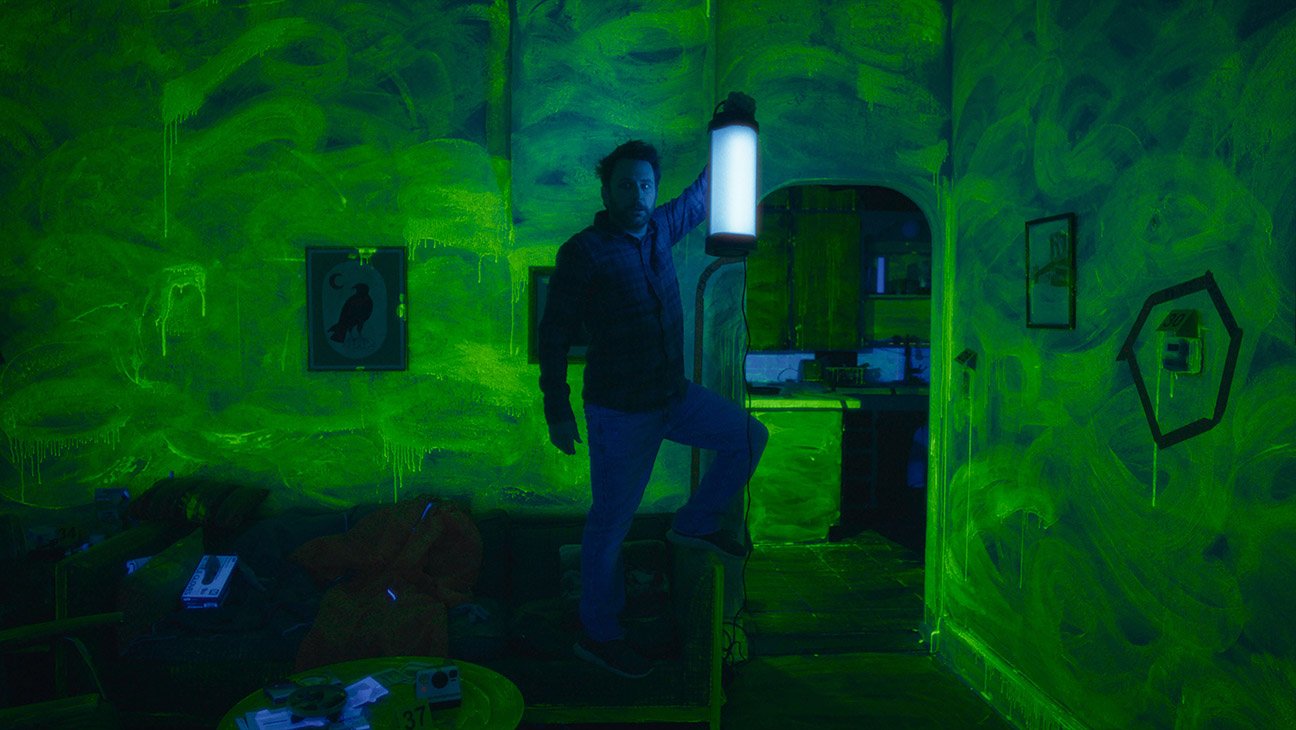
Speaking to the very cops he’d called to report that someone’s tried to kill him, Jimmy (Charlie Day) suddenly grows panicked. He wants to plead the fifth; he wants to call a lawyer; he’s terrified they’re accusing him of “attempted self-murder.”
The police, understandably, are baffled. The normal term for that is “suicide,” and in any case it’s not anything they’d arrest him for. But Jimmy’s choice of wording is the key to Peter Warren’s directorial debut Kill Me, premiering at SXSW.
Kill Me
The Bottom Line
Dark and twisty.
Venue: SXSW Film Festival (Narrative Spotlight) Cast: Charlie Day, Allison Williams, Giancarlo Esposito, Aya Cash, Jessica Harper, David Krumholtz, Tony Cavalero Director-screenwriter: Peter Warren
1 hour 45 minutes
To the rest of the world, it may seem obvious that Jimmy cut his own wrists. Jimmy, however, can only understand what’s happened to him as a potential murder, even if it means eventually, reluctantly acknowledging himself as a suspect.
It’s intriguing framing for what could otherwise have been a bleakly earnest drama, conceptualizing depression as an assassin more lethal than any serial killer and one’s own psychology as a mystery more unsolvable than any cold case — with a bracingly morbid sense of humor, to boot. If its exploration of these ideas is ultimately too incomplete to feel fully satisfying, its performances are strong enough to draw attention throughout.
In fairness to everyone who’s not Jimmy, the evidence against him seems crystal clear. The film opens with Jimmy in his bathtub, expelling his last bits of energy to place a 911 call. (That the bathroom looks so dingy he could almost be in a Saw movie is one of many clever production design choices from Ashley Cook.) From his family — which includes his sister, Alice (Aya Cash), his mother (Jessica Harper) and his stepfather (Michael Flynn) — we learn he has a long history of mental illness — notably a very similar incident four years earlier. From the cops, we hear there was no sign of anyone else in his apartment, which, they note, locks from the inside. Not even Jimmy, once he begins frantically scouring his place for forensic evidence, is able to prove otherwise.
Jimmy, however, is resolute that he doesn’t remember doing it. And anyway, why would he? He can’t think of a reason — even as his family points out that he’s been especially down lately, even as he admits to his therapist (Giancarlo Esposito’s Dr. Singer) that he’s stopped taking his meds and even as he’s quick to come up with heartbreakingly mundane justifications for why other people might wish him dead. (Among them: his ex-girlfriend Sarah, played by Sam Rothermel, for not jogging enough, for embarrassing himself at her work party and for not being able to get his dick up that one time.)
Kill Me’s tone veers between dark comedy and even darker drama, and in its goofier moments benefits from Day’s knack for playing guys in the middle of a shrill and wide-eyed freakout. The script, also written by Warren, includes some memorably sharp and funny lines — I laughed at Jimmy, in his initial call to 911, worrying that his blood might stain his bathtub (“Yeah, I think it might,” responds the dispatcher, Allison Williams‘ Margot, after a beat) and his insistence that his dirty apartment is not him living in filth but him living in evidence.
But the role also allows Day to go in sadder, more serious directions, as Jimmy oscillates between his insistent certainty that he’s been targeted and his overwhelming fear that the only person he truly has to fear is himself. Following him through those many mood swings is Margot, a wan, numb soul who has her own reasons for refusing to abandon him. The romantic spark that catches between them is unexpectedly sweet, even hopeful, even as we never lose the uneasy sense that they’re clinging to each other the way shipwreck survivors cling to driftwood.
Kill Me does a fine job of keeping the viewer guessing whether Jimmy’s really onto something (he does eventually come into some clues that could support his theories) or whether he is, as Alice puts it, living “in a Sherlock Holmes fantasy where you just sail on an ocean of delusion.” But while it understands Jimmy’s pain on a bone-deep level, the film occasionally seems almost as cruel to Jimmy as he is to himself.
Over and over, Jimmy is confronted by suggestions that he might not be the only one who suspects he might be better off dead. There’s a suicide victim’s son (David Krumholtz), who spits that “The most selfless act [my dad] ever did was killing himself so my mom and I could move on.” Another suicide victim’s father talks of how his daughter finally “found peace,” of the sort Jimmy complains eludes him. The deep concern Jimmy’s loved ones have for him is clear. The affection they feel for him is less so.
Arguably these are honest if harsh reflections of the way Jimmy sees his place in the real world, and a sharp turn into sentimentality wouldn’t suit a film as prickly as Kill Me anyway. But without any real emotional resolution, the movie ends up feeling incomplete — a bit, perhaps, like a hit job that leaves the victim still gasping for air.
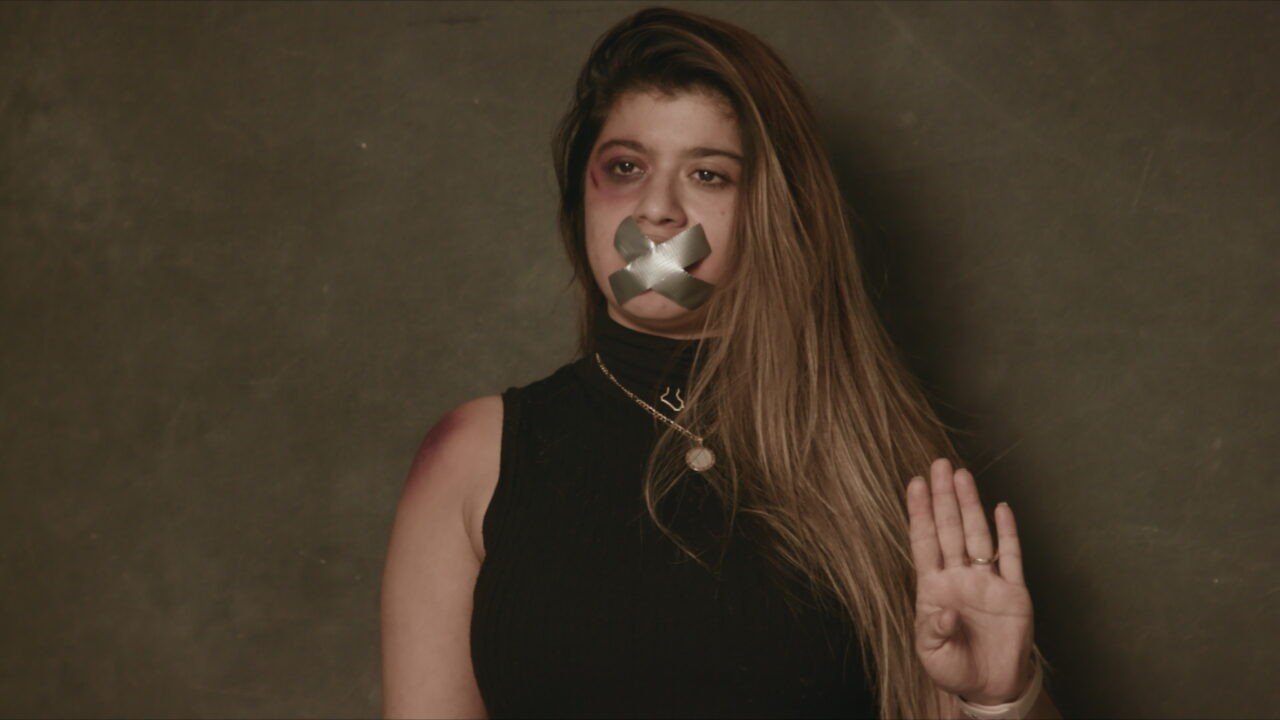
Tamara Amer is fighting “a fierce battle against negative social control, a culture of silence, and the oppression of women in Iraq, where she grew up.” You have to watch the new documentary Burning Voice, though, to get a more detailed picture that the press notes for the film hint at. After all, since founding the online platform Iraqi Women Rights in 2011, Amer has used her voice and her dual position as an insider and outsider in Baghdad to help educate Iraqi women about their rights. Now, her work and her struggles are coming to the big screen.
“She has inspired Iraqi women to dare to break the silence and report violations,” a synopsis notes about Amer. “But it is far from safe for women in Iraq to speak out about such issues. Tamara herself has lived with harassment and serious threats for over a decade. Not only from people trying to sabotage her work for women’s liberation, but also from her violent ex-husband, from whom she fled with their son. He now refuses to grant her a divorce or leave her alone. But rather than breaking down, Tamara channels all the resistance she encounters into her activism and her enormous care for her family and sisters around the world who are also fighting for life and freedom.”
Bruun Nørager and Amer, in email interviews with THR, shared insights into the experience of making Burning Voice, the plight of women’s rights in Iraq, as well as in other parts of the world, and the inspiration they hope the doc can provide to audiences.
Anna, how did you find out about Tamara and her work? And what inspired you to make this film?
Bruun Nørager I got to know Tamara through the research I did for a short documentary [#FollowMe] in 2019 about this online network of Iraqi women using social media to challenge norms and traditions in their country. I continued working with this subject, and Tamara and I found each other in a common aim for women’s rights.
First, I started documenting her work as an activist and volunteer. I filmed many different cases, but at some point, the project naturally developed to be Tamara’s story. I find the relentless energy she has fighting for justice extremely fascinating and inspiring, and I guess that’s what inspired me to make this film in the end.
‘Burning Voice’ film still
Courtesy of Anna Bruun Nørager
Tamara, how was it having a film made about you and sharing your battle and vulnerability for the world to see?
Amer Opening up my private life to the world was never easy, but I viewed this film as an essential extension of my mission. My goal was to document the unique, often invisible reality of being a women’s rights defender from a distance. Over 15 years of voluntary work, I have proven that distance is no limit to impact. Through our digital platform in Denmark, I’ve led campaigns tackling deep-seated social issues like harassment, GBV (gender-based violence), school violence, and the growing threat of digital blackmail.
My happiness is found in seeing a woman overcome these hardships. If this film offers even one person a roadmap to safety, then every vulnerable moment captured was worth it.
How did you approach this story as a director? I feel it balances the specific with a focus onon Tamara and Iraq, yet it also has universal echoes relating to women worldwide.
Bruun Nørager The Iraqi law system protecting men when killing their wives, sisters or daughters is a structural problem. Especially in the fact that femicide is increasing worldwide. It’s not a question of country or culture. It’s a question of being a woman – which is something half of the world’s population can relate to in different aspects, depending on the scale of rights and protection they’re born into. But to narrow this subject into a film, you need a pinpoint to show the personal story in the bigger context.
‘Burning Voice’ film still
Courtesy of Anna Bruun Nørager
I love the film’s title. How did you find it?
Bruun Nørager It’s been quite a journey to find a title, and for a long time, we had so many different ideas and versions written on the wall in the editing room. One of the things I’ve heard Tamara say repeatedly is that she won’t shut up. “I won’t shut up.” And as a person, she has this strong and fearless energy that feels like a fire to me. So, in the end, the word “burning” came together with the word “voice” – and suddenly it just felt right.
Tamara, what’s the status of your NGO in Iraq right now?
Amer Currently, my NGO, Support Her Organisation, is inactive. After facing constant threats and attempts to compromise the safety of our volunteers in Iraq, we made the heartbreaking decision to halt operations last year. My dream was to build safe shelters where none exist, but the environment has become too dangerous. The recent assassination of Yanar Mohammed, founder of the Organization of Women’s Freedom in Iraq, just last week, confirms that it is no longer rational or safe to maintain a physical presence there. We cannot protect others if we cannot protect the defenders themselves
What are your hopes for the impact the film can have for women’s rights in Iraq and beyond, given the global backlash against women’s rights?
Bruun Nørager Since Tamara and I started filming in Iraq, the danger of being a feminist and activist has increased. Recently, Yanar Mohammed … was killed on the street of her own house, a woman whom Tamara also knew and collaborated with. And this is just an example of how extreme conservative forces are trying to push down the fight for women’s rights. I truly hope this film – regardless of those who are trying to shut down our voices – will reach its Iraqi audience, inspire young women and push for a legal system that actually protects women.
‘Burning Voice’ film still
Courtesy of Anna Bruun Nørager
Amer One of the film’s purposes is to shine a light on the extreme risks women’s rights defenders face today. My hope is that by sharing my story and the reality of working from Denmark, we can spark a global conversation about the urgent need for protection and real shelters in Iraq.
I hope this film moves people from passive sympathy to active support for those of us fighting on the front lines, whether remotely or on the ground.
Anna,will we see more films from you in the future? Do you have any new projects in the works?
Bruun Nørager This film is for sure just the beginning. I know I have a lot more films in me to do. But right now, my focus is on Tamara and getting our film out into the world. And then I’m sure later on I’ll know what my next project is going to be.
Like many movies before it, Anima places two strangers together in a car and sets them on a course fueled by mutual dependence, disconnection and bottled-up emotion. It’s as tried-and-true a story template as you can find, and one that writer-director Brian Tetsuro Ivie gently twists, to magnificent low-key effect, with a dash of icy sci-fi and a soulful retro yearning.
Indispensable indie actors Maria Dizzia and Lili Taylor, filmmaker Tom McCarthy and Marin Ireland all contribute well-etched supporting turns, but essentially this is a two-hander, with Takehiro Hira (Shogun) and Sydney Chandler (Alien: Earth) superbly unsentimental as unlikely travel partners: a dying man and the person hired to deliver him to his final appointment. Set about five minutes in the future, Anima revolves around the possibilities of virtual reality and is, at its essence, a story of more age-old concerns — namely, the parent-child bond and the transcendent power of music. As its central duo move through New England towns, it’s also a movie whose eye for architecture recalls Kogonada’s Columbus.
Anima
The Bottom Line
Puts a sharp spin on a well-traveled genre.
Venue: SXSW Film Festival (Narrative Spotlight) Cast: Sydney Chandler, Takehiro Hira, Marin Ireland, Lili Taylor, Tom McCarthy, Maria Dizzia, Maximilian Lee Piazza Director-screenwriter: Brian Tetsuro Ivie
1 hour 30 minutes
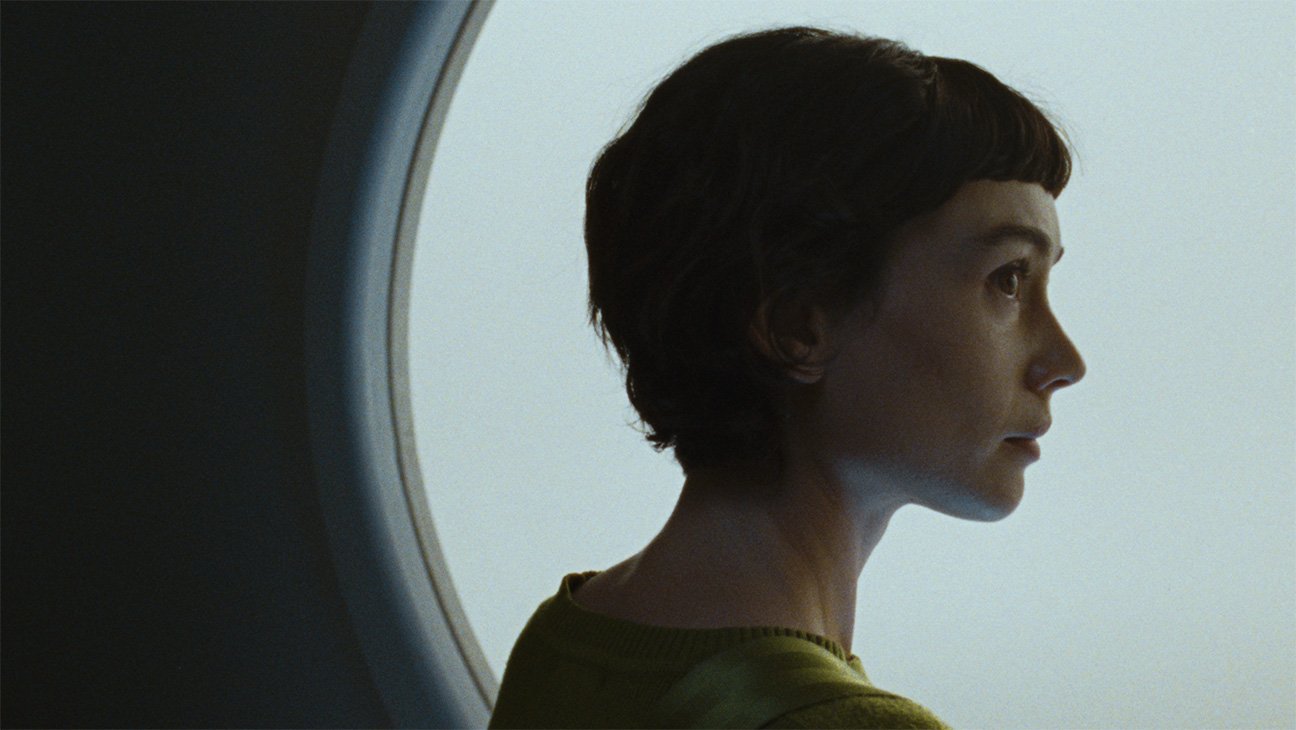
Chandler plays Beck, who lives in a tiny New York apartment and has just been laid off from her job at a company that makes robot pets. Her résumé draws the interest of Anima Technologies (whose headquarters are played by a striking 21st-century building on the Bard College campus). The pricey product Anima sells is a cloud-based version of the dearly departed that preserves “the deepest part” of clients’ identities after their physical death. The exec (Ireland) who hires Beck assures her that what they’re offering is no mere algorithm or chatbot, though she herself sure sounds like one.
For reasons that have a screenwriterly symmetry but not an on-the-nose obviousness, Beck has been matched with Paul (Hira), an important (read: deep-pocketed) client. The company doesn’t want to risk the chance that he’ll back out of his scheduled “asset transfer,” and the assignment Beck can’t afford to turn down is to drive him from his home to Anima for the procedure. As to the efficacy of Anima’s offering, she’s a skeptic, while her mother, Jo (Dizzia), a recently widowed device-averse bohemian, refers to the company as “death capitalists.”
Whether or not his waterfront home is on an actual island, Paul is an emotionally isolated soul. Beck’s mission is to get him to Anima ASAP, but he has a plan for the trip that includes a few stops, and he insists they go in his vintage Nissan, a fitting choice for a man who made his fortune as a manufacturer of buttons, that most analog of commodities.
Between his boss-level standoffish and her Gen Z stare, they begin at an impasse. Their road trip takes them south through Connecticut on the I-95, the camerawork of Matheus Bastos attuned to the rich greens of the woodsy Northeast setting and an evocative assortment of locations, among them an auto shop in New Haven, a themed motel and, in a sequence edged with comic absurdity, the secluded home of a garrulous former employee (McCarthy) and his wife (Aya Ibaraki).
An angsty appreciation for indie pop culture of a ’90s vintage courses through the movie, with crucial references to Twin Peaks and the bands Morphine and Sparklehorse. It’s at a used record shop (real-life Connecticut store Merle’s Record Rack) that the screenplay first cues up a pointed mention of Morphine’s song “In Spite of Me,” which will turn up later in a showstopper of a scene that transforms lyrics into a form of dialogue and melody into balm. The charged mix of deadpan detachment and naked ache in Chandler and Hira’s faces proves an eloquent match for a killer song.
Music is essential to who Beck is, but also something she’s pushed aside, having seen how all-consuming it was for her late father, a touring musician who put his art first. When Paul pays her a small fortune to attend a club concert with him, she doesn’t know it’s because he’s looking for the teenage son he’s never met. Against the lo-fi electronica of Yummy Bear (a version of Montell Fish’s DJ Gummy Bear), the evening turns disastrous, but something breaks open between Beck and Paul.
The story’s emotional colors deepen when they locate Paul’s son, Ryan, played to vulnerable, resilient perfection by Maximilian Lee Piazza. He’s a lonely kid working in a pet store that specializes in birds of the virtual rather than the flesh-and-blood variety, adding another facet to the movie’s theme of death-defying connection. For Ryan’s mother, Julia (Taylor), Paul’s surprise visit unleashes a wary bitterness she’s long kept contained.
Working from a story he wrote with Brev Moss, Tetsuro Ivie infuses familiar movie tropes with fresh angles and involving energy. The editing, by the director and Sam Kuhn, finds the pulse of every scene, and the music, fittingly, is a vital element, from the dream-state propulsion of Montell Fish’s compositions to a fine selection of vintage Japanese folk-rock. Production designer Katie Rose Balun’s expressive work includes kitschy motel interiors, jam-packed stores and, crucially, the contrast between the artistic vibes of Jo’s colorful house and the cool, antiseptic geometry of Anima’s offices.
Aspects of Beck and Jo’s story could be clearer, although the vagueness works, to an extent, as a reflection of how Beck has pushed aside her grief over her father, and how raw the wounds still are. As Paul’s pain, both physical and emotional, becomes more apparent, she finds her bedside manner, gallows humor notwithstanding. Anima grows more lucent and powerful as it proceeds and as its characters, who have shut down to protect themselves, discover an immortality that money can’t buy.