Tag: Entertainment-HollywoodReporter

  • Russell Brand Pleads Not Guilty to Additional Rape and Sexual Assault Charges in London Court

    Disgraced comedian and actor Russell Brand has pleaded not guilty to two additional charges of rape and sexual assault.

    The 50-year-old appeared at Southwark Crown Court in central London on Tuesday to enter his plea, related to two alleged incidents with two separate women in the British capital in 2009.

    Last year in May, Brand pleaded not guilty to another five charges. These alleged crimes relate to a 1999 rape in the Bournemouth area of the U.K.; a 2001 indecent assault of a woman in Westminster, London; the 2004 oral rape and sexual assault of a woman also in Westminster; and the sexual assault of another woman in Westminster between 2004 and 2005. A trial date of June 3 was set.

    The BBC reported that a hearing will be held to decide whether the new allegations should be joined to that case. A management hearing on that will take place in March.

    In total, the Forgetting Sarah Marshall and St. Trinian’s actor faces criminal allegations of sex crimes against six women. He was photographed on Tuesday arriving and departing the Southwark court in a leopard print shirt with several buttons undone and a fedora hat.

    Brand vehemently denies the claims made against him. Since the allegations have come to light, he has turned to Christianity and been baptized. He responded to the news in a video shared on his social media last year, stating: “I’ve never engaged in nonconsensual activity. I pray that you can see that by looking in my eyes.”

    Detectives began investigating in September 2023 after receiving a number of allegations, which followed reporting by Channel 4’s Dispatches and The Sunday Times. One of the women told Dispatches that Brand entered a relationship with her when he was 31 and she was 16. Their relationship lasted three months, she had said, and Brand had been “emotionally abusive and controlling.” Another claimed that Brand raped her in 2012 in his L.A. home, according to the Sunday Times.

    The claims against him date between 2006 and 2013, when Brand was at the height of his fame working on Big Brother’s Big MouthKings of Comedy and Big Brother’s Celebrity Hijack.

  • Disney, ITV Extend U.K. Strategic Partnership With Exclusive Primetime TV Premieres for Hulu Series

    Disney, ITV Extend U.K. Strategic Partnership With Exclusive Primetime TV Premieres for Hulu Series

    The Walt Disney Co. and U.K. TV giant ITV unveiled an extension to their U.K. strategic partnership following “the successful launch of their content-sharing agreement last summer.”

    Building on their collaboration between Disney+ and ITVX, the new agreement will bring two Hulu original series from Disney+ to ITV’s flagship channel ITV1 in exclusive primetime linear slots. As such, the news expands the companies’ content relationship beyond streaming discovery to a broader free-to-air audience.

    The Stolen Girl, a psychological drama, produced by Quay Street Productions with Brightstar, will premiere on ITV1 on Wednesday, getting its free-to-air premiere in the U.K. The series focuses on the emotional fallout of every parent’s worst nightmare. A family’s young daughter goes missing after a sleepover, leading to “a tense story of deception, family secrets, and betrayal.”

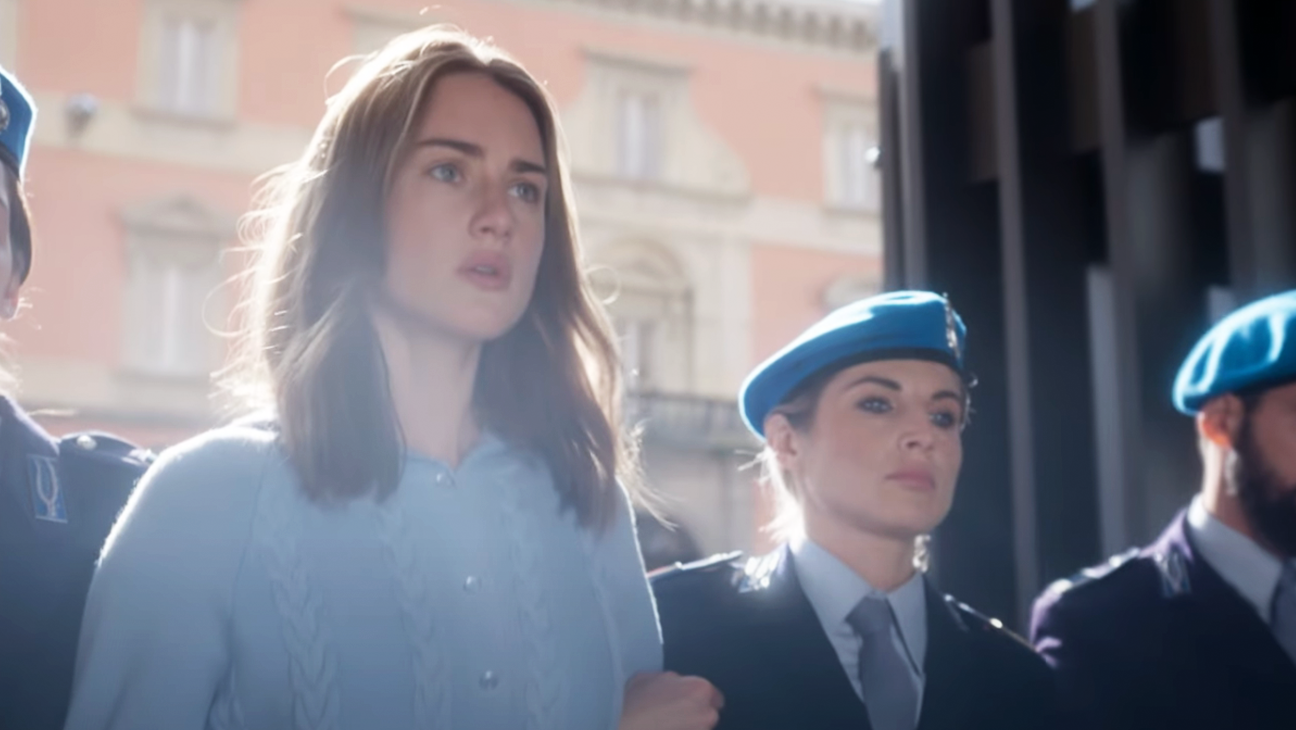
    Later this year, The Twisted Tale of Amanda Knox will also air on the flagship ITV network. The drama explores the real-life case that captivated global audiences, focusing on such themes as media scrutiny, justice and public perception.

    Both titles will be broadcast under the brand “Disney+ Presents a Hulu Original”, underlining their provenance and connection to Disney+.

    The news reflects the continued evolution of the ITV–Disney relationship. Launched in July 2025, the “A Taste of Disney+” rail on streaming service ITVX and the “A Taste of ITVX” rail on streamer Disney+ have enabled viewers to discover curated titles from each partner’s services.

    “This marks an exciting next step in our collaboration with ITV,” said Karl Holmes, general manager, Disney+ EMEA. “We’re thrilled that two of our most compelling original series will air on ITV’s powerful primetime platform, introducing millions more viewers to Hulu Originals on Disney+.”

    Added Kevin Lygo, managing director of media and entertainment at ITV: “We are delighted to be deepening our relationship with Disney. Bringing these premium original series into our primetime linear schedule is fantastic for ITV audiences. This extension perfectly complements our existing relationship and showcases the strength of the content-sharing model we established last summer.”

  • Netflix, Amazon Prime, Disney+ to Come Under Enhanced U.K. Regulation by Ofcom

    Netflix, Amazon Prime, Disney+ to Come Under Enhanced U.K. Regulation by Ofcom

    The U.K. government said on Tuesday that streaming services with more than 500,000 U.K. users, including Netflix, Amazon Prime Video, Disney+, ITV’s ITVX and Channel 4’s services, will be covered by enhanced regulation by U.K. media regulator Ofcom “designed to protect audiences and improve accessibility.”

    The government unveiled “secondary legislation to implement the Media Act 2024, bringing the largest, most popular VOD services in the U.K. under enhanced regulation by Ofcom,” it said. “Platforms such as Netflix, Amazon Prime Video and Disney+, and the public service broadcaster VOD services like ITVX and Channel 4, will be required to follow similar Ofcom content rules to those currently in place for traditional broadcasters.”

    By designating the most popular streaming platforms as “tier 1” services, they will need to adhere to a new VOD standards code. “Similar to the Broadcasting Code, this will ensure that news is reported accurately and impartially and audiences are protected against harmful or offensive material,” the government said. “Audiences will be able to complain to Ofcom if they see something concerning, and Ofcom will have powers to investigate, and take action, where they consider there has been a breach of the code.”

    Under a new accessibility code covering the services, they will be subject to minimum requirements for accessibility features. For example, streamers will need to ensure that at least 80 percent of their total catalogue is subtitled, 10 percent is audio-described, and 5 percent is signed.

    The regulations are designed to “reflect the significant shift in how audiences choose to watch TV,” the Labour Party government said. After all, around two-thirds of U.k. households subscribe to at least one service from Netflix, Amazon Prime Video or Disney+, with 85 percent of people using an on-demand service each month, compared to 67 percent who watch live TV.

    “While licensed television channels must comply with Ofcom’s Broadcasting Code and accessibility requirements, such as subtitles, many of the U.K.’s most popular VOD services are not regulated to the same standard,” highlighted the government. “Some are not regulated in the U.K. at all. This poses a risk to audiences and a lack of consistency across TV and TV-like services.”

    As a result, the U.K. government called its move an attempt to “create a more level regulatory playing field and ensure that U.K. audiences – particularly children and parents – can be confident that protections from harmful material are in place, whether they tune in via traditional channels or a mainstream on-demand service.”

    Said Secretary of State for Culture, Media and Sport Lisa Nandy: “We know that the way audiences watch TV has fundamentally changed. Millions now choose to watch content on video-on-demand platforms alongside or, in the case of many young people, instead of traditional TV. The Media Act introduced vital updates to our regulatory framework, which this government is committed to implementing. By bringing the most popular video-on-demand services under enhanced regulation by Ofcom, we are strengthening protections for audiences, creating a level playing field for industry and supporting our vibrant media sector that continues to innovate and drive growth across the U.K.”

    Ofcom will shortly begin a public consultation on the new standards and accessibility codes to provide an opportunity for the public and providers to set out their views on the rules.

  • Why UMG U.K.’s Globe Is Pushing Deeper Into Scripted Content With Globe Originals and Multi-Hyphenates

    Why UMG U.K.’s Globe Is Pushing Deeper Into Scripted Content With Globe Originals and Multi-Hyphenates

    Universal Music Group U.K.’s Globe sync and brand business has a long track record of placing music into films, TV shows, video games, advertising, and other content, plus making artists brand ambassadors. But it has also started pushing into original films via Globe Originals, a unit whose mission is to develop films with music as the creative engine, “opening opportunities for artists in new avenues.”

    Globe Originals has collaborated on such film and TV productions Amy, Steven Knight’s This Town for the BBC,Mary McCartney’s If These Walls Could Sing forDisney+, the BAFTA-nominated and Irish Film & TV Awards (IFTA)-winning short film Nostalgie, and the Oscar-nominated and BAFTA-winning Hamnet.It has also worked with such directors and producers as Quentin Tarantino, Richard Curtis, Danny Boyle, and Faye Ward.  

    Led by president Marc Robinson, the London-based Globe has recently been expanding into the U.S. and looking beyond its traditional business borders to open up new opportunities for multi-talented creatives ready to branch out, such as via a just-unveiled partnership with Hollywood producer and long-time Quentin Tarantino collaborator Shannon McIntosh (Once Upon a Time in HollywoodThe Hateful Eight) focused on a slate of music-driven feature films. They are modern-day love story Falling, written and directed by Dominic Savage, which has Simone Ashley and  Sam Claflin attached, Dusty vs Dusty, a twist on the biopic focused on Dusty Springfield, and the music-driven Annie Oakley Hanging.

    Globe Originals is also responsible for a Hamnet short film, Scientist of the Soul, about composer Max Richter’s journey on the film, which has been shown at Everyman cinemas in the U.K. before the feature presentation. And it is in the process of producing four documentaries about U.K. artists, for which details are expected to be revealed later this year.

    Among the core reasons for the focus on Globe Originals are the increased demand for music-driven storytelling, the growing role of music as a driving force in audiovisual storytelling, and the interest of music creatives to move beyond traditional music releases and concert tours, according to Robinson.

    Case in point for all these is one film in development under the partnership with McIntosh, Annie Oakley Hanging, described as a “fully music-driven feature ” and “a rebellious love story set in the wild American frontier.” It will be driven by an original soundtrack created by Dan Smith, songwriter and lead singer of Bastille, and  Ralph Pelleymounter, songwriter and lead singer of To Kill a King. 

    “I loved the music Dan and Ralph wrote for Annie Oakley Hanging – its strong sense of narrative and ambition made it feel like a project we could have real fun and success with,” McIntosh tells THR.  “Reverse engineering the normal process of making a film by starting with the soundtrack is absolutely invigorating.  Globe Originals continues to seamlessly bridge music and screen, championing world-leading U.K. artists and bringing powerful, music-driven storytelling to audiences around the world.”

    Globe president Marc Robinson

    Courtesy of Globe/Mercury Portraits

    Multi-talented creatives who happily work as multi-hyphenates, just like Smith, are logical creators drawn to Globe Originals, Robinson and Smith say in discussing the new opportunities it is designed to open up.

    “In our Globe work over the last 15 to 20 years, we’ve had a very close working relationship with the film and TV community through music for shows and film soundtracks,” Robinson tells THR. “As that world has evolved over the last decade, especially with streamers coming on board, and the soundtrack market has also evolved, we’ve wanted to keep our relationship with film and TV as solid as before. But we also have a whole new generation of artists now that come with such a broad skill set, and Dan Smith is one of those people. So we wanted to have a setup where we could really accommodate artist storytelling, catalog storytelling, work with filmmakers that we know get and love music, and push the boundaries of what we’re doing.” The result: Globe Originals, which brings film and music creatives together to jointly work on audiovisual projects.

    So, how have collaborations changed? “In the old days, we were very much the receiver of the product that the film and TV industry made,” Robinson explains. “And now, we are trying to get in at the early stage and really bring a music conversation to film and TV in a way that we haven’t done before. Globe productions were initially focused very much on the documentary space, but we’ve started leaning into the scripted space more.”

    Among his past musical work for film and TV, Smith wrote and produced the original song “Eurydice” for Netflix series Kaos and collaborated with Hans Zimmer, singer-songwriter Raye, and Bleeding Fingers Music to create the track “Mother Nature” for the BBC’s Planet Earth III documentary series.

    More recently, thanks to Globe, the self-professed movie buff wrote songs and the score for the BAFTA-nominated short film Nostalgie, directed by Kathryn Ferguson (Sinéad O’Connor documentary Nothing Compares) and starring Aidan Gillen (Game of ThronesPeaky BlindersKinMayor of KingstownThe Wire), which is set in the 1980s.

    “Globe Originals is such a rare thing that bridges music and narrative storytelling and film, TV and short film. And Nostalgie is an amazing example of Mark bringing people together so fantastically,” Smith highlights. “I feel incredibly fortunate for the chance to expand beyond a traditional artist [career]. As a musician, as a songwriter, I have always been much more interested in not just writing an album about myself but diving into stories that fascinate me, trying to find out about different worlds or parts of history or things that I either know about or don’t.”

    But how did he get involved in Nostalgie? “I was really excited when Mark told me all about it and introduced me to Kathryn, and the three of us chatted a few times about what would be required,” Smith tells THR with a smile that can’t hide his excitement.

    Nostalgie needed songs “that were written in the ’80s, but have come to take on a meaning for a certain set of people that is wholly different from what the songwriter had intended,” Smith tells THR. “It’s about a topic so close to home, but often so untalked about, and using music as a way to explore that, almost as fable songs, is really central to the film. And Kathryn and everybody involved did such an amazing job. It’s really powerful, and we’re really proud of it.”

    A synopsis for the 19-minute Nostalgie, which also features Jessica Reynolds (Kneecap) and Michael Smiley (Bad Sisters, Alien: Earth, The LobsterBlue Lights), reads: “A 1980s popstar receives a surprising invitation to perform, pulling him out of musical retirement and into a moral dilemma.”

    Asked about the challenge he faced as a songwriter to hit the right and necessary notes for Nostalgie, Smith summarizes things this way: “I had to write songs that were weird and goth and ’80s, but also immediate. You have to watch the film and believe that it would be an anthem for certain people in the film, and that as an audience member, you would maybe leave the film singing it.”

    Shannon McIntosh

    Courtesy of Globe Originals

    Smith ended up moving from writing key songs to handling the film score. “That was a whole other piece of work, trying to thread the music throughout, which is what I’ve been wanting to do for a long time,” he recalls. “Working across the whole project is, for a musician or a songwriter, the absolute dream.”

    The music star also highlights that writing for film or TV is very different from writing a song or a whole music album. “It’s so different from an artist project, which I tend to write mainly by myself or with the guys in the band,” Smith notes. “When you’re starting an album, you can literally write about anything. It’s your own artistic endeavor. Whereas, obviously, when you’re writing for film, musicals or TV, you are in service of the director and their vision. And that’s a really different approach. I love it. I also do a lot of songwriting for other artists. It’s a really happy space for me, work-wise, to be in a room with someone else trying to help them tell the best version of what they’re trying to say.”

    Robinson describes Smith as the blueprint for a talent tailor-made for Globe Originals. “Dan is a great example, probably the number one example, of an artist who thinks very narratively and is a huge cinephile,” he tells THR. “If you look at Dan’s work, also as a musician, it has always been cinematic, aesthetically. All his music videos are quite cinematic. And all his artist posters are like film posters. So, for artists like him, we wanted to have a set-up for music and film really coming together based on that collaboration ethos.”

    Smith loved the Nostalgie experience. “It was just a really fun challenge and the dream project for me to be brought in for,” he tells THR. “And because the songs are central to the film, I got to work really closely with everyone to get the songs right, including with Aidan Gillen, who had to record studio versions of the songs and then learn to sing them live on set.”

    And he adds: All the extras and actors had to learn them and scream along. It was this crazy, accelerated process of writing these songs while I was on tour, sitting in the back of a van, and then within a month seeing this raw footage come back from the set in Belfast with dozens of people screaming along every lyric of this song. It was the most surreal but gratifying experience.”

    Smith is looking forward to more opportunities in film. And Globe Originals is already providing the next one, courtesy of its deal with McIntosh.

    “I’m a big believer in knowing your skill sets and what you’re capable of,” Robinson tells THR. “We’re not a film production company in the scripted space. So for me, it was about partnering with people who can bring that expertise and who can also help celebrate and develop these ideas from artists. So with Shannon, we’re currently developing three projects. One is a musical, one is a twist on the biopic, and the third one is an idea that was the brainchild of Dan and Ralph.”

    Aidan Gillen in ‘Nostalgie’

    Courtesy of Film4

    Indeed, Smith and his friend and collaborator Ralph Pelleymounter, lead vocalist of the band To Kill A King, came up with a story and a soundtrack. “Shannon was blown away by the quality of the music and the storytelling and will help us bring that to life,” explains the Globe executive. “We’ve started developing that. So, the evolution of Dan Smith is happening in real time right now. It’s all about that fusion of music and film in an organic way, and being there from the beginning and seeing how we can evolve this with the right people and the right team.”

    Could we see Smith directing a movie one day? He sounds very much open to the idea. “I really enjoyed directing music videos in the past,” she tells THR. “I was co-director on one of my videos for a song called ‘No Bad Days,’ which was trying to make a time-lapse sci-fi about the reanimation of an android in the future. That was my first experience of directing. And then I also did a self-directed music video in the middle of the Bermuda Triangle at sea when I was on a Greenpeace ship.”

    Smith also shares: “When I was growing up, the rock star that I looked up to more than anyone else was David Lynch. He was kind of my Bowie when I was a kid. He made films, he scored his own films, he painted, he made albums. So the idea of getting to do what he has done would be amazing.”

  • ‘The Louis Theroux Podcast’ Returning for Season 7, Sets Launch Date (Exclusive)

    ‘The Louis Theroux Podcast’ Returning for Season 7, Sets Launch Date (Exclusive)

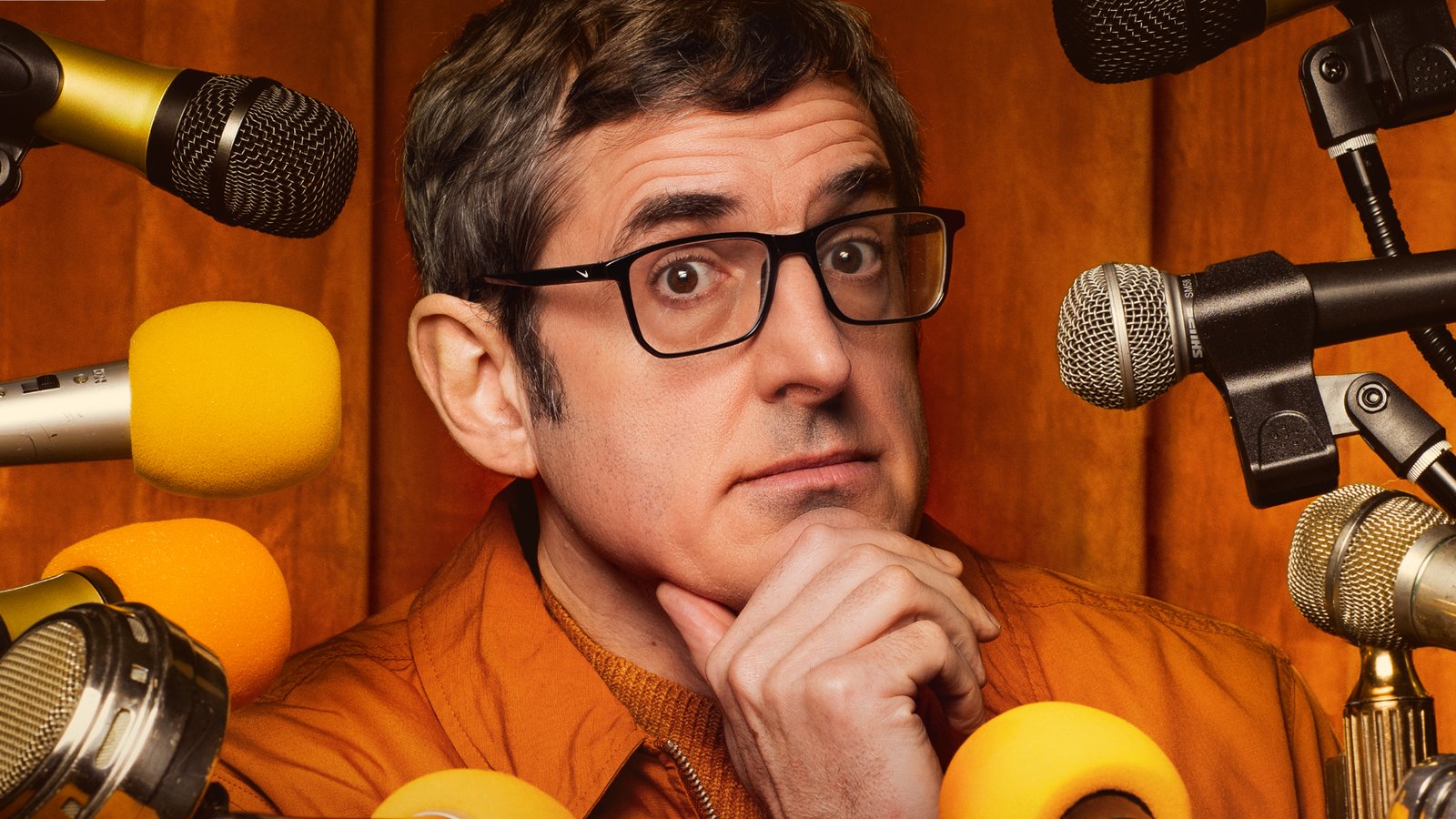
    The Louis Theroux Podcast will return for a seventh season.

    Spotify and Mindhouse have confirmed that the popular interview show, hosted by the beloved British broadcaster and documentary-maker, will launch on March 3.

    Theroux is back opposite some of the most intriguing names in entertainment, film, sport and more, including tennis maverick Boris Becker, Twin Peaks‘ detective Kyle Maclachan, singer Lulu, comedian Stewart Lee, Icelandic singer-songwriter Laufey, and investigative journalist and author Patrick Radden Feefe. A bonus episode and more guests will be announced in due course.

    “Someone once said to me that the key to a great conversation is genuine curiosity. ‘Could you repeat that?’ I replied. ‘I wasn’t listening,’” Theroux joked to The Hollywood Reporter. “But seriously — who could fail to be curious when faced with guests as fascinating, whose lives and work are as full of incident, insight, and artistry, as Boris Becker, Lulu, Stewart Lee, Laufey, Kyle MacLachlan, Patrick Radden Keefe, and Yorgos Lanthimos?”

    “Each one, it strikes me now, comes from a different area of professional life, but all of them practise their art forms at the highest levels,” he continued. “It’s a real pleasure having these conversations, and being allowed the space to let them flow and go in surprising directions, and with no topics off the tables. Thanks for watching!”

    Since its launch in 2023, The Louis Theroux Podcast has cemented Theroux as one of the U.K.’s most successful podcasters. Last year, it was the third most-listened-to podcast overall in the U.K., according to Spotify Wrapped data — climbing from sixth place in 2024.

    Series six saw Florence Pugh dissecting the pros and cons of intimacy coordinators, Steve Coogan got candid on his most challenging role yet, and Malala Yousafzai discussed her university experience as a Nobel prize winner.

    The podcast’s back-catalogue also boasts recordings with Little Simz, Ed Sheeran, Michael Cera, Nick Cave and Tracey Emin, alongside headline-making episodes with Jimmy Carr, Bella Ramsey and many more.

    The Louis Theroux Podcast is a Spotify podcast from Mindhouse, available on all podcast platforms, with video episodes exclusively on Spotify. Series 7 launches Tues, Mar. 3, 2026.

  • Lynne Ramsay to Receive Cinema City Honorary Award at Glasgow Film Festival

    Lynne Ramsay to Receive Cinema City Honorary Award at Glasgow Film Festival

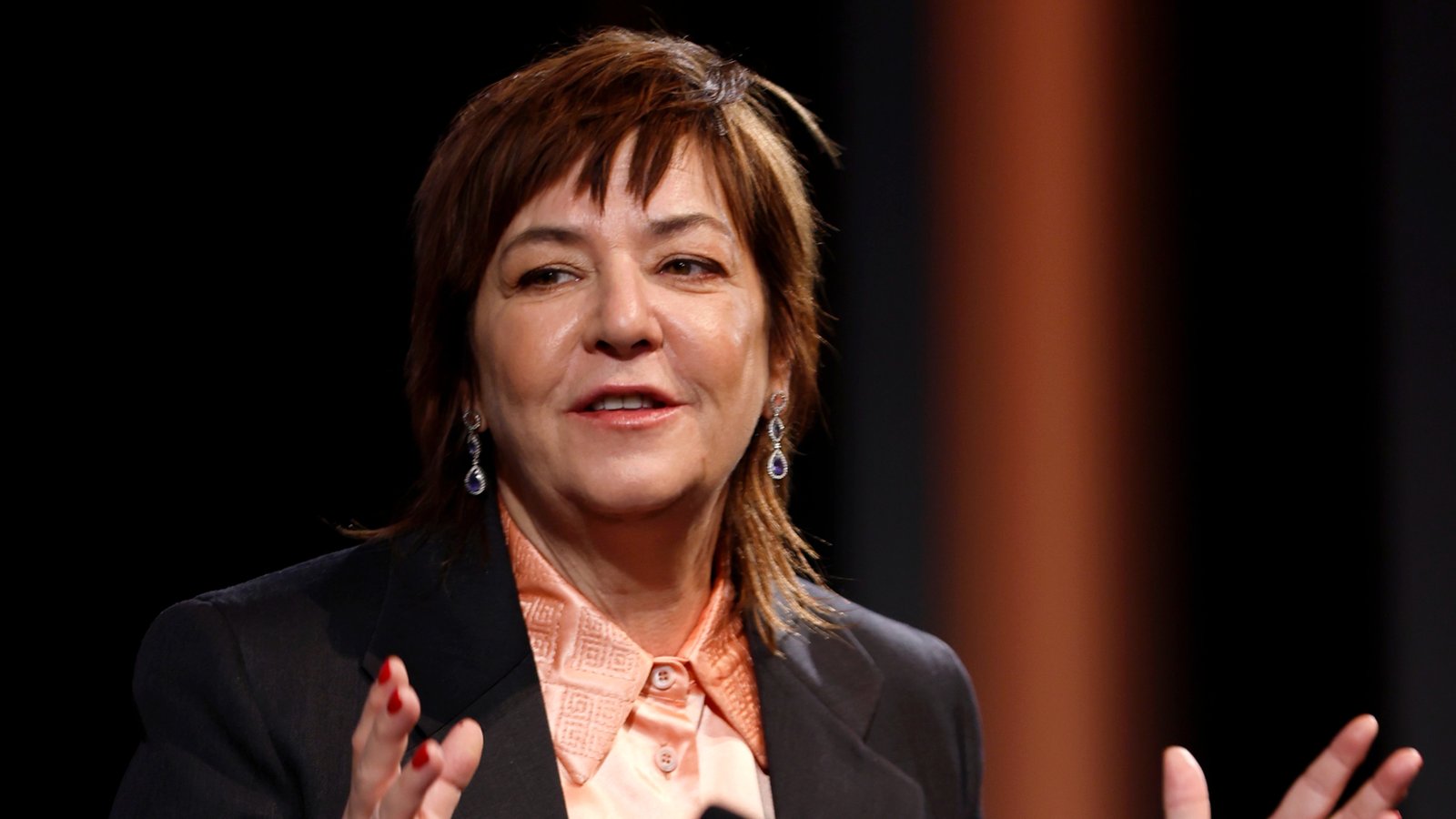
    BAFTA-winning Glaswegian writer-director Lynne Ramsay will receive the Cinema City Honorary Award at the Glasgow Film Festival.

    She will get the honor on March 6 at a special In Conversation event entitled “From Page to Pulse,” which will be hosted by Glasgow filmmaker Adura Onashile (Girl) and be part of the festival’s annual Industry Focus strand. In it, the director will take “a deep dive into her unparalleled approach to adaptation,” organizers said.

    The filmmaker made her feature film debut in 1999 with the Glasgow-shot Ratcatcher, which won the BAFTA for Outstanding Debut. “Throughout the last three decades Lynne has become renowned for her distinctive visual style and powerful storytelling, having directed Hollywood titles that include We Need to Talk About Kevin, Die My Love, and You Were Never Really Here,” the festival said.

    Launched in 2024, the Cinema City Honorary Award recognizes filmmakers who have made “an outstanding contribution to cinema.” The name of the award stems from the 1930s when Glasgow was home to more cinemas per person than any other place in the U.K. and it became affectionately known as the Cinema City.

    Previous recipients of the award are Viggo Mortensen and Glaswegian Hollywood star James McAvoy.

    Lynne Ramsay is one of a very small number of filmmakers who have the seemingly miraculous power of taking a unique vision in their minds and creating it onscreen exactly as they imagined,” said Paul Gallagher, GFF head of program. “Her films have changed our understanding hiiiof what cinema can do and be.”

    Added Samantha Bennett, GFF industry manager:“It is a true honor to welcome a homegrown talent of Lynne’s calibre to the Industry Focus program.”

    GFF’s 2026 lineup of guest will also include a variety of other stars and filmmakers. McAvoy will attend GFF’s closing gala for the U.K. premiere of hos directorial debut California Schemin’, joined on the red carpet by film cast members Samuel Bottomley, Séamus McLean Ross and Lucy Halliday
    Glasgow-based director Felipe Bustos Sierra (Nae Pasaran) will return to the fest for the opening gala of Everybody to Kenmure Street, after the film won an award at Sundance.

    Other filmmaking talent attending the festival includes Alice Winocour, Mark Jenkin, Polly Findlay, Marc Evans, Iain Forsyth and Jane Pollard, and Edinburgh filmmaker Sean Dunn for the U.K. premiere of his black comedy The Fall of Sir Douglas Weatherford.

    The 22nd edition of GFF will take place Feb. 25-March 8.

  • China Box Office: Lunar New Year Sales Fall 38 Percent From 2025 as ‘Pegasus 3’ Leads Soft Holiday

    China Box Office: Lunar New Year Sales Fall 38 Percent From 2025 as ‘Pegasus 3’ Leads Soft Holiday

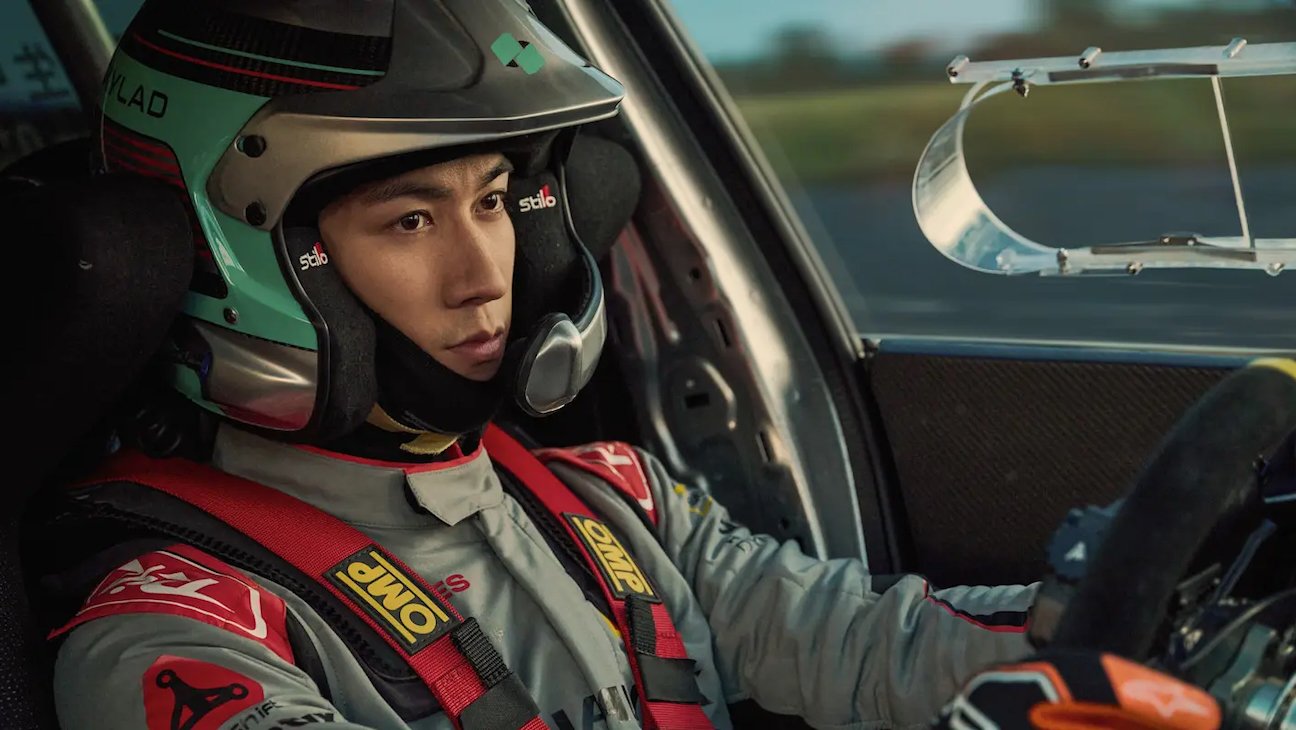
    In any other market during any other holiday, a blockbuster opening of over $300 million would be an instant cause for celebration. But the $369.3 million debut of race-car comedy Pegasus 3 during the first six days of China‘s Lunar New Year holiday came with a potentially worrying caveat.

    The film pulled far ahead of the competition during the opening stretch of China’s biggest moviegoing week of the year, leaving Zhang Yimou’s espionage thriller Scare Out in a distant second place with $110.7 million, martial arts epic Blades of the Guardians in third with $97.3 million and family animation Boonie Bears: The Hidden Protector in the third at $89.7 million, according to data from Artisan Gateway covering Feb. 17–22. Jackie Chan’s action-comedy sequel Panda Plan 2 took up the rear with $24.6 million.

    Total ticket revenue during the holiday so far, however, has amounted to $715 million (RMB 5.1 billion), a 38.6 percent drop from the first six days of Chinese New Year in 2025 ($1.2 billion, or RMB 8.3 billion).

    China’s theatrical film market has grown so top-heavy in recent years that the Lunar New Year holiday corridor generally sets the tone for the whole year. Last year’s holiday winner, animated sequel Ne Zha 2, went on to smash global records with a $2.2 billion box office total, ensuring that China’s film market staged a full-year recovery even though most major domestic releases disappointed throughout the rest of the calendar.

    Pegasus 3 is currently on track to top out at around $622 million (RMB 4.3 billion) — a huge number, for sure, but not enough to save the market amid the relatively weak performance of its fellow holiday releases. To date, China’s theatrical box office is down 65 percent compared to the same period in 2025.

    Pegasus 3 is the latest installment of blogger-turned-blockbuster director Han Han’s hit racing-comedy franchise, again led by Shen Teng as underdog driver Zhang Chi. In the latest installment, Zhang returns to competition to lead a newly assembled team in a high-stakes international rally. The film’s producers include Shanghai Tingdong Film Co., Maoyan Damai Entertainment, Bona Film Group, Wanda Pictures and others.

    Zhang Yimou’s Scare Out, which opened in second place, marks the veteran filmmaker’s return to the espionage genre following the success of Cliff Walkers (2021). The contemporary spy thriller stars Jackson Yee and Zhu Yilong and centers on a national-security investigation triggered by the leak of sensitive military intelligence. The project is produced by Damai Entertainment, with Alibaba Pictures handling distribution.

    In third position, Blades of the Guardians is a star-driven wuxia spectacle directed by legendary action choreographer Yuen Woo-ping and adapted from the popular manhua Biao Ren. The film features a marquee ensemble led by Wu Jing, Nicholas Tse, Yu Shi, Tony Leung Ka-fai and Jet Li. Production is backed by Woo Ping Pictures and Beijing Dengfeng International Culture Communications Company, alongside Damai Entertainment, China Film Group, Huaxia Film and other partners.

    Fourth-place finisher Boonie Bears: The Hidden Protector continues the long-running animated franchise’s regular Lunar New Year presence for family audiences. Directed by Lin Huida and produced by Fantawild Animation, the installment follows Briar, Bramble and their human companion Vick as they encounter Nian — the mythical beast associated with the Lunar New Year — whose arrival grants them mysterious new powers and draws them into a fantastical city inhabited by supernatural forces.

    The overall softness of the lineup compared with recent years’ holiday hauls underscores the growing volatility of China’s theatrical sector, where a single breakout hit can disproportionately determine the market’s annual trajectory. Theater operators have now started 2026 at a deficit, placing added pressure on the local industry to deliver major hits later in the year that can reverse the downward momentum at the country’s cinemas in recent years.

  • For the Tourette Syndrome Community, the BAFTAs Brought on a Familiar Dread-Like Feeling

    For the Tourette Syndrome Community, the BAFTAs Brought on a Familiar Dread-Like Feeling

    When the advocate Jess Thom heard about a person with Tourette’s “ticcing” the BAFTAs, she had a familiar feeling: dread.

    Thom has Tourette Syndrome and when she got word of what happened with John Davidson, it brought to the surface many of the misunderstandings and confused reactions she has spent her life trying to fight.

    “There are a lot of myths and oversimplifications about Tourette Syndrome, and a global frenzy is not the best place to have a conversation about them,” the U.K.-based Thom, 45, said by Zoom from her home Monday evening as she reflected on the events. “And it’s all happening in a climate with increased hostility to disabled people, with threats to Medicaid and the ADA.”

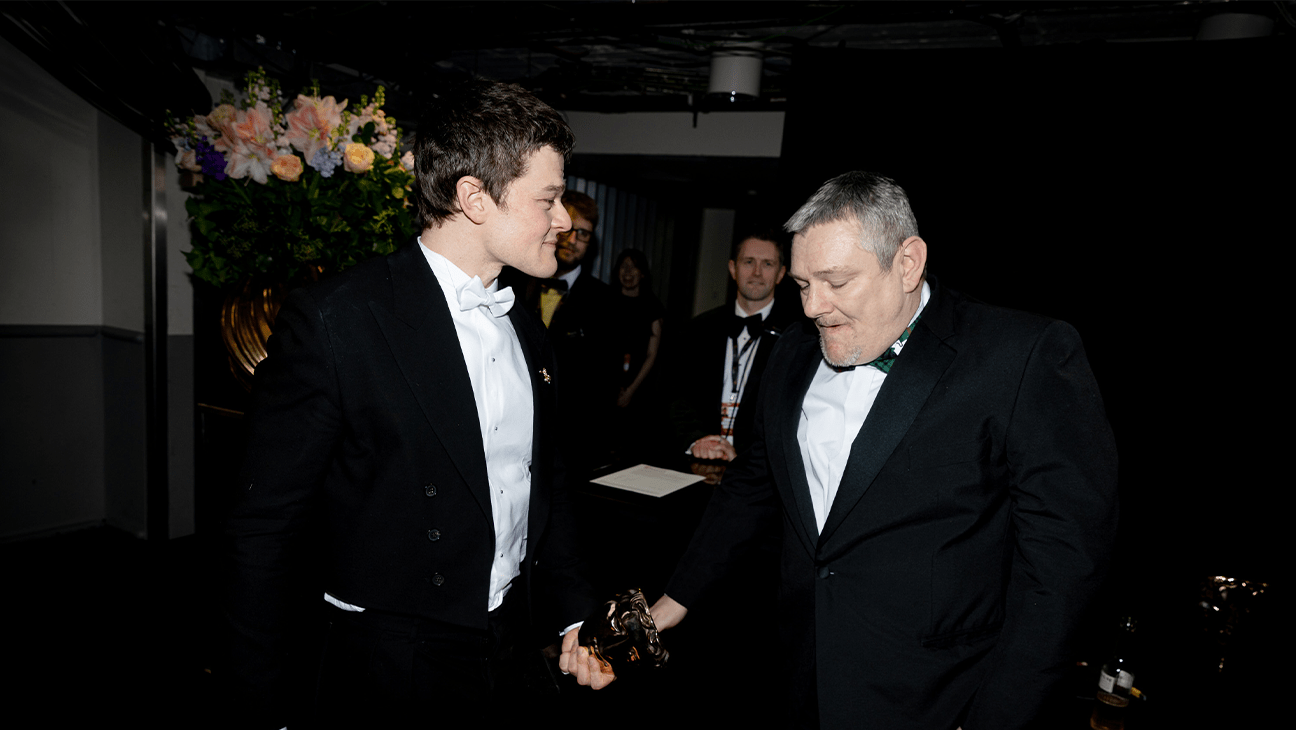
    Davidson at the ceremony engaged in “ticcing,” the term for when people who have Tourette Syndrome, or TS, involuntarily say or do something that can have the effect of making others uncomfortable. In this case, the executive producer and inspiration for the Tourette’s-focused winner, I Swear, called out a series of curses and insults, as well as a racial slur when Black presenters Delroy Lindo and Michael B. Jordan were on stage. The moment blew up after the BBC kept it in the tape-delayed broadcast two hours later and even for a time on a streaming replay. (It has since been edited out of the latter; the BBC apologized for “strong and offensive language.”)

    Thom and others in the community say the award-show kerfuffle raises the lack of understanding they feel has beset the Tourette’s community for years. Among the biggest misconceptions is over “oppositional ticcing,” which essentially involves saying the worst possible thing one can say in the room (the involuntary urge to yell “bomb” in an airport, for instance).

    “People don’t understand that it’s contextual, and that part of the ticcing is saying that exact damaging thing,” Thom said. Instead, people assume it’s being said because someone “secretly” believes it or is mindfully trying to hurt somebody. Thom founded the advocacy group Tourettes Hero, which, among other things, seeks to help people understand the background and also fights for disability benefits on behalf of people with TS.

    The U.K. TS charity Tourette’s Action sought to clarify this with their own statement on Monday as they also expressed disappointment with how the story was playing out.

    “[I]t is vital that the public understands a fundamental truth about Tourette syndrome: tics are involuntary. They are not a reflection of a person’s beliefs, intentions, or character,” the organization said. People with Tourette’s can say words or phrases they do not mean, do not endorse and feel great distress about afterwards. These symptoms are neurological, not intentional, and they are something John, like many others with Tourette’s, lives with every single day.

    “The backlash from certain parts of the media has been extremely saddening, particularly given how hard John works to raise awareness and understanding,” the org continued. “What should have been a night of celebration for him became overwhelming, and he made the difficult decision to leave the ceremony halfway through. This moment reflects exactly what I Swear shows so openly: the isolation, misunderstanding and emotional weight that so often accompany this condition. People with Tourette’s manage their physical and social environments and symptoms on a constant basis. The price of being misunderstood is increased isolation, risk of anxiety and depression and death by suicide.”

    Another misconception is around what the medical community terms “coprolalia,”  which involves the use of obscenities or other inappropriate words and gestures, which Davidson also engaged in. Though there is a firm neurobiological basis, people can react to it, advocates say, in a way that does not fully take that into account and believe there is some intent to shock.

    The New York City public advocate Jumaane Williams posted on social media Monday that his own experience with TS made him want to correct misperceptions. “As the first known person to be elected with #Tourettes. As a person who has #coprolalia and also tics the “N-word.” As a Black man I have some lived views and thoughts to share tomorrow. #StayTuned #bafta  (Feel free to google coprolalia before then),” he wrote.

    TS is a condition that involves both motor and vocal tics. A very high number — composing about 1 percent — of all young people worldwide are believed to have it, with about 10-15 percent of those also having coprolalia. For many, the severity dramatically decreases as they reach adulthood, but the CDC still estimates that an estimated 1.4 million people, children and adults, have TS in the United States.

    The entertainment industry has sought to spotlight many forms of neurological conditions in the past decade, such as with the autism-centric film Wonder or the ABC series The Good Doctor. Historically, though, Tourette’s has often more been seen on-screen as a one-off novelty, as with a famous vintage L.A. Law episode.

    A breakthrough of sorts occurred in 2006 with a Big Brother U.K. contestant, Pete Bennett, who has TS and brought visibility to it. And pop-culturally, the syndrome has become especially better known in the last few years thanks to Baylen Dupree, a Gen Z woman with TS who gained a TikTok following and, last year, a TLC reality show about her experience as someone who has TS, along with Billie Eilish, who has said she has it too.

    A spokeswoman for Eilish said she was not available Monday to comment on the BAFTAs but pointed a reporter to previous videos, which included an interview with David Letterman on his Netflix show in 2022 in which she began ticcing and then told a sensitive Letterman that it was something whose response could get under her skin.

    “The most common way that people react [to a tic] is they laugh, because they think I’m trying to be funny,” she said. “And I’m always left incredibly offended by that.” She said she hoped talking more about it could lead to wider acceptance and a realization of how common it was. “So many people have it that you would never know,” she told Letterman.

    Part of the challenge with the condition is that the ticced words can do real harm even as the person causing the harm deeply wishes not to do so. In a culture simultaneously concerned with accountability on one hand and taking into account the marginal on the other, that can mean a difficult line to walk.

    On Monday, the BAFTAs attempted such a tiptoe. The organization released a statement that “one of our guests, John Davidson MBE, has Tourette syndrome and has devoted his life to educating and campaigning for better understanding of this condition. Tourette syndrome causes involuntary verbal tics, that the individual has no control over. Such tics are in no way a reflection of an individual’s beliefs and are not intentional.” 

    But it also said that “our guests heard very offensive language that carries incomparable trauma and pain for so many. We want to acknowledge the harm this has caused, address what happened and apologize to all,” adding that it was apologizing “unreservedly” for the “profoundly offensive term.”

    From the stage, the man who plays Davidson, Robert Aramayo, who won lead actor, tried to simply urge sympathy for the man who inspired his character. “John Davidson is the most remarkable man I’ve ever met. Tonight especially, I just want to say that the people living with Tourette syndrome,” he said upon receiving a different honor. “For people living with Tourette’s, it’s us around them who help them define what their experience is. So, to quote the film, they need support and understanding.”

    Davidson himself released a statement that said, “I am and always have been deeply mortified if anyone considers my involuntary tics to be intentional or to carry any meaning,” adding that “I chose to leave the auditorium early into the ceremony as I was aware of the distress my tics were causing.”

    Thom said that the best way to handle a situation in which a person with Tourette’s will be present is for organizers to prepare everyone in the room so that there are as few shocks as possible. She attended the BAFTAs several years ago due to a pilot she had made about TS and felt organizers did a good job, ensuring a smooth night for all; she is less sure, she said, if all attendees and presenters were sufficiently prepared Sunday night, given the reaction. 

    She described the “emotional complexity of living with a body and a mind that behaves in ways that are shocking and unexpected and that does not reflect who you are.” 

    Thom hopes that, for all the ways the incident has been misunderstood, it ultimately helps people realize that those living with TS are not just experiencing an occasional incident but are in a state of ongoing challenge.

    “It can be sensational and surreal and strange,” to have Tourette Syndrome, she said. “But you have to realize that John would have been ticcing before the ceremony and ticcing at the ceremony and ticcing on the subway home. People with Tourette’s are constantly managing it.”

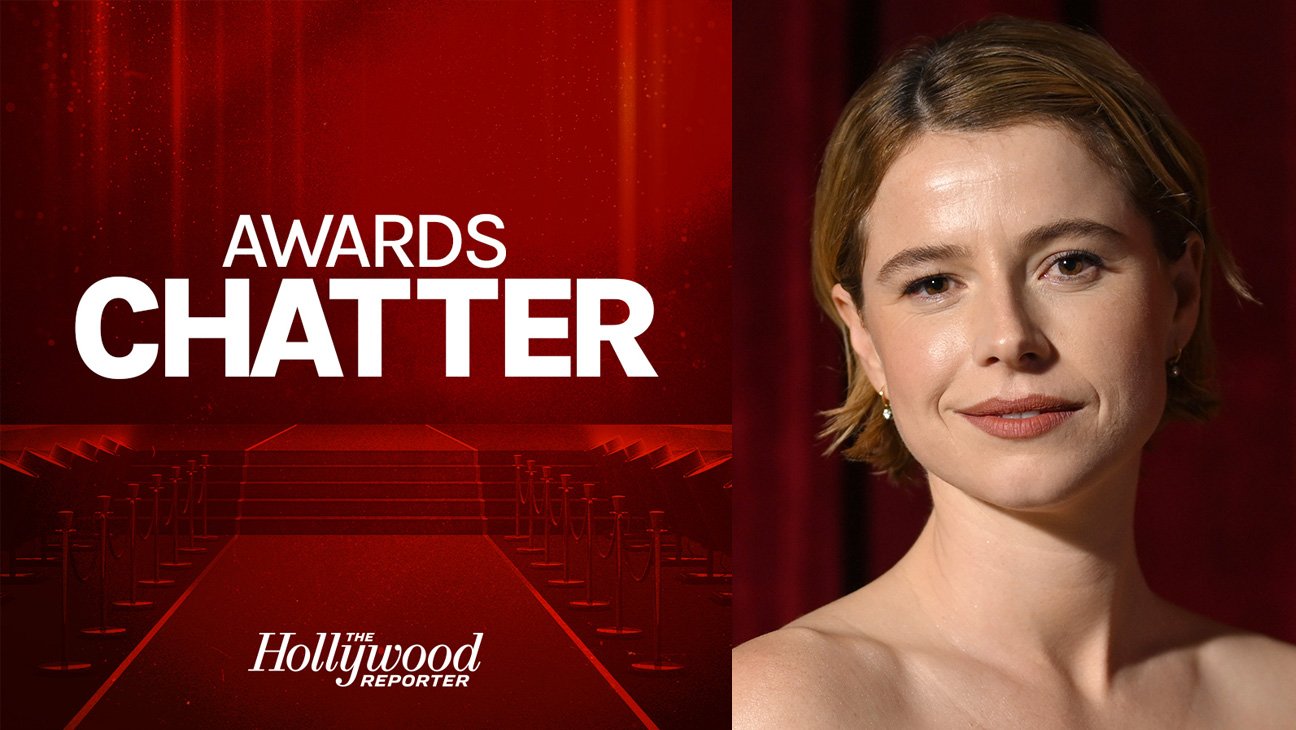
  • ‘Awards Chatter’ Pod: Jessie Buckley on Her Presumptive Oscar Turn in ‘Hamnet’ and Maggie Gyllenhaal’s Upcoming ‘The Bride!’

    ‘Awards Chatter’ Pod: Jessie Buckley on Her Presumptive Oscar Turn in ‘Hamnet’ and Maggie Gyllenhaal’s Upcoming ‘The Bride!’

    Jessie Buckley, this year’s best actress Oscar frontrunner for her portrayal of Agnes Shakespeare in Chloe Zhao’s Hamnet and the guest on this episode of The Hollywood Reporter’s Awards Chatter podcast, is an Irish stage and screen actress who has been described by The Observer as “one of the most exciting actors of her generation,” by Vanity Fair as possessing “both dazzling charisma and a remarkable authenticity” and by The New York Times as having “a reputation for playing complicated roles with devastating power,” adding, “Few other actresses of her generation can gain access to such a wide spectrum of emotions, or seem as willing to risk being disliked for exploring the tougher ones.”

    Over just a decade on the big screen, Buckley, 36, has already given a host of memorable performances. She earned particular acclaim for her work in 2018’s Wild Rose, in which she played a Scottish ex-con who dreams of being a country music star, and for which she received a best actress BAFTA Award nomination; 2021’s The Lost Daughter, in which she played a young academic feeling conflicted about motherhood, and for which she received best supporting actress BAFTA, Spirit and Oscar noms; and 2022’s Women Talking, in which she played one of the women in a Mennonite community who debate what to do after discovering that the community’s men had been drugging and raping them, and for which she received a best supporting actress Critics Choice Award nom and she and her castmates received a best ensemble Actor Award nom.

    But it is her turn in Hamnet, as the earthy wife of playwright William Shakespeare and the mother of their three children, that has catapulted her career to another level — Rolling Stone, in its review of the film, wrote, “They will be talking about Jessie Buckley’s performance for years” — and her to the center of the awards conversation. Indeed, she has already won best actress Golden Globe, Critics Choice and BAFTA awards, and is nominated for best ensemble and best actress Actor awards, to say nothing of the best actress Oscar, which she is widely expected to win.

    Over the course of a conversation earlier this month in Santa Barbara, where Buckley was being honored with a career retrospective at the Santa Barbara International Film Festival, she reflected on how she wound up, at just 17, as a finalist on a BBC talent show, and how that, in turn, led her to relocate to London, where she ultimately was accepted at the Royal Academy of Dramatic Art; what she learned from early jobs in the theater alongside the likes of Dame Judi Dench; how her Hamnet performance was shaped by her prior filmmaking experiences, including The Bride!, Maggie Gyllenhaal’s reimagining of Bride of Frankenstein opening March 6, plus much more.

    You can listen to the conversation via the audio player above or read a lightly edited version of it below.

    * * *

    Jessie, thanks so much for doing the podcast. Can you share where you were born and raised, and what your folks did for a living?

    I was born in Cork, which is the county next to where I grew up. I grew up in Killarney, which is this beautiful town on the west coast of Ireland surrounded by lakes and mountains. In the beginning of my life, I lived in the shed behind my dad’s guest house. Me and my brother and my mom and dad lived in the shed, one bed, rambling around this guest house.

    The guest house was like a hotel?

    Yeah. I think there were 28 rooms. It was an exotic place to grow up because these people from outside of your world come in. Me and my family were reminiscing the other day about what this guest house would bring in. I remember at one point there was this American barbershop quartet that arrived, and I can still remember the song that they were singing [sings it]; and then we’d be part of serving and making the beds. Yeah, it was really a bit like an Alice in Wonderland place, but it was also a job.

    We just got a sampling of your beautiful voice. Vocal talent runs in the family as well?

    Well, my mom is a musician. She works as a music psychotherapist for people in palliative care, and she is a harpist and a singer. When I was a tiny baby, she had gone to London to try and become an opera singer, and we lived in this convent in Roehampton in London, because obviously every Irish family has a nun in their family. [Laughs] I remember she’d go off to do workshops in Covent Garden, and I’d be looked after by the nuns, my dad waiting around London. And her singing and how she performed — it’s what I’ve always tried to reach for in telling stories, needing to tell a story as a way of emancipating something in yourself that you probably don’t even understand what it is. But I have such a strong memory of seeing her sing in church and feeling like it was essential to her. I viscerally remember how she would touch people so much that these strangers would come up with tears in their eyes and want to say, “Thank you.” And that was probably the beginning of me going, “Whatever that is, I want to do that.”

    Could you just as easily have wound up focusing on singing as acting?

    I honestly never thought I would be just an actress. I never in a million years thought I’d make a movie.

    Even with all the Irish greats like Maureen O’Hara?

    No, that was like a fairy tale. Nobody gets to do that! I was exposed to music, but I was also, very early, exposed to theater and musical theater, because there was an amateur dramatics company in my hometown. I really remember going to see my first play, Jesus Christ Superstar. I thought music had the capacity to hold the amount of feeling I felt inside me when I was a kid — until I met Shakespeare.

    From what I’ve read, you started doing school plays and summer theater programs and things like that from a pretty early age. Were teachers and classmates saying, “You should become an actress”?

    They were. Largely people really encouraged me, especially my parents. There was never, “You should do something safe.” I think they saw how much this meant to me, even at such a young age. Obviously, a few people would be like, “Just make sure you get all your exams…” But I found school incredibly stressful. I just couldn’t learn linearly like that. And formulaically, I mean, my mind is wild.

    There are fork-in-the-road moments in many people’s lives, and it seems like there was one for you around the time you first auditioned for drama school. Can you take me through that?

    First, to preface it, I used to watch, on repeat, Judi Dench sing “Send in the Clowns.” If you haven’t watched it, you should — the one in Royal Albert Hall, at a Sondheim event — because it’s such a powerful performance, such a simple performance. She just sits on a stool and there’s a spotlight. I might be wrong, but I think she had just lost her husband. And you see somebody distill themselves down to the rawness of their own humanity inside the vessel of a story, and at times you think she’s not going to survive. You can also see her reaching out, like there’s a journey that’s happening beyond herself. I couldn’t understand it. I just wanted to do that. It was so pure. I think I’d heard that she’d gone to one of these drama schools, Mountview or Guildford, the two best musical theater drama schools in the UK, so I applied and went over to do the auditions. My first audition was at the Guildford School of Music and Drama, and that was the one I really wanted to go to. And they wouldn’t let me in. They told me right away.

    That was crushing?

    Yeah, it broke my heart. But those moments are really important because I think you begin to have a conversation with yourself about, That it’s a long journey. It’s a marathon, your life. It’s not something that just instantaneously happens. And they were absolutely right not to let me in.

    Why do you say that?

    Because I wasn’t ready, and it wasn’t probably meant to be for me — musical theater — like just that. But it crushed me. I had another audition, for Mountview, coming up the following weekend. But on the weekend that I didn’t get into Guilford, there was an open audition for a TV talent show called I’d Do Anything, which was looking for somebody to play Nancy in a West End production of Oliver Twist. Andrew Lloyd Webber and Cameron Mackintosh and Barry Humphries were involved. I joined the queue for that on the weekend that I didn’t get into Guilford, to practice for my Mountview audition that was coming up, with no expectation at all. And I ended up coming in second.

    This was in 2008, you were 17, the show aired on the BBC over the course of 12 weeks, right, starting with thousands of contestants, then 12, and then two. On the one hand, getting to the final two must have felt like an incredible achievement. On the other hand, you’ve said that you came away from that whole process rather depressed.

    I don’t think I was depressed because of the show. I think depression — I’ve used that word in a way to protect myself, but I think it’s a bit general around what I was experiencing outside of what that show was, which was a woman discovering herself — a young woman discovering her body, being out in a world, and really asking questions about who she was, what she wanted to say, what her mind thought about things, what she was going to offer the world. Not from an idea of what it is to be accepted by the world, but actually really from the inside of herself. And for me, that was a very uncomfortable moment of self-discovery. There were moments of huge lows and huge highs, in a very public space.

    Was your family throughout this whole time able to be with you in London, or were they back in Ireland?

    They were back at home, because my mom had just had a baby. But in the best way, I was getting to peek behind the curtain — I thought I would at least have to be 50 to be allowed to be peek behind the curtain — and all of a sudden I was doing the thing that I saw my mom do, that I experienced when I saw my first ever play. I was part of it! That was extraordinary to me. I was very raw with my feelings at that time, and I had no structure or technique around me, and I was in this new city, which was incredibly exciting because I could reinvent myself, and I did. And if somebody said, “Do you want to come through that door?” I’d be like, “Yeah, sure. What’s behind that door?” And sometimes that was dangerous and I probably shouldn’t have gone through that door, but it was a real moment of discovery. I’ve become a mom recently, and the thing that it’s reminded me of is awe. Awe isn’t just like bliss. It’s actually quite a vulnerable state because you’re in such discovery. And in many moments of my life, I’ve felt that rawness of discovery and of awe. I look at that young woman and I think, “You are so brave.” I don’t know if I would be able to do that now in such an open-hearted way. I hope I would, but I don’t know.

    So you didn’t get to play the part of Oliver, but it seems like Cameron Mackintosh still had significant interest and confidence in you. How did RADA — the Royal Academy of Dramatic Arts in London — enter the picture?

    RADA entered the picture from Cameron Mackintosh, in such an incredible generous act. After I finished doing the show [I’d Do Anything], he offered to send me to do a Shakespeare workshop in RADA for four weeks during the summer.

    Now, this was not something he was doing for every contestant. He did it because he saw something in you.

    Yeah, I guess he wanted to nurture something he saw in me. And I went and it changed my life, and it changed how I saw myself. It was the moment that I really recognized myself as an actress, because the power of Shakespeare’s words were bottomless. Music was my only experience of something to fill the fire that I felt inside me until I met Shakespeare and his words, which were just like liquid lava.

    You did attend and graduate from RADA, but there was an interregnum between this four-week session there and then going back 2010 to 2013. What was going on then?

    I never moved back to Ireland after I’d Do Anything. Once I was in London, I just ended up there. It was a great time of my life. My first-ever job was A Little Night Music in the Menier Chocolate Factory with Maureen Lipman, Hannah Waddingham and Alex Hanson. Hannah actually reminds me often that she told me to pick up my costume off the floor, which is very good life lesson. [Laughs] I did many things — worked in markets, sang jazz — but I wanted to go back and train. I wanted to mess up in private. I wanted to study scripts. I wanted to know what cinema was. I wanted to go to the pub on a Friday evening with people my own age.

    I read that, yet again, something about you inspired a belief in somebody else, and you were able to go back to RADA as a full-fledged three-year student?

    Yeah, I am from a family of five, and my parents always did their best, but when you were out [of the home], you were out. I loved that responsibility, but it was hard to live in a city like London and be able to afford it. At the Ivy Club [where she performed], there was a man called Tony who had seen me sing, and he loved theater, and he wanted to support young talent. He said, “I want to help you.” And he very kindly paid for my training at RADA and staying in London. If he didn’t, I probably wouldn’t have been able to stay.

    That’s great that he’s gotten to see that he bet on the right —

    — horse!

    You graduated from RADA in 2013, and quickly began working at a high level in the theater. Your first job was doing Shakespeare at the Globe. Then Henry V with Jude Law and working with Judi Dench in The Winter’s Tale. Would you have been content to spend the rest of your career like that, or was there always an ambition to see what was possible in screen acting as well?

    I don’t know if I’ve ever had my eyes on the horizon like that. I feel like I arrive where I’m at, and I want to be absolutely there. I remember doing Winter’s Tale with Judi Dench and realizing my education hadn’t finished. Every single night, I’d run down to the wings when Judi Dench was doing her piece as Paulina and I’d watch her — I never missed it. I would sit and just watch her and be like, “Come, spirits of Judi Dench, come.”

    Were you able to figure out what makes her so good?

    She’s just deeply human and mischievous. I mean, I don’t know. I just think she has a river to her heart that is in motion, and her container is gigantic.

    Were you curious about screen acting?

    I was definitely curious about it, and I remember those early years in London getting possessed by early cinema — going to the BFI and buying all of Katharine Hepburn’s films and watching The Philadelphia Story, and watching a lot of Spencer Tracy, Barbara Stanwyck and Bette Davis. And when I was at RADA, this librarian, James, introduced me to Lars Von Trier and Dancer in The Dark and Breaking the Waves, which is the first time I saw Emily Watson [later her costar in Hamnet]. I was probably shy of it. I remember my agent calling me when I was about 22 or 23 saying, “Do you want to go to America? Like do you want to meet some American agents?” I said, “No, I’m not ready.” I think what I meant by that is, “I need to get to know myself in order to meet what that might be. I don’t want to go and not have something to say in that world.”

    That’s a level of self-awareness or humility that’s highly unusual.

    I guess I didn’t really know what that meant anyway, like, “Do you want to go to America?” In the scripts that I choose and the people I work with, I want a visceral reaction that feels embodied. I am nothing without the people that have come before me. Maybe that’s why I watched Katharine Hepburn and Judi Dench; their stories were my education, and I just hadn’t metabolized that yet in myself. But then I do remember the moment I got the script Beast (2017). Those moments are so special and so rare in a career, where the alchemy of where you are meets the alchemy of a story and where that character was — it was such an incredible entry point. It was Michael Pearce’s first film. It was my first film. We were like, “There’s no money. There’s no consequence. You’re making art.” [Laughs] I was playing a young woman who was, I would say, imprisoned in a pretty conservative idealism, and she meets a man who is wild, dangerous, feral, has a monster inside him. I think she recognized something monstrous inside her, too. This collision is very intense, but full of life and disobedience, and ruptures morality. … I’d read that Marion Cotillard had kept the script of Rust and Bone under her bed, so I put the script of Beast under my bed until I got the part.

    Then came the limited series War & Peace (2016) and your breakthrough project, the 2018 film Wild Rose, which was directed by Tom Harper. After that, you were nominated for best newcomer at the British Independent Film Awards and best rising star at the BAFTA Awards. What stands out for you when you think back on that?

    It was my first mother. I’ve played quite a few mothers — disobedient, naughty mothers — and the struggle of that role when you also want to be in the world. It was very small film, but I was surrounded by these incredible musicians. It was such an amazing thing to study country music and the great country music singers like John Prine, Emmylou Harris and Bonnie Raitt, who was a huge thing for me during this.

    The next year, you played an aide to Judy Garland (Renee Zellweger) in Judy, and you were also in an excellent limited series that won a lot of Emmys, Chernobyl, playing a pregnant woman who, along with her husband, was affected by the meltdown.

    What I really remember of working with Renee was how she led a set — that she could do what she did and go to the places that she went, but be in contact with every single person who was working on that set, whether that be the extras or the crew or me. And Chernobyl was a pretty extraordinary experience. The word “Chernobyl” was very much present in my childhood because in Ireland, they have this scheme called Chernobyl Children, where children who had been affected by the nuclear explosion would come and be fostered by Irish families, so I had a really strong relationship with just the word and what that was. But I remember the feeling on set, how it was directed, how it was shot — it felt giant, but also curated. It had a point of view and was a little bit dangerous and beautiful. I loved playing her, this uncompromising lover.

    The next year was I’m Thinking of Ending Things, a very surreal film from Charlie Kaufman in which you’re playing a young woman going to meet her boyfriend’s parents, but then characters’ names and all sorts of things start changing; I’ll also note that it was shot by Łukasz Żal, who later shot Hamnet. And then also that year was season four of TV’s Fargo, in which you played a nurse who was not always great with her patients.

    I’m Thinking of Ending Things — I loved doing that. I mean, I got to go to work with David Thewlis, Jesse Plemons, Toni Collette and Charlie Kaufman every day! And Charlie’s worlds are so broad. I think that was probably the first moment where I started working more as an artist than an actor, in a way, because he was questioning so many things, it was really alive. And Fargo? My instinct with her walk came super clearly. I just was like, “She’s a bird [as far as her walk] — she’s obsessed with Edith Piaf [who was nicknamed “The Little Sparrow”] — and also it’s going to be freezing, so I can walk really quickly between takes.” Yeah, it was great fun, that.

    Another big milestone was The Lost Daughter, Maggie Gyllenhaal’s directorial debut, in 2021. You play the younger version of the academic whom Olivia Colman plays at a later stage of her life. You were, I believe, suggested to Maggie by Olivia, whom you already knew?

    We’d met at a festival, we’d got drunk. [laughs]

    Always good way to break the ice! In giving the performance that brought you your first Oscar nomination, was there any sort of coordination between you and Olivia, in playing the same character at different stages of her life?

    Other than the accent — that’s all we talked about — and I love Maggie not shoehorning us in. Maggie has been and is one of the most important women in my life, because I think she’s looking to fill the spaces that we [women] are not allowed to fill or haven’t been allowed to fill. She wants the full story. She wants the shadowy bits to come to the surface so that as a woman, you’re not deciphered off. And especially in this role. This is a woman who really is hungry. Her mind is hungry, her body’s hungry. I felt she loves being a mother, but she also wants to be a woman in the world. And that’s the truth, right? It’s not always going to be easy. I think Maggie provoked the most uncomfortable questions in order to realize something.

    That same year going into the next year, you had a real triumph on the stage with Eddie Redmayne in Cabaret, winning the Olivier for that. That led into 2022, in which the theme of your projects was toxic masculinity, between a movie called Men, written and directed by Alex Garland, and then a movie called Women Talking, written and directed by Sarah Polley, which took a similar path to the one later taken by Hamnet, from Telluride to the Oscars.

    Yeah, that was really interesting. In Men, it’s a fable, it’s a fever dream, it’s a genre piece, but a kind of nightmare, in which a woman is invaded by toxic masculinity. And then I got offered Women Talking at the same time, and Mariche was a woman who was actually in the opposite place of where (Men‘s) Harper was. She was a woman who was defending her experience in a patriarchy and in a violent space. I was very curious about what both these things might reveal to me.

    Both of these films were coming right on the heels of the beginning of the #MeToo era. That’s not a coincidence, right?

    No. I believe the stories came from the culture that was surrounding us at that time, and it was super interesting, and I loved doing them. I mean, they were very intense pieces to do, and Women Talking and playing that character shook me in a way that I didn’t expect. When I got that script, I almost didn’t believe that it could be possible — I was like, “Who’s going to watch women talking? Twelve women in an attic in Mennonite dresses?” It was a pretty amazing experience.

    We will soon see you in Maggie Gyllenhaal’s next film, The Bride!, which is apparently a new interpretation of Bride of Frankenstein.

    I think doing Bride and playing in a sandpit that was bigger than I had played in many ways — in working with Christian [Bale] and with Maggie, it’s the biggest budget film I’ve ever done — it felt like it was such an embodied experience that something got born in me a little bit. In other iterations, she’s born to be a wife, but without any autonomy, with no voice, with not even an option to say “No” — she just screams, which, if you didn’t get the picture from that, we’ve got some serious problems! They didn’t do The Bride 2 after that; they were like, “Oh, shit. We’re in some dodgy territory here. This girl is screaming? Shut it down!” [Laughs] Really, this is about love: “If you really want to love, and if you really want to be in a relationship with me, how much of me can you actually love? Not just the nice bit, the bit that’s palatable to you. You want to know the truth? This is the truth.” It cracked me wide open and brought me to my knees. Maggie was ferociously in it with me and demanding of me. And Christian was the same.

    Would you have played Hamnet‘s Agnes the same way had you not done The Bride! right before?

    I think she would have been absolutely different if I hadn’t done The Bride! before. And I had two weeks after I finished Bride going into Hamnet — that’s all I had. I came to rehearsals with bleached eyebrows — they were having production meetings about my eyebrows, wondering if they’d grow back or change color. And actually, the [creative] muscle was very alive. [Laughs] It was a gift. I had this love, and I also was deeply, uncompromisingly embodied in myself, which Agnes is. She is in touch with her elemental force.

    I believe that you and Chloé Zhao, Hamnet‘s director, first crossed paths at the Telluride Film Festival that you attended with Women Talking. Maybe Paul Mescal was there, too, that year —

    I think he was there for Aftersun that year.

    Did you two know each other before you were cast in this? Was there any test before you were cast?

    We knew each other a little bit. We’d both been in Lost Daughter, but we hadn’t actually worked together in that. And then just from being Irish. But we didn’t know each other. We did do a chemistry test together. And that was very, very exciting. It was actually a great way to start that relationship, because there was unknowability and incredible possibility and a real care and trust and a meeting of minds. There was no hierarchy. We were going to jump off the cliff. And wherever either of us was being led, I think we both instinctively felt that we would hold each other in that exploration and go there with each other. And that’s how we moved through the whole filming.

    As you alluded to earlier, you’ve recently become a mother for the first time, so congratulations on that. When you made Hamnet, you had not yet become a mother. Was that important? I mean, you weren’t previously the bride of a monster either.

    I have never died and been reinvigorated, for any of our listeners who are concerned how Method I was. [Laughs] Sometimes as an actor, you do those stupid things where you buy a book on how to be a Tudor, and you read a page and you think, “Oh no, it’s pointless,” and it lives on your shelf and gathers dust. The midwife in the film was actually a real midwife, so she came and spoke to us and talked about that, and that was helpful. But when I was working on this and when I was really trying to find Agnes’s language in her unconscious, I did a lot of writing and I really was listening to my dreams a lot, using my dreams as compasses for the scenes and for the relationships.

    From talking to Chloe, you were the one who inspired her to incorporate dream work with everyone on Hamnet, right?

    Yeah.

    There are things that I’ve heard about her doing with the actors — and everybody — on the set that I’d never heard of anyone else doing on a film, like a guided meditation or something to start the day. There’s a behind-the-scenes photo that’s been released of you preparing to do one of the birthing scenes out in the forest, and Chloé seems to be lying down next to you. That’s not exactly conventional, but it clearly worked! It seems like you and Chloé are on the same wavelength, in terms of being open to outside-the-usual-box ideas.

    Yeah. I want to ground what that might sound like, because that feels a bit untangible. In the same way with school, I’m not good with linear thought and a projected idea, I don’t know who my character is until I’ve lived inside them. But you still have to stir the waters a little bit. And I find dreams, or even taking a scene in a script as if it was a dream, and writing around that in an abstract way, just stirs the water to help you enter into an essence of where you think you might travel. Because in the best moments, you don’t know where your final destination is going to be, which happened time and time again on this set — like the end, and the scream at [her character’s son] Hamnet’s death.

    The scream — was that in the script?

    No, that wasn’t in the script. And also, those moments don’t come from just an empty space. We’d gone on an absolute ginormous journey by the time I got to that place, and I was in a really strong relationship with Jacobi [Jupe, who played Hamnet]. But I don’t know, man, you look into his face and you’ve gone on this journey? I think that scream came out on the second of three takes, and I didn’t expect that. We all know grief, in a way, and I don’t know how to describe what that was. It was out of body, but absolutely catalyzed by this incredible young boy in front of me who was with me every step of the way, and vice-versa. And those moments — they’re very rare, and they’re an amazing thing to even touch the side of it.

    And then the scene at the end, which is single-handedly responsible for the stock of Kleenex skyrocketing, with your hand reaching towards the stage. I wonder, again, where, emotionally, that came from, and if Agnes has ever seen her husband’s work on the stage before that day.

    No, I didn’t believe she had seen her husband’s work. I mean, their relationship was really incredible. And I think she had the foresight to know that this man has so much inside him that is bigger than the place that they live, and even their relationship, and he needs somewhere to share that. But I was intimidated by that. Was it [intimidating] to walk into that place, the Globe, where you have access to heaven and earth and 400 strangers who are holding a piece of paper that contains the name of your son who’s lost, and you can’t find him? Yeah, it was hard. Where the pin dropped is, you are in the most intense, isolated experience of grief, where you’ve really, you can’t find your son, you can’t find your husband in your heart. And I realized through Max Richter’s music, “On the Nature of Daylight,” on day four, that I was not on my own, I was surrounded by 400 other people who’ve probably experienced grief. And she realizes that her husband has pulled off the greatest magic trick of her life, that he has reincarnated her lost son through the vessel of a story, that he’s immortalized in his nature by this story. Which I think when we get affected by a story in a film or in a piece of theater, that’s our experience. We can’t even really understand why, but it’s touched us. I think that’s what got revealed in us as we were moving through that last sequence.

    For Hamnet, you have won a ton of awards and are nominated for an Oscar. Everybody in this business has seen the film and is talking about it. But my sense is that you’re quite a private person and not really seeking attention. So what are you making of this moment? Are you able to enjoy it?

    I have very different moments at different times. Sometimes you can’t take it in. Sometimes you’re just changing a nappy, and you’re really grateful for that nappy, like, “I’m a real person, I’m a real person!” And then you have moments where you’re like, “What?! This doesn’t happen in a life.” I had that moment yesterday at the Oscar Nominees Luncheon, when everybody was getting up on that stage to be in the class photograph. There was something so innocent about it, but also, I’m there with Paul Thomas Anderson and Chloe and Delroy Lindo, these incredible artists. In my wildest imagination when I was a young woman, I never thought I would be remotely near that. And yes, the Critics Choice and Golden Globes, they’re scary: People spend two hours after you’ve changed a nappy trying to make you look great, when you feel like, “I wish the ground would swallow me up” or “How am I meant to be in these rooms? I shouldn’t be here.” But then you get into these rooms and you know that everybody’s just made something, and to make anything at all is an absolute triumph. I’m so proud and honored to stand beside these incredible artists who have inspired me throughout my life in ways that I don’t think I have the vocabulary or the ability to tell them. This is like a moment in time, and I’ll move on, and I’ll make more things. We only get one life. And I think when I look back I will go, “Oh my God!”
  • ‘One Battle After Another’ Named Best Film of 2025 by Vancouver Film Critics Circle

    ‘One Battle After Another’ Named Best Film of 2025 by Vancouver Film Critics Circle

    Paul Thomas Anderson’s One Battle After Another was named best picture of 2025 by the Vancouver Film Critics Circle on Monday night, while Sean Penn won best supporting male actor for his role in the politically-charged thriller.

    One Battle After Another earlier received seven nominations from the Vancouver critics.

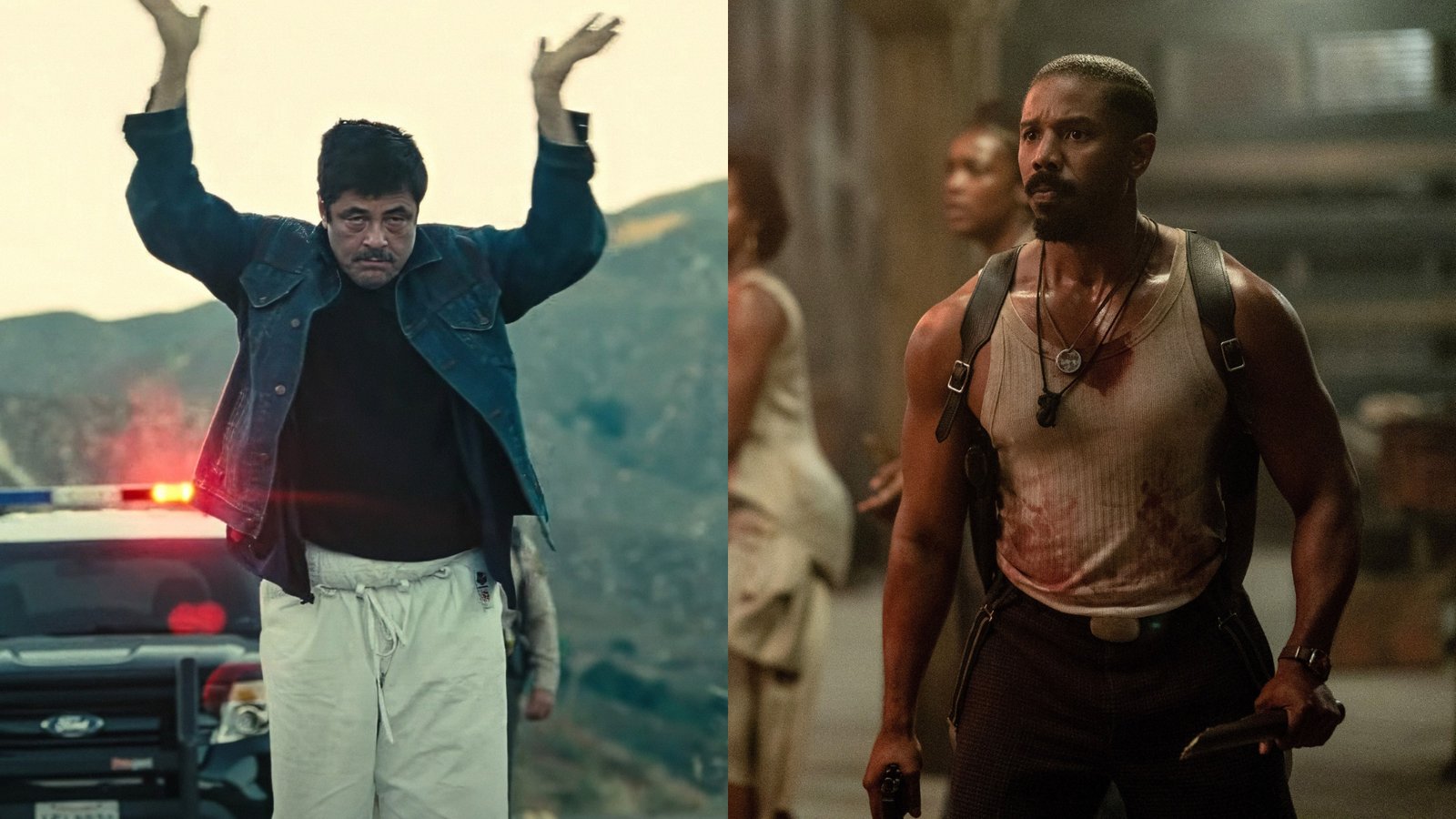
    The film about an ex-revolutionary group was nominated for best picture, best director and best screenplay and received acting nominations for star Leonardo DiCaprio and supporting castmembers Benicio Del Toro, Teyana Taylor and Penn.

    Related Stories

    Other winners from the Vancouver film critics include Sinners writer-director Ryan Coogler, who won best director and best screenplay for his slick vampire film.

    Both One Battle and Sinners are Oscars front runners, with the latest accolades continuing to build their momentum ahead of the 2026 Academy Awards.

    In other acting categories, the best male actor crown went to Timothée Chalamet for his star turn in Josh Safdie’s ping-pong caper Marty Supreme, while Jessie Buckley was named best female actor for her role in Hamnet, Chloé Zhao’s Shakespearean heartbreaker.  

    And the best supporting female actor honor went to Amy Madigan for her performance as a creepily clownish aunt in Zach Cregger’s Weapons.

    In other prize-giving on Monday evening in Vancouver, local film critics gave the best documentary prize to Geeta Gandbhir for The Perfect Neighbor, about the consequences of Stand Your Ground laws as shown through a deadly 2023 shooting, and the best international film in a language other than English went to Iranian filmmaker Jafar Panahi’s It Was Just an Accident.