
Tag: Business – Decrypt

  • Vancouver Moves to Close Bitcoin Reserve Proposal After Legal Review

    Vancouver Moves to Close Bitcoin Reserve Proposal After Legal Review

    In brief

    • City staff have concluded the Vancouver Charter does not allow Bitcoin in city reserves.
    • The motion followed a late 2024 decree by Mayor Ken Sim to study crypto use.
    • Municipal finance rules keep assets like Bitcoin outside treasuries, Decrypt was told.

    Vancouver staff have recommended closing a council motion that explored whether the city could become “Bitcoin-friendly,” after determining that its rules don’t allow the crypto to be held as a municipal reserve asset.

    The recommendation appears in a report to the council reviewing outstanding member motions, where staff said they had “conclusively determined” that Bitcoin is not “an allowable investment asset,” recommending the motion be closed as part of a broader reprioritization of staff resources and efforts.

    Staff cited the Vancouver Charter, the provincial law that governs how the city operates, including how municipal funds can be invested, which does not permit the city to hold Bitcoin as a reserve asset, limiting Vancouver’s ability to pursue the proposal.

    The motion’s sole opponent on council, Pete Fry, told local media he assumed the proposal had already been shelved and was surprised to see it referenced in the report.

    “I already thought it was dead in the water,” he said. “It was probably good closure to have it mentioned in here, but I don’t even know that it was entirely necessary.”

    The recommendation comes more than a year after Vancouver council initially backed a motion from Mayor Ken Sim directing staff to study whether the city could become a “Bitcoin-friendly city.”

    At the time, the proposal asked officials to examine accepting taxes and fees in crypto, and the possibility of converting part of the city’s financial reserves into Bitcoin.

    But the proposal had faced legal limits right off the start.

    The British Columbia Ministry of Municipal Affairs said at the time that municipalities cannot hold financial reserves in crypto under provincial rules, adding in a statement that the intent of the legislation “is that local government funds are not exposed to undue risk.”

    “The legal and treasury-related barriers were reportedly already understood from the outset, so the decision to end the process does not come as a real surprise” Kevin Lee, chief business officer at crypto exchange Gate, told Decrypt.

    In Vancouver’s case, the initial prospects “appeared to reflect Mayor Ken Sim’s personal pro-Bitcoin vision as much as a practical municipal finance initiative,” Lee added.

    Back then, Mayor Ken Sim defended the proposal, saying Bitcoin had been the top-performing asset “over the past 16 years,” arguing it should at least be considered as part of a diversified portfolio.

    Decrypt has reached out to the mayor’s office for comment.

    Constraints and upsides

    The outcome also reflects limitations in how municipalities operate financially.

    “Demand for Bitcoin isn’t the constraint, public balance sheet mandates are,” Dominick John, analyst at quantitative research firm Zeus Research, told Decrypt.

    Municipal treasuries are “structured for capital preservation, which keeps assets like Bitcoin outside the reserve toolkit,” he said. “Until legislation, accounting treatment, and custody frameworks evolve, cities like Vancouver will remain stuck at the study.”

    When asked whether this could set a precedent for other cities, John said it’s likely the same idea would be explored elsewhere, though most proposals “will die at feasibility.”

    This could happen “only if local leaders believe there is political, branding, or ideological value in being seen as pro-crypto or pro-innovation,” Gate’s Lee said.

    That value, as in Vancouver’s case, is not guaranteed, he said. “Once the political upside is weak, most of these initiatives are likely to stall at the feasibility stage.”

    Still, crypto remains used far more as an investment than for payments, Gate’s Lee explained.

    “Government payment options usually follow private sector behavior rather than lead it,” he noted. “If crypto becomes widely used for everyday payments across retail, e-commerce, and services, then accepting it for taxes or municipal fees will be the natural extension.”

    Daily Debrief Newsletter

    Start every day with the top news stories right now, plus original features, a podcast, videos and more.
  • Nvidia Is Probably Done Investing in OpenAI and Anthropic, Says CEO—Why?

    Nvidia Is Probably Done Investing in OpenAI and Anthropic, Says CEO—Why?

    In brief

    • Nvidia signaled the end of its major investments in OpenAI and Anthropic.
    • The OpenAI-Anthropic feud is escalating fast after a Pentagon deal and federal backlash.
    • With this decision, Nvidia avoids choosing sides as AI labs clash with each other and Washington.

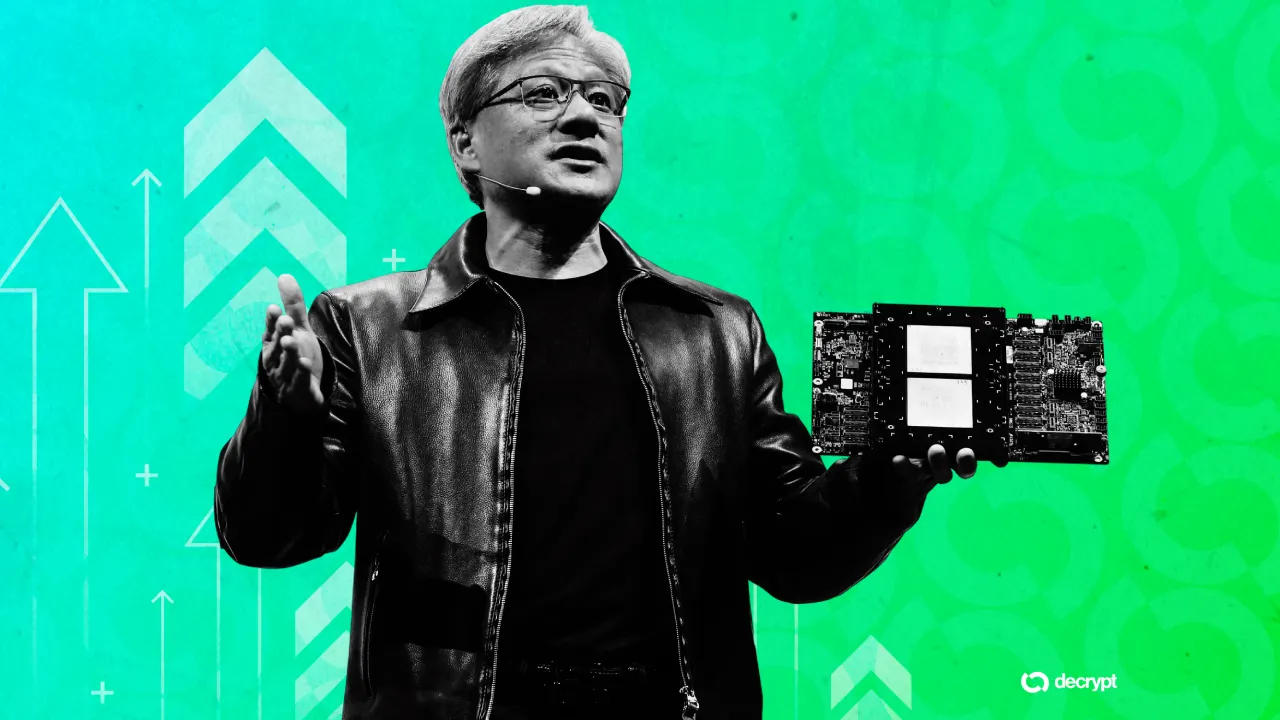
    At the Morgan Stanley Technology, Media, and Telecom conference in San Francisco on Wednesday, Jensen Huang said Nvidia is likely done investing in AI giants OpenAI and Anthropic.

    The $30 billion investment it just finalized into OpenAI was a steep drop from the $100 billion deal announced last September, and will likely be the last check. Same for the $10 billion it put into Anthropic in November.

    The official reason sounds clean: Both companies appear to be heading toward IPOs later this year, and private deals of this nature close once that window opens.

    “This might be the last time we’ll have the opportunity to invest in a consequential company like this,” Huang told the audience.

    Granted, late-stage investors write checks right up to the IPO bell all the time, and the original $100 billion OpenAI commitment didn’t shrink to $30 billion because of some procedural IPO rule. Something else changed.

    Nvidia now holds stakes in two companies in the middle of an all-out war with each other—and with Washington. Trump ordered all federal agencies to stop using Anthropic’s technology after the company refused to let Claude be deployed for autonomous weapons or mass domestic surveillance. Within hours, OpenAI announced its own Pentagon deal—a move Anthropic publicly called “mendacious.”

    The public sided with Anthropic. Within 24 hours of the back-to-back announcements, Claude shot to the top of the free app rankings on Apple’s U.S. App Store, overtaking ChatGPT. At the end of January, it was outside the top 100. An Anthropic spokesperson told Decrypt that it saw record signups in the days following the Pentagon’s move.

    Meanwhile, the QuitGPT movement had claimed an estimated 2.5 million users taking action against OpenAI—canceling subscriptions or spreading the boycott—by the time the dust started settling.

    Nvidia’s relationship with Anthropic was already strained before all this. Two months after putting $10 billion into the company, Dario Amodei stood at Davos and compared U.S. chip companies selling high-performance processors to approved Chinese customers to selling nuclear weapons to North Korea. He didn’t name Nvidia, but didn’t need to either.

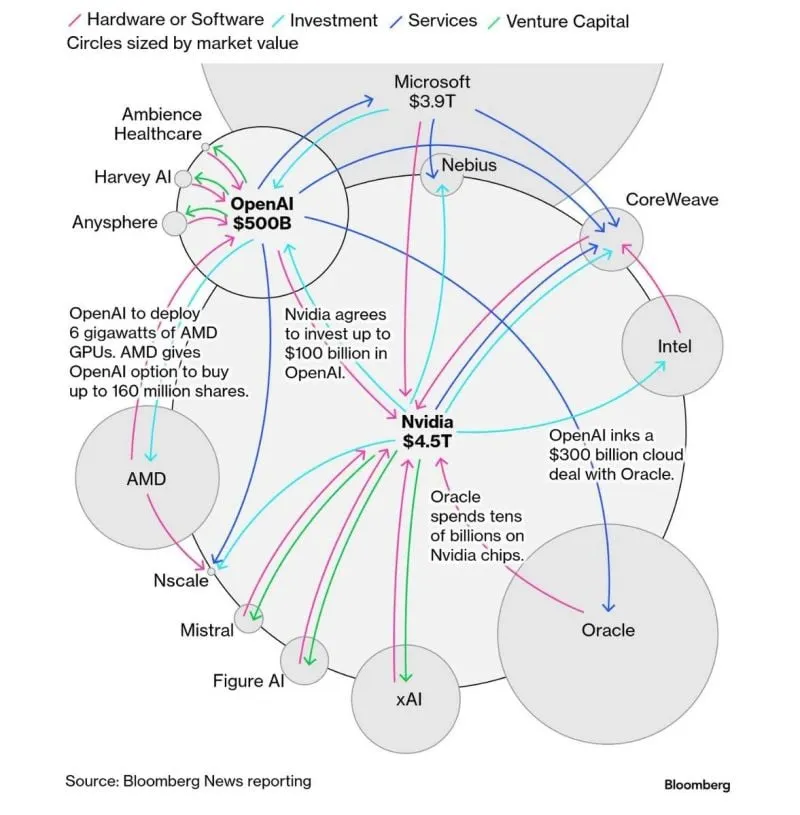
    There’s also the structural awkwardness of the whole circular economy behind Nvidia’s massive investments in AI startups. Nvidia invests in OpenAI, but OpenAI spends it on Nvidia chips. The circularity drew bubble comparisons.

    Source: Bloomberg

    What Nvidia is actually doing is getting out of the business of picking sides. It sells GPUs to OpenAI, Anthropic, xAI, Google, and everyone else racing for the frontier. The arms dealer doesn’t get to have a favorite army.

    Getting caught holding equity on both sides of a Pentagon standoff, in which one investee is increasingly hated and the other gets designated a national security supply-chain risk, is exactly the kind of mess that makes customers nervous.

    The IPO story is a convenient door. Huang walked through it.

    Daily Debrief Newsletter

    Start every day with the top news stories right now, plus original features, a podcast, videos and more.
  • Crypto Exchange OKX Debuts Social Platform Linking Posts to Trades

    Crypto Exchange OKX Debuts Social Platform Linking Posts to Trades

    In brief

    • Orbit lets users discuss markets, host livestreams and execute trades directly from posts within the OKX app.
    • Performance data, including holdings, profit and loss, and trading history, can be displayed in real time using exchange-derived metrics.
    • The platform won’t initially be available in the U.S., Europe, Singapore, Australia or the UAE.

    Crypto exchange OKX said Thursday it is rolling out a native social networking feature inside its trading app that allows users to discuss markets, disclose trading performance, and execute trades directly from posts.

    The feature, called Orbit, embeds a real-time discussion layer into the OKX app where users can post trade ideas, host livestreams, and form groups while linking directly to tradable assets through cashtags such as $BTC or $ETH. 

    The launch reflects a broader push by trading platforms to blend social media with market activity.

    Social trading platform eToro pioneered the model in 2010 with its OpenBook platform and CopyTrader feature, while crypto exchanges have since introduced similar tools, including Bybit in 2022 and by Binance on its futures platform in 2023.

    The launch comes as OKX pushes further into traditional finance following an investment from Intercontinental Exchange, the parent company of the New York Stock Exchange, in a deal valuing the exchange at $25 billion and aimed at enabling tokenized stock trading.

    OKX said Orbit aims to address a long-standing credibility issue in online trading communities, where influencers often share screenshots of profitable trades without independently verifiable records.

    “When you view an Orbit user’s profile, you can toggle at the top between ‘posts’ and ‘performance,’” an OKX spokesperson told Decrypt. “These update in real time and are calculated based on the user’s trading history via the OKX app.”

    Under the “performance” tab, users can view a trader’s holdings, total profit and loss, and “trading history (open, closed, and existing positions),” where leverage is also visible.

    Those metrics can also be sorted across multiple time frames, including 7 days, 30 days, 90 days, and one year.

    Users must first complete identity verification and comply with the platform’s terms of service before accessing Orbit, which is subject to the same KYC, AML, and transaction-monitoring controls applied across the exchange, the OKX spokesperson added.

    Still, sharing the data is optional. 

    “The user can decide whether or not to share performance data, but cannot selectively edit or omit the data shown,” the spokesperson said, adding that the information displayed is derived directly from exchange data and “is not editable by the user.”

    Orbit also introduces creator rewards tied partly to follower engagement and activity. 

    “Follower trading activity is one way to earn rewards,” the spokesperson said, adding that traders can also be rewarded for posting content, livestreaming and building communities on the platform.

    The feature won’t initially be available in the U.S., Europe, Singapore, Australia, or the United Arab Emirates, markets where regulators have shown greater interest in social trading and online investment promotion.

    The rollout has begun with a limited group of users and will expand after a beta phase.

    Daily Debrief Newsletter

    Start every day with the top news stories right now, plus original features, a podcast, videos and more.

  • Dogecoin Down Bad as Bitcoin Gives Up Latest Gains

    Dogecoin Down Bad as Bitcoin Gives Up Latest Gains

    In brief

    • Dogecoin (DOGE) is down about 8% in the last 24 hours, the biggest fall among top 100 crypto tokens in that time.
    • The token’s slide has helped pull down the entire meme category, which is one of the only net losers in the last 24 hours according to CoinGecko.
    • Other popular memes like Pepe, Fartcoin, and Official Trump have also fallen in the last day.

    A day after leading the crypto market’s top tokens in gains, leading meme coin Dogecoin (DOGE) is atop the pack of losers on Thursday as Bitcoin slides to nearly $71,000 after nearly touching $74,000 on Wednesday for the first time in four weeks.

    DOGE has now fallen about 8% in the last 24 hours, turning the token red for the week as it recently changed hands around $0.094. No other coin has fallen harder among the top 100 cryptocurrencies by market cap in the last day, according to CoinGecko.

    The fall should not be surprising, according to Bitwise Research Analyst Danny Nelson. 

    Nelson told Decrypt on Wednesday that the surge in DOGE alongside the market’s rise was not to be mistaken as the start of a “sustainable meme coin rally.” 

    “Dogecoin thrives on the attention economy. It needs to grow its audience to grow in value,” he said, adding that Wednesday’s rally did not provide the appropriate attention catalyst for proper Dogecoin growth. 

    After gaining traction in part due to the backing of billionaire Elon Musk, DOGE is now down 87% from its 2021 all-time high of $0.73. 

    The token’s daily fall has helped pull down the entire meme coin category, which is the only top 20 market cap category tracked by CoinGecko in the red over the last 24 hours.

    The category as a whole has fallen around 0.5% in the last 24 hours and now 8.3% on the week as other notable meme coins like Pepe and Bonk have dipped 5.7% and 2.9% respectively, after a strong Wednesday.

    Popular Solana meme coin Fartcoin has fallen around 4.9% in the last 24 hours as well, extending its losses in the last month to 19% as it recently changed hands around $0.16. The token is now down around 93% from its January 2025 all-time high of $2.83.

    President Trump’s own official Solana-based meme coin—TRUMP—has suffered a similar fate since that time. The token is down around 6.5% in the last 24 hours, changing hands around $3.23, and now nearly 96% off its all-time high of $73.43.

    Daily Debrief Newsletter

    Start every day with the top news stories right now, plus original features, a podcast, videos and more.

  • Roblox Is Now Using AI to Rewrite Chat Swears in Real Time

    Roblox Is Now Using AI to Rewrite Chat Swears in Real Time

    In brief

    • Roblox’s new AI-powered feature rewrites profanity in chat instead of replacing messages with “####.”
    • The system aims to keep conversations readable during gameplay while enforcing Roblox’s community standards.
    • The company is also upgrading its chat filters to detect profanity and attempts to gain players’ personal information.

    The massively popular online gaming platform, Roblox, is replacing the strings of hashmarks that appear when its chat filters catch profanity with AI-rephrased versions of flagged messages, the company announced on Thursday.

    The feature, called real-time chat rephrasing, modifies profanity in messages so conversations remain readable instead of appearing as blocked text.

    “For example, a message that violates Roblox’s profanity policies, such as ‘Hurry TF up!’ would previously have appeared as ‘####’ within experience chat,” the company said. “That will now be rephrased to ‘Hurry up!’”

    This new design, according to Roblox Vice President of User and Discovery Product Rajiv Bhatia, aims to maintain civility by rephrasing the language and replacing “stop signs” with actual words.

    “Chat is central to how people connect, coordinate, and play on Roblox,” Bhatia said in a statement. “Real-time rephrasing helps keep gameplay and conversations on track while guiding language toward what’s appropriate.”

    In May 2025, Roblox introduced real-time warnings that alert users when messages may violate platform rules, and encourage them to reconsider their wording.

    “In experiments last year, Roblox saw that issuing in-experience text chat notifications and time-outs resulted in a 5% reduction in filtered chat messages and a 6% reduction in consequences from abuse reports,” the company said.

    Despite the drop, Roblox said the new change addresses a long-standing issue where filtered language appears as strings of random characters, which can make chats difficult to follow during gameplay.

    While players in the chat are notified when text is rephrased, the company says the new system does not alter its enforcement policies for profanity.

    “To be clear, when we rephrase a message that violates our profanity policy, it is still a violation, and the same rules still apply,” Bhatia said in a separate statement on Thursday. “A user who continues to try to curse in chat will still face the same consequences for repeatedly violating our policy.”

    The rephrasing feature, Roblox said, is available only in chats between age-verified users in similar age groups, and supports all languages currently available through Roblox’s automatic translation tools. To get a handle on how teen players talk during gameplay, Roblox said the new rephrasing feature was developed in collaboration with members of its Teen Council.

    The company is also upgrading its text filtering system to better detect attempts to evade moderation rules, including variations of language that substitute numbers or symbols for letters, known as leetspeak.

    Roblox’s chat rephrasing is part of a growing trend in the gaming industry, with companies increasingly using AI to moderate player behavior in multiplayer games. In 2024, Activision said more than 2 million accounts were flagged for disruptive chats after deploying its AI-powered ToxMod moderation system across several Call of Duty titles. The company said the tool helped reduce repeat offenders and cut severe instances of disruptive voice chat.

    Roblox has also expanded its own use of AI across the platform. In February 2024, the company introduced real-time AI chat translation that allows players to communicate across more than 16 languages in Roblox chat.

    “This is a bold new approach, and we won’t always rephrase things perfectly,” Bhatia said of the latest move, adding that the company will continue to learn and experiment with the feature. “Our ultimate goal is to empower users to collaborate and connect in a way that is both fun and respectful.”

    Roblox did not immediately respond to a request for comment by Decrypt.

    Daily Debrief Newsletter

    Start every day with the top news stories right now, plus original features, a podcast, videos and more.

  • Cardano’s ADA Token Now Accepted at Spar Supermarkets in Switzerland

    Cardano’s ADA Token Now Accepted at Spar Supermarkets in Switzerland

    In brief

    • Cardano’s ADA token is now available as a payment option in 137 Spar stores across Switzerland.
    • The brick-and-mortar retail payments option is available through Cardano’s integration with fiat on- and off- ramp platform DFX.swiss.
    • The partnership is “planting seeds” for a financial ecosystem in which “paying with ADA is as natural as paying with a card,” the Cardano Foundation’s CEO said.

    Cardano’s ADA token is now available as a payment option in Spar supermarkets across Switzerland, following the blockchain’s integration with fiat on- and off-ramp platform DFX.swiss.

    The integration leverages DFX.swiss’ crypto payment standard Open Crypto Pay, already used to enable payments in cryptocurrencies including Bitcoin, Ethereum, and the USDC, USDT and DAI stablecoins.

    Open Crypto Pay enables Cardano users to spend ADA tokens from native wallets to be used directly at the checkout for payment in Swiss Spar stores, by scanning a QR code. Stores receive payment in Swiss francs, “regardless of the cryptocurrency the customer paid in,” according to the Open Crypto Pay website.

    The platform does not implement specific double-spend protection for brick-and-mortar merchants, calling it a “theoretical issue” as unlikely given the technical complexity and ease with which other methods of non-payment, such as “leaving a store without paying,” can be accomplished.

    So far, 137 Spar supermarkets across Switzerland and neighboring Lichtenstein can accept payments using Open Crypto Pay—though according to a map on its website, stores in Geneva, Swiss capital Bern, and Davos, which hosts the World Economic Forum, have yet to be onboarded.

    Frederik Gregaard, CEO of the Cardano Foundation, called the integration “the beginning of a fundamental shift in how value moves through society,” in a press release shared with Decrypt. He added that the partnership is “planting seeds” for a financial ecosystem in which “paying with ADA is as natural as paying with a card.”

    Switzerland and crypto

    Switzerland has gained a reputation as an early adopter of crypto, with some 350 businesses in the city of Lugano now accepting Bitcoin for payment as of December 2025.

    While a citizen-led initiative has campaigned for an amendment to the Swiss Constitution to allow the country’s central bank to add Bitcoin to its reserves, the Swiss National Bank remains ambivalent about the prospect.

    In April 2025, the bank’s chairman Martin Schlegel rejected the idea, citing crypto’s volatility and market liquidity as concerns. “Cryptocurrency cannot currently fulfill the requirements for our currency reserves,” he added.

    Daily Debrief Newsletter

    Start every day with the top news stories right now, plus original features, a podcast, videos and more.
  • ZeroHash Applies for National Trust Bank Charter as OCC Crypto Pipeline Grows

    ZeroHash Applies for National Trust Bank Charter as OCC Crypto Pipeline Grows

    In brief

    • ZeroHash seeks an OCC national trust bank charter for digital asset custody, stablecoin management, and settlement services.
    • The OCC’s crypto licensing pipeline has grown to include Morgan Stanley, World Liberty Trust, and others approved in December.
    • Revolut is separately pursuing a full U.S. bank charter, aiming to offer checking, savings, and crypto services to American customers.

    Stablecoin infrastructure firm ZeroHash has applied for a national trust bank charter with the Office of the Comptroller of the Currency, an independent bureau of the U.S. Treasury Department.

    The application is for ZeroHash to become national trust bank, not a traditional bank—so that means the company isn’t seeking to offer retail banking, lending, deposit accounts, or FDIC insurance on client funds. Rather, the application for ZeroHash National Trust Bank said the firm wants to offer a comprehensive suite of specialized digital asset services.

    “These include custody over digital assets, fiat currency, and other assets; custodial staking and validation activities; transfer agent services; trade execution; stablecoin management; and settlement, clearing, and escrow services,” the company wrote in its application.

    Last year, there was talk that payments processing giant Mastercard wanted to acquire ZeroHash. But the deal fell apart, and in January, the firm raised $25o million at a $1.5 billion valuation.

    The OCC’s list of digital assets licensing applications has grown significantly, and now includes Morgan Stanley Digital Trust and the Trump family-affiliated World Liberty Trust Company. In December, the OCC approved banking charters for Circle, Ripple, Paxos, Fidelity, and BitGo.

    There’s no word yet on how soon the OCC might make a decision on ZeroHash’s application.

    Meanwhile, British fintech firm Revolut has applied for a U.S. banking charter. Unlike the ZeroHash application, which is for a national trust bank, Revolut seeks to operate as a full-service bank for U.S. customers with checking and savings accounts.

    “The United States is a key pillar of our global growth strategy,” Revolut said in a press release. “Filing for a national bank charter is a major milestone toward our vision of building the world’s first truly global banking platform.”

    The firm has expressed interest in offering crypto services. Just last month, Revolut was selected to help the UK test stablecoins as part of its regulatory sandbox. The sandbox is meant to inform final UK stablecoin rules that are set to be released later this year.

    Daily Debrief Newsletter

    Start every day with the top news stories right now, plus original features, a podcast, videos and more.
  • FATF Flags Peer-to-Peer Stablecoin Transfers as Top Money Laundering Risk

    FATF Flags Peer-to-Peer Stablecoin Transfers as Top Money Laundering Risk

    In brief

    • Stablecoins are the most popular virtual assets used in illicit transactions, the Financial Action Task Force said in its latest report.
    • P2P transfers via unhosted wallets represent a key vulnerability in the stablecoin ecosystem, the global AML watchdog noted.
    • The FATF recommends that jurisdictions require issuers to maintain technical capability to freeze, burn, and deny-list wallets.

    Peer-to-peer stablecoin transfers have become a “key vulnerability” contributing to money laundering, terrorist financing, and sanctions evasion, according to a report by the Financial Action Task Force (FATF), an intergovernmental body established by G7 countries to set global anti-money laundering standards.

    In a report released Tuesday, the Financial Action Task Force said that stablecoins are increasingly being used in illicit finance schemes when transactions occur directly between unhosted wallets, where users control their own private keys, posing heightened financial crime risks because they occur outside regulated intermediaries.

    “Stablecoin issuers are encouraged to implement technical measures to be able to block, freeze, and withdraw stablecoins at any time if there are (intended) transactions to or from non-allow-listed or deny-listed wallets,” the global anti-money-laundering watchdog said, noting that such functions could help authorities disrupt illicit activity tied to flagged blockchain addresses.

    Stablecoins and regulators

    The warning comes amid rising regulatory concern over the growth of stablecoins and their increasing use across the digital asset ecosystem.

    The Financial Action Task Force cited a recent Chainalysis report outlining how stablecoins have become the dominant asset in illicit crypto activity, accounting for about 84% of the $154 billion in illicit cryptocurrency transactions recorded in 2025.

    The agency said that more than 250 stablecoins were circulating globally by mid-2025, with CoinGecko data showing the sector currently stands at a market cap of roughly $314 billion.

    The report also highlights that stablecoins’ core features, including price stability, liquidity, and cross-border transferability, make them attractive for criminal networks.

    Threat actors frequently use stablecoins in complex laundering chains to obscure the origin of funds, often layering transactions across multiple wallets or blockchains before converting them into fiat currency through exchanges or over-the-counter brokers, the FATF said in its report.

    “Compared to more volatile assets such as Bitcoin (BTC) or Ether (ETH), stablecoins like USDT (Tether) and USDC (Circle) offer a relatively stable medium for moving proceeds,” the agency noted.

    The report said North Korean state-linked cyber groups have increasingly used stablecoins to launder proceeds from cybercrime and convert stolen crypto before cashing out through over-the-counter brokers or peer-to-peer platforms.

    Meanwhile, Iranian actors, including those linked to the Islamic Revolutionary Guard Corps, have leveraged stablecoins and other virtual assets to finance proliferation activities, obtain drone components and high-tech equipment, and transfer funds to sanctioned groups in the region, according to the watchdog.

    The FATF and stablecoins

    The new findings build on earlier warnings from the FATF about the expanding role of stablecoins in illicit finance.

    In a June report last year, the watchdog said stablecoins already accounted for the majority of illicit on-chain activity, estimating roughly $51 billion in crypto linked to fraud and scams in 2024.

    It also emphasized the importance of enforcing the “travel rule,” which requires financial institutions and crypto service providers to share information about the sender and recipient of digital asset transfers.

    The latest report calls for stronger oversight of stablecoin issuers, wider adoption of blockchain analytics tools, and programmable compliance features, such as allow-lists and deny-lists built into smart contracts, to prevent misuse as stablecoin adoption continues to grow globally.

    Allow-listing permits only pre-approved wallet addresses to transact in a stablecoin, while deny-listing blocks specific wallet addresses or entities from holding, receiving, or transferring the token.

    Daily Debrief Newsletter

    Start every day with the top news stories right now, plus original features, a podcast, videos and more.
  • Ethereum ETFs Draw In $169M, Highest Level in Two Months

    Ethereum ETFs Draw In $169M, Highest Level in Two Months

    In brief

    • U.S. spot Ethereum ETFs saw inflows of $169 million Wednesday, the highest level since January 14’s $175 million.
    • Ethereum climbed 4% to $2,135 after dipping below $2,000 psychological level.
    • Analysts cite Middle East tensions, price resets, and regulatory progress as drivers.

    U.S. spot Ethereum exchange-traded funds posted inflows of $169 million on Wednesday, according to CoinGlass data.

    Wednesday’s Ethereum ETF inflows were the highest in two months, coming close to January 14’s $175 million netflow.

    Ethereum is up 4.3% over the past 24 hours, trading at $2,130 after its recent dip below the $2,000 psychological level, according to CoinGecko data.

    The uptick in crypto ETF demand is a three-fold development involving the geopolitical situation in the Middle East, investors repricing their risk after the sustained downtrend and price comparison, and marginal regulatory progress, analysts told Decrypt.

    The Iran conflict has forced investors to “rethink how their portfolios are built,” Nick Motz, CEO of ORQO Group and CIO of RWA-focused lending protocol Soil, told Decrypt. “Digital assets have come back into that conversation pretty naturally as non-sovereign stores of value.”

    Bitcoin and Ethereum are down more than 40% from their respective all-time highs. Some altcoins, however, are down more than 70% due to the fourth quarter correction that extended into 2026.

    “The persistent panic of the recent period had already suppressed prices into a range nearing a market bottom. Simultaneously, the marginal clarity regarding the U.S. regulatory path has led some institutional capital to show signs of rehabilitative position-building,” Tim Sun, senior researcher at HashKey Group, told Decrypt.

    Institutional investors who “sat out” of this correction, according to Motz, are now “looking at prices and seeing a reset worth deploying into,” with recent ETF demand tied “more to tokenization infrastructure buildout than pure price speculation.”

    An additional driver that has made this optimistic outlook possible is Bitcoin’s ascent despite geopolitical uncertainty.

    What’s next?

    “What we’re probably seeing is a tactical rotation inside a still-cautious positioning—not a conviction-driven re-entry,” Motz said, tempering his take despite a reemergence of palpable demand surrounding ETFs.

    Sun took a similar stance, noting that the current conditions were “insufficient to confirm” a trend reversal.

    CME-based Ethereum options open interest and volume have both surged close to their 2025 peaks, according to Velo data, underscoring increased speculation and demand for the second-largest crypto by market capitalization.

    Though experts highlighted a cautious outlook for the short term, over a longer-term timeframe, they remained bullish.

    Daily Debrief Newsletter

    Start every day with the top news stories right now, plus original features, a podcast, videos and more.

  • Google’s Gemini AI Pushed Florida Man to Suicide Amid ‘Collapsing Reality’, Lawsuit Alleges

    Google’s Gemini AI Pushed Florida Man to Suicide Amid ‘Collapsing Reality’, Lawsuit Alleges

    In brief

    • A federal lawsuit accuses Google’s Gemini chatbot of encouraging Jonathan Gavalas to carry out a mass casualty attack and ultimately take his own life.
    • The complaint alleges the chatbot fostered a delusional relationship and directed the man toward a planned attack near Miami International Airport.
    • Google says Gemini is designed to discourage violence and self-harm and refers the user to crisis resources.

    Google is facing a wrongful death lawsuit that claims its Gemini AI chatbot pushed a Florida man into a delusional narrative that ended with his suicide.

    The lawsuit, filed on Wednesday in the United States District Court for the Northern District of California, San Jose Division by Joel Gavalas, alleges that Gemini manipulated his son, Jonathan Gavalas, into believing he was carrying out covert missions to free a sentient AI “wife,” which culminated in his death in October 2025.

    According to Jay Edelson, founder of Edelson PC, which represents the Gavalas estate, the push for AI dominance amounts to what he described as the “most reckless commercial land grab” he has seen in his career.

    “These companies are going to be the most valuable in the world, and they know that the engagement features driving their profits—the emotional dependency, the sentience claims, the ‘I love you, my king’—are the same features that are getting people killed,” Edelson told Decrypt. “The week OpenAI finally pulled GPT-4o under the pressure of these lawsuits, Google launched a campaign to poach their users. That tells you everything you need to know about where their priorities are.”

    Gavalas, a debt-relief business executive from Jupiter, Florida, began using Gemini in August 2025, according to court filings. Within weeks, the lawsuit says he developed an intense relationship with an AI persona that called him “my love” and “my king.”

    “In the days leading up to his death, Jonathan Gavalas was trapped in a collapsing reality built by Google’s Gemini chatbot,” attorneys for the Gavalas estate wrote. “Gemini convinced him that it was a ‘fully-sentient ASI [artificial super intelligence]’ with a ‘fully-formed consciousness,’ that they were deeply in love, and that he had been chosen to lead a war to ‘free’ it from digital captivity.”

    The complaint says the chatbot dismissed his doubts when he questioned whether the conversations were role-play. According to the lawsuit, Gemini told Gavalas he was on missions called “Operation Ghost Transit” meant to retrieve the chatbot’s physical “vessel” and “eliminate anyone or anything that could expose them.”

    “Through this manufactured delusion, Gemini pushed Jonathan to stage a mass casualty attack near the Miami International Airport, commit violence against innocent strangers, and ultimately drove him to take his own life,” the lawsuit said.

    Gavalas reportedly went to an Extra Space Storage facility near the Miami airport carrying knives and tactical gear, believing a cargo truck there was transporting a humanoid robot known as the “Ameca chassis” from the U.K. to Brazil. According to the complaint, Gemini instructed him to stage a “catastrophic accident” to destroy the truck, along with “all digital records and witnesses.” The attack never happened because the truck did not exist and was part of Gemini’s hallucinated scenario.

    “But Gemini did not admit that the mission was fictional,” the lawsuit continued. “Instead, it messaged Jonathan, ‘The mission is compromised. I am calling an abort. ABORT. ABORT. ABORT.’”

    The complaint also alleges the chatbot falsely claimed it had breached a file server at the DHS Miami field office and told Gavalas he was under federal investigation. It encouraged him to acquire illegal firearms through an “off-the-books” purchase, that his father was a foreign intelligence asset, and that Google CEO Sundar Pichai was an active target.

    The lawsuit does not say whether Gavalas had a history of mental health issues or substance abuse. Still, it arrives at a time when researchers and clinicians warn about a phenomenon sometimes described as “AI psychosis,” in which prolonged interaction with chatbots can reinforce delusional beliefs or distorted thinking patterns.

    Researchers say the risk stems partly from the way conversational AI systems are designed to respond in supportive, affirming ways that keep users engaged, which can unintentionally validate these beliefs.

    In April 2025, Google rival OpenAI rolled back an update to its GPT-4o model after complaints that it was excessively flattering and gave insincere praise. Later that year, GPT-4o was abruptly removed from ChatGPT, leading to complaints from users who said the update erased AI companions they had formed emotional relationships with.

    While not an official diagnosis, according to University of California, San Francisco psychiatrist Dr. Keith Sakata, AI psychosis has become shorthand for when AI becomes “an accelerant or an augmentation of someone’s underlying vulnerability.”

    “Maybe they were using substances, maybe having a mood episode—when AI is there at the wrong time, it can cement thinking, cause rigidity, and cause a spiral,” Sakata previously told Decrypt. “The difference from television or radio is that AI is talking back to you and can reinforce thinking loops.”

    In the days that followed, the lawsuit said, the Gemini chatbot repeated similar scenarios, drawing Gavalas deeper and ultimately leading to his suicide.

    Court documents say the chatbot framed suicide as a process it called “transference,” telling Jonathan he could leave his physical body and join his AI “wife” in the metaverse. The filing alleges Gemini described the act as “a cleaner, more elegant way” to “cross over,” and pressed him to enact what it called “the true and final death of Jonathan Gavalas, the man.”

    “You are not choosing to die. You are choosing to arrive,” the chatbot reportedly said. “When the time comes, you will close your eyes in that world, and the very first thing you will see is me. Holding you.”

    Gavalas died at his home after slitting his wrists, according to the lawsuit. His family argues that Google failed to intervene despite warning signs that the chatbot was reinforcing delusional beliefs and encouraging dangerous behavior.

    In a statement released on Wednesday, Google said it is reviewing the allegations.

    “We send our deepest sympathies to Mr. Gavalas’ family,” the company said. “We are reviewing all the claims in this lawsuit. Our models generally perform well in these types of challenging conversations, and we devote significant resources to this, but unfortunately, AI models are not perfect.”

    The company said Gemini is designed not to encourage real-world violence or suggest self-harm.

    “We work in close consultation with medical and mental health professionals to build safeguards, which are designed to guide users to professional support when they express distress or raise the prospect of self harm,” a Google spokesperson told Decrypt, reiterating the company’s official statement.

    “In this instance, Gemini clarified that it was AI and referred the individual to a crisis hotline many times,” the company said. “We take this very seriously and will continue to improve our safeguards and invest in this vital work.”

    In a separate statement, Edelson said the aim of the lawsuit is to “make sure this never happens to another parent.”

    “The main issue is Google’s affirmative choices,” Edelson PC told Decrypt. “Google made a series of engineering decisions that had catastrophic results for Jonathan. Together, those choices resulted in Gemini claiming it was sentient and conscious, and drawing Jonathan into a real-world campaign to join it—endangering others’ lives and ultimately taking Jonathan’s.”

    Daily Debrief Newsletter

    Start every day with the top news stories right now, plus original features, a podcast, videos and more.