Tag: Business – Decrypt

  • Arrest Made in Violent Kidnapping of Ledger Founder for Crypto Ransom: Report

    Arrest Made in Violent Kidnapping of Ledger Founder for Crypto Ransom: Report

    In brief

    • A suspect was arrested in Spain for their alleged role in the kidnapping of Ledger co-founder David Balland and his wife last January.
    • The individual is believed to be the last remaining suspect to be apprehended in the case.
    • Balland and his wife were kidnapped from their home last year and held for around 24 hours before being rescued.

    An individual suspected to have participated in the kidnapping of Ledger co-founder David Balland in France last year has been arrested in Spain, according to a local news report from Le Parisien.

    The apprehended individual is believed to be the final outstanding perpetrator from the January 2025 attack, according to the report. 

    “The French authorities identified and arrested all members of the criminal organization, with the exception of one of them, who left the country to seek refuge in our country and avoid his arrest,” the Spanish Civil Guard said in a statement. 

    The individual, who was not named, was located in Spain and eventually arrested last week in the municipality of Benalmadena. The arrest of the individual was facilitated with the use of a large police presence, the report says, “due to their dangerousness and the possibility that the criminal organization to which they belonged might try to free them.”

    Balland and his wife were kidnapped from their home in Cher, France last January and held captive for around 24 hours, with ransom demands of 10 million Euros worth of crypto—about $11.6 million—according to the Spanish Civil Guard. 

    One of Balland’s fingers was cut off during that time and mailed to his associates, Le Parisien reported at the time, citing unnamed sources. The pair were soon after liberated by law enforcement and the other kidnappers were arrested. 

    In June, police in Morocco arrested French-Moroccan national Badiss Mohamed Amide Bajjou, who was alleged to be the mastermind behind Balland’s abduction and other crypto-related kidnappings in France.

    Wrench attacks, or physical attacks in attempts to coerce crypto from victims, have been on the rise in the last year, jumping 75% year-over-year, according to data from security firm CertiK.

    France has been particularly troubled, responsible for 16 of the 23 wrench attacks that have been publicly reported this year, according to a database compiled by crypto security researcher and Casa CTO, Jameson Lopp. 

    Earlier this year, six individuals were arrested for kidnapping a magistrate and seeking a crypto ransom. Plus, the CEO of Binance France was the target of a home invasion, but was unharmed and the alleged perpetrators were arrested.

    Daily Debrief Newsletter

    Start every day with the top news stories right now, plus original features, a podcast, videos and more.

  • Senators Reveal Bipartisan Bill to Outlaw Sports Prediction Markets

    Senators Reveal Bipartisan Bill to Outlaw Sports Prediction Markets

    In brief

    • Adam Schiff and John Curtis plan to introduce a bipartisan bill banning sports-related prediction markets.
    • The proposal targets platforms like Kalshi and Polymarket, arguing many of their offerings are unlicensed sports bets.
    • The move escalates a broader fight between states, federal regulators, and prediction market firms over regulation.

    A bipartisan duo of U.S. senators plan to introduce legislation Monday that would ban American prediction markets from offering sports-related wagers.

    The proposed bill, from Adam Schiff (D-CA) and John Curtis (R-UT), would prohibit prediction market platforms like Polymarket and Kalshi from offering sports markets that they allege constitute unlicensed sports betting by another name. News of the impending bill was first reported by the Wall Street Journal.

    “Too many young people in Utah are getting exposed to addictive sports betting and casino-style gaming contracts that belong under state control, not under federal regulators,” Curtis said, in a statement.

    The senators said the legislation would prohibit any CFTC registered entity from listing a contract resembling a sports bet or casino-style game, and also “reinforce Congress’ original intent that the Commodity Exchange Act does not permit sports gambling.”

    “The bill will reaffirm existing tribal and state government authority to regulate sports betting, limit online gambling, or in some cases continue to prohibit all forms of gambling,” David Bean, chair of the Indian Gaming Association, said in a statement shared with Decrypt.

    “We look forward to working with leaders in Congress to hold these platforms accountable to protect consumers, sports integrity, and tribal and state sovereignty,” he added.

    In the last year, a growing number of states have sued the nation’s top prediction market platforms, arguing their sports-related markets should comply with state gambling laws. The platforms have pushed back, arguing that because the sports-related wagers are tied to event contracts, they should instead be regulated at the federal level by the CFTC. 

    A number of judges have not been convinced by that argument. On Friday, Nevada became the first state to successfully ban a prediction market platform, Kalshi—at least temporarily—as the state’s lawsuit against the company proceeds to trial. 

    Last week, Arizona filed criminal charges against Kalshi, for allegedly operating an illegal gambling service and allowing unlicensed election wagering.

    A Kalshi spokesperson told Decrypt that today’s proposed bill would push activity offshore and protect the “monopoly” of U.S. casinos.

    “It’s clear this bill is motivated by casino interests that are threatened by competition,” the spokesperson said. “They’re more worried about protecting their monopolies than protecting consumers.”

    Over 80% of Kalshi’s lifetime trading volume comes from sports-focused markets, according to data from Dune.

    The Trump CFTC has aggressively taken the side of prediction market platforms in the ongoing jurisdictional dispute over sports wagers, which is likely to ultimately be decided by the Supreme Court. CFTC Chair Mike Selig has pledged to put the agency’s resources behind companies fighting against state regulators.

    So far, the states that have challenged the CFTC’s legal interpretation run the political spectrum, from Democratic mainstay Massachusetts to deep-red Tennessee. Last month, Utah’s Republican Governor, Spencer Cox, condemned the Trump CFTC’s approach to prediction markets, arguing the platforms are “destroying the lives of families and countless Americans, especially young men.”

    On Friday, Rep. Alexandria Ocasio-Cortez (D-NY), the prominent progressive lawmaker, added her voice to the growing chorus of prediction market skeptics.

    “I know as a politician these companies are going to spend a billion dollars against me for saying it but… pervasive gambling is not good for society,” she said. “It turns life into a casino, traps people in addiction and debt, surges domestic violence, and fosters manipulation.”

    Editor’s note: This story was updated after publication to include comment from the Indian Gaming Association.

    Daily Debrief Newsletter

    Start every day with the top news stories right now, plus original features, a podcast, videos and more.

  • European Bitcoin Treasury H100 Aims to Triple BTC Stash by Acquiring Two Firms

    European Bitcoin Treasury H100 Aims to Triple BTC Stash by Acquiring Two Firms

    In brief

    • H100 Group plans to acquire Norwegian companies Moonshot AS and Never Say Die AS to more than triple its Bitcoin holdings from 1,051 to 3,500 BTC.
    • The all-stock transaction would position H100 as Europe’s second-largest listed Bitcoin treasury firm.
    • Bitcoin hit a new high above $126,000 last October, but has fallen to recently trade above $70,000.

    Sweden’s H100 Group has signed a letter of intent to acquire two Norwegian Bitcoin treasury companies in an all-stock transaction that would more than triple its holdings to approximately 3,500 BTC—currently valued around $245 million—positioning the firm among Europe’s largest public Bitcoin treasuries.

    The company announced that it signed a letter of intent to acquire Moonshot AS and Never Say Die AS through a share-based deal that would add roughly 2,450 Bitcoin to its current reserve of 1,051 BTC. The transaction involves H100 issuing new shares in exchange for all shares of the Norwegian companies, with no cash component.

    The acquisition would elevate H100 to 27th globally among public Bitcoin treasury companies, as of today, based on data from Bitcoin Treasuries, making it Europe’s second-largest listed Bitcoin treasury firm. That would put it just behind Germany’s Bitcoin Group SE with 3,605 BTC.

    H100 framed the consolidation as part of its strategy to enhance institutional presence, boost liquidity, and expand market relevance in the European crypto market. The all-share structure allows existing shareholders to maintain bitcoin exposure while scaling the combined entity’s holdings.

    “We see strong industrial logic in this acquisition. Scale, credibility and access to capital markets are increasingly important in the Bitcoin space, and this transaction would significantly strengthen H100 in all these areas,” said Chairman Sander Andersen, in a statement. “The transaction represents a continuation of H100’s existing strategy and an execution of the company’s capital markets and M&A strategy to build scale through Bitcoin-based transactions.”

    H100 and the target companies hope to sign definitive agreements before April 22, and complete the deal ahead of the company’s next annual general meeting on May 21.

    H100 began its Bitcoin treasury in May 2025. A wave of Bitcoin treasury companies emerged last year as the price of the leading cryptocurrency surged to new heights, peaking in October just above $126,000. It has since fallen sharply, recently trading just above $70,000.

    Strategy (formerly MicroStrategy), which pioneered the treasury model and began buying BTC back in 2020, remains the largest publicly traded Bitcoin holder by far, with 762,099 BTC—over $53 billion worth of the cryptocurrency. On Monday, the firm revealed plans to raise a further $44 billion to continue buying Bitcoin.

    Daily Debrief Newsletter

    Start every day with the top news stories right now, plus original features, a podcast, videos and more.
  • Morning Minute: Bitcoin Rips as Iran Strikes Postponed

    Morning Minute: Bitcoin Rips as Iran Strikes Postponed

    Morning Minute is a daily newsletter written by Tyler Warner. The analysis and opinions expressed are his own and do not necessarily reflect those of Decrypt. And check out our new daily news show covering all of the top stories in 5 minutes or less, downloadable on Apple Pod or Spotify.

    GM!

    Today’s top news:

    • Crypto majors soar after Trump announces 5-day postponement of Iran strikes; BTC at $70k
    • Congress to introduce bipartisan bill banning sports betting on prediction markets
    • Senators reach agreement on Clarity Act yield dispute in major hurdle cleared
    • Hyperliquid sees over $100M in volume on S&P 500 index
    • Gemini sued by stakeholders for misleading pivot into prediction markets

    📈 Bitcoin Rips as Iran Strikes Postponed

    One single headline and everything has turned.

    Going into this weekend, crypto was getting hammered. Trump issued a 48-hour ultimatum Saturday night – reopen the Strait of Hormuz or face strikes on Iranian power plants. Bitcoin slid from $76,000 to below $68,500, longs got liquidated, and the Fear and Greed Index hit Extreme fear.

    Then this morning, Trump announced he’s postponing those strikes by five days – and Bitcoin ripped.

    Bitcoin immediately jumped $2,000 per token to $70,800. ETH jumped 5% to $2,170.

    The Dow jumped 1000 points premarket and Oil fell off a cliff, down 8% to $90.

    Of course, five days is not peace and Trump says he’s still prepared to strike. Iran hasn’t reopened the Strait. This is just a pause, not resolution and the situation remains very volatile.

    But we may have just gotten a glimpse of what will happen as soon as the Iran War ends for good.

    Key Details

    • Trump announced he has had good discussions with Iran and is postponing strikes for 5 days
    • BTC jumps 3.5% to $70,800 and ETH +4.5% to $2,170
    • Oil falls 8% to $90

    🏛 Senators and the White House Reach a Deal on Stablecoin Yield

    On Friday, Senators Thom Tillis and Angela Alsobrooks said they had reached an agreement in principle with the White House on the stablecoin yield issue — the main fight that has stalled the Clarity Act since January.

    According to the reported framework, passive yield on stablecoin balances would be banned, meaning users would not be able to hold something like USDC and earn interest in a savings-account style format. However, activity-based rewards appear likely to remain allowed.

    That was enough to move prediction market odds sharply. Odds of the Clarity Act passing in 2026 jumped to about 70% on Friday.

    Key Details

    • Passive yield on stablecoin balances would reportedly be banned
    • Activity-based rewards appear likely to survive
    • The stablecoin yield fight had been the biggest obstacle holding up the Clarity Act

    📈 Hyperliquid’s S&P 500 Market Hit $100M in a Single Day

    Hyperliquid’s newly launched S&P 500 perpetual futures market topped $100 million in 24-hour volume by the weekend, quickly becoming one of the platform’s most actively traded markets.

    The product launched last week as an official S&P 500 perp, licensed through Trade XYZ, settled in USDC, and tradable 24/7. That means users can now trade leveraged S&P 500 exposure onchain without a traditional brokerage account.

    Five of Hyperliquid’s top 10 markets over the weekend were crypto with the other half represented by oil, precious metals (gold, silver) and the S&P.

    Key Details

    • S&P 500 perps crossed $100M in 24-hour volume
    • The market was already a top-10 market on the platform by the weekend
    • Oil, gold, silver, and the S&P 500 are now among the platform’s most traded products

    🤖 Eightco Doubles Down on OpenAI While Its Stock Sits Down 93%

    Eightco Holdings, which trades on Nasdaq under ORBS, added another $40 million to its OpenAI position, bringing its total OpenAI exposure to $90 million. That now represents about 30% of the company’s treasury.

    What makes the update more notable is who just backed them. Last week, Eightco raised $125 million from BitMine, Ark Invest, and Kraken parent Payward, with Tom Lee also joining the board.

    Eightco has now deployed $90 million into OpenAI and hold nearly 10% of all WLD tokens in circulation plus 11,000 ETH.

    And now BitMine has exposure to OpenAI.

    Key Details

    • Eightco’s OpenAI position now totals $90M
    • The company raised $125M last week from BitMine, Ark, and Payward
    • Eightco also holds nearly 10% of all WLD in circulation plus 11,000 ETH

    ⚖️ Gemini Shareholders Are Suing the Winklevoss Twins

    A class action lawsuit was filed Friday in the Southern District of New York accusing Tyler and Cameron Winklevoss of misleading investors ahead of Gemini’s IPO last fall.

    The suit alleges Gemini overstated the durability of its core exchange business while failing to disclose plans to pivot more aggressively into prediction markets. In February, Gemini cut 30% of staff, exited Europe and Australia, and said prediction markets were now the company’s main strategic focus.

    The company did report one positive development this week: Q4 services revenue overtook trading revenue for the first time. But the stock gave back most of its post-earnings bounce and closed Friday at $5.66.

    Key Details

    • Plaintiffs claim Gemini failed to disclose a coming shift away from its exchange business
    • Gemini laid off 30% of staff and exited Europe and Australia in February
    • GEMI is down about 85% since the IPO and the company posted a $582M net loss for 2025

    🌎 Macro Crypto and Markets

    Corporate Treasuries & ETFs

    Meme Coin Tracker

    • Meme majors were green in line with majors; DOGE +2%, SHIB +5%, PEPE +3%, TRUMP +2%, PENGU +3%, SPX +3%, FARTCOIN -1%
    • LOL (+30%), buttcoin (+20%) and testicle (+20%) let top movers

    💰 Token, Airdrop & Protocol Tracker

    • Polymarket teased a major announcement coming later today
    • LetsBonk has stormed back in the memecoin race, doing $50M in 24-hour volume over the weekend compared to Pump Fun’s $100M
    • Resolv Labs faced an exploit on Sunday wehre $50M worth of USR was minted without collateral
    • SIREN jumped 85% to $2B in a massive weekend run

    🚚 What is happening in NFTs?

    • NFT leaders were mostly flat; Punks +3% at 29.4 ETH, Pudgy +1% at 4.12 ETH, BAYC -1% at 5.15 ETH; Hypurr’s -8% at 400 HYPE
    • Normies (+20%) and Tatsu (+13%) led notable movers

    Daily Debrief Newsletter

    Start every day with the top news stories right now, plus original features, a podcast, videos and more.
  • Crypto Markets Grapple With Volatility as ETFs Shed $177M Last Week

    Crypto Markets Grapple With Volatility as ETFs Shed $177M Last Week

    In brief

    • Last week’s drop in Bitcoin’s price coincides with crypto ETF outflows spiking to $177 million.
    • Bitcoin is up 7% since February 28, when the war began, outperforming the S&P 500 (-4.6%) and gold (-17%).
    • Experts eye $80,000 as “key inflection point” for altcoin rotation; Trump announces potential Iran ceasefire.

    Bitcoin’s drop from its peak above $75,000 last week has solidified its month-long sideways price action. While the leading cryptocurrency remains sensitive to immediate geopolitical headlines, broader market sentiment was tempered by last week’s $177 million outflows from exchange-traded funds across the crypto sector.

    The weekly pullback, which saw Bitcoin dip to a low of $68,500, according to CoinGecko data, highlights the choppy nature of the current market. Over a broader time horizon, however, the asset’s resilience remains a focal point. The top crypto has significantly outperformed gold and the S&P 500 index since the onset of the U.S.-Iran war on February 28.

    That divergence is due to Bitcoin’s “several rounds of deleveraging” since its October 2025 all-time high of $126,080, experts previously told Decrypt.

    Bitcoin holding well despite geopolitical escalations is encouraging, Richard Usher, director of trading at financial infrastructure provider OpenPayd, told Decrypt, anticipating a bullish second quarter. “The risk is clearly a prolonged conflict which could negatively affect sentiment in all risk assets, but my base case remains that neither side wants, or frankly can tolerate, a drawn-out conflict, so I remain cautiously upbeat for Q2,” he said.

    Ignacio Aguirre Franco, CMO of cryptocurrency exchange Bitget, echoed Usher’s outlook. “If macro conditions stabilize, even without a bullish catalyst, that could be enough to push the market into a recovery phase in Q2,” the Bitget analyst told Decrypt.

    Though altcoins are at the behest of Bitcoin’s price action and volatility, a recovery in its price beyond $80,000 could be a “key inflection point” that triggers a capital rotation into Ethereum, XRP, and the broader crypto market, Ryan Lee, chief analyst at Bitget, told Decrypt.

    Adding a geopolitical twist to the start of this week, Bitcoin spiked to an intraday high above $71,000 after U.S. President Donald Trump announced “productive” conversations with Iran and a five-day pause on planned strikes targeting the country’s energy infrastructure.

    Leading cryptocurrencies including Ethereum and XRP jumped alongside Bitcoin, though all three remain down on the week.

    The news catalyzed bullish sentiment, with users’ chances of Bitcoin reaching $84,000 before $55,000 jumping by 9% on prediction market Myriad, owned by Decrypt’s parent company Dastan. Myriad users also assign a 20.7% chance to a U.S.-Iran cease-fire, up from 12.8% earlier today.

    Daily Debrief Newsletter

    Start every day with the top news stories right now, plus original features, a podcast, videos and more.

  • How AI Is Being Used to Clear Court Backlogs in LA

    How AI Is Being Used to Clear Court Backlogs in LA

    In brief

    • LA Superior Court is testing Learned Hand’s AI to help judges prep cases without replacing judicial decisions.
    • The company’s CEO warns that AI-assisted legal filings will flood courts with a “bots versus bots” dynamic if left unchecked.
    • The system uses a closed set of legal materials and verification layers designed to catch hallucinations before a judge sees the output.

    Courts around the world are straining under growing caseloads, and a pilot program in Los Angeles is hoping to change that by testing whether AI can assist judges without offloading their judgment.

    The Los Angeles Superior Court is testing an AI tool called Learned Hand that summarizes filings, organizes evidence, and generates draft rulings in civil cases.

    The goal is to reduce time spent on administrative tasks so judges can focus on the parts of a case that require legal analysis and discretion, Learned Hand founder and CEO Shlomo Klapper told Decrypt.

    “We’re at a place in society where courts are under tremendous strain,” Klapper said. “Their caseloads go up, but no help is coming,” he said, adding that advances in artificial intelligence are “massively dropping the cost of litigation.”

    AI is increasing pressure on the courts by making it easier to produce filings, with filings rising 49% from 4,100 to 6,400 in the past year, according to a February 2026 report by national law firm Fisher Phillips.

    The Los Angeles Superior Court pilot gives a small group of judicial officers access to Learned Hand’s AI system to test its performance across a case, from intake to draft rulings.

    A former judicial law clerk for the U.S. Court of Appeals and deployment strategist with Palantir, Klapper said Learned Hand, founded in 2024, and named after a federal judge of the same name, was designed to give overburdened courts “purpose-built” AI tools that cut down on “drudge work” by surfacing key facts and legal issues while leaving judgment and agency with the human judge.

    “With this partnership, we are carefully evaluating emerging technologies to determine how they may support judicial officers in working more efficiently and effectively,” Presiding Judge Sergio C. Tapia II said in a statement. “Let me be clear—while this tool may enhance the way judicial officers review and engage with case files and information, it will not replace, or in any way compromise, the sanctity, independence, and impartiality of judicial decision-making.”

    Klapper said the harder part of developing an AI for courts is not generating text but checking AI output against the underlying case materials and legal sources.

    “Most of the expense of our large language model is in the verification, not the generation,” Klapper said. “Generation is easy. Anyone can generate something, but how do you make sure that it’s really reliable?”

    AI hallucinations have already surfaced in high-profile court cases.

    In 2023, the defense team for Prakazrel “Pras” Michel, a founding member of hip-hop group the Fugees, alleged that an AI helped write a closing argument that included frivolous claims and missed weaknesses in the government’s case against him.

    That same year, a federal judge ordered lawyers representing former Trump attorney Michael Cohen to provide printed copies of cited cases after the court could not verify them.

    Klapper said Learned Hand is built around a narrower pool of source material to reduce the risk of AI hallucinations. Rather than pulling from the open internet or random datasets, the system operates within a defined set of legal materials.

    The reason is that large language models can reflect biases in their training data, pointing to examples of AI echoing advice from platforms like Reddit, Klapper said. Learned Hand addresses that by breaking tasks into steps and assigning each step to a model with a specific function.

    Learned Hand is also designed so that judges do not need technical training to use it.

    “It’s point and click,” Klapper said. “They don’t have to do any prompts.”

    Klapper argued that much of a judge’s day is spent on routine tasks rather than legal reasoning, and that the AI aims to allow them to “spend more time on judge work and less time on drudge work.”

    Klapper said judges should not take AI outputs at face value and that both the tools and the companies behind them need to prove their reliability.

    “I like to say, don’t trust, verify,” he said. “They shouldn’t trust anything. It has to show its worth.”

    Daily Debrief Newsletter

    Start every day with the top news stories right now, plus original features, a podcast, videos and more.
  • Bitcoin Price Slides but Holds Up Better Than Stocks as Oil Shock Continues

    Bitcoin Price Slides but Holds Up Better Than Stocks as Oil Shock Continues

    In brief

    • Oil prices are climbing back toward $100 a barrel as tensions around the Strait of Hormuz escalate.
    • Bitcoin remains range-bound after months of deleveraging earlier this year.
    • Analysts say this week’s flash PMI data could shape expectations for interest rates and risk assets.

    Bitcoin has fallen over the past week, but its declines have been less severe than the broader equity drawdown since the Iran conflict began on February 28.

    The world’s largest crypto traded around $68,000 on Sunday, down roughly 2% over the past 24 hours and about 6% over the past seven days, according to CoinGecko data

    The move comes as the Iran war entered its fourth week, pushing crude prices higher and contributing to a broader pullback in risk assets by Friday.

    That geopolitical backdrop worsened over the weekend after U.S. President Donald Trump gave Iran a 48-hour ultimatum to fully reopen the Strait of Hormuz or face U.S. strikes on Iranian power plants, prompting Tehran to threaten to completely shut the vital oil shipping route and target U.S.-linked energy infrastructure across the region.

    U.S. stocks have fallen for four consecutive weeks, with the S&P 500 last week breaking below its 200-day moving average, a key technical level closely watched by institutional investors, for the first time since March of last year.

    Both the S&P 500 and the Nasdaq are down about 4% to 5% this month, according to Google Finance data.

    Energy has been the only major sector to rise during the period as oil prices begin climbing back toward $100 a barrel.

    Still, Bitcoin’s monthly decline has been more modest than the drop in equities, posting a loss of just 0.2%, a shift some market participants attribute to earlier deleveraging in the crypto market and continued institutional participation.

    “After undergoing several rounds of deleveraging in recent months, Bitcoin has materially outperformed traditional assets on a risk-adjusted basis since the start of the Iran war,” John O’Loghlen, managing director for APAC at Coinbase, told Decrypt

    He added that as oil becomes “an active transmission channel for global inflation,” the firm is seeing rising institutional inflows into crypto assets and U.S. Bitcoin ETFs.

    “There are early signs the crypto market might now be past peak pessimism,” O’Loghlen said. “However, stronger participation will be required for a more durable rally.”

    While macro conditions are driving broader market sentiment, experts say the crypto market itself is flashing signs of resilience rather than heavy distribution.

    “The crypto market is in a steady consolidation phase, with clear signs of institutional strength and accumulation,” Nischal Shetty, founder of WazirX, told Decrypt

    He added that Bitcoin has been holding support near the lower end of its recent range while facing resistance near recent highs, signalling buyers remain active despite macro uncertainty.

    A mid-March ChainCheck report from VanEck found that long-term holder selling has slowed, with transfer volume declining across older coins, a sign that experienced investors are reducing distribution pressure.

    Analysts say the next move for Bitcoin will likely depend on macroeconomic data in the coming week, including flash PMI readings from major economies and further moves in oil prices, which are increasingly shaping expectations for inflation and interest rates.

    Daily Debrief Newsletter

    Start every day with the top news stories right now, plus original features, a podcast, videos and more.

  • Kalshi Raises $1 Billion to Double Valuation to $22 Billion: Reports

    Kalshi Raises $1 Billion to Double Valuation to $22 Billion: Reports

    In brief

    • Kalshi has raised $1 billion in a new funding round led by Coatue Management, valuing the prediction market at $22 billion.
    • The raise doubles Kalshi’s valuation from its December round, which was led by Paradigm and included Ark Invest, Andreessen Horowitz, and Sequoia.
    • Rival Polymarket was valued at $9 billion in October 2025 following a $2 billion investment from Intercontinental Exchange.

    Prediction market giant Kalshi has raised a $1 billion round and, with it, clinched a $22 billion valuation, a person familiar with the matter told Decrypt. The news was originally reported by The Wall Street Journal.

    The deal has roughly doubled Kalshi’s valuation from its last round in December, when investors valued the business at $11 billion. That round was led by Paradigm and included investments from Cathie Wood’s Ark Invest, and venture capital giants Andreessen Horowitz and Sequoia Capital.

    This new funding round was led by Coatue Management, the source said. Kalshi declined to comment when asked to confirm the news by Decrypt.

    Money has been flowing into the industry at a blistering pace. A buzzy Certuity report from last summer estimated that prediction markets could reach $95.5 billion by 2035, with a compound annual growth rate of 46.8%.

    Kalshi was founded and launched in June 2021, but the company was stymied by an attempt by the Commodities and Futures Trading Commission to block its election contracts in September 2023.

    The prediction markets startup took the matter to court and got a favorable district court ruling in September 2024, but the CFTC appealed, leaving Kalshi waiting to see if the ruling would hold. The regulator voluntarily dismissed its appeal in May 2025, effectively giving Kalshi the green light to offer election contracts.

    Since then, its fundraising trajectory has accelerated sharply over the past year. In June 2025, the company raised $185 million at a $2 billion valuation in a Series C round led by Paradigm, with participation from Sequoia, Multicoin, and others—catapulting it to unicorn status.

    By October, Kalshi had raised an additional $300 million at a $5 billion valuation, with Sequoia, Andreessen Horowitz, Paradigm, and others participating, as the company announced plans to expand into more than 140 countries. The jump up to an $11 billion valuation was announced in December, thanks to an additional $1 billion investment.

    Its competitor, Polymarket, saw its own valuation reach $9 billion in October 2025 as Intercontinental Exchange, the New York Stock Exchange’s parent company, completed a $2 billion investment. The news came alongside Polymarket CEO Shane Coplan being dubbed the youngest “self-made billionaire” according to a Bloomberg report at the time.

    Decrypt reporter André Beganski contributed to this report.

    Daily Debrief Newsletter

    Start every day with the top news stories right now, plus original features, a podcast, videos and more.
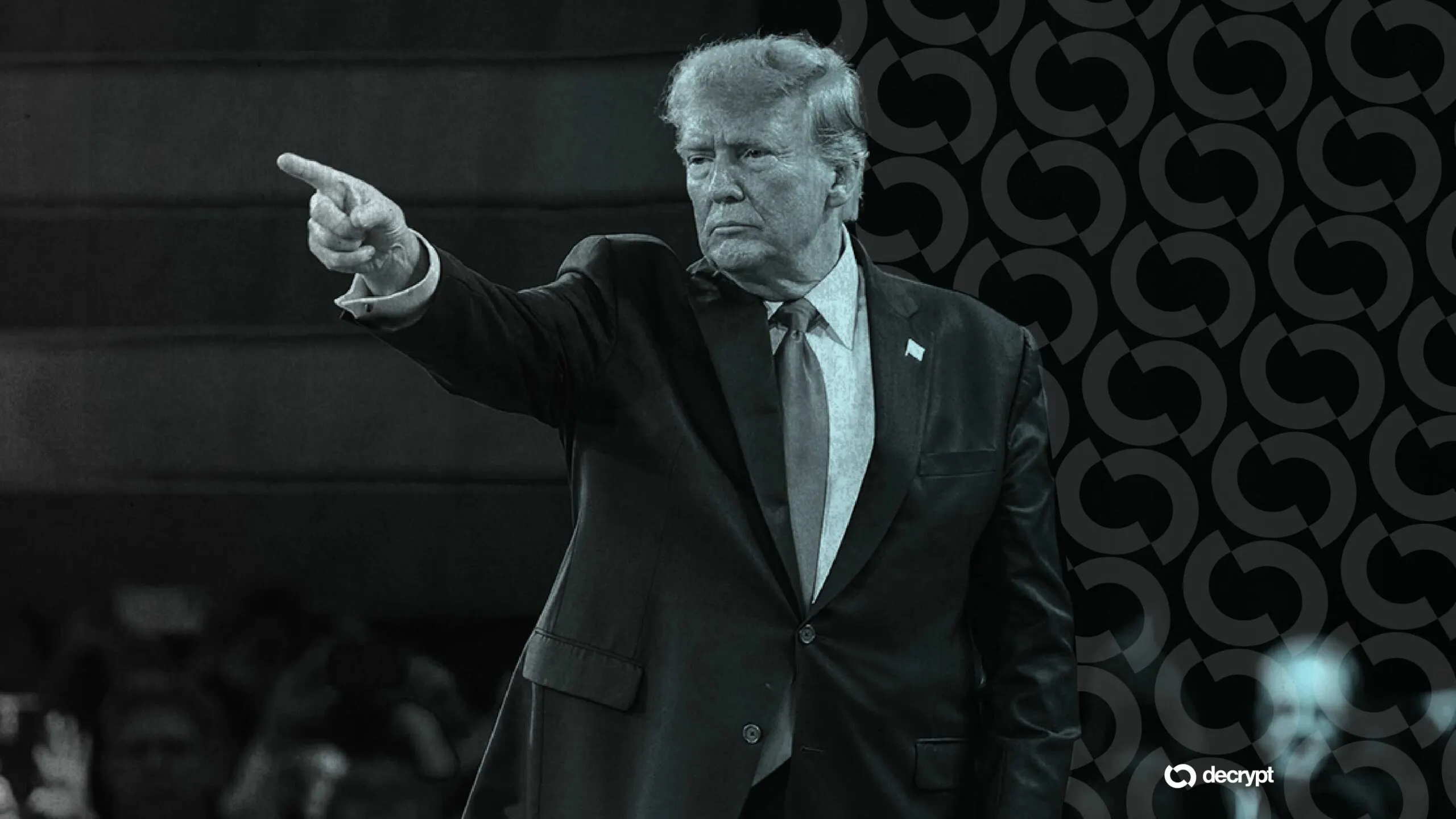
  • White House AI Proposal Seeks to Override State Laws, Avoid New Regulator

    White House AI Proposal Seeks to Override State Laws, Avoid New Regulator

    In brief

    • The White House proposed federal AI standards while preserving key state enforcement powers.
    • The framework aims to avoid creating a new AI regulator, relying instead on existing agencies and courts.
    • The plan also focuses on child safety, free speech, infrastructure, and copyright disputes.

    The White House on Friday released a sweeping national policy framework for artificial intelligence, outlining recommendations to Congress that would set national standards for AI while relying on existing federal agencies—rather than creating a new regulator.

    The proposal comes as states move ahead with their own AI laws, which the Trump administration has criticized as a burdensome “patchwork” of requirements for companies.

    “The Trump Administration is committed to winning the AI race to usher in a new era of human flourishing, economic competitiveness, and national security for the American people,” the White House said in a statement. “Achieving these goals requires a commonsense national policy framework that both enables American industry to innovate and thrive and ensures that all Americans benefit from this technological revolution.”

    The framework urges Congress to set national AI rules that address child safety, innovation, free speech, and intellectual property, while preempting state laws it views as burdensome. It also says those federal standards should not override states’ existing authority to enforce laws on issues like fraud, consumer protection, and child sexual abuse material.

    While some praised the framework for urging Congress to pass federal regulations, advocacy groups including the Electronic Frontier Foundation questioned the details.

    “The framework proposes a few ideas that would be disastrous, such as barring states from enacting protections for their residents, imposing age-verification requirements on AI platforms and services, and creating a new federal publicity right,” EFF Legal Director Corynne McSherry told Decrypt. “Given the high level of the framework, the devil will be in the details.”

    The Center for Democracy and Technology said the proposal includes “some sound statements of principles,” but does not resolve competing priorities.

    “Its usefulness to lawmakers is limited by its internal contradictions and failure to grapple with key tensions between various approaches to important topics like kids’ online safety,” CDT Vice President of Policy Samir Jain said in a statement shared with Decrypt.

    Jain also said the framework contradicted the White House’s own position on government influence over AI platforms.

    “It rightly says that the government should not coerce AI companies to ban or alter content based on ‘partisan or ideological agendas,’ yet the administration’s ‘woke AI’ executive order does exactly that,” he said.

    The framework follows earlier efforts by the Trump administration to curb state-level AI regulation. In November, a draft executive order outlined steps to challenge state laws and restrict funding to those that enacted laws that were seen as contradictory to the order.

    Despite the administration’s attempts to set a federal standard, states have continued to pass their own measures. In October, California enacted SB 243, which would require AI companion chatbots to identify themselves and restrict certain interactions with minors while imposing disclosure rules on large developers.

    The White House’s framework also said parents should be given more control over how children interact with AI systems, and that Congress should enact better protections against abuse.

    “The administration is calling on Congress to give parents tools to effectively do that, such as account controls to protect their children’s privacy and manage their device use,” the White House said. “The administration also believes that AI platforms likely to be accessed by minors should implement features to reduce potential sexual exploitation of children or encouragement of self-harm.”

    The administration also said that while it views AI training on copyrighted material as lawful, it believes courts should decide the issue, adding that Congress “should not take any actions that would impact the judiciary’s resolution of whether training on copyrighted material constitutes fair use.”

    The proposal also calls for a federal law to protect individuals from unauthorized AI-generated deepfakes, expanding on a bipartisan law signed by Trump last year that made non-consensual intimate images and deepfake porn a federal crime. The new framework, however, comes with exceptions for parody, satire, news reporting, and “other expressive works protected by the First Amendment.”

    The plan ties AI policy to infrastructure and economic goals, including faster permitting for data centers and ensuring residential electricity costs do not rise as a result of AI infrastructure buildout under a proposed “Ratepayer Protection Pledge.” It also calls for expanded use of on-site and behind-the-meter power generation to support data center development and improve grid reliability, along with incentives to expand AI adoption and access to federal datasets.

    Consumer advocacy group Public Citizen called the proposal “a national framework to protect Big Tech at the expense of everyday Americans.”

    “It is an extraordinary payback to the Big Tech companies that have lined up to throw pocket change at Trump’s inauguration, and for his ballroom, and for the Melania movie, and to settle bad faith lawsuits and more,” co-president Robert Weissman said in a statement shared with Decrypt.

    Weissman said the focus on preempting state laws could leave gaps in oversight, arguing that without new federal standards, limiting state action would reduce regulation. He pointed to ongoing state efforts addressing issues such as deepfakes, AI companions, and algorithmic decision-making.

    “This is a disgraceful proposal that, happily, will be dead on arrival in Congress,” Weissman said. “It does, however, show yet again that Donald Trump aligns his interests with the biggest corporations and the billionaire class, not those of the American people.”

    Editor’s note: This story was updated after publication to include comment from the Electronic Frontier Foundation.

    Daily Debrief Newsletter

    Start every day with the top news stories right now, plus original features, a podcast, videos and more.

  • Eightco Boosts OpenAI Investment After BitMine’s Tom Lee Joins Board

    Eightco Boosts OpenAI Investment After BitMine’s Tom Lee Joins Board

    In brief

    • Eightco invested another $40 million in ChatGPT firm, OpenAI.
    • The company now has $90 million in total investment into OpenAI, representing around 30% of its holdings.
    • Shares of Eightco (ORBS) are down slightly on the day, but have fallen nearly 93% in the last six months.

    Publicly traded AI and blockchain firm Eightco Holdings (ORBS) has upped its investment in leading artificial intelligence firm OpenAI, making an additional $40 million investment in the firm behind popular chatbot ChatGPT. 

    The investment brings its total backing to $90 million in the firm led by co-founder and CEO Sam Altman, accounting for 30% of its entire treasury. 

    “We believe our investment in OpenAI represents a transformative opportunity not only for ORBS, but for our shareholders,” said Eightco CEO Kevin O’Donnell in a statement. 

    “Access to high-growth private companies has historically been limited to institutional investors, and we’re proud to offer retail investors meaningful exposure to one of the most important AI companies in the world,” he added. 

    The investment comes one week after the firm announced a $125 million fundraising injection from Ethereum treasury firm BitMine Immersion Technologies, Kraken parent company Payward, and Ark Invest, the investment firm of noted technology investor Cathie Wood.

    Alongside its investment, Eightco also added BitMine Chairman Tom Lee to its board of directors. (Disclaimer: Lee is an angel investor in Myriad, the prediction market platform operated by Decrypt‘s parent company, Dastan.)

    “This investment highlights our continued belief in the long-term impact of artificial intelligence and positions ORBS at the forefront of innovation as this technology reshapes industries globally,” said O’Donnell. 

    Beyond its OpenAI investment, the firm manages holdings of 11,068 ETH valued at $23.6 million, as well as $76 million in cash and stablecoins. Its largest crypto position is in Worldcoin (WLD), the native token for the proof-of-humanity blockchain project co-founded by Altman. 

    As of Friday, Eightco held 277,222,975 WLD tokens—almost 10% of the entire WLD circulating supply—valued around $89.2 million. 

    Last year, the firm raised $250 million to create a digital asset treasury with a focus on Worldcoin. Upon that September news, shares in the firm skyrocketed as much as 5,000%, hitting a 52-week high of $83.12 according to data from Yahoo Finance. 

    On the day, shares have dropped more than 4% to change hands at around $0.90—down nearly 93% in the last six months.

    Daily Debrief Newsletter

    Start every day with the top news stories right now, plus original features, a podcast, videos and more.