Tag: Al Jazeera

  • Stephen Curry, Warriors hold nerve to beat Timberwolves in tight NBA battle

    Stephen Curry, Warriors hold nerve to beat Timberwolves in tight NBA battle

    Stephen Curry scored 44 points and grabbed eight rebounds, and the Golden State Warriors escaped with a 119-114 win over the Minnesota Timberwolves in Minneapolis.

    Yaxel Lendeborg added 26 points in Wednesday night’s match for Golden State, which won its second straight game after losing its first three contests of the season. Brandon Williams chipped in 11 points off the bench.

    Recommended Stories

    list of 4 itemsend of list

    Jonathan Kuminga scored 20 points against his former team to lead Minnesota, which dropped its second game in a row after a 3-0 start. Jaden McDaniels and Terrence Shannon Jr each finished with 19 points, and Ayo Dosunmu contributed 17.

    The Timberwolves outscored the Warriors 66-55 in the second half but could not complete the comeback attempt. Bones Hyland made a bank shot to trim the deficit to three points in the final seconds, but Curry ended the scoring with two free throws.

    The Warriors led 93-81 at the end of the third quarter.

    Golden State increased its lead to as many as 24 points midway through the second half. Curry converted a three-point play to give the Warriors a 78-54 lead.

    Minnesota closed the third quarter on a 27-15 run to cut the deficit to 12. Hyland came off the bench and made a pair of 3-pointers to help the Timberwolves draw closer.

    Golden State led 64-48 at the half.

    The Warriors closed the first quarter on a 21-9 run to grab a 30-23 advantage. De’Anthony Melton knocked down a pair of 3-pointers during the run, and Lendeborg added a driving layup and a 3-pointer.

    Another layup by Lendeborg gave Golden State its first double-digit lead of the game at 48-38 with 6:29 left in the half.

    Golden State scored seven of the final nine points of the first half to go ahead by 16. Lendeborg made a 3-pointer and Will Richard and Curry made two free throws apiece.

    Simons fuels fourth-quarter flurry as 76ers power past Pacers

    Tyrese Maxey led a balanced attack with 27 points, and Anfernee Simons ignited a deficit-erasing, fourth-quarter run, as the Philadelphia 76ers overtook the Indiana Pacers for a 114-109 victory in Indianapolis.

    Simons finished with 20 points off the bench, while Joel Embiid had 21 points and 11 rebounds, Jaylen Brown 20 points and 10 rebounds and LeBron James had 13 points and 10 assists for the 76ers.

    Pascal Siakam totalled 26 points to complement 11 rebounds and Andrew Nembhard chipped in with an 18-point, 14-assist double-double for the Pacers.

    In a game that featured a 37-point explosion by the 76ers in the second quarter and two Pacers bursts during a 36-point response in the third period, Philadelphia found itself down 88-75 before dominating the final 12 minutes.

    Simons buried a 3-pointer 18 seconds into the fourth quarter and the 76ers didn’t slow down until they had run off 26 of the period’s first 34 points to go up 101-96 with 4:24 to go. He had another 3-pointer in the run, James added one and Embiid contributed a three-point play.

    Consecutive hoops by Siakam and Nembhard got the hosts within one with 3:07 to play, and it remained a one-score game into the final 90 seconds until Maxey secured Philadelphia’s fourth win in five games with a pair of 3-pointers in the final 1:10.

    The 76ers outscored the Pacers 39-21 in the final period.

    Indiana had taken its second-half lead with 17-0 and 13-2 third-quarter flurries, the latter helping put the 76ers in a 13-point hole entering the final 12 minutes.

    Aaron Nesmith had 18 points, Kelly Oubre Jr had 15 and Obi Toppin had 13 for the Pacers, who lost their second straight.

    Cavaliers spoil AJ Dybantsa’s Wizards debut

    Evan Mobley scored 24 points and Peyton Watson had a season-high 22 points as the Cleveland Cavaliers beat the visiting Washington Wizards 121-111, spoiling the NBA debut of top overall draft pick AJ Dybantsa.

    Dybantsa had a team-high 19 points in 27 minutes, making 8 of 12 field goal attempts with two rebounds and two assists.

    Mobley, who scored 10 points in the fourth quarter, also grabbed 12 rebounds as Cleveland rallied from a 13-point deficit. Donovan Mitchell posted 19 points and seven assists, and Jarrett Allen had eight points, 12 rebounds and three blocks.

    Anthony Davis and Alex Sarr each scored 18 points for the Wizards, while Kyshawn George had eight points and a career-high 11 assists. Trae Young added 14 points and eight assists, and Bilal Coulibaly made 8 of 9 shots and scored 17 off the bench.

    The Cavaliers went in front for the first time since the first quarter at 94-92 on Mobley’s slam to begin the fourth. Dybantsa put Washington back ahead 105-104, but Cleveland scored the next nine points in completing a perfect three-game homestand.

    Dybantsa drove the lane two minutes into the third to extend the Wizards’ lead to 76-63, but Cleveland ended the period on a 29-16 run. Mitchell made two free throws to tie it at 92-92 going into the fourth.

    Coulibaly scored 14 points without a miss in the first half as Washington carried a 69-59 advantage into the break. Dybantsa had 11 points in 14 minutes and Young had seven points and six assists, while Watson had 16 for the Cavaliers.

    Sarr scored 13 points in the first, his season high for a game, as the Wizards built a 42-34 lead. Dybantsa, Mitchell and Mobley all had nine points apiece as the teams combined to make 9 of 13 3-point attempts and go 15 of 16 at the foul line.

    Dybantsa attacked the basket on the opening possession, drawing a foul and making two free throws 16 seconds in.
  • Fed leaves interest rates unchanged despite inflation in the US

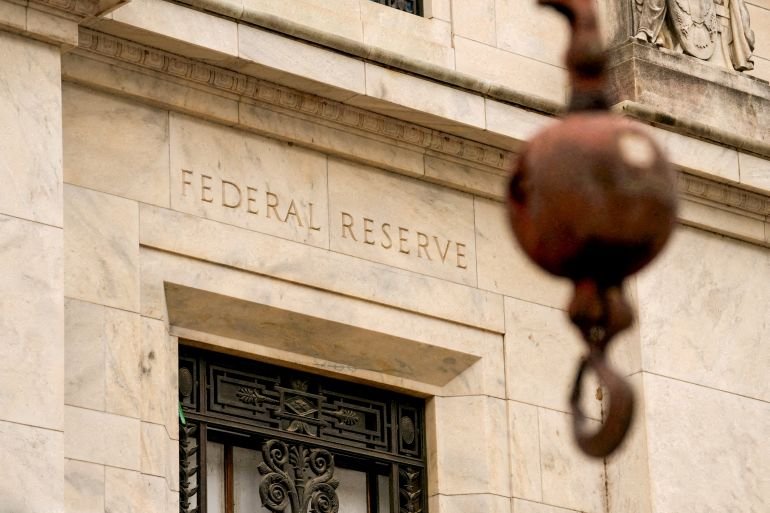
    Fed leaves interest rates unchanged despite inflation in the US

    Rates will remain 3.75-4 percent even as inflation continues to rise.

    The United States Federal Reserve is set to hold interest rates steady in its final monetary policy decision before the US midterm elections.

    The central bank will maintain rates at 3.75-4 percent, following a 10-2 vote, in line with expectations.

    Recommended Stories

    list of 4 itemsend of list

    CME FedWatch, which tracks the likelihood of monetary policy decisions, indicated that there was more than a 90 percent chance rates would remain unchanged.

    “Economic activity is expanding at a strong pace,” the Fed said in its press release announcing the decision on Wednesday. “While uncertainty remains elevated owing, in part, to geopolitical developments, domestic spending has been resilient. Productivity growth is strong, and capital investment is robust. Job gains have kept pace with the workforce, and the unemployment rate has changed little.”

    The Fed noted how inflation continues to rise.

    It also added, “The accumulation of more information will help the Committee determine the policy stance appropriate to ensure a timely return of inflation to the Committee’s 2 percent goal.”

    The most recent Consumer Price Index (CPI) report showed the annual inflation rate increasing to 3.7 percent in September, up from 3.4 percent in August, with energy prices largely accounting for the monthly surge.

    There were signs earlier this month that the central bank would maintain benchmark interest rates, with the Fed’s chair for supervision, Michelle Bowman, advocating a “wait and see” approach.

    “I don’t feel any urgency for taking further action at this point,” she said at this month’s International Monetary Fund-World Bank meetings in Bangkok, Thailand. “We really need to take some time and understand how things will evolve.”

    The decision comes before Thursday’s release of the Personal Consumption Expenditures (PCE) Price Index report, which is used by the central bank to assess inflation and inform its decisions.

    Today’s Fed announcement follows an interest-rate hike rise last month, amid surging inflation – the first increase by the central bank since July 2023. The move drew criticism from US President Donald Trump, who has repeatedly pressed the Fed to cut rates since taking office. At the time, he wrote on Truth Social that “interest rates in the United States should be 1% or less.”

    The Fed’s next monetary policy meeting is scheduled for December 8-9, when it will give its final rate decision of the year.

    Current forecasts point to a quarter-point interest rate increase.

  • UN votes to condemn embargo of Cuba despite US lobbying push

    UN votes to condemn embargo of Cuba despite US lobbying push

    US points to increase in abstentions in General Assembly as evidence that push to isolate Cuba is slowly succeeding.

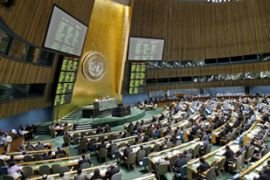
    The United Nations General Assembly has again voted in favour of a resolution condemning the United States’s economic embargo of Cuba despite a push by US officials to peel off support.

    The resolution passed on Wednesday with 130 countries in favour and 17 opposed, including the US and Israel. Another 25 countries abstained, including countries such as Germany and Italy, that had previously voted in favour. The General Assembly has voted to condemn the embargo annually for more than three decades.

    Recommended Stories

    list of 3 itemsend of list

    Cuban Foreign Minister Bruno Rodriguez said in a social media post after the vote that the US was “once again isolated in its attempt to continue strangling the Cuban people”.

    “Neither its most insane pretexts nor its pressures nor media circus will prevail over the force of facts and truth,” he added.

    The US embargo on Cuba, part of an effort to isolate the country and squeeze its economy that has lasted more than six decades, has been widely condemned on the world stage and linked to worsening hardship on the island.

    US President Donald Trump’s administration has implemented a series of additional economic restrictions, including an energy blockade, to further tighten the screws.

    That economic campaign has also been accompanied by a US diplomatic push to further isolate Havana, an effort that US officials said is apparent in the uptick in countries that abstained during Wednesday’s vote. Cuban officials accused the US of threatening countries with tariffs, visa restrictions and other penalties if they voted to condemn the embargo.

    “I’m satisfied that so many countries now, including major economies like Korea, like Germany and others have shifted their position,” US Ambassador to the UN Mike Waltz told reporters after the vote.

    “Diplomacy takes time, but now that we’ve had a tripling of countries that have shifted, we expect that to only continue to grow,” he added.

    Tensions between US and Cuban officials exploded on Tuesday during a General Assembly debate with both yelling at the other and engaging in an apparent shoving match.

    Waltz said on Wednesday that Richard Tur de la Concepcion, a first secretary at Cuba’s UN mission, would be expelled from the country for “assaulting an American diplomat”.

    Al Jazeera has reached out to the US and Cuban missions for comment but has not received a response.

  • Fuel costs force US cruise ship to suspend multiyear voyage in Cambodia

    Fuel costs force US cruise ship to suspend multiyear voyage in Cambodia

    Hundreds of passengers are stranded after the ship’s three-and-a-half-year voyage is cut short due to fuel costs.

    A United States cruise ship has suspended its around-the-world voyage in Cambodia, forcing hundreds of passengers to disembark with no confirmed departure date.

    The MV Odyssey, operated by Florida-based Villa Vie Residences, arrived at the Cambodian port of Sihanoukville on Friday. The company said monthly fuel expenses per cabin, which historically averaged $1,800, had climbed to an estimated $6,000 to $8,000 in parts of Asia.

    Recommended Stories

    list of 3 itemsend of list

    The company said it tried to reduce consumption by slowing the ship and spending more time in port but could not offset the rising costs.

    “We have been unable to continue carrying the resulting operating losses,” Villa Vie Residences said in a statement on Tuesday, adding that passing the full increase on to residents was not a realistic solution.

    Traffic through the Strait of Hormuz has been curtailed since the United States-Israel war on Iran began, squeezing supplies of petroleum-based fuels and pushing up prices, particularly in Southeast Asia.

    The ship was carrying 203 passengers, mostly Americans, and 156 crew members, Cambodian officials said. Some passengers said they received only seven hours notice to disembark and had to arrange their own accommodation.

    Paul and Lynn Montoya, a retired couple from the US state of Wyoming who boarded the ship 17 months ago, said they had expected to live at sea for years. They said the company had already struggled with itinerary changes, unreliable internet and declining food quality.

    “We were tired of every two to four weeks being asked for money for fuel, money for everything,” Lynn Montoya said, alleging mismanagement and unpaid crew members.

    Other passengers said they hoped a new company or a resident-led effort could save the venture.

    Carol Larson, 69, who bought her cabin for $120,000 in instalments, said she did not regret taking the risk despite the suspension.

    “I feel blessed to have been part of the experiment of residential cruising,” she said.

    The ship set sail from Belfast, Northern Ireland, in October 2024 on a voyage originally planned to last three and a half years. Built in 1993, the ship was purchased by Villa Vie Residences in 2023 and offered cabins for long-term living with lifetime-vessel suites initially priced from about $230,000.

    Cambodian officials said the ship was expected to refuel and leave on Saturday although the operator had not publicly confirmed a departure date.

  • US jury convicts Rwandan American of lying about role in genocide

    US jury convicts Rwandan American of lying about role in genocide

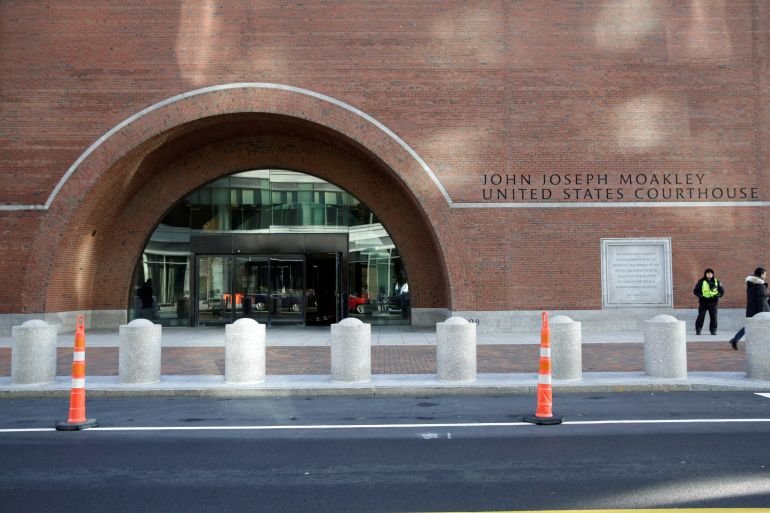
    A federal jury in Boston, Massachusetts, has convicted a Rwandan American man of perjury and obstruction of justice for lying about his role in the 1994 Rwandan genocide.

    Eric Nshimiye, a 55-year-old father of four and a United States citizen, was accused of lying in his testimony in a 2019 trial, also in Boston, for Jean Leonard Teganya, a former medical school roommate who was later convicted of helping to perpetrate the genocide. At the time, Nshimiye told the court neither he nor his friend had taken part in the killing and rape of Tutsis in Butare, where the pair were studying at a medical university.

    Recommended Stories

    list of 3 itemsend of list

    Investigators from the US Department of Homeland Security arrested Nshimiye at his home in Ohio in 2024, alleging he had lied to them in an interview about his time in Rwanda during the genocide.

    Nshimiye was originally charged with multiple counts of perjury, obstruction of justice and committing fraud on his immigration paperwork because prosecutors said he had told immigration officials he did not take part in the genocide when he moved to the US several years after the violence. He became a US citizen in 2009.

    The immigration charge was dropped by prosecutors before the trial began. On Tuesday, the jury convicted Nshimiye on four counts of perjury and one count of obstruction of justice.

    “For nearly three decades, this defendant concealed his involvement in the 1994 Rwandan genocide and the heinous acts of violence he committed, including clubbing people to death,” Assistant Attorney General A Tysen Duva in the Department of Justice’s Criminal Division said in a statement on Wednesday. “Then, he lied to immigration officials in order to become a US citizen, and he lied to a federal jury to protect himself and a fellow perpetrator of the Rwandan genocide.”

    After the verdict, Nshimiye’s attorneys filed a request with the court to count the time he had already spent in prison before the trial towards any sentence. In a court filing, the attorneys argued Nshimiye should be set free because the two and a half years he had already spent in custody were longer than the usual sentence for the charges he was convicted of.

    Nshimiye’s family, including his US-born children, were in attendance when the verdict was announced in court.

    “It was quite shocking, difficult to process at first because we were expecting a different outcome. We were expecting to bring him home,” his son Tresor Nshimiye, told Al Jazeera.

    Prosecutors brought a series of experts to help the jury understand the scope of the crimes in Rwanda, starting with academics who pointed out where the country was on a map of Africa.

    Witnesses from Rwanda told jurors they recalled Nshimiye taking part in killings and other violence in Butare directed at minority Tutsis in 1994. They were part of a nationwide outbreak of genocidal violence by hardline majority Hutus that killed more than 800,000 people over about 100 days. Others said Nshimiye was part of the pro-Hutu National Revolutionary Movement for Development and the Interahamwe, the paramilitary group blamed for most of the killings during the genocide.

    The defence argued Nshimiye had never been implicated in domestic and international tribunals after the genocide, including the International Criminal Tribunal for Rwanda as well as an informal transitional justice system inside Rwanda, called gacaca, which tried more than a million people for their roles in the atrocities.

    Defence lawyers pointed out apparent inconsistencies in government witnesses’ testimonies and brought other witnesses who said Nshimiye was with them in the capital, Kigali, and other parts of the country during the genocide.

    Nshimiye’s attorneys also argued in court that Rwandan authorities had interfered with the investigation because they had met with some witnesses before they testified in Boston.

    “At the end of the day, it was just two competing stories, and so much is lost with this all happening 30 years or so ago. … I guess the jury was more convinced of the prosecutor’s witnesses because they victimised themselves in their stories,” Tresor Nshimiye said.

    Nshimiye’s case is one of several currently under way in the US related to the Rwandan genocide.

    In April 2025, prosecutors charged Faustin Nsabumukunzi, a 65-year-old beekeeper in Long Island, New York, who had applied for US citizenship, with similarly concealing his role in the violence. And in June 2025, authorities charged 65-year-old Vincent Nzigiyimfura of Dayton, Ohio, who had also applied for US citizenship, with concealing his role in the genocide.

    Both men were previously listed publicly as fugitives by Rwandan authorities.

  • Bank of Canada raises interest rates for the first time in three years

    Bank of Canada raises interest rates for the first time in three years

    The central bank increased key rate by a quarter point as soaring energy prices push up inflation.

    The Bank of Canada (BoC) has raised its key interest rate for the first time in more than three years and warned that further increases might be needed to prevent soaring energy costs from fueling broader inflation.

    Wednesday’s quarter-point hike to 2.5 percent was widely expected, while the bank also ramped up its inflation forecast for 2027 to 3.1 percent from the 2 percent it had predicted in July. Growth this year is set to be 1 percent, higher than the 0.7 percent seen in July.

    Recommended Stories

    list of 4 itemsend of list

    “With the outlook for inflation substantially higher and the economy showing resilience, an increase in the policy rate is needed to reduce the risk that elevated energy prices could spill over and become generalised inflation,” BoC governor Tiff Macklem said.

    “There could be a need to increase the policy rate further, but given uncertainties, we will proceed carefully,” he added.

    The annual inflation rate hit 3.2 percent in September, above the bank’s 1 to 3 percent target range, and was driven almost solely by higher energy and energy-related transportation costs.

    Macklem said inflation was expected to end the year at 3.5 percent and stay at around 3 percent for most of 2027, before returning close to the 2 percent target by the middle of 2028.

    “Governing Council agreed that risks to inflation had increased and there was less scope for monetary accommodation,” Macklem said.

    The rate hike was the first since July 2023.

    “We don’t expect that core measures of inflation will accelerate as much as the bank fears, particularly if global energy prices ease a little, and as a result we don’t think that the policy rate will need to move above 2.75 percent,” said Andrew Grantham, senior economist at CIBC Capital Markets.

    Money markets are pricing in another 25 basis point rate cut in January and see the benchmark rate going up to 3.25 percent by December next year.

    Past experience suggests that businesses will increase the cost of products and services in line with changing costs over the next year, increasing overall inflation, Macklem said.

    “The combination of higher energy prices and pass-through increases the persistence of inflation,” he said, although he added that there are lingering uncertainties such as the trade rift with the United States and a faster resolution of the conflict in the Middle East.

    Economists who opposed a rise said core inflation, which strips out the cost of volatile items, is still hovering at about 2 percent. They also say a rate hike could impede modest economic recovery, given US trade tensions and a weak job market.

    Macklem said new US tariffs would slow the economy in the fourth quarter, but expressed confidence that growth should pick up again in 2027 as consumer spending continues, exports pick up and business investment strengthens.

    After a robust annualised growth of 3.3 percent in the second quarter, the economy is likely to slow to 2 percent in the third quarter and further down to 0.8 percent in the fourth quarter, the BoC’s new monetary policy report projected.

    The report, however, upgraded its gross domestic product (GDP) forecast for next year and the year after to 2 percent from 1.8 percent for both 2027 and 2028, as predicted in July.

    Macklem said this additional growth would help absorb the slack, or its unused capacity, in the economy.

    The BoC’s next rate decision is on December 9.

  • Canada-EU summit: What do both sides want, and what’s at stake?

    Canada is set to host a summit with the European Union to bolster bilateral strategic and economic ties as its relations with its southern neighbour, the United States, are in sharp decline.

    The summit is scheduled for October 29 to 30 in Canada’s French-speaking city of Montreal, and is expected to focus on closer cooperation on trade, technology, defence, energy, critical minerals, artificial intelligence, research and financial services.

    Recommended Stories

    list of 4 itemsend of list

    In September, European Commission President Ursula von der Leyen proposed opening the door for Canada to become the EU’s first “associate member”; Canadian Prime Minister Mark Carney welcomed the move.

    What is the summit, and why is it happening now?

    This will be the 21st Canada-EU summit and is expected to build on the Comprehensive Economic and Trade Agreement (CETA), which entered into force in 2017. It eliminates duties on up to 99 percent of all imported goods between the two sides, according to the European Council.

    “In Montreal, we will take our partnership to the next level by launching our ‘Alliance for the Future’ to deepen our political, economic and institutional ties even further,” said European Council President Antonio Costa, who will be attending the summit along with Carney and von der Leyen. They are expected to issue a joint statement.

    The deepening Canada-EU alignment seems fuelled by US President Donald Trump’s policies, which imposed hefty tariffs on both Canadian and European exports to the US and pushed Canada to look for ways to reduce its economic dependence on the US. Before Trump’s tariffs whipsawed relations, Canada sent nearly 80 percent of its exports to the US.

    In August, trade talks between Ottawa and Washington, DC, broke down, and Trump imposed a 50 percent levy on $20bn of Canadian goods, or 5.5 percent of its exports. Canada responded with equivalent tariffs on US steel, dairy, appliances, farm equipment, pulp and paper, and electronics.

    US President Donald Trump has unleashed tariffs on Canada, and Canadian Prime Minister Mark Carney has hit back with retaliatory tariffs on the US
    US President Donald Trump has unleashed tariffs on Canada, and Canadian Prime Minister Mark Carney has hit back with retaliatory tariffs on the US [File: Evelyn Hockstein/Pool/AFP]

    What do Canada and Europe want from each other?

    Both sides are seeking opportunities that will open more options beyond the world’s largest economy.

    “The opportunity is clear. The EU brings market power, research depth, and manufacturing strength. Canada brings abundant energy, critical minerals, world-class capabilities in space, artificial intelligence (AI), and quantum, and one of the world’s strongest banking systems,” Carney’s office said in a statement.

    The summit will give the two sides a chance to turn these “complementary strengths into concrete benefits for our peoples,” the statement added.

    Vina Nadjibulla, co-founder and CEO of the Centre for Strategic Statecraft, a think tank in Ottawa, Canada, sees benefits and challenges.

    “These fields could be beneficial for both sides, and we are likely to see specific announcements during the summit on these sectors,” she told Al Jazeera.

    “The main challenge is how quickly the political momentum can turn into specific deals and projects to deliver specific economic results,” she added.

    The EU describes Canada as “the only non-European country” taking part in Security Action for Europe (SAFE), the EU’s 150 billion-euro ($167bn) loan programme that supports and expedites defence procurement by EU member states.

    The EU concluded its agreement with Canada, allowing it to participate under SAFE, in February, and it gives Canadian firms preferential access and treatment in defence procurements financed by the SAFE Instrument.

    Could Canada become an associate member of the EU?

    Last month, von der Leyen proposed that Canada could become the EU’s first associate member, suggesting a deeper relationship spanning trade, technology, defence and economic security.

    Carney later welcomed the proposal’s ambition, describing his goal as a “unique alliance” rather than conventional EU membership.

    However, the term “associate member” does not currently exist in EU treaties or its standard enlargement framework, according to the Centre for European Policy Studies (CEPS), a Brussels-based think tank.

    “The term does not actually matter; what is important is the practical deepening of the relationship and the actual results, no matter what the final term is,” Nadjibulla said.

    European Commission President Ursula von der Leyen has suggested that Canada could become the EU’s first ‘associate member’
    European Commission President Ursula von der Leyen has suggested that Canada could become the EU’s first ‘associate member’ [File: Patrick Kovarik/AFP]

    Is it an anti-American alliance?

    “This is a partnership not against anyone else, but for our common strength,” von der Leyen said in her address to the European Parliament in Strasbourg last month, which Carney attended, making him the first foreign head of government to attend the annual “State of the European Union” address.

    Nadjibulla agrees.

    “I do not see that as an anti-US coalition. It is rather about diversification of economic and defence partnerships and building resilience for Canada. It is a continuation of Canadian Prime Minister Carney’s policies to create opportunities. A deeper alliance with Europe is essential to this agenda,” she said.

    “President Trump will likely not appreciate this, but it is about Canada having more choices in an unpredictable world,” she added.

    Bob Rae, former premier of Ontario and Canada’s ambassador to the United Nations from 2020 to 2025, told Al Jazeera that “President Trump does not control our policy. We have been having long and productive relations with the Europeans for hundreds of years, but Trump chose to treat Canada in a way that does not respect our sovereignty”.

    He added that “engaging in conversations with the EU is perfectly normal and is not directed at the US”.

    Trump has threatened the European Union with new tariffs over its proposal to make Canada the bloc’s first “associate member”, suggesting the move could be considered hostile to the US.

    “If it’s a good intention, that’s fine. If it’s a bad intention, we’ll put very heavy tariffs on Europe,” Trump told reporters in Charlotte, North Carolina, in September.

    Trump dismissed the prospect of Canada joining the EU as “laughable” and called the US’s northern neighbour a “terrible trade partner”.

  • Boxer Serrano to hang up gloves in Puerto Rico farewell on January 9

    Boxer Serrano to hang up gloves in Puerto Rico farewell on January 9

    Amanda Serrano will defend her unified WBO and WBA featherweight world boxing titles against Australia’s Skye ⁠Falzon.

    Puerto Rico’s seven-division world ‌champion Amanda Serrano will retire after defending her unified featherweight world titles ⁠against Australia’s Skye ⁠Falzon on home soil, in a fight her promoter dubbed “The Last Walk”.

    Most Valuable Promotions said Serrano, who holds a 50–4–1 record with 32 ⁠knockouts, will defend her unified WBO and WBA featherweight world titles on January 9 at Coliseo de Puerto Rico in San Juan.

    Recommended Stories

    list of 4 itemsend of list

    Puerto Rico’s only undisputed boxing ⁠champion is also gunning for the all-time women’s knockout record, which the 38-year-old jointly shares with American Christy Martin.

    “Boxing has been my life and I never could have imagined the journey it would take me and my family on,” Serrano said in a ‌statement.

    “From the early days when women’s boxing was fighting for recognition in small theatre shows, to headlining Madison Square Garden in New York, reaching millions of fans around the world on the biggest shows, and helping open doors for the next generation of female fighters … I always believed and I’m proud of everything we’ve accomplished.”

    Serrano made history alongside Ireland’s Katie Taylor in 2022 when ⁠they became the first women boxers to headline New ⁠York’s Madison Square Garden.

    The highest-profile rivalry in women’s boxing produced a trilogy of fights which Taylor swept via a majority decision in 2025.

    A Guinness World Record holder for winning titles across seven weight divisions, ⁠Serrano also became a leading voice for equality in women’s boxing.

    In 2023, she competed in the first women’s unified ⁠world championship bout over 12 three-minute rounds, later voluntarily ⁠vacating her WBC title rather than abandoning her commitment to equal rules.

    “‘The Last Walk’ is a celebration of an athlete who changed the sport forever … We’re proud to give Amanda the farewell she deserves,” ‌said Nakisa Bidarian and Jake Paul, founders of Most Valuable Promotions.

    “Saturday, January 9, will mark the end of an extraordinary career inside the ring, but Amanda’s legacy ‌will ‌live on through every female fighter who follows in her footsteps.”

    Falzon, who is also 38, holds a 12-2 record with seven knockouts.

  • Canada signs trade deal with UAE in push for non-US markets

    Canada signs trade deal with UAE in push for non-US markets

    The agreement aims to cut tariffs, reduce red tape and improve market access for businesses in both countries.

    Canada and the United Arab Emirates have signed a comprehensive trade deal to lower barriers between the economies and boost investment, the governments have said.

    The deal comes as Canadian Prime Minister Mark Carney seeks to expand trade and investment ties amid tension with the United States.

    Recommended Stories

    list of 4 itemsend of list

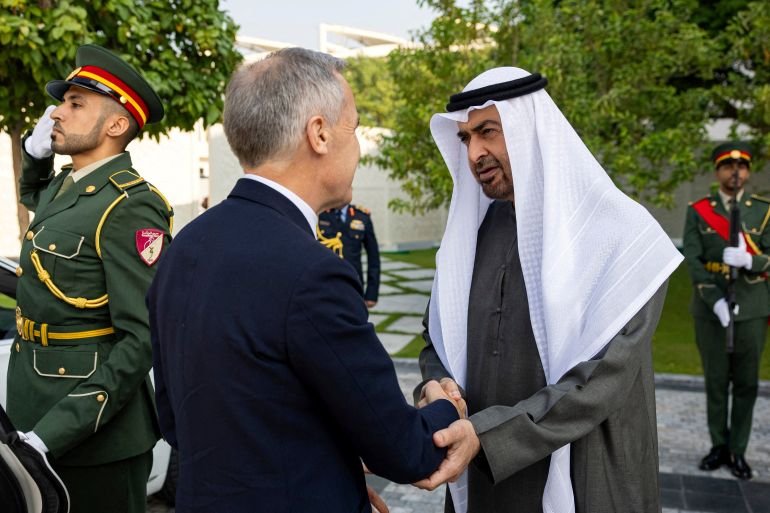
    Carney and Abu Dhabi Crown Prince Sheikh Khaled bin Mohamed bin Zayed Al Nahyan presided over the signing of the Comprehensive Economic Partnership Agreement (CEPA) on Tuesday, which aims to cut tariffs, reduce red tape and improve market access for businesses in both countries.

    Carney has pledged to double Ottawa’s non-US trade over the next decade as US President Donald Trump’s tariffs have rippled through Canada’s economy.

    Subsequent attempts to reach a deal with Washington have broken down, which has pushed Carney to aggressively pursue trade pacts with countries from the Asia Pacific to Europe and the Middle East.

    “Once fully implemented, the CEPA will reduce or eliminate tariffs on over 99 percent of current Canadian exports to the UAE,” the Prime Minister’s Office said in a statement.

    “That means new markets for Canadian farmers growing pulses and canola, for manufacturers of industrial machinery and power generation equipment, for our world-class aerospace sector, and other Canadian innovators.”

    “The agreement will also address non-tariff barriers, create a more predictable environment for trade and investment, and expand market access for Canadian goods and services, including in the industrial, agricultural, forest, fish and seafood, environmental, and engineering sectors,” it said, adding that CEPA is expected to enter into force in 2027.

    Multiple deals

    The two countries also signed preliminary agreements on energy, diplomatic and defence cooperation.

    “We see considerable potential for our private sector, whether through improved market access for our exporters or access to investment opportunities in high-growth sectors such as logistics, communications, advanced technology and manufacturing – all of which will support our pursuit of a resilient, diversified and globally connected economy,” the UAE’s Foreign Trade Minister Thani bin Ahmed Al Zeyoudi said in a statement.

    He signed the CEPA deal with his Canadian counterpart, Maninder Sidhu.

    The UAE is the largest Middle East market for Canadian exports and a major buyer of Canadian motor vehicles and parts, and machinery.

    Two-way trade between the countries was worth 3.5 billion Canadian dollars ($2.48bn) last year. It has been growing at 10 percent annually for the last few years, according to government data.

    The UAE also committed up to $50bn in investment in Canada last year.

  • Hackers target US campaign finance system days before midterm elections

    Hackers target US campaign finance system days before midterm elections

    An FEC email said a ‘bad actor’ tried to breach its systems as the US prepares for its most expensive elections ever.

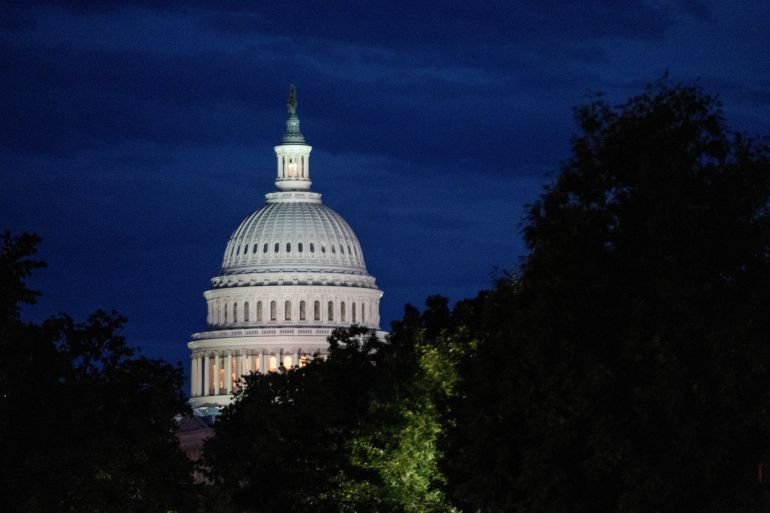
    Hackers have reportedly targeted the US Federal Election Commission’s (FEC) website, disrupting campaign financing disclosures just days before the midterm elections.

    An FEC email sent to a campaign compliance firm reportedly read, “We have a bad actor trying to breach FEC systems. As a result, we’ve had to temporarily suspend our web-facing services,” according to Reuters news agency.

    Recommended Stories

    list of 4 itemsend of list

    The outage prevents organisations from filing the FEC’s 24 and 48-hour spending reports, which track how political groups and candidates are spending on specific races.

    A status message on the FEC website showed the system was down after 10.15pm EST on Monday (2.15am GMT on Tuesday).

    An update was posted on Tuesday at 8.17pm EST, reading, “The issue has been identified and a fix is being implemented.”

    The FBI and the Cybersecurity and Infrastructure Security Agency both referred questions to the FEC.

    ‘A big deal’

    The FEC does not play a role in administering US elections, but the reported hack comes as so-called Super PACs and dark money groups are spending record sums in the final days before the midterm elections on November 3.

    Democratic FEC Commissioner Dara Lindenbaum wrote on X, “This has NOTHING to do with voter files or voter registration. Those are maintained by the states. The FEC only handles federal campaign finance findings.

    “We are working hard to restore the systems as soon as possible.”

    The midterms are now the most expensive US elections in history, with roughly $11.21bn spent on advertising and future reservations so far, according to political advertising tracker AdImpact.

    That surpasses the previous record of $11.2bn spent in the 2024 elections – including $3.2bn in the presidential race between President Donald Trump and former Vice President Kamala Harris, according to AdImpact figures.

    Much of the spending is being done by super PACs – independent political committees which can accept unlimited amounts of money from wealthy individuals and corporations and spend it on campaigns, with few restrictions.

    Super PACs and dark money groups have spent an average of $50m per day over the past week, according to Brendan Glavin, research director at nonpartisan campaign watchdog group OpenSecrets.

    “It’s a big deal,” Glavin said. “In the last days of the election, this is the only way for us to keep track of where the money is being spent.”