Tag: Al Jazeera

  • As US midterms approach, farmers decide what to plant and how to vote

    As US midterms approach, farmers decide what to plant and how to vote

    When Paul McKinney, a farmer in northeast Arkansas, thinks of his son’s childhood, he remembers a small boy playing in vast fields.

    To a child, a flooded rice field is “like a giant, 40-acre swimming pool”, he said.

    Recommended Stories

    list of 3 itemsend of list

    Rice has been a staple on McKinney’s farm for four generations. Next year, however, the family plans to plant much less. Instead, they will focus on soya, a crop that is cheaper to produce.

    Like farmers across the United States, McKinney is making tough decisions this year in response to higher fuel and fertiliser costs, which have skyrocketed since the start of the war on Iran.

    This week, farmers also face tough choices at the polls. Democrats are expected to make gains in the midterm elections, as voters react to high prices economy-wide by switching parties or staying home.

    Observers are watching farm country closely. Texas and Kansas could send Democrats to the Senate for the first time in decades. In the House of Representatives, two majority-rural districts, Wisconsin’s Third and North Carolina First, could become tipping points for Democratic control.

    Still, many of the country’s most rural areas, like Arkansas, are also its most safely Republican.

    That leaves an uphill battle for Democrat Hallie Shoffner, who quit farming last year to challenge Republican Senator Tom Cotton in a campaign squarely focused on rising costs.

    Democratic U.S. Senate candidate Hallie Shoffner, a sixth-generation farmer, poses for a photo at her family farm, which is no longer in operation, in Shoffner, Arkansas, U.S.
    Democratic US Senate candidate Hallie Shoffner, a sixth-generation farmer, poses for a photo at her family farm, which is no longer in operation, in Shoffner, Arkansas, US [File: Karen Pulfer Focht/Reuters]

    How high costs hurt farmers

    Even before the US-Israel war on Iran, high input costs were straining farmers, said Ryan Loy, an extension economist for the University of Arkansas’ Division of Agriculture.

    Loy pointed to a trade war with China that began in 2018, the ongoing war in Ukraine and disruptions related to the 2025 tariffs as factors driving up input costs and disrupting markets. A drought across the US heartland, made worse by climate change, has added to the strain.

    Farmers across the country are working to adapt. In Arkansas, many farmers skipped rice in favour of soya. Soya is “the least input-intensive crop, and perhaps can break even or have the shallowest loss”, Loy said.

    Now Arkansas, usually the country’s top rice producer, has its lowest rice acreage since the 1970s. Many farmers hoped 2026 would bring economic recovery so they could return to rice.

    Then, the war on Iran hit. With the Strait of Hormuz blocked, fertiliser costs jumped just as farmers were fertilising during the spring planting season.

    Loy tracked the increase in a sample budget that he maintains for Arkansas row crop farmers. “Urea fertiliser specifically peaked about 39 percent over our budgeted amount,” Loy said. Diesel costs came in about 72 percent more than budget averaged across the planting, growing and harvesting seasons, Loy found.

    Those changes represent a significant economic hit. “For our state alone, it’s an additional cost of about $343m,” Loy said.

    Last week, US President Donald Trump announced an $8bn fuel relief programme for farmers, following $12bn in tariff-related aid in 2025. If the fuel relief payment were divided equally between the 50 states, it would cover less than half of the extra costs that Loy estimates Arkansas’ farmers paid this year.

    McKinney, a member of the Arkansas Farm Bureau, said the announcement was welcome. Still, he hoped for longer-term solutions that would prevent “this constant battle for survival”.

    For many farms, survival is indeed getting harder. Farm bankruptcies for the first three quarters of 2026 were up 19 percent compared to this time last year, according to a recent analysis by the University of Arkansas’ National Agricultural Law Center. They were up 73 percent compared to 2024.

    ‘We can’t keep doing this’

    McKinney’s son, who grew up playing in muddy rice fields, now helps his dad farm their 24,000 acres. So does McKinney’s nephew, who this year is driving a combine.

    “As has been done for us, we would love to be able to hand that down to the next generation,” said McKinney. “But you also have to think about what is going to be best for them.”

    McKinney questions how long farming will provide a sustainable living. “It’s some heavy things to think about,” McKinney said.

    For Shoffner, a sixth-generation Arkansas farmer, that reckoning came last year.

    Higher costs, lower crop prices and the uncertainty of trade wars and tariffs “made the numbers stop working” for their 2,000-acre farm operation, Shoffner told Al Jazeera.

    “I know what it feels like to work hard, make every adjustment you can, and still have to sit down with your family and say, ‘We can’t keep doing this,’” Shoffner said.

    To protect her parents’ land and retirement, Shoffner closed the family’s farm. That “heartbreaking” decision helped spur her Senate run.

    “I decided that if I can’t farm, I will fight,” Shoffner said.

    If elected, Shoffner wants to end the war on Iran, build trade policies farmers “can actually plan around”, invest in local processing and distribution, and pass a robust Farm Bill — strategies she hopes will help farmers and rural economies more broadly.

    “If we want rural communities to have a future, the people producing our food have to be able to make a living doing it.”

    Cotton did not respond to a request for comment.
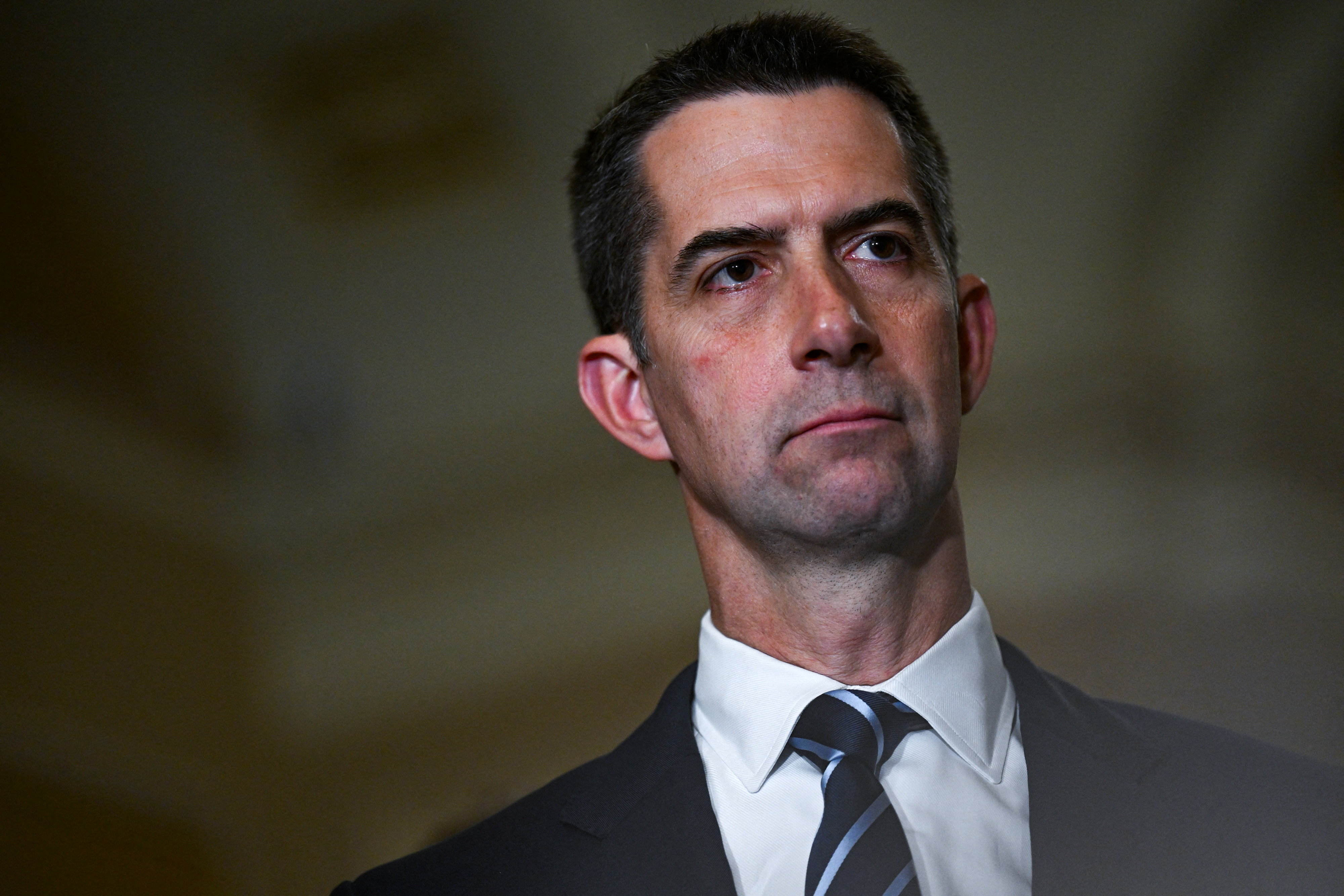
    U.S. Senator Tom Cotton (R-AR)
    US Senator Tom Cotton has a hefty war chest for campaign spending [File: Annabelle Gordon/Reuters]

    How will farmers vote?

    Economic pain may not change farmers’ votes, however, in Arkansas or nationwide. Michael Shepherd, a political scientist at the University of Michigan, said many farmers, like many rural voters, are committed Republicans.

    Committed voters tend to view the economy through a partisan lens, according to Shepherd. “Their political behaviours, their voting choices, things like that, are not particularly responsive to changes in the agricultural economy,” he said.

    Some polling this year, however, did suggest the potential for movement. A poll by the Farm Journal in April found that 35 percent of farmers who “usually” vote Republican and 15 percent who “always” vote Republican were still considering how they would vote.

    And September polling from Purdue showed that, for the first time this term, a majority of farmers surveyed think the country is “on the wrong track”.

    Even if farmers are swayable, of course, Shoffner still may not be the one to sway them: her campaign has been far outspent by Cotton’s, an established lawmaker who has received funding from interest groups like AIPAC and leaders at companies like Anthropic and Palantir.

    “If one side has a massive war chest, and the other side has very limited resources, then that game of tug of war can be won much easier than it should be,” Shepherd said.

    And even if farmers do change their votes, they may not decide elections.

    McKinney, who is now farming one of the Shoffner family’s former fields, said farmers represent a shrinking percentage of rural voters — their strength now is in organising, not numbers.

    Still, even where candidates like Shoffner don’t win, their campaigns might signal to funders that similar races may be competitive in the future or help Democrats win down-ballot seats.

    In Arkansas’ second congressional district, for example, the Democratic Congressional Campaign Committee is betting on Democrat Chris Jones. It’s a long-shot campaign, but across the country, at least some long-shot candidates are expected to win.

    “All indications are that this is gonna be one of the biggest shifts away from the president’s party that we’ve observed,” Shepherd said.
  • Texas Republican group seeks to block certification of state’s election

    Texas Republican group seeks to block certification of state’s election

    Republicans in a Texas county have filed a lawsuit asking for ballots in the state’s midterm races to be hand-counted.

    Days before the United States’ pivotal midterm elections, a Texas group affiliated with the Republican Party has asked a federal judge to stop certification of the state’s upcoming election results.

    In a lawsuit filed on Tuesday, the Potter County Republican Party and its chairman, Daniel Rogers, claim potential election interference by artificial intelligence (AI) or “malicious actors” that could compromise the results of next Tuesday’s elections in Texas.

    Recommended Stories

    list of 3 itemsend of list

    The plaintiffs, who are asking for a hand count of every ballot from every precinct in the state before election certification happens, allege voting machines have components inside made by China that would allow them to be manipulated.

    “If a component is tampered with during manufacturing, it could serve as a point of entry for unlawful and malfeasance hackers, allowing for the possibility of synchronized attacks across multiple election machines and jurisdictions,” the lawsuit read.

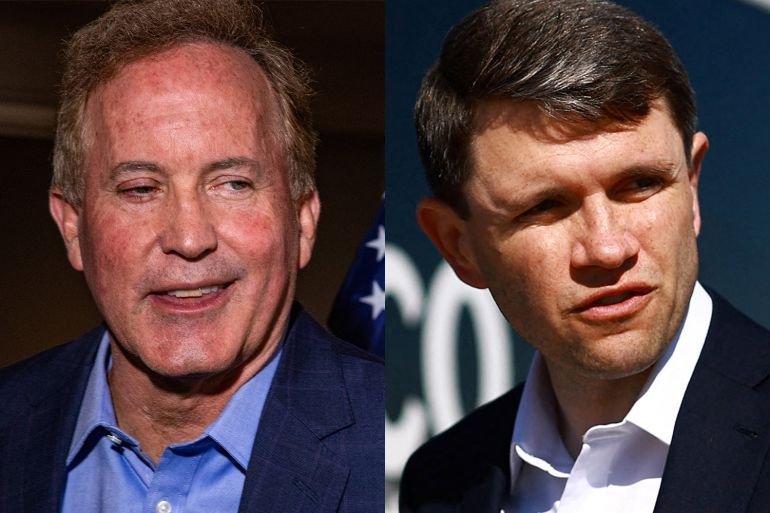
    The legal challenge comes as several polls show Democrat James Talarico narrowly leading his Republican challenger, Ken Paxton, in Texas’ all-important US Senate race that could ultimately decide which party controls the chamber after November 3.

    The Talarico and Paxton campaigns and the Potter County Republican Party did not immediately return requests from Al Jazeera for comment.

    The legal complaint does not specify if any voting machines in Potter County, or elsewhere in Texas, have been compromised. The plaintiffs acknowledged in their filing that no previous election in the county was “altered” by a third party, arguing that the possibility of vote manipulation by AI makes the state’s election safeguards easily compromised.

    “The real likelihood of a clever and undetected hack by recently developed AI programs, which conceal their activity to avoid detection, reinforces the need for a full verification based on hand-counting of all paper records or ballots in all Texas precincts, prior to certification of the federal results,” they wrote.

    State law in Texas already requires hand-count audits in elections where electronic tabulators are used. But the plaintiffs argue that does not go far enough.

    “The paper record or ballot provides an independent verification mechanism only if election officials actually compare a complete hand count of all of the paper records or ballots,” the filing said.

    The lawsuit also claims US “adversaries”, such as China, Iran and Russia, are capable of accessing election systems.

    US President Donald Trump in July declassified documents that, he claimed, showed Chinese interference in the US 2020 presidential election, reviving his attacks on US elections despite no evidence that Beijing impacted the vote he lost that year.

    Last week, the US Department of Justice also sought to block certification of an election, claiming, in Alaska, that an independent candidate with the same name as the state’s Republican Senator up for re-election is running in order to mislead voters.

    Alicia Pierce, a spokeswoman for Texas’s Secretary of State, whose office administers elections in the state, said it “does not plan to comment on the lawsuit at this time”.

  • Republican governor of Alaska orders investigation into ‘spoiler candidate’

    Republican governor of Alaska orders investigation into ‘spoiler candidate’

    A New York Times investigation links Democratic operatives to a namesake candidate in Alaska’s Senate race.

    Alaska’s Republican governor has ordered an investigation into allegations that Democratic Senate candidate Mary Peltola’s campaign recruited a man with the same name as her rival to confuse voters.

    In a statement posted on social media on Thursday, Governor Mike Dunleavy said he was directing the state’s Department of Public Safety to “investigate whether this scheme violated Alaska’s laws and whether criminal charges or civil action are warranted”.

    Recommended Stories

    list of 3 itemsend of list

    Dunleavy said the state’s election board had investigated the issue in June, and that new reporting from a New York Times investigation into the claims “substantially supports” its findings.

    “Deliberately tricking voters into casting their ballots for someone else strikes at the integrity of our elections,” Dunleavy said.

    The New York Times reported that people linked to Peltola’s campaign tried to recruit candidates who could draw support from Republican Senator Dan Sullivan.

    The governor’s announcement follows calls by United States President Donald Trump for the removal from Alaska’s Senate race and prosecution of Peltola and the other Daniel J Sullivan Jr, a retired teacher, over the allegations.

    The November 3 vote could help determine control of the US Senate, Congress’s upper chamber.

    In Truth Social posts on Wednesday, Trump accused Peltola and Daniel J Sullivan Jr of election fraud and called for both to be removed from the ballot and prosecuted.

    He described the alleged operation as “Voter Fraud at the Highest Level” and accused Democrats of lying under oath.

    The Times noted that recruiting candidates to split an opponent’s vote – a practice known as ballot stacking – is generally legal and has been used by both parties in Alaska.

    The two Sullivans are among four candidates in the US state’s ranked-choice election.

    Voters rank candidates by preference, with votes transferred if a first choice is eliminated. The ballot identifies the sitting senator as an incumbent Republican.

    His namesake says he entered the race independently.

    The Times reported that the effort began in 2025, when a Peltola aide was asked to identify Alaskans named Dan Sullivan.

    Citing interviews and messages, it said Peltola advisers and officials from the Democratic Senatorial Campaign Committee, which supports Democratic Senate candidates, discussed ways to reshape the ballot.

    The newspaper identified Democratic operative Jerid Kurtz as a recruiter who approached potential candidates, sometimes under an assumed name.

    It also reported that another Democrat withdrew after an approach from Kurtz, opening a place for Republican Gerald Heikes, who said he too had been encouraged to run.

    Peltola’s former campaign manager, Elisa Rios, told the Times that Peltola knew about the operation but did not participate directly.

    Rios later sought to withdraw her statements and the newspaper said other evidence supported its reporting.

    Peltola’s campaign and the Democratic campaign committee denied recruiting candidates. Her campaign said political threats from Washington would not stop her candidacy.

    Senator Sullivan accused Peltola of deceiving voters on Fox News on Wednesday.

    The state’s Supreme Court upheld the retired teacher’s right to stand in June.

    Trump’s Justice Department, the federal government’s legal arm, sued Alaska last week, seeking to delay certification if Senator Sullivan loses and votes for his namesake have affected the outcome.

    Alaska has asked the court to dismiss the case, arguing that it lacks legal grounds.

  • Pentagon says Iran war has cost US taxpayers $47bn: What that means

    Pentagon says Iran war has cost US taxpayers $47bn: What that means

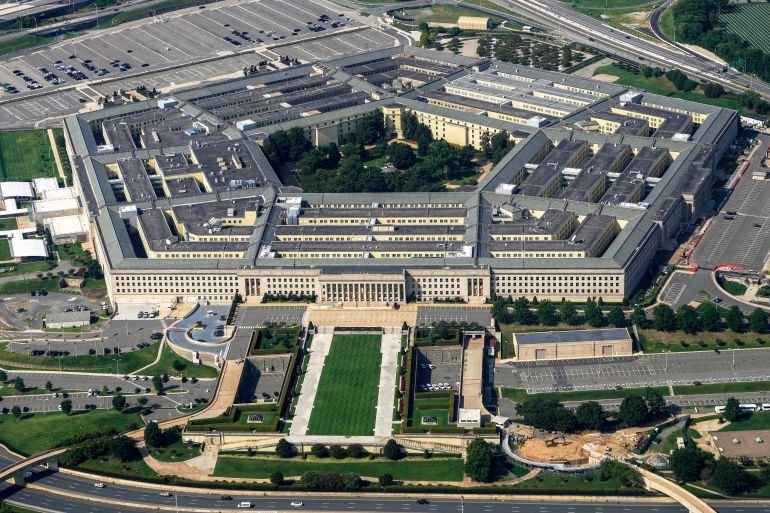
    The Pentagon has told lawmakers in the United States that the war on Iran has cost American taxpayers at least $47.1bn so far.

    The estimate, disclosed last week, comes days before Tuesday’s midterm elections, which will determine if President Donald Trump’s Republican Party will maintain control of Congress for the next two years.

    Recommended Stories

    list of 3 itemsend of list

    In a statement on Wednesday the Pentagon said it had “successfully obligated 97.5 percent” of the funds Trump provided the department. In July last year, Trump signed the One Big Beautiful Bill Act (OBBA) outlining tax and spending plans that came into effect this year.

    We take a close look at the Pentagon’s estimate, and what it means for the US economy and the midterm elections.

    What has the Pentagon spending report revealed?

    The Pentagon told Congress that the cost of the US-Israel war on Iran as of October 16 had risen to at least $47.1bn.

    Congressional officials shared the Pentagon’s cost estimate breakdown with The New York Times.

    According to the Times and other US media, the Pentagon’s estimate covers the operational costs of the war and includes a projected cost of $29bn needed to replace expended munitions such as bombs, bullets and other military hardware that has been deployed in the war so far.

    It also reveals that since the war started on February 28, the US Air Force has spent $7.6bn on fighter and bomber units, the US Navy has spent $1.5bn on two dozen warships and aircraft carriers and the US Army has spent $2.1bn to sustain its troops in the Middle East.

    According to the US military’s Central Command, there are more than 50,000 American soldiers stationed in the Middle East, comprising personnel deployed to large, permanent bases and to smaller forward sites across the region.

    Officials told the Times that the Pentagon has spent $6.1bn to replace damaged aircraft and munitions, $645m on transport and support for commandos in the region and $24.5m on “in-house medical support” for US service members.

    A congressional official added that the US Transportation Command also spent $92.2m to move equipment and the US Cyber Command spent $14m on “cyber support operations”.

    The Pentagon’s estimate, however, does not include how much Washington will need to spend to repair its military bases across the Middle East that were damaged in Iranian attacks and also does not take into account the cost of fuel to power ships and aircraft used in the war.

    While the Pentagon has publicly acknowledged 18 US service member fatalities in the war, The Washington Post has cited six unnamed US officials stating the true death toll is at least 22. According to the official Pentagon Defense Casualty Analysis System (DCAS) database, 865 military personnel have been wounded in the war with Iran.

    Is this the final cost?

    That is not likely.

    John Phillips, a British safety, security and risk adviser and a former military chief instructor, told Al Jazeera that the Pentagon’s $47.1bn estimate should be treated as a running total and not the total cost of the war.

    “If the war continues without a durable outcome, the US risks paying repeatedly to sustain military pressure while simultaneously trying to rebuild the capability it has consumed,” he said.

    He said that replacing advanced weapons also requires industrial capacity and time and that money and production resources committed to this conflict may also compete with other defence priorities.

    “What concerns me most is the possibility of an open-ended commitment: continuing to spend heavily without a clear political end state or a settlement that delivers lasting security,” he said.

    Currently, the US must weigh three costs, Phillips said: the money spent, the military capability consumed and the economic disruption generated.

    “A tactical victory is not necessarily a strategic victory. If the conflict leaves US stockpiles depleted, energy markets unstable and regional security unresolved, the question is not simply how much the war will cost but whether its lasting benefits justify the price,” he said.

    What has the response to the Pentagon’s estimate been?

    According to an October 19 report by USA Today, five senators from the Democratic Party had written to Admiral Brad Cooper, the head of Central Command, demanding that the Pentagon reveal the true cost of the war. Their letter said the Trump administration’s “ongoing efforts to hide the true cost of this war are outrageous and unacceptable”.

    Trump has not commented on the latest Pentagon estimate. But the Trump administration’s war on Iran has grown increasingly unpopular with US citizens due to its impact on US and global energy costs.

    Since early March, shortly after the war began, Iran has closed the critical Strait of Hormuz in the Gulf, through which about one-fifth of global oil and liquefied natural gas supplies were shipped until then. This has sent the price of oil spiralling and caused shortages globally. In the US, diesel, which is heavily relied on by farmers and small businesses, has nearly doubled in price.

    In a post on X following the latest Pentagon report, Senate Minority Leader Chuck Schumer of New York wrote: “For eight months, American families have been buried by the heavy cost of Trump’s disastrous war in Iran.

    “Trump and his ego led us into this war with no plan, no authority, and no exit strategy,” he added.

    How does the Pentagon’s estimate compare with past calculations?

    Estimates for the cost of the Iran war to the US have risen steadily as the war has continued.

    The Pentagon’s latest estimate is higher than the $38bn the Congressional Budget Office (CBO) forecast in September.

    It is also higher than the $37.5bn price tag that US Defense Secretary Pete Hegseth gave in July this year. Hegseth confirmed this amount during a hearing before the Senate appropriations committee and added that the cost covered some operations and maintenance extending through to the end of September.

    Hegseth’s July estimate was already about $8bn higher than the previous figure released by the Trump administration in May – $29bn.

    Prior to the May estimate, in late April the Pentagon’s comptroller Jules Hurst reported that the war would cost $25bn.

    Meanwhile, with the war entering its ninth month and no peace deal in sight, last month the CBO said the war with Iran could cost approximately $2bn to $3bn per month for as long as it continues.

    The Pentagon’s inspector general also said last month that US troops are facing “strategic inventory shortfalls” as the war continues.

    But the Trump administration has denied it is running low on weapons stockpiles.

    “Cowards and traitors would like to say that the United States is short of ammunition, but that is not true. We have more ammunition than we could ever imagine using. And we are producing it at levels we have never reached before,” Trump told the United Nations General Assembly in New York in September.

    Trump has also repeatedly stated that the Iran war will end when he wants it to.

    Last week at an election rally in Texas, according to a report by CNBC, Trump said: “Somebody asked me before, ‘When will the war in Iran end?’ I said, ‘Whenever I want it to end.’”

    What does the rising cost of the war mean for the midterm elections?

    The US-Israel war on Iran has affected the US economy through direct government spending as well as rising energy and fuel costs.

    On Wednesday, the average price of a gallon of diesel in the US hit $6.35, compared with $3.75 last year, according to the American Automobile Association.

    Higher fuel costs are also driving up the cost of food – with shortages of oil and gas affecting nearly every stage of the food supply chain.

    Meanwhile, the country’s national debt has surpassed a record $40 trillion, two years before expected.

    As a result, the war has become deeply unpopular in the US and Trump’s approval ratings have slumped to just 33 percent – the lowest they have been at any time during his two terms as president.

    With five days to go before the midterms, analysts say confirmation by the Pentagon of the high cost of the war is likely to affect how people in the US vote.

    Currently, the Democrats lead Republicans by 51.4 percent to 43.2 percent, a gap of 8.2 percentage points, according to RealClearPolling’s national polling average.

    Chris Featherstone, a political scientist from the University of York in the United Kingdom, said this is an issue that hits at two key pillars of Trump’s political rhetoric: his promise to initiate “no new wars” during his campaign for the presidency in 2024, and his emphasis on fixing the American economy.

    “The spiralling cost of the conflict for the taxpayer, and the lack of a clear end point resembles the critiques Trump levelled at the war in Afghanistan in his first presidential election campaign,” he told Al Jazeera.

    According to the Costs of War Project at Brown University, the war in Afghanistan, which began in 2001, cost the US an estimated $2.26 trillion to $2.3 trillion in total across multiple presidential administrations, including George W Bush, Barack Obama and Donald Trump.

    “While many of Trump’s most loyal MAGA voters are likely to remain loyal to Trump in the midterms despite the cost of the Iran conflict, the more peripheral supporters seem to be drifting away from the president ahead of the midterms, and the significant impact of this conflict on cost of living appears to be a major factor,” Featherstone said.

  • Messi and Inter Miami fail to fire as late goal earns Cincinnati a draw

    Messi and Inter Miami fail to fire as late goal earns Cincinnati a draw

    Inter Miami’s 2-2 draw sees them slip to third in the Eastern Conference after New England beat the New York Red Bulls 3-2.

    Lionel Messi’s Inter Miami stumbled to a costly 2-2 draw with Cincinnati in a Major League Soccer (MLS) game that sprang to life only after half-time and included four superb goals.

    Miami took the lead on Wednesday night with a Luis Suarez strike on the hour mark, but conceded two in quick succession before grabbing back a late equaliser from substitute Riquelme Fillipi to ensure the spoils were shared.

    Recommended Stories

    list of 4 itemsend of list

    The draw was a setback in Miami’s pursuit of the Eastern Conference’s second seed, as the star-studded side lost ground on the New England Revolution, who beat the New York Red Bulls 3-2.

    Despite the heartbreak of Fillipi’s late strike, the point could prove valuable for Cincinnati, who sit on the cusp of the automatic playoff places, but are currently headed for the wild card round and could yet miss out entirely with two games remaining.

    In a low-key first half, Miami controlled possession and comprehensively outpassed Cincinnati, but were unable to pierce through.

    That changed in the 61st minute, as Rodrigo De Paul picked up the ball in the middle of the park, in acres of space, and played it wide to Casemiro.

    The Brazilian played it first time with the outside of his boot to Suarez, lurking just inside the box.

    The Uruguayan veteran took one touch, swivelled and perfectly curled the ball into the far top corner, where it crashed down and in off the crossbar.

    But Cincinnati rallied, and in the 80th minute Frenchman Kenji Mboma Dem scored with another beautiful curling effort to the far post.

    He picked up the ball wide right, ran at multiple defenders with a flurry of stepovers, then cut inside to score.

    Just six minutes later, Cincinnati silenced Miami’s Nu Stadium by taking the lead.

    Defender Samuel Gidi received a pass on the edge of the box and wrapped his left foot around the ball, sending it past Dayne St Clair.

    With Messi heavily man-marked and unable to get a shot away, De Paul sprayed a wide pass to young Brazilian attacker Fillipi, who cut back to the corner of the box and bent it through two defenders and into the far side of the goal.

    Both sides had even later chances to win the game, with Suarez blasting his at the goalkeeper before Evander’s shot was blocked by a defender at close range as the referee waved away handball appeals.

    Inter Miami play New England on Sunday, sitting two points back and needing either a win or a draw to keep their hopes of second place alive.

    Nashville SC are top and clinched the Supporters’ Shield last weekend for the first time in the club’s history.

  • Former US officials call on 2028 candidates to denounce Biden’s Gaza policy

    Former US officials call on 2028 candidates to denounce Biden’s Gaza policy

    Biden-era officials who quit over Gaza urge Democratic candidates for next presidential race to denounce the policy.

    United States officials who had resigned from former President Joe Biden’s administration due to his policy on Gaza have called on potential Democratic candidates for the 2028 presidential race to denounce that policy.

    In a joint statement titled “Gaza Resignees” published on Wednesday, 12 former officials who had quit between late 2023 and 2024 said they had resigned from their service to the US government over its “illegal and unconditional support for Israel’s actions in Gaza”.

    Recommended Stories

    list of 4 itemsend of list

    “The most basic level of accountability, the most minimal level of consequences, is to ensure that those who have wreaked so much harm from within the highest levels of our Government cannot return to it,” the statement read.

    “We call on candidates for the 2028 Presidential Nomination to commit to not hire any administration official directly responsible for enabling Israel’s military actions in Gaza,” it added.

    Several rights groups, experts, scholars and United Nations inquiries have assessed that Israel’s devastating war on Gaza amounts to genocide.

    Since October 2023, Israel’s genocidal war on Gaza has killed at least 74,564 Palestinians and injured at least 175,770, according to Palestinian health authorities.

    The Biden administration, which governed from 2021-2024, has faced pushback and condemnation from progressive lawmakers and activist groups since the war began.

    US Representative Rashida Tlaib and New York City Mayor Zohran Mamdani have opposed the US’s ongoing support for ‌Israel, which has continued since President Donald Trump was re-elected last year.

    In advance of the 2028 election, the former officials said several “architects” of Biden’s Gaza policy were now “whitewashing their own roles in enabling genocide”.

    “When faced with the opportunity to stand up in defense of our laws, they not only stayed silent, but worked resolutely in pursuit of illegal and wrongful ends in violation of both US and international law,” they said, adding that many of those same officials were now pursuing a path back into policymaking.

    The statement called on Democratic candidates for the 2028 presidential race to pledge to three oaths, including to uphold the Constitution and pursue the national interest of the US, and to acknowledge the US’s complicity in Israel’s genocide in Gaza through arms, funding and diplomatic backing.

    The third oath urged the nominees to pledge to commit to building an administration that reflects US interests and creates “no space” for those who were an “architect, leader, defender, or key enabler, of the US policies of unconditional support to Israel that constitute complicity in a genocide”.

  • How to stop the US-Israel war on Iran

    How to stop the US-Israel war on Iran

    The war that Israel and the United States launched against Iran on February 28 is in a lull, not at an end. Major combat has paused, diplomacy has stalled and both sides are preparing for the next round. To understand why the fighting will soon resume, we need to understand the motivations of the two governments that started it. Neither of them wants peace. Israel’s leadership seeks domination over the Middle East, and the United States seeks to preserve its domination over the world. Simply to state these aims is to underscore that both governments are operating in a world of delusion.

    Israel’s political leadership is consumed by the belief that Israel’s survival depends on its military supremacy over the Arab world and on the permanent subjugation or elimination of the Palestinian people. This belief is a form of collective madness, yet it is the doctrine that governs Israeli policy. Israel’s leaders cannot accept that peace is within reach. In the Arab Peace Initiative of 2002, the Arab states offered Israel full normalisation in return for a Palestinian state on the 1967 borders, and that offer still stands. Peace cannot be built on genocide in Gaza or on hatred of the Palestinian people and the drive to remove them from their land. Yet that is the path Prime Minister Benjamin Netanyahu has chosen, and he now campaigns on it openly, with his “national religious” allies, including Itamar Ben-Gvir and Bezalel Smotrich, who twist religion in the service of hatred and killing.

    The United States is consumed by its declining power. Iran has been a target for more than 70 years. In 1953, the CIA and British intelligence overthrew Iran’s elected prime minister, Mohammad Mossadegh, after he nationalised Iran’s oil. The United States then installed the shah and backed his police state until the Iranian people overthrew it in 1979. The US has never forgiven Iran for escaping from US domination. The US backed Saddam Hussein’s deadly war against Iran in the 1980s, and followed with four decades of economic warfare, covert operations, cyberattacks and assassinations. Trump tore up the 2015 nuclear agreement in 2018, bombed Iran’s nuclear sites in June 2025, and then, in February of this year, joined Israel in open war, killing Iran’s supreme leader in the opening strikes.

    Washington’s fixation on Iran is in the service of American hegemony. In The Grand Chessboard (1997), Zbigniew Brzezinski named Iran one of five “geopolitical pivots,” states that matter less for their own power than for where they sit. Iran commands the Gulf and the Strait of Hormuz. Brzezinski wrote that an “antihegemonic” coalition of China, Russia and Iran could emerge “only if the United States is shortsighted enough to antagonize China and Iran simultaneously.” Well, yes, Washington has been that shortsighted and reckless.

    The signs that the war will restart are not hidden. This week, War Secretary Pete Hegseth visited Israel to discuss renewed joint strikes, and Israeli sources report that the plans target Iran’s petrochemical facilities and nuclear sites. The White House has promised that the United States will not attack Iran before the November 3 midterm elections, which is another way of announcing a timetable for war. The US naval blockade of Iran’s ports has passed its 100th day. Trump rejected Iran’s proposal for a seven-day ceasefire in September, even though Tehran says the offer remains on the table.

    Israel’s October 27 election adds fuel to the fire. On October 18, Trump endorsed Netanyahu, saying the United States would “finish the job” against Iran only with Netanyahu in charge. On October 21, at a rally in Dimona (home to the reactor where Israel secretly built its own nuclear arsenal), Netanyahu declared that the only way to end the Iranian threat is to overthrow the regime and said he had issued that directive to the army, Mossad and the security services.

    Iran has understandably drawn its own conclusions. Its commanders have announced a new offensive doctrine that includes preemptive strikes and attacks on bases in neighbouring countries used for operations against Iran, and they warn that renewed attacks would bring a global energy crisis. Attacks on shipping in the Strait of Hormuz reached a new peak this month.

    This is the reality that the Arab world, especially the Gulf countries, now faces. The US bases across the Gulf did not bring security in this war. They turned their host nations into targets. The US-Israeli strategy of divide and conquer, which cast Iran as the region’s permanent enemy and invited the Arab states to shelter under American power while accepting Israeli hegemony, has brought war to the region, economic loss to the Gulf, and mass killings in Palestine and Lebanon.

    The only way to stop this madness is for the Arab world to tell the United States that enough is enough. The Arab states should declare that they will never accept Israeli hegemony, that there must be a sovereign State of Palestine and that the region’s security will come from regional cooperation rather than from Washington. The solution could be two states, as in the Arab Peace Initiative, or one binational democratic state, or a confederation. What matters is that Israeli Jews and Palestinian Arabs, each about eight million people, live in peace, safety and self-determination. What is not possible is the perpetuation of Israel’s brutal apartheid state.

    The beginnings are visible. Qatar has called for a regional dialogue among the Gulf Cooperation Council states, Turkiye and Pakistan, and Qatar, Pakistan and Oman have kept the channels of mediation with Tehran open throughout the war. These efforts should grow into a standing regional security framework that includes Iran, the Gulf states, Egypt, Turkiye, Iraq and Pakistan, built on mutual non-aggression, freedom of navigation, and a zone free of nuclear weapons that must eventually include Israel.

    The Arab states have far more leverage than they recognise. If Saudi Arabia, the United Arab Emirates, Qatar and their neighbours announced that their territory and airspace will not be used for another war on Iran, and that normalisation with Israel is off the table until a Palestinian state exists, the calculations in Washington and Tel Aviv would have to change quickly. And the American people, who hate the war on Iran and side with Palestine, would cheer.

    The era of US-led divide and conquer, with Iran cast as the permanent enemy of the Arab world, is over, even if Washington and Tel Aviv refuse to admit it. The Arab states should say so openly now before the next round of war begins, and in doing so, open the way to a region that provides for its own security and peace.

    The views expressed in this article are the authors’ own and do not necessarily reflect Al Jazeera’s editorial stance.

  • European Union backtracks on Canada becoming ‘associate member’

    European Union backtracks on Canada becoming ‘associate member’

    German Chancellor Merz and other EU leaders reportedly pushed for the term to be removed from a joint draft Canada-EU statement.

    The European Union has dropped the idea that Canada should become an “associate member” of the bloc, according to media reports.

    In a joint draft Canada-EU statement, the terms “associate member” and “associated membership” have been removed, the German news agency dpa and the Reuters news agency reported on Thursday, adding that officials planned to make the statement public on Friday.

    Recommended Stories

    list of 4 itemsend of list

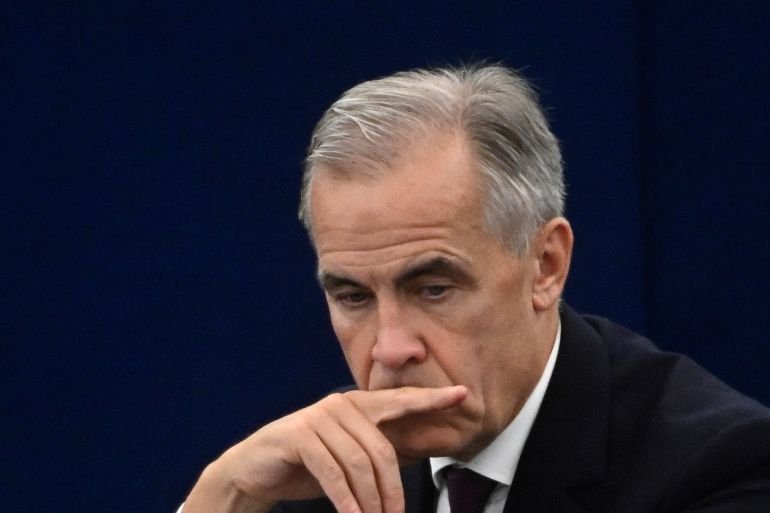
    The reports come as the EU-Canada summit in Montreal, hosted by Canadian Prime Minister ⁠Mark Carney, is expected to start later on Thursday.

    In September, European Commission President Ursula von der Leyen raised the prospect of Canada becoming the 27-nation EU’s first “associate member”, a striking overture as both seek to pivot away from the United States under President Donald Trump.

    However, Reuters and dpa report that von der Leyen’s suggestion of associate membership has been a divisive issue in negotiations among EU countries over ⁠the summit declaration, with German Chancellor Friedrich Merz and several other leaders of fellow member nations pushing for the terms to be removed from the draft, citing diplomats.

    The statement now calls for an “ever closer association” between Canada and the EU, and includes a joint initiative to improve international connectivity between Europe, Canada and Asia through “new ⁠subsea cable infrastructure”.

    It also proposes conducting a joint feasibility study on Canadian liquefied natural gas exports to Europe and ⁠enabling young Canadians and Europeans to work across the Atlantic.

    Deeper ties to Europe are an important part of Carney’s strategy to reduce Canada’s economic and security reliance on the US since Trump imposed tariffs on Canadian goods. Still, Canada’s efforts to draw closer to the EU risk angering Trump as trade talks between Canada and the US continue.

    Trump previously called the EU’s proposal to make Canada an associate member “laughable” and said if he interpreted the move as a “hostile act”, the US might stop trading with Europe “on many things”.

    Carney has aimed to deepen ties with the EU, Canada’s second-largest trading partner, since trade relations with the US, Ottawa’s largest economic partner, have been hampered under Trump.

    The Canadian leader told reporters on Tuesday that the summit would be the launch of formal negotiations between the EU and Canada that would take another year.

    “The good news is it doesn’t matter about specific names or nomenclature,” Carney said. “What matters is the difference it will make to the lives of Canadians.”

  • Judge rejects Trump effort to block California ‘noncitizen’ ballots

    Judge rejects Trump effort to block California ‘noncitizen’ ballots

    Trump administration issues more than 100 subpoenas across 13 states as search for alleged noncitizen voters ramps up.

    A United States judge has rejected a Department of Justice request to temporarily halt California from counting mail ballots from a list of 20,000 alleged noncitizens just six days before the country’s midterm elections.

    US District Judge David Carter’s ruling on Wednesday came as US President Donald Trump expands efforts to search for alleged noncitizen voters, with subpoenas issued in at least 13 states.

    Recommended Stories

    list of 3 itemsend of list

    “Never before in American history has the federal government, on the eve of an election, sought to coerce a state and local government to abandon their own Constitutional elections procedures and bend to the will of the Executive Branch,” Carter wrote on Wednesday.

    The judge, a 1998 appointee of Democratic President Bill Clinton, said the Justice Department’s last-minute request to exclude more than 20,000 ballots ran afoul of “longstanding constitutional principles mandating that states have control over their elections”.

    The Justice Department swiftly appealed the decision to the Ninth US Circuit Court of Appeals and did not immediately respond to requests for comment by the Reuters news agency.

    The Justice Department filed the lawsuit on October 15, a rare intervention in the voting process weeks before Tuesday’s election, when voters will choose which party controls Congress as well as their state and local representatives.

    US President Donald Trump attends a campaign rally in the state of Ohio, where incumbent Republicans are fighting to keep key federal and state posts, on October 28, 2026
    US President Donald Trump attends a campaign rally in the state of Ohio, where incumbent Republicans are fighting to keep key federal and state posts, on October 28, 2026 [Kevin Lamarque/Reuters]

    Escalating efforts from Trump

    The decision marks the latest setback in Trump’s effort to expand the federal government’s role in elections ahead of the legislative midterms, as his Republican Party fights to retain control of both houses of Congress.

    The Trump administration issued more than 100 subpoenas demanding records on tens of thousands of voters in at least 13 states, both Republican- and Democratic-leaning.

    Most of the subpoenas Reuters documented were issued to state and local election officials in the past three months, though some date to the start of the year. Many were previously unreported, revealing a federal effort to identify potential noncitizen voters that is broader than publicly known.

    It is illegal for noncitizens to vote in US federal elections. Legal experts say the records could be used to contest close midterm results, despite scant evidence that noncitizen voting is widespread.

    Get-out-the-vote effort in Minneapolis, Minnesota on October 28, 2026, six days before the election
    Get-out-the-vote effort in Minneapolis, Minnesota on October 28, 2026, six days before the election [Stephen Maturen/Getty Images via AFP]

    ‘Deeply flawed process’

    Also on Wednesday, Democracy Docket, a US media platform that tracks election litigation, reported that the Department of Justice list of alleged noncitizen voters “appears to have been created using a deeply flawed process” that could disenfranchise US citizen voters beyond California.

    In a court filing, a government whistleblower revealed that voters were being scrutinised nationwide, not just in California, as part of the federal government’s “Unlawful Voter Initiative” investigation, the group reported. The whistleblower warned that “the current process is knowingly sweeping known US citizens in as potentially ‘unlawful voters’”.

    California has said the state’s safeguards against noncitizen voting are robust. It said the Justice Department’s assertions relied on “suspect data” and that complying with its demands would risk disenfranchising eligible voters. Democracy Docket reported that in Los Angeles County, one in four voters on the “noncitizen” list were born in the US.


  • Why a Democratic win in US midterms could adversely affect Europe

    Why a Democratic win in US midterms could adversely affect Europe

    The United States midterm elections appear stacked against the ruling Republicans, with polls suggesting the Democrats average an eight-point lead in the House of Representatives and the Senate. But if Democrats take one or both houses, could they affect upcoming elections in Europe?

    Not fundamentally, analysts and observers have told Al Jazeera, but besides a welcome improvement in transatlantic relations, they point to two potentially adverse effects.

    Recommended Stories

    list of 3 itemsend of list

    First, a Democratic Congress might produce complacency among Europeans regarding their own far-right movements.

    Second, it might spur US President Donald Trump to raise pressure on Ukraine to make a deal it doesn’t want to make with Russia.

    “If the Democrats win the House, let alone both houses, it will be read as, ‘you see democracies bounce back,’” said Catherine Fieschi, a nonresident scholar at Carnegie Europe, specialising in European far-right politics. It would introduce “the idea that these things don’t mean the advent of a fascist regime”, she said.

    From her vantage point in Paris, Fieschi said she imagines a Democratic win leading to “a whole discussion about whether we should fear a Marine Le Pen election as much as some people say we should, or whether, in fact, it’s swings and roundabouts and, at some point, if people are really bad and really incompetent, then elections right the way,” she said.

    French right-wing politician Marine Le Pen is currently leading the field in polling for presidential elections scheduled for April 18, with surveys indicating she has about 34 percent of the popular vote.

    There is a precedent for the complacency Fieschi alludes to. In June 2025, the European Council on Foreign Relations (ECFR), a think tank, polled Europeans following Trump’s first six months in office. Clear majorities in Western Europe said the US political system was broken. In Eastern Europe, majorities said it was working well – though they were weighted towards right-wing voters.

    Greek Migration Minister Thanos Plevris warned against giving too much credit to the US for what Europeans think and do, however.

    He said he believes European public opinion hardened against asylum and economic migration independently, but the US marked the shift by expressing it more violently, with military deportation flights and armed Immigration and Customs Enforcement (ICE) agents sweeping American cities.

    “I think there was a European about-turn on migration. We saw this in Germany, which had a welcoming attitude [to refugees] for many years, and they went to a more controlled policy. All northern European governments saw societies change,” he told Al Jazeera.

    “But the US provided a change in tone, from induction and integration and benefaction to deterrence, border protection, increased returns and consequences if asylum is denied. I do think that pivot played a role in Europe,” Plevris added.

    The fallout for Ukraine

    Should French voters decide that the only way out is through electing Le Pen – “like some kind of strong medicine that would wake us up to what we might lose”, as Fieschi put it – they would have to contend with three controversial propositions – cutting French financial contributions to the European Union’s federal budget to pay for earlier retirement, cutting military aid to Ukraine and possibly leaving the single currency, the euro, in favour of a devalued franc.

    Any one of those policy moves would be a major setback for the European project, which has coalesced around trade, money and now security. A cut in assistance to Ukraine would remove 3.5 percent of its foreign military aid, according to the Kiel Institute’s Ukraine Support Tracker, which other allies would have to make up.

    At the same time, “we could end up in a situation where Trump is basically clinching deals with Putin as fast as he can,” said Fieschi, referring to the US-Russian strategy to coerce Ukraine into a peace agreement that involves sacrificing its eastern Donbas region – something Ukrainian President Volodymyr Zelenskyy has said would be a strategic error leading to renewed war, and which a majority of Ukrainians are against.

    Trump has already leveraged US early warning on incoming ballistics and Starlink satellite navigation against Ukraine. He has twice echoed Russian calls for Zelenskyy to be replaced.

    Compounding this renewed pressure from a beleaguered White House, Russia could intensify its “all-domain war”, which many European governments believe it is already waging against them, said Victoria Vdovychenko, a Ukraine expert at Cambridge University’s Centre for Geopolitics.

    “Cognitive warfare never stopped on the European continent, and Russians are already using existing vulnerabilities to the utmost,” she told Al Jazeera. “I hope that the European partners will be staying very strong.”

    What Europeans think

    Trump’s abandonment of the world order the US and Europe established after World War II, his disregard for democracy and human rights, and his betrayal of Ukraine have already transformed European public opinion, observers say.

    Only 31 percent of Europeans see the US as Europe’s “most trustworthy ally”, down from 51 percent in 2024, when Trump’s predecessor, Joe Biden, was in office, according to a poll for the German think tank Bertelsmann Stiftung.

    Seventy-three percent of Europeans across all age groups say Europe should “go its own way” rather than continue a close cooperation with the US, up from 63 percent in 2024, and that figure includes a clear majority among those on the centre-right and right.

    In this year’s Spring Eurobarometer, a regular pulse-taking conducted by the European Commission, 68 percent of respondents wanted the EU’s role in protecting Europeans from global crises and security risks to increase, while 39 percent wanted it to be a top priority.

    In a June poll for the European Council on Foreign Relations, the description of the US as an “ally” fell from 22 percent in November 2024 to 11 percent across all territories polled in Eastern and Western Europe.

    In a June poll for the Pew Research Center, a Washington-based think tank, 76 percent of people polled in 36 countries, of which nine were EU members, expressed no confidence in Trump, and 57 percent expressed unfavourable views of the US.

    It would appear that such shifts against the US and especially Republicans, formed over two Trump terms, would be difficult to reverse in a single congressional election, especially with a Russian war ongoing in Europe.